Germanium

Germanium

Germanium Latest News

India is engaging with the Chinese government to navigate export restrictions on germanium, a critical mineral that is used in manufacturing of semiconductors, fiber optic cables and solar panels. 

About Germanium

  • It is a chemical element between silicon and tin in Group 14 (IVa) of the periodic table.
  • It has the chemical symbol Ge and the atomic number 32.
  • It is a silvery-gray metalloid, intermediate in properties between the metals and the nonmetals. 
  • It has a diamondlike crystalline structure, and it is similar in chemical and physical properties to silicon. 
  • Germanium is stable in air and water and is unaffected by alkalis and acids, except nitric acid.
  • Although germanium was not discovered until 1886 by Clemens Winkler, a German chemist, its existence, properties, and position in the periodic system had been predicted in 1871 by the Russian chemist Dmitry Ivanovich Mendeleyev, who called the hypothetical element ekasilicon. 
  • Germanium did not become economically significant until after 1945, when its properties as a semiconductor were recognized as being of value in electronics. 
    • It remains of primary importance in the manufacture of transistors and of components for devices such as rectifiers and photocells.
  • It is widely distributed in nature but is too reactive to occur free. 
  • Germanium ores are rare. They are found in small quantities as the minerals germanite and argyrodite.
  • Today, germanium is extracted as a by-product of zinc production and from coal fly ash. 
  • It is estimated that 75% of worldwide production of germanium is sourced from zinc ores, mainly the zinc sulfide mineral sphalerite, and 25% from coal.
  • Major Producers: 
    • The major worldwide producer of germanium is China, responsible for around 60% of total production. 
    • The remaining production of germanium comes from Canada, Finland, Russia, and the United States.

Germanium FAQs

Q1: Is germanium a conductor?

Ans: Germanium is not a good conductor; it is a semiconductor.

Q2: Is germanium toxic to humans?

Ans: Germanium compounds are relatively less toxic compared to other metalloids and metals

Q3: Germanium is mostly extracted as a by-product of which metal?

Ans: Zinc

SourceTH

Bhoramdev Wildlife Sanctuary

Bhoramdev Wildlife Sanctuary

Bhoramdev Wildlife Sanctuary Latest News

In a latest instance of man-animal conflict, four persons were injured in a bear attack in the Kawardha range of Bhoramdev wildlife sanctuary where the victims had gone to collect tendu leaves.

About Bhoramdev Wildlife Sanctuary

  • Bhoramdeo Wildlife Sanctuary, also known as Bhoramdeo Wildlife Sanctuary, is located in the Kawardha district of Chhattisgarh.
  • The sanctuary is part of the larger Maikal range of the Satpura hills, which is known for its unique ecosystem. 
  • Named after the famous Bhoramdeo Temple situated nearby, the sanctuary covers an area of approximately 352 sq.km.
  • Bhoramdeo Temple, more than a thousand years old, is dedicated to Lord Shiva and is also known as the "Khajuraho of Chhattisgarh".
  • It is part of the Kanha-Achanakmar Corridor, which connects Kanha National Park in Madhya Pradesh with Achanakmar Wildlife Sanctuary in Chhattisgarh. 
  • The sanctuary’s terrain is characterized by undulating hills, dense forests, and numerous streams.
  • Rivers: This wildlife sanctuary is the origin of the Fen and Sankari rivers.
  • Vegetation: The sanctuary’s diverse ecosystem includes tropical moist and dry deciduous forests. 
  • Flora: Lush forests of Saaj, Sal, Tendu, and Nilgiri trees.
  • Fauna: It is home to a variety of wildlife, including tigers, leopards, sloth bears, and various species of deer and birds.

Bhoramdev Wildlife Sanctuary FAQs

Q1. In which state is the Bhoramdev Wildlife Sanctuary located?

Ans. Chhattisgarh

Q2. Bhoramdev Wildlife Sanctuary lies in which mountain range?

Ans. Maikal Range of Satpura Hills

Q3. Which important wildlife corridor includes the Bhoramdev Wildlife Sanctuary?

Ans. Kanha-Achanakmar Corridor

SourceETVB

Dongria Kondh Community

Dongria Kondh Community

Dongria Kondh Community Latest News

The National Human Rights Commission (NHRC) recently sought for an Action Taken Report from Odisha Chief Secretary on the precarious living condition, lack of basic amenities and necessities of life of more than 10,000 families from “Dongria Kondh”, a Particularly Vulnerable Tribal Group (PVTG) Community.

About Dongria Kondh Community

  • It is a Particularly Vulnerable Tribal Group (PVTG) Community.
  • Dongria Kondhs are ancient occupants of Niyamgiri hills spread across Kalahandi and Rayagada districts of Odisha.
  • In the polytheistic animist worldview of the Kondh, the hilltops and their associated forests are regarded as supreme deities.
    • They derive their name from dongar, meaning ‘hill’ and the name for themselves is Jharnia: protector of streams.
    • They trace their ancestry to Niyam Raja, a mythical god-king, who they believe is a creator of the Niyamgiri hills and whose stewardship has been left to them. 
    • The forest slopes of Niyamgiri hills and streams that flow from the hilltop are the means of survival for the Dongria Kondh community.
    • Even their art reflects the mountains, in the triangular designs found on village shrines to the many gods of the village, farm and forests and their leader, Niyam Raja. 
  • The Dongria have distinctive jewellery, tattoos and hairstyles. Women wear many rings through their ears and three through their noses, while boys wear two nose rings. 
  • They have no overarching political or religious leader,
    • Clans and villages have their own leaders and individuals with specific ceremonial functions, including the beju and bejuni, male and female priests. 
  • The kondh tribe speak two languages namely “kuyi” and “kuvi”, vocabulary which is completely unrelated to odiya, the state’s official language.
  • The economy and livelihood of Dongria kondh is dependent on collection of Non-timber forest products (NTFPs) and podu cultivation. They are traditionally horticulturists

Dongria Kondh Community FAQs

Q1: Where is the Dongria tribe located?

Ans: The Niyamgiri hill range in Odisha state.

Q2: Who is the mythical ancestor and spiritual protector of the Niyamgiri hills, according to Dongria Kondh beliefs?

Ans: Niyam Raja, a mythical god-king.

Q3: What is the primary form of livelihood for the Dongria Kondh community?

Ans: Collection of Non-Timber Forest Products (NTFPs) and Horticulture.

SourceSTATESM

Microbial Phosphorus Gatekeeping

Microbial Phosphorus Gatekeeping

Microbial Phosphorus Gatekeeping Latest News

A recent study published in Nature Geoscience examined the role of soil microbes in phosphorus cycling over 700,000 years in the Cooloola coastal dune system, located in Cooloola National Park, Queensland, Australia.

Importance of Phosphorus in Ecosystems

  • Phosphorus (P) is an essential macronutrient required by all life forms. It is crucial for:
    • Energy metabolism (e.g., ATP production),
    • Cell membrane synthesis (phospholipids),
    • Photosynthesis and genetic functions (DNA/RNA).
  • In ancient and weathered soils, such as those in Australiaphosphorus levels decline significantly over time due to mineral weathering, making it the primary limiting nutrient in many ecosystems.

Key Findings

  • The study discovered that soil microbes—especially fungi and bacteria—act as ‘phosphorus gatekeepers’ by regulating how phosphorus is accessed and cycled in the soil.
  • Microbes use several adaptive mechanisms to survive phosphorus scarcity:
    • Replacing membrane phospholipids with non-phosphorus lipids,
    • Accumulating microbial lipids (fats) that reduce the need for phosphorus,
    • Optimising phosphorus use efficiency in their metabolism.
  • This microbial gatekeeping strongly influences how phosphorus becomes available to plants, creating a balance of competition and facilitation:
    • Microbes and plants compete for phosphorus,
    • But microbes aid plants by recycling phosphorus and making it more accessible in the long run.

Microbial Phosphorus Gatekeeping FAQs

Q1: What is meant by microbial phosphorus gatekeeping?
Ans: It refers to the ability of soil microbes to regulate the availability of phosphorus to plants by controlling its release, uptake, and storage in soil ecosystems.

Q2: Why is phosphorus important in agriculture?
Ans: Phosphorus is a vital macronutrient essential for plant growth, root development, and energy transfer (ATP).

Q3: How do microbes influence phosphorus cycling?
Ans: Microbes solubilise inorganic phosphorus, produce phosphatase enzymes, and store or release phosphorus based on environmental conditions.

Source: PHY

Buddhavanam

Buddhavanam

Buddhavanam Latest News

The contestants of Miss World 2025 from 22 countries visited Buddhavanam, a Buddhist theme park, on the occasion of Buddha Purnima recently.

About Buddhavanam

  • It is a Buddhist theme park located on the northern bank of Krishna River in Telangana.
  • The Government of India has sanctioned the project as part of developing an integrated Buddhist Circuit with a vision to attract a large number of domestic and international tourists, particularly from southeast Asia.
  • It has an extent of 279 acres.
  • It is developed to showcase the life and teachings of Gautama Buddha.
  • It features the Entrance plaza, Buddhacharitha Vanam (Life of Buddha)Jataka Park (which highlights stories from Buddha’s previous lives), Dhyana Vanam for meditation,the Stupa Vanam (home to the imposing Maha Stupa), and an in-house Buddhist Heritage Museum.
  • There are intricate carvings on the drum and dome portions of the Mahastupa and a virtual hanging sky with lotus petals under the sky inside the Mahastupa.
  • Located just beside Nagarjuna Sagar, a reservoir formed due to the construction of the dam across the river Krishna, Nagarjunakonda or Sriparvata - Vijayapuri, served as capital city of the Ikshvaku dynasty, which ruled Andhradesa during the 3rd and 4th centuries A.D. 
    • Nagarjunakonda was named after the famous Buddhist scholar and Madhyamika philosopher Acharya Nagarjuna. 
    • Nagarjunakonda was a centre of Mahayana Buddhism, where many Buddhist sects had their monasteries, shrines, and stupas built to propagate the Dhamma.
    • Excavations conducted at Nagarjunakonda between 1954 and 1960 have revealed the existence of a Maha Stupa,Votive Stupas, Chaityas, Silamandapas and a good number of Buddhist sculptural panels and antiquities. 
    • The structures exposed also included a palace complex and a few Brahmanical temples built of bricks. 
    • The sculptural panels were depicted with the major events of the life of the Buddha and Jataka stories. 
    • Most of the structures were reconstructed on the Nagarjunakonda Island and at Anupu, a ferry point on the right bank of the river Krishna. 

Buddhavanam FAQs

Q1: Where is Buddhavanam located?

Ans:Telangana

Q2: Nagarjunakonda was the capital city of which ancient dynasty?

Ans: It served as capital city of the Ikshvaku dynasty, which ruled Andhradesa during the 3rd and 4th centuries A.D. 

Q3: What type of Buddhism was prominent in Nagarjunakonda?

Ans: Mahayana Buddhism

SourceHT

Ferroelectricity

Ferroelectricity

Ferroelectricity Latest News

Researchers at Oak Ridge National Laboratory (ORNL) have developed a breakthrough technique to visualise the dynamics of domain walls with unprecedented detail.

Fundamentals of Ferroelectricity

  • Ferroelectricity is a property of certain non-conducting crystals or dielectrics that exhibit spontaneous electric polarisation, where the centres of positive and negative charges separate, making one side of the crystal positive and the other negative.
    • This electric polarisation can be reversed by applying an appropriate external electric field.
  • The term ferroelectric is derived from ferromagnetism, where magnetic domains align spontaneously; similarly, in ferroelectrics, electric dipoles align spontaneously in domains.
    • Examples of ferroelectric materials include barium titanate (BaTiO₃) and Rochelle salt.
  • Ferroelectric domains are clusters where dipoles are aligned. These domains can be reoriented by strong electric fields.
  • The delay in response when domains reorient is termed ferroelectric hysteresis, analogous to ferromagnetic hysteresis.
  • Ferroelectricity vanishes above a critical temperature called the Curie Temperature, where thermal agitation disrupts dipole alignment.

Domain Walls in Ferroelectrics

  • Domain walls are the boundaries between differently polarised regions in a ferroelectric material.
  • These walls often exhibit electrical or magnetic properties different from the surrounding domains.
  • Some domain walls may become electrically conductive even when the bulk of the material is non-conductive, or magnetically active even if the domain itself is nonmagnetic.
  • These unique properties make domain walls potential candidates for nanoelectronic components for memory, sensing, and signal processing in low-power devices.

New Visualisation Technique by ORNL

  • This method, called Scanning Oscillator Piezoresponse Force Microscopy (SO-PFM), is capable of detecting both slow and abrupt movements of domain walls under rapidly fluctuating electric fields.
  • Traditional methods offered only static snapshots, like a photo before and after a football play, missing the intermediate dynamics.
  • The new method creates dynamic visualisations, helping researchers understand how domain walls evolve and how much energy is required to move them.
  • It uses precision-timed control electronics with atomic force microscopy (AFM) to monitor real-time changes, a capability not previously possible.

Ferroelectricity FAQs

Q1: What is ferroelectricity?
Ans: Ferroelectricity is a property of certain materials that exhibit spontaneous electric polarisation that can be reversed by applying an external electric field.

Q2: What are ferroelectric materials used for?
Ans: They are used in non-volatile memory devices, sensors, actuators, capacitors, and energy storage technologies.

Q3: How is ferroelectricity different from piezoelectricity?
Ans: While all ferroelectric materials are piezoelectric, not all piezoelectric materials are ferroelectric. Ferroelectricity requires switchable polarisation.

Source: PHY

Axions and HAYSTAC Experiment

Axions and HAYSTAC Experiment

Axions and HAYSTAC Experiment Latest News

The HAYSTAC results, published in Physical Review Letters, marked a technological advance, even though no axions were detected. The experiment significantly expanded the parameter space of axion mass and coupling strength.

What are Axions?

  • Axions are hypothetical subatomic particles originally proposed in the late 1970s to explain the strong CP problem in quantum chromodynamics (QCD). They later emerged as one of the most promising candidates for dark matter.
  • The axion’s role was to suppress CP-violating terms in QCD by dynamically adjusting the theta parameter (θ) to nearly zero.

Axions as Dark Matter Candidates

  • Over time, axions emerged as a leading dark matter candidate due to their unique properties:
    • Electromagnetically neutral,
    • Extremely light,
    • Very weak interaction with ordinary matter and radiation.
  • They are hypothesised to make up Cold Dark Matter (CDM)—the dominant form of dark matter thought to constitute ~85% of the universe's matter content.
  • Pioneering work by Sikivie, Wilczek, Dine, Preskill, and others showed that cosmological production of axions in the early universe could match observed dark matter density.

What is HAYSTAC?

  • The HAYSTAC experiment (Haloscope At Yale Sensitive To Axion Cold dark matter) is a collaborative initiative between Yale, Berkeley, and Johns Hopkins, aimed at directly detecting axions by exploiting their potential to convert into photons within a strong magnetic field.
  • The experiment uses a haloscope—a special type of detector designed by Pierre Sikivie—which incorporates a microwave cavity inside a powerful magnetic field.
  • In its Phase II, HAYSTAC conducted the widest frequency search for dark matter axions to date. It introduced quantum squeezing techniques to reduce quantum noise, thereby enhancing the sensitivity of its haloscope detector.
  • The HAYSTAC experiment and Advanced LIGO are currently the only two major physics experiments utilising quantum squeezing to improve precision in measurements.
  • Quantum squeezing involves manipulating the uncertainty in quantum states to suppress random fluctuations, which improves the signal-to-noise ratio in weak signal detection, especially important for identifying rare particles like axions.

Axions and HAYSTAC Experiment FAQs

Q1: What are axions?
Ans: Axions are hypothetical subatomic particles proposed as a solution to the strong CP problem in quantum chromodynamics and are considered candidates for dark matter.

Q2: What is the HAYSTAC experiment?
Ans: HAYSTAC (Haloscope at Yale Sensitive to Axion CDM) is a U.S.-based experiment designed to detect axions as a form of cold dark matter using a microwave cavity and magnetic fields.

Q3: How does HAYSTAC aim to detect axions?
Ans: It uses resonant conversion of axions into microwave photons in a strong magnetic field, leveraging the axion-photon coupling.

Source: PHY

India’s Strategic Doctrine: PM Aligns Anti-Terror Policy with Global Framework

India’s Strategic Doctrine: PM Aligns Anti-Terror Policy with Global Framework

What’s in Today’s Article?

  • India Strategic Doctrine Latest News
  • India’s Evolving Anti-Terror Doctrine
  • Other Highlights of the Speech Delivered by PM Modi
  • India Strategic Doctrine FAQs

India Strategic Doctrine Latest News

  • PM Modi addressed the nation for the first time after Operation Sindoor, India’s most intense military action since Kargil. During his address, he outlined a new anti-terror doctrine. 
  • Building on the precedent set by the Uri and Balakot strikes, the doctrine is based on three pillars: 
    • India will respond to terrorism on its own terms; 
    • Nuclear threats will not deter India from acting;
    • There will be no distinction between terrorists, their leaders, and the states that support them.

India’s Evolving Anti-Terror Doctrine

  • Following Operation Sindoor, PM Modi announced a significant shift in India's counter-terrorism policy. 
  • Building on the precedents set by the Uri surgical strikes (2016) and the Balakot airstrikes (2019), the new doctrine signals a bolder and more aggressive stance.

Three Core Principles of the New Doctrine

  • Response on India’s Terms: India will choose the timing, nature, and scale of its response to terror attacks.
  • No Tolerance for “Nuclear Blackmail”: India will not be deterred by Pakistan’s nuclear posturing.
  • No Distinction Between Terrorists and State Sponsors: There will be no separation between terrorists, their masterminds, and the governments supporting them.

New Normal in India’s Response to Terror

  • Operation Sindoor is positioned as a benchmark and a new standard in India’s fight against terrorism. 
  • This lowers the threshold for future Indian military responses and projects a higher degree of offensive readiness.

Framing India’s Fight in the Global War on Terror

  • PM Modi linked India’s actions to the global anti-terror campaign, comparing the strikes against Jaish-e-Mohammed and Lashkar-e-Taiba to global responses to terror after 9/11. 
  • This positions India as a global stakeholder in counter-terrorism.

India’s Military Superiority Highlighted

  • The PM praised India’s technological edge, highlighting the destruction of Pakistani drones and airbases using advanced air defence systems and precision missile strikes.
  • He also highlighted India’s ability to strike deep inside Pakistan, damaging key airbases and exposing Pakistan’s vulnerabilities.

Decision to Pause: A Strategic Choice

  • PM Modi defended the decision to halt military action after achieving key objectives, citing Pakistan’s appeal through diplomatic channels and its pledge to de-escalate.

International Messaging: “This is Not the Era of Terrorism”

  • To counter accusations of war-mongering, Modi invoked his now-famous phrase, “This is not the era of war,” and adapted it: “This is also not the era of terrorism.”
  • He called for global unity and zero tolerance against terrorism for a safer world.

Firm Red Lines on Talks with Pakistan

  • India reaffirmed its long-standing position:
    • No talks with Pakistan unless they are about terrorism and PoK.
    • Terror and talks, trade, or even water cannot go together.

Other Highlights of the Speech Delivered by PM Modi

  • Operation Sindoor: A Symbol of Justice
    • Operation Sindoor is more than a military campaign — it symbolizes national resolve and emotional unity. 
    • PM described it as India’s commitment to justice after the Pahalgam terror attack.
  • Suspension, Not Withdrawal
    • Following heavy losses, Pakistan sought de-escalation. India agreed to suspend action after destroying major terror infrastructure, but Modi made it clear that future actions depend on Pakistan’s conduct.
  • Full Freedom to Armed Forces
    • Modi emphasized that Indian armed forces were given a free hand to act. 
    • Operation Sindoor now stands as a new counter-terrorism policy, showcasing India’s growing military independence and strategic assertiveness.
  • Strong Message to Pakistan
    • India reiterated its policy:
      • No talks with Pakistan unless focused on terrorism or PoK.
      • No trade or water-sharing under terror threats.
      • Pakistan must dismantle its terror infrastructure or face destruction.
  • Peace Through Strength
    • On Buddha Purnima, Modi invoked Lord Buddha’s message of peace, emphasizing that power is essential to protect peace. 
    • He said a strong India is critical to achieving Viksit Bharat (Developed India).
  • Mastery of Modern Warfare
    • India demonstrated 21st-century warfare capability in Operation Sindoor. 
    • Modi lauded the effectiveness of Made-in-India weapons and projected India as a future-ready military power. 
    • He reiterated that unity and zero tolerance for terror are India’s guiding principles for global peace.

India Strategic Doctrine FAQs

Q1. What is India’s Strategic Doctrine about?

Ans. It outlines India's long-term approach to counterterrorism, aligning with global anti-terror frameworks while safeguarding national interests.

Q2. How does the doctrine affect India’s foreign policy?

Ans. It prioritizes international cooperation on counterterrorism, enhancing India’s global influence and partnerships with strategic allies.

Q3. What changes are expected in defense operations?

Ans. India’s defense forces will adopt integrated strategies combining surveillance, intelligence, and surgical operations to combat terrorism.

Q4. Why is global alignment important in this doctrine?

Ans. Global alignment ensures intelligence sharing, cross-border coordination, and better response to global terror threats.

Q5. How will this impact India’s internal security?

Ans. The doctrine strengthens internal surveillance and intelligence networks, boosting preparedness against domestic terror activities.

Source: IE | IT | IE

National Company Law Appellate Tribunal (NCLAT)

National Company Law Appellate Tribunal (NCLAT)

National Company Law Appellate Tribunal (NCLAT) Latest News

The National Company Law Appellate Tribunal (NCLAT) dismissed an insolvency petition filed by SNJ Synthetics against PepsiCo India Holdings, asserting that the Insolvency and Bankruptcy Code (IBC) cannot be used as a tool for debt recovery where only disputed interest claims are involved.

About the National Company Law Appellate Tribunal (NCLAT)

  • The NCLAT is a quasi-judicial body constituted under Section 410 of the Companies Act, 2013. It was established to hear appeals against the decisions of the National Company Law Tribunal (NCLT), functioning since 1st June 2016.
  • Its main objective is to promote timely corporate dispute resolution, ensure transparency, and improve efficiency in insolvency and corporate governance matters.
  • Functions of NCLAT include:
    • Hearing appeals against orders of NCLT under Section 61 of IBC.
    • Hearing appeals against orders of the Insolvency and Bankruptcy Board of India (IBBI) under Sections 202 and 211 of IBC.
    • Hearing appeals against orders of the Competition Commission of India (CCI).
    • Hearing appeals related to the National Financial Reporting Authority (NFRA).
    • Giving advisory opinions when legal issues are referred by the President of India.
  • Headquarters: Located in New Delhi.
  • Composition: It includes a Chairperson, along with Judicial and Technical Members, all appointed by the Central Government based on expertise in law, finance, accountancy, and administration.
  • Powers and Procedure:
    • NCLAT can regulate its own procedure and possesses powers equivalent to a civil court under the Civil Procedure Code, 1908.
    • It can summon witnesses, receive affidavits, enforce production of documents, and issue commissions.
    • Orders passed by NCLAT are enforceable like civil court decrees.
    • Appeals against NCLAT orders can be filed in the Supreme Court of India.
    • Civil courts have no jurisdiction over matters within the purview of NCLAT.
    • No court or authority can grant injunctions against any action taken by NCLAT under its legal authority.
  • Timely disposal: NCLAT is required to dispose of appeals within six months from the date of receipt to ensure swift resolution.

National Company Law Appellate Tribunal (NCLAT) FAQs

Q1: What is the NCLAT?
Ans: The NCLAT is a quasi-judicial appellate tribunal in India that hears appeals against orders passed by NCLT, IBBI, and the Competition Commission of India (CCI).

Q2: Under which Act was NCLAT established?
Ans: NCLAT was constituted under Section 410 of the Companies Act, 2013.

Q3: What is the difference between NCLT and NCLAT?
Ans: NCLT is the trial-level tribunal, while NCLAT is the appellate authority to review decisions of the NCLT.

Source: TH

High Mobility Artillery Rocket Systems (HIMARS)

High Mobility Artillery Rocket Systems (HIMARS)

High Mobility Artillery Rocket System Latest News

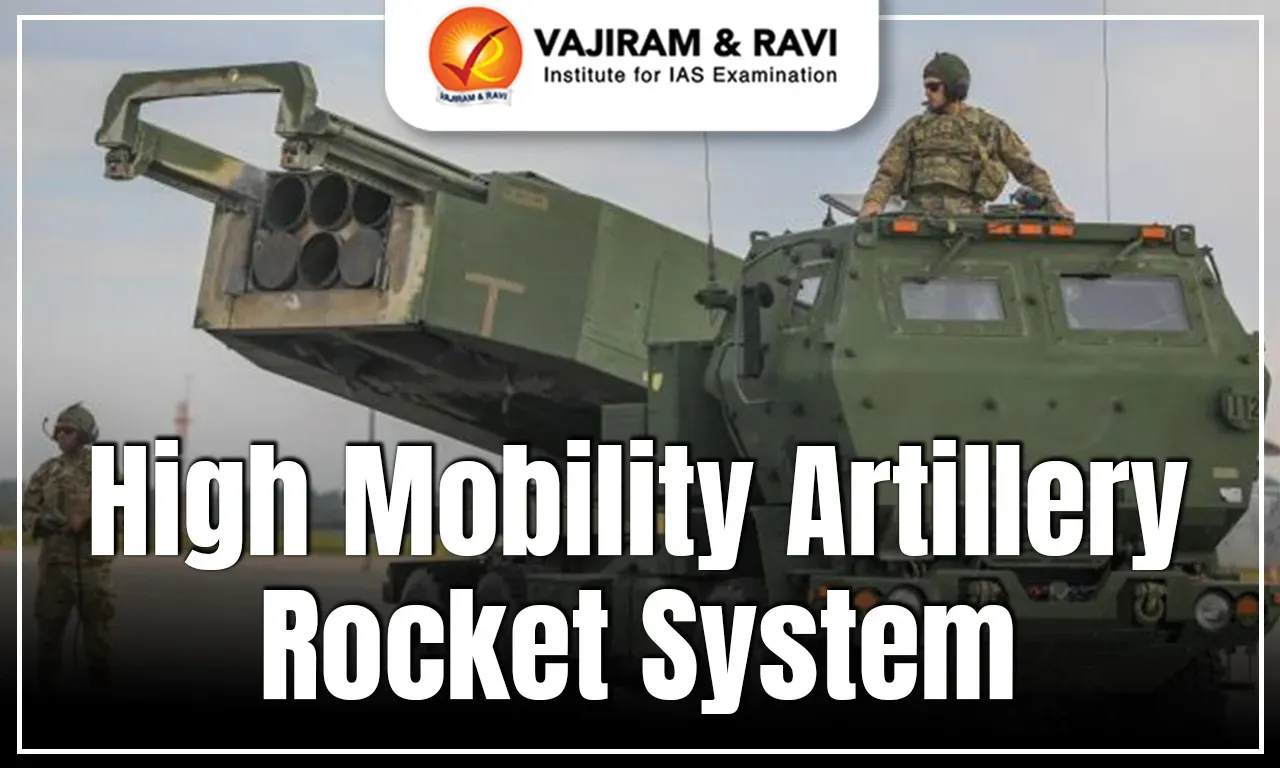
The military of Taiwan recently conducted its first live-firing of the American-supplied high mobility artillery rocket system (HIMARS).

About High Mobility Artillery Rocket System

  • It is a lightweight, multiple rocket launcher.
  • It allows for the launching of multiple, precision-guided rockets. 
  • It is manufactured by Lockheed Martin Corporation, a United States-based security and aerospace company.
  • HIMARS is intended to engage and defeat artillery, air defence concentrations, trucks, light armour, and personnel carriers, as well as support troop and supply concentrations.

High Mobility Artillery Rocket System Features

  • It is an air-transportable wheeled launcher mounted on a 5-ton Family of Medium Tactical Vehicles (FMTV).
  • It can carry either a launcher pod of six rockets (range of approximately 43 milesor one MGM-140 Army Tactical Missile System (ATACMS), which can hit targets up to 200 miles away.
  • The HIMARS requires less than 20 seconds to be prepared for firing, and a full launcher load of six rockets can be fired within 45 seconds.
  • The system launches its weapons and moves away from the area at high speed before enemy forces locate the launch site.
  • The HIMARS is equipped with the Increased Crew Protection cabin, which is designed to protect the three-man operating crew against plume gases, rocket launch debris, and small arms.

High Mobility Artillery Rocket System FAQs

Q1: Which country manufactured high mobility artillery rocket system HIMARS?

Ans: United States

Q2: What does HIMARS stand for?

Ans: High Mobility Artillery Rocket System

Q3: How many rockets can a HIMARS launcher pod carry at once?

Ans: Six

SourceTRIBUNEI

US-China 90-Day Tariff Truce: Reasons, Rollbacks and Economic Implications

US-China 90-Day Tariff Truce: Reasons, Rollbacks and Economic Implications

What’s in Today’s Article?

  • US-China Tariff Truce Latest News
  • Background - Tariffs Between the US and China
  • Rationale Behind the Imposition of Tariffs
  • Current US-China Trade Situation After the Truce
  • Conclusion
  • US-China Tariff Truce FAQs

US-China Tariff Truce Latest News

  • The United States and China have agreed to a 90-day pause in their trade war following two days of high-level talks in Geneva. 
  • Both countries will suspend the high tariffs and non-tariff barriers imposed since April 2. In a joint statement, they expressed commitment to resolving their trade disputes.

Background - Tariffs Between the US and China

  • Since February 1, the US began imposing tariffs on China, initially citing the sale of fentanyl—an opioid linked to numerous overdose deaths in the US—as the reason.

April 2 Tariff Hike – “Liberation Day”

  • On April 2, designated by President Trump as “Liberation Day,” the US significantly increased tariffs, imposing an additional 34% on Chinese imports.

China's Response

  • China retaliated with its own set of counter-tariffs, a move that differed from most other countries' reactions.

Further Escalation 

  • By April 10, tariffs had escalated to extreme levels:
    • US tariffs on Chinese goods: 145%
    • China's tariffs on US goods: 125%
  • This meant a $100 Chinese product would cost $245 in the US after tariffs.

Non-Tariff Measures by China

  • Apart from tariffs, China implemented non-tariff barriers such as:
    • Export restrictions on rare earth minerals
    • Regulatory actions and investigations against several US companies
unnamed (3).webp

Rationale Behind the Imposition of Tariffs

  • Concern Over Trade Deficit
    • The US Trade Representative cited the $1.2 trillion trade deficit in goods as a primary reason. 
    • This figure reflects that US consumers import significantly more than what is exported to the rest of the world.
  • Perception of Unfair Trade Practices
    • The Trump administration views the trade deficit as a sign that the US is being ripped off by other countries, which:
      • Protect their domestic companies
      • Provide subsidies to help them outcompete American firms in the US market
  • Rise in Trade Deficit Since 2020
    • Experts noted that the trade deficit had grown by over 40% since the end of Trump’s first term, reinforcing the administration’s concern.
  • Justification for Tariffs
    • Past efforts such as negotiations and diplomatic requests to open foreign markets had failed. 
    • Hence, the administration viewed high tariffs as the most logical and necessary solution to protect US interests.

Current US-China Trade Situation After the Truce

  • Reduction in Base Tariffs
    • Following the truce, both countries have reduced their base tariff rates to 10% on each other’s imports.
  • Additional US Tariff on Fentanyl
    • The US still imposes an additional 20% tariff specifically due to fentanyl smuggling concerns.
    • Effective US tariff on Chinese imports: 30%
    • Effective Chinese tariff on US imports: 10%
  • Suspension of Non-Tariff Barriers by China
    • China has suspended all non-tariff barriers introduced after April 2, including export restrictions and company investigations.

Reasons Behind the US-China Trade Truce

  • Tariffs Hurt Consumers More Than They Help
    • While tariffs protect domestic producers, they raise prices for all consumers, making them a counterproductive tool for addressing trade imbalances. 
    • The economic pain on consumers is widely spread, while the benefit to producers is narrowly concentrated — creating a misleading perception of overall benefit.
  • Rising Prices and Economic Strain
    • Tariffs made all imports more expensive, increasing the cost of living and squeezing household budgets. 
    • This led to price pressure across the US economy, including retail giants like Walmart, where the risk of empty shelves became real.
  • Economic Contraction and Recession Risk
    • The US economy contracted in the first quarter of 2025, even before the full impact of the tariffs could be felt. 
    • Economists widely predicted a recession, defined as two consecutive quarters of negative GDP growth.
  • Threat of Stagflation
    • With rising prices due to tariffs and a slowing economy, the US was increasingly at risk of stagflation—a dangerous mix of economic stagnation and high inflation.

Conclusion

  • Despite the positive sentiment, this is not a final trade agreement. It is merely a 90-day truce to begin negotiations and de-escalate tensions. 
  • There is no clarity on who initiated the Geneva talks, suggesting that deep mistrust remains. 
  • The upcoming negotiations are expected to be complex, tense, and potentially difficult, with no guaranteed outcome.

US-China Tariff Truce FAQs

Q1. Why did the US and China impose tariffs?

Ans. To address trade imbalances and perceived unfair trade practices that hurt domestic industries.

Q2. What triggered the April 2 tariff hike?

Ans. The US increased tariffs significantly, branding it “Liberation Day” in response to fentanyl-related concerns.

Q3. How high did the tariffs reach?

Ans. US tariffs hit 145% and Chinese tariffs 125%, sharply raising the cost of traded goods.

Q4. Why was a truce reached now?

Ans. Escalating economic pain, consumer inflation, and recession fears forced both countries to seek temporary relief.

Q5. What happens during the truce?

Ans. Tariffs are reduced, non-tariff barriers suspended, and negotiations initiated for long-term solutions.

Source: IE | BS | FE

India’s Role in Global Shipping Emission Reforms: A Turning Point

India’s Role in Global Shipping Emission Reforms: A Turning Point

What’s in Today’s Article?

  • Shipping Emissions Latest News
  • Introduction
  • The Evolution of the Emissions Framework
  • The Geopolitical Dynamics
  • Significance of Green Transition in Shipping
  • India’s Strategic Advantages
  • Conclusion
  • Global Shipping Emissions FAQs

Shipping Emissions Latest News

  • Recently, the 83rd session of the International Maritime Organization’s Marine Environment Protection Committee, at IMO Headquarters in London.

Introduction

  • In a landmark move towards tackling climate change, the International Maritime Organization (IMO) has moved closer to implementing a Market-Based Measure (MBM) framework for reducing global shipping emissions. 
  • This comes after a decade of intense negotiations. India, alongside Singapore, played a crucial role in formulating a consensus-driven solution during the IMO’s 83rd Marine Environment Protection Committee (MEPC-83) session.
  • This initiative marks a significant step in regulating emissions from the global shipping sector, which accounts for nearly 2.8% of worldwide greenhouse gas (GHG) emissions, making it the sixth-largest emitter if treated as a nation.

The Evolution of the Emissions Framework

  • At the MEPC-83 session, five proposals were presented:
    • International Chamber of Shipping: Proposed a fixed levy per tonne of CO₂ emitted.
    • China: Advocated for a market-driven approach allowing ships to trade compliance units.
    • European Union: Suggested a fixed GHG levy managed by an IMO-administered fund.
    • India: Proposed a 'bridging mechanism' that penalizes under-compliant ships and rewards those using Zero or Near-Zero (ZNZ) fuels.
    • Singapore: Built upon India’s model, suggesting a GHG Fuel Standard (GFS) with tiered incentives.
  • Ultimately, Singapore’s hybrid model, inspired by India’s proposal, was approved with a 63-16 vote. 
  • However, the decision is pending final ratification under the MARPOL convention’s Annex VI amendment process.

The Geopolitical Dynamics

  • The discussions saw sharp divides:
    • Oil Exporting Nations (Saudi Arabia and Others): Opposed significant reforms to protect fossil fuel markets.
    • Small Island Nations and Least Developed Countries: Demanded steep carbon levies to fund green development.
    • China and Other Major Shipping Nations: Favoured minimal levies to remain competitive.
    • Scandinavian Countries: Advocated for rewards for their early investments in decarbonization.
    • Brazil: Pushed for methanol as a primary marine fuel.
  • Despite these differences, the adoption of the MBM framework has set a powerful precedent, even though scepticism remains among shipowners, especially in Greece.

Significance of Green Transition in Shipping

  • Though often invisible to consumers, the shipping industry is a major contributor to global emissions. Without immediate reforms, emissions from this sector could rise by 50% to 250% by 2050.
  • To align with the UN’s Sustainable Development Goals and the Paris Agreement, the IMO introduced several measures:
    • Energy Efficiency Design Index (EEDI)
    • Ship Energy Efficiency Management Plan (SEEMP)
    • Mandatory Fuel Oil Consumption Reporting
  • By 2030, the IMO targets a 40% reduction in carbon intensity compared to 2008 levels, aiming for net-zero emissions by 2050.

India’s Strategic Advantages

  • While the new emission levies may increase India’s maritime logistics costs marginally (up to 7.29% on imports and 8.09% on exports by 2030), the long-term benefits outweigh the short-term challenges.
  • Key opportunities for India:
    • India’s coastal fleet remains unaffected as the MBMs apply only to international shipping.
    • India spends about $400 million annually on fuel for its international fleet, projected to rise by just $108 million by 2030 under the MBM, manageable considering the economy's scale.
    • India is poised to become a global leader in green hydrogen exports through its National Hydrogen Mission. Companies like Reliance, Adani, and JSW are heavily investing in this sector.
  • The IMO’s framework aligns perfectly with India’s clean fuel targets. Indian green hydrogen meets IMO’s emission standards, opening lucrative markets for export.

Conclusion

  • The adoption of the MBM framework marks a transformative moment for the shipping industry. 
  • It not only addresses a critical sector in the global fight against climate change but also opens up vast economic opportunities for India in green energy exports. 
  • If fully implemented, this could make global shipping the first truly regulated sector under binding climate goals, setting an example for others to follow.

Global Shipping Emissions FAQs

Q1. What is the Market-Based Measure (MBM) framework?

Ans. It is a new global policy to reduce shipping emissions through financial penalties and rewards, promoting the use of clean fuels.

Q2. How did India contribute to the IMO’s new emissions policy?

Ans. India proposed a balanced emissions framework that influenced the final hybrid model adopted by the IMO.

Q3. How will the new framework impact India’s economy?

Ans. It will have a modest short-term cost impact but offer significant long-term benefits through green fuel exports.

Q4. What is India doing to leverage this opportunity?

Ans. India is heavily investing in green hydrogen production and aims to become a global hub for clean energy exports.

Q5. Why is the shipping industry crucial for climate action?

Ans. Shipping contributes nearly 2.8% of global emissions; without reforms, these emissions could increase by 250% by 2050.

Source: TH

Enquire Now