Totapuri Mangoes Latest News
Recently, the Andhra Pradesh government has banned the entry of juicy Totapuri mangoes from other states into Chittoor district, a decision that has put it at loggerheads with neighbouring Karnataka.
About Totapuri Mangoes
- Totapuri mangoes are primarily grown in Chittoor district in Andhra Pradesh and in parts of border districts in Karnataka and Tamil Nadu.
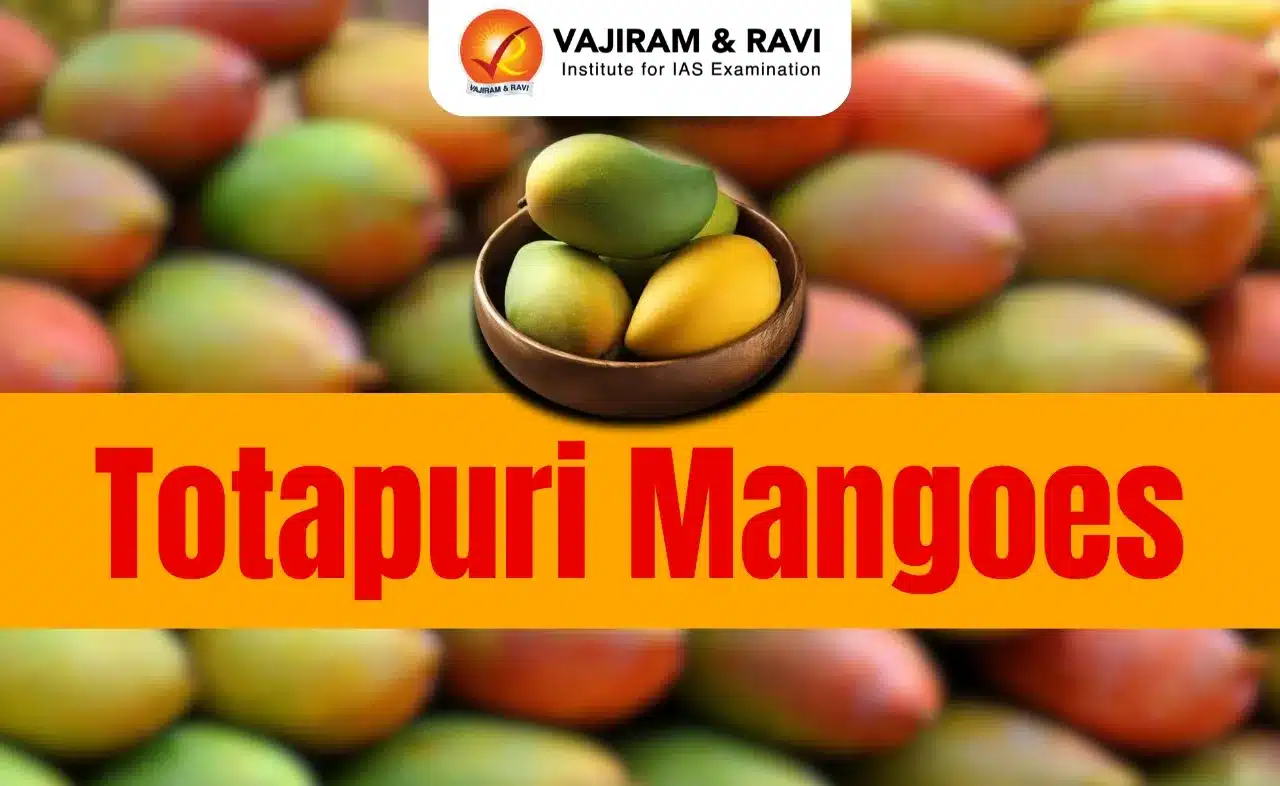
- It is known for its elongated shape and distinct parrot beak-like tip (hence “Totapuri”), the variety is valued for its juice and pulp.
- It is indigenous to South India and also known by other names such as Ginimoothi, Sandersha, Banglora.
- Totapuri mangoes are used aplenty in mango drinks manufactured and distributed across the country.
- These mangoes are largely supplied to processing units that extract mango pulp for commercial use, both domestically and internationally.
Climatic conditions required for Totapuri mangoes
- Soil: Thrives in well-drained, loamy soils with a neutral to slightly acidic pH.
- Climate: Best suited for tropical climates with moderate to high temperatures.
Nutritional Value of Totapuri mangoes
- Vitamins: Rich in Vitamin C and Vitamin A, supporting immune function and eye health.
- Minerals: Contains calcium, potassium, and magnesium, which are vital for bone health and muscle function.
- Antioxidants: Provides antioxidants that protect cells from damage and support skin health.
Source: IE
Totapuri mangoes FAQs
Q1: What is the king of all mangoes?
Ans: Alphonso mangoes
Q2: What is the meaning of Totapuri?
Ans: Parrot face

