Union Territories of India, Capitals, Establishment Dates, Largest & Smallest UT

Union Territories of India

India, as a union of states, is a sovereign, socialist, secular, and democratic republic governed under a Parliamentary system. A Union Territory (UT) is a distinct administrative unit directly governed by the Central Government. The President of India serves as the constitutional head of the Executive at the Union level. These territories hold a unique status due to their historical formation and governance structure.

Union Territories of India

During the 18th century, Chief Commissioners' Provinces were established, and these regions were directly governed by a Chief Commissioner, who reported to the Governor-General or Viceroy of India, depending on the period. The formation of Union Territories took place following the implementation of the States Reorganisation Act, 1956. It was the Constitution (Seventh Amendment) Act of 1956 that introduced the concept of Union Territories as a distinct administrative framework within India.

List of Union Territories of India

India, as a union of states, is a Sovereign, Secular, and Democratic Republic governed under a Parliamentary system. The President serves as the constitutional head of the Union's Executive, while Union Territories are administered on their behalf through appointed representatives. The table below provides an overview of these Union Territories, including the capitals and date of creation:

List of Union Territories of India
S.no Union Territory Capital Date of Creation

1

Puducherry

Puducherry

1st November 1954

2

Andaman and Nicobar Islands

Port Blair

1st November 1956

3

Chandigarh

Chandigarh

1st November 1956

4

Lakshadweep

Kavaratti

1st November 1956

5

Delhi

Delhi

1st November 1956

6

Jammu and Kashmir

Srinagar (Summer)

Jammu (Winter)

31st October 2019

7

Ladakh

Leh

31st October 2019

8

Dadra and Nagar Haveli and Daman and Diu 

Silvassa and Daman

26th January 2020

Constitutional Provision of Union Territories of India

The Constitutional Provision of Union Territories of India are outlined in Part VIII of the Indian Constitution, specifically in Articles 239 to 241. These provisions establish the framework for governing Union Territories:

  1. Article 239 of the Constitution of India gives powers to the President to administer Union Territories through appointed administrators.
  2. Article 239A, introduced in 1962, grants Parliament the authority to establish legislatures and governance structures for certain Union Territories.
  3. Article 239AA, was added in the constitution after the 69th Constitutional Amendment Act of 1991 which provides special provisions for the administration of the National Capital Territory of Delhi.

Special Provisions for Delhi

The 69th Constitutional Amendment Act of 1991 granted special status to the Union Territory of Delhi, renaming it the National Capital Territory (NCT) of Delhi. The Lieutenant Governor serves as its administrator.

Key provisions under this amendment include:

  1. Legislative Assembly & Council of Ministers: The amendment established a 70-member legislative assembly, with all members directly elected, replacing the previous Executive Council and Metropolitan Council. Elections are conducted by the Election Commission of India.
  2. Legislative Powers: The assembly can legislate on matters in the State List and Concurrent List, except for public order, police, and land, which remain under central government control.
  3. Council of Ministers: The council’s strength is 10% of the assembly’s total members, meaning seven ministers, including the Chief Minister.

Appointment of Ministers

  1. The Chief Minister is appointed by the President (not the Lieutenant Governor).
  2. Other ministers are appointed by the President on the advice of the Chief Minister.
  3. Ministers serve at the pleasure of the President.

Andaman and Nicobar Islands

The Andaman and Nicobar Islands have a humid tropical climate, indigenous tribes, and distinct island groups. The Andaman hosts Negrito tribes, while the Nicobar is home to Mongoloid tribes, preserving unique traditions.

Andaman and Nicobar Islands
Particulars Description

Area

8,249 sq. km

Population

4 lakh (approx)

Capital

Port Blair

Languages

Hindi, Nicobarese, Bengali, Tamil, Malayalam, Telugu

Dadra and Nagar Haveli and Daman and Diu

Recently, Daman and Diu merged with Dadra and Nagar Haveli to form a single Union Territory, Dadra and Nagar Haveli and Daman and Diu.

From 1954 to 1961, the region operated independently under the "Free Dadra and Nagar Haveli Administration." However, on 11 August 1961, it was officially integrated into the Indian Union and has since been governed as a Union Territory under the administration of the Government of India.

Dadra and Nagar Haveli and Daman and Diu
Particulars Description

Area

491 sq km

Population

4 Lakhs (Approx)

Capital

Silvassa

Languages

Gujarati, Hindi

Lakshadweep

Lakshadweep, India's smallest Union Territory, consists of 12 atolls, three reefs, and 27 coral islands, with only 11 of them inhabited. Initially Hindu, islanders converted to Islam under Arab traders in the 14th century. Renamed in 1973, it has been directly governed by the Union Government since 1956.

Lakshadweep
Particulars Description

Area

32 sq. km

Population

64,429 ( Approx )

Capital

Kavaratti

Principal Languages

Malayalam, Jeseri (Dweep Bhasha) and Mahal

Puducherry

Puducherry, a former French colony, includes Puducherry, Karaikal, Mahe, and Yanam, merging with India on 1st November 1954 after 138 years of French rule. Scattered across South India, these regions are bordered by Tamil Nadu, Kerala, Andhra Pradesh, and the Bay of Bengal, each with distinct geographical locations.

Puducherry
Particulars Description

Area

479 sq km

Population

12,44,464 (Approx)

Capital

Puducherry

Principal Languages

Tamil, Telugu, Malayalam, English and French

Chandigarh

Chandigarh, known as the "City Beautiful," is a well-planned city nestled in the Shivalik foothills. Designed by French architect Le Corbusier, it represents modern architecture and urban planning. Declared a Union Territory on 1st November 1966, it serves as the joint capital of Punjab and Haryana, bordered by both states.

Chandigarh

Particulars

Description

Area

114 sq km

Population

10,54,686 (Approx)

Capital

Chandigarh

Principal Languages

Hindi, Punjabi, English

Ladakh

Ladakh became a Union Territory on 31st October 2019, comprising Leh and Kargil districts. Known for its stunning mountain landscapes and unique culture, Ladakh remains a region of natural beauty and strategic significance.

Jammu and Kashmir

Jammu and Kashmir

Union Territories

India

Capital

Jammu ( winter ), Srinagar ( summer )

Area

222,236 sq.km

Languages

Urdu, Dogri, Kashmiri, Pahari, Ladakhi, Balti, Gojri and Dari


Union Territories of India FAQs

Q1: Which are 8 union territories in India?

Ans: Ladakh, Jammu & Kashmir, Puducherry, Lakshadweep, Delhi, Chandigarh, Dadra and Nagar Haveli and Daman & Diu, Andaman and Nicobar Islands.

Q2: Which state is removed from 29?

Ans: In June 2014, Telangana was separated from Andhra Pradesh as the 29th state of the union, following the Telangana movement.

Q3: Is India a 28 or 29 state?

Ans: India has 28 states, and not 29 states.

Q4: Are there 9 union territories in India?

Ans: There are 28 states and 8 Union territories in the country.

Q5: Was Goa a Union Territory?

Ans: Goa and two other former Portuguese enclaves became the union territory of Goa, Daman and Diu.

AYUSH Entrepreneurship Development Program, Key Initiatives

AYUSH Entrepreneurship Development Program

The Ministry of AYUSH, in collaboration with the Ministry of Micro, Small, and Medium Enterprises (MSME), has launched the AYUSH Entrepreneurship Development Programme recognized by the NCISM Act, 2020 and the NCH Act, 2020. This initiative aims to uplift the AYUSH (Ayurveda, Yoga and Naturopathy, Unani, Siddha, and Homeopathy) sector through various schemes and programs facilitated by the MSME Ministry.

AYUSH Sector Challenges

  1. Limited progress in the scientific validation of AYUSH practices which limits their acceptance on a global scale despite significant investments. 
  2. Many skilled practitioners are shifting away from traditional systems for better career prospects, leaving a gap in workforce availability.
  3. Existing AYUSH facilities and resources are not being used to their full potential which leaves the infrastructure insufficiently used.
  4. While there is a growing international demand for AYUSH therapies and products, challenges like lack of export and limited enterprise support which restrict their global outreach.
  5. Ayurvedic raw materials, often found in rural, tribal, and forested areas, require better processing infrastructure for effective utilization and job creation.

AYUSH Sector Opportunity

  • Export Opportunity: Indian Ayurveda, Yoga, and Siddha systems are gaining attention worldwide. Entrepreneurs can establish clinics or outlets abroad to fulfill this demand.
  • Employment Opportunity: Setting up processing units and AYUSH clusters in resource-rich areas can promote job creation, enterprise development, and self-employment opportunities.

AYUSH Entrepreneurship Development Program Key Initiatives

  • Collaboration with MSME: The Ministry of Ayush has partnered with the Ministry of Micro, Small & Medium Enterprises (MSME) to promote Ayush enterprises.
  • Initiatives include:
  • 10 Awareness Programs on Digital Advertisement, E-Marketing, GST, and GeM.
  • 7 National Seminars/Workshops on packaging, marketing, and export promotion of Ayush products.
  • Establishment of AIIA-ICAINE: The All India Institute of Ayurveda (AIIA) has launched the Incubation Centre for Innovation and Entrepreneurship (AIIA-ICAINE) to support startups in the Ayush sector.
  • ARIVU by CCRS: The Central Council of Research in Siddha (CCRS) has initiated the Academia-Industry Research Incubation for Value-chain Upgradation (ARIVU) to:
  • Promote innovation and entrepreneurship in Siddha Research.
  • Translate novel ideas into products, processes, and services for social and commercial benefits.
  • Research and Innovation Partnerships: Collaborations with organizations like CSIR, ICAR, DBT, and various IITs to advance research, innovation, and higher education in Ayush.
  • CCRAS Post Doctoral Fellowship Scheme: The Central Council for Research in Ayurvedic Sciences (CCRAS) offers 10 Post Doctoral Fellowships annually to outstanding PhD/PG graduates in Ayurveda and related disciplines.
  • MoU with AGNIi: On November 6, 2019, CCRS signed an MoU with Accelerating Growth of New India Innovation (AGNIi) for the commercialization of R&D technologies and product development.

AYUSH Entrepreneurship Development Program FAQs

Q1: What is the entrepreneurship development program?

Ans: The EDP aims to empower individuals with the confidence, skills, and resources to become successful entrepreneurs, contributing to economic growth and job creation.

Q2: What are the 7 AYUSH systems?

Ans: Ayush is an acronym for Ayurveda, Yoga & Naturopathy, Unani, Siddha, Sowa Rigpa and Homoeopathy. 

Q3: What is the AYUSH scheme?

Ans: Central Sector Scheme for Promotion of International Cooperation (IC) in Ayush. 

Q4: What is the scope of AYUSH courses?

Ans: AYUSH graduates have diverse opportunities for further education, government service, and research, enabling them to make significant contributions to the healthcare sector.

Q5: Who founded AYUSH?

Ans: The Department of Indian Systems of Medicine and Homeopathy (ISM&H) was established in 1995 under the Ministry of Health and Family Welfare.

International Financial Services Centres Authority (IFSCA)

International Financial Services Authority (IFSCA)

International Financial Services Centres Authority Latest News

The largest privately owned bank in Taiwan, CTBC Bank, is the latest to apply to the International Financial Services Centres Authority (IFSCA) for setting up a IFSC Banking Unit (IBU) in GIFT City.

About International Financial Services Centres Authority

  • It is a statutory authority established under the International Financial Services Centres Authority Act, 2019 (IFSCA Act).
  • The IFSCA is a unified authority for the development and regulation of financial products, financial services, and financial institutions in the International Financial Services Centre (IFSC) in India. 
  • The IFSCA aims to develop a strong global connection and focus on the needs of the Indian economy as well as to serve as an international financial platform for the entire region.
  • Prior to the establishment of IFSCA, the domestic financial regulators, namely, RBI, SEBI, Pension Fund Regulatory and Development Authority (PFRDA), and Insurance Regulatory and Development Authority (IRDAI), regulated the business in IFSC.
  • It is headquartered at GIFT City, Gandhinagar, in Gujarat.
  • At present, the GIFT IFSC is the maiden IFSC in India.

Members of International Financial Services Centres Authority

  • It consists of nine members, appointed by the central government.
  • They will include the chairperson of the authority, a member each from the RBI, SEBI, IRDAI, and PFRDA.
  • Two members from the Ministry of Finance. 
  • In addition, two other members will be appointed on the recommendation of a Selection Committee.
  • Term: All members of the IFSC Authority will have a term of three years, subject to reappointment.

Source: THB

International Financial Services Centres Authority FAQs

Q1: Under which Act was the International Financial Services Centres Authority (IFSCA) established?

Ans: International Financial Services Centres Authority Act, 2019

Q2: What is the primary objective of the International Financial Services Centres Authority (IFSCA)?

Ans: To develop and regulate financial products, services, and institutions in International Financial Services Centre (IFSC) in India.

Q3: Where is the headquarters of the International Financial Services Centres Authority (IFSCA) located?

Ans: Gandhinagar

Pong Dam Lake Wildlife Sanctuary

Pong Dam Lake Wildlife Sanctuary

Pong Dam Lake Wildlife Sanctuary Latest News

Hundreds of buffaloes can be seen grazing freely in the restricted Pong wildlife sanctuary area in Samkehar, Bathu and Panalath near the Pong Wetland in clear violation of sanctuary norms.

About Pong Dam Lake Wildlife Sanctuary

  • Pong Dam Lake (also known as Maharana Pratap Sagar) is a manmade reservoir formed due to the construction of Pong Dam on the Beas River in the wetland zone of the Shivalik hills in the Kangra district of Himachal Pradesh
    • The Pong Dam is the highest earth-fill dam in India and was constructed in 1975.
  • It is one of the largest man-made wetlands in Northern India. 
  • Covering about 245 sq.km., the sanctuary comprises the water body of the reservoir as well as surrounding wetland environments.
  • Pong Dam Lake was designated a Ramsar site in 2002.
  • Flora: Consists of submerged vegetation, grasslands, and forests, including species like eucalyptus, acacia, and shisham.
  • Fauna
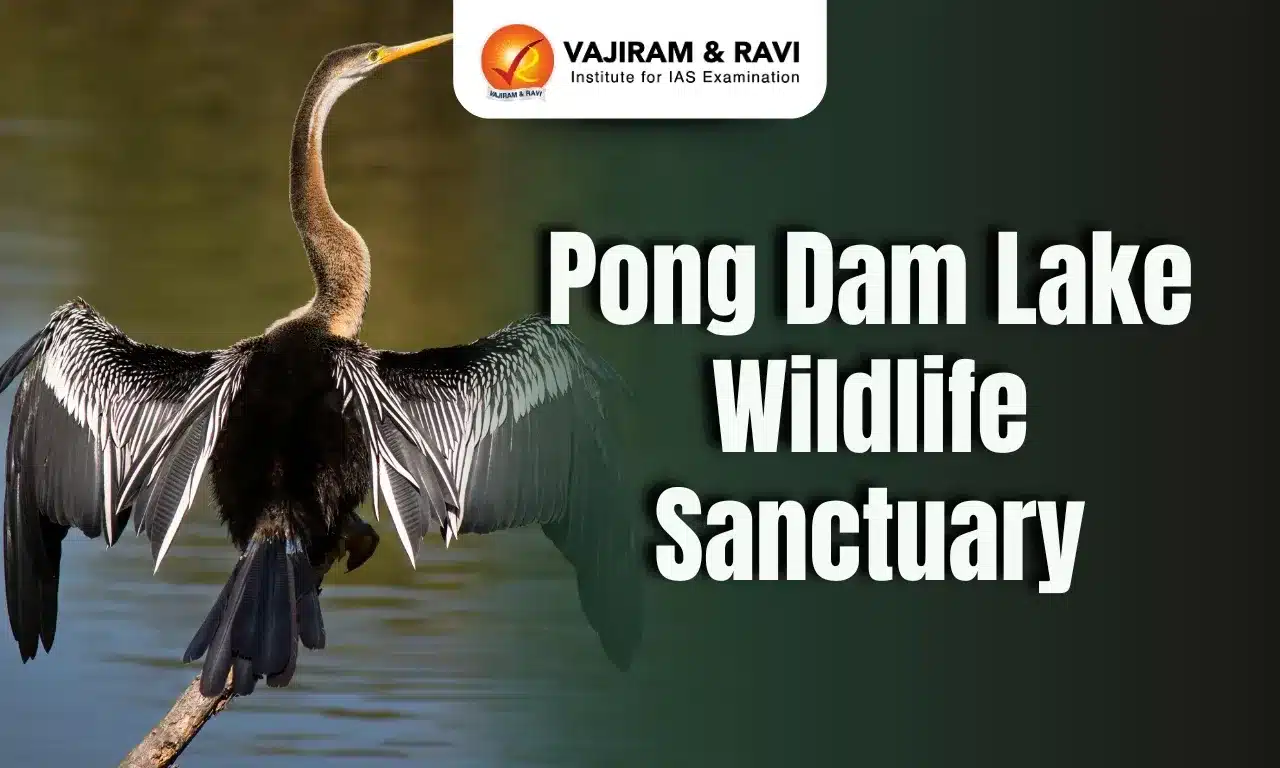
    • Given the site’s location on the trans-Himalayan flyway, more than 220 bird species have been identified, with 54 species of waterfowl.
    • Avifauna include Bar-headed geese, Pintails, common pochards, coots, Grebes, Cormorants, Herons, Storks, , angle fowls, peafowl, Grey partridges, etc.
    • It is also home to animals like Sambar, Barking Deer, Wild Bear, Nilgai, Clawless Otter, and Leopards.

Source: TI

Pong Dam Lake Wildlife Sanctuary FAQs

Q1: Where is Pong Dam Lake located?

Ans: Kangra district of Himachal Pradesh

Q2: Is Pong Dam a Ramsar site?

Ans: Yes, Pong Dam Lake (Maharana Pratap Sagar) is a Ramsar site.

Q3: On which river is the Pong Dam constructed?

Ans: Beas

Bhadrakali Lake

Bhadrakali Lake

Bhadrakali Lake Latest News

Activists urge the Telangana government to rethink island development in Bhadrakali Lake amid lake shrinkage concerns.

About Bhadrakali Lake

  • It is an artificial lake located in Warangal, Telangana.
  • It covers an area of approximately 32 acres. The lake stretches to 2 km in distance.
  • It is believed to have been built during the 12th century by the Ganapati Deva of the Kakatiya dynasty.
  • The lake is connected to the Maneru Dam via the Kakatiya Canal and was initially formed for drinking water resources. 
  • The main highlight of the lake is the Bhadrakali Temple, located on one of the islands within the lake. 
    • It is an ancient temple which was originally built during the Chalukyan reign in 625 AD.
    • The temple is dedicated to Goddess Bhadrakali, an incarnation of Goddess Durga.

Source: DC

Bhadrakali Lake FAQs

Q1: Where is Bhadrakali Lake located?

Ans: Warangal, Telangana

Q2: Approximately how much area does Bhadrakali Lake cover?

Ans: It covers an area of approximately 32 acres.

Q3: Who is believed to have constructed Bhadrakali Lake?

Ans: It is believed to have been built during the 12th century by the Ganapati Deva of the Kakatiya dynasty.

Q4: Bhadrakali Lake is connected to which dam via the Kakatiya Canal?

Ans: Maneru Dam

BRICS Grouping

What is ‘BRICS’ Grouping?

BRICS Grouping Latest News

U.S. President Donald Trump’s threat to impose 10% tariffs on members of the BRICS grouping that held a summit in Rio de Janeiro recently is the latest in a series of similar threats.

About BRICS Grouping

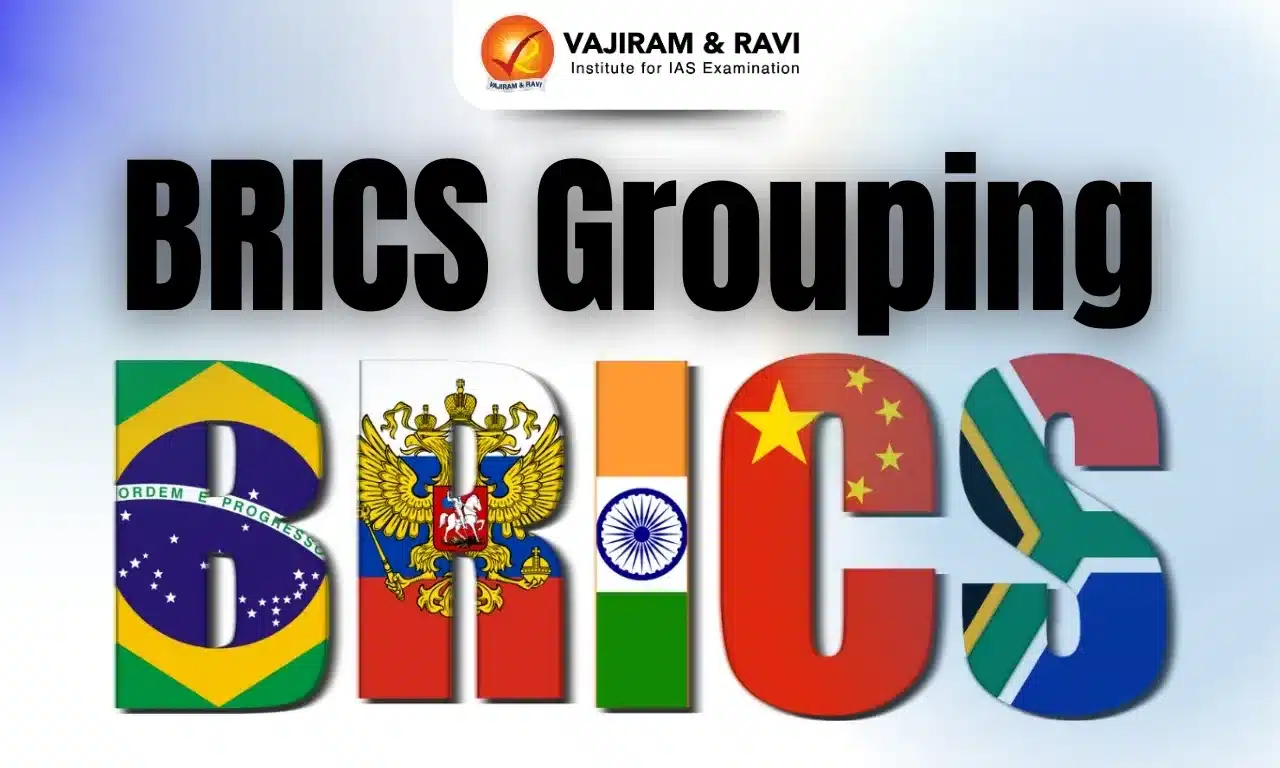
  • BRICS is an acronym for Brazil, Russia, India, China, and South Africa, a bloc of countries that formed a partnership following the creation of an acronym ‘BRIC’ in 2001 by Goldman Sachs economist Jim O’Neill (but it didn’t include South Africa at the time).
  • Representatives of the BRIC countries first began meeting informally during the 2006 meeting of the United Nations General Assembly.
  • South Africa joined in 2010, making it “BRICS”.
  • The objectives of BRICS include strengthening economic, political, and social cooperation among its members, as well as increasing the influence of Global South countries in international governance. 
  • The group seeks to improve the legitimacy, equity in participation, and efficiency of global institutions such as the UN, IMF, World Bank, and WTO. Moreover, it aims to bolster sustainable social and economic development and promote social inclusion.
  • BRICS work is based on action plans approved during annual summits since 2010.
  • BRICS Grouping New Members: Egypt, Ethiopia, Iran, the United Arab Emirates, and Indonesia.
  • The expanded group has a combined population of about 3.5 billion, or 45% of the world’s inhabitants.
  • Combined, members’ economies are worth more than $28.5tn – about 28% of the global economy.

New Development Bank (NDB)

  • NDB is a multilateral development bank established by BRICS with the purpose of mobilising resources for infrastructure and sustainable development projects in emerging markets and developing countries (EMDCs).
  • The Agreement was signed during the BRICS Summit held in Fortaleza in 2014, and the Bank started operations in 2015.
  • Headquarters: Shanghai, China, with regional offices in South Africa and Brazil.
  • The membership is open to members of the United Nations.
  • The voting power of each member shall equal its subscribed shares in the capital.
  • However, the share of the BRICS nations can never be less than 55% of the voting power. Also, none of the countries will have veto power.

Source: TH

BRICS Grouping FAQs

Q1: Who originally coined the term "BRIC"?

Ans: Jim O'Neill, Goldman Sachs economist.

Q2: When did representatives of the BRIC countries first start meeting informally?

Ans: 2006 (During the UN General Assembly)

Q3: Approximately what percentage of the global population is represented by the expanded BRICS grouping?

Ans: 45%

Q4: What is the estimated combined GDP of the expanded BRICS group as of 2025?

Ans: $28.5 trillion

NIRVIK Scheme (Niryat Rin Vikas Yojana), Objectives, Features

NIRVIK Scheme (Niryat Rin Vikas Yojana)

The Niryat Rin Vikas Yojana (NIRVIK) popularly known as Export Credit Insurance Scheme (ECIS), introduced by the Export Credit Guarantee Corporation of India (ECGC) to enhance credit availability and streamline the lending process for exporters. This initiative was introduced to strengthen India’s export ecosystem by ensuring easier access to export credit and making it more affordable for exporters. The scheme also aligns with the vision of the government to strengthen the export sector, especially benefiting MSMEs by making credit accessible, affordable, and secure.

NIRVIK Scheme Objectives

The NIRVIK Scheme aims to simplify the lending process and enhance loan accessibility for exporters, with a special focus on MSMEs.

NIRVIK Scheme Features

  1. The Scheme provides up to 90% coverage of both the principal and interest on loans which  includes pre-shipment and post-shipment credit, ensuring end-to-end protection.
  2. With the enhanced cover, interest rates for export credit will be:
    1. Foreign currency loans: Below 4%.
    2. Rupee loans: Below 8%.
  3. ECGC offered a credit guarantee of up to 60% of losses. 

NIRVIK Scheme Significances

  1. Higher insurance coverage reduces the risk for banks, encouraging them to extend credit to exporters.
  2. Simplified procedures enable exporters to access funds without extensive delays.
  3. Lower interest rates and greater financial assurance make Indian exports more competitive globally.
  4. The scheme particularly benefits small and medium enterprises, ensuring they can expand their reach in international markets.

NIRVIK Scheme FAQs

Q1: What is the Niryat Bharat scheme?

Ans: The Niryat Bharat scheme is a government scheme introduced by Export Credit Guarantee Corporation of India to enhance credit availability and streamline the lending process for exporters.

Q2: What are the schemes of ECGC?

Ans: Three schemes are offered under Special Schemes, they are: Transfer guarantee. Overseas investment insurance. Exchange fluctuation risk cover.

Q3: Which scheme has been launched for faster claim settlement of exporters?

Ans: NIRVIK is being launched which provides for high insurance cover, reduction in premium for small exporters and simplified procedures for claim settlement.

Q4: Who launched Atmanirbhar Bharat?

Ans: the Prime Minister of India Narendra Modi.

Q5: Who regulates ECGC?

Ans: Department of Commerce, Ministry of Commerce and Industry, Government of India.

Plague

Plague

Plague Latest News

A resident of north Arizona, United States, recently died from pneumonic plague, marking the first death in the region in 18 years.

About Plague

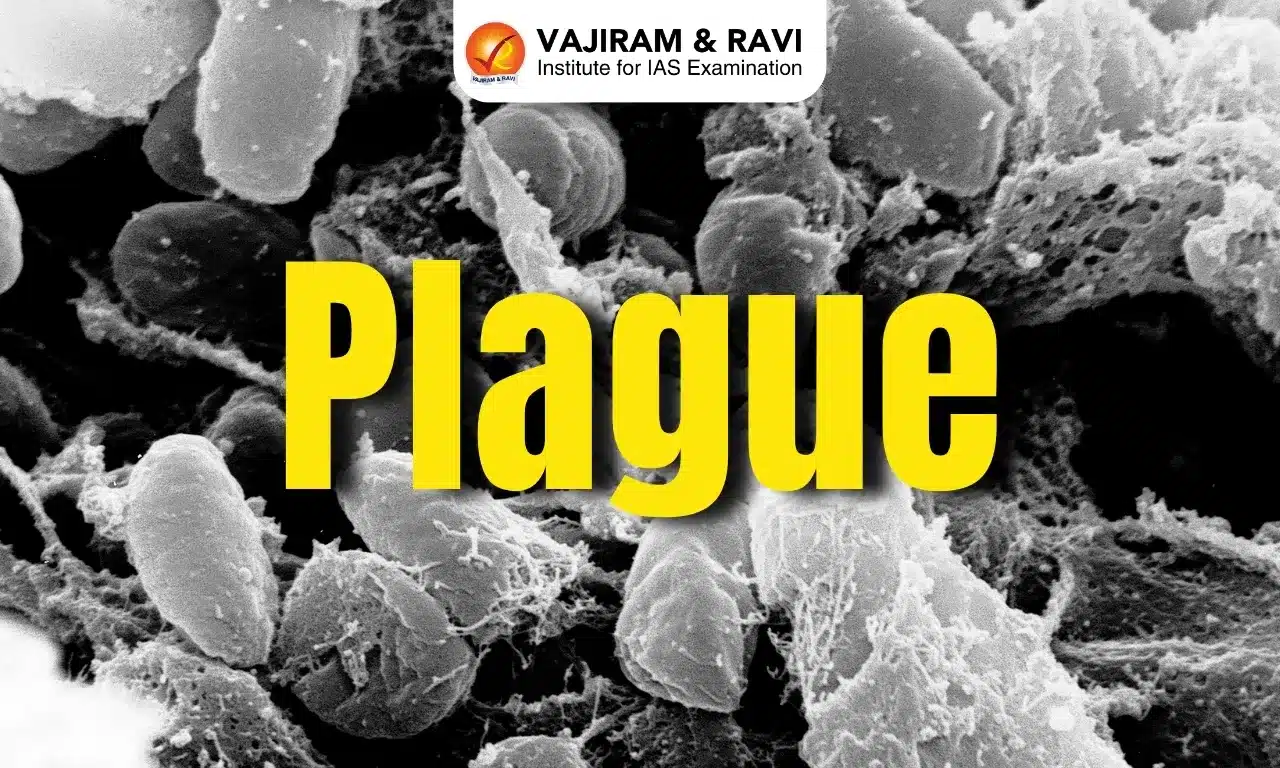
  • Plague is an infectious disease caused by a specific type of zoonotic bacterium called Yersinia pestis.
  • This disease usually spreads through bites from fleas that previously bit an infected animal.
  • Plague is infamous for killing millions of people in Europe during the Middle Ages. 
  • Nowadays, it is a rare but persistent cause of illness in rural areas in the western United States and certain regions of Africa and Asia.
  • There are three types of plague.  Bubonic plague infects your lymph nodes, septicemic plague is in your blood and pneumonic plague affects your lungs.
  • Pneumonic plague, which spreads to the lungs from other untreated forms of plague, is the most serious and is usually rare.
  • Plague can be a very severe disease in people, with a case-fatality ratio of 30% to 60% for the bubonic type, and is always fatal for the pneumonic kind when left untreated.
  • Plague can be cured with antibiotics, but these must be given promptly to prevent serious illness or death.

Source: LM

Plague FAQs

Q1: What is the causative agent of plague?

Ans: It is caused by a specific type of zoonotic bacterium called Yersinia pestis.

Q2: How is plague most commonly transmitted to humans?

Ans: Bites from fleas that have fed on infected animals.

Q3: What are the three main types of plague?

Ans: Septicemic, pneumonic, and bubonic

Operation Shiva

Operation Shiva

Operation Shiva Latest News

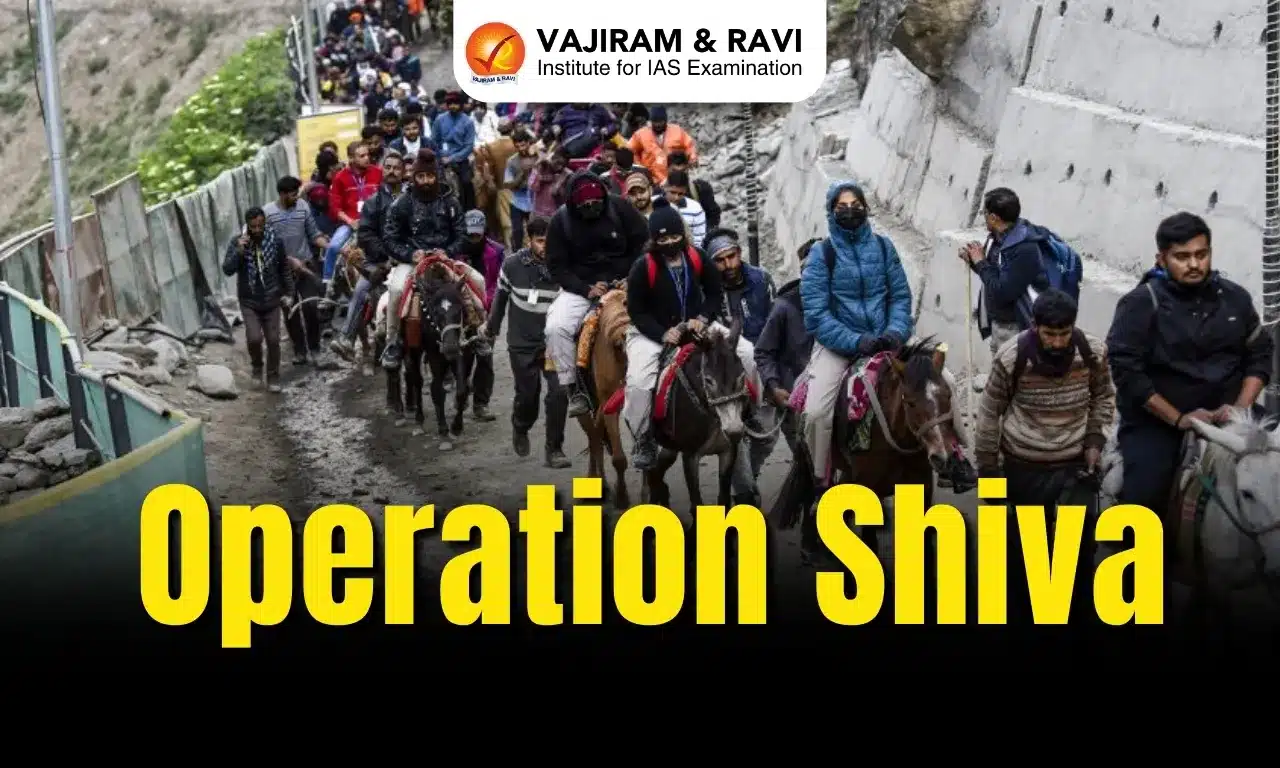
The Indian Army recently launched Operation Shiva as part of a multi-tier security setup to secure the ongoing Amarnath Yatra.

About Operation Shiva

  • It was launched by the Indian Army to ensure the smooth and secure conduct of the Amarnath Yatra.
    • The Amarnath Yatra is an annual Hindu pilgrimage to the sacred Amarnath Cave in Jammu & Kashmir (elevation ~3,888 m), where a naturally formed ice Shivling – believed to symbolize Lord Shiva – emerges. 
  • Operation Shiva is being carried out in close coordination with the civil administration and Central Armed Police Forces (CAPFs).
  • This annual high-tempo operation aims to provide robust security architecture along both the Northern and Southern Yatra routes, particularly in light of the heightened threat from Pakistan-backed proxies in the aftermath of Operation Sindoor.
  • Over 8,500 troops have been deployed, supported by a wide array of technological and operational resources.
  • The operation involves "a dynamic counter-terrorism grid, prophylactic security deployment, and corridor protection measures.
  • Comprehensive assistance to civil authorities is also being provided, particularly in disaster management and emergency response.
  • A Counter-Unmanned Aerial System (C-UAS) grid with more than 50 C-UAS and Electronic Warfare (EW) systems each to neutralise drone threats has been set up.
  • Signal companies for seamless communication, EME (Electronics and Mechanical Engineers) detachments for technical support, and Bomb Detection & Disposal Squads have been deployed.
  • The Unmanned Aerial Vehicles (UAVs) are being deployed on regular missions and live monitoring of Yatra routes and the Holy Cave.
  • Engineer task forces have also been deployed for bridge construction, track widening, and disaster mitigation, with more than 150 doctors and medical personnel, two advanced dressing stations, nine medical aid posts, a 100-bed hospital, and 26 oxygen booths supported by 2,00,000 litres of oxygen.
  • By implementing live tracking of yatra convoys between Jammu and the holy cave, the Army is maintaining constant situational awareness through high-resolution PTZ camera and drone feeds.

Source: NDTV

Operation Shiva FAQs

Q1: What is the main objective of Operation Shiva launched by the Indian Army?

Ans: To ensure the smooth and secure conduct of the Amarnath Yatra.

Q2: How many troops have been deployed for Operation Shiva?

Ans: Over 8,500

Q3: What role do UAVs (Unmanned Aerial Vehicles) play in Operation Shiva?

Ans: Monitoring yatra routes and the Holy Cave

Software Technology Parks of India (STPI)

Software Technology Parks of India

Software Technology Parks of India 

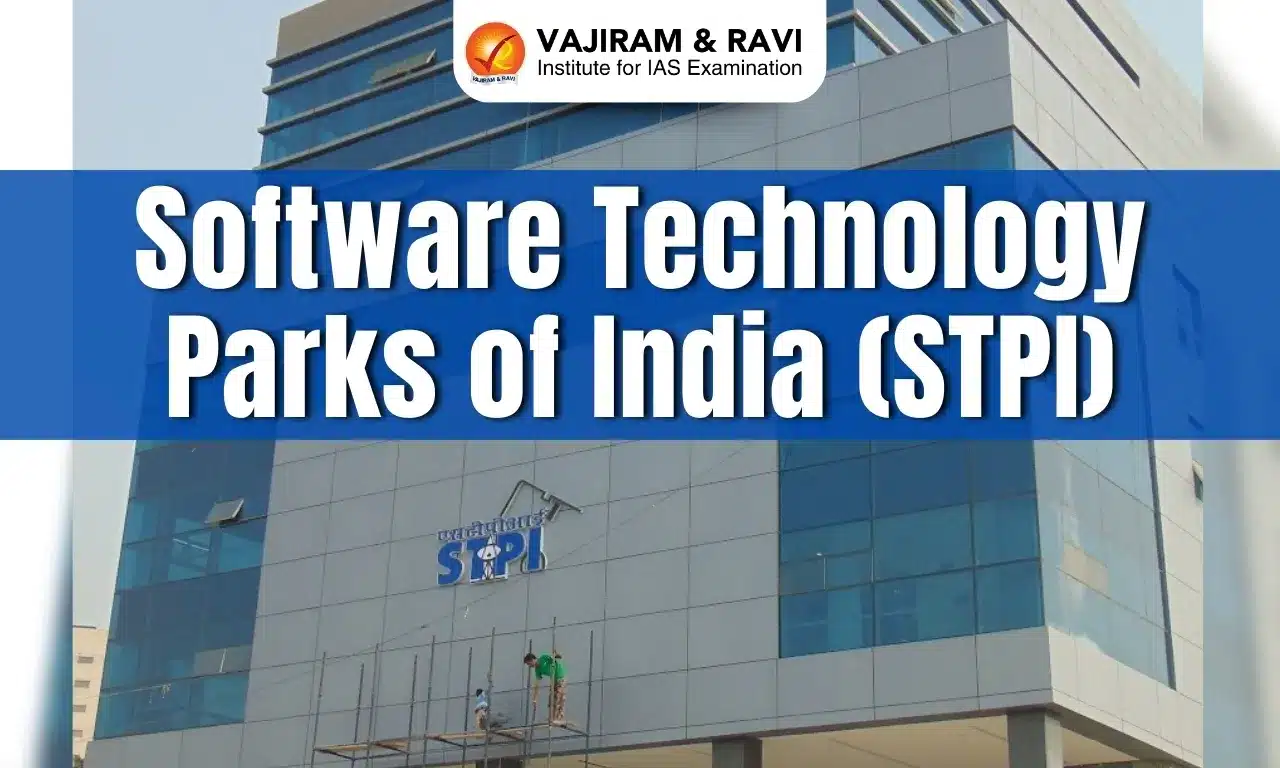
Software Technology Parks of India is now repositioning itself to be able to drive the next wave of digital transformation that is set to sweep across the country.

About Software Technology Parks of India

  • STPI was established in 1991 as an autonomous society under the Ministry of Electronics and Information Technology (MeitY). 
  • STPI strives to promote software exports from the country and has been implementing the Software Technology Park (STP) scheme and Electronics Hardware Technology Park (EHTP) scheme for the promotion of the IT/ITES industry.
  • STPI helps in facilitating software development, export, and compliance with regulatory requirements, including customs and foreign exchange rules.
  • Further, STPI is nurturing pan India start-up ecosystem through its initiatives like Centres of Entrepreneurship (CoEs) & Next Generation Incubation Scheme (NGIS).
  • STPI Services:
    • Infrastructure Support: Provides plug-and-play office space with IT infrastructure for software exporters.
    • Customs Clearances: Facilitates duty-free imports of capital goods, consumables, and other goods necessary for software export.
    • Statutory Compliance: Ensures compliance with export regulations and assists companies in meeting their export obligations.
    • Consultation and Guidance: Offers advice and support on matters related to exports, tax exemptions, and regulatory issues.

Source: TH

Software Technology Parks of India FAQs

Q1: When was the Software Technology Parks of India (STPI) established?

Ans: 1991

Q2: Software Technology Parks of India (STPI) was set up under which Ministry?

Ans: Ministry of Electronics and Information Technology

Q3: What is the primary objective of Software Technology Parks of India (STPI)?

Ans: To promote software exports from India.

Revisiting Eco-Sensitive Zone (ESZ) Guidelines – Towards Ecological and Socio-Economic Balance

Eco-Sensitive Zone

Eco-Sensitive Zone (ESZ) Latest News

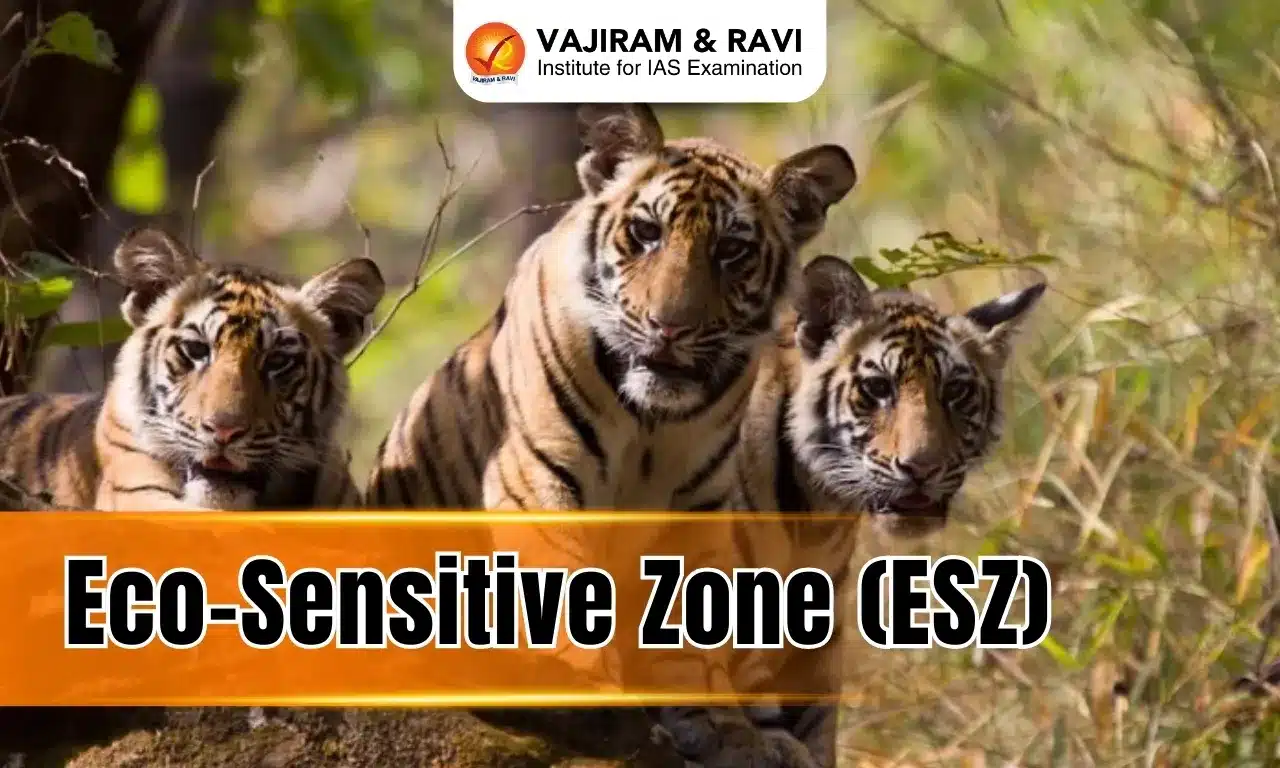
  • The recent meeting of the Standing Committee of the National Board for Wildlife (SC-NBWL), chaired by the Union Environment Minister, resolved to revisit the 2011 guidelines on Eco-Sensitive Zones (ESZs). 
  • The move comes amid concerns about the need for more region-specific, flexible, and balanced ecological governance around India’s protected areas.

Eco-Sensitive Zones (ESZs)

  • Meaning: 
    • Also known as Ecologically Fragile Areas (EFAs), these are areas notified and regulated by the Union Ministry of Environment, Forest and Climate Change (MoEFCC) around Protected Areas, National Parks and Wildlife Sanctuaries. 
    • The purpose of declaring ESZs:
      • To create some kind of shock absorbers to the protected areas by regulating and managing the activities around such areas. 
      • To act as a transition zone from areas of high protection to areas involving lesser protection.
  • Statutory backing: The Environment (Protection) Act 1986 does not mention the word "Eco-Sensitive Zones", however, the government of India effectively uses the act to declare ESZs.
  • The 2011 guidelines: Issued by the MoEF & CC, it provides a framework for declaring ESZs. 
  • Extent of ESZ: An ESZ could extend up to 10 km around a protected area.

Revision of ESZ Guidelines

  • Objective: Make ESZ norms site-specific and aligned with ecological and socio-economic conditions.
  • Current status: 2011 guidelines offer an indicative framework on land-use classification and activity regulation (permitted, regulated, prohibited).
  • SC directive: Union Environment Ministry to - 
    • Draft a revised note on ESZs,
    • Hold international consultations with relevant divisions (impact assessment, forest conservation, wetlands),
    • Conduct multi-stakeholder consultations, and
    • Submit findings for further deliberation.

Need for Site-Specific ESZ Framework

  • Blanket 10-km norm ineffective: Uniform 10-km ESZ rule is ecologically irrational and developmentally restrictive in varied regions.
  • Examples:
    • Urban parks: Sanjay Gandhi National Park (Mumbai), Asola Bhatti Sanctuary (Delhi).
    • Hill states: Himachal Pradesh has 65% area under forests or protection — strict ESZs may obstruct development.

State-wise Concerns and Inputs

  • Himachal Pradesh: Commercial activity regulations affect livelihoods of local people.
  • Kerala: Fear of additional restrictions in ESZs discouraged declaration of new sanctuaries.
  • Tamil Nadu and Karnataka: Expressed the need for more pragmatic ESZ implementation frameworks.

Gaps in Compliance Monitoring

  • SC-NBWL directive:
    • Chief Wildlife Wardens of all states must submit compliance reports on cleared infrastructure projects (mining, railways, highways).
    • Non-compliance penalty: Proposals from defaulting states won’t be considered.
  • Concern raised:
    • Implementation of terms and conditions not monitored adequately.
    • The committee urged stricter scrutiny and accountability.

Emerging Ecological Concerns

  • Large renewable energy projects:
    • Concerns: Solar/wind plants near protected areas (PAs) threaten wildlife migration routes and habitats.
    • Recommendation: Reclassify/promote regulated activity status even for green projects based on their scale.
  • Marine ecosystem oversight:
    • Current land-centric ESZ norms unsuited for marine sanctuaries.
    • Call for marine-specific regulatory principles.

Critical Reflections on 2011 Guidelines

  • Guidelines were already flexible and allowed for region-specific customization.
  • Question raised on whether further dilution could undermine core ecological safeguards.

Role of SC-NBWL

  • Functions as an advisory body for wildlife policy, conservation strategy, and project appraisals within and around protected areas.
  • As of last year, 347 final ESZ notifications were published by the ministry.

Source: IE

Eco-Sensitive Zone (ESZ) FAQs

Q1: Why is SC-NBWL revising the 2011 ESZ guidelines?

Ans: To make ESZs more region-specific and aligned with local ecological and socio-economic contexts.

Q2: Why is a uniform 10-km ESZ not suitable for all areas?

Ans: Because it ignores urban constraints and geographical diversity, hindering development in some regions.

Q3: What concerns have states raised on ESZ implementation?

Ans: States flagged livelihood issues, excessive restrictions, and need for flexible norms.

Q4: What compliance step has SC-NBWL mandated for states?

Ans: Submission of compliance reports on cleared projects or face proposal rejection.

Q5: What is the conflict in ESZ demarcation?

Ans: It lies in balancing conservation with local development needs.

Debate on Inequality in India

Inequality in India

Inequality in India Latest News

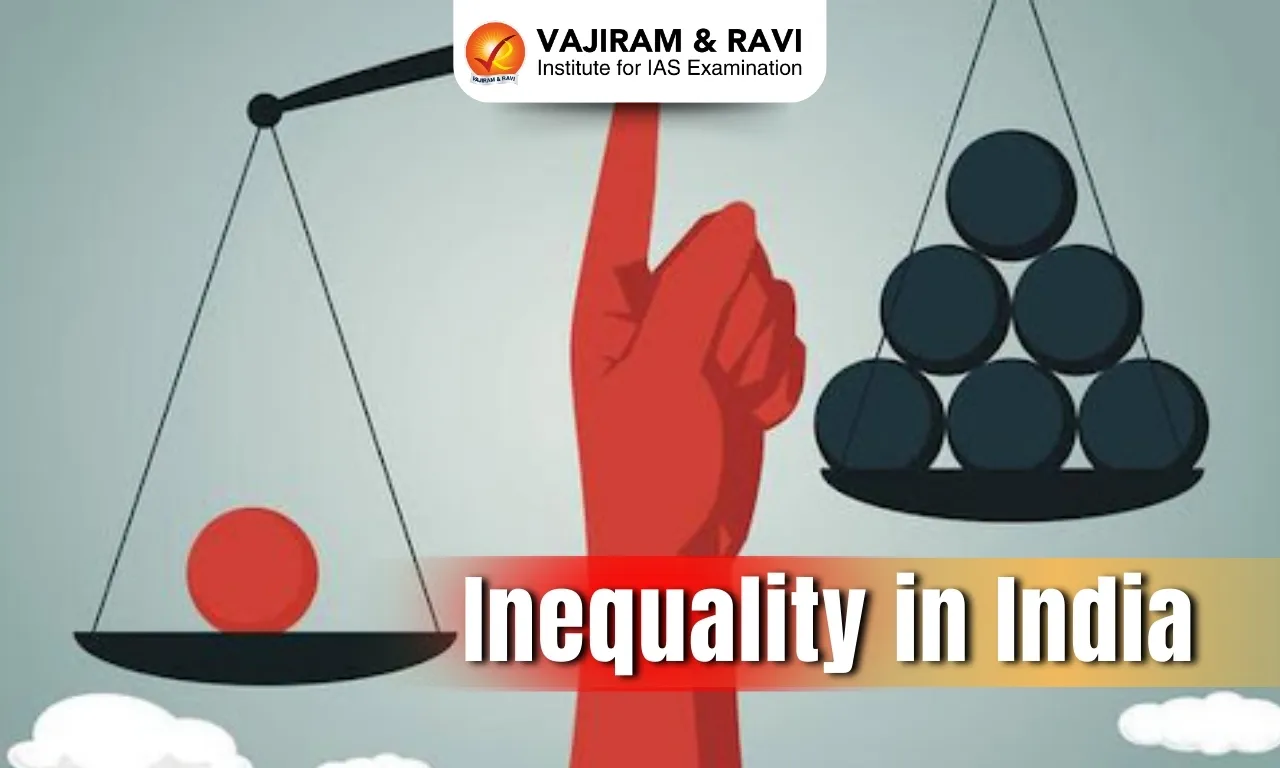
  • A recent World Bank report has triggered debate by claiming low and falling inequality in India, based on consumption data. 
  • However, independent studies and expert analyses challenge this narrative, revealing high and rising levels of income and wealth inequality, raising concerns over data reliability, methodology, and policy implications.

World Bank Report and Government Response

  • Claim
    • Gini coefficient fell from 0.288 (2011-12) to 0.255 (2022-23), indicating one of the lowest inequality levels globally.
    • The Gini coefficient is a statistical measure that represents income or wealth inequality within a group or country. 
    • It ranges from 0 to 1, with 0 indicating perfect equality (everyone has the same income/wealth) and 1 indicating perfect inequality (one person has all the income/wealth). 
    • Higher Gini coefficients signify greater inequality. 
  • Government's take: The findings were presented as evidence of successful economic policies and inclusive growth.
  • Counterview: Critics argue this does not reflect income or wealth inequality, but only consumption inequality, which is inherently less unequal. 

Understanding Consumption Inequality

  • Definition: Inequality in spending patterns, not in income or wealth distribution.
  • Reasons it understates true inequality:
    • Poor households consume most of their income; wealthier households save more.
    • Consumption does not increase at the same rate as income.
  • Data source issues: Based on Household Consumption Expenditure Surveys (HCES) 2011-12 and 2022-23, which -
    • May miss high-end consumption.
    • Are methodologically inconsistent, making comparisons unreliable.
    • Even the official release cautions against drawing such direct comparisons.

Income and Wealth Inequality in India

  • True picture from World Inequality Database (WID):
    • Income Gini (2022-23): 0.61 (one of the highest globally, 170 countries rank lower).
    • Wealth Gini (2022-23): 0.75 (67 countries have lower concentration).
  • Trends over time:
    • Income Gini rose from 0.47 (2000) to 0.61 (2023).
    • Wealth Gini rose from 0.70 (2000) to 0.75 (2023).
  • Concentration of wealth:
    • The top 1% own  approx. 40% of personal wealth.
    • Only Uruguay, Eswatini (Swaziland), Russia, and South Africa have higher concentration.

Limitations of Gini Coefficient

  • Aggregate measure: Doesn't show distributional details like top 1% share.
  • Fails to capture:
    • Extreme inequality at the top.
    • Inter-generational wealth accumulation.
    • Social impacts of high inequality (e.g., reduced social mobility, political capture).

The Paradox of Falling Consumption Inequality

  • Explained: Rising incomes lead the poor to consume more, while the rich divert extra income to savings and investments, lowering consumption inequality.
  • Key insight: Consumption inequality can fall even when income and wealth inequality rise, which is the case in India.
  • Warning sign: High inequality can undermine future growth, social cohesion, and policy legitimacy.

Conclusion

  • While the World Bank’s consumption-based inequality data may appear promising, it masks the underlying income and wealth disparities that are increasingly defining India’s economic structure. 
  • For policymakers, understanding the real picture of inequality is essential for formulating inclusive, equitable, and sustainable growth strategies.

Source: TH

Inequality in India FAQs

Q1: What is the difference between consumption and income inequality?

Ans: Consumption inequality is based on spending and is lower than income inequality, which reflects actual earnings and wealth.

Q2: Why is the Gini coefficient not a complete measure of inequality?

Ans: It ignores top-end concentration and doesn't show how much the richest 1% own.

Q3: What are the issues with using HCES data for measuring inequality?

Ans: HCES misses high consumption, varies methodologically, and can't track true income or wealth gaps.

Q4: How does high inequality affect India's growth?

Ans: It reduces demand, increases social tension, and limits equitable development.

Q5: How do the World Bank and WID differ in their view on Indian inequality?

Ans: World Bank shows falling consumption inequality; WID reveals rising income and wealth gaps.

Air India Crash: Why Fuel Control Switches Are Under Investigation

Air India Crash Fuel Control Switches

Air India Crash Fuel Control Switches Latest News

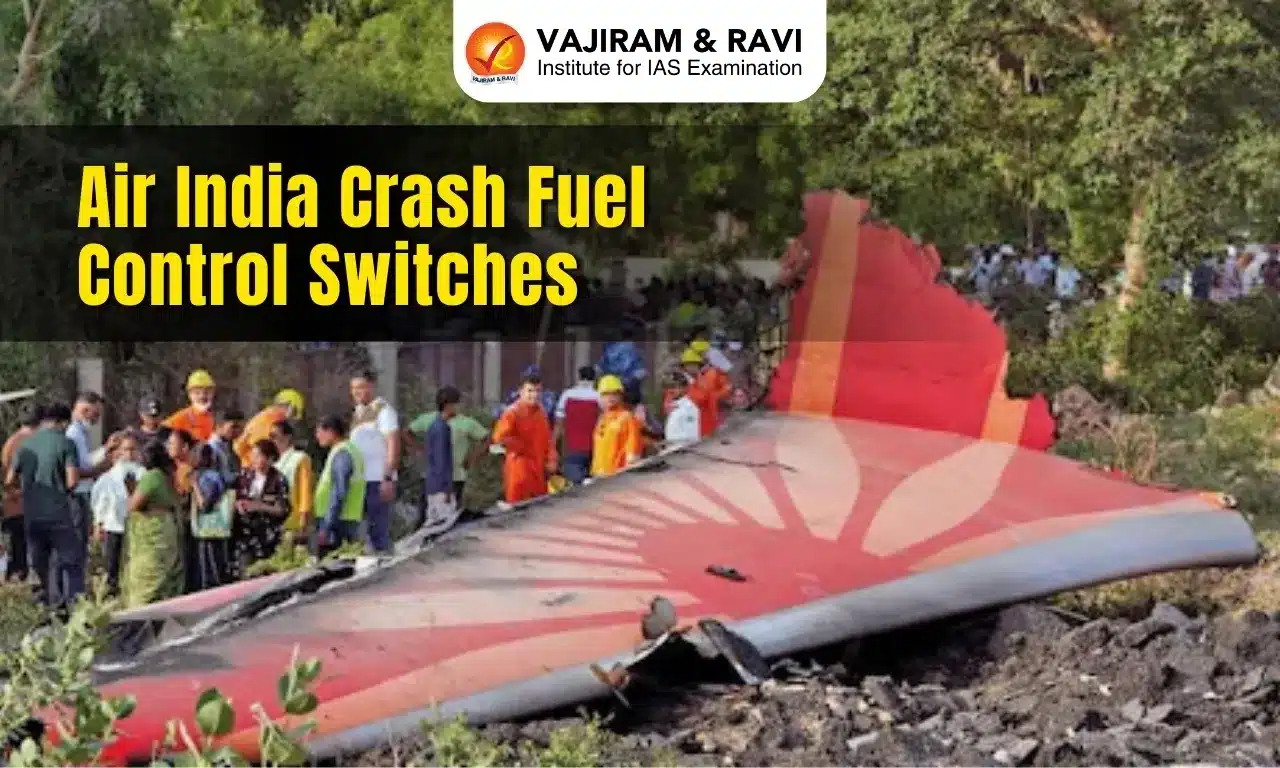
  • The June 12 crash of Air India flight AI 171, a Boeing 787-8 from Ahmedabad to London, killed 260 people. 
  • The Aircraft Accident Investigation Bureau’s (AAIB) preliminary report highlights that both engine fuel control switches moved from ‘RUN’ to ‘CUTOFF’ just after take-off, possibly causing the disaster. 
  • Cockpit recordings reveal one pilot questioning the other about cutting off fuel, which was denied. 
  • Both pilots had sufficient flying experience. Investigators are now analyzing flight and voice recorder data to determine how and why the switches were turned off.

Fuel Control Switches: Critical Engine Safeguards

[caption id="attachment_54717" align="alignnone" width="916"] Fuel Control Switches Fuel Control Switches[/caption]
  • Fuel control switches regulate engine fuel flow and require deliberate manual action to move between ‘RUN’ and ‘CUTOFF’. 
  • Located below the thrust levers on Boeing 787s, these spring-loaded switches require deliberate lifting and shifting between two modes: 'RUN' and 'CUTOFF'. 
  • Protected by brackets and a stop-lock mechanism, they’re typically operated only on the ground—during engine start-up or shutdown. 
  • In-flight use occurs only during engine failure or serious damage. Accidental activation is considered nearly impossible.

Fuel Control Switches: Function, Safety, and Crash Relevance

  • Fuel control switches have two positions:
    • RUN: Feeds fuel to the engine for normal operation.
    • CUTOFF: Cuts off fuel, shutting the engine down.
  • Changing positions requires deliberate crew action via a safety mechanism. 
  • Experts stress these switches are not meant to be moved in-flight except during emergencies.

Why and How Pilots Use Fuel Switches Mid-Flight

  • Pilots move a fuel control switch mid-flight only if an engine fails or is severely damaged. This shuts off fuel to that engine, cutting thrust instantly. 
  • Normally, only one switch is moved, as modern aircraft can fly with one engine. Shutting down both engines is highly unusual and dangerous. 
  • Experts stress this is a deliberate, checklist-driven process involving both pilots. 
  • In AI 171’s crash, both switches moved to 'CUTOFF' shortly after takeoff, starving both engines of fuel. 
  • Investigators are examining if this was due to human error, mechanical fault, or system failure. The switches are protected against accidental movement with electronic gates and physical brackets.

Experts Question Possibility of Accidental Fuel Switch-Off

  • Aviation experts emphasize it’s nearly impossible for pilots to unintentionally shut off both fuel switches mid-flight, especially during climb. 
  • While the final cause is still under investigation, the preliminary findings raise concerns over cockpit procedures, safety checks, and potential technical faults.

Honeywell Switches Under Scrutiny, Previously Flagged by FAA

  • The fuel control switches (part number 4TL837-3D) are made by Honeywell. 
  • A 2018 US FAA advisory noted possible locking mechanism faults, but inspections were not mandatory. Air India did not carry out these checks.
    • The 2018 advisory flagged potential disengagement of the fuel control switch locking feature on some Boeing aircraft.
  • According to the FAA, disengaged locking could let switches move unintentionally, potentially causing in-flight engine shutdown. 
  • The AI-171 cockpit recording suggests neither pilot knowingly moved the switches.


Source: IE | ToI | BS

Air India Crash Fuel Control Switches FAQs

Q1: What caused the Air India AI 171 crash?

Ans: Both engine fuel switches moved to 'CUTOFF' after takeoff, cutting fuel supply unexpectedly.

Q2: What are fuel control switches?

Ans: Devices that regulate engine fuel flow, with 'RUN' for operation and 'CUTOFF' to shut down engines deliberately.

Q3: Can fuel switches be accidentally moved mid-flight?

Ans: Experts say accidental mid-flight movement is nearly impossible due to brackets, stop-lock mechanisms, and deliberate manual action required.

Q4: Who manufactures these switches?

Ans: Honeywell produces the switches used in Boeing 787s; FAA flagged potential locking issues in an advisory in 2018.

Q5: What’s the investigation focus now?

Ans: Investigators are analyzing flight data and cockpit recordings to determine if human error, mechanical fault, or system issue occurred.

Trump’s Tariff War: Why BRICS Is His Latest Target

Trump BRICS Tariff Threat

Trump BRICS Tariff Threat Latest News

  • President Trump has threatened 10% tariffs on BRICS nations after their Rio summit 2025, continuing his pattern of trade-related warnings.

Trump Sees BRICS as a Threat

  • Donald Trump views BRICS as “anti-American” due to its push for a BRICS common currency and cross-border payment systems that bypass the US dollar. 
  • He has repeatedly threatened high tariffs to deter such moves, especially after BRICS expanded and promoted local currency trade following Western sanctions on Russia.

Tariff Threats Targeting BRICS

  • As BRICS leaders met recently in Rio for the 17th BRICS summit, President Trump warned of an additional 10% tariff on any country aligning with BRICS, calling it a penalty specifically for BRICS membership. 
  • Though earlier he had threatened 100% tariffs, it's unclear if or when these measures will be enforced. 
  • Trump's irritation is largely driven by BRICS efforts to bypass the U.S. dollar in global trade. 
  • Alongside this, his administration has imposed 50% tariffs on Brazil, citing political bias against former President Bolsonaro, and 30% tariffs on South Africa over trade disputes and concerns about Afrikaner rights. 
  • Trump is also pushing for the Sanctioning Russia Act of 2025, proposing 500% tariffs on Russian oil and sanctioned products — a move that could directly affect India and China, two major Russian oil importers.

BRICS Denies De-Dollarisation Threat

  • BRICS members have rejected Mr. Trump’s concerns about de-dollarisation, clarifying that using national currencies within BRICS isn't aimed at replacing the U.S. dollar globally
    • De-dollarisation is the effort to reduce dependence on the US dollar as a reserve currency, medium of exchange, and unit of account. 
    • This push intensified after Russia’s invasion of Ukraine, which led to sanctions and exclusion from dollar-based systems like SWIFT. 
    • Countries viewed this as the U.S. weaponizing the dollar. Additionally, overreliance on the dollar creates global financial vulnerabilities. 
    • Emerging economies, gaining economic strength, now seek a more balanced and diversified financial system.
  • The 2025 BRICS Rio Declaration avoids direct challenges to the dollar, focusing instead on improving cross-border payment system interoperability. 
  • While some leaders' rhetoric has been anti-U.S., official BRICS statements only express general concerns over unilateral trade measures without naming the U.S.

India Distances Itself from BRICS De-Dollarisation Push

  • India has firmly rejected U.S. claims that BRICS is "anti-American." 
  • The government clarified in Parliament that Russia's report on alternative currencies was merely noted, not endorsed by all BRICS members. 
  • External Affairs Minister S. Jaishankar confirmed there is no Indian policy to replace the U.S. dollar, highlighting differences within BRICS on this matter.

BRICS: Diverse Members, Common Frustration

  • Founded in 2009 after the U.S. financial crisis, BRICS now includes 10 countries. 
    • BRICS has expanded beyond its original five members to include Egypt, Ethiopia, Indonesia, Iran, and the UAE, with more countries seeking to join.
  • Despite political and ideological differences, members agree global power favours the U.S. too heavily. Still, nations like India caution against giving BRICS an “anti-West” image.
  • During the Rio summit 2025, BRICS leaders condemned unilateral tariffs, indirectly criticising U.S. trade policy. 
  • They also expressed concern over attacks on Iran’s civilian infrastructure, without directly naming Israel or the U.S., showing diplomatic restraint.

Source: TH | CNN

Trump BRICS Tariff Threat FAQs

Q1: Why is Trump targeting BRICS?

Ans: Trump views BRICS’ local currency trade efforts as a threat to U.S. dollar dominance and financial influence globally.

Q2: What tariff measures has Trump proposed?

Ans: 10% tariffs on BRICS members, 50% on Brazil, 30% on South Africa, plus 500% on Russian oil products.

Q3: Does BRICS want to replace the U.S. dollar?

Ans: Officially, BRICS denies aiming to replace the dollar, focusing instead on local currency-based cross-border payment systems.

Q4: How has India responded to Trump’s claims?

Ans: India clarified in Parliament there’s no policy to replace the dollar, distancing itself from BRICS de-dollarisation moves.

Q5: Why does BRICS attract diverse members?

Ans: BRICS offers emerging economies a platform to counterbalance U.S.-centric global systems despite internal political and ideological differences.

Enquire Now