
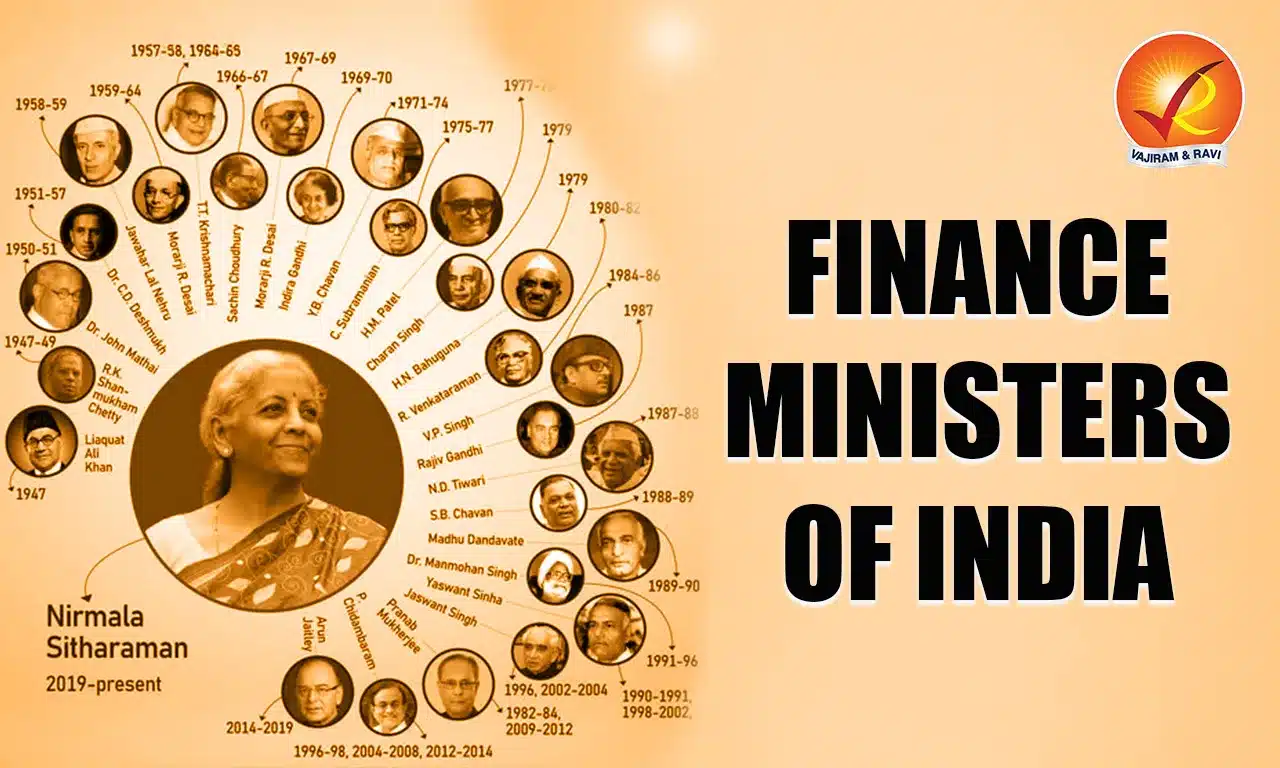
The Ministry of Finance, known in Hindi as Vitta Mantralaya, functions as the central authority for managing public finances and acts as the national treasury. Its core responsibilities include the formulation and implementation of tax policies, financial laws, and economic regulations. The Ministry supervises financial institutions, manages currency and capital markets, and oversees both central and state government finances.
A key function of the Finance Ministers of India is the preparation and presentation of the Union Budget. It also serves as the cadre-controlling authority for major civil services such as the Indian Revenue Service, Indian Audit and Accounts Service, Indian Economic Service, and Indian Civil Accounts Service. It also administers the Indian Cost and Management Accounts Service, which plays a significant role in the country's commercial governance.
Finance Minister of India
Nirmala Sitharaman currently holds the position of Finance Minister of India, having taken charge of the Ministry of Finance and Corporate Affairs on May 31, 2019. She holds the distinction of being the country’s first woman to serve as a full-time Finance Minister. Her first Budget speech in Parliament was delivered on July 5, 2019. Between 2019 and 2024, she has tabled six Union Budgets, including the Interim Budget 2024. With the presentation of the Budget in February 2024, she became the First Finance Minister in India to present seven consecutive Union Budgets.
List of Finance Ministers of India
Sir Ramasamy Chetty Kandasamy Shanmukham Chetty, born on 17 October 1892, served as the independent First Finance Minister of India. He had the historic responsibility of presenting the nation’s first-ever Budget, which he delivered on 26 November 1947. His tenure marked the beginning of India's financial planning in the post-colonial era.
| List of Finance Ministers of India | |||||
|
SNo |
Name |
Term of office |
Political Party |
Prime Minister |
|
|
1. |
Liaquat Ali Khan |
29 October 1946 |
14 August 1947 |
All-India Muslim League |
Jawaharlal Nehru |
|
2. |
R. K. Shanmukham Chetty |
15 August 1947 |
17 August 1948 |
Indian National Congress |
Jawaharlal Nehru
|
|
3. |
John Mathai
|
22 September 1948 |
26 January 1950 |
||
|
26 January 1950 |
6 May 1950 |
||||
|
6 May 1950 |
1 June 1950 |
||||
|
4. |
C. D. Deshmukh |
1 June 1950 |
13 May 1952 |
||
|
13 May 1952 |
1 August 1956 |
||||
|
5. |
Jawaharlal Nehru |
1 August 1956 |
30 August 1956 |
||
|
6.
|
T. T. Krishnamachari
|
30 August 1956 |
17 April 1957 |
||
|
17 April 1957 |
14 February 1958 |
||||
|
7. |
Jawaharlal Nehru |
14 February 1958 |
22 March 1958 |
||
|
8.
|
Morarji Desai
|
22 March 1958 |
10 April 1962 |
||
|
10 April 1962 |
31 August 1963 |
||||
|
9. |
T. T. Krishnamachari |
31 August 1963 |
31 December 1965 |
Jawaharlal Nehru |
|
|
10.
|
Sachindra Chaudhuri
|
1 January 1966 |
11 January 1966 |
Lal Bahadur Shastri
|
|
|
11 January 1966 |
24 January 1966 |
||||
|
24 January 1966 |
13 March 1967 |
||||
|
11. |
Morarji Desai |
13 March 1967 |
16 July 1969 |
Indira Gandhi |
|
|
12. |
Indira Gandhi |
16 July 1969 |
27 June 1970 |
||
|
13.
|
Yashwantrao B. Chavan
|
27 June 1970 |
18 March 1971 |
||
|
18 March 1971 |
10 October 1974 |
||||
|
14. |
Chidambaram Subramaniam |
10 October 1974 |
24 March 1977 |
||
|
15. |
Haribhai M. Patel |
26 March 1977 |
24 January 1979 |
Janata Party |
Morarji Desai |
|
16. |
Charan Singh |
24 January 1979 |
16 July 1979 |
||
|
17. |
Hemvati Nandan Bahuguna |
28 July 1979 |
19 October 1979 |
Janata Party (Secular) |
Charan Singh |
|
18. |
R. Venkataraman |
14 January 1980 |
15 January 1982 |
Indian National Congress |
Indira Gandhi
|
|
19.
|
Pranab Mukherjee |
15 January 1982 |
31 October 1984 |
||
|
31 October 1984 |
31 December 1984 |
||||
|
20.
|
V. P. Singh
|
31 December 1984 |
14 January 1985 |
Rajiv Gandhi |
|
|
14 January 1985 |
30 March 1985 |
||||
|
30 March 1985 |
25 September 1985 |
||||
|
25 September 1985 |
24 January 1987 |
||||
|
21. |
Rajiv Gandhi |
24 January 1987 |
25 July 1987 |
||
|
22. |
N. D. Tiwari |
25 July 1987 |
25 June 1988 |
||
|
23. |
Shankarrao B. Chavan |
25 June 1988 |
2 December 1989 |
||
|
24. |
Madhu Dandavate |
5 December 1989 |
10 November 1990 |
Janata Dal (National Front) |
V. P. Singh |
|
25. |
Yashwant Sinha |
21 November 1990 |
21 June 1991 |
Samajwadi Janata Party |
Chandra Shekhar |
|
26. |
Manmohan Singh |
21 June 1991 |
16 May 1996 |
Indian National Congress |
P. V. Narasimha Rao |
|
27. |
Jaswant Singh |
16 May 1996 |
1 June 1996 |
Bharatiya Janata Party |
Atal Bihari Vajpayee |
|
28. |
P. Chidambaram |
1 June 1996 |
21 April 1997 |
Tamil Maanila Congress |
H. D. Deve Gowda |
|
29. |
I.K. Gujral |
21 April 1997 |
1 May 1997 |
Janata Dal |
I. K. Gujral |
|
30. |
P. Chidambaram |
1 May 1997 |
19 March 1998 |
Tamil Maanila Congress (United Front) |
|
|
31.
|
Yashwant Sinha
|
19 March 1998 |
13 October 1999 |
Bharatiya Janata Party (National Democratic Alliance) |
Atal Bihari Vajpayee |
|
13 October 1999 |
1 July 2002 |
||||
|
32. |
Jaswant Singh |
1 July 2002 |
22 May 2004 |
||
|
33. |
P. Chidambaram |
23 May 2004 |
30 November 2008 |
Indian National Congress |
Manmohan Singh |
|
34. |
Manmohan Singh |
30 November 2008 |
24 January 2009 |
||
|
35.
|
Pranab Mukherjee
|
24 January 2009 |
22 May 2009 |
||
|
23 May 2009 |
26 June 2012 |
||||
|
36. |
Manmohan Singh |
26 June 2012 |
31 July 2012 |
||
|
37. |
P. Chidambaram |
31 July 2012 |
26 May 2014 |
||
|
38. |
Arun Jaitley |
26 May 2014 |
30 May 2019 |
Bharatiya Janata Party (National Democratic Alliance) |
Narendra Modi |
|
39. |
|
31 May 2019 |
Present |
Bharatiya Janata Party (National Democratic Alliance) |
Narendra Modi |
First Finance Minister of India
K. Shanmukham Chetty served as First Finance Minister of India from 1947 to 1948. He delivered the First Union Budget of India, which projected total expenditure at Rs. 171.15 crore and a fiscal deficit of Rs. 24.59 crore. A prominent figure in India’s early political and economic landscape, Chetty was not only an economist and lawyer but also held the position of President of the Central Legislative Assembly from 1933 to 1935. His contributions laid the groundwork for India's post-independence fiscal policy.
Female Finance Minister of India
Nirmala Sitharaman holds the position of first full-time Female Finance Minister of India, a role that entrusts her with key responsibilities, including the presentation of the Union Budget. However, she is not the first woman to present a Union Budget. That milestone was achieved by Prime Minister Indira Gandhi, who assumed charge of the Finance Ministry following Morarji Desai’s resignation in July 1969. Gandhi went on to present the Union Budget for the financial year 1970-71.
Finance Ministers of India Roles and Responsibility
- Holds a senior position in the Union Cabinet and leads the government’s fiscal policy and economic planning.
- Prepares and presents the annual Union Budget in Parliament, detailing projected expenditures and revenue for the upcoming financial year.
- Oversees the country’s public financial management system, ensuring effective financial control, transparency, and accountability.
- Supervises the formulation and implementation of tax policies, including direct taxes, indirect taxes, tariffs, and other government duties.
- Guides resource allocation across sectors in line with national development goals and financial priorities.
- Manages government revenues and expenditures, aligning them with long-term financial and economic objectives.
- Supports economic stability through policy decisions that influence inflation, growth, investment, and employment.
Finance Ministers of India FAQs
Q1: Who is the current Finance Minister of India (2025)?
Ans: As of 2025, Nirmala Sitharaman is the Finance Minister of India.
Q2: Who was the first Finance Minister of India?
Ans: R. K. Shanmukham Chetty was the first Finance Minister, presenting India’s first Union Budget in 1947.
Q3: How many Finance Ministers has India had?
Ans: India has had over 30 Finance Ministers since independence, including interim and full-term appointments.
Q4: Who presented the first Union Budget of India?
Ans: R. K. Shanmukham Chetty presented the first Union Budget of independent India on November 26, 1947.
Q5: Who was the longest-serving Finance Minister of India?
Ans: Morarji Desai served the longest, holding the Finance Ministry portfolio across multiple terms totaling over 7 years.
