UPSC Daily Quiz 7 August 2025

UPSC Daily Quiz

The Daily UPSC Quiz by Vajiram & Ravi is a thoughtfully curated initiative designed to support UPSC aspirants in strengthening their current affairs knowledge and core conceptual understanding. Aligned with the UPSC Syllabus 2025, this daily quiz serves as a revision resource, helping candidates assess their preparation, revise key topics, and stay updated with relevant issues. Whether you are preparing for Prelims or sharpening your revision for Mains, consistent practice with these Daily UPSC Quiz can significantly enhance accuracy, speed, and confidence in solving exam-level questions.

[WpProQuiz 39]  


UPSC Daily Quiz FAQs

Q1: What is the Daily UPSC Quiz?

Ans: The Daily UPSC Quiz is a set of practice questions based on current affairs, static subjects, and PYQs that help aspirants enhance retention and test conceptual clarity regularly.

Q2: How is the Daily Quiz useful for UPSC preparation?

Ans: Daily quizzes support learning, help in revision, improve time management, and boost accuracy for both UPSC Prelims and Mains through consistent practice.

Q3: Are the quiz questions based on the UPSC syllabus?

Ans: Yes, all questions are aligned with the UPSC Syllabus 2025, covering key areas like Polity, Economy, Environment, History, Geography, and Current Affairs.

Q4: Are solutions and explanations provided with the quiz?

Ans: Yes, each quiz includes detailed explanations and source references to enhance conceptual understanding and enable self-assessment.

Q5: Is the Daily UPSC Quiz suitable for both Prelims and Mains?

Ans: Primarily focused on Prelims (MCQ format), but it also indirectly helps in Mains by strengthening subject knowledge and factual clarity.

1st Constitutional Amendment Act, Features, Importance

1st Constitutional Amendment Act

The 1st Constitutional Amendment Act also known as the Constitutional (First Amendment) Act, was enacted in 1951, making many changes to the fundamental rights provisions of the Indian Constitution. This amendment brought in a meaning to restrict freedom of speech and expression, validation of zamindari abolition laws and provided a clarification for right to equality and a special consideration for weaker sections of society. In this article, we are going to cover all about the 1st Constitutional Amendment Act, 1951. 

First Constitutional Amendment Act 1951

The Constitution (First Amendment) Act, 1951 was introduced by Prime Minister Jawaharlal Nehru on 10 May and passed by Parliament on 18 June as the first major constitutional change in India. This amendment set a precedent for amending the Constitution of India to override judicial rulings that hindered the government's policy objectives especially in land reform and freedom of speech.

Important highlights of the amendment include:

  • Amendment to Fundamental Rights: It imposed reasonable restrictions on freedom of speech and expression on new grounds like public order, friendly relations with foreign states, and incitement to an offence.
  • Support for Land Reforms: Allowed abolition of zamindari and protected agrarian laws from being struck down by courts.
  • Explained Article 15: Allowed special provisions for weaker sections without violating the right to equality.
  • Article Additions: Introduced Articles 31A and 31B, and created the Ninth Schedule to shield specific laws from judicial review.
  • Trade and Business: Stated that nationalization or state trading cannot be challenged as violating the right to trade or business.

It amended Articles 15, 19, 85, 87, 174, 176, 341, 342, 372, and 376, reshaping India’s legal and political landscape.

Also Check: 103rd Constitutional Amendment Act

1st Constitutional Amendment Act Features

The First Amendment to the Indian Constitution was enacted to tackle legal and constitutional challenges faced by the nascent Republic. Its purpose was to adapt key constitutional provisions in line with the emerging socio-political realities and the State’s policy goals, particularly around land reforms and social justice.

  • Land Reform and Right to Property
    • Amended Articles 19(1)(f) and 31 to empower the State to impose reasonable restrictions on the right to property.
    • Enabled land reform and acquisition for public welfare, essential to dismantle the zamindari system.
  • Freedom of Speech and Expression
    • Revised Article 19(2) to expand the grounds for restrictions on free speech.
    • Included public order, security of the state, and foreign relations as valid reasons for imposing limitations.
  • Social Justice for SCs and STs
    • Inserted Articles 15(4) and 16(4) to allow reservations in education and employment for Scheduled Castes, Scheduled Tribes, and other socially and educationally backward classes.
  • Validation of Land Reform Laws
    • Added Article 31A to protect agrarian reform laws from being struck down for violating property rights.
    • Inserted Article 31B and the Ninth Schedule to insulate such laws from judicial review.
  • Directive for Upliftment of Weaker Sections
    • Strengthened Article 46, directing the State to promote the educational and economic interests of SCs, STs, and other weaker sections with special care.

1st Constitutional Amendment Act FAQs

Q1: What was the First Amendment Act of 1951?

Ans: It was the first change to the Indian Constitution, enacted to overcome judicial challenges and facilitate land reforms and social justice measures.

Q2: What was the main object of the First Constitutional Amendment in 1951?

Ans: To enable land reforms, impose reasonable restrictions on fundamental rights, and introduce reservations for backward classes.

Q3: What is Amendment 1 in the Indian Constitution?

Ans: The First Amendment added Articles 15(4), 31A, and 31B, and modified Articles 19 and 31 to support land reforms and social equity.

Q4: Why was the First Amendment Act 1951 implemented?

Ans: It was implemented to resolve legal obstacles in enforcing land reform laws and to clarify limits on fundamental rights like free speech and property rights.

Q5: What was the 2nd Amendment Act Features?

Ans: The Second Amendment (1952) modified Article 81(1)(b) to remove the population cap for Lok Sabha seat allocation, ensuring proportional representation.

Balfour Declaration, Historical Background, Importance, Results

Balfour Declaration

The Balfour Declaration is a public statement that the British Government issued on 2nd November, 1917 at the time of World War I. In the declaration, the government made a promise to support the establishment of a “national home for the Jewish people” in Palestine. Arthur Balfour, the Foreign Secretary, had made this declaration to Lord Rothschild, a popular leading Jewish Figure. The declaration became a source of controversy and conflict ever since it was announced. The process involved transfer of governance from the territories that were defeated in war- Germany, Austria-Hungary, the Ottoman Empire and Bulgaria to the victorious nations. In this article, we are going to cover all about the Balfour Declaration. 

Balfour Declaration 

The Balfour Declaration was issued by the British Government as a public statement during World War I in 1917. The declaration aimed to support the establishment of a “national home for the Jewish people” in Palestine, the Ottoman region along with a small minority Jewish population. 

Balfour Declaration Historical Background

  • The Zionist Movement starting in the late 19th century, spreading the word about a Jewish homeland in Palestine.
  • When World War I began, the movement had already gained momentum and thousands of Jews had already started settling in Palestine. 
  • The British Government saw the Zionist cause as an important and a strategic ally against the Ottoman Empire during WWI. 
  • The British Government issued the Balfour Declaration on 2 November 1917, showing support for setting up a “national home for the Jewish people” in Palestine. 
  • This declaration shaped the future of israeli-Palestinian conflict and remains an important moment in Middle Eastern History. 

Balfour Declaration Document 

  • The Balfour Declaration was given in a letter format by Arthur Balfour to Lord Rothschild, a leader of the British Jewish Community. 
  • The Balfour Declaration Document aimed to declare British Support for the Jewish Homeland while stating:
    "Nothing shall be done which may prejudice the civil and religious rights of existing non-Jewish communities in Palestine."
  • The document did not mention any political or national rights for the Arab population and failed to recognise them by name. 
  • In the Arab World, the Balfour Declaration is still remembered as the Nakba, marking the beginning of dispossession and conflict. 

Balfour Declaration Importance 

The Balfour Declaration is important due to the following reasons: 

  • The declaration was the first official endorsement by the world power to accept Jewish national cause. 
  • The document paved the way for British mandate in Palestine and increased the Jewish immigration to the region.
  • This also caused rift in between Jewish and Arab population in the Middle East. 
  • Many Islamic Nations saw the Balfour Declaration as a betrayal by the British. 
  • The term “Balfour Report” of 1926 also refers to a British document leading to Canada’s independence, later formalising in the Statute of Westminster(1931) unrelated to the 1917 declaration.

Balfour Declaration Results

The Balfour Declaration significantly influenced the geopolitical landscape of the Middle East and left a lasting legacy on regional politics and identity.

  • It marked a turning point for the Zionist movement, eventually leading to the creation of the State of Israel in 1948.
  • The vague assurance of a “national home for the Jewish people” in Palestine created deep-rooted tensions between Jews and Arabs, particularly over territorial claims.
  • For Palestinians, the declaration signaled displacement, loss of homeland, and decades of statelessness fueling grievances that persist to this day.
  • The declaration was perceived by many Arabs as a colonial strategy to divide the region, thereby intensifying anti-British sentiment and fueling Arab nationalism.
  • It contributed indirectly to the formation of the United Nations in 1945, which attempted to mediate the Jewish-Arab conflict but has struggled to bring lasting resolution.
  • The declaration laid the groundwork for a series of Arab-Israeli conflicts, beginning with the 1948 war and followed by wars in 1956, 1967, and 1973, each altering regional boundaries and power dynamics.
  • Its legacy continues to shape the discourse around identity, occupation, and sovereignty in the Middle East, making it one of the most consequential documents in modern history.

Balfour Declaration FAQs

Q1: What was the Balfour Declaration of 1927?

Ans: The 1927 Balfour Declaration reaffirmed British support for the development of self-governing dominions within the British Empire.

Q2: When was the Balfour Declaration 1926?

Ans: The 1926 Balfour Declaration was issued on 18 November 1926 at the Imperial Conference.

Q3: What was the letter from Lord Balfour to the Rothschilds?

Ans: The 1917 Balfour Declaration was a letter from Arthur Balfour to Lord Rothschild expressing British support for a Jewish homeland in Palestine.

Q4: When did the World War-I begin?

Ans: World War I began on 28 July 1914.

Q5: What was the Zionist Movement?

Ans: The Zionist Movement was a political and nationalist movement advocating for the establishment of a Jewish homeland in Palestine.

Smithophis leptofasciatus

Smithophis leptofasciatus

Smithophis leptofasciatus Latest News

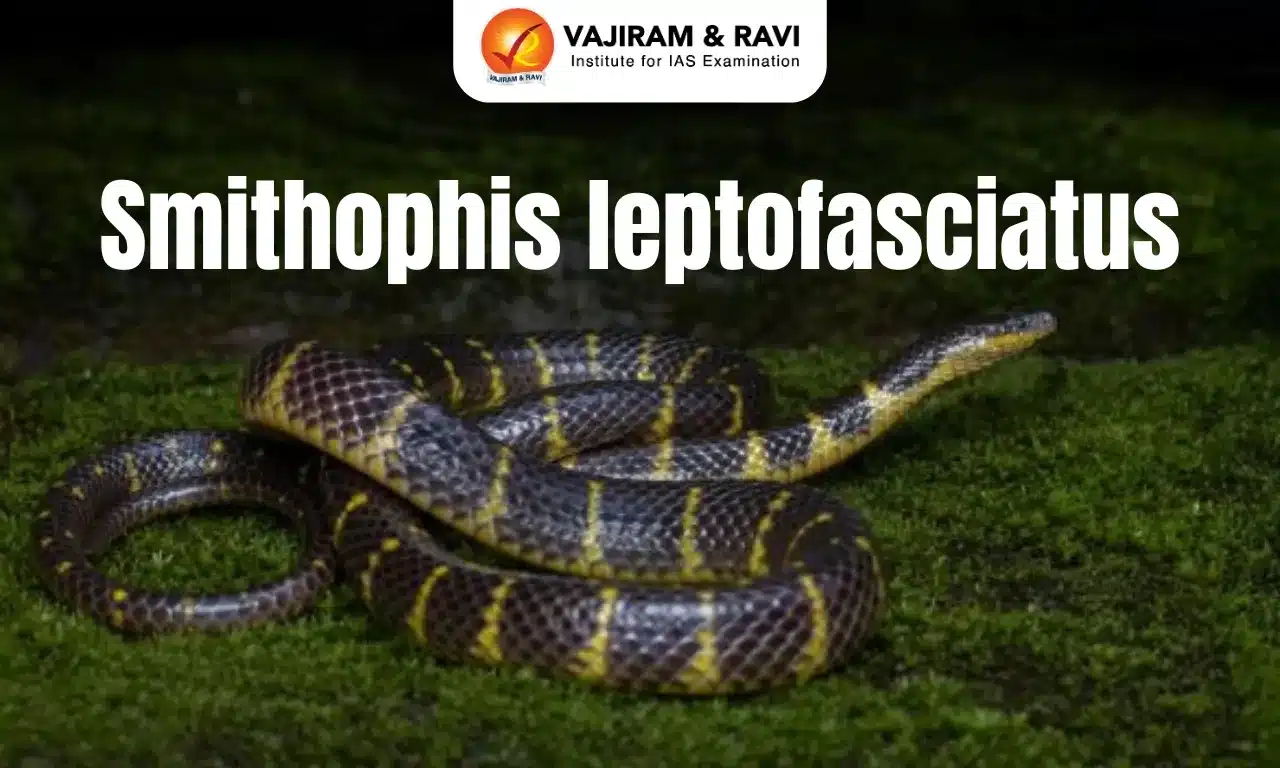
A team of researchers from Mizoram University recently discovered a new species of rain snake named Smithophis leptofasciatus.

About Smithophis leptofasciatus

  • It is a new species of rain snake belonging to the genus Smithophis.
  • The species name leptofasciatus is derived from Greek and Latin, meaning "narrow-banded," referencing its distinctive dorsal markings.
  • It is commonly referred to as the narrow-banded rain snake.
  • It was discovered in the tropical montane forests of Mizoram.
  • The new species is distinguished by its narrow, incomplete creamish-white or yellowish-lime transverse bands on a shiny black body—features that set it apart from its close relatives.
  • It was found inhabiting humid, shaded microhabitats near small streams in montane forests between 900 and 1,200 meters above sea level. 
  • Its semi-aquatic, nocturnal lifestyle was revealed through field observations during the monsoon. 
  • This brings the total number of known Smithophis species to five, all discovered in northeastern India and its surrounding areas.
    • These snakes are commonly referred to as ‘rain snakes’ because they thrive in wet habitats, often found near streams and other water sources.

Source: HT

Smithophis leptofasciatus FAQs

Q1: What is Smithophis leptofasciatus?

Ans: It is a new species of rain snake belonging to the genus Smithophis.

Q2: Where was Smithophis leptofasciatus discovered?

Ans: Tropical montane forests of Mizoram.

Q3: What does the species name leptofasciatus refer to?

Ans: Its narrow-banded dorsal markings.

Inter State Transmission System (ISTS)

Inter State Transmission System

Inter State Transmission System Latest News

About 26 gigawatt of renewable energy (RE) projects are expected to be impacted with the end of waiver on inter-State transmission system (ISTS) charges provided for solar and wind projects, according to Crisil Ratings.

About Inter State Transmission System

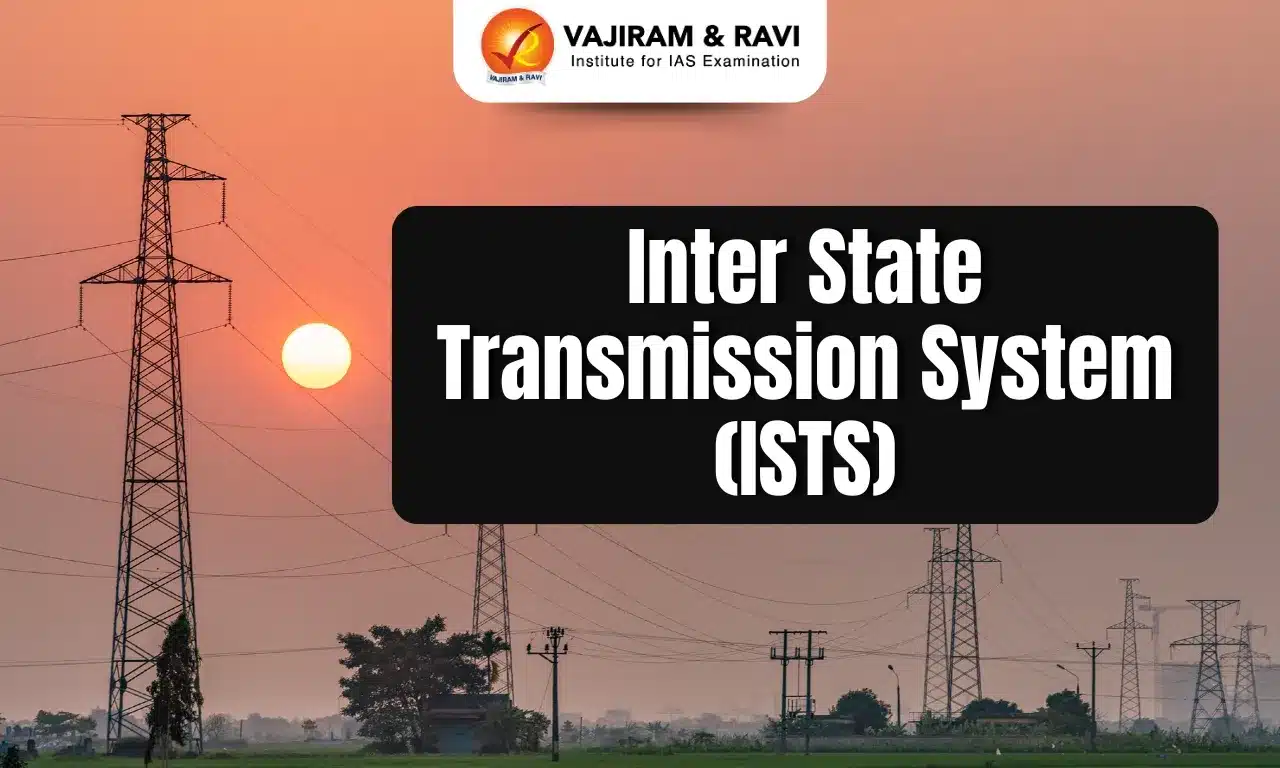
  • It is a high-voltage power transmission network that enables electricity to flow seamlessly across state borders in India. 
  • It connects power-rich regions with energy-deficient areas
  • This ensures a balanced and efficient distribution of electricity.
  • It is managed by the Central Transmission Utility of India Limited (CTUIL), a 100% subsidiary of Power Grid Corporation of India Limited (POWERGRID) under the Ministry of Power.
  • ISTS operates at voltages above 132 kV and reduces transmission losses and enhances grid stability. 
  • This system allows solar and wind power to be transmitted nationwide and plays a crucial role in large-scale ISTS renewable energy projects.
  • ISTS eliminates state-wise transmission restrictions and creates a unified energy market where electricity can be supplied based on demand. 
  • Overcoming geographical constraints, ISTS makes the power sector more reliable and efficient.

Inter State Transmission System Working

  • Power Generation: Electricity is generated from various sources, including solar farms, wind parks, hydro plants, and thermal stations. 
  • Grid Connection: The generated power is transmitted to ISTS substations, which are high-voltage facilities managed by the Central Transmission Utility (CTU). These substations step up the voltage to reduce transmission losses.
  • High-Voltage Transmission: The electricity is transported through a network of 132 kV and above transmission lines that span multiple states, ensuring minimal energy loss over long distances.
  • Load Management: The Regional Load Dispatch Centers (RLDCs) and the National Load Dispatch Center (NLDC) monitor and regulate electricity flow, ensuring supply matches demand.
  • Distribution to Consumers: Power is stepped down at state-level substations and supplied to industries, businesses, and residential areas via the State Transmission Utility (STU) and local distribution networks.

Source: TH

Inter State Transmission System FAQs

Q1: What is the main purpose of the Inter State Transmission System (ISTS)?

Ans: To enable high-voltage power transmission across state borders.

Q2: Which organization manages the Inter State Transmission System in India?

Ans: It is managed by the Central Transmission Utility of India Limited (CTUIL), a 100% subsidiary of Power Grid Corporation of India Limited (POWERGRID).

Q3: What is one of the key benefits of Inter State Transmission System (ISTS)?

Ans: It helps reduce transmission losses and improves grid stability.

Legal Insanity

Legal Insanity

Legal Insanity Latest News

The Chhattisgarh High Court recently acquitted a man of double murder due to legal insanity, highlighting the importance of mental state in trials.

About Legal Insanity

  • It is a term used to describe a mental state that is severe enough to prevent a person from having legal capacity and excuses them from criminal responsibility. 
  • It is a recognised defence in criminal law.
  • It is based on the assumption that at the time of the crime, the defendant was suffering from severe mental illness and therefore, was incapable of appreciating the nature of the crime and differentiating right from wrong behavior, hence making them not legally accountable for the crime
  • The insanity defense is a legal concept, not a clinical one (medical one). This means that just suffering from a mental disorder is not sufficient to prove insanity.
  • To benefit from legal insanity, the accused must establish, often through psychiatric or psychological evaluations, that they were not in control of their reasoning faculties during the commission of the prohibited act.
  • The accused must present a prima facie case, supported by reasonable materials, to establish their legal insanity. 
  • This may involve presenting evidence of their conduct before, during, or immediately after the offence, along with relevant medical documentation. 
  • The objective is to convince the court that, due to mental incapacity, the accused should be exempt from full criminal responsibility.
  • There are different types of legal insanity, such as emotional insanity, which is when a person experiences a violent excitement of emotions or passions that creates complete derangement of intellect. 
  • Another type is temporary insanity, which only exists at the time of a criminal act.

Legal Insanity in Recent Judgments

  • The Supreme Court in Surendra Mishra vs. State of Jharkhand (AIR 2011 SC 627) emphasised that every person suffering from a mental disease is not automatically exempted from criminal liability. 
  • The accused bears the responsibility of proving legal insanity and the onus can be discharged by demonstrating their conduct with reference to their medical condition.

What is Medical Insanity?

  • It refers to a state of mental illness or psychological disorder that may require medical treatment. 
  • It is a medical diagnosis based on the individual’s mental health condition.
  • It primarily addresses the individual’s health and well-being, aiming to diagnose and treat mental illnesses for the person’s benefit.
  • It does not necessarily impact a person’s ability to make decisions in their daily life. A person with a mental illness may still have decision-making capacity.
  • It leads to medical treatment, therapy, and other interventions aimed at managing and improving the individual’s mental health.

Source: TH

Legal Insanity FAQs

Q1: What does the term "legal insanity" primarily refer to?

Ans: A mental state that excuses criminal responsibility.

Q2: What must the accused prove to claim the defence of legal insanity?

Ans: That they were incapable of knowing the nature of the act or distinguishing right from wrong at the time of the offence.

Q3: What kind of evidence is not sufficient on its own to establish legal insanity?

Ans: Diagnosis of a mental disorder.

Biochar

Biochar

Biochar Latest News

The Indian carbon market set to be launched in 2026, CO2 removal technologies such as biochar are expected to play a crucial role. 

About Biochar

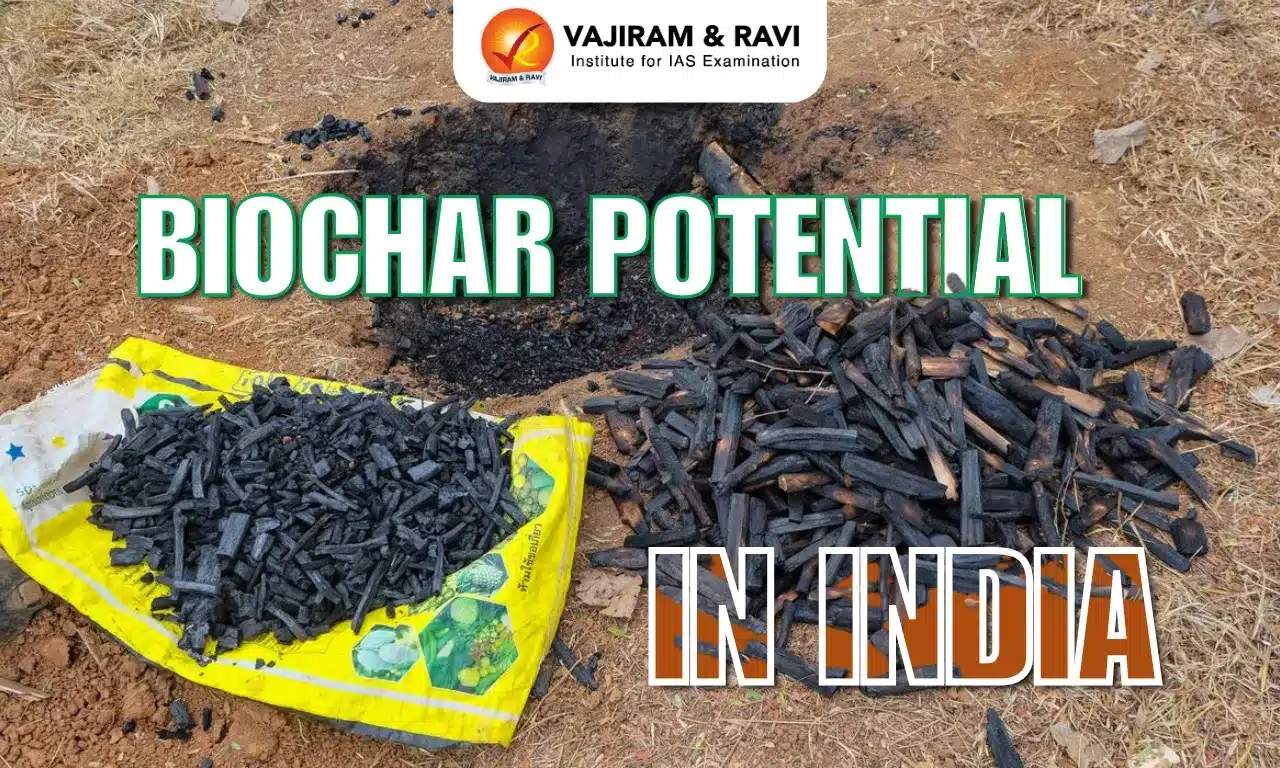
  • Biochar is a type of charcoal rich in carbon and is produced from agricultural residue and organic municipal solid waste.
  • It offers a sustainable alternative to manage waste and capture carbon.
  • It is granular material obtained by heating crop residue at 400°C to 600°C in a kiln-shaped structure in the absence of oxygen.
  • Advantage of Biochar: It can hold carbon in the soil for 100-1,000 years due to its strong and stable characteristics, making it an effective long-term carbon sink.

Potential Applications of Biochar

  • Agriculture: Applying biochar can improve water retention, particularly in semi-dry and nutrient-depleted soils. This, in turn, can abate nitrous oxide emissions by 30-50%.
  • Biochar can also enhance soil organic carbon, helping restore degraded soils.
  • Industries: In carbon capture applications, modified biochar can adsorb CO₂ from industrial exhaust gases. However, its carbon removal efficiency is currently lower than that of conventional methods.
  • Construction sector: Biochar can be explored as a low-carbon alternative to building materials and makes building materials a stable carbon sink.
  • Wastewater Treatment: Biochar offers a low-cost and effective option to reduce pollution.

Source: TH

Biochar FAQs

Q1: What is the main source of biochar?

Ans: Crop straw and residues, animal manures, fruit pits, twigs, and leaf litter forestry wastes as well as food leftover and bagasse.

Q2: What are the advantages of biochar?

Ans: To provide a physical environment that supports an aerobic, healthy soil ecosystem and thus leads to improved plant health and vitality indirectly.

Sunflower Star Fish

Sunflower Star Fish

Sunflower Star Fish Latest News

Recently, scientists have found the culprit of a mysterious disease which started killing off sunflower starfish in droves — more than 5 billion are estimated to have died since 2013 is a bacterium called Vibrio pectenicida.

About Sunflower Star Fish

  • The Sunflower Sea Star (Pycnopodia helianthoides) is among the largest and fastest sea stars in the world.
  • Habitat: It is commonly found on various substrates like mud, sand, gravel, boulders and rock. They are found from the intertidal coastal waters zone to 435 m, however, most are found no more than 120 m. 
  • Distribution: It lives along the vast majority of the Pacific coast of North America.

Features of Sunflower Sea Stars

  • It has a radially symmetrical body and has more arms than any other species, numbering between 15 and 24 (most sea stars have between 5 and 14).
  • Reproduction: There is no sexual dimorphism within these species. Fertilization is external.They breed by broadcast fertilization between March and July
  • They have the ability to regenerate its arms which may detach as a means of defense when handled excessively or attacked by a predator.
  • A whole new sea star may form if the detached arm has a portion of the central disk included.
  • Food Habits: These species are primarily carnivorous, feeding on mussels, sea urchins, fish, crustaceans etc.
  • Ecological importance: These are opportunistic hunters of a wide range of marine invertebrates, and in some areas are important predators that regulate surrounding ecosystems.
  • As a predator of sea urchins, which graze kelp, the species helps keep kelp forests healthy.

Source: IE

Sunflower Star Fish FAQs

Q1: What is the ecological role of the sunflower sea star?

Ans: Sunflower sea stars are important for maintaining a healthy marine ecosystem as they are natural predators of sea urchins.

Q2: Where are sunflower starfish found?

Ans: Sunflower sea stars are native to marine waters along the Pacific Coast, from northern Baja California to the central Aleutian Islands.

Teak Defoliator Moth

Teak Defoliator Moth

Teak Defoliator Moth Latest News

Recently, the Kerala Forest Research Institute has identified and mass-produced Hyblaea puera Nucleopolyhedrosis Virus (HpNPV) which offers eco-friendly alternative to chemical pesticides and prevents massive defoliation in teak caused by teak defoliator moth (Hyblaea puera).

About Teak Defoliator Moth

  • It is a moth and cryptic species and a well-known pest which affects teak trees.
  • It also attacks an alternative host plant, Avicennia marina, a prominent mangrove tree species abundant along the west coast of India, causing severe and extensive defoliation of Mangroves. 
  • The teak defoliator Hyblaea puera was first recognized as a pest of teak in 1898 in the Konni Forest Division in Kerala State of India.
  • Distribution: It is native to South Asia and South-east Asia and mainly occurs in forests across southern Asia from India, Sri Lanka and Bangladesh, through Thailand and the rest of south-east Asia to New Guinea, and north Queensland in Australia.
  • The outbreaks of this pest are a regular annual phenomenon in teak plantations. 
  • Impact: It causes significant economic losses on timber production from teak plantations during their seasonal outbreaks.

How does it Affect Teak Tree?

  • Larvae cause damage and attack commences with onset of monsoon rain.
  • When the larvae attack, the tree spends its energy regenerating leaves instead of growing.
  • Nature of damage: These moths defoliate trees and eat entire leaves and leave midrib.

What is Hyblaea Puera Nucleopolyhedrosis Virus?

  • It is a potential biocontrol agent of the teak defoliator Hyblaea puera.
  • It is considered to be the most promising biocontrol agent of this pest according to laboratory and field studies. 
  • It causes lethal infection in the pest larvae and prevents widespread defoliation of teak trees.
  • It multiplies at least a trillion times inside a single larva. When the body breaks open, it releases huge quantities of inoculum.
  • Even if the infection is sub-lethal, the virus stays in the insect, gets passed on to the next generation, and proves lethal then.

Source: TH

Teak Defoliator Moth FAQs

Q1: What is the major insect pest of teak?

Ans: Hyblaea puera

Q2: What are defoliators?

Ans: Insects that consume leaves or needles are classified as defoliators and are indicated by chewed, mined, or missing foliage.

District Flood Severity Index

District Flood Severity Index

District Flood Severity Index Latest News

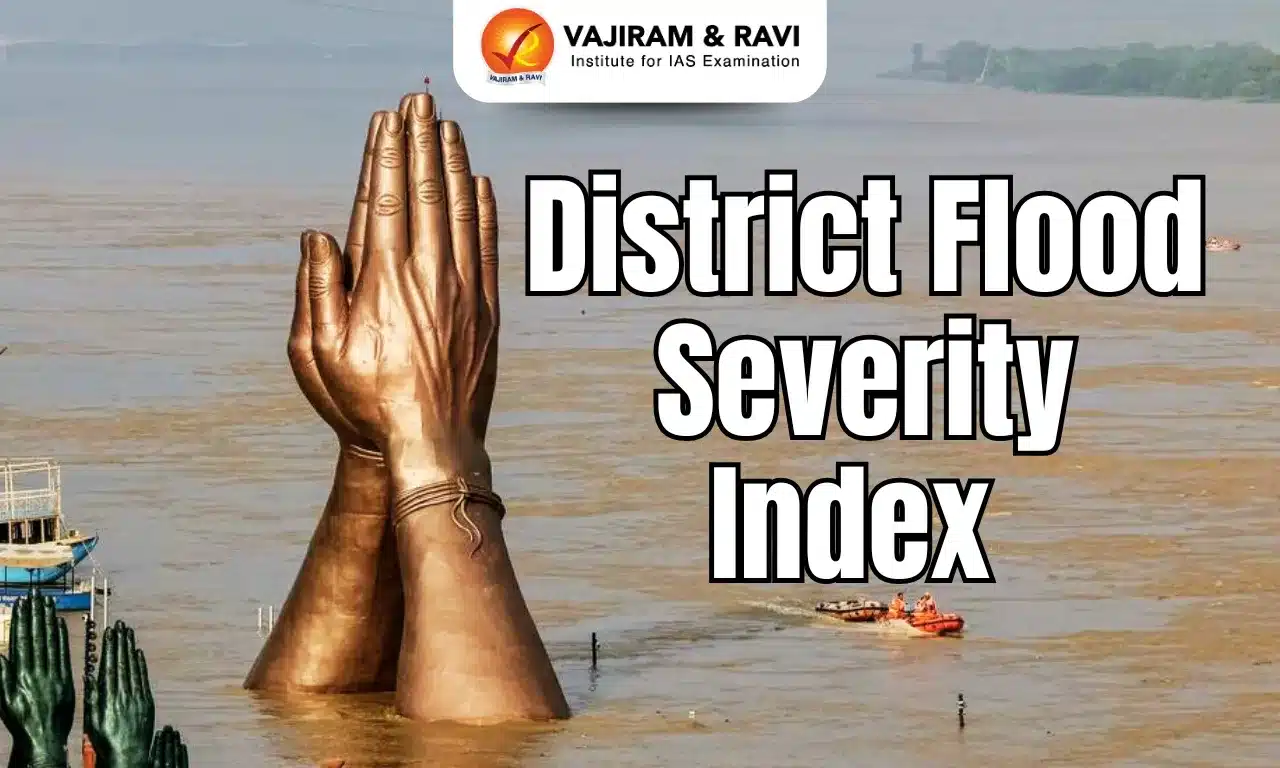
Researchers from IIT Delhi and IIT Gandhinagar have developed a District Flood Severity Index.

About District Flood Severity Index

  • It accounts for the historical severity of floods in India based on the number of people they have affected and the spread and duration of such floods.
  • Parameters used
    • It takes into account the mean duration in days of all flooding events in a district.
    • Percentage of area that is historically flooded
    • Total number of deaths, number of people injured
    • Population in the district.
  • It is developed using the India Flood Inventory with Impacts (IFI-Impacts) database containing data of variables representing the occurrence of floods and damage due to floods.
  • India Flood Inventory with Impacts contains death and damage statistics, and combines population and historically flooded area information sourced from a national hydrologic-hydrodynamic modeling system.
  • Since the district is the most relevant unit for planning and decision making, a DFSI would be of immense value for flood management.

Key Findings of District Flood Severity Index

  • Patna turns out to be number one on the index followed by many districts in the Indo-Gangetic Plain and in Assam.
  • Thiruvananthapuram is number one in terms of flooding events, it is absent in the top 30 districts in the flood severity index.
  • Dhemaji, Kamrup, and Nagaon districts in Assam are three of the five districts in India that have experienced over 178 flooding events, or more than three events per year on an average.
  • Urban flooding occurs partly because of hydrometeorological reasons and also due to unwise urban development.

Source: TH

District Flood Severity Index FAQs

Q1: What is the district level flood severity index?

Ans: It is developed using the India Flood Inventory with Impacts database containing data of variables representing the occurrence of floods and damage due to floods.

Q2: What are floods?

Ans: Floods are the most common form of natural disaster, occurring when a large amount of water submerges normally dry ground.

Indian Flapshell Turtle

Indian Flapshell Turtle

Indian Flapshell Turtle Latest News

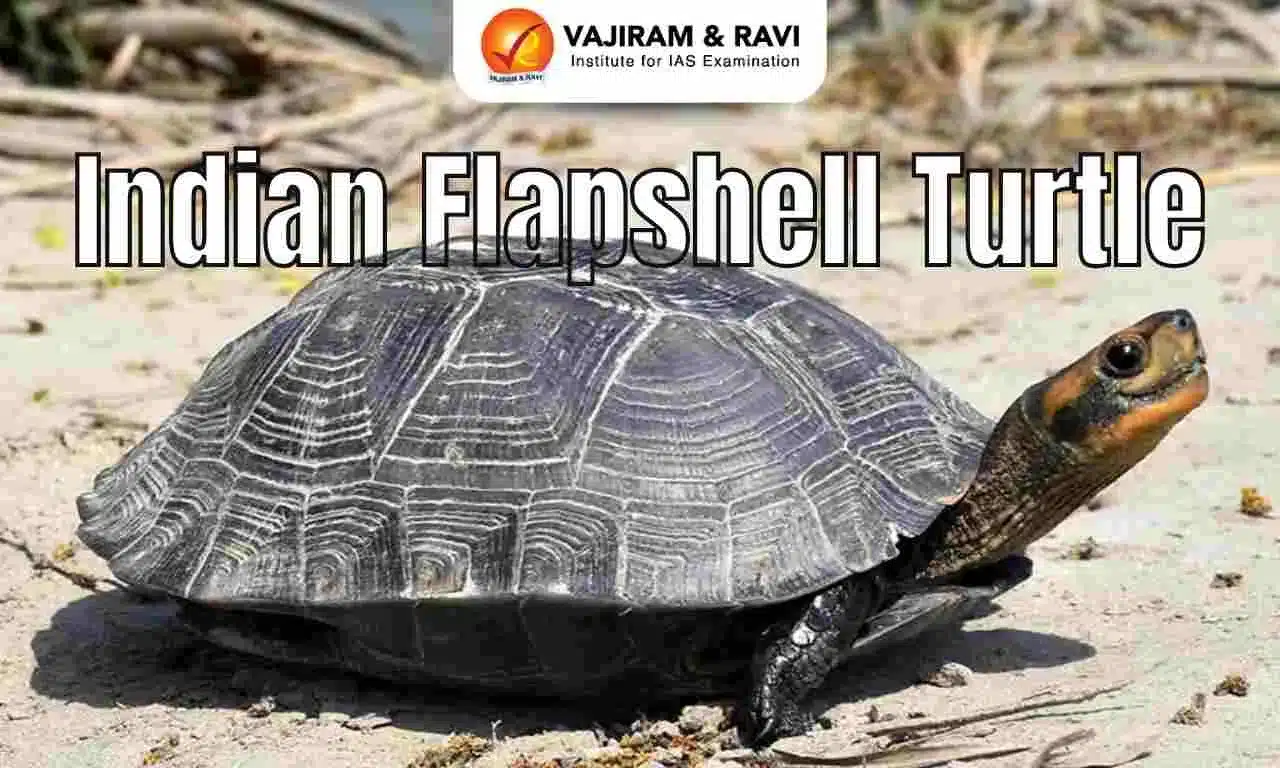
In a rare sighting, an albino Indian flapshell turtle with a striking yellow shell and skin was recently spotted in a freshwater lake at Chikodra village, Gujarat.

About Indian Flapshell Turtle

  • It is a freshwater turtle commonly found in tropical South Asian Countries.
  • Scientific Name: Lissemys punctata
  • Distribution: They are mainly found in Pakistan, India, Sri Lanka, Nepal, Bangladesh , and Myanmar.
  • Habitat
    • They live in the shallow, quiet, often stagnant waters of rivers, streams, marshes, ponds, lakes and irrigation canals, and tanks.
    • These turtles prefer waters with sand or mud bottoms because of their tendency to burrow.

Indian Flapshell Turtle Features

  • Its identifiers are the femoral flaps that extend from the shell and cover the limbs when the turtle withdraws into its shell. 
  • The oval soft shell of the flapshell turtle is an evolutionary connection to hardshell turtles. 
  • They can grow up to 370 mm in length and live for about 20 years.
  • They are omnivores.
  • They are generally solitary and active during the day. 
  • They are highly adaptable beings. They can survive in extreme droughts for about 120-160 days.

Indian Flapshell Turtle Conservation status

  • IUCN Red List: Vulnerable
  • CITES: Appendix I
  • Wildlife (Protection) Act, 1972: Schedule I

What is Albinism?

  • Albinism is a rare genetic condition that affects the level of melanin, or what pigments hair, skin, and eyes in mammals, birds, reptiles, amphibians, and fish. 
  • This is a mutation that is passed from parent to offspring. 
  • It is a recessive trait that occurs in every one out of 10,000 births. 
  • Both of the parents of the offspring must carry the gene in order for the animal to be albino. 
  • Some animals are full albino while others possess albino traits.
  • Partial albinism is known as leucism. Animals that are leucistic might have white fur, scales, or skin, but their eyes will not be pink or red.

Source: TOI

Indian Flapshell Turtle FAQs

Q1: What is the scientific name of the Indian Flapshell Turtle?

Ans: Lissemys punctata

Q2: What unique feature gives the Indian Flapshell Turtle its name?

Ans: Flaps of skin that cover the limbs when withdrawn into the shell.

Q3: What is the IUCN Red List status of the Indian Flapshell Turtle?

Ans: Vulnerable

Q4: What is the typical lifespan of the Indian Flapshell Turtle?

Ans: 20 years

PM Matru Vandana Yojana

PM Matru Vandana Yojana

Pradhan Mantri Matru Vandana Yojana Latest News

The Ministry of Women and Child Development has extended the special registration drive for the Pradhan Mantri Matru Vandana Yojana (PMMVY) till 15 August, 2025.

About Pradhan Mantri Matru Vandana Yojana

  • It is a centrally sponsored scheme under Mission Shakti’s sub-scheme 'Samarthya', providing direct financial assistance through the Direct Benefit Transfer (DBT) mode. 
  • It is designed to support pregnant women and lactating mothers.
  • The scheme is to provide maternity benefits to women belonging to socially and economically disadvantaged sections of society. 
  • It aims to improve health-seeking behaviour among pregnant women and lactating mothers and ensure better maternal and child health outcomes across the country.
  • Benefits:
    • Under PMMVY, a cash incentive of Rs 5,000 is provided in two installments directly to the bank/post office account of pregnant women and lactating mothers for the first child in the family.
    • The eligible beneficiaries also receive the remaining cash incentive as per approved norms towards Maternity Benefit under Janani Suraksha Yojana (JSY) after institutional delivery so that, on average, a beneficiary gets Rs 6,000. 
    • Cash incentive of Rs 6,000 is also provided under PMMVY to eligible beneficiaries for a second child subject to the second child being a girl.
    • In case of miscarriage/stillbirth, the beneficiary would be treated as a fresh beneficiary in the event of any future pregnancy.
  • The implementation of the Scheme is done by officials of States and UTs through their field functionaries using the new Pradhan Mantri Matru Vandana Yojana Software (PMMVYSoft) that was launched in March, 2023. 
  • Under PMMVYSoft, Aadhaar authentication through UIDAI is done digitally, and National Payment Corporations of India (NPCI) verification is ensured so that funds are directly transferred to their DBT-enabled Aadhaar-seeded bank or post office accounts. 
  • The criteria for determining socially and economically disadvantaged sections of society will be the following:
    • Women belonging to scheduled castes and scheduled tribes;
    • Women who are partially (40%) or fully disabled (Divyang Jan)
    • Women holder of BPL ration Card
    • Women beneficiaries under Pradhan Mantri Jan Aarogya Yojana (PMJAY) under Ayushman Bharat.
    • Women holding E-shram card
    • Women farmers who are beneficiaries under Kishan Samman Nidhi
    • Women holding MGNREGA Job Card
    • Women whose net family income is less than Rs. 8 Lakh per annum
    • Pregnant and Lactating AWWs/AWHs/ASHAs
    • Any other category as may be prescribed by the Central Government
    • Further, all pregnant women and lactating mothers in regular employment with the central Government or State Government or Public Sector Undertaking or those who are in receipt of similar benefits under any law for the time being in force shall not be entitled to benefits under PMMVY.

Source: PIB

Pradhan Mantri Matru Vandana Yojana FAQs

Q1: What is the primary objective of the Pradhan Mantri Matru Vandana Yojana (PMMVY)?

Ans: It aims to provide maternity benefits to women belonging to socially and economically disadvantaged sections of society.

Q2: What software platform is used for implementing and monitoring the Pradhan Mantri Matru Vandana Yojana ?

Ans: PMMVYSoft

Q3: What happens under Pradhan Mantri Matru Vandana Yojana (PMMVY) in case of miscarriage or stillbirth?

Ans: Woman is treated as a fresh beneficiary in the event of future pregnancy.

Daily Editorial Analysis 7 August 2025

Daily Editorial Analysis

Decoding China, the Lessons for a Vulnerable India

Context

  • The sudden recall of over 300 Chinese engineers from Foxconn’s key iPhone 17 manufacturing facilities in Tamil Nadu and Karnataka is more than a simple corporate move.
  • It reflects a deeper, deliberate geoeconomic strategy aimed at constraining India’s rise as a global manufacturing power.
  • In the broader context of Asian geopolitics and economics, this event reveals the strategic anxiety of a dominant China facing the potential emergence of a credible rival.
  • Therefore, it is important to critically analyse the motivations, implications, and broader context of China’s actions; while evaluating India’s current standing and the path it must take to become a manufacturing powerhouse.

China’s Calculated Withdrawal: A Strategic Disruption

  • The withdrawal of highly skilled Chinese engineers from Indian manufacturing hubs is not a bureaucratic anomaly, it is a targeted intervention.
  • These engineers brought with them irreplaceable expertise in establishing and fine-tuning high-tech production lines, a vital resource for a country like India, which is still in the early stages of its industrial ascent.
  • By pulling out these experts, China has strategically stifled the transfer of technical knowledge, effectively slowing India’s progress toward self-reliant electronics manufacturing.
  • This move is just one element of a broader strategy. China has also imposed informal restrictions on exports of rare earth elements, essential for electric vehicles and electronics, as well as manufacturing equipment critical to India’s industrial base.
  • These non-transparent barriers, often implemented through administrative delays or verbal instructions, are difficult to formally contest but are highly effective in disrupting supply chains, raising costs, and sowing uncertainty.

Beijing’s Larger Strategic Calculus

  • These actions are not isolated incidents; they form part of China’s multi-pronged strategy to maintain its manufacturing dominance and preserve its global export supremacy.
  • India’s potential emergence as a high-value manufacturing competitor, particularly amid Western moves to friend-shore supply chains away from China, is perceived in Beijing not just as economic rivalry, but as a direct threat to its long-term economic stability.
  • This perspective is rooted in China’s growing domestic vulnerabilities.
  • An ageing population, declining birth rates, a prolonged property crisis, and ballooning social welfare obligations have placed immense fiscal pressure on the Chinese state.
  • With internal consumption weakening, China’s reliance on exports has only grown.
  • Its massive trade surplus, nearing a trillion dollars, is less a mark of strength than an indicator of overcapacity and weak internal demand.
  • In such a context, the rise of any credible export competitor, especially one as geographically proximate and demographically strong as India, is deeply unsettling for Beijing.

India’s Structural Challenges and Missed Opportunities

  • Underdeveloped Manufacturing Sector

    • Despite its growing ambitions, India’s manufacturing sector remains underdeveloped in comparison to China’s industrial machinery.
    • While China controls and orchestrates global supply chains in critical areas like Artificial Intelligence, quantum computing, and electric vehicles, India still struggles with basic dependencies, from importing chips and semiconductors to the lack of indigenous production of sensors and engines.
    • The Make in India campaign, though visionary, continues to lean heavily on foreign inputs.
  • Infrastructure Deficiencies

    • Infrastructure deficiencies, bureaucratic red tape, and inconsistent policy implementation further aggravate these challenges.
    • The current reliance on screwdriver technology underscores a structural vulnerability that makes India’s aspirations to be a manufacturing hub more rhetorical than real, at least for now.
    • Moreover, recent developments such as the United States’ decision to raise tariffs on Indian goods, while temporarily exempting China, illustrate the fragility of strategic alignments.
    • These shifts serve as a stark reminder that global partnerships can be transactional and volatile.
    • For India, this calls for a renewed emphasis on strategic autonomy, rooted in self-sufficiency and resilience.

China’s Economic Statecraft and Global Influence

  • China’s dominance is not accidental but systemic. It employs sophisticated economic statecraft, weaponizing its overcapacity to flood global markets with cheap goods and suppress competition.
  • Companies like BYD exemplify this approach, using price as a strategic lever to neutralise rivals and expand market share.
  • Even economic weaknesses, such as industrial overcapacity, are transformed into tools for geopolitical influence.
  • This dominance also extends to its international partnerships.
  • While India grapples with internal inefficiencies, China continues to consolidate its economic corridors through Pakistan, ASEAN, Africa, and Latin America, thereby expanding its influence and securing long-term market access.

Conclusion

  • The withdrawal of Chinese engineers from Foxconn is symbolic of a larger game being played in Asia’s industrial landscape, a game in which India must now learn the rules if it intends to compete.
  • Beijing’s assertive actions are a clarion call for India to focus inward: to build infrastructure, ease regulatory hurdles, nurture indigenous technology, and develop a self-reliant industrial base.
  • The time has come for India to move beyond aspirational slogans and invest deeply in capacity-building, research, and strategic execution.
  • Only then can it emerge as a true alternative to China’s manufacturing empire. Ultimately, the lesson is clear: the onus is on India to shape its destiny.

Decoding China, the Lessons for a Vulnerable India FAQs

 Q1. Why did China recall its engineers from Foxconn’s Indian facilities?
Ans. China recalled its engineers to hinder India’s technological growth and delay the transfer of advanced manufacturing know-how.

Q2. How is China using its control over rare earths against India?
Ans. China is restricting exports of rare earth materials and high-end manufacturing equipment to India, disrupting its supply chains and slowing industrial development.

Q3. What domestic challenges are driving China’s aggressive export strategy?
Ans. China faces an ageing population, weak domestic consumption, and rising social welfare costs, which push it to rely more heavily on export revenues.

Q4. Why is India not yet a strong alternative to China in manufacturing?

Ans. India still struggles with infrastructure gaps, bureaucratic hurdles, and dependence on imports for key components like chips and semiconductors.

Q5. What lesson should India learn from China’s actions?
Ans. India must focus on building self-reliant manufacturing capabilities and reduce external dependence to compete globally.

Source: The Hindu


RBI’s Monetary Policy Review - Balancing Growth Optimism with Inflationary Caution

Context:

  • This article pertains to the Reserve Bank of India’s (RBI) latest Monetary Policy Committee (MPC) meeting and its assessment of inflation trends, GDP growth prospects, external trade risks, and future policy outlook.

RBI’s Monetary Policy Stand:

  • RBI kept the repo rate unchanged and maintained a neutral stance.
  • The central bank has already reduced the policy rate by 100 basis points (bps) since February 2025.
  • With CPI inflation projected to rise beyond 4% in 2026, further rate cuts are unlikely in this cycle.

Inflation Outlook:

  • Current trends:

    • Consumer Price Index (CPI) inflation dropped sharply to approximately 2% in June 2025; projected at 2.5% for the next two quarters.
    • FY26 CPI inflation projection lowered to 3.1%, aided by a statistical base effect and vegetable price deflation.
  • Vegetable price volatility:

    • Vegetable inflation that was very high in 2024 (averaging 27%), has recorded sharp deflation, averaging -15% in the last three months.
    • Vegetable price sub-index (6% weight in CPI) remains highly volatile.
    • If we exclude vegetable prices, CPI inflation was in the range of 3-4% for the entire FY25 and remains in the same range in Q1 FY26.
  • Future projections:

    • Due to reversal of base effect, CPI inflation is expected to breach 4% in Q4 FY26.
    • FY27 CPI inflation could average above 4.5%, in line with RBI’s estimates.

Growth Projections and Domestic Factors:

  • GDP outlook:

    • RBI retained FY26 GDP growth projection at 5%, reflecting growth optimism.
    • Supportive factors:
      • Interest rate cuts
      • Strong agricultural output
      • Benign inflationary environment
      • Good monsoon and lower income tax burden
    • Consumption and employment concerns:
      • Urban consumption remains weak due to low income growth and hiring slowdown, particularly in the IT sector.
      • Top 5 IT firms show stagnant employment, and employee cost growth across 670 companies dropped from 14% (FY19–FY24) to 5% (FY25).
    • Investment trends:
      • Public capital expenditure (capex) surged by 52% in Q1 FY26.
      • However, private sector investment remains cautious amid economic uncertainties.

External Sector and Trade Dynamics:

  • External risks:

    • US reciprocal tariffs pose risk to India’s external sector.
    • Merchandise exports may contract in FY26, though services exports stay resilient.
  • Current account and forex reserves:

    • India’s current account deficit to be manageable at 0.9% of GDP in FY26.
    • With forex reserves at a comfortable level of $689 billion covering 11 months of merchandise imports, India’s external sector is broadly insulated, although it needs to remain cautious.

Policy Outlook - Wait-and-Watch Approach:

  • With real interest rates low (approximately 1%) and liquidity ample, the RBI will likely pause further rate cuts.
  • Only a significant downturn in growth due to external shocks may prompt further easing.

Conclusion:

  • The RBI’s cautious yet optimistic approach reflects a nuanced understanding of evolving macroeconomic trends.
  • Sustained domestic demand, strategic policy manoeuvring, and vigilance on inflation and external risks will be key to maintaining economic stability in FY26 and beyond.

RBI’s Monetary Policy Review FAQs

Q1. How have base effects and food prices impacted CPI inflation trends recently?

Ans. Due to the base effect and vegetable price deflation, CPI inflation fell sharply to ~2% in June 2025.

Q2. Why has the RBI paused further rate cuts despite low inflation?

Ans. Because inflation is projected to rise above 4% in 2026, and growth remains stable at 6.5%.

Q3. What is the impact of weak urban income and IT sector hiring on consumption?

Ans. It has led to subdued urban demand, limiting the breadth of economic recovery.

Q4. How will US tariffs affect India’s exports and GDP?

Ans. They may hurt merchandise exports, but the overall GDP impact is limited due to strong domestic demand. 

Q5. Why are India’s forex reserves crucial in current global conditions?

Ans. They act as a buffer against trade shocks, with $689 billion covering 11 months of imports.

Source: IE

Daily Editorial Analysis 7 August 2025 FAQs

Q1: What is editorial analysis?

Ans: Editorial analysis is the critical examination and interpretation of newspaper editorials to extract key insights, arguments, and perspectives relevant to UPSC preparation.

Q2: What is an editorial analyst?

Ans: An editorial analyst is someone who studies and breaks down editorials to highlight their relevance, structure, and usefulness for competitive exams like the UPSC.

Q3: What is an editorial for UPSC?

Ans: For UPSC, an editorial refers to opinion-based articles in reputed newspapers that provide analysis on current affairs, governance, policy, and socio-economic issues.

Q4: What are the sources of UPSC Editorial Analysis?

Ans: Key sources include editorials from The Hindu and Indian Express.

Q5: Can Editorial Analysis help in Mains Answer Writing?

Ans: Yes, editorial analysis enhances content quality, analytical depth, and structure in Mains answer writing.


Yashoda AI

Yashoda AI

Yashoda AI Latest News

Recently, the Minister of State for Women and Child Development informed the Rajya Sabha about the Yashoda AI.

About Yashoda AI

  • It is an AI Literacy Program for Women titled as “Yashoda AI” since May 2025.
  • Objective: To equip women in the Country with AI literacy to enhance digital inclusion and empower them in areas of cyber security, digital privacy and safe online practices.
  • It is the initiative of the National Commission for Women (NCW) in collaboration with Future Shift Labs (FSL). 
  • The program aims to go beyond traditional learning by hosting in-depth discussions on critical issues such as AI-driven crimes, digital privacy, and practical safety strategies.
  • Under this program, about 2500 women from rural and semi-urban locations, including Members of Self-Help Groups (SHGs), Local elected representatives such as Sarpanchs, Pradhans, Parshads, Mayors, MLAs, ASHA workers  etc have been imparted training till date.

Key Facts about National Commission for Women

  • It was set up as a statutory body  in 1992 under the National Commission for Women Act, 1990.
  • Composition: The Commission shall consist of a Chairperson, 5 Members, and a Member-Secretary who are nominated by the Central Government.
  • Term: The Chairperson and every Member shall hold office for a period of three years.
  • Powers: The Commission, while investigating, shall have all the powers of a civil court in respect of the following matters
    • Summoning and enforcing the attendance of any person from any part of India and examining him/her on oath.
    • Requiring the discovery and production of any document.
    • Receiving evidence on affidavits.
    • Requisitioning any public record or copy thereof from any court or office.
    • Issuing commissions for the examination of witnesses and documents.

Source: PIB

Yashoda AI FAQs

Q1: Who launched the Yashoda AI?

Ans: National Commission for Women (NCW)

Q2: What is Artificial Intelligence (AI)?

Ans: It is an emerging technology that enables computers and machines to simulate human intelligence and problem-solving capabilities.

Unlocking Biochar’s Potential: India’s Green Solution for Carbon Removal

Biochar Potential in India

Biochar Potential in India Latest News

  • India’s upcoming carbon market, expected to launch in 2026, positions biochar as a key carbon dioxide removal (CDR) technology. 
  • Produced from agricultural residue and organic municipal waste, biochar is a carbon-rich charcoal that offers a dual advantage: sustainable waste management and long-term carbon sequestration. 
  • However, to transform biochar into a scalable and impactful solution for negative emissions, active involvement and coordinated support from various stakeholders across sectors is essential.

Unlocking Biochar’s Climate and Energy Potential in India

  • India produces over 600 million metric tonnes of agricultural residue and 60 million tonnes of municipal solid waste annually, much of which is either burnt or dumped, contributing to severe air pollution and greenhouse gas emissions. 
  • Harnessing just 30–50% of this surplus waste could yield 15–26 million tonnes of biochar annually, enabling the removal of approximately 0.1 gigatonnes of CO2-equivalent. 
  • Additionally, biochar production generates valuable byproducts like syngas and bio-oil. 
  • These can produce 8–13 TWh of electricity—about 0.5–0.7% of India’s total—and replace up to 0.7 million tonnes of coal each year. 
  • Bio-oil could also substitute 12–19 million tonnes of diesel or kerosene, lowering crude oil imports and cutting over 2% of fossil fuel-based emissions.

Biochar as a Versatile and Long-Term Carbon Sink

  • Biochar’s stable molecular structure enables it to sequester carbon in soil for 100 to 1,000 years, making it a highly effective and long-lasting carbon sink. 
  • Its applications across agriculture, industry, construction, and wastewater treatment offer scalable opportunities for reducing greenhouse gas emissions. 
  • In agriculture, biochar enhances water retention and can reduce nitrous oxide emissions—273 times more potent than CO₂—by 30–50%. 
  • It also improves soil organic carbon and aids in restoring degraded lands. 
  • In industrial carbon capture, specially modified biochar can absorb CO₂ from exhaust gases, though it currently has lower efficiency than conventional methods. 
  • In the construction sector, incorporating 2–5% biochar in concrete can strengthen the material, boost heat resistance by 20%, and capture up to 115 kg of CO₂ per cubic metre. 
  • Additionally, in wastewater treatment, one kilogram of biochar can treat 200–500 litres of water, unlocking a potential demand of 2.5–6.3 million tonnes annually in India, which produces over 70 billion litres of wastewater daily.

Barriers to Biochar Adoption 

  • Despite its immense potential as a carbon sink and its wide applicability across sectors, biochar’s adoption remains limited due to several systemic challenges. 
  • Key among them are the lack of standardised feedstock markets and uniform carbon accounting frameworks, which diminish investor confidence and hinder its recognition in carbon credit systems. 
  • Although research supports its technical feasibility, deployment is constrained by limited financial resources, evolving technologies, market uncertainties, and insufficient policy backing. 
  • The absence of viable business models and weak awareness among stakeholders further restrict market development. 
  • Additionally, the lack of robust monitoring, reporting, and verification (MRV) systems, coupled with poor coordination across agriculture, energy, and climate policies, slows progress. 

The Road Ahead

  • To overcome these hurdles, India must invest in region-specific R&D, integrate biochar into crop residue management and bioenergy programmes, and formally recognise it as a carbon removal pathway in its upcoming carbon market. 
  • This can not only unlock carbon credit revenue for farmers and investors but also generate over 5.2 lakh rural jobs. 
  • The added benefits of improved soil health, reduced fertilizer use (by 10–20%), and enhanced crop yields (by 10–25%) underscore the need to mainstream biochar in both policy and market frameworks. 

Conclusion

  • In sum, although biochar is not a silver bullet, it offers a science-backed multisectoral pathway for India to achieve its climate and development goals.

Source: TH

Biochar Potential in India FAQs

Q1: What is biochar and how is it produced?

Ans: Biochar is carbon-rich charcoal made from agri-residue and waste, offering carbon capture and waste management solutions.

Q2: How much CO₂ can biochar offset in India?

Ans: Biochar can potentially remove 0.1 gigatonnes of CO₂ annually if 30–50% of surplus waste is used.

Q3: What are biochar’s sectoral applications?

Ans: Biochar can be used in agriculture, construction, carbon capture, and wastewater treatment, offering wide climate benefits.

Q4: What are the main barriers to biochar adoption?

Ans: Lack of standardised carbon metrics, policy support, and viable business models limits large-scale biochar deployment.

Q5: How can India promote biochar adoption?

Ans: Through R&D, carbon credit recognition, and rural deployment, India can generate jobs and mainstream biochar as a green solution.

India’s Herbicide Boom: Changing Trends in Crop Protection

India’s Herbicide Market

India’s Herbicide Market Latest News

  • Crop protection chemicals, commonly referred to as pesticides, are substances applied to crops to safeguard them from damage caused by pests. 
  • These pests may harm crops directly by feeding on them or indirectly by spreading diseases. 
  • For instance, the white-backed plant hopper attacks rice crops both by feeding on them and by transmitting the Fiji virus, which leads to stunted plant growth—a problem currently affecting paddy farmers in Punjab and Haryana. 
  • While insecticides target such harmful insects, crop protection chemicals also include fungicides for fungal diseases like blast in rice and rust in wheat, and herbicides to control weeds that compete with crops for nutrients.
  • This article explores how rising labour shortages and evolving farming practices are driving a rapid shift in India’s pesticide market, especially towards herbicides, amid multinational dominance and Indian innovation.

Herbicides: The Fastest-Growing Segment in India’s Crop Protection Market

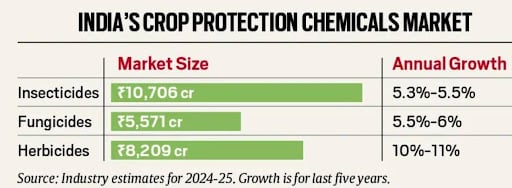
  • India’s organised crop protection chemicals market, valued at approximately ₹24,500 crore, is witnessing rapid growth in the herbicide segment. 
  • While insecticides lead the market at ₹10,700 crore, herbicides follow closely at ₹8,200 crore, growing at an annual rate of over 10%, the fastest among all segments. 

  • This space is largely dominated by multinational giants, many of which are backed by Chinese state-owned Sinochem Holdings. However, Indian companies are also making inroads. 

Labour Shortage Fuels Surge in Herbicide Use

  • Weeds indirectly harm crops by competing for essential resources like water, nutrients, and sunlight, and sometimes even hosting pests and pathogens. 
  • Traditionally, farmers controlled weeds through manual weeding or tools like khurpi, and in recent years, power weeders. 
  • However, manual weeding is labour-intensive and time-consuming—requiring 8–10 hours per acre—and needs to be repeated throughout the crop cycle. 
  • Though power weeders reduce this to 2–3 hours, they are not effective for all weed types, especially those with deep roots or growing in dense crop areas
  • Meanwhile, agricultural labour shortages have worsened, and wages have risen significantly—from ₹326.2 in 2019 to ₹447.6 in 2024. 
  • With fewer rural workers willing to engage in strenuous fieldwork, farmers increasingly rely on herbicides. 
  • Herbicides now function as labour-saving tools, much like tractors, addressing the twin challenges of time and workforce scarcity in Indian agriculture.

Shift Towards Preventive Herbicide Use in Indian Agriculture

  • Traditionally, farmers applied insecticides, fungicides, and herbicides only when pest or weed infestations visibly crossed economic threshold levels—when anticipated crop losses justified the cost of treatment. 
  • However, the herbicide market is evolving with a growing shift towards preventive strategies
  • Farmers are increasingly using pre-emergent herbicides—sprayed around or just after sowing—to prevent weed growth altogether and maintain clean fields from the outset. 
  • Others opt for early post-emergent herbicides to target weeds during the crop’s sensitive early stages. 
  • This proactive approach is gaining momentum, especially amid acute farm labour shortages. 
  • In the ₹1,500-crore paddy herbicide market, pre-emergent products make up about ₹550 crore, and roughly 20% of the ₹1,000-crore wheat herbicide market. 
  • These sub-segments are now the main drivers of growth in India's crop protection space, reflecting a broader shift from reactive to preventive weed management.

Multinational Monopoly and Indian Push in Herbicide Market

  • While India has a diverse base of public and private players in seeds and fertilisers, its crop protection chemicals industry remains dominated by multinational corporations, raising concerns of monopoly. 
  • Despite this, Indian firms are gradually making inroads. Crystal Crop Protection Ltd (CCPL), for example, is developing innovative products through international collaborations. 
  • In partnership with multinational corporations, CCPL introduced a new paddy herbicide called Sikosa, which combines two active ingredients—Bensulfuron-methyl and Pretilachlor—in a patented oil-dispersion formulation. 
  • This formulation allows efficient application within 0–3 days after transplanting, offering broad-spectrum weed control at a cost-effective price of ₹850–₹900 per acre—far cheaper than manual weeding. 
  • While such developments show promise, India still lacks a dominant global player like China’s Sinochem Holdings Corporation, reflecting the long road ahead for Indian companies in breaking the multinational stronghold.

Source: IE

India’s Herbicide Market FAQs

Q1: What is driving herbicide use in India?

Ans: Labour shortages and rising costs are driving Indian farmers to adopt herbicides as substitutes for manual weeding.

Q2: Which segment of pesticides is growing fastest?

Ans: Herbicides are the fastest-growing segment, expanding over 10% annually in India’s ₹24,500 crore crop protection chemicals market.

Q3: Why are pre-emergent herbicides gaining popularity?

Ans: Farmers now prefer pre-emergent herbicides for preventive weed control, especially amid worsening agricultural labour shortages.

Q4: Who dominates India’s herbicide market?

Ans: Multinational firms like Bayer, Syngenta, and Corteva dominate, though Indian firms like CCPL are gaining ground.

Q5: How are Indian firms innovating in this space?

Ans: Indian firms like CCPL are partnering globally to develop cost-effective, innovative herbicide formulations like Sikosa.

Merchant Shipping Bill – Modernising India’s Maritime Law

Merchant Shipping Bill

Maritime Law Latest News

  • Parliament has passed the Merchant Shipping Bill, 2024 and the Carriage of Goods by Sea Bill, 2025, to modernise India’s maritime laws and align them with global standards.

Introduction

  • In a significant move to overhaul India’s maritime legal infrastructure, Parliament has passed two landmark legislations: the Merchant Shipping Bill, 2024 and the Carriage of Goods by Sea Bill, 2025
  • These Bills aim to modernise outdated maritime laws, bring India in line with international maritime conventions, and support the country’s ambitions to become a leading player in global shipping and trade.

Modernisation of India’s Maritime Legal Framework

  • India’s maritime sector had long been governed by the Merchant Shipping Act of 1958 and the Indian Carriage of Goods by Sea Act, 1925, both of which had become outdated, fragmented, and inadequate for handling contemporary maritime challenges. 
  • The newly passed Bills represent a decisive departure from these colonial-era frameworks.
  • According to the Union Ministry of Ports, Shipping and Waterways, the reforms signal a “double endorsement” of the Centre’s push toward modern shipping infrastructure and legal clarity.

Merchant Shipping Bill, 2024

  • This Bill replaces the old 1958 Act with a comprehensive and future-ready legal structure. 
  • With 16 Parts and 325 clauses, it simplifies compliance, strengthens safety norms, and reflects India’s commitments under key International Maritime Organisation (IMO) conventions.
  • Key Features:
    • Seafarer Welfare: Prioritises working conditions, welfare, and protection of Indian and foreign seafarers operating under Indian jurisdiction.
    • Safety and Emergency Response: Strengthens frameworks for ship safety, emergency preparedness, and marine pollution control.
    • Environmental Protection: Integrates IMO protocols to safeguard marine ecosystems.
    • Tonnage Promotion: Encourages the registration of ships under the Indian flag to boost domestic tonnage.
    • Compliance Simplification: Consolidates fragmented provisions, thereby reducing red tape for maritime operators.
  • The Government stressed that the legislation not only updates India’s shipping law but also positions the country as a “globally respected maritime jurisdiction” ready for sustainable growth and investment.

The Carriage of Goods by Sea Bill, 2025

  • This Bill repeals the Indian Carriage of Goods by Sea Act, 1925 and brings in a modern legal structure to regulate cargo movement via sea. 
  • It is particularly significant for exporters, importers, shipping companies, and insurers.
  • Key Features:
    • Hague-Visby Rules Compliance: Aligns India’s cargo liability laws with globally accepted standards followed by countries like the UK, simplifying cross-border transactions.
    • Commercial Efficiency: The new rules enhance transparency in contracts and dispute resolution, helping to reduce litigation and boost investor confidence.
    • Trade Facilitation: It streamlines the legal process surrounding cargo shipping, making India more attractive to international shipping and logistics companies.

Strategic Significance for India’s Maritime Sector

  • Together, the two Bills lay the foundation for India’s blue economy by:
    • Promoting ease of doing business in maritime logistics.
    • Unlocking investment potential in ports, shipbuilding, and maritime technology.
    • Supporting India’s maritime security architecture through better legal and regulatory frameworks.
    • Creating opportunities for green maritime initiatives and sustainable coastal development.
  • The reforms are also expected to generate employment, especially in coastal states, and enhance India’s capability to compete with global maritime powers such as Singapore, China, and the UAE.

Source : TH

Merchant Shipping Bill FAQs

Q1: What is the Merchant Shipping Bill, 2024?

Ans: It is a modern maritime law replacing the outdated Merchant Shipping Act, 1958, to align with global conventions and improve seafarer welfare.

Q2: Why was the Carriage of Goods by Sea Bill, 2025 introduced?

Ans: It repeals the 1925 Act and adopts international standards to improve transparency and reduce legal disputes in maritime cargo transport.

Q3: How do the Bills benefit Indian seafarers and shipping companies?

Ans: They improve safety, simplify compliance, promote Indian-flagged ships, and enhance working conditions for seafarers.

Q4: What international standards do these Bills align with?

Ans: The Bills align with key conventions of the International Maritime Organization (IMO), including the Hague-Visby Rules.

Q5: What is the broader aim of these maritime reforms?

Ans: To position India as a globally respected maritime jurisdiction and facilitate growth in trade, investment, and sustainability.

Enquire Now