
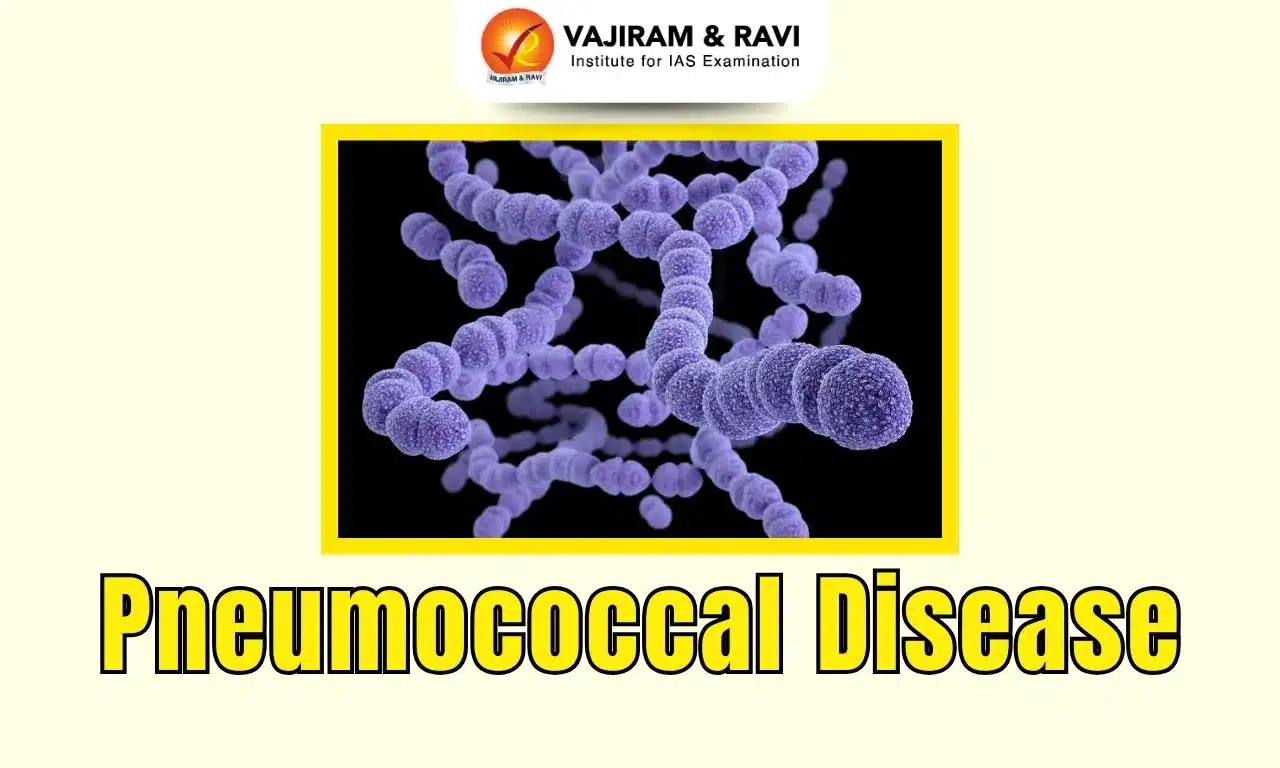
Pneumococcal Disease Latest News
Drug firm Pfizer recently introduced its next-generation 20-valent pneumococcal conjugate vaccine (PCV20) for adults in India, offering protection against 20 serotypes responsible for a majority of pneumococcal diseases.
About Pneumococcal Disease
- Pneumococcal disease refers to a range of illnesses that affect various parts of the body and are caused by infection with the bacterium Streptococcus pneumoniae, commonly known as pneumococcus.
- Streptococcus pneumoniae is an encapsulated bacteria with a polysaccharide capsule, an essential factor in virulence.
- About 90 distinct pneumococcal serotypes have been identified throughout the world, with a small number of these serotypes accounting for most diseases.
- Illnesses range from mild infections, such as ear infections, to pneumonia and life-threatening infections of the bloodstream and central nervous system, such as meningitis.
- It is a major public health problem worldwide.
- In the developing world young children and the elderly are most affected.
- It is estimated that about one million children die of pneumococcal disease every year.
- Pneumococci are transmitted by direct contact with respiratory secretions from patients and healthy carriers.
- Treatment:
- Treatment typically involves antibiotics.
- Vaccines can reduce the risk of infection, especially in young children and older adults.
- Pneumococcal resistance to antimicrobials is a serious and rapidly increasing problem worldwide.
Source: ET
Pneumococcal Disease FAQs
Q1: Which organism causes Pneumococcal disease?
Ans: Pneumococcal disease is caused by the bacterium Streptococcus pneumoniae, commonly known as pneumococcus.
Q2: How is pneumococcal disease primarily transmitted?
Ans: It is transmitted by direct contact with respiratory secretions from patients and healthy carriers.
Q3: How is pneumococcal disease treated?
Ans: Pneumococcal disease is typically treated with antibiotics, but prevention is also important through vaccination, especially for young children and older adults.
