UPSC Daily Quiz 14 August 2025

UPSC Daily Quiz

The Daily UPSC Quiz by Vajiram & Ravi is a thoughtfully curated initiative designed to support UPSC aspirants in strengthening their current affairs knowledge and core conceptual understanding. Aligned with the UPSC Syllabus 2025, this daily quiz serves as a revision resource, helping candidates assess their preparation, revise key topics, and stay updated with relevant issues. Whether you are preparing for Prelims or sharpening your revision for Mains, consistent practice with these Daily UPSC Quiz can significantly enhance accuracy, speed, and confidence in solving exam-level questions

[WpProQuiz 45]

UPSC Daily Quiz FAQs

Q1: What is the Daily UPSC Quiz?

Ans: The Daily UPSC Quiz is a set of practice questions based on current affairs, static subjects, and PYQs that help aspirants enhance retention and test conceptual clarity regularly.

Q2: How is the Daily Quiz useful for UPSC preparation?

Ans: Daily quizzes support learning, help in revision, improve time management, and boost accuracy for both UPSC Prelims and Mains through consistent practice.

Q3: Are the quiz questions based on the UPSC syllabus?

Ans: Yes, all questions are aligned with the UPSC Syllabus 2025, covering key areas like Polity, Economy, Environment, History, Geography, and Current Affairs.

Q4: Are solutions and explanations provided with the quiz?

Ans: Yes, each quiz includes detailed explanations and source references to enhance conceptual understanding and enable self-assessment.

Q5: Is the Daily UPSC Quiz suitable for both Prelims and Mains?

Ans: Primarily focused on Prelims (MCQ format), but it also indirectly helps in Mains by strengthening subject knowledge and factual clarity.

Article 17 of Indian Constitution, Enforcement, Significance

Article 17 of Indian Constitution

Article 17 of Indian Constitution, under Part III (Fundamental Rights), is a key provision addressing the historic social injustice of untouchability. This practice existed in Indian society for centuries, extended discrimination and inequality based on caste.

Article 17 of Indian Constitution not only abolishes untouchability in all its forms but also makes its practice a punishable offence under the law. It stands as a constitutional safeguard for the promotion of social equality and the eradication of caste-based discrimination, reinforcing the foundational principles of equality and justice in India’s democratic framework.

Article 17 of Indian Constitution

“Untouchability” is abolished and its practice in any form is forbidden. The enforcement of any disability arising out of “Untouchability” shall be an offence punishable in accordance with law.

Article 17 of Indian Constitution

Article 17 of Indian Constitution, is included under Part III - Fundamental Rights, abolishes the practice of untouchability and prohibits its observance in any form. It mandates that any act enforcing or promoting discrimination based on untouchability is a punishable offence under law.

  • Abolition of Untouchability - Permanently ends the centuries-old practice, recognising it as a grave violation of human dignity.
  • Comprehensive Ban - Declares any manifestation of untouchability whether social, economic, or cultural, illegal and unconstitutional.
  • Punishable Offence - Imposes legal consequences on individuals who enforce restrictions or discriminate on the basis of untouchability.
  • Part of the Right to Equality - Constitutes a core element of the constitutional guarantee of equality, ensuring equal rights for all citizens.
  • Advancing Social Justice - Serves as a constitutional tool for promoting dignity, respect, and equal treatment regardless of caste or background.

Article 17 of Indian Constitution Enforcement

Article 17 of Indian Constitution implemented prohibition of untouchability is given practical effect through statutory measures, which includes:

The Protection of Civil Rights Act, 1955

Enacted to implement the constitutional mandate of Article 17, this Act criminalises the practice of untouchability in all forms. It:

  • Prescribes punishments for individuals or groups enforcing untouchability.
  • Includes preventive provisions to discourage discriminatory practices.
  • Ensures protection of the rights of victims and promotes their access to justice..

The Scheduled Castes and Scheduled Tribes (Prevention of Atrocities) Act, 1989

This law provides an additional layer of protection for members of Scheduled Castes (SCs) and Scheduled Tribes (STs), addressing both untouchability and other acts of discrimination or violence. It:

  • Aims to prevent atrocities, harassment, and social boycotts targeting SCs and STs.
  • Mandates the creation of Special Courts for speedy trial of offences.
  • Imposes stringent penalties on offenders to deter violations and ensure justice for victims.

Article 17 of Indian Constitution Judicial Implications

The Supreme Court and High Courts have clarified the scope and application of Article 17 of Indian Constitution through several landmark judgments:

  • Jai Singh v. Union of India (AIR 1977) and Devrajiah v. B. Padmana (AIR 1958): The courts held that the term “untouchability” in Article 17 does not carry a literal or grammatical meaning. Instead, it refers to the historical system of caste-based social disabilities. Practices such as social boycotts or exclusion from religious services, unless tied to caste-based discrimination, do not fall within the ambit of Article 17.
  • People’s Union for Democratic Rights v. Union of India (AIR 1982): The Supreme Court ruled that when private individuals violate rights guaranteed under Article 17, it is the duty of the State to intervene promptly. The State’s obligation exists regardless of whether the affected individuals are capable of asserting their rights independently.
  • State of Karnataka v. Appa Balu Ingale (AIR 1993): The Court expressed strong concern over the continued prevalence of untouchability, describing it as a form of modern slavery and a manifestation of the caste system. In this case, the respondents were accused of preventing the complainant from drawing water from a borewell solely because of their caste status.
  • Indian Young Lawyers Association v. State of Kerala (AIR 2018): In the Sabarimala Temple entry case, the Supreme Court held that barring women of certain age groups from entering the temple amounted to a form of social exclusion prohibited under Article 17. The Court interpreted the article’s protection broadly to cover any form of social segregation or unequal treatment.

Article 17 of Indian Constitution Social Significance

  • By abolishing untouchability, Article 17 reinforces the constitutional principle of equality and ensures that no individual is denied rights or opportunities on the basis of caste.
  • The provision safeguards the rights of historically disadvantaged communities, guaranteeing access to public spaces, services, and opportunities previously withheld due to caste-based exclusion.
  • It challenges entrenched social hierarchies, aiming to curb caste-based prejudices, discrimination, and violence.
  • Beyond legal enforcement, Article 17 plays a role in shaping societal attitudes, promoting respect, dignity, and equal treatment for all citizens irrespective of social background.

Article 17 of Indian Constitution Challenges

  • Despite constitutional safeguards, caste-based discrimination and untouchability practices persist in certain regions. This calls for stricter enforcement of laws along with sustained public awareness campaigns to change social attitudes.
  • The Protection of Civil Rights Act, 1955, and the Scheduled Castes and the Scheduled Tribes (Prevention of Atrocities) Act, 1989, must be enforced effectively. This includes ensuring speedy trials through special courts and providing adequate protection and support to victims.
  • Reducing dependence and vulnerability requires economic self-reliance for marginalized communities. This can be achieved through skill development, entrepreneurship promotion, and better access to credit and market opportunities.
  • Long-term change demands active community participation in reform initiatives and promoting inter-caste interaction to break down social barriers and reduce damages.
Also Check Related Post
Article 295 of Indian Constitution Article 194 of Indian Constitution
Article 39 of Indian Constitution Article 191 of Indian Constitution
Article 20 of Indian Constitution Article 16 of Indian Constitution
Article 67 of Indian Constitution Article 40 of Indian Constitution
Article 78 of Indian Constitution

Article 17 of Indian Constitution FAQs

Q1: What is Article 17 of the Indian Constitution?

Ans: Article 17 abolishes untouchability and forbids its practice in any form, making it a punishable offence under the law.

Q2: What is the Indian Constitution Part 17 Article?

Ans: Part XVII deals with the official language provisions, not related to Article 17, which belongs to Part III - Fundamental Rights.

Q3: What is the use of Article 17?

Ans: It ensures social equality by legally prohibiting caste-based untouchability and safeguarding the dignity and rights of marginalized communities.

Q4: Why is the 17th article of the Constitution important?

Ans: It plays a crucial role in eliminating caste-based discrimination, promoting equality, and upholding social justice in India.

Environmental Pollution, Meaning, Types, Causes and Effects

Environmental Pollution

Environmental Pollution is one of the most pressing challenges in the present time. This problem is responsible for many threats like human health, ecosystems and well-being of the planet. In this article, we are going to cover Environmental Pollution, its meaning, types, causes and consequences. 

Environmental Pollution Meaning

The term environmental Pollution means the presence of harmful materials in the environment. 

It is the contamination of physical and biological components of the environment that impacts the normal environment. 

Pollutants Meaning

  • Pollutants are harmful materials that are responsible for contamination of air, water, soil and damage to the environment. 
  • Pollutants can be natural or human made such as volcanic ash or factory runoff. 

Types of Pollutants

Pollutants can be classified into different types based on various parameters:

1. Based on Nature of Disposal

  1. a) Non-Biodegradable Pollutants
  • Cannot be broken down into simpler, harmless substances naturally.
  • Examples: DDT, plastics, polythene, insecticides, pesticides, mercury, lead, arsenic, aluminium cans, synthetic fibres, glass, iron products, silver foils.
  • Tend to bioaccumulate and biomagnify, leading to higher concentrations in organisms at upper levels of the food chain.
  1. b) Biodegradable Pollutants
  • Can decompose naturally into harmless substances over time.
  • Examples: Domestic waste, sewage, agricultural residues, paper, wood, cloth, cattle dung, animal bones, leather, wool, vegetable matter.

2. Based on Form of Persistence

  1. a) Primary Pollutants
  • Emitted directly from sources and remain in the environment in their original form.
  • Examples: Ash, smoke, fumes, dust, nitric oxide, sulphur dioxide, hydrocarbons.
  1. b) Secondary Pollutants
  • Formed when primary pollutants react chemically with atmospheric constituents.
  • Examples: Sulphur trioxide, nitrogen dioxide, aldehydes, ketones, ozone.

3. Based on Nature of Pollutants

  1. a) Quantitative Pollutants
  • Naturally occurring substances that become pollutants when their concentration increases due to human activity.
  • Example: Carbon dioxide (CO₂).
  1. b) Qualitative Pollutants
  • Substances not normally found in nature and introduced by human activities.
  • Example: Insecticides.

Environmental Pollution Causes

Environmental pollution arises from many human and natural factors:

  1. Rapid Industrialisation: Concentration of industries in urban areas releases pollutants into air, water, and soil. Accelerated industrial growth increases waste generation, hazardous by-products (liquids, solids, gases, sludge), and resource consumption.
  2. Rapid Urbanisation: Expanding cities contribute to deforestation, habitat loss, higher emissions, and increased waste. Overpopulation in urban centres strains resources and intensifies pollution levels.
  3. Forest Fires: Rising frequency of wildfires due to human activities like land clearing and encroachment. These fires release massive amounts of gases and particulate matter into the atmosphere.
  4. Improper Agricultural Practices: Agriculture accounts for ~23% of global greenhouse gas emissions (IPCC). Overuse of chemical fertilisers, pesticides, and herbicides contaminates soil and water. Intensive farming drives deforestation, soil erosion, and habitat destruction.
  5. Deforestation: Large-scale loss of forests for agriculture, urbanisation, or mining disrupts ecological balance and reduces nature’s capacity to absorb pollutants, worsening environmental pollution.
  6. Other Factors: Dependence on fossil fuels, vehicular emissions, and poor waste management are also major contributors.

 Environmental Pollution Types

Environmental pollution can be classified based on the nature of pollutants and the medium they affect. Major types include:

  1. Air Pollution
  • Contamination of the atmosphere with harmful gases and particulate matter.
  • Caused by industrial emissions, vehicular exhaust, and burning fossil fuels.
  • Linked to respiratory and cardiovascular diseases, acid rain, and climate change.
  1. Water Pollution
  • Degradation of water quality in rivers, lakes, and oceans due to industrial effluents, sewage, agricultural runoff, and oil spills.
  • Harms aquatic life, disrupts ecosystems, and poses health risks to humans.
  1. Soil Pollution
  • Contamination of soil with hazardous chemicals, heavy metals, pesticides, and industrial waste.
  • Results from excessive pesticide/fertiliser use, waste dumping, and improper disposal of solids.
  • Reduces soil fertility and contaminates crops, affecting food security.
  1. Noise Pollution
  • Excessive or disruptive noise from industries, traffic, construction, and urban activities.
  • Causes stress, hearing loss, and other health issues, and disturbs wildlife.
  1. Thermal Pollution
  • Sudden temperature changes in natural water bodies, often from industrial cooling processes.
  • Leads to reduced dissolved oxygen, algae growth, and aquatic ecosystem disruption.
  1. Nuclear or Radiation Pollution
  • Release of radioactive particles into air, water, or land due to nuclear accidents, lab breaches, or improper waste disposal.
  • Damages cells and genetic material, causing long-term health hazards.
  1. Marine Pollution
  • Introduction of harmful substances into seas and oceans from sewage, industrial waste, and oil spills.
  • Harms marine biodiversity and reduces seawater quality.
  1. Plastic Pollution
  • Accumulation of plastic waste in landfills, waterways, and oceans.
  • Takes centuries to decompose, harming wildlife, ecosystems, and human health.
  1. Light Pollution
  • Excessive artificial lighting, particularly in urban areas.
  • Disrupts natural light cycles, affects wildlife, wastes energy, and interferes with astronomical research.

Environmental Pollution Consequences

Environmental pollution has the following consequences:

  1. Public Health
  • Pollution is a major cause of illness and premature death worldwide.
  • Different forms of pollution affect human health in distinct ways.
  • Air pollution alone causes millions of deaths annually, with children and the elderly being especially vulnerable.
  1. Environmental Degradation
  • Pollution damages ecosystems, leading to biodiversity loss, habitat destruction, and disruption of ecological processes.
  • It disturbs food chains and weakens the resilience of natural systems.
  1. Climate Change
  • Greenhouse gas emissions from pollution are key drivers of global warming.
  • Consequences include more frequent extreme weather events, rising sea levels, and shifting ecosystems.
  1. Economic Costs
  • Pollution results in loss of productivity, damage to ecosystems, and high healthcare expenses.
  • Significant funds are required for pollution control, remediation, and environmental restoration.
  1. Social Impacts
  • Pollution lowers quality of life by harming health and reducing environmental enjoyment.
  • Environmental crises such as droughts and water shortages can trigger social unrest, conflicts, and forced migration.

Environmental Pollution FAQs

Q1: What is environmental pollution?

Ans: Environmental pollution is the contamination of air, water, soil, or other natural resources with harmful substances that adversely affect living organisms and ecosystems.

Q2: What are the types of environmental pollution?

Ans: The main types are air, water, soil, noise, thermal, radiation, marine, plastic, and light pollution

Q3: What are the effects of environmental pollution?

Ans: It harms human health, degrades ecosystems, accelerates climate change, causes economic losses, and leads to social issues.

Q4: What are the causes of environmental pollution?

Ans: Causes of environmental pollution include industrialisation, urbanisation, deforestation, improper agriculture, fossil fuel use, and poor waste management.

Q5: What are pollutants?

Ans: Pollutants are substances that, when introduced into the environment, cause harm to living beings and disrupt natural processes.

The Indian Islands, Andaman & Nicobar & Lakshadweep Islands

Indian Islands

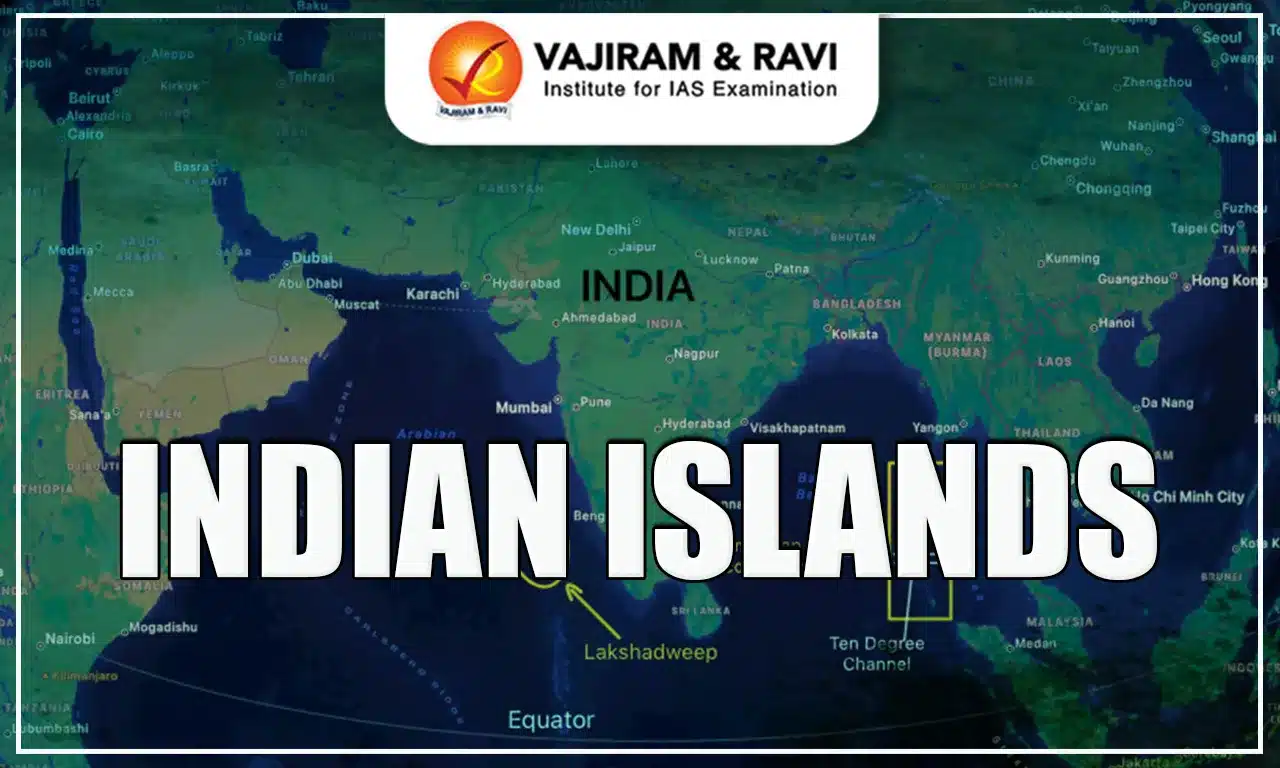
India has many islands spread across its coastline, both in the Arabian Sea and the Bay of Bengal. These islands are very important not only for their natural beauty, but also their biodiversity, their strategic, cultural and economic importance. India has two important islands: the Andaman and Nicobar Islands located in the Bay of Bengal and the Lakshadweep Islands in the Arabian Sea. In this article, we are going to cover the Islands of India. 

Andaman and Nicobar Islands

The Andaman and Nicobar Islands are the most important islands in India. They are located in the Bay of Bengal and have around 572 islands, out of which 37 are inhabited.

Andaman Islands

  • The Andaman Islands are closer to mainland India; stretch north–south over 800 km.
  • The largest islands are North, Middle, and South Andaman.
  • Capital: Port Blair (South Andaman Island).
  • Strategic Importance: Near the Ten Degree Channel and Malacca Strait make them important for maritime security.
  • The biodiversity includes tropical rainforests, coral reefs and is home to Andaman wild pig, saltwater crocodile, dugong, and diverse birdlife.
  • Tribes present are Great Andamanese, Onge, Jarwa, Sentinelese (minimal outside contact).
  • Tourism: Famous for Havelock Island, Radhanagar Beach, scuba diving, and water sports.

Nicobar Islands

  • The Nicobar Islands are located on the South of Andamans, separated by the Ten Degree Channel.
  • Capital: Car Nicobar.
  • Indira Point, India’s southernmost tip, makes Nicobar Islands strategically important and close to major sea routes.
  • Biodiversity includes UNESCO World Biosphere Reserve and is home to Nicobar pigeon, coconut crab, and endemic flora/fauna.
  • Tribes: Nicobarese and Shompen (semi-nomadic, interior forest dwellers).

Lakshadweep Islands

  • Lakshadweep Islands are located in the Arabian Sea and composed of 36 coral islands, 200-400 km from India’s southwest coast.
  • Kavaratti is the capital.
  • Geography includes Low-lying atolls, reefs, and lagoons and only ~10 inhabited islands.
  • Biodiversity includes rich marine life like corals, reef fish, sea turtles, mollusks; coconut palms dominate the region. 
  • The economy consists of Fishing, coconut cultivation, tourism (snorkeling, scuba diving-  Bangaram & Agatti popular).

  • Culture is predominantly Muslim, Malayalam-speaking, strong maritime traditions.

Important Coastal Islands of India 

Apart from Andaman & Nicobar Islands and the Lakshadweeps, the major coastal islands of India are: 

Island State Importance

Diu

Gujarat

Portuguese heritage, forts, beaches.

Majuli

Assam

Largest river island; Vaishnavism centre; erosion threat.

Sriharikota

Andhra Pradesh

ISRO’s Satish Dhawan Space Centre.

Vypin

Kerala

Fishing, coconut cultivation, tourism hub near Kochi.

Islands of India Strategic Importance 

The Islands of India are strategically important due to their location, geographical biodiversity, international maritime trade routes and serve as outposts for surveillance, defense and maritime security. 

  • Naval Bases: The Indian Navy maintains key bases in the Andaman and Nicobar Islands, including INS Jarawa and INS Baaz, to safeguard the eastern seaboard and oversee traffic through the Malacca Strait.
  • Strategic Infrastructure: Airstrips and ports in both the Andaman & Nicobar and Lakshadweep islands enhance connectivity, support military operations, and protect India’s maritime interests, including its Exclusive Economic Zone (EEZ).

Indian Islands FAQs

Q1: How many islands in India?

Ans: India has a total of 1,382 islands.

Q2: Why are Indian islands important?

Ans: They are crucial for national security, maritime trade routes, tourism, and protecting India’s Exclusive Economic Zone (EEZ).

Q3: Which island is also known as the Indian islands?

Ans: The Andaman and Nicobar Islands are often collectively referred to as the Indian Islands.

Q4: Where is Vypin Island located?

Ans: Vypin Island is located in Kerala, near Kochi.

Q5: Which naval bases are located in Andaman and Nicobar?

Ans: Major bases include INS Jarawa, INS Baaz, and INS Kardip.

Right Against Exploitation, Meaning, Provisions, Importance

Right Against Exploitation

Right against exploitation is a fundamental right written in the Constitution of India in the form of Article 23 and Article 24. This right helps in protecting the dignity and freedom of citizens of India and ensure social justice. Individuals are provided protection against forced labour, human trafficking and child exploitation under this right. In this article, we are going to cover all about Article 23 and Article 24 that is Right against Exploitation. 

Right Against Exploitation Meaning

The Right Against Exploitation is mentioned in the Constitution of India as a fundamental right. The provisions of the article are written in the form of Article 23 and Article 24 and cover the types of exploitation. This makes sure that  the individual rights are protected and the principles of social justice are maintained so that people are not subject to coercion, abuse and dehumanisation. 

Right Against Exploitation Provisions in Indian Constitution

Right Against Exploitation has the following provisions mentioned in the Constitution of India: 

Article 23- Prohibition of Trafficking in Human Beings and Forced Labour 

Article 23 prohibits trafficking in human beings and all forms of forced labour, including begar and bonded labour. Violations are punishable by law, and the right applies to both citizens and non-citizens, protecting individuals against both State and private actions.

Traffic in Human Beings
The term covers:

  • Buying and selling of men, women, and children as commodities.
  • Immoral trafficking in women and children, including prostitution.
  • Practices like devadasi system and slavery.
  • To curb these practices, Parliament enacted the Immoral Traffic (Prevention) Act, 1956.

Forced Labour
Forced labour means forcing a person to work against their will through physical, legal, or economic coercion (e.g., work for less than minimum wages).

Begar: A form of unpaid forced labour under the Zamindari System where tenants were made to work without remuneration.

Key laws against forced labour:

  • Bonded Labour System (Abolition) Act, 1976
  • Minimum Wages Act, 1948
  • Contract Labour Act, 1970
  • Equal Remuneration Act, 1976
  • Exception: The State may impose compulsory service for public purposes (e.g., military or social service) without payment, provided there is no discrimination based on religion, race, caste, or class.

Article 24- Prohibition of Employment of Children in Hazardous Activities

Article 24 bans employment of children below 14 years in factories, mines, and other hazardous occupations, but allows it in non-hazardous work.

Important laws included are:

  • Child Labour (Prohibition and Regulation) Act, 1986 (and amendments)
  • Employment of Children Act, 1938
  • Factories Act, 1948
  • Mines Act, 1952
  • Merchant Shipping Act, 1958
  • Plantation Labour Act, 1951
  • Motor Transport Workers Act, 1951
  • Apprentices Act, 1961
  • Bidi and Cigar Workers Act, 1966

Some important Government Initiatives include: 

  • Creation of Child Labour Rehabilitation Welfare Fund, funded by penalties paid by offending employers.
  • Establishment of National and State Commissions for Protection of Child Rights.
  • Setting up of Children’s Courts for speedy trials of offences against children.

Right Against Exploitation Importance

Right Against Exploitation has the following significance: 

  • Protection of Human Rights : Protects individuals from exploitation, giving dignity and fundamental rights.
  • Prevention of Human Trafficking: Does not allow the illegal trade of people for forced labour, slavery, or other exploitative purposes.
  • Elimination of Forced Labour: Eradicates bonded labour, begar, and other coercive work practices, ensuring fair and voluntary employment.
  • Protects Children:  Bans child labour in hazardous jobs, protecting their health, education, and overall well-being.
  • Promotion of Social Justice: Holds both state and private actors accountable, fostering fairness and equality in society.
  • Support for Vulnerable Groups: Protects women, children, and marginalised communities from exploitation and abuse.
  • Encouragement of Ethical Labour Practices: Promotes fair wages, humane working conditions, and respect for workers’ rights.

Right Against Exploitation FAQs

Q1: What is the right against exploitation?

Ans: It is a fundamental right under Articles 23 and 24 that protects individuals from human trafficking, forced labour, and child labour in hazardous jobs.

Q2: What is exploitation of rights?

Ans: It refers to the misuse or violation of a person’s rights, often for unfair personal or economic gain.

Q3: Does Article 21 include right against exploitation?

Ans: No, the right against exploitation is covered under Articles 23 and 24, not Article 21.

Q4: What is Article 23 of the Indian Constitution?

Ans: It prohibits human trafficking, begar (forced labour), and other forms of forced labour.

Q5: What is Article 24 of the Indian Constitution?

Ans: It bans the employment of children below 14 years in factories, mines, and other hazardous occupations.

Article 114 of Indian Constitution, Interpretation, Key Details

Article 114 of Indian Constitution

The Constitution of India, adopted on 26 November 1949, establishes a comprehensive framework for the governance of the country, defining the structure, powers, and functioning of various organs of government. Among its fiscal provisions, Article 114 of Indian Constitution addresses the procedure relating to Appropriation Bills.

An Appropriation Bill is introduced in Parliament to authorize the withdrawal of funds from the Consolidated Fund of India to meet the expenditure sanctioned by the legislature. Article 114 ensures that no money is withdrawn from the Consolidated Fund except under legislative authority, thereby upholding the principles of parliamentary control over public finances.

Article 114 of Indian Constitution

(1) As soon as may be after the grants under article 113 have been made by the House of the People, there shall be introduced a Bill to provide for the appropriation out of the Consolidated Fund of India of all moneys required to meet—

(a) the grants so made by the House of the People; and

(b) the expenditure charged on the Consolidated Fund of India but not exceeding in any case the amount shown in the statement previously laid before Parliament.

(2) No amendment shall be proposed to any such Bill in either House of Parliament which will have the effect of varying the amount or altering the destination of any grant so made or of varying the amount of any expenditure charged on the Consolidated Fund of India, and the decision of the person presiding as to whether an amendment is inadmissible under this clause shall be final.

(3) Subject to the provisions of articles 115 and 116, no money shall be withdrawn from the Consolidated Fund of India except under appropriation made by law passed in accordance with the provisions of this article.

Article 114 of Indian Constitution Interpretation

Article 114 of Indian Constitution mandates that no money shall be withdrawn from the Consolidated Fund of India except under the authority of an Appropriation Act. Once the Lok Sabha approves the demands for grants under Article 113, an Appropriation Bill is introduced in the House.

This Bill consolidates all grants voted by the Lok Sabha, along with expenditure charged on the Consolidated Fund of India as earlier presented to Parliament. The Constitution expressly prohibits any amendment to the Appropriation Bill that would alter the amount of expenditure charged on the Consolidated Fund.

Also Check Related Post
Article 295 of Indian Constitution Article 194 of Indian Constitution
Article 39 of Indian Constitution Article 191 of Indian Constitution
Article 20 of Indian Constitution Article 16 of Indian Constitution
Article 67 of Indian Constitution Article 40 of Indian Constitution
Article 78 of Indian Constitution

Article 114 of Indian Constitution FAQs

Q1: What is the Article 114 of the Constitution of India?

Ans: Article 114 deals with the appropriation bills that provide funds from the Consolidated Fund of India for government expenditure.

Q2: What is the Article 114 of the Money Bill?

Ans: In the context of a Money Bill, Article 114 governs appropriation bills ensuring no expenditure is made without Parliament’s approval.

Q3: What is Article 115 of the Constitution of India?

Ans: Article 115 provides for supplementary, additional, excess, or exceptional grants to meet unanticipated government expenditure during a financial year.

Q4: What is Article 117 of the Indian Constitution?

Ans: Article 117 lays down the special provisions regarding the introduction and passing of Money Bills and other financial bills in Parliament.

Q5: What is the punishment for Article 114?

Ans: Article 114 does not prescribe punishment; it is a financial procedure article, not a penal provision.

Article 128 of Indian Constitution, Interpretation, Importance

Article 128 of Indian Constitution

A constitution is a set of fundamental principles or established precedents that outlines the framework for governance of a nation or entity. Article 128 of the Indian Constitution, located in Part V dealing with the Union, is a significant provision concerning the judiciary. It provides for the attendance of retired judges at sittings of the Supreme Court, allowing their temporary participation in judicial proceedings. This mechanism ensures that the Court can draw upon the experience and expertise of former judges when required, thereby supporting the efficiency, continuity, and integrity of the judicial system.

Article 128 of Indian Constitution

Notwithstanding anything in this Chapter, the Chief Justice of India may at any time, with the previous consent of the President, request any person who has held the office of a Judge of the Supreme Court or of the Federal Court or who has held the office of a Judge of a High Court and is duly qualified for appointment as a Judge of the Supreme Court to sit and act as a Judge of the Supreme Court, and every such person so requested shall, while so sitting and acting, be entitled to such allowances as the President may by order determine and have all the jurisdiction, powers and privileges of, but shall not otherwise be deemed to be, a Judge of that Court:

Provided that nothing in this article shall be deemed to require any such person as aforesaid to sit and act as a Judge of that Court unless he consents so to do.

Article 128 of Indian Constitution Interpretation

Article 128 of Indian Constitution empowers the Chief Justice of India (CJI), with the prior approval of the President, to request retired judges of the Supreme Court or High Courts to sit and act as judges of the Supreme Court on a temporary basis.

During such a period, these retired judges are entitled to allowances as determined by the President and enjoy the same jurisdiction, powers, and privileges as a sitting Supreme Court judge. However, their appointment under Article 128 does not confer upon them a permanent position in the Court.

This provision plays an important role in maintaining judicial efficiency and continuity. It allows the Court to address short-term needs such as clearing case backlogs or handling matters requiring specific expertise by drawing upon the experience of former judges. It also reflects a collaborative framework between the executive and the judiciary, ensuring flexibility in the administration of justice.

Also Check Related Post
Article 295 of Indian Constitution Article 194 of Indian Constitution
Article 39 of Indian Constitution Article 191 of Indian Constitution
Article 20 of Indian Constitution Article 16 of Indian Constitution
Article 67 of Indian Constitution Article 40 of Indian Constitution
Article 78 of Indian Constitution

Article 128 of Indian Constitution FAQs

Q1: What is Article 128 of the Constitution?

Ans: It permits retired Supreme Court judges to act as judges again with the Chief Justice’s request and President’s approval.

Q2: What is Article 129 of the Indian Constitution?

Ans: Declares the Supreme Court as a court of record with power to punish for contempt of itself.

Q3: What is the Article 127 of the Constitution?

Ans: Allows appointment of an ad hoc Supreme Court judge when quorum is absent, with the President’s approval.

Q4: What is Article 124 to 129?

Ans: These Articles define the Supreme Court’s composition, powers, appointment process, judge’s service conditions, and related judicial provisions.

Q5: Why is Article 128 important?

Ans: It ensures judicial efficiency by enabling retired judges to assist during case backlogs or shortage of sitting judges.

Cheque Truncation System (CTS)

Cheque Truncation System

Cheque Truncation System Latest News

The Reserve Bank of India (RBI) has decided on the transition of the Cheque Truncation System (CTS) from the current approach of batch processing to continuous clearing with settlement on realisation in two phases.

About Cheque Truncation System 

  • It is a cheque clearing system undertaken by the Reserve Bank of India (RBI) for faster clearing of cheques. 
  • As the name suggests, truncation is the process of stopping the flow of the physical cheque in its way of clearing. 
  • CTS is an online image-based cheque clearing system where cheque images and Magnetic Ink Character Recognition (MICR) data are captured at the collecting bank branch and transmitted electronically, eliminating the actual cheque movement.
  • Security: CTS is protected by a comprehensive PKI-based security architecture which incorporates basic security and authentication controls such as dual access control, user ID, and passwords with crypto box and smart card interfaces.
    • Only CTS-2010 standards-compliant instruments can be presented for clearing through CTS.
    • CTS-2010 standards contain certain benchmarks towards achieving standardization of cheques issued by banks across the country. 
    • These include provision of mandatory minimum-security features on cheque forms like quality of paper, watermark, bank’s logo in invisible ink, void pantograph, etc., and standardisation of field placements on cheques.
    • The minimum-security features and standardisation help presenting banks while scrutinising/recognising cheques of drawee banks in an image-based processing scenario.
  • Benefits.
    • Realisation of proceeds of cheque possible within the same day.
    • Data storage and retrieval becomes easy.
    • Minimizes risks and introduces a secured cheque clearing system.
    • Will result in cost savings due to lower cost in the physical movement of cheques.
    • Minimizing bottlenecks and delays between presentation and realization time.
    • Provides shorter clearing cycles and a centralized image archival system.
      • CTS currently processes cheques with a clearing cycle of up to two working days. 
      • Once the newly announced measures by RBI on Continuous Clearing of Cheques under CTS are implemented, cheques would be cleared within hours of submission instead of two days.

Source: TH

Cheque Truncation System FAQs

Q1: The Cheque Truncation System (CTS) in India is operated by which institution?

Ans: Reserve Bank of India (RBI)

Q2: In the Cheque Truncation System, truncation refers to which process?

Ans: Cheque Truncation System is a cheque clearing system undertaken by the Reserve Bank of India (RBI) for faster clearing of cheques.

Q3: What is the main purpose of CTS-2010 standards?

Ans: To standardise and provide minimum-security features for cheques.

Article 174 Of Indian Constitution, Interpretation, Significance

Article 174 Of Indian Constitution

Article 174 of Indian Constitution is discussed in Part IV which discloses the conduct of sessions of the state legislature. It also mentions the authority of a Governor in summoning the legislature, proroguing its sessions, and dissolving the Legislative Assembly. The provision ensures that State Legislatures meet at regular intervals, thereby maintaining legislative continuity and accountability in governance.

Article 174 of Indian Constitution

(1) The Governor shall from time to time summon the House or each House of the Legislature of the State to meet at such time and place as he thinks fit, but six months shall not intervene between its last sitting in one session and the date appointed for its first sitting in the next session.

(2) The Governor may from time to time—

(a) prorogue the House or either House;

(b) dissolve the Legislative Assembly.

Article 174 of Indian Constitution Interpretation

Since its adoption, Article 174 of Indian Constitution has remained unamended, reflecting the intent to establish a stable framework for the conduct of State Legislature sessions. The provision ensures that legislative bodies summon at regular intervals while laying the Governor with the authority to summon, prorogue, and, when required, dissolve the legislature to facilitate the smooth functioning of the State’s legislative process.

Article 174 of Indian Constitution Background

The Indian Constitution establishes a federal framework by distributing powers between the Union and the States. Every state has its own legislature, which may be either unicameral or bicameral, entrusted with making laws on matters within the State List. The Governor, as the constitutional head of the state, plays a pivotal role in ensuring the effective functioning of the legislature. Article 174 of Indian Constitution specifically defines the Governor’s authority with respect to summoning, proroguing, and dissolving the sessions of the State Legislature, thereby ensuring legislative continuity and accountability.

Article 174 of Indian Constitution Landmark Cases

The judiciary has played a key role in interpreting Article 174 of Indian Constitution, particularly in defining the scope of the Governor’s authority to summon, prorogue, and dissolve State Legislatures, thereby maintaining a balance between the executive and the legislature. Notable cases include:

  1. Nabam Rebia and Bamang Felix v. Deputy Speaker, Arunachal Pradesh (2016) - The Supreme Court held that the Governor’s discretion under Article 174(1) must be exercised in accordance with constitutional norms and the advice of the Council of Ministers.
  2. State of Punjab v. Satya Pal Dang (1969) - The Court upheld the Governor’s discretionary power to dissolve the Legislative Assembly, provided such action remains within the constitutional framework.

Article 174 of Indian Constitution Significance

Article 174 of Indian Constitution plays a crucial role in maintaining and regulating the democratic framework at the state level. Its significance can be understood through the following aspects:

  1. Ensuring Regular Legislative Sessions - Article 174 mandates that no more than six months may elapse between two sessions of the State Legislature. This provision ensures continuity in legislative functioning, timely passage of laws, discussion of public issues, and consistent oversight of the executive.
  2. Balancing Executive and Legislative Powers - While the Governor holds the authority to summon, prorogue, and dissolve the Legislature, these powers are generally exercised on the advice of the Council of Ministers. This arrangement maintains a constitutional balance between the executive and the legislature, preventing overreach by either side.
  3. Facilitating Democratic Renewal - The dissolution of the Legislative Assembly enables the conduct of fresh elections, giving the electorate the opportunity to choose new representatives. Such dissolution may be necessary when the existing Assembly becomes ineffective due to political instability or loss of majority.

Flexibility in Legislative Management - The Governor’s power to postpone the Legislature provides a mechanism to manage legislative business efficiently. It allows sessions to conclude when business is complete or a recess is needed, without triggering dissolution of the Assembly.

Also Check Related Post
Article 295 of Indian Constitution Article 194 of Indian Constitution
Article 39 of Indian Constitution Article 191 of Indian Constitution
Article 20 of Indian Constitution Article 16 of Indian Constitution
Article 67 of Indian Constitution Article 40 of Indian Constitution
Article 78 of Indian Constitution

Article 174 Of Indian Constitution FAQs

Q1: What does Article 174 deal with?

Ans: Article 174 empowers the Governor to summon, prorogue, and dissolve the State Legislative Assembly.

Q2: Who has the authority to summon a state legislature under Article 174?

Ans: The Governor of the state, acting on the aid and advice of the Council of Ministers, summons the legislature.

Q3: How many times must a state legislature meet in a year as per Article 174?

Ans: The gap between two sessions cannot exceed six months.

Q4: What does 'proroguing' mean in Article 174?

Ans: Proroguing means formally ending a session of the legislature without dissolving the house.

Q5: Who can dissolve the State Legislative Assembly under Article 174?

Ans: The Governor can dissolve it, generally on the advice of the Chief Minister and Council of Ministers.

Ideonella Sakaiensis

Ideonella Sakaiensis

Ideonella Sakaiensis Latest news

Research has identified promising microbes like Ideonella sakaiensis, which can degrade PET plastic.

About Ideonella Sakaiensis

  • It is a bacterium from the genus Ideonella and family Comamonadaceae.
  • It is capable of breaking down and consuming the plastic polyethylene terephthalate (PET) using it as both a carbon and energy source. 
  • It was discovered by a group of researchers in Japan.
  • It breaks PET into its (environmentally benign) building blocks. These can then be used as food by I. sakaiensis and other organisms.

Characteristics of Ideonella Sakaiensis

  • It is a Gram-negative, rod-shaped, motile, non-sporing, non-pigment-producing, monotrichous bacterium.
  • They typically measure about 1.2 to 1.5 μm in length and 0.6 to 0.8 μm in width, giving the appearance of a bacillus under the microscope. 
  • It was initially discovered from PET-contaminated soil, suggesting its main habitat to be the environment, mainly soil with enriched plastic wastes.
  • They are found to live in oxygen-rich moist soil and sewage sludge. 

What is Polyethylene Terephthalate?

  • It is a condensation polymer of ethylene glycol and terephthalic acid.
  • The by-product of the reaction is water so it is an example of condensation or step-growth polymerization. 
  • PET Plastic is a thermoplastic synthetic substance which is malleable under heat and can be placed into nearly any shape.

Source: DTE

Ideonella Sakaiensis FAQs

Q1: What is Ideonella sakaiensis used for?

Ans: It may be useful in recycling and upcycling mixed plastics.

Q2: What is the natural habitat of Ideonella sakaiensis?

Ans: It is known to survive in oxygen-rich soil that is moist and aerated.

SabhaSaar AI Tool

SabhaSaar AI Tool

SabhaSaar AI Tool Latest news

The Centre is set to unveil an artificial intelligence (AI)-powered tool named ‘SabhaSaar’ in Tripura on Independence Day.

About SabhaSaar AI Tool

  • It is an AI tool which will automatically generate minutes of meetings of gram sabhas.
  • Gram Sabha is the primary body of the Panchayati Raj system, consisting of all registered voters of a gram panchayat.

Features of SabhaSaar AI Tool

  • It leverages the power of AI to generate structured minutes of meetings from gram sabha videos and audio recordings.
  • It will bring uniformity in minutes of the gram sabha meetings across the country.
  • Panchayat officials can use their e-GramSwaraj login credentials to upload video/audio recordings on ‘SabhaSaar’.
  • It is built on Bhashini, an AI-powered language translation platform launched by the government to bridge literacy, language, and digital divides.
  • The tool generates transcription from a video or audio, translates it into a chosen output language and prepares a summary.
  • It enables transcription in all major Indian languages like Hindi, Bengali, Tamil, Telugu, Marathi and Gujarati, in addition to English.
  • Significance: It is ideal for panchayats, administrative bodies, and rural development projects as it streamlines documentation and empowers stakeholders with instant access to meeting insights.

Source: IE

SabhaSaar AI Tool FAQs

Q1: What is Artificial Intelligence?

Ans: It is a set of technologies that enable computers to perform a variety of advanced functions, like ability to see, understand and translate spoken and written language and more.

Q2: What is meant by Gram Sabha?

Ans: Gram Sabha is the primary body of the Panchayati Raj system and by far the largest. It is a permanent body.

IN-SPACe

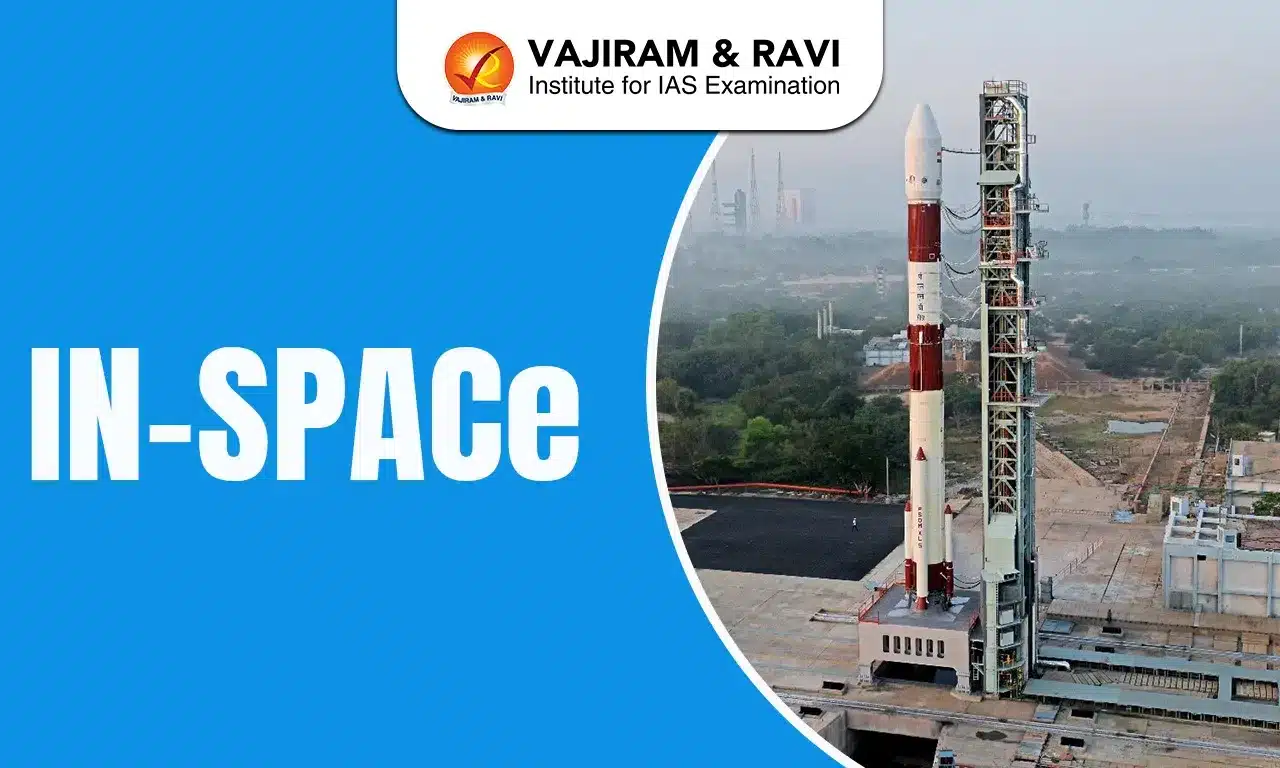
IN SPACe

IN-SPACe Latest News

Pune-based space tech startup Astrophel Aerospace recently signed a framework MoU with IN-SPACe, the Department of Space nodal body, to access ISRO facilities for technical reviews, system-level testing, and qualification support for semi-cryogenic propulsion systems, including turbopumps and engine modules

About IN-SPACe

  • Indian National Space Promotion and Authorization Center (IN-SPACe) is a single-window, independent, nodal agency that functions as an autonomous agency in the Department of Space (DOS). 
  • It is formed following the Space sector reforms to enable and facilitate the participation of private players.
  • IN-SPACe is responsible to promote, enable, authorize and supervise various space activities of non-governmental entities (NGEs) including building launch vehicles & satellites and providing space-based services; sharing space infrastructure and premises under the control of DOS/ISRO; and establishing of new space infrastructure and facilities.
  • The agency acts as an interface between ISRO and NGEs and assesses how to utilize India's space resources better and increase space-based activities. 
  • It also assesses the needs and demands of private players, including educational and research institutions, and explores ways to accommodate these requirements in consultation with ISRO.
  • Three Directorates viz., Promotion Directorate (PD), Technical Directorate (TD) and Program Management and Authorization Directorate (PMAD) are carrying out the functions of IN-SPACe.

Source: HBL

IN-SPACe FAQs

Q1: IN-SPACe functions under which department of the Government of India?

Ans: Department of Space

Q2: Which entities can approach IN-SPACe for space activities?

Ans: Non-governmental entities, including private companies and educational institutions.

Q3: What is IN-SPACe’s main objective?

Ans: To facilitate, authorize, and promote private sector participation in India’s space activities.

Lampedusa Island

Lampedusa Island

Lampedusa Island Latest News

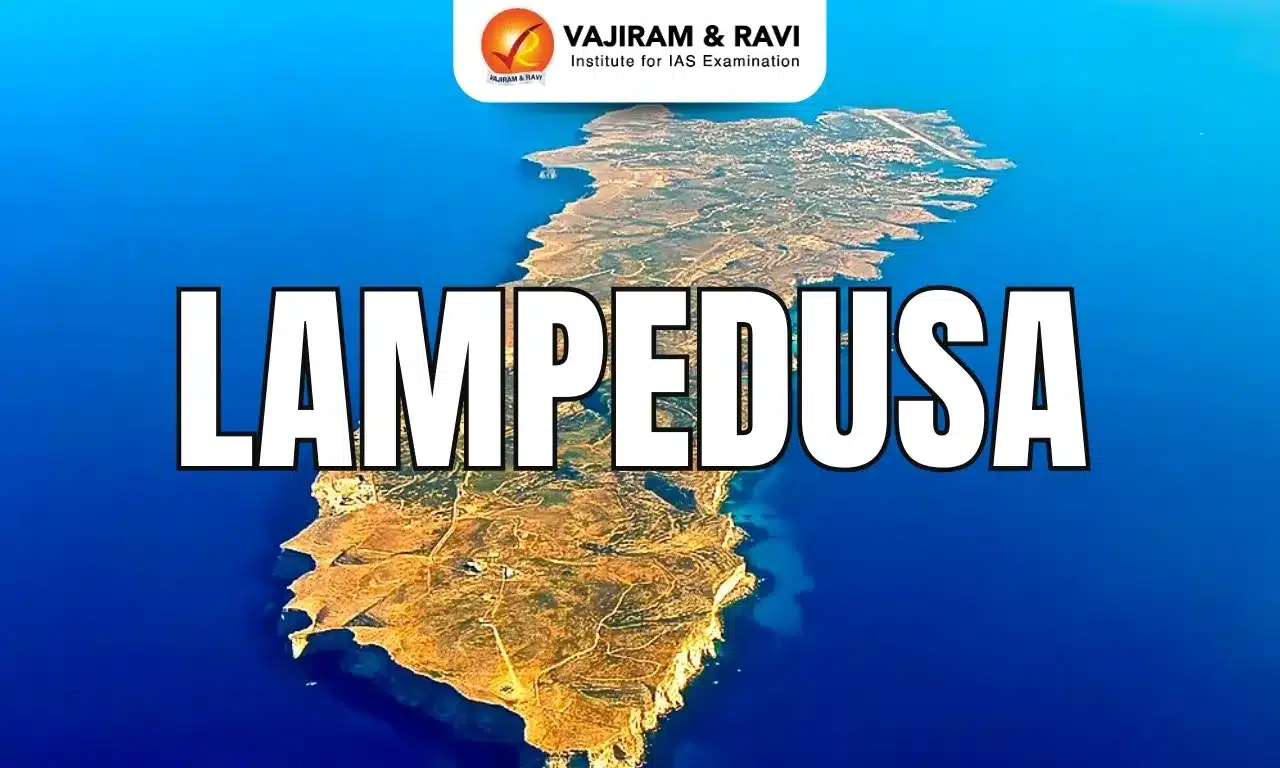
At least 20 people have died after a migrant boat capsized off the southern Italian island of Lampedusa recently.

About Lampedusa Island

  • It is the largest (21 sq.km.) of the Isole Pelagie (Pelagie Islands), an island group that includes the Linosa and Lampione islets. 
  • Administratively Lampedusa is part of the autonomous region of Sicily in Italy. 
  • It is geographically part of the African continent. 
  • It is located in the Mediterranean Sea between Malta and Tunisia, 105 miles (170 km) southwest of Licata, Sicily. 
  • It is a volcanic island.
  • It is also known as the Pearl of the Mediterranean because of the lava: it is the emerged part of a volcano whose last eruption events date back about 9000 years ago, when the last major seismic events were dated at the end of 1800.
  • Lampedusa’s greatest length is about 11 km; its greatest width is about 3 km. It rises to 133 meters above sea level.
  • It is a rocky island with limited natural freshwater sources.
  • The climate is typically Mediterranean, with hot, dry summers and mild, wet winters.

Source: TH

Lampedusa Island FAQs

Q1: Lampedusa Island is part of which autonomous region of Italy?

Ans: Sicily

Q2: Geographically, Lampedusa Island is considered part of which continent?

Ans: Africa

Q3: In which sea is Lampedusa Island located?

Ans: Mediterranean Sea

Article 84 of Indian Constitution, Interpretation, Importance

Article 84 of Indian Constitution

The Constitution of India, adopted on 26 November 1949, establishes Parliament as the supreme legislative authority of the country. Parliament is composed of three components, the President of India, the Rajya Sabha (Council of States), and the Lok Sabha (House of the People).

Article 84 of Indian Constitution sets out the qualifications for membership of Parliament, outlining the basic eligibility criteria for individuals seeking election to either House.

Article 84 of Indian Constitution

A person shall not be qualified to be chosen to fill a seat in Parliament unless he—

(a) is a citizen of India, and makes and subscribes before some person authorised in that behalf by the Election Commission an oath or affirmation according to the form set out for the purpose in the Third Schedule;

(b) is, in the case of a seat in the Council of States, not less than thirty years of age and, in the case of a seat in the House of the People, not less than twenty-five years of age; and

(c) possesses such other qualifications as may be prescribed in that behalf by or under any law made by Parliament.

Article 84 of Indian Constitution Interpretation

  • Rajya Sabha (Council of States)
    • To qualify as a member of the Rajya Sabha, a person must:
    • Be a citizen of India
    • Be at least 30 years of age
  • Lok Sabha (House of the People)
    • To qualify as a member of the Lok Sabha, a person must:
    • Be a citizen of India
    • Be at least 25 years of age
    • Be registered as a voter in any Parliamentary constituency in India
Also Check Related Post
Article 295 of Indian Constitution Article 194 of Indian Constitution
Article 39 of Indian Constitution Article 191 of Indian Constitution
Article 20 of Indian Constitution Article 16 of Indian Constitution
Article 67 of Indian Constitution Article 40 of Indian Constitution
Article 78 of Indian Constitution

Article 84 of Indian Constitution FAQs

Q1: What does Article 84 deal with?

Ans: Article 84 specifies the qualifications required to become a Member of Parliament in India.

Q2: What are the basic qualifications under Article 84?

Ans: A person must be an Indian citizen, meet the minimum age requirement, and possess other qualifications as prescribed by Parliament.

Q3: What is the minimum age to be a Lok Sabha member?

Ans: The minimum age is 25 years.

Q4: What is the minimum age to be a Rajya Sabha member?

Ans: The minimum age is 30 years.

Q5: Does Article 84 require educational qualifications?

Ans: No, there is no minimum educational qualification prescribed under Article 84.

Moai Statues

Moai Statues

Moai Statues Latest News

A study warns that rising sea levels could submerge Easter Island's iconic moai statues by 2080 and it will threaten the island's cultural identity and tourism economy.

About Moai Statues

  • They are massive megalithic stone-carved human-shaped statues found at Easter Island.
  • The Easter Island statues are monolithic human figures carved from volcanic rock by the first Polynesian settlers on the island, the Rapa Nui people.
  • They were built in approximately 1400 – 1650 A.D. by the natives of this island known as Rapa Nui.
  • There are around 1000 Moai statues which are made up of volcanic tuff, the tallest of them being 33 feet.
  • They carved them in the likeness of their ancestors.

What do Moais Represent?

  • They were built to honor chieftains or other important people who had passed away.
  • They were placed on rectangular stone platforms called ahu, which are tombs for the people that the statues represented.
  • The moais were intentionally made with different characteristics since they were intended to keep the appearance of the person they represented.

Key Facts about Easter Island

  • It is located in the eastern Pacific Ocean. Together with Hawaii and New Zealand, it forms the so-called ‘Polynesian Triangle’, a spearhead-shaped area in the Pacific that is the traditional homeland of the Polynesian people.

Source: DTE

Gaur

Gaur

Gaur Latest news

The Palamau Tiger Reserve (PTR), the last stronghold of Gaur (Bos gaurus) in Jharkhand, has registered an alarming decline in the bovid’s population. 

About Gaur

  • Gaur, also known as Indian Bison, is the largest species among the wild cattle and the Bovidae.
  • Distribution: Gaurs are indigenous to the South and Southeast parts of Asia.
  • Habitat 
    • Gaurs are primarily found in evergreen and semi-evergreen forests along with moist deciduous forests with open grasslands.
    • They prefer hilly-terrains below an altitude of 1,500-1,800 m with large and undisturbed forest tracts and abundant water.
  • Conservation Status of Gaur
    • IUCN Red List: Vulnerable
    • CITES: Appendix I
    • Wild Life Protection Act, 1972: Schedule I 
  • Ecological Significance: It plays a vital role in maintaining ecological balance in forests besides serving as important prey species for tigers. Being herbivores, they also help shape vegetation dynamics and contribute to seed dispersal.
  • Threats: Loss of habitat throughout most of their range. Another serious concern is susceptibility to domestic cattle diseases like rinderpest, hoof, or mouth disease.

 Source: DTE

Gaur FAQs

Q1: What is the English name for Gaur?

Ans: Indian Bison

Q2: Which river flows through Palamau Tiger Reserve?

Ans: North Koyal, Auranga and Burha

Q3: In which state is the Palamau Tiger Reserve found?

Ans: Jharkhand, India

IBC Amendment Bill 2025 – Strengthening Insolvency Resolution in India

IBC Amendment Bill 2025

IBC Amendment Bill 2025 Latest News

  • The Insolvency and Bankruptcy Code (Amendment) Bill, 2025 was introduced in the Lok Sabha by Finance Minister Nirmala Sitharaman to address persistent delays, maximise stakeholder value, and align the insolvency framework with international best practices. 
  • The IBC Amendment Bill 2025 seeks to overhaul admission procedures, introduce out-of-court resolutions, and implement group and cross-border insolvency mechanisms.

Background - IBC’s Evolution and Challenges

  • The Insolvency and Bankruptcy Code (IBC): It was introduced in 2016 to provide a time-bound mechanism for rescuing and reorganising distressed companies.
  • Achievements: It brought a culture of accountability, credit discipline among debtors.
  • Challenges:
  • Procedural delays
  • Shortage of personnel
  • High backlog of cases
  • Steep haircuts for creditors
  • Deviations from original principles

Key Provision in the IBC Amendment Bill 2025

  • Faster admission of insolvency cases:
    • Mandatory admission if default is proven, procedural compliance is met, and no disciplinary proceedings against the resolution professional.
    • Records from financial institutions deemed conclusive proof of default.
    • The 14-day timeline for the National Company Law Tribunal (NCLT) to decide on admission is to be strictly enforced; delays must be recorded in writing.
    • Current scenario: 
      • The average time taken for admission is around 434 days. 
      • In 2022, the Supreme Court had held that admission within 14 days was not a mandatory provision of the IBC.
      • This means that the NCLT had discretionary powers on deciding whether or not to admit the insolvency application - the Bill seeks to remove this.
  • Out-of-court resolution - Creditor-Initiated Insolvency Resolution Process (CIIRP):
    • Targets genuine business failures to reduce burden on NCLT.
    • 51% creditor consent needed to initiate CIIRP.
    • Corporate debtors retain management with oversight by resolution professionals (with veto powers).
    • Timeline: The CIIRP process would be required to be concluded within 150 days. In case of failure, the normal CIIRP process can be converted to standard corporate insolvency resolution process (CIRP).
  • Group insolvency framework:
    • Coordinated resolution for companies in the same corporate group.
    • Aims to reduce value loss from fragmented proceedings.
    • Allows for common resolution professionals and joint committee of creditors (CoC) panels.
  • Cross-border insolvency framework:
    • Facilitates recognition of Indian insolvency proceedings abroad.
    • Improves recovery of foreign assets and boosts investor confidence.
    • Aligns with the United Nations Commission on International Trade Law (UNCITRAL) Model Law and global best practices.
  • Enhancements in liquidation process:
    • CoC empowered to supervise liquidation and replace liquidator with 66% vote.
    • The moratorium under CIRP extended to the liquidation stage.
    • Direct dissolution allowed for negligible assets.
    • Restoration of CIRP permitted once, on CoC request.
  • Other notable provisions:
    • Expanded definition of resolution plan to include asset sales.
      • Restrictions on corporate applicant nominating resolution professionals.
      • Withdrawal of CIRP applications limited after key stages.
      • Avoidance transaction proceedings can continue post-resolution.
    • Removal of interim moratorium for personal guarantors.
      • Provision to prevent fraudulent transactions.
      • Clarification on priority of government dues.

Significance of the IBC Amendment Bill 2025

  • It addresses long-pending procedural bottlenecks.
  • It promotes ease of doing business and investor confidence.
  • It aligns India’s insolvency ecosystem with global standards.
  • It encourages timely resolution and value maximisation for stakeholders.

Conclusion

  • If effectively implemented, the IBC Amendment Bill 2025 could transform India’s insolvency regime into a swift, transparent, and globally competitive framework, reducing delays and maximising asset value. 
  • By integrating out-of-court mechanisms, group and cross-border insolvency provisions, and stronger governance, it can position India as a trusted destination for investment and corporate restructuring in the coming decade.

Source: IE

IBC Amendment Bill 2025

Q1: What is the significance of the mandatory admission provision in the IBC Amendment Bill 2025?

Ans: It ensures that proven defaults with procedural compliance are admitted without discretionary delays, thereby speeding up insolvency resolution.

Q2: What is the Creditor-Initiated Insolvency Resolution Process (CIIRP) introduced in the amendment bill?

Ans: CIIRP is an out-of-court mechanism for genuine business failures that enables faster, cost-effective resolutions with minimal business disruption.

Q3: What is the objective of the proposed Group Insolvency Framework under the IBC amendments?

Ans: It aims to coordinate insolvency proceedings of related group entities to maximise value and reduce duplication of efforts.

Q4: What is the importance of a Cross-Border Insolvency Framework in India’s economic landscape?

Ans: It aligns India’s insolvency process with global best practices, enabling recognition abroad and aiding recovery of foreign assets.

Q5: How does the amendment bill seek to improve the liquidation process under the IBC?

Ans: It empowers the Committee of Creditors to supervise and replace liquidators, extends moratorium, and allows direct dissolution for negligible assets.

Returning Sterilised Dogs: Key to Successful Animal Birth Control Programme

Returning Sterilised Dogs

Returning Sterilised Dogs Latest News

  • The Supreme Court recently criticised the practice of returning sterilised stray dogs to their original locations under the Animal Birth Control (ABC) programme, calling it “unreasonable and absurd.” This view found support among those impacted by aggressive stray dog packs. 
  • However, experts point out that returning sterilised dogs is actually central to the ABC method’s effectiveness. 
  • The approach aims to stabilise stray populations by ensuring sterilised dogs occupy their territories, preventing unsterilised ones from moving in and breeding, thereby gradually reducing overall numbers.

Importance of Returning Sterilised Dogs to the Streets

  • In sterilisation-based population control, females are the primary targets, as unsterilised males can still impregnate all fertile females, undermining the effort. 
  • Spaying females directly curbs reproduction, while neutering males can also reduce aggression — lowering human-dog conflicts. 
  • Effective Animal Birth Control (ABC) programmes target both sexes, aiming to sterilise at least two-thirds (ideally 70%) of the dog population within a year. 
  • Since sterilisation cannot happen all at once, returning sterilised dogs to their original territories prevents unsterilised newcomers from moving in and breeding. 
  • This territorial stability is crucial for ensuring the programme’s long-term success.

Keeping Streets ‘Unproductive’ for Stray Dog Breeding

  • If sterilised dogs from certain streets are removed and not returned, those areas become vacant, attracting unsterilised dogs from nearby streets. 
  • With easy access to resources like garbage dumps, these newcomers breed quickly, undoing sterilisation efforts. 
  • Returning sterilised dogs ensures that these territories remain occupied by animals that cannot reproduce, preventing fertile dogs from moving in. 
  • This practice also preserves the local dogs’ social structure, reducing conflicts. 
  • Most importantly, in the early stages of an ABC drive, it helps secure each area’s progress step-by-step, making population control more sustainable.

Crisis of Capacity in Implementing SC’s Stray Dog Shelter Order

  • The Supreme Court’s directive to build shelters and house 5,000–6,000 stray dogs within six to eight weeks has caught Delhi’s civic authorities unprepared. 
  • With no government-owned shelters and only around two dozen NGO-run facilities accommodating fewer than 3,000 dogs, capacity is a major hurdle. 
  • Housing thousands of unrelated dogs together also raises welfare concerns — stress, anxiety, and aggression can result despite standard protocols like individual cages with barriers. 
  • Moreover, dogs are inherently social, forming packs and hierarchies in open environments, making large-scale captivity unsuitable for their behavioural well-being.

Inadequacies in Delhi’s ABC Drive

  • Delhi’s lack of holding capacity to meet the Supreme Court’s directive also exposes the severe shortcomings of its Animal Birth Control (ABC) program. 
  • With an estimated 8 lakh street dogs, effective control requires sterilising 70% — around 5.5 lakh — within a year. 
  • Spread over 300 working days, this means operating on 1,800 dogs daily.
  • Given that each dog needs to be housed for pre- and post-operative care for four days, Delhi would require kennel space for 7,200 dogs at a time. 
  • In reality, the city’s total holding capacity is under 3,000, meaning the ABC program operates at only about 40% of the required scale. 
  • This gross shortfall explains why the drive has failed to stabilise the stray dog population.

Irresponsible Pet Ownership and its Impact on ABC

  • A weak ABC drive in India is further undermined by irresponsible pet ownership. 
  • Without a national law mandating dog registration, and with only a few cities having poorly enforced rules, there is no systemic accountability for pet owners. 
  • Sterilisation and vaccination of pets are also not mandatory.
  • As a result, hundreds of unwanted dogs and pups are abandoned daily, while many pet dogs are allowed to roam freely or escape, breeding with street strays. 
  • This constant influx fuels the stray dog population, making the so-called “Indian street dog” predominantly a mix of crossbreeds.
  • Experts recommend that ABC programs should also target pedigreed pets with high breeding rates. 
  • Governments could encourage compliance by offering incentives for registration and sterilisation, and by imposing steep taxes on breeding pets to curb irresponsible ownership.

Feeding Strays: A Trigger for Aggression

  • In urban areas, many residents feed stray dogs outside homes or workplaces, inadvertently making them territorial and aggressive. 
  • According to experts, true stray dogs form stable packs, are cautious of people, and are mostly active at night. In contrast, abandoned or loosely supervised pets tend to stay near human activity and have smaller roaming areas. 
  • These “proxy pets” are more likely to show aggression towards people who neither feed nor pet them, creating a recipe for conflict in shared public spaces.

Source: IE | ToI

Returning Sterilised Dogs FAQs

Q1: What is the main goal of the Animal Birth Control (ABC) programme?

Ans: To reduce stray dog populations through targeted sterilisation, primarily focusing on both male and female dogs for effective results.

Q2: Why is returning sterilised dogs to streets essential in ABC?

Ans: It prevents unsterilised dogs from occupying the area, maintaining an ‘unproductive’ population and reducing chances of repopulation.

Q3: What percentage of street dogs must be sterilised annually for ABC to be effective?

Ans: At least 70% of the population should be sterilised within one year for meaningful impact.

Q4: How does pet abandonment affect ABC success?

Ans: Abandoned pets and pups increase stray populations, undermining sterilisation efforts and leading to more crossbred street dogs.

Q5: What measures can improve ABC outcomes besides sterilisation?

Ans: Pet registration, mandatory sterilisation, incentives for compliance, and taxes on breeding pets can help control stray numbers.

Trumponomics: Why the Predicted US Economic Crash Hasn’t Happened Yet

Trumponomics

Trumponomics Latest News

  • Six months after US President Donald Trump’s sweeping tariff hikes, the predicted economic collapse has not materialised. 
  • The S&P 500 is about 10% higher since “Liberation Day,” and the dollar, after dipping, has recently strengthened. 
  • Despite tariffs on almost all major trading partners, consumer prices in the US have not spiked significantly. 
  • The muted inflation response raises the key question: will tariffs trigger only a one-time price jump, or lead to prolonged inflationary pressure?
  • This article examines the unexpectedly modest short-term economic impact of “Trumponomics,” specifically the aggressive tariff strategy implemented by President Trump.

Tariff Magnitude and Global Reach

  • The US has increased tariffs significantly on virtually all trading partners — 15% on economies like the EU, Japan, and South Korea, and 35–50% on countries such as Canada, Switzerland, Brazil, and India. 
  • With January’s average tariff at 3%, current rates could average 15–20%, a shift that is inherently inflationary even if importers or retailers absorb some of the costs.

US Economy’s Current Resilience Amid High Tariffs

  • The US economy has retained stability despite higher import duties, largely because President Trump inherited a growing economy with over 2% GDP growth, near full employment, and low inflation. 
  • Stock markets have also been buoyed by the booming artificial intelligence sector, significantly boosting tech company earnings and market sentiment.
  • Importers accelerated shipments ahead of tariff enforcement, meaning many goods currently on shelves are not yet affected by higher duties. 
  • Additionally, Trump’s repeated waivers and deadline extensions have delayed the full impact of tariffs.
  • Warning Signs in the Labour Market
    • Despite overall resilience, labour market data shows weakness. 
    • In July, non-farm payrolls rose by only 73,000, with significant downward revisions for May and June.
  • Risks Ahead: Inflation and Job Losses
    • While inflation has not surged yet, higher import costs are expected to filter into prices, potentially denting consumer demand and slowing job creation. 
    • The Fall-Winter/Christmas season could reveal these strains, influencing voter sentiment ahead of midterm elections.

Signs of a Looming US Economic Slowdown

  • Inflationary effects are becoming evident, with major retailers like Costco and Walmart raising prices on appliances, furniture, tools, and children’s items. 
  • These increases indicate that higher import costs from tariffs are starting to filter through to consumers.
  • US GDP grew at an annualised 3% in Q2 2025, rebounding from a 0.5% contraction in Q1. 
  • However, this surge was largely due to strong consumer spending on goods imported in advance of tariffs. This temporary boost raises concerns about a sharp slowdown in the coming quarters.

Fiscal Concerns and Rising Treasury Yields

  • Trump’s tax bill has sparked worries about the US deficit
  • These concerns were reflected in the recent rise in Treasury yields following a weak $42 billion bond auction. 
  • The 10-year note yield rose to 4.22%, and the 30-year bond yield climbed to 4.813%, signalling investor apprehension.
  • The US Federal Reserve faces a dual challenge: balancing the need to contain inflation without exacerbating weaknesses in the job market
  • Keeping interest rates high could stabilise prices but also risk further employment slowdown. 
  • With inflation expected to rise and job creation likely to taper, the Fed’s policy decisions are under intense scrutiny.

High Tariffs Likely to Persist Beyond Trump

  • The latter half of 2025 is expected to be more volatile, with Trump’s unpredictable tariff policies beginning to influence long-term pricing decisions. 
  • In this new trade environment, companies will thrive not only through innovation or efficiency, but also by navigating the tariff framework skillfully and lobbying effectively for government concessions. 
  • The resulting heavy spending on lobbying will make it politically and economically challenging to dismantle these tariffs, even if a future administration desires to do so. 
  • Consequently, the US is likely to maintain a high-tariff trade stance well beyond Trump’s tenure.

Source: IE | TAP

Trumponomics FAQs

Q1: What was the predicted impact of Trump’s tariff hikes?

Ans: Economists feared a sharp economic slowdown, rising inflation, and market instability, but these have not materialised yet.

Q2: Why has the US economy remained resilient so far?

Ans: Strong pre-existing growth, stock market gains from AI, and front-loaded imports have delayed tariff impacts.

Q3: What warning signs are emerging in the US economy?

Ans: Slowing job growth, inflation in retail goods, and signs of weakening consumer demand point to possible slowdown ahead.

Q4: Why might high tariffs persist beyond Trump’s presidency?

Ans: Businesses investing in lobbying and adapting to the tariff regime make reversal politically and economically difficult.

Q5: How is the Federal Reserve positioned in this scenario?

Ans: It faces a dual challenge — controlling inflation while avoiding further harm to an already weakening job market.

Expansion of SC/ST Scholarships

SC/ST Scholarships

SC/ST Scholarships Latest News

  • The Centre is considering raising parental income limits for SC/ST scholarships from FY 2026-27 to widen access amid declining beneficiary numbers.

Introduction

  • The Union government is considering significant changes to the eligibility criteria for pre-matric and post-matric scholarships for Scheduled Castes (SCs), Scheduled Tribes (STs), Other Backward Classes (OBCs), and Denotified Tribes (DNTs).
  • One key proposal under discussion is the upward revision of the parental income limit, aimed at expanding access to these schemes from the financial cycle 2026-27 to 2030-31.
  • The move comes amid declining beneficiary numbers and calls from Parliamentary committees to make the income criteria more inclusive.

About SC/ST Scholarships

  • These scholarships are centrally sponsored schemes jointly funded by the Union and State governments in a 60:40 ratio (90:10 for the Northeastern states).
  • They provide financial assistance to students from marginalised communities to support their education:
    • Pre-Matric Scholarships: Typically cover Classes IX and X. For SCs, they are available from Classes I to X for children of parents engaged in “unclean or hazardous” occupations.
    • Post-Matric Scholarships: Cover education beyond Class X.
    • Current Eligibility: The annual parental income must not exceed Rs. 2.5 lakh.

Proposed Revisions to Income Limits

  • For STs: The Ministry of Tribal Affairs is considering increasing the limit to Rs. 4.5 lakh for both pre-matric and post-matric scholarships.
  • For SCs, OBCs, and DNTs: The Social Justice Ministry is discussing similar revisions.
  • Parliamentary panels have suggested doubling the income ceiling for OBC scholarships and introducing pre-matric scholarships from Class V onwards for OBCs.

Budgetary Allocation and Importance

  • For FY 2025-26:
    • Centrally sponsored scholarships for SCs, OBCs, EBCs, and DNTs account for 66.7% of the Social Justice Ministry’s Rs. 13,611 crore budget.
    • For STs, such scholarships make up 18.6% of the Tribal Affairs Ministry’s Rs. 14,925.81 crore allocation.
  • These figures underline the schemes’ central role in enabling education for disadvantaged communities.

Declining Beneficiary Trends

  • Government data reveals a worrying decline in scholarship beneficiaries:
    • SCs: Pre-matric beneficiaries fell by 30.63% (2020-21 to 2024-25); post-matric by 4.22%.
    • OBCs, EBCs, DNTs: Pre-matric beneficiaries dropped from 58.62 lakh (2021-22) to 20.25 lakh (2023-24); post-matric fell from 43.34 lakh to 38.42 lakh.
    • STs: Pre-matric numbers fell by 4.63 lakh; post-matric by 3.52 lakh in the same period.

Recommendations from Parliamentary Committees

  • Two key Parliamentary panels have flagged the need for reforms:
  • OBC Welfare Committee:
    • Urged doubling the income limit for OBC pre- and post-matric scholarships.
    • Recommended expanding pre-matric coverage to start from Class V.
  • Panel on Tribal Affairs and Social Justice:
    • Suggested revising parental income limits for ST scholarships.
    • Emphasised that current limits exclude many families in need.
  • Both committees stressed that scholarships are vital tools for social mobility, and overly restrictive criteria undermine their purpose.

Socio-Economic Impact of Raising Income Limits

  • Raising the parental income ceiling could:
    • Expand Coverage: Include more lower-middle-income families who still face financial barriers.
    • Reduce Dropouts: Enable continued education beyond primary levels.
    • Bridge Inequality: Help disadvantaged communities access higher education and competitive careers.
  • However, it will also require higher budgetary allocations and robust monitoring to ensure genuine beneficiaries receive aid.

Future Outlook

  • If approved, the revised limits will take effect in FY 2026-27, coinciding with the start of a new five-year financial planning cycle.
  • The government’s challenge will be to balance inclusivity with fiscal sustainability, while ensuring the scholarships reach intended recipients without leakages.

SC/ST Scholarships FAQs

Q1: What is the current parental income limit for SC/ST scholarships?

Ans: The limit is ₹2.5 lakh annually for both pre-matric and post-matric scholarships.

Q2: What change is the government considering?

Ans: Raising the limit to ₹4.5 lakh for ST scholarships, with similar revisions for SC, OBC, and DNT categories.

Q3: Why is the change being proposed?

Ans: To expand coverage as current limits exclude many needy families and beneficiary numbers are declining.

Q4: How are these scholarships funded?

Ans: They are centrally sponsored schemes funded jointly by the Union and State governments in a 60:40 ratio (90:10 for Northeastern states).

Q5: What did Parliamentary panels recommend?

Ans: They urged a substantial increase in income limits and expanded coverage, including starting OBC pre-matric scholarships from Class V.

Daily Editorial Analysis 14 August 2025

Daily Editorial Analysis

The Ceding of Academic Freedom in Universities 

Context

  • Universities are unique institutions tasked not only with transmitting knowledge but also with generating new ideas, challenging orthodoxies, and developing independent thinking.
  • This mission is possible only when scholars and students have the liberty to question, debate, and explore without fear of censorship or interference.
  • The health of a university system is therefore directly tied to the extent of its intellectual autonomy.
  • When this freedom is curtailed, the damage is not confined to the campus, it seeps into society, the economy, and the political system at large.

The Essential Role of Academic Freedom

  • Ability to Question Existing Knowledge

    • For students, this means more than memorising information; it means developing the capacity to interrogate established truths, critique conventional wisdom, and resist undue deference to authority, whether spoken or printed.
    • For faculty, it entails the liberty to pursue research in any direction their scholarly judgement deems fruitful, free from political or bureaucratic interference.
    • Institutions themselves must also have the freedom to address economic, social, and political issues openly, thereby fulfilling their role as intellectual catalysts in public life.
  • Engagement in Diverse Perspective

    • This freedom extends to inviting speakers of diverse perspectives, determining research priorities, and engaging in unorthodox or dissenting inquiry.
    • Such openness is not merely desirable; it is the precondition for knowledge to advance.
    • Fundamental research thrives in an environment rich in both liberty and resources, allowing exceptional thinkers to flourish.

The Crisis in Indian Higher Education

  • In India, the reality diverges sharply from this ideal. Academic autonomy is increasingly constrained by state control over curricula, prescribed reading lists, and research funding.
  • Decisions about what may or may not be taught often lie outside the hands of educators themselves, with certain texts explicitly banned from syllabi.
  • In the social sciences and humanities especially, research that deviates from mainstream narratives is frequently suppressed.
  • This centralisation of control extends beyond the classroom.
  • Permissions for faculty to attend international conferences can be contingent upon undertakings not to engage in any activity critical of the government, even when abroad.
  • Private universities are not immune; many adopt self-censorship to avoid jeopardising their relationship with political authorities.
  • The net effect is a stifling of critical discourse, a weakening of research culture, and a missed opportunity for India’s universities to achieve global excellence, reflected in the absence of Nobel laureates from their ranks.

Autonomy, Accountability, and the Democratic Context

  • University autonomy is not only an academic matter; it is central to the functioning of a political democracy.
  • In the economic sphere, universities are engines of innovation, policy ideas, and technological progress.
  • Socially, they serve as conscience-keepers, with scholars engaging the public as intellectual commentators. Politically, they contribute to government accountability through informed critique and evaluation.
  • Such autonomy, however, must be paired with accountability, primarily to students and society, rather than to the government.
  • Governance structures within universities must be designed to ensure transparency and responsiveness.
  • While government funding of public universities is essential, it should never be interpreted as a license for political control.
  • Accountability can be reinforced through mechanisms such as rankings, public performance evaluations, and independent peer review, rather than direct interference in academic affairs.

A Global Perspective on Control and Conformity

  • The tension between academic freedom and government control is not unique to India.
  • Democratically elected governments in countries such as Argentina, Hungary, and Türkiye have also sought to restrict university independence.
  • In authoritarian regimes, from China to Russia, restrictions are far more severe, particularly in disciplines like social sciences and humanities.
  • China, however, provides an intriguing contrast: despite political restrictions, its elite institutions maintain rigorous academic hiring standards and high-quality research in many fields.
  • Even in the United States, long seen as a bastion of academic freedom, government actions such as the Trump administration’s cuts to research funding have raised concerns about the erosion of the country’s global academic leadership.
  • The motives for such interventions are consistent across contexts: governments fear dissent, seek ideological conformity, or resent uncomfortable questions posed by independent scholars.

The Consequences of Curtailing Academic Freedom

  • Suppressing academic freedom inevitably diminishes the quality of education and research.
  • A culture of fear or compliance leads to intellectual stagnation, deterring both students and faculty from pursuing bold or innovative ideas.
  • In the long run, the costs extend beyond universities themselves.
  • An economy deprived of fresh thinking will lose its competitive edge; a society without critical voices will lose its capacity for self-reflection; and a polity without informed dissent will drift toward authoritarianism.

Conclusion

  • The moral of the story is unambiguous: academic freedom is not a luxury, it is a necessity for the progress of knowledge, the vitality of democracy, and the well-being of society.
  • For India, and indeed for any nation, the path forward lies in granting universities full autonomy, academic, financial, and administrative, while ensuring robust systems of accountability to the public they serve.
  • Without such reforms, higher education risks becoming a sterile exercise in conformity, rather than the vibrant crucible of ideas it is meant to be.

The Ceding of Academic Freedom in Universities FAQs

Q1. Why is academic freedom considered essential in higher education?
Ans. Academic freedom is essential because it allows students and faculty to question, debate, and explore ideas, which is necessary for the advancement of knowledge.

Q2. What is the main problem facing universities in India according to the analysis?
Ans. The main problem is excessive government control over curricula, reading lists, and research funding, which stifles independent thinking and research.

Q3. How should accountability in universities be ensured without political interference?
Ans. Accountability should be ensured through transparent governance, peer review, public performance evaluations, and rankings, rather than direct political control.

Q4. What is the global trend regarding academic freedom?
Ans. Academic freedom is under pressure in both democracies and authoritarian states, with governments often seeking to control universities to avoid dissent or enforce ideological conformity.

Q5. What is the consequence of curtailing academic freedom?
Ans. Curtailing academic freedom leads to intellectual stagnation, weakens education and research, and ultimately harms the economy, society, and democracy.

Source: The Hindu


India’s Drone Diplomacy: Seizing the Indo-Pacific Advantage

Context:

  • The 2020 second Nagorno-Karabakh conflict signalled a turning point in modern warfare, showcasing drones as central to combat operations.
  • This trend was reinforced for India and Pakistan during Operation Sindoor (May 7–10), where unmanned aerial vehicles (UAVs) and unmanned combat aerial vehicles (UCAVs) advanced beyond reconnaissance to play a decisive role in precision strikes.
  • This article highlights the transformation of drone warfare from reconnaissance to decisive strike capabilities, India’s push for modernising its UAV fleet, and the strategic opportunities in the Indo-Pacific drone market amid declining U.S. dominance.

India’s Push for Drone Modernisation

  • Following Operation Sindoor, India has intensified efforts to modernise its unmanned aerial capabilities.
  • In 2024, it secured 31 MQ-9B Reapers from the US, including SkyGuardian and SeaGuardian variants, to boost maritime surveillance and strategic cooperation.
  • However, these meet only part of India’s diverse defence needs across high-altitude, contested borders with Pakistan and China.
  • The country requires high-altitude, long-range fixed-wing drones for heavy payload precision strikes, along with smaller, cost-effective systems for targeted missions.
  • Currently, India operates older Israeli systems like the Harop loitering munition and Heron medium-altitude drones, which are effective but lag behind cutting-edge global models.
  • Much of its fleet consists of legacy imports from before the last decade, supplemented by a few indigenous platforms, highlighting the need for broader and faster upgrades.

India’s Evolving Drone Procurement Strategy

  • While India has long sourced advanced drones from the U.S., it is now rethinking this approach, favouring American components like power plants and electronic payloads over complete systems.
  • The global UAV market is currently dominated by the U.S., China, Türkiye, and Israel — but American drones have faced criticism for lagging behind rivals from Russia and China.
  • Reports suggest that strict adherence to the Missile Technology Control Regime (MTCR) has left the U.S. with only 8% of the export market by the end of 2023, far behind China and Türkiye, though recent reforms may expand its market share.
  • In the meantime, India is addressing capability gaps through imports, joint ventures, and domestic production, heavily depending on Israel and select European suppliers.
  • Given strained relations with both China and Türkiye, these countries are unlikely to be sources for critical defence technology.
  • Looking ahead, India not only needs to secure its own UAV requirements but could also leverage its technological progress to become a significant fixed-wing UAV supplier for the Indo-Pacific region.

China’s Growing Influence and India’s Strategic Opportunity

  • Several Indo-Pacific nations — including Vietnam, the Philippines, Taiwan, South Korea, and Japan — face persistent tensions with China, particularly over disputed maritime territories.
  • For these countries, Maritime Domain Awareness (MDA) is crucial to counter China’s ‘gray-zone’ tactics, such as deploying coast guard and maritime militia to assert claims, and to safeguard fisheries, energy exploration zones, and sovereignty from encroachment.
    • Gray-zone tactics refer to coercive actions taken by states or non-state actors that fall between traditional peace and open warfare.
  • While Israel is unlikely to be a dependable defence supplier due to its ongoing West Asia conflict, Türkiye has emerged as a key global source of cost-effective, high-performance drones.
  • However, given India’s adversarial ties with Türkiye, it is in New Delhi’s interest to limit Ankara’s influence through drone diplomacy in the region.
  • Many Indo-Pacific nations share geographical and operational needs similar to India — high-altitude border surveillance and extensive maritime monitoring.
  • If India develops UAV systems tailored to its own requirements, these could be exported to meet the strategic and operational needs of regional partners, enhancing India’s defence diplomacy and counterbalancing China’s growing footprint.

India’s Opportunity in the Indo-Pacific Drone Market

  • The decline of U.S. dominance in the Indo-Pacific drone market has created a contested space that India could strategically occupy.
  • By filling this gap, India stands to enhance both its trade and geopolitical influence while meeting its own defence requirements.
  • Despite hurdles such as bureaucratic inefficiency and a public sector-heavy defence ecosystem, India can leverage its strong defence ties with Israel and the experience gained from joint ventures to strengthen its domestic UAV capabilities.
  • Rather than focusing solely on complete indigenous production, India could also establish technology-sharing frameworks with like-minded Indo-Pacific nations.
  • This approach would not only accelerate capability-building but also nurture trust-based partnerships in a region increasingly defined by strategic competition and polarisation.

Conclusion

  • India’s ability to develop and export tailored UAVs could secure its strategic needs, counter China’s influence, and position it as a key Indo-Pacific defence partner.

India’s Drone Diplomacy: Seizing the Indo-Pacific Advantage FAQs

Q1. What was the significance of Operation Sindoor for India and Pakistan?

Ans. It showcased drones evolving from reconnaissance tools to precision strike assets, signalling a shift in modern warfare tactics in the region.

Q2. Why is India’s current UAV fleet considered outdated?

Ans. India mainly operates older Israeli drones and legacy imports, lacking advanced high-altitude and cost-effective systems for varied terrains.

Q3. How has the U.S.’s MTCR adherence impacted its drone exports?

Ans. It limited U.S. market share to 8% by 2023, allowing China and Türkiye to dominate the global UAV export market.

Q4. Why is Maritime Domain Awareness critical for Indo-Pacific nations?

Ans. It helps counter China’s ‘gray-zone’ tactics, safeguarding sovereignty, fisheries, and energy exploration in disputed maritime territories.

Q5. What approach could help India strengthen its UAV ecosystem?

Ans. Leveraging Israel ties, joint ventures, and technology-sharing pacts with Indo-Pacific partners to accelerate UAV development and deployment.

Source: TH

Daily Editorial Analysis 14 August 2025 FAQs

Q1: What is editorial analysis?

Ans: Editorial analysis is the critical examination and interpretation of newspaper editorials to extract key insights, arguments, and perspectives relevant to UPSC preparation.

Q2: What is an editorial analyst?

Ans: An editorial analyst is someone who studies and breaks down editorials to highlight their relevance, structure, and usefulness for competitive exams like the UPSC.

Q3: What is an editorial for UPSC?

Ans: For UPSC, an editorial refers to opinion-based articles in reputed newspapers that provide analysis on current affairs, governance, policy, and socio-economic issues.

Q4: What are the sources of UPSC Editorial Analysis?

Ans: Key sources include editorials from The Hindu and Indian Express.

Q5: Can Editorial Analysis help in Mains Answer Writing?

Ans: Yes, editorial analysis enhances content quality, analytical depth, and structure in Mains answer writing.

APAAR ID

Automated Permanent Academic Account Registry (APAAR) ID

APAAR ID Latest news

Recently, the Central Board of Secondary Education (CBSE) has now made it mandatory for students to submit their APAAR IDs while registering for the board exams.

About APAAR ID

  • APAAR stands for Automated Permanent Academic Account Registry. It was envisioned under the New Education Policy, 2020.
  • It is an identification number which is linked to enrollment, and a student’s journey from pre-primary to higher education can be tracked through it.
  • APAAR assigns a unique and permanent 12-digit ID to every student, offering a comprehensive record of their academic achievements, including degrees, scholarships, awards, and other credits.
  • The APAAR ID will be unique and remain the same through one’s education journey.
  • It is linked to Aadhaar and stored in DigiLocker for easy access.
  • The APAAR ID embodies the vision of "One Nation, One Student ID", ensuring a unified and accessible academic experience for students across India.
  • It serves as a lifelong academic passport, consolidating all achievements and credentials of a student in one place.
  • APAAR is generated through Unified District Information System for Education Plus (UDISE+).

Objectives of APAAR

  • To accumulate and store students’ academic achievements in a central database
  • To facilitate seamless transfer between institutions
  • To provide standardized digital records for mark sheets and institutional affiliations.
  • To help in educational policymaking and analysis

Source: IE

APAAR ID FAQs

Q1: What is APAAR?

Ans: APAAR, which stands for Automated Permanent Academic Account Registry, is a specialized identification system designed for all students in India.

Q2: Who launched APAAR ID?

Ans: The Ministry of Education and the Government of India

Enquire Now