UPSC Daily Quiz 16 August 2025

UPSC Daily Quiz

The Daily UPSC Quiz by Vajiram & Ravi is a thoughtfully curated initiative designed to support UPSC aspirants in strengthening their current affairs knowledge and core conceptual understanding. Aligned with the UPSC Syllabus 2025, this daily quiz serves as a revision resource, helping candidates assess their preparation, revise key topics, and stay updated with relevant issues. Whether you are preparing for Prelims or sharpening your revision for Mains, consistent practice with these Daily UPSC Quiz can significantly enhance accuracy, speed, and confidence in solving exam-level questions

[WpProQuiz 46]  

UPSC Daily Quiz FAQs

Q1: What is the Daily UPSC Quiz?

Ans: The Daily UPSC Quiz is a set of practice questions based on current affairs, static subjects, and PYQs that help aspirants enhance retention and test conceptual clarity regularly.

Q2: How is the Daily Quiz useful for UPSC preparation?

Ans: Daily quizzes support learning, help in revision, improve time management, and boost accuracy for both UPSC Prelims and Mains through consistent practice.

Q3: Are the quiz questions based on the UPSC syllabus?

Ans: Yes, all questions are aligned with the UPSC Syllabus 2025, covering key areas like Polity, Economy, Environment, History, Geography, and Current Affairs.

Q4: Are solutions and explanations provided with the quiz?

Ans: Yes, each quiz includes detailed explanations and source references to enhance conceptual understanding and enable self-assessment.

Q5: Is the Daily UPSC Quiz suitable for both Prelims and Mains?

Ans: Primarily focused on Prelims (MCQ format), but it also indirectly helps in Mains by strengthening subject knowledge and factual clarity.

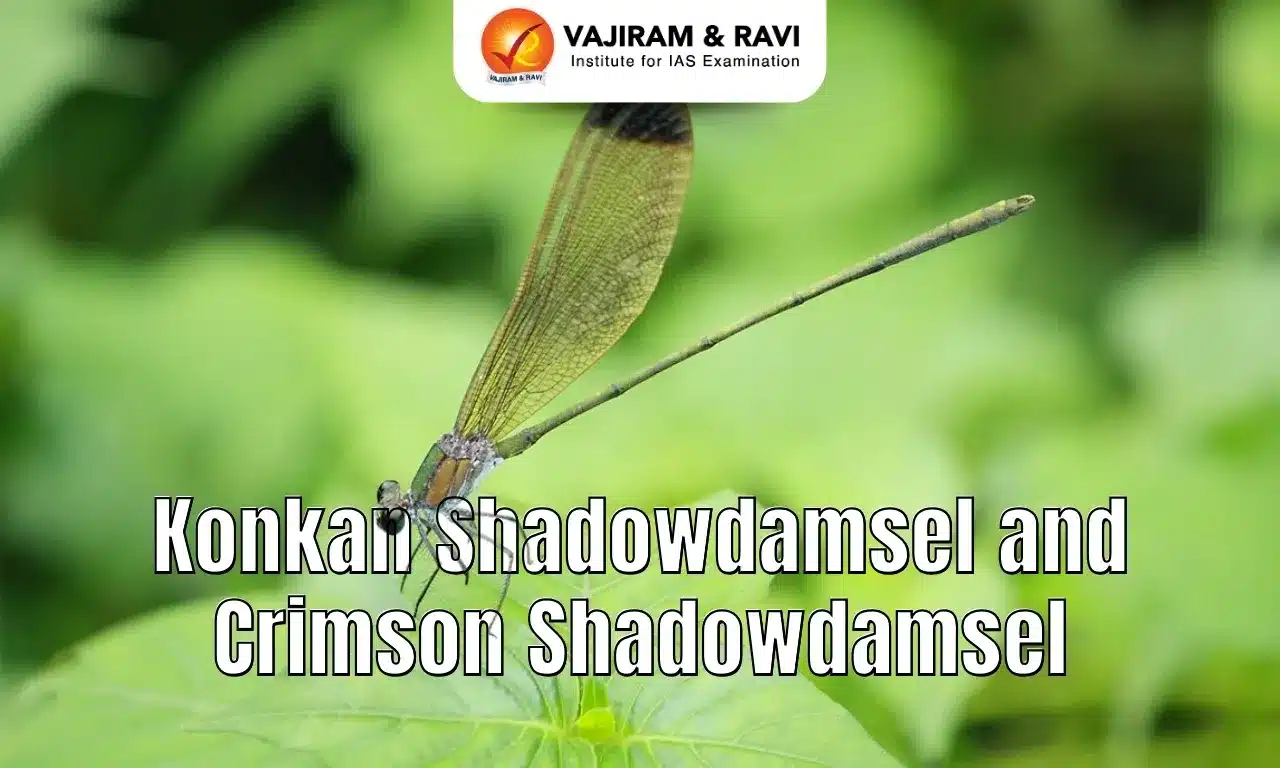
Konkan Shadowdamsel and Crimson Shadowdamsel

Konkan Shadowdamsel and Crimson Shadowdamsel

Konkan Shadowdamsel and Crimson Shadowdamsel Latest News

Two new species of damselflies named Konkan Shadowdamsel and Crimson Shadowdamsel have been discovered in the Western Ghats by researchers from Maharashtra and Kerala.

About Konkan Shadowdamsel and Crimson Shadowdamsel

  • They are two new species of damselflies.
  • The species — Konkan Shadowdamsel, discovered in Maharashtra’s Sindhudurg district, and Crimson Shadowdamsel, discovered in Kerala’s Thiruvananthapuram district — belong to the group commonly called ‘Shadowdamsels’ because of their affinity for well-shaded forest habitats.
  • The Crimson Shadowdamsel has a reddish body, and the Konkan Shadowdamsel has a coffee-brown ground colouration.
  • Shadowdamsels usually only thrive in pristine habitats and small streams. 
    • They can act as indicators of the health of our forests. They are pollution indicators as well. 
    • Many of them are microendemics restricted to certain hill ranges within the Western Ghats.

What are Damselflies?

  • They are a group of predatory, aerial insects that are in the order Odonata. 
  • They are found mainly near shallow, freshwater habitats and are graceful fliers with slender bodies and long, filmy, net-veined wings.
  • They are generally smaller, more delicate, and fly weakly in comparison with dragonflies.

Source: HT

Konkan Shadowdamsel and Crimson Shadowdamsel FAQs

Q1: The Konkan Shadowdamsel was recently discovered in which Indian state?

Ans: Maharashtra

Q2: Shadowdamsels are commonly found in which type of habitats?

Ans: Well-shaded forest habitats

Q3: What is the body colouration of the Crimson Shadowdamsel?

Ans: The Crimson Shadowdamsel has a reddish body.

Lewy body Dementia (LBD)

Lewy body Dementia

Lewy body Dementia News

Jackie Bezos, mother of Jeff Bezos and an early Amazon investor, passed away in Miami recently due to Lewy body dementia.

About Lewy body Dementia

  • It is a complex and challenging brain disorder.
  • It is the second most common type of dementia after Alzheimer's disease. 
  • LBD is a disease associated with abnormal deposits of a protein called alpha-synuclein in the brain. 
    • These deposits, called Lewy bodies, affect chemicals in the brain. 
    • These changes, in turn, can lead to problems with thinking, movement, behavior, mood, and other body functions.
  • There are two forms of LBD that cause cognitive symptoms — dementia with Lewy bodies and Parkinson's disease dementia.
  • LBD  causes a decline in mental abilities that gradually gets worse over time. 
  • LBD typically begins at age 50 or older, although sometimes younger people may have it. 
  • LBD appears to affect slightly more men than women.
  • The disease lasts an average of five to seven years from the time of diagnosis to death, but it can range from two to 20 years.
  • People with LBD might see things that aren't there, known as visual hallucinations. 
  • They also may have changes in alertness and attention.
  • People with LBD commonly have symptoms of Parkinson's diseaseThese symptoms might include rigid muscles, slow movement, trouble walking and tremors.
  • As the disease worsens, people with LBD require more and more help with daily activities due to a decline in thinking and movement abilities. 
  • In the later stages of the disease, people may depend entirely on others for assistance and care.
  • Treatment
    • There’s no cure for Lewy body dementia and no way to prevent it. 
    • But medications and therapies can help manage symptoms for a while.

Source: ET

Lewy body Dementia FAQs

Q1: Which abnormal protein is deposited in the brain in Lewy body dementia?

Ans: Alpha-synuclein

Q2: Lewy body dementia typically begins at what age?

Ans: 50 years or older

Q3: What is the average life expectancy after diagnosis of Lewy body dementia?

Ans: 5–7 years

Antitrisuloides Catocalina

Antitrisuloides Catocalina

Antitrisuloides Catocalina Latest News

Recently, scientists have recorded the presence of the rare nocturnal moth species Antitrisuloides catocalina in Choolannur Peafowl Sanctuary in Palakkad district, Kerala.

About Antitrisuloides Catocalina

  • It is a nocturnal moth species belonging to genus Antitrisuloides.
  • It is found in the Western Ghats for the first time.
  • It is part of the Noctuidae family, the genus comprises two known species worldwide.
  • The specimen found in Kerala was identified as a species previously reported only from North-East India.
  • Its detailed analysis further revealed it to be the subspecies Antitrisuloides catocalina cyclica.

Key Facts about Choolannur Peafowl Sanctuary

  • It is affectionately known as Mayiladumpara, a sanctuary dedicated to the majestic peacocks nestled in the lush landscapes of Palakkad district, Kerala.
  • It is exclusively set up for breeding and conservation of peacocks, is the only peacock sanctuary in Kerala and the first of its kind in India. 
  • It was established in 1996, it was dedicated to the memory of the legendary Indian ornithologist and writer Induchoodan, who hailed from the nearby village called Kavassery. 

Source: TH

Antitrisuloides Catocalina FAQs

Q1: What are Moths?

Ans: These are insects that belong to the order Lepidoptera, which they share with butterflies.

Q2: Who is the father of entomology?

Ans: William Kirby

e-Sushrut@Clinic

https://vajiramandravi.com/upsc-exam/swadeshi-movement/

e-Sushrut@Clinic Latest News

Recently, the National Health Authority (NHA) and the Centre for Development of Advanced Computing (C-DAC) signed a Memorandum of Understanding (MoU) to roll out e-Sushrut@Clinic.

About e-Sushrut@Clinic

  • It provides a lightweight, cloud-based Hospital Management Information System (HMIS) designed specifically for outpatient clinics.
  • This government-backed Health Management Information System (HMIS) is designed specifically for small and medium healthcare providers.
  • It marks a pivotal step in expanding the Ayushman Bharat Digital Mission (ABDM) ecosystem.
  • The application developed by C-DAC is a lighter version of their flagship e-Sushrut HMIS software.

Features of eSushrut@Clinic

  • It is tailored for outpatient management, pharmacy, and nursing modules, and delivers essential functionalities at a low per-user cost.
  • Any healthcare provider can onboard it from his/her laptop/mobile on a webpage through their Health Facility Registry (HFR) and Health Professionals Registry (HPR).
  • If the healthcare provider is not registered on HFR/HPR, they would be able to register on eSushrut@Clinic itself.  
  • This will make it much easier for doctors in both public and private clinics to access and update patient health records, offer telemedicine services, and streamline diagnostics and prescriptions.
  • The platform enables small clinics, sub-centres, and medium-sized hospitals to digitize patient records, prescriptions, and billing with minimal technical overhead.
  • Several utilities and features of ABDM will be available in eSushrut@Clinic.
  • For instance, the healthcare providers would use the AIIMS Clinical Decision Support Systems (CDSS) service for hypertension and diabetes, which is being provided free for all ABDM-integrated software.
  • This CDSS helps improve patient care by supporting doctors in making better diagnoses and treatment.

Source: PIB

e-Sushrut@Clinic FAQs

Q1: What is the meaning of e Sushrut?

Ans: e-Sushrut, a Hospital Management Information System incorporates an integrated computerized clinical information system for improved hospital administration and patient health care.

Q2: What is the full form of HMIS clinic?

Ans: Health Management Information System

Pradhan Mantri Viksit Bharat Rozgar Yojana

Pradhan Mantri Viksit Bharat Rozgar Yojana

Pradhan Mantri Viksit Bharat Rozgar Yojana Latest News

Recently, the Prime Minister announced the Pradhan Mantri Viksit Bharat Rozgar Yojana.

About Pradhan Mantri Viksit Bharat Rozgar Yojana

  • It provides direct cash incentives to eligible employees and employers to boost formal job creation. 
  • Aim: The scheme aims to support creation of over 3.5 crore jobs in two years.

Key Features of the Scheme

  • Part A – Support to First-Time Employees
    • Targeting first-time employees registered with EPFO, this Part will offer one-month EPF wage up to Rs 15,000 in two installments.
    • Employees with salaries up to Rs 1 lakh will be eligible for the incentives.
    • The 1st instalment will be payable after 6 months of service and the 2nd instalment will be payable after 12 months of service and completion of a financial literacy programme by the employee.
    • To encourage the habit of saving, a portion of the incentive will be kept in a savings instrument or deposit account for a fixed period and can be withdrawn by the employee at a later date.
  • Part B – Incentives for Employers
    • This part will encourage generation of additional employment in all sectors, with a special focus on the manufacturing sector.
    • The employers will get incentives in respect of  new employees with salaries up to Rs 1 lakh.
    • The Government will incentivize employers, up to Rs 3000 per month, for two years, for each additional employment, sustained  for at least six months.
    • For the manufacturing sector, incentives will be extended to the 3rd and 4th  years as well.
    • Incentive Payment Mechanism: All payments to the First Time Employees under Part A of the Scheme will be made through DBT (Direct Benefit Transfer) mode using Aadhar Bridge Payment System (ABPS). Payments to the Employers under Part B will be made directly into their PAN-linked Accounts.

Source: PIB

Pradhan Mantri Viksit Bharat Rozgar Yojana FAQs

Q1: What is Employees Provident Fund Organisation (EPFO)?

Ans: It is a statutory body under the Employees’ Provident Funds and Miscellaneous Act, 1952. It is under the administrative control of the Union Ministry of Labor and Employment.

Q2: What is the Aadhaar payment bridge system?

Ans: APBS is a unique payment system implemented by National Payments Corporation of India (NPCI), which uses Aadhaar number as a central key for electronically channelizing the Government subsidies.

Exercise SLINEX

Exercise SLINEX

Exercise SLINEX Latest News

Indian Naval Ships INS Rana and INS Jyoti  participated in the 12th edition of Sri Lanka and India Naval Exercise (SLINEX-25).

About Exercise SLINEX

  • It is a bilateral naval exercise between India and Sri Lanka, which was conceptualised in 2005.
  • It has strengthened maritime cooperation between the nations over two decades.
  • Aim: It aims at enhancing interoperability, maritime cooperation and exchanging best practices while jointly undertaking multi-faceted maritime operations.
  • The previous edition of SLINEX was conducted at Visakhapatnam, India  in 2024.
  • The exercise will be conducted in two phases – the Harbour phase followed by Sea phase
  • During the harbour phase, professional interactions, Subject Matter Expert Exchange(SMEE), sharing of best practices, cultural & social exchanges along with yoga sessions and sporting events are planned.
  • The naval drills planned during the sea phase include gunnery firing serials, communication protocols, navigation, seamanship evolutions, Visit Board Search and Seizure (VBSS) and fueling at sea.
  • Significance: The SLINEX maritime exercise exemplifies the deep engagement between India and Sri Lanka, which has strengthened cooperation in the maritime domain in consonance with India’s policy of Mutual and Holistic Advancement for Security and Growth Across Regions MAHASAGAR.

Source: PIB

Exercise SLINEX FAQs

Q1: What is slinex exercise?

Ans: SLINEX (Sri Lanka India Naval Exercise) are a series of naval exercises between the Indian Navy and the Sri Lanka Navy.

Q2: What is the displacement capacity of the INS Jyoti?

Ans: The ships displaces about 35,900 tonnes at full load.

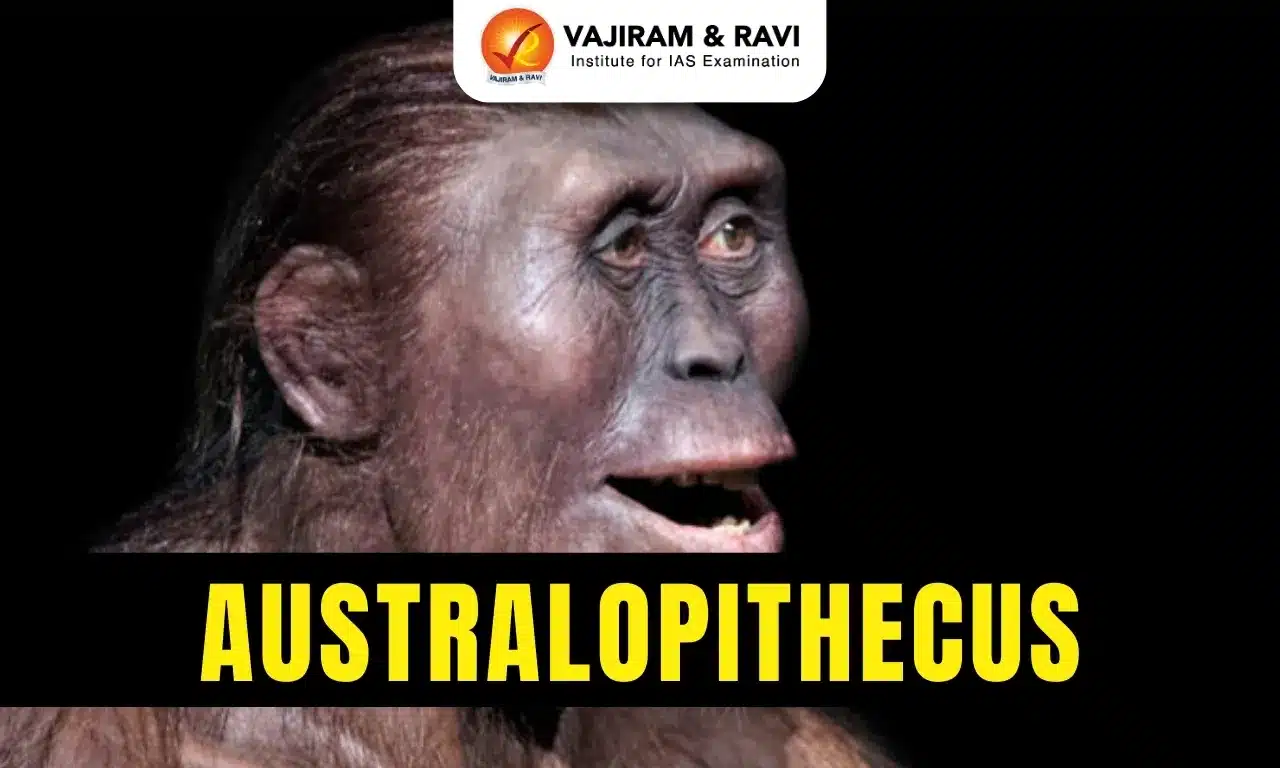
Australopithecus

Australopithecus

Australopithecus Latest News

An unidentified early hominin fossil that might be a new species confirms that Australopithecus and Homo species lived in the same region of Africa in the same time frame.

About Australopithecus

  • Australopithecus, (genus Australopithecus) is a group of extinct primates known from a series of fossils found at numerous sites in eastern, north-central, and southern Africa.
  • They are the closest known relatives of our genus, Homo.
  • The various species of Australopithecus lived 4.4 million to 1.4 million years ago (mya), during the Pliocene and Pleistocene epochs (which lasted from 5.3 million to 11,700 years ago).
  • The genus name, meaning “southern ape,” refers to the first fossils found, which were discovered in South Africa.
  • Perhaps the most famous specimen of Australopithecus is “Lucy,” a remarkably preserved fossilized skeleton from Ethiopia that has been dated to 3.2 mya.

Australopithecus Features

  • Members of Australopithecus bore a combination of humanlike and apelike traits.
  • They had apelike face proportions (a flat nose, a strongly projecting lower jaw) and braincase (with a small brain, usually less than 500 cubic centimeters – about 1/3 the size of a modern human brain), and long, strong arms with curved fingers adapted for climbing trees.
  • They also had small canine teeth like all other early humans, and a body that stood on two legs and regularly walked upright. 
  • They were roughly 1.2-1.5 m tall and probably weighed about 30-50 kg.
  • Males were almost twice the size of females, a level of difference, or sexual dimorphism, greater than modern chimpanzees or humans but less than gorillas or orangutans.
  • They had mainly a plant-based diet, including leaves, fruit, seeds, roots, nuts, and insects.

Source: LS

Australopithecus FAQs

Q1: Australopithecus fossils have been primarily discovered in which regions?

Ans: Eastern, north-central, and southern Africa.

Q2: During which epochs did Australopithecus species live?

Ans: Pliocene and Pleistocene

Q3: The brain size of Australopithecus was about what fraction of the modern human brain?

Ans: One-third

Daily Editorial Analysis 16 August 2025

Daily Editorial Analysis

Balancing Code and Commerce in U.K. Trade Compact

Context

  • The India–United Kingdom Comprehensive Economic and Trade Agreement (CETA), particularly Chapter 12 on digital trade, represents a significant step in India’s evolving approach to international trade governance.
  • While India’s traditional position has often leaned towards cautious protectionism in digital policy, this agreement signals a shift towards strategic engagement with global digital markets.
  • It is important to discuss an analytical examination of the digital trade chapter, identifying the tangible benefits, potential costs, and the policy imperatives required to balance openness with sovereignty.

Digital Gains: Reducing Friction and Expanding Market Access

  • Mutual Recognition and Lower Barriers

    • The agreement’s provisions on the recognition of electronic signatures and contracts are notable for reducing transaction costs, particularly for small and medium enterprises (SMEs).
    • By promoting paperless trade and electronic invoicing, the pact streamlines administrative processes and facilitates smoother cross-border commerce.
    • The continuation of zero customs duties on electronic transmissions also safeguards India’s software export pipeline, currently valued at approximately $30 billion annually.
  • Regulatory Sandboxes and International Credibility

    • Encouragement of regulatory sandboxes under the agreement creates pathways for payments and data-driven firms to test innovative tools under official supervision.
    • This mechanism enhances both consumer trust and international credibility, positioning India not only as a major exporter of IT services but also as a rule-shaping participant in the global digital economy.
  • Broader Economic Advantages

    • The digital chapter merges with wider trade concessions under CETA.
    • Tariff reductions, such as the elimination of a 12% duty on key textile exports, are expected to strengthen manufacturing hubs like Tiruppur and Ludhiana.
    • Indian IT firms also gain wider access to U.K. public procurement markets, while social-security waivers for temporary assignments reduce employers’ payroll costs by up to 20%.
    • Collectively, these measures promise to institutionalise a more predictable and mutually beneficial trade corridor.\

Digital Costs: Constraints on Oversight and Sovereignty

  • Source-Code Inspections and Regulatory Trade-Offs

    • Perhaps the most contested provision is the prohibition of blanket source-code inspections.
    • Regulators retain access only under case-specific investigations or judicial processes, alongside exclusions for government procurement and critical infrastructure.
    • Supporters view this as a governance tool preventing arbitrary intervention, while critics perceive it as a dilution of regulatory sovereignty.
    • A possible middle path involves accrediting independent, trusted laboratories to review sensitive code under strict safeguards, a balance between trade facilitation and national security imperatives.
  • Governance of Government and Cross-Border Data

    • On government data, obligations are restricted to voluntary publication, thereby preserving discretion for India.
    • While this avoids over-commitment, it may weaken the perceived utility of open data for cross-border innovation.
    • Similarly, cross-border data flow commitments avoid automatic most-favoured-nation (MFN) status, instead providing a forward-review mechanism.
    • This arrangement allows adaptive flexibility but also introduces uncertainty for businesses, which rely on stable data governance rules for long-term investment strategies.
  • Review Mechanisms and Technological Evolution

    • The compact mandates review within five years. However, given the accelerated pace of technological change, as evidenced by rapid developments in artificial intelligence, this cycle may prove inadequate.
    • Institutionalising a three-year review mechanism would allow for more agile alignment of trade rules with emerging risks and innovations.

Domestic Anchors for International Commitments

  • India’s external commitments must be underpinned by robust domestic policy foundations.
  • The Digital Personal Data Protection Act (2023), though legislated, awaits operationalisation through subordinate rules and guidance.
  • Until such frameworks are fully institutionalised, India risks making external commitments that exceed its regulatory preparedness.
  • Furthermore, procedural reforms are necessary: institutionalised pre-negotiation consultations with industry stakeholders, civil society, and subject experts can ensure legitimacy and widen the policy discourse, thereby anchoring international bargains in democratic accountability.

Policy Implications: Towards a Balanced Digital Trade Strategy

  • Strengthening Oversight While Preserving Trust

    • Accrediting trusted laboratories for source-code review offers a solution to reconcile trade obligations with security imperatives.
  • Enhancing Data Accountability

    • Mandating audit trails for cross-border data intermediaries would ensure accountability follows the data, balancing openness with enforcement capacity.
  • Institutionalising Adaptive Governance

    • A triennial review cycle for digital chapters in trade agreements should be adopted to ensure regulatory alignment with fast-evolving technological and security landscapes.

Conclusion

  • The digital trade compact between India and the United Kingdom reflects a pragmatic recalibration of India’s trade policy.
  • While the agreement offers substantial benefits in reducing trade friction, expanding export potential, and enhancing international credibility, it also introduces constraints on regulatory autonomy that require careful domestic counterbalancing.
  • Ultimately, India’s entry into structured digital trade engagements signals a maturation of policy, from defensive protectionism to strategic global participation, anchored by the recognition that sovereignty in the digital era is defined less by insulation and more by calibrated openness.

Balancing Code and Commerce in U.K. Trade Compact FAQs

 Q1. What is the central significance of Chapter 12 of the India–U.K. CETA?
Ans. Chapter 12 represents India’s shift from digital trade scepticism to strategic global engagement by balancing openness with safeguards for sovereignty.

Q2. How does the agreement benefit Indian small and medium enterprises (SMEs)?
Ans. It reduces transaction costs by recognising electronic signatures and contracts, while paperless trade provisions lower barriers for SMEs in cross-border commerce.

Q3. Why is the ban on routine source-code inspection controversial?
Ans. The ban raises concerns about regulatory sovereignty because it limits default oversight tools, although exceptions for investigations and security are retained.

Q4. What role does the Digital Personal Data Protection Act (2023) play in this agreement?
Ans. The Act provides the domestic foundation for India’s external digital commitments, but its rules must be fully operationalised to support international obligations effectively.

Q5. What policy steps are recommended for India going forward?
Ans. India should accredit trusted labs for source-code review, mandate audit trails for cross-border data flows, and establish triennial reviews of digital trade pacts.

Source: The Hindu


The Politics and Decline of Left-Wing Extremism

Context:

  • This article highlights the politics and decline of Left-Wing Extremism in India, contrasting it with persisting global terrorism threats.
  • It traces the rise and fall of Naxalism, evaluates government strategies against it, and examines the misuse of the term “urban naxals.”
  • The analysis underscores how India’s context, policies, and sustained campaigns have led to a significant decline in ideologically-driven violence, marking a unique path compared to global trends.

Global Terrorism Concerns

  • Even 25 years after the 9/11 attacks, terrorism remains a persistent threat worldwide.
  • Islamic State (IS)-inspired attacks, including vehicle rammings like the one in New Orleans (January 2025), highlight the continuing menace.
  • Online campaigns encourage lone-wolf strikes, while rising anti-Israel protests further fuel extremist propaganda.
  • Counter-terror experts warn that with Artificial Intelligence (AI) and access to bio-weapons, future terrorism could become even more destructive.

India’s Contrasting Experience

  • In sharp contrast to global trends, India has witnessed a steady decline in ideologically-driven terrorism, particularly Naxalism.
  • Union Home Minister has even declared that by mid-2026, Naxalism could be fully eliminated — a first official pronouncement of its demise after decades of violence.
  • Once hailed as a revolutionary movement, Naxalism had mobilised tribals and urban poor under leaders like Charu Mazumdar, Kanu Sanyal, and Kondapalli Seetharamaiah.

Decline of the Naxalite Movement

  • Despite its promise, the movement degenerated into violent excesses and gradually lost its ideological sheen.
  • Once nationwide, it fragmented into regional factions, largely confined to forested belts of central India, especially Andhra Pradesh, Maharashtra, and Chhattisgarh.
  • Earlier false dawns of decline (in the 1970s and 1990s) never produced conclusive results, but today the downward trend appears more permanent.

Fading Revolutionary Zeal

  • The Naxalite movement had once inspired India’s brightest youth, influenced by global icons like Mao, Ho Chi Minh, and Che Guevara.
  • The slogan “China’s Chairman is our Chairman” resonated with many.
  • However, the revolutionary fervour soon dissipated, leaving behind splintered groups and localised violence.
  • The dream of a “Spring Thunder Over India” has gradually faded, signalling the end of an era of ideological militancy.
    • The term "Spring Thunder" is often used to describe the broader Naxalite-Maoist insurgency.

The Sustained Offensive Against Naxalism

  • From 2024, under the Union Home Minister’s direction, security forces launched a coordinated offensive against Naxalite groups across multiple States.
  • Estimates of Naxalites killed vary, but even the banned CPI (Maoist) acknowledged 357 deaths in a year, with more than a third from the women’s cadre.
  • The Dandakaranya region — spanning Bastar (Chhattisgarh), Gadchiroli (Maharashtra), and parts of Odisha and Andhra Pradesh — remained the epicentre of violence.
  • Internal conflicts and leadership crises, particularly after the removal of Ganapathi in 2018, further weakened the movement.

Indian Strategy vs. U.S. ‘War on Terror’

  • The Indian campaign against Naxalites cannot be equated with U.S. President Trump’s “war on terror.”
  • The U.S. targeted ideology-agnostic jihadist groups operating abroad, often relying on brute force strikes in Somalia and Yemen.
  • In contrast, Indian Naxalites lived among villagers and shared close social ties with local communities.
  • India’s response involved more checks and balances, avoiding indiscriminate use of force except in extreme cases, given the domestic and socio-political context.

Guiding Principles of the Anti-Naxal Campaign

  • Successive governments, both at the Centre and in States, have sought to prevent revolutionary groups — however democratic their claims — from disrupting the established order.
  • While the original Naxalites were ideologically driven and envisioned a more egalitarian system, their failure to achieve goals soon gave way to widespread violence.
  • Over time, Naxalite factions clung to a veneer of ideology but primarily resorted to indiscriminate attacks, losing much of their earlier legitimacy.

Misuse of the Term ‘Urban Naxals’

  • The original Naxalite movement of the late 1960s, though misdirected, was rooted in a clear philosophy and structured ideology under the Marxist-Leninist banner.
  • In contrast, today’s so-called “urban naxals” are a loosely connected group of intellectuals critical of government policies, bearing little resemblance to the original movement.
  • Misclassifying them risks distorting history and creating flawed responses.
  • Such confusion may lead to poorly framed policies, magnified risks, and unintended consequences.
  • A more nuanced understanding, free from bias and cognitive blind spots, is essential to address challenges effectively without incurring hidden costs.

Conclusion

  • India’s decline in Naxalism marks a historic turning point, reflecting effective strategy, nuanced policies, and the fading of ideological militancy amid global terrorism threats.

The Politics and Decline of Left-Wing Extremism FAQs

Q1. Why are predictions in politics often considered unreliable, especially in today’s world?

Ans. Predictions are unreliable because political outcomes are complex, and in today’s AI-driven world, rising uncertainties make forecasting even more hazardous.

Q2. How does global terrorism remain a threat even after 25 years of 9/11?

Ans. Terrorism persists through copycat killings, lone-wolf attacks, and Islamic State-inspired violence, with fears of AI and bio-weapons amplifying future risks.

Q3. What makes India’s experience with Naxalism different from global terrorism trends?

Ans. Unlike rising global extremism, India has seen a steady decline in Naxalism, with official claims predicting its complete elimination by 2026.

Q4. What were the main reasons for the decline of the Naxalite movement in India?

Ans. The movement degenerated into violence, fragmented regionally, faced leadership crises, and lost ideological legitimacy, limiting its presence to central India’s forests.

Q5. Why is the misuse of the term ‘urban naxals’ problematic?

Ans. It distorts history, misclassifies intellectual dissenters, risks flawed policymaking, and creates blind spots that could magnify threats and unintended consequences.

Source: TH


Supreme Court’s Intervention in Electoral Roll Revision - Continuity with Past Judgments

Context:

  • The Supreme Court’s (SC) recent order in Association for Democratic Reforms (ADR) vs Election Commission of India (2025) regarding the Special Intensive Revision (SIR) of electoral rolls in Bihar echoes its landmark judgment in Lal Babu Hussain vs Electoral Registration Officer (1995).
  • The issue revolves around citizenship verification, voter exclusion, and the constitutional right to franchise.

Historical Parallel - Lal Babu Hussain Case (1995):

  • The Election Commission of India (ECI) attempted to declare certain voters as non-citizens.
  • The SC ruled that no person should be asked to prove citizenship without credible evidence against them.
  • Electoral Registration Officers (EROs) are required to conduct full inquiries and allow all possible evidence from affected voters.
  • Political backlash followed against the ruling Congress party.

Present Issue - Special Intensive Revision (SIR), Bihar:

  • Legal basis: The Representation of the People Act (RPA), 1950 and Registration of Electors Rules, 1960 provide for summary revision and intensive revision, but not “Special Intensive Revision”. Hence, SIR lacks explicit statutory backing.
  • ECI’s rationale behind SIR: To remove non-citizens from voter rolls.
  • Issues involved:
    • ECI relies only on the 2003 electoral roll as a valid base.
    • ECI prescribes a narrow set of documents as proof of identity. Aadhaar cards and Electoral Photo ID Cards (EPIC) are not accepted.
    • The burden of proof shifted to citizens to establish their own citizenship.
  • Similar case: Similar exclusions occurred in Delhi and Mumbai (1994), where ration cards were initially not accepted until Bombay HC intervened.

Supreme Court’s 2025 Order:

  • Directed ECI to:

    • Make draft electoral rolls accessible and searchable.
    • Provide reasons for voter exclusion.
    • Accept more documents as proof of identity, including Aadhaar and EPIC.
  • Significance of the order:

    • Ensures transparency and natural justice.
    • Shifts focus from citizenship verification to accuracy of voter rolls.

SC–ECI Institutional Relationship:

  • Generally cooperative: SC has supported ECI reforms like declaration of assets, disqualification of convicted politicians, and NOTA.
  • Rare disagreements: Electoral Bonds case (SC struck them down as unconstitutional despite ECI’s indifferent stance).
  • Current stance: SC’s order is not a rebuke but a gentle nudge towards transparency.

Democratic Principles at Stake:

  • Original electoral rolls (1951): Even the homeless and nameless (particularly women) were included, ensuring universal adult suffrage.
  • Contrast: SIR risks exclusionary practices.

Conclusion:

  • In the future, the SC’s insistence on transparency and fairness in electoral roll revisions will strengthen citizen-centric democracy and prevent exclusionary practices.
  • As India moves towards Viksit Bharat@2047, reforms in voter registration must evolve into a technologically robust, inclusive, and legally accountable system that upholds universal suffrage.

Supreme Court’s Intervention in Electoral Roll Revision FAQs

Q1. How did SC’s 2025 order on Bihar’s SIR ensure electoral transparency?

Ans. By mandating reasons for voter exclusion and wider acceptance of documents.

Q2. Why is SIR legally problematic?

Ans. It lacks a clear basis in the Representation of the People Act, 1950.

Q3. What is the similarity between SC’s 1995 and 2025 rulings?

Ans. Both upheld that voters cannot be asked to prove citizenship without credible evidence.

Q4. How has SC shaped electoral reforms in India?

Ans. Through measures like NOTA, asset disclosure, disqualification of convicts, and striking down Electoral Bonds.

Q5. What lesson do 1951 electoral rolls offer today?

Ans. They stress inclusiveness, ensuring even the marginalized are not excluded.

Source: IE

Daily Editorial Analysis 16 August 2025 FAQs

Q1: What is editorial analysis?

Ans: Editorial analysis is the critical examination and interpretation of newspaper editorials to extract key insights, arguments, and perspectives relevant to UPSC preparation.

Q2: What is an editorial analyst?

Ans: An editorial analyst is someone who studies and breaks down editorials to highlight their relevance, structure, and usefulness for competitive exams like the UPSC.

Q3: What is an editorial for UPSC?

Ans: For UPSC, an editorial refers to opinion-based articles in reputed newspapers that provide analysis on current affairs, governance, policy, and socio-economic issues.

Q4: What are the sources of UPSC Editorial Analysis?

Ans: Key sources include editorials from The Hindu and Indian Express.

Q5: Can Editorial Analysis help in Mains Answer Writing?

Ans: Yes, editorial analysis enhances content quality, analytical depth, and structure in Mains answer writing.

Kishtwar Flash Floods: Climate Change and Extreme Weather in Jammu & Kashmir

Kishtwar Flash Floods

Kishtwar Flash Floods Latest News

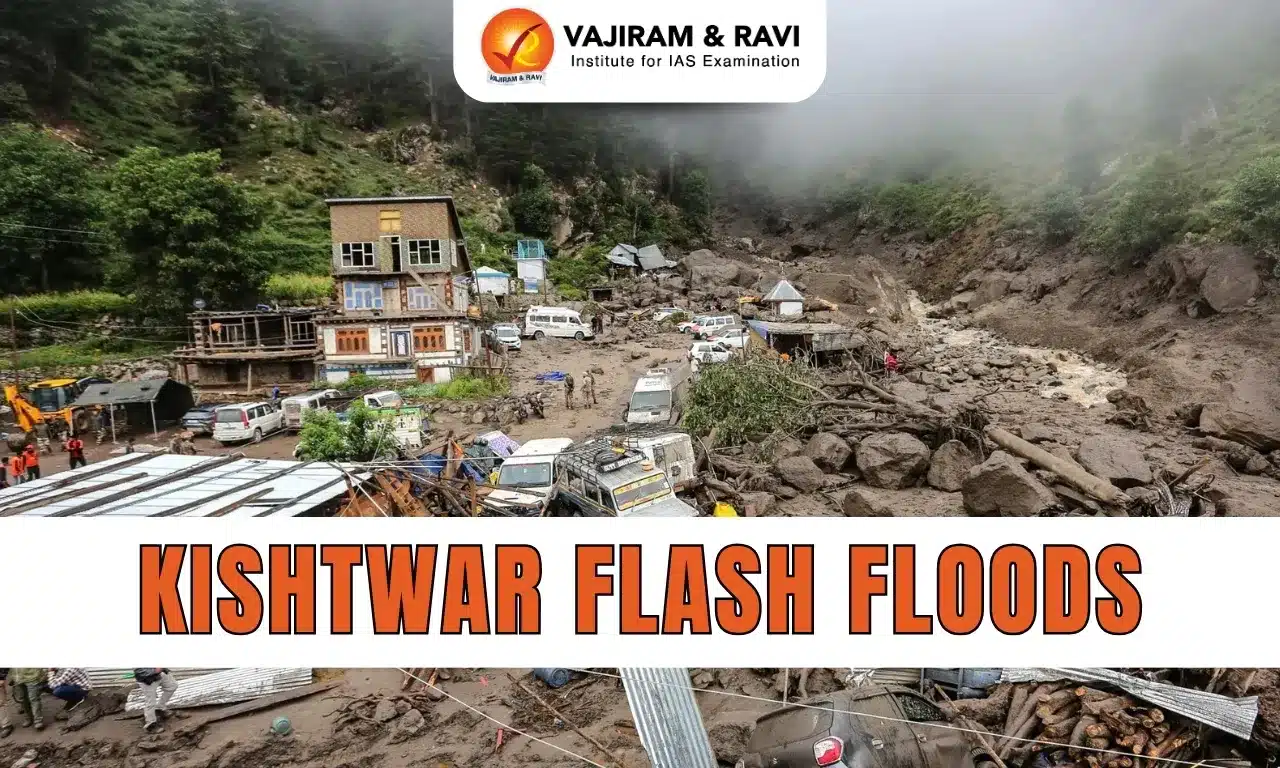
  • At least 65 people died and over 50 remain missing after a flash flood triggered by torrential rain hit Chasoti village in Kishtwar, Jammu & Kashmir. The disaster struck near the route to the Machail Mata temple.
  • While scientists caution against linking any single extreme event directly to climate change, they note that rising global temperatures and shifting weather patterns have made such incidents — including flash floods and wildfires — more frequent and severe.
  • In Jammu & Kashmir, as elsewhere in India, the increasing frequency of extreme weather events driven by climate change has already caused the deaths of thousands in recent years.

Extreme Weather Events in Jammu & Kashmir (2010–2022)

  • Between 2010 and 2022, Jammu & Kashmir experienced 2,863 extreme weather events that claimed 552 lives, according to a 2024 study published in Mausam by IMD scientists.
  • The most frequent occurrences were thunderstorms (1,942 incidents) and heavy rain (409 incidents), while flash floods (168 incidents) and landslides (186 incidents) also posed significant threats. 
  • Although heavy snow was less frequent (42 incidents), it caused the highest fatalities — 182 deaths — making it the deadliest weather phenomenon during this period.
  • The study also highlighted that Kishtwar, Anantnag, Ganderbal, and Doda districts recorded the highest number of deaths from flash floods.
  • Overall, the research concluded that while heavy rain and heavy snow remain the primary weather-related killers, other hazards such as flash floods, thunderstorms, and windstorms are increasingly emerging as major threats in Jammu & Kashmir.

Key Drivers of Extreme Weather Events in J&K

  • Although several factors contribute to the occurrence of extreme weather events in J&K, the three significant drivers behind these events are rising temperatures, the changing pattern of Western Disturbances, and the region’s topography.

Rising Temperatures and Their Impact on J&K

  • The western Himalayas, where Jammu & Kashmir lies, have warmed at twice the rate of the Indian subcontinent since 2000. 
  • This sharp rise in temperature has intensified both mean and extreme precipitation. 
  • A warmer atmosphere can hold more moisture — about 7% extra water vapour for every 1°C rise — resulting in heavier and more frequent rainfall events that often trigger severe flooding.
  • Higher temperatures have also accelerated glacial shrinkage, increasing the number of unstable glacial lakes
    • These lakes, being relatively young, have fragile edges prone to erosion, melting, and sudden breaches. 
    • When heavy rainfall occurs, they overflow, releasing slush and sediment that cause catastrophic downstream floods.
  • As per climate experts, these unstable lakes make the region particularly vulnerable. 
  • Intense rain not only swells rivers but also destabilises glacial lakes, compounding the risk of flash floods and large-scale destruction.

Changing Nature of Western Disturbances

  • Western Disturbances (WDs) are east-moving rain-bearing wind systems that originate beyond Afghanistan and Iran, gathering moisture from the Mediterranean, Black, Caspian, and Arabian Seas. 
  • Traditionally active in winter months (December–March), they are now increasingly affecting weather outside the winter season.
  • This increases the risk of floods and heavy rainfall in India’s Himalayan states, including Jammu & Kashmir.
  • Climate change has altered their behaviour. The rapid warming of the Arabian Sea releases more moisture into these systems. 
  • When WDs extend into the North Arabian Sea, they absorb this excess moisture, intensifying rainfall over the hills.
  • This shift means that global warming is strengthening and prolonging the influence of WDs, making extreme rainfall and flash floods more frequent in the region.

Topography and Vulnerability of J&K

  • Jammu & Kashmir’s hilly and mountainous terrain amplifies its exposure to extreme weather events. 
  • The Himalayas consist of diverse ranges that significantly influence local weather systems.
  • One of the key processes is orographic rainfall
    • As moist air is forced to ascend over the mountains, it cools and condenses, resulting in heavy precipitation. 
    • This process makes the region more prone to sudden and intense rain, often triggering flash floods, landslides, and cloudbursts.
  • The unique Himalayan topography acts as a natural trigger for extreme events, meaning that climate change impacts — like warming temperatures and shifting Western Disturbances — are magnified by the terrain.

Source: IE | ToI | KV

Kishtwar Flash Floods FAQs

Q1: What caused the Kishtwar flash floods?

Ans: Torrential rains triggered flash floods, intensified by climate change and fragile Himalayan terrain.

Q2: How has climate change impacted J&K?

Ans: Rising temperatures, shifting western disturbances, and shrinking glaciers increased extreme rainfall and flooding.

Q3: Which events are frequent in J&K?

Ans: Thunderstorms, heavy rain, landslides, flash floods, and heavy snowfall dominate extreme weather events.

Q4: Why is J&K more vulnerable?

Ans: Its mountainous topography amplifies orographic rainfall and unstable glacial lakes, making it disaster-prone.

Q5: What did IMD studies reveal?

Ans: Between 2010–2022, J&K saw 2,863 extreme events, causing 552 deaths, with heavy snow deadliest.

PM Modi on Energy Independence: Nuclear Expansion, Critical Minerals, and Defence Self-Reliance

PM Modi Energy Independence

PM Modi Energy Independence Latest News

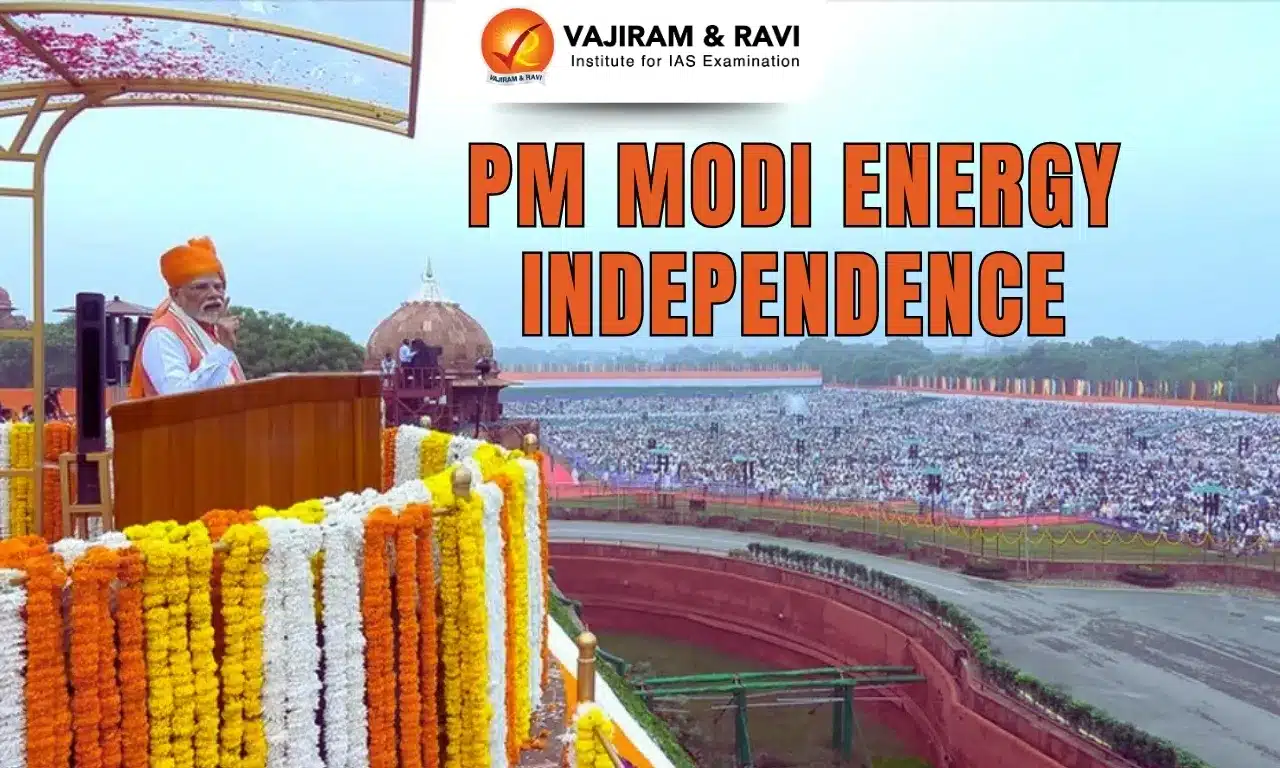
  • In his Independence Day address from the Red Fort, PM Modi emphasized the urgent need for India to achieve self-reliance in energy and critical minerals. 
  • He linked this to the country’s large petroleum import bill, highlighting how dependency drains resources that could otherwise support development, agriculture, and poverty alleviation.
  • PM Modi announced a landmark policy shift by declaring that the government has “opened the doors” of nuclear energy to private participation. 
  • The aim is to expand India’s nuclear power generation capacity tenfold by 2047, positioning nuclear energy as a major pillar of the country’s clean energy future.

India’s Heavy Energy Import Dependence

  • Currently, India remains heavily dependent on imported fossil fuels:
    • Crude oil imports (2024–25): $137 billion
    • Petroleum products: $24 billion
    • Liquefied Natural Gas (LNG): $15 billion
  • Together, energy imports constituted 22.3% of total imports in 2024–25, compared to 23% in 2023–24, according to data from the Petroleum Planning and Analysis Cell (PPAC).
  • The lakhs of crores spent on energy imports could have been invested in India’s long-term growth — building infrastructure, supporting farmers, and fighting poverty. 
  • By reducing dependency through self-reliance and clean energy expansion, India could redirect critical resources toward domestic priorities.

India’s Push for Critical Mineral Self-Reliance

  • PM Modi underlined the importance of critical minerals in powering key technologies across energy, industrial, and defence sectors.
  • He announced that exploration is underway at over 1,200 sites under the National Critical Mineral Mission (NCMM)
  • So far, the Ministry of Mines has auctioned 24 blocks and plans to auction 100 more by 2030
  • However, experts caution that operationalising these blocks could take years due to regulatory bottlenecks.
  • To fast-track progress, the government has set up a Project Monitoring Unit (PMU) to streamline approvals and expedite mine development. 
  • At the same time, India is diversifying its strategy by pursuing overseas exploration and acquisitions.
  • This is supported by recent amendments to the Mines and Minerals (Development & Regulation) Act, which now allows the National Mineral Exploration Trust (NMET) to fund international projects.

India’s Nuclear Energy Expansion and Private Sector Entry

  • In his Independence Day address, PM Modi also announced plans to increase India’s nuclear energy capacity tenfold by 2047
  • Currently, the country’s installed nuclear capacity stands at 8.8 GW, contributing just under 2% to total electricity generation
  • Ten nuclear reactors are operational, with further expansion underway.
  • The government has also opened the nuclear sector to private participation. 
  • In the 2024-25 Budget, provisions were made for partnerships with private companies to finance and build Bharat Small Reactors (BSRs) for captive use, though operation will remain with NPCIL. 
  • Full-scale private involvement, however, will require amendments to the Atomic Energy Act and the Civil Liability for Nuclear Damage Act, with a task force examining issues such as fuel procurement, waste management, and safeguards.
  • PM Modi also highlighted India’s climate achievements, noting that the country has met its target of 50% non-fossil fuel electricity capacity five years ahead of schedule
  • This marks a significant rise from 30% in 2015 and 38% in 2020, driven largely by growth in solar and wind power, along with nuclear and large hydro projects.

Operation Sindoor and Mission Sudarshan Chakra: India’s Defence Self-Reliance Drive

  • Operation Sindoor showcased India’s growing defence self-reliance, with terror networks and Pakistan-based infrastructure dismantled using Made-in-India weapons. 
  • The operation signalled that India would no longer accept nuclear blackmail or external pressure, reinforcing its strategic autonomy.
  • Building on this momentum, India announced Mission Sudarshan Chakra, inspired by Lord Krishna’s legendary weapon. 
  • The initiative is aimed at neutralising enemy infiltrations and enhancing offensive and deterrent capabilities with rapid, precise, and powerful responses.
  • The government emphasised that indigenous innovation is key to future security, urging Indian youth to develop advanced technologies such as jet engines within India. By 2035, India also plans to expand a nationwide security shield across all public places, highlighting its vision of comprehensive protection backed by self-reliant defence systems.

Source: IE | PIB

PM Modi Energy Independence FAQs

Q1: What did PM Modi stress on Independence Day?

Ans: He urged energy independence, critical minerals self-reliance, and defence autonomy for India’s growth.

Q2: What is India’s energy import bill?

Ans: In 2024–25, imports cost $176 billion, making up 22.3% of total imports.

Q3: What is the National Critical Mineral Mission?

Ans: Exploration at 1,200 sites, 24 blocks auctioned, with 100 more targeted by 2030.

Q4: How will nuclear power expand?

Ans: India plans a tenfold nuclear boost by 2047, with private sector entry enabled.

Q5: What is Mission Sudarshan Chakra?

Ans: A defence initiative to neutralise threats with precision, inspired by Lord Krishna’s Sudarshan Chakra.

PM Modi’s Independence Day 2025 Speech Highlights

Independence Day

Independence Day Latest News

  • PM Modi’s 2025 Independence Day speech announced sweeping reforms, including GST rationalisation, a Rs. 1 lakh crore jobs scheme, a Demography Mission, and a push for semiconductor and tech innovation.

Introduction

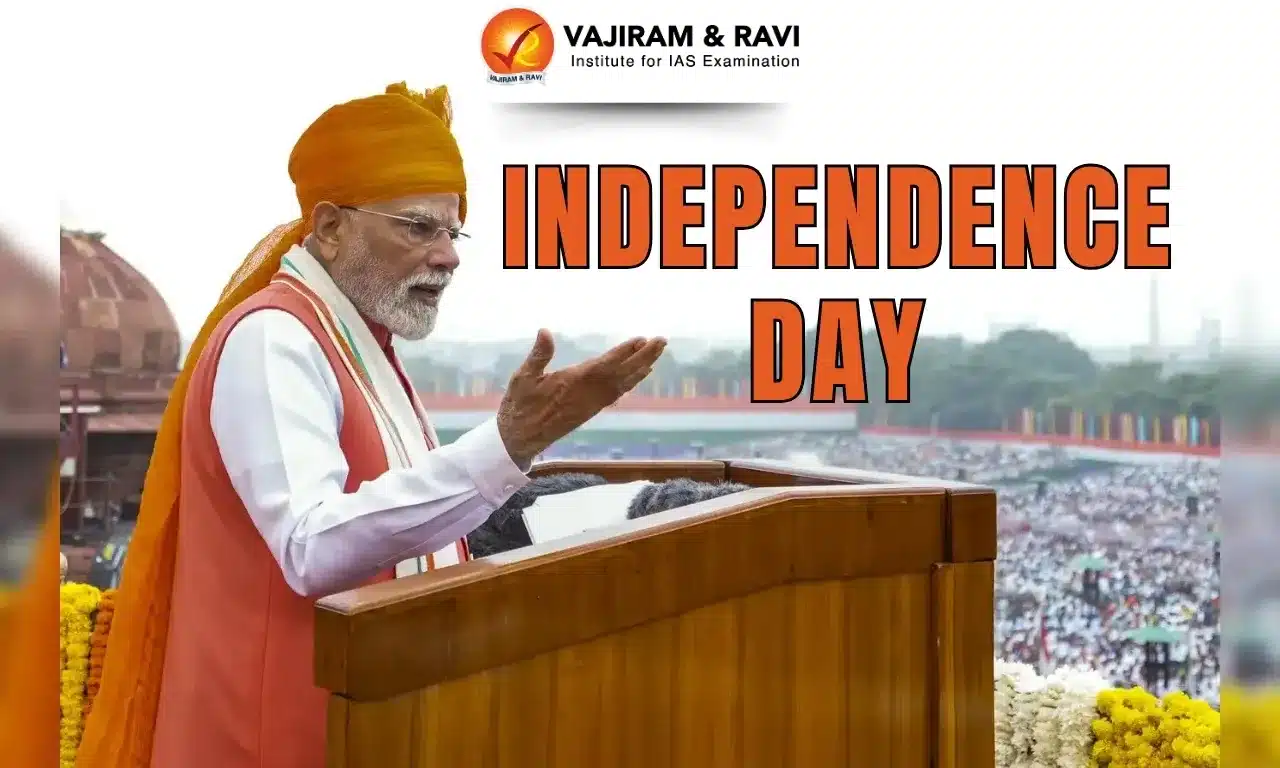
  • Prime Minister Narendra Modi delivered his 12th Independence Day address on August 15, 2025, marking his longest-ever speech at 103 minutes. 
  • The address outlined sweeping economic and governance reforms, highlighted security concerns, and underscored self-reliance as the foundation of a developed India by 2047. 
  • Central to his message were new initiatives, including the High-Powered Demography Mission, second-generation GST reforms, and a corpus for job creation. 
  • The speech combined political messaging, policy announcements, and appeals to youth, farmers, and entrepreneurs, setting the stage for India’s long-term growth trajectory.

Key Announcements and Policy Reforms

  • Next-Generation Economic Reforms
    • PM Modi announced the setting up of a high-powered task force to undertake next-generation reforms by reviewing outdated rules, laws, and policies. 
    • The task force will focus on reducing compliance burdens, especially for MSMEs, startups, and cottage industries, thereby boosting entrepreneurship and global competitiveness. 
    • Reforms in logistics and export systems are also expected to strengthen India’s trade performance.
  • GST Rationalisation and Relief to Citizens
    • After eight years of GST implementation, PM Modi declared that “second-generation GST reforms” would be rolled out. 
    • These reforms aim to simplify the tax regime, reduce compliance costs, and make essential goods cheaper. 
    • PM Modi linked the reforms to a “Diwali gift,” promising substantial tax relief for citizens, especially benefiting small businesses and everyday consumers.
  • Employment and Economic Empowerment
    • The Prime Minister launched the Pradhan Mantri Viksit Bharat Rozgar Yojana, a Rs. 1 lakh crore corpus designed to boost job creation
    • Under this scheme, first-time private sector employees will receive a one-time grant of Rs. 15,000, while private employers will be incentivised to generate jobs. 
    • By supporting both employees and businesses, the government seeks to address youth unemployment and encourage entrepreneurship.
  • Protecting Farmers, Fishermen, and Dairy Interests
    • With trade negotiations with the US putting pressure on India to open its markets for agricultural and dairy imports, PM Modi firmly declared that India would not compromise the interests of farmers, livestock rearers, and fishermen. 
    • Positioning himself as a “wall” safeguarding these communities, he assured citizens that their livelihoods would remain a top priority in policymaking.

National Security and Demographic Concerns

  • High-Powered Demography Mission
    • In one of the most politically significant announcements, PM Modi launched a High-Powered Demography Mission to address concerns about infiltration and demographic changes, especially in border regions. 
    • He warned of a “deliberate conspiracy” to alter India’s demographic balance, claiming that infiltrators were threatening livelihoods, targeting women, and misleading tribal communities. 
    • By framing demographic change as a national security issue, the government aims to implement time-bound measures under this mission.
  • Internal Security and Counter-Terror Operations
    • The Prime Minister praised anti-Naxal operations, particularly in Chhattisgarh, where “terror corridors have turned into green corridors.” 
    • He positioned these successes as evidence of India’s stronger internal security framework, while reiterating that unchecked demographic shifts could pose fresh threats to national unity and security.

Technology and Innovation Push

  • PM Modi emphasised technology as the backbone of future growth. 
  • Key highlights included the announcement that Made-in-India semiconductor chips would enter the market by the end of 2025, with six plants already operational and four more in progress. 
  • He urged Indian youth to innovate in AI, cyber security, deep-tech, and operating systems, envisioning India as a global technology leader. 
  • The focus on indigenous chip manufacturing is particularly significant amid global supply chain disruptions and India’s ambition to reduce dependence on foreign technology.

Source: TH | IE

Independence Day FAQs

Q1: What was the major economic announcement in PM Modi’s Independence Day 2025 speech?

Ans: The announcement of second-generation GST reforms to simplify taxes and reduce costs was a major highlight.

Q2: What is the Pradhan Mantri Viksit Bharat Rozgar Yojana?

Ans: It is a Rs. 1 lakh crore scheme offering incentives for job creation, including a Rs. 15,000 grant for first-time private employees.

Q3: What is the High-Powered Demography Mission?

Ans: A government initiative to address demographic changes and infiltration threats, especially in border areas.

Q4: How did PM Modi address the concerns of farmers and fishermen?

Ans: He assured that India would not compromise their interests in trade negotiations, particularly against US demands.

Q5: What role did technology feature in the speech?

Ans: Modi announced India’s first Made-in-India semiconductor chips by 2025 and pushed for innovation in AI, cyber security, and deep-tech.

Enquire Now