UPSC Daily Quiz 22 August 2025

UPSC Daily Quiz

The Daily UPSC Quiz by Vajiram & Ravi is a thoughtfully curated initiative designed to support UPSC aspirants in strengthening their current affairs knowledge and core conceptual understanding. Aligned with the UPSC Syllabus 2025, this daily quiz serves as a revision resource, helping candidates assess their preparation, revise key topics, and stay updated with relevant issues. Whether you are preparing for Prelims or sharpening your revision for Mains, consistent practice with these Daily UPSC Quiz can significantly enhance accuracy, speed, and confidence in solving exam-level questions

[WpProQuiz 51]  

UPSC Daily Quiz FAQs

Q1: What is the Daily UPSC Quiz?

Ans: The Daily UPSC Quiz is a set of practice questions based on current affairs, static subjects, and PYQs that help aspirants enhance retention and test conceptual clarity regularly.

Q2: How is the Daily Quiz useful for UPSC preparation?

Ans: Daily quizzes support learning, help in revision, improve time management, and boost accuracy for both UPSC Prelims and Mains through consistent practice.

Q3: Are the quiz questions based on the UPSC syllabus?

Ans: Yes, all questions are aligned with the UPSC Syllabus 2025, covering key areas like Polity, Economy, Environment, History, Geography, and Current Affairs.

Q4: Are solutions and explanations provided with the quiz?

Ans: Yes, each quiz includes detailed explanations and source references to enhance conceptual understanding and enable self-assessment.

Q5: Is the Daily UPSC Quiz suitable for both Prelims and Mains?

Ans: Primarily focused on Prelims (MCQ format), but it also indirectly helps in Mains by strengthening subject knowledge and factual clarity.

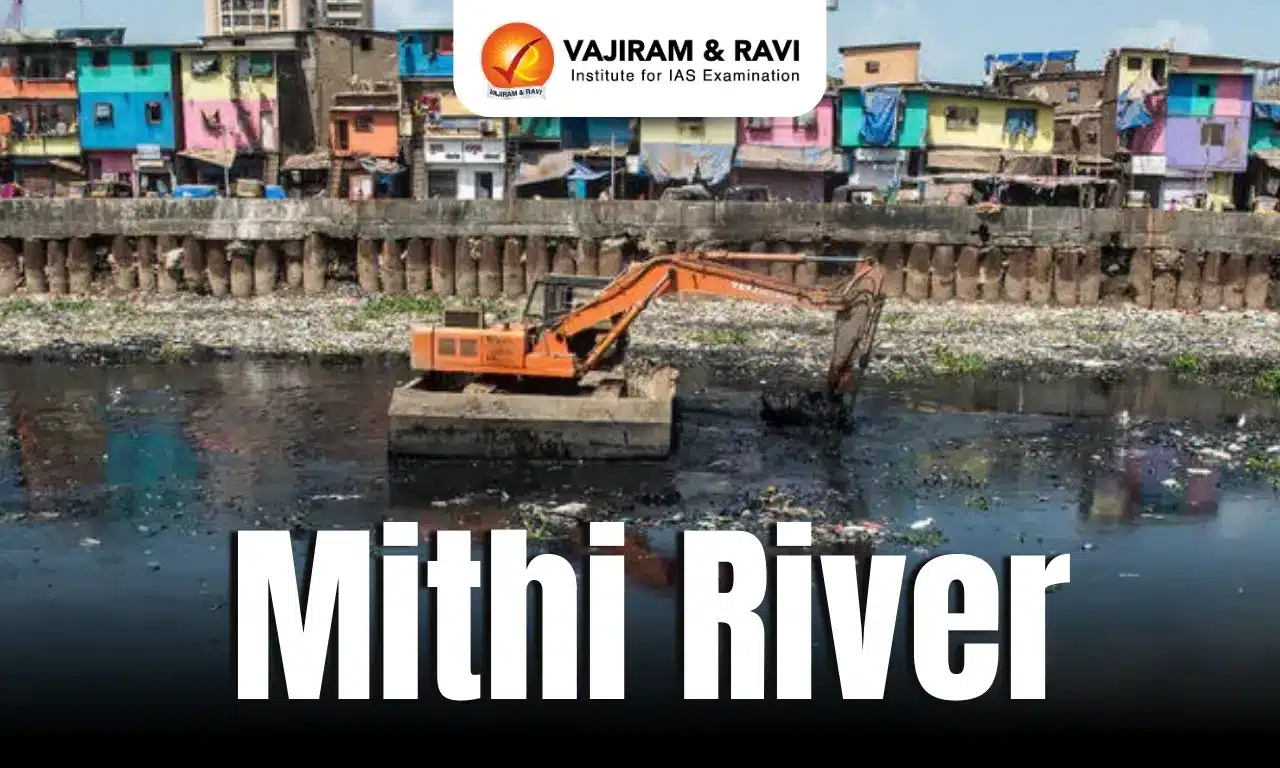
Mithi River

Mithi River

Mithi River Latest News

The Economic Offences Wing (EOW) of the Mumbai Police recently arrested a 49-year-old contractor in connection with the multi-crore Mithi river desilting fraud that has caused losses of over ₹65 crore to the Brihanmumbai Municipal Corporation (BMC).

About Mithi River

  • Mithi river is one of the four rivers flowing through the Mumbai city, Maharashtra. 
  • The river originates from the overflow of Vihar Lake and also receives the overflows from the Powai Lake about 2 km downstream.
  • It flows for 18 km before discharging into the Arabian Sea at Mahim Creek, flowing through residential and industrial complexes of Powai, Saki Naka, Kurla, Kalina, Vakola, Bandra Kurla Complex, Dharavi and Mahim.
  • The river has an average width of 5 metres in the upper reaches, has been widened to 25 m in the middle reaches and up to 70 m in the lower reaches after the 26 July 2005 deluge (944 mm in 24 h on 26 July 2005)
  • It is a seasonal river, which feeds on the monsoons.

Source: HT

Mithi River FAQs

Q1: Mithi River flows through which Indian city?

Ans: Mumbai

Q2: Into which water body does the Mithi River discharge?

Ans: Arabian Sea at Mahim Creek

Q3: What is the approximate total length of the Mithi River?

Ans: 18 km

Jeju Island

Jeju Island

Jeju Island Latest News

Following complaints from locals about misbehaviour by foreign visitors, police in South Korea's Jeju Island have printed a special type of multilingual notice.

About Jeju Island

  • Jejudo (also known as Jeju Island) is a volcanic island.
  • With a surface area of 1,846 sq.km., it is the largest island 130 km off the coast of the Korean Peninsula and the main island of Jeju Province of South Korea.
  • It lies in the East China Sea 60 miles (100 km) southwest of South Jeolla province, of which it once was a part. The provincial capital is the city of Jeju.
  • Oval in shape, Jeju Island measures 40 miles (64 km) from east to west and 16 miles (26 km) from north to south. 
  • The island contains the natural World Heritage Site Jeju Volcanic Island and Lava Tubes. 
  • A central feature of Jeju is Hallasan, the tallest mountain in South Korea and a dormant volcano, which rises 1,950 m above sea level. 360 satellite volcanoes are around the main volcano.

Source: NDTV

Jeju Island FAQs

Q1: Jeju Island (Jejudo) is located in which country?

Ans: South Korea

Q2: What is the total area of Jeju Island?

Ans: 1,846 sq.km

Q3: What is the name of the tallest mountain in South Korea, located on Jeju Island?

Ans: Hallasan

Euglena

Euglena

Euglena Latest News

In India, Euglena and its relatives are now widespread indicators of deteriorating water quality. 

About Euglena

  • Euglena is a unicellular, flagellated microorganism belonging to the group Euglenophyta.
  • These are commonly found in stagnant or slow-moving freshwater ponds, ditches, and urban lakes.
  • Characteristics: These protists are highly adaptable, capable of both photosynthesis (like plants) and feeding on organic matter (like animals).
  • This flexibility helps them thrive in nutrient-rich, oxygen-poor environments.
  • Three of the most common euglenoid genera observed in Indian water bodies are: Euglena, Phacus, Trachelomonas sp. These species often dominate surface waters, especially during warmer months.
  • The striking red or pink colour seen during blooms is due to a pigment called astaxanthin, produced by many euglenoids.
  • Astaxanthin is a fat-soluble xanthophyll that gives these organisms their bright red colour.

Impact of Euglena on Biodiversity

  • Oxygen depletion: Euglena photosynthesises, but at night it consumes oxygen, leading to diurnal oxygen fluctuations. This can result in hypoxia (low oxygen levels), which is dangerous for fish and other aquatic life.
  • Dense surface scums: Euglenoid blooms form thick mats on the water surface, which block sunlight from reaching submerged plants. This reduces the lake’s productivity and alters its ecological balance.
  • Fish mortality: Euglenophyte blooms can stick to fish gills, making it hard for them to breathe. Some species also produce toxins like euglenophycin, which directly kill fish or indirectly affect them by disrupting the food chain and oxygen levels.

Source: DTE

Euglena FAQs

Q1: What are the uses of Euglena?

Ans: They can be used for production of a range of compounds for use in cosmeceuticals and nutraceuticals.

Q2: What do euglenas eat?

Ans: Euglena eat green algae, amoebas, parameciums and rotifer.

Exercise Samanvay Shakti

Exercise Samanvay Shakti

Exercise Samanvay Shakti Latest News

Recently, the Exercise Samanvay Shakti 2025 was inaugurated at Laipuli, in Tinsukia district of Assam.

About Exercise Samanvay Shakti

  • It is initiated by Indian Army collaboration with state officials of Assam & Manipur to foster efficient cooperation, cohesion and mutual understanding.
  • It is a military-civil Integration exercise aimed at fostering synergy between security forces, government departments and civil institutions to address the region’s complex challenges through a unified and coordinated approach.
  • The inaugural session witnessed participation from the Indian Army, Indian Air Force, District Administration, Police, Intelligence Agencies, NDRF, SDRF, Medical Officials, BRO & GREF, Railways, educational institutions and security officials from OIL India, IOCL and Coal India alongwith representatives of the local media.

Objectives of Exercise Samanvay Shakti

  • To take concrete steps towards achieving an improved state of readiness, supported by unhindered channels of communication and refined standard operating procedures through practical rehearsals.
  • It seeks to further strengthen the bond of trust between the people of upper Assam & Manipur and the institutions that serve them, thereby contributing towards preparedness for security challenges, development towards nation building, and reinforcing national integration.

Source: News On Air

Exercise Samanvay Shakti FAQs

Q1: What is National Disaster Response Force?

Ans: It was established under section 44 of the Disaster Management Act, 2005. It is aimed at specialized response to natural and man-made disasters.

Q2: Is Border Roads Organisation under the army?

Ans: It is a road construction executive force in India that provides support to and is a part of the Indian Armed Forces.

Charge-Coupled Device

Charge-Coupled Device

Charge-Coupled Device Latest News

A charge-coupled device (CCD) is a remarkable electronic component whose invention marked a significant milestone in technology and influenced many fields.

About Charge-Coupled Device

  • It was a pioneering technology that converted light into electrical signals using an array of capacitors that transferred electric charges in a sequence.
  • A CCD consists of an integrated circuit made up of an array of small picture elements called pixels.
  • Each pixel acts like a small light sensor that collects photons (the particles of light) and converts them into electrical charges.
  • These charges are then transferred across the device, one pixel at a time, to be read and processed into a digital image.

Working of Charge-Coupled Device

  • It operates using the photoelectric effect, where light that falls on the device generates electron-hole pairs in the semiconductor material.
  • Specifically, when photons enter a CCD, they strike the semiconductor material beneath each pixel.
  • This energy knocks electrons loose, creating a small group of electrons proportional to the intensity of light in that pixel.
  • Each pixel is essentially a small capacitor that holds these electrons. The amount of charge in each pixel varies depending on how much light the pixel has received.
  • A voltage is applied to electrodes placed over the pixels in a sequence that moves the charges from one pixel to the next, like passing buckets of water along a line.
  • This is why it’s called a “charge-coupled” device, and this process continues until all the charge has reached a readout register.
  • The accumulated charge from each pixel is then converted into a voltage signal, which can be amplified and digitised by connected electronics to form a digital image.
  • This sequential transfer and reading process allows the CCD to create a precise and high-quality representation of a scene being captured.

Applications of Charge-Coupled Device

  • Household: CCDs made possible the rise of digital cameras by replacing film with sensors that captured images electronically. They’re also used in CCTV cameras to provide high-quality video feeds for security in places like banks, shopping malls, and hospitals.
  • Medical diagnostics: CCDs play a vital role in medical diagnostics, including in X-ray imaging, computed tomography (CT) scans, and endoscopy.
  • These CCDs are also used in microscopes, spectrometers, and particle detectors where they allow scientists to analyse images in detail.
  • Astronomy: Telescopes fit with CCDs can capture faint and distant celestial objects with more sensitivity and accuracy than traditional photographic plates.

Source: TH

Charge-Coupled Device FAQs

Q1: What is the Charge Coupled Device?

Ans: It is a light-sensitive integrated circuit that captures images by converting photons to electrons.

Q2: Why are Charge Coupled Devices used in telescopes?

Ans: It is because astronomical sources are usually very faint, astronomers allow CCDs to collect light for time intervals ranging from a fraction of a second to several hours.

Blue Carbon

Blue Carbon

Blue Carbon Latest News

Seaweed farming has emerged as a potential Blue Carbon strategy, yet empirical estimates of carbon burial from such farms remain lacking in the literature.

About Blue Carbon

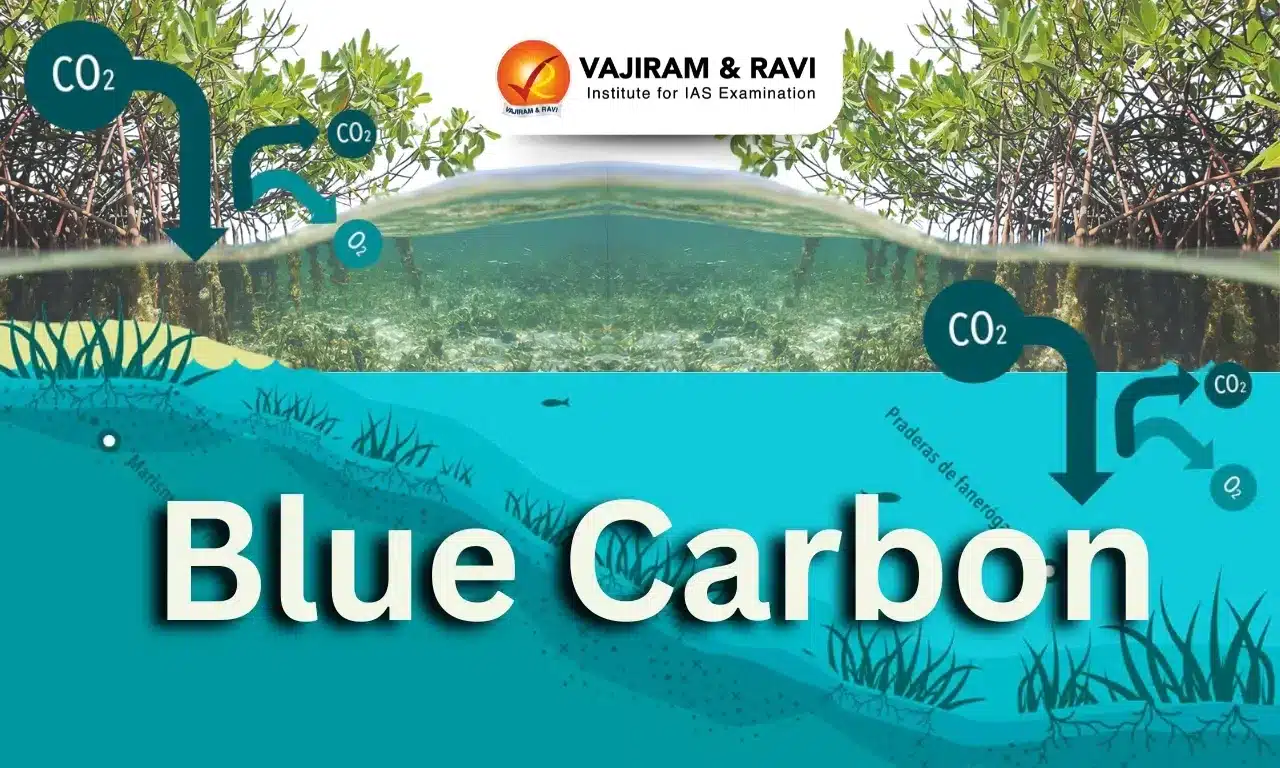
  • Blue Carbon refers to organic carbon captured and stored by the ocean in vegetated coastal ecosystems such as mangrove forests, saltmarshes, or seagrass meadows. 
  • “Blue” refers to the watery nature of this storage. 
  • The vast majority of blue carbon is carbon dioxide that has dissolved directly into the ocean. 
  • Much smaller amounts are stored in underwater sediments, coastal vegetation, and soils; carbon-containing molecules, such as DNA and proteins; and ocean life from whales to phytoplankton.
  • These ecosystems store massive amounts of carbon, making them an integral part of global efforts to combat climate change.
  • They cover just 2% of the total ocean surface but account for 50% of the ocean’s carbon absorption.

Source: RG

Blue Carbon FAQs

Q1: What does the term Blue Carbon refer to?

Ans: Organic carbon stored in vegetated coastal ecosystems.

Q2: Blue Carbon ecosystems cover about what percentage of the total ocean surface?

Ans: 2%

Q3: Why are Blue Carbon ecosystems important in combating climate change?

Ans: They store massive amounts of carbon.

Indian Council of Social Science Research

Indian Council of Social Science Research

 Indian Council of Social Science Research Latest News

The Indian Council of Social Science Research (ICSSR) recently issued a show cause notice to the Centre for the Study of Developing Societies (CSDS), asking it to disclose the source of funding for its studies on the Election Commission’s Special Intensive Revision (SIR) exercise and the Maharashtra Assembly polls.

About Indian Council of Social Science Research 

  • It is the apex body of the Government of India for research in the social and human sciences.
  • It was established in the year 1969 by the Government of India on the recommendation of Prof. V. K. R. V. Rao Committee.
  • It is an autonomous organisation working under the aegis of the Department of Higher Education, Ministry of Education.
  • ICSSR plays a pivotal role in advancing knowledge and understanding of various social issues and challenges, and providing research-based solutions to policymakers and stakeholders in the development of the nation through initiatives and schemes such as 
    • research projects
    • doctoral, postdoctoral, senior fellowships, and national fellowships
    • research internships; training and capacity building of early career researchers
    • publication grants
    • national and international seminars, conferences, and workshops
    • publication of cutting-edge research
    • national and international collaboration
    • promotion of social science and humanities research through research institutes, recognised institutes, and regional centres.
  • An all-India network of 24 frontline research institutes and six regional centres is maintained, and five recognized institutes are programmatically supported by the ICSSR. 
  • The Documentation center of ICSSR – National Social Science Documentation Centre (NASSDOC)-provides library and information support services to researchers in social sciences.
  • ICSSR has developed the ICSSR Data Service to serve as a national data service for promoting a powerful research environment through sharing and reuse of data among the social science community in India.

Source: TOI

Indian Council of Social Science Research FAQs

Q1: Indian Council of Social Science Research (ICSSR) was established on the recommendation of which committee?

Ans: Indian Council of Social Science Research (ICSSR) functions under which Ministry of the Government of India?

Q2: Ministry of Education

Ans: What is the role of the National Social Science Documentation Centre (NASSDOC) under Indian Council of Social Science Research (ICSSR)?

Huntington’s Disease

Huntington’s Disease

Huntington's Disease Latest News

The union and state governments have yet to include Huntington’s disease in the rare category under the National Policy for Rare Diseases, a demand raised by patients and caregivers in 2024.

About Huntington's Disease

  • It is a genetic condition that affects the cells in your brain.
  • It is an inherited condition that causes brain cells to slowly lose function and die. 
  • If one of your parents has HD, you have a 50% chance of also developing it.
  • It affects the cells in parts of your brain that regulate voluntary movement and memory. 
  • What causes Huntington’s disease?
  • A genetic mutation of the HTT gene causes Huntington’s disease.
    • The HTT gene makes a protein called huntingtin. This protein helps your nerve cells (neurons) function.
    • If you have HD, your DNA doesn’t have all the information needed to make the huntingtin protein.
    • As a result, these proteins grow in an abnormal shape and destroy (instead of help) your neurons.
    • Your neurons die because of this genetic mutation.
    • The destruction of nerve cells happens in the basal ganglia, or the region of your brain that regulates your body’s movements.
    • It also affects the brain cortex (surface of your brain) that regulates your thinking, decision-making, and memory.
  • How common is HD?
    • Huntington’s disease affects an estimated 3 to 7 out of every 100,000 people, most often people of European ancestry (biological family comes from European descent).
  • Symptoms:
    • Common symptoms include uncontrollable dance-like movements (chorea) and abnormal body postures, as well as problems with behavior, emotion, thinking, and personality.
    • Other symptoms may include tremor (unintentional back-and-forth movement in the person’s muscles) and unusual eye movements. The eye movements can happen early in the disease.
    • These symptoms get worse over time.
    • As HD progresses, you will need constant assistance and supervision because of the debilitating nature of the disease.
    • People usually die from the disease within 15 to 20 years of developing symptoms.
  • Treatment:
    • There is no treatment that can stop or reverse HD, but health care providers can offer medications to help with certain symptoms.

Source: DH

Huntington's Disease FAQs

Q1: What is Huntington's Disease?

Ans: It is a genetic condition that affects the cells in your brain.

Q2: Which part of the brain is most affected in Huntington’s disease?

Ans: If one parent has Huntington’s disease, what is the chance of a child inheriting it?

Daily Editorial Analysis 22 August 2025

Daily Editorial Analysis

Poll Integrity and Self-Sabotage, Parties and the ECI

 Context

  • In India, discrepancies such as duplication, ineligible entries, and ghost voters have long raised concerns about electoral integrity.
  • These issues not only open doors to fraud, impersonation and multiple voting, but also corrode public trust in the democratic process.
  • While much of the criticism is directed at the Election Commission of India (ECI), political parties themselves share responsibility for enabling this institutional decline.
  • A deeper analysis reveals how the ECI’s waning credibility, coupled with the weakening of political parties at the grassroots level, threatens the very foundations of representative democracy.

The Erosion of the Election Commission’s Credibility and Changing Nature of Political Parties

  • The Erosion of the Election Commission’s Credibility

    • The ECI, entrusted with maintaining clean electoral rolls, has increasingly faced criticism for opacity and inefficiency.
    • Instead of addressing irregularities, the Commission has attempted to restrict inspection and oversight, thereby deepening suspicion about its impartiality.
    • This is a sharp fall from grace when compared to the 1990s, under T.N. Seshan, when the ECI emerged as a formidable guardian of electoral integrity.
    • At that time, the Commission implemented stringent reforms, from monitoring election expenditure to introducing the Electoral Photo Identity Card (EPIC), and surveys consistently ranked it as one of India’s most credible institutions.
    • Today, however, its legacy is under question, its authority weakened, and its integrity doubted.
  • Changing Nature of Political Parties

    • While the ECI has been alleged to lose credibility, political parties have also contributed to democratic decay by reshaping themselves into highly centralised electoral machines.
    • Traditional campaign methods, door-to-door visits, community meetings, and street-corner gatherings, have given way to digital strategies such as social media outreach, phone banking, and AI-driven chatbots.
    • These techniques create the illusion of personal connection but bypass the slow, trust-building work of local party organisations.
    • Moreover, political parties increasingly rely on professional consultants who design strategies, craft messaging, and even influence candidate selection.
    • This reliance sidelines local workers, reducing them to mere providers of raw data for analytical models.

The Role of Local Organisations and Booth-Level Agents

  • Electoral integrity depends on close collaboration between the ECI and political parties at the local level.
  • The Commission’s manual outlines provisions for consultation during voter roll revisions, with political parties expected to scrutinise draft lists and flag discrepancies.
  • To formalise this, the ECI introduced Booth Level Agents (BLAs), party representatives tasked with assisting booth-level officers in ensuring accuracy.
  • BLAs are meant to scrutinise draft rolls, submit corrections, and act as the crucial link between voters, parties, and the ECI.
  • On paper, this system is robust, with safeguards such as limits on bulk applications and requirements for cross-verification.
  • In practice, however, recent controversies, such as irregularities in the Mahadevapura constituency of Karnataka, raise pressing questions. Were BLAs complicit in manipulating the system? Were they negligent in their responsibilities?
  • Or is there institutional bias favouring incumbents? The controversy underscores the dangers of weakened local organisations: when parties abandon vigilance, systemic failures slip through unchecked.

The Way Forward: Reviving Political Parties’ Local Role

  • The current crisis presents an opportunity for political renewal. If parties revitalise their dormant local units, they can not only improve electoral roll oversight but also restore their democratic relevance.
  • Early signs of such revival are evident in Kerala, where parties are now scrutinising draft rolls more diligently for errors such as duplicate entries and multiple voter IDs.
  • This suggests a growing recognition that democracy depends on active engagement beyond election-day campaigns.
  • History offers a cautionary tale. In the post-Independence period, weak Congress party units allied with local elites to subvert land reforms, undermining democratic promises of agrarian justice.
  • Similarly, today’s neglect of local structures risks distorting democracy itself. Without vigilant grassroots organisations, parties may not merely lose elections, they may lose the very arena of fair competition.

Conclusion

  • India possesses a well-designed framework for safeguarding electoral integrity. Yet no system can withstand neglect or manipulation.
  • When the ECI hides behind opacity rather than accountability, it erodes the trust necessary for a functioning democracy.
  • When political parties prioritise technology and consultants over grassroots networks, they weaken their ability to act as democratic counterweights.
  • Electoral roll controversies thus serve as a wake-up call: democracy cannot survive on institutional structures alone.

Poll Integrity and Self-Sabotage, Parties and the ECI FAQs

Q1. Why are discrepancies in electoral rolls a threat to democracy?
Ans. Discrepancies such as ghost voters and duplicate entries enable fraud and weaken public trust in elections, which undermines representative democracy.

Q2. How has the credibility of the Election Commission of India changed over time?
Ans. The ECI was once seen as highly credible, especially during T.N. Seshan’s tenure in the 1990s, but today it faces criticism for opacity and eroded trust.

Q3. What impact has technology had on political parties’ functioning?
Ans. Technology has made campaigning more efficient but weakened local party organisations by replacing grassroots work with centralised, consultant-driven strategies.

Q4. What role do Booth Level Agents (BLAs) play in elections?
Ans. BLAs are party representatives responsible for scrutinising draft electoral rolls, assisting with corrections, and acting as a link between voters, parties, and the ECI.

Q5. What opportunity does the current electoral roll controversy present?
Ans. It offers political parties a chance to revitalise their local units, strengthen democratic engagement, and restore electoral credibility.

Source: The Hindu


Justice is Not About ‘Teaching Someone a Lesson’ 

Context

  • The recent judgment of the Chhattisgarh High Court in a custodial death case exposes troubling fissures in India’s legal approach to police violence and caste oppression.
  • While the facts are deeply disturbing, a Dalit man dying in custody after a medical report found no injuries, only for the post-mortem to reveal 26 wounds, the reasoning of the court is perhaps more concerning.
  • In downgrading a conviction from murder to culpable homicide, the High Court suggested that the police officers had intended merely to teach a lesson to the victim.
  • This phrase, seemingly minor, carries profound implications for the rule of law, constitutional morality, and the protection of vulnerable communities.

Violence Cannot Be Rationalised as Deterrence

  • The phrase teaching a lesson signals more than an explanation of intent, it normalises custodial brutality as a form of discipline.
  • The Constitution of India envisions the state as an institution bound by procedures, rights, and proportionality, not one that sanctions violence as correction.
  • To frame custodial assault as misguided discipline is to blur the line between legal authority and authoritarian force.
  • Courts, as guardians of constitutional morality, cannot afford to rationalise state violence under the guise of deterrence.
  • Judicial language shapes reasoning, and reasoning shapes practice: when a constitutional court entertains the possibility of violence as correction, it sends a dangerous signal to police officers that excesses may be excusable zeal rather than criminal acts.

The Caste Dimension of Custodial Deaths

  • Equally significant is the erasure of caste from the narrative. The victim in this case was a Dalit man, assaulted by upper-caste officers.
  • Yet both the trial and appellate courts dismissed the applicability of the Scheduled Castes and Scheduled Tribes (Prevention of Atrocities) Act, 1989, on grounds that there was no direct evidence of caste-based motivation.
  • This narrow reading ignores how caste power operates in structural, implicit ways.
  • To require explicit slurs or overt declarations of caste animus is to deny the lived experience of caste-based violence, particularly in rural policing where Dalits and Adivasis are disproportionately subjected to brutality.
  • By setting the bar for proving caste intent unrealistically high, courts risk hollowing out the SC/ST Act and failing the very communities it was designed to protect.

Judicial Precedent and Persistent Impunity

  • Custodial violence is not a new or isolated phenomenon.
  • The Supreme Court has repeatedly issued guidelines, from the landmark K. Basu case onwards, mandating safeguards against torture and abuse in custody.
  • Yet deaths in custody remain alarmingly frequent, disproportionately targeting the poor and marginalised.
  • Compliance with judicial safeguards remains patchy, and accountability mechanisms are weak, often compromised by the fact that investigations are led by the same institutions implicated in abuse.
  • Against this backdrop, the High Court’s language is especially damaging: rather than confronting systemic rot, it risks legitimising it by portraying violence as purposeful, if excessive, discipline.

The Path of Judicial Integrity

  • If the judiciary is to act as the bulwark of constitutional democracy, it must reject any narrative that confers moral legitimacy upon custodial violence.
  • Police officers are not vigilantes empowered to correct behaviour through force; they are public servants bound by law.
  • To endorse the idea of teaching a lesson is to substitute fear for justice and coercion for due process.
  • True deterrence arises not from bruises inflicted in the shadows of police stations but from proportionate punishment within the legal system.
  • For structural reform, courts must insist that custodial violence is always criminal, never disciplinary.
  • The SC/ST Act must be interpreted expansively to capture the systemic and caste-coded nature of violence against Dalits and Adivasis.
  • Independent oversight mechanisms must be empowered to investigate custodial abuse, ensuring that accountability does not rest with compromised institutions.
  • Most importantly, judicial discourse itself must reflect zero tolerance for the rationalisation of state brutality.

Conclusion

  • The Constitution of India is built on the principles of dignity, equality, and rule of law. These values cannot coexist with a legal system that tolerates or rationalises custodial violence under the guise of discipline.
  • The High Court’s invocation of teaching a lesson risks undermining decades of constitutional jurisprudence and emboldening future violators.
  • What is required is not rhetorical sympathy but structural transformation, stronger enforcement of safeguards, robust application of protective laws, and a judicial voice that affirms that no citizen, least of all the most marginalised, should have their rights trampled in the name of correction.
  • To accept anything less is to inch toward authoritarianism, where justice is written not in rights, but in bruises.

Justice is Not About ‘Teaching Someone a Lesson’ FAQs

Q1. What did the Chhattisgarh High Court say about the police officers’ intent in the custodial death case?
Ans. The High Court observed that the police officers had intended “to teach a lesson” to the victim for misbehaving in public.

Q2. Why is the phrase “teaching a lesson” problematic in judicial reasoning?
Ans. It is problematic because it normalises custodial violence as discipline rather than recognising it as a criminal act.

Q3. How did the courts treat the applicability of the SC/ST Act in this case?
Ans. The courts dismissed the Act’s applicability, demanding explicit proof of caste-based motivation and ignoring structural caste power.

Q4. What has the Supreme Court emphasised in earlier judgments on custodial violence?
Ans. The Supreme Court has stressed procedural safeguards, transparency in detention, and strict limits on police use of force.

Q5. What should the judiciary do to uphold constitutional values in such cases?
Ans. The judiciary should treat custodial violence as criminal, apply the SC/ST Act robustly, and avoid language that legitimises state brutality.

Source: The Hindu


Overhauling India’s Vocational Education and Training (VET) System - A Pathway to Viksit Bharat

Context:

  • The Prime Minister’s Independence Day address (August 15) highlighted reforms for demand-driven growth, recalibration of GST, and the need to boost productivity through education and skill development.
  • India faces challenges of low-skilled workforce, despite a large demographic advantage, making vocational education critical for employability and productivity.

India’s Current VET Landscape:

  • Institutional strength: Over 14,000 Industrial Training Institutes (ITIs) and 25 lakh sanctioned seats.
  • Low utilisation: Actual enrolment was only around 12 lakh in 2022, implying just 48% seat utilisation.
  • Low employment outcomes:
    • In 2018, the employment rate among ITI graduates was 63%.
    • Countries with robust VET systems such as Germany, Singapore, and Canada reported employment rates ranging between 80 and 90%.
    • These statistics point to a VET system that is both ineffective and unattractive for the Indian youth.
  • Formally trained workforce: Just 4% in India, compared to much higher figures abroad.

Challenges in India’s VET System:

  • Late integration in education system:
    • VET in India introduced post high-school education.
    • This has not only shortened the period available for hands-on training before the youth enter the job market, but also does not allow for orientation towards employable skills.
    • Lack of academic progression
    • No defined pathways from VET to higher education in India. No credit transfers between systems.
  • Poor perception and quality issues:
    • Outdated, industry-misaligned curricula in India.
    • Over one-third of ITI instructor posts are vacant due to limited training capacity at National Skill Training Institutes (NSTIs).
    • Weak quality monitoring, with irregular ITI grading and no feedback systems.
  • Weak public–private partnerships (PPPs):
    • In India, the engagement of employers in the private sector is limited, ITIs depend heavily on government funding, MSMEs (which drive local job creation) have low engagement with ITIs due to capacity constraints.
    • Sector Skill Councils, which play a key role in integrating training with industry needs, lack state-level presence in India.

Learning from International Best Practices:

  • Integration in education system: In Germany, VET is integrated at the upper secondary level through a dual system, combining school education with paid apprenticeships.
  • Academic progression: Singapore ensures progression from VET to universities, offering VET either as technical education (at the post-secondary level) or via polytechnics (at the tertiary level) through dual vocational tracks.
  • Perception and quality:
    • Singapore has industry-led curriculum design, high instructor quality, regular audits and a mechanism that seeks constant feedback from employers and trainees.
    • Singapore also has a Skill Future Programme, where the government offers subsidies to upskill throughout one’s career.
  • Public–private partnerships (PPPs): In Germany, Singapore, and Canada, governments fund VET institutions, while employers pay for apprenticeships, share training costs, and also help design curricula.

Reforms Needed in India:

  • Early integration of VET: Implement National Education Policy (NEP) 2020 recommendations for VET at school level.
  • Pathways to higher education: Fast-track National Credit Framework for academic progression and credit transfers.
  • Improve quality and relevance:
    • Align training with local industry demand.
    • Expand NSTIs, recruit instructors, strengthen ITI grading.
    • Collect trainee feedback for continuous improvement.
  • Strengthen PPPs:
    • Scale up Private Training Partner
    • Involve MSMEs, CSR funding for skilling.
  • Increase funding:
    • India spends 3% of the education budget on VET vs. 10–13% in Germany or Singapore or Canada.
    • Need performance-linked public funding and revenue autonomy for ITIs.

Recent Government Schemes:

  • Employment Linked Incentive (ELI) scheme:
    • ELI Part A offers up to Rs 15,000 for first-time EPFO-registered workers.
    • Part B gives employers Rs 3,000 a month for every new hire.
    • Both ELI schemes push formalisation of jobs but have no skilling components.
  • PM Internship Scheme:
    • It aims to provide one-year placements to youth in top companies, but lacks pathways to permanent jobs.
  • ITI Upgradation Scheme:
    • It focuses on modernising 1,000 government ITIs in partnership with industry, but not necessarily the quality of training.

Way Forward:

  • Current initiatives are piecemeal and insufficient.
  • Need systemic overhaul to:
    • Make VET attractive and effective.
    • Link it with formal employment and upward mobility.
  • Transforming VET into a pathway to quality jobs, which is vital for realising Viksit Bharat.

Conclusion:

  • A future-ready India must transform its vocational education system into a dynamic, industry-linked, and aspirational pathway that equips youth with globally competitive skills.
  • Such an overhaul will not only enhance employability and productivity but also act as a cornerstone for achieving the vision of Viksit Bharat @2047.

Overhauling India’s Vocational Education and Training (VET) System FAQs

Q1. What are the key challenges of India’s VET system?

Ans. Late integration, no academic pathways, outdated courses, instructor shortage, poor quality checks, weak industry linkages.

Q2. How can international VET models guide India?

Ans. Germany’s dual system, Singapore’s lifelong skilling, and Canada’s PPP model highlight early integration, quality, and employer involvement.

Q3. Why are public–private partnerships important for VET?

Ans. They ensure industry-relevant training, cost-sharing, and curriculum design—currently weak in India.

Q4. Are recent government schemes sufficient to address skilling gaps?

Ans. No, they focus on jobs and infrastructure but lack quality skilling and career progression.

Q5. What reforms are needed to make VET a job pathway?

Ans. Early schooling integration, credit transfers, industry-aligned curricula, MSME participation, and higher funding.

Source: IE

Daily Editorial Analysis 22 August 2025 FAQs

Q1: What is editorial analysis?

Ans: Editorial analysis is the critical examination and interpretation of newspaper editorials to extract key insights, arguments, and perspectives relevant to UPSC preparation.

Q2: What is an editorial analyst?

Ans: An editorial analyst is someone who studies and breaks down editorials to highlight their relevance, structure, and usefulness for competitive exams like the UPSC.

Q3: What is an editorial for UPSC?

Ans: For UPSC, an editorial refers to opinion-based articles in reputed newspapers that provide analysis on current affairs, governance, policy, and socio-economic issues.

Q4: What are the sources of UPSC Editorial Analysis?

Ans: Key sources include editorials from The Hindu and Indian Express.

Q5: Can Editorial Analysis help in Mains Answer Writing?

Ans: Yes, editorial analysis enhances content quality, analytical depth, and structure in Mains answer writing.

Dal Lake

Dal Lake

Dal Lake Latest News

Recently, the iconic Dal Lake in Srinagar hosted the first-ever races under rowing, kayaking, and canoeing categories under the Khelo India Water Sports Festival.

About Dal Lake

  • Location: It is a mid-altitude urban lake located in Srinagar, Jammu and Kashmir.
  • It is surrounded by the Pir Panjal mountains.
  • It is integral to tourism and recreation in Kashmir and is named the “Jewel in the crown of Kashmir” or “Srinagar’s Jewel”.
  • It is one of the world’s largest natural lakes and also  known as the Lake of Flowers.
  • The shoreline of the lake is encompassed by a boulevard lined with Mughal-era gardens, parks, houseboats, and hotels. 
  • The wetland is divided by causeways into four basins; Gagribal, Lokut Dal, Bod Dal, and Nagin (although Nagin is also considered an independent lake).
  • Lokut-dal and Bod-dal each have an island in the centre, known as Rup Lank (or Char Chinari) and Sona Lank, respectively.
  • Dal Lake is also popular for the floating market where vendors have their own Shikaras/wooden boats and approach tourists.

Key Facts about Khelo India Water Sports Festival

  • It is organised jointly by the Sports Authority of India (SAI) and the J&K Sports Council under the government’s ‘Khelo Bharat’ policy.
  • It is aimed at boosting grassroots sports, generating livelihoods, and rejuvenating local infrastructure.
  • It is the first consolidated Open-age category championships where all 14 kayaking and canoeing events and the 10 rowing events are Olympic events.

Source: TH

Dal Lake FAQs

Q1: Is Dal Lake the largest freshwater lake in India?

Ans: No, Dal Lake is not the largest freshwater lake in India.

Q2: Which lake is known as lake of Flowers?

Ans: Dal Lake in Srinagar, Jammu and Kashmir is often referred to as the "Lake of Flowers"

Q3: Which mountain range surrounds Dal Lake?

Ans: Pir Panjal Mountains

Lipulekh Pass

Lipulekh Pass

Lipulekh Pass Latest News

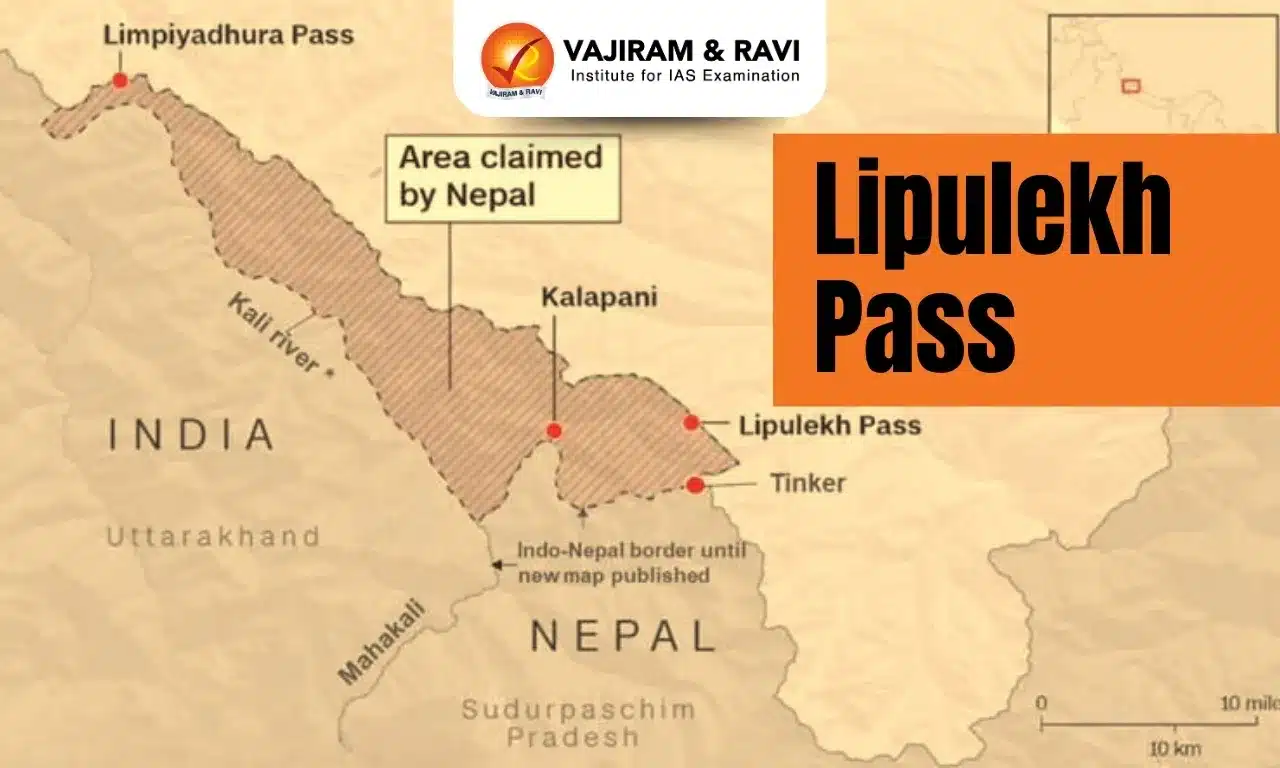
India rejects Nepal’s claims over Lipulekh after India, China restart trade through border points.

About Lipulekh Pass

  • Location: It is a high-altitude mountain pass located in the Kumaon region of Uttarakhand, near the trijunction of India, Nepal, and China.
  • It links the Indian state of Uttarakhand with the Tibet region of China.
  • Altitude: It lies at an altitude of approximately 5,334 meters (17,500 feet).
  • Its elevation and strategic location make it a gateway to the higher reaches of the Himalayas.
  • It is the first Indian border post opened for trade with China in 1992.
  • This was followed by the opening of Shipki La Pass, Himachal Pradesh in 1994 and Nathu La Pass, Sikkim in 2006.

Significance of Lipulekh Pass

  • Ancient Trade Route: Lipulekh Pass has been utilized for centuries as a trade route, connecting the Indian subcontinent with the Tibetan plateau.
  • Religious Significance: The pass also has religious significance, being an integral part of the Kailash Mansarovar Yatra, a sacred pilgrimage for Hindus.

Source: TH

Lipulekh Pass FAQs

Q1: Which countries share the Lipulekh Pass with India?

Ans: Nepal, and China

Q2: Where is Kumaon Himalaya?

Ans: It lies between the Sutlej River in the west and the Kali River in the East.

Haryana’s New Forest Definition Raises Environmental Concerns

Haryana Forest Definition

Haryana Forest Definition Latest News

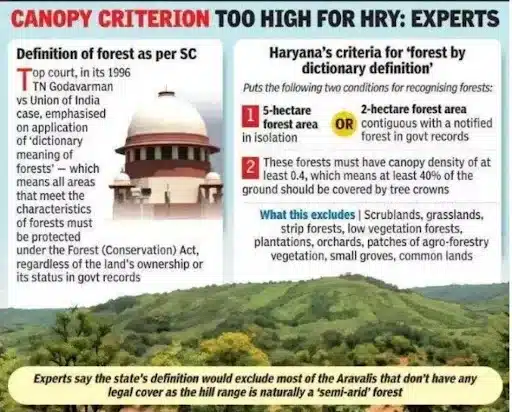
  • Recently, the Haryana government officially defined the “dictionary meaning of forest.” Officials stated that the definition draws on Supreme Court precedents and aligns with judicial expectations.
  • However, environmentalists have raised strong concerns, arguing that the definition is too narrow and could exclude the Aravalli ridge, an ecologically fragile region. 
  • Such exclusion may leave it vulnerable to unchecked urbanisation, illegal mining, and real estate encroachments, threatening biodiversity and groundwater recharge in one of North India’s most critical ecosystems.

Haryana’s Definition of Forests

  • Recently, Haryana’s Environment, Forest and Wildlife Department issued a notification officially defining forests under the “dictionary meaning.”
  • According to the notification:
    • A patch of land will qualify as a forest if it has:
    • A minimum area of five hectares in isolation, or
    • A minimum area of two hectares if contiguous with government-notified forests.
    • It must also have a canopy density of at least 0.4 (40%).

Exclusions from Definition

  • The notification excludes the following from being treated as forests:
    • Linear, compact, or agro-forestry plantations.
    • Orchards outside government-notified forests.
  • These exclusions cover tree plantations along roads, canals, and railway tracks, which, though ecologically beneficial, will not be classified as forests under this definition.

Supreme Court’s Directives on Forest Definition

  • In its March 2025 ruling, the Supreme Court directed all States and Union Territories to formally define what constitutes a forest and begin comprehensive surveys to identify forest areas within their jurisdictions.

Key Instructions from the Court

  • Expert Committees: Each State/UT was required to set up a committee within one month to identify: Forest-like areas; Unclassified Forest lands; Community Forest lands.
  • Survey and Mapping: The committees must map forest lands and submit their reports to the Centre within six months.
  • Use of 2011 Guidelines: The process must strictly follow the 2011 Lafarge Umiam Mining guidelines, which mandate:
    • GIS-based decision-support database.
    • District-wise mapping of plots that may qualify as forests under the Forest (Conservation) Act, 1980 (FCA).
    • Inclusion of core, buffer, and eco-sensitive zones of protected areas.
    • Identification of wildlife corridors, lands diverted from forest use, and supporting maps such as TOPO-sheets and Forest Survey of India maps
  • The Court made it clear that Chief Secretaries of States and Administrators of UTs would be held personally accountable for non-compliance with its directives.

Godavarman Case, FCA and the 2023 Amendment

  • At the centre of the current Supreme Court hearings on the 2023 amendment to the Forest (Conservation) Act (FCA), 1980 lies the core question: “What constitutes a forest?”

FCA, 1980 – Original Scope

  • The FCA of 1980 restricted the dereservation of forests or the use of forest land for non-forest purposes. 
  • No diversion of forest land was permitted without prior approval from the Centre.

Godavarman Ruling, 1996

  • In a landmark judgment (T N Godavarman Thirumulpad v Union of India), the Supreme Court expanded the meaning of ‘forest’. 
  • It held that the term must be understood in its dictionary meaning, covering all statutorily recognised forests — whether reserved, protected, or otherwise. 
  • This effectively meant that any forested parcel of land, regardless of size, ownership, or official classification, could fall under the FCA.

The 2023 Amendment and Subsequent Legal Battle

  • According to the government, the wide applicability of the FCA following Godavarman was restraining development and utility-related works, even minor projects like building toilets in tribal schools. 
  • To address this, the 2023 amendment restricted FCA applicability only to:
    • Notified forests, and
    • Lands identified as forests in government records.
    • Challenge to the Amendment
  • Retired IFS officers and NGOs such as Vanashakti and Goa Foundation challenged the amendment, arguing that it substantially diluted protections under the FCA.
  • In February 2024, the Supreme Court directed all States and UTs to continue following Godavarman’s broader definition of forests while it considered the case (Ashok Kumar Sharma, IFS (Retd) & Ors. vs. Union of India).

Court’s March 2025 Directives

  • The Court then issued detailed instructions requiring States/UTs to define forests, conduct surveys, and submit reports to the Centre, aligning with 2011 Lafarge Umiam Mining guidelines.
  • The matter is ongoing, with the next Supreme Court hearing scheduled in September 2025.

Reactions to Haryana’s Forest Definition

  • Environmentalists have strongly criticised the definition, calling it too restrictive. 
  • Forest analysts argue that the minimum canopy cover threshold of 40% is unrealistic for the Aravalli region, which is naturally arid, with low rainfall and rocky terrain. 
  • The region’s vegetation — thorny, dry deciduous vegetation due to low rainfall and rocky terrain. 
  • According to them, this narrow definition contradicts the 1996 Supreme Court Godavarman judgment, which required a broader, dictionary-based interpretation of forests.
  • They further pointed out that the minimum area requirement of 2 to 5 hectares is unreasonably high for a dry state like Haryana. 
  • In their view, a more practical threshold would have been 1 to 2 hectares, ensuring that smaller but ecologically vital forest patches are not left unprotected.

Source: IE | ToI

Haryana Forest Definition FAQs

Q1: What is Haryana’s new forest definition?

Ans: A forest must have at least 5 hectares in isolation or 2 hectares if contiguous, with a 40% canopy density.

Q2: What areas are excluded from Haryana’s forest definition?

Ans: Plantations along roads, canals, railway tracks, orchards, and agro-forestry plantations outside notified forests are excluded.

Q3: Why are environmentalists critical of Haryana’s definition?

Ans: They argue the high canopy and area thresholds will exclude the ecologically fragile Aravalli region, risking biodiversity and water recharge.

Q4: What did the Supreme Court direct states about forest definition?

Ans: In 2025, the Court ordered states to define forests, map them using GIS, and submit reports, following the Lafarge Umiam guidelines.

Q5: How does Haryana’s definition differ from the Godavarman ruling?

Ans: The Godavarman judgment used a broader dictionary meaning of forests, while Haryana’s definition applies restrictive thresholds.

RBI Cautions Against Raising India’s 4% Inflation Target

RBI Inflation Target

RBI Inflation Target Latest News

  • The RBI, in its new discussion paper on the monetary policy framework, cautioned that raising India’s 4% inflation target now would undermine the credibility of the framework and risk reversing the macroeconomic stability gains achieved over the past decade.

RBI’s Discussion Paper on Monetary Policy

  • The Reserve Bank of India (RBI) has released its long-awaited discussion paper on the country’s monetary policy framework. 
  • It warns that raising the current 4% inflation target could undermine the credibility of the framework and undo the policy and institutional gains achieved over the last decade.

Key Questions for Feedback

  • The central bank has invited public feedback on four crucial issues:
    • Whether monetary policy should target headline or core inflation.
    • If the 4% inflation target remains optimal for balancing growth and stability.
    • Whether the 2–6% tolerance band needs revision or removal.
    • Whether the explicit 4% target should be dropped in favour of only a range.

Risks of Raising or Lowering the Target

  • The paper highlights that raising the target in today’s environment of global geopolitical and economic uncertainty could be interpreted as a dilution of the inflation targeting framework, weakening investor confidence. 
  • Conversely, lowering the target below 4% would not suit India’s current economic conditions.
  • Recently, S&P Global Ratings upgraded India’s rating to BBB, praising the RBI’s strong record in inflation management. 
  • Stable inflation within the 2–6% range has been crucial for investor confidence, growth prospects, and currency stability.

Background

  • India adopted the flexible inflation targeting framework in 2016, with a medium-term CPI target of 4% and a tolerance band of 2–6%. 
  • The present target is valid till March 2026, after which it must be reset for the next five years.

Headline vs. Core Inflation in Monetary Policy

  • The Economic Survey 2023-24 suggested that India’s inflation targeting framework should consider focusing on core inflation (excluding food and fuel).
    • Core inflation - A measure of inflation that excludes highly volatile components, typically food and energy prices. 
    • Headline inflation - The total inflation rate in an economy, encompassing the prices of all goods and services within the representative basket. 
  • This was due to the fact that the food prices in India often rise due to supply shocks rather than demand pressures—making them less responsive to monetary policy tools.
  • The RBI, under former Governor Shaktikanta Das, rejected this idea, stressing that food prices cannot be ignored
  • In its latest discussion paper, the RBI reiterated that nearly all inflation-targeting countries, regardless of their development stage, target headline CPI inflation
    • Uganda is the only exception, focusing on core inflation.

Spillover Effects of Food Prices

  • The RBI highlighted that persistent food inflation eventually spills over into core inflation through higher wages, rents, and business markups. 
  • Empirical evidence from India shows that while core prices remain stable, non-core (food and fuel) prices tend to converge with them over the long run
  • Hence, ignoring food inflation could weaken monetary policy effectiveness.

Recent Trends

  • In July 2024, headline CPI inflation fell to 1.55%, an eight-year low, while core inflation stood at 4.1%. 
  • Historically, headline inflation has fluctuated widely between 1.5% and 8.6% since 2014 due to food price swings, whereas core inflation has been more stable.
  • The RBI concluded that monetary policy must ensure both credibility and certainty, especially during global uncertainty. 
  • Therefore, it emphasised the importance of continuing with headline CPI as the target, since it better reflects the inflation experienced by households and investors.

Source: IE | BS

RBI Inflation Target FAQs

Q1: What did the RBI caution in its discussion paper?

Ans: RBI warned that raising the 4% inflation target could erode policy credibility and undo macroeconomic gains achieved over the last decade.

Q2: What key issues is the RBI seeking feedback on?

Ans: Feedback is invited on headline vs. core inflation, 4% target validity, the 2–6% tolerance band, and whether to keep a fixed target or range.

Q3: Why is raising the inflation target risky now?

Ans: Global uncertainties and investor sentiment could see it as weakening the inflation targeting framework, reducing credibility and stability.

Q4: What has been India’s inflation targeting framework?

Ans: Adopted in 2016, it set a CPI target of 4% with a tolerance band of 2–6%, valid until March 2026.

Q5: What is RBI’s stance on headline vs. core inflation?

Ans: RBI supports targeting headline CPI, noting that persistent food inflation spills over into core prices, affecting wages, rents, and markups.

NTCA Restricts Tiger Corridors to Minimal Pathways

Tiger Corridors

Tiger Corridors Latest News

  • The NTCA has restricted tiger corridors to only the 32 least cost pathways, easing project clearances but raising ecological concerns.

Introduction

  • In a major policy shift, the National Tiger Conservation Authority (NTCA) has restricted the identification of tiger corridors to only the 32 “least cost pathways” listed in its 2014 report. 
  • This decision comes less than a month after the NTCA affirmed before the Bombay High Court that tiger corridors should reflect multiple scientific studies and ecological benchmarks. 
  • While the move simplifies clearances for development projects, it has sparked debate among conservationists, as corridors are essential for tiger movement, genetic diversity, and long-term survival.

Importance of Tiger Corridors

  • Tiger corridors are natural linkages connecting tiger reserves and protected areas, allowing safe movement of tigers and other wildlife across fragmented landscapes. 
  • They help maintain genetic diversity, reduce human-wildlife conflict, and ensure the ecological stability of tiger populations. 
  • Under the Wildlife Protection Act, 1972, projects in or around corridors require approval from the Standing Committee of the National Board for Wildlife (SC-NBWL).

NTCA’s Policy Reversal

  • In July 2025, NTCA told the Bombay High Court that tiger corridors must be defined using:
    • Protected Areas occupied by tigers.
    • Least cost pathways identified in 2014.
    • Corridors in Tiger Conservation Plans (TCPs).
    • Wildlife Institute of India (WII) studies (2016, 2021).
    • Quadrennial All-India Tiger Estimation (AITE) data.
  • However, in August 2025, NTCA issued a clarification narrowing corridors only to:
    • The 2014 least cost pathways.
    • Corridors listed in reserve-specific TCPs.
  • This rollback excluded more robust WII studies and AITE-based refinements, surprising experts since NTCA’s 2014 report itself had called these corridors a “minimal requirement.”

Legal and Judicial Context

  • The Bombay High Court is hearing a petition challenging the Maharashtra State Board for Wildlife’s April 2025 decision to forward only projects within the least cost pathways for SC-NBWL approval. 
  • NTCA’s sudden clarification, submitted during hearings, has reshaped the case. The Environment Ministry has indicated that further refinement of corridors, based on AITE data, may be delayed until the High Court delivers its ruling.

Scientific Perspectives

  • Contemporary research highlights that limiting corridors to the least cost pathways underestimates the complex movement of tigers
  • A July 2025 study by Nagpur’s LRC Foundation identified 192 potential corridors across 10 central Indian states, connecting 30 tiger reserves and around 150 protected areas. 
  • This dense network demonstrates that multiple pathways, not just the shortest routes, are critical for tiger survival.

Concerns and Criticism

  • Conservationists fear that the NTCA’s narrowed definition weakens tiger protection at a time when India’s tiger population is recovering but facing increasing habitat fragmentation. 
  • By disregarding updated scientific studies and broad ecological benchmarks, the decision risks undermining the long-term connectivity essential for sustaining viable tiger populations. 
  • Critics argue that this approach prioritises short-term project clearances over India’s global conservation commitments.

Future Outlook

  • The issue is likely to remain under judicial scrutiny in the coming months. Conservation scientists are pressing for the incorporation of advanced modelling, telemetry data, and AITE-based evidence in corridor planning. 
  • With India home to nearly 3,000 tigers, over 70% of the global wild population, the protection of ecological corridors will be crucial to maintaining its conservation success story.

Source: IE

Tiger Corridors FAQs

Q1: What are tiger corridors?

Ans: Tiger corridors are natural linkages connecting habitats to allow safe movement, gene flow, and long-term survival of tigers.

Q2: What change has NTCA made to corridor identification?

Ans: NTCA has restricted corridors to the 32 least cost pathways from 2014 and reserve-level Tiger Conservation Plans.

Q3: Which projects benefit from the new definition?

Ans: Projects like Western Coalfields’ Durgapur mines and Lloyds Metals’ Surajgarh iron ore mines in Maharashtra.

Q4: Why are conservationists concerned?

Ans: Excluding recent WII studies and AITE data weakens scientific rigor and risks habitat fragmentation.

Q5: What did recent research suggest about tiger movement?

Ans: A 2025 Circuitscape study identified 192 potential corridors across central India, far more than NTCA’s minimal list.

Enquire Now