
Blue Carbon Latest News
Seaweed farming has emerged as a potential Blue Carbon strategy, yet empirical estimates of carbon burial from such farms remain lacking in the literature.
About Blue Carbon
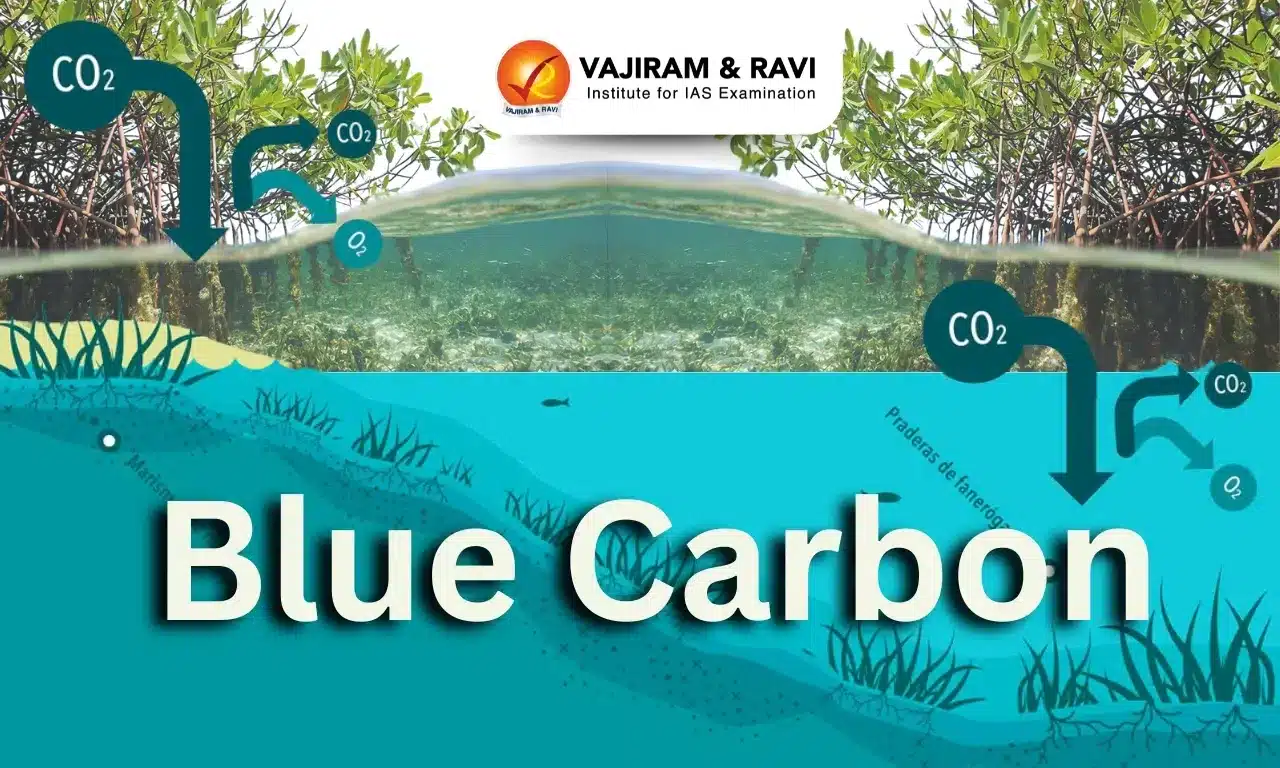
- Blue Carbon refers to organic carbon captured and stored by the ocean in vegetated coastal ecosystems such as mangrove forests, saltmarshes, or seagrass meadows.
- “Blue” refers to the watery nature of this storage.
- The vast majority of blue carbon is carbon dioxide that has dissolved directly into the ocean.
- Much smaller amounts are stored in underwater sediments, coastal vegetation, and soils; carbon-containing molecules, such as DNA and proteins; and ocean life from whales to phytoplankton.
- These ecosystems store massive amounts of carbon, making them an integral part of global efforts to combat climate change.
- They cover just 2% of the total ocean surface but account for 50% of the ocean’s carbon absorption.
Source: RG
Blue Carbon FAQs
Q1: What does the term Blue Carbon refer to?
Ans: Organic carbon stored in vegetated coastal ecosystems.
Q2: Blue Carbon ecosystems cover about what percentage of the total ocean surface?
Ans: 2%
Q3: Why are Blue Carbon ecosystems important in combating climate change?
Ans: They store massive amounts of carbon.
