UPSC Daily Quiz 30 August 2025

UPSC Daily Quiz

The Daily UPSC Quiz by Vajiram & Ravi is a thoughtfully curated initiative designed to support UPSC aspirants in strengthening their current affairs knowledge and core conceptual understanding. Aligned with the UPSC Syllabus 2025, this daily quiz serves as a revision resource, helping candidates assess their preparation, revise key topics, and stay updated with relevant issues. Whether you are preparing for Prelims or sharpening your revision for Mains, consistent practice with these Daily UPSC Quiz can significantly enhance accuracy, speed, and confidence in solving exam-level questions

[WpProQuiz 57]  

UPSC Daily Quiz FAQs

Q1: What is the Daily UPSC Quiz?

Ans: The Daily UPSC Quiz is a set of practice questions based on current affairs, static subjects, and PYQs that help aspirants enhance retention and test conceptual clarity regularly.

Q2: How is the Daily Quiz useful for UPSC preparation?

Ans: Daily quizzes support learning, help in revision, improve time management, and boost accuracy for both UPSC Prelims and Mains through consistent practice.

Q3: Are the quiz questions based on the UPSC syllabus?

Ans: Yes, all questions are aligned with the UPSC Syllabus 2025, covering key areas like Polity, Economy, Environment, History, Geography, and Current Affairs.

Q4: Are solutions and explanations provided with the quiz?

Ans: Yes, each quiz includes detailed explanations and source references to enhance conceptual understanding and enable self-assessment.

Q5: Is the Daily UPSC Quiz suitable for both Prelims and Mains?

Ans: Primarily focused on Prelims (MCQ format), but it also indirectly helps in Mains by strengthening subject knowledge and factual clarity.

Solid Waste Management, Definition, Categories, Types, Methods

Solid Waste Management

Solid Waste Management in India has increased due to increasing urbanisation, industrialisation and changing lifestyles all over the world. Wrong and improper management makes waste a source of environmental pollution, public health hazards and urban management challenges. In this article, we are going to cover solid waste management, its categories, its types and methods. 

Solid Waste Management

Solid waste management is just the collection and dumping of waste but also adoption of a systematic approach that covers generation, segregation, transportation, processing, recycling and safe disposal. 

What is Solid Waste?

Solid waste is the unwanted or useless solid material generated from human activities in residential, commercial, industrial, agricultural and institutional sectors. According to the US Environment Protection Agency, solid waste includes:

  • Household garbage
  • Industrial, commercial, and agricultural discards
  • Residues from treatment plants and pollution control facilities

Solid Waste Management Categories 

Solid waste can be classified into many categories:  

  • Based on Source: 
    • Residential waste: food leftovers, plastics, paper, etc.
    • Commercial & industrial waste: metals, glass, packaging, chemicals.
    • Agricultural waste: stubble, food grains, husk, litter.
  • Based on Content:
    • Organic waste:  biodegradable, mainly from households & agriculture.
    • Plastic waste: non-biodegradable, difficult to manage.
    • Metallic waste:  hazardous industrial by-products, often carcinogenic.
  • Based on Hazard Potential:
    • Toxic waste: dangerous to health (chemicals, radioactive substances).
    • Flammable waste:  prone to causing fire outbreaks in landfills.

Solid Waste Management Types

Solid waste has the following types: 

  1. Municipal Solid Waste (MSW): Generated in daily life from homes, schools, shops, and hospitals (includes plastics, food waste, packaging).
  2. Hazardous Waste: Industrial by-products, e-waste, pesticides, paints, and chemicals that pose long-term health and environmental risks.
  3. Biomedical Waste: Waste from hospitals and labs (syringes, bandages, pharmaceutical residues). WHO classifies it into 8 categories including sharps, infectious, radioactive, and pharmaceutical wastes.

Harmful Effects of Solid Waste

Improper Solid Waste Management has serious consequences:

  • Water Pollution: Leaching contaminates groundwater; run-off pollutes rivers/lakes.
  • Air Pollution: Methane and toxic gases from landfills contribute to climate change.
  • Health Hazards: Epidemics spread due to rodents, pests, and stray animals.
  • Fire Risks: Frequent landfill fires (e.g., Bhalswa landfill in Delhi).
  • Aviation Hazards: Bird menace near dumping sites causes threats to flights.

Methods of Solid Waste Disposal

  1. Open Dumping: Primitive method; causes foul smell, groundwater pollution, and spread of diseases.
  2. Landfills: Common disposal method; however, leaching and methane emissions are major issues.
  3. Sanitary Landfills: Engineered with liners to prevent contamination; more eco-friendly, often later converted into parks.
  4. Incineration: Burning waste; reduces volume, destroys pathogens, and can generate electricity. However, it releases toxic gases and carcinogenic heavy metals.
  5. Pyrolysis: Decomposition of organic waste at high temperatures in absence of oxygen; eco-friendly and energy-yielding.
  6. Composting: Decomposing organic matter into natural fertilizer, improving soil quality.
  7. Vermi-Composting: Using earthworms to produce nutrient-rich organic manure.

Solid Waste Management in India 

India has been generating ~ 1,60,000 tonnes of municipal solid waste per day but only 20-25% of this waste gets scientifically processed. Many cities rely heavily on landfills, fire incidents, air pollution and groundwater contamination. These challenges included: 

  • Poor segregation at source
  • Over-dependence on landfills
  • Lack of modern waste treatment facilities
  • Informal waste pickers not fully integrated into waste management systems

Solid Waste Management Rules, 2016

The SWM Rules, 2016 modernised India’s waste management framework:

  • Source segregation: Mandatory division into biodegradable, non-biodegradable & domestic hazardous waste.
  • Extended Producer Responsibility (EPR): Producers must take responsibility for managing packaging waste.
  • Role of Municipalities: Ensure 100% door-to-door collection, transport, and treatment.
  • Waste Processing: Composting, biomethanation, and waste-to-energy plants encouraged.
  • Inclusion of Waste Pickers: Recognition of informal sector workers and their integration into formal waste management.

Solid Waste Management FAQs

Q1: What is solid waste management?

Ans: Solid Waste Management (SWM) is the process of collecting, treating, and disposing of solid waste in a safe, efficient, and environmentally sustainable manner.

Q2: What are the 4 types of solid waste management?

Ans: The four types are landfills, incineration, recycling, and composting.

Q3: What are 7 types of solid wastes?

Ans: The seven types are municipal, industrial, agricultural, hazardous, biomedical, e-waste, and construction/demolition waste.

Q4: What are the objectives of solid waste management?

Ans: To reduce, reuse, recycle, and safely dispose of waste, ensuring environmental protection and public health.

Q5: What are rules to control solid waste management?

Ans: The Solid Waste Management Rules, 2016 mandate source segregation, Extended Producer Responsibility (EPR), scientific processing, municipal accountability, and integration of waste pickers.

Agricultural Policy of India, Objectives, Components, Key Details

Agricultural Policy of India

Agriculture Policy of India helps build the agricultural economy of India. Agriculture provides food security for people, raw material to industries and employment to the workforce. The policy serves as a strategic framework that boosts production, increases productivity and improves farmers’ incomes and ensures a sustainable rural development. It also helps build resilience, equitable and environmentally sustainable agricultural systems for the future. In this article, we are going to cover the agricultural policy in India, its objectives, components and historical contexts of the policy. 

Agricultural Policy of India

  • The Agricultural Policy of India introduced by the Government of India helps design the vision of achieving: 
    • Increased foodgrain and crop production 
    • Improved farm productivity 
    • Higher profits for farmers 
    • Long- term sustainability of natural resources. 
  • Agricultural policy of India manages the challenges like fragmented landholdings, resource mismanagement, lack of technology adoption, market inefficiencies and vulnerability to climate change. 
  • The policy encourages the adoption of sustainable farming practices, efficient uses of resources, crop diversification, research and innovation and better market access. 
  • Helps improve the livelihood security of small and marginal farmers, who form the majority of India’s farming community. 

Agricultural Policy of India Objectives

The Agricultural Policy of India has the following objectives: 

  • Efficient use of HYV seeds, fertilizers, pesticides and modern irrigation systems to maximise output and increase the productivity of inputs. 
  • Increases value added per hectare by improving farm income by raising productivity. 
  • Protects marginal farmers by introducing land reforms, abolition of intermediaries and expansion of institutional credit support to empower poor farmers. 
  • Modernise agriculture by adoption of modern technology, precision farming and mechanisation to improve efficiency. 
  • Ensures environmental sustainability by preventing land degradation, soil erosion and groundwater depletion to provide long term productivity. 
  • Promotes research and training by strengthening agricultural research, innovation and extension services to provide modernised technology to farmers. 
  • Reduces bureaucratic hurdles to empower farmer cooperatives and self help groups by cutting red tape and ease processes. 

Agricultural Policy of India Components

The major components of agricultural policy in India include: 

  • Improves input productivity by improving the efficiency of seeds, fertilisers, pesticides and irrigation projects. 
  • Provides value addition and crop diversification to promote food processing, packaging and multi-crop projects. 
  • Supports marginal farmers to provide subsidies, institutional credit and land reforms for equitable growth. 
  • Modernises farming practices to introduce mechanisation, scientific irrigation, biotechnology and precision agriculture. 
  • Environmental protection and soil health encourages organic farming, crop rotation, watershed management and sustainable resource use.  
  • Agricultural research and extension services strengthen the research farmer linkage to improve knowledge transfer. 
  • Removes bureaucratic bottlenecks by streamlining credit, subsidies and administrative procedures for smoother implementation. 

National Agricultural Policy, 2000

A landmark in India’s agricultural framework was the National Agricultural Policy (NAP) 2000, announced on 28 July 2000.

  • Target: Achieve over 4% annual growth rate in agriculture.
  • Focus: Efficient resource use, modern technology, private investment, price protection under WTO, and sustainable development.
  • Rationale: Agriculture’s sluggish growth in the 1990s due to inadequate capital, poor infrastructure, and market restrictions.
  • Vision: To make farming more competitive, sustainable, equitable, and remunerative.

National Agricultural Policy, 2000 Objectives

National Agricultural Policy 2000 has the following objectives: 

  1. Achieve agricultural growth of over 4% per annum.
  2. Ensure efficient use of natural resources like land, water, and biodiversity.
  3. Promote equity and inclusivity uplifting small and marginal farmers.
  4. Develop a demand-driven system, responsive to both domestic and export markets.
  5. Ensure technologically and environmentally sustainable growth.

Agricultural Policy Price

  • The Agricultural Price Policy safeguards both farmers and consumers.
  • Through Minimum Support Prices (MSP), procurement policies, and subsidies, it ensures:
    • Farmers get remunerative prices,
    • Consumers get food at affordable rates, and
    • Agricultural markets remain stable and predictable.

It plays a critical role in food security, production stability, and reducing farmer distress caused by price fluctuations.

Agricultural Policy of India FAQs

Q1: What are the five agricultural policies?

Ans: Price policy, land reform policy, irrigation policy, co-operative credit policy, and agricultural research and extension policy.

Q2: What is the first agricultural policy in India?

Ans: The National Agricultural Policy of 2000 was India’s first comprehensive agricultural policy.

Q3: What is the new agricultural policy 2025?

Ans: The upcoming Agricultural Policy 2025 aims to promote sustainable farming, climate-resilient practices, agri-tech adoption, and better income security for farmers.

Q4: What are the components of the Agricultural Policy of India?

Ans: Input productivity, value addition & diversification, farmer support, modernization, environmental protection, research & extension, and administrative reforms.

Q5: What are the objectives of Agricultural Policy of India?

Ans: Raising productivity, improving farm income, protecting marginal farmers, modernizing agriculture, ensuring sustainability, and strengthening research & training.

Social Forestry, Definition, Types, Objectives, Benefits

Social Forestry

Social Forestry is an innovation of addressing challenges of environmental degradation and rural forestry. By including local communities in forest management and promoting afforestation on non-forest lands, the process helps strengthen ecological balance while creating livelihood opportunities. Other than planting trees, social forestry empowers people, conserves biodiversity and ensures sustainable use of resources. The concept was introduced first time by the National Commission on Agriculture and then reinforced through the National Forest Policies of 1952 and 1988 that highlights the needs of reducing pressures on traditional forests and creating alternative sources of fuel, fodder and timber. In this article, we are going to cover social forestry, its objectives, benefits and challenges. 

Social Forestry 

Social Forestry means management, protection and afforestation of barren or non-cropland areas with the goal of meeting rural needs and providing environmental security. 

While traditional forestry focuses on revenue generation, social forestry focuses on ecological sustainability, social empowerment and rural development. 

Due to these reasons, social forestry is described as “forestry of the people, by the people, and for the people.”

Social Forestry Objectives

Social forestry has the following objectives: 

  • Social forestry helps restore degraded ecosystems, conserve biodiversity and prevent soil erosion and support watershed management. 
  • Helps in sustainable resource use by providing fuelwood, fodder, small timer, and non-timber products without over-exploiting natural forests. 
  • Involves local communities in decision making, creating ownership and conservation responsibility. 
  • Offers employment, income generation and social benefits to rural and landless population. 
  • Supports climate change mitigation by contributing to carbon sequestration and reducing impacts of global warming. 

Social Forestry Types 

Social forestry can be sub-divided into three types: 

  1. Urban Forestry

    • Planting and maintaining trees in and around cities to reduce pollution, increase greenery, and improve air quality.
    • Includes roadside plantations, industrial green belts, and parks.
  2. Rural Forestry

    • The goal is to fulfill the needs of rural communities.
    • Includes Agroforestry (integration of trees and crops on the same land) and Community Forestry (tree plantations on community land such as village commons, grazing lands, or temple grounds).
    • Improves  both agricultural and forestry productivity by combining crops, fodder, and timber.
    • Involves collective management by villagers, allowing even landless people to benefit from forest produce.
  3. Farm Forestry

    • Farmers grow trees on their own farmlands, either for personal use or commercial sale.
    • Supported by state forest departments through free or subsidized distribution of seedlings.

Social Forestry Benefits 

Social Forestry has the following benefits: 

1. Environmental Benefits

  • Helps in reclaiming wastelands, barren lands, and degraded ecosystems by afforestation.
  • Tree roots bind the soil, reducing erosion caused by wind and water.
  • Promotes watershed management by improving groundwater recharge and regulating surface water flow.
  • Trees act as carbon sinks, sequestering CO₂ and reducing greenhouse gas concentrations, thereby mitigating climate change.
  • Provides habitat for birds, insects, and small animals, thereby strengthening ecological balance.

2. Economic Benefits

  • Reduces dependence on natural forests for wood, thus conserving primary forests.
  • Provides fruits, fodder, gum, resin, medicinal plants, bamboo, etc., which support rural economies.
  • Creates jobs in nursery raising, planting, harvesting, processing, and eco-tourism.
  • Farmers can earn additional income by selling surplus fuelwood, fodder, and timber.
  • Ensures easy access to firewood and fodder, reducing expenses for rural families.

3. Social Benefits

  • Engages rural populations in planning and managing forests, creating a sense of ownership.
  • Landless and marginalised groups benefit from community forestry by accessing forest produce.
  • By providing local employment and resources, it reduces dependency on cities and reduces rural-urban dependency. 
  • Since women are primary collectors of fuel and fodder, social forestry reduces their drudgery and ensures easier access to daily needs.
  • Collective participation fosters unity and cooperation among communities.

Social Forestry Challenges

Social Forestry has the following challenges: 

  • Institutional and Policy gaps weaken the legal frameworks, lack of recognition of community rights and without any proper policy backing it hinders progress. 
  • Conflicts of interest arise between local communities, forest departments and private sector stakeholders. 
  • There is the issue of resource limitations due to shortage of funds, skilled manpower, and lack of technical expertise affecting project outcomes. 
  • Impacts monitoring accountability due to lack of proper data and evaluation systems that makes it difficult to measure success and ensure long term sustainability.

Social Forestry FAQs

Q1: What is meant by social forestry?

Ans: Social forestry is the management and protection of forests along with afforestation on barren and community lands to meet environmental, social, and rural development needs.

Q2: What is the difference between agroforestry and social forestry?

Ans: Agroforestry combines agriculture with tree cultivation on the same land, while social forestry focuses on afforestation and community-based forestry outside traditional forests.

Q3: Who is the father of social forestry?

Ans: M.S. Swaminathan is regarded as the Father of Social Forestry in India.

Q4: What are the environmental benefits of social forestry?

Ans: It helps in soil conservation, groundwater recharge, carbon sequestration, biodiversity enhancement, and restoration of degraded lands.

Q5: What are the objectives of social forestry?

Ans: Its objectives include environmental conservation, reducing pressure on natural forests, meeting rural needs for fuel and fodder, empowering communities, and promoting sustainable resource use.

Ex Situ Conservation, Definition, Methods, Uses, Importance

Ex Situ Conservation

Ex-situ Conservation is important for biodiversity management. While Ex-situ conservation provides a safety net by preserving species outside their natural environment, In-situ conservation protects species within their natural habitat. The process is a complementary approach, making sure that species face extinction in the wild, their genetic material and populations can be safeguarded and potentially restored. In this article, we are going to cover Ex-situ conservation, its examples and applications in biodiversity preservation.

Ex-situ Conservation 

  • Ex-situ Conservation means the preservation of species, genetic material and ecosystems outside their natural habitats. This includes using specialised facilities, scientific techniques and controlled environments to ensure long term survival and potential reintroduction of endangered species. 
  • The process includes conservation of genetic resources, cultivated species and wild species through methods such as seed banks, zoological parks, botanical gardens and cryopreservation. Madhya Pradesh, Uttar Pradesh and Rajasthan are examples of introduction of Gangetic gharial in the river that were extinct before. Ex-situ conservation doesn’t only safeguard genetic diversity and also provide opportunity for research, education and restoration of ecosystems. 

Ex-situ Biodiversity Conservation Methods

Ex-situ conservation provides many methods that are both scientific and institutional in nature. These activities include: 

1. Botanical Gardens 

  • Botanical gardens keep a living collection of plants that are maintained and documented for research, conservation and education. 
  • These gardens support seeds, cuttings, tissue culture and genetically representative collections. 
  • These facilities help conserve rare plant species but also serve as a centre of education, public awareness and reintroduction programmes. 

2. Zoological Parks

  • Zoological parks are places where animals are kept in controlled enclosures, protected from threats in the wild.
  • Beyond public display, the parks act as  breeding centres for endangered species through cooperative global programmes.
  • Studbooks and coordinated breeding strategies ensure that genetic diversity is maintained for possible future reintroduction.
  • For example, projects involving the Asiatic lion, Bengal tiger, and Red Panda have greatly benefited from such initiatives.

3. Gene Banks

  • Gene banks store genetic material such as DNA, embryos, and sperms for future use in research and breeding.
  • They act as a safeguard against extinction by ensuring that valuable genetic diversity is available for conservation and crop improvement programmes.
  • For endangered species, gene banks are particularly useful in assisted breeding and genetic restoration.

4. Seed Banks

  • Seed banks preserve plant seeds under controlled conditions to maintain genetic diversity.
  • They are highly cost-effective, easy to maintain, and capable of storing large quantities for long durations.
  • Seeds stored in these banks are important for:
    • Developing crops with better yield, drought resistance, and disease tolerance.
    • Conserving rare and endangered species that may otherwise disappear from natural ecosystems.
  • Examples include the Svalbard Global Seed Vault in Norway and the National Bureau of Plant Genetic Resources (NBPGR) in India.

5. Cryopreservation

  • Cryopreservation is the technique of preserving biological material at extremely low temperatures (–80°C using solid CO₂ or –196°C using liquid nitrogen).
  • At such low temperatures, biological activities cease, preventing deterioration.
  • It is particularly effective for:
    • Plant germplasm conservation (e.g., banana, coffee, coconut).
    • Vegetatively propagated species such as fruit trees and tuber crops.
    • Preservation of genetically transformed tissues and plant pathogens for research.
    • For livestock, it is widely used to preserve sperm and embryos for future breeding.

Ex-Situ Conservation Uses and Importance

Ex-situ conservation has the following uses and importance: 

  • Gives a back-up system for species threatened in the wild.
  • Allows research and genetic studies on rare and endangered organisms.
  • Ensures food security through crop gene conservation.
  • Enables captive breeding and reintroduction programmes.
  • Facilitates public awareness and education through botanical and zoological parks.

Ex Situ Conservation FAQs

Q1: What is ex-situ conservation?

Ans: Ex-situ conservation is the preservation of species and genetic material outside their natural habitats, such as in seed banks, zoos, or botanical gardens.

Q2: What is the importance of ex-situ conservation?

Ans: It safeguards endangered species, preserves genetic diversity, enables research, and supports reintroduction into natural habitats.

Q3: What is ex-situ and in-situ conservation?

Ans: Ex-situ conservation protects biodiversity outside natural habitats, while in-situ conservation safeguards species within their natural ecosystems.

Q4: What are seed banks?

Ans: Seed banks are facilities that store seeds under controlled conditions to preserve plant genetic diversity for future use.

Q5: What are zoological parks?

Ans: Zoological parks are facilities where animals are kept in protected enclosures for conservation, breeding, education, and public awareness.

Portuguese in India, Rise, Decline, Timeline, First Factory

Portuguese in India

The Portuguese were the first Europeans to arrive in India at the end of the 15th century, establishing control over key maritime trade routes. Their arrival reshaped global trade patterns and opened the door for other European colonial powers to enter the Indian subcontinent.

Portuguese in India

Vasco da Gama reached Calicut in 1498, where he was welcomed by the Zamorin, the ruler of Calicut. On his return, the cargo he carried fetched profits almost sixty times the cost of his expedition. This marked the beginning of direct trade between India and Portugal, though the growth was gradual.

Francisco de Almeida arrived in 1505 as the first Portuguese viceroy in India. He is remembered for the ‘Blue Water Policy,’ which emphasized Portuguese naval supremacy in the Arabian Sea and the Indian Ocean. In 1510, Albuquerque captured Goa from the Sultan of Bijapur, making it the political and military base of the Portuguese. Over time, they also established trading centers at Cochin, Daman, and Diu.

The Portuguese extended their influence across the Asian coastline, stretching from Hormuz in the Persian Gulf to Malacca in Southeast Asia. For almost a century, they maintained a near monopoly over the higher Eastern trade.

Rise of Portuguese in India

  • As the first Europeans to arrive in India, the Portuguese quickly established dominance on the Malabar Coast. Within fifteen years, they dismantled Arab supremacy in Indian Ocean trade, securing Goa, Daman, Diu, and Cochin.
  • Spanish king Charles V gave up ambitions in the Indian Ocean, leaving Portugal a free hand to build its Eastern maritime empire.
  • During their formative years, the Mughals posed no threat to Portuguese expansion. Even later, Mughal rulers showed little interest in naval development since their core territories were landlocked and less engaged with southern maritime affairs.
  • The Portuguese navy enjoyed a decisive edge due to advanced navigational skills, superior shipbuilding, and the use of gunpowder weaponry.
  • Albuquerque’s conquest of Goa in 1510 gave the Portuguese a stronghold on India’s west coast, enabling them to dominate Malabar trade and keep watch over Deccan politics.
  • The introduction of the Cartaz (pass system) forced Asian and Arab traders to seek Portuguese permission to sail. This consolidated their control over sea-borne commerce.

First Factory of Portuguese in India

The First Factory of Portuguese in India was set up at Calicut (Kozhikode) on the Malabar Coast in 1500. It was established under the leadership of Pedro Álvares Cabral, who obtained permission from the Zamorin of Calicut to build a trading post. This factory became the starting point of direct European trade in India, mainly dealing in valuable spices such as pepper and ginger, which were in great demand in Europe.

Decline of Portuguese in India

  • In 1954, the United Front of Goans captured Daman, while Nagar Haveli was taken by the Azad Gomantak Dal. These actions challenged Portuguese control, and the International Court of Justice ruling granting access to Portuguese territories had little effect.
  • Local protests in Goa against Portuguese rule were met with violent suppression by the government of Dictator António de Oliveira Salazar. Repeated requests to hand over the territories were refused, as Portugal considered them integral parts of its domain.
  • Between 1951 and 1961, India adopted a “wait and watch” strategy, raising the decolonization issue internationally while also enforcing an economic prohibition against Portuguese territories.
  • Portugal, under Salazar, did not recognize India’s sovereignty until the 1970s. After his regime ended, diplomatic relations improved, leading to a more friendly relationship between India and Portugal.

Portuguese in India Timeline

To better understand the Portuguese in India Timeline, the following table highlights key events, locations, and rulers associated with the establishment of their trading factories.

Portuguese in India Timeline
Year Event

1498

Vasco-da-Gama lands at Calicut and is received by the Zamorins

1503

The first Portuguese fort was established at Cochin (now Kochi)

1505

The second Portuguese fort was built at Cannanore

1509

Portuguese defeated combined fleet at the Battle of Diu

1510

The capture of Goa from the Bijapur Sultanate by Alfonso Albuquerque

1530

Goa declared as the capital of Portuguese India

1535

Diu completely subjugated by the Portuguese

1539

Portuguese successfully defend Diu against the Ottoman-Mamluk fleet

1559

Daman was captured by the Portuguese

1596

Dutch establish a monopoly in the spice trade, displacing Portuguese

1612

Surat lost to the English

1661

Bombay handed over to the English

1663

Portuguese lose all their forts on the Malabar Coast to the Dutch

1779

Acquisition of Dadra and Nagar Haveli

1843

Panjim becomes the capital of Portuguese India

1961

The Portuguese lose Goa to the Indian army during the liberation operation

Portuguese in India FAQs

Q1: Did the Portuguese colonize India?

Ans: Yes. The Portuguese established colonies in Goa, Daman, Diu, Dadra and Nagar Haveli, controlling trade routes and coastal territories from 1510 until 1961.

Q2: Why did Portuguese leave Goa?

Ans: The Portuguese left Goa in 1961 after India launched Operation Vijay, a military action that ended 450 years of Portuguese colonial rule in the region.

Q3: Where do Portuguese live in India?

Ans: Today, Portuguese descendants mainly live in Goa, Daman, and Diu, where cultural influences like architecture, religion, and cuisine still reflect their colonial presence.

Q4: Who defeated the Portuguese in India?

Ans: The Marathas, Dutch, and later the British weakened Portuguese power. Finally, in 1961, the Indian Army decisively ended Portuguese rule in Goa and nearby areas.

Q5: Who stopped Portuguese in India?

Ans: Portuguese expansion was checked by local rulers like the Zamorin of Calicut, the Marathas, and later by British dominance, which marginalized their colonial influence.

Extended Range Attack Munitions (ERAM) Missile

Extended Range Attack Munitions (ERAM) Missile

Extended Range Attack Munitions (ERAM) Missile Latest News

Recently, the Trump administration has approved the sale of 3,350 Extended Range Attack Munitions (ERAM) missiles to Ukraine.

About Extended Range Attack Munitions (ERAM) Missile

  • It is a next-generation, air-launched, precision-guided missile.
  • It blends the destructive power of a heavy bomb with the standoff range of a cruise missile.

Features of Extended Range Attack Munitions (ERAM) Missile

  • Range: Depending on flight profile, ERAM can reach between 240 and 450 kilometers.
  • Warhead: Each carries a 500-pound high-explosive warhead, able to destroy hardened bunkers, fuel depots, or ammunition storage.
  • Guidance: A combination of GPS, inertial navigation, and a terminal seeker provides accuracy within about ten meters.
  • Launch platforms: Compact and modular, ERAMs can be mounted on Western fighter jets such as the F-16s Ukraine is now receiving, or potentially retrofitted on existing Soviet-era aircraft.
  • ERAM is designed for volume, cheaper to produce, and compatible with multiple aircraft types.

Source: NOA

Extended Range Attack Munitions (ERAM) Missile FAQs

Q1: What is a ballistic missile?

Ans: These are a type of missile that uses projectile motion to deliver explosive materials (warhead) from the launch site to their aimed target.

Q2: What is the meaning of inertial navigation system?

Ans: An inertial navigation system (INS) is a self-contained technique to estimate vehicle position, orientation, and velocity by means of dead reckoning.

Mitochondrial Protein Import

Mitochondrial Protein Import

Mitochondrial Protein Import Latest News

Recently, researchers at Caltech University have uncovered new rules governing mitochondrial protein import, revising the long-standing understanding of how proteins are transported into mitochondria.

About Mitochondria

  • Mitochondria are double-membraned organelles that generate ATP (adenosine triphosphate), the universal cellular energy currency.
  • They originated over a billion years ago through endosymbiosis between a primitive archaeal cell and a bacterium.
  • Over time, mitochondria transferred most of their genes to the host nucleus, making them dependent on the host cell for protein supply.

Traditional Model of Protein Import

  • Earlier, it was believed that mitochondrial proteins are imported only after translation is completed in the cytosol.
  • Proteins were thought to fully synthesize on ribosomes before passing through mitochondrial membrane channels.

New Findings by Caltech Scientists

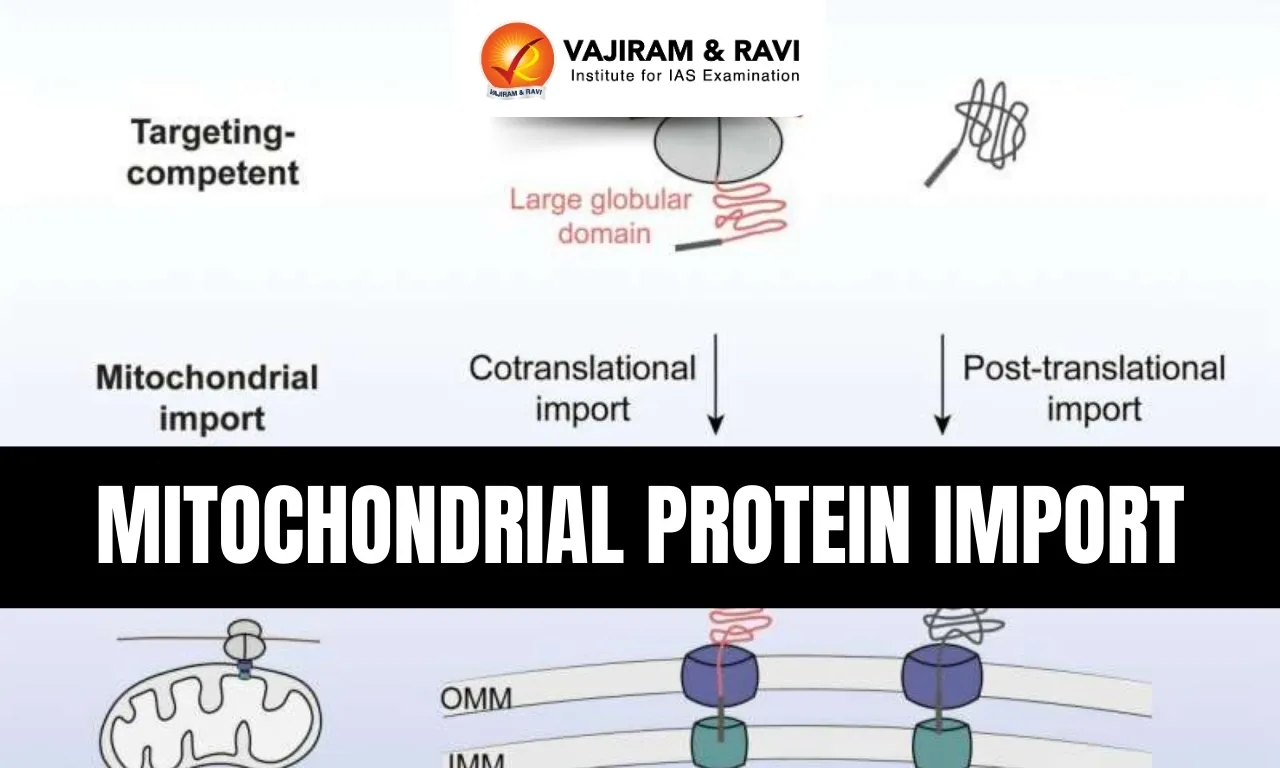
  • Around 20% of mitochondrial proteins are cotranslationally imported, i.e., they are imported while still being synthesized by ribosomes.
  • This mechanism mainly applies to large and structurally complex proteins that require assistance during folding.
  • If these proteins fully fold in the cytosol, they risk forming irreversible structures that block import channels.

Mechanism of Cotranslational Import

  • Such proteins contain a mitochondrial targeting sequence, but this alone is insufficient for cotranslational delivery.
  • A second signal is required – the first large protein domain that emerges during translation.
  • This domain acts like a “code to unlock the boarding pass”, ensuring the protein is guided into mitochondria early.
  • Experiments confirmed that transplanting these domains onto other proteins rerouted them for cotranslational import.

Source: PHY

Mitochondrial Protein Import FAQs

Q1: Why are mitochondria dependent on the host cell for proteins?

Ans: Most mitochondrial genes were transferred to the nucleus during evolution, so proteins are now synthesised in the cytosol and then imported.

Q2: What is cotranslational import?

Ans: It is the process where mitochondrial proteins are imported during their synthesis, not after the ribosome finishes translation.

Q3: What signals guide proteins into mitochondria?

Ans: Two signals are essential: the mitochondrial targeting sequence (MTS) and the emergence of a large foldable domain during translation.

Cordualadensa acorni

Cordualadensa acorni

Cordualadensa acorni Latest News

Recently, researchers from McGill University identified a new dinosaur-era dragonfly fossil named Cordualadensa acorni from Alberta’s Dinosaur Provincial Park.

About Cordualadensa acorni

  • It represents the first Mesozoic dragonfly fossil in Canada and fills a 30-million-year evolutionary gap in dragonfly history.
  • The fossil is a partial wing impression fossil preserved in the 75-million-year-old Dinosaur Park Formation (UNESCO World Heritage Site, Alberta, Canada).
  • The fossil led to the creation of a new family, Cordualadensidae, highlighting its unique anatomical features.

Features of Cordualadensa acorni

  • Wingspan: Roughly the width of a human hand.
  • Anatomy: The wing structure indicates adaptation for gliding flight, a feature common in migratory dragonflies today.
  • Ecological Role: Though small, it would have been an important part of the Cretaceous ecosystem, possibly serving as prey for raptors.

Distribution & Significance

  • First dinosaur-aged dragonfly fossil discovered in Canada.
  • It is the first North American member of the dragonfly group Cavilabiata.
  • Before this, only one insect fossil (a microscopic aphid in amber) had been reported from the region.

Source: PHY

Cordualadensa acorni FAQs

Q1: Why is the discovery of Cordualadensa acorni significant?

Ans: It is significant because it is the first dinosaur-era dragonfly fossil in Canada, fills a 30-million-year evolutionary gap, and provides insight into the Cretaceous ecosystem.

Q2: Where was this fossil found?

Ans: The fossilised wing was discovered in 2023 at Dinosaur Provincial Park in Alberta, a UNESCO World Heritage Site known for its rich dinosaur fossils.

Q3: What makes Cordualadensa acorni unique?

Ans: Its wing anatomy suggests gliding adaptation, and its distinct morphology led scientists to create a new family, Cordualadensidae.

National Disaster Management Authority (NDMA)

National Disaster Management Authority

National Disaster Management Authority (NDMA) Latest News

Prime Minister Narendra Modi on August 29, 2025, nominated two people as new members of the National Disaster Management Authority (NDMA) and re-nominated three existing members for three years.

About National Disaster Management Authority (NDMA)

  • Establishment: The NDMA, established under the Disaster Management Act, 2005, is the country's apex body for disaster management and is chaired ex officio by the Prime Minister of India.
  • Objectives: NDMA is responsible for laying down the national policies, plans, and guidelines for disaster management, coordinating and enforcing implementation of these policies, and approving plans developed by ministries, states, and other agencies to ensure integrated responses to disasters.
  • Vision: NDMA's vision is to build a safer and disaster-resilient India through proactive, technology-driven, and sustainable strategies involving all stakeholders.

NDMA Organisation Structure

  • Composition: The NDMA is chaired by the Prime Minister of India, assisted by a Vice-Chairperson (Cabinet Minister rank) and up to eight Members (Minister of State rank).
  • Divisions: It operates through specialized divisions, including Policy & Plans, Mitigation, Operations, Communications & IT, Administration, and Finance.
  • Institutional Mechanism: At the state and district levels, State Disaster Management Authorities (SDMAs) and District Disaster Management Authorities (DDMAs) function under NDMA’s overall framework and guidelines.

NDMA Functions and Responsibilities

NDMA, as the apex body, is mandated to lay down the policies, plans and guidelines for Disaster Management to ensure timely and effective response to disasters. Towards this, it has the following responsibilities:-

  • Laying down policies, approving the National Disaster Management Plan.
  • Framing guidelines for central and state authorities, integrating mitigation measures into development plans.
  • Coordinating the enforcement and implementation of disaster management policies and plans.
  • Recommending provision of funds for mitigation efforts and capacity building.
  • Supporting international disaster relief as directed by the central government.
  • Overseeing the functioning of the National Institute of Disaster Management (NIDM).
  • Training officials, conducting preparedness drills, and developing community resilience strategies.

Source: TH

National Disaster Management Authority (NDMA) FAQs

Q1: Who heads the National Disaster Management Authority in India?

Ans: The National Disaster Management Authority of India is headed by the Prime Minister.

Q2: Under which Ministry is NDMA?

Ans: NDMA operates under the Ministry of Home Affairs.

Q3: What are the 12 natural disasters under NDMA?

Ans: NDMA covers disasters like floods, earthquakes, cyclones, droughts, landslides, avalanches, tsunamis, forest fires, pest attacks, nuclear, chemical, and biological emergencies.

Q4: Where is the headquarter of NDMA?

Ans: NDMA headquarters is located in New Delhi, India.

India’s First EMI-Based Credit Card

India's First EMI-Based Credit Card

India's First EMI-Based Credit Card Latest News

BharatPe and Unity Small Finance Bank (Unity Bank) recently launched the Unity Bank BharatPe Credit Card—India's first EMI-driven credit card on the RuPay network.

About India's First EMI-Based Credit Card

  • Launch: Unity Small Finance Bank (Unity Bank) and BharatPe have jointly launched a credit card that allows customers to either pay in full or convert their spends into equated monthly instalments (EMIs). This is being introduced as India’s first EMI-driven credit card on the RuPay network.
  • Partnership: The Unity Bank BharatPe Credit Card has been developed in association with the National Payments Corporation of India (NPCI).
  • UPI Linkages: The card can be linked to Unified Payments Interface (UPI), enabling payments at a wide range of merchants nationwide.
  • Eligibility: The card will be available to both salaried and self-employed individuals. Applications can be made through the BharatPe app, where users can complete onboarding, KYC, and credit eligibility checks digitally before card activation.

Key Features of First EMI-Based Credit Card

  • Auto-EMI Conversion: Purchases can be instantly split into EMIs up to 12 months, with flexible repayment options.
  • Zero Fees: No joining, annual, or foreclosure charges—lifetime free card.
  • UPI Integration: Linked to UPI for widespread merchant acceptance and instant payments.
  • Reward Program: Earn flat 2% rewards on EMI transactions, redeemable through the BharatPe app.
  • Premium Benefits: Complimentary domestic and international lounge access, and preventive health checkups.
  • Digital Onboarding: Seamless application, KYC, and activation via the BharatPe app.

Source: MINT

India's First EMI-Based Credit Card FAQs

Q1: What is India’s first EMI-based credit card?

Ans: India’s first EMI-based credit card allows users to instantly convert everyday purchases into EMIs (up to 12 months) as a core feature.

Q2: Are there any hidden charges or fees associated with the card?

Ans: No. It has a zero-fee structure: no joining fee, no annual fee, no processing fee, and no foreclosure penalty.

Q3: What network and payment options are available?

Ans: The card is powered by RuPay and can be linked to UPI, enabling usage across millions of merchants online and offline in India.

Parliamentary Committees in India – Silent Pillars of Democracy

Parliament Committees in India

Parliament Committees in India Latest News

  • Lok Sabha Speaker Om Birla, recently addressed the National Conference of Chairpersons of Parliamentary and Legislature Committees on Welfare of SCs and STs.
  • He highlighted the increasing importance of parliamentary committees in India in ensuring accountability.
  • He also highlighted the declining quality of dialogue, decorum, and discussion in legislatures.

Historical Evolution and Structure of Parliament Committees in India

  • Historical evolution: Even though a structured committee system was only established in 1993, individual committees were being formed for various reasons as far back as independence. For instance, the Ad Hoc Committee on the Citizenship Clause.
  • Structure:
    • Standing committees: Permanent, subject-specific (finance, defence, etc.).
    • Ad Hoc committees: Temporary, for specific purposes.
    • Joint committees: Drawn from both Houses for common issues. For example, the JPC to evaluate the feasibility of implementing the ‘One Nation, One Election’ initiative.
    • Specialised committees: e.g., Business Advisory Committee, Committee on Papers Laid on the Table.

Need for Parliament Committees

  • Volume of work: The Parliament cannot deliberate on all issues on the floor due to time and procedural constraints.
  • Beyond legislation: Committees handle sector-specific concerns, welfare oversight, financial scrutiny, and executive accountability.
  • Behind-the-scenes contribution: Every Bill, debate, and parliamentary procedure is supported by committee work, often invisible to the public eye.

Role of Parliament and Legislature Committees 

  • Accountability and transparency: Committees scrutinize government functioning, schemes, and expenditure.
  • Bipartisan nature and consensus building: Panels function above party lines, making them crucial for effective governance.
  • Oversight on spending: Demand for Grants reports highlight expenditure gaps (e.g., Panchayati Raj Ministry’s under-utilisation of funds in 2022-23).
  • Impactful interventions: Empowered to recommend improvements in implementation of schemes for SCs and STs, ensure budget allocations reach intended beneficiaries.

Significant Contributions of Parliament Committees in India

  • Digital Data Protection Bill: From Justice Srikrishna Committee (2017) → Joint Parliamentary Committee (2021) → Draft Digital Personal Data Protection Bill (2022).
  • Major legislations referred:
    • Prohibition of Child Marriage (Amendment) Bill.
    • Anti-Maritime Piracy Bill.
    • Jan Vishwas Bill.
    • Wildlife Protection (Amendment) Bill.
    • Competition (Amendment) Bill, Electricity Bill, Criminal Procedure (Identification) Bill.
  • Public Accounts Committee (2015): Flagged inefficiencies in defence shipyards — cost overruns, delays, inadequate practices.

Concerns Raised About Parliament and Legislature Committees

  • Decline in deliberation: Reduced debates and disruptions in both Lok Sabha and state assemblies.
    • For example, only 60% bills referred to these committees in the 14th Lok Sabha, 15th Lok Sabha (71%), 16th Lok Sabha (25%), and 17th Lok Sabha (16%), highlighting their declining role in legislative/ expert scrutiny.
  • Language and conduct: Falling standards of parliamentary behaviour. Example: recent Monsoon Session of Parliament marred by daily disruptions over electoral roll revision in Bihar.
  • Political polarisation: Committees could lose their influence.
  • Lack of binding power: Recommendations often ignored.

The Road Ahead

  • Compulsory referral of Bills: As in the U.S., every Bill should be scrutinised by relevant committees before passing.
  • Strengthening powers: To avoid becoming “toothless tigers,” committees need more authority to enforce accountability.
  • Institutionalisation: Formalise processes to prevent political expediency from bypassing scrutiny.
  • Preserve consensus mechanism: Committees must remain bipartisan spaces of constructive deliberation.

Conclusion

  • Strengthening the committee system is essential to revive deliberative democracy in India, as it provides a bipartisan space for scrutiny, accountability, and consensus-building. 
  • Empowering parliamentary committees in India with greater authority can ensure more informed, inclusive, and transparent law-making in the years ahead.

Source: IE | TH

Parliamentary Committees in India FAQs

Q1: Why are parliamentary committees considered the "real working space" of the Indian Parliament?

Ans: They enable detailed scrutiny of legislation, expenditure, and policies away from partisan disruptions, ensuring accountability and consensus.

Q2: What does the declining referral of Bills to parliamentary committees indicate about legislative scrutiny in India?

Ans: It reflects weakening deliberative democracy and reduced expert examination of crucial legislation.

Q3: How did Constituent Assembly committees shape India’s governance framework?

Ans: They laid foundations on citizenship, tribal autonomy, financial provisions, and minority safeguards, influencing constitutional design.

Q4: In what way do committee reports strengthen executive accountability despite being non-binding?

Ans: By highlighting gaps, they compel the government to present Action Taken Reports before Parliament.

Q5: Why is compulsory referral of Bills to committees seen as a reform imperative for Indian Parliament?

Ans: It would institutionalise expert scrutiny, improve law-making quality, and reduce politically motivated hurried legislation.

LUPEX Mission

LUPEX Mission

LUPEX Mission Latest News

Recently, the Prime Minister of India welcomed the agreement between the Indian Space Research Organisation and the Japan Aerospace Exploration Agency for the Chandrayaan-5 mission under the Lunar Polar Exploration (LUPEX) programme. 

About LUPEX Mission

  • It is jointly developed by ISRO and Japan Aerospace Exploration Agency (JAXA).
  • Objective: To explore the moon’s southern polar region, investigating the presence of water and other elements, potentially in the form of surface ice.
  • It aims to showcase innovative surface exploration technologies. The special focus is on vehicular transport and lunar night survival.
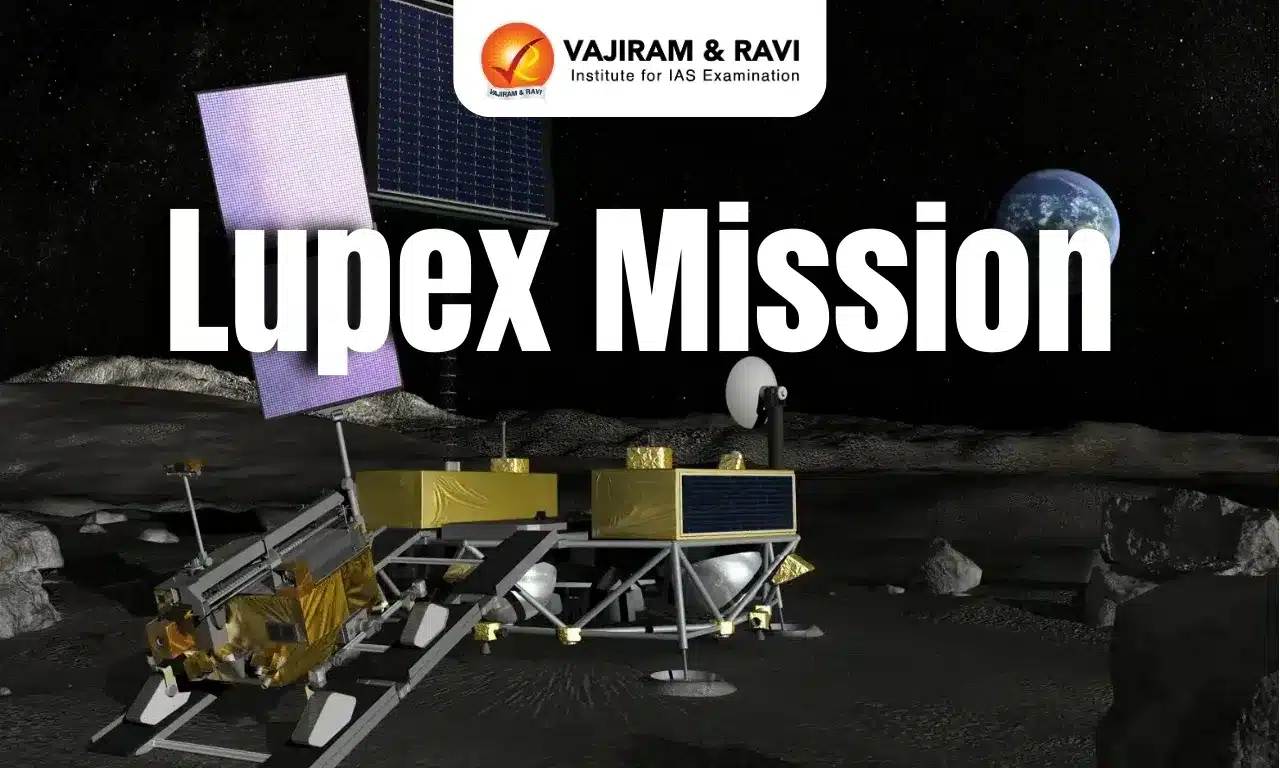
  • It features both a lander and a rover.
  • JAXA is responsible for developing and operating the rover, and ISRO for developing and operating the lander that will carry the rover.
  • The rover will drive on its own to search for areas where water is likely to be present and sample the soil by digging into the ground with a drill.
  • The plan is to acquire data by analyzing the collected samples in detail with observation equipment mounted on the rover.
  • The rover will be equipped with instruments for measuring the water content of regolith (lunar sand), drilling, and sampling, as well as with other world-first and world-leading technologies for the driving system and batteries.
  • The rover will carry not only the instruments of ISRO and JAXA but also those of the US space agency NASA and the European Space Agency (ESA).

Source: DD News

LUPEX Mission FAQs

Q1: What is the purpose of the LUPEX mission?

Ans: The LUPEX project is an initiative aimed at exploring the Moon for water and other resources and gaining expertise in exploring the surface of the Moon.

Q2: Who developed the Mission Lupex?

Ans: The LUPEX project is a collaborative lunar exploration mission by JAXA (Japan) and ISRO (India),

State Energy Efficiency Index

State Energy Efficiency Index

State Energy Efficiency Index Latest News

Recently, the Bureau of Energy Efficiency (BEE), released the State Energy Efficiency Index (SEEI) 2024.

About State Energy Efficiency Index

  • It is developed by the Bureau of Energy Efficiency (BEE) in association with the Alliance for an Energy Efficient Economy (AEEE).
  • The index assesses the energy efficiency performance of 36 States and Union Territories (UTs) for FY 2023-24, supporting data-driven monitoring, best practice sharing, and healthy competition among states.
  • This year it is the sixth edition features a new implementation-focused framework with 66 indicators covering Buildings, Industry, Municipal Services, Transport, Agriculture, DISCOMs, and Cross-Sector initiatives, reflecting evolving priorities like EV policies, star-rated buildings, and DSM strategies.
  • SEEI 2024 serves as a key policy tool for guiding state-level actions and accelerating India’s energy efficiency and climate goals.
  • States are classified into four performance categories: Front Runners (>60%), Achievers (50-60%), Contenders (30-50%), and Aspirants (<30%).

Key Highlights of the State Energy Efficiency Index Index

  • The top performers include:Maharashtra (Group 1: >15 MToE), Andhra Pradesh (Group 2: 5–15 MToE) Assam (Group 3: 1–5 MToE) Tripura (Group 4: <1 MToE)
  • The report highlights sectoral progress: 24 states have notified ECBC 2017; 10 states have MSME energy efficiency policies; 31 states have adopted electric mobility policies; and 13 states are promoting solar-powered agricultural pumps, with Kerala achieving 74% adoption
  • Additionally, all 36 States/UTs have developed State Energy Efficiency Action Plans (SEEAPs), and 31 have formed State-Level Steering Committees on Energy Transition.

Source: PIB

State Energy Efficiency Index FAQs

Q1: Who releases the state energy efficiency index?

Ans: Bureau of Energy Efficiency (BEE)

Q2: What is Bureau of Energy Efficiency?

Ans: It is a statutory body established in 2002 under the Energy Conservation Act, 2001, to promote energy efficiency and conservation across various sectors in India.

Crocothemis erythraea

Crocothemis erythraea

Crocothemis erythraea Latest News

Recently, odonatologists have reconfirmed the presence of the elusive dragonfly species, Crocothemis erythraea, in the high-elevation regions of the southern Western Ghats.

About Crocothemis erythraea

  • It is a species of dragonfly in the family Libellulidae.
  • Its common names include broad scarlet, common scarlet-darter, and scarlet darter.
  • The genus Crocothemis in India includes two known species—C. servilia and C. erythraea. While C. servilia is common across lowland areas, C. erythraea is known from high-elevation habitats in parts of Europe and Asia, including the Himalayas.
  • The molecular analysis showed that the high-elevation specimens from the Western Ghats match C. erythraea found in the Himalayas.
  • Habitat: The study confirmed that the Western Ghats hosts both the species, C. erythraea, which is restricted to cool, high-elevation habitats (>550 m), while C. servilia is common in lowland habitats (<600 m).
  • The researchers explain that C. erythraea colonised southern India during the Pleistocene Ice Age, when cooler climatic conditions allowed temperate fauna to extend their range southward.
  • As the climate warmed, these populations became stranded in montane locations like the Sholas and grasslands of Munnar and Parambikulam, where they survived in isolation.

Source: TH

Crocothemis erythraea FAQs

Q1: What is Crocothemis erythraea?

Ans: The scarlet dragonfly (Crocothemis erythraea) is a species of dragonfly in the family Libellulidae.

Q2: What do scarlet dragonflies eat?

Ans: Dragonflies eat other insects, such as flies, midges and mosquitoes.

Daily Editorial Analysis 30 August 2025

Daily Editorial Analysis

In An Unstable World, Energy Sovereignty is the New Oil

Context

  • India’s dependence on imported hydrocarbons represents not merely an economic challenge but a national security vulnerability.
  • With over 85% of crude oil and more than 50% of natural gas imported, the country’s energy lifelines are at the mercy of geopolitical volatility, fragile supply chains, and sudden market shocks.
  • The reliance on discounted Russian barrels since 2022 has provided temporary fiscal relief, yet it underscores the perils of overdependence on a single source.
  • The pursuit of energy sovereignty, therefore, is not a policy preference but a survival strategy for India in a turbulent global order.

Lessons from Global Energy Flashpoints

  • The fragility of global energy security is not hypothetical; it is a historical fact.
  • Five pivotal events highlight how crises have repeatedly forced nations to rethink energy strategy:
  • The 1973 Oil Embargo exposed Western vulnerability to OPEC’s leverage but also triggered innovations in strategic reserves and diversification.
  • The Fukushima Disaster (2011) undermined nuclear confidence, forcing Japan and others toward coal and gas, only to rediscover the necessity of zero-carbon baseloads.
  • The Texas Freeze (2021) demonstrated the inadequacy of infrastructure built for cost efficiency rather than resilience.
  • The Russia-Ukraine War (2022) showed the dangers of single-sourced energy, as Europe scrambled to replace Russian gas at exorbitant costs.
  • The Iberian Peninsula Blackout (2025) revealed the risks of excessive reliance on intermittent renewables without sufficient dispatchable backup.
  • Each shock has redefined global energy thinking, proving that resilience must precede ambition.
  • Energy transitions are not instant switches but pathways requiring foresight, balance, and redundancy.

India’s Current Vulnerability

  • In 2023-24, crude oil and natural gas imports accounted for $170 billion, or more than a quarter of India’s merchandise import bill.
  • Such outflows depress the rupee, inflate the trade deficit, and constrain macroeconomic stability.
  • The June 2025 Israel-Iran confrontation, narrowly avoiding disruption of 20 million barrels per day of global oil flows, served as a stark reminder of how external crises can instantly destabilise energy-dependent economies like India.

Towards an Energy Sovereignty Doctrine

  • Coal Gasification and Indigenous Energy

    • With 150 billion tonnes of coal reserves, India can no longer dismiss domestic coal due to high ash content.
    • Modern gasification and carbon capture can unlock syngas, hydrogen, methanol, and fertilizers, converting a liability into an asset.
  • Biofuels and Rural Empowerment

    • Ethanol blending has already reduced crude dependence and transferred over ₹92,000 crore to farmers.
    • Scaling bio-CNG through the SATAT scheme not only diversifies energy sources but restores soil health in North India, integrating sustainability with rural economic revival.
  • Nuclear Power as a Dispatchable Backbone

    • India’s stagnant 8.8 GW nuclear capacity must be expanded through thorium research, uranium partnerships, and Small Modular Reactors.
    • Nuclear power provides the reliable baseload necessary in a renewable-dominated grid.
  • Green Hydrogen and Technology Sovereignty

    • The ambition of producing 5 million metric tonnes by 2030 requires indigenous electrolyser and catalyst industries.
    • True sovereignty will come not from imports of green hydrogen but from mastering the technology chain itself.
  • Pumped Hydro for Grid Inertia

    • As renewable penetration deepens, pumped hydro offers proven large-scale storage and grid stability.
    • India’s diverse topography can be harnessed to ensure resilience against intermittency.

The Age of Sovereignty

  • India has already reduced its dependence on West Asian oil from 60% to below 45%, a deliberate strategy of diversification.
  • Yet the future cannot rest solely on shifting suppliers. The defining competition of the 21st century will not be over oil reserves but over which nations can secure uninterrupted, affordable, and indigenous energy.
  • The Israel-Iran ceasefire represents a narrow escape, a chance to act before the next shock.
  • India must seize this window not with short-term fixes but with structural reforms that blend ambition with realism.
  • Sovereignty lies not in slogans but in the patient construction of capacity across coal, biofuels, nuclear, hydrogen, and pumped hydro.

Conclusion

  • India stands at an inflection point; Every past global energy pivot has been forged in crisis. Today, India has the rare opportunity to pivot by foresight rather than force.
  • The five foundational pillars of energy sovereignty are not peripheral to the global energy transition; they are its sovereign spine.
  • In an uncertain century, the most precious resource will not be crude oil but uninterrupted, indigenous, and resilient energy.
  • Building that future is no longer optional. It is the essence of sovereignty itself.

In An Unstable World, Energy Sovereignty is the New Oil FAQs

Q1. Why is India’s dependence on imported crude oil considered a national security risk?
Ans. India’s dependence on imported crude oil is a national security risk because disruptions in global supply chains or conflicts can immediately threaten its economy and energy security.

Q2. What lesson did the 1973 oil embargo teach the world?
Ans. The 1973 oil embargo taught the world the dangers of overdependence on OPEC and led to the creation of strategic reserves and diversified energy sourcing.

Q3. How does nuclear energy support India’s energy sovereignty?
Ans. Nuclear energy supports India’s energy sovereignty by providing a reliable zero-carbon baseload that ensures stability in a renewable-heavy grid.

Q4. What role do biofuels play in India’s energy strategy?
Ans. Biofuels reduce crude oil imports, strengthen rural incomes, and improve soil health, linking national energy security with agricultural empowerment.

Q5. Why is “energy realism” important for India’s transition?
Ans. Energy realism is important because it recognises that transitions are gradual pathways, not instant shifts, and ensures that India balances sustainability with resilience.

Source: The Hindu


Detoxifying India’s Entrance Examination System

Context

  • Every year, nearly 70 lakh students in India vie for a limited number of undergraduate seats through highly competitive entrance examinations such as JEE, NEET, CUET, and CLAT.
  • The scarcity of seats in premier institutions has not only fuelled a multibillion-rupee coaching industry but also entrenched a culture of relentless pressure.
  • Recent controversies, from financial misconduct at coaching centres to tragic student suicides, highlight the cracks in this system.
  • It is time to reimagine undergraduate admissions in India, shifting from a model of hyper-competition to one that prioritises fairness, equity, and student well-being.

The Coaching Crisis and Its Toll

  • The rise of the coaching industry is perhaps the most visible symptom of the problem.
  • With 15 lakh aspirants for the JEE alone, centres charge exorbitant fees, often ₹6–7 lakh for two years, pushing families into financial strain.
  • Students as young as 14 are enrolled in rigorous programmes where they spend their adolescence solving advanced problems from Irodov and Krotov, far beyond the needs of an undergraduate curriculum.
  • This comes at a steep cost: stress, depression, social isolation, and in tragic cases, loss of life.
  • Governments have attempted to regulate coaching centres, but regulation misses the root issue: the entrance examination system itself.
  • By treating minuscule percentile differences as decisive, the system sidelines capable students while favouring those with financial means.
  • What should matter a solid grasp of school-level physics, chemistry, and mathematics, is overshadowed by the artificial hierarchy created by rankings.

The Illusion of Meritocracy

  • At its core, the system perpetuates an illusion of meritocracy.
  • Harvard philosopher Michael Sandel has argued that societies become toxic when success is seen purely as a reflection of individual superiority, ignoring the roles of privilege and chance.
  • In India, this illusion is intensified: a student from an affluent urban family with access to elite coaching is far more likely to secure a top rank than a rural student with equal potential but fewer resources.
  • What results is not true merit, but stratified access disguised as fairness.

Learning from Global Models

  • India need not reinvent the wheel. International experiences provide valuable lessons.
  • The Netherlands, for instance, has implemented a weighted lottery for medical school admissions, ensuring that all students above a minimum threshold have a fair chance, while higher grades only marginally improve odds.
  • This system reduces bias, promotes diversity, and eases pressure, recognising that fine-grained distinctions in scores are both irrelevant and unjust.
  • Similarly, China’s 2021 “double reduction” policy radically curtailed for-profit tutoring, nationalising education support to reduce financial burdens and protect student well-being.
  • Both cases demonstrate that systemic reform is not only possible but also effective in balancing excellence with equity.

The Path Forward: A Vision for India

  • For India, the way forward lies in simplifying admissions and trusting the school system.
  • Class 12 board examinations already provide a rigorous curriculum sufficient to gauge readiness for higher education.
  • A threshold, say, 80% in physics, chemistry, and mathematics, could serve as the eligibility bar. Within this pool, seats could be allotted through a weighted lottery, with higher scores modestly improving chances but not monopolising opportunity.
  • Reservation policies could be integrated, with special emphasis on rural and government school students to ensure mobility and social justice.
  • If entrance examinations are retained, they should be delinked from private profit. Coaching could be banned or nationalised, with free online materials made universally available.
  • To further dismantle the hierarchy among IITs, an annual student exchange programme and inter-campus faculty transfers could create diversity, integration, and uniform academic standards.

Conclusion

  • Ultimately, the question is whether India will continue a toxic rat race that scars its youth or embrace a system rooted in fairness, sanity, and egalitarianism.
  • Moving to a lottery-based admissions process would free students from the treadmill of coaching, restore adolescence as a time for learning and growth, and make elite education accessible to all qualified students, not just the privileged few.
  • India’s education system stands at a crossroads and the choice is between perpetuating a narrow definition of merit that privileges wealth and burns out its brightest, or adopting a model that balances excellence with compassion and equality.
  • The path forward is clear, one that allows young people to thrive as learners, citizens, and human beings, not mere machines chasing percentiles.

Detoxifying India’s Entrance Examination System FAQs 

Q1. Why has the coaching industry grown so large in India?
Ans. The coaching industry has grown because of the limited number of seats in top institutions and the intense competition created by entrance examinations.

Q2. What psychological toll does the current admission system take on students?
Ans. The system causes immense stress, depression, and social isolation, and in some cases has even led to student suicides.

Q3. How does the current entrance exam system create inequality?
Ans. It favours wealthier families who can afford expensive coaching, while sidelining equally capable students from rural or less privileged backgrounds.

Q4. What global models are suggested as alternatives?
Ans. The Netherlands uses a weighted lottery system for admissions, and China implemented the “double reduction” policy to curb for-profit tutoring.

Q5. What is the main solution proposed for India’s admissions system?
Ans. Replacing entrance examinations with a threshold based on Class 12 marks and a weighted lottery, while reserving seats to promote equity.

Source: The Hindu

Daily Editorial Analysis 30 August 2025 FAQs

Q1: What is editorial analysis?

Ans: Editorial analysis is the critical examination and interpretation of newspaper editorials to extract key insights, arguments, and perspectives relevant to UPSC preparation.

Q2: What is an editorial analyst?

Ans: An editorial analyst is someone who studies and breaks down editorials to highlight their relevance, structure, and usefulness for competitive exams like the UPSC.

Q3: What is an editorial for UPSC?

Ans: For UPSC, an editorial refers to opinion-based articles in reputed newspapers that provide analysis on current affairs, governance, policy, and socio-economic issues.

Q4: What are the sources of UPSC Editorial Analysis?

Ans: Key sources include editorials from The Hindu and Indian Express.

Q5: Can Editorial Analysis help in Mains Answer Writing?

Ans: Yes, editorial analysis enhances content quality, analytical depth, and structure in Mains answer writing.


India’s Trade Dilemma: China vs US – Risks, Challenges, and Opportunities

India-China Trade Challenges

India-China Trade Challenges Latest News

  • With the end of the Modi-Trump camaraderie and the US imposing steep tariffs on Indian goods, New Delhi is redirecting diplomatic focus. 
  • Prime Minister Modi will visit Tianjin for the 2025 SCO Summit and meet Chinese President Xi Jinping to strengthen bilateral ties.

India-China Relations: From Conflict to Cautious Recalibration

  • India–China relations deteriorated sharply after the June 2020 Galwan Valley clashes, which fueled strong public sentiment in India to cut trade ties with China. 
  • In response, the Indian government banned several Chinese apps and imposed restrictions on Chinese FDI.

Trade and Economic Concerns

  • India has resisted deeper economic integration with China, most notably by pulling out of the Regional Comprehensive Economic Partnership (RCEP) in late 2019. 
  • Policymakers feared Chinese imports would flood Indian markets, undermining domestic industries.

India as a “China +1” Alternative

  • Post-Covid, India has sought to position itself as a viable “China +1” investment destination for Western businesses. 
  • However, competition from countries like Vietnam, Mexico, and Poland has limited India’s success.

Security and Strategic Tensions

  • Beyond trade, Indians increasingly view China as their primary strategic adversary. 
  • Even during conflicts with Pakistan, such as after the April 2025 Pahalgam terror attack, India perceived Chinese weaponry in Pakistani hands, deepening security concerns.

Trump’s Tariffs Push India and China Closer

  • The sharp rise in US tariffs has forced both India and China to explore closer cooperation. 
  • India now faces 50% tariffs — the second-highest after Brazil — while China, which earlier endured 145% tariffs before seeing them reduced to 30%, has already begun outreach to multiple nations. 
    • The US’s “reciprocal tariff” approach, aimed at balancing trade deficits, made such measures predictable. 
    • Reports reveal that China approached India in March 2025, but New Delhi responded only in June. 
  • Recently, China criticised US tariff hikes on India, echoing PM Modi’s own past remarks by calling India and China “double engines” of Asia’s economic growth.

Challenges of Deepening India-China Trade Ties

  • Amid rising US tariffs on Indian goods, China’s offers of closer trade ties may appear attractive. However, experts warn that relying more on China could pose long-term risks for India.
  • Trade Deficit Concerns - India enjoys a $40+ billion trade surplus with the US, but faces a $100 billion trade deficit with China, highlighting structural imbalances in bilateral trade.
  • China’s Manufacturing Dominance - China has emerged as the world’s sole manufacturing superpower, capturing a massive share of global exports, making it difficult for India to compete directly.
  • India’s Manufacturing Weakness - Since 2019-20, manufacturing GVA has grown only 4% CAGR, slower than agriculture (4.7%), underscoring India’s struggle to build competitive manufacturing strength.
  • Impact on India’s “China +1” Position - If India aligns too closely with China, it may lose credibility as a viable alternative to China for Western businesses seeking to diversify supply chains.
  • China’s Overcapacity Challenge - China’s deflation and industrial overcapacity may push it to dump cheap goods in other markets, including India, intensifying pressure on Indian producers.
  • Geopolitical Mismatch - While both nations are economic powerhouses, India’s democratic, transparent, private sector-led model contrasts with China’s state-driven system. Moreover, China’s support for Pakistan complicates trust-building.

India’s Trade Dilemma Between the US and China

  • India’s reluctance to embrace free global trade stems from its deep-rooted structural weaknesses
  • For years, coalition politics was seen as a hurdle to reforms, but even a decade of single-party majority governments since 2014 has not delivered significant structural reforms. 
  • Instead, India has drifted towards greater protectionism, while its growth momentum has slowed.

China’s Rise and Risks

  • During this time, China has expanded its manufacturing dominance, becoming so large that it poses a challenge to the United States. 
  • However, China now faces industrial overcapacity and deflation, pushing it to dump cheap goods in foreign markets — a risk that could further hurt Indian industries if India opens up excessively to Chinese imports.

US Challenges

  • Meanwhile, the United States appears as a superpower seeking to reassert its global dominance, using tariffs and “reciprocal” trade measures under President Trump. 
  • However, such policies are often viewed as arbitrary and counterproductive, creating friction even with traditional allies.

India’s Strategic Dilemma

  • India’s growing tensions with both Washington and Beijing place it in a diplomatic and economic dilemma. 
  • While China offers market opportunities, its export strength and strategic rivalry with India pose dangers. 
  • Conversely, the US remains India’s largest export market, despite current tariff disputes.

Source: IE

India-China Trade Challenges FAQs

Q1: Why is India reconsidering trade ties with China amid US tariffs?

Ans: Because steep US tariffs push India to diversify, but China’s dominance in manufacturing and strategic rivalry make closer trade ties risky.

Q2: What is India’s trade balance with the US vs China?

Ans: India has a $40+ billion trade surplus with the US, but suffers a $100 billion trade deficit with China, exposing structural imbalances.

Q3: Why does China’s manufacturing strength pose a risk for India?

Ans: China’s unmatched global manufacturing dominance makes it difficult for India’s weaker manufacturing sector to compete, risking a flood of cheap imports.

Q4: How does the “China +1” strategy impact India’s trade choices?

Ans: If India aligns too closely with China, it loses credibility as an alternative destination for global businesses seeking to diversify supply chains.

Q5: Why is China not a natural trade partner for India?

Ans: Because of geopolitical differences, China’s support for Pakistan, and contrasting economic systems, making long-term trust and balanced trade difficult.

Rising Disposable Income in India 2025: Inflation, Tax Cuts, and Growth

Rising Disposable Income in India 2025

Rising Disposable Income in India 2025 Latest News

  • Chief Economic Advisor V. Anantha Nageswaran said that Indian households’ disposable income will be significantly higher this year compared to last year. 
  • This increase is mainly driven by easing inflation and the tax cuts already announced, along with potential further reductions expected soon. 
  • The rise in disposable income is seen as a positive factor for household spending and economic growth.

Understanding Disposable Income

  • Disposable income is the money that households have left after paying taxes. It is the net income available for spending and saving. 
  • In simple words, it’s the money in one’s hand after the payment of one’s taxes. 
  • People can use it for daily expenses like food, rent, healthcare, education, or save and invest it for the future.
  • Formula: Disposable Income = Total Income – Taxes

Role of Inflation in Disposable Income

  • Even if disposable income (after-tax income) remains the same in numbers, high inflation reduces its real value.
  • E.g., If disposable income is ₹50,000, and inflation rises, the same ₹50,000 buys fewer goods and services.
  • High Inflation → Lower real disposable income → People cut down on non-essential spending, which slows down demand and growth.
  • Also, when inflation is high, households may struggle to save because a larger share of disposable income goes toward basic expenses (food, fuel, rent). This reduces long-term investments and weakens financial security.

Importance of Higher Disposable Income

  • Boosts Consumption: When people have more money left after taxes and inflation, they can spend more on goods and services, which drives economic growth.
  • Improves Standard of Living: Higher disposable income allows households to afford better food, healthcare, education, and housing, improving overall quality of life.
  • Supports Savings & Investments: Families with more money left after expenses can save and invest, which builds financial security and contributes to capital formation.
  • Encourages Business Growth: Increased consumer spending raises demand, helping businesses grow, expand production, and create more jobs.
  • Enhances Economic Resilience: Higher disposable income cushions families against inflation or economic shocks, reducing poverty and vulnerability.
  • Economic Growth: Higher disposable income boosts consumer spending on goods and services, which drives demand, stimulates economic activity, and creates more jobs—making it a key driver of growth.

Higher Disposable Income in 2025

  • Chief Economic Advisor (CEA) V. Anantha Nageswaran announced that Indian households’ disposable income will be significantly higher this year compared to 2024. 
  • This improvement is attributed to lower inflation, the direct tax cuts announced in the 2025 Union Budget, and the expected GST rate rationalisation
  • These measures are expected to boost household spending and support economic growth. 
    • India’s GDP growth for April–June 2025 reached 7.8%, the highest in five quarters, surpassing expectations.

Urban vs Rural Demand Trends

  • Despite concerns raised in the RBI’s August MPC meeting about weak urban demand, CEA argued that urban consumption was underestimated due to reliance on traditional surveys. 
  • He cited UPI merchant payment data, which showed strong growth in digital transactions across categories
  • Rural demand has remained resilient, supported by a good monsoon, while urban consumption displayed mixed trends—robust in services like hospitality and trade but muted in housing and consumer durable loans.

Countering US Tariffs

  • From August 27, 2025, tariffs on Indian goods entering the US market doubled to 50% (25% duty + 25% penalty linked to India’s Russian oil imports). 
  • This raises risks for labour-intensive export sectors such as textiles, potentially impacting jobs, wages, and consumption, and dampening private investment. 
  • Economists caution of a possible negative domino effect on growth.

Government’s Policy Response

  • The government is pursuing a two-pronged strategy:
    • Boosting domestic consumption through income tax cuts (₹1 lakh crore revenue loss estimated) and GST rationalisation to lower inflation.
    • Exploring alternatives to US markets and enhancing domestic resilience to reduce vulnerability to external shocks.

Source: IE | IP

Rising Disposable Income in India 2025 FAQs

Q1: What is disposable income and why is it important?

Ans: Disposable income is post-tax income available for spending or saving. Higher levels improve living standards, drive consumption, and boost economic growth.

Q2: Why is disposable income higher in India in 2025?

Ans: Lower inflation, direct tax cuts, and likely GST rationalisation are driving higher disposable income, boosting household spending and economic resilience.

Q3: How does inflation affect disposable income?

Ans: High inflation reduces the real value of disposable income, limiting households’ ability to spend, save, or invest, and weakening overall economic demand.

Q4: What role does digital spending data play in tracking urban demand?

Ans: UPI merchant payments show strong digital transactions, suggesting urban consumption is healthier than traditional surveys indicate.

Q5: How do US tariffs affect India’s economy in 2025?

Ans: The 50% tariffs on Indian goods threaten exports, jobs, and wages in labour-intensive sectors, risking a slowdown in consumption and private investment.

GDP Growth Rate for Q1 FY26 Hits 7.8% – Fastest in Five Quarters

GDP Growth

GDP Growth Latest News

  • India’s GDP grew 7.8% in Q1 FY26, the fastest in five quarters, driven by strong manufacturing, services, and construction despite US tariff headwinds.

Introduction

  • India’s economy registered an impressive 7.8% GDP growth in the first quarter of FY26 (April-June 2025), its fastest pace in five quarters. 
  • This surge was fuelled by strong performances in manufacturing, services, and construction sectors, consolidating India’s position as the world’s fastest-growing large economy
  • The growth comes at a critical juncture when global trade is under pressure due to the US imposing steep tariffs on Indian goods, testing the resilience of the Indian economy.

Sectoral Performance Driving Growth

  • Manufacturing Momentum
    • The manufacturing sector expanded 7.7%, a significant improvement over the 4.8% recorded in January-March 2025 and slightly above the 7.6% in the same quarter last year. 
    • This indicates robust industrial demand despite external trade uncertainties.
  • Construction and Infrastructure
    • Construction activity maintained a 7.6% growth rate, though slower than the 10.1% posted in Q1 FY25. 
    • Despite moderation, the sector’s resilience reflects steady infrastructure investments and housing demand.
  • Services Sector as the Growth Engine
    • The services sector grew 9.3%, its highest in two years. Within this:
    • Public Administration, Defence & Other Services surged 9.8%, indicating higher government expenditure.
    • Financial, Real Estate & Professional Services grew 9.5%, aided by financial sector expansion.
    • Trade, Hotels, Transport, and Communication posted 8.6% growth, reflecting recovery in travel and consumer demand.
  • Agriculture and Utilities
    • Agriculture grew by 3.7%, more than double last year’s growth of 1.5%, highlighting rural sector strength. 
    • However, the electricity, gas, water supply, and utilities sector slowed sharply to just 0.5%, partly due to heavy rains reducing power demand.

Global and Domestic Headwinds

  • US Tariff Impact
    • On August 27, 2025, the US imposed a 50% tariff on Indian exports, including textiles, gems, and engineering goods. 
    • While the move raised concerns about export-linked jobs and consumption, India’s Chief Economic Advisor emphasised that the impact would be “modest” and demand growth would hold up.
  • GST and Tax Reforms
    • The government has sought to bolster demand by lowering indirect tax rates and pushing for GST rationalisation, expected to further stimulate consumption in the festival season. 
    • Additionally, direct tax cuts announced in the Union Budget 2025-26 continue to support disposable incomes.

Consumption and Investment Trends

  • Private consumption expenditure grew 7%, slower than the 8.3% in the previous year but an improvement over the previous quarter’s 6%. 
  • Investment demand, measured through Gross Fixed Capital Formation, expanded 7.8%, showing continued corporate and infrastructure investments. 
  • Government expenditure also rebounded strongly, rising 7.4%, after contracting in the prior quarter.

Outlook for FY26

  • Despite tariff headwinds, policymakers and economists remain confident of India maintaining its growth trajectory:
  • The government expects FY26 GDP growth in the 6.3-6.8% range, retaining India’s global growth leadership.
  • Nominal GDP growth stood at 8.8%, the lowest in three quarters, but still supportive of corporate earnings growth.
  • Economists caution that low inflation boosted real GDP growth figures; sustained reforms and export diversification will be critical.

Source: TH | IE

GDP Growth FAQs

Q1: What was India’s GDP growth rate in Q1 FY26?

Ans: India’s GDP grew 7.8% in Q1 FY26, the highest in five quarters.

Q2: Which sector contributed the most to India’s Q1 FY26 GDP growth?

Ans: The services sector, growing at 9.3%, was the biggest contributor.

Q3: How did US tariffs affect India’s Q1 FY26 GDP?

Ans: Despite the 50% US tariffs, the impact on GDP was limited, with growth exceeding expectations.

Q4: What was the growth rate of India’s manufacturing sector in Q1 FY26?

Ans: Manufacturing grew 7.7%, up from 4.8% in the previous quarter.

Q5: What is the government’s GDP growth outlook for FY26?

Ans: The government projects India’s GDP growth between 6.3% and 6.8% for FY26.

International Monetary Fund (IMF)

International Monetary Fund (IMF)

International Monetary Fund (IMF) Latest News

Recently, former Reserve Bank of India (RBI) Governor Urjit Patel has been appointed as Executive Director at the International Monetary Fund (IMF) for a three-year tenure, representing India, Bangladesh, Sri Lanka, and Bhutan at IMF headquarters in Washington, D.C.

About International Monetary Fund (IMF)

  • The International Monetary Fund (IMF) is a global financial body aimed at strengthening international monetary cooperation and maintaining financial stability.
  • Members: It currently has 191 member nations, with Liechtenstein joining as the newest member on October 21, 2024.
  • Creation: Created in 1944 at the Bretton Woods Conference, it works through a quota system, with countries contributing funds and receiving voting power proportional to their quotas.
  • Mission: The core mission of the IMF is to foster global monetary cooperation, secure financial stability, facilitate international trade, promote high employment and sustainable economic growth, and reduce poverty worldwide.
  • Role: The IMF acts as a lender of last resort and often requires policy reforms from borrowing countries, called “structural adjustment” programs.

International Monetary Fund Governance Structure

  • Board of Governors: It is the IMF’s highest decision-making authority, comprising one governor and one alternate governor from each member country. It meets annually to decide on quota revisions, Special Drawing Rights (SDR) allocations, new memberships, or expulsion of members.
  • International Monetary and Financial Committee (IMFC): IMFC advises the Board of Governors on matters related to the management of the international monetary and financial system. It has 24 members drawn from the governors.
  • Executive Board: They are responsible for conducting the day-to-day business and work closely with the Managing Director.

Source: IE

International Monetary Fund (IMF) FAQs

Q1: What is the International Monetary Fund?

Ans: A global financial institution that promotes monetary cooperation, financial stability, trade, growth, and poverty reduction among member countries.

Q2: Does the IMF give money to people?

Ans: No, the IMF lends funds to member governments, not directly to individuals.

Q3: What is the main objective of the International Monetary Fund?

Ans: To ensure global monetary stability and provide financial support to countries facing economic crises.

Q4: Is India a member of the IMF?

Ans: Yes, India is a founding member of the IMF since 1945.

Nanjangud Rasabale Banana

Nanjangud Rasabale Banana

Nanjangud Rasabale Banana Latest News

Recently, the union Minister for Agriculture and Farmers’ Welfare has announced that the Indian Council for Agricultural Research (ICAR) will soon take up a study on protecting the Nanjangud Rasabale variety of banana from diseases.     

About Nanjangud Rasabale Banana

  • It is a variety of banana grown in and around the Mysore district and Chamarajanagar district of Karnataka.
  • It was awarded the Geographical Indication (GI) tag in 2006 for its thick pulp and distinct taste and aroma.
  • The taste and pulp of this banana cannot be found in any other variety and anywhere else.
  • Soil required: Black clay alluvial saline soil has given a unique aroma to this banana.
  • This banana possess medicinal properties and are believed to cure neurological ailments.
  • Threats: The Panama Wilt disease, a fungal infection caused by the Fuserium Wilt pathogen has been the bane of rasabale farmers.

Key Facts about Indian Council for Agricultural Research

  • It is an autonomous organisation under the Department of Agricultural Research and Education (DARE), Ministry of Agriculture and Farmers Welfare, Government of India. 
  • It was formerly known as the Imperial Council of Agricultural Research, it was established on 16 July 1929 as a registered society under the Societies Registration Act, 1860, in pursuance of the report of the Royal Commission on Agriculture. 
  • Functions: The Council is the apex body for coordinating, guiding, and managing research and education in agriculture, including horticulture, fisheries, and animal sciences, throughout the country. 
  • India has one of the largest agricultural systems in the world, with 113 ICAR institutes and 74 agricultural universities across the country.
  • Headquarters: New Delhi. 

Source: TH

Nanjangud Rasabale Banana FAQs

Q1: What is meant by Geographical Indication?

Ans: A geographical indication (GI) is a sign used on products that have a specific geographical origin and possess qualities or a reputation that are due to that origin.

Q2: What is the cause of Panama wilt?

Ans: Fusarium wilt of banana, popularly known as Panama disease, is a lethal fungal disease caused by the soil-borne fungus Fusarium oxysporum.

Enquire Now