What is E-20 Fuel?

What is E-20 Fuel

E-20 Fuel Latest News

India’s auto industry lobby has said that carmakers will continue to honour warranties even if older vehicles, not originally designed for higher ethanol fuels, use E20 fuel, Reuters reported recently.

About E-20 Fuel

Automotive fuel blends comprising 20% ethanol and 80% gasoline are referred to as E20 fuel. 

What is Ethanol Blending?

  • Ethanol blending is a process of mixing or blending ethanol, a renewable biofuel, with petrol to create a cleaner and more sustainable fuel. 
  • Since ethanol is a viable biofuel that can be derived by processing biomass sources such as sugarcane, the practice of ethanol blending has largely reduced India’s dependence on fossil fuels and the high-value import of crude oil.
  • Moreover, by adding ethanol to petrol, the oxygen content of fuel is increased, leading to lower emissions and cleaner burning. 
  • Additionally, since ethanol in India is largely derived from sugarcane molasses, rice, maize, and other agricultural sources, ethanol blending has also elevated the agricultural sector in India. 
  • With ethanol-blended petrol, India aims to tackle its ever-increasing fossil fuel dependence in a greener and more sustainable way.

India’s Journey of Ethanol Blending

  • With several countries widely adopting ethanol blending, India’s journey towards achieving ethanol-blended petrol began in 2003, when the Government of India officially launched its Ethanol Blended Petrol (EBP) Programme. 
  • Since then, the ethanol blending in India has come a long way, achieving a 10% ethanol blend target in 2021-22, which was further increased to 12.06% in 2022-23, 14.06% in 2023-24, and 20% in July 2025, which was initially set to be achieved by 2030. 

What is Ethanol?

  • Ethanol, also known as ethyl alcohol, is a type of alcohol that is commonly used in various applications. 
  • It is a clear, colourless liquid with a characteristic odour and taste
  • Ethanol has the chemical formula C2H5OH and is composed of carbon, hydrogen, and oxygen atoms. 
  • Pure ethanol is nontoxic and biodegradable, and if spilled, they break down into harmless substances. 
  • However, fuel ethanol contains denaturants to make fuel ethanol undrinkable.
  • How is ethanol sourced?
    • Ethanol can be produced from various sources, but it is often derived from renewable resources such as crops like corn, sugarcane, barley, and wheat.
    • It can also be produced from cellulosic materials like agricultural residues and wood.

Source: BS

E-20 Fuel FAQs

Q1: What does E20 fuel stand for?

Ans: Automotive fuel blends comprising 20% ethanol and 80% gasoline are referred to as E20 fuel.

Q2: Which year did India officially launch its Ethanol Blended Petrol (EBP) Programme?

Ans: 2003

Q3: In which year did India achieve a 20% ethanol blend in petrol, ahead of the 2030 target?

Ans: July 2025

Q4: What is the main environmental benefit of blending ethanol with petrol?

Ans: It increases oxygen content, leading to cleaner burning and lower emissions.

Mela Patt Festival

Mela Patt Festival

Mela Patt Festival Latest News

Recently, in Jammu and Kashmir the annual three-day Mela Patt festival started in Doda district.

About Mela Patt Festival

  • It is dedicated to Lord Vasuki Nag, the presiding deity of Bhaderwah Valley.
  • History: The festival, rooted in the Nag culture, marks the historic meeting between Mughal Emperor Akbar and King Nag Pal of Bhaderwah.
  • The festival has been celebrated since the 16th century.
  • This festival was first celebrated by King Nag Pal when Bhaderwah was known as Bhadarkashi,
  •  It is observed every year on Nag Panchami, seven days after the conclusion of the Kailash Yatra, and is renowned for its inclusive nature.
  •  The unique ‘Dikko Dance,’ a traditional folk performance where men and women of all religions and backgrounds participate, serves as a symbol of peace, pride, and communal harmony.
  • Dhakku dance also known as traditional dance of Dogras has a respectable place in the folk dances of India.
  • Significance: The festival not only honors religious traditions but also showcases the proud historical legacy of Bhaderwah.
  • Mela Patt holds a special place in the cultural and religious fabric of the region.

Source: News On Air


Mela Patt Festival FAQs

Q1: Where is Mela Path festival celebrated?

Ans: Bhaderwah

Q2: What is the history of Mela Patt?

Ans: It was first celebrated by King Nag Pal when Bhaderwah was known as Bhadarkashi, Mela Patt holds a special place in the cultural and religious fabric of the region.

Indian Ocean Naval Symposium

Indian Ocean Naval Symposium

Indian Ocean Naval Symposium Latest News

Recently, the 'Emerging Leaders Panel Discussion' under the aegis of the Indian Ocean Naval Symposium (IONS) was held at Southern Naval Command, Kochi.

About Indian Ocean Naval Symposium

  • It is a voluntary initiative that seeks to increase maritime co-operation among navies of the littoral states of the Indian Ocean Region by providing an open and inclusive forum for discussion of regionally relevant maritime issues.
  • It was conceived by the Indian Navy in 2008 as a forum which seeks to enhance maritime co-operation among Navies of the littoral states of the Indian Ocean Region.
  • The inaugural edition of IONS was held in Feb 2008 at New Delhi, with the Indian Navy as the Chair for two years (2008 – 2010). 
  • There are 36 littoral in the Indian Ocean which have been geographically grouped into the following four sub-regions
    • South Asian Littorals: Bangladesh, India, Maldives, Pakistan, Seychelles, Sri Lanka and United Kingdom (British Indian Ocean Territory)
    • West Asian Littorals: Iran, Oman, Saudi Arabia and United Arab Emirates
    • East African Littorals: France (Reunion), Kenya, Mauritius, Mozambique, South Africa and Tanzania.
    • South East Asian and Australian Littorals: Australia, Indonesia, Malaysia, Myanmar, Singapore, Thailand and Timor-Leste.
    • Observers: China, Germany, Italy, Japan, Madagascar, the Netherlands, Russia and Spain.

Source: PIB

Indian Ocean Naval Symposium FAQs

Q1: Where is the headquarter of the Indian Ocean Association?

Ans: Ebene, Mauritius

Q2: What is the theme of the Indian Navy in 2025?

Ans: Defending Our Waters, Protecting Our Future

Purple Notice

Purple Notice

Purple Notice Latest News

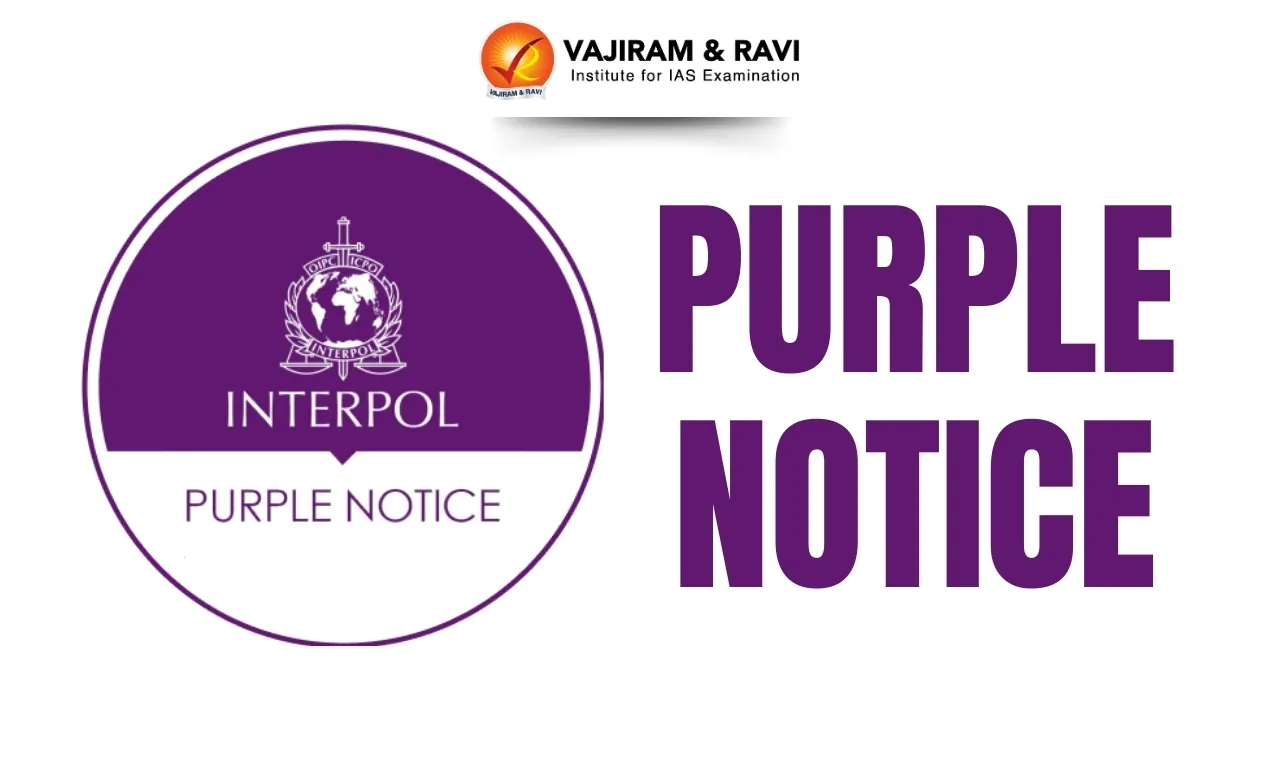
Recently, the Enforcement Directorate has secured an Interpol Purple Notice on trade-based money laundering modus operandi.

About Purple Notice

  • It is one of eight types published by the Interpol organization.
  • Purpose: It provides member countries with information on modus operandi, objects, devices and concealment methods used by criminals.
  • Unlike notices that target specific individuals (such as Red Notices), Purple Notices focus on practices and tools that pose a threat to public safety.
  • Other notices of Interpol: Red, yellow, blue, Black, green, Orange, Silver Notice (pilot phase)

Key Facts about Interpol

  • The International Criminal Police Organisation (Interpol) was founded in 1923
  • Members: Interpol is an international police organisation made up of 196 member countries. 
  • It does not work under the UN. It has enjoyed a special role – that of Permanent Observer at the United Nations – since 1996.
  • Headquarter: Lyon, France.

Functions of Interpol

  • It is not a police force in the traditional sense—its agents are not able to arrest criminals.
  • It is more of an information-sharing network, providing a way for national police forces to co-operate effectively and 
  • tackle international crime ranging from human trafficking and terrorism to money laundering and illegal art dealing.
  • Sharing of information is done by issuing colour-coded notices in four languages – English, Spanish, French, and Arabic.
  • The organization operates centralized criminal databases that contain fingerprint records, DNA samples and stolen documents.

Source: TOI

Purple Notice FAQs

Q1: What is black notice?

Ans: A Black Notice is an INTERPOL alert issued to police worldwide to seek information about unidentified bodies.

Q2: What is a silver notice?

Ans: It was launched in 2025 Interpol which helps to trace and recover criminal assets, combat transnational organized crime, and enhance international police cooperation.

Mashco Piro Tribe

Key Facts about Mashco Piro Tribe

Mashco Piro Tribe Latest News

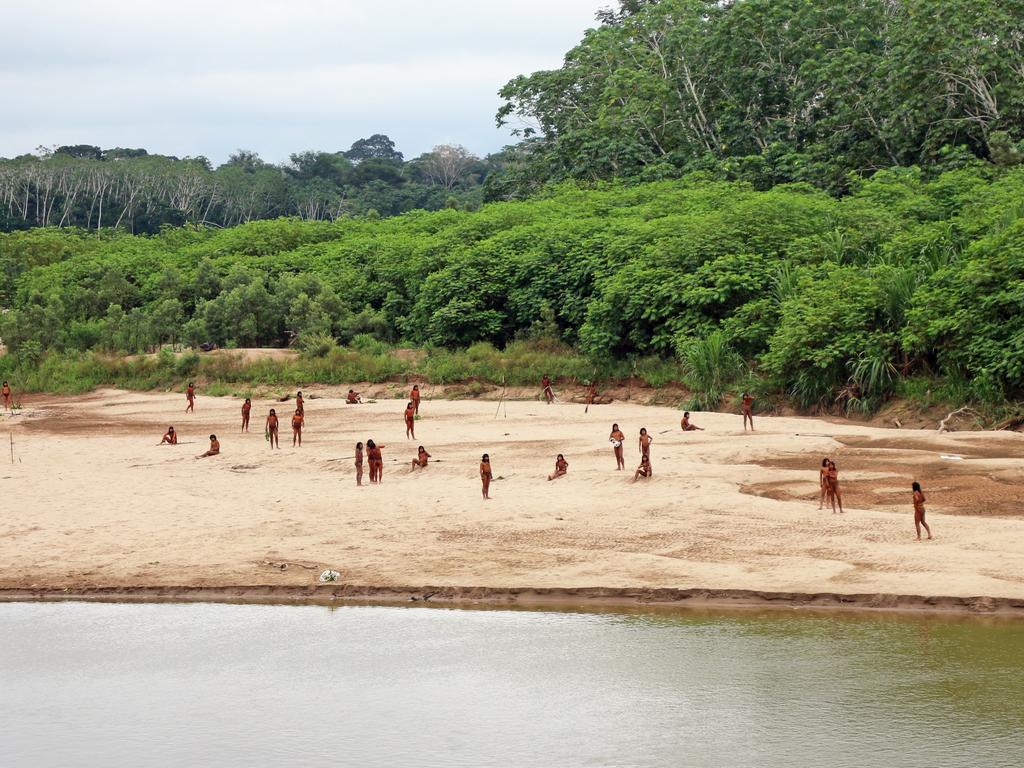
The Mashco Piro tribe, an uncontacted group in the Peruvian Amazon, has been sighted near a village, raising concerns about logging activities encroaching on their territory.

About Mashco Piro Tribe

  • The Mashco-Piro, or Mascho Piro, also known as the Cujareño people and Nomole, are an indigenous tribe of nomadic hunter-gatherers who inhabit the remote regions of the Amazon rainforest. 
  • They live deep in the rainforests of southeast Peru close to the border with Brazil and Bolivia.
  • They are believed to have fled into the recesses of the jungle during the Amazon Rubber Boom in the late 1800s, a time of enslavement and death for many tribes.
  • They live on the banks of the Las Piedras River in the Alto Purús National Park in huts constructed of palm leaf. In the rainy season, they retreat to huts in the rain forest.
  • Their movements across their territory are highly dynamic, dictated by dry and rainy seasons.
  • They speak a dialect of the Piro language.
  • Way of Life:
    • Members of the tribe wear very little clothing.
    • Men, women, and children alike wear only a yellowish-brown cloth above the waist and perhaps arm and leg bands of the same color.
    • They have medium stature and an athletic build.
    • All have straight black hair worn shoulder length or longer.
    • Men probably hunt with the weapons they have been seen carrying, such as bows and arrows, as well as spears. 
  • Peru’s government has forbidden all contact with the Mashco Piro, fearing the spread of a disease among the population to which it has no immunity.

Source: TOI

Mashco Piro Tribe FAQs

Q1: The Mashco Piro tribe is primarily found in which country?

Ans: Peru

Q2: The Mashco Piro primarily inhabit areas near which river?

Ans: Las Piedras River

Q3: Which national park is associated with the Mashco Piro tribe’s habitat?

Ans: Alto Purús National Park

Q4: Why has the Peruvian government forbidden all contact with the Mashco Piro tribe?

Ans: To avoid the spread of diseases to which they have no immunity.

Diatoms

Diatom

Diatoms Latest News

A team of Indian and international researchers discovered a new species of diatom, named Climaconeis heteropolaris.

About Diatoms

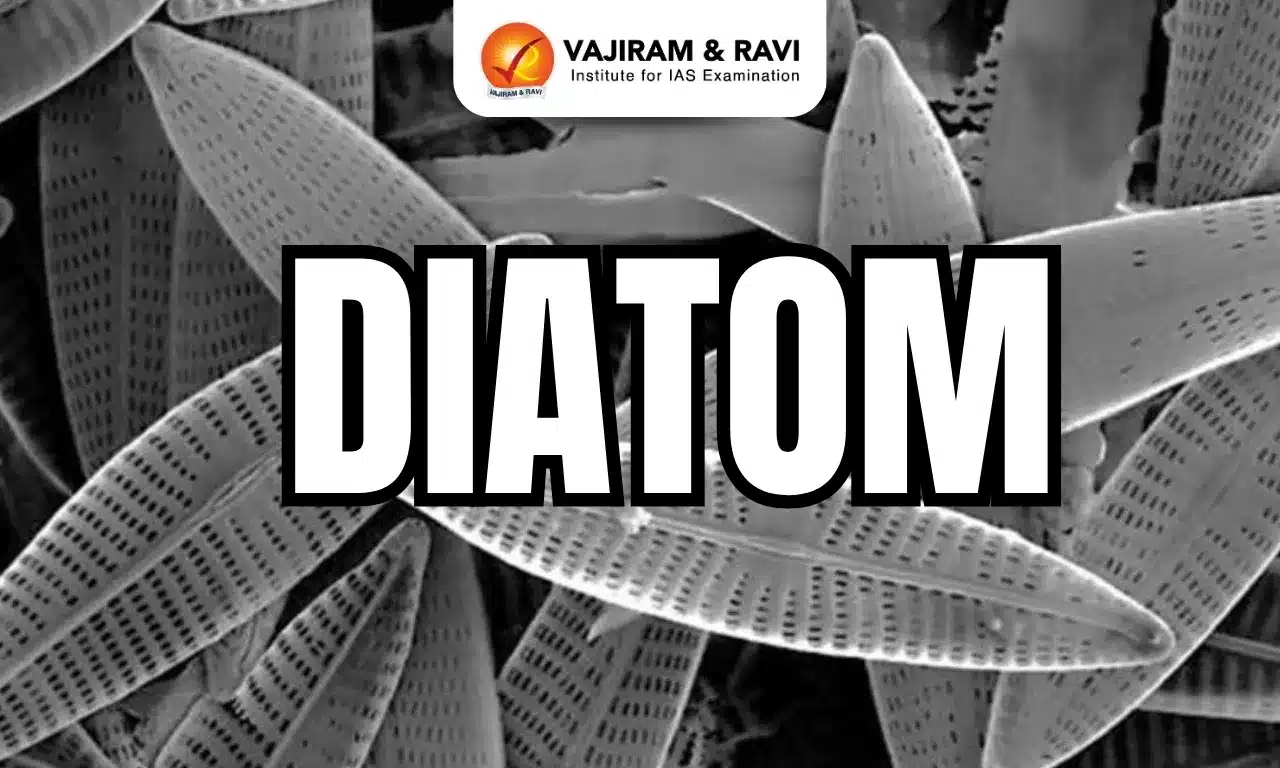
  • These are photosynthetic, single-celled organisms.
  • These are microscopic algae and serve as the base of the aquatic food chain. 
  • They are a major group of algae and form one of the most common forms of phytoplankton.
  • Habitat
    • They are found in almost all aquatic habitats, including lakes, ponds, streams, rivers, and the ocean. 
    • Most diatoms live as free-floating cells in the open water, but some live on the bottom (benthos), attached to surfaces such as plants or rocks, or in the bottom sediment. 
    • These surface-attached diatoms represent a significant part of the periphyton, which is a mixture of algae, cyanobacteria, microbes, and detritus that is attached to submerged surfaces.
  • Due to their sensitivity towards any water chemistry changes, they are excellent indicators of aquatic health.
  • Like other algae, diatoms have no leaves, stems, roots, or flowers, but the cell of every diatom contains chlorophyll, the substance that is responsible for the green color of leafy plants.
  • They are the only organism on the planet with cell walls composed of transparent, opaline silica.
  • Diatom cell walls are ornamented by intricate and striking patterns of silica.
  • Each species has a distinct pattern of tiny holes in the cell wall (frustule) through which they absorb nutrients and get rid of waste.
  • Diatoms can photosynthesize which means they can convert dissolved carbon dioxide in the water into oxygen that is essential for the survival of fish and other aquatic organisms. 
  • They also serve as a major source of atmospheric oxygen for the planet, and a key food source for higher organisms in the food chain, such as zooplankton, molluscs, and fish. 
  • Collectively, they are responsible for generating up to 50% of the oxygen produced globally each year.
  • Diatoms also play a crucial role in the nutrient cycling of marine and lake waters.

Source: TOI

Diatoms FAQs

Q1: What are diatoms?

Ans: Diatoms are photosynthetic, single-celled organisms.

Q2: In which type of habitats are diatoms commonly found?

Ans: They are found in almost all aquatic habitats, including lakes, ponds, streams, rivers, and the ocean.

Q3: What is the cell wall of diatoms made of?

Ans: They are the only organism on the planet with cell walls composed of transparent, opaline silica.

Q4: Do diatoms have leaves, stems, or roots like higher plants?

Ans: Like other algae, diatoms have no leaves, stems, roots, or flowers.

Conocarpus Tree

Conocarpus Tree

Conocarpus Tree Latest News

Recently, the government-appointed expert panel on environment has recommended the Supreme Court to ban a fast-growing exotic tree species called Conocarpus tree.

About Conocarpus Tree

  • It is a flowering plant belonging to the family of Combretaceae.
  • It is an invasive mangrove species.
  • Geographical Distribution of Conocarpus Tree
    • The plant species has two types, one which is native to the coastal areas of tropical America, ranging from Bermuda and the Bahamas to Brazil, and extending along the Pacific coasts and parts of West Africa;
    • Other found in arid coastal zones of Somalia and Yemen and across eastern and northern Africa and the Arabian Peninsula.
    • In India, the growth of the tree was found prevalent in Gujarat’s coastal and arid districts such as Kachchh.
  • This tree is famous for its dark green leaves color throughout the year and withstands harsh environmental conditions such as high and low temperatures.
  • It is very adaptive and could grow even in areas with extreme salinity.
  • It absorbs more water from soil than other species and is a threat to groundwater.
  • This species goes deep into the ground and grows too much to damage the communication cables, drainage lines and drinking water pipelines.
  • During flowering seasons, the tree releases pollen, which may aggravate respiratory conditions such as asthma, rhinitis, and other allergic reactions, particularly in children and the elderly.
  • It also poses a safety risk as its dry, brittle wood is highly flammable during the summer months.

Source: HT

Conocarpus Tree FAQs

Q1: What is the local name for Conocarpus?

Ans: Conocarpus erectus, commonly called buttonwood or button mangrove.

Q2: What is a Conocarpus tree?

Ans: It is one of two species in the genus Conocarpus, is a tree in the family Combretaceae native to coastal and riverine areas of Somalia, Djibouti, and Yemen.

Adi Vaani

Adi Vaani

Adi Vaani Latest News

The Ministry of Tribal Affairs, Government of India, is launching the Beta Version of “Adi Vaani” language translator.

About Adi Vaani

  • It is an AI-based translation tool that serves as the foundation for a future large language model dedicated to tribal languages.
  • It is India’s first AI-powered translator for tribal languages.
  • It is developed under the banner of Janjatiya Gaurav Varsh.
  • It is designed to bridge communication gaps between tribal and non-tribal communities, while safeguarding endangered tribal languages using advanced Artificial Intelligence (AI).
  • The project combines advanced AI technologies with community-driven approaches to protect, promote, and revitalize tribal languages and cultures across India.
  • It is developed by a national consortium of premier institutions led by IIT Delhi with BITS Pilani, IIIT Hyderabad, and IIIT Nava Raipur in collaboration with Tribal Research Institutes (TRIs) in Jharkhand, Odisha, Madhya Pradesh, Chhattisgarh, and Meghalaya,
  • The project aims to:
    • Enable real-time translation (text and speech) between Hindi/English and tribal languages.
    • Provide interactive language learning for students and early learners.
    • Digitally preserve folklore, oral traditions, and cultural heritage.
    • Support digital literacy, healthcare communication, and civic inclusion in tribal communities.
    • Awareness of the government. schemes and important speeches
  • Scope & Languages: In its Beta launch, Adi Vaani supports Santali (Odisha), Bhili (Madhya Pradesh), Mundari (Jharkhand), Gondi (Chhattisgarh)

Methodology & Features of Adi Vani

  • AI Language Models: Refined deployment of models such as No Language Left Behind (NLLB) and IndicTrans2 for low-resource tribal languages.
  • Community Participation: TRIs, experts, and communities are involved in data collection, validation, and iterative development.

Functional Toolkit of Adi Vani

  • Text-to-Text, Text-to-Speech, Speech-to-Text, Speech-to-Speech translations.
  • Optical Character Recognition (OCR) for digitizing manuscripts and primers.
  • Bilingual dictionaries and curated repositories.
  • Subtitles for Prime Minister’s speeches, health advisories (e.g., Sickle Cell Disease awareness), and information on government schemes and initiatives in tribal languages.

Source: PIB

Adi Vaani FAQs

Q1: What is optical character recognition used for?

Ans: Optical character recognition (OCR) is a technology that changes printed documents into digital image files.

Q2: What is the no language left behind model?

Ans: It is a first-of-its-kind, AI breakthrough project that open-sources models capable of delivering evaluated, high-quality translations directly between 200 languages.

BioE3 Policy – India’s Push for Biomanufacturing Hubs

BioE3 Policy

BioE3 Policy Latest News

  • India remains heavily dependent on imports for active pharmaceutical ingredients (APIs), fermentation-based drugs, enzymes for biofuels, and biofertilizer reagents.
  • Post Covid-19 pandemic, the government has accelerated efforts for domestic manufacturing under policies like the PLI scheme.
  • The Biotechnology for Economy, Environment, and Employment (BioE3) policy/ BioE3 policy of the Government of India envisions setting up 16 biomanufacturing hubs to strengthen the bioeconomy and ensure self-reliance (Atmanirbharta).

India’s Bioeconomy

  • The bioeconomy is an economic system that utilizes renewable biological resources from plants, animals, and microorganisms—along with organic waste—to create food, feed, energy, and bio-based products. 
  • As in December 2023, Bioeconomy contributes 4.25% to India’s Gross Domestic Product (GDP).
  • Indian Bioeconomy has grown from $10 billion in 2014 to $151 billion in 2023, achieving this target two years ahead of projections for 2025.
  • The number of Biotech Startups has grown from 50 Biotech Startups in 2014 to 8,531 Biotech Startups in 2023.

About the BioE3 Policy

  • Launched on August 27, 2024, it is a Union S&T Ministry’s policy that sets forth a framework to ensure the adoption of cutting-edge advanced technologies for promoting Biomanufacturing
  • The policy outlines guidelines and principles for enabling mechanisms for ‘Fostering High Performance Biomanufacturing’ in the country across diverse sectors. 
  • It is aligned with India’s vision of Green Growth and also with the Lifestyle for Environment (LiFE) initiative that envisions collective approach towards sustainability. 

Key Features of the BioE3 Policy

  • Biomanufacturing hubs:
    • Around 16 hubs to be set up across India.
    • Each hub will house large fermenters (500–1,000 litres).
    • Focus: Fermentation-based medicines, biofuels, bioproteins, carbon capture technologies, and novel monoclonal antibody treatments.
    • Hubs will pool resources → reducing capital burden for start-ups and MSMEs.
  • Product focus:
    • The government has listed approximately 1,000 critical products needed for indigenous manufacturing.
    • Categories:
      • APIs and drugs
      • Enzymes for biofuels
      • Reagents for biofertilizers
      • Smart proteins and nutrition enhancers
      • Carbon capture innovations

Biofoundries - The First Step

  • 6 Biofoundries already supported by Department of Biotechnology (DBT):
    • NABI, Mohali, for sustainable food & nutrition.
    • Tata Memorial Centre, for new drugs.
    • ICGEB, New Delhi, for synthetic biology, microbial cells, biofuels, carbon capture.
    • THSTI, Faridabad, for monoclonal antibody therapies.
    • IPFT, Gurugram, for biopesticides.
    • NCCS, Pune, for enzymes and metabolites.
  • Function: Conduct proof-of-concept testing, and innovations are transferred to hubs for scaling up.

Implementation Model

  • Location: The biomanufacturing hubs will be set up within research institutes, private companies, or near knowledge hubs.
  • Accessibility: Open to government R&D labs, universities, start-ups, and private industry.
  • Cost-sharing model: The start-ups will be charged a maximum of 5% over the actual costs while private companies may be charged up to 15% over the cost.
  • IPR policy: Facilities will not claim IP rights, ensuring innovation ownership with developers.

Significance of BioE3 Policy for India

  • Reduces import dependency in critical pharma and bio-based sectors.
  • Strengthens bioeconomy and aligns with Atmanirbhar Bharat vision.
  • Supports innovation-to-market pipeline through biofoundries → hubs.
  • Boosts R&D collaboration among government, academia, and industry.
  • Promotes start-up ecosystem in biotechnology.

Conclusion

  • The BioE3 policy, by integrating biofoundries with biomanufacturing hubs, positions India to emerge as a global leader in biotechnology-driven solutions for health, energy, and agriculture. 
  • Going forward, sustained investment, industry-academia collaboration, and supportive regulatory frameworks will be key to realising the vision of a self-reliant and innovation-led bioeconomy.

Source: IE

BioE3 Policy FAQs

Q1: Why has the Government of India launched the BioE3 policy?

Ans: The policy aims to reduce India’s import dependency in pharmaceuticals, biofuels, and bio-based products by setting up 16 biomanufacturing hubs.

Q2: How will biomanufacturing hubs under the BioE3 policy support start-ups and MSMEs in India?

Ans: These hubs pool resources by providing shared large fermenters and facilities, reducing the need for heavy capital investment.

Q3: What role do biofoundries play in India’s bioeconomy?

Ans: Biofoundries act as specialised facilities for proof-of-concept testing in areas like new drugs, biofuels, and monoclonal antibodies.

Q4: What is the significance of the cost-sharing and IPR model adopted in the BioE3 policy?

Ans: It allows start-ups and companies to access facilities at subsidised costs while retaining full intellectual property rights, thus encouraging innovation.

Q5: In what ways can the BioE3 policy contribute to India’s Atmanirbhar Bharat vision?

Ans: By promoting domestic manufacturing of bio-products, supporting innovation-to-market pipelines, and strengthening the biotechnology ecosystem.

Kerala Becomes India’s First Fully Digitally Literate State

Kerala Digital Literacy

Kerala Digital Literacy Latest News

  • Recently, Chief Minister Pinarayi Vijayan declared Kerala as the first fully digitally literate State in India after completing the first phase of the Digi Kerala programme. 
  • The initiative, implemented through local self-government bodies, aimed to bridge the digital divide. 
  • As part of the effort, 21.87 lakh people identified as digitally illiterate were trained and successfully cleared evaluations, marking a milestone in grassroots digital empowerment. 
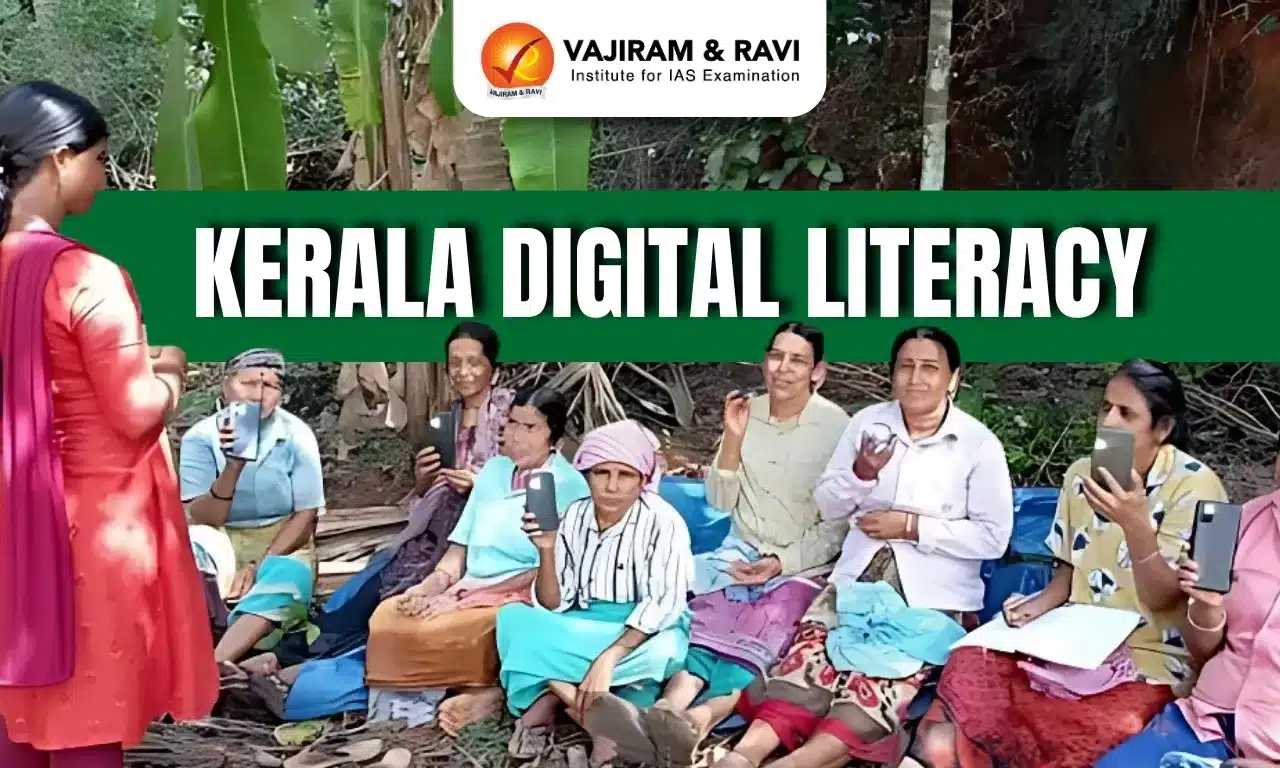
  • Trainees unfamiliar with digital devices learned to make voice and video calls on smartphones, use WhatsApp and social media, access government services, and perform digital transactions.

Origins of Kerala’s Digital Literacy Drive

  • Kerala’s Digi Kerala programme stemmed from a local initiative in Pullampara panchayat, Thiruvananthapuram, in 2021. 
  • Officials noticed long queues outside banks, where daily-wage and MGNREGS labourers often lost a day’s income just to check balances. 
  • This hardship inspired the idea of teaching basic digital skills to reduce dependency on physical banking.

Launch of Digi Pullampara

  • The panchayat launched the Digi Pullampara project, surveying wards to identify 3,917 digitally illiterate residents. 
  • Of these, 3,300 were trained, while bedridden individuals were excluded. 
  • The training included 15 activities in three modules, covering essential digital tasks.

Role of Volunteers and Training Methods

  • Volunteers, including students from NSS units, Kudumbashree members, SC/ST promoters, and library council members, conducted the training. 
  • Sessions were held at MGNREGS worksites, Kudumbashree neighbourhood groups, and even in households for senior citizens. 
  • After training, evaluations tested whether participants could perform at least six out of 15 tasks; retraining was offered to those who failed.

Success and Statewide Expansion

  • Pullampara achieved 96.18% success, becoming Kerala’s first fully digitally literate panchayat in September 2022. 
  • Encouraged by this, Chief Minister Pinarayi Vijayan announced the expansion of the initiative across the State, ultimately shaping Kerala’s digital literacy revolution.

Scaling Up the Pullampara Model Statewide

  • To expand the Digi Pullampara model, the government brought Pullampara’s core team to the Kerala Institute of Local Administration to train master trainers. 
  • These trainers, in turn, prepared 2.57 lakh volunteers across the State.

Survey and Training Process

  • Following the model of the Total Literacy Campaign of the 1980s, surveys covered 1.51 crore people across 83.45 lakh households, identifying 21.88 lakh digitally illiterate individuals
  • Training followed a structured process, and the Economics and Statistics Department conducted third-party evaluations. 
  • Out of those trained, 21.87 lakh passed. Panchayats with more than 10% failures were provided re-training.

Inclusivity Beyond Guidelines

  • Unlike the National Digital Literacy Mission, which mandates training only up to 60 years of age, Kerala included all age groups, even those over 100. 
  • Data shows 15,221 trainees above 90 years, 7.77 lakh between 60–75 years, and 1.35 lakh between 76–90 years were trained.

Wide Participation Across Communities

  • The programme saw participation from over 13 lakh women, eight lakh men, and 1,644 transgender persons, showcasing its inclusive approach. 
  • Officials noted that Kudumbashree workers helped volunteers focus only on households where residents were not already digitally literate, ensuring better targeting.

Digi Kerala 2.0: Expanding the Mission

  • At the Digi Kerala declaration, the Chief Minister launched Digi Kerala 2.0, which will go beyond basic digital skills. 
  • It will include awareness classes on cyber fraud, training to identify and reject fake news, and intensive sessions on accessing government services digitally.

Smartphone-Centric Approach

  • Unlike the national digital literacy programmes that focus mainly on computer use, Kerala has prioritised smartphones as the key tool for navigating daily life, reflecting ground realities.

Integration with Broader Projects

  • The initiative forms part of Kerala’s larger digital vision, integrated with:
    • Kerala Fibre Optic Network (KFON): Ensures universal Internet access, offering free connectivity to BPL families (14,000 connected so far, plus 74,203 commercial homes).
    • K-SMART Project: Aims to bring all local self-government services onto a single digital platform, enhancing accessibility and governance efficiency.
  • This roadmap positions Kerala not only as India’s first fully digitally literate state, but also as a model for bridging the digital divide comprehensively.

Source: TH

Kerala digital literacy FAQs

Q1: What is Kerala’s Digi Kerala programme?

Ans: It’s a state initiative launched in 2021 to bridge the digital divide by training people in smartphone use, online services, and digital transactions.

Q2: How did Digi Kerala begin?

Ans: It originated from Pullampara panchayat, where residents faced hardship accessing banks. The success of “Digi Pullampara” inspired statewide expansion.

Q3: How many people were trained under Digi Kerala?

Ans: Out of 21.88 lakh identified digitally illiterate individuals, 21.87 lakh successfully completed training, making Kerala India’s first fully digitally literate state.

Q4: What does Digi Kerala 2.0 aim to achieve?

Ans: It focuses on cyber fraud awareness, identifying fake news, and advanced training in accessing government services digitally through smartphones.

Q5: How is Digi Kerala linked to broader digital projects?

Ans: It complements initiatives like KFON, providing free Internet to BPL families, and K-SMART, digitising local self-government services on one platform.

Gangotri Glacier Study Reveals Earlier Snowmelt Trends

Gangotri Glacier Snowmelt

Gangotri Glacier Snowmelt Latest News

  • A recent study has reconstructed the long-term discharge flow of the Gangotri Glacier System (GGS), the source of the upper Ganga basin feeding the Bhagirathi River in the central Himalayas. 
  • With climate change driving faster glacier melt globally, glaciologists are closely examining how changes in Gangotri’s discharge patterns could affect water availability, river flow, and long-term sustainability of the region’s ecosystems and livelihoods.

Composition of the Gangotri Glacier System (GGS)

  • The GGS comprises four glaciers — Meru (7 km²), Raktavaran (30 km²), Chaturangi (75 km²), and the largest, Gangotri (140 km²). 
  • Together, the system spans 549 km², with about 48% glacierised area, across elevations from 3,767 m to 7,072 m
  • The GGS receives precipitation from western disturbances in winter (October–April) and the Indian summer monsoon in summer (May–September)
  • Seasonal rainfall (May–October) averages 260 mm, with a mean temperature of 9.4°C recorded between 2000–2003.

New Study on Gangotri Glacier System (GGS)

  • The Hindu Kush Himalaya (HKH) holds vital snow and ice reserves that feed major rivers like the Indus, Ganga, and Brahmaputra, sustaining millions of lives. 
  • In recent decades, climatic changes have altered the cryosphere and hydrological cycles, leading to faster glacial retreat and shifting seasonal discharge patterns. 
  • While most modelling studies focus on large river catchments, it is difficult to separate the impacts of snowmelt and precipitation there. 
  • Smaller systems like the GGS allow for more precise assessments, making it a preferred choice for hydrologists and climate scientists. 
  • However, long-term discharge analysis and understanding climatic drivers have remained limited. 
  • To address this, a new study titled Hydrological Contributions of Snow and Glacier Melt from the Gangotri Glacier System and Their Climatic Controls Since 1980 was conducted.
  • The study, published in the Journal of the Indian Society of Remote Sensing, provides deeper insights into GGS’s meltwater contributions and climate influences.

Key Findings of the Study

  • The study combined the Spatial Processes in Hydrology (SPHY) glacio-hydrological model with the Indian Monsoon Data Assimilation and Analysis (IMDAA) dataset (1980–2020) to reconstruct GGS discharge trends. 
    • SPHY model is a hydrological modelling tool suitable for a wide range of water resource management applications.
  • It found that maximum discharge occurs in summer, peaking in July (129 m³/s)
  • The mean annual discharge was estimated at 28±1.9 m³/s, primarily from snow melt (64%), followed by glacier melt (21%), rainfall-runoff (11%), and base flow (4%).
  • A decadal analysis revealed a shift in discharge peaks from August to July after 1990, linked to reduced winter precipitation and enhanced early summer melting
  • The highest volumetric increase (7.8%) occurred between 1991–2000 and 2001–2010
  • While mean annual temperatures rose, there was no significant trend in precipitation or glacier melt
  • Snow melt declined due to shrinking snow cover, whereas rainfall-runoff and base flow increased
  • The analysis highlighted that summer precipitation was the main driver of annual discharge, followed by winter temperature.

Implications of the Study on GGS

  • The findings highlight warming-induced hydrological changes in the Gangotri Glacier System (GGS), with increasing rainfall run-off and base flow. 
  • This aligns with the 25% excess rainfall observed in North India’s summer monsoon (June–August), which has caused frequent floods in Uttarakhand, Jammu, and Himachal Pradesh. 
  • While such events are often hastily termed “cloudbursts” without scientific evidence, climate change does raise the risk of extreme rainfall. 
  • The study stresses the need for sustained field monitoring and advanced modelling to improve water resource management in glacier-fed river basins, ensuring resilience against future hydrological and climatic shifts.

Source: TH | DTE

Gangotri Glacier Snowmelt FAQs

Q1: What is the Gangotri Glacier System (GGS)?

Ans: The GGS comprises four glaciers—Meru, Raktavaran, Chaturangi, and Gangotri—spanning 549 km², nearly half of which is glacierised, feeding the Bhagirathi river.

Q2: What did the recent study on GGS find?

Ans: The study found peak discharge shifted from August to July after 1990, mainly due to reduced winter precipitation and increased early summer melting.

Q3: Why is the Gangotri Glacier System important?

Ans: It sustains water flow in the Bhagirathi and upper Ganga basin, making it vital for ecosystems, agriculture, and millions of people relying on Himalayan rivers.

Q4: What are the main contributors to GGS discharge?

Ans: Snowmelt contributes 64%, glacier melt 21%, rainfall-runoff 11%, and base flow 4%, highlighting snowmelt as the largest driver of annual discharge.

Q5: What are the implications of the findings?

Ans: The study shows warming-driven hydrological changes, stressing the need for long-term monitoring to manage floods and sustain water resources in glacier-fed rivers.


Supreme Court’s Social Media Regulation Order: Free Speech and Accountability

Social Media

Social Media Latest News

  • The Supreme Court has directed the Centre to frame guidelines for regulating social media, stressing that free speech cannot be misused for commercial gain at the cost of public dignity.

Introduction

  • On August 25, 2025, the Supreme Court of India directed the Union government to draft comprehensive guidelines for regulating social media content. 
  • The order comes amid growing concerns over the misuse of free speech by influencers and digital creators for commercial gain, often at the cost of public sentiment and individual dignity. 
  • The directive marks a significant step in balancing constitutional freedoms with accountability in the digital age.

The Supreme Court’s Directive

  • A two-judge bench stressed that while free speech is a constitutional right under Article 19(1)(a), it cannot be used purely for commercial purposes in a manner that offends vulnerable groups. 
  • The case originated from a petition filed by a non-profit supporting individuals with Spinal Muscular Atrophy (SMA), who alleged derogatory remarks made by comedians had violated their dignity.
  • The court ordered the Centre to frame regulations in consultation with the National Broadcasters and Digital Association (NBDA) and also directed the comedians involved to issue public apologies on their social media platforms.

Constitutional Framework on Free Speech

  • The Constitution permits restrictions on free speech under Article 19(2) on limited grounds, including:
    • Sovereignty and integrity of India
    • Security of the State
    • Friendly relations with foreign states
    • Public order
    • Decency and morality
    • Contempt of court
    • Defamation
    • Incitement to offences
  • The Supreme Court has repeatedly held that restrictions cannot extend beyond these grounds. 
  • In Shreya Singhal v. Union of India (2015), the Court struck down Section 66A of the IT Act for criminalising vague expressions like “annoyance” or “hatred,” affirming that even speech that “offends, shocks, or disturbs” remains constitutionally protected.

The Debate on Commercial Speech

  • The regulation of commercial speech has had an evolving jurisprudence in India:
    • In Hamdard Dawakhana v. Union of India (1959), the Court held that advertisements tied to trade and commerce do not qualify as free speech.
    • However, in Tata Press v. MTNL (1995), the Court recognised commercial speech as constitutionally protected, since advertisements serve public interest by disseminating information.
    • Later judgments, such as A. Suresh v. State of Tamil Nadu (1997), reiterated the need to balance commercial expression with societal interests.
  • This evolution demonstrates the Court’s nuanced approach to distinguishing between public-interest commercial expression and purely profit-driven content.

Existing Legal Framework for Digital Media

  • Social media companies in India are already governed by the IT (Intermediary Guidelines and Digital Media Ethics Code) Rules, 2021 under the IT Act, 2000. 
  • These rules require platforms to restrict obscene, pornographic, or harmful content. 
  • Influencers and online creators are also subject to criminal law if their speech amounts to defamation, incitement, or other recognised offences.
  • Experts caution that any additional guidelines must be carefully drafted to avoid infringing upon free speech, given the Supreme Court’s strong history of protecting this right.

Broader Implications

  • The Court’s intervention raises critical questions about the future of free speech in the digital age. 
  • With nearly 491 million Indians active on social media, the regulation of online platforms is no longer just a legal issue but also a societal necessity. 
  • While the move is aimed at curbing abusive or derogatory content disguised as entertainment or marketing, it also places the responsibility on the government to ensure that regulation does not become a tool of censorship.
  • Legal scholars argue that the Supreme Court’s “polyvocality” in free speech jurisprudence, arising from differing judicial interpretations, has resulted in inconsistencies. 
  • This ruling, therefore, may provide an opportunity to consolidate principles of accountability without diluting constitutional protections.

Source : TH

Social Media FAQs

Q1: What did the Supreme Court recently order on social media regulation?

Ans: The Court directed the Centre to frame guidelines to regulate social media in consultation with NBDA.

Q2: Why did the Supreme Court issue this directive?

Ans: It arose from derogatory remarks made by comedians against individuals with Spinal Muscular Atrophy (SMA).

Q3: Under which constitutional article is free speech protected?

Ans: Free speech is protected under Article 19(1)(a) of the Constitution.

Q4: What are the grounds for restricting free speech under Article 19(2)?

Ans: Restrictions apply only on grounds like sovereignty, security, public order, decency, morality, defamation, contempt of court, and incitement.

Q5: How is social media currently regulated in India?

Ans: Social media is governed by the IT Act, 2000 and the IT Rules, 2021, which mandate removal of harmful and unlawful content.

Indravati Tiger Reserve

Indravati Tiger Reserve

Indravati Tiger Reserve Latest News

A leopard was recently found dead inside the Bhairamgarh Sanctuary of the Indravati Tiger Reserve in Bastar.

About Indravati Tiger Reserve

  • It is located in the Bijapur District of Chhattisgarh.
  • The perennial river ‘Indravati’ forms the boundary of the reserve on the northern and western sides, which also happens to be the interstate boundary between Chhattisgarh and Maharashtra.
  • The total area of the reserve is 2799.07 sq.km.
  • The tiger reserve and the Bhairamgarh and Pamed Wildlife Sanctuaries constitute the Indravati landscape. 
  • It has connectivity with several tiger reserves, viz. Kawal (Telangana), Tadoba (Maharashtra), and Kanha (Madhya Pradesh). 
  • In general, the landscape is conflict-ridden owing to the left-wing extremism.
  • The landscape is undulating, with most of the area covered with small hills – Kutroo, Kandlapatru, and Matti Murka being noteworthy. 
  • Vegetation: Southern Moist Mixed Deciduous Forest with Teak, Southern Moist Mixed Deciduous Forest without Teak, and Southern Dry Mixed Deciduous Forest are the major forest types found in the Reserve.
  • Flora: Some common species include teak, achar, karra, kullu, shisham, semal, haldu, arjun, bel, and Jamun.
  • Fauna
    • It is home to one of the last populations of rare wild buffalo, the state animal of Chhattisgarh.
    • Other animals include Nilgai, Black Buck, Sambar, Gaur, Tiger, Leopard, Chital, Sloth bears, etc.

Source: TOI

Indravati Tiger Reserve FAQs

Q1: In which state is the Indravati Tiger Reserve located?

Ans: Chhattisgarh

Q2: Which river forms the northern and western boundary of the Indravati Tiger Reserve?

Ans: Indravati

Q3: The Indravati landscape consists of the Tiger Reserve along with which wildlife sanctuaries?

Ans: Answer: b)

Q4: What is the total area of Indravati Tiger Reserve?

Ans: 2799.07 sq. km

Enquire Now