Non-Metallic Minerals, Types, Uses, Distribution, Production

Non-Metallic Minerals

Non-metallic minerals are those minerals that do not contain metals in them and are generally not used as sources of metals. Instead, they are valued for their physical and chemical properties, making them useful in various industries. These minerals include mica, diamonds, limestones, dolomite, gypsum. In this article, we are going to cover non-metallic minerals and their types. 

Non-Metallic Minerals

India is endowed with a rich variety of non-metallic minerals, which form an important backbone for several industries ranging from electronics, construction, and fertilizers to ornaments and ceramics. While mica has long been a hallmark of India’s global mineral reputation, other minerals such as limestone, gypsum, and diamonds also play significant roles in industrial and economic growth. Additionally, heavy mineral sands and titanium deposits along India’s coastline add to its mineral wealth, making the country self-reliant in several critical sectors.

Non-Metallic Minerals Types

The non-metallic minerals are of the following types:

Mica 

  • Properties & Importance: Mica has unique insulating properties, excellent dielectric strength, and resistance to high voltage. This makes mica a highly valuable mineral in the electrical and electronics industry. It is widely used in capacitors, transformers, and insulation materials.
  • Distribution in India: Major mica-bearing ores are found in Andhra Pradesh, Bihar, Jharkhand, Maharashtra, and Rajasthan. Among these, Andhra Pradesh leads with 41% share of India’s total resources, followed by Rajasthan, Odisha, Maharashtra, Bihar, and Jharkhand.
  • Production & Global Standing: India enjoys a monopoly in global mica production, contributing around 60% of the world’s output. Andhra Pradesh is the largest producer, followed by Rajasthan and Jharkhand. India is not just the largest producer but also the largest exporter of mica globally, supplying to industries across the world.

Limestone

  • Nature & Occurrence: Limestone consists mainly of calcium carbonate (CaCO₃) and is of sedimentary origin. It occurs across almost all geological sequences from Pre-Cambrian to Recent, except in Gondwana formations.
  • Distribution in India: Karnataka has the largest share (28%) of total resources, followed by Andhra Pradesh, Rajasthan, Gujarat, Meghalaya, and Chhattisgarh.
  • Production Centers: Over three-fourths of India’s limestone is produced in just six states: Andhra Pradesh & Telangana, Rajasthan, Madhya Pradesh, Gujarat, Tamil Nadu, and Karnataka. These states form the backbone of India’s cement and construction industries.

Dolomite

  • Nature: When limestone contains more than 10% magnesium carbonate, it is classified as dolomite.
  • Distribution: Major deposits occur in Madhya Pradesh (29%), followed by Andhra Pradesh, Chhattisgarh, Odisha, Karnataka, Gujarat, Rajasthan, and Maharashtra.
  • Production & Uses: Chhattisgarh is the leading dolomite producer, contributing more than 30% of the total output. Economically, dolomite is widely used in the metallurgical industry, particularly as a flux in blast furnaces, and as a refractory material due to its heat resistance.

Asbestos

  • Properties: Asbestos is highly valued due to its fibrous structure, ability to fragment into thin filaments, and high tensile strength. It is resistant to heat, fire, and chemicals, which makes it highly commercial.
  • Production in India: Rajasthan and Andhra Pradesh together account for nearly all of India’s asbestos production. Minor deposits also occur in Jharkhand, Madhya Pradesh, Chhattisgarh, Tamil Nadu, Gujarat, Uttarakhand, and Nagaland.

Kyanite

  • Nature & Uses: Found in metamorphic aluminous rocks, kyanite is used in metallurgical, ceramic, refractory, glass, cement, and electrical industries.
  • Resources: India has the largest deposits of kyanite in the world. Andhra Pradesh alone accounts for 78% of resources, followed by Karnataka (13%) and Jharkhand (6%). The remaining 3% is distributed in Kerala, Maharashtra, Rajasthan, Tamil Nadu, and West Bengal.
  • Production: Despite Andhra Pradesh’s resource dominance, Jharkhand is the largest producer, followed by Maharashtra.

Gypsum

  • Nature: Gypsum is a hydrated sulphate of calcium (CaSO₄·2H₂O), occurring as a white, opaque, or transparent mineral in sedimentary formations such as limestones, sandstones, and shales.
  • Uses: It is mainly used in ammonium sulphate fertilizers and the cement industry (4-5%). It is also essential for Plaster of Paris, ceramics, tiles, and mould-making. In agriculture, gypsum is applied as a soil conditioner.
  • Distribution & Production:
    • Rajasthan holds about 81% of India’s resources, mainly in Jodhpur, Nagaur, Bikaner, Jaisalmer, and Barmer.
    • Jammu & Kashmir has 14% of resources.
    • Other states like Tamil Nadu, Gujarat, Himachal Pradesh, Karnataka, Uttarakhand, Andhra Pradesh, and Madhya Pradesh contribute minor shares.
    • Rajasthan is the largest producer, followed by Tamil Nadu and Jammu & Kashmir.

Diamonds

  • Uses: Diamonds are widely used in ornaments and jewelry due to their brilliance, but their most significant industrial use lies in cutting, drilling, and polishing because of their extreme hardness.
  • Diamond-bearing Areas in India:
    • Panna Belt (Madhya Pradesh) has the most famous deposits.
    • Anantapur district (Andhra Pradesh).
    • Newly discovered fields: Raichur-Gulbarga belt in Karnataka.

Atomic Minerals (Uranium & Thorium)

  • Importance: Uranium and Thorium form the base of India’s nuclear industry. Their exploration and development are overseen by the Atomic Mineral Directorate (AMD) under the Department of Atomic Energy.
  • Uranium: Deposits occur in Jharkhand, Chhattisgarh, Madhya Pradesh, Andhra Pradesh, and Meghalaya. Recent studies in the Nubra–Shyok valley (Ladakh) have found uranium with unusually high concentrations compared to normal ores (which contain only about 0.1%).
  • Thorium: Found largely in Monazite sands along the east and west coasts and in Bihar. The largest concentration of monazite is on the Kerala coast. Other major producing states include Kerala, Jharkhand, Bihar, Tamil Nadu, and Rajasthan.

Salt

  • Sources: Salt in India is obtained from sea water, brine springs, wells, salt pans in lakes, and rock deposits.
  • Production Centers:
    • Rock salt: Found in Mandi district (Himachal Pradesh) and parts of Gujarat.
    • Sea brine: Extracted along the coasts of Gujarat, Maharashtra, and Tamil Nadu.
  • Major Producer: The Gujarat coast dominates production, contributing nearly 50% of India’s total salt output.
Also Check Other Posts
Geomorphology Major Dams in India
Composition and Structure of Atmosphere Major Ports in India
Types of Forests in India Coastal States of India
Ocean Acidification Migration in India
Deep Ocean Mission Natural Vegetation of India

Non-Metallic Minerals FAQs

Q1: What are non-metallic minerals?

Ans: Non-metallic minerals are naturally occurring minerals that do not contain metals and are used for their chemical and physical properties in industries.

Q2: What are 10 examples of non-metallic materials?

Ans: Mica, limestone, gypsum, diamond, dolomite, asbestos, kyanite, salt, graphite, and silica.

Q3: What is a metallic mineral?

Ans: Metallic minerals are minerals that contain metal elements and yield new products when melted, such as iron, copper, or bauxite.

Q4: What are the five non-metallic?

Ans: Mica, limestone, gypsum, dolomite, and diamond are five key non-metallic minerals.

Q5: What are the 7 main types of minerals?

Ans: The seven main mineral groups are silicates, oxides, sulfates, sulfides, carbonates, halides, and phosphates.


UPSC Daily Quiz 18 September 2025

UPSC Daily Quiz

The Daily UPSC Quiz by Vajiram & Ravi is a thoughtfully curated initiative designed to support UPSC aspirants in strengthening their current affairs knowledge and core conceptual understanding. Aligned with the UPSC Syllabus 2025, this daily quiz serves as a revision resource, helping candidates assess their preparation, revise key topics, and stay updated with relevant issues. Whether you are preparing for Prelims or sharpening your revision for Mains, consistent practice with these Daily UPSC Quiz can significantly enhance accuracy, speed, and confidence in solving exam-level questions.

[WpProQuiz 73]  

UPSC Daily Quiz FAQs

Q1: What is the Daily UPSC Quiz?

Ans: The Daily UPSC Quiz is a set of practice questions based on current affairs, static subjects, and PYQs that help aspirants enhance retention and test conceptual clarity regularly.

Q2: How is the Daily Quiz useful for UPSC preparation?

Ans: Daily quizzes support learning, help in revision, improve time management, and boost accuracy for both UPSC Prelims and Mains through consistent practice.

Q3: Are the quiz questions based on the UPSC syllabus?

Ans: Yes, all questions are aligned with the UPSC Syllabus 2025, covering key areas like Polity, Economy, Environment, History, Geography, and Current Affairs.

Q4: Are solutions and explanations provided with the quiz?

Ans: Yes, each quiz includes detailed explanations and source references to enhance conceptual understanding and enable self-assessment.

Q5: Is the Daily UPSC Quiz suitable for both Prelims and Mains?

Ans: Primarily focused on Prelims (MCQ format), but it also indirectly helps in Mains by strengthening subject knowledge and factual clarity.

Natural Resources, Types, Importance, Conservation Practices

Natural Resources

Natural Resources are the very foundation of human survival and development. They include all the elements including natural and artificial that fulfills human needs and aspirations. The natural sources include soil, forests, water and minerals that sustain life and human-made sources like books, transport and machines that help increase productivity and comfort. It is not just the existence of a material but its utility that makes it a resource. In this article, we are going to cover natural sources, their classifications, their conservation methods and its importance in resource planning. 

Natural Resources

Natural resources are defined as everything in our environment that can be used to satisfy needs, provided it is technologically accessible, economically feasible, and culturally acceptable. The transformation of ordinary substances into resources is influenced by two dynamic forces: time and technology. For instance, home remedies that may lack commercial value today could become economically valuable if patented and marketed tomorrow. This transformation highlights the interconnected dynamics between nature, technology, and institutions. Humans, as mediators, interact with nature through technology and establish institutions that accelerate development. 

Natural Resources Nature, Mutual Relations and Human Linkages

Natural Resources include everything present in our surroundings that can be used to fulfill needs if they are technologically accessible, economically viable, and culturally acceptable. What makes something a resource is not its physical presence but its usability in human life.

  • Dynamic Nature

Natural resources are not static; their status changes with advancements in knowledge, inventions, and technology. For example, uranium was just another element in nature until nuclear technology discovered its potential for generating energy. Similarly, plants used in traditional remedies may have little significance today but can gain economic value once researched, patented, and marketed.

  • Interconnected Dynamics
    The transformation of substances into usable resources highlights a constant interplay between nature, technology, and institutions. Without nature’s raw materials, human knowledge, and organized systems, no resource can gain meaningful value.
  • Human-Nature Interface
    Humans connect with nature through tools, science, and organizational institutions to accelerate growth. This interface creates opportunities for progress but also poses challenges of overuse, inequality, and environmental degradation if not balanced wisely.

Natural Resources Classifications 

Natural Resources can be grouped as natural, human-made, and human resources depending upon where they originate and how humans use them.

  • Natural Resources: Directly taken from nature, like air, soil, minerals.
  • Human-made Resources: Created by applying human knowledge to natural resources, such as buildings, machines, or transport.
  • Human Resources: People themselves, with their intelligence, skills, and creativity, are considered the most valuable resources because they create, modify, and sustain all others.

Natural Resources Value and Usage

Natural resources are substances directly obtained from nature, requiring little or no modification before use.

  • These include air for breathing, water in rivers and lakes, fertile soils for crops, and minerals for industries. They are considered nature’s free gifts.
  • Although natural, many require human knowledge and technology for effective use. For example, water becomes more productive when managed through irrigation systems, and silk becomes a resource through breeding silkworms on mulberry trees.
  • Their distribution is highly uneven due to climatic differences, topography, and altitude. While some regions are rich in forests and rainfall, others are barren deserts, shaping unequal opportunities across the globe.

Natural Vegetation and Wildlife Life-Supporting Balance

  • Biosphere Connection
    Vegetation and wildlife exist in the biosphere, a thin layer where land, air, and water systems overlap. This zone is critical because it supports life forms and sustains ecological balance.
  • Ecosystem Interactions
    The ecosystem is a network of interdependence where plants, animals, and humans rely on one another. For example, plants produce oxygen, animals consume it, and decomposers recycle nutrients back into the soil.
  • Plant Contributions
  • Plants give us timber, fruits, medicines, latex, and paper. They prevent soil erosion, store groundwater, provide oxygen, and act as natural barriers against winds and floods. They are therefore the lifelines of ecosystems.
  • Wildlife Contributions
    Wildlife contributes milk, wool, meat, hides, and honey. Birds and insects enable pollination; decomposers recycle matter; scavengers like vultures clean the environment. The survival of humans and other organisms is closely linked with the survival of wildlife.

Flora and Fauna in India Richness, Issues, and Conservation

  • Diversity of Life
      • The Earth supports millions of life forms, each interwoven into ecosystems. Forests, being primary producers, anchor this biodiversity by providing food, oxygen, and habitat for other organisms.
  • India’s Biological Wealth
      • India ranks among the top biodiversity hotspots, hosting nearly 8% of the world’s known species. From rainforests in the Andamans to alpine vegetation in the Himalayas, its diversity is unparalleled.
  • Conservation Challenges
    • Despite this richness, nearly 10% of India’s flora and 20% of its mammals face extinction. Endangered examples include the cheetah, pink-headed duck, and plants like Madhuca insignis.

Factors Behind Depletion of Flora and Fauna

  • Colonial Exploitation
    British rule encouraged forest clearance for railways, mining, and plantations. Teak in South India and Chir Pine in the Himalayas were planted extensively, replacing native ecosystems.
  • Post-Independence Expansion
    Even after freedom, agricultural expansion continued. Between 1951–1980, more than 26,200 sq. km of forest land was converted to farms.
  • Shifting Cultivation
    In tribal belts, slash-and-burn practices like jhum have degraded forests, leading to biodiversity loss.
  • Large-Scale Projects
    River valley projects and dams have submerged thousands of hectares of forests, uprooting species and communities alike.
  • Mining Activities
    Mines in sensitive areas like the Buxa Tiger Reserve disrupt habitats, force migration of elephants, and degrade landscapes permanently.
  • Other Pressures
    Poaching, overgrazing, fires, and fuelwood collection worsen the crisis. Unequal access to resources means that while the rich overconsume, the poor face shortages and ecological risks.
  • Population Pressure
    Growing populations accelerate exploitation. For example, the average American consumes 40 times more resources than a Somalian, while India’s richest consume disproportionately more compared to the poor, creating ecological imbalances and inequality in responsibility.

Environmental Degradation and Social Dimensions

  • Cultural Effects
    Forests and wildlife are not merely ecological entities; they also sustain cultural traditions, rituals, and indigenous practices. Loss of biodiversity erases these traditions, marginalizing indigenous and tribal groups.
  • Gender Dimensions
    Women are disproportionately impacted, as they are responsible for collecting fuelwood, fodder, and water. The burden of resource depletion increases their workload, harms their health, and restricts education and childcare.

Indirect Impacts
Environmental degradation intensifies disasters like floods, landslides, and droughts, which affect vulnerable and poor populations the hardest. Such impacts deepen poverty, cause displacement, and widen inequalities.

Other Related Posts
Geomorphology Major Dams in India
Composition and Structure of Atmosphere Major Ports in India
Types of Forests in India Coastal States of India
Ocean Acidification Migration in India
Deep Ocean Mission Natural Vegetation of India

Natural Resources FAQs

Q1: What are the natural resources?

Ans: Natural resources are materials or substances that occur in nature and are used by humans for survival and development.

Q2: What are 9 natural resources?

Ans: The 9 natural resources are air, water, soil, sunlight, forests, minerals, coal, oil, and natural gas.

Q3: What are the four types of natural resources?

Ans: The four types are renewable, non-renewable, biotic, and abiotic resources.

Q4: What are the natural resources in short notes?

Ans: Natural resources are Earth’s gifts like air, water, land, forests, and minerals that support life and economic activities.

Q5: How many types of resources are?

Ans: Natural Resources are broadly categorized into three types: natural, human-made, and human resources.

Arabian Sea, Location, Boundaries, Countries, Significance

Arabian Sea

The Arabian Sea is a gateway of civilization, an artery of global trade and a strategic frontier of modern geopolitics. From ancient maritime silk routes to present-day oil shipping lanes, the importance of the Arabian sea has multiplied over the years. For India, the sea forms both a protective shield and an opportunity to link western seaboard with West Asia, Africa and beyond. In this article, we are going to cover the Arabian Sea, its location and boundaries, important islands and physical geography. 

Arabian Sea

The Arabian Sea is an important subdivision of the northern Indian Ocean and holds immense historical, geographical and geopolitical significance. The sea is considered to be a lifeline for maritime trade since ancient times and continues to remain a hub for international commerce, regional security and ecological diversity. Its strategic location between the Arabian Peninsula and the Indian subcontinent makes it a joining point for civilizations, economies and naval powers. 

Arabian Sea Location and Boundaries

Geographically, the Arabian Sea lies in the northwestern part of the Indian Ocean, bounded:

  • North – by Pakistan, Iran, and the Gulf of Oman
  • West – by the Arabian Peninsula, the Gulf of Aden, and the Guardafui Channel
  • South – merging into the greater Indian Ocean
  • East – by the Indian subcontinent, with extensions into the Gulfs of Khambhat and Kutch

It connects with other important water bodies through natural gateways:

  • Gulf of Aden- linking to the Red Sea via the Bab-el-Mandeb Strait
  • Gulf of Oman- opening into the Persian Gulf through the Strait of Hormuz
  • Indian Ocean- towards the southern expanse
  • Geographical Coordinates: 12°N – 25°N latitude and 51°E – 77°E longitude.

Arabian Sea Physical Geography

The Arabian Sea covers a huge area of 3.86 million km² with a maximum width of around 2,400 km and a depth reaching nearly 5,450 meters in some basins.

  • The Indus River is the largest river draining into the Arabian Sea.
  • It features two prominent branches: the Gulf of Aden in the southwest and the Gulf of Oman in the northwest.
  • The region is characterized by high salinity levels and strong monsoon winds, which play a decisive role in shaping the climate and livelihoods of surrounding coasts.

Arabian Sea Significance

The Arabian Sea is not just a water body but a geostrategic and economic powerhouse:

  1. Trade & Commerce: Since the 3rd millennium BCE, it has been an important maritime trade route, especially for spice, silk, and textile exchanges during the Age of Sail. Today, it remains central to global shipping lanes.
  2. Energy Resources: The surrounding areas are rich in oil and natural gas, making it a critical zone for energy transportation and security.
  3. Strategic Importance: It houses several major naval bases and ports belonging to India, Iran, Oman, Pakistan, and even global powers like the US, ensuring its role in defense and geopolitics.
  4. Economic Support: The Arabian Sea sustains fisheries and coastal livelihoods, serving as a backbone for millions dependent on seafood exports.
  5. Cultural & Historical Relevance: It acted as a bridge for cultural exchanges between South Asia, the Middle East, and East Africa.

Arabian Sea Boundary Countries

The Arabian Sea is bordered by 

  • India
  • Pakistan
  • Iran
  • Oman
  • Yemen
  • Maldives. 
  • Together, these nations share coastlines, economic zones, and shipping routes, reflecting both cooperation and contestations over maritime boundaries.

Arabian Sea Important Islands

The Arabian Sea is surrounded by many islands including:

  • Lakshadweep Islands (India): A cluster of 36 islands, they are India’s smallest Union Territory and play a key role in India’s maritime security and tourism.
  • Socotra (Yemen): Known for its unique biodiversity, it is a UNESCO World Heritage Site.
  • Masirah (Oman): Strategically placed with a history of military significance.
  • Astola Island (Pakistan): The largest offshore island of Pakistan, rich in marine ecology.
  • Zalzala Koh (Pakistan): A temporary mud island formed after the 2013 earthquake, which later submerged.
  • The Lakshadweep-Maldives-Chagos Archipelago together forms an important island chain in the central Arabian Sea.
Other Related Posts
Geomorphology Major Dams in India
Composition and Structure of Atmosphere Major Ports in India
Types of Forests in India Coastal States of India
Ocean Acidification Migration in India
Deep Ocean Mission Natural Vegetation of India

Arabian Sea FAQs

Q1: Which country is the Arabian Sea in?

Ans: The Arabian Sea is not confined to one country; it borders India, Pakistan, Iran, Oman, Yemen, and the Maldives.

Q2: Which state of India touches the Arabian Sea?

Ans: The Indian states of Gujarat, Maharashtra, Goa, Karnataka, and Kerala touch the Arabian Sea.

Q3: Why is the Arabian Sea called so?

Ans: It is called the Arabian Sea because of its proximity to the Arabian Peninsula.

Q4: What is special about the Arabian Sea?

Ans: The Arabian Sea is special for being a historic trade route, rich in marine resources, and strategically vital for global shipping.

Q5: What is the deepest sea in the world?

Ans: The Philippine Sea is the deepest sea in the world, with a depth of about 10,994 meters in the Mariana Trench.

Hathei Chilli

Hathei Chilli

Hathei Chilli Latest News

Recently, 14th Sirarakhong Hathei Chilli Festival was inaugurated in Manipur to promote GI-Tagged Hathei Chilli.

About Hathei Chilli

  • It is commonly known as the Sirarakhong chilly.
  • It thrives well only in the climatic condition of the Sirarakhong village, which is situated about 66 km from Imphal, Manipur.
  • This indigenous chilli variety is cultivated under the jhum system on the slopes. 
  • This chilli received the Geographical Indication Tag (GI) in 2021.

Features of Hathei Chilli

  • It is one of the best varieties of chilli in the world and its distinctive colour, taste, size and shape is typical of the variety grown in Sirarakhong village.
  • It has a high demand both inside and outside the state for its deep red colour and special taste.
  • Its cultivation serves as the main source of income for residents of Tangkhul Naga-dominated Sirarakong village
  • It has an extremely high American Spice Trade Association (ASTA) colour value of 164. (The extractable colour of chilli is usually expressed using ASTA values).
  • Health Benefits: It works as a good anti-oxidant and possesses high calcium and Vitamin C levels.

What is a Geographical Indications Tag?

  • The geographical origin of a product is indicated by a GI tag.
  • It is given to foods, handicrafts, industrial items, wine and spirits, and agricultural products.
  • The Geographical Indications of Goods (Registration and Protection) Act of 1999 mandates the use of GI tags.
  • They are granted by the Geographical Indication Registry, which is part of the Ministry of Commerce and Industry's Department of Industry Promotion and Internal Trade

Source: News on Air

Hathei Chilli FAQs

Q1: Which chilli is popular in Manipur?

Ans: King Chili (U-Morok)

Q2: What is ASTA in chili?

Ans: American Spice Trade Association (ASTA) color value is a key factor for determining the commercial value of red pepper.

Global Innovation Index

Global Innovation Index

Global Innovation Index Latest News

According to the World Intellectual Property Organisation’s (WIPO) Global Innovation Index (GII) 2025, R&D growth fell to 2.9 per cent in 2024 and is projected to drop further to 2.3 per cent in 2025.

About Global Innovation Index 

  • It is a ranking of countries as per their success and capacity in innovation.
  • It was first launched in 2007, and has become the leading global benchmark for measuring and comparing innovation performance.
  • It is recognized by the UN General Assembly as an authoritative reference for Science, Technology and Innovation (STI) policies.
  • It is published yearly by the World Intellectual Property Organization (WIPO).
  • It tracks global innovation trends through investment patterns, technological progress, adoption rates, and socioeconomic impacts.
  • Significance: It provides a useful resource for government, industry, researchers and anyone with a stake in developing innovation ecosystems around the world.

Key Highlights of the Global Innovation Index 2025

  • Top 5 Innovators: For the 15th consecutive year, Switzerland ranks first, followed by Sweden in second, the United States in third, the Republic of Korea in fourth, and Singapore in fifth.
  • New Entrants and Rising Stars: China has entered the top 10 for the first time, securing the 10th position and leading all middle-income economies.
  • Other countries like India, Türkiye, Vietnam, and Morocco are noted for their upward mobility in the rankings.
  • India has risen to 38th place among 139 economies in the Global Innovation Index (GII) 2025, a remarkable improvement from its 81st rank in 2015.

Source: IE

Global Innovation Index FAQs

Q1: What is World Intellectual Property Organization (WIPO)?

Ans: It is the United Nations agency that serves the world's innovators and creators, ensuring that their ideas travel safely to the market and improve lives everywhere.

Q2: What is the rank of India in Global Innovation Index 2025?

Ans: 38

Draft Civil Drone (Promotion and Regulation Bill) 2025

Draft Civil Drone (Promotion and Regulation Bill) 2025

Draft Civil Drone (Promotion and Regulation Bill) 2025 Latest News

The Ministry of Civil Aviation recently made public the Draft Civil Drone (Promotion and Regulation) Bill, 2025, and invited feedback from stakeholders and citizens.

About Draft Civil Drone (Promotion and Regulation Bill) 2025

  • Released by the Ministry of Civil Aviation, the Draft Civil Drone (Promotion and Regulation Bill) 2025 proposed provisions such as mandatory registration, safety and security features, as well as insurance, amongst other requirements for unmanned aircraft systems’ (UASs) operations in the country.
  • The law covers individuals and entities engaged in drone ownership, operation, design, manufacture, import, export, leasing, training or maintenance, but excludes unmanned aircraft used by the armed forces or those weighing over 500 kilograms, which will be governed under the Bharatiya Vayuyan Adhiniyam, 2024.
  • DGCA Retained as Regulator:
    • It retains the Directorate General of Civil Aviation (DGCA) as the primary regulatory authority.
    • The draft mandates that no drone will be allowed to operate without registration and issuance of a Unique Identification Number (UIN) by the DGCA.
    • Similarly, manufacturers would be required to obtain a type certification from DGCA before their drones can be sold or operated in India.
  • Safety, Security Features Compulsory:
    • No person shall manufacture or assemble, offer for sale, transfer or cause to transfer, operate or cause to operate any UAS that does not incorporate the mandatory safety and security features as prescribed by the central government or unless the UAS is exempted from such requirement.
    • These features are intended to ensure airworthiness, prevent tampering, and enable traceability of drone operations.
  • Compulsory Insurance for Operators:
    • Notably, provision for insurance has been made compulsory, with third-party coverage required for all operators unless specifically exempted by the government.
    • The insurance company shall, upon receiving information of the accident, either from the claimant or through an accident information report or otherwise, designate an officer to settle the claims relating to such accident.
  • Digital Sky Zones Retained:
    • Draft retains the concept of a ‘Digital Sky’ online platform of zoning that will segregate skies into green, yellow, and red zones.
    • While operations in green zones will be freely permitted, flying in yellow zones will require clearance from air traffic control.
    • No person shall operate an UAS in a red zone without prior permission from the central government and the red zone creating agencies.
    • Violations in restricted airspace have been classified as cognisable and non-compoundable offences, attracting up to three years’ imprisonment or fines extending to ₹1 lakh.
  • Compensation for Victims Proposed: The owner of the UAS or the authorised insurer shall be liable to pay, in the case of death or grievous hurt due to any accident arising out of the use of unmanned aircraft system, a compensation of a sum of 2.5 lakh rupees in case of death or one lakh rupees in case of grievous hurt to the legal heirs or the victim, as the case may be. 
  • Claim Tribunals to Handle Drone Cases: The ‘Motor Accident Claim Tribunals’ has been proposed to be designated as the claim tribunal for the purpose of adjudicating upon claims for compensation in respect of accidents involving the use of UASs.
  • Punishment:
    • Any person who contravenes the provisions of this Act shall be punishable with a fine up to ₹50,000 or an imprisonment which may extend to three months or both, and for any second or subsequent offence with a fine up to ₹1 lakh or an imprisonment which may extend to six months or both.
    • Any offence involving carriage of dangerous goods by a civil UAS, or use of a civil UAS as a weapon, shall be cognizable and non-compoundable.
    • The Director General or any other officer authorised in this behalf may seize and confiscate the UAS, documents, records, devices or things which may be useful for, or relevant to, the investigation of such offence.

Source: HT

Draft Civil Drone (Promotion and Regulation Bill) 2025 FAQs

Q1: Which ministry released the Draft Civil Drone (Promotion and Regulation) Bill, 2025?

Ans: Ministry of Civil Aviation

Q2: Which body is retained as the primary regulator for drones under the Draft Civil Drone (Promotion and Regulation Bill) 2025?

Ans: Directorate General of Civil Aviation (DGCA)

Q3: In which drone zone is flying freely permitted without prior clearance?

Ans: Green zone

Q4: What is the punishment for violations in restricted airspace under the Draft Civil Drone (Promotion and Regulation Bill) 2025?

Ans: Cognisable and non-compoundable offence with up to 3 years’ imprisonment or ₹1 lakh fine.

Q5: Which tribunal has been proposed to adjudicate compensation claims arising out of drone accidents?

Ans: Motor Accident Claims Tribunal

Shifting Cultivation, Types, Characteristics, Importance

Shifting Cultivation

Shifting Cultivation, also referred as slash and burn or swidden farming is one of the oldest agricultural practices followed across the globe, including India. The method is based on a cyclical use of land, where the farmers clear and burn vegetation on small plots, cultivate crops for a limited period and later abandon the land to allow natural regeneration. While this helps sustain communities and shows deep rooted traditions, it also shows concerns about deforestation and soil degradation. In this article, we are going to cover shifting cultivation, its practicing methods, characteristics and types. 

Shifting Cultivation

Shifting Cultivation is an indigenous farming technique in which forest patches are cut and burned to prepare land for cultivation, the nutrient rich ash makes the soil temporarily fertile, but is only able to support crop growth for only a few years. When fertility declines, the farmers move to new plots, leaving the old land barren to regain fertility naturally. This rotational cycle between cultivation and fallow makes it distinct from permanent farming and ties strongly with ecological rhythms. 

Shifting Agriculture Practices 

The Practice of Shifting Cultivation is a sequential process that involves many stages. These stages include: 

  • Farmers clear the land by cutting and burning vegetation, enriching the soil with released nutrients. 
  • Many crops such as cereals, tubers, pulses and vegetables are cultivated on fertile ground. 
  • After the harvest, the soil starts to lose nutrients and once the productivity decreases, the land is left fallow for many years. 
  • During this time, natural vegetation restores the soil fertility making sure it gets reused in the future. This cycle maintains a balance between human needs and ecological renewal. 

Shifting Cultivation Characteristics 

Shifting Cultivation has many unique features that combine sustainability and cultural continuity. It is a form of agriculture that supports biodiversity, uses traditional ecological knowledge and maintains soil fertility. These features include: 

  • Clearing and burning of small forest patches
  • Dependence on fallow periods of soil recovery.
  • Use of mixed cropping to make sure nutritional diversity is maintained. 
  • Rootedness in cultural heritage and community cooperation. 
  • Promotes self-sufficiency, food security and less dependence on external inputs. 
  • Balance between land use and natural regeneration.  

Shifting Cultivation Challenges 

Despite its ecological benefits, shifting cultivation has many challenges as well. 

  • These challenges include problems like soil erosion, fertility loss, nutrient depletion and soil compaction. 
  • On the other hand, climate-related constraints come up from unpredictable rainfall, altered seasons and pest attacks and extreme weather and drought. 
  • These factors threaten productivity and show the vulnerability of this practice to modern environmental changes. 

Shifting Cultivation Types

The practice of shifting cultivation has different types across the world.. These examples include: 

  • Swidden Cultivation: Classical slash-and-burn farming with fallow regeneration.
  • Milpa Farming: Mesoamerican system of maize, beans, and squash intercropping.
  • Jhum Cultivation: Widely practiced in Northeast India with long fallow cycles.
  • Taungya System: Integrates tree plantation with crop cultivation.
  • Roca Cultivation: Practiced in South America, growing cassava and plantains.
  • Ladang Farming: Southeast Asian rotational farming with diverse crops.
  • Conuco Farming: Caribbean small-scale mixed cropping with biodiversity.
  • Ray Cultivation: Amazonian practice of alternating crops and fallow cycles.
  • Kumara Cultivation: New Zealand tradition of sweet potato farming.
  • Chena Cultivation: Sri Lankan slash-and-burn with extended fallows.

Shifting Agriculture Importance

Shifting cultivation holds immense significance for indigenous communities. It sustains livelihoods while conserving cultural heritage and ecological balance. Its importance can be seen in the following ways:

  • Maintains soil fertility and prevents permanent degradation.
  • Preserves biodiversity and supports local ecosystems.
  • Acts as a cultural identity marker tied to indigenous traditions.
  • Provides food security through diverse and nutritious crops.
  • Helps communities adapt to climate variability with resilience.
  • Encourages local self-reliance and sustains rural economies.
  • Reduces large-scale deforestation by rotating cultivation areas.
  • Enhances soil nutrients through controlled burning.
  • Facilitates intergenerational transfer of ecological knowledge.

Shifting Cultivation Advantages and Disadvantages

Shifting Cultivation has the following advantages and disadvantages: 

Advantages Disadvantages

Promotes biodiversity

Causes deforestation

ensures food security

depletes fertility over time

sustains culture

labor-intensive

enriches soil fertility.

vulnerable to climatic and market fluctuations

Regions in India Where Shifting Agriculture is Practiced

Shifting cultivation in India is concentrated in specific tribal and hilly regions. It is widely practiced in the: 

  • Northeast (Assam, Nagaland, Mizoram, Manipur, Meghalaya, Arunachal Pradesh, Tripura), Central India (Jharkhand, Odisha, Chhattisgarh, Madhya Pradesh)
  • Western Ghats (Kerala, Karnataka, Maharashtra)
  • Andaman and Nicobar Islands
  • parts of the Eastern Himalayas (Sikkim, West Bengal) 
  • Tribal areas of Jammu and Kashmir
Other Related Posts
Geomorphology Major Dams in India
Composition and Structure of Atmosphere Major Ports in India
Types of Forests in India Coastal States of India
Ocean Acidification Migration in India
Deep Ocean Mission Natural Vegetation of India

Shifting Cultivation FAQs

Q1: What is shifting cultivation?

Ans: Shifting cultivation is a traditional farming method where forest land is cleared, crops are grown for a few years, and then the land is left fallow for natural regeneration.

Q2: What are the benefits of shifting cultivation?

Ans: It maintains soil fertility, supports biodiversity, ensures food security, and preserves indigenous cultural practices.

Q3: What is Jhum cultivation?

Ans: Jhum cultivation is the local name for shifting cultivation widely practiced in Northeast India.

Q4: What are the different types of cultivation practices?

Ans: The main types include shifting cultivation, subsistence farming, intensive farming, extensive farming, terrace farming, plantation farming, and mixed farming.

Q5: What is mixed cropping?

Ans: Mixed cropping is the practice of growing two or more crops simultaneously on the same land to reduce risk and ensure better utilization of resources.

Endogenic Vs Exogenic Forces, Types, Features, Similarities

Endogenic Vs Exogenic Forces

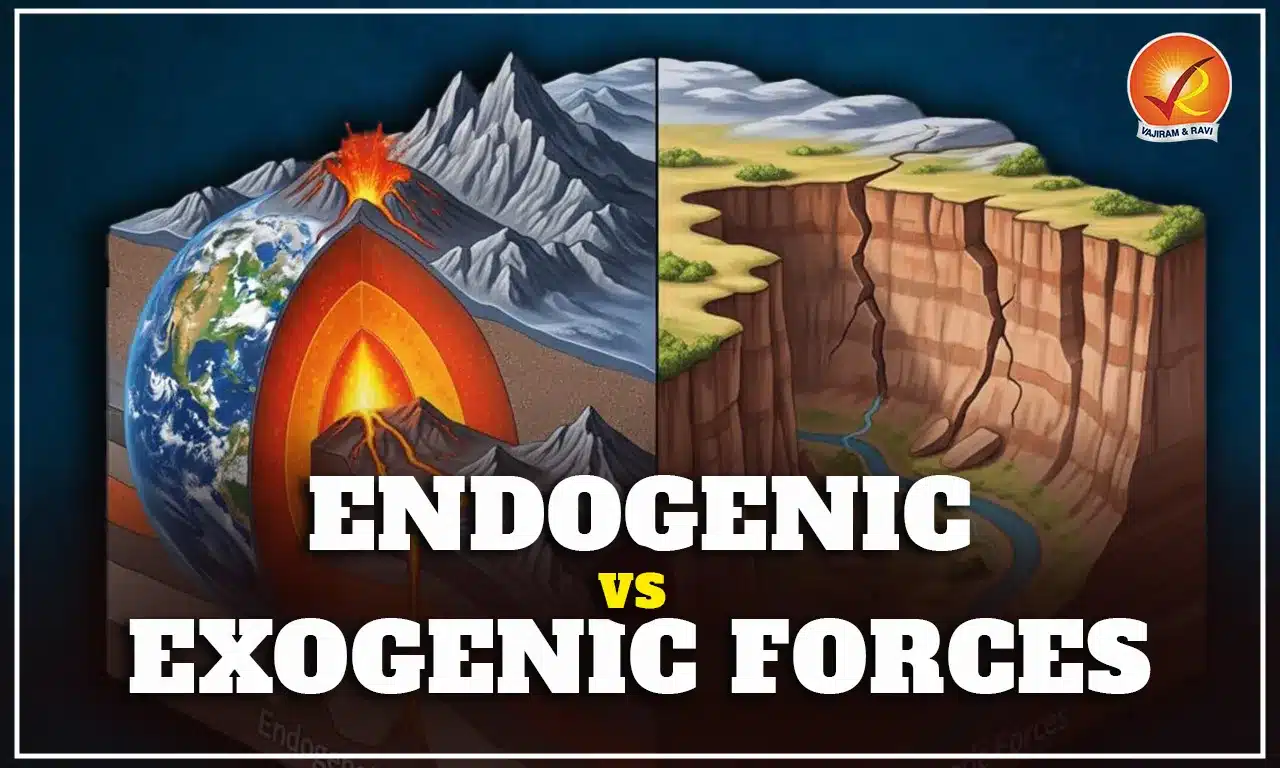
Changes that occur on the earth’s surface are the result of geomorphic processes. Broadly, these processes are grouped into two categories: exogenic and endogenic. Exogenic Forces, often called external forces, gain their energy from sources found on or above the earth’s surface, such as the atmosphere. In contrast, Endogenic Forces also known as internal forces arise from pressure and movements that originate deep within the earth’s interior.

Endogenic Forces

Endogenic Forces are those that originate from within the Earth’s interior. For this reason, they are also called internal forces. These forces are powerful enough to create some of the planet’s most dramatic features, such as mountains, volcanoes, and fault lines. They are also responsible for earthquakes, which occur when stresses inside the Earth are suddenly released.

Types of Endogenic Forces

Endogenic Forces can be grouped into two main categories: slow movements and sudden movements.

Slow Movements (Diastrophism)

Slow movements, also called diastrophic processes, involve the gradual displacement, uplift, or deformation of the Earth’s crust. Unlike sudden events like earthquakes, these movements occur over thousands or even millions of years. 

Diastrophism includes activities such as folding, faulting, warping, and fracturing. Collectively, these processes build vast geological structures such as mountain ranges, plateaus, rift valleys, continents, and ocean basins. Within diastrophism, there are two important processes:

  • Orogenic Processes - These are mountain-building processes caused by horizontal pressures within the Earth. Compression forces push rock layers together, causing them to fold and form Fold Mountains like the Himalayas. On the other hand, tension forces can stretch the crust, leading to fissures or faults.
  • Epeirogenic Processes - Unlike orogenic movements, these involve large-scale vertical uplifts or depressions of the Earth’s crust. They are also called radial movements, as they act along the Earth’s radius. Epeirogenic movements shape entire continental blocks, creating uplands, basins, or long undulating surfaces. They can be either upward (land rising) or downward (land subsiding).

Sudden Movements

Sudden geomorphic movements occur when pressure inside the Earth is released abruptly. They mostly take place along plate boundaries where tectonic stress is high due to the movement of magma and shifting lithospheric plates. Unlike slow movements, these events are rapid and can cause large-scale destruction. The most common examples are earthquakes and volcanic eruptions.

Features of Endogenic Forces

  • They originate within the Earth and act from beneath the crust.
  • These forces are responsible for plate tectonics, folding, faulting, volcanic activity, and earthquakes.
  • Endogenic processes can be slow and long-lasting, or sudden and violent.
  • They play a key role in forming landforms like Fold Mountains, rift valleys, plateaus, and volcanoes.
  • By shaping the Earth’s interior and surface, they directly influence the planet’s structure and geological evolution.

Exogenic Forces

Exogenic Forces are those that operate on the surface of the Earth, which is why they are often described as external forces. These forces are mainly responsible for processes like weathering, erosion, and deposition of rocks and sediments. Over long periods, they shape familiar landforms such as valleys, beaches, deltas, and even mountain slopes.

Types of Exogenic Forces

The major processes included under exogenic forces are weathering, mass wasting, and erosion. Collectively, they fall under the broad term denudation, which means stripping or uncovering the Earth’s surface. The natural elements that carry out these processes like wind, rivers, waves, and glaciers are called geomorphic agents.

Weathering

Weathering refers to the breaking down of rocks at or near the Earth’s surface through different natural forces such as wind, water currents, sea waves, and glaciers. It is essentially the decay or disintegration of rocks in their original place, without movement, and usually takes a very long time, sometimes hundreds or even thousands of years. Types of weathering include:

  • Physical Weathering - breakdown of rocks through temperature changes, frost action, or mechanical forces.
  • Chemical Weathering - decomposition of rocks due to chemical reactions, often involving water, oxygen, or acids.
  • Biological Weathering - disintegration caused by plants, animals, or microorganisms.

Erosion

Erosion involves the wearing away and transportation of soil, rock, or dissolved materials from one place to another by agents like wind, water, or ice. While weathering weakens and breaks rocks in place, erosion moves the broken material, often carving out valleys, shaping riverbanks, or depositing sediments in new areas.

Mass Movements

Mass Movement is the downslope movement of large quantities of soil, mud, rock fragments, or even entire sections of bedrock under the influence of gravity. This process can occur slowly (as in soil creep) or suddenly (as in landslides, avalanches, and rockfalls). It plays a major role in reshaping steep slopes and mountainous terrain.

Features of Exogenic Forces

  • They operate externally, acting on the Earth’s surface.
  • Their impact is gradual, working over long periods of time.
  • They cause weathering, erosion, deposition, and mass movements.
  • These processes continuously modify and reshape landforms such as valleys, deltas, dunes, and coastal features.
  • The landscapes we see around us are largely the result of these exogenic forces working in combination with internal forces.

Endogenic Vs Exogenic Forces

The Earth’s surface is shaped by a constant interaction between Endogenic Vs Exogenic Forces. While exogenic forces wear down and modify existing features through processes like weathering and erosion, endogenic forces build new structures by uplifting, folding, or fracturing the crust. Together, they are responsible for the creation of landforms such as mountains, valleys, volcanoes, plateaus, and rift systems.

Endogenic Vs Exogenic Forces

Endogenic Forces

Exogenic Forces

Originate from within the Earth’s interior and draw energy from internal heat.

Originate on or above the Earth’s surface, powered mainly by solar energy and atmospheric processes.

Responsible for building new landforms such as mountains, volcanoes, plateaus, and rift valleys.

Responsible for modifying or wearing down existing landforms through weathering, erosion, mass wasting, and deposition.

Also known as constructive forces because they create relief features on the Earth’s surface.

Often called destructive forces as they wear down or destroy existing features.

Driven by convection currents in the mantle, caused by differences in temperature, pressure, and density within the Earth.

Work due to gradients like high to low pressure, high to low temperature, or higher to lower levels of land.

Include processes like mountain building (orogeny), volcanism, continent formation, and earthquakes.

Include agents like wind, rivers, glaciers, waves, and rainfall.

Their impact is often sudden and dramatic, as in the case of earthquakes or volcanic eruptions.

Their impact is slow and gradual, becoming visible only over thousands or millions of years.

Endogenic Vs Exogenic Forces Similarities

Endogenic Vs Exogenic Forces work in very different ways, they share some common characteristics. Both are natural processes that operate without any human involvement, and together they are responsible for shaping the Earth’s surface. 

  • Both forces play a role in altering landforms and relief features over time.
  • Each sets in motion processes that contribute to the continuous cycle of landform development.
  • Weathering, erosion, uplift, and crustal movements, though different in mechanism, all combine to reshape the Earth’s surface.
  • Ultimately, both endogenic and exogenic forces ensure that the Earth’s surface is dynamic rather than static.
Other Related Posts
Geomorphology Major Dams in India
Composition and Structure of Atmosphere Major Ports in India
Types of Forests in India Coastal States of India
Ocean Acidification Migration in India
Deep Ocean Mission Natural Vegetation of India

Endogenic Vs Exogenic Forces FAQs

Q1: What is the difference between endogenic and exogenic forces?

Ans: Endogenic forces originate inside the Earth, causing uplift and deformation. Exogenic forces act on the surface, wearing down landforms through erosion, weathering, and deposition.

Q2: What are exogenic and endogenic forces with example class 7?

Ans: Endogenic forces like earthquakes and volcanism build landforms. Exogenic forces like wind, rivers, and glaciers modify them by erosion, transportation, and deposition.

Q3: What is the difference between endogenic and Exogenic cycles?

Ans: Endogenic cycles create relief features by internal activity. Exogenic cycles continuously wear them down, balancing landform evolution through erosion and deposition.

Q4: What is an example of an Exogenic force?

Ans: Running water is a classic exogenic force, shaping valleys, deltas, and floodplains by erosion, transportation, and deposition.

Q5: What are three examples for endogenic and exogenic processes?

Ans: Endogenic: Volcanism, earthquakes, mountain building, Exogenic: Weathering, river erosion, glacial action.

PM MITRA Parks

PM Mitra Park

PM MITRA Park Latest News

The Prime Minister recently laid the foundation stone of the country's first Pradhan Mantri Mega Integrated Textile Region and Apparel (PM MITRA) Park in Madhya Pradesh's Dhar District.

About PM MITRA Park

  • Pradhan Mantri Mega Integrated Textile Region and Apparel (PM MITRA) is a mega textile hub that brings every step of textile production, like spinning, weaving, dyeing, printing, and garment-making, into one single place. 
  • Each park covers a large area (about 1,000 acres or more) and acts as a complete ecosystem for textile manufacture.
  • MITRA parks can be either Greenfield or Brownfield.
  • The scheme is inspired by the vision “Farm to Fibre to Factory to Fashion to Foreign” and aims to make Indian textiles cheaper, faster to market, and of higher quality.
  • Nodal Ministry: Ministry of Textiles

PM MITRA Park Features

  • Integrated Value Chain: Each park brings spinning, garmenting, dyeing, and processing into a single zone, cutting transport time and costs.
  • World-Class Infrastructure: 
    • The parks have modern roads, reliable power and water, worker hostels, logistics, and plug-and-play factory units, with space for research, skill training, and commercial activity.
    • PM MITRA will develop 50% area for pure Manufacturing Activity, 20% area for utilities, and 10% of area for commercial development. 
  • Jobs and Investment: Each park is expected to create 1 lakh direct and 2 lakh indirect jobs. The project aims to attract over Rs 70,000 crore in investments.
  • Public–Private Partnership: PM MITRA park will be developed by a Special Purpose Vehicle (SPV) which will be owned by the State Government and the Government of India in a Public-Private Partnership (PPP) Mode.
  • Capital and Incentives:  
    • The Ministry of Textiles will provide financial assistance up to Rs 800 crores per park for Greenfield projects and up to Rs 500 crores per park for Brownfield projects. 
    • The State Governments will provide land and augmented utility infrastructure for the proposed mega textile parks. 

Where are the PM MITRA Parks?

  • The seven approved PM Mitra Parks are being set up in:
    • Tamil Nadu (Virudhunagar)
    • Telangana
    • Gujarat
    • Karnataka
    • Madhya Pradesh
    • Uttar Pradesh (Lucknow district)
    • Maharashtra

Source: NDTV

PM MITRA Park FAQs

Q1: Which ministry is the nodal ministry for the PM MITRA scheme?

Ans: Ministry of Textiles

Q2: PM MITRA Parks are developed through which model?

Ans: PM MITRA park will be developed by a Special Purpose Vehicle (SPV) which will be owned by the State Government and the Government of India in a Public-Private Partnership (PPP) Mode.

Q3: What is the maximum financial assistance provided for a Greenfield PM MITRA Park?

Ans: The Ministry of Textiles will provide financial assistance up to Rs 800 crores per park for Greenfield projects.

Q4: Name any three states where PM MITRA Parks are being established?

Ans: Tamil Nadu, Karnataka and Madhya Pradesh

Directorate of Revenue Intelligence (DRI)

Directorate of Revenue Intelligence

Directorate of Revenue Intelligence Latest News

As part of ongoing pan-India “Operation Weed Out”, the Directorate of Revenue Intelligence (DRI) has seized 39.2 kg of hydroponic weed at Chhatrapati Shivaji Maharaj International Airport, Mumbai, recently.

About Directorate of Revenue Intelligence

  • DRI was constituted in 1957 as the apex anti-smuggling intelligence and investigation agency.
  • It works under the Central Board of Indirect Taxes & Customs (CBIC), Ministry of Finance, Government of India. 
  • DRI enforces the provisions of the Customs Act, 1962, and over fifty other allied acts, including the Arms Act, NDPS Act, COFEPOSA (Conservation of Foreign Exchange and Prevention of Smuggling Activities), Wildlife Act, Antiquities Act, etc. 
  • It is tasked with detecting and curbing smuggling of contraband, including drug trafficking and illicit international trade in wildlife and environmentally sensitive items, as well as combating commercial frauds related to international trade and evasion of customs duty.
  • It has a country-wide network of zonal, regional, and sub-regional units and intelligence cells.
  • DRI collects, analyzes, and disseminates intelligence to the field formations, helps in investigations, and keeps statistics of seizures and prices/rates, etc, for watching trends of smuggling and movement of other contraband and suggest remedies for fixing loopholes in existing laws and procedures.
  • The DRI has also been designated as the lead agency for S-CORD, the national anti-smuggling coordination centre.
  • DRI has also been at the forefront in international Customs collaboration through Customs Mutual Assistance Agreements of CBIC with over 60 other countries, where the thrust is on information exchange and learning from the best practices of other Customs administrations.

Source: PIB

Directorate of Revenue Intelligence FAQs

Q1: Which ministry is the Directorate of Revenue Intelligence under?

Ans: It works under the Central Board of Indirect Taxes & Customs (CBIC), Ministry of Finance.

Q2: In which year was the Directorate of Revenue Intelligence (DRI) constituted?

Ans: DRI was constituted in 1957.

Q3: Which Act empowers Directorate of Revenue Intelligence (DRI) in the conservation of foreign exchange and prevention of smuggling activities?

Ans: COFEPOSA (Conservation of Foreign Exchange and Prevention of Smuggling Activities) Act

Q4: What is the main role of the Directorate of Revenue Intelligence?

Ans: It is India's apex anti-smuggling intelligence and investigation agency.

National Tiger Conservation Authority (NTCA)

National Tiger Conservation Authority (NTCA)

National Tiger Conservation Authority Latest News

The Supreme Court recently sought responses from the Centre, the National Tiger Conservation Authority (NTCA), and others on a PIL seeking a CBI probe into an alleged organised tiger-poaching and illegal wildlife-trade racket operating in states like Maharashtra and Madhya Pradesh.

About National Tiger Conservation Authority

  • It is a statutory body under the Ministry of Environment, Forest, and Climate Change (MoEFCC).
  • It was established in 2006 under the Wildlife (Protection) Act 1972 (WPA 1972).

National Tiger Conservation Authority Objectives

  • Providing statutory authority to Project Tiger so that compliance with its directives becomes legal.
    • The ‘Project Tiger’ is a Centrally Sponsored Scheme (CSS) of the Ministry of Environment, Forests and Climate Change, providing funding support to tiger range States for in-situ conservation of tigers in designated tiger reserves.
  • Fostering accountability of the Center-State in the management of Tiger Reserves by providing a basis for MoU with States within the federal structure.
  • Providing for an oversight by Parliament.
  • Addressing livelihood interests of local people in areas surrounding Tiger Reserves.

National Tiger Conservation Authority Composition

  • Minister in charge of MoEFCC (as Chairperson),
  • Minister of State in MoEFCC (as Vice-Chairperson),
  • three members of Parliament, the Secretary (MoEFCC), and other members.

National Tiger Conservation Authority Power and Functions

  • Powers and functions of the NTCA as prescribed under the WPA 1972, as amended in 2006, are as under:
    • to approve the tiger conservation plan prepared by the State Government.
    • evaluate and assess various aspects of sustainable ecology and disallow any ecologically unsustainable land use, such as, mining, industry, and other projects within the tiger reserves.
    • lay down normative standards for tourism activities and guidelines for Project Tiger from time to time for tiger conservation in the buffer and core area of tiger reserves and ensure their due compliance.
    • provide for management focus and measures for addressing conflicts of men and wild animals and to emphasize coexistence in forest areas outside the National Parks, sanctuaries, or tiger reserves, in the working plan code.
    • provide information on protection measures, including future conservation plans, estimation of the population of tiger and their natural prey species, status of habitats, disease surveillance, mortality surveys, patrolling, reports on untoward happenings, and such other management aspects as it may deem fit, including future conservation plans.
    • Approve and coordinate research and monitoring on tigers, co-predators, prey habitat, related ecological and socio-economic parameters, and their evaluation.
    • ensure that the tiger reserves and areas linking one protected area or tiger reserve with another protected area or tiger reserve are not diverted for ecologically unsustainable uses, except in the public interest and with the approval of the National Board for Wild Life and on the advice of the NTCA.
    • facilitate and support the tiger reserve management in the State for biodiversity conservation initiatives through eco-development and people’s participation as per approved management plans and to support similar initiatives in adjoining areas consistent with the Central and State laws.
    • ensure critical support, including scientific, information technology, and legal support, for better implementation of the tiger conservation plan.
    • facilitate ongoing capacity building programme for skill development of officers and staff of tiger reserves, and
    • perform such other functions as may be necessary to carry out the purposes of this Act with regard to conservation of tigers and their habitat.
  • The NTCA may, in the exercise of its powers and performance of its functions under this Chapter, issue directions in writing to any person, officer or authority for the protection of tiger or tiger reserves and such person, officer or authority shall be bound to comply with the directions.

Source: NIE

National Tiger Conservation Authority FAQs

Q1: The National Tiger Conservation Authority (NTCA) is a statutory body under which ministry?

Ans: Ministry of Environment, Forest, and Climate Change

Q2: Who heads the National Tiger Conservation Authority?

Ans: It is headed by the Union Minister of Environment, Forests and Climate Change as the Chairperson.

Q3: When was the National Tiger Conservation Authority constituted?

Ans: The National Tiger Conservation Authority (NTCA) was established in 2006 under the Wildlife (Protection) Act 1972 (WPA 1972).

United Nations Human Rights Council

United Nations Human Rights Council

United Nations Human Rights Council Latest News

Recently, India defended Qatar’s sovereignty at the United Nations Human Rights Council (UNHRC).

About United Nations Human Rights Council

  • It was created by the General Assembly on 15 March 2006 by replacing the Commission on Human Rights.
  • It is an inter-governmental body within the United Nations system, which is responsible for strengthening the promotion and protection of human rights around the world.
  • Mandate: To promote “universal respect for the protection of all human rights and fundamental freedoms for all” and “address situations of violations of human rights, including gross and systematic violations, and make recommendations thereon.”
  • Member countries: The Council is made up of 47 Member States, which are elected by the UN General Assembly through direct and secret ballot.
  • The Council’s Membership is based on equitable geographical distribution.
  • Members of the Council serve for a period of three years and are not eligible for immediate re-election after serving two consecutive terms.

Functions of United Nations Human Rights Council

  • It investigates allegations of breaches of human rights in UN member states.
  • It addresses important human rights issues such as freedom of expression, women’s rights, LGBT rights, and the rights of racial and ethnic minorities.
  • The UNHRC works closely with the Office of the High Commissioner for Human Rights (OHCHR).

Source: TH

United Nations Human Rights Council FAQs

Q1: Where is the headquarters of the UNHRC?

Ans: Geneva, Switzerland

Q2: What is the Human Rights Council in the United Nations?

Ans: The Human Rights Council is the main intergovernmental body within the United Nations responsible for human rights.

Bima Sugam Portal

Bima Sugam

Bima Sugam Portal Latest News

Recently, the Insurance Regulatory and Development Authority of India has officially announced the launch of the much-awaited Bima Sugam portal.

About Bima Sugam Portal

  • It is a unified digital marketplace for insurance, designed to bring insurers, intermediaries, and customers onto a single platform.
  • It is backed by the Life Insurance Council and the General Insurance Council (GIC).

Features of Bima Sugam Portal

  • It helps users to buy, sell, service, renew, manage, and even claim insurance policies with ease and full transparency.
  • This platform will serve as a centralised database to answer insurance-related queries and help consumers navigate the complex world of insurance.
  • It also aims to accelerate the acceptance of new and sandbox products, opening the door for innovation in insurance offerings.
  • It will cover life insurance in all its forms, including term plans, savings products, annuity and pension plans, as well as ULIP products.
  •  It also provides health insurance options, addressing the full range of medical and wellness needs.
  • It will remain flexible to host any new insurance products that may be introduced in the future, as determined by the regulatory councils.
  • It will leverage advanced digital technologies to automate and digitise processes for multiple stakeholders,

Source: IE

Bima Sugam Portal FAQs

Q1: What is the role of Insurance Regulatory and Development Authority of India?

Ans: It is a statutory body formed under the Insurance Regulatory and Development Authority Act, 1999 for the overall supervision and development of the insurance sector in India.

Q2: What is the definition of insurance?

Ans: It is a contract between an individual or business with an insurance company to help provide financial protection and mitigate the risks associated with certain situations or events.

Bima Sugam: One-Stop Digital Insurance Marketplace for Policyholders

Bima Sugam digital insurance marketplace

Bima Sugam Digital Insurance Marketplace Latest News

  • Bima Sugam, envisioned as the world’s largest online insurance marketplace, was officially launched by the Bima Sugam India Federation (BSIF) at IRDAI’s Hyderabad headquarters. 
  • The platform will roll out features in phases—starting as an information and guidance hub, with full-fledged transactions to follow as insurers and partners integrate. 
  • This phased approach aims to allow the insurance ecosystem time to adapt.

Bima Trinity: India’s Three-Pronged Insurance Strategy

  • Earlier, the central government, through IRDAI, had launched Bima Trinity to enhance insurance penetration by focusing on the three As — availability, affordability, and accessibility.

Components of Bima Trinity

  • Bima Sugam: A unified digital portal integrating insurers and distributors on one platform.
  • Bima Vistaar: A comprehensive, affordable, all-in-one insurance product.
  • Bima Vahak: A women-led field distribution network to expand reach.

Bima Sugam: India’s Unified Digital Insurance Marketplace

  • Launched by IRDAI, Bima Sugam is being hailed as a groundbreaking initiative, unmatched in scale worldwide. 
  • Unlike other countries’ digital channels, it offers a single, unified marketplace for all insurance needs—life, health, motor, travel, property, and agricultural policies—on one platform.
  • Bima Sugam allows users to buy, sell, renew, manage, and claim insurance policies with ease and full transparency. 
  • Policy documents will be securely stored, ensuring easy access. 
  • It aims to do for insurance what UPI and NPCI have done for digital payments by creating common infrastructure for all stakeholders.
  • The platform charges minimal fees and has all insurance companies as members, many of whom also hold equity stakes in the Bima Sugam India Federation (BSIF), which manages the system.
  • Unlike private aggregators such as PolicyBazaar, which mainly distribute policies and earn high commissions, Bima Sugam offers end-to-end services including claim settlement, making it a low-cost, integrated, and transparent alternative.

Bima Sugam: A Milestone in India’s Digital Insurance Infrastructure

  • For the first time, insurers, agents, brokers, banks, and aggregators will operate under one platform, enabling customers to easily compare, purchase, and manage policies. 
  • It will also function as a centralised database to resolve queries and promote innovation by supporting new and sandbox products.

Step Towards Digital Public Infrastructure

  • IRDAI hailed Bima Sugam as the first visible step in building India’s Digital Public Infrastructure (DPI) for insurance. 
  • This foundation aims to simplify access, increase transparency, and redefine how citizens secure financial protection.

Empowering Policyholders and Expanding Coverage

  • Bima Sugam is a “critical step” toward insurance reform. 
  • It would empower policyholders, deepen penetration, and ensure fairness across the value chain, aligning with the national goal of Insurance for All by 2047 under Viksit Bharat 2047.
  • With hundreds of insurance schemes available, customers often struggle to compare options. Bima Sugam will help them identify the most suitable plan transparently.

Support for Insurers and Intermediaries

  • The portal will provide insurers real-time access to validated data and help agents/intermediaries sell and service policies efficiently while reducing paperwork.

Universalising and Democratising Insurance

  • Bima Sugam, designed as an electronic marketplace protocol, aims to make insurance universal and accessible. 
  • Linked with India Stack APIs, it ensures seamless delivery of digital services nationwide.

Bima Sugam: Wide-Ranging Insurance Offerings

  • Bima Sugam will host diverse life insurance products, including term plans, savings (participating and non-participating), annuities, pensions, and ULIPs. 
  • It will also provide extensive health insurance solutions covering medical and wellness needs.
  • The platform will offer motor insurance, including third-party liability and own-damage cover. 
  • It will also provide travel insurance and personal accident policies for individuals and families.
  • Businesses can access property and commercial insurance products, including marine, agricultural, and industry-specific covers, ensuring broad protection for multiple sectors.

Future-Ready Ecosystem

  • The marketplace is designed to remain flexible, accommodating new products introduced by regulatory councils. 
  • Industry leaders described Bima Sugam as a transformative step toward an inclusive, seamless, and tech-driven ecosystem, setting a global benchmark in digital public infrastructure.

Source: IE | MC | TH

Bima Sugam FAQs

Q1: What is Bima Sugam?

Ans: Bima Sugam is India’s unified digital insurance marketplace, allowing users to buy, manage, and claim policies across life, health, motor, and more on one platform.

Q2: How does Bima Sugam benefit policyholders?

Ans: It offers a single window for purchase, servicing, and claims, empowering consumers with transparency and easier comparison of hundreds of insurance products.

Q3: How is Bima Sugam different from private aggregators?

Ans: Unlike PolicyBazaar, Bima Sugam provides end-to-end services including claim settlement, with minimal charges and equity participation by insurers themselves.

Q4: What role does Bima Sugam play in India’s Digital Public Infrastructure?

Ans: It marks the first step toward building DPI for insurance, aiming to democratise access and achieve the goal of Insurance for All by 2047.

Q5: What range of insurance products will Bima Sugam host?

Ans: It will cover life, health, motor, travel, property, agriculture, and commercial insurance, with flexibility to include new products in the future.

India’s New Geothermal Energy Policy: Potential, Benefits, and Challenges

India Geothermal Energy Policy

India Geothermal Energy Policy Latest News

  • According to the govt, India’s new national geothermal energy policy aims to test the technology’s commercial viability, with firms from the US, Iceland, and Norway exploring R&D and pilot projects in the Gulf of Cambay, Arunachal Pradesh, and Uttarakhand.

About Geothermal Energy

  • Geothermal energy harnesses the Earth’s heat from hot springs or underground reservoirs, using steam to generate electricity
  • It can also provide heating, cooling, greenhouse support, and aquaculture benefits. 
  • The Geological Survey of India (GSI) has identified 381 hot springs with surface temperatures of 35°C to 89°C.

How it Works: The Process

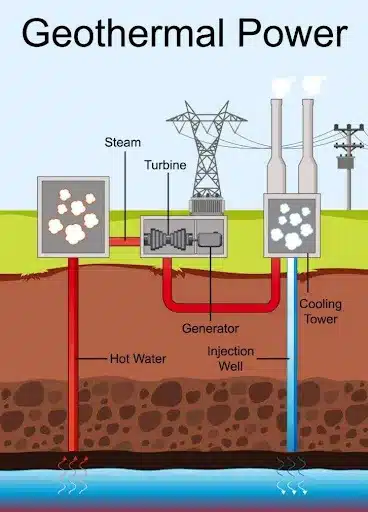
  • The process of harnessing geothermal energy typically involves drilling wells to access underground reservoirs of hot water and steam, known as hydrothermal resources

  • The most common method for generating electricity from these resources involves a few key steps:
    • Extraction: Wells are drilled deep into the Earth to tap into geothermal reservoirs.
    • Conversion: The hot water or steam is brought to the surface. In a dry steam plant, the steam is used directly to spin a turbine. In a flash steam plant, high-pressure hot water is converted to steam in a "flash tank" before it turns the turbine.
    • Electricity Generation: The spinning turbine is connected to a generator, which converts the mechanical energy into electricity.
    • Reinjection: The cooled water or condensed steam is then pumped back into the geothermal reservoir, a crucial step for maintaining the pressure and sustainability of the resource.

India’s Geothermal Potential

  • India’s estimated geothermal potential is 10.6 GW, with major sites in the Himalayan Geothermal Province (Uttarakhand, Himachal Pradesh, Ladakh, Jammu and Kashmir, Arunachal Pradesh), the Cambay Graben in Gujarat, and the Andaman and Nicobar Islands. 
  • Abandoned oil wells in Cambay and Gandhar (ONGC, Gujarat) are being considered for geothermal use.

Global Geothermal Capacity

  • Globally, geothermal capacity is less than 17 GW, dominated by the US, Indonesia, and the Philippines, while Iceland and Norway lead in technology innovation.
  • The US International Trade Administration identified Ladakh’s Puga and Chumathang fields as India’s most promising. 
  • According to the International Energy Agency (IEA), China, the US, and India account for 75% of next-generation geothermal potential, with India’s capacity projected to reach 4.2 GW by 2035 and nearly 100 GW by 2045.

India’s Geothermal Energy Push

  • The Ministry of New and Renewable Energy (MNRE) launched its geothermal energy policy, to promote exploration and development. 
  • Companies from Norway and Iceland have begun pilot studies in the Gulf of Cambay, Arunachal Pradesh, and Uttarakhand.
  • Collaborations with the US and Indonesia are also being explored, especially for enhanced geothermal systems suited for large-scale power plants.

Potential Benefits in Remote Areas

  • According to the policy, geothermal energy can transform energy access in remote regions. 
  • In the Andaman and Nicobar Islands, where electricity costs ₹30–32 per unit, geothermal could reduce costs to ₹10–11 per unit. 
  • In Ladakh, it could supply both heating and electricity during extreme winters.

Repurposing Oil Wells

  • India has thousands of abandoned oil wells, particularly in the Gulf of Cambay, which can be repurposed for geothermal use. 
  • Oil and gas firms are showing interest: IIT Madras is piloting a 450 kWh project in Barmer, Rajasthan, with support from MNRE and Vedanta’s Cairn Oil & Gas. 
  • Reliance Industries also plans to expand into geothermal through its oil and gas business.

Challenges and Policy Support

  • Geothermal projects face high upfront costs and exploration risks, with an estimated ₹36 crore required per megawatt of capacity
  • To address this, the National Policy on Geothermal Energy will support R&D, pilot projects, and coordination across stakeholders, including the Ministry of Petroleum and Natural Gas and state governments. 
  • A viability gap funding (VGF) scheme is also being considered.

Ongoing Initiatives

  • MNRE has already sanctioned five projects, including one backed by Vedanta. 
  • With the new policy, it expects to expand this list. 
  • The policy follows the creation of an MNRE task force on geothermal energy (formed in August 2024) and aims to demonstrate commercial feasibility while building technical and financial frameworks for scaling up.

Source: IE | FE

India Geothermal Energy Policy FAQs

Q1: What is geothermal energy and how is it used?

Ans: Geothermal energy harnesses Earth’s heat from hot springs or reservoirs to generate electricity, heating, cooling, greenhouse support, and aquaculture benefits.

Q2: What is India’s geothermal potential?

Ans: India has an estimated 10.6 GW potential, mainly in Himalayan provinces, Cambay Graben, and the Andaman Islands, with prospects for expansion through further exploration.

Q3: How does the new policy support geothermal development?

Ans: It promotes R&D, pilot projects, repurposing oil wells, and viability gap funding, while coordinating efforts across MNRE, state governments, and petroleum ministries.

Q4: What benefits can geothermal bring to remote areas?

Ans: In Andaman, power costs could drop from ₹30 to ₹10 per unit; in Ladakh, geothermal can provide both electricity and winter heating.

Q5: What challenges does geothermal face in India?

Ans: High upfront costs (~₹36 crore per MW) and exploration risks are major hurdles, but policy support and industry pilots aim to demonstrate commercial feasibility.

EU-India Strategic Roadmap: Trade, Tech, and Defence

EU-India Strategic Roadmap

EU-India Strategic Roadmap Latest News

  • The European Union has unveiled a new EU-India Strategic Roadmap to boost cooperation in trade, technology, defence, connectivity, and climate action.

Introduction

  • The European Union (EU) has announced a comprehensive new strategic roadmap with India, aimed at strengthening ties across trade, technology, defence, connectivity, and climate action. 
  • This initiative comes at a time of shifting global geopolitics and underscores the recognition of India as a vital partner for Europe in ensuring growth, security, and a rules-based global order. 
  • The roadmap seeks to elevate bilateral cooperation to a higher level, laying the groundwork for long-term engagement.

EU-India Strategic Roadmap: Background and Vision

  • The roadmap was unveiled by European Commission President Ursula von der Leyen
  • It is presented as part of the EU’s joint communication on a New Strategic EU-India Agenda, reflecting the bloc’s intent to deepen relations with India.
  • The Commission emphasised the shared values and mutual benefits driving the partnership, noting that Europe is already India’s largest trading partner. 
  • It highlighted the aim to finalise the Free Trade Agreement (FTA) with India by the end of the year, which would become the largest deal of its kind globally.
  • At the same time, EU officials acknowledged points of contention, such as India’s purchase of Russian oil and participation in Russian military exercises, which could pose challenges in advancing ties.

Key Areas of Cooperation

  • Trade and Economic Ties
    • The EU is India’s biggest trading partner and views the FTA as a central element of the roadmap.
    • The strategy emphasises diversifying supply chains, enhancing investment flows, and fostering a conducive environment for business.
    • The proposal includes the creation of an EU-India Business Forum to increase business-to-business engagement.
  • Technology and Innovation
    • A strong focus has been placed on critical emerging technologies, digital transformation, and strengthening the EU-India Trade and Technology Council (TTC).
    • Initiatives include deepening digital cooperation, supporting startups, and inviting India to associate with the Horizon Europe programme, aimed at research and innovation.
  • Defence and Security Cooperation
    • The roadmap introduces a proposed EU-India Security and Defence Partnership, covering maritime security, cyber defence, crisis management, and counterterrorism.
    • It suggests launching negotiations for a Security of Information Agreement to facilitate classified information exchange.
    • The plan also emphasises strengthening defence industrial collaboration to boost technological capabilities and innovation.
  • Connectivity and Global Governance
    • The roadmap highlights regional connectivity initiatives such as the India-Middle East-Europe Economic Corridor (IMEC) and trilateral cooperation projects under the EU Global Gateway.
    • It prioritises cooperation in multilateral forums, promoting international law, and supporting global governance reforms.
    • Labour mobility is also being addressed through a European Legal Gateway Office and a broader mobility cooperation framework covering study, work, and research opportunities.
  • Climate Change and Sustainability
    • The agenda commits both sides to advancing climate action and clean energy cooperation, aligning with their shared global responsibility to combat climate change.
    • Cooperation will also extend to sustainable development initiatives and green technologies.

India’s Response and Global Implications

  • Prime Minister Narendra Modi welcomed the roadmap, reaffirming India’s commitment to strengthening its partnership with the EU. 
  • He emphasised India’s stance on a peaceful resolution of the Ukraine conflict and reiterated his invitation for the next India-EU Summit to be hosted in India.
  • The strategic roadmap reflects India’s growing global influence and the EU’s recognition of New Delhi as a critical partner in reshaping global economic and security architecture. 
  • Both sides acknowledge disagreements but underscore the broader alignment of interests in maintaining a rules-based international order.

Source: IE

EU-India Strategic Roadmap FAQs

Q1: What is the focus of the EU-India Strategic Roadmap?

Ans: It aims to deepen cooperation in trade, technology, defence, connectivity, and climate action.

Q2: Why is the EU-India Free Trade Agreement significant?

Ans: The FTA, once finalized, would be the largest deal of its kind in the world, boosting bilateral trade and investment.

Q3: How does the roadmap address defence and security?

Ans: It proposes a Security and Defence Partnership covering maritime security, cyber defence, and defence industrial cooperation.

Q4: What role does technology play in the roadmap?

Ans: It emphasizes emerging technologies, digital cooperation, startup partnerships, and research through the Horizon Europe programme.

Q5: What challenges could affect closer EU-India ties?

Ans: Differences over India’s purchase of Russian oil and participation in Russian military exercises remain key concerns.

Qatar

Qatar

Qatar Latest News

India recently defended Qatar’s sovereignty at the U.N. Human Rights Council.

About Qatar

  • Qatar, officially the State of Qatar, is a country located in Western Asia.
  • It is located on the northeastern coast of the Arabian Peninsula.
  • It has a total area of 11,586 sq.km. 
  • It shares a sole land border with Saudi Arabia to the south and is surrounded by the Persian Gulf on all other sides. 
  • The Gulf of Bahrain separates Qatar from the Kingdom of Bahrain. 
  • Doha is its capital and largest city. 
  • Languages: Arabic is the official and English is the common language in the country. 
  • Official Currency: Riyal (QAR) 
  • Qatar has been ruled by the House of Thani family since 1868. 
  • It was a British protectorate from 1916 and became fully independent in 1971. 

Qatar Landscape

  • The landscape of Qatar is primarily flat and barren desert. 
  • Sand dunes dominate the southern part of the country, especially in the area known as the Khor al Adaid, or the “Inland Sea”.
  • To the north and west, the terrain turns slightly rockier and features low-rising limestone formations. 
  • Qatar has wadis, which are valleys that remain dry except during the rainy season when they can briefly turn into rivers.
  • One of the most distinct geographical features of Qatar is its salt flats or sabkhas. They form as a result of the country's high evaporation rates, which leave behind salt deposits. 
  • It includes a number of islands in the coastal waters of the peninsula. Hawar Archipelago, Halul and Al Bashiria are the most well known among these. 

Qatar Ethnic Groups

  • Qatar was originally settled by Bedouin nomads from the central part of the Arabian Peninsula. 
  • Qatari citizens, however, constitute only a small portion—roughly one-ninth—of the total population today. 
  • Economic growth beginning in the 1970s created an economy dependent on foreign workers—mostly from Pakistan, India, and Iran—who now far outnumber nationals. 
  • Few Qataris retain a nomadic lifestyle.

Qatar Economy

  • The Qatari economy is, to a very large extent, dependent on income derived from the exploitation of oil, natural gas and subsidiary industry, which accounts for more than 90 percent of annual exports. 
  • It has the third largest reserves of liquefied natural gas (LNG) in the world.
  • Doha, the capital city, is a regional financial hub, home to various international banks, financial institutions, and investment firms.

Source: TH

Japanese Encephalitis

Japanese Encephalitis

Japanese Encephalitis Latest News

Researchers have found that waning immunity against infections of the Japanese encephalitis virus (JEV) can predispose individuals to more severe dengue.  

About Japanese Encephalitis

  • It is a viral zoonotic disease caused by the Japanese Encephalitis(B) virus.
  • Japanese encephalitis virus (JEV) is a flavivirus related to dengue, yellow fever and West Nile viruses.

Transmission of Japanese Encephalitis

  • The virus is transmitted to humans by the infected Culex mosquito of the Vishnui group.
  • There is no human-to-human transmission of the virus.
  • It is most common in rural areas of Asia, particularly during monsoon seasons when mosquito breeding is prevalent.
  • Both Japanese encephalitis virus and dengue virus belong to the same genus, Orthoflavivirus.

Symptoms of Japanese Encephalitis

  • It affects the brain, leading to symptoms like fever, headache, vomiting, and neurological signs such as confusion, seizures, and paralysis.
  • While many infected individuals may show mild or no symptoms, severe cases can lead to permanent brain damage or death.

Prevention and Treatment for Japanese Encephalitis

  • Vaccination is the most effective prevention strategy, particularly in endemic regions.
  • There is no antiviral treatment for patients with JE. Treatment is supportive and includes stabilization and relief of  symptoms.  
  • According to the Government of India’s guidelines, two doses of the vaccine have been a part of the Universal Immunisation Programme since 2013.

Source: TH

Japanese Encephalitis FAQs

Q1: Who is most at risk for encephalitis?

Ans: People who have HIV/AIDS, take immune-suppressing medicines are at increased risk of encephalitis.

Q2: What is the cause of Japanese encephalitis?

Ans: Japanese encephalitis is caused by a virus that is found in Asia and the western Pacific.

Daily Editorial Analysis 18 September 2025

Daily Editorial Analysis

A Judicial Nudge Following Stuck Legislative Business

Context

  • The role of the Governor in India’s constitutional scheme has long been a subject of debate, especially in relation to legislative assent under Article 200.
  • Recent judicial interventions, including the Supreme Court’s judgments in State of Punjab vs Principal Secretary to the Governor (2023) and The State of Tamil Nadu vs The Governor of Tamil Nadu and Anr. (2025), have reignited this discourse.
  • By prescribing a time limit of three months for Governors and the President to act on Bills, the Court sought to address a persistent constitutional deadlock.
  • However, this directive has raised questions about judicial overreach and the balance of powers.

The Constitutional Framework of Article 200

  • Article 200 provides the Governor with four options when a Bill is passed by a state legislature:
    • To assent to the Bill.
    • To withhold assent.
    • To return the Bill (if it is not a money bill) for reconsideration.
    • To reserve the Bill for the consideration of the President.
  • On its face, this provision seems to give significant powers to the Governor.
  • However, under Article 163, the Governor is required to act on the aid and advice of the Council of Ministers, except in explicitly stated situations.
  • This establishes the principle that the Governor is not an independent executive authority but a constitutional head.

The Debate on Discretion and Judicial Precedents

  • The Debate on Discretion

    • A crucial question has been whether Article 200 allows the Governor to act at his own discretion.
    • Historically, the Government of India Act, 1935 contained a similar provision (Section 75) but explicitly used the phrase in his discretion.
    • The omission of this phrase in the Constitution of India indicates that the framers intended to exclude any element of discretion from the Governor’s powers under Article 200.
  • Judicial Precedents

    • In Shamsher Singh vs State of Punjab (1974), the Court recognised a narrow discretionary space for Governors under Article 200.
    • In Nabam Rebia (2016), the Court reaffirmed the principle that the Governor must act on ministerial advice.
    • Most recently, in The State of Tamil Nadu vs The Governor of Tamil Nadu (2025), the Court categorically rejected the idea of independent discretion, warning against turning the Governor into a super-constitutional figure capable of paralyzing the legislature.
    • Thus, while commissions such as Sarkaria and Punchhi have acknowledged rare situations where discretion might be justified (e.g., patently unconstitutional Bills), the dominant constitutional position remains that the Governor is bound by the advice of the elected government.

The Problem of Delay and the Judicial Response

  • One of the most pressing issues has been the indefinite delays by Governors in acting on Bills.
  • Several States have witnessed situations where Governors sat on crucial Bills for years, neither assenting, returning, nor reserving them.
  • Such inaction effectively thwarts the legislative process and undermines the will of the people expressed through their representatives.
  • The Constitution itself does not prescribe a timeline under Articles 200 or 201. Yet, the Supreme Court, recognizing the constitutional vacuum, fixed a three-month limit for action.
  • Critics, including sections of the media and the Union Government, argue that such timelines amount to judicial law-making.
  • However, the Court justified its intervention by pointing to the necessity of ensuring that the spirit of federalism and representative democracy is not frustrated by constitutional heads.

The Union’s Role and Article 355

  • Recent SC judgements raise a significant question; If Governors fail to act, can the Union intervene?
  • Article 355 obligates the Union to ensure that State governments function in accordance with the Constitution.
  • A creative interpretation of this provision would allow the Union to direct Governors to fulfil their constitutional duties.
  • However, in practice, the Union has never exercised this responsibility, compelling judicial intervention as the only available remedy.

Broader Constitutional Implications of the Supreme Court Judgements

  • The Court’s judgments represent an assertion of judicial creativity in constitutional interpretation.
  • Critics argue that by imposing timelines, the judiciary has ventured into legislative or constitutional amendment.
  • Yet, as seen in earlier cases such as Maneka Gandhi (1978), where Article 21 was expanded through judicial interpretation, the Court has consistently played a role in adapting constitutional provisions to new and unforeseen challenges.
  • The real issue lies not in judicial overreach but in the failure of political and constitutional functionaries to respect the basic framework of the Constitution.

Conclusion

  • The debate over Article 200 highlights the tension between constitutional theory and political practice.
  • The omission of discretion from the Constitution reflects the framers’ intent to subordinate the Governor’s role to the elected government.
  • However, political misuse and inaction have necessitated judicial intervention.
  • By imposing a time limit and reaffirming the Governor’s lack of independent discretion, the Supreme Court has reinforced the principles of parliamentary democracy and cooperative federalism.

A Judicial Nudge Following Stuck Legislative Business FAQs

Q1. What options does Article 200 give the Governor when a Bill is passed by the State legislature?
Ans. Article 200 allows the Governor to assent to the Bill, withhold assent, return it for reconsideration, or reserve it for the President’s consideration.

Q2. Why was the phrase in his discretion omitted from Article 200?
Ans. The omission indicates that the framers intended the Governor to act only on the advice of the Council of Ministers, not independently.

Q3. What problem prompted the Supreme Court to fix a time limit for Governors and the President to act on Bills?
Ans. The Court acted because some Governors had kept Bills pending for years without making a decision, which disrupted the legislative process.

Q4. How can Article 355 be interpreted in relation to Governors sitting on Bills?

Ans. Article 355 can be interpreted to mean that the Union has a duty to ensure Governors perform their constitutional functions and do not block State legislation.

Q5. What broader constitutional principle did the Court uphold by imposing a time limit?
Ans. The Court upheld the principles of parliamentary democracy and federalism by preventing Governors from paralyzing the legislative process.

Source: The Hindu


Welfare at the Mercy of the Machine

Context:

  • Kurt Vonnegut’s 1952 novel Player Piano warned of automation creating a polarised society, with engineers controlling machines and workers left powerless.
  • Today, India’s welfare delivery reflects a similar trend, as digital automation tools increasingly dominate.
  • The government’s latest move is the mandatory use of Facial Recognition Software (FRS) in Anganwadis.
  • This article highlights how the government’s push for mandatory Facial Recognition Software (FRS) in Anganwadis mirrors Kurt Vonnegut’s dystopian warning, exposing beneficiaries and workers to technological hurdles, misplaced priorities, and dignity concerns.

About Anganwadis

  • Established in 1975 under the Integrated Child Development Scheme, India’s 14.02 lakh Anganwadis provide preschool education and crucial nutrition support.
  • Each centre, run by local women workers and helpers, is responsible for distributing Take Home Rations (THR) to children under three, and pregnant and lactating women, as mandated by the National Food Security Act, 2013.

Facial Recognition in Anganwadis: A Misguided Fix

  • The Union government launched the Poshan Tracker app in 2021 to monitor nutrition services, requiring Anganwadi Workers (AWWs) to upload data regularly.
  • Since July 1, pregnant and lactating women must authenticate their identity through Facial Recognition Software (FRS) integrated with the app.
  • The intended aims are to prevent beneficiaries from faking identity and to stop diversion of food by workers.
  • However, this assumes both beneficiaries and AWWs are guilty until proven innocent, undermining natural justice.

Practical Hurdles in Implementation

  • AWWs face multiple difficulties with FRS. Many women’s phone numbers have changed, OTPs are hard to share, and face-matching errors are common
  • Weak network connectivity, outdated phones, and heavy data processing requirements further delay the process.
  • Often, photos must be taken repeatedly, frustrating both AWWs and beneficiaries.
  • Despite personally knowing the women and children, AWWs cannot override the app, leaving genuine recipients denied food.

Ignoring Core Issues

  • The real problems with Take Home Rations (THR) are poor quality, irregular supply, a stagnant budget of ₹8 per child since 2018, and corruption in contracts.
  • Large companies still supply rations despite Supreme Court orders for decentralisation.
  • Instead of fixing these issues, the FRS targets “fake beneficiaries,” though there is little evidence of such fraud.
  • It was also introduced without consulting Anganwadi staff.
  • A Better Approach
    • For effective welfare delivery, the government should publish evidence of fraud, if any, and prioritise community monitoring over intrusive technologies.
    • Addressing systemic issues in THR supply would serve beneficiaries better than flawed facial recognition verification.

Facial Recognition in Welfare: A Question of Dignity

  • Facial Recognition Software (FRS), typically used in criminal investigations, raises serious concerns when applied to vulnerable communities.
  • Using it in Anganwadis treats women and children as suspects rather than citizens.
  • Notably, FRS is even banned in San Francisco, the global hub of digital innovation.
  • Early childhood care should not be delayed until software becomes accurate.

Conclusion

  • Extending Vonnegut’s warning, welfare cannot turn into an “engineer’s paradise” at the cost of human dignity.
  • The real choice lies between authentication and the authentic, dehumanisation and dignity, and between fracturing communities and upholding fraternity.

Welfare at the Mercy of the Machine FAQs

Q1. Why is Facial Recognition Software being introduced in Anganwadis?

Ans. The government aims to prevent identity fraud and ration diversion by integrating FRS into the Poshan Tracker app, making it mandatory for beneficiaries.

Q2. What practical challenges do Anganwadi Workers face with FRS?

Ans. Workers struggle with poor connectivity, outdated phones, frequent face-matching errors, and repeated photo attempts, often leaving genuine beneficiaries without food.

Q3. What are the core issues with Take Home Rations (THR) that remain unaddressed?

Ans. Real problems include poor quality, irregular supply, stagnant ₹8 budget since 2018, corruption in contracts, and violations of decentralisation orders by the Supreme Court.

Q4. Why is the use of FRS in Anganwadis criticised as undignified?

Ans. FRS treats women and children as suspects, not citizens, ignoring trust and dignity; even San Francisco has banned its use in public welfare.

Q5. What better approach is suggested instead of FRS for welfare delivery?

Ans. Experts recommend community monitoring, publishing evidence of fraud if any, and addressing systemic ration issues rather than relying on intrusive, error-prone technologies.

Source: TH


Disaster Management in the Himalayas - Lessons from Monsoon 2025

Context:

  • The devastating floods and landslides during Monsoon 2025 in Jammu & Kashmir (J&G), Himachal Pradesh, Punjab, and Uttarakhand highlighted both the strengths and limitations of India’s disaster response system.
  • While armed forces, disaster response agencies, and volunteers showcased commendable speed and innovation, the events underscored the fragility of Himalayan ecosystems, and growing climate change
  • Hence, there is the urgent need for community participation and technological scaling-up in disaster preparedness.

Impact of Monsoon 2025:

  • J&K:

    • Extreme rain unleashed floods across the Chenab and Tawi basins, claiming over 140 lives.
    • Army built emergency Bailey bridges, IAF deployed helicopters, and NDRF conducted evacuations.
    • Communication restored by joint efforts of Army, police, CRPF, and service providers.
  • Punjab:

    • Swollen Ravi, Beas, Sutlej with high inflows at Bhakra and Pong dams.
    • NDMA coordinated with the Central Water Commission (CWC), IMD, Bhakra Beas Management Board (BBMB) to regulate releases.
    • Critical life-saving operation near Madhopur Headworks - where Army Aviation airlifted CRPF personnel minutes before a building collapsed - emblematic of the agility of responders.
  • Himachal Pradesh:

    • Flash floods, slope failures in Chamba, Kullu, Lahaul-Spiti.
    • Over 10,000 stranded pilgrims of the Manimahesh Yatra were evacuated safely.
    • Border Roads Organisation (BRO) restored connectivity, drones were used for damage assessment.
  • Uttarakhand:

    • Floods and landslides disrupted pilgrimages and villages.
    • The Army constructed 400-foot aerial cableway, restored bridges.
    • IAF’s Chinooks and civil helicopters deployed for relief.
    • Drones, satellite communication, and Incident Command Posts ensured real-time coordination.

Strengths of India’s Disaster Response:

  • Multi-agency coordination: Army, Air Force, ITBP, SDRF, BRO, NDRF, NDMA.
  • Use of technology: Drones, Doppler radars, satellite communication, OneWeb
  • Local participation: Volunteers, officials, community-driven efforts.
  • Innovation in relief: Aerial cableways, drone-based mapping, nowcasting capabilities of IMD.

Gaps and Challenges:

  • Climate vulnerability of Himalayan states: Cloudbursts, landslides, glacial lake outbursts.
  • Unregulated development: Construction in riverbeds, slope destabilisation, weak enforcement of building codes.
  • Community unpreparedness: Limited citizen awareness despite warnings issued through SMS and the Sachet app.
  • Pilgrimage risks: Pilgrimage corridors like Machail or Gangotri remain vulnerable because footfall continues even during red alerts.
  • Technology gaps: Limited GIS-based (Geographical Information Systems) risk mapping, insufficient localised early-warning systems.

Way Forward:

  • Strengthening technology and institutions:

    • The Geological Survey of India (GSI) must expand landslide mapping based on soil soaking and slope gradient.
    • The National Remote Sensing Centre (NRSC) must monitor glacial lakes and debris flows on a 24×7 basis.
    • GIS-based risk mapping and AI-driven predictive surveillance for flash floods.
    • Increase density of Doppler radars across valleys.
    • Early warning systems for cloudbursts, landslides, and glacial lake outbursts must be made more localised.
  • Community-centric preparedness:

    • Expand NDMA’s Aapda Mitra Programme to schools, panchayats, resident welfare associations (RWAs).
    • Conduct regular mock drills for citizens.
    • Promote awareness of evacuation routes, relief shelters, emergency response steps.
  • Sustainable reconstruction:

    • Response is only the first chapter. Recovery and reconstruction - the “build back better” phase - are equally crucial.
    • Roads must be rebuilt with slope stabilisation in mind.
    • River embankments must be reinforced while controlling illegal mining.
    • Strict enforcement of no-build zones along riverbanks.
    • Adoption of seismic codes and eco-sensitive building practices.
  • Integrating civil society:

    • Use local knowledge for district disaster management authorities.
    • Encourage public participation as seriously as voting or paying taxes.

Conclusion:

  • Monsoon 2025 has shown the professionalism and courage of India’s disaster responders but also exposed structural and societal gaps in disaster management.
  • Building resilience in the fragile Himalayan ecosystem requires a technologically empowered, community-driven, and sustainable approach.
  • Only when citizens and the state act together can India ensure true disaster preparedness in the era of climate change and rapid development.

Disaster Management in the Himalayas FAQs

Q1. How did Monsoon 2025 highlight the vulnerability of Himalayan states to climate-induced disasters?

Ans. Intense rainfall triggered floods, cloudbursts, and landslides across J&K, Himachal Pradesh, Punjab, and Uttarakhand, exposing the ecological fragility of the Himalayas.

Q2. What is the role of multi-agency coordination in India’s disaster response?

Ans. Army, IAF, NDRF, SDRF, BRO, and local administration worked jointly to conduct rescue and relief.

Q3. What technological interventions are currently aiding disaster management in India’s mountain states?

Ans. Drones, satellite communication, Doppler radars, OneWeb links, GIS mapping, and IMD’s nowcasting capabilities.

Q4. What systemic gaps remain in Himalayan disaster preparedness?

Ans. Unregulated construction, weak enforcement of building codes, poor citizen awareness, vulnerability of pilgrimage corridors persist, etc.

Q5. What are the measures to make disaster management in the Himalayan region future-ready?

Ans. Expand landslide and glacial lake monitoring, strengthen GIS-based predictive systems, promote sustainable reconstruction etc.

Source: IE

Daily Editorial Analysis 18 September 2025 FAQs

Q1: What is editorial analysis?

Ans: Editorial analysis is the critical examination and interpretation of newspaper editorials to extract key insights, arguments, and perspectives relevant to UPSC preparation.

Q2: What is an editorial analyst?

Ans: An editorial analyst is someone who studies and breaks down editorials to highlight their relevance, structure, and usefulness for competitive exams like the UPSC.

Q3: What is an editorial for UPSC?

Ans: For UPSC, an editorial refers to opinion-based articles in reputed newspapers that provide analysis on current affairs, governance, policy, and socio-economic issues.

Q4: What are the sources of UPSC Editorial Analysis?

Ans: Key sources include editorials from The Hindu and Indian Express.

Q5: Can Editorial Analysis help in Mains Answer Writing?

Ans: Yes, editorial analysis enhances content quality, analytical depth, and structure in Mains answer writing.

Enquire Now