
Antlions Latest News
Researchers recently discovered two new species of antlions named Indophanes keralaensis and Indophanes sahyadriensis belonging to the family Myrmeleontidae under the order Neuroptera.
About Antlions
- Antlions are a group of about 2,000 different species of insects.
- They belong to a family called Myrmeleontidae.
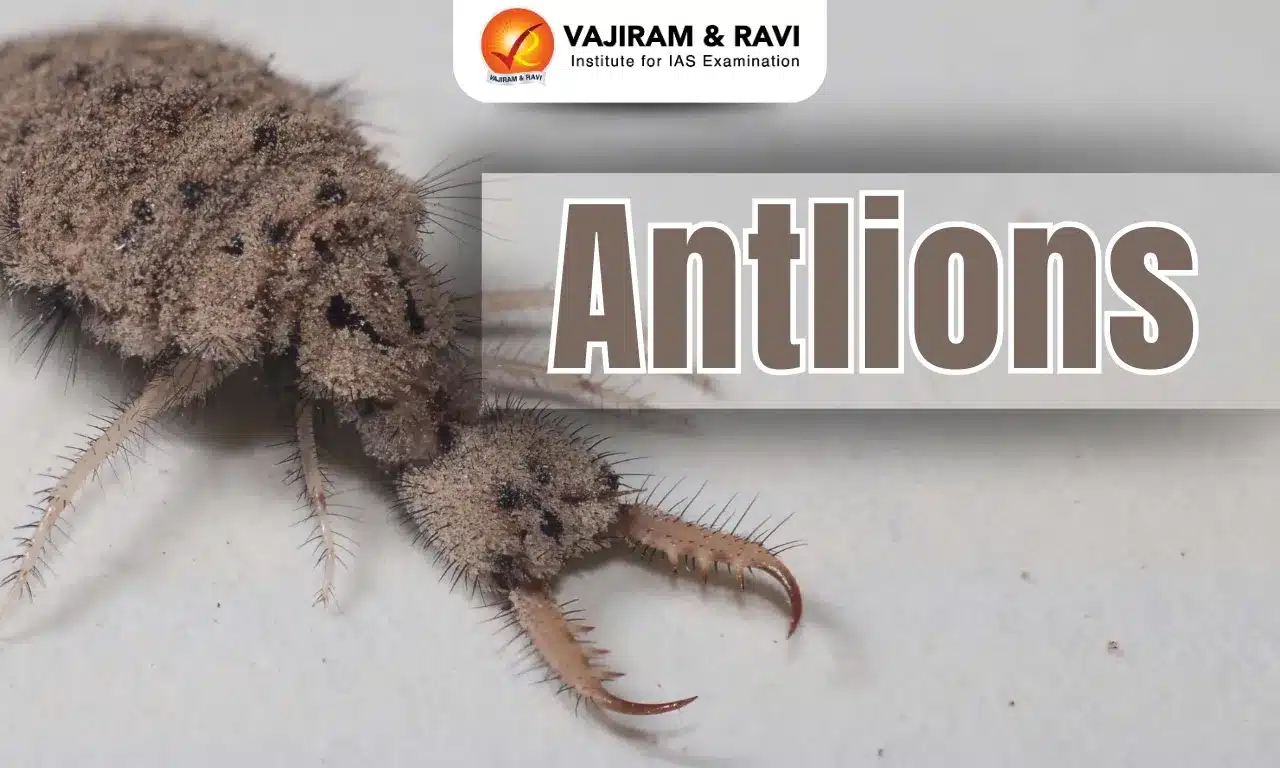
- They are named for the predatory nature of the larvae, which commonly trap ants and other small insects in pits dug into the ground.
- Adult antlions are not as well known. They live for a shorter time than the larvae.
- Adult antlions, sometimes called antlion lacewings, usually fly at dusk or after dark.
- People sometimes mistake them for dragonflies or damselflies.
- Habitat and Distribution:
- Antlions live all over the world.
- Most types are found in warm, tropical places.
- But some species, like the European Euroleon nostras, live in colder areas.
- They often live in dry, sandy places. This is where their larvae can easily dig their traps.
- However, some larvae hide under leaves or other bits of nature. They wait to ambush their prey there.
- They come in various shapes and sizes, with larvae typically measuring from a few millimeters to several centimeters, depending on the species.
- Antlion larvae have rounded bodies with long sickle-shaped jaws.
- The larvae are found at the base of cone-shaped pits in sandy areas.
- In North America, these larvae are sometimes called doodlebugs. This is because of the wiggly marks they leave in the sand.
- They usually remain in the larval stage for one to two years, depending on the species.
- Once they pupate, they require up to one month to complete their development.
- Antlions are harmless and cause no damage to flowers, people, or structures.
- They are highly beneficial and feed on ants and other insects that fall into their traps.
Source: TH
Antlions FAQs
Q1: Antlions belong to which insect family?
Ans: Myrmeleontidae
Q2: Why are antlions named so?
Ans: Because their larvae trap ants and other insects in sandy pits.
Q3: How long do antlion larvae usually remain in the larval stage?
Ans: 1–2 years
Q4: Adult antlions are often mistaken for which insects?
Ans: Dragonflies and damselflies
Q5: Where are antlions most commonly found?
Ans: Warm, tropical regions with sandy soil.
