State Bank of India’s (SBI’s) Two New Deposit Schemes

Two New Deposit Schemes

About Har Ghar Lakhpati Scheme:

  • It is a pre-calculated recurring deposit scheme designed to help customers to accumulate Rs 1 lakh or multiples thereof.
  • The new scheme simplifies the process of achieving financial goals, allowing customers to plan and save effectively.
  • This product is also available to minors, encouraging early financial planning and savings habits.
  • The minimum tenure of recurring deposits is 12 months (one year), and the maximum is 120 months (10 years).

About SBI Patrons Scheme:

  • This is a specialized fixed deposit scheme tailored for senior citizens aged 80 years and above. 
  • It offers enhanced interest rates, recognizing the long-standing relationship many senior customers have with the bank.
  • SBI Patrons is available to existing and new term deposit customers.
  • SBI Patron's depositors would earn an additional 10 basis points higher interest rate than what is offered to senior citizens.

SBI Patrons Scheme

SBI Patrons Scheme

Source: LM


SBI Patrons Scheme FAQs

Q1: q1

Ans: a1

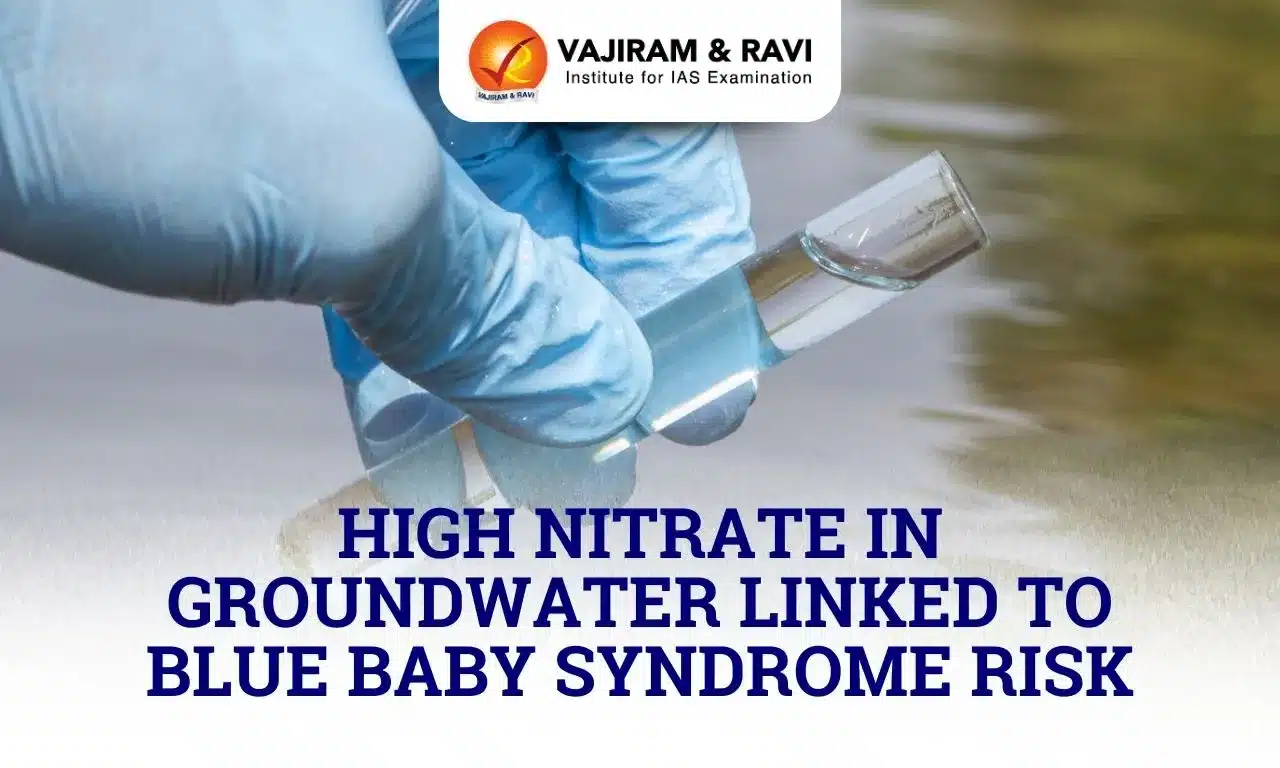
What is Blue Baby Syndrome?

blue baby syndrome

About Blue Baby Syndrome:

  • Blue baby syndrome, also called cyanosis, is a condition in babies in which their skin appears blue or purple tinged. 
  • What causes blue baby syndrome?
    • The baby takes on a bluish hue because of poorly oxygenated blood.
    • Normally, blood is pumped from the heart to the lungs, where it receives oxygen.
    • The blood is circulated back through the heart and then throughout the body.
    • When there’s a problem with the heart, lungs, or blood, blood may not be oxygenated properly.
    • This causes the skin to take on a blue color.
    • The lack of oxygenation can occur for several reasons.
  • It can occur due to several congenital (meaning present at birth) heart defects or environmental or genetic factors.
  • Acquired methemoglobinemia is more common than the congenital form. It can be caused by exposure to a variety of substances and by some health conditions.
  • The most common cause of blue baby syndrome is water contaminated with nitrates.
  • Symptoms:
    • The most common symptom of blue baby syndrome is a blue discoloration of the skin around the mouth, hands, and feet.
    • Other potential symptoms of blue baby syndrome include:
      • difficulty breathing
      • vomiting
      • diarrhea
      • lethargy
      • increased salivation
      • loss of consciousness
      • seizures
  • In severe cases, blue baby syndrome can even cause death.
  • Treatment:
    • Treatment will vary depending on what is causing the baby to turn blue.
    • If congenital heart disease is causing the discoloration, surgery may be required to correct the abnormalities.
    • Children with a more severe form of the condition may need a medication called methylene blue, which a doctor will give as an injection.

Q1: What is methylene blue?

Methylene blue (MB) is a synthetic dye and medication with various scientific, medical, and industrial applications. Source: CNBC

Methylcobalamin

Methylcobalamin

About Methylcobalamin: 

  • It is a naturally occurring form of vitamin B12 that can be obtained through supplements, as well as food sources like fish, meat, eggs, milk and milk products.
  • It consists of distinctive methyl group (-CH3) bonded to the cobalt atom, methylcobalamin differs structurally from other forms of vitamin B12, such as cyanocobalamin, adenosylcobalamin, and hydroxocobalamin.
    • Vitamin B12 is crucial water-soluble vitamin, is integral to DNA synthesis, red blood cell production, and neurological function.
    • Deficiency in this vitamin can lead to serious health consequences, often requiring supplementation.
  • It regulates body functions like cell growth, blood formation, and protein synthesis.
  • Uses:
    • It has been used as a supplement in patients with vitamin B12 deficiency and in those with diabetes and other neuropathies.
    • It is essential for the creation of red blood cells, which helps to avoid anemia.
    • A healthy consumption of Methylcobalamin enables adequate erythrocyte synthesis, minimizing weariness and weakness.
    • Its relevance extends to its role in the prevention and treatment of neurological illnesses.
    • It also participates in the production of neurotransmitters such as serotonin and dopamine, which are critical in controlling mood, emotions, and general mental health.

Q1: What is the Food Safety and Standards Authority of India (FSSAI)?

It is an autonomous body established under the Ministry of Health and Family Welfare, Government of India. The FSSAI has been established under the Food Safety and Standards Act, 2006, which is a consolidating statute related to food safety and regulation in India. Source : TH

Project VISTAAR

Project VISTAAR

About Project VISTAAR: 

  • It is a digital platform designed by integrating information about start-ups in the agriculture and allied sectors.
  • The initiative aims to enhance the efficiency and effectiveness of the agricultural extension system through digitalisation.
  • This will help farmers and other stakeholders access the capabilities and offerings of these start-ups more easily.
  • It contains details on over 12,000 start-ups in the agriculture and farming sectors.
  • This database serves as a valuable resource for connecting farmers with relevant technological solutions and services.
  • Significance
    • The digitalisation of the agricultural extension system will substantially expand its outreach, enabling every farmer to access high-quality advisory services on crop production, marketing, value addition, and supply chain management.
    • Additionally, the advisory services will provide comprehensive information on government schemes related to agriculture, allied sectors, and rural development, ensuring farmers can benefit from them effectively.
    • By delivering timely, contextual, and accurate information, the process of digitalisation will augment the current extension system, ensuring better support for farmers in agriculture and allied fields.

Q1: What is Digitisation?

It is the process of converting information from a physical format into a digital one. When this process is leveraged to improve business processes, it is called digitalisation. The results of this process are called digital transformation. Source: DD News

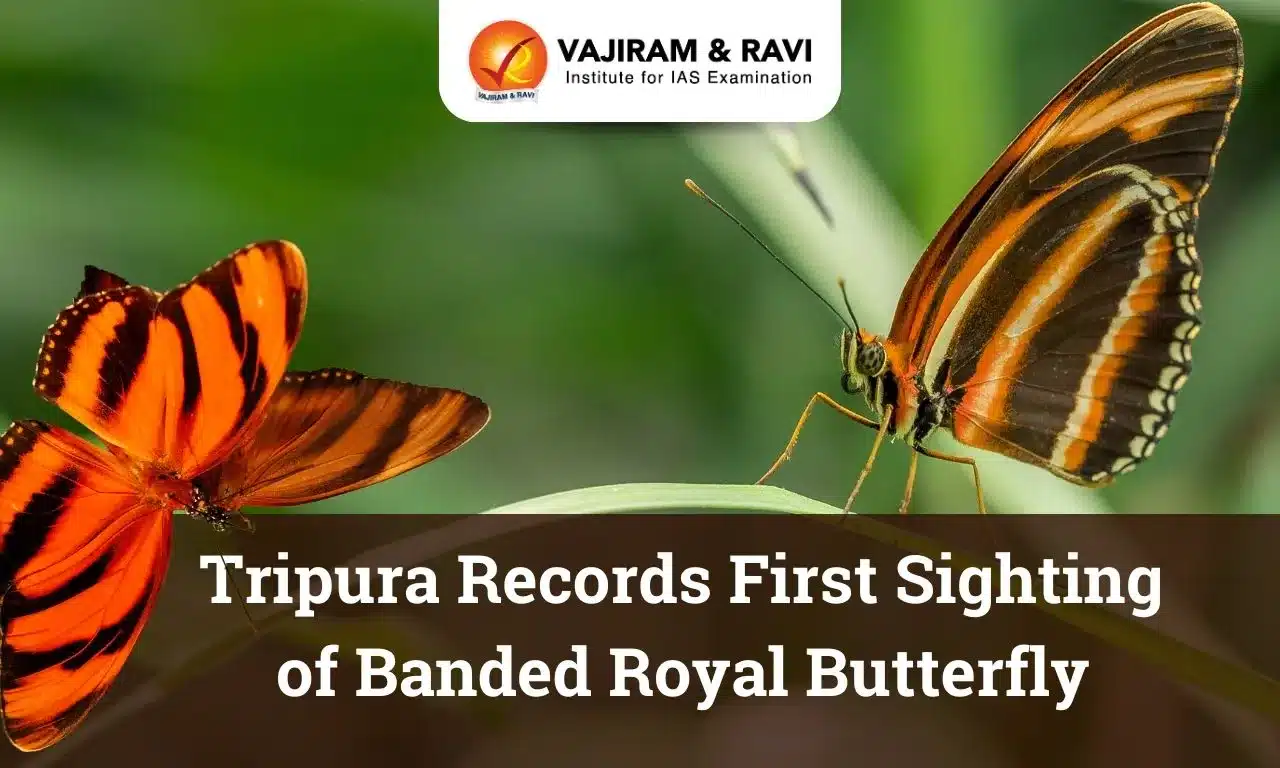
Banded Royal Butterfly

Banded Royal Butterfly

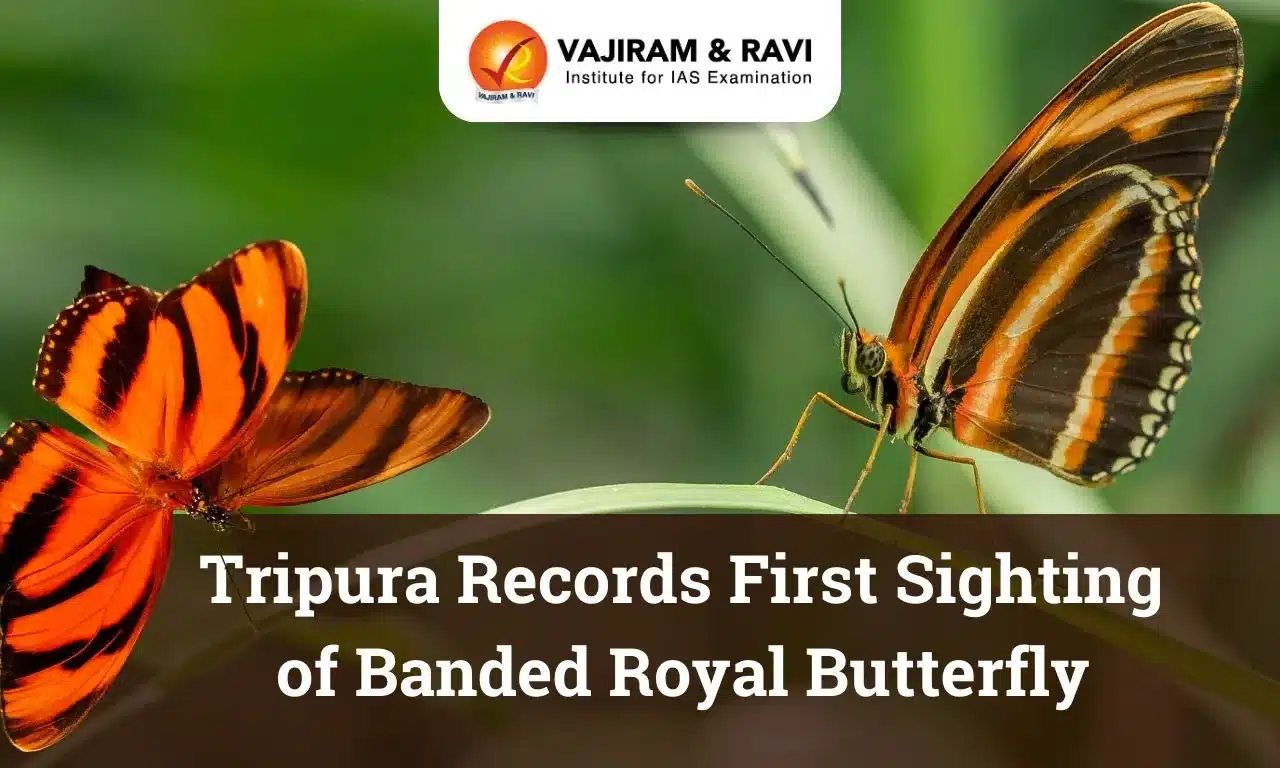
About Banded Royal Butterfly:

  • It is a species of lycaenid or blue butterfly found in parts of South and Southeast Asia.
  • Scientific Name: Rachana jalindra
  • Habitat:
    • Found in forests, particularly near the Western Ghats, Northeast India, Sri Lanka, Myanmar, Thailand, and Malaysia.
    • Prefers dense vegetation and can often be seen resting on leaves.
  • There are three subspecies of Rachana jalindra found in India, including macantia, distributed from southwest India to Goa; R. j. tarpina, distributed in the Andamans; and R. j. indra, distributed from Orissa to lower West Bengal and Bangladesh.
  • Presently the subspecies R. j. indra is recorded from Assam, Meghalaya, and Jharkhand.
  • Appearance:
    • Upper Side: Males have a deep purple or bluish sheen with dark brown borders, while females are more brownish with white markings.
    • Under Side: Pale brown with distinct white bands running across the wings, giving it the "banded" appearance.
  • It is legally protected under Schedule II of the Indian Wildlife (Protected) Act, 1972.
Key Facts about Sepahijala Wildlife Sanctuary (SWL):
  • It is situated in the state of Tripura, 25 kilometers from the capital, Agartala.
  • It spans an area of approximately 18.53 sq.km.
  • It is divided into five sections, basically to segregate the different types of animals living here. They are the carnivore section, primate section, ungulate section, reptile section, and aviary section.
  • Clouded Leopard National Park, established in 2007, is a part of SWL.
  • It also has two natural lakes, namely Abasarika and Amrit Sagar.
  • Vegetation: Moist deciduous forest
  • Flora: The sanctuary has no less than 456 plant species; many kinds of bamboo and a variety of grasses and medicinal plants also grow in the sanctuary.
  • Fauna:
  • It is the habitat of different species of primates like Rhesus macaque, Pigtailed macaque, Capped langur, Spectacled langur, Slow loris and several other wild animals like Leopard, Clouded leopard, Jungle fowl, Civets, Barking, Deer, Wild pig, etc.
  • The crab-eating mongoose (which was last seen in the 1930s) has also been revived here.

Q1: What is the Indian Wildlife (Protected) Act, 1972?

The Government enacted Wildlife (Protection) Act 1972 with the objective of effectively protecting the wildlife of this country and to control poaching, smuggling and illegal trade in wildlife and its derivatives. The Act was amended in January 2003 and punishment and penalty for offences under the Act have been made more stringent. The Ministry has proposed further amendments in the law by introducing more rigid measures to strengthen the Act. The objective is to provide protection to the listed endangered flora and fauna and ecologically important protected areas. Source: TOI

Centralized Pension Payment System

Centralized Pension Payment System

About Centralized Pension Payments System (CPPS):

  • It is implemented by the Employees’ Provident Fund Organisation (EPFO) which allows pensioners to access their pension from any bank or branch nationwide.
  • The system aims to streamline the payment process, eliminate the need for physical verifications, and ensure seamless pension disbursement for over 7.85 million pensioners.
  • It is a paradigm shift from the existing pension disbursement system that is decentralised, with each zonal/regional office of EPFO maintaining separate agreements with only 3-4 banks, the ministry explained in a statement.
  • Under CPPS, a beneficiary will be able to withdraw pension from any bank and there will be no need for to visit the bank for verification at the time of commencement of pension, and the amount will be immediately credited upon release.
  • It will also ensure disbursement of pension throughout India without any need for transfer of pension payment orders (PPO) from one office to another even when the pensioner moves from one location to another or changes his bank or branch.
Key Facts about Employees’ Provident Fund Organisation (EPFO):
  • It is a statutory body under the Employees' Provident Funds and Miscellaneous Act, 1952. 
  • It is under the administrative control of the Union Ministry of Labor and Employment. 
  • Structure of EPFO:
    • The Act and all its schemes are administered by a tripartite board called the Central Board of Trustees.
    • The board comprises representatives of the Government (both Central and State), employers, and employees. 
    • The board is chaired by the Union Minister of Labour and Employment, Government of India.
  • The Central Board of Trustees operates 3 schemes:
    • The Employees’ Provident Funds Scheme, 1952 (EPF)
    • The Employees’ Pension Scheme, 1995 (EPS)
    • The Employees’ Deposit Linked Insurance Scheme, 1976 (EDLI)
  • EPFO is also the nodal agency for implementing Bilateral Social Security Agreements with other countries on a reciprocal basis.
  • Coverage: The schemes offered by EPFO cover Indian workers and international workers (from countries with whom the EPFO has signed bilateral agreements).

Q1: What is the Employees’ Deposit Linked Insurance Scheme, 1976 (EDLI)?

The EDLI scheme was launched in 1976 to provide insurance benefits to members of EPFO. The main objective of EPFO behind this scheme was to ensure that the family of members get financial assistance in case of death of the member. Source: ET

Open Data Kit (ODK) Platform

Open Data Kit (ODK) Platform

About Open Data Kit (ODK) Platform: 

  • It is a digital platform which allows the CAG to collect and manage data securely.
  • It is used for designing, collecting, and managing data to enhance transparency in public spending and accountability in government schemes.
  • Features
    • It is integrated with CAG's own operating system called OIOS.
    • It is an end-to-end encrypted online portal.
    • It is used to collect information for identifying problem areas warranting additional review.
    • It also helps CAG in launching surveys in multiple languages at the same time
  • Benefits
    • Beneficiary Survey is one of the sources for information for audit planning as well as for collection of audit evidence.
    • ODK toolkit was deployed to ascertain patient satisfaction while gathering evidence in auditing the performance of the AIIMS at Mangalagiri in Guntur district and the AIIMS at Bibinagar in Hyderabad.

Q1: What is Encryption?

It is the process of protecting information or data by using mathematical models to scramble it in such a way that only the parties who have the key to unscramble it can access it. Source: ET

Human Metapneumovirus

Human Metapneumovirus

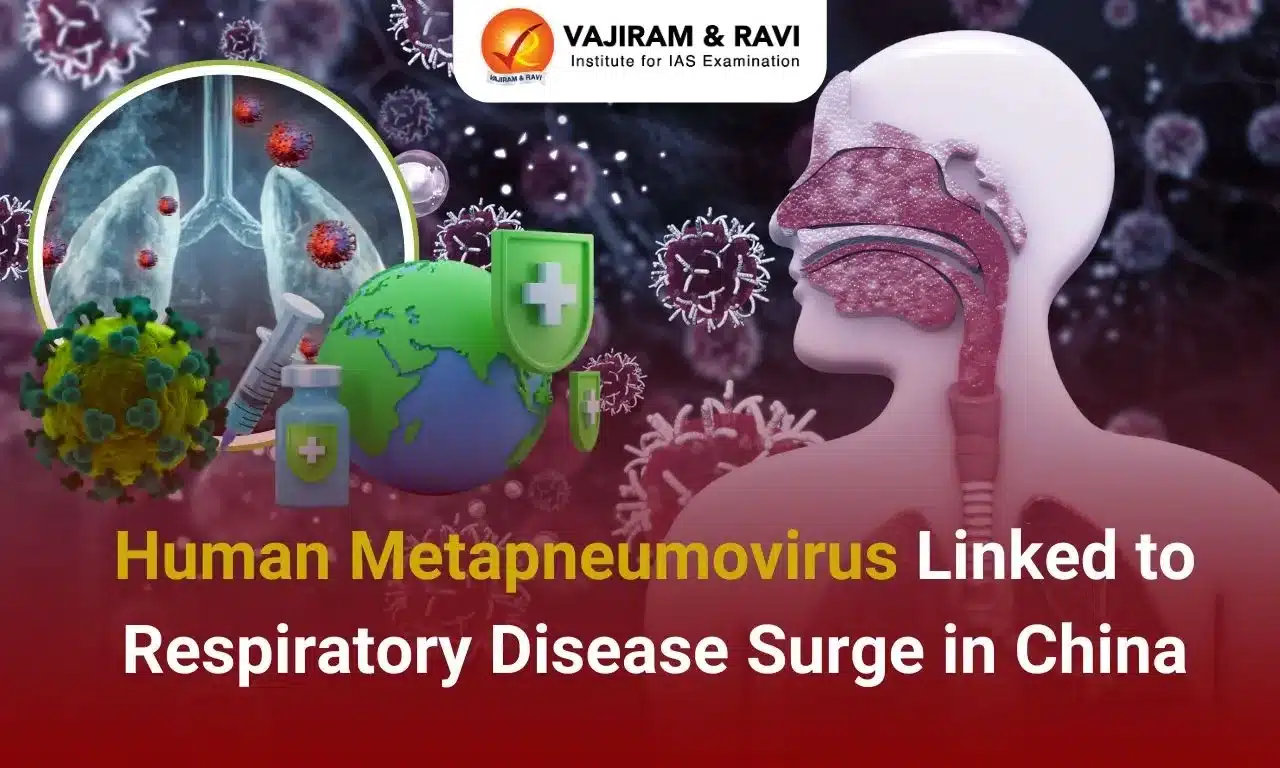
About Human Metapneumovirus:

  • It is a respiratory virus that causes mild infections similar to that caused by a common cold.
  • It was first identified by scientists in 2001 which belongs to the Pneumoviridae family, of which respiratory syncytial virus (RSV), measles and mumps are also members.
  • It can cause both upper and lower respiratory tract infections and is generally seen in winter and early spring.
  • Children, the elderly and those with weakened immune systems are more susceptible to the infection and to developing complications from it.
  • Signs and symptoms
    • Symptoms can resemble those caused by a common cold. They include a cough, runny or blocked nose, sore, throat, fever and wheezing.
    • The estimated incubation period is three to six days.
    • In most people, the illness goes away on its own within a few days, with rest and supportive care at home.
    • In a few people however, complications such as bronchitis or pneumonia may arise, requiring medical care.
  • Transmission
    • It spreads through contact with an infected person or touching objects that have the virus on them.
    • This can be through: secretions from coughs, sneezes; close contact with someone who has the infection such as shaking hands, hugging; touching a doorknob or a phone or a keyboard that may be contaminated with the virus and then touching the mouth, nose or eyes.
  • Treatment: There is no vaccine and there is no specific antiviral to treat HMPV. Most people require over-the-counter medications to relieve fever and pain, possibly with a decongestant. Antibiotics will not work for HMPV.

Q1: What is Pneumonia?

It is an infection that inflames the air sacs in one or both lungs. The air sacs may fill with fluid or pus (purulent material), causing cough with phlegm or pus, fever, chills, and difficulty breathing. Source: TH

Logistics Ease Across Different States (LEADS) 2024

Logistics Ease Across Different States

About Logistics Ease Across Different States (LEADS) 2024: 

  • It is the 6th edition of the LEADS report.
  • It was conceived on the lines of the Logistics Performance Index of World Bank in 2018 by the Department for Promotion of Industry and Internal Trade (DPIIT), Ministry of Commerce and Industry.
  • It evaluates logistics performance across four key pillars: Logistics Infrastructure, Logistics Services, Operating and Regulatory Environment, and the newly introduced Sustainable Logistics.
  • It highlights initiatives undertaken by various States and UTs across the identified pillars also focusses on State/UT-specific opportunities to enable informed decision-making.
Key highlights of LEADS 2024
  • Coastal Group
    • Achievers: Gujarat, Karnataka, Maharashtra, Odisha, Tamil Nadu
    • Fast Movers: Andhra Pradesh, Goa
    • Aspirers: Kerala, West Bengal
  • Landlocked Group
    • Achievers: Haryana, Telangana, Uttar Pradesh, Uttarakhand
    • Fast Movers: Bihar, Himachal Pradesh, Madhya Pradesh, Punjab, Rajasthan
    • Aspirers: Chhattisgarh, Jharkhand
  • North-Eastern Group
    • Achievers: Assam, Arunachal Pradesh
    • Fast Movers: Meghalaya, Mizoram, Nagaland, Sikkim, Tripura
    • Aspirers: Manipur
  • Union Territories
    • Achievers: Chandigarh, Delhi
    • Fast Movers: Dadra and Nagar Haveli and Daman and Diu, Jammu and Kashmir, Lakshadweep, Puducherry
    • Aspirers: Andaman and Nicobar Islands, Ladakh

Q1: What is Sustainable logistics?

It essentially involves making logistics, goods, and transportation more sustainable, minimizing the environmental impact of the practices involved in these processes. At its core, sustainable logistics seeks to balance operational efficiency with environmental responsibility. Source: PIB

Baanknet Portal

Baanknet Portal

About Baanknet Portal:

  • It is an e-auction portal that consolidates information on all properties that are put up for e-auction by public sector banks (PSBs).
  • The portal is a one-stop destination for buyers and investors offering a wide range of properties.
  • The listings on the new platform include residential properties such as flats, independent houses, and open plots, as well as commercial properties, industrial land and buildings, shops, vehicles, plant and machinery, and agricultural and non-agricultural land.
  • Features:
    • The new portal is equipped with improved and enhanced features, including frictionless user journeys where the portal will have the entire pre-auction, auction, and post-auction journeys in a single application. 
    • It includes an automated and integrated payment gateway alongside KYC tools, all built on a microservices-based architecture that allows for third-party integration through open application programming interface (API).
    • Users can benefit from a dashboard feature for easy access to ‘Spend Analytics’ and various ‘Management Information System (MIS) Reports’ at the click of a button.
    • Additionally, a dedicated helpdesk and call centre facility with a callback request option ensures customer support.
  • By gathering all these details in one place, the portal simplifies the process of finding and participating in property e-auctions, making it easier for buyers and investors to identify valuable opportunities.
  • It significantly aids the recovery process of public sector banks (PSBs), thereby improving the balance sheet of banks and enhancing credit availability to businesses and individuals.
  • More than 122,500 properties have already been migrated to the new portal for auction.

Q1: What are public sector banks (PSBs)?

Public Sector Banks (PSBs) are banks where the majority stake is held by the Government. PSBs constitute the single largest component of the Indian banking system, accounting for over 70 per cent of the deposits received in and advances made by SCBs. Source: LM

Draft Digital Personal Data Protection Rules 2025

Draft Digital Personal Data Protection Rules 2025

What’s in today’s article?

  • Why in News?
  • Major Provisions of the Draft Rules
  • Industry and Expert Reactions
  • Penalties and Enforcement
  • Conclusion

Why in News?

  • The Government of India released the draft Digital Personal Data Protection Rules, 2025, under the Digital Data Protection Act, 2023, outlining provisions for data privacy, compliance, and processing mechanisms.

 Major Provisions of the Draft Rules:

  • Parental consent for children's data:
    • Verification required: Social media and online platforms must obtain verifiable parental consent before children create accounts.
    • Identity validation: Parents' age and identity must be validated through government-issued identity proof.
    • Exception: Health, mental health establishments, education institutions, and daycare centers are exempt from this requirement.
  • Role and responsibilities of data fiduciaries:
    • Definition of data fiduciaries:
      • Entities collecting and processing personal data are categorised as "Data Fiduciaries."
      • Significant Data Fiduciaries (SDFs) are those processing high volumes or sensitive data, impacting national sovereignty, security, or public order.
    • Data retention: Data can only be retained for the duration of consent and must be deleted afterward.
    • Security measures: Fiduciaries must ensure encryption, access control, and monitoring for unauthorised access.
  • Consent management:
    • Consent managers: Entities entrusted to manage consent records must comply with robust verification processes.
    • Grievance redressal: Data fiduciaries must establish mechanisms to address grievances and allow withdrawal of consent.
  • Data localisation:
    • Reintroduction: Localisation mandates restrict transferring certain personal and traffic data outside India.
    • Oversight: A government-formed committee will determine the categories of data restricted from cross-border transfer.
  • Data breach reporting:
    • Intimation obligations: In case of a breach, fiduciaries must inform affected users and the Data Protection Board promptly, detailing its nature, timing, and mitigation measures.
    • Uniform treatment of breaches: No differentiation between minor and major breaches; all require reporting.
  • Safeguards for government data processing:
    • Lawful processing: Government agencies must process citizen data lawfully, with specific safeguards outlined to address concerns over exemptions for national security and public order.

Industry and Expert Reactions:

  • Compliance challenges:
    • Complex consent management: Maintaining consent records and ensuring opt-out mechanisms may require redesigning existing platforms and systems.
    • Infrastructure investments: Organisations need to overhaul data collection, storage, and lifecycle practices to comply with the rules.
  • Ambiguity in security standards: Experts have raised concerns about the lack of detailed guidance on security practices, potentially leading to varied interpretations.
  • Data localisation controversy: Global tech giants like Meta and Google have expressed concerns over the implications of data localisation on service delivery.

Penalties and Enforcement:

  • Fines: Non-compliance with safeguards or failure to prevent data breaches can attract penalties of up to Rs 250 crore.
  • Consent manager violations: Repeat violations by consent managers may lead to suspension or cancellation of their registration.

Conclusion:

  • The draft Digital Personal Data Protection Rules, 2025, aim to strengthen India’s data privacy framework while addressing challenges for businesses and individuals.
  • The reintroduction of data localisation and emphasis on consent management mark significant developments, but clarity on implementation and compliance mechanisms remains crucial.

Q.1. What is the Digital Data Protection (DPDP) Act, 2023?

The DPDP Act provides for the processing of digital personal data in a manner that recognises both the right of individuals to protect their personal data and the need to process such personal data for lawful purposes.

Q.2. What is right to privacy in India?

The right to privacy in India is a fundamental right that protects a person's ability to make personal choices without unwarranted interference. It is guaranteed by Article 21 of the Constitution of India, which also protects the right to life and personal liberty.

Source: NIE | IE

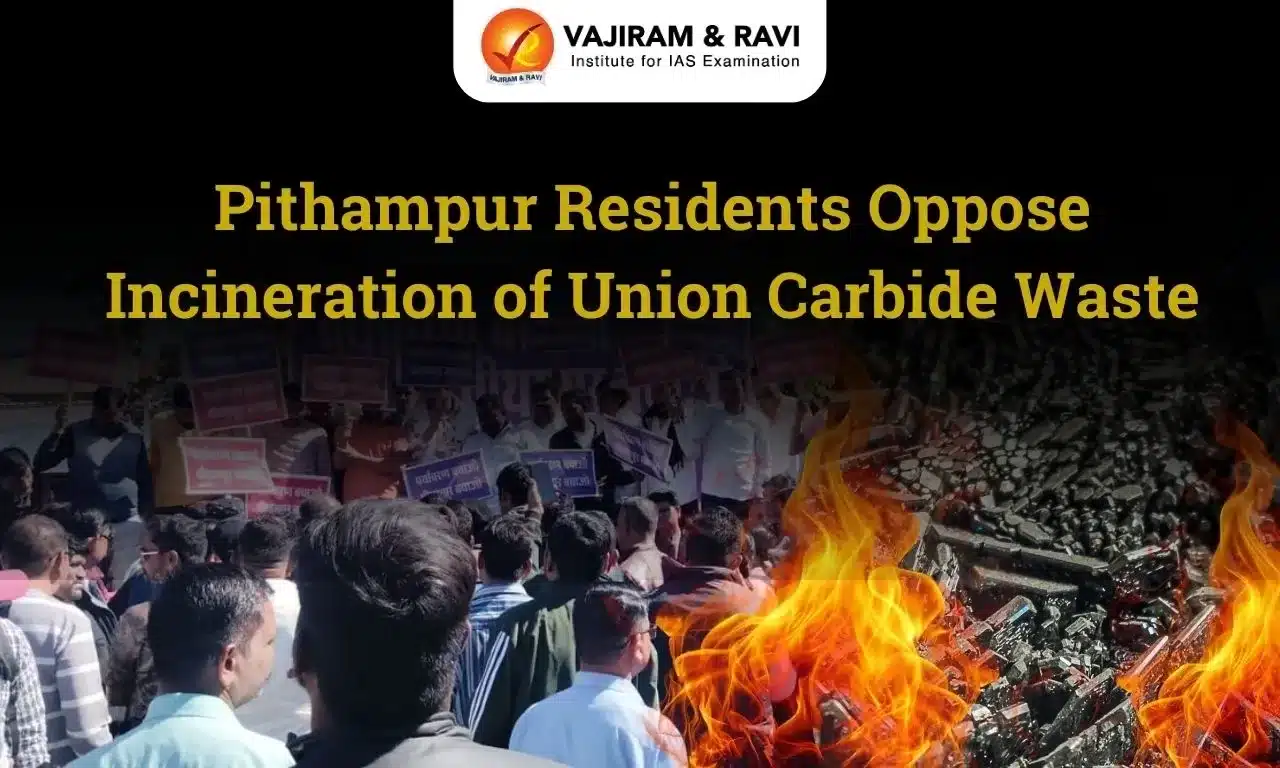
What is Incineration?

Incineration

About Incineration:

  • Incineration is the process of burning hazardous materials at temperatures high enough to destroy contaminants.
  • Incineration is conducted in an “incinerator,” which is a type of furnace designed for burning hazardous materials in a combustion chamber.
  • Many different types of hazardous materials can be treated by incineration, including soil, sludge, liquids, and gases.
  • Although it destroys many kinds of harmful chemicals, such as solvents, PCBs (polychlorinated biphenyls), and pesticides, incineration does not destroy metals, such as lead and chromium.
  • Waste incineration can be a form of waste-to-energy because the heat generated during combustion can be used to create electricity.
  • How Does It Work?
    • Hazardous materials must be excavated or pumped into containers before incineration.
    • They may require further preparation, such as grinding or removing large rocks and debris, or removing excess water.
    • The materials are then placed in the combustion chamber of an incinerator where they are heated to an extremely high temperature for a specified period of time.
    • The temperature and length of time depend on the types of wastes and contaminants present.
    • Air or pure oxygen may be added to the chamber to supply the oxygen needed for burning.
    • As the wastes heat up, the contaminants volatilize (change into gases), and most are destroyed.
    • Gases that are not destroyed pass through a secondary combustion chamber for further heating and destruction.
    • The resulting gases then pass through air pollution control equipment, which removes particulate matter (extremely small particles or liquid droplets) and “acid gases.”

Q1: What is combustion?

Combustion is a chemical process in which a substance reacts rapidly with oxygen and gives off heat. The original substance is called the fuel, and the source of oxygen is called the oxidizer. Source: FPJ

Key Facts about Gomti River

Key Facts about Gomti River

About Gomti River:

  • It is a tributary of the Ganges (Ganga) River, flowing entirely through the state of Uttar Pradesh.
  • Course:
    • The Gomti River originates from the Gomat Taal, otherwise called Fulhaar Jheel, which is found near the Madho Tanda in the Pilibhit district in Uttar Pradesh.
    • The river drains the area betweenriver Ramganga and Sharda.
    • After flowing southwards through the districts of Lucknow, Barabhanki, Sultanpur, Faizabad, and Jaunpur, it joins with the River Ganga.
  • The river extends to about 900 km. It drains a basin of about 7,240 square miles (18,750 square km).
  • It is a perennial river. The river is characterised by sluggish flow throughout the year, except during the monsoon season, when heavy rainfall causes a manifold increase in the runoff.
  • Significant tributaries of the Gomti include the Sai River, Chowka River, Kathina River, and Saryu River.

Q1: Which are the main tributaries of the Ganges (Ganga) River?

Tributaries of Ganga include Ramganga, Gomti, Ghaghara, Gandak, Kosi and Mahananda from the left bank and Yamuna, Tamsa, Son and Punpun from the right bank. Source: IT

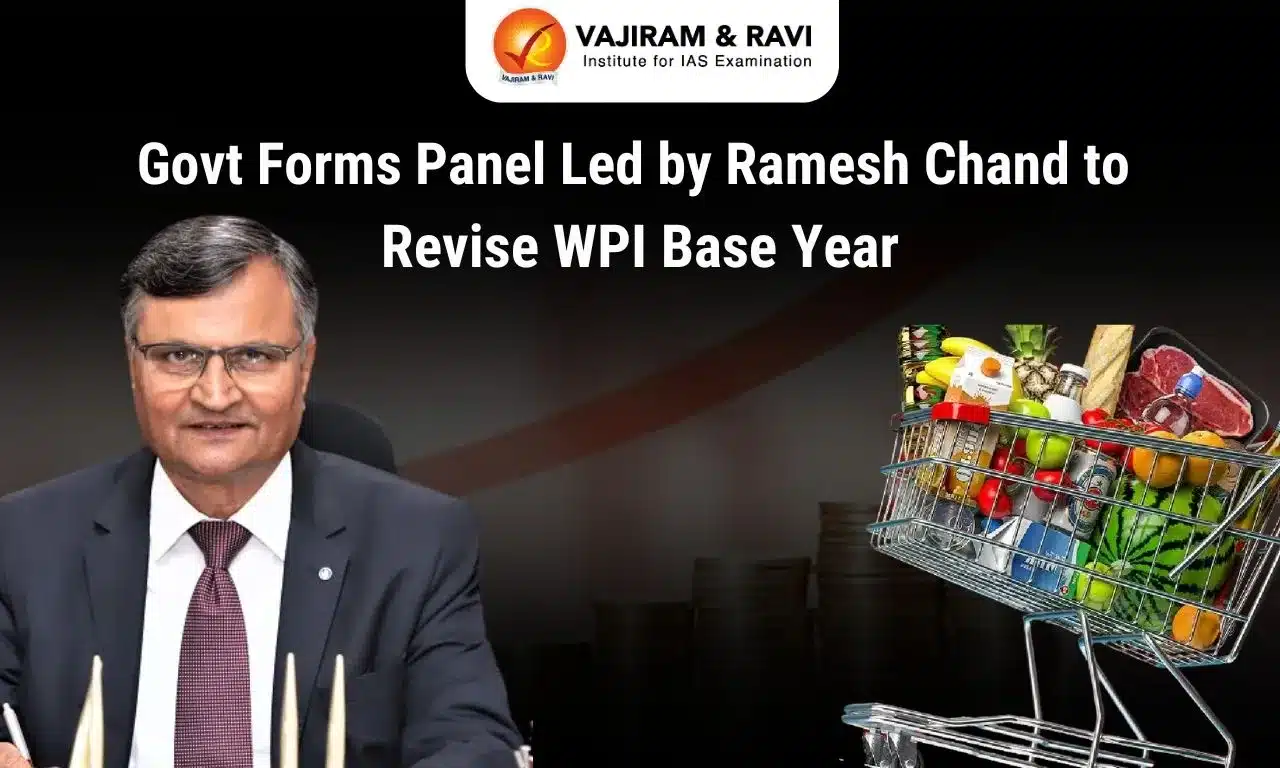
Ramesh Chand Panel

Ramesh Chand Panel

About Ramesh Chand Panel:

  • It was established to revise the base year of the Wholesale Price Index (WPI) from 2011-12 to 2022-23.
  • Among its key mandates, the panel will:
    • Propose a revised commodity basket for the WPI and the Producer Price Index (PPI) with the base year 2022-23, considering structural changes in the economy.
    • Review the current system of price collection and recommend improvements.
    • It will also decide on the computational methodology to be adopted for WPI and PPI.
  • The panel will have economists in the government, rating agencies, asset management companies, banks, and representatives from the government and the Reserve Bank of India.
  • It has been asked to submit its final report to the Office of the Economic Adviser at the Department for Promotion of Industry and Internal Trade (DPIT) within 18 months.
Wholesale Price Index (WPI) vs. Producer Price Index (PPI):
  • WPI represents the price of goods at a wholesale stage, i.e. goods that are sold in bulk and traded between organisations instead of consumers.
    • It does not account for inflation at the level of the ordinary public because they do not buy products at wholesale prices.
    • WPI excludes the service sector, which covers about 55% of GDP.
    • WPI has an inbuilt bias due to double counting of the same product and doesn’t include exports and imports.
  • PPImeasures wholesale prices from the point of view of producers of goods and services by tracking prices at different stages of production.
    • PPI is different from WPI in the way that it measures the average change in prices received by producers and excludes indirect taxes.
    • It looks at inflation from the viewpoint of industry and business and measures price changes before consumers purchase final goods and services.
    • Weight of an item in WPI is based on net traded value, whereas in PPI weights are retrieved from Supply Use Tables.
    • PPI also includes services, while WPI only has goods.
    • PPI has replaced WPI in most countries as it is conceptually in line with the internationally agreed System of National Accounts (SNA) to compile measures of economic activity.

Q1: What is the Consumer Price Index (CPI)?

Consumer Price Index (CPI) inflation, tracks the change in retail prices of goods and services which households purchase for their daily consumption. CPI is calculated for a fixed basket of goods and services that may or may not be altered by the government from time to time. The change in the price index over a period of time is referred to as CPI-based inflation, or retail inflation. CPI is calculated as a percentage. It is a comparison of the general price level in the markets in a particular time period from a time frame in the past. This is known as the base year. CPI, therefore, is calculated by referring to a base year, which is a benchmark. Currently, the base year is 2012. Source: FE

National Sports Awards

National Sports Awards

About National Sports Awards:

  • National Sports Awards are given every year to recognize and reward excellence in sports.
  • Major Dhyan Chand Khel Ratna Award’
    • It is given for the spectacular and most outstanding performance in the field of sports by a sportsperson over the period of the previous four years.
  • Arjuna Award:
    • It is given for outstanding performance in Sports and Games’ is given for good performance over a period of the previous four years and for showing qualities of leadership, sportsmanship and a sense of discipline.
  • Arjuna Award (Lifetime)
    • It is given to honour and motivate those sportspersons who have contributed to sports by their performance and continue to contribute to promotion of sports even after their retirement from active sporting career.
  • Dronacharya Award
    • It is given for outstanding coaches in Sports and Games’ is given to coaches for doing outstanding and meritorious work on a consistent basis and for enabling sportspersons to excel in International events.
  • Maulana Abul Kalam Azad (MAKA) Trophy: It is awarded forthe overall top performing university in Khelo India University Games.
  • This year’s awards were decided by the Selection Committee headed by Justice (Retd.) V. Ramasubramanian, Supreme Court of India and consisting members from eminent sportspersons, persons having experience in sports journalism and sports administrators.

Q1: Who is Maulana Abul Kalam Azad?

He is the ologian who was one of the leaders of the Indian independence movement against British rule in the first half of the 20th century. He was highly respected throughout his life as a man of high moral integrity. Source:PIB

State Bank of India’s (SBI’s) Two New Deposit Schemes

State Bank of India’s (SBI’s) Two New Deposit Schemes

About Har Ghar Lakhpati Scheme:

  • It is a pre-calculated recurring deposit scheme designed to help customers to accumulate Rs 1 lakh or multiples thereof.
  • The new scheme simplifies the process of achieving financial goals, allowing customers to plan and save effectively.
  • This product is also available to minors, encouraging early financial planning and savings habits.
  • The minimum tenure of recurring deposits is 12 months (one year), and the maximum is 120 months (10 years).

About SBI Patrons Scheme:

  • This is a specialized fixed deposit scheme tailored for senior citizens aged 80 years and above. 
  • It offers enhanced interest rates, recognizing the long-standing relationship many senior customers have with the bank.
  • SBI Patrons is available to existing and new term deposit customers.
  • SBI Patron's depositors would earn an additional 10 basis points higher interest rate than what is offered to senior citizens.

Q1: What is a Recurring Deposit?

A Recurring Deposit (RD) is a type of term deposit offered by banks and financial institutions, allowing individuals to save money systematically by making fixed monthly deposits for a predetermined period. At the end of the tenure, the depositor receives the principal amount along with interest.

Source: LM

Logistics Ease Across Different States (LEADS) 2024

Logistics Ease Across Different States (LEADS) 2024

About Logistics Ease Across Different States (LEADS) 2024: 

  • It is the 6th edition of the LEADS report.
  • It was conceived on the lines of the Logistics Performance Index of World Bank in 2018 by the Department for Promotion of Industry and Internal Trade (DPIIT), Ministry of Commerce and Industry.
  • It evaluates logistics performance across four key pillars: Logistics Infrastructure, Logistics Services, Operating and Regulatory Environment, and the newly introduced Sustainable Logistics.
  • It highlights initiatives undertaken by various States and UTs across the identified pillars also focusses on State/UT-specific opportunities to enable informed decision-making.

Key highlights of LEADS 2024

  • Coastal Group
    • Achievers: Gujarat, Karnataka, Maharashtra, Odisha, Tamil Nadu
    • Fast Movers: Andhra Pradesh, Goa
    • Aspirers: Kerala, West Bengal
  • Landlocked Group
    • Achievers: Haryana, Telangana, Uttar Pradesh, Uttarakhand
    • Fast Movers: Bihar, Himachal Pradesh, Madhya Pradesh, Punjab, Rajasthan
    • Aspirers: Chhattisgarh, Jharkhand
  • North-Eastern Group
    • Achievers: Assam, Arunachal Pradesh
    • Fast Movers: Meghalaya, Mizoram, Nagaland, Sikkim, Tripura
    • Aspirers: Manipur
  • Union Territories
    • Achievers: Chandigarh, Delhi
    • Fast Movers: Dadra and Nagar Haveli and Daman and Diu, Jammu and Kashmir, Lakshadweep, Puducherry
    • Aspirers: Andaman and Nicobar Islands, Ladakh

Q1: What is Sustainable logistics?

It essentially involves making logistics, goods, and transportation more sustainable, minimizing the environmental impact of the practices involved in these processes. At its core, sustainable logistics seeks to balance operational efficiency with environmental responsibility. 

Source: PIB

Banded Royal Butterfly

Banded Royal Butterfly

About Banded Royal Butterfly:

  • It is a species of lycaenid or blue butterfly found in parts of South and Southeast Asia.
  • Scientific Name: Rachana jalindra
  • Habitat:
    • Found in forests, particularly near the Western Ghats, Northeast India, Sri Lanka, Myanmar, Thailand, and Malaysia.
    • Prefers dense vegetation and can often be seen resting on leaves.
  • There are three subspecies of Rachana jalindra found in India, including macantia, distributed from southwest India to Goa; R. j. tarpina, distributed in the Andamans; and R. j. indra, distributed from Orissa to lower West Bengal and Bangladesh.
  • Presently the subspecies R. j. indra is recorded from Assam, Meghalaya, and Jharkhand.
  • Appearance:
    • Upper Side: Males have a deep purple or bluish sheen with dark brown borders, while females are more brownish with white markings.
    • Under Side: Pale brown with distinct white bands running across the wings, giving it the "banded" appearance.
  • It is legally protected under Schedule II of the Indian Wildlife (Protected) Act, 1972.

Key Facts about Sepahijala Wildlife Sanctuary (SWL):

  • It is situated in the state of Tripura, 25 kilometers from the capital, Agartala.
  • It spans an area of approximately 18.53 sq.km.
  • It is divided into five sections, basically to segregate the different types of animals living here. They are the carnivore section, primate section, ungulate section, reptile section, and aviary section.
  • Clouded Leopard National Park, established in 2007, is a part of SWL.
  • It also has two natural lakes, namely Abasarika and Amrit Sagar.
  • Vegetation: Moist deciduous forest
  • Flora: The sanctuary has no less than 456 plant species; many kinds of bamboo and a variety of grasses and medicinal plants also grow in the sanctuary.
  • Fauna
  • It is the habitat of different species of primates like Rhesus macaque, Pigtailed macaque, Capped langur, Spectacled langur, Slow loris and several other wild animals like Leopard, Clouded leopard, Jungle fowl, Civets, Barking, Deer, Wild pig, etc.
  • The crab-eating mongoose (which was last seen in the 1930s) has also been revived here.

Q1: What is the Indian Wildlife (Protected) Act, 1972?

The Government enacted Wildlife (Protection) Act 1972 with the objective of effectively protecting the wildlife of this country and to control poaching, smuggling and illegal trade in wildlife and its derivatives. The Act was amended in January 2003 and punishment and penalty for offences under the Act have been made more stringent. The Ministry has proposed further amendments in the law by introducing more rigid measures to strengthen the Act. The objective is to provide protection to the listed endangered flora and fauna and ecologically important protected areas.

Source: TOI

Centralized Pension Payment System

Centralized Pension Payment System

About Centralized Pension Payments System (CPPS):

  • It is implemented by the Employees’ Provident Fund Organisation (EPFO) which allows pensioners to access their pension from any bank or branch nationwide.
  • The system aims to streamline the payment process, eliminate the need for physical verifications, and ensure seamless pension disbursement for over 7.85 million pensioners.
  • It is a paradigm shift from the existing pension disbursement system that is decentralised, with each zonal/regional office of EPFO maintaining separate agreements with only 3-4 banks, the ministry explained in a statement.
  • Under CPPS, a beneficiary will be able to withdraw pension from any bank and there will be no need for to visit the bank for verification at the time of commencement of pension, and the amount will be immediately credited upon release.
  • It will also ensure disbursement of pension throughout India without any need for transfer of pension payment orders (PPO) from one office to another even when the pensioner moves from one location to another or changes his bank or branch.

Key Facts about Employees’ Provident Fund Organisation (EPFO):

  • It is a statutory body under the Employees' Provident Funds and Miscellaneous Act, 1952. 
  • It is under the administrative control of the Union Ministry of Labor and Employment. 
  • Structure of EPFO:
    • The Act and all its schemes are administered by a tripartite board called the Central Board of Trustees.
    • The board comprises representatives of the Government (both Central and State), employers, and employees. 
    • The board is chaired by the Union Minister of Labour and Employment, Government of India. 
  • The Central Board of Trustees operates 3 schemes:
    • The Employees’ Provident Funds Scheme, 1952 (EPF)
    • The Employees’ Pension Scheme, 1995 (EPS)
    • The Employees’ Deposit Linked Insurance Scheme, 1976 (EDLI)
  • EPFO is also the nodal agency for implementing Bilateral Social Security Agreements with other countries on a reciprocal basis. 
  • Coverage: The schemes offered by EPFO cover Indian workers and international workers (from countries with whom the EPFO has signed bilateral agreements).

Q1: What is the Employees’ Deposit Linked Insurance Scheme, 1976 (EDLI)?

The EDLI scheme was launched in 1976 to provide insurance benefits to members of EPFO. The main objective of EPFO behind this scheme was to ensure that the family of members get financial assistance in case of death of the member.

Source: ET

Project VISTAAR

Project VISTAAR

About Project VISTAAR: 

  • It is a digital platform designed by integrating information about start-ups in the agriculture and allied sectors.
  • The initiative aims to enhance the efficiency and effectiveness of the agricultural extension system through digitalisation.
  • This will help farmers and other stakeholders access the capabilities and offerings of these start-ups more easily.
  • It contains details on over 12,000 start-ups in the agriculture and farming sectors.
  • This database serves as a valuable resource for connecting farmers with relevant technological solutions and services.
  • Significance
    • The digitalisation of the agricultural extension system will substantially expand its outreach, enabling every farmer to access high-quality advisory services on crop production, marketing, value addition, and supply chain management.
    • Additionally, the advisory services will provide comprehensive information on government schemes related to agriculture, allied sectors, and rural development, ensuring farmers can benefit from them effectively.
    • By delivering timely, contextual, and accurate information, the process of digitalisation will augment the current extension system, ensuring better support for farmers in agriculture and allied fields.

Q1: What is Digitisation?

It is the process of converting information from a physical format into a digital one. When this process is leveraged to improve business processes, it is called digitalisation. The results of this process are called digital transformation.

Source: DD News

What is Blue Baby Syndrome?

What is Blue Baby Syndrome?

About Blue Baby Syndrome:

  • Blue baby syndrome, also called cyanosis, is a condition in babies in which their skin appears blue or purple tinged. 
  • What causes blue baby syndrome?
    • The baby takes on a bluish hue because of poorly oxygenated blood.
    • Normally, blood is pumped from the heart to the lungs, where it receives oxygen.
    • The blood is circulated back through the heart and then throughout the body.
    • When there’s a problem with the heart, lungs, or blood, blood may not be oxygenated properly.
    • This causes the skin to take on a blue color.
    • The lack of oxygenation can occur for several reasons.
  • It can occur due to several congenital (meaning present at birth) heart defects or environmental or genetic factors.
  • Acquired methemoglobinemia is more common than the congenital form. It can be caused by exposure to a variety of substances and by some health conditions.
  • The most common cause of blue baby syndrome is water contaminated with nitrates.
  • Symptoms:
    • The most common symptom of blue baby syndrome is a blue discoloration of the skin around the mouth, hands, and feet.
    • Other potential symptoms of blue baby syndrome include:
      • difficulty breathing
      • vomiting
      • diarrhea
      • lethargy
      • increased salivation
      • loss of consciousness
      • seizures
  • In severe cases, blue baby syndrome can even cause death.
  • Treatment:
    • Treatment will vary depending on what is causing the baby to turn blue.
    • If congenital heart disease is causing the discoloration, surgery may be required to correct the abnormalities.
    • Children with a more severe form of the condition may need a medication called methylene blue, which a doctor will give as an injection.

Q1: What is methylene blue?

Methylene blue (MB) is a synthetic dye and medication with various scientific, medical, and industrial applications.

Source: CNBC

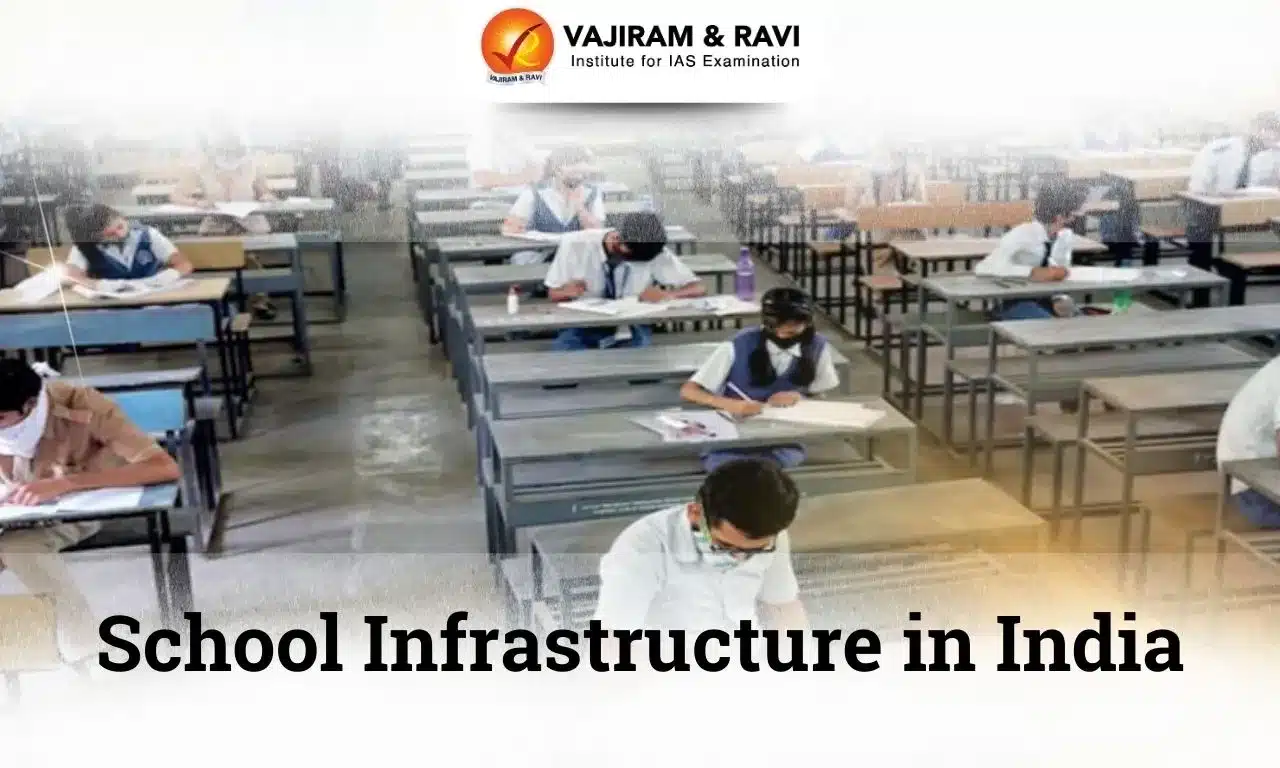
State of School Infrastructure and Enrolment in India

State of School Infrastructure and Enrolment in India

What’s in today’s article?

  • Introduction
  • Single-Teacher and Zero Enrolment Schools
  • Basic Amenities in Schools
  • Conclusion

Introduction

  • The latest data from the Unified District Information System for Education Plus (UDISE+) highlights critical aspects of India’s school infrastructure and enrolment trends.
    • UDISE+ is one of the largest Management Information Systems initiated by Department of School Education and Literacy, Ministry of Education.
  • These findings shed light on both improvements and persistent challenges in the education system.

Single-Teacher and Zero Enrolment Schools

  • The number of single-teacher schools in India has decreased from 1,18,190 in 2022-23 to 1,10,971 in 2023-24, marking a reduction of 7,219 schools.
  • This decline has also been accompanied by a drop in student enrolment in these schools, which fell from 47.43 lakh to 39.94 lakh over the same period.
  • On the other hand, the number of schools with zero enrolments has seen a worrying increase.
  • From 10,294 schools in 2022-23, the count rose to 12,954 schools in 2023-24, an increase of 2,660 schools. States such as West Bengal (3,254 schools), Rajasthan (2,167 schools), and Telangana (2,097 schools) report the highest numbers.
  • Officials attribute this phenomenon to the possibility of schools awaiting new batches of students; however, if enrolment fails to resume, these schools risk closure.

Basic Amenities in Schools

  • Among India’s 14.71 lakh schools, infrastructural gaps remain evident:
  • Electricity:
    • 1.52 lakh schools still lack functional electricity.
    • Government schools account for the majority, with 9.12 lakh out of 10.17 lakh government schools having functional electricity.
  • Drinking Water:
    • While 14.47 lakh schools claim to have drinking water facilities, only 14.11 lakh have them functional.
    • Approximately 24,580 schools lack any drinking water facility.
  • Toilets:
    • Of 14.71 lakh schools, 14.50 lakh have toilets, but 14.04 lakh are functional.
    • Government schools constitute the majority of the 67,000 schools operating without functional toilets.
  • Access for Differently-Abled Students:
    • Only 33.2% of government schools have disabled-friendly toilets, and of these, only 30.6% are functional.
    • 77% of schools have ramps, but just 52.3% have ramps with handrails, limiting accessibility.
  • Technology & Co-Curricular Activities:
    • 50% of schools lack access to functional computers for teaching.
    • Only 17.5% of schools have dedicated arts and crafts rooms, with government schools lagging further at 9.9%.
    • Among schools with secondary sections, only 1.6 lakh out of 2.86 lakh have integrated science laboratories.
  • Renewable Energy Adoption:
    • The uptake of solar panels in schools is minimal, with only 1.54 lakh schools (10.5%) equipped with solar energy systems.
    • Government schools fare worse, with only 8.8% (89,746 schools) having installed solar panels.
  • Regional Disparities:
    • Madhya Pradesh leads in the number of single-teacher schools (13,198), followed by Andhra Pradesh (12,611).
    • West Bengal has the highest number of schools with zero enrolments, a trend that raises concerns about the viability of these institutions.

Conclusion

  • While there have been some improvements, such as the decline in single-teacher schools, challenges like the rise in zero-enrolment schools, lack of basic amenities, and inadequate facilities for differently-abled students continue to persist.
  • Addressing these issues requires a focused approach involving infrastructure upgrades, increased teacher deployment, and better accessibility measures to ensure quality education for all.
  • The UDISE+ data serves as a vital tool to identify gaps and shape policies aimed at transforming India’s educational landscape.

Q1. What is the difference between Literacy and Education?

Literacy refers to a person's capacity to read and write, whereas education, generally speaking, is typically required to formulate critical thinking as well as to think ethically, and to apply moral values.

Q2. When was the Ministry of Education created?

The Ministry of Education (MoE) was created on September 26, 1985, through the 174th amendment to the Government of India (Allocation of Business) Rules, 1961. Currently, the MoE works through two departments: Department of School Education & Literacy. Department of Higher Education.


Source : IE | TH

Open Data Kit (ODK) Platform

Open Data Kit (ODK) Platform

About Open Data Kit (ODK) Platform: 

  • It is a digital platform which allows the CAG to collect and manage data securely.
  • It is used for designing, collecting, and managing data to enhance transparency in public spending and accountability in government schemes.
  • Features
    • It is integrated with CAG's own operating system called OIOS.
    • It is an end-to-end encrypted online portal.
    • It is used to collect information for identifying problem areas warranting additional review.
    • It also helps CAG in launching surveys in multiple languages at the same time
  • Benefits
    • Beneficiary Survey is one of the sources for information for audit planning as well as for collection of audit evidence.
    • ODK toolkit was deployed to ascertain patient satisfaction while gathering evidence in auditing the performance of the AIIMS at Mangalagiri in Guntur district and the AIIMS at Bibinagar in Hyderabad.

Q1: What is Encryption?

It is the process of protecting information or data by using mathematical models to scramble it in such a way that only the parties who have the key to unscramble it can access it.

Source: ET

Baanknet Portal

Baanknet Portal

About Baanknet Portal:

  • It is an e-auction portal that consolidates information on all properties that are put up for e-auction by public sector banks (PSBs).
  • The portal is a one-stop destination for buyers and investors offering a wide range of properties.
  • The listings on the new platform include residential properties such as flats, independent houses, and open plots, as well as commercial properties, industrial land and buildings, shops, vehicles, plant and machinery, and agricultural and non-agricultural land.
  • Features:
    • The new portal is equipped with improved and enhanced features, including frictionless user journeys where the portal will have the entire pre-auction, auction, and post-auction journeys in a single application. 
    • It includes an automated and integrated payment gateway alongside KYC tools, all built on a microservices-based architecture that allows for third-party integration through open application programming interface (API).
    • Users can benefit from a dashboard feature for easy access to ‘Spend Analytics’ and various ‘Management Information System (MIS) Reports’ at the click of a button.
    • Additionally, a dedicated helpdesk and call centre facility with a callback request option ensures customer support.
  • By gathering all these details in one place, the portal simplifies the process of finding and participating in property e-auctions, making it easier for buyers and investors to identify valuable opportunities.
  • It significantly aids the recovery process of public sector banks (PSBs), thereby improving the balance sheet of banks and enhancing credit availability to businesses and individuals.
  • More than 122,500 properties have already been migrated to the new portal for auction.

Q1: What are public sector banks (PSBs)?

Public Sector Banks (PSBs) are banks where the majority stake is held by the Government. PSBs constitute the single largest component of the Indian banking system, accounting for over 70 per cent of the deposits received in and advances made by SCBs.

Source: LM

China’s Mega Dam on Tsangpo River: What It Means for India’s Water Security

China’s Mega Dam on Tsangpo River: What It Means for India’s Water Security

What’s in today’s article?

  • Why in News?
  • Yarlung Tsangpo Project
  • Specific concerns for India
  • Existing coordination mechanism on transboundary rivers between India and China
  • Options available to India

Why in News?

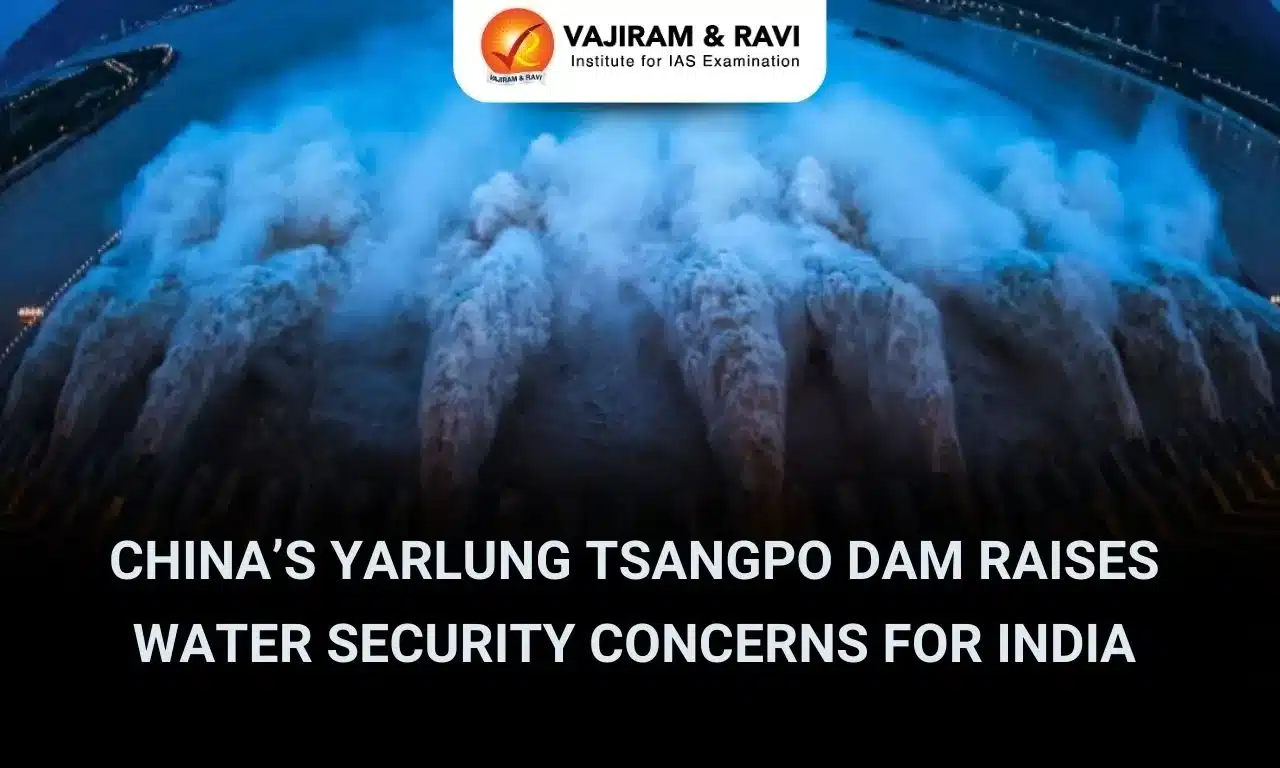
China has approved the construction of the world’s largest hydropower project on the Yarlung Tsangpo river in Tibet, with a capacity of 60,000 MW, three times that of the Three Gorges Dam.

The river flows into Arunachal Pradesh as the Siang, into Assam as the Brahmaputra, and then into Bangladesh before reaching the Bay of Bengal.

The project is expected to have a significant impact on the livelihoods, ecology, and water availability for millions downstream.

India has consistently expressed concerns to China about such projects, emphasizing the need for transparency and consultation to protect downstream states’ interests.

Yarlung Tsangpo Project

  • About
    • The Yarlung Tsangpo hydropower project is set to be the world’s largest hydropower project, planned at the "Great Bend" of the river in Medog county, Tibet, where it makes a U-turn before entering Arunachal Pradesh.
    • The project is part of China’s 14th Five-Year Plan (2021-2025).
  • Location and Planning Stage
    • According to experts, the project’s location has been strategically chosen. Recent activities, including funding allocation, construction of smaller dams, and changes in upstream land use, suggest the project is in an advanced planning phase, with visible construction expected soon.
  • China's Goals for the Yarlung Tsangpo Project
    • China aims to use the Yarlung Tsangpo project to reduce reliance on conventional energy sources and achieve net carbon neutrality by 2060.
    • The river’s steep descent from the mountains provides an ideal flow rate for hydroelectricity generation, making it a prime location for such a mega project.
  • Scale of China's Dams and Environmental Concerns
    • China’s recent dams, including the Three Gorges Dam, highlight the massive scale of its hydropower ambitions.
    • However, these projects have raised significant environmental concerns.
    • The Three Gorges Dam, for instance, has altered gravity anomaly maps due to the immense weight of stored water, caused severe ecological impacts, and even triggered earthquakes.
    • Additionally, over a million people were displaced due to changes in river morphology.
    • The Yarlung Tsangpo project could replicate these environmental and social risks on a larger scale, posing significant challenges for downstream regions.

Specific concerns for India

  • Impact on Water Flow to India
    • The proposed dam could significantly affect water flow from China to India, a lower riparian state, as most of the water in the Brahmaputra system originates in Tibet.
    • Any alteration in water flow could disrupt agriculture and water availability in India.
  • Interruption of Silt and Biodiversity
    • Large dams often block the flow of silt, essential for agriculture, and cause changes in river flow, adversely affecting local biodiversity.
    • These disruptions could have long-term ecological and agricultural consequences for the region.
  • Earthquake-Prone and Fragile Ecology
    • The region is one of the most ecologically fragile and earthquake-prone areas in the world.
    • A large dam in this zone increases the risk of catastrophic events.
    • For instance, the 2004 Parechu Lake landslide in Tibet, which later burst in 2005, highlights the dangers of water accumulation in unstable regions, despite timely coordination to mitigate damage.
  • Need for Coordination and Concerns Over Cooperation
    • Effective coordination and real-time exchange of information between countries are crucial to prevent disasters.
    • However, China has shown reluctance to cooperate with lower riparian states like India.
    • Similar concerns have been observed in the Mekong river basin, where China’s 12 large dams have negatively impacted downstream nations.

Existing coordination mechanism on transboundary rivers between India and China

  • India and China have several agreements for cooperation on transboundary rivers:
    • Umbrella MoU (2013): Covers overall cooperation on transboundary rivers and has no expiry date. However, no activity is currently being undertaken under this agreement.
    • Brahmaputra MoU: Signed for data sharing and renewable every five years. It lapsed in 2023, and its renewal is under process via diplomatic channels.
    • Sutlej MoU: Initiated after the 2004 Parechu Lake incident but does not provide year-round data. This MoU is also pending renewal.
  • Expert Level Mechanism (2006)
    • This mechanism facilitates annual meetings between India and China to discuss transboundary river issues.
    • However, interruptions have occurred in recent years.
  • Challenges in Cooperation
    • China has been reluctant to share data consistently, with interruptions noted during the 2017 Doklam crisis and the 2020 Ladakh standoff.
  • International Framework
    • While neither India nor China is a signatory to the 1997 UN Convention on the Law of the Non-Navigational Uses of International Watercourses, both countries abide by its key principles.
    • These include equitable and reasonable water use and ensuring that actions of one country do not significantly harm another.
  • Need for Enhanced Cooperation
    • Given the limited avenues of coordination and the potential risks posed by mega projects like the Yarlung Tsangpo dam, robust mechanisms and renewed agreements are critical for preventing disputes and ensuring regional stability.

Options available to India

  • Limited Scope of Understanding
    • India and China have a narrow and limited understanding when it comes to transboundary river issues.
    • China has been unwilling to agree to any commitments that could address India’s concerns comprehensively.
  • China’s Standard Response
    • China often claims its hydropower projects are run-of-the-river, implying minimal water impounding and limited downstream impact.
    • However, India views these assertions sceptically.
  • India’s Need for Public Challenges
    • India must challenge China’s statements, including the recent claim that the Tsangpo mega dam would have no downstream impacts.
    • Without publicly countering such narratives, these projects could become faits accomplish, creating long-term challenges for India.
  • Honest Dialogue and Dissuasion
    • India should push for an honest dialogue with China and attempt to dissuade them from pursuing large-scale projects like the Tsangpo mega dam.
  • Elevating Water as a Key Issue
    • Water-related concerns should become a significant focus in India’s engagement with China.
    • India needs to clearly convey that disregarding its interests and concerns will negatively impact bilateral relations.

Q.1. What impact could the Yarlung Tsangpo dam have on India?

The dam could disrupt water flow from Tibet, affecting agriculture and water availability in India, especially in Assam and Arunachal Pradesh. It may also interrupt silt flow, harming agriculture, and pose ecological risks due to the fragile and earthquake-prone region.

Q.2. How does India currently coordinate with China on transboundary rivers?

India and China have agreements such as the Umbrella MoU and Brahmaputra MoU, focusing on data sharing and cooperation. However, there have been challenges in consistent cooperation, with data-sharing disruptions during tensions like the 2017 Doklam and 2020 Ladakh standoff.

Source: IE | NDTV
Methylcobalamin

Methylcobalamin

About Methylcobalamin: 

  • It is a naturally occurring form of vitamin B12 that can be obtained through supplements, as well as food sources like fish, meat, eggs, milk and milk products.
  • It consists of distinctive methyl group (-CH3) bonded to the cobalt atom, methylcobalamin differs structurally from other forms of vitamin B12, such as cyanocobalamin, adenosylcobalamin, and hydroxocobalamin.
    • Vitamin B12 is crucial water-soluble vitamin, is integral to DNA synthesis, red blood cell production, and neurological function.
    • Deficiency in this vitamin can lead to serious health consequences, often requiring supplementation.
  • It regulates body functions like cell growth, blood formation, and protein synthesis.
  • Uses:
    • It has been used as a supplement in patients with vitamin B12 deficiency and in those with diabetes and other neuropathies.
    • It is essential for the creation of red blood cells, which helps to avoid anemia.
    • A healthy consumption of Methylcobalamin enables adequate erythrocyte synthesis, minimizing weariness and weakness.
    • Its relevance extends to its role in the prevention and treatment of neurological illnesses.
    • It also participates in the production of neurotransmitters such as serotonin and dopamine, which are critical in controlling mood, emotions, and general mental health.

Q1: What is the Food Safety and Standards Authority of India (FSSAI)?

It is an autonomous body established under the Ministry of Health and Family Welfare, Government of India. The FSSAI has been established under the Food Safety and Standards Act, 2006, which is a consolidating statute related to food safety and regulation in India.

Source : TH

Karnataka High Court Ruling: Transgender People Can Change Name and Gender on Birth Certificates

Karnataka High Court Ruling: Transgender People Can Change Name and Gender on Birth Certificates

What’s in today’s article?

  • Why in News?
  • Transgender Persons (Protection of Rights) Act, 2019
  • Background of the case
  • Karnataka HC's Ruling
  • Application Process for Certificate of Identity

Why in News?

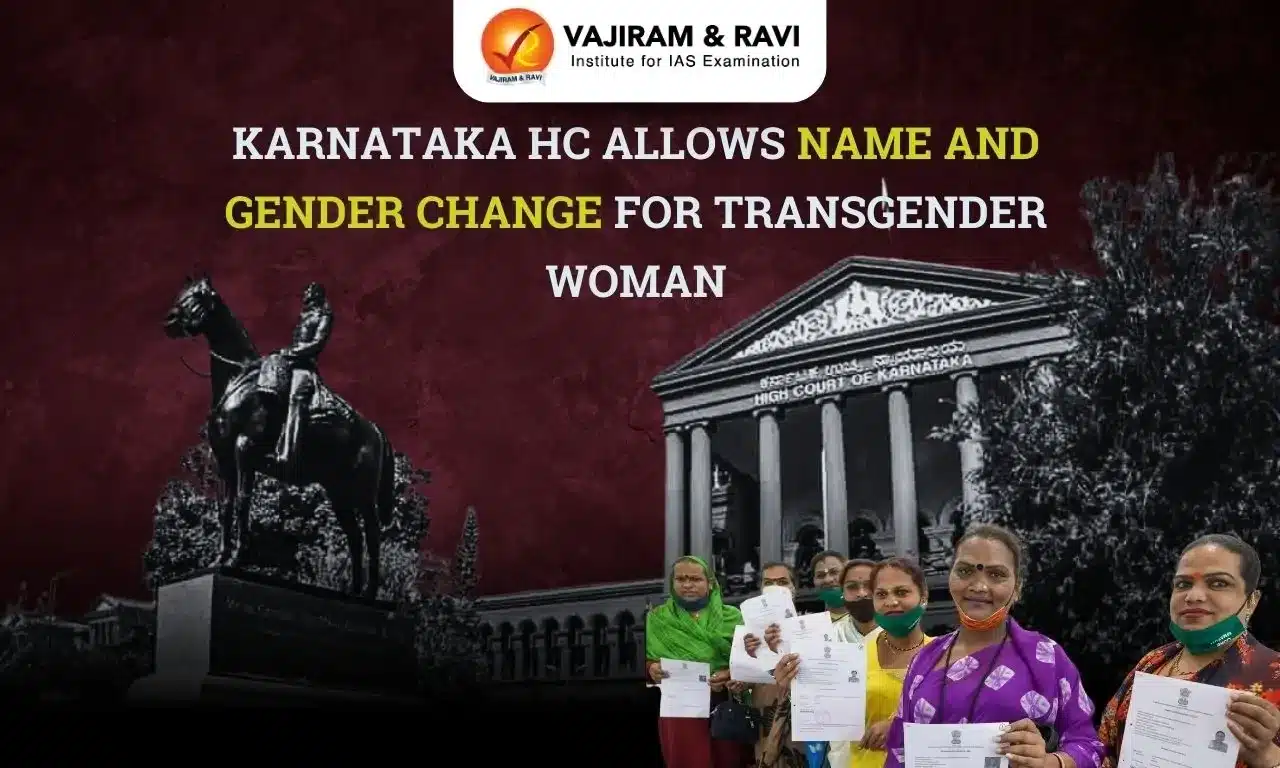
Five years after the Transgender Persons (Protection of Rights) Act, 2019 was enacted, the Karnataka High Court intervened to allow a transgender woman to change her name and gender on her birth certificate.

This step was necessary as she was earlier denied the change, despite such provisions being explicitly allowed under the 2019 Act and its rules.

Transgender Persons (Protection of Rights) Act, 2019

  • About
    • The act allows transgender individuals to obtain a "certificate of identity" (Section 6) and revise it after sex-reassignment surgery (Section 7).
    • The Act mandates that gender recorded on this certificate must appear on all official documents.
    • It also explicitly permits changing the first name and gender in the birth certificate and other identity documents based on this certificate.
  • Rules and Procedures Under the 2020 Rules
    • The Transgender Persons (Protection of Rights) Rules, 2020 outline the procedure for obtaining the certificate and include a list of official documents eligible for revision, with the "Birth Certificate" as the first entry.

Background of the case

  • Ms. X vs. State of Karnataka (2024)
    • In Ms. X vs. State of Karnataka (2024), the petitioner, diagnosed with gender dysphoria, underwent sex-reassignment surgery and changed her name to align her official documents with her gender identity.
    • She successfully updated her Aadhaar card, driving license, and passport but faced rejection when applying to change her name and gender on her birth certificate.
  • Registrar’s Rejection
    • The Registrar of Births and Deaths in Mangalore denied her request, citing Section 15 of the Registration of Births and Deaths Act, 1969.
    • The provision permits changes to birth certificates only if the information is "erroneous" or entered "fraudulently or incorrectly."
  • Challenge in Karnataka High Court
    • The petitioner challenged the restrictive interpretation of Section 15, arguing that it curtailed her right to life with dignity under Article 21 of the Constitution.
    • She emphasized that inconsistent documentation creates a “dual life,” exposing her to harassment and discrimination.
  • State's Argument
    • The Karnataka government maintained that the Registrar was bound by the limitations of the 1969 Act, which does not explicitly allow changes for reasons like gender identity updates.

Karnataka HC's Ruling

  • Conflict Between the 1969 Act and the 2019 Act
    • The Registration of Births and Deaths Act, 1969 restricts changes to birth certificates to cases of “erroneous,” “fraudulent,” or “incorrect” entries (Section 15).
    • However, the Karnataka HC found this general law to be in conflict with the Transgender Persons Act, 2019, a special law aimed at protecting transgender rights.
  • Legal Principle: Special Law Prevails Over General Law
    • The HC applied the principle of generalia specialibus non-derogant ("the special shall prevail over the general"), holding that the specific provisions of the 2019 Act override the general provisions of the 1969 Act.
    • This interpretation ensures that the broader objectives of the 2019 Act are not obstructed by older general laws.
  • HC's Ruling
    • The Karnataka HC directed the Registrar to recognize certificates issued under the Transgender Persons Act and update birth certificates with the revised name and gender identity.
    • The court also emphasized that this must be followed “until suitable amendments are made to the 1969 Act.”

Application Process for Certificate of Identity

  • Application Process
    • Under the Transgender Persons Rules, individuals must file an application with the District Magistrate (DM) along with an affidavit declaring their gender identity.
    • The DM will process the affidavit and issue an identification number as proof of application.
    • Within 30 days, the DM will either issue the certificate of identity and a transgender identity card or reject the application with reasons.
  • Revised Certificate for Post-Surgery Applicants
    • Transgender individuals who undergo reassignment surgery can request a medical certificate from the Medical Superintendent or Chief Medical Officer.
    • Using this medical certificate, they can reapply to the DM for a revised certificate of identity, which must be issued within 15 days.
  • Exemption for Pre-Act Changes
    • Individuals who recorded a change in gender before the Act came into force are not required to apply for a certificate of identity under the Act.
  • Obligation to Update Official Documents
    • Authorities responsible for issuing official documents (e.g., Aadhaar, driving license, birth certificate) must update the name, gender, photograph, or any related information within 15 days of receiving an application from a transgender person with a valid certificate of identity.

Q.1. What does the Karnataka High Court ruling on birth certificates signify for transgender rights?

The ruling affirms that transgender individuals can update their birth certificates to reflect their gender identity, overriding restrictive interpretations of older laws. It ensures that transgender persons' rights to dignity and identity are protected under the Transgender Persons Act, 2019.

Q.2. What is the process for transgender individuals to update their identity documents in India?

Transgender individuals must apply for a certificate of identity through the District Magistrate, with an affidavit declaring their gender. After surgery, they can apply for a revised certificate, which authorities must use to update documents like Aadhaar, driving licenses, and birth certificates.

Source: IE | IT | ABP Live

Human Metapneumovirus

Human Metapneumovirus

About Human Metapneumovirus:

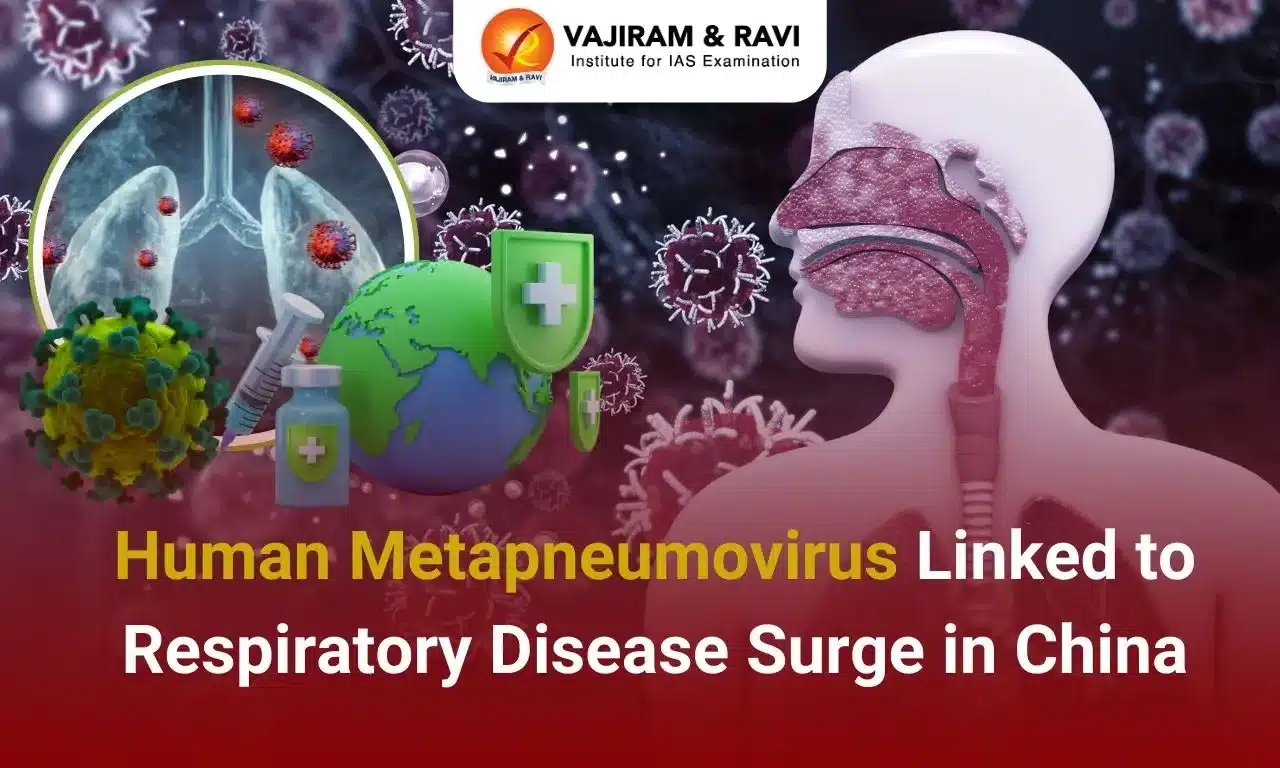
  • It is a respiratory virus that causes mild infections similar to that caused by a common cold.
  • It was first identified by scientists in 2001 which belongs to the Pneumoviridae family, of which respiratory syncytial virus (RSV), measles and mumps are also members.
  • It can cause both upper and lower respiratory tract infections and is generally seen in winter and early spring.
  • Children, the elderly and those with weakened immune systems are more susceptible to the infection and to developing complications from it.
  • Signs and symptoms
    • Symptoms can resemble those caused by a common cold. They include a cough, runny or blocked nose, sore, throat, fever and wheezing.
    • The estimated incubation period is three to six days.
    • In most people, the illness goes away on its own within a few days, with rest and supportive care at home.
    • In a few people however, complications such as bronchitis or pneumonia may arise, requiring medical care.
  • Transmission
    • It spreads through contact with an infected person or touching objects that have the virus on them.
    • This can be through: secretions from coughs, sneezes; close contact with someone who has the infection such as shaking hands, hugging; touching a doorknob or a phone or a keyboard that may be contaminated with the virus and then touching the mouth, nose or eyes.
  • Treatment: There is no vaccine and there is no specific antiviral to treat HMPV. Most people require over-the-counter medications to relieve fever and pain, possibly with a decongestant. Antibiotics will not work for HMPV.

Q1: What is Pneumonia?

It is an infection that inflames the air sacs in one or both lungs. The air sacs may fill with fluid or pus (purulent material), causing cough with phlegm or pus, fever, chills, and difficulty breathing.

Source: TH

Enquire Now