Sevottam Service Delivery Excellence Model, Objectives, Importance

Sevottam Service Delivery Excellence Model

The Sevottam Service Delivery Excellence Model is a quality management framework developed to improve public service delivery in India by promoting citizen-centric governance. It focuses on the establishment of clear service standards, effective grievance redress mechanisms, and organizational capacity building to ensure accountability, transparency, and responsiveness in public administration. In this article, we are going to cover the Sevottam Delivery Excellence Model, its objectives, structure, implementation and importance of the Sevottam framework in efficient and citizen focused governance. 

Sevottam Service Delivery Excellence Model

Derived from the words “Seva” (service) and “Uttam” (excellence), the Sevottam model aims to improve the quality of public services through a systematic and measurable approach. It is designed to ensure that public organizations operate transparently, are accountable to citizens, and prioritize service excellence. Formulated as IS 15700:2005 by the Quality Council of India on behalf of the Department of Administrative Reforms, the model was officially adopted in 2006. Sevottam applies to both central and state government services, providing a structured methodology for defining, monitoring, and enhancing service delivery, while empowering public organizations to achieve operational excellence.

Sevottam Framework Objectives

The Sevottam model is guided by three primary objectives:

  1. Effective Implementation of Citizen’s Charters: Citizen’s Charters define service entitlements, timelines, and quality benchmarks. By integrating citizen feedback, organizations can align services with expectations, fostering trust and transparency.
  2. Service Delivery Preparedness and Performance: Public organizations are required to identify services, establish efficient processes, and build capacity to meet standards. Preparedness ensures services are delivered reliably and consistently, meeting citizen expectations.
  3. Robust Public Grievance Redress Mechanism: A transparent and accessible grievance system ensures complaints are addressed effectively, enhancing citizen satisfaction and reinforcing accountability.

Sevottam Service Delivery Excellence Model Principles

The Sevottam framework emphasizes three core principles:

  • Defining Service Standards: Clear and measurable standards help citizens understand what they can expect from public services.
  • Citizen Feedback: Inputs from users highlight discrepancies in service delivery, providing actionable insights for improvement.
  • Capacity Building: Developing the organizational and human resource capacity ensures consistent delivery of high-quality services.

Sevottam Service Delivery Excellence Model Framework

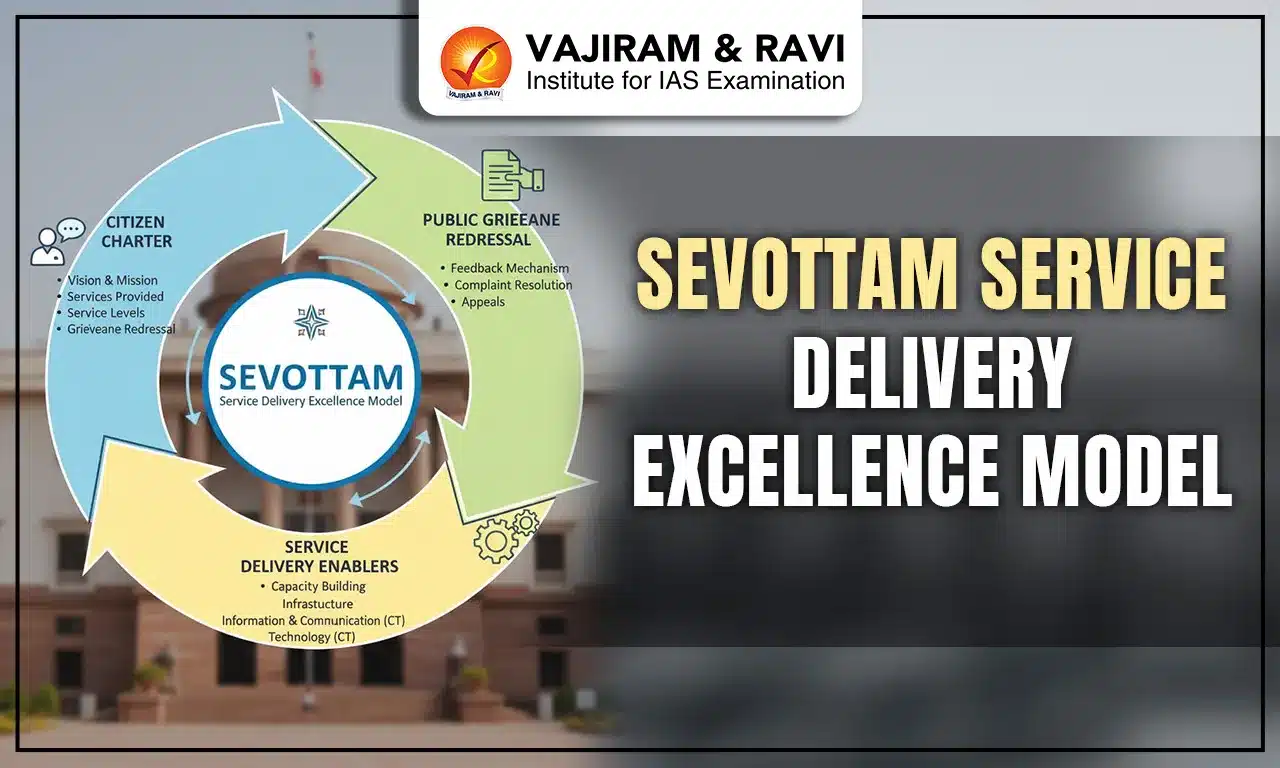
The Sevottam Service Delivery Excellence framework consists of three main modules:

  1. Citizen’s Charter: It communicates service standards and entitlements, serving as a reference point for evaluating service quality.
  2. Grievance Redress Mechanism: Ensures an effective system for addressing complaints whenever services fall short of the defined standards.
  3. Capability Building: Focuses on training, process improvement, and organizational development to consistently meet service delivery benchmarks.

Seven-Step Approach to Citizen-Centric Governance

The Administrative Reforms Commission (ARC) proposed a seven-step approach to make governance more citizen-oriented, based on Sevottam principles:

  1. Define Services: Identify and categorize services according to citizen needs and organizational priorities.
  2. Set Standards: Establish realistic, measurable benchmarks with citizen inputs.
  3. Develop Capacity: Improve organizational capacity through training, value-building, and promoting a customer-centric culture.
  4. Perform: Implement performance management systems to ensure standards are met.
  5. Monitor: Track adherence to service standards and identify gaps.
  6. Evaluate: Conduct external assessments through citizen feedback and report cards to evaluate service quality.
  7. Continuous Improvement: Regularly upgrade services, standards, and processes to meet evolving expectations.

Sevottam Service Delivery Excellence Model Importance

The Sevottam framework plays an important role in improving governance in India:

  • Self-Assessment: Organizations can evaluate internal gaps in service delivery and take corrective actions.
  • Benchmarking: Provides a quality standard for public services, facilitating comparisons and encouraging improvements.
  • Recognition and Reward: Acts as a rating system to acknowledge organizations excelling in citizen-centric governance.
  • Sustainability: Promotes the integration of service excellence into routine practices, ensuring long-term impact.

Sevottam Certification Process

Organizations seeking Sevottam certification undertake a self-assessment aligned with IS 15700 standards, focusing on citizen’s charters, grievance redress, service delivery, and continuous improvement. Successful applicants can obtain certification from authorized bodies, valid for three years, recognizing them for excellence in public service.

Sevottam Framework Challenges and Way Forward

While the Sevottam model provides a structured approach to citizen-centric governance, its effective implementation faces several challenges:

  • Decentralized Implementation: Effective delivery requires focus on field-level interactions and responsiveness.
  • Awareness and Training: Both citizens and public officials need greater understanding of Sevottam objectives.
  • Bottom-Up Reforms: Sustainable improvements require participatory approaches, engaging frontline staff and beneficiaries.

Despite these challenges, the simplicity and adaptability of the model make it a powerful tool for improving public service delivery in India.

Also Check Other Posts
Civil Society FCRA
India's Ranking in Different Indexes 1st ARC Report

Sevottam Service Delivery Excellence Model FAQs

Q1: What is the Sevottam model of public service delivery?

Ans: The Sevottam model is a quality management framework aimed at improving public service delivery by ensuring citizen-centric, transparent, and accountable governance.

Q2: What is the Sevottam model?

Ans: Sevottam, derived from “Seva” (service) and “Uttam” (excellence), is a framework that sets service standards, strengthens grievance redress, and builds organizational capacity for service excellence.

Q3: What are the seven steps of Sevottam?

Ans: The seven steps are: Define Services, Set Standards, Develop Capacity, Perform, Monitor, Evaluate, and Continuous Improvement.

Q4: What is the Sevottam Certification Process?

Ans: The certification process involves self-assessment against IS 15700 standards, evaluation of citizen charters, grievance redressal, service delivery, and continuous improvement.

Q5: What are the principles of Sevottam Model?

Ans: The principles include citizen-centricity, transparency, accountability, clear service standards, effective grievance redress, continuous improvement, and organizational capacity building.

UPSC Daily Quiz 9 October 2025

UPSC Daily Quiz

The Daily UPSC Quiz by Vajiram & Ravi is a thoughtfully curated initiative designed to support UPSC aspirants in strengthening their current affairs knowledge and core conceptual understanding. Aligned with the UPSC Syllabus 2025, this daily quiz serves as a revision resource, helping candidates assess their preparation, revise key topics, and stay updated with relevant issues. Whether you are preparing for Prelims or sharpening your revision for Mains, consistent practice with these Daily UPSC Quiz can significantly enhance accuracy, speed, and confidence in solving exam-level questions.

[WpProQuiz 91]  

UPSC Daily Quiz FAQs

Q1: What is the Daily UPSC Quiz?

Ans: The Daily UPSC Quiz is a set of practice questions based on current affairs, static subjects, and PYQs that help aspirants enhance retention and test conceptual clarity regularly.

Q2: How is the Daily Quiz useful for UPSC preparation?

Ans: Daily quizzes support learning, help in revision, improve time management, and boost accuracy for both UPSC Prelims and Mains through consistent practice.

Q3: Are the quiz questions based on the UPSC syllabus?

Ans: Yes, all questions are aligned with the UPSC Syllabus 2025, covering key areas like Polity, Economy, Environment, History, Geography, and Current Affairs.

Q4: Are solutions and explanations provided with the quiz?

Ans: Yes, each quiz includes detailed explanations and source references to enhance conceptual understanding and enable self-assessment.

Q5: Is the Daily UPSC Quiz suitable for both Prelims and Mains?

Ans: Primarily focused on Prelims (MCQ format), but it also indirectly helps in Mains by strengthening subject knowledge and factual clarity.

Plutonium Management and Disposition Agreement (PMDA)

Plutonium Management and Disposition Agreement Latest News

About 100 wild boars were found dead in Nangal Wildlife Sanctuary in March this year, and the postmortem report of the dead wild boars indicates that the wild boars might have died due to toxic waste in Nangal Lake, which is part of the sanctuary.

About Plutonium Management and Disposition Agreement 

  • It is an agreement between the United States and Russia signed in 2000.
  • It came into force in 2011.
  • It aimed at reducing vast stockpiles of weapons-grade plutonium left over from thousands of Cold War nuclear warheads.
    • After dismantling thousands of warheads after the Cold War, both Moscow and Washington were left with huge stockpiles of weapons-grade plutonium which was costly to store and posed a potential proliferation risk.
  • The aim of the PMDA was to dispose of the weapons-grade plutonium, by converting it into safer forms - such as mixed oxide (MOX) fuel or by irradiating plutonium in fast-neutron reactors for electricity production.
  • It committed both the United States and Russia to dispose of at least 34 tonnes of weapons-grade plutonium each.
  • Russia in 2016 suspended implementation of the agreement, citing U.S. sanctions and what it cast as unfriendly actions against Russia, NATO enlargement, and changes to the way the United States was disposing of its plutonium.
    • Russia said at the time that the United States had not abided by the agreement after Washington moved, without Russian approval, to simply dilute the plutonium and dispose of it.

Source: TH

Plutonium Management and Disposition Agreement FAQs

Q1: The Plutonium Management and Disposition Agreement (PMDA) was signed between which two countries?

Ans: United States and Russia

Q2: When did the Plutonium Management and Disposition Agreement come into force?

Ans: 2011

Q3: What was the primary aim of the Plutonium Management and Disposition Agreement (PMDA)?

Ans: To reduce weapons-grade plutonium stockpiles from dismantled Cold War warheads.

Subansiri Upper Hydroelectric Project

Subansiri Upper Hydroelectric Project

Subansiri Upper Hydroelectric Project Latest News

Hundreds recently protested in Daporijo, Arunachal Pradesh, against the proposed 2,000 MW Subansiri Upper Hydroelectric Project.

About Subansiri Upper Hydroelectric Project

  • It is a 1,800 MW hydropower project. 
  • It is a run-of-the-river project planned on the Subansiri River basin in Arunachal Pradesh.
  • It is expected to enter into commercial operation in 2031.
  • The project is being developed by KSK Upper Subansiri Hydro Energy and is currently owned by KSK Energy Ventures.
  • The gross head of the project will be 199.5 m. 
  • The project is expected to generate 6,581.29 GWh of electricity. The project cost is expected to be around $2,346.87m.

Key Facts about Subansiri River

  • It is a Trans-Himalayan river originating from the western part of Mount Porom (5059 m) in the Tibetan Himalaya. (Kangig glacier range in Tibet)
  • It is also called the Gold River, the Subansiri River is famous for its gold dust.
  • It enters into the plains of Assam through a gorge near Gerukamukh. 
  • It is the right-bank tributary of the Brahmaputra. It joins the Brahmaputra River in the Lakhimpur district of Assam.
  • It flows through Assam, Arunachal Pradesh, and the Tibet Autonomous Region of China.
  • Tributaries: Major tributaries of the river are Laro, Nye, Yume, Tsari, Kamla, Jiyadhol, Ranganadi and Dikrong.

Source: TOI

Subansiri Upper Hydroelectric Project FAQs

Q1: In which Indian state is the Subansiri Upper Hydroelectric Project located?

Ans: Arunachal Pradesh

Q2: What is the total installed capacity of the Subansiri Upper Hydroelectric Project?

Ans: 1,800 MW

Q3: What is the expected annual power generation capacity of the Subansiri Upper Hydroelectric Project?

Ans: 6,581.29 GWh

Q4: The Subansiri River is also known by which other name?

Ans: Gold River

Bridgeoporus Kanadii

Bridgeoporus Kanadii

Bridgeoporus Kanadii Latest News

From the forests of northeast India’s Arunachal Pradesh state, researchers have described a new-to-science species of fungus named Bridgeoporus kanadii.

About Bridgeoporus Kanadii

  • It is a new species of fungi discovered in Arunachal Pradesh.
  • It has exceptionally large fruiting bodies that can hold the weight of a person.  Some fruiting bodies measured over three meters in radius.
  • The species is named in honor of Indian mycologist Kanad Das for his contributions to Indian macrofungi.
  • The only other known species in Bridgeoporus, B. nobilissimus, is native to North America and has fruiting bodies up to about 1.5 meters. B. kanadii doubles that in size.
  • Bridgeoporus fungi play a vital role in forest regeneration by helping to decompose dead wood. 
  • Most of the B. kanadii the researchers spotted in Arunachal Pradesh were growing on dead fir trees.
  • Though the fungus is massive and visually striking, it is inedible and offers no direct economic use.

Source: MONG

Bridgeoporus Kanadii FAQs

Q1: In which Indian state was the new fungal species Bridgeoporus kanadii discovered?

Ans: Arunachal Pradesh

Q2: What is unique about the fruiting bodies of Bridgeoporus kanadii?

Ans: It has exceptionally large fruiting bodies that can hold the weight of a person.

Q3: What is the primary ecological role of Bridgeoporus kanadii in forests?

Ans: Bridgeoporus fungi play a vital role in forest regeneration by helping to decompose dead wood.

Foreign Currency Settlement System

Foreign Currency Settlement System

Foreign Currency Settlement System Latest News

Recently, the union Finance Minister launched a Foreign Currency Settlement System (FCSS) at the International Financial Services Centre (IFSC) in Gujarat International Finance Tec-City (GIFT City). 

About Foreign Currency Settlement System

  • It is established under a comprehensive legal and regulatory framework of the Payment and Settlement Systems Act, 2007.
  • It is authorised by International Financial Services Centres Authority (IFSCA).
  • Key Features
    • It enables foreign currency transactions between IFSC Banking Units (IBUs) to be settled locally instead of routing through the traditional correspondent banking route.
    • It provides a structured framework for the settlement of foreign currency transactions, enabling market participants to process cross-border payments with greater speed, reliability, and legal certainty.
  • Initially, the system will support US dollar transactions, with scope to add other foreign currencies over time. 
  • It is operated by the CCIL IFSC Limited (CCIL IFSC), a subsidiary of Clearing Corporation of India Limited.
    • Currently, foreign currency transactions in GIFT IFSC are processed via correspondent banking routes i.e through multiple Nostro account relationships (accounts held with foreign banks) and intermediaries to route funds.
    • That chain of relay can lead to settlement lags of 36 to 48 hours.

What is the International Financial Services Centres Authority?

  • It is a statutory authority established under the International Financial Services Centres Authority Act, 2019.
  • The IFSCA is a unified authority for the development and regulation of financial products, financial services, and financial institutions in the International Financial Services Centre (IFSC) in India. 
  • The IFSCA aims to develop a strong global connection and focus on the needs of the Indian economy as well as to serve as an international financial platform for the entire region.
  • Headquarter: GIFT City, Gandhinagar, in Gujarat

Source: BS

Foreign Currency Settlement System FAQs

Q1: Which authority authorized the Foreign Currency Settlement System (FCSS)?

Ans: International Financial Services Centres Authority (IFSCA)

Q2: What is the initial currency supported by the FCSS?

Ans: US Dollar.

Paramyrothecium Strychni

Paramyrothecium Strychni

Paramyrothecium Strychni Latest News

Recently, scientists have discovered a new species of phytopathogenic fungus, Paramyrothecium strychni in Kerala.

About Paramyrothecium Strychni

  • It is a fungus species associated with emerging leaf spots and blight disease of Strychnos dalzellii (Family-Loganiaceae) from Kerala. 
  • This new species has been discovered and established on the basis of morpho-cultural and multigene molecular phylogenetic evidence.
  • According to Index Fungorum, a total of 25 species of Paramyrothecium are recognied worldwide, and most of them are reported as plant pathogens.
  • Species of Paramyrothecium mostly cause leaf spots and blights in all kinds of plants.

What is Strychnos Dalzellii?

  • It is an endemic medicinal plant of the Western Ghats.
  • It is valued for its alkaloids with analgesic, anti-inflammatory, and antimicrobial properties. Traditionally, it is used in treating fever, digestive disorders, rheumatism, and nervous ailments.
  • Strychnos dalzellii is locally known as Kanjiram or Modirakanjiram.
  • Conservation Status: It is categorised as Vulnerable (VU) under the IUCN Red List.
  • Threats: Habitat degradation, and overexploitation

Source: TH

Paramyrothecium Strychni FAQs

Q1: Where was Paramyrothecium?

Ans: A phytopathogenic fungus.

Q2: Where was Paramyrothecium strychni discovered?

Ans: Western Ghats, Kerala

National Health Policy 2017, Objectives, Vision, Features

National Health Policy

The National Health Policy 2017 represents India’s strategic roadmap to improve the health and well-being of its population, aiming to achieve Universal Health Coverage (UHC) and improve overall healthcare outcomes. By emphasizing preventive and promotive healthcare, equitable access to quality services, and attention to vulnerable populations, the policy is designed to address the evolving health needs of the nation. In this article, we are going to cover National Health Policy 2017, its historical background, vision, objectives and features.

National Health Policy

The National Health Policy 2017 is a forward-looking framework for transforming India’s healthcare system. By emphasizing Universal Health Coverage, preventive health, and equitable access, it seeks to ensure that every citizen can live a healthy and productive life. Successful implementation of NHP 2017 requires sustained commitment from the government, innovative strategies, and active participation from communities, healthcare providers, and other stakeholders. With coordinated efforts, India can achieve its vision of a robust, equitable, and sustainable healthcare system that meets the needs of its diverse population.

Read About: Indian Healthcare Sector

National Health Policy Background

Health is fundamental to national development and human progress. Recognizing this, India has periodically formulated national health policies to guide its healthcare system. The National Health Policy 1983 prioritized primary healthcare, rural health infrastructure, and the control of communicable diseases, maternal, and child health. The National Health Policy 2002 focused on improving access to affordable and quality healthcare, encouraging private sector participation, and setting targets for reducing infant mortality and fertility rates.

The National Health Policy 2017, the most comprehensive iteration, aims to meet current and future healthcare challenges by emphasizing preventive and promotive health, equity, and quality care. It aligns with India’s commitment to Universal Health Coverage and the Sustainable Development Goals, reflecting a holistic approach to health planning.

National Health Policy 2017 Vision

The vision of NHP 2017 is to attain the highest possible health and well-being for all age groups through preventive and promotive health orientation, along with universal access to quality healthcare services. The policy stresses reducing health inequities, strengthening infrastructure, and ensuring financial protection for all, particularly underserved and vulnerable populations.

National Health Policy Objectives

The NHP 2017 outlines several critical objectives:

  1. Universal Health Coverage (UHC): Ensuring affordable, accessible, and equitable healthcare for all citizens.
  2. Reduction of Disease Burden: Addressing communicable, non-communicable, and emerging health challenges.
  3. Strengthening Healthcare Infrastructure: Expanding healthcare facilities, especially in rural and underserved regions.
  4. Community Participation: Promoting health literacy and active community engagement in healthcare delivery.
  5. Health Financing: Increasing public health expenditure to 2.5% of GDP by 2025.
  6. Human Resource Development: Training healthcare professionals and improving the doctor-patient ratio to meet the growing demand for quality healthcare.

National Health Policy Features

The policy integrates multiple components to create a robust and equitable healthcare system:

  • Primary Healthcare: Establishing Health and Wellness Centers (HWCs) to deliver comprehensive primary care, including preventive, promotive, and curative services.
  • Preventive Healthcare: Emphasizing immunization, early screening, and preventive interventions to reduce the disease burden.
  • Public Health Expenditure: Increasing government spending on health to reduce out-of-pocket expenditure for citizens, and providing free essential drugs and diagnostics.
  • Integration of AYUSH: Promoting Ayurveda, Yoga, Unani, Siddha, and Homeopathy as complementary systems to modern medicine.
  • Non-Communicable Diseases (NCDs): Focusing on prevention, early detection, and management of NCDs such as diabetes, hypertension, and cancer, while also addressing mental health and palliative care needs.
  • Digital Health: Encouraging telemedicine, electronic health records, and e-governance to improve efficiency and accessibility.
  • Health Equity: Prioritizing marginalized populations and reducing rural-urban disparities in healthcare access and outcomes.
  • Health Workforce Development: Implementing skill development programs to address shortages of healthcare workers, particularly in remote areas.

National Health Policy Challenges in Implementation

Despite its comprehensive framework, the implementation of NHP 2017 faces several challenges:

  • Low Public Health Expenditure: Government spending remains below the 2% GDP target, restricting infrastructure development and service delivery.
  • Human Resource Shortages: There is a significant deficit of doctors, nurses, and allied health professionals, particularly in rural regions.
  • Urban-Rural Disparities: Healthcare infrastructure is concentrated in urban areas, leaving rural populations underserved.
  • High Out-of-Pocket Expenditure: Citizens bear a significant portion of healthcare costs, which can lead to financial hardship.
  • Fragmented Health Systems: Coordination between public and private healthcare sectors remains limited, affecting service delivery.
  • Rising Disease Burden: Non-communicable and emerging infectious diseases are increasing, creating additional pressures on the health system.

Major Government Initiatives Aligned with NHP 2017

Several flagship programs have been launched to operationalize the policy’s objectives:

  • Ayushman Bharat: Launched in 2018, it includes the Pradhan Mantri Jan Arogya Yojana (PMJAY) for secondary and tertiary care and HWCs for primary care, aiming to achieve Universal Health Coverage.
  • National Digital Health Mission (NDHM): Establishes a digital ecosystem with unique health IDs for citizens, facilitating efficient service delivery.
  • Jan Aushadhi Scheme: Provides affordable generic medicines through Pradhan Mantri Bharatiya Janaushadhi Kendras.
  • Mission Indradhanush: Enhances immunization coverage for children and pregnant women.
  • National Program for Prevention and Control of NCDs: Focuses on awareness, early detection, and treatment of lifestyle diseases.

National Health Policy Achievements

The implementation of NHP 2017 has led to notable outcomes:

  • Establishment of over 1.5 lakh Health and Wellness Centers across the country.
  • Increased immunization coverage through Mission Indradhanush.
  • Enhanced access to affordable medicines via Jan Aushadhi Kendras.
  • Greater adoption of digital health solutions, including electronic health records and telemedicine services.

National Health Policy Way Forward

To realize the full potential of NHP 2017, several strategic measures are necessary:

  • Strengthening Infrastructure: Expand healthcare facilities and improve resource allocation, particularly in underserved regions.
  • Focus on Preventive Health: Promote awareness campaigns, early screening, and lifestyle interventions to reduce the overall disease burden.
  • Human Resource Development: Address workforce shortages through targeted training programs, recruitment, and skill development initiatives.
  • Increased Health Financing: Achieve the target of 2.5% GDP for public health expenditure to ensure sustainable healthcare funding.
  • Public-Private Partnerships: Leverage private sector expertise to enhance service delivery and improve healthcare efficiency.
  • Equitable Healthcare Access: Prioritize marginalized and vulnerable populations to reduce disparities in health outcomes.

National Health Policy FAQs

Q1: What is the National Health Policy?

Ans: The National Health Policy is a government framework that guides India’s healthcare system to improve health outcomes, ensure universal access, and promote preventive healthcare.

Q2: What was the aim of the National Health Policy 1983?

Ans: The aim of NHP 1983 was to provide accessible primary healthcare to all, strengthen rural health infrastructure, and control communicable diseases along with maternal and child health.

Q3: What are the objectives of the health policy?

Ans: The objectives include achieving Universal Health Coverage, reducing disease burden, strengthening healthcare infrastructure, and promoting community participation.

Q4: What is the PM-JAY Scheme?

Ans: The Pradhan Mantri Jan Arogya Yojana (PM-JAY) is a government health insurance scheme providing secondary and tertiary care coverage to economically vulnerable families.

Q5: What is Mission Indradhanush?

Ans: Mission Indradhanush is a government initiative aimed at increasing immunization coverage for children and pregnant women to prevent vaccine-preventable diseases.

Mera Hou Chongba Festival

Mera Hou Chongba Festival

Mera Hou Chongba Festival Latest News

Recently, the Mera Hou Chongba festival, which symbolises Hill-valley unity was celebrated in Manipur.

About Mera Hou Chongba Festival

  • It is celebrated in Manipur on the 15th lunar day of the Mera month of the Meitei calendar every year.
  • The festival's historical roots are believed to date back to the time of Nongda Lairen Pakhangba, a legendary early ruler of Manipur.
  • Rituals: Manipur titular King lead a ritual march involving tribal village chiefs from the Manipur Royal Palace to the historic Kangla, where traditional rituals, including Mera Thaomei Thanba (lighting of the ceremonial fire) and Mera Yenkhong Tamba (exchange of gifts).
  • The festival will culminate with a showcase of cultural dances and a grand feast marking the brotherhood among different tribes in the state.
  • It is the only festival in Manipur in which all indigenous communities participate, and it has a significant importance in the unity and communal harmony of Manipur. 

Source: News on Air

Mera Hou Chongba Festival FAQs

Q1: Where is Mera Hou Chongba Festival celebrated?

Ans: Manipur

Q2: What is the purpose of Mera Hou Chongba Festival?

Ans: To promote peace and solidarity among communities

PM-KUSUM Scheme

PM-KUSUM Scheme

PM-KUSUM Scheme Latest News

The Union government is looking to showcase the PM-KUSUM (Pradhan Mantri Kisan Urja Suraksha evam Utthan Mahabhiyan) programme to several African countries and island nations by using the International Solar Alliance platform.

About PM-KUSUM Scheme

  • It was launched in 2019 with the objective to provide energy and water security to farmers, enhance their income, de-dieselize the farm sector, and reduce environmental pollution.
  • Target: To add Solar capacity of about 34,800 MW by March 2026.
  • Nodal Ministry: Ministry of New and Renewable Energy (MNRE).
  • The eligible categories for KUSUM Scheme are:
    • An individual farmer.
    • A group of farmers.
    • FPO or Farmer producer organization.
    • Panchayat.
    • Co-operatives.
    • Water User Associations.

Components of PM-KUSUM Scheme

  • Component A:  Setting up of 10,000 MW of Decentralized Grid Connected Renewable Energy Power Plants on barren land.
    • Under this component, renewable energy based power plants (REPP) of capacity 500 kW to 2 MW will be set up by individual farmers/ group of farmers/ cooperatives/ panchayats/ Farmer Producer Organisations (FPO)/ on barren/fallow land.
    • The power generated will be purchased by the local DISCOM at a pre-fixed tariff determined by the respective State Electricity Regulatory Commission (SERC).
    • The renewable energy power project will be installed within a five km radius of the sub-stations.
  • Component B: Installation of 20 lakhs of standalone Solar Powered Agriculture Pumps.
    • Individual farmers will be supported to install standalone solar Agriculture pumps of capacity up to 7.5 HP for the replacement of existing diesel Agriculture pumps / irrigation systems in off-grid areas, where grid supply is not available.
  • Component C: For Solarisation of 15 Lakh Grid Connected Agriculture Pumps.
    • Under this Component, individual farmers having grid connected agriculture pump will be supported to solarise pumps.
    • The farmer will be able to use the generated solar power to meet the irrigation needs and the excess solar power will be sold to DISCOMs at pre-fixed tariff.

Source: TH

PM-KUSUM Scheme FAQs

Q1: What is the primary objective of the PM-KUSUM scheme?

Ans: To promote renewable energy and reduce dependence on diesel.

Q2: Who is eligible for the PM-KUSUM scheme?

Ans: Individual farmers, group of farmers, FPOs, Panchayats, Co-operatives, and Water User Associations.

Q3: Where is the headquarters of International Solar Alliance (ISA)?

Ans: The ISA is headquartered in Gurugram, Haryana, India.

Daily Editorial Analysis 9 October 2025

Daily Editorial Analysis

The Danger of an Unchecked Pre-Crime Framework

Context

  • Preventive detention occupies one of the most contested and troubling spaces in India’s constitutional framework.
  • Conceived as an emergency mechanism to preserve public order, it has instead evolved into a persistent threat to civil liberties, a Bermuda Triangle where fundamental rights such as liberty, equality, and due process vanish without a trace.
  • Despite periodic judicial assertions affirming the sanctity of individual freedom, preventive detention remains deeply entrenched in the Indian legal order, revealing a structural tension between constitutional ideals and executive convenience.

Judicial Caution and Its Limits

  • Recent Supreme Court rulings, notably Dhanya M. v. State of Kerala (2025), K. Nazneen v. State of Telangana (2023), and earlier decisions such as Banka Sneha Sheela (2021) and Rekha v. State of Tamil Nadu, reiterate that preventive detention should remain an exceptional measure, invoked sparingly and subject to rigorous constitutional scrutiny.
  • The Court has repeatedly stressed the distinction between law and order and public order, cautioning that preventive detention cannot be used as a shortcut to bypass criminal trials or bail proceedings.
  • Yet, these judicial pronouncements have done little to restrain executive overreach.
  • State laws such as the Kerala Anti-Social Activities (Prevention) Act, 2007 (KAAPA) deploy sweeping definitions of goonda and rowdy, transforming preventive detention from an extraordinary safeguard into a routine policing instrument.
  • The persistent misuse of such laws underscores a profound dissonance between constitutional theory and administrative practice.

A Colonial Legacy and Constitutional Embedding

  • The genealogy of preventive detention traces back to the colonial Bengal Regulations of 1818, designed to entrench imperial control.
  • Independent India, despite its democratic aspirations, retained this colonial relic with striking zeal.
  • The Constituent Assembly debates exposed deep anxiety about embedding such a measure within the constitutional text.
  • While some members viewed it as a temporary necessity, others, such as Somnath Lahiri, warned that Article 22 would turn the Constitution into a Police-Constable Constitution.
  • The Supreme Court’s decision in K. Gopalan v. State of Madras (1950) cemented this separation, holding that preventive detention could only be tested under Article 22 and not against Articles 14, 19, or 21.

The Constitutional Bermuda Triangle

  • The Gopalan judgment effectively isolated preventive detention from the rest of the fundamental rights framework, turning Article 22 into what scholars have called a constitutional Devil’s Island.
  • Even the watershed ruling in Maneka Gandhi v. Union of India (1978), which redefined Article 21 to include fairness, reasonableness, and due process, failed to fully penetrate the fortress of preventive detention.
  • In K. Roy v. Union of India (1982), the Court reverted to pre-Maneka reasoning, excluding preventive detention laws from the ambit of Articles 14 and 19 and refusing to apply the doctrine of proportionality.
  • Thus emerged a disturbing constitutional geography: the Golden Triangle of Articles 14, 19, and 21, the cornerstone of fundamental rights jurisprudence, stands eclipsed by the Bermuda Triangle of Article 22, where the rule of law gives way to executive discretion.

The Philosophy of Pre-Crime

  • The dystopian logic of preventive detention finds an evocative parallel in Steven Spielberg’s Minority Report (2002), adapted from Philip K. Dick’s story of pre-crime policing.
  • The film’s portrayal of individuals punished for crimes not yet committed mirrors the legal fiction underlying preventive detention: the substitution of suspicion for proof, and prediction for guilt.
  • In India’s preventive detention regime, the subjective satisfaction of the detaining authority functions much like the PreCrime unit’s fallible predictions.
  • The sponsoring authority, detaining authority, and advisory board form an ecosystem of suspicion, often targeting political dissenters or marginalised groups.
  • The absence of robust procedural safeguards, combined with the limited scope of judicial review, transforms preventive detention into a form of state-sanctioned pre-emptive justice — one that privileges control over constitutionality.

The Way Forward: Toward Constitutional Redemption

  • The Supreme Court’s recent interventions, including Dhanya M., offer a faint glimmer of hope.
  • By reaffirming that preventive detention must not substitute due process, the Court hints at a possible reconciliation between state security and individual liberty.
  • Yet, genuine reform requires more than judicial restraint; it demands a constitutional re-examination of K. Gopalan and A.K. Roy, which continue to legitimise the preventive state.
  • If preventive detention is to remain within the constitutional framework, it must be confined to the gravest threats, terrorism, espionage, and transnational organised crime, and fortified with stringent procedural safeguards.
  • Routine administrative invocation dilutes both the gravity of the measure and the moral authority of the Constitution itself.

Conclusion

  • Preventive detention stands as India’s enduring constitutional paradox, a measure designed to preserve order but which often subverts justice.
  • Its historical roots, judicial entrenchment, and political misuse together reveal how easily liberty can yield to expediency.
  • As long as Article 22 remains insulated from the unifying principles of fairness and equality, India’s constitutional democracy will coexist uneasily with its authoritarian shadow.

The Danger of an Unchecked Pre-Crime Framework FAQs

Q1. What is meant by the Bermuda Triangle of Indian liberty?
Ans. The term refers to Article 22(3)–(7) of the Indian Constitution, where fundamental rights like liberty, equality, and due process often disappear due to the powers of preventive detention.

Q2. How did A.K. Gopalan v. State of Madras shape preventive detention law in India?
Ans. The Gopalan judgment isolated preventive detention from other fundamental rights, allowing it to be tested only under Article 22 and not under Articles 14, 19, or 21.

Q3. What key distinction did the Supreme Court emphasise in Dhanya M. v. State of Kerala (2025)?
Ans. The Court stressed that preventive detention can only address threats to “public order,” not ordinary law and order issues.

Q4. Why is Minority Report used as a metaphor for preventive detention?

Ans. The film illustrates how punishing people for crimes not yet committed mirrors the pre-emptive and uncertain logic of preventive detention.

Q5. What reforms does the analysis suggest for India’s preventive detention regime?
Ans. It recommends restricting preventive detention to serious threats like terrorism and ensuring stronger procedural safeguards to protect individual liberty.

Source: The Hindu


An Anchor for India-U.K. Ties, Their Economic Partnership

Context

  • The relationship between India and the United Kingdom has entered a new and promising phase with the signing of the Comprehensive Economic and Trade Agreement (CETA) in July 2025.
  • This milestone, reinforced by the recent meeting between Indian Prime Minister Narendra Modi and British Prime Minister Keir Starmer in Mumbai, marks a concerted effort by both nations to strengthen bilateral cooperation.
  • In an era of global economic uncertainty, shifting trade regimes, and technological competition, the renewed partnership between India and the U.K. signifies more than just economic collaboration, it reflects a shared ambition to shape a resilient and equitable global order.

The Role of India-UK Comprehensive Economic and Trade Agreement (CETA)

  • Strengthening Economic Foundations

    • At the heart of the current engagement lies the CETA, a comprehensive framework that promises to double bilateral trade by 2030 and deepen economic interdependence across a wide range of sectors.
    • The agreement introduces tariff reductions benefiting both nations: India stands to gain through greater access for its textile, agricultural, and pharmaceutical exports, while the U.K. will see advantages in lower duties on Scotch whisky, automobiles, and other high-value products.
    • Beyond trade liberalisation, CETA symbolises a strategic alignment, a mutual recognition that open markets must be accompanied by sustainable investment, innovation, and shared technological growth.
    • Complementing this is the Double Contributions Convention (DCC), which eliminates the burden of dual social security contributions for Indian professionals working in the U.K. for up to three years.
  • Expanding the Web of Economic Partnerships

    • India’s engagement with the U.K. through CETA takes place within a broader context of expanding international economic partnerships.
    • The Trade and Economic Partnership Agreement (TEPA) with the European Free Trade Association (EFTA), effective from October 2025, exemplifies India’s shift toward investment-linked trade models, securing a pledge of $100 billion in investments over 15 years.
    • Simultaneously, ongoing negotiations with the European Union, India’s second-largest trading partner, underline New Delhi’s commitment to embedding itself within global value chains through strategic agreements.
    • Within this architecture, the U.K. occupies a significant position.
  • Strategic and Technological Collaboration: Beyond Commerce

    • The evolving India–U.K. relationship extends beyond trade and investment into the strategic realm.
    • Under the Vision 2035 Road Map, both nations have articulated long-term objectives for cooperation in defence, technology, climate action, education, and mobility.
    • Central to this framework is the Defence Industrial Road Map, unveiled in July 2025, which seeks to promote joint development and co-production of advanced defence platforms.
    • This initiative aligns with India’s pursuit of self-reliance in defence manufacturing and the U.K.’s interest in co-developing next-generation systems with trusted partners.
    • Equally transformative is the Technology Security Initiative (TSI), launched in 2024.
    • TSI brings together the national security advisers of both countries to facilitate cooperation in sensitive and emerging technologies such as artificial intelligence, quantum computing, semiconductors, critical minerals, and advanced materials.

Geopolitical and Global Context

  • As the global economy becomes increasingly fragmented into regional blocs and nations seek to restructure value chains for resilience, India and the U.K. find themselves in a position to shape the contours of a multipolar economic order.
  • Britain, post-Brexit, seeks dynamic markets beyond Europe; India, with its growing economy and strategic location, offers both scale and stability.
  • The partnership thus represents a convergence of necessity and opportunity: for Britain, India provides access to a vast consumer base and an expanding innovation ecosystem; for India, the U.K. offers capital, advanced technology, and global market linkages.

Towards a Future-Oriented Partnership

  • Looking ahead, the challenge for both countries lies in transforming frameworks into tangible outcomes.
  • A next-generation India–U.K. partnership must go beyond tariff reductions to encompass joint investments in sustainability, mobility frameworks for talent, and collaborative innovation ecosystems.
  • Key sectors such as renewable energy, electric mobility, digital finance, aerospace, and higher education provide immediate opportunities for deepened engagement.
  • For policymakers, aligning regulatory frameworks and ensuring equitable distribution of benefits will be essential to sustaining public and political support for these agreements.

Conclusion

  • The visit of Prime Minister Keir Starmer to India marks a turning point in the India–U.K. relationship, one defined not merely by trade, but by a shared vision for strategic, technological, and sustainable growth.
  • The Comprehensive Economic and Trade Agreement, alongside related frameworks such as the Vision 2035 Road Map and Technology Security Initiative, signals a maturing partnership that transcends transactional cooperation.
  • As both nations navigate an increasingly complex global landscape, their collaboration can serve as a model for balancing open markets with strategic autonomy.
  • In doing so, India and the United Kingdom reaffirm their roles not just as economic partners, but as co-architects of a more resilient, inclusive, and technology-driven global order.

An Anchor for India-U.K. Ties, Their Economic Partnership FAQs

Q1. What is the main purpose of the Comprehensive Economic and Trade Agreement (CETA) between India and the U.K.?
Ans. The main purpose of CETA is to strengthen bilateral trade and investment by reducing tariffs, improving market access, and promoting strategic cooperation across key sectors.

Q2. How does the Double Contributions Convention (DCC) benefit Indian professionals in the U.K.?
Ans. The DCC exempts Indian professionals from paying double social security contributions for up to three years, making it easier and cheaper for them to work in the U.K.

Q3. What are some areas of cooperation under the Vision 2035 Road Map?
Ans. The Vision 2035 Road Map focuses on cooperation in defence, technology, climate action, education, and mobility.

Q4. Why is technological collaboration an important aspect of India–U.K. relations?
Ans. Technological collaboration is vital because it supports joint innovation in fields like artificial intelligence, quantum computing, and semiconductors, linking economic growth with national security.

Q5. What broader goal do India and the U.K. share through their renewed partnership?
Ans. Both countries aim to build a next-generation partnership that combines economic growth with sustainability, innovation, and global resilience.

Source: The Hindu


Combating Counterfeit Medicines - Integrating Law, Forensics and Enforcement

Context:

  • India, known as the “pharmacy of the world,” faces a grave crisis from the proliferation of counterfeit and substandard medicines, threatening both public health and national credibility.
  • Recent deaths caused by adulterated cough syrups expose deep systemic failures in India’s drug regulation and law enforcement systems.

The Counterfeit Drug Crisis in India:

  • The counterfeit medicines or fake drugs are increasingly infiltrating the pharmaceutical supply chain.
  • The conviction rate for counterfeit drug cases in India is a mere 5.9%, and after procedural adjustments, the effective conviction rate rarely exceeds 3%.
  • Weak enforcement under the Drugs and Cosmetics Act (D&C Act), 1940, which lacks provisions suited to handle modern transnational pharmaceutical crimes.
  • Absence of data analytics, forensic mapping, and inter-agency coordination enables counterfeiters to operate with impunity.

Legal and Procedural Challenges:

  • Impact of Supreme Court’s Ashok Kumar (2020) verdict:

    • It limited the registration of offences under the D&C Act exclusively to Drug Control Officers.
    • While this decision aimed to prevent misuse of police powers, it inadvertently paralysed law-enforcement capability.
    • Excluding the police from directly registering cases under the Act created an enforcement vacuum that is exploited by counterfeiters.
  • Indian Pharmaceutical Alliance (IPA) PIL:

    • IPA has filed a Public Interest Litigation (PIL) in the SC challenging this restriction.
    • It argues for allowing police participation in investigations to ensure operational effectiveness.

Leveraging the Bharatiya Nyaya Sanhita (BNS), 2023:

  • The BNS provides avenues for police investigation under general criminal laws -
    • Section 318 – Cheating
    • Sections 336–338 – Forgery and falsification of records
  • These can be invoked in counterfeit drug cases involving consumer deception and fake documentation.
  • Successful examples include Meerut, Agra, Delhi, and Dehradun, where police-IPA collaboration led to dual investigations.
  • The Delhi High Court upheld this dual approach, recognising concurrent application of regulatory and criminal laws.

Integrating Regulatory and Criminal Enforcement:

  • The “Best of Both Worlds” model: It combines the Drug Control Department’s scientific expertise with the police’s investigative and prosecutorial powers.
  • Enables simultaneous enforcement of:
    • D&C Act (1940) – Regulatory compliance
    • BNS (2023) and Prevention of Money Laundering Act (PMLA 2002) – Criminal and financial investigation
  • Enhances: Evidence credibility and court admissibility through multi-agency validation.

Expanding the Enforcement Framework:

  • Economic and organised crime dimensions: Counterfeit medicine rackets involve money laundering, tax evasion, and organised syndicates.
  • Enforcement framework:
    • Agencies like the Enforcement Directorate (ED), Income Tax Department, and GST authorities must target the financial networks sustaining counterfeit operations.
    • The PMLA can be invoked to track and freeze assets derived from counterfeit drug trade.

Forensic Science as a Pillar of Prosecution:

  • Transition from mere seizures to scientific evidence collection is essential.
  • Use of chemical analysis, toxicology, packaging forensics, ink and digital footprint analysis, and Call Detail Records (CDR) enhances the evidence chain.
  • Strengthening Forensic Science Laboratories (FSLs) and the National Forensic Sciences University (NFSU) will boost capacity, certification, and expert testimony.

Institutional Mechanisms and Legal Provisions:

  • Section 111 of BNS: It allows declaring large-scale counterfeit drug operations as organised criminal enterprises.
  • Formation of Special Investigation Teams (SITs): It involves police, Drug Control Department, ED, and forensic experts who can ensure a coordinated response.

Way Forward:

  • Amend the D&C Act (1940): To allow joint jurisdiction of Drug Control Officers and police.
  • Establish national and state-level SITs: For counterfeit drug investigations.
  • Mandate forensic analysis: In all major counterfeit drug cases.
  • Empower financial probes: Through ED, Income Tax, and GST departments.
  • Institutionalise inter-agency training: And build forensic awareness among investigators.

Conclusion:

  • India’s counterfeit drug problem is both a law enforcement challenge and a legislative gap.
  • The way forward lies in integrating regulatory precision with criminal investigative strength.
  • A multi-agency, forensic-led, and financially integrated framework will convert reactive raids into proactive public health protection.
  • When science meets justice and data meets deterrence, India can restore its global reputation as a trusted “pharmacy of the world” and ensure the safety of its citizens.

Combating Counterfeit Medicines FAQs

Q1. Why does the counterfeit drug crisis in India pose both a public health and governance challenge?

Ans. It undermines citizens’ health while exposing systemic weaknesses in India’s regulatory enforcement and legal frameworks.

Q2. How did the SC’s Ashok Kumar (2020) verdict weaken the enforcement of the Drugs and Cosmetics Act, 1940?

Ans. By restricting the registration of offences solely to Drug Control Officers, it excluded police involvement.

Q3. In what ways does the BNS, 2023, strengthen India’s ability to combat counterfeit medicines?

Ans. It enables the police to register cases of cheating, forgery, and falsification linked to counterfeit drugs.

Q4. Why is a “Best of Both Worlds” model essential for tackling counterfeit pharmaceuticals in India?

Ans. It integrates the Drug Control Department’s technical expertise with the police’s investigative and prosecutorial powers.

Q5. What multi-dimensional strategy can enhance conviction rates in counterfeit medicine cases?

Ans. A forensic-led, inter-agency model combining the D&C Act, BNS, and PMLA can ensure effective deterrence and justice.

Source: IE

Daily Editorial Analysis 9 October 2025 FAQs

Q1: What is editorial analysis?

Ans: Editorial analysis is the critical examination and interpretation of newspaper editorials to extract key insights, arguments, and perspectives relevant to UPSC preparation.

Q2: What is an editorial analyst?

Ans: An editorial analyst is someone who studies and breaks down editorials to highlight their relevance, structure, and usefulness for competitive exams like the UPSC.

Q3: What is an editorial for UPSC?

Ans: For UPSC, an editorial refers to opinion-based articles in reputed newspapers that provide analysis on current affairs, governance, policy, and socio-economic issues.

Q4: What are the sources of UPSC Editorial Analysis?

Ans: Key sources include editorials from The Hindu and Indian Express.

Q5: Can Editorial Analysis help in Mains Answer Writing?

Ans: Yes, editorial analysis enhances content quality, analytical depth, and structure in Mains answer writing.

Workers’ Rights Being Eroded in India – Explained

Workers’ Rights

Workers’ Rights Latest News

  • A series of fatal industrial accidents across India has reignited concerns over the erosion of workers’ rights and safety standards, especially amid policy shifts that weaken labour protections under the new labour codes.

The Erosion of Workers’ Rights in India

  • India’s industrial landscape is undergoing rapid transformation, but this growth has come at a high human cost. 
  • A series of deadly industrial accidents, such as the Sigachi Industries chemical explosion in Telangana (June 2025), the Gokulesh Fireworks blast in Sivakasi (July 2025), and the Ennore Thermal Power Station collapse in Chennai (September 2025), have reignited debate over the weakening of workplace safety and labour protection laws in India.
  • According to the British Safety Council, nearly one in four fatal workplace accidents worldwide occurs in India, though this is likely an underestimate due to widespread underreporting, especially among contract and informal workers. 

Causes Behind Industrial Accidents

  • Workplace accidents in India are not random or unavoidable; they are the result of preventable managerial neglect. Safety lapses often stem from outdated machinery, ignored maintenance schedules, and inadequate worker training.
  • In the Telangana reactor explosion, for instance, the equipment was operating at double the permissible temperature. No alarms were triggered, no safety officers intervened, and the mandatory on-site ambulance was missing. Many injured workers were transported to hospitals in a damaged company bus. 
  • The International Labour Organisation (ILO) has repeatedly emphasised that most industrial accidents occur because of cost-cutting practices and management negligence. 
  • Employers frequently attribute such incidents to “human error,” but the underlying causes lie in unsafe working hours, excessive workloads, lack of rest, and poor wages that push workers into double shifts.

Evolution of Labour Protection in India

  • India’s journey toward safer workplaces dates back to the Factories Act of 1881, which laid the foundation for regulating working conditions. 
  • Post-independence, the Factories Act, 1948, became the cornerstone of labour safety, covering licensing, machinery maintenance, working hours, and welfare facilities like canteens and crèches.
  • The Act was strengthened through amendments in 1976 and 1987, the latter prompted by the Bhopal Gas Tragedy
  • It provided mechanisms for inspection, licensing, and enforcement, allowing unionised workers to file complaints and compel corrective actions.
  • Compensation mechanisms were governed by laws like the Workmen’s Compensation Act (1923) and the Employees’ State Insurance Act (1948)
  • These laws recognised workers’ right to compensation for injury or loss of income. However, enforcement was weak, and compensation often remained minimal. More critically, these laws rarely held employers criminally accountable.

The New Policy Framework and Its Implications

  • Since the 1990s, the liberalisation era has seen a steady dilution of labour rights, justified under the banner of “labour flexibility.” 
  • Employers have demanded the ability to hire and fire freely, and governments have responded by weakening inspection systems and branding safety regulations as bureaucratic hurdles.
  • In 2015, the Maharashtra government permitted employers to “self-certify” compliance with safety laws. This move, later emulated by other states under the Ease of Doing Business campaign, effectively reduced government oversight.
  • The Occupational Safety, Health and Working Conditions (OSHWC) Code, 2020, which aims to consolidate existing labour laws, represents a major shift. Once implemented, it will replace the Factories Act and potentially convert workers’ safety from a statutory right into an executive discretion.
  • This means that workplace safety will no longer be a legal obligation for employers but a matter of government enforcement will. At the same time, several states have extended working hours and reduced rest periods, a practice initially justified during the COVID-19 pandemic but now made permanent, as seen in Karnataka’s 2023 amendment.

The Broader Consequences of Weak Labour Protections

  • Eroding safety standards not only endanger lives but also undermine productivity and economic sustainability
  • Research by the ILO shows that safe workplaces correlate with higher efficiency, lower absenteeism, and greater job satisfaction. Yet, India’s prevailing industrial culture continues to prioritise short-term profit maximisation over long-term sustainability.
  • The lack of accountability has also weakened public trust. Trade unions and labour organisations have warned that unless the state restores workplace safety as a right and reinstates inspection as an enforcement mechanism, accidents will continue to claim lives.

Restoring the Balance Between Growth and Labour Justice

  • India’s pursuit of rapid industrialisation and economic growth cannot come at the expense of workers’ dignity and safety. The path forward lies in reaffirming labour rights as fundamental rights, not as regulatory burdens.
  • Reinforcing independent inspections, enhancing penalties for safety violations, and ensuring criminal liability for negligent employers are essential steps. The government must also expand social security coverage to include contract and gig workers, who now form a large portion of India’s workforce.
  • Sustainable industrial growth requires a social contract that values both productivity and human life. Restoring the integrity of labour protections will not only save lives but also foster a more equitable and resilient economy.

Source: TH

Workers' Rights FAQs

Q1: What recent incidents have highlighted the erosion of workers’ rights in India?

Ans: The Sigachi Industries explosion, Sivakasi fireworks blast, and Ennore power plant collapse have raised serious concerns about worker safety.

Q2: What does the ILO say about industrial accidents?

Ans: The ILO states that most industrial accidents are preventable and stem from employer negligence rather than random events.

Q3: What key law governed worker safety before the new Code?

Ans: The Factories Act, 1948 was the cornerstone of India’s labour safety regime before being replaced by the OSHWC Code, 2020.

Q4: How has the OSHWC Code, 2020 changed the framework of worker safety?

Ans: It shifts workplace safety from a statutory right to an executive discretion, reducing mandatory oversight.

Q5: What measures are needed to protect workers’ rights in India?

Ans: Strengthening inspections, criminalizing negligence, and extending protection to informal and contract workers are crucial steps.

2025 Chemistry Nobel Recognises Breakthrough in Metal–Organic Frameworks

Metal–Organic Frameworks

Metal–Organic Frameworks Latest News

  • The 2025 Nobel Prize in Chemistry was awarded to Susumu Kitagawa, Richard Robson, and Omar Yaghi for developing metal–organic frameworks (MOFs) — intricate molecular structures with vast internal spaces that can host, store, or react with other molecules.
  • Their breakthrough transformed chemistry from merely creating individual molecules to designing three-dimensional frameworks, opening new possibilities in catalysis, gas storage, and material science.

About Metal–Organic Frameworks (MOFs)

  • Metal–Organic Frameworks (MOFs) are three-dimensional networks made of metal ions linked by organic molecules
  • These structures contain large, porous cavities through which gases and liquids can flow, making them extremely adaptable for diverse applications such as gas storage, filtration, and catalysis.

How MOFs Are Built

  • In a MOF, metal ions act as anchors or joints in a scaffold, while organic molecules serve as flexible linkers connecting them. 
  • These organic linkers can form rings or chains and can be chemically tailored to give the framework specific properties, allowing fine control over structure and function.

The Chemistry Behind the Design

  • At their core, MOFs are built on basic bonding principles — atoms form bonds to achieve stability, usually by completing eight electrons in their outer shell.
    • Atoms with fewer than four electrons tend to lose them.
    • Atoms with more than four try to gain electrons.
    • This process, determined by an element’s valency, governs how metal ions and organic molecules link together.
  • Carbon, the key element in organic compounds, can form stable rings and chains, enabling the creation of complex, customizable molecular frameworks that define MOFs.

How Robson and Kitagawa Pioneered Metal–Organic Frameworks

  • In the 1970s, Richard Robson of the University of Melbourne realised that the geometry of atomic connections could be scaled up to design larger molecular structures. 
  • In the 1980s, he combined copper ions (which bond tetrahedrally) with an organic molecule containing four nitrile arms, resulting in a diamond-like crystal lattice filled with porous cavities instead of dense atomic bonds. 
  • These frameworks could potentially trap ions, catalyse reactions, and filter molecules by size. However, Robson’s early structures were too fragile
  • Building on this idea, Susumu Kitagawa in Japan stabilised them, turning fragile lattices into functional porous materials. 
  • In 1997, he used cobalt, nickel, and zinc ions linked with 4,4’-bipyridine to create the first stable, three-dimensional MOF that allowed gases like methane, nitrogen, and oxygen to flow in and out without collapsing.
  • Kitagawa also discovered that some MOFs could be soft and flexible, expanding, contracting, or bending based on temperature, pressure, or the type of molecules inside — a property that made MOFs practical and versatile for real-world applications.

Omar Yaghi’s Breakthrough: Building Strong and Reproducible MOFs

  • In the 1990s, Omar Yaghi, working at Arizona State University, transformed metal–organic frameworks (MOFs) from fragile lab curiosities into strong, reproducible materials. 
  • Driven by a vision to design materials deliberately, Yaghi used metal ions as joints and organic molecules as struts to create extended, ordered structures.
  • In 1995, he developed the first two-dimensional frameworks using cobalt and copper ions, which could hold guest molecules without collapsing. 
  • His major breakthrough came in 1999 with MOF-5, a three-dimensional lattice made from zinc ions and benzene-dicarboxylate linkers
  • It was thermally stable up to 300°C, and just a few grams had an internal surface area equal to a football field.

Importance of Metal–Organic Frameworks (MOFs)

  • The appeal of metal–organic frameworks (MOFs) lies in: 
    • their extraordinary internal surface area — a small amount of material can expose an immense surface for chemical interactions — and 
    • their tuneable design, allowing chemists to customise them for countless applications.
  • In environmental uses, MOFs like CALF-20 capture carbon dioxide from factory exhausts, while MOF-303 extracts drinking water from desert air, and UiO-67 removes PFAS pollutants from water. 
    • MIL-101 and ZIF-8 accelerate pollutant breakdown and help recover rare-earth metals from wastewater.
  • In the energy and industrial sectors, NU-1501 and MOF-177 store hydrogen and methane safely at moderate pressures for clean-fuel vehicles.
  • Others are used to contain toxic gases or act as drug-delivery systems, releasing medicines in response to biological signals.
  • Together, these applications show how MOFs combine scientific ingenuity with real-world impact, addressing key challenges in energy, environment, and health.

Source: TH | IE

Metal–Organic Frameworks FAQs

Q1: Who won the 2025 Chemistry Nobel?

Ans: Susumu Kitagawa, Richard Robson, and Omar Yaghi were honoured for developing metal–organic frameworks, a revolutionary class of porous molecular structures.

Q2: What are Metal–Organic Frameworks (MOFs)?

Ans: MOFs are crystalline materials made of metal ions and organic linkers forming 3D porous networks that store, filter, or catalyse molecules.

Q3: What was Omar Yaghi’s contribution?

Ans: Yaghi built strong, reproducible MOFs like MOF-5, with vast surface area and thermal stability, enabling practical applications in gas storage and catalysis.

Q4: Why are MOFs important?

Ans: Their large surface area and tunable pores make MOFs useful for carbon capture, hydrogen storage, water purification, and drug delivery systems.

Q5: How do MOFs impact sustainability?

Ans: MOFs address global challenges by supporting clean-fuel storage, pollutant removal, and carbon capture — advancing energy efficiency and environmental protection.

Shram Shakti Niti 2025: India’s New Labour Policy for a Future-Ready Workforce

Shram Shakti Niti

Shram Shakti Niti Latest News

  • The Ministry of Labour and Employment has released the draft National Labour & Employment Policy — Shram Shakti Niti 2025 for public consultation, aligning with India’s Viksit Bharat @2047 vision.
  • Marking a shift from regulation to facilitation, the policy redefines the ministry’s role as an “employment facilitator focused on creating a fair, inclusive, and technology-driven labour ecosystem. 
  • It seeks to promote collaboration among workers, employers, and training institutions through data-driven and integrated systems.

Shram Shakti Niti 2025: Blueprint for a Fair, Inclusive, and Future-Ready Workforce

  • Labour” as a subject is in the Concurrent List of the Constitution of India.
    • Hence, both the Central Government as well as State Governments can make rules/laws on this subject.
  • As a result, the Union Ministry of Labour and Employment has released the draft National Labour and Employment Policy — Shram Shakti Niti 2025 for public consultation.
  • Rooted in India’s civilisational ethos of “śrama dharma” — the dignity and moral value of work — the policy seeks to create a balanced framework that ensures protection, productivity, and participation for every worker while enabling enterprises to grow sustainably.

National Career Service (NCS): Digital Public Infrastructure for Employment

  • At the heart of the policy is the NCS, envisioned as India’s Digital Public Infrastructure for Employment.
  • The platform will offer:
    • AI-enabled job matching and career guidance
    • Credential verification and skill mapping
    • Cross-sectoral and regional employment linkages
  • The NCS will serve as a unified interface to connect employers, job seekers, and training providers through trusted digital systems.

Focus Areas and Core Objectives

  • The draft policy emphasizes creating a resilient, skilled, and inclusive workforce ready for emerging global challenges such as technological disruption, climate change, and evolving value chains.
  • Key focus areas include:
    • Universal social security and income protection
    • Occupational safety and health (OSH)
    • Women and youth empowerment
    • Green and technology-enabled jobs
    • Continuous skill development and lifelong learning

Unified Labour Stack: Integrated Digital Ecosystem

  • The policy proposes integrating major national databases — EPFO, ESIC, e-Shram, and NCS — into a unified labour stack.
  • This integration will enable:
    • Interoperable data systems for better policy coordination
    • Lifelong learning opportunities
    • Universal social protection and income security
    • Real-time labour market insights for evidence-based governance

Complementing Labour Law Reforms

  • The new policy complements the government’s recent consolidation of 29 central labour laws into four simplified labour codes, namely:
    • Code on Wages (2019)
    • Industrial Relations Code (2020)
    • Occupational Safety, Health and Working Conditions Code (2020)
    • Social Security Code (2020)
  • Together, these reforms aim to simplify compliance, improve worker protection, and foster formal employment.

Guiding Principles and Pillars

  • The policy is guided by four foundational pillars:
    • Dignity of labour
    • Universal inclusion
    • Cooperative federalism
    • Data-driven governance
  • It envisions a resilient institutional framework based on convergence across digital systems, ensuring policy coherence and long-term impact.

Seven Strategic Priorities

  • The draft policy identifies seven strategic priorities for achieving its goals:
    • Universal and portable social security
    • Occupational safety and health
    • Employment and future readiness
    • Women and youth empowerment
    • Ease of compliance and formalisation
    • Technology and green transitions
    • Convergence through good governance

Women and Youth Empowerment

  • The draft aims to increase women’s labour participation to 35% by 2030 and promote youth entrepreneurship and career guidance.
  • Key initiatives include:
    • Single-window digital compliance for MSMEs with self-certification and simplified returns
    • Expanded career services through the National Career Service (NCS) platform
    • Green jobs and just-transition pathways for workers adapting to new industries and technologies

Technology-Driven Governance and Data Integration

  • The policy envisions a unified national labour data architecture to ensure inter-ministerial coherence and transparent monitoring.
  • Key digital initiatives include:
    • AI-enabled safety systems
    • Predictive analytics for workforce planning
    • Real-time digital dashboards to track progress
    • Annual National Labour Report presented to Parliament
    • Labour & Employment Policy Evaluation Index (LPEI) to benchmark State performance

Implementation and Accountability Plan

  • Policy execution will proceed in three phases:
    • Phase I (2025–27): Institutional setup and integration of social-security systems.
    • Phase II (2027–30): Nationwide rollout of universal social-security accounts, skill-credit systems, and district-level Employment Facilitation Cells.
    • Phase III (Beyond 2030): Full paperless governance, predictive policy analytics, and continuous renewal mechanisms.
  • Progress will be monitored through real-time dashboards, the LPEI index, and third-party evaluations to ensure transparency and accountability.

Expected Outcomes

  • According to Union Labour Minister Mansukh Mandaviya, the policy envisions a resilient and inclusive labour ecosystem focused on both worker welfare and enterprise growth.
  • Expected outcomes include:
    • Universal worker registration
    • Social security portability
    • Near-zero workplace fatalities
    • Female labour-force participation at 35% by 2030
    • Reduction in informal employment through digital compliance
    • AI-driven labour governance in all states
    • Creation of millions of green and decent jobs
    • A unified “One Nation Integrated Workforce” ecosystem

Source: TH | LM

Shram Shakti Niti FAQs

Q1: What is Shram Shakti Niti 2025?

Ans: It is India’s draft National Labour & Employment Policy, focusing on fairness, inclusivity, technology, and social security to shape a future-ready workforce.

Q2: What are the main goals of the policy?

Ans: It seeks to provide universal social security, boost women’s workforce participation, ensure workplace safety, and promote green, tech-enabled jobs.

Q3: What digital initiatives are proposed?

Ans: A unified labour stack integrating EPFO, ESIC, e-Shram, and NCS will enable AI-driven governance, real-time dashboards, and interoperable social-security systems.

Q4: How will the policy be implemented?

Ans: It will roll out in three phases from 2025 to beyond 2030, focusing on social security integration, digital facilitation, and paperless governance.

Q5: When can public feedback be submitted?

Ans: Stakeholders and the public can share suggestions on the draft policy until October 27, 2025, through official labour ministry portals.

Income Tax Appellate Tribunal

Income Tax Appellate Tribunal

Income Tax Appellate Tribunal Latest News

Recently, the Chief Justice of India praised the Income Tax Appellate Tribunal (ITAT) for its significant contribution to the justice delivery system which marked its 84th anniversary.

About Income Tax Appellate Tribunal

  • It is a quasi-judicial institution set up in January, 1941 and specializes in dealing with appeals under the Direct Taxes Acts. 
  • It was started in 1941 with six Members constituting three Benches – one each at Delhi, Kolkata (Calcutta), and Mumbai (Bombay).
  • Presently ITAT has 63 Benches at 27 different cities, covering almost all the cities having a seat of the High Court.
  • Nodal Ministry: It functions under the Ministry of Law and Justice. 

Composition of Income Tax Appellate Tribunal

  • The President of the ITAT constitutes a bench from among the members of the ITAT.
  • Each bench has an accountant member and a judicial member.
  • In some cases, a special bench with three or more members may be constituted to dispose of income tax appeals.

Functions of Income Tax Appellate Tribunal

  • It adjudicates appeals made under the Income Tax Act of 1961.
  • It hears appeals concerning orders passed by the income-tax authorities.
  • ITAT serves as the final fact-finding body in tax disputes, offering both taxpayers and the income tax authorities a convenient platform to resolve disputes.
  • It is the second forum to hear income-tax appeals after the Commissioner of Income-tax (Appeals)
  • ITAT functions under the regional High Court’s jurisdiction and must adhere to the rules of the same.
  • ITAT is subordinate to both the region’s High Court and the Indian Supreme Court.

Who can File an Appeal in ITAT?

  • A tax appeal can be filed by a taxpayer who does not agree with the assessment order or any other order, passed by an income-tax authority.
  • An appeal before the ITAT is generally filed by the taxpayer to contest any order passed by the Commissioner of Income-tax (Appeals).
  • Similarly, an income-tax department can also file an appeal against any order passed by the Commissioner of Income-tax (Appeals) before the ITAT.
  • The orders passed by the ITAT are final. An appeal lies to the High Court only if a substantial question of law arises for determination.

Source: PIB

Income Tax Appellate Tribunal FAQs

Q1: Who appoints the President of the Income Tax Appellate Tribunal (ITAT)?

Ans: The President of ITAT is appointed by the President of India based on the recommendation of a selection committee.

Q2: What is the composition of the Income Tax Appellate Tribunal (ITAT)?

Ans: Each bench of ITAT consists of one judicial member and one accountant member.

Enquire Now