Pradhan Mantri Schools for Rising India (PM-SHRI) Scheme

PM-SHRI

The Pradhan Mantri Schools for Rising India (PM-SHRI) Scheme is a centrally sponsored initiative launched by the Government of India under the guidance of the Ministry of Education. This visionary scheme aims to transform school education across the nation by developing over 14,500 model schools that reflect the spirit and vision of the National Education Policy (NEP) 2020.

Pradhan Mantri Schools for Rising India (PM-SHRI) Scheme

The Pradhan Mantri Schools for Rising India (PM-SHRI) Scheme aims to transform existing schools into exemplary institutions that provide equitable, inclusive, and quality education. Aligned with NEP 2020, these schools focus on holistic development, experiential learning, and modern infrastructure. 

These schools will be managed by the Central Government, State and Union Territory Governments, local bodies, Kendriya Vidyalaya Sangathan (KVS), and Navodaya Vidyalaya Samiti (NVS).

PM-SHRI Scheme 2025 Overview

The PM-SHRI Scheme 2025 aims to transform schools into model institutions offering inclusive and high-quality education aligned with NEP 2020. The table below highlights details regarding the same.

PM-SHRI Scheme 2025 Overview
Particulars Details

Scheme Name

Pradhan Mantri Schools for Rising India (PM-SHRI)

Launched By

Government of India

Implementing Ministry

Ministry of Education

Launch Year

2022

Target Schools

Over 14,500 across India

Key Partners

Central Govt, State/UT Govts, KVS, NVS, Local Bodies

Main Objective

To provide quality, inclusive, and holistic education aligned with NEP 2020

Funding Type

Centrally Sponsored Scheme

PM-SHRI Scheme Objectives

The main objective of the PM-SHRI Schools is to strengthen the school education system in India by transforming existing schools into model institutions that provide:

  • High-quality education rooted in equity and inclusivity.
  • Holistic and multidisciplinary learning experiences for students.
  • A safe, welcoming, and modern learning environment.
  • Implementation of NEP 2020 through innovative teaching practices.
  • Opportunities for students’ overall development, including cognitive, emotional, and social growth.

Pradhan Mantri Schools for Rising India (PM-SHRI) Scheme Features

PM-SHRI Schools are being established as benchmark institutions that demonstrate how the National Education Policy 2020 can be effectively implemented at the ground level. The features of Pradhan Mantri Schools for Rising India (PM-SHRI) Scheme are:

  • Holistic Learning Environment: Emphasis on creating an atmosphere that promotes curiosity, creativity, and collaboration among students.
  • Inclusive and Equitable Education: Ensuring that children from diverse social, linguistic, and cultural backgrounds have equal access to quality education.
  • Modern Infrastructure: Schools will be equipped with smart classrooms, libraries, science labs, ICT facilities, and green campuses to promote sustainability.
  • Digital and Skill-Based Learning: Integration of digital tools, vocational education, and life skills training to prepare students for the 21st-century workforce.
  • Performance-Based Funding: Schools will be incentivized to improve their outcomes through funding mechanisms linked to quality parameters.
  • Community and Alumni Engagement: Active participation of communities and celebration of school events such as Foundation Day to enhance the institution’s cultural value.

PM-SHRI Scheme Funding Pattern

The Pradhan Mantri Schools for Rising India (PM-SHRI) Scheme follows a centrally sponsored funding model, ensuring equitable financial support across all states and union territories.

  • For General States and UTs with Legislature: The funding ratio is 60:40, where 60% of the funds are provided by the Central Government and 40% by the State or UT Government.
  • For Northeastern and Himalayan States, including Jammu & Kashmir: The funding ratio is 90:10, with the Centre contributing 90% of the total cost.
  • For Union Territories without a Legislature: The scheme is fully funded by the Central Government (100%), ensuring complete financial support for the establishment and development of PM-SHRI Schools.

PM-SHRI Schools Selection Process

The selection of schools under the PM-SHRI Scheme is carried out through a competitive “Challenge Mode” to maintain transparency, fairness, and merit-based inclusion. The process involves three key stages:

  1. Memorandum of Understanding (MoU) Signing: In the first stage, States and Union Territories are required to sign an MoU with the Central Government. This ensures their commitment to implement the National Education Policy (NEP) 2020 and to adhere to the standards set under the PM-SHRI framework.
  2. Identification of Eligible Schools: Once the MoU is signed, eligible schools are shortlisted based on UDISE+ data. Schools must meet minimum infrastructure, learning, and governance benchmarks to qualify for the next phase.
  3. Challenge-Based Selection: In the final stage, schools that meet the eligibility criteria undergo a challenge-based assessment, where their compliance with quality indicators is verified through physical inspections conducted by state authorities or independent bodies. After thorough evaluation, an expert committee finalizes the list of schools to be upgraded as PM-SHRI Schools.

Expected Outcomes of the PM-SHRI Scheme

PM-SHRI Schools aim to create a new generation of confident, capable, and compassionate citizens who contribute to India’s progress and global leadership. Here are the expected outcomes of PM-SHRI Scheme. 

  • Implementation of NEP 2020 in true spirit.
  • Enhanced learning outcomes for all students.
  • Holistic and joyful learning experiences.
  • Equity and inclusion in school education.
  • Strengthening of schools as community development centers.

Conclusion

The Pradhan Mantri Schools for Rising India (PM-SHRI) Scheme is a transformative step toward building an equitable, modern, and future-ready education system. By integrating technology, innovation, and inclusive pedagogy, PM-SHRI Schools are set to redefine the standards of school education in India.

Also Check Related Links
PM Vishwakarma Scheme Poshan Abhiyan
SAMARTH Scheme Atal Innovation Mission

PM-SHRI Scheme FAQs

Q1: What is PM-SHRI?

Ans: The PM-SHRI Scheme is a centrally sponsored initiative to transform schools into model institutions that provide inclusive and high-quality education in line with NEP 2020.

Q2: How many schools are planned under PM-SHRI?

Ans: The scheme plans to establish and upgrade over 14,500 schools across India.

Q3: What are the main objectives of PM-SHRI?

Ans: The main objectives are to provide holistic and learner-centric education, promote inclusivity and equity, develop 21st-century skills, and ensure modern infrastructure and joyful learning.

Q4: How are schools selected for the PM-SHRI Scheme?

Ans: Schools are selected through a three-stage “Challenge Mode” process that includes MoU signing by States/UTs, eligibility verification through UDISE+ data, and challenge-based assessment followed by expert committee approval.

Q5: What is the funding pattern of PM-SHRI?

Ans: The funding pattern is 60:40 for general states/UTs with legislature, 90:10 for Northeastern and Himalayan states including J&K, and 100% central funding for UTs without legislature.

Consumer Surplus, Meaning, Formula, Examples, Measurement Process

Consumer Surplus

In economics, consumer surplus is an important concept that measures the difference between the maximum amount a consumer is willing to pay for a good or service and the actual price they pay in the market. It provides insights into the extra satisfaction or benefit that consumers gain when they purchase a product at a price lower than what they are willing to pay. Consumer surplus can be positive or negative, depending on market prices relative to consumer expectations, and it plays an essential role in understanding consumer behavior, market efficiency, and overall welfare in an economy.

Consumer Surplus

Consumer surplus represents the additional benefit or value that a customer receives over and above the amount spent to acquire a product or service. In simple terms, it quantifies the monetary gain consumers enjoy when paying less than the maximum price they are ready to spend.

For instance, consider a consumer who is eager to buy a smartphone and values it at $800. If the market price of the smartphone is $600, the consumer enjoys a surplus of $200 ($800 - $600). This surplus reflects the additional utility or satisfaction derived from obtaining the product at a lower price than initially anticipated.

Consumer surplus is closely linked with the concept of willingness to pay (WTP), which represents the highest price a consumer is prepared to pay for a good or service. The greater the difference between WTP and the market price, the higher the consumer surplus.

Read About: Balance of Payments

Producer Surplus

In parallel with consumer surplus, producer surplus is an economic measure that reflects the extra revenue producers earn when they sell a product above the minimum price they are willing to accept. It highlights the additional profit or financial gain earned by producers, serving as a key measure of producer welfare in a market economy.

Consumer Surplus Calculation Formula

Consumer surplus can be calculated using the formula:

Consumer Surplus (CS)=Maximum Willingness to Pay (WTP)−Actual Payment (AP)

Where:

  • CS represents consumer surplus.
  • WTP is the highest price a consumer is willing to pay for a product or service.
  • AP is the actual price paid by the consumer.

This formula captures the monetary value of the additional benefit consumers derive from purchasing a product below their maximum willingness to pay.

Consumer Surplus Measurement Process

Consumer surplus is essentially the difference between the marginal benefit of a good or service and the price actually paid. In economic theory, this concept is derived from the idea of marginal utility, which defines the extra satisfaction a consumer obtains from consuming one additional unit of a good or service.

When there is abundant supply of a product or service, the likelihood of a high consumer surplus increases. With multiple sellers and alternatives available, consumers can obtain products at prices below what they are willing to pay. Conversely, in a market favoring sellers, consumer surplus tends to decrease as prices approach or exceed consumers’ maximum willingness to pay.

Relationship Between Price and Consumer Surplus

  • Higher Prices: A rise in market prices reduces consumer surplus, as consumers have to pay closer to their maximum willingness to pay.
  • Lower Prices: A decrease in prices increases consumer surplus, providing greater extra benefit to consumers.

Read About: Laws of Demand and Supply

Consumer Surplus Graphical Representation

Consumer surplus is often illustrated on a demand and supply graph, where the demand curve reflects consumers’ willingness to pay, and the supply curve indicates the minimum price producers accept. The intersection of these curves determines the market equilibrium, where quantity demanded equals quantity supplied.

  • Demand Curve (D): Downward-sloping, showing that as price decreases, quantity demanded increases.
  • Supply Curve (S): Upward-sloping, representing that as price increases, producers supply more of the good.
  • Market Equilibrium (E): Point where D and S intersect, reflecting the equilibrium price and quantity.
  • Consumer Surplus Area: The triangular area between the demand curve and the market price line up to the equilibrium quantity represents consumer surplus. This area visually captures the difference between what consumers are willing to pay and what they actually pay.

Consumer Surplus Examples

  1. Buying a Book: A book lover is willing to pay ₹500 for a novel but finds it for ₹300 in a bookstore. The consumer surplus is ₹200 (₹500 - ₹300), reflecting the additional satisfaction gained from the lower price.
  2. Purchasing a Smartphone: A tech enthusiast values a new smartphone at ₹30,000 but buys it at a discounted price of ₹25,000. Here, the consumer surplus is ₹5,000 (₹30,000 - ₹25,000), showing the monetary benefit of purchasing below the maximum willingness to pay.

Consumer Surplus Economic Significance

Consumer surplus is a fundamental tool for measuring market efficiency and consumer welfare. It indicates whether consumers are gaining value in transactions and helps policymakers and economists evaluate the impact of pricing policies, taxation, and subsidies on consumer well-being. A higher consumer surplus generally reflects better market efficiency and greater consumer satisfaction.

Consumer Surplus UPSC

Consumer Surplus captures the extra benefit consumers receive when paying less than their maximum willingness to pay for a product or service. It is a crucial concept in economics, complementing producer surplus, and together, they provide a comprehensive picture of market welfare. Graphically represented as the area between the demand curve and the price line, consumer surplus is a valuable measure for analyzing pricing, demand, and overall economic well-being. Understanding consumer surplus allows businesses and policymakers to optimize pricing strategies, enhance consumer satisfaction, and ensure a more efficient allocation of resources in the market.

Also Check Other Posts
Care Economy Mutual Funds
Alternative Investment Funds GDP Deflator

Consumer Surplus FAQs

Q1: What is consumer surplus?

Ans: The difference between what a consumer is willing to pay and what they actually pay for a good or service.

Q2: What is the doctrine of consumer surplus?

Ans: A principle stating that consumer welfare can be measured as the total consumer surplus in a market.

Q3: What is surplus value?

Ans: In economics, it is the excess of value produced by labor over the wages paid to labor.

Q4: What is producer surplus?

Ans: The difference between the price a producer receives for a good and the minimum price they are willing to accept.

Q5: What is market equilibrium?

Ans: The point where market demand equals market supply, determining the equilibrium price and quantity.

Balance of Payments, Meaning, Formula, Components, Outcome

Balance of Payments

The Balance of Payments (BoP) is an important economic indicator that provides a comprehensive overview of a country’s economic transactions with the rest of the world. It serves as a vital tool for policymakers, economists, and financial analysts to assess the economic health of a nation, shape trade policies, and design strategies for sustainable growth. The BoP encompasses all transactions conducted between residents of a country and non-residents over a specific period, typically a year. These transactions include trade in goods and services, income from investments, transfers such as gifts and remittances, foreign investments, loans, and other financial exchanges. Essentially, the BoP reflects the interactions of a country with the global economy, offering insights into its financial stability, competitiveness, and currency position.

Balance of Payments Definition and Meaning

The Balance of Payments, also referred to as the Balance of International Payments, is an accounting statement that summarizes all economic transactions between the residents of a country and the rest of the world during a given period. It captures imports and exports of goods and services, capital flows, foreign investments, loans, and transfers. Transactions are recorded from the perspective of the home country, including those undertaken by government bodies, private firms, and individuals. In essence, BoP acts as a mirror reflecting how much a nation owes to or is owed by the rest of the world, and whether it is a net lender or borrower globally.

Balance of Payments Importance 

The Balance of Payments is significant for several reasons:

  1. Economic Health Indicator: It provides an overview of a country’s financial and economic status, indicating whether the economy is growing sustainably.
  2. Currency Valuation: BoP data helps determine the direction of a country’s currency whether it is appreciating or depreciating relative to other currencies.
  3. Policy Formulation: Governments and central banks use BoP statistics to shape fiscal, trade, and monetary policies, ensuring macroeconomic stability.
  4. Investment Decisions: International investors and agencies rely on BoP data to assess the economic environment and investment potential of a country.
  5. Understanding Trade Performance: BoP allows policymakers to analyze trade imbalances, capital flows, and international investment patterns.

Balance of Payments Components

The Balance of Payments is broadly divided into three main components: the Current Account, the Capital Account, and errors and omissions. These components collectively provide a holistic picture of a nation’s foreign transactions.

1. Current Account

The Current Account captures the flow of goods, services, income, and transfers between a country and the rest of the world. It reflects how a nation is performing in its international trade and is composed of the following sub-components:

  • Balance of Trade (BoT): This is the net difference between exports and imports of goods. A positive balance (more exports than imports) indicates a trade surplus, while a negative balance indicates a trade deficit.
  • Net Services: It includes services like tourism, banking, transportation, IT services, and royalties earned or paid internationally.
  • Net Primary Income (Factor Income): This represents earnings from foreign investments minus payments made to foreign investors.
  • Net Current Transfers: These are unilateral transfers such as foreign aid, remittances, and gifts received or sent abroad.

The Current Account balance is calculated as:
Current Account = Trade Balance + Net Services + Net Income + Net Transfers

A surplus in the current account indicates that a country is a net lender to the rest of the world, while a deficit indicates that it is a net borrower. Generally, the trade balance is the most influential component of the current account, significantly impacting whether the account records a surplus or deficit.

2. Capital Account

The Capital Account records transactions related to the buying and selling of assets such as stocks, bonds, real estate, and loans between residents and non-residents. It includes:

  • Foreign Direct Investment (FDI): Investments made by foreign entities to acquire ownership or control in domestic firms.
  • Portfolio Investments: Transactions in stocks, bonds, and other financial instruments.
  • Loans and Borrowings: International lending and borrowing activity, including assistance from foreign governments and institutions.

A capital account surplus indicates more money is flowing into the economy than leaving it, while a deficit shows the opposite. These movements often mirror investor confidence and the country’s attractiveness for foreign capital.

3. Errors and Omissions

Despite meticulous accounting, discrepancies can arise in recording all international transactions. These are captured under errors and omissions in the BoP, reflecting unrecorded or misreported transactions.

4. Changes in Foreign Exchange Reserves

Foreign exchange reserves, maintained by the central bank, include foreign currency holdings and Special Drawing Rights (SDRs). Changes in these reserves play a critical role in stabilizing the BoP. For instance, a deficit in the BoP can be corrected through foreign reserve adjustments, while a surplus can lead to accumulation of reserves.

Difference Between Balance of Trade and Balance of Payments 

Balance of Trade and Balance of Payments have the following differences: 

Dimension Balance of Trade (BoT) Balance of Payments (BoP)

Definition

Records exports and imports of goods only.

Records all economic transactions including goods, services, and capital.

Record

Goods transactions only.

Goods, services, income, and capital transactions.

Capital Transfers

Excluded

Included

Economic Status

Partial view of economy

Complete view of economy

Component

Part of Current Account of BoP

Comprises Current and Capital Accounts

Outcome

Favorable, Unfavorable, or Balanced

Both receipts and payments are reconciled

BoP and Foreign Reserves

In accounting terms, the central bank’s foreign reserves are considered part of the BoP’s capital account. Ideally, the BoP should balance to zero when all transactions are accounted for. The term “balance” in BoP thus reflects this theoretical equilibrium.

Disequilibrium in Balance of Payments

A disequilibrium occurs when the sum of the current account and the capital account, excluding central bank reserves, does not balance. For example, excessive imports over exports create a demand for foreign currency exceeding its supply. Such imbalances are counterbalanced by adjusting the country’s foreign exchange reserves. A BoP surplus or deficit thus correlates with accumulation or depletion of foreign reserves.

Causes of Disequilibrium

Disequilibrium in the BoP arises due to multiple factors:

Economic Factors:

  • Structural economic changes affecting exports and imports.
  • Large-scale development expenditure leading to higher imports.
  • High domestic prices reduce export competitiveness.
  • Business cycle fluctuations, inflation, or deflation.

Political Factors:

  • High population growth increasing import requirements.
  • Political instability, wars, and changes in diplomatic policy leading to capital outflows.

Social Factors:

  • Changes in consumer preferences influencing imports and exports.

Types of Disequilibrium

  1. Temporary Disequilibrium: Short-term deficits or surpluses caused by factors like seasonal variations, crop failure, or temporary market shocks.
  2. Fundamental Disequilibrium: Persistent, long-term deficits or surpluses indicating deep-rooted structural issues.
  3. Cyclical Disequilibrium: Arising due to business cycle fluctuations, differing trade patterns, and varying stabilization policies across countries.
  4. Structural Disequilibrium: Caused by long-term structural changes such as technological advancements or shifts in consumer preferences.

Measures to Overcome BoP Imbalances

  1. Automatic Correction:
    Market forces and economic mechanisms adjust imbalances through changes in prices, interest rates, income levels, and capital flows without direct government intervention.
  2. Deliberate Measures:

Monetary Measures:

  • Monetary Contraction: Reducing money supply lowers domestic demand, decreases imports, and encourages exports.
  • Devaluation: Reduces the domestic currency’s official value to boost exports and curb imports.
  • Exchange Control: Government regulates the use of foreign currency to control imports and maintain BoP stability.

Trade Measures:

  • Export Promotion: Providing subsidies, incentives, and institutional support to enhance exports.
  • Import Control: Imposing tariffs, quotas, licensing, or restrictions to reduce non-essential imports.

Miscellaneous Measures:

  • Foreign Loans: Borrowing from foreign institutions to cover deficits.
  • Foreign Investments: Attracting FDI and portfolio investments to increase capital inflows.
  • Tourism Development: Enhancing tourism infrastructure to boost foreign exchange earnings.
  • Foreign Remittances: Incentivizing remittances from citizens working abroad.
  • Import Substitution: Encouraging domestic production of goods that were previously imported.

Balance of Payments Crisis

A BoP crisis, also known as a currency crisis, occurs when a country cannot pay for essential imports or service foreign debt. Such crises often follow a period of excessive capital inflows, leading to economic growth followed by sudden withdrawal of foreign investments. This triggers a rapid decline in the currency value, impacting firms reliant on domestic earnings to repay foreign-denominated debts. Governments may respond by increasing interest rates or seeking international assistance.

Role of Global Institutions in Balance of Payments

  • International Monetary Fund (IMF): Provides financial assistance to countries facing BoP deficits, allowing them to implement adjustment policies and reforms while stabilizing the economy.
  • BRICS Contingent Reserve Arrangement (CRA): Offers short-term liquidity support to member countries through currency swaps to mitigate potential BoP crises.

Balance of Payments UPSC

The Balance of Payments is a vital indicator of a country’s economic health and global economic integration. By analyzing current and capital account transactions, policymakers can evaluate trade performance, investment flows, and financial stability. Addressing BoP imbalances through monetary policy, trade regulation, and international assistance is crucial for sustaining economic growth and stability. The BoP not only reflects past economic performance but also guides strategic decisions that shape a nation’s future economic trajectory.

Also Check Other Posts
Care Economy Mutual Funds
Alternative Investment Funds GDP Deflator

Balance of Payments FAQs

Q1: What do you mean by balance of payments?

Ans: Balance of Payments (BoP) is a statement that tracks a country’s imports, exports, capital flows, and financial transfers with other countries.

Q2: What are the three types of BoP?

Ans: The three types are: Current Account, Capital Account, and Financial Account.

Q3: What are the three components of a BoP?

Ans: The three components are: Current Account, Capital Account, and Errors & Omissions (or Reserve Account adjustments).

Q4: How many types of accounts are there in BoP?

Ans: There are mainly two types: Current Account and Capital & Financial Account.

Q5: What are the three types of payment systems?

Ans: The three types are: Real Time Gross Settlement (RTGS), National Electronic Funds Transfer (NEFT), and Immediate Payment Service (IMPS).

Laws of Demand and Supply, Determinants, Elasticity, Impact

Laws of Demand and Supply

The Laws of Demand and Supply form the cornerstone of market economics, providing a fundamental framework for understanding how prices are determined in the marketplace. These laws explain the interaction between consumers and sellers, the availability of goods and services, and how scarce resources are allocated in an economy. Beyond theoretical importance, these principles are essential for policymakers, businesses, and individuals to make informed economic decisions. This article covers on demand and supply, their determinants, elasticity, types of goods, market equilibrium, shifts in curves, and related concepts.

Laws of Demand and Supply UPSC

The laws of demand and supply are fundamental to economic theory, providing essential insights into market behavior. They explain the relationship between prices, quantities demanded, and quantities supplied, influencing both micro and macroeconomic decision-making. Understanding these principles allows consumers, producers, and policymakers to make informed choices, anticipate market responses, and implement effective interventions. By analyzing demand and supply dynamics, elasticity, market equilibrium, and policy effects, we gain a comprehensive view of how markets operate in practice, both in India and globally. The laws of demand and supply were formalized by economists like Adam Smith, Alfred Marshall, and Léon Walras. They provide the foundation for microeconomics, illustrating how rational agents respond to price signals to allocate scarce resources efficiently.

What is Demand?

In economics, demand refers to the quantity of goods and services that a consumer is willing and able to purchase at different price levels over a specified period. Demand is not just the desire for a product but also the ability to pay for it. For instance, many people may want luxury cars, but only those who can afford them contribute to actual demand. 

Demand Determinants

The demand for a commodity depends on several factors:

  1. Price of the Commodity: Generally, higher prices lead to lower demand and vice versa.
  2. Price of Related Goods: Substitute goods (like tea and coffee) and complementary goods (like printers and ink cartridges) influence demand.
  3. Consumer Income: Increased income usually raises demand for normal goods and decreases demand for inferior goods.
  4. Tastes and Preferences: Changes in consumer preferences, influenced by trends or advertising, can affect demand.
  5. Size and Composition of Population: A growing population increases demand, while demographic changes can alter consumption patterns.
  6. Expectations of Future Prices: If consumers anticipate price increases, they may buy more now, raising current demand.

Demand Curve

The demand curve is a graphical representation of the relationship between the price of a commodity (Y-axis) and the quantity demanded (X-axis). Typically, it slopes downward from left to right, reflecting the inverse relationship between price and quantity demanded. 

[my_image src="https://vajiramandravi.com/current-affairs/wp-content/uploads/2025/10/Demand-Curve.gif" size="full" align="none" alt="Demand Curve" title="Demand Curve"]

Income Effect and Substitution Effect

  • Income Effect: Represents changes in the quantity demanded resulting from a change in consumers’ real income. For example, if the price of rice falls, a consumer’s purchasing power rises, allowing them to buy more rice.
  • Substitution Effect: Occurs when a consumer switches to a cheaper substitute when the price of a good rises. For instance, if the price of coffee rises, consumers may buy more tea instead.

Differences: Income effect reflects changes due to purchasing power, while substitution effect reflects changes due to relative prices. The prominence of these effects depends on market conditions, availability of substitutes, and necessity of goods.

Law of Demand

The Law of Demand states that, other factors remaining constant, the price and quantity demanded of a good are inversely related. A rise in price leads to a decrease in quantity demanded, and a fall in price increases quantity demanded.

Assumptions of the Law of Demand:

  1. Consumer income remains constant.
  2. Tastes and preferences remain unchanged.
  3. Population size and composition are constant.
  4. No change in the prices of related goods.

Exceptions to the Law of Demand

  • Giffen Goods: Inferior goods for which demand increases as prices rise because the income effect outweighs the substitution effect. Example: Staple foods like rice or potatoes among low-income groups.
  • Veblen Goods: High-quality goods whose demand increases as price rises due to their status symbol appeal. Example: Luxury watches or designer handbags. 

[my_image src="https://vajiramandravi.com/current-affairs/wp-content/uploads/2025/10/Exceptions-to-the-Law-of-Demand.jpg" size="full" align="none" alt="Exceptions to the Law of Demand" title="Exceptions to the Law of Demand"]

Elasticity of Demand

Elasticity of Demand (ED) measures how responsive the quantity demanded is to changes in price, income, or prices of related goods. It helps businesses and policymakers understand consumer behavior.

  • Price Elasticity of Demand (PED): Responsiveness of quantity demanded to a change in price.

    • PED = 0 → Perfectly inelastic (demand unchanged, e.g., insulin).
    • PED < 1 → Inelastic (demand less responsive, e.g., petrol).
    • PED = 1 → Unit elastic (proportional change, e.g., clothing).
    • PED > 1 → Elastic (demand highly responsive, e.g., fast-moving consumer goods).
    • PED = ∞ → Perfectly elastic (any price change affects demand, e.g., commodity with many substitutes).
  • Income Elasticity of Demand (IED): Measures responsiveness of demand to changes in income.

    • IED > 0 → Demand rises with income (normal goods).
    • IED < 0 → Demand falls with income (inferior goods).
    • IED = 0 → Demand unaffected by income (necessities like salt).
  • Cross-Price Elasticity of Demand: Measures responsiveness of demand for one good to the price change of a related good. 
    • Substitute Goods: Substitute goods are pairs of products for which the cross elasticity of demand is positive. This means that if the price of one good rises, the demand for the other good also increases, as consumers switch to the cheaper alternative. For example, tea and coffee: if the price of coffee rises, more consumers will buy tea instead.
    • Complementary Goods: Complementary goods are pairs of products with a negative cross elasticity of demand. In this case, an increase in the price of one good leads to a decrease in the demand for the other, since these goods are typically used together. For example, pen and ink: if the price of pens rises, the demand for ink will decline. 

Types of Goods Based on Elasticity

  • Normal Goods: Positive income elasticity; demand rises with income.
  • Inferior Goods: Negative income elasticity; demand falls with income.
  • Necessities: Low elasticity; consumed regardless of income changes.
  • Luxury Goods: High elasticity; demand highly sensitive to income changes.

What is Supply?

Supply refers to the total quantity of a specific good or service that producers are willing and able to sell at different prices over a period. Supply is influenced by production capacity, costs, and market conditions. 

Determinants of Supply

  1. Price of the commodity.
  2. Prices of related goods.
  3. Number of sellers in the market.
  4. Producers’ expectations of future prices.
  5. Production technology.
  6. Government policies (taxes, subsidies).

Supply Curve

The supply curve shows the relationship between price (Y-axis) and quantity supplied (X-axis). It typically slopes upward from left to right, reflecting that higher prices incentivize greater supply. 

Law of Supply

The Law of Supply states that, other factors remaining constant, price and quantity supplied are directly related. Higher prices lead to increased supply, while lower prices reduce supply.

Assumptions of the Law of Supply:

  1. Production cost remains constant.
  2. Technology remains unchanged.
  3. Transportation costs are constant.
  4. Prices of related goods remain constant.

Price Elasticity of Supply (PES): Measures responsiveness of quantity supplied to a change in price.

  • PES > 1 → Elastic supply (producers can increase output easily).
  • PES < 1 → Inelastic supply (difficult to increase output).
  • PES = 1 → Unit elasticity (proportional change).

Market Equilibrium

Market Equilibrium occurs where quantity demanded equals quantity supplied. The equilibrium price, or market-clearing price, balances buyers’ and sellers’ interests.

Shifts in Demand and Supply:

  • Excess Demand: When demand exceeds supply, prices rise until equilibrium is restored.
  • Excess Supply: When supply exceeds demand, prices fall until equilibrium is restored.

Consumer and Producer Surplus

  • Consumer Surplus: The difference between what a consumer is willing to pay and the market price.
  • Producer Surplus: The difference between the market price and the minimum price a producer is willing to accept. These concepts illustrate the welfare impact of price changes in a market.

Price Controls

  • Price Ceiling: Maximum price set by the government; can lead to shortages. Example: Rent control.
  • Price Floor: Minimum price set by the government; can lead to surpluses. Example: Minimum Support Price (MSP) for crops.

Government Interventions

Governments use taxes, subsidies, and regulations to influence supply and demand. For example:

  • Subsidies reduce production costs, increasing supply.
  • Taxes increase costs, reducing supply.
  • Regulations can restrict production or sale of harmful goods.

Market Applications and Examples

  • India’s MSP Policy: Ensures farmers receive a minimum price for crops, affecting supply and equilibrium in agricultural markets.
  • Petrol Pricing: Global crude oil prices influence domestic supply, and taxation affects consumer demand.
  • Digital Goods: Elastic demand is evident as minor price changes in software subscriptions lead to significant changes in adoption.

Microeconomics vs. Macroeconomic Relevance

  • Microeconomics: Focuses on individual markets, price determination, and resource allocation at the firm or household level.
  • Macroeconomics: Aggregates demand and supply to study national income, inflation, unemployment, and policy impacts.

International Trade Implications

  • Export Markets: High global demand increases domestic supply prices.
  • Import Dependence: Fluctuations in foreign prices affect domestic supply and equilibrium.
  • Trade Policy: Tariffs and quotas influence supply and demand dynamics.

Advanced Concepts

  • Elasticity in Taxation: The incidence of tax depends on relative elasticities of demand and supply.
  • Subsidy Impacts: Can create market distortions if misapplied.

Price Signals: Prices coordinate production and consumption, guiding resource allocation.

Also Check Other Posts
Care Economy Mutual Funds
Alternative Investment Funds GDP Deflator

Laws of Demand and Supply FAQs

Q1: What are the three laws of demand and supply?

Ans: The three laws are: Law of Demand (price and quantity demanded are inversely related), Law of Supply (price and quantity supplied are directly related), and Market Equilibrium (supply equals demand at equilibrium price).

Q2: What is the law of supply and demand?

Ans: It states that the price of a good adjusts to bring the quantity supplied and quantity demanded into balance.

Q3: What are the four types of supply and demand?

Ans: Individual demand, market demand, individual supply, and market supply.

Q4: What are the three main types of demand?

Ans: Price demand, income demand, and cross demand.

Q5: Why is the law of demand important?

Ans: It helps explain consumer behavior, guides pricing decisions, and forms the basis for market analysis.

Difference Between Trade-Off and Opportunity Cost

Difference Between Trade-Off and Opportunity Cost

The terms Trade-Off and Opportunity Cost in economics and decision-making, understanding the cost of choices is important. Two interrelated concepts that help in evaluating decisions are trade-off and opportunity cost. While often used interchangeably, they show distinct ideas in terms of focus, application, and implications. Trade-off refers to a situation where one must choose between two alternatives, implying that selecting one option comes at the expense of the other. Opportunity cost, on the other hand, represents the value of the next best alternative that must be forgone when a particular decision is made. Both concepts play an important role in resource allocation, planning, and strategic decision-making, providing insights into the true cost of choices. In this article, we are going to cover the differences in between Trade-Off and Opportunity Cost, their features and similarities. 

Trade-Off and Opportunity Cost Definition 

Trade-Off and Opportunity Cost can be defined as the following: 

  • Trade-Off: A trade-off arises when a decision involves balancing two conflicting options. Opting for one alternative typically results in the compromise of another. For instance, an individual may have to choose between two job offers with different salaries, benefits, and locations. Selecting one job involves sacrificing certain advantages of the other, representing a clear trade-off.
  • Opportunity Cost: Opportunity cost, in contrast, quantifies the value of the forgone alternative. It is the cost of not choosing the next best option. Continuing with the example above, if a person selects a higher-paying job over another with better growth prospects, the opportunity cost is the potential long-term career advancement and benefits lost from not taking the other job. Opportunity cost helps assess the true economic impact of a decision, beyond immediate tangible benefits.

Trade-Off and Opportunity Cost Features

Trade-Off and Opportunity Cost have the following features: 

Feature Trade-Off Opportunity Cost

Definition

A situation where choosing one option requires sacrificing some aspects of another

The cost of the next best alternative forgone due to choosing a particular option

Focus

Comparison between two options

Comparison between the chosen option and the next best alternative

Example

Choosing between two different jobs with different salaries and locations

The value of benefits lost by not choosing the alternative job

Importance

Helps make informed decisions by weighing pros and cons

Helps understand the true value of choices by evaluating forgone alternatives

Calculation

Comparison between two options

Difference between the value of the chosen option and the value of the next best alternative

Use

Decision making, budgeting, resource allocation

Economics, finance, strategic planning

Outcome

Results in a compromise between two options

Leads to an informed decision based on cost-benefit analysis

Limitation

May not account for all factors or externalities

May not consider future events affecting the value of options

Consideration

Factor in hidden costs and benefits before deciding

Consider cost of forgone opportunities along with the chosen option

Differences Between Trade-Off and Opportunity Cost

Trade-off and opportunity cost, although closely linked, differ in many ways:

  1. Definition: Trade-off refers to the compromise between two conflicting options, whereas opportunity cost reflects the value of the alternative forgone.
  2. Purpose: Trade-offs focus on making a choice, while opportunity cost assesses the cost of that choice.
  3. Decision-making Involvement: Trade-offs require a conscious decision, whereas opportunity cost is a consequence of the decision made.
  4. Basis of Comparison: Trade-off compares benefits and drawbacks of two options; opportunity cost compares benefits of the chosen option to those of the next best alternative.
  5. Time Frame: Trade-offs are typically short-term decisions, while opportunity cost often has long-term implications.
  6. Relevance to Scarcity: Both are rooted in the concept of scarcity, as resources are limited and choices are necessary.
  7. Reversibility: Trade-off decisions may sometimes be reversed, whereas opportunity cost is irreversible.
  8. Consideration of Future Costs: Opportunity cost accounts for future benefits and costs, while trade-off generally focuses on present advantages.
  9. Type of Cost: Trade-off involves tangible costs such as money or time, whereas opportunity cost may involve intangible costs, including potential benefits forgone.

Trade-Off

A trade-off represents the situation in which one advantage is sacrificed to gain another. It emphasizes the inevitability of compromise in decision-making. Organizations and individuals frequently encounter trade-offs when allocating limited resources across competing priorities. Trade-offs are common in budgeting, project management, policy formulation, and everyday choices, where prioritization is necessary.

Trade-Off Advantages

Trade-Off has the following advantages:

  1. Facilitates Decision-Making: Trade-offs guide individuals and organizations in evaluating alternatives, leading to better choices.
  2. Promotes Efficiency: By prioritizing limited resources, trade-offs enable optimal allocation for maximum benefit.
  3. Encourages Innovation: The need to balance competing options fosters creative solutions.
  4. Enhances Accountability: Decision-makers must assess consequences and take responsibility for outcomes.
  5. Fosters Collaboration: Trade-offs often necessitate negotiation and cooperation among stakeholders.
  6. Supports Sustainable Development: Considering long-term impacts, trade-offs help integrate environmental, social, and economic factors.

Trade-Off Disadvantages

Trade-Off has the following disadvantages: 

  1. Limits Options: Trade-offs restrict the range of outcomes that can be pursued simultaneously.
  2. Compromise: Some goals or values may be partially sacrificed, leading to suboptimal satisfaction.
  3. Conflict Potential: Differing priorities among stakeholders may create disputes.
  4. Reduces Flexibility: Trade-offs can limit adaptability by committing resources to specific choices.
  5. Increases Stress: Decision-making under trade-offs can be challenging and stressful.
  6. Risk of Dissatisfaction: The sacrificed option may lead to frustration if perceived as valuable or unfairly forgone.

Opportunity Cost

Opportunity cost quantifies the value of the best alternative that is forgone when a choice is made. It is a central concept in economics, highlighting the hidden cost of decisions and emphasizing the trade-offs involved. Opportunity cost ensures that resources are used efficiently by considering not only the direct costs but also the benefits that could have been gained from alternatives.

Opportunity Cost Advantages

Opportunity Cost has the following advantages: 

  1. Prioritization: It enables decision-makers to rank alternatives based on potential value.
  2. Promotes Efficiency: Encourages optimal allocation of resources to their highest-value use.
  3. Supports Trade-Off Analysis: Forces consideration of alternative costs before finalizing decisions.
  4. Facilitates Rational Decision-Making: Provides a structured framework for evaluating options, avoiding sunk cost fallacies.
  5. Encourages Innovation: Understanding opportunity costs may drive creative approaches to maximize benefits.
  6. Informs Market Pricing: Opportunity cost helps determine the relative value of resources and their market prices.
  7. Reflects True Cost: Incorporates both direct and indirect costs of decisions, providing a comprehensive view.
  8. Effective Resource Allocation: Supports efficient use of resources by selecting options with the highest net benefit.

Opportunity Cost Disadvantages

Opportunity Cost has the following disadvantages: 

  1. Ignore Non-Monetary Costs: It may not fully capture social, environmental, or qualitative factors.
  2. Limited to Available Alternatives: Opportunity cost only considers existing options, potentially overlooking future possibilities.
  3. Risk of Oversimplification: Complex decisions may be reduced to a single comparison, ignoring nuances.
  4. Subject to Bias: Individual or organizational biases can distort cost estimation.
  5. Excludes Externalities: Broader societal or environmental impacts may not be fully accounted for.
  6. Time-Sensitive: Costs and benefits may change over time, affecting accuracy.
  7. Does Not Account for Uncertainty: Risk and unpredictability are often ignored.
  8. Short-Term Focus: Opportunity cost calculations may emphasize immediate trade-offs over long-term consequences.

Similarities Between Trade-Off and Opportunity Cost

Both trade-off and opportunity cost relate to decision-making under scarcity. They share several key similarities:

  1. Both involve choice and the sacrifice of alternatives.
  2. Both consider costs and benefits of decisions.
  3. Both aim to achieve efficient resource allocation.
  4. Both are used in economic, financial, and strategic analyses.
  5. Both account for tangible and intangible aspects of decisions.
  6. Both provide insights for microeconomic and macroeconomic planning.
  7. Both encourage informed and rational decision-making.

Difference Between Trade-Off and Opportunity Cost UPSC

Trade-offs and opportunity costs are fundamental concepts in economics and strategic decision-making. Trade-offs highlight the compromise necessary when choosing between conflicting options, while opportunity cost quantifies the value of the next best alternative for. Understanding these concepts enables individuals, businesses, and governments to make informed choices, allocate resources efficiently, and plan strategically. Both concepts underscore the importance of considering both immediate and future consequences, tangible and intangible costs, and the broader implications of every decision. While trade-offs often involve compromises and negotiation, opportunity costs offer a precise measure of what is sacrificed, ensuring rational and effective utilization of scarce resources. Ultimately, mastering these concepts is essential for sound economic reasoning, efficient resource management, and informed decision-making in both personal and professional contexts.

Also Check Related Articles
Difference between NITI Aayog and Inter-State Council Difference Between Economic Survey and Union Budget
Difference Between Tropical Evergreen and Tropical Deciduous Forests Difference Between Ordinary Bill and Money Bill
Difference Between Legislative and Executive Difference between Himalayan and Peninsular Plateau
Difference Between Vedas and Upanishads Difference Between Scheduled and Non-Scheduled Banks
Difference Between Written and Unwritten Constitution Difference between NITI Aayog and Planning Commission
Difference between Colonialism and Imperialism Difference between Fundamental Rights and Directive Principles of State Policy
Difference between Procedure Established by Law and Due Process of Law Difference Between Democracy and Republic
Difference between Creamy Layer and Non-Creamy Layer of OBC Difference between Rajya Sabha and Vidhan Sabha
Difference Between Western Ghats and Eastern Ghats

Difference Between Trade-Off and Opportunity Cost FAQs

Q1: What is the difference between opportunity cost and trade-off?

Ans: Trade-off refers to choosing between two alternatives, while opportunity cost is the value of the next best alternative forgone.

Q2: What is opportunity cost in economics with example?

Ans: Opportunity cost is the cost of the next best alternative that must be given up when making a choice. For example, choosing to invest in stocks instead of bonds means the foregone bond returns are the opportunity cost.

Q3: What is the main difference between opportunity cost and sunk cost?

Ans: Opportunity cost considers the future benefits of alternatives, whereas sunk cost refers to past expenses that cannot be recovered.

Q4: What is an example of a trade-off cost?

Ans: Choosing between working overtime for extra pay or spending time with family is an example of a trade-off.

Q5: What are examples of opportunity costs?

Ans: Examples include skipping a college degree to start a business , investing in one stock over another , or using land for farming instead of building a factory.

Millennium Development Goals (MDGs), Target, SDGs

Millennium Development Goals

The Millennium Summit was organized from 6th to 8th September 2000 at the United Nations Headquarters in New York. It was one of the largest gatherings of world leaders, held to redefine the UN’s role in the 21st century. The Summit was co-chaired by Tarja Halonen, President of Finland, and Sam Nujoma, President of Namibia, with Kofi Annan serving as the Secretary-General of the United Nations. During this summit, Resolution 55/2 was adopted on 8 September 2000, and it came to be known as the United Nations Millennium Declaration. The declaration identified six fundamental values central to international cooperation: Freedom, Equality, Solidarity, Tolerance, Respect for Nature, and Shared Responsibility. It also reaffirmed that nations share the responsibility of safeguarding human dignity and promoting fairness and justice globally. In this article, we are going to cover the Millennium Development Goals. 

Millennium Development Goals United Nations

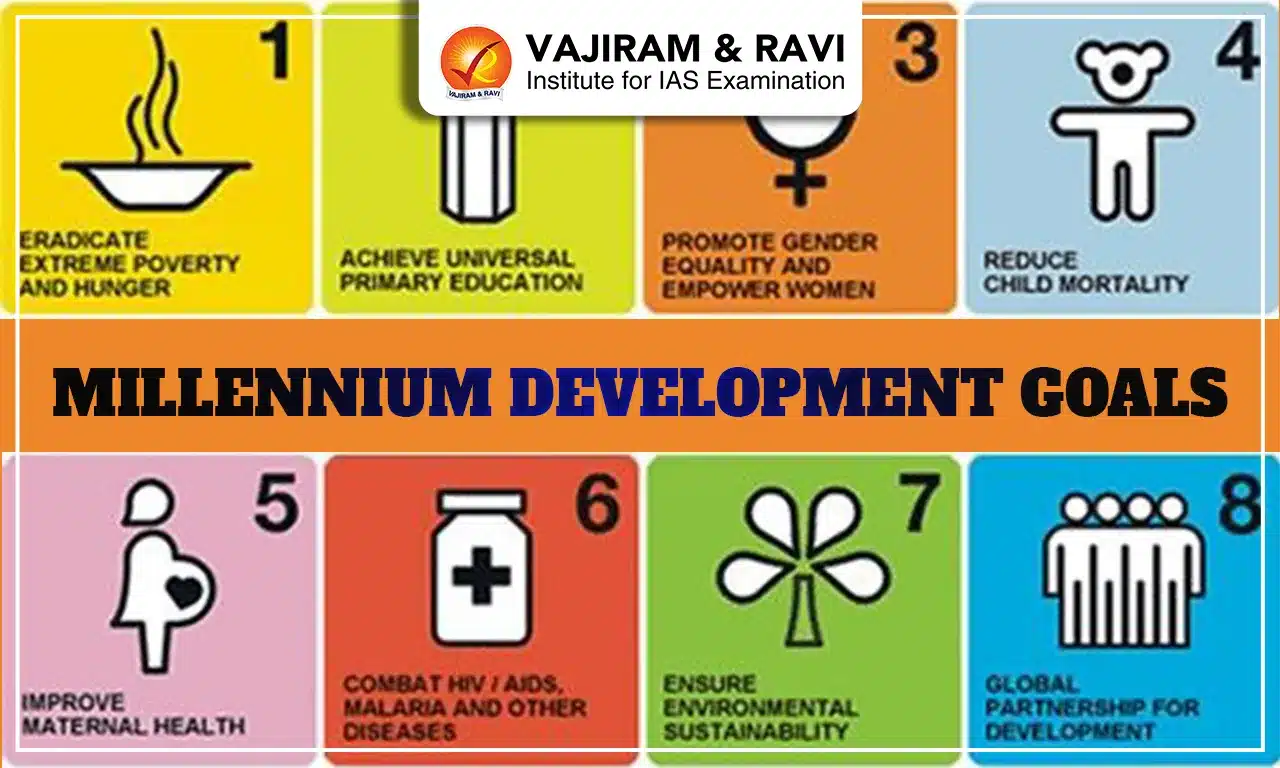
The Millennium Development Goals were a set of eight targets formed on the basis of the Millennium Declaration. A total of 191 UN member states and various international organizations endorsed these goals. The MDGs were influenced by the OECD’s Development Assistance Committee’s agenda for improving the effectiveness of international aid. The 1996 report titled “Shaping the 21st Century” had already highlighted six priority goals similar to those later adopted as MDGs. The final MDG framework aimed at achieving progress in poverty reduction, health, education, gender equality, environmental sustainability, and global partnerships.

1. Eradicate Extreme Poverty and Hunger

The goal targeted reducing by half the proportion of people living on less than $1.25 per day and decreasing global hunger levels between 1990 and 2015. It included the objective of creating productive employment opportunities. Considerable success was achieved, as poverty in developing regions declined from almost 50 percent to around 14 percent during the MDG period.

2. Achieve Universal Primary Education

This goal aimed at ensuring that all children, irrespective of gender or background, complete primary education by 2015. Progress was visible worldwide as the primary school enrollment rate rose significantly, and gender gaps in access to education narrowed in most regions.

3. Promote Gender Equality and Empower Women

The objective was to eliminate gender disparity in primary and secondary education by 2005 and across all levels by 2015. Women’s participation in education and non-agricultural employment witnessed improvement. However, political representation continued to remain limited, as women held only a small percentage of parliamentary seats globally.

4. Reduce Child Mortality

The MDGs aimed to reduce the under-five mortality rate by two-thirds between 1990 and 2015. Substantial progress was recorded with the global child mortality rate dropping from 90 deaths per 1,000 live births in 1990 to around 43 deaths in 2015.

5. Improve Maternal Health

The goal sought to reduce maternal mortality by three-quarters and ensure universal access to reproductive healthcare. Since 1990, maternal deaths worldwide have reduced by nearly 45 percent, with significant improvements noted after 2000.

6. Combat HIV/AIDS, Malaria, and other Diseases

The effort was to halt and reverse the spread of HIV/AIDS by 2015 and make treatment accessible to all. New HIV infections fell sharply, and efforts in malaria and tuberculosis control saved millions of lives.

7. Ensure Environmental Sustainability

This goal emphasized adopting sustainable development practices, protecting environmental resources, and ensuring access to safe drinking water and sanitation. By 2015, over 90 percent of the world population had access to improved drinking water sources, though concerns over biodiversity and climate remained major challenges.

8. Develop a Global Partnership for Development

The focus was on strengthening international trade, supporting least developed countries, enhancing debt relief initiatives, and improving access to affordable medicines. International official development assistance increased notably during the MDG implementation period.

Sustainable Development Goals

Following the conclusion of the MDG timeline in 2015, the United Nations adopted a new and expanded development framework to address persistent gaps and emerging challenges. The Sustainable Development Goals (SDGs) were introduced with a more comprehensive and inclusive vision that aimed to ensure prosperity while simultaneously protecting the planet. The SDGs were adopted by all UN member states in September 2015 and were presented within the UN Resolution known as Agenda 2030. Unlike earlier efforts, mechanisms such as the SDG tracker were introduced to evaluate and report measurable progress across countries. The SDG framework consists of 17 goals, further broken down into 169 targets, monitored using 232 global indicators. The target year for achieving SDGs is 2030. The SDGs serve as a roadmap for building a more equitable, sustainable, and peaceful world for current and future generations.

Millennium Development Goals FAQs

Q1: What are the main differences between MDGs and SDGs?

Ans: MDGs focused mainly on developing countries with eight goals, whereas SDGs are universal with 17 broader, inclusive goals covering social, economic, and environmental aspects.

Q2: How many targets are in MDG?

Ans: The MDGs had 21 measurable targets.

Q3: Who made the 8 Millennium Development Goals?

Ans: The MDGs were adopted by 191 UN member states during the UN Millennium Summit in 2000.

Q4: Which came first, MDG or SDG?

Ans: The MDGs came first and were replaced by the SDGs in 2015.

Q5: What are the 3 pillars of sustainability?

Ans: The three pillars of sustainability are economic, social, and environmental sustainability.

Association of Southeast Asian Nations (ASEAN)

Association of Southeast Asian Nations (ASEAN)

ASEAN Latest News

The Prime Minister decided not to travel to Malaysia to attend the 47th ASEAN summit and will attend it virtually.

About ASEAN

  • It is an inter-governmental regional organisation formed to promote political, economic, and security cooperation among Southeast Asian nations.
  • Established in 1967 with the signing of the Bangkok Declaration, its founding members were Indonesia, Malaysia, the Philippines, Singapore, and Thailand.
  • ASEAN currently has 10 member countries: Indonesia, Malaysia, the Philippines, Singapore, Thailand, Brunei, Vietnam, Laos, Myanmar, and Cambodia.
  • Headquarters: Jakarta, Indonesia
  • The ASEAN Community comprises three pillars: the Political-Security Community, the Economic Community and the Socio-Cultural Community.
  • Two of its core operating principles are consensual decision-making and noninterference in the internal affairs of its members.
  • In line with ASEAN centrality, ASEAN sees itself as a platform for intergovernmental cooperation throughout the entire Asia-Pacific.

Institutional Mechanisms of ASEAN

  • The ASEAN Summit is held annually, where member states discuss regional developments and set strategic policy directions. It is chaired by a rotating presidency.
  • The ASEAN Coordinating Council (ACC) monitors the implementation of agreements and decisions, ensuring alignment across the member states.
  • The ASEAN Secretariat, located in Jakarta, acts as the administrative body supporting and facilitating ASEAN’s initiatives, coordination, and documentation.
  • The ASEAN Regional Forum (ARF) is a key platform for dialogue on political and security issues involving both member countries and external partners.
    • India joined the ARF in 1996, marking its formal inclusion in ASEAN-led security dialogue mechanisms.

Source: TH

Association of Southeast Asian Nations (ASEAN) FAQs

Q1: Which declaration led to the formation of ASEAN?

Ans: Bangkok Declaration

Q2: How many member countries does ASEAN currently have?

Ans: ASEAN currently has 10 member countries: Indonesia, Malaysia, the Philippines, Singapore, Thailand, Brunei, Vietnam, Laos, Myanmar, and Cambodia.

Q3: Where is the headquarters of ASEAN located?

Ans: Jakarta, Indonesia

Barnawapara Wildlife Sanctuary

Barnawapara Wildlife Sanctuary

Barnawapara Wildlife Sanctuary Latest News

After being declared locally extinct for about 50 years, the blackbuck has made a remarkable comeback at Barnawapara Wildlife Sanctuary in Chhattisgarh thanks to a focused five-year revival plan.

About Barnawapara Wildlife Sanctuary

  • It is located in the northern part of the Mahasamund district of Chhattisgarh.
  • It is named after the Bar and Nawapara forest villages, which are in the heart of the sanctuary. 
  • It is spread over an area of 245 sq. km.
  • The tributaries of Mahanadi are the source of water. The River Balamdehi forms the western boundary, and the Jonk River forms the northeastern boundary of the sanctuary. 
  • Flora
    • The flora chiefly comprises tropical dry deciduous forest, with Teak, Sal, Bamboo and Terminalia being the prominent trees. 
    • Other major plants found in the sanctuary include Semal, Mahua, Ber, and Tendu.
  • Fauna: It is home to neelgai, wild boar, tigers, leopards, Indian bison, porcupines, pythons, antelopes, sambhar and cheetal, along with 150 species of birds, including parrots, blackbucks, herons, egrets, peafowl, etc.

Source: IE

Barnawapara Wildlife Sanctuary FAQs

Q1: Barnawapara Wildlife Sanctuary is located in which state?

Ans: Chhattisgarh

Q2: Which river forms the western boundary of Barnawapara Wildlife Sanctuary?

Ans: Balamdehi River

Q3: The northeastern boundary of Barnawapara Wildlife Sanctuary is formed by which river?

Ans: Jonk River

Q4: Which type of forest vegetation is dominant in Barnawapara Wildlife Sanctuary?

Ans: Tropical dry deciduous forest

National Means Cum Merit Scholarship Scheme (NMMSS)

National Means Cum Merit Scholarship Scheme

National Means cum Merit Scholarship Scheme Latest News

The State Councils of Educational Research and Training (SCERTs) recently released the application forms for the National Means cum Merit Scholarship Scheme (NMMS) for various states.

About National Means cum Merit Scholarship Scheme

  • It is a Centrally Sponsored Scheme launched in May, 2008.
  • Objective: Award scholarships to meritorious students of economically weaker sections to arrest their dropout at class VIII and encourage them to continue the study at the secondary stage.
  • NMMSS is on the National Scholarship Portal (NSP) – a one-stop platform for scholarship schemes given to students.
  • Benefits:
    • One lakh fresh scholarships are awarded by the Ministry of Education to selected students every year for study in classes from IX to XII in recognized Government, Government-aided, and local body schools.
    • There is a quota of scholarships for different states/UTs.
    • The amount of scholarship is Rs. 12000/- per annum (Rs. 1000/- per month) per student.
    • These scholarships are disbursed directly into the bank accounts of selected students by electronic transfer.
  • Eligibility Criteria:
    • Students whose parental income from all sources is not more than Rs. 350,000/- per annum.
    • The students must have a minimum of 55% marks or an equivalent grade in the Class VII examination (relaxable by 5% for SC/ST students).
    • The students should be studying as regular students in a Government, Government-aided and local body school. 
    • The students studying in the Navodaya Vidyalaya Samiti (NVS), Kendriya Vidyalaya Sangathan (KVS), and residential schools are not eligible for the scholarships under the NMMSS.
    • There is reservation as per State Government norms.
    • Selection Test: Each State and UT conducts its own test to select students for awarding the National Means-cum-Merit Scholarship. The test is conducted at the stage of class VIII. 
  • Selection of Renewal Awardees Students:
  • The awardees should get a minimum of 60% marks in Class X for continuation of scholarship (relaxable by 5% for SC/ST candidates) in the next higher classes. 
  • For continuing the scholarship in class X and XII, the awardees should get a clear promotion from class IX to class X and from class XI to class XII in the first attempt.

Source: NDTV

National Means cum Merit Scholarship Scheme FAQs

Q1: What is the primary objective of the National Means cum Merit Scholarship Scheme (NMMSS)?

Ans: Award scholarships to meritorious students of economically weaker sections to arrest their dropout at class VIII.

Q2: How many fresh scholarships are awarded every year under the National Means cum Merit Scholarship Scheme (NMMSS)?

Ans: One lakh fresh scholarships are awarded to selected students every year.

Q3: What is the annual scholarship amount provided to each student under National Means cum Merit Scholarship Scheme (NMMSS)?

Ans: The amount of scholarship is Rs. 12000/- per annum (Rs. 1000/- per month) per student.

Q4: Students from which class onwards are eligible to receive the National Means cum Merit Scholarship Scheme (NMMSS)?

Ans: Class IX

Hyunmoo-5 Missile

Hyunmoo-5 Missile

Hyunmoo-5 Missile Latest News

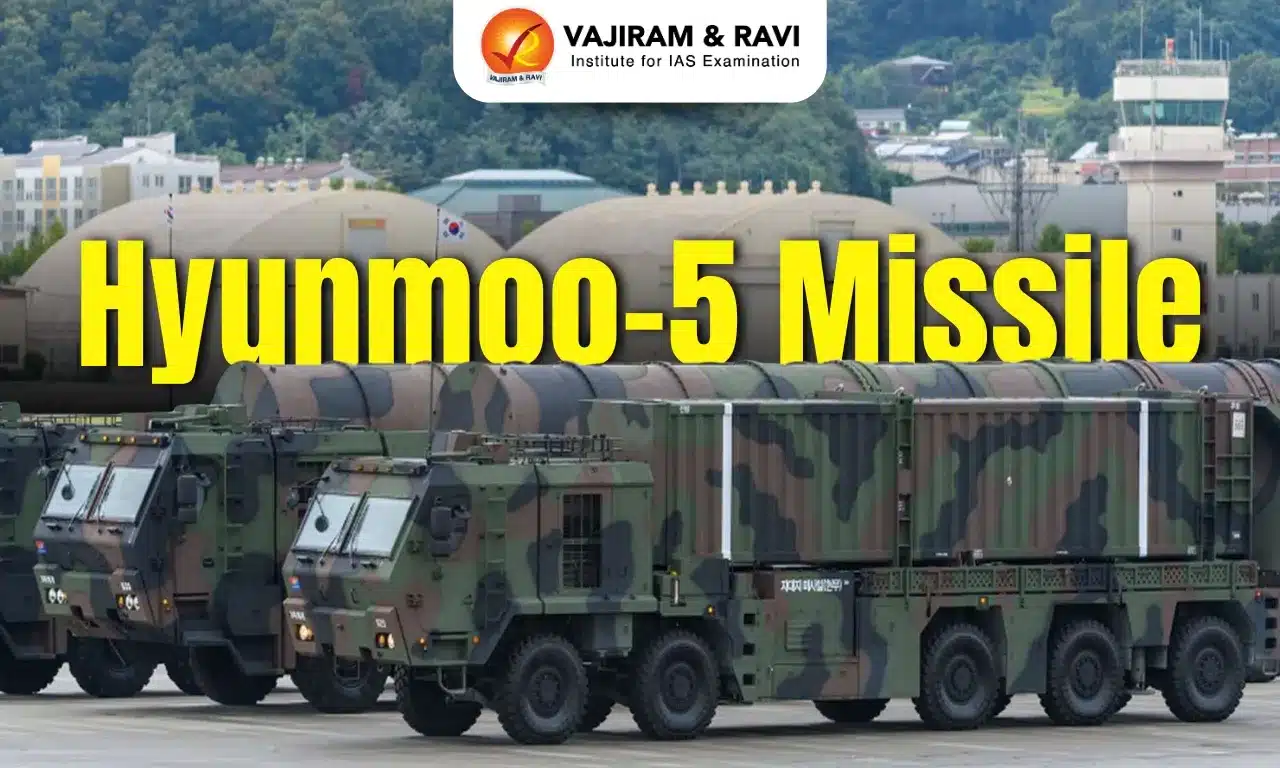
South Korea is ready to deploy its 'monster missile' Hyunmoo 5 at the end of the year marking a significant conventional arsenal upgrade against its northern counterpart in the Korean peninsula.

About Hyunmoo-5 Missile

  • It is a ballistic missile developed by South Korea. 
  • It is designed for deep penetration strikes with a massive conventional warhead capable of destroying heavily fortified underground targets.
  • It is part of South Korea’s Korean Massive Punishment and Retaliation (KMPR) framework, which is designed to deter North Korean aggression without the use of nuclear weapons.
  • It was officially unveiled in October 2024.

Hyunmoo-5 Missile Features

  • It has been dubbed as the "monster missile" for its size, Hyunmoo 5 weighs around 36 tonnes. 
  • It can carry an eight-tonne warhead.
  • Its range is set to vary from 600 km to more than 5,000 km, depending on payload.
  • Its design features a payload composed of heavy metals, optimized to destroy bunkers or command centers located at great depth.
  • It has the capability to destroy fortified underground facilities buried over 100 meters deep.
  • In its descending phase, the missile can reach speeds close to Mach 10. 
  • It is capable of being launched from a mobile platform.

Source: TOI

Hyunmoo-5 Missile FAQs

Q1: What type of missile is the Hyunmoo-5?

Ans: It is a ballistic missile.

Q2: Which country has developed the Hyunmoo-5 missile?

Ans: South Korea

Q3: What is the primary purpose of the Hyunmoo-5 missile?

Ans: To destroy heavily fortified underground targets.

Q4: What is the estimated range capability of the Hyunmoo-5 missile?

Ans: Its range is set to vary from 600 km to more than 5,000 km, depending on payload.

Intrusion Detection System

Intrusion Detection System

Intrusion Detection System Latest News

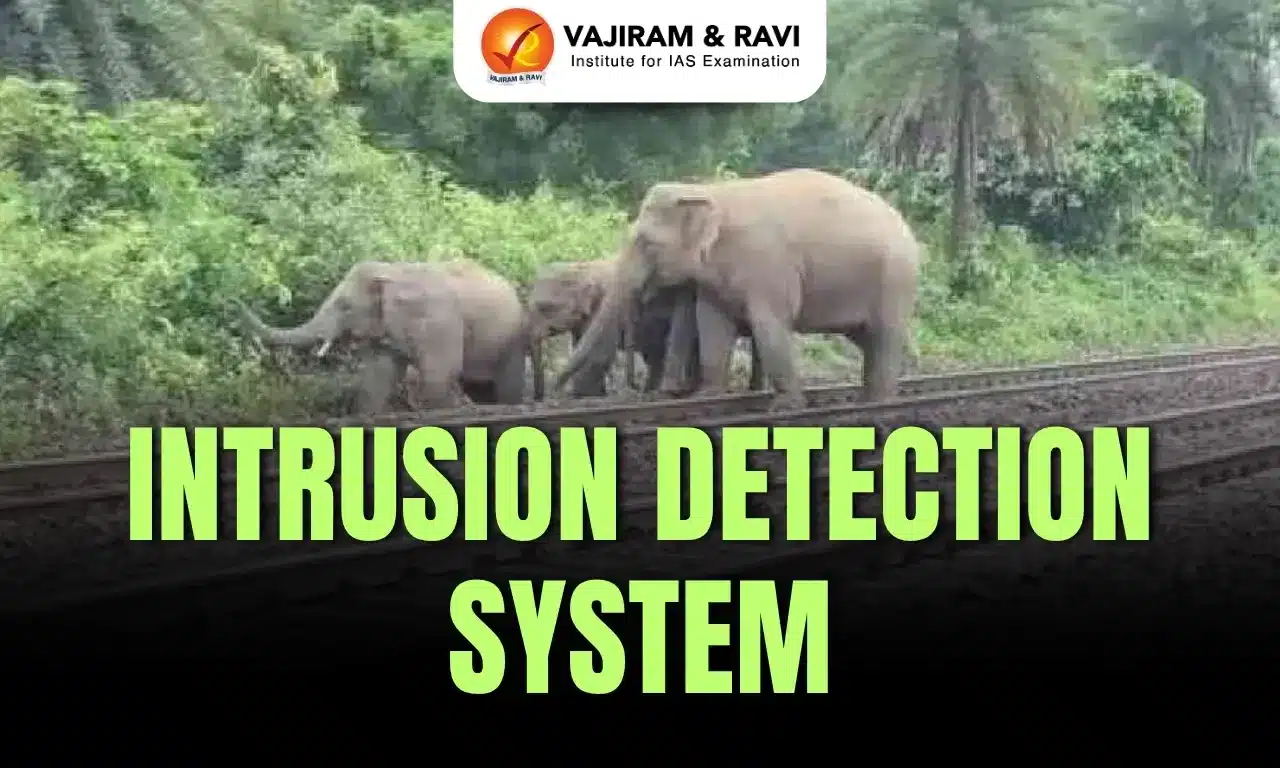
Recently, the Northeast Frontier Railway (NFR) has successfully completed trial works of the Intrusion Detection System (IDS) in four key sections.  

About Intrusion Detection System

  • The IDS initiative aims to strike a balance between operational efficiency and environmental protection.
  • Objective: It is designed to protect wildlife and maintain operational efficiency, especially in areas where railway lines pass through forested and elephant-inhabited zones.
  • It runs parallel to tracks at a distance of 10 metres.
  • Launched by: This initiative has been launched by the Northeast Frontier Railway (NFR) under the Ministry of Railways.
  • Working of Intrusion Detection System
    • Technology: It uses advanced optical fibre sensing technology to detect elephant movement near railway tracks,
    • Real Time Alert: It generates real-time alerts for train drivers and control rooms to take timely preventive action.
    • When elephants come close to the railway tracks, the vibrations generated by their movement are detected by the sensor cables, which then transmit signals to the control room.

Source: IE

Intrusion Detection System FAQs

Q1: Where is the headquarters of Northeast Frontier Railway located?

Ans: Maligaon, Guwahati

Q2: What is a notable initiative taken by Northeast Frontier Railway to protect wildlife?

Ans: Plan Bee, a strategy to keep wild elephants away from railway tracks.

Sevilla Forum on Debt

Sevilla Forum on Debt

Sevilla Forum on Debt Latest News

Recently, the Sevilla Forum on Debt was launched at the 16th United Nations Conference on Trade and Development (UNCTAD16) in Geneva. 

About Sevilla Forum on Debt

  • It is a Spain-led initiative launched at the 16th United Nations Conference on Trade and Development (UNCTAD16).
  • It is supported by UNCTAD and the UN Department of Economic and Social Affairs (DESA).
  • Aim: To serve as an open and inclusive space for dialogue and action on sovereign debt reform.
  • The new forum is one of the outcomes of the Fourth International Conference on Financing for Development (FfD4) and was launched as an initiative under the Sevilla Platform for Action. 
  • It brings together all stakeholders, creditors, borrowers, international financial institutions and academia on debt sustainability, management and innovative solutions.

Key Facts about United Nations Conference on Trade and Development

  • It is the UN’s leading institution dealing with trade and development.
  • It is a permanent intergovernmental body established by the United Nations General Assembly in 1964. 
  • Functions: It provides economic and trade analysis, facilitates consensus-building and offers technical assistance to help developing countries use trade, investment, finance and technology for inclusive and sustainable development.
  • Headquarter: Geneva, Switzerland.
  • Reports published by the UNCTAD
    • Trade and Development Report
    • World Investment Report
    • The Least Developed Countries Report

Source: DTE

Sevilla Forum on Debt FAQs

Q1: What is the primary objective of the Sevilla Forum on Debt?

Ans: To tackle the mounting global debt challenges and promote sustainable development.

Q2: Which organizations supported the launch of the Sevilla Forum on Debt?

Ans: United Nations Conference on Trade and Development (UNCTAD) and UN Department of Economic and Social Affairs (DESA)

Calcium Carbide

Calcium Carbide

Calcium Carbide Latest News

More than 60 people, primarily children, were hospitalized in Bhopal following severe injuries sustained from the use of makeshift “calcium carbide guns” during Diwali celebrations.

About Calcium Carbide

  • It is a compound with the chemical formula CaC2.
  • It is commonly referred to as ‘masala’ in fruit markets.
  • It is a grayish-black lump or crystalline powder with a garlic-like odor. 
  • It is manufactured by heating a lime and carbon mixture to 2000 to 2100°C (3632 to 3812°F) in an electric arc furnace.

Calcium Carbide Uses

  • It is primarily known for its use in the production of acetylene gas through hydrolysis.
  • Calcium carbide reacts vigorously with water to produce acetylene gas. Acetylene is a colourless, odourless, extremely flammable gas.
  • It is used as a reducing agent and in steel manufacturing and metal cutting.
  • Several countries use calcium carbide as an artificial ripening agent. 

Calcium Carbide Health Impacts

  • It can cause serious health issues such as dizziness, frequent thirst, irritation, weakness, difficulty in swallowing, vomiting, skin ulcers, etc.
  • Additionally, acetylene gas is equally hazardous to those handling it.
  • There are chances that calcium carbide may come in direct contact with fruits during application and leave residues of arsenic and phosphorus on fruits.
  • It is banned under the Prevention of Food Adulteration Rules, 1955, and also under the Food Safety and Standards (Prohibition and Restrictions on Sales) Regulations, 2011, made thereunder.

Source:TH

Calcium Carbide FAQs

Q1: What is the chemical formula of Calcium Carbide?

Ans: CaC₂

Q2: What happens when calcium carbide is mixed with water?

Ans: When calcium carbide is mixed with water, it reacts vigorously to produce acetylene gas (C₂H₂) and calcium hydroxide (Ca(OH)₂).

Q3: How calcium carbide is manufactured?

Ans: It is manufactured by heating a lime and carbon mixture to 2000 to 2100°C (3632 to 3812°F) in an electric arc furnace.

Fibromyalgia

Fibromyalgia

Fibromyalgia Latest News

Fibromyalgia condition is often misunderstood, but it is real and is believed to affect 2 to 3% of the population globally.     

About Fibromyalgia

  • It is a long-term (chronic) health condition that causes pain and tenderness in the muscles and soft tissues of the body.
  • It is often accompanied by fatigue, sleep disturbances, memory issues and mood problems such as stress, anxiety and depression.
  • It causes musculoskeletal pain and fatigue

Causes for Fibromyalgia

  • The cause of fibromyalgia is not known, but studies show that people with the disorder have a heightened sensitivity to pain, so they feel pain when others do not.
  • People with fibromyalgia usually experience symptoms that come and go in periods called flare-ups.

Symptoms of fibromyalgia

  • The two most common symptoms of fibromyalgia are pain and fatigue. Other symptoms include,
  • Headaches and migraines, digestive problems such as diarrhoea and constipation, restless leg syndrome, as well as face and jaw pain such as temporomandibular jaw disorders.

Treatment of Fibromyalgia

  • While there is no cure for fibromyalgia, a variety of medications can help control symptoms.
  • Treatment typically involves a combination of exercise or other movement therapies, psychological and behavioural therapy, and medications.

Source: TH

Fibromyalgia FAQs

Q1: What is Fibromyalgia?

Ans: A neurological disorder characterized by chronic pain and fatigue.

Q2: What is the role of stress in Fibromyalgia?

Ans: It can trigger or exacerbate symptoms.

JAIMEX 2025

JAIMEX 2025

JAIMEX 2025 Latest News

Recently, Indian Naval Ship (INS) Sahyadri participated in the Sea phase of JAIMEX-25 (Japan India Maritime Exercise).

About JAIMEX 2025

  • It is a maritime exercise between India and Japan.
  • Objective: It underscores the strong and burgeoning Navy-to-Navy interactions that underpin the ‘Special Strategic and Global Partnership’ established between India and Japan in 2014. This partnership is a crucial pillar for ensuring peace and stability in the Indo-Pacific maritime domain.
  • It involved two phases
    • Sea phase included advanced Anti-Submarine Warfare and missile defence drills, enhancing interoperability by undertaking flying operations and underway replenishment.
    • Harbour Phase at Yokosuka includes engagement in a multitude of professional and cultural exchanges, cross-deck visits, collaborative operational planning, sharing of best practices,
  • Significance: The Indian Navy and JMSDF have been at the forefront of this growing partnership with a shared vision of a free, open, and inclusive Indo-Pacific region.
  • Other bilateral exercises between India and Japan: Malabar exercise (Naval Exercise), ‘Veer Guardian’ (Air Force), and Dharma Guardian (Army). 

Key Facts about INS Sahyadri

  • It is an indigenously built Shivalik-class Guided Missile Stealth Frigate.
  • It is indigenously designed, constructed and commissioned in 2012.
  • The ship is capable of carrying Barak-1 and Shtil-1 3S90M missiles, BrahMos anti-ship missiles, anti-submarine rocket launchers.
  • The multi-role stealth frigate has participated in various operational deployments, bilateral and multilateral exercises.

Source: PIB

JAIMEX 2025 FAQs

Q1: Which country is participating in the JAIMEX-25 maritime exercise with India?

Ans: Japan

Q2: What is the primary objective of the JAIMEX-25 maritime exercise?

Ans: To enhance maritime security and interoperability.

Chrysanthemum

Chrysanthemum

Chrysanthemum Latest News

Recently, Kashmir’s first Chrysanthemum garden was opened for tourists.

About Chrysanthemum

  • Chrysanthemums are a genus (Chrysanthemum) of about 30 species of perennial flowering plants in the family Asteraceae.
  • It is native to Asia and northeastern Europe.
  • Chrysanthemum is a perennial herbaceous plant that blooms in autumn.
  • Appearance: The species of Chrysanthemum grows to 50-150 cm tall, with deeply lobed leaves and large flowerheads, white, yellow or pink in the wild species. 

Required Climatic Conditions for Chrysanthemum

  • It is native primarily to subtropical and temperate areas. 
  • Climate: Tropical and subtropical climatic conditions are ideal.
  • However, the best temperature for growing chrysanthemums is 20-28 degrees for day and 15-20 degrees Celsius for night.
  • Soil: Well drained red loamy soil with pH of 6 to 7.
  • Uses: It is commonly used as an herbal treatment for hypertension and is said to help treat fevers, headaches, and inflammation.

Source: TH

Chrysanthemum FAQs

Q1: What type of plant is Chrysanthemum in terms of photoperiodism?

Ans: Short-day plant

Q2: When do Chrysanthemum typically bloom?

Ans: In late summer, fall, or early winter.

Supreme Court Pushes Jharkhand to Notify Saranda Forests as Wildlife Sanctuary

Saranda Forests

Saranda Forests Latest News

  • The Supreme Court bench, led by the Chief Justice of India, has directed the Jharkhand government to formally notify a new wildlife sanctuary in Saranda, one of India’s richest Sal Forest regions.
  • The move highlights Saranda’s ecological importance and its history of illegal mining, drawing national attention to the need for stronger biodiversity protection in this forested area spanning southwest Jharkhand and Odisha.

Background of the Case

  • The Supreme Court’s direction to the Jharkhand government stems from a plea seeking compliance with a July 2022 order of the National Green Tribunal (NGT), which had asked the state to consider declaring Saranda Forest as a wildlife sanctuary.
  • The plea before the NGT called for the notification of an eco-sensitive zone in the Saranda/Sasangada region of West Singhbhum district, Jharkhand.

The 1968 “Game Sanctuary” Argument

  • The petitioner claimed Saranda had been declared a “game sanctuary” in 1968 under undivided Bihar.
  • Under the Wildlife Protection Act, 1972, such earlier declarations automatically become “deemed sanctuaries.”
  • However, the NGT found no official records confirming this status but recognised Saranda as one of India’s finest Sal forests and directed the Jharkhand government to re-examine its sanctuary potential.

Supreme Court Steps In

  • After Jharkhand failed to act on the NGT’s order, the case reached the Supreme Court.
  • A CJI-led Bench in November 2024 directed the state to expedite the process and, between November 2024 and September 2025, criticised delays and non-compliance.
  • The Court even warned of contempt when officials tried to alter proposed boundaries to accommodate mining areas.

Saranda’s Ecological Significance and the Impact of Mining

  • Located in West Singhbhum district of Jharkhand, the Saranda Forest Division spans 856 sq km, of which 816 sq km is reserved forest and the rest protected forest.
  • The name Saranda means “seven hundred hills”, reflecting the region’s undulating terrain and dense Sal forests.
  • The Wildlife Institute of India (WII) has recognised Saranda as a biological and ecological hotspot, historically known for its rich biodiversity.

Biodiversity and Wildlife Corridors

  • Saranda supports diverse wildlife, including elephants, four-horned antelope, and sloth bears.
  • It also contains three elephant corridors, ensuring ecological connectivity with neighbouring forests across Jharkhand and Odisha.
  • Although tigers have been sighted in the past, they have not established a resident population in recent years due to habitat fragmentation and human pressure.

Mining and Habitat Degradation

  • The forest has suffered from intensive and illegal mining, particularly of iron ore and manganese, leading to loss of wildlife density and habitat fragmentation.
  • The Indian Council of Forest Research and Education (ICFRE), in its Carrying Capacity Study of the Saranda–Chaibasa region, confirmed that mining had severely affected forest ecology and wildlife health.

Findings from Ecological Studies

  • The WII’s 2016 assessment revealed a decline in butterfly, mammal, and bird populations, showing a negative correlation between proximity to mines and species richness.
  • It recommended urgent protection measures, including the creation of a wildlife sanctuary, to curb further ecological degradation.

Decline in Elephant Population

  • Saranda once hosted a thriving elephant population, but continued habitat loss has forced many herds to migrate to Chhattisgarh and Odisha.
  • According to the latest 2025 Elephant Estimation Report, Jharkhand now has only 217 elephants, distributed between two main clusters — Palamau and Singhbhum (which includes Saranda).
  • Elephant corridors to the south and east of Saranda are now under severe stress, further isolating herds and threatening their long-term survival.

Jharkhand’s Position Before the Supreme Court

  • Jharkhand government has told the Supreme Court that while it supports the declaration of Saranda as a wildlife sanctuary, it also wants to ensure that the rights of tribals and forest dwellers are fully protected.
  • The state emphasised that Saranda falls under the Fifth Schedule of the Constitution and is home to Ho, Munda, and allied Adivasi communities, including particularly vulnerable tribal groups (PVTGs).
  • The government argued that declaring the area as a sanctuary could criminalise traditional livelihood activities, thereby violating the Forest Rights Act (FRA) and the Panchayats (Extension to the Scheduled Areas) Act, 1996 (PESA).

Mining Significance of the Region

  • The Saranda region is crucial for India’s mining industry, holding about 26% of the country’s total iron ore reserves.
  • According to an interlocutory application filed by the Steel Authority of India Limited (SAIL), active mines in and around Saranda currently produce 10–15 million tonnes of iron ore annually, roughly 5% of India’s total output.

History of Illegal Mining in Saranda

  • The controversy over mining in Saranda is long-standing. Under the UPA government, the Justice M. B. Shah Commission of Inquiry investigated illegal mining in Jharkhand, uncovering widespread violations.
  • The Commission reported illegal extraction of iron ore worth ₹14,403 crore and manganese worth ₹138 crore, carried out in violation of mining and environmental laws.

Efforts Toward Sustainable Mining

  • Following the Shah Commission’s recommendations, the Union Environment Ministry prepared a Sustainable Mining Plan for the Saranda region.
  • The plan designated “go” and “no-go” zones for iron ore mining, with an annual production cap of 64 million tonnes, adjustable based on environmental sustainability.
  • This framework was meant to balance economic interests with ecological preservation, but Saranda continues to face challenges from mining pressure and habitat degradation.

The Balancing Act

  • The Supreme Court’s ongoing oversight now places Saranda at the intersection of conservation and development.
  • While Jharkhand stresses tribal rights and economic dependence on mining, the court’s focus remains on biodiversity protection, ensuring that the sanctuary declaration proceeds without undermining constitutional and livelihood rights of local communities.

Source: IE | HT

Saranda Forests FAQs

Q1: Why is Saranda Forest in news?

Ans: The Supreme Court has asked Jharkhand to formally notify Saranda as a wildlife sanctuary to preserve its rich biodiversity amid mining pressures.

Q2: What is the ecological importance of Saranda?

Ans: Saranda, meaning “seven hundred hills,” hosts dense Sal forests, elephants, and wildlife corridors connecting Jharkhand and Odisha.

Q3: What are the key concerns over Saranda’s mining?

Ans: Illegal and excessive mining of iron ore and manganese has led to deforestation, habitat loss, and declining wildlife populations.

Q4: How has the Jharkhand government responded?

Ans: The state supports the sanctuary proposal but insists on safeguarding tribal and forest dwellers’ rights under the Forest Rights and PESA Acts.

Q5: What did the Shah Commission reveal about Saranda?

Ans: The Justice M. B. Shah Commission uncovered illegal mining worth over ₹14,000 crore in Saranda, prompting calls for sustainable mining practices.

U.S. Sanctions on Russian Oil Giants, Global Energy and Geopolitical Repercussions

U.S. Sanctions on Russian Oil Giants

U.S. Sanctions on Russian Oil Giants Latest News

  • Recently, the U.S. President Donald Trump imposed sweeping sanctions on Russia’s two largest oil companies — Rosneft and Lukoil — as part of escalating efforts to cut off funding for Russia’s ongoing war in Ukraine. 
  • The move has implications for global oil markets, India’s energy strategy, and the India–U.S. relationship.

Background - Sanctions Amid Prolonged Conflict

  • The Russia–Ukraine war, now in its fourth year, continues to strain global diplomacy and energy markets.
  • The new U.S. sanctions target Rosneft and Lukoil, responsible for over 5% of global oil output, contributing over 5 million barrels per day (mbd) globally, including 2 mbd in seaborne exports.
  • The U.S. Treasury has given companies time till November 21 to wind down transactions with these entities, to curb Russia’s oil revenue, which funds nearly one-fourth of its federal budget and sustains the war effort.

India’s Position and Compliance

  • India’s position:
      • India, the second-largest buyer of Russian crude after China (with over 35% of total imports sourced from Russia in 2025), faces pressure to reduce imports.
      • Historically, India avoided oil imports from Iran and Venezuela after similar U.S. sanctions, signalling a possible precedent.
      • President Trump claimed India has agreed to reduce oil purchases from Russia to “almost nothing” by year-end.
      • The Indian PM has reportedly assured cooperation while balancing India’s energy security needs.
  • Private refiners’ response:
      • Reliance Industries, operating the world’s largest refinery at Jamnagar, plans to halt or reduce imports, including its long-term deal with Rosneft (approx. 500,000 barrels/day).
      • Nayara Energy, partly owned by Rosneft, has remained silent but is expected to adjust supply chains.
  • Public sector refiners’ review:
    • IOC, BPCL, and HPCL are reassessing trade documents to ensure no direct dealings with sanctioned firms.
    • However, some oil may still enter India via intermediaries, highlighting challenges in total disengagement.

Economic and Diplomatic Fallout

  • Trade tensions:
      • The U.S. has doubled tariffs on Indian goods to 50%, adding a 25% punitive duty on Russian crude imports.
      • India termed the move “unfair, unjustified, and unreasonable.”
      • Negotiations are underway for a bilateral trade deal that could reduce tariffs in exchange for reduced Russian oil imports.
  • Impact on global oil markets:
  • Oil prices surged 3% following the sanctions.
    • The sanctions could disrupt global supply chains, particularly in Asia, where demand remains high.

International Reactions

  • Russia dismissed the sanctions, claiming “immunity” to Western restrictions and pointing out that its revenue comes mainly from taxing output rather than exports.
  • Ukraine’s President Volodymyr Zelenskyy welcomed the move but urged for stronger measures to pressure Moscow into a ceasefire.
  • The European Union is considering using frozen Russian assets to fund a €140 billion loan for Kyiv’s reconstruction.

Strategic Implications for India

  • India faces a policy dilemma - balancing strategic autonomy, energy security, and geopolitical alignment.
  • The shift could push India to diversify oil imports from Middle Eastern and African suppliers.
  • Maintaining stable ties with both Washington and Moscow will test India’s multi-alignment diplomacy.

Way Forward

  • Diversification of energy sources: Strengthen ties with Gulf nations, the U.S., and Africa for stable supplies.
  • Negotiated flexibility: India should seek exemptions or phased compliance from U.S. sanctions.
  • Strategic oil reserves: Enhance domestic reserves to cushion against supply disruptions.
  • Diplomatic balancing: Continue pursuing strategic autonomy within frameworks like QUAD, SCO and BRICS.

Conclusion

  • The latest U.S. sanctions signify a sharp escalation in the economic front of the Ukraine conflict, with wide-ranging repercussions for global energy markets and India’s foreign policy.
  • For India, aligning with global sanctions while preserving energy security and strategic independence will remain the central challenge in the evolving multipolar world order.

Source: THIE

U.S. Sanctions on Russian Oil Giants FAQs

Q1: How do the recent U.S. sanctions on Rosneft and Lukoil reflect the use of energy as a geopolitical tool?

Ans: The sanctions aim to choke Russia’s oil revenues—the key funding source for its Ukraine war.

Q2: What are the implications of U.S. sanctions on Russian oil majors for India’s energy security?

Ans: India faces potential supply disruptions and reduced access to discounted crude, necessitating diversification of energy sources.

Q3: How do the U.S. sanctions impact India’s pursuit of strategic autonomy in foreign policy?

Ans: The sanctions test India’s ability to balance relations with both Washington and Moscow while safeguarding its independent foreign policy stance.

Q4: How the U.S. sanctions on Russian oil giants could reshape global crude oil markets?

Ans: The restrictions on Rosneft and Lukoil are expected to disrupt supply chains, increase demand for Middle Eastern and Atlantic Basin grades, etc.

Q5: What are the possible diplomatic and economic options available to India in response to the new U.S. sanctions?

Ans: India can pursue trade negotiations with the U.S., diversify import partners, strengthen strategic oil reserves, etc.

Stubble Burning in Punjab, Decline in Numbers and Data Gaps

Stubble Burning

Stubble Burning Latest News

  • The latest satellite-based data shows that while Punjab’s stubble burning incidents have reportedly declined by 70% in 2024, the total burnt farmland area remains almost unchanged.

Stubble Burning in Punjab: An Evolving Challenge

  • Every autumn, vast swathes of north India are engulfed in haze as farmers burn paddy residue to clear fields for the next wheat crop. 
  • This annual cycle, especially prevalent in Punjab and Haryana, contributes significantly to air pollution across northern India, including the National Capital Region (NCR)
  • The practice of stubble burning remains one of India’s most persistent environmental challenges, despite several years of government intervention, technological support, and public awareness campaigns.

The Problem of Crop Residue Burning

  • Punjab, a leading rice and wheat-producing state, relies heavily on mechanised harvesting using combine harvesters. 
  • These machines leave behind paddy stubble that is difficult to remove manually. Given the short three-week window between paddy harvesting and wheat sowing, farmers find burning the residue the most cost-effective and time-efficient option.
  • While the method helps prepare the fields quickly, it leads to massive emissions of particulate matter (PM2.5 and PM10), nitrogen oxides, and greenhouse gases. 
  • The smoke drifts toward neighbouring states, worsening air quality across Delhi-NCR and beyond.

Trends and Statistics: Is the Problem Really Declining?

  • Recent data indicate a complex picture. According to the Punjab government’s satellite-based estimates, the state recorded 10,909 cases of stubble burning in 2024, a sharp 70% decline from 36,663 cases in 2023
  • This drop has been attributed to a mix of factors, including widespread flooding in mid-2024, which left large stretches of farmland inundated, and government-led initiatives promoting crop residue management.
  • However, while the number of incidents has declined, the total burnt area has not shown a corresponding reduction
  • Data from the Punjab Remote Sensing Centre (PRSC) and the Punjab Pollution Control Board (PPCB) reveal that in 2024, nearly 19.17 lakh hectares of farmland were affected by stubble burning, almost identical to 19.14 lakh hectares in 2023.
  • This suggests that although fewer fire incidents are being recorded, the fires that do occur are covering larger areas or are being underreported by existing detection systems.

Understanding the Data Discrepancy

  • Experts point out that the apparent contradiction arises from technical and observational limitations in the way fire incidents are recorded. 
  • Satellite systems such as MODIS (Moderate Resolution Imaging Spectroradiometer) and VIIRS (Visible Infrared Imaging Radiometer Suite) detect fires based on thermal infrared imaging, essentially identifying heat anomalies on the Earth’s surface.
  • However, these satellites pass over Punjab only a few times a day, often missing short-lived or smaller fires that occur in the late afternoon or evening, which are common in Punjab’s fragmented landholdings.
  • A study by the Indian Institute of Science Education and Research (IISER), Mohali, found that cloud cover, haze, and the short duration of many farm fires lead to significant underreporting
  • Additionally, as farmers become aware of satellite monitoring, some have started covering up burnt patches or conducting burns strategically to avoid detection.

Advances in Monitoring and the Role of New Technologies

  • Despite these limitations, advances in optical satellite imaging are improving accuracy. 
  • According to experts, optical sensors like Sentinel-2 can detect post-fire discolouration and burn scars, providing a more precise estimate of the total burnt area even when thermal sensors miss direct fire events.
  • They emphasise that future assessments must integrate thermal and optical satellite observations, supported by ground-based verification, to accurately capture both the number of incidents and the extent of damage.

Policy Interventions and Way Forward

  • The Central and Punjab governments have undertaken several initiatives over the years to tackle the stubble burning problem. These include:
    • Subsidised Crop Residue Management (CRM) Machines: Distribution of happy seeders, super straw management systems, and mulchers to promote in-situ residue management.
    • Ex-situ Biomass Utilisation: Encouraging biomass-based power plants and ethanol production to use paddy straw.
    • Financial Incentives: Direct benefit transfers to farmers adopting non-burning methods.
    • Monitoring and Enforcement: Deployment of real-time monitoring via satellites and drones, coupled with local enforcement by district administrations.
  • However, experts argue that these measures need long-term economic incentives, not just penalties or machinery subsidies. 
  • Shifting to short-duration paddy varieties, promoting crop diversification, and ensuring timely procurement and financial compensation for alternative practices are crucial for sustainable change.

Rethinking Metrics of Success

  • While the declining number of recorded fires is encouraging, it is not a complete measure of progress. Thus, future assessments must focus not just on the number of incidents but also on fire intensity, duration, and emission load to accurately gauge environmental impact.
  • In the long term, the fight against stubble burning will depend on integrated policies combining technology, economics, and behavioural change, ensuring that sustainable practices are both viable and profitable for Punjab’s farmers.

Source: TH

Stubble Burning FAQs

Q1: Why do farmers in Punjab resort to stubble burning?

Ans: Due to the short window between paddy harvesting and wheat sowing, burning is the quickest and cheapest way to clear fields.

Q2: Has stubble burning in Punjab declined recently?

Ans: Yes, official fire counts have dropped by nearly 70% in 2024, though the total burnt area remains largely unchanged.

Q3: Why do satellite data and ground realities differ?

Ans: Satellite systems often miss smaller, short-duration fires and are affected by cloud cover and limited overpasses.

Q4: What technologies are improving stubble burn monitoring?

Ans: Optical sensors like Sentinel-2 and integrated remote sensing systems now provide more accurate burnt-area estimates.

Q5: What long-term solutions are proposed to reduce stubble burning?

Ans: Crop diversification, machinery subsidies, biomass utilization, and incentivizing non-burning practices are key policy measures.

UPSC Daily Quiz 24 October 2025

UPSC Daily Quiz

The Daily UPSC Quiz by Vajiram & Ravi is a thoughtfully curated initiative designed to support UPSC aspirants in strengthening their current affairs knowledge and core conceptual understanding. Aligned with the UPSC Syllabus 2025, this daily quiz serves as a revision resource, helping candidates assess their preparation, revise key topics, and stay updated with relevant issues. Whether you are preparing for Prelims or sharpening your revision for Mains, consistent practice with these Daily UPSC Quiz can significantly enhance accuracy, speed, and confidence in solving exam-level questions.

[WpProQuiz 4]  

UPSC Daily Quiz FAQs

Q1: What is the Daily UPSC Quiz?

Ans: The Daily UPSC Quiz is a set of practice questions based on current affairs, static subjects, and PYQs that help aspirants enhance retention and test conceptual clarity regularly.

Q2: How is the Daily Quiz useful for UPSC preparation?

Ans: Daily quizzes support learning, help in revision, improve time management, and boost accuracy for both UPSC Prelims and Mains through consistent practice.

Q3: Are the quiz questions based on the UPSC syllabus?

Ans: Yes, all questions are aligned with the UPSC Syllabus 2025, covering key areas like Polity, Economy, Environment, History, Geography, and Current Affairs.

Q4: Are solutions and explanations provided with the quiz?

Ans: Yes, each quiz includes detailed explanations and source references to enhance conceptual understanding and enable self-assessment.

Q5: Is the Daily UPSC Quiz suitable for both Prelims and Mains?

Ans: Primarily focused on Prelims (MCQ format), but it also indirectly helps in Mains by strengthening subject knowledge and factual clarity.

Daily Editorial Analysis 24 October 2025

Daily Editorial Analysis

The UN Matters, As a Symbol of Possibility 

Context

  • Eighty years after its founding, the United Nations (UN) stands as both a monument to human aspiration and a mirror reflecting the world’s contradictions.
  • Conceived in the aftermath of the Second World War, it was envisioned not as a symbol of victory but as a safeguard against humanity’s worst instincts, a mechanism for peace, justice, and cooperation.
  • Through reflection, personal testimony, and political critique, the UN remains indispensable in an increasingly fragmented world.

A Historical Reflection and The Erosion of Consensus

  • A Historical Reflection: From Tragedy to Transformation

    • The UN’s creation was born of tragedy rather than triumph, a theme that sets a tone of sober realism.
    • The contrast between failure and success, Rwanda and Srebrenica on one side, East Timor and Namibia on the other, captures the UN’s dual nature as both flawed and essential.
    • Its legitimacy lies not in perfection but in persistence.
  • The Erosion of Consensus: A Changing Global Order

    • The world for which the UN was created no longer exists.
    • The bipolar order of 1945 gave way to American dominance and now to a fragmented, multipolar landscape.
    • This diffusion of power has weakened the post-war consensus and strained the institutions built to preserve it.
    • Nationalism, once a force for liberation, increasingly challenges multilateralism, while populist distrust erodes faith in collective decision-making.
    • Within this fractured environment, the UN’s founding principles, sovereign equality, peaceful resolution of disputes, and collective security, appear both vital and vulnerable.
    • The Security Council, frozen in the power dynamics of 1945, no longer reflects present realities.
    • Reform is not merely desirable but necessary if the UN is to retain legitimacy and function effectively.

The Question of Representation: India and the Security Council

  • India’s exclusion from permanent membership in the Security Council illustrates the deep structural inequities of the current system.
  • As the world’s most populous nation, its largest democracy, a significant peacekeeping contributor, and a growing economic force, India embodies the values of the UN Charter.
  • Yet its absence from the Council’s permanent ranks remains a glaring anomaly.
  • Such exclusion weakens both the moral and operational credibility of the Council.
  • India’s demand for inclusion transcends the pursuit of power; it represents a call for fairness and equity in global governance.
  • A system that continues to privilege outdated hierarchies risks irrelevance and alienation among the very nations it claims to serve.

India’s Strategic Autonomy and the Call for Reform

  • India’s long-standing commitment to sovereignty and strategic autonomy aligns with the broader critique of global governance.
  • Its foreign policy avoids entanglement in great-power rivalries while promoting regional stability and multipolar dialogue.
  • This approach reflects a vision of global order founded on dignity rather than dominance, one where cooperation is not dictated by hierarchy but shaped by shared values.
  • Reform of the Security Council, therefore, must move beyond power redistribution to embrace representation and principle.
  • A pluralistic world requires plural voices. Institutions that fail to recognize this will struggle to command trust or moral authority.

The Path Forward: Reform, Agility, and Moral Courage

  • For the UN to thrive in the 21st century, it must become more representative, agile, and ethically grounded.
  • Reforming the Security Council is the first step toward restoring legitimacy, but structural change alone is insufficient.
  • The organisation must adapt to crises that move faster than traditional diplomacy, through digital modernization, streamlined decision-making, and empowered field operations.
  • Equally crucial is the reclamation of moral authority. In an age of disinformation and division, the UN’s ability to speak truth to power depends on courage and consistency.
  • Yet this moral voice cannot stand without political and financial commitment from member states.
  • Chronic underfunding and the politicisation of contributions undermine the UN’s capacity to act, revealing a troubling irony: the institution most needed to manage global crises is being weakened by those with the greatest capacity to sustain it.

Conclusion

  • The United Nations at eighty is neither relic nor panacea; It is an unfinished project, a reflection of humanity’s contradictions and hopes.
  • Its failures are real, from bureaucratic inertia to geopolitical paralysis, yet its achievements remain profound.
  • To dismiss it would be to surrender the belief that humanity can govern itself through cooperation rather than coercion.
  • As Dag Hammarskjöld observed, the UN was created not to take mankind to heaven, but to save humanity from hell.

The UN Matters, As a Symbol of Possibility FAQs

 Q1. Why was the United Nations founded after World War II?
Ans. The United Nations was founded to prevent future conflicts, promote human dignity, and uphold peace through international cooperation.

Q2. What major change in world politics challenges the UN’s effectiveness today?
Ans. The shift from a bipolar to a multipolar world has made global consensus harder to achieve, weakening the UN’s influence.

Q3. Why does the analysis describe India’s exclusion from the Security Council as an anomaly?
Ans. Because India’s size, democracy, and contributions to peacekeeping make its exclusion inconsistent with the UN’s principles of fairness and representation.

Q4. In what ways does the UN remain significant despite its flaws?
Ans. The UN continues to save lives through humanitarian work and shapes global norms on human rights and sustainable development.

Q5. What reforms are suggested to strengthen the UN for the future?
Ans. The analysis calls for Security Council reform, greater agility in crisis response, and renewed moral and financial commitment from member states.

Source: The Hindu


Immunity of International Organisations is No Free Pass

Context

  • International cooperation among states has led to the proliferation of intergovernmental organisations (IOs) tasked with administering treaties, promoting development, and managing global or regional issues.
  • These entities, such as the United Nations (UN) or the South Asian Association for Regional Cooperation (SAARC), occupy a central position in global governance.
  • Yet, their increasing influence has raised a complex legal question: to what extent are IOs subject to the jurisdiction of the domestic courts of the host state, and when should they be immune?
  • This issue, though often overlooked, is of particular importance for countries like India, which host several international organisations within their territories.

The Basis of IO Immunity

  • The immunity of IOs is not uniform but rather determined by the interplay of three key legal instruments: the founding treaty of the organisation, the headquarters agreement between the IO and the host state, and any relevant domestic legislation.
  • The theoretical justification for such immunity is grounded in the doctrine of functional necessity.
  • According to this principle, immunity is essential for IOs to perform their functions effectively and without undue interference from national jurisdictions.
  • However, as legal scholars such as Jan Klabbers argue, the functional necessity thesis is not without its challenges.
  • While immunity is intended to protect organisational independence, it can also shield IOs from accountability when they act arbitrarily or in violation of individual rights.
  • This tension between functionality and justice lies at the heart of the modern debate on IO immunity.

Judicial Practice and Emerging Trends

  • Courts around the world have frequently grappled with the question of IO immunity, particularly in employment disputes between staff members and their organisations.
  • Traditionally, national courts have upheld IO immunity, emphasizing the need to preserve institutional autonomy.
  • Yet, this position has evolved. Increasingly, courts now assess the human rights impact of their immunity decisions, a shift highlighted by international lawyer August Reinisch.
  • The turning point lies in whether denying a domestic court’s jurisdiction leaves the aggrieved individual without any remedy.
  • If immunity results in a denial of justice, courts have begun to reconsider its applicatio
  • This marks a significant shift from a purely functionalist approach toward one grounded in access to justice and human rights protection.

The Role of Alternative Remedies

  • A consistent theme in comparative jurisprudence is that IO immunity is contingent upon the availability of adequate alternative remedies.
  • If an organisation provides an independent and impartial mechanism for dispute resolution, such as an administrative tribunal or arbitration, the domestic court should, in principle, respect its immunity.
  • However, the mere theoretical existence of such a mechanism is insufficient.
  • The Italian Supreme Court’s decision in Drago v. International Plant Genetic Resources Institute exemplifies this standard: only an independent and impartial judicial remedy qualifies as a valid alternative.
  • Similarly, the Belgian court in Siedler v. Western European Union rejected an IO’s immunity where the alternative forum did not guarantee a fair trial.
  • Likewise, the French case of Banque Africaine de Développement v. Degboe demonstrated that immunity cannot be upheld if the IO establishes an alternative remedy after the fact or one inaccessible to the complainant.
  • These cases collectively underline a growing international consensus: IOs must ensure that their internal dispute mechanisms are not merely nominal but substantively just, accessible, and effective.

Assessing the Effectiveness of Alternative Mechanisms

  • Determining whether an IO’s alternative mechanism is effective requires examining several practical considerations. Key questions include:
  • Has the IO established a clear and functional arbitration process for employment disputes?
  • Does it maintain a panel of independent and impartial arbitrators?
  • Has it affiliated with any recognised arbitral institution or adopted credible procedural rules?
  • Crucially, has the organisation waived its immunity with respect to the supervisory role of domestic courts in such arbitrations?
  • If these safeguards are absent, arbitration, or any other internal process, cannot be considered a genuine alternative.
  • In such cases, the IO’s invocation of immunity risks becoming a tool of impunity rather than a mechanism of functionality.

Conclusion

  • The immunity of international organisations remains a cornerstone of international institutional law, protecting their independence and enabling them to function across borders.
  • Yet, this immunity cannot be absolute; as judicial practice increasingly reflects, immunity must be balanced with accountability.
  • IOs cannot operate in a legal vacuum that denies justice to individuals affected by their actions.
  • The emerging global trend toward conditional immunity, based on the adequacy of alternative remedies, represents a crucial step in reconciling the principles of international functionality with those of fairness and human rights.

Immunity of International Organisations is No Free Pass FAQs

 Q1. What is the main purpose of granting immunity to international organisations (IOs)?
Ans. The main purpose of granting immunity to IOs is to ensure they can perform their functions independently and without interference from domestic courts.

Q2. Why has the functional necessity principle been criticised?
Ans. It has been criticised because it can allow IOs to escape accountability even when they act arbitrarily or violate individual rights.

Q3. How have national courts’ approaches to IO immunity changed in recent years?
Ans. National courts have begun considering the human rights impact of their decisions and now assess whether denying jurisdiction would leave individuals without remedies.

Q4. When can domestic courts uphold an IO’s claim of immunity in employment disputes?
Ans. Domestic courts can uphold an IO’s immunity if the organisation provides an independent, impartial, and effective alternative mechanism for dispute resolution.

Q5. What is the key principle guiding modern interpretations of IO immunity?
Ans. The key principle is that immunity must be balanced with accountability to prevent injustice while protecting organisational functionality.

Source: The Hindu

Daily Editorial Analysis 24 October 2025 FAQs

Q1: What is editorial analysis?

Ans: Editorial analysis is the critical examination and interpretation of newspaper editorials to extract key insights, arguments, and perspectives relevant to UPSC preparation.

Q2: What is an editorial analyst?

Ans: An editorial analyst is someone who studies and breaks down editorials to highlight their relevance, structure, and usefulness for competitive exams like the UPSC.

Q3: What is an editorial for UPSC?

Ans: For UPSC, an editorial refers to opinion-based articles in reputed newspapers that provide analysis on current affairs, governance, policy, and socio-economic issues.

Q4: What are the sources of UPSC Editorial Analysis?

Ans: Key sources include editorials from The Hindu and Indian Express.

Q5: Can Editorial Analysis help in Mains Answer Writing?

Ans: Yes, editorial analysis enhances content quality, analytical depth, and structure in Mains answer writing.

PM Vidyalaxmi Scheme: Transforming Education Loans for Students

PM Vidyalaxmi Scheme: Transforming Education Loans for Students

What’s in today’s article?

  • Why in News?
  • What is PM Vidyalaxmi?
  • How it is different from past schemes?
  • Challenges faced by PM Vidyalaxmi

Why in News?

Recently, the Union Cabinet chaired by PM Modi approved a new Central Sector Scheme, PM Vidyalaxmi, which seeks to provide financial support to meritorious students applying for higher education. 

Students will now be eligible to get collateral-free, guarantor-free loans from banks and financial institutions to cover the full amount of tuition fees and other expenses related to the course.

What is PM Vidyalaxmi?

  • About
    • It is a new Central Sector initiative aimed at supporting meritorious students financially so they can pursue higher education without economic constraints. 
    • This scheme is rooted in the National Education Policy, 2020, which advocates for financial assistance to deserving students across both public and private Higher Education Institutions (HEIs).
  • Objectives
    • Ensure Financial Inclusion in Education: Enable meritorious students to pursue higher education without financial hurdles.
    • Support Top Educational Institutions: Applicable only to top-quality HEIs as per the National Institutional Ranking Framework (NIRF).
    • Provide Transparent and Digital Access: Use a fully digital, transparent, and student-friendly platform for loan processing and management.
  • Features
    • Loan Availability:
      • Eligibility: Any student who secures admission to a Quality Higher Education Institution is eligible.
      • Loan Terms: Collateral-free and guarantor-free loans will be offered through banks and financial institutions, covering the full amount of tuition and other course-related expenses.
      • Institutional Coverage: Applies to institutions ranked in the NIRF top 100 (both government and private) and state government HEIs ranked in the 101-200 bracket, as well as all central government institutions.
      • Coverage Scope: In the initial phase, 860 QHEIs qualify, potentially benefiting over 22 lakh students.
  • Credit Guarantee Support:
    • For loans up to ₹7.5 lakhs, a 75% credit guarantee on the outstanding amount is provided, encouraging banks to make education loans accessible to more students.
  • Interest Subsidy:
    • Eligibility: Students with an annual family income of up to ₹8 lakhs and not benefiting from other government scholarships or interest subvention schemes.
    • Subsidy Terms: A 3% interest subvention on loans up to ₹10 lakhs during the moratorium period.
    • Beneficiary Priority: Preference is given to students in government institutions and technical/professional courses.

How it is different from past schemes?

  • Expanded Eligibility
    • PM Vidyalaxmi covers middle-income families, unlike previous schemes which were limited to low-income groups, and offers benefits regardless of caste.
    • Simplified Loan Process
      • Students can apply through the Vidyalaxmi portal, which links to major public and private banks, simplifies the application process, and facilitates loan tracking.
  • Focus on NIRF Rankings
    • Eligibility is restricted to institutions ranked in the top 100 of the NIRF overall, category-specific, or domain-specific lists.
      • For earlier schemes, the eligible institutions needed to be accredited with the National Assessment and Accreditation Council (NAAC) and the National Board of Accreditation (NBA). 
      • With 820 universities of NAAC and 15,501 colleges, along with 3,348 NBA institutions, the total was about 20,000 institutions.

Challenges faced by PM Vidyalaxmi

  • Reduced Institution Coverage
    • Only institutions ranked in NIRF are eligible, significantly lowering the number of qualifying institutions compared to past schemes.
  • Performance Stakes
    • With eligibility tied to rankings, students must perform exceptionally well in entrance tests to access loans.
  • Exclusion Risks
    • Students in non-NIRF ranked institutions face higher interest rates or loan rejection.
  • Institutional Competition
    • Rankings become crucial, incentivizing institutions to seek higher NIRF standings to attract students benefiting from the scheme.

Q.1. How does the PM Vidyalaxmi scheme differ from past education loan schemes?

PM Vidyalaxmi expands eligibility to middle-income families and simplifies the loan process through a digital portal. It focuses on institutions ranked under NIRF, unlike earlier schemes based on NAAC and NBA accreditation.

Q.2. What are the challenges associated with PM Vidyalaxmi?

The scheme reduces institutional coverage by limiting eligibility to NIRF-ranked institutions. This raises stakes for students and institutions to perform well, while others face higher interest rates or loan rejection risks.

News: Vidyalaxmi education loan scheme: List of eligible institutions, comparison with other schemes | Press Reader | Times of India

LISA Mission

LISA Mission

About LISA Mission:

  • The Laser Interferometer Space Antenna (Lisa) mission is a collaborative effort between Nasa and the European Space Agency (ESA) set to launch in the mid-2030s.
  • The main objective of the mission is to detect and study gravitational waves by putting three spacecrafts into the Earth’s orbit and positioning them in a triangular format with 1.6 million miles on each side.
  • It will be the "first gravitational wave detector in space" and will "explore the fundamental nature of gravity and black holes". It will also probe the rate of expansion of the Universe.
    • All three spacecraft will have two telescopes each. The LISA mission will use lasers to detect gravitational waves.
    • The LISA mission will comprise three spacecraft. These three spacecraft will fly in a triangular formation behind the Earth as our planet orbits the Sun.
    • The spacecraft will sit in a heliocentric orbit, about 50 million km from Earth, with a distance of around 2.5 million km between each spacecraft.
    • LISA will detect ripples in spacetime through subtle changes in the distances between free-floating cubes nestled within each spacecraft.
    • Changes in the relative distances between these golden cubes will be tracked with extreme accuracy using laser interferometry.

Q1: What are Gravitational waves?

Gravitational waves are distortions in spacetime caused by energetic events involving dense objects with strong gravitational fields. They were first predicted by Albert Einstein's theory of general relativity. They are weak and interact minimally with matter, allowing them to penetrate cosmic distances undistorted and leaving pristine signatures on source dynamics and local spacetime structure.

News: Nasa reveals first look at six telescopes tasked with detecting gravitational waves

What is a Payment Aggregator?

What is a Payment Aggregator?

About Payment Aggregator (PA):

  • A PA (also known as a merchant aggregator) is a third-party service provider that allows merchants to accept payments from customers by integrating it into their websites or apps.
  • PAs enable their clients to accept various payment methods such as debit cards, credit cards, cardless EMIs, UPI, bank transfers, e-wallets, and e-mandates.
  • PA provides a stack of multiple payment methods to merchants so that their customers can payusing their preferred mode of payment.
  • Also, a payment aggregator does fund settlement, i.e., it moves the money from banks and other issuing entities to the merchants.
  • Similarly, they also enable disbursing payments to various stakeholders, such as partners, employees, suppliers, and authorities.
  • It allows merchants to accept bank transfers without setting up a bank-based merchant account. It means a merchant need not have a merchant account directly with the bank.
  • A PA in India is incorporated under the Companies Act 2013.
  • A PA can be a bank or a non-bank entity.
  • Since a PA handles funds, it requires a license from the RBI
  • Only non-bank PAs require unique authorization from RBI as ‘handling funds’ is considered a part of the normal banking relationships for bank PAs.
  • Examples: Amazon (Pay) India, Google India, Razorpay, Pine Labs, etc.

What is a Payment Gateway?

  • It is a software service that connects your bank account to the platform where you need to transfer your money.
  • It authorizes you to conduct an online transaction through different payment modes like net banking, credit card, debit card, UPI, or other online wallets.
  • A Payment gateway plays the role of a third party that securely transfers your money from the bank account to the merchant’s payment portal.

Payment Aggregator v/s Payment Gateway:

  • A payment gateway is a software that allows online transactions to take place, while a payment aggregator is the inclusion of all these payment gateways.
  • While a payment gateway is an intermediary, the payment aggregator is the interface where the payment gateway processes the transactions. 

Most payment aggregators own payment gateways to offer various exclusive services to their merchant customers.


Q1: What Is a Merchant Account?

A merchant account is a business bank account created and used for business purposes where companies can make and accept payments. For example, a Merchant account enables a business to accept credit or debit card payments and facilitate payment deposits through multiple other payment methods. Merchant accounts require a business to partner with an acquiring bank or a merchant account provider that facilitates an electronic payment transaction.

Source: RBI’s latest recommendations to regulate payment aggregators in offline spaces | Explained

Enquire Now