Protection of Human Rights Act 1993, Objective, Provisions, Structure

Protection of Human Rights Act 1993

The Protection of Human Rights Act, 1993 aims to create institutional mechanisms to safeguard human dignity, freedom and equality in India. It provides for the establishment of the National Human Rights Commission (NHRC), State Human Rights Commissions and Human Rights Courts so that violations of rights guaranteed by the Constitution can be addressed formally.

Protection of Human Rights Act 1993

The Act (Act No.10 of 1994) was passed by Parliament and came into force on 28 September 1993. It defines human rights as those relating to life, liberty, equality and dignity of the individual, guaranteed by the Constitution or embodied in international covenants and enforceable by courts in India. The PHRA thus provides a statutory basis for the NHRC and State Commissions to investigate human rights violations, and to promote human rights awareness and legal redress mechanisms across the country.

Protection of Human Rights Act Objectives

The major objectives of the The Protection of Human Rights Act are:

  • To protect the fundamental rights and human rights of all individuals in India.
  • To establish independent human rights institutions (NHRC and SHRCs) for investigation of violations of rights.
  • To promote awareness of human rights among public servants and citizens.
  • To ensure coordination between national, state and local level agencies for human rights protection.
  • To align India’s statutory framework with international human rights commitments (such as the UDHR, ICCPR, ICESCR).

Need for the Protection of Human Rights Act 1993

Before 1993, India had no dedicated legal body to handle human rights violations. With increasing custodial deaths, police brutality, discrimination, and social inequality, there was a strong demand for a national-level institution. The Protection of Human Rights Act 1993 was introduced to:

  • Establish independent human rights commissions.
  • Investigate complaints and recommend action.
  • Strengthen democratic accountability and social justice.

Protection of Human Rights Act Structure

The PHRA is organised into eight chapters and 43 sections, covering definitions, constitution of the NHRC, State Human Rights Commissions, Human Rights Courts, procedure for inquiry, and other connected matters. The key institutional frameworks it provides are:

  1. The National Human Rights Commission (NHRC)
  2. State Human Rights Commissions (SHRCs)
  3. Human Rights Courts (for speedy trial of human rights violation cases)

National Human Rights Commission (NHRC)

The NHRC was established under Section 3 of the PHRA and began functioning from 12 October 1993. 

  • Composition: The composition of the NHRC includes:
    • Chairperson: A former Chief Justice of India or Judge of the Supreme Court.
    • One Member: Who has been a Judge of the Supreme Court.
    • One Member: Who has been a Chief Justice of a High Court.
    • Three Members: Appointed from among persons having knowledge or experience in human rights, with at least one woman.
    • Additionally, the Chairpersons of the National Commissions for SCs, STs, Women, Minorities, Backward Classes, and Child Rights, along with the Chief Commissioner for Persons with Disabilities, serve as deemed members for certain functions.
  • Appointment: As per Section 4, the Chairperson and Members are appointed by the President of India based on recommendations from a high-level Selection Committee consisting of:
    • The Prime Minister (Chairperson)
    • The Speaker of Lok Sabha
    • The Home Minister
    • Leaders of Opposition in both Houses
    • Deputy Chairman of Rajya Sabha
  • Tenure: Their tenure is three years or until the age of 70 years, whichever is earlier, with eligibility for reappointment (Section 6).
  • Resignation and Removal: Under Section 5, the Chairperson or any Member can resign by submitting written notice to the President. They may be removed only by the President of India on grounds of proved misbehavior or incapacity, following an inquiry by the Supreme Court.
  • Headquarters and Staff: The NHRC’s headquarters is located in New Delhi, and it may establish regional offices with government approval (Section 3(5)). A Secretary-General serves as the Chief Executive Officer, overseeing administrative and financial matters (Section 4(4)). The Commission is supported by officers and investigative staff provided by the Central Government, including officers of the rank of Director General of Police for investigation-related tasks (Section 11).
  • Functions and Powers:
    • Inquiry into complaints of human rights violations or negligence by public servants. 
    • Suo motu powers based on news, media, or public reports.
    • Inspect jails, observe living conditions, take action to safeguard rights of detainees.
    • Review safeguards and laws protecting human rights; recommend improvements.
    • Promote research, spread human rights literacy, coordinate with NGOs and state agencies.
  • Achievements:
    • The NHRC states that since inception over 23.79 lakh cases have been handled as of October 2025.
    • It has recommended over ₹263 crore as monetary relief to victims of human rights violations (as of October 2025) across 8924 cases.
    • Accredited “A” status by GANHRI under the Paris Principles, reflecting compliance with international standards.

State Human Rights Commissions (SHRCs)

Under Sections 21-29 of the PHRA, each State and Union Territory may establish a State Human Rights Commission.

  • Composition:
    • Chairperson: Former Chief Justice of High Court.
    • Members: Two individuals with human rights or legal experience.
  • Functions and Powers:
    • Investigate complaints of rights violations within state jurisdiction.
    • Review State laws, safeguards, and execution of human rights policies.
    • Visit jails and other institutions, promote research and awareness locally.
  • Implementation status:
    • Many states have formed SHRCs; however, reports indicate significant vacancies and lack of manpower in several states.
    • Challenges persist in timely disposal of cases and infrastructure.

Human Rights Courts

Section 30 of the PHRA allows the State Government, in consultation with the High Court, to designate a Court of Session in each district as a “Human Rights Court” for the trial of offences arising from human rights violations. In practice, the designation and functioning of such special courts has been uneven across states, limiting the full potential of this provision.

Protection of Human Rights (Amendment) Act, 2019

The Protection of Human Rights Act has been amended by the Protection of Human Rights (Amendment) Act, 2019, which came into force in August 2019. Key changes include:

  • Eligibility for Chairperson extended to any retired Supreme Court judge (not just CJI).
  • Mandatory inclusion of at least one woman member in NHRC and SHRCs.
  • Reduction in tenure from five years to three, while permitting reappointment.
  • Expansion of ex-officio membership to include Chairperson of National Commission for Backward Classes and National Commission for Child Rights.
  • Explicit provisions for Union Territories.

Protection of Human Rights Act Achievements

The achievements of the Act and the Structure has been listed below:

  • Institutionalised human rights protection in India, providing formal redressal channels.
  • Promoted accountability of public servants and improved oversight of detention centres, jails and institutions.
  • Enhanced awareness: NHRC and SHRCs conduct campaigns, collaborate with NGOs, hold seminars and publish reports.
  • Brought India’s domestic human rights system closer to international norms (Paris Principles, UN treaties).
  • Data shows large volume of complaints registered (over 23 lakh) and significant relief recommended (₹256.57 crore) to victims.

Protection of Human Rights Act Government Initiatives

To strengthen The Protection of Human Rights Act, following initiatives have been undertaken by Government and several institutions:

  • Digital Human Rights Portal (2022): Enables online registration of complaints to NHRC/ SHRCs.
  • Human Rights Education Programme: Collaboration with NCERT/UGC to integrate human rights modules in school/college curricula.
  • NHRC-UNDP partnership: Capacity-building programmes for police, prison officials and judiciary.
  • Model Guidelines on Custodial Deaths (2021): Issued by NHRC to all states for reform in police and prison practices.
  • Integration into SDG India Index: The NITI Aayog includes human rights/justice indicators to strengthen governance focus.

Protection of Human Rights Act Legal Framework

These linkages reinforce the domestic protection framework with global human rights standards.

  • Constitutional basis: Articles 14-21 (right to life, liberty, equality, dignity), Article 51(c) (respect for international law) and Directive Principles (Part IV) anchor the PHRA’s vision.
  • International commitments:
    • NHRC established to conform to the UN-endorsed Paris Principles, adopted October 1991 and endorsed by UN GA in Resolution 48/134.
    • India is party to treaties such as the ICCPR, ICESCR. PHRA defines human rights to include rights embodied in these covenants.

Protection of Human Rights Act Challenges

The Protection of Human Rights Act’s impact is constrained by several systemic issues:

  • Lack of binding power: NHRC’s recommendations are not legally enforceable, relying on state compliance.
  • Resource constraints: Many SHRCs operate with inadequate staffing and budget.
  • Delay in redressal: Backlogs remain; for example thousands of cases still pending with NHRC.
  • Jurisdictional limitations: NHRC has limited direct jurisdiction over armed forces and some other sectors.
  • Awareness gap: Many marginalized victims remain unaware of the institutional mechanisms or fear stigma in approaching them.

Way Forward:

  • Grant NHRC and SHRCs stronger enforceable powers, including follow-up mechanisms for compliance of recommendations.
  • Upgrade data systems and transparency: publish real-time dashboards of complaints, dispositions and resource allocation.
  • Increase funding and staffing especially for SHRCs, ensuring full functioning across all States.
  • Expand human rights education and outreach: ensure awareness among rural, marginalised and vulnerable groups.
  • Broaden scope of human rights protection: include digital rights, environmental justice, rights of persons with disabilities, and rights of older persons under PHRA framework.
  • Strengthen coordination between NHRC, SHRCs, judiciary and police for effective implementation.

Protection of Human Rights Act UPSC

In recent years, the NHRC has modernized its working structure as discussed below. The Commission also plays a crucial role in reviewing government laws for compliance with India’s constitutional principles and international obligations

  • Launched online complaint portals and e-HRCNet system.
  • Increased monitoring of custodial violence and human trafficking cases.
  • Actively engaged with UN Human Rights mechanisms.
  • Conducted national awareness campaigns on gender equality, child rights, and disability rights.

Protection of Human Rights Act 1993 FAQs

Q1: What is the Protection of Human Rights Act 1993?

Ans: It’s a law establishing NHRC, SHRCs, and Human Rights Courts to safeguard rights of life, liberty, equality, and dignity.

Q2: When was the Protection of Human Rights Act enacted?

Ans: Passed as Act No. 10 of 1994, it came into force on 28 September 1993.

Q3: What is the main objective of the Protection of Human Rights Act 1993?

Ans: To protect and promote human rights through independent institutions ensuring accountability, awareness, and legal redress mechanisms.

Q4: Who heads the National Human Rights Commission (NHRC)?

Ans: A retired Chief Justice or Judge of the Supreme Court serves as the NHRC Chairperson.

Q5: What are the powers of the National Human Rights Commission?

Ans: It can investigate violations, inspect prisons, recommend relief, and advise government on human rights policies and safeguards.
UPSC Daily Quiz 29 October 2025

UPSC Daily Quiz

The Daily UPSC Quiz by Vajiram & Ravi is a thoughtfully curated initiative designed to support UPSC aspirants in strengthening their current affairs knowledge and core conceptual understanding. Aligned with the UPSC Syllabus 2025, this daily quiz serves as a revision resource, helping candidates assess their preparation, revise key topics, and stay updated with relevant issues. Whether you are preparing for Prelims or sharpening your revision for Mains, consistent practice with these Daily UPSC Quiz can significantly enhance accuracy, speed, and confidence in solving exam-level questions.

[WpProQuiz 9]  

UPSC Daily Quiz FAQs

Q1: What is the Daily UPSC Quiz?

Ans: The Daily UPSC Quiz is a set of practice questions based on current affairs, static subjects, and PYQs that help aspirants enhance retention and test conceptual clarity regularly.

Q2: How is the Daily Quiz useful for UPSC preparation?

Ans: Daily quizzes support learning, help in revision, improve time management, and boost accuracy for both UPSC Prelims and Mains through consistent practice.

Q3: Are the quiz questions based on the UPSC syllabus?

Ans: Yes, all questions are aligned with the UPSC Syllabus 2025, covering key areas like Polity, Economy, Environment, History, Geography, and Current Affairs.

Q4: Are solutions and explanations provided with the quiz?

Ans: Yes, each quiz includes detailed explanations and source references to enhance conceptual understanding and enable self-assessment.

Q5: Is the Daily UPSC Quiz suitable for both Prelims and Mains?

Ans: Primarily focused on Prelims (MCQ format), but it also indirectly helps in Mains by strengthening subject knowledge and factual clarity.

Deputy Prime Minister of India, List, Tenure, Political Party

Deputy Prime Minister of India

As of 2025, India does not have a Deputy Prime Minister. The position is not a permanent constitutional post and is appointed only when required by the government. Over the years, only a few leaders have held this title, such as Sardar Vallabhbhai Patel, Morarji Desai, and L. K. Advani. The last person to serve as Deputy Prime Minister of India was L. K. Advani from 2002 to 2004.

Deputy Prime Minister of India

The Deputy Prime Minister of India isn’t a constitutional post, it’s purely political, created and used at the Prime Minister’s decision. Over the years, it’s been given to senior leaders in the Cabinet to recognize their influence or help manage major portfolios. While there’s no official job description in the Constitution, the Deputy Prime Minister of India is usually seen as the second-most important person in the government, right after the Prime Minister. This role becomes especially significant in coalition governments. It helps keep alliance partners satisfied and provides a sense of balance in power-sharing.

List of Deputy Prime Minister of India

India does not have a Deputy Prime Minister. The position has remained vacant since May 23, 2004, after Lal Krishna Advani last held the role. Since independence, only a few leaders have served as Deputy Prime Minister of India, and each did so under specific political circumstances. Here’s a complete List of Deputy Prime Minister of India, along with their tenure and the key portfolios they managed:

List of Deputy Prime Minister of India
S.No. Name Tenure Political Party Notable Facts

1

Vallabhbhai Patel

15 Aug 1947 – 15 Dec 1950

Indian National Congress

First DPM; longest-serving; integrated princely states into India

2

Morarji Desai

13 Mar 1967 – 19 Jul 1969

Indian National Congress

Later became PM; known for economic policies

3

Charan Singh

24 Jan 1979 – 16 Jul 1979

Janata Party

Later became PM; advocated agricultural reforms

4

Jagjivan Ram

24 Jan 1979 – 28 Jul 1979

Indian National Congress

Prominent Dalit leader, Minister of Defence

5

Yashwantrao Chavan

28 Jul 1979 – 14 Jan 1980

Indian National Congress (Urs)

Minister of Home Affairs, internal security role

6

Devi Lal

2 Dec 1989 – 1 Aug 1990

Janata Dal

Focused on agricultural reforms

7

Devi Lal

10 Nov 1990 – 21 Jun 1991

Samajwadi Janata Party (Rashtriya)

Second term as DPM

8

Lal Krishna Advani

28 Jun 2002 – 22 May 2004

Bharatiya Janata Party

Oversaw legislative reforms, Home Minister

Note: *Charan Singh served as Deputy Prime Minister under Morarji Desai and then became Prime Minister himself, with Jagjivan Ram as his Deputy Prime Minister for a brief period.

First Deputy Prime Minister of India

Sardar Vallabhbhai Patel was the First Deputy Prime Minister of India, serving from 15 August 1947 until his death on 15 December 1950. He held the crucial portfolio of Home Minister and played a defining role in integrating more than 560 princely states into the Indian Union after independence. He was known as the “Iron Man of India,” Patel earned this title through his resolute leadership and administrative clarity.

[my_image src="https://vajiramandravi.com/current-affairs/wp-content/uploads/2025/08/sardar-vallabhbhai-patel.webp" size="full" align="none" alt="sardar-vallabhbhai-patel" title="sardar-vallabhbhai-patel"]

Current Deputy Prime Minister of India

As of now, India doesn’t have a Deputy Prime Minister. The position has remained vacant since 2004, after the UPA government led by Dr. Manmohan Singh took office. Even under the current NDA government headed by Prime Minister Narendra Modi, no one has been appointed to the role.

At present, the Prime Minister oversees all key ministries directly, with support from the Cabinet. The Deputy Prime Minister of India is a powerful but non-constitutional post that has served both administrative and political purposes.

Also Check Related Post
Vice Presidents of India Education Ministers of India
Foreign Ministers of India Finance Ministers of India
Cabinet Ministers of India Prime Ministers of India
Deputy Prime Minister of India Presidents of India
Ministry of External Affairs

Deputy Prime Minister of India FAQs

Q1: How many Deputy Prime Ministers has India had?

Ans: India has had seven Deputy Prime Ministers since independence, though the post is not constitutionally mandated.

Q2: Who was the First Deputy Prime Minister of India?

Ans: Sardar Vallabhbhai Patel was First Deputy Prime Minister of India, serving from 1947 to 1950.

Q3: Who appoints the Deputy Prime Minister of India?

Ans: The Prime Minister may recommend a Deputy Prime Minister, who is then appointed by the President of India.

Q4: Is the Deputy Prime Minister post permanent?

Ans: No, it is not a constitutional post and is created at the discretion of the government.

Q5: Who was the last Deputy Prime Minister of India?

Ans: L. K. Advani was the last Deputy Prime Minister, serving from 2002 to 2004.

National Language of India, Official Language vs National Language

National Language of India

India is a democratic nation known for its rich cultural diversity and languages. The linguistic landscape of the country is remarkably vast as different regions speak distinct languages. It is often said that in India, both language and dialect change every few kilometers, much like the taste of water, a statement that holds true across the nation. As a nation comprising 28 states and 8 Union Territories, India does not officially recognize any language as its national language. It is essential to distinguish between a national language and an official language. Keep reading the article for the insights into the status of languages in India.

National Language of India

India's rich cultural diversity has led to no single language as the National Language of India. Hindi, spoken by less than 44% of the population, has been a topic of discussion for years regarding its recognition as the official language, but no consensus has been reached. As per the Indian Constitution, no language holds the title of the National Language of India. However, for official communication at the national level, both Hindi and English have been designated as the official languages.

Official Language of India

The official language of India is Hindi in the Devanagari script, as stated in Article 343 of the Constitution. Along with Hindi, English is used as an associate official language for government communication, legal matters, and parliamentary proceedings. This dual-language policy ensures smooth administration across India’s diverse linguistic regions.

Hindi

As per Article 343 of the Indian Constitution, Hindi is the primary language used by the Central Government when communicating with states where Hindi is widely spoken.

English

Serving as the associate official language, English is used for communication between the Central Government and states where Hindi is not the predominant language.

List of 22 Official Languages of India

The Eighth Schedule of the Indian Constitution officially recognizes 22 languages. Initially, only 14 languages were included, but over time, amendments led to the addition of more languages. Articles 343 to 351 in Part XVII of the Constitution specifically deal with the provisions related to official languages in the country. Below is the complete list of the 22 languages recognized by the Indian Constitution.

List of 22 Official Languages of India
Sr. No Language Recognition in state

1

Assamese

Assam, Arunachal Pradesh

2

Bengali

West Bengal, Tripura

3

Bodo

Assam

4

Dogri

Official language of Jammu and Kashmir

5

Gujarati

Dadra and Nagar Haveli and Daman and Diu, Gujarat

6

Hindi

Andaman and Nicobar Islands, Bihar, Dadra and Nagar Haveli and Daman and Diu, Chhattisgarh, Delhi, Gujarat, Haryana, Himachal Pradesh, Jharkhand, Madhya Pradesh, Jammu and Kashmir, Mizoram, Rajasthan, Uttar Pradesh, Uttarakhand and West Bengal

7

Kannada

Karnataka


Kashmiri

Jammu and Kashmir

9

Konkani

Dadra and Nagar Haveli and Daman and Diu, Maharashtra, Goa, Karnataka and Kerala (The Konkan Coast)

10

Maithili

Bihar, Jharkhand

11

Malayalam

Kerala, Lakshadweep, Puducherry

12

Manipuri

Manipur

13

Marathi

Maharashtra, Goa, Dadra and Nagar Haveli and Daman and Diu

14

Nepali

Sikkim and West Bengal

15

Odia

Official language of Orissa

16

Punjabi

Official language of Punjab and Chandigarh, 2nd official language of Delhi and Haryana

17

Sanskrit

Himachal Pradesh, Uttarakhand

18

Santali

Spoken by Santhal people mainly in the state of Jharkhand as well as in the states of Assam, Bihar, Chhattisgarh, Mizoram, Odisha, Tripura, West Bengal

19

Sindhi

Gujarat and Maharashtra, especially Ulhasnagar

20

Tamil

Tamil Nadu, Puducherry

21

Telugu

Andhra Pradesh, Telangana and Puducherry

22

Urdu

Jammu and Kashmir, Telangana, Jharkhand, Delhi, Bihar, Uttar Pradesh and West Bengal

Official Language vs National Language

As per Article 343 of the Indian Constitution, the Central Government communicates in Hindi with Hindi-speaking states. For interactions with other states, English serves as the associate official language. Therefore, Hindi and English are recognized as the official languages of India, but neither holds the status of a national language. Check the table below to know more details:

Official Language vs National Language
Official Language National Language

Hindi and English

None

Used for government communication and administration

India does not have a designated national language

Hindi is used by the Central Government for communication with Hindi-speaking states (Article 343)

A national language typically serves social, cultural, and political purposes, but no single language holds this status in India

English is the associate official language for communication with non-Hindi-speaking states

The Constitution does not grant national language status to any language

22 languages are recognized under the Eighth Schedule for cultural and administrative purposes

-

Expansion of the Eighth Schedule to 22 Languages

The Eighth Schedule of the Indian Constitution originally listed 14 languages in 1950. Over time, through the 21st (1967), 71st (1992), and 92nd (2003) Constitutional Amendments, more languages were added to recognize India’s linguistic diversity. With the inclusion of Bodo, Dogri, Maithili, and Santhali in 2003, the total number of scheduled languages increased to 22.

Amendment Year Languages Added Total Languages After Amendment
21st Amendment 1967 Sindhi 15
71st Amendment 1992 Konkani, Manipuri, Nepali 18
92nd Amendment 2003 Bodo, Dogri, Maithili, Santhali 22

National Language of India FAQs

Q1: What is the national language of the country of India?

Ans: There is no national language of India as per the constitution.

Q2: Which is the national language of India in 2024?

Ans: India has no national language.

Q3: what is the Rashtra bhasha of India?

Ans: The Indian constitution, in 1950, declared Hindi in Devanagari script to be the official language of the union.

Q4: Is Hindi national language of India now?

Ans: The Constitution of India does not give any language the status of the national language.

Q5: Which is the oldest language in India?

Ans: Tamil is considered to be the oldest language in India.

Loktak Hydroelectric Project

Loktak Hydroelectric Project

Loktak Hydroelectric Project Latest News

Head of Project at NHPC Ltd. and recently appointed General Manager (Electrical) called on the Manipur Governor and briefed him about the operational challenges faced by the Loktak Hydroelectric Project.

About Loktak Hydroelectric Project

  • It is a 105 MW hydropower project. 
  • It is located in Manipur.
  • It is constructed on the Loktak Lake, the largest freshwater lake in Northeast India.
  • It has been developed in a single phase. 
  • The project construction commenced in 1971 and subsequently entered into commercial operation in 1983.
  • A major component of the project is the Ithai barrage – which acts as an artificial reservoir to ensure sufficient volumes of water for the project.
  • The project is currently owned by NHPC Limited (erstwhile National Hydroelectric Power Corporation).
  • The power generated from the project is sold to Assam Power Distribution under a power purchase agreement for a period of 35 years, starting from 2016.

Source: IT

Loktak Hydroelectric Project FAQs

Q1: The Loktak Hydroelectric Project is located in which Indian state?

Ans: Manipur

Q2: What is the installed capacity of the Loktak Hydroelectric Project?

Ans: 105 MW

Q3: The Loktak Hydroelectric Project became operational (entered commercial operation) in which year?

Ans: 1983

Coelacanth

Coelacanth

Coelacanth Latest News

Paleontologists in China have described a new species of the coelacanth genus Whiteia on the basis of two fossilized specimens.

About Coelacanth

  • The Coelacanth is a prehistoric, lobe-finned fish (belonging to the order Coelacanthiformes) that was once thought to be extinct for about 66 million years, until it was rediscovered alive in 1938 off the coast of South Africa.
  • It is often called a “living fossil.”
    • The earliest coelacanth fossils date back as far as the Devonian period, approximately 420 mya. 
    • At one time coelacanths were a large group comprising about 90 valid species that were distributed worldwide in both marine and freshwaters. 
  • At present, there are two living species of coelacanth, the West Indian Ocean coelacanth and the Indonesian coelacanth. 
  • These fish live in deep saltwater environments and can grow to be nearly 2 meters long.
  • They have fleshy, limb-like fins that are internally supported by bone. 
  • Their fins are also paired and move in a synchronized pattern similar to four-limbed animals.
  • As one of the last lobe-finned fish, coelacanths have numerous characteristics unique among living fish. 
    • Among them is the presence of a special electrosensory organ in the snout called the "rostral organ." 
    • This organ is filled with a gel and enables the coelacanth to sense low-frequency electrical signals and "see" in the dark.
    • Another is a joint or "hinge" in the skull that allows the front portion of the braincase to swing upwards, greatly enlarging the gape of the mouth.

Source: SCI

Coelacanth FAQs

Q1: The Coelacanth belongs to which order of fishes?

Ans: Coelacanthiformes

Q2: The earliest fossils of Coelacanths date back to which geological period?

Ans: The earliest coelacanth fossils date back as far as the Devonian period, approximately 420 mya.

Q3: How many living species of Coelacanth are known today?

Ans: At present, there are two living species of coelacanth, the West Indian Ocean coelacanth and the Indonesian coelacanth.

National Seeds Corporation

National Seeds Corporation

National Seeds Corporation Latest News

Recently, the Union Minister for Agriculture & Farmers’ Welfare and Rural Development, inaugurated National Seeds Corporation’s state-of-the-art seed processing plant at Pusa Complex, New Delhi.

About National Seeds Corporation

  • It was established in 1963 to undertake production of foundation and certified seeds. 
  • It is under the administrative control of the Department of Agriculture & Farmer’s Welfare, Ministry of Agriculture and Farmer's Welfare.
  • It is a Schedule ‘B’ – Mini Ratna Category-I Company, fully owned by the Government of India.

Functions of National Seeds Corporation

  • It has been playing a pivotal role in producing and supplying quality seeds to farmers across the country.
  • It plays a key role in the implementation of various schemes of the Govt. of India like National Mission on Oil Seed and Oil Palm (NMOOP)”, “National Food Security Mission (NFSM)” and “Mission for Integrated Development of Horticulture (MIDH).
  • It provides technical support to the seed producing agencies including State Seed Corporations.
  • It is the nodal agency for the implementation of the Central Sector Scheme to create infrastructure facilities for establishment of processing plants and storage godowns in different states in the private sectors.
  • The SAARC seed bank maintained by NSC with the grant in aid of the Govt. of India holds a larger quantity of seeds of different crops & varieties.

Source: PIB

National Seeds Corporation FAQs

Q1: What is the primary objective of the National Seeds Corporation?

Ans: To produce and distribute high-quality seeds

Q2: Under which ministry does the National Seeds Corporation operate?

Ans: Ministry of Agriculture and Farmers Welfare

SJ-100

SJ-100

SJ-100 Latest News

The Hindustan Aeronautics Limited (HAL) and Russia’s United Aircraft Corporation (UAC) recently signed a Memorandum of Understanding for production of civil commuter aircraft SJ-100.

About SJ-100

  • It is a new generation short-haul jet aircraft of Russian origin. 
  • Earlier called the Sukhoi Superjet 100, it originally was designed by the now-merged Russian aircraft company Sukhoi Civil Aircraft.
  • It is a twin-engine, narrow-body aircraft. 
  • The aircraft is primarily used for commercial purposes.
  • As on date, over 200 SJ-100 aircraft have been manufactured.
  • The aircraft are being operated by more than 16 airlines across the world, nine of them being from Russia.
  • It is capable of accommodating 103 seats and has a flight range of 3,530 kilometres.
  • The aircraft has been touted as having low operating costs for airlines.
  • It can operate at extreme weather conditions, from -55 degrees Celsius to +45 degrees Celsius.

SourceTH

SJ-100 FAQs

Q1: What is SJ-100?

Ans: It is a new generation short-haul jet aircraft.

Q2: The SJ-100 aircraft belongs to which country of origin?

Ans: Russia

Q3: What is the approximate maximum flight range of the SJ-100 aircraft?

Ans: 3,530 km

Rehabilitation Council of India

Rehabilitation Council of India

Rehabilitation Council of India Latest News

Recently, the Rehabilitation Council of India (RCI) has announced a sweeping set of reforms designed to bring transparency, efficiency and inclusivity to the rehabilitation ecosystem across the country. 

About Rehabilitation Council of India

  • It is a statutory body established by an Act of Parliament.
  • Background: It was set up as a registered society in 1986. In September 1992 the RCI Act was enacted by Parliament and it became a Statutory Body on 22 June 1993. 
  • Mandate: To regulate and monitor services given to persons with disabilities, to standardise syllabi and to maintain a Central Rehabilitation Register of all qualified professionals and personnel working in the field of Rehabilitation and Special Education.
  • Nodal Ministry: Ministry of Social Justice & Empowerment

Objectives of Rehabilitation Council of India

  • To regulate the training policies and programmes in the field of rehabilitation of persons with disabilities
  • To bring about standardization of training courses for professionals dealing with persons with disabilities
  • To maintain Central Rehabilitation Register for registration of professionals/ personnel
  •  The Council also prescribes minimum standards of education and training for 16 categories of professionals and personnel allocated to RCI.
  • To recognize the national institutes and apex institutions on disability as manpower development centres.
  • The Council also prescribes minimum standards of education and training for 16 categories of professionals and personnel allocated to RCI.

Source: PIB

Rehabilitation Council of India FAQs

Q1: What is the primary objective of the Rehabilitation Council of India?

Ans: To regulate and standardize training programs for rehabilitation professionals.

Q2: What type of body is the Rehabilitation Council of India?

Ans: Statutory body

Koyla Shakti Dashboard

Koyla Shakti Dashboard

Koyla Shakti Dashboard Latest News

The Ministry of Coal is set to launch “Koyla Shakti”, a Smart Coal Analytics Dashboard in New Delhi.

About Koyla Shakti Dashboard

  • It is a smart coal analytics Dashboard that will serve as a unified platform for real-time monitoring and analysis of coal sector operations. 
  • It serves as a centralized digital platform integrating data from multiple stakeholders, including:
    • Coal producing companies and private miners
    • Central Ministries and Departments such as Coal, Railways, Power, Finance, Ports, Shipping & Waterways, and Road Transport & Highways
    • State Departments managing coal production (E-khanij platforms)
    • Power generation companies and other industrial coal consumers
    • Port authorities and private coal-handling terminals
  • Objectives: To strengthen operational efficiency, promote transparency, and enhance coordination across the coal supply chain.

Key Features of Koyla Shakti Dashboard

  • Unified Visibility:  Integration of diverse data sources into a single, comprehensive interface.
  • Real-Time Monitoring: Continuous tracking of coal production, dispatch, and logistics operations.
  • Data-Driven Decision Making: Analytical tools to support evidence-based policy formulation and management decisions.
  • Incident Response: Timely alerts and notifications enabling faster resolution of operational challenges.
  • Standardization: Uniform metrics and reporting formats ensuring consistency across departments.
  • Operational Efficiency: Simplification of monitoring and reporting, minimizing manual errors.
  • Scalability: Provision for integration with future digital systems and additional data sets.
  • Transparency and Accountability: Enhanced visibility of performance indicators for all stakeholders.
  • Policy Planning and Forecasting: Analytical insights to support demand forecasting and strategic planning.

Source: PIB

Koyla Shakti Dashboard FAQs

Q1: What is the primary objective of the Koyla Shakti Dashboard?

Ans: To promote transparency and accountability in the coal sector

Q2: Who will benefit from the Koyla Shakti dashboard?

Ans: Both policymakers and industry stakeholders

Doctrine of Merger

Doctrine of Merger

Doctrine of Merger Latest News

In a judgment clarifying the limits of the doctrine of merger, the Supreme Court of India recently observed that the doctrine of merger is not a doctrine of rigid and universal application.

About Doctrine of Merger

  • It is a common law doctrine founded on the principle of maintenance of decorum and propriety in the functioning of Courts and Tribunals and preserving the sanctity of the justice delivery system. 
  • The underlying logic being that there cannot be more than one decree or operative order governing the same subject matter at a given point of time. 
  • It provides that when an appellate court passes an order, the order passed by the lower court is merged with that order.
  • The doctrine is not recognized statutorily but is a statement of judicial propriety and seeks to instill discipline in the functioning of subordinate adjudicating authorities, whether judicial, quasi-judicial, or administrative.
  • The applicability of the doctrine of merger entails the existence of a decision of a subordinate court/forum against which a right of appeal/revision before a superior forum/authority exists, which has been exercised and which has either modified, reversed or affirmed the decision of the subordinate authority. 
  • The consequence of such an act would be that the decision of the subordinate authority shall merge with that of the superior forum, which only shall sustain, be operative and capable of being enforced. 
  • The essence of the doctrine of merger is that it is only the decisions of the appellate, revisional, or higher authority that subsist, and the order under challenge ceases to have an independent existence.
  • The doctrine solves the issue of which order must be enforced and given importance if there are multiple orders passed by both subordinate and superior courts on a single issue.
  • It is not a doctrine of universal or unlimited application. It will depend on the nature of the jurisdiction exercised by the superior forum and the content or subject matter of the challenge.

Source: LB

Doctrine of Merger FAQs

Q1: The Doctrine of Merger is primarily related to which field?

Ans: Judicial proceedings

Q2: What is the legal effect of the Doctrine of Merger?

Ans: Lower authority’s order ceases to have an independent existence.

Q3: Is the Doctrine of Merger universally applicable in all cases?

Ans: It is not a doctrine of universal or unlimited application.

Cloud Seeding

cloud seeding

Cloud Seeding Latest News

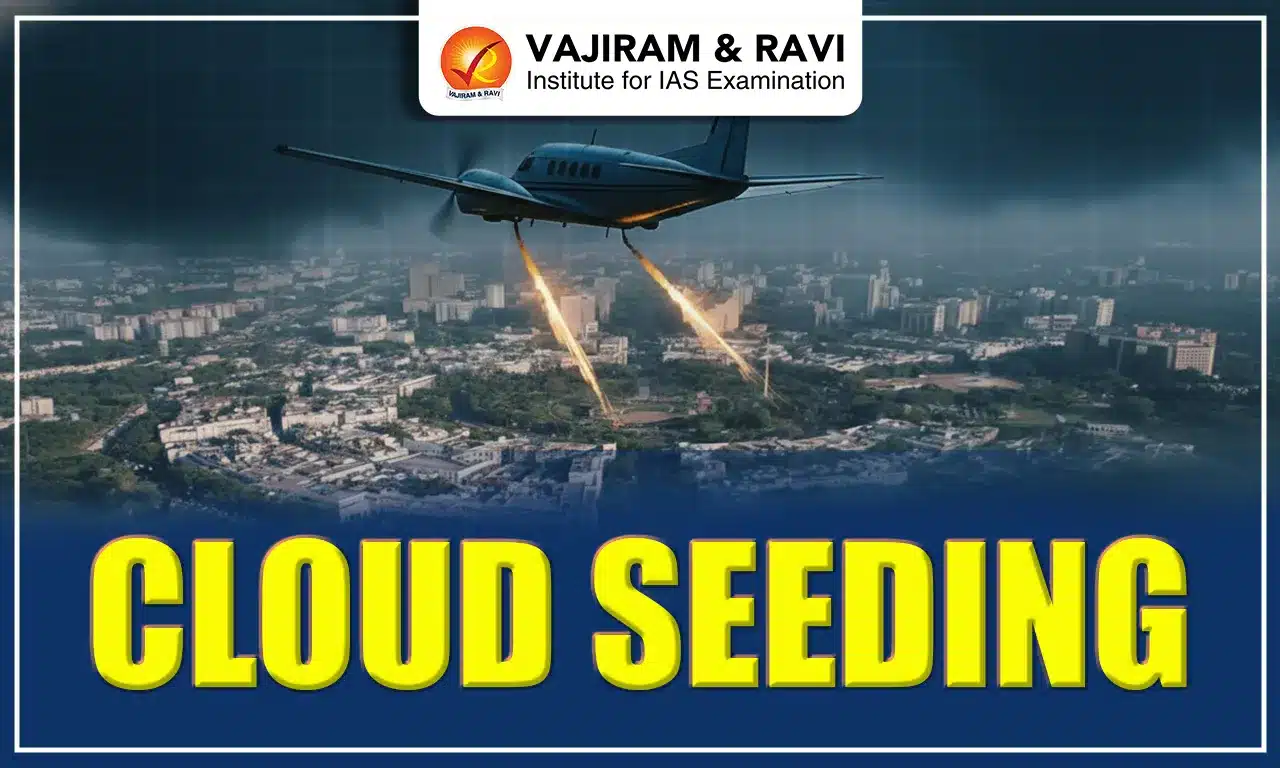
Recently, a small aircraft known as the Cessna 206H conducted a cloud seeding trial in Delhi amid the recent spike in air pollution. 

About Cloud Seeding

  • It is a weather-modification technique used to modify suitable clouds with ‘seed’ particles to increase rainfall.
  • To induce rain artificially, clouds are usually injected with salts like silver iodide, potassium iodide, or sodium chloride, which is the ‘seed’.
  • These salts are expected to provide additional nuclei around which more cloud droplets can form.
  • They are dispersed into the cloud either using aircraft or through generators on the ground.

Meteorological Requirements for Cloud Seeding

  • Sufficient moisture: The target clouds must contain an adequate amount of water vapour and liquid water to be condensed into precipitation.
  • Cloud characteristics: Clouds targeted for seeding must have sufficient vertical thickness. For example, some cloud-seeding projects require clouds to be at least 1 kilometre thick.
  • Favourable winds:  Wind direction must transport the seeding material toward the intended area and wind speed must not be so high that it prevents clouds from growing tall or blows the seeding agents away from the target zone.
  • Vertical air currents: Clouds with strong vertical updrafts are considered ideal because they help disperse the seeding agents and promote cloud development. 

Source: IE

Cloud Seeding FAQs

Q1: What is the primary purpose of cloud seeding?

Ans: To enhance precipitation

Q2: What is the mechanism by which cloud seeding enhances precipitation?

Ans: By introducing nucleating agents to facilitate droplet formation

Karakoram Wildlife Sanctuary

Karakoram Wildlife Sanctuary

Karakoram Wildlife Sanctuary Latest News

Recently, a proposal of redrawing the boundaries and expanse of the Karakoram wildlife sanctuary in Ladakh was received by the central government.

About Karakoram Wildlife Sanctuary

  • Location: It is located in the union territory of Ladakh along the territory’s border with Jammu and Kashmir.
  • It is situated just to the north of Hemis National Park and to the east of Deosai National Park.
  • Terrain: It is well known for its diverse landscape, featuring snow-covered peaks, alpine fields, and deep ravines.
  • Climatic condition: The average temperature during the warmest month is lower than 0 degrees Celsius in some heights and remains below 10 degrees Celsius in other parts.
  • Major Peaks: Major peaks within this Wildlife Sanctuary include Saltoro Kangri, Saser Kangri I, and K12.
  • Rivers: Shyok and Nubra Rivers are the major water sources of this sanctuary.
  • Vegetation: It is rich in alpine vegetation, medicinal plants, cold desert flora, endemic and rare species, and glacier vegetation.
  • Fauna: Ural, the argali, Tibetan gazelle, Siberian ibex, the bharal (blue sheep), and the snow leopard, Tibetan antelope (chiru) and Bactrian cameletc.
  • Flora: It comprises broad-leaved shrubs namely the Rosia webbiana, Ephedra, Caragianae and several other bushes.

Source: ET

Karakoram Wildlife Sanctuary FAQs

Q1: Where is the Karakoram Wildlife Sanctuary located?

Ans: Ladakh

Q2: What type of climate does the Karakoram Wildlife Sanctuary have?

Ans: Cold desert climate

NITI Aayog Highlights Rising Role of India’s Service Sector

Service Sector

Service Sector Latest News

  • India’s services sector is in the news after NITI Aayog released two comprehensive reports highlighting that the sector now contributes 55% to India’s GVA and nearly 30% to total employment.

India’s Service Sector: Driving Jobs and Growth in a Transforming Economy

  • India’s service sector has emerged as the core pillar of its economic transformation, shaping the country’s journey from an agrarian economy to a knowledge and innovation-driven one. 
  • Encompassing a wide range of industries, including information technology, financial services, communications, education, healthcare, transport, tourism, and retail, the sector not only drives GDP but also represents India’s global competitiveness.
  • The sector’s contribution to India’s Gross Value Added (GVA) has steadily risen over the years, while its employment potential has expanded across both traditional and modern sub-sectors. 
  • India is today the 7th largest exporter of services in the world, with a share of over 4% in global services exports.

Key Highlights and Insights from the NITI Aayog Reports

  • Employment Growth and Rising Share in Workforce
    • According to the latest twin reports released by NITI Aayog, “India’s Services Sector: Insights from Employment Trends and State-Level Dynamics” and “India’s Services Sector: Insights from GVA Trends and State-Level Dynamics”, between 2017-18 and 2023-24, India’s service sector added nearly 40 million new jobs, raising its employment share from 26.9% in 2011-12 to 29.7% in 2023–24
    • This means almost one in three Indian workers is now engaged in the services economy.
    • The report also notes an improvement in employment elasticity, which rose from 0.35 pre-pandemic to 0.63 post-pandemic, indicating that job creation is increasingly responding to output growth. 
    • The sector’s ability to absorb labour displaced from agriculture and low-productivity industry makes it a crucial driver of inclusive growth.
  • Contribution to GDP and Economic Stability
    • The services sector’s contribution to India’s Gross Value Added (GVA) increased from 49% in 2011-12 to 55% in 2023-24, outpacing the secondary and primary sectors. 
    • It also recorded a Compound Annual Growth Rate (CAGR) of about 7%, showing consistent resilience even during economic downturns.
    • Sub-sectors such as Information Technology (IT), financial and professional services, communication, and logistics have been the key growth engines. 
    • For instance, Computer and Information Services GVA increased nearly fourfold, from Rs. 2.4 trillion in 2011–12 to Rs. 10.8 trillion in 2023–24, highlighting India’s digital dominance and the rapid expansion of knowledge-based services.
  • Traditional vs Modern Services
    • While traditional services such as trade, repair, and transport continue to employ a large section of the population, modern services like IT, finance, R&D, and consulting have seen faster growth and higher productivity levels.
    • The Professional, Scientific, and Business Services segment alone contributes about 20% of total services output, underlining the importance of high-skilled and innovation-driven activities. 
    • Conversely, postal, courier, and insurance services remain underperforming and require modernisation and digital transformation.
  • Regional Trends and State-Level Dynamics
    • The NITI Aayog’s state-level analysis reveals significant disparities in the development and composition of the services sector across India.
    • Leaders: Karnataka, Maharashtra, Telangana, Tamil Nadu, Delhi, and Kerala dominate the modern service economy, driven by IT, finance, and professional consulting. Together, they account for 40% of total services output.
    • Lagging States: Bihar, Uttar Pradesh, Jharkhand, and Odisha remain concentrated in low-value traditional services, with limited participation in high-value segments.
    • Emerging Catch-Up: Encouragingly, lower-income states are showing “beta convergence”, meaning they are growing faster in services GVA, narrowing the regional gap over time.
  • NITI Aayog recommends a “Build–Embed–Scale” framework to strengthen state-specific service ecosystems:
    • Build - Invest in physical and digital infrastructure.
    • Embed - Link services with industrial and skill ecosystems.
    • Scale - Promote innovation and decentralised service delivery.
  • Linkages with Income, Exports, and Digitalisation
    • The correlation between a state’s service sector strength and its per capita income is strong; states with higher service contributions, like Karnataka and Telangana, record higher incomes.
    • At the macro level, India’s services sector has become the largest recipient of FDI and a key contributor to foreign exchange earnings
    • India’s digitally deliverable services exports, such as software and IT-enabled services, have surged, supported by Global Capability Centres (GCCs) that employ over 1.6 million professionals.
    • The report also highlights the growing importance of Digital Public Infrastructure (DPI), including UPI, DigiLocker, and e-governance systems, in enabling service delivery and financial inclusion across Tier-2 and Tier-3 cities.

Policy Priorities for the Road Ahead

  • NITI Aayog stresses that service-led growth must be inclusive, sustainable, and regionally balanced. Key policy priorities include:
    • Expanding digital and physical infrastructure across smaller cities.
    • Establishing skill hubs for emerging areas such as fintech, AI, and healthcare.
    • Promoting MSME integration into service supply chains.
    • Strengthening data and institutional capacity for evidence-based policymaking.
    • Encouraging green and sustainable services to align with India’s climate goals.

Source : TH | BW

Service Sector FAQs

Q1: What is the current share of services in India’s employment?

Ans: The service sector accounts for nearly 30% of total employment in India as of 2023–24.

Q2: How many new jobs has the sector created recently?

Ans: The services sector has added approximately 40 million new jobs in the past six years.

Q3: What is the sector’s share in India’s GVA?

Ans: The services sector contributes around 55% to India’s Gross Value Added.

Q4: Which states lead India’s modern services economy?

Ans: Karnataka, Maharashtra, Telangana, Tamil Nadu, Delhi, and Kerala are the top-performing states.

Q5: What are NITI Aayog’s key recommendations for service sector growth?

Ans: NITI Aayog recommends expanding digital infrastructure, regional skill hubs, MSME participation, and sustainable innovation-led service development.

Satkosia Tiger Reserve

Satkosia Tiger Reserve

Satkosia Tiger Reserve Latest News

In the wake of allegations that village relocation in the Satkosia Tiger Reserve has not been carried out properly, the Odisha Human Rights Commission (OHRC) has asked the Forest and Revenue departments and the Angul collector to submit all records in this connection.

About Satkosia Tiger Reserve

  • It is located in the heartland of Odisha and spread over four districts, viz. Angul, Cuttack, Boudh, and Nayagarh.
  • Spanning 1,136.70 sq. km, the reserve encompasses the Satkosia Gorge Sanctuary and Baisipalli Wildlife Sanctuary, divided by the Mahanadi River. 
  • The area is also a part of the Mahanadi Elephant Reserve.
  • It is the meeting point of two biogeographic regions of India, the Deccan Peninsula and the Eastern Ghats, contributing immense biodiversity.
  • Landscape
    • The terrain is hilly with moderate to steep slopes and narrow valleys. 
    • The average elevation of the terrain varies between 37 m and 932 m, with the lowest point being at Katrang and the highest point being at Sunakhania.
  • Vegetation: The forest vegetation comprises North Indian tropical moist deciduous forests and Moist peninsular low-level sal.
  • Flora:
    • The main tree species is sal, which grows in gregarious formations.
    • Other associate species are Asan (Terminalia alata), Dhaura (Anogeissus latifolia), Bamboo (Dendrocalamus strictus), and Simal (Bombax ceiba).
  • Fauna:
    • The flagship species among the fauna include tiger, leopard, elephant, spotted deer, sambar, chowsingha, barking deer, bison, wild dog, sloth bear, jackal, giant squirrel, and porcupine.
    • It is the natural habitat of two endangered species, viz., the freshwater crocodile and the gharial.

Source: NIE

Satkosia Tiger Reserve FAQs

Q1: Satkosia Tiger Reserve is locate in which state?

Ans: Odisha

Q2: Satkosia Tiger Reserve includes which two wildlife sanctuaries?

Ans: Satkosia Gorge Sanctuary and Baisipalli Wildlife Sanctuary

Q3: Satkosia Tiger Reserve lies at the meeting point of which two biogeographic regions of India?

Ans: Deccan Peninsula and Eastern Ghats

India’s Diaspora Diplomacy: Pride, Power, and the Need for Restraint Abroad

Diaspora Diplomacy

Diaspora Diplomacy Latest News

  • In recent weeks, the Indian diaspora has drawn global attention for religious and cultural displays that, in some cases, have crossed local norms in developed countries.
  • Incidents such as Ganapati idol immersion in public water bodies and Deepavali fireworks in residential areas have sparked controversy. In Edmonton, Canada, fireworks set two houses on fire, leading police to warn, “Light up your home, not your neighbour’s roof.”
  • Meanwhile, in Australia, anti-immigrant protesters have targeted Indians, while in the U.S. and Canada, nationalist groups have increasingly focused on the Indian community, reflecting a rising tension between cultural expression and local sensitivities abroad.

Diaspora Diplomacy and Soft Power

  • India has become the world’s fourth-largest economy with a GDP of USD 4.19 trillion, supported significantly by its 35 million–strong diaspora. 
  • Comprising NRIs and OCIs, the diaspora contributes through remittances exceeding USD 100 billion annually, investments, and social initiatives like village development.
  • From ancient traders and indentured labourers to today’s skilled professionals, Indian migration has evolved over centuries. 
  • Once criticized as a brain drain, it is now viewed as “brain gain,” symbolizing India’s global strength.
  • India’s diaspora enhances soft power through culture, technology, and advocacy, influencing major outcomes like the U.S.–India nuclear deal
  • However, lobbying successes vary with host-country politics and diaspora unity.

Cultural Assertion and the Evolution of India’s Diaspora Policy

  • A growing section of the Indian diaspora is displaying assertive cultural nationalism, promoting practices like Deepavali firecrackers abroad as symbols of community pride and identity.
  • Simultaneously, some groups are urging the diaspora to advocate India’s political positions, especially in the United States.
  • Historically, however, Jawaharlal Nehru maintained a clear distinction between India and its overseas communities. 
  • While the freedom movement had global links, Nehru insisted that post-Independence India stay out of PIO politics.
  • He urged persons of Indian origin (PIOs) to remain loyal to their adopted countries, avoiding any perception of Indian interference in foreign domestic affairs.

From Territorial to Cultural Nationalism

  • In the early decades after Independence, India’s foreign policy and diaspora engagement were guided by territorial nationalism, not cultural identity
  • Issues like discrimination and racism were framed as universal human rights concerns, reflecting India’s commitment to global justice rather than ethnic solidarity.

Rise of Global Cultural Nationalism

  • From the 1990s onward, the increasing Indian migration created a global network of cultural nationalists. 
  • This trend gained strong momentum after Narendra Modi became Prime Minister in 2014, marked by large-scale diaspora rallies abroad, particularly in the United States.

Growing Western Sensitivity to Foreign Influence

  • At the same time, Western nations — notably the U.S., Canada, Australia, and parts of Europe — became increasingly wary of foreign interference in domestic politics. 
  • Allegations of Chinese and Russian influence sharpened this sensitivity, even as Israel’s lobbying began facing bipartisan criticism in the U.S.
  • Although foreign influence operations are legal in the U.S. if transparently registered, the state-backed mobilisation of the Indian diaspora has drawn quiet scrutiny.

India’s Position in the Changing Landscape

  • Historically seen as a benign and diverse immigrant community, Indian Americans now face growing attention as India’s outreach to its diaspora becomes more overtly strategic.
  • While India has avoided the hostility directed at Russia or China, there are increasing signs of Western unease over efforts to align diaspora networks with New Delhi’s political and cultural agenda.

India’s Approach to Overseas Citizenship

  • India does not permit dual citizenship, but in 2003, it introduced Overseas Citizenship of India (OCI) status through amendments to the Citizenship Act, 1955. 
  • This provided Persons of Indian Origin (PIOs) with lifetime visa-free entry, exemption from police registration, and rights similar to NRIs in education, property, and business.
  • In 2015, the government merged the PIO and OCI categories, describing the arrangement as “dual citizenship in spirit, but not in law.
  • In contrast, the United States allows dual citizenship, but growing concerns about foreign political influence have prompted calls for stricter scrutiny.
  • Analysts have voiced concerns about divided loyalties and potential foreign interference.

Navigating Nationalist Tensions Abroad

  • As Western nations experience heightened nationalism, diaspora communities face pressure to demonstrate loyalty to host countries.
  • For Indians abroad, expectations to promote India’s interests must be balanced with these realities. 
  • In an era of rising protectionism and political suspicion, “multi-alignment” diplomacy — being loyal to both India and the host nation — is increasingly difficult.
  • Ultimately, nationalist fervour is not unique to India, and diaspora members must operate within the nationalist sensitivities of their adopted countries.

Source: TH | AFPR

Diaspora Diplomacy FAQs

Q1: Why is India’s diaspora in the news?

Ans: Recent cultural incidents abroad, like fireworks and idol immersions, have sparked debates on responsible behaviour and cultural sensitivity among Indian communities overseas.

Q2: How does the Indian diaspora strengthen India’s influence?

Ans: The diaspora contributes over $100 billion in remittances annually, boosts investments, and enhances India’s global image through cultural, academic, and technological achievements.

Q3: What is India’s approach to overseas citizenship?

Ans: India offers Overseas Citizenship of India (OCI) status—visa-free entry and NRI-like privileges—but no dual citizenship, unlike countries such as the United States.

Q4: How has India’s diaspora diplomacy evolved?

Ans: From Nehru’s hands-off approach to Modi’s active engagement, India’s diaspora has shifted from “brain drain” to “brain gain,” reflecting new cultural assertiveness.

Q5: What challenges do diaspora communities face abroad?

Ans: They must balance loyalty between India and host nations amid rising nationalism, scrutiny over foreign influence, and cultural friction in Western societies.

Delhi’s Cloud-Seeding Trials: Can Artificial Rain Help Reduce Air Pollution?

Cloud Seeding

Cloud Seeding Latest News

  • Amid worsening air quality, the Delhi government, in collaboration with IIT-Kanpur, conducted two cloud-seeding trials to induce artificial rain, though only negligible rainfall was recorded — 0.1 mm in Noida and 0.2 mm in Greater Noida.
  • According to experts, the weak results were due to low cloud moisture (15–20% humidity), but more sorties are planned as better moisture conditions are expected in coming days.

Cloud Seeding

  • Cloud seeding is a weather modification technique used to enhance rainfall by introducing “seed” particles into suitable clouds. 
    • The method was first tested globally in the 1940s.
  • The process involves dispersing cloud condensation nuclei (CCN) — particles that attract water vapour — or ice nuclei particles, which promote ice crystal formation.
  • In natural conditions, water vapour condenses around airborne particles to form droplets that grow, collide, and eventually fall as rain. 
  • In cloud seeding, artificial nuclei such as silver iodide or salt particles are added to accelerate this process. 
  • Ice crystals grow faster, combine, and become heavy enough to precipitate, increasing the likelihood of rainfall.

Process of Cloud Seeding

  • To artificially induce rain, salts such as silver iodide, potassium iodide, or sodium chloride are used as “seeds” to create additional nuclei for cloud droplet formation.
  • These particles are dispersed into clouds using aircraft, ground-based generators, rockets, drones, or flares. 
    • The method chosen depends on cloud type and conditions.

Conditions Needed for Successful Cloud Seeding

  • Cloud seeding can only be done when suitable clouds with adequate depth and moisture are present. 
    • As per the experts, cloud seeding needs humidity above 50%, cool temperatures, and existing cloud formation.
  • The process requires a sufficient number of droplets inside clouds to enlarge through condensation and eventually fall as rain. It cannot be done under clear skies.
  • In Delhi’s winters, cloud formation depends on western disturbances — weather systems originating from the Caspian or Mediterranean Sea that bring non-monsoonal rain to northwest India. 
  • However, these clouds often lack the required depth and liquid water content for effective seeding.
  • Experts emphasize that before any attempt, it’s essential to assess cloud height, moisture levels, and liquid water content using specialized monitoring tools to determine if conditions are right for seeding.

Environmental concerns

  • Silver iodide (AgI), used in seeding, is insoluble but toxic in large quantities.
  • Even small amounts (0.2 micrograms) can harm fish and microorganisms, though iodine in AgI is not considered toxic.

Why Cloud-Seeding Trials in Delhi Failed to Induce Rain

  • A Delhi government report cited low atmospheric moisture (10–15%), as predicted by the India Meteorological Department (IMD), as the main reason the cloud-seeding trials did not produce significant rainfall.
  • Experts explained that although there was good cloud cover, moisture levels were too low to trigger rain. 
  • They added that the team gained technical experience from the trials and would conduct a third round once weather conditions improve.

Limited Rainfall and Technical Challenges

  • Experts noted that while Delhi plans more trials, cloud seeding in convective, low-level clouds remains highly uncertain
  • Success depends on timing, cloud type, altitude, and adequate moisture, conditions that are rarely met over the plains.
    • Cloud bases were around 10,000 feet, which meteorologists said was too high for effective seeding.
    • If clouds descend below 5,000 feet, chances of rainfall improve.
  • The World Meteorological Organization (WMO) notes that the biggest challenge is quantifying seeding’s actual impact on precipitation.

How Cloud Seeding Helped Reduce Pollution

  • Despite limited rainfall — 0.1 mm in Noida and 0.2 mm in Greater Noida — the trials had a measurable impact on air quality.
  • According to the Delhi government’s report, levels of particulate matter (PM2.5 and PM10) dropped after cloud seeding:
    • PM2.5 fell from 221–230 to 203–207 across Mayur Vihar, Karol Bagh, and Burari.
    • PM10 reduced from 206–209 to 163–177 in the same areas.
  • The report concluded that while rainfall was minimal, pollution reduction was evident, offering valuable insights for future cloud-seeding efforts.

Air Quality and Broader Solutions

  • Air quality analysts cautioned that cloud seeding does not address emissions at their source.
  • Experts point out that such measures — like smog towers or anti-smog guns — offer only short-term benefits.
  • Sustainable improvement requires coordinated action across states, targeting emissions from transport, power plants, and construction, under an airshed-based approach.

Conclusion

  • Delhi’s cloud-seeding trials provided valuable learning but limited rain, highlighting the complex science, environmental risks, and logistical constraints of such interventions. 
  • Experts agree that while cloud seeding can supplement pollution control efforts, lasting air quality improvement demands systemic emission reductions and regional cooperation.

Source: TH | IE | HT

Cloud Seeding FAQs

Q1: What is cloud seeding?

Ans: Cloud seeding is a weather modification technique that uses particles like silver iodide or salt to enhance rainfall by stimulating droplet or ice crystal formation.

Q2: Why did Delhi’s cloud-seeding trials fail?

Ans: Low moisture levels (10–15%) and high cloud bases around 10,000 feet prevented sufficient condensation, leading to negligible rainfall despite good cloud cover.

Q3: How did cloud seeding affect air quality in Delhi?

Ans: Although rainfall was minimal, PM2.5 and PM10 levels dropped significantly in areas like Mayur Vihar and Karol Bagh after the trials.

Q4: What conditions are required for successful cloud seeding?

Ans: Effective seeding needs sufficient cloud depth, humidity above 50%, low temperatures, and early targeting of developing clouds before they begin natural rainfall.

Q5: What are the environmental concerns of cloud seeding?

Ans: Excessive use of silver iodide can harm fish and microorganisms, highlighting the need for proper monitoring and environmental impact studies before large-scale use.

Daily Editorial Analysis 29 October 2025

Daily Editorial Analysis

A Quip That Stings but Also Inspires

Context

  • The 2025 Nobel Prize in Economics, awarded to Joel Mokyr, Philippe Aghion, and Peter Howitt, marks a turning point in the understanding of innovation, growth, and history.
  • At its heart lies a quiet irony: while modern economics celebrates data and precision, the enduring foundations of progress are built through historical understanding and institutional learning.
  • Mokyr’s quip that economic historians don’t win the prize exposes a deeper truth, prosperity depends less on mathematical models than on the social machinery that carries knowledge, develops experimentation, and restrains privilege.
  • Growth, in this view, is a social technology before it is a mechanical one.

The Social Foundations of Growth

  • Modern prosperity emerged not from a single invention or genius, but from civic institutions that enabled useful knowledge to travel.
  • Coffeehouses, printing presses, guilds, dissenting congregations, and learned societies formed the networks through which ideas circulated and recombined.
  • Apprenticeships, shop-floor heuristics, and rule-of-thumb engineering created a shared code of practical know-how.
  • Where markets were contestable and cities porous, these networks incubated capability. Where institutions ossified, they blocked entry and throttled innovation.
  • Schumpeter’s creative destruction operates only when this social infrastructure allows new ideas to challenge entrenched power.
  • Economic growth, therefore, depends as much on the openness of civic life as on the brilliance of invention.

Dynamic Innovation and Institutional Design

  • The work of Aghion and Howitt gives formal shape to this historical reality.
  • Their Schumpeterian growth framework shows how innovation rents attract entrepreneurs, how incumbents defend their positions through lobbying or litigation, and how policy choices decide whether competition fuels progress or stifles it.
  • Innovation thrives when experimentation is cheap and entry easy, and it falters when institutions harden into monopolies.
  • Together, Mokyr, Aghion, and Howitt reveal that innovation is sustained not by privilege but by process.
  • The vitality of an economy lies in protecting the engine of experimentation, not the owners of the last engine.

Economic History as a Living Laboratory

  • Economic history offers the long view needed to understand how societies learn, adapt, and institutionalize progress.
  • Its archives reveal incentives and behaviours that cannot be captured by regressions or identification strategies alone.
  • Douglass North and Robert Fogel demonstrated that institutions and counterfactual reasoning belong at the core of economics.
  • Claudia Goldin’s work traced how historical patterns of women’s labour participation shaped modern markets. Simon Kuznets’ national accounts were inseparable from the historical measurement of economies.
  • Economic history, far from being a sideshow, is the laboratory where culture, rules, and technology interact. It illuminates how societies build the frameworks that turn invention into sustained prosperity.

Modern Challenges Through a Historical Lens

  • AI and jobs

    • Technology shocks do not simply destroy employment; they reprice skills and reorganize tasks.
    • The critical issue is transition management, determining who bears the cost of adaptation.
    • Policies that ensure portable benefits, skills bridges, interoperable systems, and data portability protect workers and entry, not incumbents.
  • Public debt

    • The Dutch and British states achieved credibility not through austerity but through institutional capacity, reliable taxation, representative government, and enforceable contracts. Fiscal sustainability is institutional, not arithmetic.
  • Inequality

    • History exposes how guilds defended privilege under the guise of quality control. True reform lies in contestability, lowering barriers so that capability, not pedigree, determines success.
    • In the digital age, open standards, pro-competitive procurement, and limits on self-preferencing echo the role once played by coffeehouses and cheap pamphlets in spreading opportunity.

Technology, Time, and the Caution of History

  • Nick Crafts’ reinterpretation of the British Industrial Revolution shows that general-purpose technologies, steam, ICT, AI, appear late in productivity data because they demand complementary investments and institutional adaptation.
  • Jared Diamond’s broader lens reminds us that technology unfolds within geographical and ecological constraints.
  • Economic history tempers euphoria with realism and despair with patience, revealing that progress is cumulative, uneven, and deeply embedded in its social context.

Conclusion

  • Recognition often arrives late, both for prizes and productivity, yet what endures is not acclaim but the machinery of openness that keeps innovation alive.
  • Prosperity is the exception, not the norm. It survives only where societies argue productively, adapt institutionally, and defend contestability against the drift of privilege.
  • The true legacy of Mokyr’s insight is not a celebration of the past, but a warning for the present: the wealth of nations depends on how fiercely they protect the process of discovery and diffusion.
  • History’s verdict is clear, progress must be argued for, institutionally and incessantly.

A Quip That Stings but Also Inspires FAQs

Q1. What is Joel Mokyr’s main idea about economic growth?
Ans. Joel Mokyr believes that economic growth is a social technology before it is a mechanical one, meaning progress depends on the institutions and networks that allow knowledge to spread and be used productively.

Q2. How do Aghion and Howitt’s ideas complement Mokyr’s view?
Ans. Aghion and Howitt provide a dynamic model of innovation, showing how policy and competition shape whether new ideas thrive or are blocked, complementing Mokyr’s focus on the social foundations of growth.

Q3. What role does economic history play in understanding innovation?
Ans. Economic history serves as a laboratory of long-term learning, revealing how societies build institutions that transform invention into lasting prosperity.

Q4. How does Mokyr’s historical perspective apply to Artificial Intelligence and jobs?
Ans. Mokyr’s perspective shows that technology does not simply eliminate jobs but reshapes skills and tasks, making policies for smooth transitions and worker protection essential.

Q5. What broader lesson does history teach about prosperity?
Ans. History teaches that prosperity is rare and fragile, sustained only when societies protect openness, contestability, and continuous institutional adaptation.

Source: The Hindu


Math is Not a Tool for Cultural Nationalism

Context

  • The controversy surrounding the University Grants Commission’s (UGC) draft undergraduate mathematics curriculum under the National Education Policy (NEP) has ignited a crucial debate about the intersection of education, nationalism, and scientific inquiry.
  • While the proposal aims to integrate traditional Indian mathematical knowledge into the modern curriculum, it has faced strong opposition from over 900 Indian mathematicians, who argue that it is pedagogically flawed and ideologically driven.
  • At the heart of the issue lies a vital question: can a discipline grounded in universal truths, like mathematics, be reshaped through cultural or nationalist lenses without distorting its essence?

The Core of the Controversy

  • The draft curriculum has been criticised for its limited coverage of core subjects, neglect of applied mathematics, and poorly designed electives.
  • More significantly, the inclusion of subjects such as Kala Ganpana (traditional Indian time calculation), Bharatiya Bijganit (Indian algebra), and Shulba Sutra (ancient altar geometry) has raised fears that the curriculum prioritises symbolic cultural revival over academic rigour.
  • Opponents believe such content undermines the universal and scientific nature of mathematics, transforming it into a tool of ideological assertion rather than intellectual development.

The Debate on Cultural Pride vs. Intellectual Integrity

  • Supporters of the NEP, notably Manjul Bhargava, the 2014 Fields Medal winner, argue that India’s mathematical heritage deserves rightful recognition.
  • Bhargava maintains that acknowledging ancient contributions does not equate to glorifying one civilisation over another, but rather to restoring balance to a Eurocentric narrative.
  • This effort to reclaim cultural pride is understandable and historically justified.
  • Yet, an overemphasis on nationalism in mathematics risks replicating the very colonial mindset it seeks to resist.
  • To portray mathematics as an exclusively Indic creation is to commit the same error of cultural monopolisation once made by colonial scholars.
  • Mathematical truths transcend geography and culture, the proposition that 2 + 2 = 4 is neither Western nor Indian; it is simply true. When nationalism infiltrates a discipline built on logic and universality, it dilutes both its objectivity and global relevance.

The Universal Character of Mathematics

  • Mathematics draws strength from its universality and cumulative evolution.
  • From Babylonian number systems to Greek geometry, from Indian algebra to Arabic numerals, its history is a story of cross-cultural collaboration rather than isolated civilisational achievements.
  • To confine its teaching within a Vedic or Indic framework is both historically inaccurate and pedagogically unsound.
  • Moreover, most mathematics instructors lack formal training in Indology and may struggle to interpret ancient texts by Aryabhata, Brahmagupta, or Bhaskara with academic neutrality.
  • Without such preparation, there is a risk of ideological bias, where students absorb mythologised history instead of scientific reasoning.
  • A modern curriculum must therefore balance cultural appreciation with analytical depth, ensuring that historical context complements, not replaces, technical competence.

The Broader Implications for Education and Democracy

  • The debate extends beyond curriculum design into the philosophical purpose of education and the defence of rational inquiry in a democracy.
  • When knowledge becomes a vehicle for nationalism, education ceases to serve truth and begins to serve ideology.
  • The danger lies in replacing scientific evidence with cultural rhetoric, as seen in the increasing frequency of pseudoscientific claims made by public figures, such as assertions that mythological deities were the first space travellers.
  • In a world defined by artificial intelligence, data science, and global collaboration, India’s academic strength depends on rigorous, evidence-based education, not revivalist sentiment.
  • Scientific reasoning must remain the cornerstone of democratic progress, ensuring that national pride complements, rather than compromises, intellectual honesty.

Conclusion

  • The debate over the UGC’s mathematics curriculum reveals a fundamental tension between cultural recognition and intellectual integrity.
  • Acknowledging India’s mathematical heritage is essential, but embedding it within a nationalist framework threatens to undermine the universal, collaborative nature of knowledge. Mathematics belongs to humanity, not to any single civilisation.
  • Education should empower students to think critically and globally, nurturing pride in heritage without sacrificing scientific objectivity.
  • Only through such balance can India’s educational reforms truly strengthen both national identity and intellectual freedom.

Math is Not a Tool for Cultural Nationalism FAQs

Q1. What is the main controversy surrounding the UGC’s draft mathematics curriculum?
Ans. The main controversy is that the draft introduces nationalist and cultural elements into the mathematics syllabus, which many mathematicians believe weakens its academic and scientific integrity.

Q2. Why do critics oppose the inclusion of topics like Kala Ganpana and Bharatiya Bijganit?
Ans. Critics oppose these topics because they view them as symbolic attempts to promote cultural pride rather than strengthen mathematical understanding.

Q3. What argument does Manjul Bhargava make in support of the new curriculum?
Ans. Manjul Bhargava argues that recognising India’s ancient mathematical contributions helps restore balance to a global narrative that has long ignored non-Western achievements.

Q4. Why is mathematics considered a universal discipline?
Ans. Mathematics is considered universal because its truths, such as 2 + 2 = 4, remain valid regardless of culture, geography, or historical context.

Q5. What broader concern does the debate raise about education in India?
Ans. The debate raises concern that education could become a tool for nationalism rather than a means of promoting scientific reasoning and democratic values.

 Source: The Hindu

Daily Editorial Analysis 29 October 2025 FAQs

Q1: What is editorial analysis?

Ans: Editorial analysis is the critical examination and interpretation of newspaper editorials to extract key insights, arguments, and perspectives relevant to UPSC preparation.

Q2: What is an editorial analyst?

Ans: An editorial analyst is someone who studies and breaks down editorials to highlight their relevance, structure, and usefulness for competitive exams like the UPSC.

Q3: What is an editorial for UPSC?

Ans: For UPSC, an editorial refers to opinion-based articles in reputed newspapers that provide analysis on current affairs, governance, policy, and socio-economic issues.

Q4: What are the sources of UPSC Editorial Analysis?

Ans: Key sources include editorials from The Hindu and Indian Express.

Q5: Can Editorial Analysis help in Mains Answer Writing?

Ans: Yes, editorial analysis enhances content quality, analytical depth, and structure in Mains answer writing.

Dyslexia

Dyslexia

About Dyslexia: 

  • It is a learning disorder that involves difficulty reading due to problems identifying speech sounds and learning how they relate to letters and words (decoding).
  • It is also called a reading disability, dyslexia is a result of individual differences in areas of the brain that process language.
  • It is not due to problems with intelligence, hearing or vision. 
  • It is often misunderstood as the ‘slow-learner syndrome’.
  • The exact cause of dyslexia isn’t clear. However, several clues hint at how and why most cases happen.
    • Genetics: It is highly genetic and runs in families. A child with one parent with dyslexia has a 30% to 50% chance of inheriting it.
    • Differences in brain development and function: Research shows people with dyslexia have differences in brain structure, function and chemistry.
    • Disruptions in brain development and function: Infections, toxic exposures and other events can disrupt fetal development and increase the odds of later development of dyslexia.
  • Specific Learning Disabilities, including dyslexia, were officially recognized under the Rights of Persons with Disabilities Act of 2016, which mandates equal opportunities in education, employment, and other aspects of life.
  • The National Education Policy 2020 reinforces this mandate, emphasizing inclusive education from foundational to higher education levels. NEP 2020 reforms focus on early identification, teacher capacity building, and providing necessary support and accommodations to students.

Q1: What is Autism spectrum disorder (ASD)?

Autism spectrum disorder (ASD) is a developmental disability caused by differences in the brain. People with ASD may behave, communicate, interact, and learn in ways that are different from most other people.

News: Rashtrapati Bhavan, Parliament light up in red to raise awareness about dyslexia

Enquire Now