Banking Regulation Act 1949, Objectives, Provisions, Amendments

Banking Regulation Act 1949

The Banking Regulation Act 1949 is a cornerstone of India’s banking legislation, providing the framework for regulation, supervision, and governance of banking companies. The long title of the Banking Act 1949 is "An Act to consolidate and amend the law relating to banking". Initially enacted as the Banking Companies Act 1949, it came into force on 16 March 1949 and was renamed Banking Regulation Act from 1 March 1966. The law applies across India, including Jammu and Kashmir since 1956, and ensures orderly conduct in banking operations. It empowers the Reserve Bank of India (RBI) to license banks, regulate management, and oversee banking policies to maintain financial stability.

Banking Regulation Act 1949

The Banking Regulation Act 1949 consolidates and amends banking laws, giving RBI authority over commercial banks and cooperative banks. The Act regulates shareholding, board appointments, audits, bank operations, mergers, moratoriums, and liquidations. Initially focused on banking companies, it was amended in 1965 to include cooperative banks under RBI supervision. This ensured cooperative banks’ compliance with prudential norms while maintaining state-level operations. The Act supplements the Companies Act 1956, providing a legal framework for orderly banking operations across India.

Banking Regulation Act 1949 Objectives

The Banking Regulation Act 1949 aims to regulate banking operations, ensure financial stability, protect depositors’ interests, and strengthen governance and supervision mechanisms.

  • Licensing: The RBI has the power to grant licenses to banking companies to ensure only financially sound banks operate.
  • Management supervision: RBI can regulate appointment, reappointment, and removal of bank directors and CEOs.
  • Shareholding regulation: The Act controls shareholder voting rights to avoid concentration of ownership that may threaten stability.
  • Audits: RBI sets guidelines for internal and statutory audits of banks to ensure compliance and transparency.
  • Mergers and liquidation: RBI can direct mergers, reconstruction, or liquidation of banks to safeguard public interest.
  • Public interest directives: RBI can issue binding instructions to banks in the interest of depositors and financial stability.
  • Cooperative banks inclusion: Section 56 extends regulatory powers to cooperative banks since 1965.

Also Read: Protection of Human Rights Act 1993

Banking Regulation Act 1949 Need

India needed a comprehensive law to regulate banks, protect depositors, and maintain financial stability in a rapidly expanding banking sector.

  • Prior to 1949, banking operations were loosely regulated, leading to bank failures and depositor losses.
  • Post-independence, rapid growth in banking required a structured legal framework for supervision.
  • Cooperative banks operated independently and faced governance and solvency challenges before 1965.
  • Investor and depositor protection was weak due to absence of statutory safeguards.
  • Banking mismanagement and unethical practices threatened public confidence.
  • RBI needed statutory powers to intervene in troubled banks, enforce prudential norms, and prevent systemic risks.
  • The Act provided a uniform framework across India for commercial and cooperative banks.

Banking Regulation Act 1949 Provisions

The Banking Regulation Act 1949 provides detailed provisions for licensing, management, governance, audits, operations, and RBI’s regulatory and supervisory powers over banks.

  • Licensing: Banks cannot operate without RBI license, ensuring only eligible entities provide banking services.
  • Management regulation: RBI can control director appointments, chairman tenure, and senior management oversight.
  • Capital and reserves: Banks must maintain minimum capital, reserves, and liquidity ratios as prescribed by RBI.
  • Audit and inspection: RBI can conduct inspections and audits, including examination of books, records, and internal controls.
  • Shareholding and voting rights: RBI regulates maximum shareholding to prevent undue influence on bank policies.
  • Mergers, amalgamations, and reconstruction: RBI can direct bank mergers or reconstruction to maintain financial stability.
  • Cooperative banks: Section 56 extends RBI powers to cooperative banks, including licensing, inspection, and governance.

Banking Regulation Act 1949 Amendments

The Banking Regulation Act 1949 has been amended to strengthen RBI’s supervisory powers, particularly over cooperative banks and multi-state financial institutions.

  • 1965 Amendment: Extended regulatory framework to cooperative banks to ensure solvency, governance, and depositor protection.
  • 2020 Amendment (Banking Regulation Amendment Bill 2020): Brought 1,482 urban and 58 multi-state cooperative banks under RBI supervision.
  • 2025 Amendment brought various significant changes.
  • Strengthened RBI’s ability to issue directions for mergers, reconstruction, or moratoriums to protect depositors.
  • Enhanced penalties and regulatory powers for directors, management, and shareholders violating banking norms.
  • Ensured cooperative banks follow prudential norms similar to commercial banks for stability and transparency.
  • Introduced uniform governance standards and auditing practices across cooperative banks.

Banking Laws (Amendment) Act 2025

The 2025 amendment to the Banking Regulation Act 1949 strengthened governance, improved audits, protected depositors, and aligned cooperative banks with constitutional norms.

  • The Banking Laws (Amendment) Act 2025, notified on 15 April 2025 and effective from 1 August 2025, introduced major reforms across five laws, including the Banking Regulation Act 1949, RBI Act 1934, SBI Act 1955, and Banking Companies Acts of 1970 and 1980.
  • The Act enforces 19 amendments, notified through Gazette Notification S.O. 3494(E) dated 29 July 2025.
  • It redefines substantial interest from ₹5 lakh to ₹2 crore, revising a threshold unchanged since 1968.
  • It increases director tenure in cooperative banks from 8 to 10 years, aligning with the 97th Constitutional Amendment.
  • Public sector banks can now transfer unclaimed shares, interest, and bond redemption amounts to the IEPF, aligning them with the Companies Act.
  • PSBs are allowed to remunerate statutory auditors, enabling the hiring of high-quality professionals to improve audit standards.
  • The amendments enhance governance, depositor/investor protection, and audit quality across the banking ecosystem.

Also Read: Forest Conservation Act 1980

Banking Regulation Act 1949 Organizations

The Banking Regulation Act 1949 ensures hierarchical control over banks, with RBI as the apex regulatory authority overseeing commercial and cooperative banking operations.

  • Reserve Bank of India acts as the central regulator, controlling licensing, operations, audits, and governance.
  • State governments form cooperative banks, but RBI supervises licensing, operations, and prudential norms.
  • Commercial banks operate under RBI’s direct supervision, including public, private, and foreign banks.
  • RBI can appoint administrators in distressed banks and take over management temporarily.
  • The Act allows RBI to control mergers, amalgamations, and liquidations of banks.
  • The organizational framework ensures uniformity, depositor protection, and financial stability across India.

Banking Regulation Act 1949 Challenges

The Banking Regulation Act 1949 faced challenges related to cooperative banks, governance, enforcement, and adapting to modern digital banking needs.

  • Lack of compliance in smaller cooperative banks.
  • Governance issues in rural banks.
  • Inefficient monitoring of multi-state banks.
  • Limited enforcement mechanisms before amendments.
  • Integration of cooperative banks under national standards.
  • Handling banking crises and depositor protection.
  • Digital banking expansion introduces cyber risks.

Way Forward:

  • Strengthen RBI supervision and reporting systems.
  • Enhance training and board oversight.
  • Use technology and digital reporting for real-time supervision.
  • Introduce stricter penalties, audits, and risk management guidelines.
  • Standardize regulations and prudential norms.
  • RBI moratorium and reconstruction powers.
  • Strengthen cybersecurity and regulatory frameworks.

Banking Regulation Act 1949 Penalties

The Banking Regulation Act 1949 prescribes penalties for non-compliance with RBI directions, governance norms, shareholder regulations, and banking operational standards.

  • Banks violating RBI regulations face monetary fines, license suspension, or cancellation.
  • Directors and management can be removed or barred from holding office for misconduct or violation.
  • Shareholders exceeding prescribed limits of voting rights may have restricted influence or penalties imposed.
  • Non-compliance with audit and reporting norms invites RBI action including penalty and administrative oversight.
  • RBI can impose moratoriums, direct mergers, or initiate liquidation in extreme cases to protect public interest.

Banking Regulation Act 1949 Achievements

The Banking Regulation Act 1949 has strengthened banking stability, enhanced depositor confidence, and standardized governance across commercial and cooperative banks.

  • Ensured RBI supervision over all banks, reducing risks of mismanagement and fraud.
  • Brought cooperative banks under uniform prudential norms, improving governance and depositor safety.
  • Enabled speedy interventions in troubled banks to prevent systemic crises.
  • Standardized auditing, capital adequacy, and operational guidelines across the banking sector.
  • Contributed to public confidence, with bank failures decreasing over time.
  • Supported orderly growth of India’s banking system and integration with modern financial practices.

Also Read: Forest Rights Act, 2006

Banking Regulation Act 1949 Recent Developments

Recent amendments and regulatory updates strengthen RBI’s supervision, particularly over cooperative banks, enhancing financial stability and depositor protection.

  • The 2025 amendment introduced 19 reforms, raised substantial interest threshold to ₹2 crore, extended cooperative bank director tenure to 10 years, and strengthened PSB audits.
  • 2020 Amendment: Brought 1,482 urban and 58 multi-state cooperative banks under RBI supervision.
  • RBI can now directly manage distressed cooperative banks to protect depositors.
  • Enhanced regulatory powers include mergers, reconstruction, and moratorium provisions.
  • Increased focus on risk management, digital banking oversight, and cyber security.
  • Uniform governance standards across cooperative and commercial banks promote financial stability.
  • Digital reporting, e-governance, and real-time monitoring improve regulatory efficiency.

Banking Regulation Act 1949 UPSC

The Banking Regulation Act 1949 remains a pivotal legislation ensuring stability, transparency, and accountability in India’s banking sector. By giving RBI wide-ranging powers to license, regulate, supervise, and intervene in banks, the Act protects depositors, strengthens governance, and mitigates risks. Its amendments over time, particularly the 1965, 2020 and 2025 changes, expanded its scope to cooperative banks, creating uniform prudential standards. The Act’s principles continue to guide modern banking reforms, balancing innovation with depositor protection, and remain a key framework for financial stability in India

Banking Regulation Act 1949 FAQs

Q1: What is the Banking Regulation Act 1949?

Ans: The Banking Regulation Act 1949 is a law that governs banking companies in India and empowers RBI to regulate their operations.

Q2: What is the main purpose of the Banking Regulation Act 1949?

Ans: The primary purpose of the Banking Regulation Act 1949 is to ensure safe banking practices, protect depositors, and maintain financial stability.

Q3: How does the Banking Regulation Act 1949 regulate cooperative banks?

Ans: The Banking Regulation Act 1949 extends to cooperative banks through Section 56 and the 2020 amendment, placing them under RBI supervision.

Q4: What powers does RBI have under the Banking Regulation Act 1949?

Ans: Under the Banking Regulation Act 1949, RBI can license banks, regulate management, conduct audits, and direct mergers or reconstruction.

Q5: What are the key amendments to the Banking Regulation Act 1949?

Ans: Key amendments include the 1965 cooperative-bank inclusion, the 2020 RBI supervision of 1,540 cooperative banks, and the 2025 governance, audit, and depositor-protection reforms.
Poverty In India, Absolute Vs Relative, Causes, Types, Trends

Poverty In India

Poverty in India reflects both basic deprivation and widening inequality, seen through absolute poverty (lack of essentials for survival) and relative poverty (inequality compared to societal standards). It is driven by factors such as low agricultural productivity, unemployment, population pressure, and historical social disparities. To combat this, the government implements programmes like MGNREGA, NFSA, PMAY, and social security schemes targeting income support, food security, and basic services. Despite improvements, reducing multidimensional deprivation remains a core developmental challenge.

Poverty In India

Poverty in India has reduced significantly in its multidimensional form, yet extreme poverty has remained persistently high in the last five years, showing uneven progress. Poverty is a social condition where a section of society cannot meet basic needs like food, shelter, healthcare, and education. Structural inequalities, slow employment growth, and rising vulnerabilities have contributed to continued deprivation despite welfare improvements.

Poverty In India Historical Perspective

India’s poverty has deep historical roots shaped by colonial exploitation, post-Independence economic stagnation, and long-standing structural inequalities. While the country has made notable progress in recent decades, especially after economic reforms, the legacy of low productivity, unequal access to resources, and regional imbalance continues to influence today’s poverty patterns.

  • Colonial Exploitation and Deindustrialisation: British rule destroyed traditional industries and drained wealth, causing mass unemployment; India’s share in world GDP fell from ~20% in 1700 to ~4% by 1950.
  • Slow Economic Growth Post-Independence (1950–1980): The “Hindu Rate of Growth” of 3–3.5% was too low to significantly reduce poverty, despite planning and state-led development.
  • Green Revolution but Uneven Gains: The 1960s–70s agriculture reforms boosted yields mainly in Punjab–Haryana, while Eastern and Central India remained trapped in chronic poverty.
  • High Poverty Estimates in the 1970s–80s: Early official poverty assessments showed over 50% of India’s population living below the poverty line, highlighting widespread deprivation.
  • Post-1991 Reforms and Accelerated Poverty Reduction: Liberalisation increased growth to 6–8%, helped lift millions out of poverty, and set the stage for the sharp MPI decline noted between 2013–14 and 2019–21.

Types of Poverty Absolute vs. Relative

Poverty may be understood as absolute, defined by minimum subsistence needs, or relative, defined by inequality and deprivation compared to societal standards.

  1. Absolute poverty: It refers to a condition where individuals or households are unable to meet the minimum basic necessities required for survival, such as adequate food, clothing, shelter, and healthcare. It is measured against a fixed and universal poverty line, such as the International Poverty Line (IPL) of $2.15/day (World Bank) based on 2017 Purchasing Power Parity.
  2. Relative Poverty: Relative poverty is defined as a condition where individuals have significantly lower income or resources compared to the average or median income of the society they live in. It highlights economic inequality, as people may meet basic needs but remain deprived relative to societal standards. 
Types of Poverty Absolute vs. Relative

Aspect

Absolute Poverty

Relative Poverty

Definition

Lack of basic necessities (fixed, universal)

Income/resources inadequate relative to society

Measurement

Fixed threshold (e.g., $2.15/day - WB IPL)

Compared to median income

Focus

Survival and subsistence

Inequality and social disparity

Policy Implications

Provide essential needs & services

Reduce inequality & improve distribution

Trends

Stable unless standards change

Changes with growth & income distribution

[recap title="Differences Between Absolute Poverty and Relative Poverty" url="https://vajiramandravi.com/current-affairs/differences-between-absolute-poverty-and-relative-poverty/" new_tab="yes"]

Poverty Estimation in India: Methods and Committees

Poverty estimation in India is carried out primarily by NITI Aayog (earlier Planning Commission) using household consumption expenditure data from the NSSO under the Ministry of Statistics and Programme Implementation (MOSPI). These estimates determine the official poverty line, which helps identify beneficiaries for welfare schemes and assess long-term socio-economic trends.

The Ministry of Rural Development conducts the BPL Census for identifying poor households for specific schemes. India does not have a single fixed poverty line; instead, it has evolved with committees adapting to changing economic realities and nutritional standards.

Methods of Poverty Estimation

  1. Calorie-Based Method (Pre-1993)
  • Adopted before the Lakdawala Committee.
  • Poverty line defined by minimum calorie intake requirements (2400 rural, 2100 urban).
  • Did not capture spending on health, education, housing, or inflation accurately.
  1. Consumption Expenditure Method (Post-1993)
  • Shifted from pure calorie intake to a broader consumption-based approach.
  • Captures household spending on food and non-food essentials.
  • Committees refine the basket of goods, inflation indices, and regional variations.
  1. Mixed Reference Period (MRP) Method
  • Used by NSSO: combines 30-day recall for some items and 365-day recall for infrequent purchases.
  • Provides a more accurate picture of consumption.
  1. Modified Mixed Reference Period (MMRP) Method (Post-2011)
  • Uses 7-day, 30-day, and 365-day recall depending on items.
  • Became the basis for more recent committee recommendations.

Poverty Estimation Committees in India

  1. Alagh Committee (1979)
  • First systematic poverty estimation post-independence.
  • Used calorie-based norms:
    • Rural: 2400 calories
    • Urban: 2100 calories
  • Developed a poverty line basket (PLB) of goods.
  • Poverty Line was derived from the expenditure needed to meet these calorie norms.
  1. Lakdawala Committee (1993)
  • Continued calorie norms but refined methodology.
  • Did not update the basket of goods; relied on the same base year.
  • Recommended poverty estimation based on state-specific poverty lines.
  • MPCE Poverty Line:
    • Rural: ₹328
    • Urban: ₹454 (1993-94 prices)
  1. Tendulkar Committee (2009)
  • Major methodological shift.
  • Abandoned calorie norms and adopted a broader consumption approach.
  • Included spending on health, education, clothing, shelter, etc.
  • Recommended uniform poverty line basket across rural and urban areas.
  • Poverty Line (2004-05 prices):
    • Rural: ₹672
    • Urban: ₹859
  • Significantly increased the estimated number of poor in India.
  1. Rangarajan Committee (2012-2014)
  • Reviewed Tendulkar’s method and increased thresholds.
  • Used Modified Mixed Reference Period (MMRP).
  • Higher poverty lines:
    • Rural: ₹972
    • Urban: ₹1,407 (2011-12 prices)
  • Resulted in a higher poverty headcount than Tendulkar.

Causes of Poverty in India

  1. Low Agricultural Productivity: Agricultural output remains low because of fragmented landholdings and limited irrigation over 55% of India’s farmland is still rainfed. For example, states like Bihar and Jharkhand, dominated by small and marginal farmers, consistently report low yields compared to Punjab and Haryana.
  2. Population Explosion: India adds nearly 17 million people every year, creating intense pressure on food, housing, and employment systems. States like Uttar Pradesh and Bihar, with some of the highest population growth rates, also show some of the highest poverty levels.
  3. Unemployment and Underemployment: India’s unemployment rate has fluctuated between 6%-8% in recent years (PLFS), but the bigger issue is informal employment, where nearly 90% of workers are engaged in low-paying, insecure jobs. Youth unemployment remains high, especially among educated youth over 18% urban youth unemployed (PLFS 2023).
  4. Inefficient Resource Utilisation: Disguised unemployment in agriculture leads to low productivity as too many workers share limited work. Such labour underutilisation prevents households from earning sustainable incomes. Agriculture employs 45% of the workforce but contributes only 14-16% to GDP, reflecting major inefficiencies.
  5. Price Rise (Inflation): Persistent inflation reduces the purchasing power of the poor, especially when incomes don’t rise proportionately. Essential goods like food and fuel become less affordable.
  6. Low Rate of Economic Development: For decades after independence, slow industrialisation and state-controlled economic structures limited income growth and job creation. This delayed large-scale poverty reduction.
  7. Lack of Capital and Entrepreneurship: Limited access to credit, inadequate financial literacy, and weak entrepreneurial ecosystems inhibit investment in small businesses and agriculture. This restricts job creation and income opportunities. Only 10% of MSMEs in India have access to formal credit; the remaining depend on informal, high-interest borrowing (MSME Ministry).
  8. Social Inequalities and Structural Barriers: Caste discrimination, patriarchal norms, unequal inheritance, and social exclusion restrict access to land, education, and employment. Such structural barriers perpetuate intergenerational poverty. SCs and STs have an MPI (Multi-Dimensional Poverty Index) significantly higher than the national average, 32% for SCs and 43% for STs (NITI Aayog MPI 2023).
  1. Climatic and Environmental Vulnerability: Frequent floods, droughts, cyclones, and other disasters disrupt agriculture and livelihoods in vulnerable states, pushing households into repeated poverty cycles. Bihar and Assam face severe floods almost annually, affecting over 10 million people each year, damaging crops and homes (IMD & NDMA).

Trends in Poverty Reduction Post-Liberalisation

Post-1991 economic liberalisation significantly accelerated poverty reduction in India by boosting growth, increasing employment opportunities, and expanding social welfare schemes. Over the years, both consumption poverty and multidimensional poverty have shown a consistent decline, supported by targeted government interventions and rising rural development indicators.

  • Sharp Decline in Poverty Ratio (1993–2011): Poverty fell from 45.3% in 1993–94 to 21.9% in 2011–12 (Planning Commission). Example: 133 million people were lifted out of poverty between 2004–05 and 2011–12 alone.
  • Decline in Extreme Poverty as per World Bank (2022 Report): Extreme poverty in India reduced to less than 3% by 2019. Example: WB calculated poverty using the international poverty line of $2.15/day PPP.
  • Significant Drop in Multidimensional Poverty (MPI): India saw a 55% reduction in MPI poverty between 2005–06 and 2019–21 (UNDP & NITI Aayog). Example: Over 415 million people exited multidimensional poverty in 15 years.
  • Rural Poverty Reduction Accelerated Post-2005: Rural poverty declined faster due to schemes like MGNREGA, PMGSY, and NRLM. Example: Rural poverty dropped from 50.1% in 1993–94 to 25.7% in 2011–12.
  • Urban Poverty Also Declined Steadily: Urban poverty fell from 31.8% in 1993-94 to 13.7% in 2011-12. Example: Growth in construction and service sectors pulled large numbers into informal urban jobs.
  • Rise in Real Wages Post-2005 Contributed to Poverty Reduction: Real agricultural wages increased by ~3% annually from 2007-2013.
  • Food Security Measures Reduced Extreme Deprivation: Schemes like TPDS reforms, NFSA 2013, and mid-day meals reduced hunger and child malnutrition. Example: NFSA covers 75% rural and 50% urban population with subsidised food grains.
  • Expansion of Social Welfare and Direct Benefit Transfers: JAM trinity (Jan Dhan, Aadhaar, Mobile) reduced leakages and improved cash assistance. Example: Over ₹2.3 lakh crore transferred via DBT in 2021-22.

Rural vs. Urban Poverty in India

Rural and urban poverty in India differ significantly in terms of causes, intensity, and living conditions, though both reflect deep structural inequalities. Rural areas experience poverty driven mainly by agricultural distress, while urban poverty is shaped by informal employment and high living costs.

  • Over 70% of India’s poor still reside in rural areas, showing the uneven spread of development and the continued dominance of agriculture-based livelihoods.
  • Agriculture employs ~45% of the workforce but contributes only ~15% of GDP, resulting in low rural wages and pushing many households into chronic poverty.
  • Urban poverty remains lower in percentage terms but intense in living conditions, as 35% of urban residents live in slums with overcrowding, poor sanitation, and limited social security.
  • Average monthly per capita consumption is significantly lower in rural areas: Rural ₹3,773 vs. Urban ₹6,459 (NSO 2022–23), highlighting persistent income and affordability gaps.
  • Access to healthcare and education remains poorer in rural regions, where shortages of doctors, teachers, and facilities reinforce long-term poverty traps.
  • Inflation impacts the rural poor more severely, especially food inflation; even a 10% rise in food prices can push vulnerable rural households below the poverty line.

Poverty and Unemployment Linkages

Poverty and Unemployment in India are deeply interconnected, forming a cycle where one reinforces the other. High unemployment reduces household income, pushing families into poverty, while poverty limits access to education, skills, and opportunities, leading to structural unemployment.

  • Unemployment reduces household income and consumption capacity, directly increasing poverty; for example, India’s youth unemployment crossed 18% (2023), disproportionately affecting poor households.
  • Poverty limits access to quality education and skill training, resulting in low employability; ASER surveys show ~25% of rural children in Class 5 cannot read Class 2 text, indicating future unemployment risks.
  • India faces widespread disguised unemployment in agriculture, where too many workers share limited farm output, keeping rural wages low and perpetuating poverty.
  • Underemployment and informal work dominate the labour market, with ~92% of workers in informal jobs, often earning below minimum wages and lacking job security.
  • Poor households lack access to credit and assets, preventing them from starting enterprises, which keeps them dependent on low-paying casual wage labour.
  • Long-term poverty pushes people into vulnerable work like construction, domestic work, and street vending, where wages fluctuate and social security is minimal.
  • Economic shocks such as the pandemic hit informal workers the hardest, as seen in 2020 when over 120 million informal workers lost jobs, driving millions back into poverty.
  • Poverty leads to poor nutrition and ill health, lowering productivity and employability; for example, India’s 35.5% child stunting rate indicates future labour force weakness.

Impact of Poverty on Health, Education, and Human Development

Poverty deeply impacts health, education, and overall human development by limiting access to basic services, nutritious food, and learning opportunities. Poor households often face a cycle of illness, low learning outcomes, and reduced productivity, which restricts their earning potential and further reinforces poverty.

  • Poor families cannot afford quality healthcare, leading to untreated illnesses and high mortality; for example, 63% of out-of-pocket health expenditure is paid directly by households, pushing millions into debt.
  • Malnutrition is concentrated among poor households, reducing physical and cognitive development; India’s child stunting rate is 35.5% (NFHS-5), disproportionately affecting low-income groups.
  • Poverty increases vulnerability to diseases like TB, malaria, and diarrhoea due to poor sanitation, unsafe water, and crowded living conditions. 50% of rural households still rely on non-piped water.
  • Education outcomes decline due to poverty-driven absenteeism, child labour, and lack of learning resources; over 3.2% of children aged 6–14 are out of school, mostly from poor families (UNESCO).
  • Poor nutrition and lack of healthcare impair learning ability, resulting in weak foundational skills; ASER 2023 shows 25% of Class 5 children cannot read Class 2 text.
  • Poverty forces children into labour to support family income, reducing school attendance; India has 10.1 million child labourers (Census 2011), mainly in poor states.

Government’s Programmes to Reduce Poverty in India

The Government of India implements a wide range of poverty alleviation programmes focusing on employment generation, social security, food security, housing, and financial inclusion. These schemes aim to reduce multidimensional poverty by improving livelihoods, ensuring basic services, and creating safety nets for vulnerable groups.

  • MGNREGA (2005) provides 100 days of guaranteed wage employment, reducing rural distress; it generated 3.2 billion person-days in 2022–23, offering a crucial safety net for rural poor.
  • National Rural Livelihood Mission (DAY-NRLM) promotes self-employment through SHGs; over 8.7 crore women have been mobilised into SHGs, improving rural incomes and credit access.
  • Pradhan Mantri Awaas Yojana (PMAY-Gramin & PMAY-Urban) provides pucca houses to poor families; PMAY has sanctioned over 2.3 crore rural houses and 1.2 crore urban houses.
  • Pradhan Mantri Garib Kalyan Anna Yojana (PMGKAY) ensures free foodgrains to all NFSA beneficiaries; it benefits 81.35 crore people, preventing extreme poverty during crises.
  • National Food Security Act (2013) provides subsidised foodgrains to 67% of India’s population, improving nutrition and reducing hunger-driven poverty.
  • PM-KISAN offers ₹6,000 annually to farmers, supporting small and marginal families; 11 crore farmers are beneficiaries, reducing income volatility.
  • Ayushman Bharat (PM-JAY) provides health insurance up to ₹5 lakh for poor families, reducing catastrophic health expenditure; it covers over 50 crore people.
  • Atal Pension Yojana (APY) gives old-age income security to informal workers; over 5.6 crore subscribers, many from low-income households, have enrolled.
  • PM-JDY (Jan Dhan Yojana) promotes financial inclusion, enabling direct benefit transfers; over 51 crore bank accounts opened, reducing leakages in welfare schemes.
  • Pradhan Mantri Ujjwala Yojana (PMUY) provides free LPG connections to poor women; 9.6 crore connections have reduced indoor pollution and improved health.
  • Deendayal Antyodaya Yojana–National Urban Livelihood Mission (DAY-NULM) enhances urban poor’s skills and employment; over 20 lakh beneficiaries trained under various components.
  • Saubhagya Scheme ensures electricity connections to poor households; more than 2.8 crore homes have been electrified.
  • Swachh Bharat Mission (SBM) improved sanitation access, reducing health-related poverty; rural sanitation coverage rose from 39% (2014) to nearly 100% (2023).
  • Integrated Child Development Services (ICDS) provides nutrition and preschool education to children and mothers, reducing intergenerational poverty; 13.9 lakh Anganwadi centres provide services.
  • Skill India Mission enhances employability for poor youth; more than 1.4 crore candidates trained under PMKVY.
  • One Nation One Ration Card (ONORC) enables foodgrain portability across states, benefitting migrants and reducing urban poverty-related food insecurity.

Role of MGNREGA in Poverty Alleviation

The Mahatma Gandhi National Rural Employment Guarantee Act (MGNREGA) is one of India’s most significant anti-poverty programmes, offering 100 days of guaranteed wage employment to rural households. By providing an assured safety net during lean agricultural seasons, it reduces distress migration, stabilises incomes, and strengthens rural livelihoods.

  • MGNREGA ensures minimum income security by guaranteeing 100 days of employment; in 2022–23, over 3.2 billion person-days of work were generated, directly supporting rural poor households.
  • It raises rural wages by increasing bargaining power; studies by ILO and NSS show agricultural real wages rose significantly between 2007–2013, partly due to MGNREGA’s wage floor.
  • The scheme reduces seasonal migration by providing local employment opportunities during lean agricultural months; states like MP and Rajasthan show reduced distress outmigration.
  • A large share of its beneficiaries are women, enhancing gender empowerment; women’s participation consistently exceeds 50%, reaching 55–57% in several states.
  • It enhances social inclusion, with strong participation of SC/ST households, who form nearly 40% of total person-days worked annually.
  • During crises (e.g., COVID-19 pandemic), MGNREGA acted as an economic stabiliser; the highest-ever 389 crore person-days were generated in 2020–21 to support migrant and rural workers.

Women and Poverty: The Feminisation of Poverty

The feminisation of poverty refers to the growing trend of women experiencing higher levels of poverty than men, due to structural inequalities in employment, wages, education, healthcare, and access to resources. Women often face multiple layers of discrimination: economic, social, and cultural, which reduce their opportunities and increase vulnerability.

  • Women have lower labour force participation (around 28% in 2023, PLFS), restricting their income-earning opportunities and increasing their risk of poverty.
  • They are concentrated in informal, low-paid, and insecure jobs; over 90% of working women are in the informal sector, where wages are below minimum levels and job security is minimal.
  • Wage inequality remains high; women earn 20–30% less than men for similar work (ILO estimates), limiting their long-term financial stability.
  • Women shoulder a disproportionate burden of unpaid care and domestic work, averaging 5–6 hours per day, leaving them less time for paid employment.
  • Women-led SHGs under NRLM play a major role in reducing feminisation of poverty, 8.7 crore women mobilised into SHGs have improved income, credit access, and entrepreneurship.
  • Schemes like PMUY, PMMVY, PMJDY, MGNREGA (with >55% women participation) have contributed to reducing gendered poverty, but gaps remain in economic freedom and asset creation.

SDGs and India’s Progress on Poverty Eradication

India’s poverty reduction efforts are closely aligned with Sustainable Development Goal 1: No Poverty, which aims to end extreme poverty by 2030. Over the past decade, India has made steady progress through targeted social protection schemes, rural employment programmes, and direct benefit delivery reforms.

  • Significant Decline in Multidimensional Poverty: According to NITI Aayog’s National MPI Report 2024, India lifted around 24 crore people out of multidimensional poverty between 2013–14 and 2022–23, showing accelerated progress in nutrition, housing, sanitation, and access to clean cooking fuel.
  • Improvement in Social Indicators: India’s MPI dropped from 0.117 in 2015–16 to 0.066 in 2019–21, driven by better health outcomes (like reduced child mortality), improved school attendance, and wider electricity coverage.
  • Expansion of Social Protection Schemes: Schemes such as PM-KISAN, PM-JAY, Ujjwala Yojana, and PMAY-Gramin have enhanced income security and basic living
  • standards, reducing both consumption-based and multidimensional poverty.
    Direct Benefit Transfer (DBT) Efficiency: DBT has enabled transparent delivery of subsidies to over 50 crore beneficiaries, cutting leakages and ensuring that welfare benefits reach the poorest households efficiently.
  • Progress towards SDG 1.3 (Social Security Coverage): India has expanded coverage through schemes like Atal Pension Yojana and PM-JAY, providing financial risk protection to vulnerable families.
  • Challenges Ahead: Despite progress, issues such as rising urban poverty pockets, jobless growth, and rural distress still pose obstacles to achieving SDG-1 by 2030.

Way Forward

India’s fight against poverty requires a multi-dimensional, growth-oriented, and inclusive strategy that addresses structural inequalities and strengthens human capabilities.

  • Strengthen Labour-Intensive Job Creation: Boost sectors like manufacturing, agro-processing, textiles, and construction to generate large-scale employment. For example, labour-intensive manufacturing accounts for less than 20% of total employment, showing the need for expansion.
  • Enhance Quality of Education and Skills: Improve foundational learning and vocational training to make the workforce job-ready. ASER 2023 shows over 25% of rural youth lack basic employability skills, highlighting the need for skill-linked poverty reduction.
  • Expand Social Protection Coverage: Build resilient safety nets including universal health coverage, pensions, and insurance for informal workers. Over 80% of India’s workforce is informal, making targeted protection essential.
  • Improve Agricultural Productivity and Farmers’ Incomes: Promote MSP reforms, irrigation expansion, FPOs, and post-harvest infrastructure to raise rural incomes. Agriculture still employs around 45% of the workforce, but contributes only 15-17% of GDP.
  • Strengthen Urban Poverty Alleviation Policies: Implement affordable housing, skilling, and social security for migrant and informal workers. Urban poverty pockets grew during Covid-19, revealing gaps in existing programmes.
  • Promote Women-Centric Development: Improve women’s workforce participation, credit access, and asset ownership. India’s female LFPR, though rising, is still around 37%, much lower than global averages.
  • Use Technology to Improve Targeting and Delivery: Expand DBT, Aadhaar-linked benefits, and digital monitoring to reduce leakage. JAM trinity has already saved over ₹2.7 lakh crore in leakages, indicating strong potential.

Poverty In India FAQs

Q1: What is poverty in the Indian context?

Ans: Poverty in India refers to a state of socioeconomic deprivation where individuals lack sufficient income, resources, and access to basic necessities such as food, housing, healthcare, and education.

Q2: How is poverty measured in India?

Ans: India measures poverty using income/consumption-based measures and multidimensional indicators. The Tendulkar Committee (2009) and Rangarajan Committee (2014) provide poverty lines, while NITI Aayog’s Multidimensional Poverty Index (MPI) uses health, education, and living standards indicators.

Q3: What is the current status of poverty in India?

Ans: According to NITI Aayog’s National MPI 2023, India reduced multidimensional poverty from 29% in 2013–14 to about 15% in 2019–21, lifting around 13.5 crore people out of poverty in six years.

Q4: What are the major causes of poverty in India?

Ans: Key causes include population pressure, low agricultural productivity, unemployment, low human development, inequality, inadequate social security, and climate vulnerability.

Q5: What is the difference between absolute and relative poverty?

Ans: Absolute poverty refers to the inability to meet basic survival needs such as food, shelter, and clothing. Relative poverty refers to inequality within a society, when people have significantly less income or resources compared to the average standard of living.

Differences Between Absolute Poverty and Relative Poverty

Differences Between Absolute Poverty and Relative Poverty

Poverty is a critical global issue that lacks a universally accepted definition. However, it is commonly understood as a condition in which individuals or communities are unable to meet the basic necessities required for a dignified life, such as adequate food, clothing, shelter, education, and healthcare. The two most commonly used concepts are Absolute Poverty and Relative Poverty. While both refer to the lack of economic resources, they differ in how this lack is measured and understood in various contexts. Understanding these two types of poverty is crucial to designing appropriate economic and social policies.

Absolute Poverty

Absolute Poverty refers to a condition in which an individual cannot meet the most fundamental human needs such as adequate food, clothing, shelter, clean water, sanitation, and healthcare. It signifies a severe level of deprivation that threatens basic survival. As per the World Bank, absolute poverty is identified when people live on less than US$0.90 per day (based on 2011 prices), lacking access to essential resources for a minimal standard of living. Individuals in this category face extreme hardships and are unable to lead a life with dignity or security.

Key Features

  • Measured using specific income levels (e.g., $2.15/day as per World Bank 2023 standard).
  • Focuses on minimum survival needs.
  • The threshold remains constant over time, regardless of economic conditions in society.
  • Common in developing or underdeveloped countries.
  • Also known as extreme poverty.

Relative Poverty

Relative poverty refers to a condition where an individual's income is significantly lower than the average income in their country, making it difficult to maintain a standard of living considered acceptable by society. It is measured in relation to the median income typically, if a person earns less than 50% of the national median household income, they are classified as living in relative poverty. This benchmark varies across countries, depending on their overall income levels and cost of living. Unlike absolute poverty, relative poverty highlights income inequality and social exclusion within a specific economic context.

Key Features

  • Measured relative to the median income of a population.
  • Indicates social exclusion and inequality.
  • Varies across countries and over time.
  • More relevant to developed or high-income countries.
  • Associated with inequality, not just survival.

[recap title="Poverty In India" url="https://vajiramandravi.com/current-affairs/poverty-in-india/" new_tab="yes"]

Differences Between Absolute Poverty and Relative Poverty

The table below includes Differences Between Absolute Poverty and Relative Poverty for the comparative analysis:

Differences Between Absolute Poverty and Relative Poverty

Aspect

Absolute Poverty

Relative Poverty

Definition

Inability to meet basic survival needs

Inability to maintain the average standard of living in society

Measurement

Fixed income threshold (e.g., $2.15/day by World Bank)

Based on median income in a society

Standard

Universal and unchanging over time

Varies between societies and changes over time

Focus

Basic human needs like food, shelter, water, and health

Social inclusion, inequality, and living standards

Relevant Regions

Developing and least developed countries

Developed and high-income countries

Purpose

Measures survival threshold

Measures inequality and social exclusion

Key Points to Remember

  • Absolute Poverty is about survival, whereas Relative Poverty is about dignity and equality.
  • The World Bank's poverty line helps track absolute poverty globally.
  • Relative poverty lines are different across countries; for example, in the EU, it's defined as 60% of the national median income.
  • Policy interventions also differ: absolute poverty calls for humanitarian aid; relative poverty requires welfare and redistributive programs.
Also Check
Difference Between Cabinet and Council of Ministers Difference between National Anthem and National Song
Difference Between GMT and IST Difference Between Citizenship and Nationality
Difference Between District Collector and District Magistrate Difference Between Kumbh and Mahakumbh
Difference Between Fundamental Rights and Fundamental Duties Differences Between Censure and No-Confidence Motion
Differences Between Absolute Poverty and Relative Poverty Difference Between Wildlife Sanctuary and National Park

Differences Between Absolute Poverty and Relative Poverty FAQs

Q1: What is the main difference between absolute and relative poverty?

Ans: Absolute poverty is based on a fixed standard of minimum needs, while relative poverty is measured in comparison to the living standards of others in the society.

Q2: Which type of poverty is more common in developed countries?

Ans: Relative poverty is more common in developed countries where basic needs are generally met but income inequality is high.

Q3: How does the World Bank define absolute poverty?

Ans: As of 2023, the World Bank defines absolute poverty as living on less than $2.15 per day.

Q4: Can a person experience both absolute and relative poverty?

Ans: Yes, especially in developing countries, individuals may struggle to meet basic needs (absolute poverty) while also being excluded from average social life (relative poverty).

Q5: Why is relative poverty considered important in social policy?

Ans: Because it highlights inequality, social exclusion, and the inability of individuals to fully participate in the society they live in.

Indian Ocean, Boundaries, Map, Geographical Features, Importance

Indian Ocean

The Indian Ocean, covering nearly 70.56 million sq km, is the world’s third-largest ocean and one of the most strategically significant maritime regions today. Its semi-enclosed nature, monsoon-driven currents, rich biodiversity, and dense network of global trade routes make it crucial not just for India but for Asia, Africa, and world powers. For UPSC aspirants, the Indian Ocean integrates Geography, Environment, Economy, Disaster Management, and International Relations, making it a multi-dimensional topic frequently asked in Prelims and Mains.

Indian Ocean Introduction

The Indian Ocean holds immense climatic and geopolitical importance due to its central location between Africa, Asia, Australia, and Antarctica. It forms a vital link between the energy-rich Middle East and the manufacturing hubs of East Asia. Over the decades, this ocean has emerged as the epicentre of global trade, strategic competition, and environmental vulnerability.

  • Total area: ~70.56 million sq km (20% of world ocean)
  • Surrounded by 36 littoral and 14 landlocked countries
  • Unique for monsoon reversal of currents
  • Crucial for global shipping, food security, and energy supplies

Indian Ocean Location, Extent

The Indian Ocean extends from the east coast of Africa to western Australia and merges with the Southern Ocean in the south. Unlike the Pacific and Atlantic, it is landlocked to the north, giving it a semi-closed character. This geography makes the Indian Ocean sensitive to geopolitical developments, resource competition, and climatic events.

  • Lies roughly between 20°E to 147°E longitude.
  • Extends from the equator towards 60°S latitude.
  • Warmest ocean among major oceans due to enclosed nature.
  • Accounts for nearly 20% of Earth’s water surface.

The Indian Ocean spans a vast area of around 70.56 million sq km, making it slightly smaller than the Atlantic and Pacific but larger than the Arctic and Southern Oceans. It is characterized by deep basins, ridges, and significant monsoon-driven current systems. Its average depth is approximately 3,900 meters, with the Java Trench (7,258 m) as its deepest point.

Indian Ocean Boundaries

he Indian Ocean is surrounded by diverse landmasses that shape its climatic systems, ocean currents, and maritime routes. The northern boundary is almost completely enclosed by Asia, while the eastern and western boundaries are open and connected to major straits. The southern boundary merges with the Southern Ocean, forming a continuous circumpolar water mass.

Northern Boundary

  • Bounded by Asia, including India, Pakistan, Bangladesh, Sri Lanka, and Indonesia.
  • Contains semi-enclosed seas such as the Arabian Sea and Bay of Bengal.
  • Highly influenced by the Indian Monsoon System.

Western Boundary

  • Bordered by Africa, including Somalia, Kenya, Tanzania, Mozambique, and South Africa.
  • Features key choke points like Bab-el-Mandeb and the Mozambique Channel.

Eastern Boundary 

  • Includes Australia, Indonesia, and the Timor Sea region.
  • Acts as a transition zone between the Pacific and Indian Oceans.
  • Major straits such as Malacca, Sunda, and Lombok lie here.

Southern Boundary

  • Opens into the Southern Ocean (Antarctic Ocean) around 60°S latitude.
  • Characterized by powerful circumpolar currents and cold water masses.

Indian Ocean Map

The Indian Ocean spans the region between Africa, Asia, Australia, and the Southern Ocean, covering an area of about 70.56 million sq. km. It includes major seas such as the Arabian Sea, Bay of Bengal, Andaman Sea, and important islands like Sri Lanka, Maldives, Seychelles, and Mauritius. The map also highlights strategic sea lanes, chokepoints like Malacca Strait and Hormuz, and resource-rich zones, emphasizing the ocean’s geopolitical and economic importance.

[my_image src="https://vajiramandravi.com/current-affairs/wp-content/uploads/2025/11/Indian-Ocean-Map.webp" size="full" align="center" width="auto" height="373px" alt="Indian Ocean Map" title="Indian Ocean Map"]

Bordering Countries of the Indian Ocean

The Indian Ocean is bordered by 36 countries, along with numerous island nations, territories, and dependencies. These countries influence the politics, economics, and maritime security of the region. Many of them are part of regional groupings like IORA, BIMSTEC, and SAARC, making the region geopolitically active.

List of Bordering Countries of the Indian Ocean
Region Countries

South Asia

India, Pakistan, Sri Lanka, Bangladesh, Maldives

West Asia / Middle East

Iran, Oman, Yemen, UAE, Saudi Arabia

East Africa (Horn of Africa)

Somalia, Djibouti, Eritrea

East African Coast

Kenya, Tanzania, Mozambique, South Africa

Island Nations (Western & Central IO)

Madagascar, Mauritius, Seychelles, Comoros

Southeast Asia

Indonesia, Thailand, Malaysia

Australia Region

Australia, Timor-Leste

Additional Littoral States

Myanmar (Indo-Pacific region), Bahrain and Qatar (via Persian Gulf opening), Kuwait (connected waters)

Geographical Features of the Indian Ocean

The Indian Ocean is characterized by deep basins, mid-oceanic ridges, trenches, plateaus, and monsoon-driven current systems that make it unique among the world’s oceans. Its semi-enclosed nature and warm waters create distinct climatic, tectonic, and ecological patterns.

  • Contains major deep basins such as the Arabian Basin, Somali Basin, Central Indian Basin, and Wharton Basin, reaching depths of 4,000-6,000 meters.
  • Features a prominent Mid-Indian Ridge System, including the Central, Southwest, and Southeast Indian Ridges, forming a T-shaped tectonic structure.
  • Home to the Java/Sunda Trench, the deepest point in the Indian Ocean at approximately 7,258 meters.
  • Includes large submarine plateaus like the Kerguelen Plateau, Ninety East Ridge, and Chagos-Laccadive Ridge, formed mainly by volcanic hotspots.
  • Hosts diverse island groups such as Madagascar, Maldives, Seychelles, Mauritius, Comoros, and Andaman & Nicobar Islands.
  • Bordered by marginal seas including the Arabian Sea, Bay of Bengal, Red Sea, and Andaman Sea, each influencing monsoon and regional climate.
  • Characterized by varied continental shelves, broad along India’s west coast and narrow off the East African coastline.
  • Displays strong monsoon-driven current reversals, especially the Somali Current, which reverses direction between SW and NE monsoon seasons.
  • Exhibits significant tectonic activity due to divergent and convergent plate boundaries, leading to earthquakes and tsunamis, such as the 2004 Indian Ocean tsunami.
  • Shows distinct temperature patterns, being the warmest ocean, with higher salinity in the Arabian Sea and lower salinity in the Bay of Bengal due to high river discharge.

Indian Ocean and UNCLOS

The Indian Ocean is governed by the principles of the United Nations Convention on the Law of the Sea (UNCLOS), which provides the legal framework for maritime rights, navigation, resource utilization, and dispute resolution. UNCLOS plays a crucial role in defining the maritime boundaries of Indian Ocean littoral states, including Exclusive Economic Zones (EEZs), continental shelves, and territorial waters.

Indian Ocean and UNCLOS
Maritime Zone UNCLOS Definition Extent (from Baseline) India’s Rights Examples/Notes (India)

Internal Waters

Waters landward of the baseline

Landward side of baseline

Full sovereignty, same as land territory

Ports: Mumbai, Kochi, Chennai

Territorial Sea

Belt of coastal waters under full sovereignty

Up to 12 nautical miles

Complete sovereignty; foreign ships have innocent passage

India enforces security & customs laws; used for patrols

Contiguous Zone

Additional zone beyond territorial sea

12-24 nautical miles

Rights to prevent & punish infringements of customs, immigration, sanitation laws

Indian Coast Guard actively monitors this zone

Exclusive Economic Zone (EEZ)

Zone for exclusive resource rights

Up to 200 nautical miles

Exclusive rights to explore/exploit living & non-living resources

India’s EEZ = 2.37 million sq. km (one of the largest in world)

Continental Shelf

Seabed/subsoil extending to margin of continental slope

200-350 nautical miles

Exclusive rights over seabed minerals like hydrocarbons

India claims extended shelf in the Arabian Sea & Bay of Bengal

High Seas (Beyond National Jurisdiction)

Open ocean beyond EEZ

Beyond 200 nautical miles

Freedom of navigation, fishing (regulated), overflight

India participates in global fisheries management

Archipelagic Waters

Applies to archipelago states

Not applicable to India

-

India is not an archipelagic state

International Seabed Area (The “Area”)

Seabed beyond continental shelves

Beyond national jurisdiction

Common heritage of mankind; regulated by ISA

India has a pioneer investor status for deep-sea mining (Polymetallic nodules in Central Indian Ocean Basin)

Indian Ocean Importance

The Indian Ocean is vital for global trade, energy security, climate regulation, and strategic power competition, making it one of the most significant oceans in the 21st century. Its sea lanes, resources, and geopolitical leverage shape the economic and security interests of India and the world.

  • Facilitates nearly 80% of global maritime oil trade and connects major economies across Asia, Africa, and Europe.
  • Hosts critical Sea Lanes of Communication (SLOCs) that carry two-thirds of the world’s oil shipments and one-third of global bulk cargo.
  • Contains vital choke points like the Strait of Malacca, Strait of Hormuz, and Bab-el-Mandeb, essential for global energy and trade flows.
  • Rich in hydrocarbons, especially in the Persian Gulf, Arabian Sea, and Bay of Bengal, supporting global energy supply chains.
  • Supports a diverse blue economy, including fisheries, tourism, mineral resources, and maritime industries.
  • Plays a crucial role in monsoon formation and climate regulation, influencing weather patterns across South and Southeast Asia.
  • Acts as a key arena for geopolitical rivalry, especially between India, China, the US, and regional powers.
  • Enhances India’s strategic depth, allowing it to project power through the Andaman & Nicobar Command and a growing naval presence.
  • Serves as a hub for disaster response and humanitarian operations, especially in regions affected by cyclones and tsunamis.

Major Challenges Faced in Indian Ocean Region

  • China’s presence in the region continues to expand, with major port investments like the Kyaukpyu deep-sea port in Myanmar (over USD 1.3 billion), increasing strategic pressure on India.
  • In 2024, Sri Lanka imposed a one-year suspension on all foreign research vessels after repeated controversies involving Chinese survey ships operating in the Indian Ocean.
  • India’s Defence Ministry (2025) reaffirmed that 95% of India’s trade by volume and 68% by value passes through the Indian Ocean, highlighting increasing security vulnerabilities.
  • Maritime piracy and armed robbery incidents in the Indian Ocean touched 227 cases in 2024, reflecting a 17% rise from 2023, especially near the Gulf of Aden and East Africa.
  • Hybrid maritime threats, missile attacks, drone strikes, and water-borne improvised explosive devices rose sharply, with over 270 incidents reported in 2024, mostly linked to regional conflicts.
  • The ongoing Red Sea and West Asian crises triggered spillover: 128 out of 175 maritime violence incidents in 2024 were associated with retaliatory drone and missile attacks affecting Indian Ocean shipping lines.
  • The Indian Navy significantly expanded its operational role: 30+ warships, 5,000 personnel, and 900+ hours of aerial surveillance were deployed in 2024-25 for anti-piracy and security operations.
  • Narcotics trafficking through the Arabian Sea surged, with seizures amounting to nearly 5,000 kg of drugs (including heroine and methamphetamine) by Indian naval forces in late 2024.
  • Illegal, unreported, and unregulated (IUU) fishing remains a key challenge, with 78 distinct IUU incidents recorded in January 2025 alone, affecting India’s coastal states and maritime ecology.
  • Competition among major powers: India, China, the US, France, and Australia—has intensified, with India conducting its largest-ever combined naval exercises with African littoral states in early 2025.
  • Climate events such as cyclones have become more frequent and intense in the Bay of Bengal and Arabian Sea; Cyclone Mocha (2023) and Cyclone Tej (2024) highlighted the vulnerability of coastal populations.
  • Rising sea levels and warming ocean temperatures threaten Indian Ocean coral reefs, fisheries, and shipping routes, contributing to ecosystem degradation and livelihood losses for coastal communities.

Steps Taken to Strengthen Indian Ocean Region

  • India has expanded Mission-Based Deployments to ensure continuous naval presence across key IOR chokepoints like the Gulf of Aden, Malacca Strait, and Mozambique Channel.
  • Over 30 Indian Navy warships and long-range maritime aircraft (P-8I, MQ-9B drones) are regularly deployed to secure sea lanes and monitor threats.
  • The commissioning of INS Vikrant and strengthening of the Andaman & Nicobar Command enhanced India’s maritime power projection.
  • India operates the Information Fusion Centre-IOR (IFC-IOR), sharing real-time maritime data with 50+ partner nations.
  • Coastal radar systems have been provided to Maldives, Mauritius, Seychelles, Sri Lanka, and Myanmar to expand joint maritime surveillance.
  • India has signed white-shipping agreements to track non-military vessels and detect piracy, trafficking, and illegal fishing.
  • Diplomatic initiatives under SAGAR strengthen India’s role as the primary security provider in the Indian Ocean.
  • India actively participates in IORA, IONS, and other maritime forums to coordinate disaster relief, security, and economic projects.
  • India provides patrol vessels, aircraft, training, and hydrography support to countries like Sri Lanka, Maldives, Mauritius, Mozambique, and Seychelles.
  • Regular naval exercises such as SLINEX, VARUNA, EKUVERIN, AUSINDEX, and TRILATERAL exercises with Sri Lanka-Maldives improve interoperability.

India’s Deep Ocean Mission

Deep Ocean Mission (DOM), aims to explore and utilise polymetallic nodules, cobalt crusts, and hydrothermal minerals in the Central Indian Ocean Basin. It strengthens India’s blue economy, maritime resource security, and technological capabilities in deep-sea exploration.

  • India has 75,000 sq. km allocated in the Central Indian Ocean Basin for polymetallic nodule exploration.
  • Estimated resources include manganese, nickel, copper, cobalt, and rare earth minerals.
  • Development of MATSYA 6000, a 6,000 m depth-rated manned submersible, for deep-sea missions.
  • Indigenous Crawler-based mining technology is being tested for seabed nodule collection.
  • Mission contributes to India’s energy transition and strategic autonomy in critical minerals for technology and renewable sectors.

Indian Ocean FAQs

Q1: What is the Indian Ocean?

Ans: The Indian Ocean is the third-largest ocean in the world, bounded by Asia (north), Africa (west), Australia (east), and the Southern Ocean (south). It is strategically and economically important for global trade and energy security.

Q2: Which countries border the Indian Ocean?

Ans: Countries bordering the Indian Ocean include India, Sri Lanka, Maldives, Seychelles, Mauritius, Indonesia, Australia, South Africa, Kenya, Tanzania, Somalia, Oman, UAE, and Yemen, among others.

Q3: What are the major seas and gulfs in the Indian Ocean?

Ans: Major seas and gulfs include the Arabian Sea, Bay of Bengal, Andaman Sea, Red Sea, Gulf of Aden, Gulf of Oman, and Laccadive Sea.

Q4: What are the key maritime zones under UNCLOS in the Indian Ocean?

Ans: The Indian Ocean coastal states follow Internal Waters, Territorial Sea (12 nm), Contiguous Zone (24 nm), Exclusive Economic Zone (200 nm), and Continental Shelf (up to 350 nm).

Q5: Why is the Indian Ocean strategically important?

Ans: It is critical due to major sea lanes of trade, oil and gas transit, fishing resources, seabed minerals, and strategic military presence, accounting for over 80% of global oil trade by sea.

UPSC Daily Quiz 21 November 2025

UPSC Daily Quiz

The Daily UPSC Quiz by Vajiram & Ravi is a thoughtfully curated initiative designed to support UPSC aspirants in strengthening their current affairs knowledge and core conceptual understanding. Aligned with the UPSC Syllabus 2025, this daily quiz serves as a revision resource, helping candidates assess their preparation, revise key topics, and stay updated with relevant issues. Whether you are preparing for Prelims or sharpening your revision for Mains, consistent practice with these Daily UPSC Quiz can significantly enhance accuracy, speed, and confidence in solving exam-level questions.

[WpProQuiz 28]

UPSC Daily Quiz FAQs

Q1: What is the Daily UPSC Quiz?

Ans: The Daily UPSC Quiz is a set of practice questions based on current affairs, static subjects, and PYQs that help aspirants enhance retention and test conceptual clarity regularly.

Q2: How is the Daily Quiz useful for UPSC preparation?

Ans: Daily quizzes support learning, help in revision, improve time management, and boost accuracy for both UPSC Prelims and Mains through consistent practice.

Q3: Are the quiz questions based on the UPSC syllabus?

Ans: Yes, all questions are aligned with the UPSC Syllabus 2025, covering key areas like Polity, Economy, Environment, History, Geography, and Current Affairs.

Q4: Are solutions and explanations provided with the quiz?

Ans: Yes, each quiz includes detailed explanations and source references to enhance conceptual understanding and enable self-assessment.

Q5: Is the Daily UPSC Quiz suitable for both Prelims and Mains?

Ans: Primarily focused on Prelims (MCQ format), but it also indirectly helps in Mains by strengthening subject knowledge and factual clarity.

Acanthosis Nigricans

Acanthosis Nigricans

Acanthosis Nigricans Latest News

Acanthosis Nigricans identification in early stages gives both children and adults a chance to detect prediabetes or diabetes before any major complications.

About Acanthosis Nigricans

  • It is a skin condition characterised by dark, velvety patches on skin folds. 
  • Causes: It can be obesity, insulin resistance, metabolic syndrome, diabetes mellitus and extremely rarely, in melanomas, stomach or liver malignancies. 

Symptoms of Acanthosis Nigricans

  • It can manifest in skin folds and creases such as behind the neck, underarms, under the breasts, the groin, even the elbows or behind the knees as dark, thick, rough or velvety skin patches.
  • The skin changes associated with this condition develop gradually over the course several months.
  • The affected skin may sometimes be itchy or emit a foul odour along with hyperpigmentation.
  • If it is associated with insulin resistance, the darkening often progresses fast.

Treatment for Acanthosis Nigricans

  • It depends on the cause of Acanthosis Nigricans
  • If it is due to an underlying condition, such as diabetes or a hormonal condition, treating the condition will treat the skin problems.
  • Prescription creams to lighten the area.
  • Even laser therapy or dermabrasion is preferred to reduce thickness.

Source: TH

Acanthosis Nigricans FAQs

Q1: Which hormone is often associated with Acanthosis Nigricans?

Ans: Insulin

Q2: What is the typical appearance of Acanthosis Nigricans lesions?

Ans: Dark, velvety patches

Protidricerus albocapitatus

Protidricerus albocapitatus

Protidricerus albocapitatus Latest News

Recently, scientists have discovered a new species of owlfly in Kerala after 134 years and named it Protidricerus albocapitatus.

About Protidricerus albocapitatus

  • It was found in the Nedumkayam forest in Malappuram district of Kerala.
  • It is a species of owlfly belongs to the family Myrmeleontidae and order Neuroptera.
  • With this addition, Kerala now hosts five known species of owlflies, and India’s total rises to 37.
  • Appearance: It has white tufted head and clubbed antennae.

Key Facts about Owlflies

  • They belong to the order Neuroptera, comprising holometabolous insects.

Characteristics of Owlflies

  • Habitat: Adult owlflies perch on blades of grass growing in lateritic soils and also in village households, surrounded by dense vegetation.
  • Appearance: The two distinguishing characteristics of owlflies are their long, clubbed antennae and their bulging eyes.
  • Some species of owlflies develop some color in their wings after their emergence.
  • Behaviour
    • They become active during dusk and take flight. 
    • They are aerial predators feeding on other insects.
    • They release a strong, musk-like chemical to deter enemies.
  • Reproduction: Usually lay their eggs in groups at the tips of limbs and twigs. The female creates a protective shield below the eggs in order to prevent predators from reaching them.

Source: PIB

Protidricerus albocapitatus FAQs

Q1: Where was the Protidricerus albocapitatus discovered?

Ans: Kerala

Q2: What do Owlflies primarily feed on?

Ans: Small insects

Global Methane Status Report

Global Methane Status Report

Global Methane Status Report Latest News

The recent Global Methane Status Report 2025 warns that crop-residue burning is turning India into a global methane hotspot.

About Global Methane Status Report

  • It is produced by the UN Environment Programme and the Climate and Clean Air Coalition (CCAC).
  • It provides updates on global progress on methane mitigation and the remaining work needed to achieve the Global Methane Pledge.

Key Highlights of Global Methane Status Report 2025

  • Methane’s atmospheric concentrations have more than doubled since pre-industrial times. 
  • The rising global emissions would contribute to almost 24,000 additional premature deaths and 2.5 Mt of crop losses annually by 2030.
  • India is the world’s third-largest methane emitter.
  • India’s agricultural activities alone contribute 12% of global agricultural methane emissions, among the highest shares worldwide.
  • If countries fully implement their Nationally Determined Contributions (NDCs) and Methane Action Plans, emissions could fall by eight% by 2030.
  • The report underscores that 72% of global methane mitigation potential lies in G20+ countries, which emit 65% of global anthropogenic methane.

What is Methane?

  • Methane (CH4) is a hydrocarbon that is a primary component of natural gas.
  • It is a colorless odorless gas, flammable water insoluble gas.
  • It is also known as marsh gas or methyl hydride.
  • It is responsible for approximately a third of the warming we are experiencing these days.

Source: DTE

Global Methane Status Report FAQs

Q1: What is the primary goal of the Global Methane Pledge (GMP)?

Ans: Reduce global methane emissions by 30% from 2020 levels by 2030.

Q2: Which sector is the largest contributor to human-caused methane emissions?

Ans: Agriculture

West Seti Hydropower Project

West Seti Hydropower Project

West Seti Hydropower Project Latest News

Nepal has extended the date for survey license for West Seti Hydropower Project being developed by NHPC and approved to work for a direct agreement for another by SJVN with an aim to facilitate Indian power companies to execute projects in the Himalayan nation.

About West Seti Hydropower Project

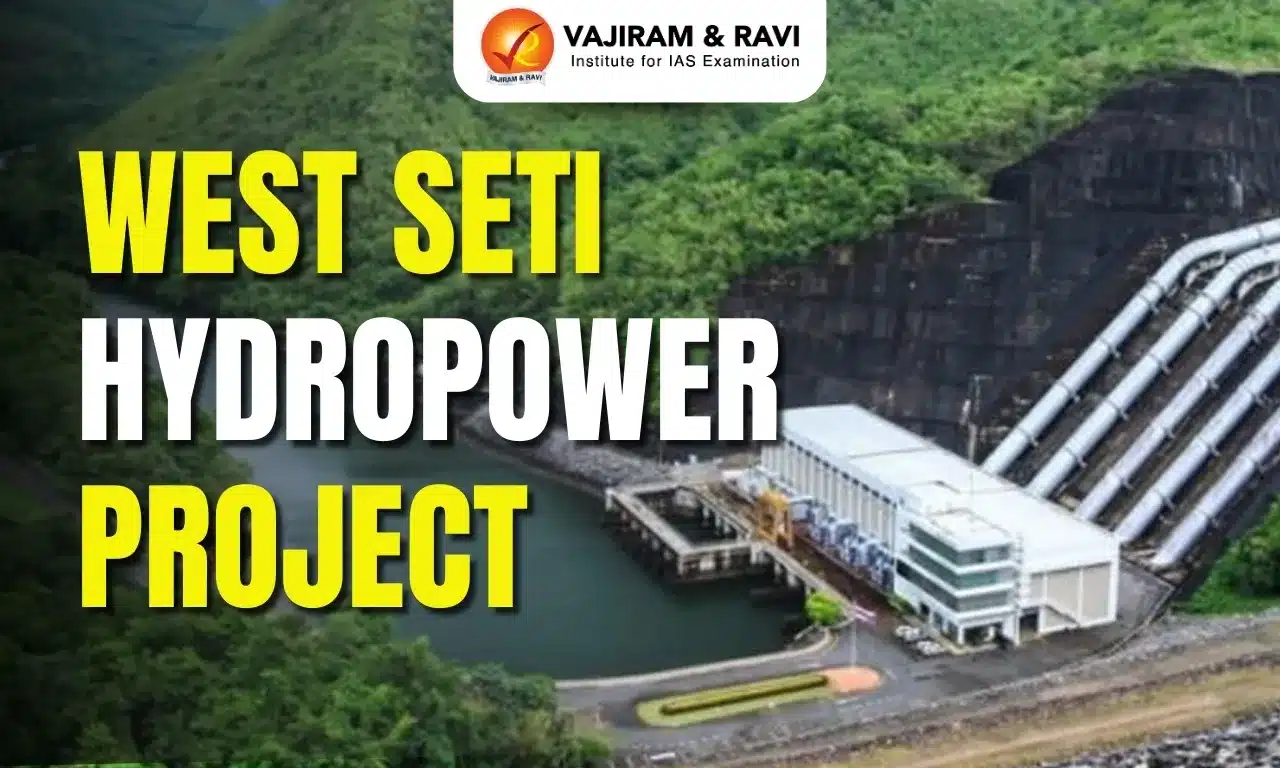
  • It is planned to be developed as a 750 MW hydroelectric storage project on the Seti River (a tributary of the Karnali River) in Nepal.
  • Unlike typical run-of-river projects that generate power only based on river flow, West Seti is designed as a storage hydropower project with a large reservoir. 
    • This allows water to be accumulated during the monsoon wet season and enables steady electricity generation throughout the year, including the dry months.
  • The project is being developed by India’s National Hydro Power Corporation Ltd. (NHPC).
  • Core Infrastructure Includes:
    • A 195-meter-high concrete-faced rockfill dam.
    • A reservoir approximately 25 kilometers long, inundating parts of the river valley and surrounding forests. 
    • The power distribution infrastructure will include a power station and a transmission line.
  • Annual Energy Generation: Approximately 3,636 GWh.
  • Ownership and Development Model: Public-Private Partnership led by NHPC.
  • Power Purchase Agreement: Nepal receives 21.9 percent free electricity from West Seti; the remainder exported via Power Trade Corporation India Limited.

Source: TH

West Seti Hydropower Project FAQs

Q1: West Seti Hydropower Project is being developed on which river?

Ans: Seti River (a tributary of the Karnali River)

Q2: West Seti Hydropower Project is located in which country?

Ans: Nepal

Q3: What is the planned installed capacity of the West Seti Hydropower Project?

Ans: 750 MW

Q4: West Seti is designed as what type of hydropower project?

Ans: West Seti is designed as a storage hydropower project with a large reservoir.

Q5: Which Indian organization is developing the West Seti Hydropower Project?

Ans: National Hydro Power Corporation Ltd. (NHPC).

Meerut Bugle

Meerut Bugle

Meerut Bugle Latest News

Recently, the Meerut Bugle has received a Geographical indication tag.

About Meerut Bugle

  • It is a brass wind instrument common with the drills of armed forces and used in wars, ceremonies, and parades for decades.
  • It is used to signal the start of movements or events, and carries a deep historical imprint. 
  • Origin: Meerut’s association with bugle-making dates back to the late 19th century.
  • The bugle’s story is closely linked to the development of India’s military traditions.

How is a Bugle Made?

  • The making of a bugle is entirely manual. A brass sheet is cut and hammered into shape using a specialised die.
  • The sheet is moulded and processed through several stages to achieve a smooth finish, and finally fitted with a mouthpiece.
  • Types of bugles are manufactured
    • Copper bugle: the highest in demand across India.
    • Gold-finish bugle: featuring a polished gold-like surface.
    • Silver-finish bugle: Produced on request.

Source: NIE

Meerut Bugle FAQs

Q1: What is the purpose of a bugle?

Ans: The bugle is used mainly in the military, where the bugle call is used to indicate the daily routines of camp.

Q2: What is the benefit of obtaining a GI tag for a product?

Ans: Protection from imitation and unfair competition

SARAL SIMS

SARAL SIMS

SARAL SIMS Latest News

Recently, the Ministry of Steel has introduced a simplified registration facility called ‘SARAL SIMS’ under the Steel Import Monitoring System (SIMS), effective from November 21.

About SARAL SIMS

  • It is a new system designed to simplify the process of registration for imports of small consignments under the Steel Import Monitoring System (SIMS).
  • Purpose: It is designed to ease the procedural burden associated with importing small quantities and export-oriented shipments through frameworks like Advance Authorization, Special Economic Zones (SEZs), and Export-Oriented Units (EOUs).

Key Features of SARAL SIMS

  • It will apply to steel and iron items falling under Chapters 72, 73, and 86 of the Indian Trade Classification (Harmonized System), 2022 classification system.
  • Simplified Registration: Importers need to make a single annual declaration of their intended import quantity and receive a SARAL SIMS number for multiple consignments throughout the financial year.
  • It eliminates the earlier requirement to generate a new SIMS number for every shipment.
  • Annual Return: Importers must file an annual return by April 30 detailing actual imports made against SARAL SIMS registrations.
  • The importer can avail the facility of SARAL SIMS for-
    • SARAL SIMS for small imports: Allows consignments up to 10 tonnes with an annual cap of 500 tonnes for FY 2025-26, increasing to 1000 tonnes from FY 2026-27.
    • SARAL SIMS for export purposes: Covers imports under Advance Authorization, SEZ, and EOU routes without any quantity limit.

Source: PIB

SARAL SIMS FAQs

Q1: What is the primary purpose of the Steel Import Monitoring System (SIMS)?

Ans: To monitor steel imports and provide data to the domestic industry

Q2: Which ministry launched the Steel Import Monitoring System (SIMS) 2.0?

Ans: Ministry of Steel and Heavy Industries

Daily Editorial Analysis 21 November 2025

Daily Editorial Analysis

India’s Fisheries and Aquaculture, Its Promising Course

Context

  • Fisheries and aquaculture are among India’s most rapidly expanding food-producing sectors, supporting millions of livelihoods and contributing significantly to national nutrition and trade.
  • In recent decades, the country has undergone a striking transformation in aquatic food production, fuelled by technological advancements, robust institutions, and forward-looking policy initiatives.
  • As India marks World Fisheries Day 2025 under the theme India’s Blue Transformation: Strengthening Value Addition in Seafood Exports, the occasion highlights both achievements and the need for renewed commitment to sustainable growth.

Dramatic Growth, Major Factor Driving the Growth and Structural Transformation

  • Dramatic Growth

    • The FAO’s State of World Fisheries and Aquaculture 2024 reports global aquaculture production at 9 million tonnes and global capture fisheries at 92.3 million tonnes in 2022.
    • India contributed 10.23 million tonnes to global aquaculture, making it the world’s second-largest producer.
    • National aquatic output has increased from 2.44 million tonnes in the 1980s to 17.54 million tonnes in 2022–23, reflecting long-term structural change.
  • Major Factor Driving the Growth

    • This growth has been driven by the modernization of inland, coastal, and brackish-water aquaculture.
    • Agencies such as ICAR fisheries institutes, the Marine Products Export Development Authority, and the National Fisheries Development Board have promoted advancements in breeding, disease management, and post-harvest practices.
    • The Coastal Aquaculture Authority has strengthened environmental compliance, while private-sector investments across hatcheries, processing, and exports have enhanced value chain efficiency.
  • Structural Transformation

    • Policy reforms over the past decade have accelerated this momentum.
    • The Blue Revolution and the Pradhan Mantri Matsya Sampada Yojana (PMMSY) have expanded infrastructure, strengthened fisher safety, and supported digital and financial inclusion through initiatives such as vessel transponders, the Kisan Credit Card, and Matsya Seva Kendras.
    • Programmes for climate-resilient coastal villages and the draft National Fisheries Policy 2020 reflect India’s increasing focus on sustainability and resilience.

Enduring Challenges and Emerging Pressures

  • Overfishing, habitat degradation, water pollution, and the impacts of climate change threaten aquatic ecosystems and the livelihoods dependent on them.
  • These environmental pressures risk undermining long-term productivity and ecological stability.
  • Socio-economic barriers further complicate progress. Small-scale fishers and farmers often lack access to capital, modern technologies, and remunerative markets.
  • Weak traceability systems and inadequate post-harvest infrastructure limit India’s ability to realize the full potential of global and domestic market opportunities.
  • These gaps also affect food safety and nutritional security, underscoring the need for systemic improvements in value chain governance.

FAO’s Partnership in India’s Blue Journey

  • FAO’s Bay of Bengal Large Marine Ecosystem (BOBLME) project advanced ecosystem-based approaches to fisheries management, promoted science-based stock assessments, and strengthened India’s efforts to combat Illegal, Unreported, and Unregulated (IUU) fishing.
  • These initiatives have helped balance conservation with sustainable utilization of marine resources.
  • To support India’s expanding aquaculture sector, FAO is implementing a Global Environment Facility–funded project in Andhra Pradesh aimed at promoting climate-resilient, environmentally responsible aquaculture aligned with global sustainability guidelines.
  • Additionally, a Technical Cooperation Programme is improving the environmental, social, and economic performance of Indian fishing ports, with pilot interventions in Vanakbara and Jakhau.
  • These efforts collectively enhance institutional capacity and strengthen India’s aquatic value chain.

The Way Forward: Toward a Sustainable and Inclusive Blue Transformation

  • As India deepens its Blue Transformation, sustainability must remain the guiding principle.
  • Science-based stock assessments, ecosystem-based approaches in fisheries and aquaculture, and strengthened Monitoring, Control, and Surveillance systems are essential to safeguarding aquatic resources.
  • Enhancing certification, traceability, and digital tools will improve the competitiveness of India’s seafood exports.
  • Equally critical is empowering small-scale fishers and farmers by improving access to credit, technology, and markets.
  • Their inclusion is vital for building a resilient and equitable aquatic food system.

Conclusion

  • India stands at a pivotal moment in its fisheries and aquaculture development.
  • With strong institutional support, transformative policies, and enduring collaboration with FAO, the country is well positioned to lead global efforts toward sustainable aquatic food production.
  • By placing sustainability and inclusivity at the heart of its Blue Transformation, India can secure ecological health, economic opportunity, and food and nutritional security for future generations.

India’s Fisheries and Aquaculture, Its Promising Course FAQs

Q1. Why are fisheries and aquaculture important to India?
Ans. Fisheries and aquaculture are important to India because they support millions of livelihoods and contribute significantly to national nutrition and trade.

Q2. What major factor has driven India’s rapid growth in aquatic food production?
Ans. India’s rapid growth in aquatic food production has been driven by technological innovation, institutional support, and proactive government policies.

Q3. What is one major challenge faced by small-scale fishers in India?
Ans. A major challenge faced by small-scale fishers in India is limited access to finance, technology, and markets.

Q4. How has the FAO supported India’s fisheries sector?
Ans. The FAO has supported India’s fisheries sector by strengthening institutions, promoting sustainable practices, and collaborating on projects that enhance aquaculture and fisheries management.

Q5. Why is sustainability considered central to India’s Blue Transformation?
Ans. Sustainability is considered central to India’s Blue Transformation because it ensures long-term ecological health, food security, and resilience in fisheries and aquaculture.

Source: The Hindu


Hidden Cost of Polluted Groundwater

Context

  • On a scorching afternoon in rural Punjab, a farmer draws water from a well that has served his family for generations.
  • To the naked eye, the water glistens with the promise of life. Yet laboratory tests reveal a bitter truth: uranium levels far above the permissible limit.
  • In nearby villages, children limp under the weight of skeletal deformities caused by fluoride-contaminated groundwater, while families spend their meagre income on medical care.
  • These scenes, repeated across the country, illustrate a crisis that is both a profound public health emergency and a deepening economic disaster, one unfolding invisibly beneath the soil.

The Scale of Groundwater Contamination

  • The Annual Groundwater Quality Report (2024) offers sobering evidence of the scale of the problem.
  • Nearly one-fifth of groundwater samples from over 440 districts exceed safe contamination limits.
  • Punjab is particularly afflicted, with almost one-third of samples showing excessive uranium, alongside elevated fluoride, nitrate, and arsenic levels.
  • This would be alarming in any context, but in India, where 600 million people depend on groundwater for drinking and where agriculture relies heavily on aquifers—it amounts to a national emergency.
  • Environmental degradation already costs India an estimated $80 billion annually, nearly 6% of GDP, according to the World Bank.

Implications of Groundwater Contamination

  • Human Capital at Risk

    • Groundwater contamination is not merely an environmental issue; it is an assault on human capital.
    • In Mehsana district of Gujarat, fluorosis has been disabling workers, lowering their productivity, and dragging families into cycles of wage loss and medical expenses.
    • Nationwide, preventable diarrhoeal diseases continue to claim the lives of hundreds of thousands of children under five.
    • These tragedies represent more than isolated health failures, they weaken India’s long-term development prospects by impairing physical health, cognitive growth, educational attainment, and workforce capacity.
  • Rise in Inequality

    • Inequality deepens as contamination spreads. Wealthier families may purchase bottled water or home filtration systems, but poorer households remain trapped, consuming toxic water because they have no alternative.
    • Out-of-pocket medical spending, already one of the highest in the world relative to income, worsens the vulnerability of rural families.
    • Children exposed to arsenic and fluoride often suffer long-term cognitive impairments, reducing future earning potential and perpetuating generational disadvantage.
  • Agriculture Under Siege

    • The crisis also imperils India’s agricultural backbone, which employs over 40% of the population.
    • Nearly a third of India’s land suffers from soil degradation, and polluted groundwater accelerates this decline.
    • Heavy metals and chemical residues absorbed by crops lower yields and contaminate food chains.
    • Farms near polluted water bodies face measurable reductions in productivity and income, creating economic ripples that extend beyond rural villages.

The Path Forward

  • Build a nationwide, real-time monitoring system

    • Transparent, accessible data on water quality is essential for community awareness and policymaking.
    • Monitoring systems must cover both rural and urban areas and be linked to public dashboards.
  • Strengthen environmental regulation

    • Industries and municipalities must be held accountable for the discharge of effluents and untreated sewage.
    • The current regulatory framework is weak, allowing private actors to externalise environmental and health costs onto society at large.
  • Reform agricultural policy

    • Input subsidies that encourage chemical overuse must give way to incentives for crop diversification, organic practices, and micro-irrigation.
    • Pilot programmes in Punjab and Haryana show that replacing water-intensive paddy with pulses and maize can reduce groundwater pressure without harming farmer incomes.
  • Deploy decentralised treatment systems

    • Community water purification units and affordable filtration technologies can provide immediate relief.
    • Success stories, such as the drop in fluorosis cases following the installation of purification units in Telangana’s Nalgonda district, demonstrate the efficacy of local interventions.
  • Protect agricultural exports

    • Strengthening quality checks, educating farmers on contamination risks, and improving traceability systems can safeguard India’s global market position.

Conclusion

  • Groundwater contamination is not an episodic or peripheral problem; it is a silent, accumulating debt that India is paying with its health, productivity, and economic potential.
  • Unlike water scarcity, which can sometimes be reversed, contamination is often irreversible.
  • The choice before India is stark: continue ignoring the poison beneath our feet and incur massive long-term losses, or confront the crisis with bold, coordinated action.
  • To protect its people, its economy, and its future, India must recognise groundwater contamination as one of its most urgent national challenges, and act before the damage becomes permanent.

Hidden Cost of Polluted Groundwater FAQs

 Q1. What does the 2024 Groundwater Quality Report reveal about contamination levels in India?
Ans. The report shows that nearly one-fifth of sampled districts have groundwater contamination above safe limits.

Q2. Why is groundwater contamination considered an economic crisis?
Ans. It is an economic crisis because polluted water leads to high health costs, lost productivity, and reduced agricultural output.

Q3. How does contamination affect human capital?
Ans. Contamination weakens human capital by causing illnesses, disabilities, and cognitive impairments that reduce people’s long-term productivity.

Q4. What risks does groundwater pollution pose to India’s agricultural exports?
Ans. It threatens agricultural exports by increasing the chance of produce being rejected in global markets for failing safety standards.

Q5. What is one immediate solution to provide safe water in affected villages?
Ans. One immediate solution is to install decentralised community water purification systems that deliver safe drinking water.

Source: The Hindu

Daily Editorial Analysis 21 November 2025 FAQs

Q1: What is editorial analysis?

Ans: Editorial analysis is the critical examination and interpretation of newspaper editorials to extract key insights, arguments, and perspectives relevant to UPSC preparation.

Q2: What is an editorial analyst?

Ans: An editorial analyst is someone who studies and breaks down editorials to highlight their relevance, structure, and usefulness for competitive exams like the UPSC.

Q3: What is an editorial for UPSC?

Ans: For UPSC, an editorial refers to opinion-based articles in reputed newspapers that provide analysis on current affairs, governance, policy, and socio-economic issues.

Q4: What are the sources of UPSC Editorial Analysis?

Ans: Key sources include editorials from The Hindu and Indian Express.

Q5: Can Editorial Analysis help in Mains Answer Writing?

Ans: Yes, editorial analysis enhances content quality, analytical depth, and structure in Mains answer writing.

High Pendency and Staffing Gaps in Juvenile Justice Boards

Juvenile Justice

Juvenile Justice Latest News

  • A first-of-its-kind study by the India Justice Report (IJR) has revealed that more than 55% of cases before India’s Juvenile Justice Boards (JJBs) were pending as of October 31, 2023, highlighting systemic gaps in staffing, data management, and infrastructure. 
  • The findings, based on over 250 RTI responses from 21 States, show that JJBs have disposed of less than half of 1,00,904 cases filed before them. 

Status of Juvenile Justice Boards Across India

  • According to the IJR study, while 92% of India’s 765 districts have constituted JJBs, the pendency rate is alarmingly high and varies widely:
    • Odisha: 83% pendency
    • Karnataka: 35% pendency
    • National Average: 55% pendency
  • Moreover, 24% of JJBs are not fully constituted, and 30% lack an attached legal services clinic, both essential for delivering child-centric justice.

Findings from the India Justice Report Study

  • The report titled “Justice and Children in Conflict with the Law: A Study of Capacity at the Frontlines” evaluates the functioning of institutions created under the Juvenile Justice (Care and Protection of Children) Act, 2015.
  • High Pendency and Workload
    • Each JJB handled an average of 154 pending cases annually, reflecting a serious mismatch in caseload and capacity.
  • Staffing and Infrastructure Shortfalls
    • Major vacancies in JJB positions, particularly social workers and support staff,
    • Insufficient funds for training and capacity-building,
    • Lack of child-friendly infrastructure in many districts. 
    • These gaps directly affect the quality and timeliness of hearings.
  • Poor Data Systems and Transparency
    • Unlike the National Judicial Data Grid for courts, no central repository exists for JJB data. RTI responses revealed:
      • 11% of queries were rejected outright,
      • 24% received no reply,
      • Only 36% received complete responses.
  • High Number of Juveniles Apprehended
    • 40,036 juveniles were apprehended in 31,365 cases,
    • Over 75% were aged 16-18 years, indicating a rising trend of older adolescents entering the justice system.

Structural Gaps in the Juvenile Justice Architecture

  • The IJR study highlights that despite a decade since the JJ Act 2015, the decentralised juvenile justice architecture remains weak:
  • Inter-Agency Coordination Deficit
    • The four nodal agencies, Police, Department of Women & Child Development, State Child Protection Society (SCPS), and State Legal Services Authority (SLSA), often operate in silos.
    • More than 500 RTI queries were submitted across 28 States and 2 UTs, covering 530 districts. The fragmented responses reflect poor coordination and monitoring.
  • Inadequate Legal Support
    • With 30% of JJBs lacking legal aid clinics, many children face the system without proper defence representation, contrary to the child-centric principles of the JJ Act.
  • Vacancies in Child Care Institutions
    • Not just JJBs, but even child care institutions suffer from significant staff shortages, affecting rehabilitation and reintegration efforts. 

Way Forward

  • To strengthen the juvenile justice ecosystem, experts recommend:
    • Establishing a National Juvenile Justice Data Grid,
    • Filling vacancies across JJBs and child care institutions,
    • Ensuring the availability of legal aid services in all districts,
    • Enhancing inter-agency data sharing,
    • Increasing budgetary allocations for child protection services,
    • Regular monitoring and public reporting of JJB functioning.
  • Such reforms are essential for safeguarding children in conflict with the law and ensuring a fair, timely, and child-friendly justice process.

Source: TH

Juvenile Justice FAQs

Q1: What percentage of cases before JJBs are pending?

Ans: Over 55% of cases were pending as of October 31, 2023.

Q2: How many JJBs are not fully staffed?

Ans: 24% of JJBs were not fully constituted, indicating significant vacancies.

Q3: What challenges do JJBs face in providing legal aid?

Ans: About 30% of JJBs lack an attached legal services clinic.

Q4: How many juveniles were apprehended in 2023?

Ans: 40,036 juveniles were apprehended in 31,365 cases nationwide.

Q5: What key structural gap did the IJR highlight?

Ans: The absence of a central, standardised national data system for monitoring JJBs.

India’s Proposed CAFE 3 Norms and the Auto Industry Split

CAFE 3 Norms

CAFE 3 Norms Latest News

  • India plans to implement the third phase of Corporate Average Fuel Efficiency (CAFE 3) norms from FY28–FY32 to improve fuel efficiency and reduce carbon emissions from passenger vehicles.
  • However, the weight-based structure of the new norms has triggered significant disagreement within the auto industry, especially between manufacturers of small cars and those with a portfolio dominated by heavier SUVs.

Background

  • What are CAFE norms?
    • CAFE norms regulate average fuel consumption and CO₂ emissions across a manufacturer’s fleet.
    • It proposes a movement from the current Modified Indian Driving Cycle (MIDC) to the Worldwide Harmonised Light Vehicles Test Procedure (WLTP), which the European Union adopted in 2018.
    • India follows a weight-based formula that becomes progressively stricter each year.
  • CAFE 3
    • It  introduces a new weight-based efficiency formula - 0.002 × (W − 1170) + c.
    • Here W is the average fleet weight, 1,170kg is the fixed constant for weight, 0.002 is a fixed constant multiplier, and ‘c’ is a constant that changes every year. 
    • Since ‘c’ continues to decrease from FY28 to FY32, the rules will become stricter over time. 

Why the Industry Is Divided

  • Impact of the weight-based formula: 
    • Lighter cars face steeper efficiency improvements than heavier ones.
    • Example: A 740 kg car needs to become 48% more efficient by FY32. A 2,500 kg SUV needs only 25% improvement, despite higher absolute emissions.
    • Result: Greater regulatory burden on small, budget cars.
  • Small-car manufacturers’ concerns:
    • Disproportionate impact: Small cars operate on low margins and cannot easily absorb the cost of: hybrid systems, electrification, lightweighting technologies.
    • Consumers may be priced out: Stricter norms may raise costs of entry-level cars. Could discourage first-time buyers and shrink the affordable car segment.
    • Distortion of CAFE’s original intent: Maruti Suzuki argues CAFE was meant to push big cars to improve fuel efficiency, not punish small cars.
  • Why some carmakers support CAFE 3:
    • Tata Motors’ stance: Claims no concerns in achieving the norms. Rejects weight-based definitions of small cars as “Arbitrary”, potentially compromising safety standards.
    • Others (Mahindra, Tata): Oppose higher exemptions for lighter cars.

Comparison With Global Norms

  • Relaxed standards for smaller cars in many countries like the US, China, Japan, and South Korea.
  • Europe: Stricter norms overall, but smaller cars have relaxed CO₂ targets, while larger vehicles have tougher benchmarks.
  • India’s system is the opposite, creating a regulatory imbalance.

Key Technical Issues

  • “Brick in the Boot” concern:
    • Manufacturers may artificially increase weight to enter a more relaxed efficiency band.
    • May lead to production of bigger, heavier cars; reduced affordability; and increased emissions in absolute terms.
  • Relaxation for small cars:
    • Debate on the 3 g CO₂/km relaxation for small cars with mass (≤ 909 kg), engine (≤ 1200 cc), length (≤ 4,000 mm).
    • Maruti and Renault want more relaxation.
    • Tata and Mahindra oppose increasing it.
  • Shift to WLTP: WLTP gives more realistic fuel economy figures than MIDC. Some manufacturers (e.g., Mahindra) requested a delay due to compliance challenges.

Challenges

  • Threat to small-car market: Rising costs may make entry-level cars unaffordable. Could worsen the market shift toward high-emission SUVs.
  • Safety vs affordability trade-off: Weight-based relaxation may unintentionally encourage lighter designs at the cost of safety.
  • Technological feasibility: Small cars have limited scope for expensive efficiency technologies.
  • Potential loss of first-time buyers: A socially regressive outcome as small cars improve mobility for lower-income groups.
  • Risk of regulatory distortion: The framework may not truly reduce total CO₂ emissions, only improve averages on paper.

Way Forward

  • Review of weight-based approach: Consider aligning with global best practices—relaxing norms for lighter cars.
  • Technology-neutral incentive structure: Encourage all low-carbon technologies - mild hybrids, strong hybrids, EVs, cleaner ICE improvements.
  • Gradual phase-in of WLTP: Provide adequate transition time for manufacturers.
  • Targeting real emission reduction: Shift toward absolute emissions caps instead of purely weight-based formulas.
  • Policy support for small cars: Financial incentives or tax benefits to protect the budget segment.

Conclusion

  • The proposed CAFE 3 norms mark a critical step in India’s low-carbon mobility transition.
  • However, their weight-based structure disproportionately burdens small cars, risks market distortions, and may undermine affordability for first-time buyers—contrary to the objective of inclusive and sustainable mobility. 
  • A balanced, evidence-based recalibration that ensures environmental integrity while protecting the small-car segment is essential for achieving India's long-term climate and mobility goals.

Source: IE

CAFE 3 Norms FAQs

Q1: What are the key reasons behind the auto industry’s divide over India’s proposed CAFE 3 norms (FY28–FY32)?

Ans: The divide stems from the weight-based formula that places a disproportionate efficiency burden on lightweight, budget cars.

Q2: How the proposed CAFE 3 norms could impact the affordability of India’s small-car segment?

Ans: By requiring up to 48% efficiency improvement in small cars, the norms may raise costs.

Q3: What are the global emission frameworks?

Ans: Unlike the US, China, Japan, and Europe—which relax norms for smaller cars—India’s framework penalizes them.

Q4: What are the concerns related to shifting from the MIDC to WLTP under CAFE 3?

Ans: WLTP provides more accurate real-world emission readings, but manufacturers fear compliance challenges and seek more transition time.

Q5: What policy measures can balance emission reduction goals under the CAFE 3 regime?

Ans: Revising weight-based targets, offering small-car incentives, adopting technology-neutral standards, and phasing WLTP gradually.

Immigrants Expulsion Act 1950 Explained: Assam’s First Deportation Orders

Immigrants Expulsion Act 1950

Immigrants Expulsion Act 1950 Latest News

  • Assam has invoked the Immigrants (Expulsion from Assam) Act, 1950 for the first time since the state cabinet approved its use earlier this year. 
  • The Sonitpur district administration has ordered five people—four women and one man—who were declared foreigners by a tribunal in 2024, to leave India within 24 hours.
  • However, the individuals are currently untraceable, with police stating they have been “absconding,” and locals claiming they left the area over a decade ago.

About Immigrants (Expulsion from Assam) Act, 1950

  • The Immigrants Expulsion from Assam Act (IEAA) was enacted on March 1, 1950, in response to the Assam government’s demand for a legal mechanism to control large-scale migration from East Pakistan after Partition. 
  • Migration had already become a major political and demographic concern in the state.

Why the Centre Drafted the Law

  • Since citizenship is a Union subject, the Central government drafted the Act and delegated specific powers to Assam.
  • Originally, it was even named the Undesirable Immigrants (Expulsion from Assam) Act, highlighting its intent.
  • Recognising post-Partition instability, the Act excluded refugees, stating that people displaced due to “civil disturbances” in Pakistan would not be subject to expulsion under the law.

Powers Granted Under the Act

  • The Act empowered the Centre to order anyone:
    • who was ordinarily a resident outside India,
    • who entered Assam before or after 1950, and
    • whose presence was deemed “detrimental” to India’s general public or to any Scheduled Tribe in Assam,
  • to remove themselves from Assam or India within a specified time and through a designated route.
  • The law authorised any officer of the Union government or Assam government to implement these expulsion orders.

Application of the Immigrants (Expulsion from Assam) Act, 1950

  • The Act was applied only briefly. Its enforcement faced practical and political challenges almost immediately after it came into effect.

Communal Tension and Mass Exodus

  • Historians note that while the Act was being finalised, communal violence in Lower Assam led to 40,000 to 1 lakh Muslims fleeing to East Pakistan.
  • This made identification of “immigrants” difficult because many affected individuals were actually Assam’s original residents, especially Bengali Muslims.
  • A triggering incident involved an old Assamese Muslim resident being ordered to leave within three days, which angered the then PM Nehru.
  • He objected to the implementation of such orders during a sensitive time.

Nehru–Liaquat Pact Influence

  • The timing coincided with the Nehru–Liaquat Pact (April 1950), aimed at safeguarding minorities in both India and Pakistan.
  • Pakistan’s PM Liaquat Ali Khan raised concerns about Assam’s expulsion orders.

Centre Orders Suspension of the Act

  • On April 10, 1950, two days after the pact, Nehru wrote to the then Assam CM Gopinath Bordoloi instructing him to stop all action under the IEAA.
  • Nehru stressed that minority safety and restoring peace were the top priorities — continuing expulsions would worsen tensions.
  • Historical accounts suggest that only a few hundred people were actually impacted by the Act before its enforcement was halted.

Source: IE | TH | N18

Immigrants Expulsion Act 1950 FAQs

Q1: What triggered Assam’s use of the Immigrants Expulsion Act, 1950 in 2025?

Ans: Assam used the Act after five people were declared foreigners by a tribunal. Sonitpur administration ordered them to leave India within 24 hours, marking the Act's first known invocation in decades.

Q2: What powers does the Immigrants Expulsion Act, 1950 give to authorities?

Ans: The Act allows the Centre or authorised officers to expel persons from Assam or India if their presence is deemed detrimental to public interest or tribal communities.

Q3: Why was the Act originally enacted in 1950?

Ans: It was enacted to manage post-Partition migration from East Pakistan and give Assam a legal mechanism to expel “undesirable immigrants,” excluding refugees fleeing civil disturbances.

Q4: Why was the Act’s implementation stopped soon after it began?

Ans: Communal tensions, mass displacement, and concerns raised under the Nehru–Liaquat Pact led Prime Minister Nehru to suspend all expulsion actions to safeguard minorities.

Q5: How widely was the Act used before its current revival?

Ans: Historical accounts indicate the Act affected only a few hundred people before its enforcement was halted in 1950, making its 2025 use the first in decades.

Supreme Court Clarifies Governor’s Powers on State Bills and Legislative Assent

Governor’s powers

Governor’s Powers Latest News

  • The Supreme Court ruled that Governors cannot hold on to state legislature Bills indefinitely, emphasising that cooperative federalism requires constructive engagement with elected governments, not obstruction.
  • However, the Constitution Bench also held that courts cannot impose fixed timelines on Governors or the President for granting assent, nor can they create a doctrine of “deemed assent” or force the President to seek judicial advice on pending Bills.
  • The five-judge Bench—headed by Chief Justice B R Gavai—gave this opinion on a presidential reference asking whether constitutional courts could set deadlines for action under Articles 200 and 201, which deal with gubernatorial and presidential assent to Bills.

Background of the Presidential Reference: Why the Issue Reached the Supreme Court

  • President Droupadi Murmu invoked Article 143(1) to seek the Supreme Court’s advice after controversy arose over delays by Governors and the President in acting on state Bills.
  • The trigger was an April 8 judgment in a Tamil Nadu case, where a two-judge Bench laid down strict timelines for Governors and the President to decide on Bills.
  • It also used Article 142 and declared 10 Tamil Nadu Bills as having received “deemed assent” because the Governor had not acted for long periods. 
  • This unprecedented move raised constitutional concerns.
  • To resolve the ambiguity, the President submitted a five-page reference with 14 key questions.
  • These questions asked: 
    • whether courts can impose deadlines on constitutional authorities, 
    • whether “deemed assent” is valid, and 
    • what limits govern gubernatorial and presidential powers under Articles 200 and 201.

Supreme Court’s Stand on 14 Key Questions on Governor–President Powers

  • Governor’s Options on Bills Under Article 200 - The Court held that a Governor has only three options: Grant assent; Reserve the Bill for the President. Withhold assent by returning the Bill for reconsideration. There is no power to withhold assent indefinitely.
    • Article 200 - Governor’s Assent to State Bills
  • Governor’s Discretion Under Article 200 - The Governor is not bound by the Cabinet’s advice when deciding on assent, return, or reservation of Bills. This function involves independent constitutional discretion.
  • Justiciability of Governor’s Actions - Courts cannot review the merits of the Governor’s decision, but prolonged, unexplained inaction is justiciable. The Court may direct the Governor to act.
  • Article 361 Immunity Not Absolute - Article 361 protects the individual Governor, not the institutional office. Immunity cannot be used to justify indefinite delays.
    • Article 361 (Immunity of President and Governors) - Provides personal immunity to the President and Governors from court proceedings during their term, ensuring unhindered functioning in their constitutional roles.
  • No Court-Imposed Timelines on Governor - Courts cannot prescribe deadlines for Governors to act on Bills. Article 200’s phrase “as soon as possible” does not permit fixed judicial timelines.
  • President’s Discretion Under Article 201 - The President’s merit-based decision on assent or withholding assent to state Bills is not open to judicial review.
  • No Timelines for President Either - Courts cannot fix time limits for the President under Article 201.
    • Article 201 – President’s Assent to Reserved Bills
  • President Not Required to Seek SC Opinion - The President need not consult the Supreme Court under Article 143 whenever a Bill is reserved for consideration.
    • Article 143 (Presidential Reference to Supreme Court) - Allows the President to seek the Supreme Court’s advisory opinion on significant questions of law or fact. The Court’s advice is not binding; the President may accept or reject it.
  • Courts Cannot Review Bills Before They Become Law - Judicial review applies only to laws, not Bills. Courts cannot examine the content or validity of a pending Bill.
  • Article 142 Cannot Substitute Constitutional Powers - The Supreme Court cannot use Article 142 to create “deemed assent” or otherwise replace the Governor/President’s constitutional role.
  • No Law Without Governor’s/President’s Assent - A Bill cannot become law unless the Governor or President formally grants assent.
  • No Answer on Mandatory Referral Under Article 145(3) - The Court declined to answer whether all issues requiring constitutional interpretation must first be tested under Article 145(3).
    • Article 145(3) (Constitution Bench Requirement) - Mandates that a Bench of at least five judges must hear cases involving substantial questions of constitutional interpretation or any Presidential Reference under Article 143.
  • Scope of Article 142 - The Court refused a broad interpretation but reiterated that Article 142 cannot override the Constitution, especially requirements like legislative assent.
    • Article 142 (Complete Justice Provision) - Empowers the Supreme Court to issue any order necessary to ensure complete justice in cases before it.
  • On Article 131 Jurisdiction - The Court declined to answer whether Article 131 is the exclusive route for resolving Centre–State disputes.
    • Article 131 (Centre–State Disputes) - Grants the Supreme Court exclusive original jurisdiction to adjudicate legal disputes between the Union and States or among States themselves.
  • No Judicial Substitution of Executive Power - Reaffirming earlier answers, the Court clarified that judicial powers cannot replace or replicate constitutionally assigned executive functions.

Source: IE | ToI | NDTV

Governor’s Powers FAQs

Q1: What did the Supreme Court say about Governors delaying Bills?

Ans: The Court ruled that Governors cannot sit indefinitely on Bills. They must either assent, reserve for the President, or return the Bill, ensuring no prolonged constitutional inaction.

Q2: Can courts impose fixed timelines on Governors or the President?

Ans: No. The Court held that judiciary cannot prescribe deadlines for constitutional authorities. Articles 200 and 201 require action “as soon as possible,” not within rigid judicial timeframes.

Q3: Is “deemed assent” constitutionally valid?

Ans: No. The Court rejected the doctrine of deemed assent, ruling that Article 142 cannot be used to bypass the Governor or President’s constitutional role in granting assent.

Q4: Can courts review the Governor’s or President’s decisions?

Ans: Courts cannot review merits of discretion, but they can intervene in cases of prolonged, unexplained inaction. Judicial review applies only to inaction, not decision-making wisdom.

Q5: Is the Governor bound by the Council of Ministers while giving assent?

Ans: No. The Court clarified that Governors exercise independent constitutional discretion under Article 200. They are not bound by ministerial advice when deciding on assent or reconsideration.

Kuno National Park

Kuno National Park

Kuno National Park Latest News

The first India-born cheetah, Mukhi, has given birth to five cubs at Kuno National Park in Madhya Pradesh recently.

About Kuno National Park

  • It is located in the Sheopur district of Madhya Pradesh.
  • It is nestled near the Vindhyan Hills.
  • Originally established as Kuno Wildlife Sanctuary in 1981, it was upgraded to a national park in 2018.
  • The park’s historical significance lies in its role as a relocation site for Asiatic lions under the “Asiatic Lion Reintroduction Project,”.
  • It covers an area of 750 sq.km.
  • It derives its name from the meandering Kuno River (one of the main tributaries of the Chambal River), which flows from south to north and divides the park into two sections.
  • The park’s terrain is dotted with plateaus, valleys, and seasonal rivers, creating varied ecosystems.
  • Vegetation: The park boasts diverse vegetation, including tropical dry deciduous forests, savannah grasslands, and riverine forests.
  • Flora:  Dominant trees include Khair (Acacia catechu), Salai (Boswellia serrata), and Ber (Ziziphus mauritiana).
  • Fauna
    • The protected area of the forest is home to the jungle cat, Indian leopard, sloth bear, Indian wolf, striped hyena, golden jackal, Bengal fox, and dhole, along with more than 120 bird species.
    • It was selected under the ‘Action Plan for Introduction of Cheetah in India’.
    • A total of 20 cheetahs were introduced in Kuno National Park (NP), eight from Namibia in September 2022, followed by 12 more from South Africa in February 2023 under the Cheetah Project.

Source: NOA

Kuno National Park FAQs

Q1: Kuno National Park is located in which Indian state?

Ans: Madhya Pradesh

Q2: Kuno National Park is situated near which hill range?

Ans: It is nestled near the Vindhyan Hills.

Q3: What is the total area covered by Kuno National Park?

Ans: It covers an area of 750 sq.km.

Q4: From which two countries were cheetahs brought to Kuno National Park in 2022 and 2023?

Ans: Namibia and South Africa

Guru Tegh Bahadur

Guru Tegh Bahadur

Guru Tegh Bahadur Latest News

Following a car blast near Red Fort recently, the Delhi police have stepped up security near the heritage site, which will host an event to commemorate the 350th death anniversary of Guru Tegh Bahadur.

About Guru Tegh Bahadur

  • Guru Tegh Bahadur (1621–1675) was the ninth of ten Gurus of the Sikh religion.
  • He was born as Tyaga Mal. He was the fifth and the youngest son of the sixth Sikh Guru, Guru Hargobind.
  • He came to be known by the name Teg Bahadur (Mighty of The Sword), given to him by Guru Hargobind after he showed his valour in a battle against the Mughals.
  • In 1664, Guru Teg Bahadur succeeded Guru Har Krishan Ji as the ninth Sikh Guru. 
  • His son, Guru Gobind Singh, became the tenth Sikh guru.
  • Life and Works:
    • He built the city of Anandpur Sahib (in Rupnagar/Ropar district, on the edge of Shivalik Hills, near the Sutlej River, in Punjab). Here the last two Sikh Gurus lived and where Guru Gobind Singh Ji founded the Khalsa Panth in 1699.
    • He contributed more than 100 poetic hymns to the Granth Sahib, which cover various topics, such as the nature of God, human attachments, body, mind, dignity, service, etc.
    • He resisted the forced conversions of Kashmiri Pandits and non-Muslims to Islam.
  • Martyrdom:
    • He was publicly beheaded in 1675 on the orders of Mughal emperor Aurangzeb in Delhi for refusing to convert to Islam. 
    • Gurdwara Sis Ganj Sahib in Chandni Chowk marks the place of his execution.
    • Gurdwara Rakab Ganj Sahib marks the place of cremation of his body.
    • He is remembered for giving up his life for freedom of religion.
    • His martyrdom is remembered as the Shaheedi Divas of Guru Tegh Bahadur every year on 24 November, according to the Nanakshahi calendar released by the Shiromani Gurdwara Parbandhak Committee in 2003.

Source: TH

Guru Tegh Bahadur FAQs

Q1: Who was Guru Tegh Bahadur?

Ans: Guru Tegh Bahadur (1621–1675) was the ninth of ten Gurus of the Sikh religion.

Q2: Who was the father of Guru Tegh Bahadur?

Ans: Guru Tegh Bahadur was the fifth and the youngest son of the sixth Sikh Guru, Guru Hargobind.

Q3: Which city was established by Guru Tegh Bahadur?

Ans: He built the city of Anandpur Sahib (in Rupnagar/Ropar district, on the edge of Shivalik Hills, near the Sutlej River, in Punjab).

Q4: Guru Tegh Bahadur was executed on the orders of which Mughal ruler?

Ans: Aurangzeb

Javelin Missile

Javelin Missile

Javelin Missile Latest News

The U.S. State Department recently approved a possible sale of Javelin missiles and Excalibur projectiles and related equipment to India for an estimated total cost of $92.8 million.

About Javelin Missile

  • It is an American-made, man-portable, anti-tank guided missile. 
  • It is developed and produced jointly by American defence majors Raytheon and Lockheed Martin.
  • It was designed to defeat heavily armored vehicles such as main battle tanks and lighter-skinned military vehicles.
  • The weapon also has capability against other target types like fortifications, bunkers, and helicopters.
  • It first entered service with the U.S. military in 1996. 

Javelin Missile Features

  • It has an effective range of 2.5 km, with newer models reportedly capable of reaching up to 4 kilometers.
  • Weight: 5.11 kg
  • It can be employed from confined spaces due to its soft-launch mechanism.
  • It uses “fire-and-forget” technology to guide itself to the target without external commands or target designation. 
  • Its imaging-infrared seeker enables independent homing once fired, allowing operators to take cover immediately.
  • The missile can engage targets using either a direct or top-attack mode, with the latter designed to exploit vulnerabilities in the thinner armor on the tops of tanks.
  • Its tandem high-explosive anti-tank (HEAT) warhead is designed to defeat explosive reactive armour, which is increasingly common on contemporary main battle tanks.

What is the Excalibur Projectile?

  • It is a GPS-guided artillery shell fired from large guns like howitzers. 
  • It was developed in a collaborative effort between the U.S. Army Research Laboratory (ARL) and the United States Army Armament Research, Development and Engineering Center (ARDEC). 
  • India already uses the Excalibur artillery ammunition in its M-777 Howitzer guns. 
  • Excaliburs are capable of engaging targets beyond the reach of conventional artillery even in challenging terrains.
  • They are capable of striking within two metres of the target “regardless of range.” 
  • This weapon system also extends the reach of 39-calibre artillery to 40 kilometres, 52-calibre artillery to 50 kilometres, and 58-calibre artillery to 70 kilometres
  • The guided shells are capable of causing little to no collateral damage due to this accuracy factor.

Source: TH

Javelin Missile FAQs

Q1: The Javelin missile is jointly developed by which American companies?

Ans: Raytheon and Lockheed Martin.

Q2: What type of missile is the Javelin?

Ans: It is a man-portable, anti-tank guided missile.

Q3: What is the approximate effective range of the Javelin missile (standard version)?

Ans: 2.5 km

Q4: Excalibur is primarily what type of weapon?

Ans: GPS-guided artillery shell.

Enquire Now