Nationally Determined Contributions, Mandate, Scope, Measures

Nationally Determined Contributions

Nationally Determined Contributions are central to global climate action because they outline each country’s specific commitments under the Paris Agreement. These commitments reflect national capabilities, long-term development goals, and evolving climate science. The 2025 NDC Synthesis Report provides updated insights into how countries are enhancing ambition, strengthening adaptation, integrating social inclusion, and building the frameworks necessary to achieve long-term climate stability. The growing emphasis on transparency, just transition, and multi-stakeholder participation shows that climate governance is becoming more inclusive.

Nationally Determined Contributions (NDC)

Nationally Determined Contributions represent domestic climate targets developed by Parties to the Paris Agreement to reduce emissions and enhance resilience. According to the 2025 NDC Synthesis Report (UNFCCC, 28 Oct 2025), the latest set of 64 new NDCs submitted between January 2024 and September 2025 cover around 30 percent of global emissions (2019) and demonstrate clear improvements in transparency, ambition, and long-term planning.

Nationally Determined Contributions Mandate

The mandate of Nationally Determined Contributions is driven by the Paris Agreement, which requires Parties to prepare, communicate and maintain successive NDCs every five years, reflecting progression and highest possible ambition.

  • The Paris Agreement requires each Party to submit updated Nationally Determined Contributions every five years with increased ambition.
  • COP 21 mandated that NDCs must be submitted 9-12 months before CMA sessions to ensure transparency and clarity.
  • CMA 3 and CMA 5 further urged Parties to adopt economy-wide emission reduction targets aligned with the 1.5 °C pathway.
  • NDCs must be recorded in the NDC registry maintained by the UNFCCC Secretariat.
  • Each NDC must present clarity, transparency and understanding (CTU) as outlined under decision 1/CP.21.
  • Parties are encouraged to communicate NDCs with 2035 end-year targets starting 2025.
  • Guidance ensures inclusion of mitigation, adaptation, finance, and implementation strategies.
  • Reporting also links NDCs to long-term low-emission development strategies.
  • The 2025 Synthesis Report was prepared based on CTU guidance for comparable analysis.

Nationally Determined Contributions Scope

The scope of the 2025 Nationally Determined Contributions extends beyond mitigation to include adaptation, finance, gender inclusion, technology transfer, and just transition, as reflected in the 64 new NDCs assessed.

  • The 2025 Report synthesizes 64 new NDCs submitted between Jan 2024-Sept 2025, covering 30 percent of global emissions.
  • 91 percent of Parties provided full CTU information for transparency.
  • NDCs include mitigation, adaptation, technology, finance, and loss and damage.
  • Many Parties referenced broader policy frameworks, strategies, and sectoral plans.
  • The NDCs respond to outcomes of the first Global Stocktake (GST).
  • NDCs increasingly incorporate cross-cutting issues like gender and youth.
  • Many Parties clarify assumptions, baselines, and methodological approaches.
  • A comparison with previous NDCs shows clear progression in ambition.
  • New NDCs reveal strengthening alignment with net-zero trajectories.

Nationally Determined Contributions Greenhouse Gas Emissions

Greenhouse gas emission projections under the 2025 Nationally Determined Contributions highlight both progress and the need for faster global mitigation action.

  • New NDCs collectively aim for emissions of 13.0 (12.0-13.9) Gt CO₂-eq by 2035, a 17 percent reduction below 2019 levels.
  • Conditional implementation can reduce emissions further to 12.3 Gt CO₂-eq by 2035.
  • Implementation leads to emissions peaking before 2030 for the reporting group.
  • Most NDCs align 2030-2035 emissions with long-term net-zero pathways.
  • A majority commit to reaching net-zero between 2040-2060, with most targeting 2050.
  • Emission pathways show consistency with linear declines toward net-zero.
  • Mitigation ambition has increased compared to previous NDCs.
  • Stronger links now exist between short-term actions and long-term strategies.
  • Parties emphasize scaling renewable energy and reducing deforestation.
  • NDCs highlight the need for accelerated action to close the 1.5 °C ambition gap.

Nationally Determined Contributions Legal Framework

Legal and policy frameworks form the backbone of implementing Nationally Determined Contributions and ensuring climate ambition translates into measurable action.

  • 97 percent of Parties reported national frameworks supporting NDC implementation 
  • 41 percent adopted climate laws or decrees establishing legal authority.
  • 39 percent provided national climate policies guiding implementation.
  • Key sectors include energy, agriculture, water, waste, and urban planning.
  • 77 percent reported environmental policy instruments supporting climate goals.
  • Sustainable development policies increasingly integrate climate considerations.
  • Many countries align NDCs with national development plans.
  • Institutional mechanisms ensure monitoring, reporting and verification.
  • Sectoral roadmaps and long-term strategies strengthen policy alignment.
  • Governance reforms aim to ensure resilience and effective mitigation outcomes.

Nationally Determined Contributions Stakeholder Engagement

Stakeholder engagement has become a defining feature of the 2025 Nationally Determined Contributions, ensuring inclusive climate action.

  • 89 percent of Parties referenced gender integration in their NDCs.
  • 88 percent included children and youth, up from 61 percent previously.
  • 72 percent emphasized Indigenous Peoples and local communities.
  • Community-based adaptation is growing across many countries.
  • Non-Party stakeholders participate in planning and implementation.
  • Subnational authorities help align national and local climate actions.
  • Private sector contributions include financing, innovation, and technology.
  • Civil society supports climate justice and capacity development.
  • Academic institutions provide scientific inputs to climate decision making.
  • Participation reflects a shift toward whole-of-society climate governance.

Nationally Determined Contributions International Cooperation

International cooperation remains essential for implementing Nationally Determined Contributions and meeting global climate goals.

  • 97 percent of Parties highlighted the need for international support.
  • Cooperation includes finance, technology transfer, and capacity-building.
  • Countries participate in cross-regional partnerships and coalitions.
  • Voluntary cooperation under Article 6 expanded significantly.
  • 89 percent plan to use international carbon market mechanisms.
  • Many highlighted alignment with global renewable energy goals.
  • Developing countries stress the need for equitable climate finance.
  • International partnerships assist in monitoring and transparency.
  • Countries collaborate on energy transitions and resilience building.
  • International cooperation strengthens global climate governance structures.

Just Transition in Nationally Determined Contributions

Just transition appears prominently in the 2025 Nationally Determined Contributions as countries align climate action with equity and social protection.

  • 70 percent of Parties included just transition considerations.
  • Measures address economic inclusion and equitable climate pathways.
  • Integration spans mitigation, adaptation, and implementation support.
  • Countries aim to avoid worsening inequalities during low-carbon shifts.
  • Plans include workforce reskilling and social protection mechanisms.
  • Multi-sectoral approaches ensure inclusive development.
  • Monitoring systems for just transition are emerging in some NDCs.
  • Emphasis on gender-responsive and community-focused policies.
  • Economic diversification reduces reliance on carbon-intensive sectors.
  • Broader social inclusion strengthens long-term climate resilience.

Nationally Determined Contributions Adaptation Measures

Adaptation remains a major component of Nationally Determined Contributions, reflecting growing climate risks across geographies.

  • 73 percent of Parties included adaptation components (UNFCCC 2025).
  • Focus areas include food security, water, health and coastal resilience.
  • Progress observed in research, monitoring and adaptation frameworks.
  • Many countries advanced National Adaptation Plans (NAPs).
  • Loss and damage referenced by 94 percent of adaptation NDCs.
  • Adaptation indicators and targets are increasingly defined.
  • Synergies drawn between adaptation and SDGs.
  • Nature-based solutions widely adopted across regions.
  • Community-based adaptation is expanding.
  • Measures address vulnerability in rural and urban systems alike.

Nationally Determined Contributions Mitigation Measures

Mitigation ambition has increased as Parties align Nationally Determined Contributions with global emission reduction pathways.

  • 98 percent reported domestic mitigation actions (UNFCCC 2025).
  • 80 percent adopted at least one major low-cost mitigation option.
  • Renewables, afforestation, and reduced deforestation dominate priorities.
  • Many Parties target tripling renewable energy capacity by 2030.
  • Some announced CCUS, hydrogen and efficiency-focused projects.
  • Mitigation co-benefits increasingly linked with adaptation.
  • Just transition integrated into mitigation strategies.
  • Synergies with SDGs commonly referenced.
  • National pledges often exceed formal NDC targets.
  • Many Parties emphasize long-term decarbonization pathways.

Nationally Determined Contributions Implementation

Means of implementation remain critical for achieving Nationally Determined Contributions, especially for developing countries.

  • 75 percent included climate finance information (UNFCCC 2025).
  • Costed needs range from USD 1,970.8-1,975.0 billion.
  • Mitigation finance needs: USD 1,339 billion.
  • Adaptation finance: USD 560.5-564.6 billion.
  • Countries develop domestic climate finance strategies.
  • Technology needs emphasized by 97 percent of Parties.
  • Adaptation tech priorities include climate monitoring and AI-based tools.
  • Capacity-building referenced by 84 percent of Parties.
  • Many require international support for transparency and adaptation.
  • Innovative finance tools such as green bonds and credit guarantees increasing.

Nationally Determined Contributions Challenges

Nationally Determined Contributions face multiple challenges that require coordinated solutions for effective implementation.

  • Limited global coverage of new NDC submissions (30 percent emissions).
  • Financing gaps hinder climate action scalability.
  • Technology availability remains uneven across regions.
  • Governance frameworks still developing in many countries.
  • Need for enhanced MRV systems to ensure transparency.
  • Slow progress in reducing global emissions.
  • Capacity shortages in developing countries.
  • Insufficient support for adaptation in vulnerable sectors.
  • Complexity of integrating just transition into planning.
  • Dependence on conditional finance for ambitious goals.

Way Forward:

  • Expand NDC participation and global coverage.
  • Strengthen access to predictable international finance.
  • Promote technology transfer and innovation partnerships.
  • Accelerate sector-specific policy reforms.
  • Enhance MRV capacities through digital tools.
  • Scale renewable energy deployment rapidly.
  • Improve adaptation finance for vulnerable regions.
  • Support inclusive planning for just transition.
  • Foster international cooperation on low-carbon pathways.
  • Strengthen multi-stakeholder platforms for implementation.

Nationally Determined Contributions UPSC

Nationally Determined Contributions remain the foundation of global climate action, anchoring national goals within a unified international framework. The 2025 NDC Synthesis Report shows progress in ambition, coverage and transparency, while highlighting persistent gaps in finance, implementation and global participation. Strengthening NDCs through innovation, cooperation and inclusive governance is essential to align climate action with long-term stability and resilience.

Also Check Other Posts
Coastal Regulation Zone Global Plastic Treaty
Nitrogen Cycle Carbon Cycle

Nationally Determined Contributions FAQs

Q1: What are Nationally Determined Contributions?

Ans: Nationally Determined Contributions are country-specific climate commitments under the Paris Agreement that outline mitigation, adaptation and implementation plans.

Q2: Why are Nationally Determined Contributions important?

Ans: Nationally Determined Contributions guide global emission reduction efforts and help countries plan long-term climate resilience and sustainable development.

Q3: What does the 2025 Report say about Nationally Determined Contributions?

Ans: The 2025 Report states that new NDCs show increased ambition, with projected emissions 17 percent below 2019 levels by 2035.

Q4: How do Nationally Determined Contributions support adaptation?

Ans: Most Nationally Determined Contributions include adaptation measures addressing water, agriculture, health, ecosystems and coastal risks.

Q5: What challenges affect the implementation of Nationally Determined Contributions?

Ans: Key challenges include limited finance, technological gaps, capacity shortages and slow global progress in lowering emissions.


UPSC Daily Quiz 22 November 2025

UPSC Daily Quiz

The Daily UPSC Quiz by Vajiram & Ravi is a thoughtfully curated initiative designed to support UPSC aspirants in strengthening their current affairs knowledge and core conceptual understanding. Aligned with the UPSC Syllabus 2025, this daily quiz serves as a revision resource, helping candidates assess their preparation, revise key topics, and stay updated with relevant issues. Whether you are preparing for Prelims or sharpening your revision for Mains, consistent practice with these Daily UPSC Quiz can significantly enhance accuracy, speed, and confidence in solving exam-level questions.

[WpProQuiz 29]

UPSC Daily Quiz FAQs

Q1: What is the Daily UPSC Quiz?

Ans: The Daily UPSC Quiz is a set of practice questions based on current affairs, static subjects, and PYQs that help aspirants enhance retention and test conceptual clarity regularly.

Q2: How is the Daily Quiz useful for UPSC preparation?

Ans: Daily quizzes support learning, help in revision, improve time management, and boost accuracy for both UPSC Prelims and Mains through consistent practice.

Q3: Are the quiz questions based on the UPSC syllabus?

Ans: Yes, all questions are aligned with the UPSC Syllabus 2025, covering key areas like Polity, Economy, Environment, History, Geography, and Current Affairs.

Q4: Are solutions and explanations provided with the quiz?

Ans: Yes, each quiz includes detailed explanations and source references to enhance conceptual understanding and enable self-assessment.

Q5: Is the Daily UPSC Quiz suitable for both Prelims and Mains?

Ans: Primarily focused on Prelims (MCQ format), but it also indirectly helps in Mains by strengthening subject knowledge and factual clarity.

Gulf War (1990-91), History, Causes, Operations, Campaigns

Gulf War

The Gulf War was a major international conflict that began in 1990 when Iraq invaded Kuwait, triggering global military and diplomatic responses. According to the United Nations and verified military archives, the conflict unfolded in two major phases: Operation Desert Shield (2 August 1990-17 January 1991) and Operation Desert Storm (17 January-28 February 1991) . The war involved massive troop mobilization, advanced air campaigns, and multinational cooperation led by the United States. The Gulf War became a defining event in Middle Eastern geopolitics, reshaping security policies, international alliances, and global oil dynamics through its swift and decisive outcomes.

Gulf War

The Gulf War began after Iraq, led by Saddam Hussein, invaded Kuwait on 2 August 1990, claiming territorial and economic grievances. The invasion was condemned internationally, leading to a United Nations-backed coalition of over 35 nations, led by the United States, United Kingdom, France, and Saudi Arabia. Coalition forces carried out large-scale air and ground operations, leading to Iraq’s withdrawal and Kuwait’s liberation on 28 February 1991 . The Gulf War is widely recognized for its extensive use of precision airpower, satellite-guided weapons, and advanced military coordination, marking it as one of the most technologically significant wars of the 20th century.

Also Read: World War 1

Gulf War Historical Background

The Gulf War background shows tensions shaped by territorial disputes, oil politics, and power struggles in the Middle East.

  • Iraq’s long-standing claim that Kuwait historically belonged to its territory created persistent regional friction, particularly after Kuwait’s independence in 1961 (UK National Archives).
  • Economic tensions escalated after the Iran-Iraq War (1980-1988), which left Iraq heavily indebted- over $80 billion, including large debts to Kuwait (World Bank Data).
  • Iraq accused Kuwait of exceeding OPEC oil production quotas, lowering global prices and damaging Iraq’s economy (OPEC reports).
  • The collapse of oil prices in 1989-1990 intensified Iraq’s financial crisis, increasing its hostility towards Kuwait.
  • These historical tensions created the conditions that directly led to Iraq’s invasion in 1990.

Gulf War Reasons

The Gulf War occurred due to Iraq’s territorial ambitions, economic pressures, and accusations against Kuwait over oil and debt issues.

  • Iraq claimed Kuwait was stealing oil from the Rumaila oil field using slant drilling, a charge denied by Kuwait (U.S. Energy Information Administration).
  • Iraq wanted OPEC to reduce oil production; Kuwait refused, keeping prices low, harming Iraq’s post-war recovery (OPEC Bulletin).
  • Saddam Hussein sought control over Kuwait’s large oil reserves, over 10 percent of global supply (U.S. Geological Survey).
  • Iraq also wanted to cancel its debt owed to Kuwait, arguing it was fighting Iran on behalf of Arab interests (Arab League Statements).
  • The combination of economic strain and political ambition led Iraq to launch a full-scale invasion.

Gulf War Operations

The Gulf War involved several major military operations conducted by the United States and coalition forces between 1990 and 1991. Each country used its own operation name, and these names are often confused with the overall war title. Below are the major operations, their timelines, and their roles.

  • Operation Desert Shield (2 August 1990 -16 January 1991): Operation Desert Shield was the U.S. mission to defend Saudi Arabia after Iraq invaded Kuwait in August 1990. It involved a large military buildup to prevent further Iraqi expansion.
  • Operation Desert Storm (17 January 1991 - 28 February 1991): Operation Desert Storm was the main combat phase of the Gulf War, beginning with a massive air campaign followed by a ground assault. It aimed to liberate Kuwait from Iraqi occupation.
  • Operation Desert Sabre (24-28 February 1991): Also called Operation Desert Sword earlier, this was the fast ground offensive known as the “100-hour war.” It targeted Iraqi ground forces in Kuwait and southern Iraq and ended the conflict quickly.
  • Operation Desert Farewell (1991): After Kuwait’s liberation, Operation Desert Farewell involved withdrawing U.S. troops and equipment from the region. It is sometimes referred to as Operation Desert Calm.
  • Opération Daguet (France): France’s contribution to the Gulf War was known as Opération Daguet, including ground forces deployed in Saudi Arabia and later involved in the liberation of Kuwait.
  • Operation Granby (United Kingdom): The United Kingdom named its military involvement Operation Granby, covering British air, naval, and land combat during the Gulf War.
  • Operation Friction (Canada): Canada participated through Operation Friction, focusing on naval and air support to the coalition forces.
  • Operazione Locusta (Italy): Italy’s military deployment during the Gulf War was called Operazione Locusta, involving air missions in support of coalition air strikes.
  • Operativo Alfil (Argentina): Argentina contributed naval support under Operativo Alfil, helping enforce maritime controls in the Gulf region.
  • Operation Nightingale (Singapore): A humanitarian mission by Singapore’s armed forces during the war, treating 210 casualties.

Also Read: Inter-War Period

Gulf War Campaigns

The United States formally divided the Gulf War into three military campaigns, each marking a different phase of the conflict.

  • Defense of Saudi Arabia (2 August 1990 - 16 January 1991): This campaign covered the initial defense preparations after Iraq invaded Kuwait. The goal was to protect Saudi Arabia from a possible Iraqi attack.
  • Liberation and Defense of Kuwait (17 January - 11 April 1991): This phase includes the Desert Storm air campaign, the ground offensive, and the complete liberation of Kuwait.
  • Southwest Asia Cease-Fire (12 April 1991 - 30 November 1995): After the ceasefire, coalition forces monitored Iraqi compliance, including humanitarian missions such as Operation Provide Comfort, which delivered aid to Kurdish civilians.

Location of Gulf War

The Gulf War took place across the Middle East, mainly in Kuwait, Iraq, Saudi Arabia, and the Persian Gulf waters.

  • Major ground battles occurred in Kuwait, including the Al Jahra region and the “Highway of Death” near the Iraq-Kuwait border (U.S. Department of Defense).
  • Air operations targeted Iraqi command centers and infrastructure in Baghdad, Basra, and Mosul (U.S. Air Force Gulf War Air Power Survey).
  • Coalition troop deployment zones were primarily in northern Saudi Arabia under Operation Desert Shield (Pentagon Archives).
  • Naval battles and blockades took place in the Persian Gulf, targeting Iraqi ships and supply routes (U.S. Navy reports).
  • Missile attacks from Iraq reached Israel and Saudi Arabia through SCUD launches (Israeli Ministry of Defense).

Gulf War Participating Nations

The Gulf War involved a large multinational coalition along with Iraq and Kuwait under occupation.

  • Coalition forces included the United States, United Kingdom, France, Saudi Arabia, Egypt, and the exiled Government of Kuwait (UN Security Council Resolutions).
  • The United States contributed the largest force: over 540,000 troops, leading overall command under General Norman Schwarzkopf (U.S. Army Archives).
  • Total coalition strength exceeded 950,000 soldiers, including 3,113 tanks and 1,800 aircraft .
  • Iraq deployed over 600,000 troops in Kuwait, supported by 5,500 tanks and 700+ aircraft 
  • More than 35 nations provided military, logistical, financial, or humanitarian support to the coalition.

Gulf War Outcomes

The Gulf War resulted in Kuwait’s liberation, massive Iraqi military losses, regional security changes, and lasting geopolitical shifts across the Middle East. The Gulf War aftermath reshaped security policies, Iraq’s internal politics, and global military strategies.

  • Iraq faced severe military losses: over 3,300 tanks, 2,100 APCs, and 2,200 artillery systems destroyed .
  • UN sanctions severely restricted Iraq’s oil exports, leading to long-term economic hardships (UN Sanctions Reports 1991).
  • A demilitarized zone was created along the Iraq-Kuwait border, monitored by UNIKOM forces (United Nations Peacekeeping).
  • Post-war uprisings occurred in Iraq by Shia and Kurdish groups, causing further casualties (Human Rights Watch Reports).
  • The U.S. established a long-term military presence in the region, influencing future conflicts, including the 2003 Iraq War.

Gulf War Casualties

Gulf War casualties varied widely between coalition forces, Iraqi soldiers, and civilians across the region.

  • Coalition casualties totaled 13,488, with 292 deaths including 147 killed in action and 145 non-hostile deaths .
  • Iraq suffered 20,000-50,000 military deaths and 75,000+ wounded, with 80,000-175,000 captured during the conflict .
  • Civilian deaths in Iraq reached 3,664 directly, with wider estimates rising to 142,500-206,000 including uprisings (Medact Report).
  • Kuwaiti civilian deaths crossed 1,000, with nearly 600 missing citizens after the invasion (Kuwait Government Records).
  • Israel and Saudi Arabia suffered 75 civilian deaths and 309 injuries from Iraqi SCUD missile attacks (Israeli Civil Defense Reports).

Gulf War UPSC

The Gulf War remains one of the most significant international conflicts of the late 20th century because of its scale, technology, and geopolitical impact. It ended with a decisive coalition victory, liberating Kuwait and weakening Iraq’s military and economic capabilities. The conflict demonstrated the effectiveness of multinational security cooperation and modern airpower, while also exposing the humanitarian costs of large-scale military intervention. Post-war sanctions, border monitoring, and continued instability shaped future regional politics. The Gulf War fundamentally transformed Middle Eastern security strategies and remains an important case study in global diplomacy, coalition warfare, and international crisis management.

Gulf War FAQs

Q1: What was the main cause of the Gulf War?

Ans: The primary cause was Iraq’s invasion of Kuwait on 2 August 1990, triggered by disputes over oil pricing, debt, and territorial claims.

Q2: When did the Gulf War take place?

Ans: The conflict lasted from August 1990 to February 1991, with major combat operations ending after the 100-hour ground offensive.

Q3: What were the major operations in the Gulf War?

Ans: Key operations included Operation Desert Shield, Operation Desert Storm, Operation Desert Sabre, and Operation Desert Farewell.

Q4: Which countries were part of the coalition forces in the Gulf War?

Ans: More than 35 nations joined the U.S.-led coalition, including the UK, France, Saudi Arabia, Canada, and Egypt.

Q5: What was the outcome of the Gulf War?

Ans: The war resulted in the liberation of Kuwait, heavy damage to Iraqi military capacity, and the establishment of post-war ceasefire and no-fly zones.

POCSO Act, Objectives, Govt. Initiatives, Judgements, Criticism

POCSO Act

The Protection of Children from Sexual Offences (POCSO) Act, 2012 was enacted to create a gender-neutral, child-friendly legal framework to prevent, report, and punish sexual offences against minors. Its objectives include clear classification of offences, stringent punishments, mandatory reporting, Special Courts, and comprehensive victim protection. The government has strengthened implementation through POCSO Rules 2020, fast-track POCSO courts, support persons, awareness campaigns, and schemes like Beti Bachao Beti Padhao. The detailed article on the POCSO Act 2012 has been shared below for candidates appearing for UPSC and various other competitive exams.

POCSO Act Historical Background

Rising cases of child sexual abuse in the 1990s-2000s highlighted the limitations of vague IPC terms like “outraging modesty” and the absence of child-friendly procedures. India’s ratification of the UN Convention on the Rights of the Child (UNCRC) in 1992 created international obligations to strengthen child protection laws. These developments collectively led to the enactment of the Protection of Children from Sexual Offences (POCSO) Act, 2012, notified on 14 November 2012.

  • IPC Limitations: No clear definition of child sexual abuse; non-penetrative assault and child pornography were not recognised as separate offences.\
  • Increasing CSA Cases: NCRB and civil society reports in the 2000s exposed the gravity of sexual violence against children and underreporting.
  • UNCRC 1992 Obligations: India was required to create a specialised legal framework for child protection, investigation, and victim support.
  • Law Commission Reports: Multiple commissions (especially the 172nd Report) recommended a distinct law addressing sexual crimes against children.
  • Supreme Court Concerns: Courts repeatedly stressed the need for clearer legal provisions and better protection mechanisms for minors.
  • Parliamentary Action: After extensive consultation, the POCSO Bill was introduced and passed, creating a gender-neutral, child-centric framework.

POCSO Act Objectives

  • Ensure Protection: Safeguard children (below 18 years) from sexual assault, sexual harassment, and pornography.
  • Gender-Neutral Coverage: Protect both boys and girls equally, ensuring non-discriminatory legal treatment.
  • Child-Friendly Procedures: Provide safe reporting, medical examination, and trial environment to minimise trauma.
  • Clear Classification of Offences: Define sexual crimes in explicit terms for consistent interpretation and prosecution.
  • Mandatory Reporting: Make reporting of child sexual offences a legal duty for individuals and institutions.
  • Speedy Trial Mechanism: Establish Special Courts for timely disposal of cases within prescribed timelines.
  • Deterrence Through Strict Punishment: Prescribe enhanced penalties, including life imprisonment and death penalty (post-2019).
  • Institutional Accountability: Strengthen roles of police, medical professionals, CWCs, and support persons.

Amendments to the POCSO Act (2019 & Later)

The 2019 amendment strengthened the Protection of Children from Sexual Offences (POCSO) Act by enhancing punishments, expanding definitions, and tightening provisions related to pornography. It introduced the death penalty for the most heinous sexual crimes against children while ensuring faster investigation and child-centric procedures.

  • Introduced the death penalty for aggravated penetrative sexual assault.
  • Increased minimum sentences for penetrative and aggravated offences (10-20 years; 20-life).
  • Expanded definition of child pornography to include storage, browsing, and transmission.
  • Enhanced punishment for pornography-related offences (3-7 years; 5-10 years for repeat).
  • Strengthened victim protection through interim compensation and “support person” provisions under Rules 2020.

Government Initiatives for Child Protection

The Government of India has implemented multi-layered legal, institutional, and welfare mechanisms to prevent child abuse, trafficking, exploitation, and neglect. These initiatives strengthen reporting systems, improve rehabilitation support, enhance policing, and promote awareness across households and institutions.

  • POCSO Act (2012) & POCSO Rules (2020): Provide stringent punishment for sexual offences against children, interim compensation, support persons, and child-friendly reporting.
  • Integrated Child Protection Scheme (ICPS) / Child Protection Services (CPS) Scheme: Supports CWCs, JJBs, Special Homes, Child Care Institutions; provides rescue, rehabilitation, sponsorship, and foster care.
  • Beti Bachao Beti Padhao (BBBP): Focuses on preventing female foeticide, improving girl child survival, promoting education, and reducing vulnerability to exploitation.
  • National Commission for Protection of Child Rights (NCPCR): Monitors child rights, inspects institutions, conducts inquiries, and ensures implementation of child protection laws.
  • Juvenile Justice (Care and Protection of Children) Act, 2015: Governs adoption, foster care, rehabilitation, care services, and protection for children in need or conflict with law.
  • Child Marriage Prohibition Act (2006): Prevents early marriage, criminalizes failure to report, empowers Child Marriage Prohibition Officers.
  • Child Labour (Prohibition and Regulation) Amendment Act, 2016: Prohibits hazardous labour under 18; provides rescue and rehabilitation with financial assistance.
  • PM CARES for Children Scheme (2021): Provides financial support, education, health insurance, and welfare for children orphaned due to COVID-19.
  • Fast Track Special Courts (FTSCs) for POCSO cases: 758 FTSCs including 412 exclusive POCSO courts functional (as of May 2023) to speed up trials.
  • Cyber Crime Prevention Against Women & Children (CCPWC): Supports cyber forensic labs, training of police, and reporting portals for online child pornography.
  • National Cyber Crime Reporting Portal: Enables online reporting of child sexual abuse material (CSAM) and cyber exploitation.
  • Operation Smile & Operation Muskan (State Police): Nationwide drives to rescue missing and trafficked children.

POCSO E-Courts and Fast-track Mechanism

To address the rising number of child sexual abuse cases and reduce pendency, the government has set up Fast Track Special Courts (FTSCs) and exclusive POCSO courts integrated with e-Court systems. These courts aim to ensure time-bound trials, digital documentation, victim-friendly procedures, and easier monitoring of case progress.

Features

  • Centrally Sponsored Scheme (2019): Launched to establish 1023 Fast Track Special Courts, including 389 exclusive POCSO courts, to handle rape and POCSO cases.
  • Operational Performance (as of May 31, 2023): 758 FTSCs, including 412 exclusive POCSO courts, functional in 29 States/UTs.
  • Time-Bound Trial Mandate under POCSO Act: Investigation to be completed in 1 month and trial ideally within 1 year; FTSCs aim to ensure adherence.
  • Use of Digital Tools under e-Courts Project: Integration of e-filing, virtual hearings, digital evidence presentation, and online case status.
  • Child-Friendly Court Procedures: Special courtrooms with separate waiting areas, one-way mirrors, video testimony, and minimal direct interaction with the accused.

Data and Statistics (NCRB, Conviction Rate)

NCRB data shows that crimes against children, including POCSO-related offences, have steadily increased due to both rising incidents and improved reporting mechanisms. A significant proportion of perpetrators are known to the child, highlighting the challenge of familial and community-based abuse.

  • Over 1.6 lakh crimes against children registered in recent years, with POCSO cases forming a major share.
  • 94-96% of offenders in POCSO cases are known to the victim (family, neighbours, acquaintances).
  • High pendency: Over 85% of POCSO cases remain pending in courts.Increased reporting due to awareness, mandatory reporting, and institutional duty to report.
  • Majority victims are girls, but increasing cases against boys show gender-neutral applicability.
  • Conviction rate in POCSO cases remains low (approx. 30-35%), far below the desired level for deterrence.

International Conventions Related to Child Protection

International conventions provide the global framework for safeguarding children from exploitation and abuse, guiding national laws like the POCSO Act. India’s child protection laws are aligned with major UN treaties that mandate child rights, safety, and dignity.

  • UN Convention on the Rights of the Child (UNCRC), 1989: India ratified in 1992; it mandates protection from sexual abuse, exploitation, trafficking, and harmful practices.
  • Optional Protocol on the Sale of Children, Child Prostitution & Child Pornography (2000): Obligates States to criminalise sale, trafficking, online abuse, and pornography involving children.
  • ILO Convention No. 182 on Worst Forms of Child Labour (1999): Includes sexual exploitation as "worst form"; India ratified in 2017, aligning with POCSO and labour laws.
  • Convention on the Elimination of All Forms of Discrimination Against Women (CEDAW): Requires protection of girls from violence, abuse, and exploitation; influences national gender-protective laws.
  • SAARC Convention on Preventing and Combating Trafficking in Women and Children (2002): Promotes regional cooperation to prevent trafficking and protect cross-border victims.
  • Universal Declaration of Human Rights (UDHR), 1948: Recognises children's right to special protection and care, forming foundation for later binding treaties.

POCSO Act Landmark Judgements

Landmark judgements under the POCSO Act have shaped the interpretation of “sexual assault,” age determination, consent, mandatory reporting, and the child-friendly nature of trials. Courts have consistently emphasised the protection of minors while resolving ambiguities in the Act, especially in cases involving adolescents, digital abuse, and evidentiary standards.

  1. Attorney General of India vs Satish Ragde (2021) - “Skin-to-Skin” Doctrine Rejected

SC held that sexual intent, not direct skin contact, defines sexual assault under POCSO. Overturned Bombay HC’s narrow interpretation.

  1. Independent Thought vs Union of India (2017) - Marital Rape of Minors

SC criminalised sexual intercourse with a wife aged 15-18, reading it as rape, harmonising IPC with POCSO’s absolute child protection.

  1. Jarnail Singh vs State of Haryana (2013) - Age Determination Norms

SC ruled that JJ Act age-determination procedure applies to POCSO child victims too, ensuring uniform proof of age.

  1. Shafhi Mohammad vs State of Himachal Pradesh (2018) - Crime Scene Documentation

SC mandated photography and videography of crime scenes in serious offences, including POCSO, to strengthen evidence quality.

  1. Nipun Saxena vs Union of India (2018) - Identity Protection

SC barred any publication or disclosure of a child victim’s identity, ensuring strict confidentiality under POCSO.

Also Read: Forest Conservation Act 1980

POCSO Act Criticisms

Despite being one of India’s strongest child-protection laws, the POCSO Act faces criticism related to its implementation, procedural gaps, and unintended consequences. Courts have highlighted inconsistencies in age verification, consent issues among adolescents, and misuse of the law in elopement cases.

  • Criminalisation of Consensual Adolescent Relationships: Many cases involve romantic relationships (16-18 years), leading to criminal charges against boys despite the girl's consent, raising concerns of over-criminalisation.
  • Low Conviction Rates: NCRB data shows conviction rates remain low due to weak evidence collection, hostile witnesses, and procedural lapses, reducing the Act’s effectiveness.
  • Inadequate Age Verification Mechanism: No standard statutory procedure for victims under POCSO; courts rely on inconsistent school records, leading to disputes.
  • Delay in Trials Despite Fast-Track Courts: Despite mandated timelines, many cases exceed trial limits due to shortage of judges, forensic delays, and high pendency.
  • Misuse in Family or Custody Disputes: The Act is sometimes invoked in marital or property disputes to pressure the opposite party, burdening courts with false or exaggerated complaints.
  • Insufficient Rehabilitation Mechanisms: Compensation delays, lack of counsellors, and inconsistent support-person mechanisms weaken post-abuse care.
  • Harsh Punishments Like Death Penalty Debated: Critics argue the death penalty may lead to under-reporting, especially in cases where the perpetrator is known to the child (over 90% cases as per NCRB).
  • Inadequate Data & Monitoring: No centralised system to track investigation quality, pendency, or trial outcomes, limiting policy-level improvements.

Way Forward

Strengthening the POCSO framework requires faster investigations, specialised child-friendly systems, and stronger institutional coordination. Uniform training for police, doctors, teachers, and judiciary is essential to improve victim support and conviction rates.

  • Strengthen Investigation Capacity: Dedicated child protection units, timely forensic examination, and better use of DNA/FSL infrastructure.
  • Improve Fast-Track Court Efficiency: Increase number of POCSO courts, ensure vacancies are filled, and mandate completion within one year.
  • Standardised Training for Stakeholders: Mandatory specialised training for police, prosecutors, medical staff, counsellors, and CWC members.
  • Enhance Child-Friendly Procedures: More child-friendly courts, support persons, counselling facilities, separate waiting rooms, video-conferencing testimonies.
  • Reduce Underreporting: Community-based reporting mechanisms, school awareness programs, and sensitisation of parents/teachers.
  • Clear Guidelines for Consensual Adolescent Cases: Judicial and legislative clarity to prevent criminalisation of consensual relationships among teenagers.
  • Strengthen Rehabilitation: Timely compensation, long-term psychological care, safe shelter homes, and monitored reintegration.

POCSO Act FAQs

Q1: What is the POCSO Act?

Ans: The Protection of Children from Sexual Offences (POCSO) Act, 2012 is a special law to protect children (below 18 years) from sexual assault, harassment, and pornography.

Q2: What is the age definition of a child under POCSO?

Ans: Any person below 18 years is considered a child under the Act.

Q3: What types of offences are covered under POCSO?

Ans: Aggravated and non-aggravated penetrative assault, sexual assault, sexual harassment, child pornography, and abetment or attempt.

Q4: What is mandatory reporting under POCSO?

Ans: Any person aware of a child sexual offence must report it; non-reporting may attract punishment.

Q5: Who investigates POCSO cases?

Ans: Local police or special juvenile police units (SJPU) register and investigate cases under CrPC and POCSO provisions.

Delimitation Commission, Constitutional Provisions, Members, Objectives

Delimitation Commission

The Delimitation Commission is a statutory body constituted by the Union Government to redraw the boundaries of Lok Sabha and State Assembly constituencies based on Census data, ensuring equal representation. Its formation is guided by Articles 82 and 170, with Articles 330 and 332 covering SC/ST seat reservations. The Commission is chaired by a retired Supreme Court judge, with the Chief Election Commissioner and State Election Commissioners as members.

Delimitation Commission

The Delimitation Commission is a statutory and quasi-judicial body established by the Government of India to redraw the boundaries of Lok Sabha and State Assembly constituencies based on the latest Census. This process ensures that each constituency represents roughly equal population size, maintaining the principle of democratic equality. The Commission’s decisions are final, have the force of law, and cannot be challenged in any court, ensuring independence and integrity in the process.

Delimitation Commission Constitutional Provisions

India’s Constitution contains detailed provisions to ensure population-based representation. These provisions guide how Parliament and the Commission undertake delimitation.

Delimitation Commission Constitutional Provisions
Article Provision

Article 82

Parliament to enact a Delimitation Act after every Census.

Article 170

Readjustment of State Legislative Assembly seats after every Census.

Articles 330 & 332

Reservation of seats for SCs and STs based on population proportion.

Article 327

Parliament’s power to make laws regarding elections.

Article 329(a)

Delimitation orders cannot be challenged in any court.

Delimitation Commission Members

The Delimitation Commission consists of a retired Supreme Court judge as the Chairperson, along with the Chief Election Commissioner and State Election Commissioners as members. This structure ensures neutrality and legal oversight in redrawing constituency boundaries. Associate Members (MPs/MLAs) may participate, but the final authority rests solely with the Commission.

Chairperson: Retired Judge of the Supreme Court
Member: Chief Election Commissioner (CEC) of India
Members: State Election Commissioners of concerned states

Associate Members: Selected MPs/MLAs (consultative only, no voting power)
Decisions: Final and legally binding; cannot be challenged in court

Delimitation Commission Objectives & Functions

The primary objective of the Delimitation Commission is to ensure fair and equal representation by redrawing constituency boundaries based on the latest population data. It aims to correct population imbalances, allocate seats proportionately for SC/ST communities, and improve the administrative coherence of electoral divisions.

Objectives

  • Ensure equal population representation across constituencies.
  • Allocate SC/ST reserved seats as per their population proportion.
  • Maintain electoral fairness by preventing over- or under-representation.
  • Promote balanced federal representation among states.

Functions

  • Redraw boundaries of Lok Sabha and State Assembly constituencies.
  • Fix the total number of seats allocated to each state.
  • Determine SC/ST seat reservation based on Census data.
  • Ensure compact, contiguous, and administratively coherent constituencies.
  • Publish draft proposals, invite public objections, and finalise orders.
  • Implement seat rotation for reserved constituencies where applicable.

Delimitation Acts in India

The Delimitation Acts provide the legal framework for periodically redrawing Lok Sabha and State Assembly constituencies based on Census data. These Acts ensure equal population representation, update SC/ST reserved seats, and maintain electoral fairness across states. India has enacted four major Delimitation Acts in 1952, 1962, 1972, and 2002, each corresponding to a national Census and leading to the formation of a Delimitation Commission

Delimitation Acts in India
Delimitation Act Year of Commission Census Used Key Features

Delimitation Act, 1952

1952

1951 Census

First Delimitation Commission; created initial LS & Assembly constituencies; set SC/ST reserved seats.

Delimitation Act, 1962

1963

1961 Census

Redefined constituencies based on population changes; ensured updated SC/ST reservation.

Delimitation Act, 1972

1973

1971 Census

Third Commission; boundaries readjusted; total seats later frozen by 42nd Amendment (1976).

Delimitation Act, 2002

2002

2001 Census

Fourth Commission; updated boundaries & reserved seats; total seats unchanged due to freeze until 2026.

Delimitation Commission Amendments

Delimitation in India has been influenced by key constitutional amendments aimed at ensuring fair representation while encouraging population control. These amendments froze or adjusted the number of seats and guided the process of redrawing constituency boundaries. Major changes were brought by the 42nd, 84th, and 87th Amendments, which continue to shape delimitation today.

  • 42nd Amendment (1976): Froze total Lok Sabha and Assembly seats until 2001 to promote population control.
  • 84th Amendment (2002): Extended the freeze until 2026 and allowed internal readjustments using the 1991 Census.
  • 87th Amendment (2003): Mandated use of the 2001 Census for SC/ST seat allocation and constituency rationalisation.
  • Impact: Ensures stability in seat allocation but delays adjustment to reflect population changes.

Criteria Used for Delimitation of Constituencies

Delimitation of constituencies is guided by clear criteria to ensure fair representation, administrative efficiency, and electoral equity. The process considers population distribution, geographic contiguity, natural and administrative boundaries, and the proportion of SC/ST population for reserved seats.

  • Population Equality: Each constituency should represent roughly the same number of people.
  • Geographical Compactness: Constituencies must be contiguous and not fragmented.
  • Natural Boundaries: Rivers, hills, and other natural features are considered while drawing boundaries.
  • Administrative Convenience: Districts, blocks, and tehsils should not be unnecessarily split.
  • SC/ST Representation: Reserved seats are allocated in proportion to the SC/ST population in the area.
  • Public Feedback: Draft proposals are published for objections before finalisation.

International Practices Related to Delimitation

Delimitation, or the redrawing of electoral boundaries, is practiced worldwide to ensure fair and equal representation. Different countries adopt various methods, including independent commissions, proportional representation, and legal safeguards to prevent gerrymandering.

International Practices Related to Delimitation
Country Delimitation/Redistricting Authority Key Features

USA

State legislatures, some with independent commissions

Boundaries redrawn every 10 years after Census; gerrymandering is a major concern.

UK

Boundary Commissions

Independent commissions review and propose boundaries; public consultations are mandatory.

Canada

Independent Electoral Boundaries Commissions

Boundaries reviewed every 10 years; transparency and population equality emphasized.

Australia

Australian Electoral Commission (Independent)

Uses strict population quotas; public objections invited; legal challenges allowed.

South Africa

Independent Electoral Commission

Reviews boundaries before general elections; ensures minority and regional representation.

Lessons for India

  • Use independent commissions to reduce political bias.
  • Ensure public consultation and transparency in the delimitation process.
  • Maintain strict population equality with flexibility for geography and administrative convenience.
  • Consider minority representation to protect marginalised communities.

Impact of Delimitation on Political Representation

Delimitation significantly influences political representation by adjusting constituency boundaries to reflect population changes. It ensures that each vote has roughly equal value, enhances fair representation for SC/ST communities, and can alter the political strength of parties across regions.

  • Equal Representation: Balances voter population across constituencies, upholding the principle of “one person, one vote.”
  • SC/ST Reservation Adjustment: Ensures reserved seats reflect current demographic proportions.
  • Shift in Political Power: States or regions may gain or lose influence based on population changes.
  • Effect on Party Strongholds: Traditional strongholds may be altered, influencing election outcomes.
  • Administrative Efficiency: Constituencies become more manageable, improving governance and electoral management.
  • Federal Balance: Adjusts representation among states, preserving equity in Parliament and Assemblies.

Impact of Delimitation on Southern & North-Eastern States

Delimitation has had a significant impact on Southern and North-Eastern states due to differences in population growth compared to the national average. Southern states, which successfully implemented population control measures, retained fewer parliamentary seats relative to their population, while North-Eastern states often maintained smaller constituencies due to geographic and administrative considerations.

Southern States (e.g., Kerala, Tamil Nadu, Karnataka, Andhra Pradesh)

  • Population control led to smaller seat share relative to Northern states despite stable population growth.
  • Political influence in Lok Sabha remains limited due to fixed seat allocation under the freeze (until 2026).
  • Encouraged efficient constituency management with relatively smaller populations per seat.

North-Eastern States (e.g., Nagaland, Manipur, Mizoram, Meghalaya)

  • Constituencies are smaller in population due to difficult terrain and scattered settlements.
  • Seat allocation ensures regional representation despite low population density.
  • Helps preserve minority and tribal representation, maintaining political and cultural inclusivity.

Delimitation Commission Issues

Delimitation faces challenges such as population imbalances, unequal constituency sizes, and political resistance from states fearing loss of seats. Delays and outdated boundaries also affect fair representation and SC/ST seat allocation.

  • Population Imbalance Across States: Southern states successfully controlled population growth, while Northern states have higher growth, creating disparities in representation. The freeze on seats until 2026 prevents proportional adjustment based on current population.
  • Political Sensitivity and Resistance: States fearing loss of seats or political influence often resist delimitation. Redistribution of constituencies may alter party strongholds, causing political friction.
  • Unequal Constituency Sizes: Northern states like Uttar Pradesh have overpopulated constituencies, while North-Eastern states have very small populations per seat. This affects voter equality, with some votes carrying more weight than others.
  • Delayed Delimitation: Lack of regular delimitation results in stale constituency boundaries that no longer reflect demographic realities.
  • SC/ST Reservation Issues: Reserved constituencies for Scheduled Castes and Tribes may not reflect current population distribution, leading to under- or over-representation.
  • Geographical and Administrative Challenges: North-Eastern states and hill regions pose terrain and accessibility challenges, complicating boundary rationalization.

Delimitation Commission Way Forward

To ensure fair and equitable representation, delimitation should be conducted after 2026 using the latest Census data. Greater use of technology, periodic reviews, public consultation, and special attention to Southern and North-Eastern states can enhance transparency, accuracy, and political equity.

  • Conduct delimitation using the latest Census post-2026.
  • Implement periodic delimitation every 10 years.
  • Use GIS and digital mapping for precise boundaries.
  • Ensure public participation and transparency.
  • Protect representation for states with population control.
  • Consider terrain, accessibility, and tribal representation in the North-Eastern and hill regions.

Delimitation Commission UPSC Prelims PYQs

Que. How many Delimitation Commissions have been constituted by the Government of India till December 2023? [UPSC Prelims 2024]

a). One

b). Two

c). Three

d). Four

Ans d Four

Explanation: Delimitation Commissions have been established under the Delimitation Acts of 1952, 1962, 1972, and 2002, leading to commissions being set up in 1952, 1963, 1973, and 2002. Notably, no commissions were created following the 1981 and 1991 Censuses due to political considerations and a nationwide freeze on seat allocation aimed at encouraging population control, which was first introduced by the 42nd Amendment (1976).

The process also considers the reservation of seats for Scheduled Castes (SCs) and Scheduled Tribes (STs) as mandated by Articles 330 and 332 of the Constitution, ensuring proportional representation based on population. Delimitation has a direct impact on political representation, electoral competitiveness, and federal balance among states, making it a crucial mechanism in India’s democratic framework. The next major delimitation is expected after 2026, once the freeze on seat allocation ends, potentially reshaping political dynamics across the country.

Delimitation Commission FAQs

Q1: What is the Delimitation Commission?

Ans: A statutory body constituted by the Union Government to redraw Lok Sabha and State Assembly constituency boundaries based on Census data.

Q2: Under which constitutional provisions does it function?

Ans: Articles 82 and 170 (delimitation) and Articles 330 and 332 (SC/ST reservations).

Q3: Who are the members of the Commission?

Ans: Chairperson (retired Supreme Court judge), Chief Election Commissioner, State Election Commissioners, and Associate MPs/MLAs (consultative role).

Q4: Are its orders legally binding?

Ans: Yes. Under Article 329(a), its decisions cannot be challenged in any court.

Q5: When was the last delimitation conducted?

Ans: Between 2002 and 2008, based on the 2001 Census.

Interstellar Objects

Interstellar Objects

Interstellar Objects Latest News

Recently, the National Aeronautics and Space Administration (NASA) released new images of Comet 3I/Atlas, an interstellar object that astronomers have determined is billions of years old.

About Interstellar Objects

  • Interstellar objects are celestial bodies that originate outside the solar system, and travel through it.
  • These objects are not gravitationally bound to a star.
  • They can come from other solar systems and be thrown into interstellar space (the area between the stars) due to collisions or be slingshotted by a planet’s or star’s gravity.
    • 1I/ʻOumuamua(2017), 2I/Borisov (2019) and Comet 3I/Atlas are the recently known interstellar objects.

Characteristics of Interstellar Objects

  • Origin: They originate from outside our solar system, often from other star systems or the interstellar medium.
  • Hyperbolic Orbit: They basically move in an open-ended hyperbolic orbit, where there is a perihelion point but no aphelion.
  • Speed: These objects move at such great speeds that the Sun’s gravitational pull is not able to slow them down enough during their outbound leg.

Significance of Interstellar Objects

  • Insights into other star systems: Interstellar objects can provide clues about the formation and evolution of other star systems.
  • Understanding planetary formation: They can help us understand how planets form and evolve in different environments.

Source: IE

Interstellar Objects FAQs

Q1: What are interstellar objects?

Ans: Objects that originate from outside our Solar System

Q2: Why are interstellar objects significant?

Ans: They offer insights into planetary formation and organic chemistry.

Pharmacogenomics

Pharmacogenomics

Pharmacogenomics Latest News

Pharmacogenomics transforms drug therapy from a one-size-fits-all approach to precision medicine, tailoring treatments to individual genetic profiles.

About Pharmacogenomics

  • It is the study of how an individual's genetic inheritance affects the body's response to drugs.
  • Origin of the Word: The term comes from the words pharmacology and genomics and is thus the intersection of pharmaceuticals and genetics.
  • It is part of the growing medical areas of genomic medicine and precision medicine (also called personalized medicine).
  • This is a treatment that’s personalized based on your genes, environment and lifestyle.
  • Pharmacogenomics is currently used in
    • Oncology: Tailoring cancer therapies based on tumour genetics and patient DNA.
    • Cardiology: Adjusting blood thinner dosages based on genetic variants.
    • Psychiatry: Selecting the right antidepressant with minimal side effects.
    • Infectious Diseases: Predicting patient response to antiviral treatments.

Importance of Pharmacogenomics

  • Improving safety: It improves drug safety, enhances therapeutic outcomes, and reduces healthcare costs associated with adverse drug reactions.
  • Targeted drug development: Some conditions are caused by specific changes in a gene. Pharmacogenomics can help researchers discover new medications that directly target the gene change.

Source: TH

Pharmacogenomics FAQs

Q1: What is Pharmacogenomics?

Ans: It is the study of genetic variations and their impact on drug responses.

Q2: What is the primary goal of Pharmacogenomics?

Ans: Its goal is to personalize medicine based on genetic profiles.

Joint Crediting Mechanism

Joint Crediting Mechanism

Joint Crediting Mechanism Latest News

Recently, the Union Minister for Environment, Forest and Climate Change participated in the 11th Joint Crediting Mechanism (JCM) Partner Countries’ Meeting.

About Joint Crediting Mechanism

  • It was first proposed by the Government of Japan and was officially launched in 2013.
  • Aim: It is a Japanese initiative that aims to facilitate diffusion of leading decarbonizing technologies and infrastructure through investment by Japanese entities and contributes to sustainable development of partner countries.
  • It’s a bilateral mechanism which is being implemented in accordance with Article 6 of the Paris Agreement.
    • The JCM contributes to the achievement of both countries’ NDC (Nationally Determined Contribution) by evaluating Japan’s contributions in a quantitative manner and acquiring the part of credit.
  • It operates under the United Nations Framework Convention on Climate Change (UNFCCC).
  • It complements other existing mechanisms, such as the Clean Development Mechanism (CDM) and Joint Implementation (JI).
  • India is one of the 31 partner countries of the Joint Crediting Mechanism.
  • Focus Area of Joint Crediting Mechanism
    • This mechanism focuses on priority sectors which includes renewable energy with storage, sustainable aviation fuel, compressed biogas, green hydrogen and green ammonia, and in hard-to-abate sectors.

Source: PIB

Joint Crediting Mechanism FAQs

Q1: What is the primary purpose of Joint Crediting Mechanism (JCM)?

Ans: To promote sustainable development through cooperation.

Q2: What is the primary objective of the UNFCCC?

Ans: To stabilize atmospheric concentrations of greenhouse gases

Indian Pond Heron

Indian Pond Heron

Indian Pond Heron Latest News

Recent citizen-science data from Visakhapatnam suggests that pond herons and cattle egrets may be undertaking regular seasonal journeys along the East coast, reviving a 30-year-old mystery from Chennai.

About Indian Pond Heron

  • Indian Pond Heron or paddybird (Ardeola grayii) is a small heron of Old World origins belonging to the family Ardeidae.
  • It acquires maroon hair like plumes on back and a long occipital crest during breeding season.
  • Appearance
    • They appear stocky with a short neck, short thick bill and buff-brown back. 
    • During the breeding season, its plumage exhibits shades of chestnut, while in non-breeding periods, it adopts a more subdued appearance with greyish-brown feathers.
  • Habitat: It prefers many types of shallow aquatic habitats, fresh of salt, natural or human made.
  • Distribution:  It is mainly found in Iran and east to Pakistan, India, Burma, Bangladesh and Sri Lanka. 
  • Behavior
    • They are semi-colonial breeders and sometimes form communal roosts, often in avenue trees over busy urban areas.
    • They are known for their solitary and secretive nature,
    • They are often seen standing motionless at the water’s edge, patiently waiting to ambush their prey. 
  • Diet: The primary food of these birds includes crustaceans, aquatic insects, fishes, tadpoles and sometimes leeches.

Conservation Status of Indian Pond Heron

  • IUCN Red List: Least Concern.
  • Wild Life (Protection) Act, 1972: Schedule IV.

Source: TH

Indian Pond Heron FAQs

Q1: What is the primary habitat of the Indian Pond Heron?

Ans: Wetlands

Q2: What is the conservation status of the Indian Pond Heron?

Ans: Least Concern

Doctrine of Clean Hands

Doctrine of Clean Hands

Doctrine of Clean Hands Latest News

The Division Bench of the Delhi High Court recently ruled that the principle of “clean hands” cannot be invoked to deny relief to a petitioner who has successfully proved cruelty, merely based on unsubstantiated counter-allegations by the respondent.

About Doctrine of Clean Hands

  • The Doctrine of Clean Hands emphasises that those seeking justice must not engage in dishonest practices, ensuring that litigants approach the court with full transparency and integrity.
  • It is an equitable principle that prevents a party from receiving relief or asserting a defense if they have acted unfairly or in bad faith concerning the very matter before the court. 
  • Essentially, a party seeking an equitable remedy must themselves have "clean hands" regarding the dispute to be granted relief.
  • Simply put, the doctrine requires that “He who seeks equity must do equity.”
  • The doctrine has its roots in the English Court of Chancery, which administered equity.

Clean Hands Doctrine in Indian Jurisprudence

  • In Indian jurisprudence, the Supreme Court of India has consistently emphasized that litigants must approach the court with “clean hands,” meaning full and honest disclosure of all material facts relevant to the case. 
  • It would be trite that suppression of material facts implies disclosure of those facts which are essential to the decision-making process.
  • If such material facts are suppressed, the Courts have held that the same amounts to fraud on the court, misrepresentation, or abuse of process of law. 
  • Such conduct disentitles the litigant to any relief, whether interim or final, and may attract exemplary costs, dismissal of proceedings, or even contempt actions. 
  • The court has described this as a fundamental requirement for invoking equitable jurisdiction, particularly in writ petitions under Article 226 or special leave petitions under Article 136.

Source: LAWT

Doctrine of Clean Hands FAQs

Q1: Which principle is closely associated with the Doctrine of Clean Hands?

Ans: He who seeks equity must do equity.

Q2: The Doctrine of Clean Hands prevents relief to a person who has acted how?

Ans: In bad faith or dishonestly in relation to the dispute.

Q3: In Indian jurisprudence, suppression of material facts may amount to what?

Ans: Fraud on the court, misrepresentation, or abuse of process of law.

Inland Waterways Authority of India

Inland Waterways Authority of India

Inland Waterways Authority of India Latest News

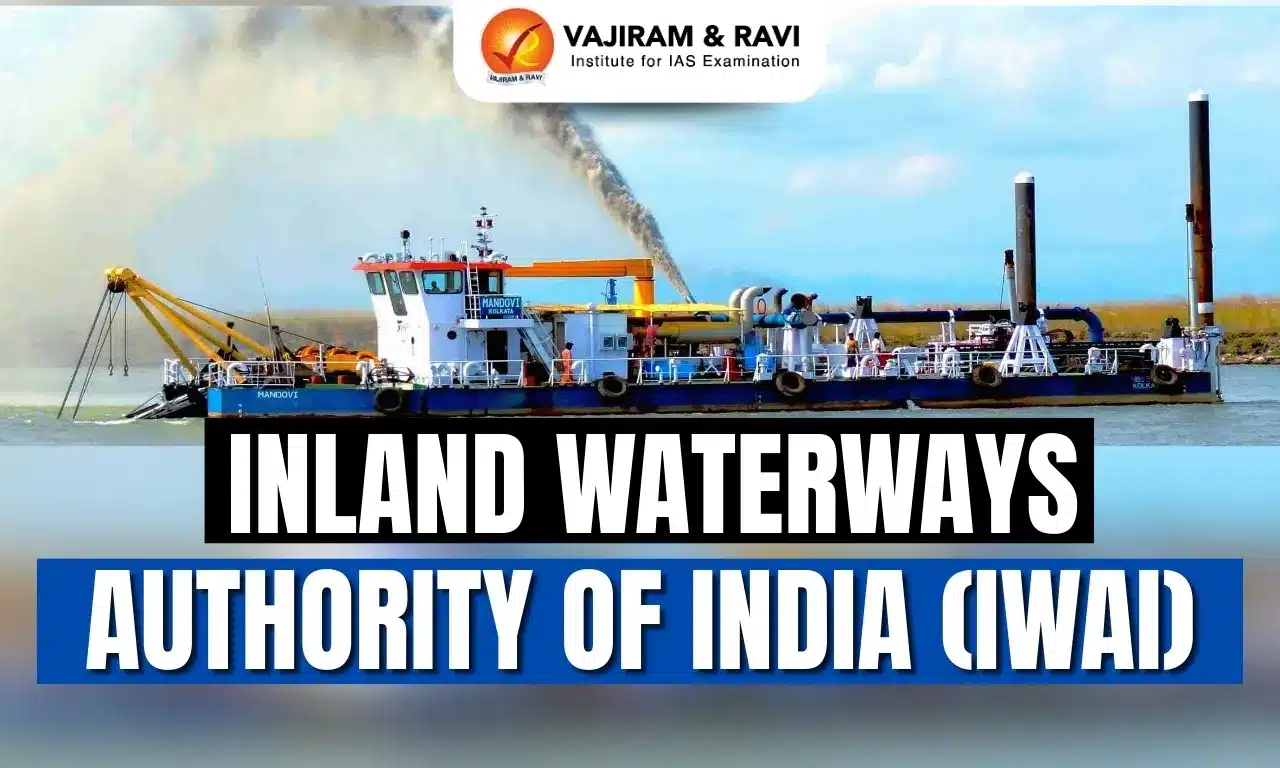
The Inland Waterways Authority of India (IWAI) recently signed a series of major agreements valued at about ₹3,000 crore to boost cargo movement, passenger transport and river-based tourism in the Northeast.

About Inland Waterways Authority of India

  • It is a statutory body established under the Inland Waterways Authority of India Act (IWAI), 1985.
  • It came into existence on 27th October 1986 for the development and regulation of inland waterways for shipping and navigation. 
  • Nodal Ministry: Ministry of Ports, Shipping, and Waterways
  • The Authority primarily undertakes projects for development and maintenance of inland water transport (IWT) infrastructure on national waterways through grants received from the Ministry of Ports, Shipping and Waterways.
  • It also takes up techno-economic feasibility studies and prepares proposals for the declaration of other waterways as National Waterways. 
  • It also advises the Central Government on matters related to IWT and assists States in the development of the IWT sector.
  • Headquarters: Noida, Uttar Pradesh
  • The Authority also has its regional offices at Patna, Kolkata, Guwahati, and Kochi and sub-offices at Allahabad, Varanasi, Farakka, Sahibganj, Haldia, Swroopganj, Hemnagar, Dibrugarh, Dhubri, Silchar, Kollam, Bhubaneshwar, and Vijayawada.

Source: DDN

Inland Waterways Authority of India FAQs

Q1: The Inland Waterways Authority of India (IWAI) was established under which Act?

Ans: Inland Waterways Authority of India Act, 1985

Q2: Inland Waterways Authority of India (IWAI) functions under which nodal ministry?

Ans: Ministry of Ports, Shipping and Waterways

Q3: Where is the headquarters of Inland Waterways Authority of India (IWAI) located?

Ans: Noida, Uttar Pradesh

Q4: What is the primary function of Inland Waterways Authority of India (IWAI)?

Ans: IWAI primarily undertakes projects for development and maintenance of inland water transport (IWT) infrastructure on national waterways.

CISF to Oversee Security at 250 Indian Seaports Under New Unified Framework

CISF

CISF Latest News

  • The Union Government has appointed the CISF as the security regulator for more than 250 seaports to strengthen coastal security. 
  • The move aims to bring private cargo-handling ports under a single, sovereign security framework and ensure a uniform, standardised security architecture across India’s maritime infrastructure.

Seaport Security in India: A Brief Overview

  • Seaport security in India is a critical component of national security, economic stability, and international trade, particularly as the ports handle a vast majority of the country's international trade.

Key Framework and Organisation

  • International Ship and Port Facility Security (ISPS) Code: India's port security measures are largely compliant with the mandatory ISPS Code, a global framework established after 9/11 to safeguard ships and port facilities from terrorism and other threats.
  • Central Industrial Security Force (CISF) - The New Regulator: In a significant recent reform, the Government of India has designated the Central Industrial Security Force (CISF) as the Recognised Security Organisation (RSO) for ports.

Challenges to Port Security

  • The security environment in the maritime domain presents several ongoing challenges:
    • Non-standardised Security: Historically, security arrangements at many non-major ports lacked uniformity and expert oversight, which the new CISF mandate aims to address.
    • Transnational Threats: Ports remain vulnerable to non-traditional threats, including:
      • Maritime Terrorism
      • Smuggling and Drug Trafficking (Ports are often routes for large hauls of narcotics).
      • Cyberattacks on port IT infrastructure and systems.
    • Infrastructure Gaps: Ensuring uniform, high-quality infrastructure and sufficient skilled manpower across over 250 ports remains an operational challenge.

Centre Brings All Seaports Under Uniform Security Oversight

  • To strengthen coastal security, the Union Government has appointed the CISF as the central security regulator for more than 250 seaports, including private cargo-handling ports. This brings all ports under a unified security architecture.
  • In the first phase, 80 export-import (EXIM) ports will be placed under CISF control for access management, cargo screening, and waterfront patrolling. 
  • CISF will function as a “sovereign security force” at these sites.

CISF to Conduct New Security Assessments

  • For all EXIM ports CISF will carry out:
    • Port Facility Security Assessments (PFSA)
    • Port Facility Security Plans (PFSP)
  • This will ensure compliance with global standards and eliminate vulnerabilities.

Hybrid Security Model for Port Operations

  • A new multi-layered model has been proposed:
    • CISF → core security roles (access control, patrolling, screening)
    • State Police / SISF / Private Security → non-core duties (traffic, gate operations)
  • This ensures uniformity while optimising manpower across port ecosystems.

Mandatory CISF-Led Training for Private Port Security

  • A structured training programme—modeled on aviation security—will be implemented.
  • CISF will train and certify all private security staff deployed at EXIM ports.
  • The government plans to create a specialised Port Security Training Institute to build long-term capacity, standardise certifications, and professionalise the port security workforce.

Why the Change Matters

  • India has over 250 seaports, including 80 EXIM ports that handle international trade through customs clearance, cargo movement, storage and logistics. 
  • Until now, security across non-major ports was fragmented and inconsistent.
  • Many ports currently rely on private security agencies or local police, resulting in uneven security standards. 
    • CISF already secures the 13 major ports across multiple coastal states.
  • By expanding CISF’s mandate to regulation, assessment, planning and training, India aims to build secure, efficient and globally compliant EXIM gateways, boosting economic competitiveness and supporting its growing maritime footprint.

Source: TH | HT

CISF FAQs

Q1: Why has the government assigned CISF to secure over 250 seaports?

Ans: The government aims to establish a uniform, sovereign security architecture to address security gaps at private and non-major ports, improving accountability, assessment, and oversight nationwide.

Q2: What will CISF’s role be at the 80 EXIM ports?

Ans: CISF will manage core functions such as access control, cargo screening, and waterfront patrolling while conducting fresh security assessments and preparing Port Facility Security Plans.

Q3: What is the hybrid security model for ports?

Ans: Under this model, CISF manages core security duties, while State Police, SISF, or private agencies handle non-core tasks like traffic operations, improving efficiency and layered security.

Q4: Why is mandatory CISF-led training being introduced?

Ans: Training ensures uniform skill standards for private security personnel deployed at ports, following an aviation-style certification system to uphold national and international security norms.

Q5: How will this reform strengthen India’s maritime security?

Ans: By standardising procedures, assessments, and training across 250+ seaports, India builds a cohesive, high-quality security system vital for coastal protection and global trade competitiveness.

New Guidelines to Define Obscenity in Online Content

Online Content

Online Content Latest News

  • The Union government has proposed new guidelines defining “obscenity” and other prohibited content for digital platforms under the Information Technology Rules, 2021
  • The proposal aims to introduce explicit definitions and expand the Code of Ethics to cover social media platforms, OTT streaming services, and digital news platforms.

Background of the Proposed Amendment

  • The Supreme Court, while hearing a case arising from a controversy surrounding comedian Samay Raina and content featuring an explicit joke, had asked the government to devise guidelines that balance free speech under Article 19(1)(a) with reasonable restrictions under Article 19(2). 
  • In response, the Ministry of Information and Broadcasting submitted a detailed note proposing new regulatory measures.
  • These proposals come amid rising concerns over sexual content, deepfakes, harmful speech, and digital misinformation, prompting the government to strengthen oversight of online platforms.

Key Features of the Proposed Obscenity Guidelines

  • Introducing a New Definition of “Obscene Digital Content”
    • The amendment seeks to explicitly define obscenity for the first time within the IT Rules. The definition incorporates elements from:
      • Section 67 of the IT Act,
      • Cable TV Programme Code,
      • Indian Penal Code (now Bharatiya Nyaya Sanhita).
    • This would mark one of the most sweeping shifts in online content regulation, extending traditional broadcast-like restrictions to digital spaces.
  • Expansion of the Code of Ethics
    • The proposal adds a comprehensive “Obscenity” chapter under the Code of Ethics applicable to curated content (OTT platforms) and digital news platforms. Online platforms would be required to avoid content that:
      • Offends “good taste or decency”,
      • Depicts indecent, vulgar, suggestive, repulsive, or offensive themes,
      • Presents criminality as appealing,
      • Shows visuals or words reflecting a snobbish or slandering attitude toward regional, ethnic, or linguistic groups.
    • A total of 17 such restrictions are proposed. 
  • Alignment with Cable Television Standards
    • Digital rights advocates note that the government has transposed the Cable TV Programme Code, originally meant for regulated broadcast TV, onto digital platforms.
  • Requirement for OTT Compliance with the Cinematograph Act
    • OTT platforms may be required to ensure content is fit for “public exhibition”, similar to films certified under the Cinematograph Act, 1952.
    • Although officials claim this applies only to OTTs, the draft amendment does not explicitly make this distinction.
  • Revival of IT Rules 9(1) and 9(3)
    • Rules 9(1) and 9(3), which enforce the Code of Ethics, were stayed by the Bombay High Court.
    • Despite this, the note seeks to revive and expand these rules, raising constitutional concerns.
  • Application of the “Community Standards Test”
    • The Supreme Court’s test from Aveek Sarkar v. State of West Bengal would be used to assess obscenity. Content would pass this test if:
      • A reasonable person with contemporary community standards does not find that it appeals to lustful or voyeuristic interests, and
      • The content has literary, scientific, artistic, or political value.
    • Digital rights advocates, however, warn that the broad nature of the proposed rules could lead to overreach and arbitrary censorship.

Criticism

  • Digital rights organisations have flagged several risks:
    • Overbroad Definitions: The proposed language could classify a wide range of content as obscenity.
    • Executive Overreach: Critics argue that the government is attempting to expand its regulatory powers through the IT Rules rather than parliamentary amendments.
    • Impact on Free Speech: Ambiguous standards like “good taste” may violate free speech protections.
    • Overlap with Pending Court Cases: Several parts of the IT Rules are already stayed or under judicial scrutiny.

Implications for Digital Platforms

  • If approved by the Court:
    • Platforms will need stricter content moderation and compliance processes.
    • OTT platforms may face film-like certification requirements.
    • Social media platforms may need to filter content deemed indecent, vulgar, or objectionable proactively.
    • Digital publishers could face increased regulatory oversight affecting news and commentary.
  • The amendment could sharply reshape India’s digital content ecosystem, bringing it closer to a broadcast-style regulatory framework.

Source: TH | IE

Online Content FAQs

Q1: What prompted the government to propose new obscenity guidelines?

Ans: A Supreme Court directive during a case involving objectionable online content led the government to draft detailed guidelines.

Q2: Which platforms will the new rules apply to?

Ans: Social media platforms, OTT streaming services, and digital news publishers.

Q3: What laws influence the new definition of obscenity?

Ans: Section 67 of the IT Act, Cable TV Programme Code, and provisions of the IPC/Bharatiya Nyaya Sanhita.

Q4: Will OTT platforms require film-like certification?

Ans: The proposal suggests OTT content must align with the Cinematograph Act, though officials claim this will apply selectively.

Q5: What test will be used to judge obscene content?

Ans: The Community Standards Test from the Supreme Court’s Aveek Sarkar judgment.

India’s Agriculture Exports Surge Despite U.S. Tariff Barriers

Agriculture Exports

Agriculture Exports Latest News

  • India’s agricultural exports have grown significantly faster than its overall merchandise exports. 
  • In April–September 2025, farm exports rose by 8.8%, reaching $25.9 billion, compared to $23.8 billion in the same period of 2024. 
  • This growth far outstripped the 2.9% increase in total goods exports during the same period.
  • The trend is consistent with the previous financial year (2024–25), when agricultural exports increased by 6.4% (from $48.8 billion to $52 billion), while overall merchandise exports saw only a marginal 0.1% rise.

Key Drivers of India’s Export Growth

  • Strong Performance by Major Agri-Export Segments - India’s agricultural export growth in 2025-26 has been led by non-basmati rice, buffalo meat, marine products, coffee, and fruits & vegetables — each surpassing or nearing previous record levels.
  • Non-Basmati Rice: Growth After Lifting of Export Curbs - Export buoyancy is largely due to the removal of restrictions imposed in 2022–23 to contain food inflation. With good monsoons and high government stocks, non-basmati rice exports are on track to exceed the record $6.5 billion achieved last year.
  • Buffalo Meat: Set to Break Decade-Old Record - Buffalo meat exports may surpass the 2014-15 peak of $4.8 billion, supported by rising demand in key markets.
  • Marine Products: Rising Despite Trump Tariffs - Marine product exports rose 17.4% in April–September 2025 and could exceed the historic $8.1 billion (2022-23). Despite the 58% U.S. tariff, exports grew from $3.4 billion to $4 billion, as exporters diversified into China, Vietnam, Japan, Thailand, EU, and Canada.
  • Coffee Exports: Driven by High Global Prices - Coffee exports more than doubled from $739 million (2019-20) to $1.8 billion (2024-25) and may exceed $2 billion this year. The rise is driven mainly by soaring global prices as ending stocks fall to a 25-year low, rather than higher volumes.
  • Fruits & Vegetables: Consistent Growth in Fresh and Processed Form - Both fresh and processed fruits & vegetables continue steady export growth.

Global Food Prices as the Main Driver

  • The FAO Food Price Index declined from 119.1 (2013-14) to 90 (2015-16), stayed below 100 until 2019-20, then shot up to 102.4, 133.1, and 140.6 in the next three years.
  • As global prices softened afterward, India’s farm exports also dipped to $48.8 billion (2023-24) and $52 billion (2024-25).
  • Export clampdowns on wheat, rice, sugar, onions, and de-oiled rice bran — imposed to control domestic inflation — further contributed to the fall in shipments.

Outlook for 2025–26: Prices and Tariffs to Shape Performance

  • Export performance for the second half of 2025-26 will hinge on:
    • Global Commodity Prices
      • FAO index in October 2025 was 126.4, far below the 2022 post-Ukraine peak of 160.2.
      • Subindices for cereals (103.6) and sugar (94.1) hit multi-year lows.
      • Low global prices usually depress India’s agri-export value.
    • Trump Tariffs
    • US tariffs have begun to hurt: Marine products (26.9%); Spices (45.1%); Basmati rice (17.8%) (September YoY to the US).
  • Signs of Improvement: Tariff Rollback and Possible Trade Deal
    • There are positive developments:
      • A potential India–US trade deal may materialise before year-end.
      • The US President has rolled back tariffs on several food products — including spices, coffee, tea, and fresh fruits — directly benefiting Indian exporters.

Rising Farm Imports Outpace Overall Import Growth

  • India’s agricultural imports grew 5.9% in April–September 2025 (from $18.4 bn to $19.5 bn), outpacing overall imports, which rose 4.5% during the same period.
  • Unlike exports, India’s farm imports are not diversified and remain dominated by just a few commodities, primarily:
    • Vegetable oils
    • Pulses
    • Fresh fruits
    • Raw cotton

Vegetable Oils: India’s Top Import Item

  • Vegetable oil imports soared 13.5% in April–September 2025.
  • Imports are likely to approach the record $20.8 bn level of 2022–23.
  • This remains India’s single largest agricultural import.

Pulses: Imports Decline After Previous Surge

  • Pulses imports hit an all-time high of $5.5 bn in 2024–25.
  • In 2025–26, they have fallen sharply due to:
    • A bumper domestic crop
    • Reimposition of import duties lifted earlier during high inflation.

Fresh Fruit Imports Expand Rapidly

  • Fresh fruit imports crossed $3 bn in 2024–25.
  • April–September 2025 imports were $1.5 bn.
  • The US is now the dominant supplier, accounting for 50.4%, thanks to high demand for:
    • Almonds
    • Pistachios
    • Walnuts
    • Other dry fruits

Raw Cotton: India Turns Net Importer

  • India has shifted from being a net exporter to a net importer of raw cotton.
  • Imports are expected to exceed $1.5 bn this fiscal.
  • The key reason: domestic yield stagnation due to the absence of new technologies post-Bt cotton.

Source: IE

Agriculture Exports FAQs

Q1: Why are India’s agricultural exports outperforming overall merchandise exports?

Ans: Strong growth in non-basmati rice, buffalo meat, seafood, coffee, and fruits & vegetables has pushed agricultural exports ahead of total exports despite global price volatility.

Q2: How did exporters manage U.S. tariff pressures?

Ans: Seafood exporters diversified to China, Vietnam, Japan, Thailand, EU, and Canada, offsetting the sharp tariff shock from the U.S. while sustaining overall export momentum.

Q3: What role did global food prices play in the export trend?

Ans: A surge in global food prices boosted export values earlier, but recent price declines have moderated growth, especially for commodities linked to international price cycles.

Q4: How have India’s coffee exports doubled in five years?

Ans: Rising global prices due to low ending stocks, rather than higher volumes, drove the value of India’s coffee exports from $739 million to $1.8 billion.

Q5: Which agricultural imports have grown the fastest in recent years?

Ans: Vegetable oils, fresh fruits, and raw cotton have driven import growth, with India becoming a major U.S. market for dry fruits and shifting to net cotton imports due to yield stagnation.

Four Labour Codes Implemented – A Transformative Shift in India’s Labour Landscape

Four Labour Codes

Four Labour Codes Latest News

  • The Government of India notified all Four Labour Codes, consolidating 29 Central labour laws into a simplified, modern regulatory framework. 
  • This marks one of the most significant labour reforms since Independence, aimed at improving labour welfare, social security, workplace safety, and ease of doing business.

consolidated codes

Background

  • Four labour codes: Code on Wages, 2019; Industrial Relations (IR) Code, 2020; Code on Social Security, 2020; and the Occupational Safety, Health and Working Conditions (OSHWC) Code, 2020.
  • Pending implementation: These codes were pending implementation due to protests by Central Trade Unions (CTUs). Despite resistance, the Centre has now operationalised them.
  • Systemic reforms introduced:
    • Gender-neutral work policies
    • Uniform safety standards
    • Streamlined contract labour regulation
    • India-wide ESIC and EPFO coverage
    • National floor wages
    • Move towards formalisation of labour market

Key Features of the Four Labour Codes

  • Universal social security and expanded coverage:
    • First-time statutory recognition of gig workers, platform workers, and aggregators.
    • ESIC expanded to all districts, including hazardous units.
    • Aadhaar-linked Universal Account Number (UAN) - fully portable benefits for migrant workers.
    • Accident compensation extended to commuting accidents.
    • Social security contributions - aggregators to contribute 1–2% of annual turnover (capped at 5%).
  • Wages, minimum pay and timely payment:
    • National Floor Wage introduced.
    • Mandatory timely wage payments across establishments.
    • Wage structure redefined to increase basic pay component, enhancing provident fund and gratuity provisioning.
  • Women workers’ rights and safety:
    • Women allowed to work night shifts, underground mines, heavy machinery operations—with consent and safety conditions.
    • Equal pay for equal work mandated.
    • Free annual health check-up for workers aged over 40.
  • Fixed term employment (FTE):
    • Workers can be hired for a fixed duration without compromising benefits.
    • FTE employees get - same wages as permanent workers; medical, leave, and social security benefits; and gratuity eligibility after one year (earlier 5 years).
  • Simplifying compliance and improving Ease of Doing Business:
    • Single registration, licence and return system.
    • Inspector-cum-facilitator model for supportive compliance.
    • Two-member tribunals for faster dispute resolution.
    • National OSH Board to harmonise safety standards.

Stakeholder Responses

  • Government:
    • Most comprehensive labour-oriented reform since Independence.
    • Codes will formalise employment, ensure global alignment, and improve worker protections.
  • Industry: CII welcomed the Codes as a “historic milestone," aiding a predictable labour regime and boosting economic growth.
  • Trade unions (CTUs):
    • Termed the Codes: “Anti-worker, pro-employer”, “Declaration of war on working masses”
    • Concern areas - FTE misuse, restrictions on the right to strike, retrenchment norms.
    • Nationwide protests planned for 26 November.
  • Bharatiya Mazdoor Sangh (BMS): Partially supportive - backs Codes on Wages & Social Security but wants changes in OSHWC and IR Codes.

Challenges and Concerns

  • CTUs: Oppose curtailment of strike rights, retrenchment rules, and fear dilution of worker protections.
  • Implementation capacity: Labour is a Concurrent Subject—requires State cooperation. Many States are still finalising rules; implementation asymmetry is likely.
  • Risk of FTE misuse: Fear that employers may replace permanent jobs with fixed-term contracts.
  • Gig worker social security: Turning provisions into effective schemes remains a challenge. Past initiatives like e-Shram saw poor follow-through.
  • Clarity on wage floor: National Floor Wage requires new methodology and agreements across States.

Way Forward

  • Strengthening consultation mechanisms: Revive the Indian Labour Conference (ILC) for consensus-building. Continuous dialogue with unions, employers and States.
  • Capacity building for States: Technical and financial support to implement new digital compliance systems.
  • Clear scheme design for gig workers: Transparent rules for aggregator contribution. Seamless portability using UAN.
  • Monitoring and preventing misuse of FTE: Strong checks to avoid replacing permanent jobs with FTE roles.
  • Awareness campaigns: Workers, especially in informal sectors, need awareness of new rights.

Conclusion

  • The implementation of the Four Labour Codes represents a historic restructuring of India’s labour governance framework. 
  • By consolidating 29 outdated laws, the Codes aim to create a future-ready labour ecosystem that promotes worker welfare, social security, gender equality, and ease of doing business.
  • However, implementation challenges, trade union resistance, and risks of misapplication remain significant. 
  • Effective stakeholder engagement and transparent rule-making will be crucial for the Codes to fulfil their objective of creating an inclusive, formalised, and equitable labour market in India.

Source: TH | IE

Four Labour Codes FAQs

Q1: What is the significance of the Four Labour Codes?

Ans: It consolidated 29 archaic laws into a unified framework to enhance social security, formalisation, worker safety, and ease of doing business.

Q2: How the Labour Codes aim to extend social security to gig and platform workers?

Ans: The Social Security Code provides first-time statutory recognition to gig/platform workers and mandates aggregator contributions.

Q3: What are the concerns raised by trade unions regarding the Labour Codes?

Ans: Trade unions argue that the Codes dilute worker rights through restrictive strike provisions, flexible retrenchment norms, etc.

Q4: How does the introduction of Fixed Term Employment (FTE) impact labour market flexibility and worker welfare?

Ans: FTE offers employers flexibility while ensuring workers receive benefits equal to permanent staff, including gratuity after one year.

Q5: What is the role of the National Floor Wage under the Code on Wages?

Ans: The National Floor Wage sets a nationwide minimum benchmark, reducing inter-state wage disparities and ensuring timely, uniform wage payments.

Daily Editorial Analysis 22 November 2025

Daily Editorial Analysis

Rethinking a Symbol of ‘Environment Responsibility’

Context

  • Globally, efforts to ease industrial norms have increasingly targeted one of the most visible indicators of environmental responsibility, green cover within industrial estates.
  • These relaxations, often framed as measures to promote ease of doing business, are frequently justified through international comparisons, where green-cover mandates appear lower.
  • Yet such reasoning rarely accounts for ecological context.
  • While reduced requirements may simplify compliance and enhance land-use flexibility, they raise a critical question: Are we mistaking administrative convenience for sustainability?

The Limits of On-Site Green Belts

  • Industrial development inevitably alters ecosystems by clearing vegetation and disrupting habitats.
  • Green belts within industrial premises are typically viewed as compensatory measures, but their functions are inherently mitigative rather than restorative.
  • Empirical studies show that well-designed plantations can reduce total suspended particulate matter by up to 65% and reduce noise by 10–17 decibels, offering benefits such as dust suppression, thermal comfort, and microclimate regulation.
  • However, these gains are spatially limited.
  • Internal green belts cannot replicate the multifaceted ecological services that natural systems provide, carbon sequestration, hydrological regulation, soil formation, biodiversity support, and habitat connectivity.
  • Industrial plantations tend to be narrow, monocultural, and prone to degradation over time.
  • They buffer immediate environmental impacts but cannot offset the ecological costs of large-scale land conversion.
  • Thus, while on-site greening remains important, it cannot be mistaken for ecological restoration.

Why International Comparisons Fall Short

  • Policymakers often refer to countries with lower industrial greening ratios to justify local relaxations.
  • Yet such comparisons are misleading without considering differences in population density, ecological resilience, industrial intensity, and land availability.
  • Nations with extensive open spaces and low population pressure can afford smaller on-site green requirements because surrounding natural landscapes still provide ecological buffering.
  • In densely populated, industrially stressed regions, green cover plays a far more critical role in maintaining environmental quality and public health.
  • Applying uniform percentages across diverse geographies is akin to prescribing the same diet to people with different health needs.
  • Effective policy transfer requires ecological calibration, not numerical imitation.
  • Borrowing green-cover norms from elsewhere without considering local environmental stress, climate conditions, and landscape fragmentation undermines evidence-based policymaking.

The Path Forward

  • Toward a Balanced, Landscape-Level Approach

    • Rather than merely reducing green-cover requirements within industrial plots, especially when inconsistent mandates create confusion, a more sustainable approach lies in integrating industrial growth with landscape-scale greening.
    • This involves allowing partial relaxation of on-site requirements while mandating off-site ecological commitments that contribute to regional environmental resilience.
    • Such commitments may include:
      • Developing State- or region-level green reserves linked to industrial clusters
      • Restoring degraded lands, river basins, and buffer zones around protected areas
      • Enhancing habitat connectivity through ecological corridors
      • Integrating industrial greening into green credit or carbon offset programmes
  • Industries as Partners in Ecological Stewardship

    • Industries drive national progress and elevate living standards, yet their ecological footprint remains substantial.
    • Historically, stewardship responsibilities rested with communities through forestry and local conservation programmes, while industries were regulated and penalised.
    • Today’s sustainability paradigm reframes this dynamic: industries can become essential contributors to ecological well-being.
    • Through calibrated reductions in on-site greening paired with compensatory ecological duties, including biodiversity offsets and circular practices, industries can participate meaningfully in environmental regeneration.
    • Citizen participation further strengthens this blended approach, fostering a practical balance between development and protection.

Conclusion

  • Green belts within industrial premises function like medicine applied to a wound, immediate and local.
  • Expanding natural green cover around industrial clusters, however, strengthens the entire ecological system, preventive, long-term, and indispensable.
  • The future of sustainable industrial development will depend not on the number of trees inside factory gates, but on how deeply industries root themselves in the health of surrounding landscapes.
  • Only by linking industrial progress with ecological regeneration can growth and nature truly thrive together.

Rethinking a Symbol of ‘Environment Responsibility’ FAQs

Q1. Why are relaxations in industrial green-cover norms considered risky?

Ans. They are risky because they prioritise convenience over sustainability and ignore the ecological context needed to maintain environmental resilience.

Q2. What is the main limitation of on-site green belts within industries?

Ans. Their benefits are localised and mitigative, and they cannot replace the broader ecological functions provided by natural ecosystems.

Q3. Why are global comparisons of green-cover requirements often misleading?

Ans. They are misleading because they overlook differences in population density, ecological stress, and landscape capacity between countries.

Q4. What is the core idea behind a landscape-level greening strategy?

Ans. It aims to combine on-site mitigation with off-site restoration to strengthen regional ecological health while allowing industrial growth.

Q5. How can industries become ecological stewards rather than mere compliance actors?

Ans. They can do so by participating in off-site restoration efforts, adopting circular practices, and contributing to broader ecological renewal programmes.

Source: The Hindu


The New Direction for India Should be Toward Asia

Context

  • At the 2025 Tianjin SCO Summit, a striking photo of Putin, Modi, and Xi engaged in an animated discussion signalled increasing alignment among major Asian powers — a dynamic often seen in G-7 meetings.
  • A month later, at the Busan “G2” summit, a contrasting image of a visibly uneasy U.S. President Donald Trump beside a calm Xi Jinping further highlighted the shifting global balance toward Asia.
  • Acknowledging this shift, the U.S. Secretary of State told the Senate that the 21st century will be shaped in Asia.
  • Yet, U.S. priorities—articulated by Ambassador Sergio Gor—focused on pulling India closer to Washington and discouraging its cheap Russian oil imports.
  • Prime Minister Modi later underscored that India’s decisions and future trajectory cannot be dictated by external powers.
  • This article highlights India’s evolving foreign policy landscape at a time of major geopolitical shifts toward Asia.

A Critical Turning Point in India’s Foreign Policy

  • India is at a foreign policy crossroads as it approaches major economic power status.
  • At the same time, U.S. actions — weakening multilateralism and narrowing India’s strategic space — coincide with India’s improving ties with China and strengthened relations with Russia.
  • Balancing China and Russia: A Non-Binary Choice
    • India should not fall into the U.S.-framed binary of choosing either Washington or Beijing.
    • With China, India should adopt a “trust but verify” approach as border negotiations in Ladakh progress, potentially influencing broader issues such as Kashmir and future investments.
    • Russia remains a long-standing, dependable partner, demonstrated recently through the role of the S-400 system in “Operation Sindoor.”
    • Western arguments that India must tilt fully toward the U.S. or China ignore India’s multi-vector interests.
  • India’s Strategic Pivot Toward Asia
    • The emerging path for India lies in deeper engagement with Asia, whose combined market will soon surpass that of the U.S.
    • Asian integration is evolving on the basis of shared value-chain interests, not colonial legacies or fixed global rules.
    • Many regional powers seek closer ties with India due to its technological strength and economic weight capable of balancing China.
  • Asia’s Centrality in Global Power
    • Asia, home to two-thirds of global population and wealth, is returning to the world’s centre stage.
    • Key regional groupings — BRICS, SCO, and ASEAN — will increasingly overlap and interlink.
    • India should also reconsider joining the Regional Comprehensive Economic Partnership (RCEP), where trade arrangements can be negotiated outside WTO constraints, including a pragmatic working arrangement with China to diversify markets away from the U.S.

India’s Shift Toward Hard Strategic Choices

  • India has shed earlier hesitation and now behaves like an emerging power capable of making tough decisions.
  • Growing U.S. pressure has also contributed to forming a new national consensus on strategic assertiveness.
  • Redefining Strategic Autonomy for a Unique Dual Agenda
    • India’s strategic autonomy must reflect its distinctive position —
      • fastest-growing major economy
      • long-term demographic advantage
      • largest labour force; yet the highest number of poor.
    • India’s core sustainable development interests align with the Global South.
    • Therefore, partnerships must be shaped carefully so India strengthens value chains without being pulled into frameworks that dilute its priorities.
  • New Global Rules Driven by Technology, Not Traditional Diplomacy
    • The future will not resemble the past where Europe dominated through military and economic leverage.
    • Technological interdependence now determines power — economic, political, and military.
    • Innovation capacity is becoming the key driver of influence.
    • For India, certain areas are non-negotiable:
      • protection of national data
      • domestic technological innovation
      • local defence manufacturing
      • inclusive growth
    • These must guide foreign, security, and technology policies.
  • Cyber Warfare and Tech-Led Defence Must Take Centre Stage
    • Cyber warfare should become the backbone of India’s national security — not traditional theatre commands — because land-based threats have changed.

Geopolitical Shifts Influencing India’s Security Outlook

  • China has scaled back from the CPEC; Pakistan is turning to expensive ADB loans.
  • The U.S. has expanded its influence in Bangladesh and has a mutual defence pact with Saudi Arabia.
  • The U.S. is eyeing Afghanistan’s Bagram base again.
  • India secured a six-month U.S. sanctions waiver for Chabahar Port, maintaining strategic access to Iran, Afghanistan, Central Asia and Russia.

Need for Defence Reorientation

  • The changing neighbourhood and technological landscape require a national debate on reforming defence allocations:
    • Consider reducing army size
    • Limit large, imported platforms
    • Invest heavily in domestic AI, missiles, drones, air defence, and space technologies
  • These sectors can drive both security strength and broader economic innovation.

India’s AI Sovereignty: The Next Big Imperative

  • India must shape its own AI future to achieve sustained double-digit, inclusive growth.
  • A Bernstein report warns that India’s ₹10,372-crore AI Mission risks becoming irrelevant globally, with U.S. companies poised to dominate the field.
  • A Parliamentary Committee has stressed the urgent need for indigenous foundational AI research to secure sovereign capability.
  • Experts argue that India must increase funding at least twenty-fold to build national AI collaboration networks, high-end computing infrastructure, proprietary models, and a strong talent ecosystem — all coordinated at the highest level.
  • Achieving AI sovereignty is now essential for India to become a true global power by 2047.

The New Direction for India Should be Toward Asia FAQs

Q1. Why is India’s foreign policy at a turning point?

Ans. India is nearing major economic power status while global shifts, U.S. pressure, improving China ties, and strong Russia relations reshape its strategic environment.

Q2. Why should India pivot toward Asia instead of choosing between the U.S. and China?

Ans. Asia offers the world’s largest markets, expanding value chains, and regional partnerships that align with India’s economic and geopolitical ambitions without binary alignments.

Q3. How does technology redefine India’s strategic autonomy?

Ans. Technological innovation, national data control, domestic defence manufacturing, and inclusive growth now determine economic strength and geopolitical influence, shaping India’s independent strategic path.

Q4. Why must cyber warfare become central to India’s security strategy?

Ans. Changing land-based threats and rapid tech militarisation demand prioritising cyber, AI, drone, missile, and space capabilities over traditional mass-force commands.

Q5. Why is AI sovereignty crucial for India’s global ambitions?

Ans. Without indigenous AI research and robust investments, India risks dependence on foreign technology, undermining its goal of becoming a major global power by 2047.

Source: TH

Daily Editorial Analysis 22 November 2025 FAQs

Q1: What is editorial analysis?

Ans: Editorial analysis is the critical examination and interpretation of newspaper editorials to extract key insights, arguments, and perspectives relevant to UPSC preparation.

Q2: What is an editorial analyst?

Ans: An editorial analyst is someone who studies and breaks down editorials to highlight their relevance, structure, and usefulness for competitive exams like the UPSC.

Q3: What is an editorial for UPSC?

Ans: For UPSC, an editorial refers to opinion-based articles in reputed newspapers that provide analysis on current affairs, governance, policy, and socio-economic issues.

Q4: What are the sources of UPSC Editorial Analysis?

Ans: Key sources include editorials from The Hindu and Indian Express.

Q5: Can Editorial Analysis help in Mains Answer Writing?

Ans: Yes, editorial analysis enhances content quality, analytical depth, and structure in Mains answer writing.

Enceladus

Enceladus

Enceladus Latest News 

Scientists analyzing NASA Cassini data recently identified previously unknown organic compounds in ice particles emitted from Saturn's moon Enceladus.

About Enceladus

  • It is the second nearest of the major regular moons of Saturn and the brightest of all its moons. 
  • It is Saturn's sixth-largest moon. 
  • It was discovered in 1789 by the English astronomer William Herschel and named for one of the Giants (Gigantes) of Greek mythology.
  • It measures about 500 km in diameter.
  • It orbits Saturn in a prograde, nearly circular path at a mean distance of 238,020 km.
  • Enceladus is tidally locked with Saturn, keeping the same face toward the planet. 
  • It continually spews out a concoction of water and simple organic chemicals into space.
  • Its surface, which reflects essentially all of the light that strikes it (compared with about 7 percent for Earth’s Moon), is basically smooth but includes cratered and grooved plains. 
  • The surface is almost pure water ice, with trace amounts of carbon dioxide, ammonia, and light hydrocarbons.
  • Because Enceladus is coated in clean, highly reflective ice, it has the brightest surface of any object in our solar system.
  • Like other icy moons that orbit gas giants, it's thought that Enceladus maintains a liquid subsurface ocean through tidal heating. 
  • It is one of the most promising potential sites in the solar system for hosting life.
  • Scientists believe Enceladus possesses the chemical ingredients needed for life and has hydrothermal vents releasing hot, mineral-rich water into its ocean, the same type of environment that may have spawned Earth’s first living organisms.

Key Facts about Cassini Spacecraft

  • It is a joint project of NASA, the European Space Agency, and the Italian space agency (ASI).
  • Cassini was a sophisticated robotic spacecraft sent to study Saturn and its complex system of rings and moons in unprecedented detail.
  • It was launched on October 15, 1997. It was one of the largest interplanetary spacecraft.
  • The mission consisted of NASA’s Cassini orbiter, which was the first space probe to orbit Saturn, and the ESA’s Huygens probe, which landed on Titan, Saturn’s largest moon.

Source: SD

Enceladus FAQs

Q1: Enceladus is a moon of which planet?

Ans: Saturn

Q2: Who discovered Enceladus in 1789?

Ans: It was discovered in 1789 by the English astronomer William Herschel.

Q3: What is the approximate diameter of Enceladus?

Ans: 500 km

Q4: What primarily makes Enceladus the brightest object in the Solar System?

Ans: Surface of clean, reflective water ice.

Key Facts about Seychelles

Key Facts about Seychelles

Seychelles Latest News

Recently, Seychelles was included as the sixth member of the Colombo Security Conclave (CSC).

About Seychelles

  • Location: It is an archipelagic island country located in the western Indian Ocean.
  • It is located to the northeast of Madagascar and east of mainland Africa. 
  • Other major islands near Seychelles include Comoros and Mauritius to the south, and Maldives to the east.
  • It consists of an archipelago of 115 islands (only 8 are permanently inhabited).

Geographical Features of Seychelles

  • It is composed of two main island groups: the Mahé group which are mountainous granitic islands and a second group are coralline islands. 
  • Mahe Group is volcanic with a narrow coastal strip and rocky, hilly interior; others are relatively flat coral atolls, or elevated reefs; sits atop the submarine Mascarene Plateau.
  • Highest Point: The highest point in Seychelles is Morne Seychellois.
  • Climate: The climate is tropical oceanic, with little temperature variation during the year.
  • Capital City: Victoria

What is the Colombo Security Conclave?

  • It is a regional security grouping comprising India, Bangladesh, Sri Lanka, Maldives, Mauritius, and Seychelles.
  • Objective: To promote regional security by addressing transnational threats and challenges of common concern to the member states.
  • CSC brings together National Security Advisors (NSAs) and Deputy NSAs of the member countries.
  • Secretariat: Colombo, Sri Lanka

Source: ET

Seychelles FAQs

Q1: Where is Seychelles located?

Ans: Indian Ocean

Q2: What is the capital of Seychelles?

Ans: Victoria

Bhoramdeo Wildlife Sanctuary

Bhoramdeo Wildlife Sanctuary

Bhoramdev Wildlife Sanctuary Latest News

Poachers have killed two bison recently at the Chilfi East Range of the Bhoramdev Sanctuary at Kawardha in Chhattisgarh.

About Bhoramdev Wildlife Sanctuary

  • Bhoramdev Wildlife Sanctuary, also known as Bhoramdeo Wildlife Sanctuary, is located in the Kawardha district of Chhattisgarh.
  • It was notified in the year 2001. 
  • It is part of the larger Maikal range of the Satpura hills, which is known for its unique ecosystem. 
  • It is part of the Kanha-Achanakmar Corridor, which connects Kanha National Park in Madhya Pradesh with Achanakmar Wildlife Sanctuary in Chhattisgarh. 
  • Named after the famous Bhoramdeo Temple situated nearby, the sanctuary covers an area of approximately 352 sq.km.
    • Bhoramdeo Temple, an ancient temple complex dating back to the 7th to 11th centuries, was built by the Nagvanshi dynasty. 
    • The temple is dedicated to Lord Shiva and is often referred to as the “Khajuraho of Chhattisgarh,”.
  • The sanctuary’s terrain is characterized by undulating hills, dense forests, and numerous streams.
  • The region surrounding Bhoramdev Wildlife Sanctuary is inhabited by various tribal communities, including the Baiga, Gond, and Kanwar tribes.
  • Rivers: This wildlife sanctuary is the origin of the Fen and Sankari rivers.
  • Vegetation: The sanctuary’s diverse ecosystem includes tropical moist and dry deciduous forests. 
  • Flora: Lush forests of Saaj, Sal, Tendu, and Nilgiri trees.
  • Fauna: It is home to a variety of wildlife, including tigers, leopards, sloth bears, and various species of deer and birds.

Source: ETVB

Bhoramdev Wildlife Sanctuary FAQs

Q1: Bhoramdev Wildlife Sanctuary is located in which state of India?

Ans: Chhattisgarh

Q2: Bhoramdev Wildlife Sanctuary is part of which major hill range?

Ans: It is part of the larger Maikal range of the Satpura hills.

Q3: Bhoramdev Wildlife Sanctuary derives its name from which nearby famous temple?

Ans: Bhoramdeo Temple

Q4: Which tribal communities predominantly inhabit the region around the Bhoramdev Wildlife Sanctuary?

Ans: Baiga, Gond, and Kanwar tribes.

Nobel Peace Prize 2025, Winner Name, Contribution

Nobel Peace Prize 2025

The Nobel Peace Prize 2025 is one of the six prestigious awards established by Alfred Nobel’s will in 1895. It is awarded annually by the Norwegian Nobel Committee, elected by the Norwegian Parliament (Stortinget), to individuals or organisations that have made outstanding contributions to promoting peace, reducing armed conflict, and fostering international fraternity. The prize aims to encourage efforts that bring the greatest benefit to humanity, in line with Nobel’s vision of social progress and global harmony.

Nobel Peace Prize 2025

The Nobel Peace Prize 2025 was awarded to Maria Corina Machado on Friday, 10 October 2025 at 11:00 CEST for her tireless efforts in promoting democratic rights in Venezuela and striving for a peaceful transition from dictatorship to democracy. The Norwegian Nobel Committee, responsible for selecting laureates, received a total of 338 nominations, including 94 organisations, reflecting global recognition of peace efforts. The committee considers candidates whose work aligns with Alfred Nobel’s stipulation of promoting fraternity between nations, reducing standing armies, or supporting peace congresses. Nominations are strictly confidential and cannot be made posthumously, ensuring that the prize reflects ongoing contributions to global peace.

Also Check: Nobel Prize 2025 in Medicine

Nobel Peace Prize 2025 Historical Background

The Nobel Peace Prize 2025, established in 1901 by Alfred Nobel, recognizes individuals or organisations promoting peace, disarmament, and global harmony.

  1. Foundation and Purpose (1895-1901)
  • 1895: Alfred Nobel’s will specified a prize for those promoting fraternity between nations, reducing standing armies, or supporting peace congresses.
    Influence: Nobel was inspired by Bertha von Suttner, a peace activist, to include the peace category.
  • Awarding Body: The prize is administered by the Norwegian Nobel Committee, elected by Norway’s Parliament (Stortinget).
  1. Early Years (1901-1940s)
  • First Award: The prize was first awarded in 1901.
  • Organisations Recognized: The International Committee of the Red Cross won the prize in 1917 and 1944 for humanitarian efforts during wars.
  1. Post-War Era (1950s-1970s)
  • 1954: The Office of the UN High Commissioner for Refugees (UNHCR) received the prize for assisting refugees, repeated in 1981.
  • Focus shifted to reconstruction, diplomacy, and refugee aid after World War II.
  1. Modern Era (1980s-2000s)
  • Recognized individuals and organisations working on human rights, democracy, and disarmament.
  • Women Laureates: Increased recognition of women leaders in peace, with 19 women receiving the prize historically.
  1. Recent Trends (2010s-2024)
  • Focus on grassroots activism, nuclear disarmament, and social justice movements.
  • 2024 Award: Nihon Hidankyo, representing Hiroshima and Nagasaki atomic bomb survivors, honored for raising awareness on nuclear weapons and advocating disarmament.

Also Check: Nobel Prize Winners 2025 in Physics

Nobel Peace Prize Laureates

The following table lists all Nobel Peace Prize laureates from 1901 to 2024, highlighting their outstanding contributions to peace, human rights, and international cooperation.

Nobel Prize in Peace 2025 Laureates
Year Name Contribution

2025

Maria Corina Machado

for her tireless work promoting democratic rights for the people of Venezuela and for her struggle to achieve a just and peaceful transition from dictatorship to democracy

2024

Nihon Hidankyo

For efforts to achieve a world free of nuclear weapons and demonstrating through witness testimony that nuclear weapons must never be used again

2023

Narges Mohammadi

For her fight against oppression of women in Iran and promotion of human rights and freedom

2022

Ales Bialiatski, Memorial, Center for Civil Liberties

Representing civil society, promoted the right to criticise power, documented war crimes, and protected fundamental rights

2021

Maria Ressa, Dmitry Muratov

For efforts to safeguard freedom of expression, a precondition for democracy and lasting peace

2020

World Food Programme

For combating hunger, contributing to peace in conflict areas, and preventing hunger as a weapon of war

2019

Abiy Ahmed Ali

For achieving peace and international cooperation, especially resolving the border conflict with Eritrea

2018

Denis Mukwege, Nadia Murad

For efforts to end sexual violence as a weapon of war and armed conflict

2017

International Campaign to Abolish Nuclear Weapons

For highlighting catastrophic humanitarian consequences of nuclear weapons and promoting treaty-based prohibition

2016

Juan Manuel Santos

For resolute efforts to end Colombia’s 50-year-long civil war

2015

National Dialogue Quartet

For decisive contribution to building a pluralistic democracy in Tunisia after the Jasmine Revolution

2014

Kailash Satyarthi, Malala Yousafzai

For struggle against suppression of children and promoting the right of all children to education

2013

Organisation for the Prohibition of Chemical Weapons

For extensive efforts to eliminate chemical weapons

2012

European Union

For over six decades contributing to peace, reconciliation, democracy, and human rights in Europe

2011

Ellen Johnson Sirleaf, Leymah Gbowee, Tawakkol Karman

For non-violent struggle for women's safety and participation in peace-building

2010

Liu Xiaobo

For long and non-violent struggle for fundamental human rights in China

2009

Barack H. Obama

For extraordinary efforts to strengthen international diplomacy and cooperation between peoples

2008

Martti Ahtisaari

For efforts to resolve international conflicts on several continents over three decades

2007

Intergovernmental Panel on Climate Change, Al Gore

For disseminating knowledge about man-made climate change and laying foundations for countermeasures

2006

Muhammad Yunus, Grameen Bank

For creating economic and social development from below

2005

International Atomic Energy Agency, Mohamed ElBaradei

For efforts to prevent nuclear energy from being used militarily and ensuring safe peaceful use

2004

Wangari Maathai

For contribution to sustainable development, democracy, and peace

2003

Shirin Ebadi

For efforts for democracy and human rights, especially women and children’s rights

2002

Jimmy Carter

For decades of effort to find peaceful solutions, advance democracy and human rights, and promote economic and social development

2001

United Nations, Kofi Annan

For work towards a better organized and more peaceful world

2000

Kim Dae-jung

For work for democracy, human rights, and peace and reconciliation with North Korea

1999

Doctors Without Borders

For pioneering humanitarian work on several continents

1998

John Hume, David Trimble

For efforts to find a peaceful solution to the conflict in Northern Ireland

1997

International Campaign to Ban Landmines, Jody Williams

For work in banning and clearing anti-personnel mines

1996

Carlos Filipe Ximenes Belo, José Ramos-Horta

For efforts towards a just and peaceful solution to the conflict in East Timor

1995

Joseph Rotblat, Pugwash Conferences

For efforts to diminish nuclear arms’ role in politics and eliminate them in the long run

1994

Yasser Arafat, Shimon Peres, Yitzhak Rabin

For efforts to create peace in the Middle East

1993

Nelson Mandela, F.W. de Klerk

For work to end apartheid peacefully and lay foundations for democratic South Africa

1992

Rigoberta Menchú Tum

For struggle for social justice and ethno-cultural reconciliation respecting indigenous peoples’ rights

1991

Aung San Suu Kyi

For non-violent struggle for democracy and human rights

1990

Mikhail Gorbachev

For leading role in radical changes in East-West relations

1989

The 14th Dalai Lama

For advocating peaceful solutions based on tolerance and mutual respect to preserve cultural heritage

1988

United Nations Peacekeeping Forces

For preventing armed clashes and creating conditions for negotiations

1987

Oscar Arias Sánchez

For work for lasting peace in Central America

1986

Elie Wiesel

For being a messenger of peace, atonement, and dignity

1985

International Physicians for the Prevention of Nuclear War

For spreading awareness of catastrophic consequences of nuclear war

1984

Desmond Tutu

For role as unifying leader in non-violent campaign to end apartheid in South Africa

1983

Lech Wałęsa

For non-violent struggle for free trade unions and human rights in Poland

1982

Alva Myrdal, Alfonso García Robles

For work for disarmament and nuclear-free zones

1981

Office of the United Nations High Commissioner for Refugees

For promoting fundamental rights of refugees

1980

Adolfo Pérez Esquivel

For being an inspiration to repressed people, especially in Latin America

1979

Mother Teresa

For work bringing help to suffering humanity

1978

Anwar al-Sadat, Menachem Begin

For jointly negotiating peace between Egypt and Israel

1977

Amnesty International

For promoting worldwide respect for human rights

1976

Betty Williams, Mairead Corrigan

For founding a movement to end violent conflict in Northern Ireland

1975

Andrei Sakharov

For struggle for human rights, disarmament, and international cooperation

1974

Seán MacBride

For securing and developing human rights globally

1974

Eisaku Satō

For stabilizing conditions in the Pacific and signing the Nuclear Non-Proliferation Treaty

1973

Henry Kissinger, Le Duc Tho

For negotiating a ceasefire in Vietnam

1972

Not awarded

Prize money allocated to the Main Fund

1971

Willy Brandt

For paving way for meaningful dialogue between East and West

1970

Norman Borlaug

For providing hope via the Green Revolution

1969

International Labour Organization

For creating international legislation ensuring working condition norms

1968

René Cassin

For struggle to ensure human rights as stipulated in UN Declaration

1967

Not awarded

1/3 to main fund, 2/3 to special fund

1966

Not awarded

Prize money allocated to Special Fund

1965

United Nations Children's Fund

For enhancing solidarity between nations and reducing differences between rich and poor states

1964

Martin Luther King Jr.

For non-violent struggle for civil rights for Afro-Americans

1963

International Committee of the Red Cross, League of Red Cross Societies

For promoting Geneva Convention principles and cooperation with UN

1962

Linus Pauling

For fight against the nuclear arms race

1961

Dag Hammarskjöld

For developing UN into an effective international organization

1960

Albert Lutuli

For non-violent struggle against apartheid

1959

Philip Noel-Baker

For longstanding contribution to disarmament and peace

1958

Georges Pire

For helping refugees leave camps and return to life of dignity

1957

Lester Bowles Pearson

For crucial contribution to UN Emergency Force deployment after Suez Crisis

1956

Not awarded

1/3 to main fund, 2/3 to special fund

1955

Not awarded

Prize money allocated to Special Fund

1954

Office of UN High Commissioner for Refugees

For helping refugees worldwide and healing war wounds

1953

George C. Marshall

For proposing and supervising Europe’s economic recovery plan

1952

Albert Schweitzer

For altruism, reverence for life, and humanitarian work

1951

Léon Jouhaux

For fight against war via social justice and brotherhood

1950

Ralph Bunche

For work as mediator in Palestine (1948-49)

1949

Lord Boyd Orr

For lifelong effort to conquer hunger, removing a major cause of conflict

1948

Not awarded

1/3 to main fund, 2/3 to special fund

1947

Friends Service Council, American Friends Service Committee

For pioneering work in international peace movement and relieving human suffering

1946

Emily Greene Balch

For lifelong work for peace

1946

John R. Mott

For contribution to peace-promoting religious brotherhood across nations

1945

Cordell Hull

For indefatigable work for international understanding and UN establishment

1944

International Committee of the Red Cross

For humanitarian work during the war

1943

Not awarded

1/3 to main fund, 2/3 to special fund

1942

Not awarded

1/3 to main fund, 2/3 to special fund

1941

Not awarded

1/3 to main fund, 2/3 to special fund

1940

Not awarded

1/3 to main fund, 2/3 to special fund

1939

Not awarded

1/3 to main fund, 2/3 to special fund

1938

Nansen International Office for Refugees

For work benefiting refugees across Europe

1937

Robert Cecil, Viscount Cecil of Chelwood

For efforts supporting League of Nations, disarmament, and peace

1936

Carlos Saavedra Lamas

For Argentine Antiwar Pact mediation and peace efforts

1935

Carl von Ossietzky

For advocating freedom of thought and contributing to peace

1934

Arthur Henderson

For untiring efforts as Chairman of League of Nations Disarmament Conference

1933

Sir Norman Angell

For exposing illusion of war and promoting international cooperation

1932

Not awarded

Prize money allocated to Special Fund

1931

Jane Addams, Nicholas Murray Butler

For assiduous effort to revive and rekindle peace spirit

1930

Nathan Söderblom

For promoting Christian unity and creating mindset necessary for peace

1929

Frank B. Kellogg

For crucial role in Briand-Kellogg Pact

1928

Not awarded

Prize money allocated to Special Fund

1927

Ferdinand Buisson, Ludwig Quidde

For promoting public opinion favoring peaceful international cooperation

1926

Aristide Briand, Gustav Stresemann

For crucial role in Locarno Treaty

1925

Sir Austen Chamberlain

For role in Locarno Treaty

1925

Charles G. Dawes

For role in Dawes Plan

1924

Not awarded

Prize money allocated to Special Fund

1923

Not awarded

Prize money allocated to Special Fund

1922

Fridtjof Nansen

For repatriation of prisoners of war, international relief work, and UN refugee work

1921

Hjalmar Branting, Christian Lange

For lifelong contributions to peace and organized internationalism

1920

Léon Bourgeois

For contributions to peace, justice, and League of Nations establishment

1919

Woodrow Wilson

For role as founder of League of Nations

1918

Not awarded

Prize money allocated to Special Fund

1917

International Committee of the Red Cross

For efforts to care for wounded soldiers, POWs, and their families

1916

Not awarded

Prize money allocated to Special Fund

1915

Not awarded

Prize money allocated to Special Fund

1914

Not awarded

Prize money allocated to Special Fund

1913

Henri La Fontaine

For contribution to peaceful internationalism

1912

Elihu Root

For better understanding between North and South America, initiating arbitration agreements

1911

Tobias Asser

For co-founding Institut de droit international and initiating Hague Conferences

1911

Alfred Fried

For efforts exposing and fighting causes of war

1910

Permanent International Peace Bureau

For linking peace societies worldwide and organizing international peace rallies

1909

Auguste Beernaert, Paul Henri d’Estournelles de Constant

For prominent positions in international peace and arbitration movement

1908

Klas Pontus Arnoldson, Fredrik Bajer

For long-time work for peace as politicians, leaders, and authors

1907

Ernesto Teodoro Moneta

For press and peace meetings promoting understanding between France and Italy

1907

Louis Renault

For decisive influence on Hague and Geneva Conferences

1906

Theodore Roosevelt

For ending war between Japan and Russia

1905

Bertha von Suttner

For audacity opposing the horrors of war

1904

Institute of International Law

For striving to develop peaceful international ties and humane laws of war

1903

Randal Cremer

For devoted effort in favor of peace and arbitration

1902

Élie Ducommun

For untiring direction of Bern Peace Bureau

1902

Albert Gobat

For practical administration of Inter-Parliamentary Union

1901

Henry Dunant

For humanitarian efforts helping wounded soldiers and creating international understanding

1901

Frédéric Passy

For lifelong work for international peace conferences, diplomacy, and arbitration

Nobel Peace Prize 2025 FAQs

Q1: When will the Nobel Peace Prize 2025 be announced?

Ans: It has been announced on Friday, 10 October 2025 at 11:00 CEST.

Q2: Who awards the Nobel Peace Prize?

Ans: The Norwegian Nobel Committee, elected by the Norwegian Parliament (Stortinget), awards the prize.

Q3: Can organisations win the Nobel Peace Prize?

Ans: Yes, organisations can win. Examples include the International Committee of the Red Cross and the UNHCR, which have received multiple awards.

Q4: How many Nobel Peace Prize 2025 have been awarded till now?

Ans: The Nobel Peace Prize has been awarded 106 times to 143 laureates, including 112 individuals and 31 organisations.

Q5: Are nominations for the Nobel Peace Prize 2025 public?

Ans: No, all nominations are confidential till now.

Sagar Kavach

Sagar Kavach

Sagar Kavach Latest News

The Indian Coast Guard (ICG) successfully conducted the comprehensive Coastal Security Exercise Sagar Kavach-02/25 along the Maharashtra and Goa coastline recently.

About Sagar Kavach

  • It is a biannual coastal security drill led by the Indian Coast Guard (ICG) that tests and improves coastal security mechanisms against asymmetric threats. 
  • A wide range of central and state agencies, including the Indian Navy, State Police, Marine Police, Fisheries, Customs, etc., are part of this exercise. 
  • The exercise aims to assess the preparedness of all participating agencies in handling coastal security emergencies, preventing attacks on vital coastal installations, and further strengthening the multi-layered Coastal Security Network. 
  • During the exercise, security forces are split into a "Red team" that simulates infiltrators and a "Blue Team" that detects and neutralises them, assessing inter-agency coordination and response times.
  • The key activities of the Sagar Kavach drill generally include heightened surveillance, boat patrols, vehicle checks, and simulated attacks on vital installations to strengthen the country's coastal security framework. 
  • Recognizing the pivotal role of fishermen in coastal security, the exercise emphasizes the need for their active involvement.
  • Fishermen are urged to promptly report any unknown vessels operating in proximity to the coast to the ICG.

Source: ANI

Sagar Kavach FAQs

Q1: Sagar Kavach is a coastal security exercise led by which organization?

Ans: Indian Coast Guard

Q2: How frequently is the Sagar Kavach coastal security drill conducted?

Ans: Biannually

Q3: What is one of the primary objectives of the Sagar Kavach exercise?

Ans: The exercise aims to assess the preparedness of all participating agencies in handling coastal security emergencies.

Enquire Now