Taningia silasii

Taningia silasii

Taningia silasii Latest News

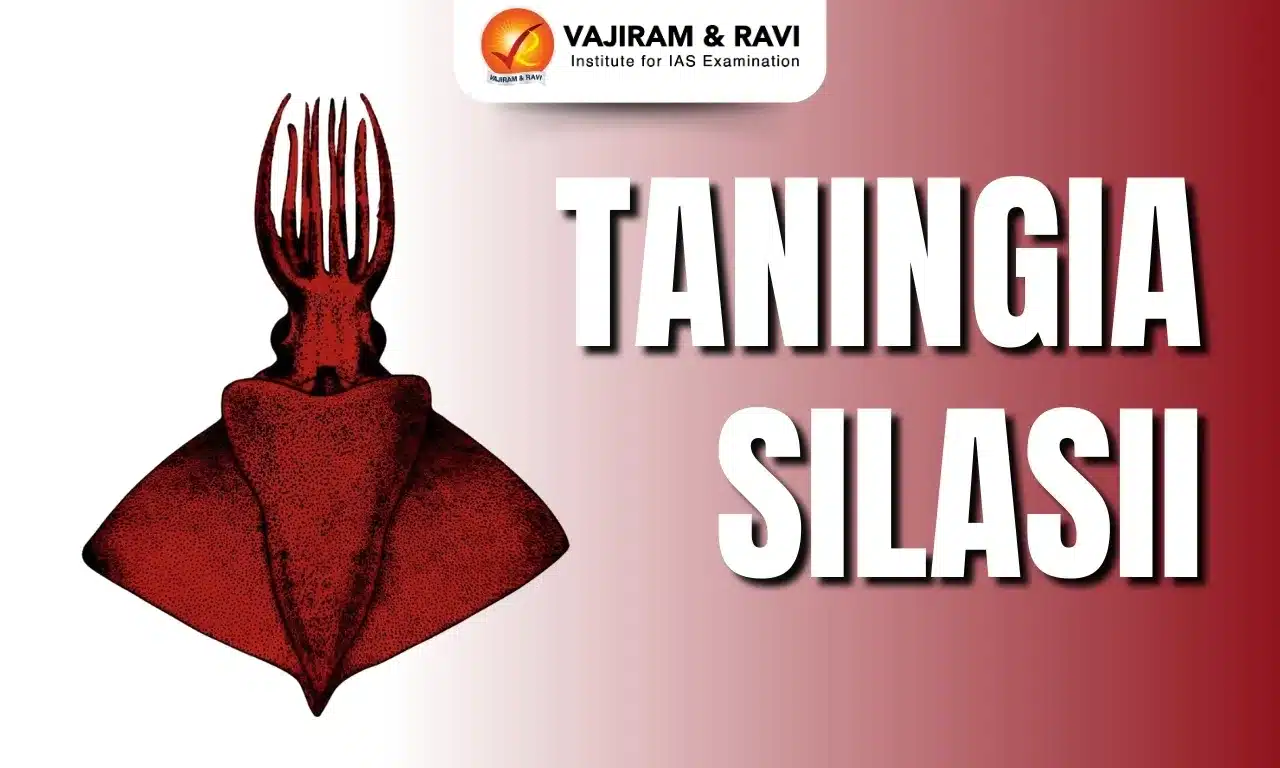
Researchers of the Central Marine Fisheries Research Institute (CMFRI), Kochi have discovered a new species of deep-sea squid from the Arabian Sea and named it as Taningia silasii (Indian octopus squid).

About Taningia silasii

  • It is discovered from the Arabian Sea from nearly 390 metres into the sea off the Kollam coast.
  • It belongs to the family Octopoteuthidae.
  • It is the only second formally recognised species in the Taningia genus. (Taningia danae was the first species found in the Atlantic Ocean belonging to this genus).

Characteristics of Taningia silasii

  • It has a length of 45 cm, whereas members of this family can also attain large sizes, with the Atlantic species growing up to 2.3 metres in length and weighing approximately 61.4 kg.
  • No Tentacles: One of the most striking features of the Indian octopus squid is the absence of the long feeding tentacles typically seen in most squid species.
  • Morphology: It has a reduced number of gill lamellae, which are tiny leaf-like structures on the gills. 
  • It also possesses a uniquely oval-shaped funnel-mantle locking cartilage and distinct morphological features in its beak, including a broadened wing on the lower beak.
  • DNA barcodes revealed 11% genetic divergence from its only previously confirmed relative, Taningia danae. 

Source: TH

Taningia silasii FAQs

Q1: Where was Taningia silasii discovered?

Ans: Arabian Sea

Q2: What is Taningia silasii?

Ans: A species of squid

Sulphur Dioxide

Sulphur Dioxide

Sulphur Dioxide Latest News

An analysis of Central Electricity Authority data revealed that 15 of 35 power units in the 300-km radius of Delhi continue to operate without flue gas desulphurisation (FGD) systems, which are critical for reducing sulphur dioxide emissions.

About Sulphur Dioxide

  • It is a colorless gas with a pungent odor.
  • It is a liquid when under pressure, and it dissolves in water very easily.
  • It has a pungent, irritating odor, familiar as the smell of a just-struck match.
  • Applications: It is used to manufacture chemicals, in paper pulping, in metal and food processing.
  • Impacts of Sulphur Dioxide: It is harmful for human health, environment and climate.

Occurrence of Sulphur Dioxide

  • Sulfur dioxide in the air comes mainly from activities such as the burning of coal and oil at power plants or from copper smelting.
  • It is usually prepared industrially by the burning in air or oxygen of sulfur or such compounds of sulfur as iron pyrite or copper pyrite.
  • In nature, sulfur dioxide can be released to the air from volcanic eruptions.
  • The largest source of SO2 in the atmosphere is the burning of fossil fuels by power plants and other industrial facilities.

What is Flue Gas Desulphurisation (FGD)?

  • It is a pollution-control process that removes Sulphur Dioxide (SO₂) from the flue gases produced by the combustion of fossil fuels, especially coal.
  • FGD systems typically use limestone (CaCO₃), lime (CaO), or ammonia (NH₃) to react with and neutralize SO₂ in flue gases.

Source: IE

Sulphur Dioxide FAQs

Q1: What is the chemical formula of Sulphur Dioxide?

Ans: SO2

Q2: What is the effect of Sulphur Dioxide on human health?

Ans: It causes respiratory problems and skin irritation.

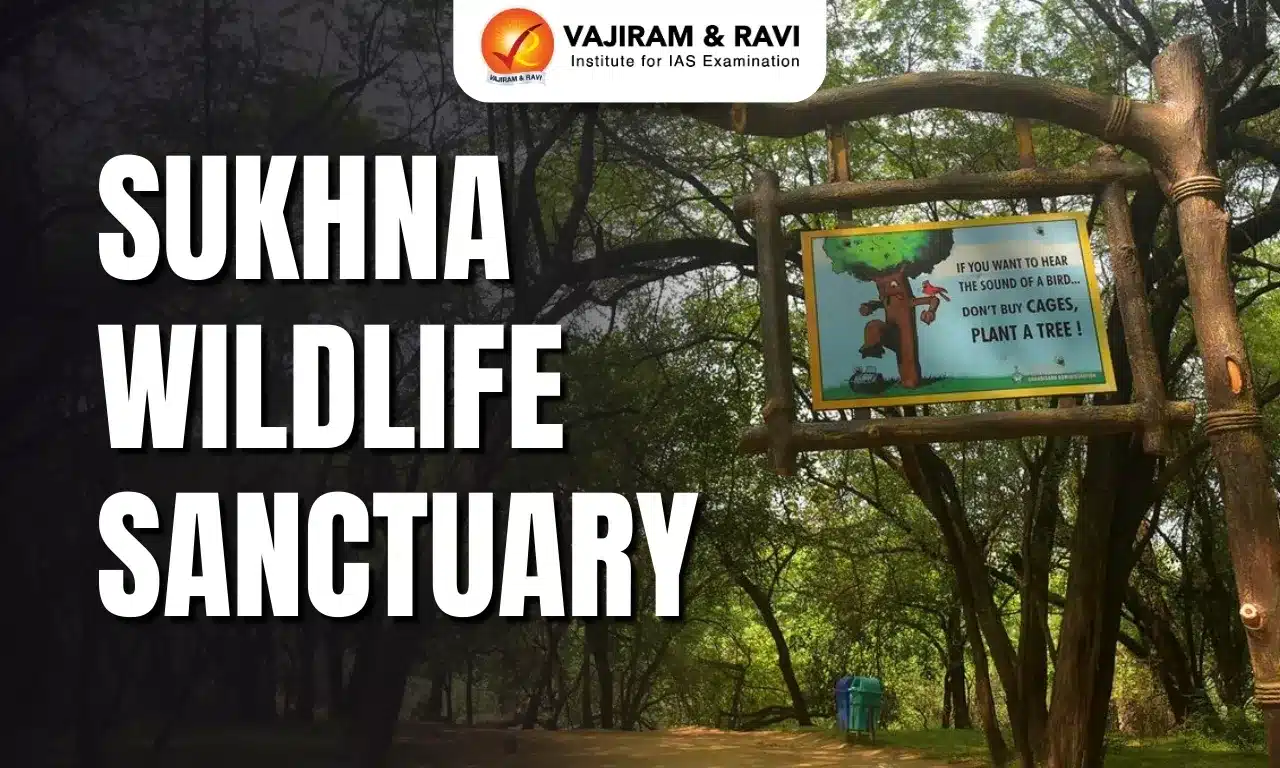
Sukhna Wildlife Sanctuary

Sukhna Wildlife Sanctuary

Sukhna Wildlife Sanctuary Latest News

A 9-day wildlife census recently began in the Sukhna wildlife sanctuary.

About Sukhna Wildlife Sanctuary

  • It is a protected area located in Chandigarh, near the famous Sukhna Lake at the foothills of the Shivalik range.
  • The lake was created by the architect Le Corbusier in 1958 by diverting the Sukhna Choe, a seasonal stream that flows down from the Shivalik hills. 
  • The sanctuary was developed as a result of afforestation done for soil conservation around Sukhna Lake. 
  • Spreading over an area of 2600 hectares, Sukhna Wildlife Sanctuary was established in 1998.
  • The place is quite unstable geographically and becomes prone to soil erosion by surface runoff during rains.
  • It has sandy soil of Shivalik with pockets of clay embedded at places. 
  • Apart from the Sukhna Lake, there are around 150 small and large water bodies in the sanctuary that form its catchment area.
  • Vegetation: It is characterized by a mix of forests, grasslands, and wetlands, with the Sukhna Lake forming an important part of the ecosystem.
  • Flora: The common flora of the sanctuary includes Khair, Phulai, Kikar, Shisham, Moonj, Amaltas, Jhingan, Amla, Rati, Vasaka, and many more.
  • Fauna: 
    • Squirrels, Common-Mongoose, Indian Hare, Porcupine, Jungle Cat, Jackal, Wild boar, etc, are the mammals found in the sanctuary.
    • It is known to have the most number of sambar (a type of antelope) found in a group or cluster than anywhere else in the country.
    • Peacock, Hill myna, Jungle crow, Black drongo, Parrots, Doves, and others are the common birds of this region. Migratory birds also flock around this place.

Source: TR

Sukhna Wildlife Sanctuary FAQs

Q1: Where is the Sukhna Wildlife Sanctuary located?

Ans: It is a protected area located in Chandigarh.

Q2: At the foothills of which mountain range does the Sukhna Wildlife Sanctuary lie?

Ans: Shivalik range

Q3: Who created Sukhna Lake in 1958?

Ans: The lake was created by the architect Le Corbusier in 1958.

Juvenile Justice Board

Juvenile Justice Board

Juvenile Justice Board Latest News

Juvenile Justice and Children in Conflict with the Law: A Study of Capacity at the Frontlines’, by the India Justice Report (IJR) highlighted that more than half (55%) of the cases before 362 Juvenile Justice Boards (JJBs) remained pending as of October 31, 2023.

About Juvenile Justice Board

  • It is formed under section-4 of the Juvenile Justice Act, 2015 which functions relating to children in conflict with law under this Act.
  • It states that, the state government shall constitute for every district, one or more Juvenile Justice Boards.

Composition of Juvenile Justice Board

  • A board shall consist of
    • Metropolitan Magistrate or
    • A Judicial Magistrate of first class not being Chief Metropolitan Magistrate or
    • Chief Judicial Magistrate referred to as Principal Magistrate with at least three years’ experience
    • Two social workers selected in such a manner as may be prescribed, of whom at least one shall be a woman.

Powers of Juvenile Justice Board

  • Under Section 15, special provisions have been made to tackle child offenders committing heinous offences in the age group of 16-18 years.
  • The Juvenile Justice Board is given the option to transfer cases of heinous offences by such children to a Children’s Court (Court of Session) after conducting preliminary assessment.

Functions of Juvenile Justice Board

  • The board's responsibility is to ensure that the child’s rights are protected throughout the process of apprehending the child, inquiry, aftercare and rehabilitation.
  • It also ensures the availability of legal aid for the child through the legal services institutions.
  • The board undertakes at least one inspection visit every month of residential facilities for children in conflict with law and recommends action for improvement in quality of services to the District Child Protection Unit and the state government.

Source: TH

Juvenile Justice Board FAQs

Q1: What is the primary objective of the Juvenile Justice Board?

Ans: To rehabilitate and reintegrate juvenile offenders

Q2: Who is the chairperson of the Juvenile Justice Board?

Ans: A judicial magistrate

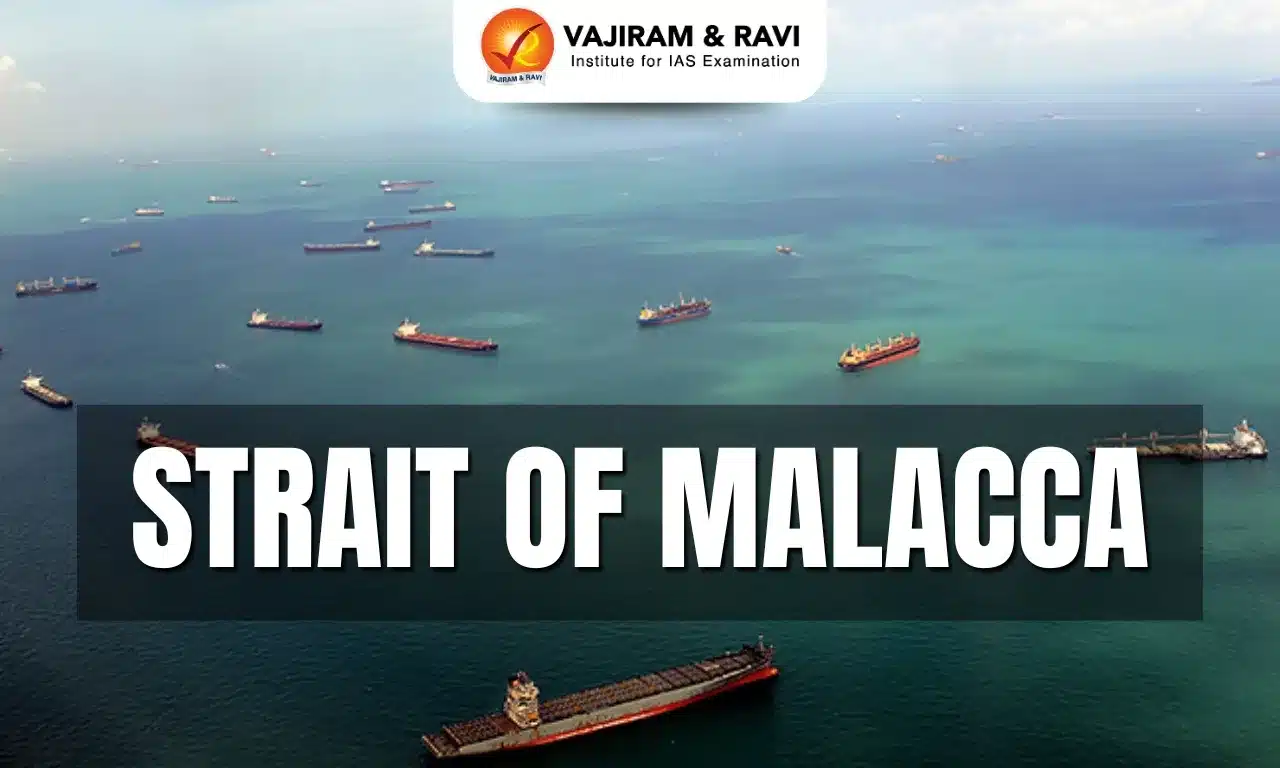
Strait of Malacca

Strait of Malacca

Strait of Malacca Latest News

A new cyclonic circulation recently developed over the central region of the Strait of Malacca, reaching an altitude of 5.8 km.

About Strait of Malacca

  • It connects the Andaman Sea (Indian Ocean) and the South China Sea (Pacific Ocean).
  • It runs between the Indonesian island of Sumatra to the west and peninsular (West) Malaysia and extreme southern Thailand to the east. 
  • The Strait of Malacca’s name was derived from the Malacca Sultanate, who governed the archipelago from 1400 until 1511.
  • The strait has a width of about 890 kilometres and a depth of 25 meters. 
  • It has an area of about 25,000 square miles (65,000 sq.km.).
  • The climate of the strait is hot and humid and is characterized by the northeast monsoon during the (northern) winter and the southwest monsoon during the summer.
  • It links the Indian and Pacific oceans and is one of the busiest and most important shipping lanes in the world.
  • Singapore, Malaysia, and Indonesia control the joint patrolling of the Malacca Strait.
  • Significance:
    • Roughly 60% of India’s seaborne trade and almost all of its LNG imports pass through the Malacca Strait.
    • The route is also a choke point for Chinese shipping, which makes it strategically sensitive.

Source: ODTV

Strait of Malacca FAQs

Q1: The Strait of Malacca connects which two major water bodies?

Ans: It connects the Andaman Sea (Indian Ocean) and the South China Sea (Pacific Ocean).

Q2: Which countries are primarily involved in the joint patrolling of the Strait of Malacca?

Ans: Singapore, Malaysia, and Indonesia

Q3: Why is the Strait of Malacca significant for India’s maritime trade?

Ans: Roughly 60% of India’s seaborne trade and almost all of its LNG imports pass through the Malacca Strait.

Sangai Festival

Sangai Festival

Sangai Festival Latest News

Recently, the Sangai Festival in Manipur began amid a protest by internally displaced persons (IDPs) and members of NGOs, impacting attendance.

About Sangai Festival

  • It is celebrated in the state of Manipur.
  • It is an annual festival, started in the year 2010, which is named after the state animal, the Sangai.
  • It aims to showcase Manipur’s rich cultural heritage and indigenous tradition.
  • The festival promotes the cultural extravaganza of Manipur through music, dance and various native art forms that are part of the Manipuri tribes and people.
  • The state's classical dance form, 'Ras Leela,' renowned for its distinctiveness, takes centerstage during the festival. 
  • Theme of 2025: Where blossoms breathe harmony

Key Facts about Sangai

  • It is a subspecies of Eld’s deer endemic to Manipur.
  • It also has immense cultural relevance to Manipur.
  • Distribution: It is found only in Keibul Lamjao National Park – the largest single mass of phumdi is in the Loktak Lake – in Manipur’s Bishnupur district.
  • Appearance: It is a medium-sized deer, with uniquely distinctive antlers, with extremely long brow tine, which form the main beam.
  • Conservation status
    • IUCN: Critically Endangered
    • Wildlife Protection Act 1972: Schedule-1

Source: TH

Sangai Festival FAQs

Q1: Which animal is the Sangai Festival named after?

Ans: Sangai Deer

Q2: What is the theme of the Sangai Festival 2025?

Ans: Where blossoms breathe harmony

Mahi River

Mahi River

Mahi River Latest News

11 people were killed and several vehicles fell into the Mahisagar (Mahi) River after a section of the Gambhira-Mujpur bridge in Padra taluka of Gujarat's Vadodara collapsed recently.

About Mahi River

  • It is one of the major west-flowing interstate rivers of India.
  • It flows through the states of Madhya Pradesh, Rajasthan, and Gujarat.
  • The river is popularly described as "Mahisagar" due to its vastness.
  • Course:
    • It originates in the northern slope of the Vindhya Mountain Range in Madhya Pradesh, at an average altitude of about 500 m above mean sea level. 
    • After its birth, the river flows in the southerly direction of Madhya Pradesh for about 120 km. 
    • It enters the southeastern portion of Rajasthan, which is the Vagad region. The river flows through the Banswara district, which comes under the Vagad region. 
    • Before entering Gujarat, the river makes a `U` shaped loop in Rajasthan. 
    • Finally, the river surrenders itself to the Arabian Sea by a wide estuary near Khambat. 
  • The total length of Mahi is 583 km.
  • The total drainage area of the river is about 34,842 sq.km.
  • It is bounded by the Aravalli Hills on the north and the northwest, by the Malwa Plateau on the east, by the Vindhyas on the south, and by the Gulf of Khambhat on the west. 
  • The silt brought down by the Mahi River has contributed to the thinning of the Gulf of Khambat and the abandonment of its once-rich ports.
  • The riverbed lies considerably lower than the land level and is of little use for irrigation.
  • Tributaries: The main tributaries of the river are Eru, Nori, Chap, Som, Jakham, Moran, Anas, Panam, and Bhadar.
  • The Mahi River has a dam on it, namely, the Mahi Bajaj Sagar Dam.

Source: NDTV

Mahi River FAQs

Q1: The Mahi River flows into which water body

Ans: Arabian Sea

Q2: The Mahi River flows through which states?

Ans: Madhya Pradesh, Rajasthan, and Gujarat

Q3: The source of the Mahi River lies in which mountain range?

Ans: Vindhya Mountain Range

Q4: What is the approximate total length of the Mahi River?

Ans: 583 km

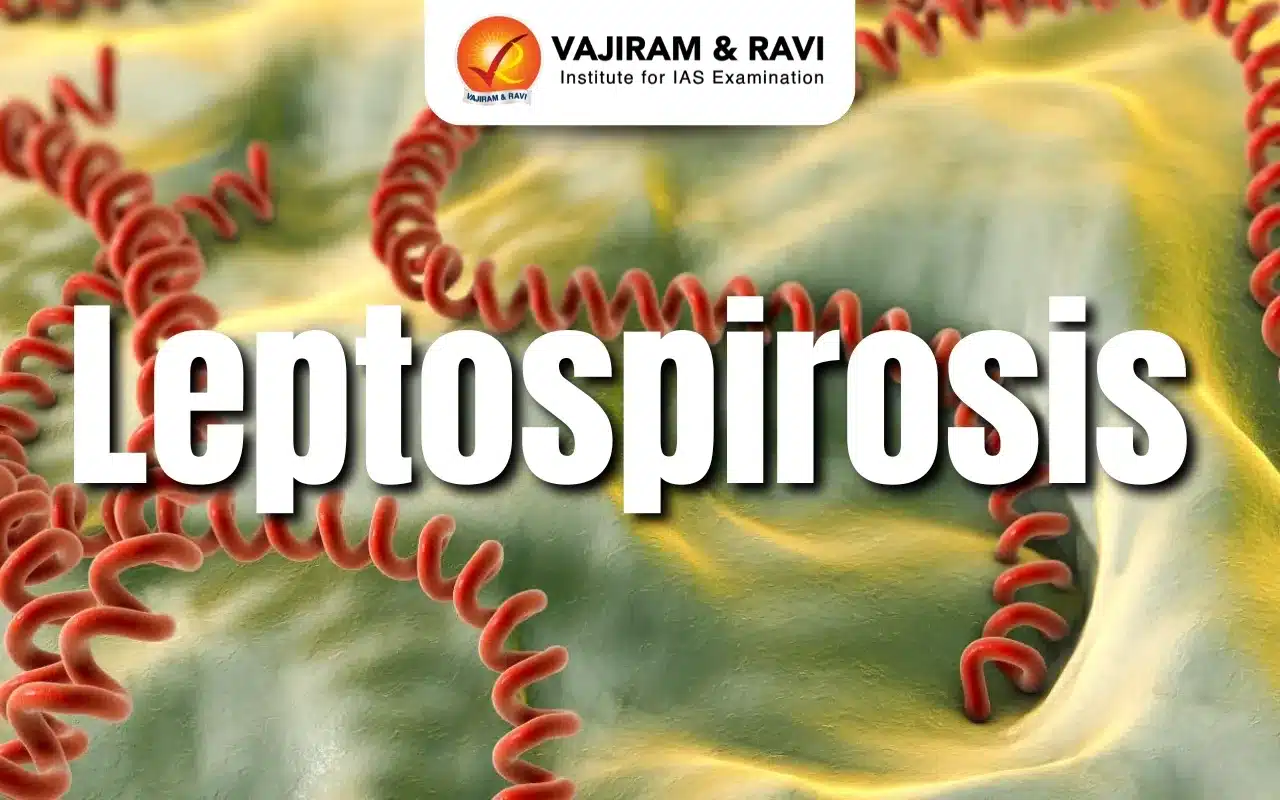
Leptospirosis

Leptospirosis

Leptospirosis Latest News

Recently, Jamaica has declared an outbreak of leptospirosis following the devastation from Hurricane Melissa. 

About Leptospirosis

  • It is a fatal bacterial disease.
  • Cause: The disease is caused by a bacterium called Leptospira interrogans, or Leptospira.
  • The bacteria can infect humans by entering the body through tiny cracks and wounds in the soles of the feet. 
  • Prevalence: It is more prevalent in warm, humid countries and both urban and rural areas. 
  • Leptospirosis may occur in two phases
    • After the first phase (symptoms: fever, chills, headache, muscle aches, vomiting, or diarrhoea) the patient may recover for a time but become ill again.
    • If a second phase occurs, it is more severe; the person may have kidney or liver failure or meningitis.
  • Treatment: It can be treated with antibiotics.

Transmission of Leptospirosis

  • It is a contagious disease in animals but is occasionally transmitted to humans in certain environmental conditions.
  • The carriers of the disease can be either wild or domestic animals, including rodents, cattle, pigs, and dogs.
  • The cycle of disease transmission begins with the shedding of leptospira, usually in the urine of infected animals.
  • Infected animals can continue to excrete the bacteria into their surroundings for a few months, but sometimes up to several years.

Source: TH

Leptospirosis FAQs

Q1: What is Leptospirosis?

Ans: A bacterial disease

Q2: What are the common symptoms of Leptospirosis?

Ans: Fever, headache, and muscle pain

Food Safety and Standards Authority of India (FSSAI)

Food Safety and Standards Authority of India

Food Safety and Standards Authority of India Latest News

The Food Safety and Standards Authority of India (FSSAI) recently issued an order to all the States/UTs Commissioners of food safety asking them to remove all non-compliant ORS products from shops immediately.

About Food Safety and Standards Authority of India

  • It is an autonomous body established under the Ministry of Health and Family Welfare, Government of India.
  • It has been established under the Food Safety and Standards Act, 2006, which is a consolidating statute related to food safety and regulation in India.
  • FSSAI is responsible for setting food standards, regulating the manufacture, storage, distribution, sale, and import of food, and ensuring the availability of safe and wholesome food for human consumption. 
  • It lays down the science-based standards for food articles and regulates their manufacturing and distribution processes.
  • Functions:
    • Standards Development: FSSAI formulates standards for various food products, ensuring they are safe for consumption.
    • Food Safety Management Systems: It provides guidelines for businesses to implement effective food safety management practices.
    • Licensing and Registration: FSSAI manages the licensing process for food businesses, ensuring they comply with food safety regulations.
    • Surveillance and Monitoring: Regular inspections and audits are conducted to assess compliance with food safety standards.
    • Consumer Awareness: Initiatives to educate the public about food safety, hygiene, and nutrition are a key focus area.
  • Anyone selling or importing food in India needs a food licence issued by FSSAI.
  • FSSAI also directly monitors compliance of food regulations, especially in the area of food imports to India. 
  • FSSAI officers carry out food import controls and ensure that they contain no harmful ingredients. To do this, they send selected test products from the import to accredited laboratories for inspection.
  • The FSSAI is also responsible for the accreditation of food testing laboratories throughout India.
  • FSSAI has notified 14 referral labs, 72 State/UT labs across India, and 112 NABL approved commercial labs, all of which are situated throughout the country.

Source: IT

Food Safety and Standards Authority of India FAQs

Q1: The Food Safety and Standards Authority of India (FSSAI) was created under which Act?

Ans: Food Safety and Standards Act, 2006

Q2: What is the primary objective of Food Safety and Standards Authority of India (FSSAI)?

Ans: Ensure safe and wholesome food for human consumption.

Q3: What does Food Safety and Standards Authority of India (FSSAI) do to ensure safety of imported food items?

Ans: Sends selected samples to accredited laboratories for testing.

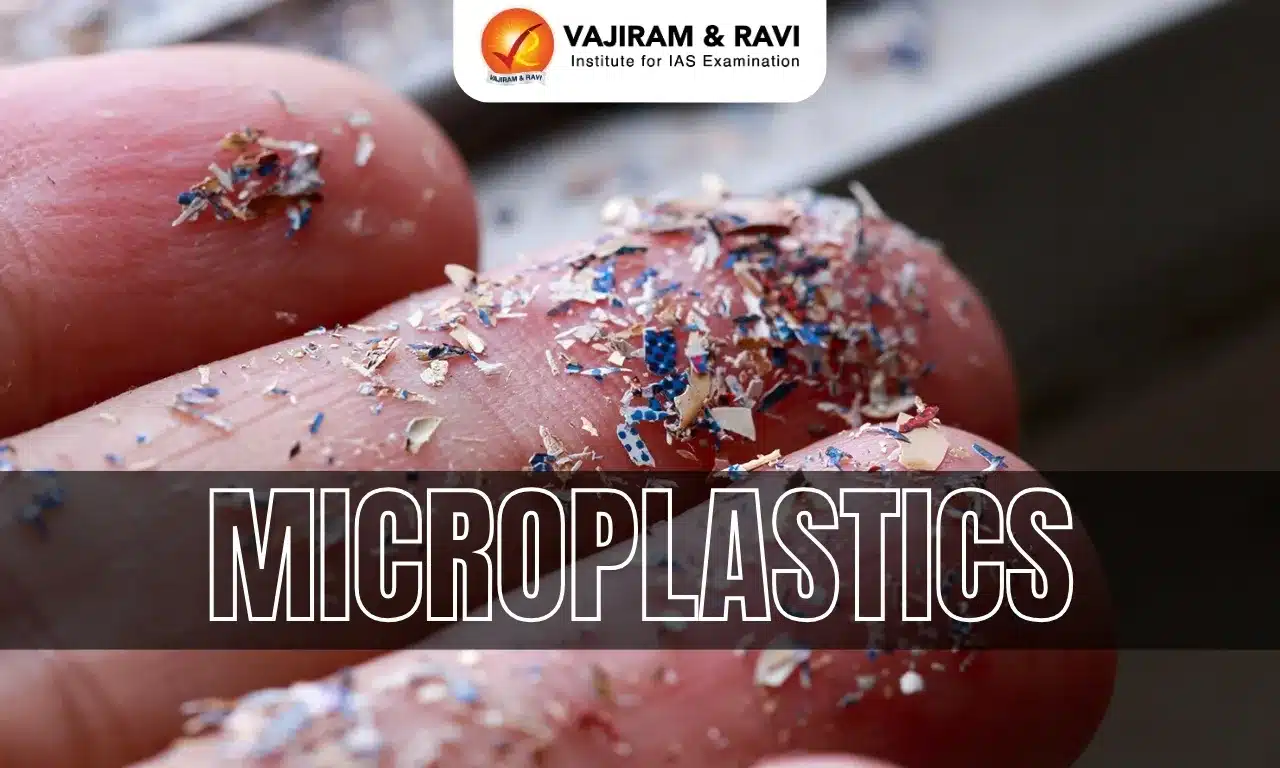
Microplastics

Microplastics

Microplastics Latest News

Weather conditions, especially continuous rainfall, drive microplastics into city lakes, a new study reports.

About Microplastics

  • Microplastics are small pieces of plastics, usually smaller than 5 mm.
  • They are present in a variety of products, from cosmetics to synthetic clothing to plastic bags and bottles. Many of these products readily enter the environment as wastes.
  • Microplastics consist of carbon and hydrogen atoms bound together in polymer chains. 
  • Other chemicals, such as phthalates, polybrominated diphenyl ethers (PBDEs), and tetrabromobisphenol A (TBBPA), are typically also present in microplastics, and many of these chemical additives leach out of the plastics after entering the environment.
  • They are persistent, very mobile, and hard to remove from nature. 
  • There are two categories of microplastics: primary and secondary.
    • Primary microplastics are tiny particles designed for commercial use, such as cosmetics, as well as microfibers shed from clothing and other textiles, such as fishing nets. 
    • They enter the environment directly through any of various channels—for example, product use, unintentional loss from spills during manufacturing or transport, or abrasion during washing.
    • Secondary microplastics are particles that result from the breakdown of larger plastic items, such as water bottles. 
    • This breakdown is caused by exposure to environmental factors, mainly the sun’s radiation and ocean waves.
  • Impacts:
    • Once in the environment, microplastics do not biodegrade and tend to accumulate and persist.
    • They can be ingested by marine organisms, leading to potential harm to aquatic life and bioaccumulation along the food chain.
    • They can also carry toxic chemicals and pollutants, posing additional risks to organisms and ecosystems.

Source: TOI

Microplastics FAQs

Q1: What are microplastics?

Ans: Microplastics are small pieces of plastics, usually smaller than 5 mm.

Q2: What are primary microplastics?

Ans: Plastics intentionally produced at microscopic sizes are termed primary microplastics,

Q3: What are secondary microplastics?

Ans: Secondary microplastics are particles that result from the breakdown of larger plastic items, such as water bottles.

India’s IPO Boom Masks Heavy Promoter Exits and Overpricing Risks

IPO

IPO Latest News

  • Chief Economic Advisor (CEA) V. Anantha Nageswaran has raised red flags about the changing nature of India’s initial public offerings (IPO) market. 
  • He warned that IPOs are increasingly being used as exit routes for early-stage investors rather than for raising long-term productive capital. 
  • His remarks come at a time when India’s primary market is witnessing a surge in IPO approvals and record fundraising plans, prompting concerns over overpricing and retail investors entering at inflated valuations.

IPOs Tilt Toward Promoter Payouts Instead of Capital Raising

  • Recent IPO data shows a worrying shift: instead of raising fresh capital for business expansion, most new listings are being dominated by offers for sale (OFS) — allowing promoters and early investors to cash out.
    • OFS is a mechanism on the stock exchange that allows existing shareholders, such as promoters or large institutional investors, to sell their existing shares to the public. 
  • Between SEBI-approved and pending applications, over 200+ companies are seeking to raise nearly ₹2.8 lakh crore, yet the structure of recent IPOs reveals that:
    • LG’s entire ₹11,000 crore IPO went to the Korean promoter.
    • Tata Capital’s IPO: Over ₹8,600 crore went to promoter Tata Sons and early investors.
    • Lenskart: More than ₹5,000 crore was cashed out by founders and pre-IPO shareholders.
    • WeWork India: The full ₹3,000 crore issue was an OFS by existing stakeholders.
  • In short, the majority of recent IPOs have become monetisation events rather than instruments for raising long-term growth capital.

OFS Dominates Recent IPO Structures

  • A major share of recent IPO issue sizes comprises Offer for Sale (OFS), where existing shareholders — mainly promoters and pre-IPO investors — sell their stakes.
  • OFS proceeds do not benefit the company, as the money goes directly to the selling shareholders.
  • OFS is not inherently problematic, but when it overshadows fresh issue components and valuations appear inflated, it raises serious concerns.

Overpricing Becomes a Red Flag

  • Market experts warn that overpriced IPOs are becoming a new systemic risk.
  • They note that hype-driven valuations, heavy anchor investor activity, and unrealistic growth assumptions are creating a dangerous disconnect between market prices and actual earnings potential — leaving retail investors exposed.
  • Companies - with modest profits, short operating history, or uncertain future cash flows - are demanding valuations that exceed even those of well-established, profitable listed firms.
  • These valuations are often justified using optimistic projections and aggressive accounting to project stronger growth ahead of listing.

Promoters and PE Funds Cashing Out at High Valuations

  • Promoters and private equity investors — who understand the company’s real financial health — often acquired shares at very low valuations earlier.
  • The IPO gives them a chance to exit at peak valuations, transferring nearly all the risk to public investors.
  • The biggest concern associated with this the is information asymmetry:
    • Promoters and early investors know far more about the company’s weaknesses and risks.
    • When they sell aggressively at high valuations, it raises the question: if the future is so bright, why are insiders exiting now?
  • This makes public investors wonder whether:
    • the company really needed fresh capital, or
    • the IPO was simply an opportunity to encash a favourable market sentiment.

Promoter Exits: Sign of a Maturing Market

  • Some experts argue that high promoter and private equity exits through IPOs reflect market maturity rather than malfunction.
  • They note that many IPOs criticised for high valuations have later become multibaggers, including several new-age tech companies that have delivered ~50% average returns since listing.
  • They emphasised that early investors take significant risk in backing young companies. 
  • They deserve viable exit routes to recycle capital into new ventures—exactly how mature Western markets operate.
  • Many IPOs do very well, but investors forget that early funds also invest in many companies that fail. So, they need exits to recover money and keep investing.

Retail Investors at Risk in an Overheated IPO Market

  • Retail investors often rush into IPOs believing they guarantee quick profits. 
  • While some stocks list with a big pop, many fall or stagnate once excitement fades and prices adjust to real fundamentals. 
  • As a result, small investors end up holding overpriced shares while promoters and early investors walk away with huge gains.

Not All IPOs Are Bad — But Caution Is Needed

  • Several good companies have used IPOs responsibly. However, the current trend of inflated valuations, heavy offers for sale (OFS), and aggressive marketing has made the IPO space riskier than before. 
  • Experts say transparency on pricing, profitability, and peer comparisons is essential to protect retail investors.

Why Retail Investors Are Vulnerable

  • Even though regulators have tightened disclosure norms, pricing remains market-driven. 
  • When liquidity is high and sentiment is bullish, promoters and investment bankers naturally push valuations beyond fundamentals, leaving small investors exposed.

IPO Market at a Turning Point

  • If IPOs continue to be used mainly as exit avenues rather than genuine fundraising routes:
    • public trust will decline
    • retail participation will shrink
    • and the market may face a sharp correction
  • For a healthy ecosystem, companies must price more realistically, investors must look beyond narratives, and regulators must strengthen oversight. 
  • The bottom line: too many IPOs channel money to promoters instead of funding new projects or capacity expansion.

Source: IE | IT

IPO FAQs

Q1: Why are India’s recent IPOs raising concerns?

Ans: Most IPOs now function as exit routes for promoters and private equity investors through large offers for sale, limiting fresh capital for expansion and raising valuation concerns.

Q2: What is the issue with high OFS components in IPOs?

Ans: OFS-heavy IPOs send proceeds to selling shareholders, not companies, raising red flags when paired with aggressive pricing and limited track records of listing firms.

Q3: Why are retail investors vulnerable in the current IPO environment?

Ans: Retail buyers often enter at inflated valuations, driven by hype, only to face corrections once stocks trade on fundamentals while insiders exit with profits.

Q4: How do experts view high promoter exits in IPOs?

Ans: Some analysts argue promoter exits reflect a maturing market, offering early investors essential liquidity to reinvest despite occasional criticism of high valuations.

Q5: What could happen if IPOs remain dominated by exits?

Ans: Trust in the market may erode, retail participation could fall, and valuations may correct sharply unless pricing becomes realistic and disclosures strengthen.

e-KYC Drive Triggers Mass Deletions in MGNREGA Worker Records

MGNREGA

MGNREGA Latest News

  • The Mahatma Gandhi National Rural Employment Guarantee Act (MNREGA) covers nearly 26 crore registered workers across 2.69 lakh gram panchayats. Over the past six months, around 15 lakh workers were removed from the database. 
  • However, within just one month — from October 10 to November 14, 2025 — deletions spiked to 27 lakh, far exceeding the 10.5 lakh new additions during the same period.
  • This unprecedented rise in deletions coincides with the Union government’s intensified push for mandatory e-KYC verification to identify and remove ineligible or duplicate beneficiaries. 
  • Concerns are growing that the verification drive may be excluding genuine workers who struggle with documentation or biometric-related issues.

Legal Provisions on Job Cards

  • Under Para 2 of Schedule II, Gram Panchayats must issue job cards within 15 days of receiving an application.
  • Job cards must include a unique number, registration details, insurance details, and Aadhaar numbers (if any).
  • As per Para 3 of Schedule II, job cards must be renewed every five years after proper verification.
  • States, through Panchayati Raj Institutions, are responsible for issuance, verification, and renewal.

Government’s Rationale for e-KYC Push

  • The Union Ministry of Rural Development has stated that verifying MGNREGA workers is an ongoing exercise, and e-KYC is an additional step to enhance transparency and efficiency. 
  • According to the Ministry, the digital verification process is intended to improve service delivery and reduce inclusion errors. 
  • So far, over 56% of active workers have completed e-KYC across States, indicating steady progress in the verification drive.

Methods of Worker Verification

  • Before the introduction of e-KYC, the government relied on multiple digital and Aadhaar-linked verification measures to prevent ineligible beneficiaries under MGNREGA:
    • Digital Attendance (NMMS App): After a year-long pilot from May 2022, workers’ attendance had to be captured via the National Mobile Monitoring System. Mates/supervisors uploaded geotagged photos twice daily from worksites.
    • Aadhaar-Based Payment System (ABPS): Made mandatory in January 2023, ABPS required workers’ Aadhaar to be linked with job cards and bank accounts.
    • NPCI Mapping Requirements: Workers’ Aadhaar numbers and banks’ IINs had to be mapped with the NPCI database to enable Aadhaar-based payments.
  • These steps aimed to tighten verification, reduce duplication, and ensure payments reached genuine workers.

e-KYC Process

  • Under the e-KYC system integrated into the NMMS app, supervisors photograph each MNREGA worker at the worksite. 
  • This image is then digitally matched with the worker’s Aadhaar database photo to verify identity instantly.
  • Since 99.67% of active workers have Aadhaar seeded, e-KYC provides a quick, accurate, and reliable verification method.

Link Between e-KYC Drive and MNREGA Worker Deletions

  • Earlier digital measures — NMMS for attendance and Aadhaar-Based Payment System (ABPS) — were introduced to improve transparency but instead caused widespread exclusion.
  • Issues included poor network connectivity, limited digital literacy, and technical failures that prevented attendance capture, leading to wage loss.

Aadhaar Seeding and Data Mismatch Problems

  • ABPS required perfect matching of Aadhaar details with job cards and bank accounts.
  • Minor spelling differences in names or demographic discrepancies frequently caused workers’ records to be rejected.
  • During ABPS rollout, deletions surged by 247% between 2021-22 and 2022-23.

Failures in NMMS Implementation

  • NMMS did not deliver the intended transparency. Problems included:
    • Uploading irrelevant or fake photos
    • Photo-to-photo capturing instead of live images
    • Large mismatches between actual and recorded attendance
  • To fix this, the government introduced a multi-level verification system, with 100% verification at gram panchayat level and reduced checks at higher levels.

Introduction of e-KYC Due to NMMS Shortcomings

  • e-KYC was introduced partly because NMMS verification was unreliable.
  • The new system seeks to validate identity using live photo matching with Aadhaar.

Government Denies a Direct Link

  • The government claims deletions follow a strict SOP issued in January, ensuring transparency and allowing appeals before deletion.
  • It rejects claims that e-KYC itself is causing deletions.
  • Despite government denial, States with high e-KYC completion rates are reporting massive deletions:
    • Andhra Pradesh: 78.4% e-KYC done → 15.92 lakh deletions
    • Tamil Nadu: 67.6% → 30,529 deletions
    • Chhattisgarh: 66.6% → 1.04 lakh deletions
  • This raises questions about whether the e-KYC drive is indirectly contributing to exclusion.

Overall Assurance

  • The Ministry affirms its dedication to:
    • Protecting the rights of every genuine MGNREGA worker
    • Ensuring uninterrupted wage employment
    • Maintaining transparency, accountability, and effectiveness in scheme implementation

Source: TH | PIB

MGNREGA FAQs

Q1: Why has the e-KYC drive become controversial in MGNREGA?

Ans: The e-KYC push coincided with a sudden rise in worker deletions, raising concerns that technical failures, Aadhaar mismatches, and network gaps may be excluding genuine beneficiaries.

Q2: What are the government’s reasons for implementing e-KYC?

Ans: The government says e-KYC enhances transparency, reduces fraud, and improves service delivery by digitally verifying workers’ identities and linking records with Aadhaar for accurate payments.

Q3: How were MGNREGA workers verified before e-KYC?

Ans: Earlier verification involved NMMS-based digital attendance, Aadhaar-Based Payment System requirements, and NPCI mapping—processes that often caused disruptions due to connectivity and data mismatch issues.

Q4: How does the e-KYC verification process function?

Ans: Supervisors capture a worker’s live photo through the NMMS app, which is automatically matched with Aadhaar data in real time to confirm identity efficiently.

Q5: Why do high-deletion States raise concerns about e-KYC?

Ans: States with high e-KYC completion, like Andhra Pradesh and Tamil Nadu, report heavy deletions, suggesting the verification process may indirectly contribute to exclusion despite government denial.

2025 G-20 Leaders’ Summit – Johannesburg Declaration Affirms Multilateralism and Global South Priorities

G20 Summit 2025

2025 G20 Leader’s Summit Latest News

  • At the 2025 G-20 Leaders’ Summit in Johannesburg, the host South Africa achieved the adoption of the G-20 Leaders’ Declaration by consensus—despite the U.S. boycott and attempts to block the text.
  • This was the first G-20 Summit held in Africa, marking an important moment for the Global South, African development, and the evolving global governance architecture.

Adoption of the Declaration

  • Unusual early adoption:
    • The Declaration was adopted at the start of the Summit, not at the end—an unprecedented step.
    • Negotiated and finalised by Sherpas, enabling early clearance.
  • South Africa’s stand:
    • Declared the adoption an “affirmation of multilateralism.”
    • Asserted that the G20 cannot be paralysed due to the absence of any single country, including the U.S.
  • US opposition: The U.S. did not participate and attempted to block the Declaration. Boycott due to deteriorating Washington–Pretoria ties.

Key Themes and Priorities in the G-20 Declaration

  • Multilateralism and global cooperation:
    • Reiterated commitment to the UN Charter, international law and peaceful settlement of disputes.
    • Emphasised the African philosophy Ubuntu: “I am because we are.”
  • Weak position on conflicts: 
    • Minimal references to Russia–Ukraine war, Gaza conflict, Middle East tensions.
    • Single-line condemnation of terrorism - “Terrorism in all its forms and manifestations.”
    • Still included a key line - states must refrain from use of force for territorial acquisition.
  • Global South issues:
    • Strong emphasis on debt sustainability, development financing, inequality, African priorities.
    • India ensured Global South concerns, a continuation of India’s 2023 G20 presidency.
  • UN Security Council (UNSC) reform: Called for “transformative reform” of UNSC. Sought increased representation for Africa, Asia-Pacific, Latin America & Caribbean.
  • Women-led development: Reaffirmed commitment to empowerment of women and girls, removing socio-economic barriers, promoting women-led development, and recognising women as agents of peace.

South Africa’s Bilateral Balancing with the US

  • Balanced diplomacy: Acknowledged the economic importance of the U.S. - U.S. is South Africa’s second largest trading partner. Rejected U.S. claims of “genocide of white farmers” as baseless.
  • Debt sustainability push: Highlighted issue of risk-parity - countries with same risk but higher interest rates.

India’s Priorities and Contributions

  • Reconsidering global parameters of growth: 
    • The Indian PM argued current economic models have left many deprived of resources and caused over-exploitation of nature.
    • He stressed the need to rethink development, especially as Africa remains most affected.
  • “Integral Humanism”: 
    • The Indian PM promoted Deen Dayal Upadhyay’s Integral Humanism - holistic development of individuals and society through the integration of material and spiritual well-being.
    • It will provide an alternative to Western ideologies such as individualism, secularism, communism.
  • Key initiatives proposed by India:
    • Global traditional knowledge repository: For sustainable, culturally rooted, eco-balanced lifestyles.
    • G20–Africa Skills Multiplier initiative: India to train 1 million Africans in skill sectors.
    • G20 Global Healthcare Response Team.
    • G20 Initiative on Countering the Drug–Terror nexus: Highlighted fentanyl, drug trafficking, and terror financing.
    • G20 Open Satellite Data Partnership: Sharing agriculture, fishing, disaster data.
    • Critical Minerals Circularity Initiative: Recycling, sustainable mining, strategic minerals.
  • India’s diplomatic engagements: ACITI Partnership (Australia–Canada–India) launched for technology and innovation, AI, clean energy, supply chain resilience.

Broader Geopolitical Backdrop

  • Rising geopolitical fragmentation: Declaration notes trade wars (US tariff wars under Trump), geoeconomic competition, conflicts, inequalities, uncertainty in global economy.
  • Absence of U.S.: First-ever G20 Summit boycotted by the U.S. Raises questions on global leadership transitions.

Challenges Ahead

  • Weak consensus on global conflicts: Almost no mention of Ukraine, Gaza. Makes it one of the weakest declarations in G20 history.
  • Debt sustainability for developing nations: High interest rates for the same risk profile.
  • Geopolitical fragmentation: US–South Africa tensions, rise of competing blocs.
  • Inequality and resource deprivation: Current growth models unsustainable.
  • Climate change: G20 responsible for the majority of emissions—yet slow collective action.

Way Forward

  • Strengthen multilateral institutions: Reform UNSC, empower Global South.
  • Sustainable development framework: Integrate traditional knowledge, eco-balanced growth, and integral humanism.
  • Gender-inclusive development: Remove socio-economic barriers, promote women-led governance.
  • Digital cooperation and technology partnerships: Example, ACITI partnership, Satellite data sharing, etc.
  • Counter Drug–Terror nexus: Multilateral intelligence-sharing; regulation of fentanyl, synthetic opioids.
  • Climate action: Promote critical mineral recycling, clean energy supply chains.

Conclusion

  • The 2025 Johannesburg G20 Declaration marks a pivotal moment in global governance, with Africa asserting leadership, the Global South shaping priorities, and the G20 adopting consensus despite U.S. boycott.
  • While the declaration is symbolically strong on multilateralism, it is weak on major global conflicts and hard security issues. 
  • India played a crucial role in embedding developmental, gender, and sustainability priorities and propelled new initiatives aligned with integral humanism and South–South cooperation.

Source: TH | IE | TH

2025 G-20 Leaders’ Summit FAQs

Q1: What is the significance of the early adoption of the 2025 G-20 Johannesburg Declaration?

Ans: It symbolises a strong affirmation of multilateralism and Global South leadership despite U.S. opposition and geopolitical fragmentation.

Q2: How the 2025 G-20 Declaration reflects the priorities of the Global South?

Ans: The Declaration highlights debt sustainability, inequality, development financing, UNSC reform, etc.

Q3: How does the philosophy of Integral Humanism influence India’s stance at the G-20 Summit?

Ans: It offers a holistic, culturally rooted alternative to Western models and underpins India’s push for sustainable, human-centric development.

Q4: What are the challenges highlighted by South Africa regarding debt sustainability in the G-20 Declaration?

Ans: Countries with similar risk profiles face unequal interest rates, deepening financial distress and limiting developmental capacity.

Q5: What is the implication of the limited mention of global conflicts in the 2025 G-20 Declaration?

Ans: Minimal references to Ukraine and Gaza make it one of the weakest G-20 declarations on geopolitical issues, reflecting consensus-building constraints.

Enquire Now