
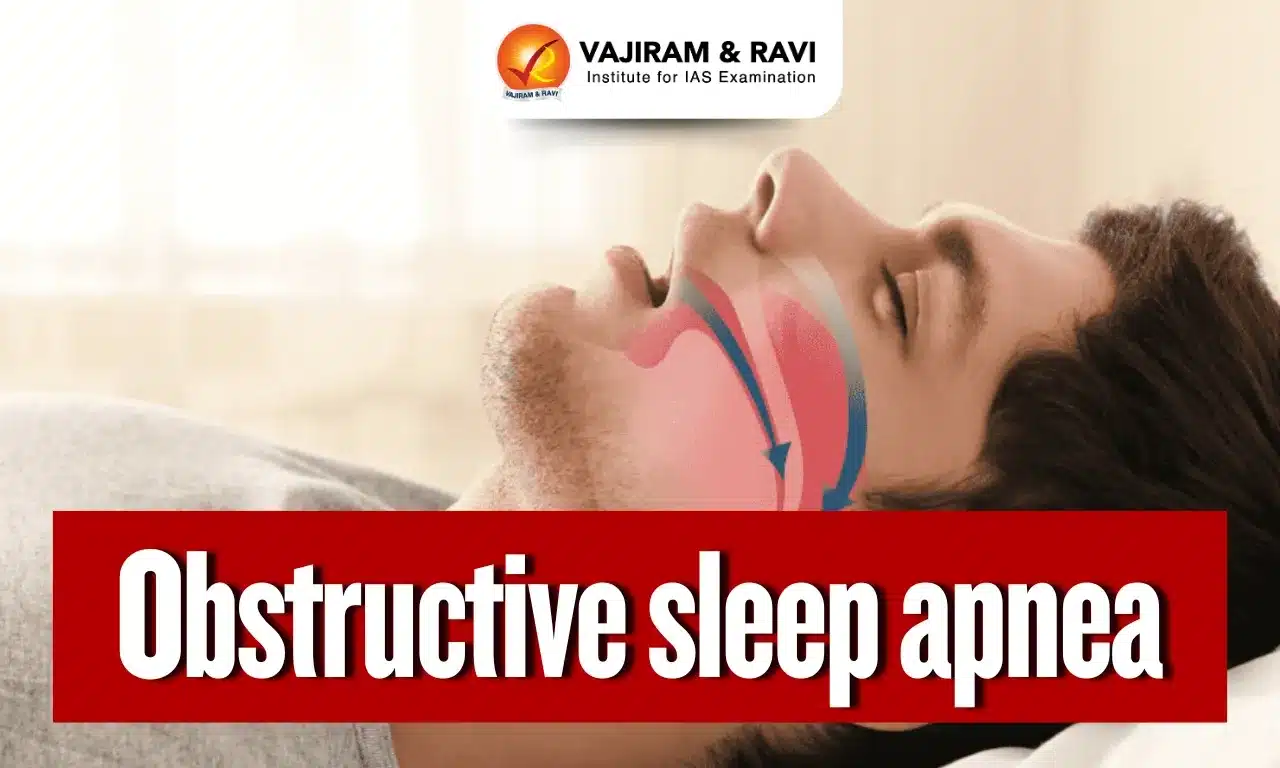
Obstructive Sleep Apnea Latest News
New findings reveal that untreated obstructive sleep apnea can significantly raise the likelihood of developing Parkinson’s disease.
About Obstructive Sleep Apnea
- It is the most common sleep-related breathing disorder.
- People with OSA repeatedly stop and start breathing while they sleep.
- These breath pauses are known as apneas.
- There are several types of sleep apnea. OSA occurs when the throat muscles relax and block the airway.
- This happens off and on many times during sleep.
- You may wake up frequently, which can lead to daytime exhaustion and other frustrating symptoms.
- Loud snoring is a telltale symptom of OSA. Snoring is caused by air squeezing through the narrowed or blocked airway. Not everyone who snores has OSA.
- Anyone at any age can have OSA. But it's most common in middle-aged and older adults.
- This condition has significant implications for cardiovascular health, mental well-being, quality of life, and driving safety.
- Treatment for OSA may include:
- Making lifestyle changes like sleeping position adjustments (not sleeping on your back) or maintaining a weight that’s healthy for you.
- Using a continuous positive airway pressure (CPAP) machine.
- Wearing oral appliances (mouthpieces).
- Undergoing surgery.
Key Facts about Obstructive Sleep Apnea
- It is a progressive neurodegenerative disorder that primarily affects movement.
- It causes nerve cells (neurons) in parts of the brain to weaken, become damaged, and die, leading to symptoms that include problems with movement, tremor, stiffness, and impaired balance.
- As symptoms progress, people with PD may have difficulty walking, talking, or completing other simple tasks.
- Although many brain areas are affected in Parkinson’s disease, the most common symptoms result from the loss of neurons in an area near the base of the brain called the substantia nigra.
- Who Does It Affect?
- The disease usually occurs in older people, but younger people can also be affected.
- Men are affected more often than women.
- The cause of PD is unknown but people with a family history of the disease have a higher risk.
- Exposure to air pollution, pesticides, and solvents may increase risk.
- People with PD often develop a “parkinsonian gait.”
- This includes a tendency to lean forward, taking small, quick steps as if hurrying (called festination), and reduced swinging in one or both arms.
- They may have trouble initiating movement (called “start hesitation”) and stop suddenly as they walk, freezing in place.
- Diagnosis: Currently, no blood laboratory or radiological tests are available to diagnose Parkinson’s disease.
- Treatment: There’s no cure for this disease, but treatments can help significantly improve your symptoms.
Source: SCTD
Obstructive Sleep Apnea FAQs
Q1: What is Obstructive Sleep Apnea (OSA)?
Ans: It is the most common sleep-related breathing disorder.
Q2: What causes Obstructive Sleep Apnea (OSA)?
Ans: OSA occurs when the throat muscles relax and block the airway.
Q3: What is the common symptom of Obstructive Sleep Apnea (OSA)?
Ans: Loud snoring.
