Largest Country in the World, Area, Population, Significance

Largest Country in the World

The largest country in the world refers to a nation with the greatest total land area. Earth’s land surface spans around 148 million square kilometers, and a handful of countries occupy most of it. From Russia’s icy frontiers to Brazil’s rainforests, these countries shape global trade, climate, and politics. Understanding their size helps

explain how geography influences economic and environmental power worldwide.

Largest Country in the World

The largest country in the world is Russia, spanning 17.1 million square kilometers and stretching across Europe and Asia. This means it covers 11% of Earth’s total land area and spans 11 time zones, more than any other nation. Russia’s immense landmass includes forests, lakes, mountains, and permafrost regions, giving it immense natural resources but also governance challenges.

Read About: Most Populated Country in the World

Largest Country in the World List by Area

These five countries occupy nearly one-third of the Earth’s landmass. The top 5 largest countries based on the area has been tabulated below:

Rank Country Total Area (sq km) Continent / Region Distinctive Feature
1 Russia 17,098,246 Europe & Asia Largest country; spans 11 time zones and has vast, varied landscapes.
2 Canada 9,984,670 North America Rich in forests and freshwater; has the longest coastline in the world.
3 China 9,596,960 Asia Large and diverse geography; highly populous and a major global economic power.
4 United States 9,525,067 North America Diverse landscapes including forests, deserts, and mountains; globally influential.
5 Brazil  8,510,346 South America Largest country in South America; home to the Amazon rainforest and river basin.

Top 5 Largest Countries of the World

1. Russia- The Largest Country in the World

  • Russia remains the world’s largest nation, extending from the Baltic Sea to the Pacific Ocean.
  • Area: 17.1 million sq km
  • Capital: Moscow
  • Population (2025): ~144 million
  • Natural Wealth: Oil, gas, coal, forests (20% of global coverage)

Its vast expanse allows major influence over trade routes, energy supply, and global politics, though managing remote regions remains a challenge.

2. Canada- The Second Largest Country

  • Canada ranks second among the largest countries in the world, with 9.98 million sq km.
  • Population: ~40 million
  • Unique Feature: World’s longest coastline- 243,000 km
  • Resource Strength: Freshwater reserves, minerals, and Arctic oil

Canada’s northern territories remain largely uninhabited, highlighting its contrast between size and population density

3. China- The Largest in Asia

  • China, covering 9.6 million sq km, ranks fourth globally (However it is disputed till date).
  • Population: ~1.4 billion
  • Geography: Plateau, plains, deserts, and mountains
  • Key Fact: Shares borders with 14 countries

Despite being smaller than Russia and Canada in area, its vast population and economic scale make China a global powerhouse.

4. United States- The Third Largest

  • The United States extends across 9.8 million sq km with varied landscapes, from Alaska’s tundra to Florida’s beaches.
  • Population: ~340 million
  • Economy: Largest nominal GDP in the world
  • Environment: Diverse biomes including deserts, forests, and grasslands

Its large area allows vast agricultural productivity, industrial growth, and cultural diversity.

5. Brazil- The Largest in South America

  • Brazil, at 8.5 million sq km, ranks fifth.
  • Population: ~213 million
  • Unique Feature: Amazon Rainforest covering 60% of its land
  • Biodiversity: Home to 10% of Earth’s species

Brazil’s large geography plays a crucial role in regulating the global carbon cycle through its Amazon ecosystem.

Read About: Superlatives of the World

Largest Country in the World Map

If visualized on a world map, the five largest countries dominate their entire continents. Together, these five countries create a belt of geographical dominance across the Northern Hemisphere, influencing global weather patterns, trade corridors, and energy routes.

  • Russia spans across northern Eurasia, visible as the most extensive landmass.
  • Canada occupies the northern half of North America.
  • China covers the eastern section of Asia with dense central plains along with several diverse land features..
  • The United States stretches from the Atlantic to the Pacific with Alaska adding Arctic coverage.
  • Brazil fills the majority of South America’s eastern region.

Largest Country in the World Geographical Significance

The largest countries in the world significantly affect the Earth’s climate and ecosystems:

  • Russia and Canada regulate global temperature through Arctic and boreal forests.
  • China and the U.S. impact emissions, industry, and innovation.
  • Brazil’s Amazon Basin absorbs a large percentage of the world’s carbon dioxide.
  • These nations also contain major rivers (Amazon, Mississippi, Yangtze), glaciers, and deserts that influence the global hydrological and atmospheric balance.

Largest Country in the World Economic and Strategic Importance

Large territories often mean greater resource availability and political leverage. BRIC countries (Brazil, Russia, India, China) plus South Africa accounted for over 32% of global GDP in 2022, while the G7 (including the US and Canada) represented around 30% of global GDP.

  • Russia: Major energy exporter and military power.
  • China: Leading manufacturer and trading hub.
  • United States: Technological and financial superpower.
  • Canada: Supplier of minerals, timber, and oil sands.
  • Brazil: Agricultural and environmental leader.

Largest Country in the World Challenges

Despite being large in the area of extension, these countries face several challenges as given below:

  • Climate Change Impact:
    • Arctic melting and Amazon deforestation affect global systems.
    • Way Forward: Strengthen international environmental commitments.
  • Unequal Development:
    • Remote regions remain poor and underdeveloped.
    • Way Forward: Expand infrastructure and digital access.
  • Population Imbalance:
    • Dense cities vs. empty rural zones.
    • Way Forward: Promote regional industrialization.
  • Resource Dependence
    • Heavy reliance on oil or coal exports.
    • Way Forward: Diversify towards clean energy sectors.
  • Environmental Degradation
    • Overexploitation of forests and minerals.
    • Way Forward: Enforce conservation laws.
  • Governance Issues
    • Difficult to administer vast territories.
    • Way Forward: Improve decentralization and local governance.
  • Border Conflicts
    • Large borders increase geopolitical tensions.
    • Way Forward: Strengthen diplomacy and security cooperation.
  • Natural Disasters
    • Droughts, floods, and wildfires affect vast lands.
    • Way Forward: Invest in disaster-resilient infrastructure.
  • Urbanization Pressure
    • Rapid city growth strains resources.
    • Way Forward: Promote smart urban planning.
  • Climate Refugees
    • Migration from affected regions
    • Way Forward: Develop humanitarian and migration frameworks.

Largest Country in the World India’s Position

India ranks seventh among the largest countries in the world, covering 3.29 million sq km. Though smaller than Russia or Canada, India’s geographic diversity, ranging from the Himalayas to coastal plains, supports one of the world’s richest ecosystems.

Features:

  • Population (2025): 1.46 billion (largest globally)
  • Coastline: 7,516 km
  • Climate Zones: India experiences a wide range of climate zones, from tropical monsoon in the south to alpine/ tundra in the Himalayas and arid desert in the west.
  • Economic Impact: Fifth-largest global economy
  • India’s geographical advantage aids its agricultural productivity, renewable energy expansion, and trade through key ports like Mumbai, Chennai, and Kochi.

Largest Country in the World UPSC

The largest countries in the world, Russia, Canada, the United States, China and Brazil, represent the geographical and ecological pillars of our planet. Their vast territories hold immense resources, biodiversity, and strategic strength. While their size grants influence, it also demands responsible management to protect the environment and ensure equitable growth. For India and developing nations, studying these countries’ geography and governance provides lessons in balancing expansion with sustainability. The major features of these largest countries are:

  • Russia’s Lake Baikal holds 20% of Earth’s freshwater.
  • Canada has more lakes than all other countries combined.
  • China’s Great Wall extends over 21,000 km.
  • The U.S. has the world’s largest economy and advanced climate zones.
  • Brazil produces nearly 6% of global oxygen through the Amazon rainforest.

Largest Country in the World FAQs

Q1: Which is the Largest Country in the World?

Ans: Russia is the largest country in the world, covering about 17.1 million square kilometers.

Q2: What are the top five Largest Country in the World by area?

Ans: Russia, Canada, the United States, China and Brazil are the top five largest countries in the world.

Q3: How does India rank globally by Area?

Ans: India ranks seventh in the world with a total area of 3.29 million square kilometers.

Q4: Which country has the longest coastline among the top five?

Ans: Canada has the longest coastline in the world, measuring about 243,000 kilometers.

Q5: What role do large countries play in global climate regulation?

Ans: They host major forests, rivers, and ecosystems that regulate carbon dioxide, rainfall, and temperature worldwide.


Thalassemia

Thalassemia

Thalassemia Latest News

Scientists recently tested a gene-editing method called adenine base editing to fix two severe mutations that cause -thalassemia, a genetic blood disease.

About Thalassemia

  • It is an inherited blood disorder. 
  • It affects your body’s ability to produce normal hemoglobin. 
  • Hemoglobin is a protein in red blood cells (RBCs). It allows your RBCs to transport oxygen throughout your body.
  • If you have thalassemia, your body produces fewer healthy hemoglobin proteins, and your bone marrow produces fewer healthy RBCs. 
  • The condition of having fewer RBCs is called anemia. That can make you feel tired and weak.
  • As RBCs serve the vital role of delivering oxygen to tissues in your body, not having enough healthy RBCs can deprive your body’s cells of the oxygen they need to make energy and thrive.
  • Thalassaemia is caused by inheriting a gene mutation (change in the normal DNA) from one or both parents.
  • Traits for thalassemia are more common in people from Mediterranean countries, like Greece and Turkey, and in people from Asia, Africa, and the Middle East. 
  • There are different types of thalassemia. The type someone has depends on which gene mutation they inherit.
  • Symptoms: Thalassemia can cause mild or severe anemia and other complications over time (such as iron overload). 
    • Symptoms of Anemia Include:
      • Fatigue.
      • Trouble breathing.
      • Feeling cold.
      • Dizziness.
      • Pale skin.
    • Severe thalassemia may cause death.
  • Treatments:
    • Blood transfusions – regular blood transfusions treat and prevent anaemia; in severe cases these are needed around once a month.
    • Chelation therapytreatment with medicine to remove the excess iron from the body that builds up as a result of having regular blood transfusions.
    • The only possible cure for thalassemia is a stem cell or bone marrow transplant, but this is not done very often because of the risks involved.

Source: TH

Thalassemia FAQs

Q1: What is Thalassemia?

Ans: It is an inherited blood disorder.

Q2: Thalassemia is primarily affects which component of the blood?

Ans: Hemoglobin

Q3: What is the main function of hemoglobin?

Ans: Transporting oxygen in the blood.

Q4: What is the cause of Thalassemia?

Ans: Thalassaemia is caused by inheriting a gene mutation (change in the normal DNA) from one or both parents.

Hansa-3 (NG) Trainer Aircraft

Hansa-3 (NG) Trainer Aircraft

Hansa-3 (NG) Trainer Aircraft Latest News

Recently, the CSIR-National Aerospace Laboratories (NAL), Bengaluru, launched a “production version” of the indigenous Hansa-3(NG) trainer aircraft.

About Hansa-3 (NG) Trainer Aircraft

  • It is India’s first indigenous flying trainer aircraft.
  • It was designed and developed by CSIR-National Aerospace Laboratories, Bangalore, under the aegis of the Council of Scientific and Industrial Research (CSIR).

Features of Hansa-3 (NG) Trainer Aircraft

  • It is a two-seater, low-wing aircraft.
  • It is powered by a Rotax Digital Control Engine with unique features like Just-In-Time Prepreg (JIPREG) Composite lightweight Airframe, Glass Cockpit, Bubble Canopy with wide panoramic view, electrically operated flaps etc. 
  • It has an advanced electronic fuel injection system, which controls the fuel and air mixtures electronically and provides optimum fuel air mixture at every altitude.
  • It offers excellent aircraft performance with a higher range of 620 nautical miles, 7 hours endurance, and a maximum cruise speed of 98 knots calibrated airspeed (KCAS).
  • It is an ideal aircraft for Commercial Pilot Licensing (CPL) due to its low cost and low fuel consumption. 

Source: News on Air

Hansa-3 (NG) Trainer Aircraft FAQs

Q1: What is the Hansa-3 (NG) Trainer Aircraft?

Ans: India's first indigenous flying trainer aircraft

Q2: Who designed and developed the Hansa-3 (NG) Trainer Aircraft?

Ans: CSIR-National Aerospace Laboratories (NAL)

INS Taragiri

INS Taragiri

INS Taragiri Latest News

Recently, INS Taragiri was delivered to the Indian Navy at Mazagon Dock Shipbuilding Ltd (MDL), Mumbai.

About INS Taragiri

  • It is the fourth ship of Nilgiri Class (Project 17A) built by Mazagon Dock Shipbuilding Ltd (MDL).
  • It is a reincarnation of the erstwhile INS Taragiri, a Leander-class frigate that was part of the Indian Naval fleet.
  • It is designed by the Warship Design Bureau (WDB).

Features of INS Taragiri

  • P17A ships are fitted with an advanced weapon and sensor suite compared to the P17 (Shivalik) class.
  • Propulsion: It is configured with Combined Diesel or Gas (CODOG) propulsion plants, comprising a diesel engine and a gas turbine that drive a Controllable Pitch Propeller (CPP) on each shaft, and state-of-the-art Integrated Platform Management System (IPMS).
  • Weapon suit: The potent weapon and sensors suite comprises BrahMos SSM, MFSTAR and MRSAM complex, 76mm SRGM, and a combination of 30 mm and 12.7 mm close-in weapon systems, along with rockets and torpedoes for anti-submarine warfare.

What is Project 17A?

  • It was launched by the defence forces of India to construct a series of stealth guided-missile frigates.
  • Under the Project 17A programme, four ships by Mumbai-based Mazagon Dock Shipbuilders Limited (MDL) and three by Garden Reach Shipbuilders and Engineers Limited (GRSE) are being built.

Source: PIB

INS Taragiri FAQs

Q1: What is the name of the project under which INS Taragiri is being built?

Ans: Project 17A

Q2: Who is the builder of INS Taragiri?

Ans: Mazagon Dock Shipbuilders Limited (MDL)

International Treaty on Plant Genetic Resources for Food and Agriculture

International Treaty on Plant Genetic Resources for Food and Agriculture

International Treaty on Plant Genetic Resources for Food and Agriculture Latest News

Indian farmers and experts are urging the government to reject proposed expansions to the International Treaty on Plant Genetic Resources for Food and Agriculture.

About International Treaty on Plant Genetic Resources for Food and Agriculture 

  • It was adopted by the Thirty-First Session of the Conference of the Food and Agriculture Organization (FAO) of the United Nations on 3 November 2001.
  • Entering into force in June 2004, it is the only legally binding international agreement that specifically deals with the conservation and sustainable management of plant genetic resources for food and agriculture (PGRFA).
  • The countries which participate in the treaty exchange and share genetic material and information for most of the world’s most important food crops.
  • Objectives:
    • Conservation and sustainable use of PGRFA.
    • Fair and equitable sharing of the benefits arising out of their use, in harmony with the Convention on Biological Diversity, for sustainable agriculture and food security. 
  • The treaty ensures that farmers and plant breeders access, easily, the raw genetic material needed to develop new crop varieties, including those with higher yields and those that are resilient to climate change.
  • The International Treaty makes it possible to share plant genetic resources across borders through a unique Multilateral System of Access and Benefit-sharing (MLS).
    • MLS applies to 64 major crops and forages over which recipients cannot claim Intellectual Property Rights (IPR) or any other rights. 
  • The exchange of material from the MLS is operationalised through the standard material transfer agreement (SMTA), a legal document that governs the terms under which genetic material is shared.
  • Those who access genetic materials through the Multilateral System agree to share any benefits from their use.
    • Fair sharing of benefits from use can be achieved through information exchange, access to and transfer of technology, capacity building, and sharing of the financial and other benefits of marketing.
  • This treaty established and operates a special initiative operated for the benefit of developing countries–the Benefit-sharing Fund (BSF).
  • BSF supports agricultural projects for farmers, public institutions and others in developing countries to conserve and use PGRFA to improve food crop production, fight plant pests, and adapt to the effects of climate change.

Source: DTE


International Treaty on Plant Genetic Resources for Food and Agriculture (ITPGRFA) FAQs

Q1: The International Treaty on Plant Genetic Resources for Food and Agriculture (ITPGRFA) was adopted in which year?

Ans: 2001

Q2: The International Treaty on Plant Genetic Resources for Food and Agriculture (ITPGRFA) is administered under which UN body?

Ans: Food and Agriculture Organization (FAO)

Q3: Is International Treaty on Plant Genetic Resources for Food and Agriculture (ITPGRFA) legally binding?

Ans: Yes, the International Treaty on Plant Genetic Resources for Food and Agriculture (ITPGRFA) is a legally binding international agreement.

Q4: Which fund established under the ITPGRFA supports farmers and institutions in developing countries?

Ans: Benefit-sharing Fund (BSF)

SIM Binding

SIM Binding

SIM Binding Latest News

The Department of Telecommunications recently directed over the top (OTT) communication apps, such as WhatsApp, Telegram, Snapchat, Signal, Arattai and others, to ensure SIM binding.

About SIM Binding

  • SIM binding refers to a form of device binding in which a user's mobile device is securely linked to their SIM card. 
  • This approach enhances security by ensuring that authentication processes are tied not just to the device but specifically to the unique identity of the SIM card, reducing the risk of unauthorised access.

Why SIM Binding Is Becoming Essential?

  • Communication apps today verify your SIM only once when you first install them. 
  • After that, even if you remove the SIM or it gets deactivated, the app continues to work. 
  • Many cybercriminals outside India use Indian mobile numbers to cheat people. 
  • They log into Indian apps using old or inactive SIM-linked accounts. 
  • Because the SIM is not physically present in the phone, there is no record of where the phone actually is. 
  • This makes it hard to track criminals.
  • This makes it easy for hackers, spammers, and fraudsters to misuse numbers.

Recent Government Directions

  • The Department of Telecommunications (DoT) has asked all over-the-top communication platforms operating in India to complete the SIM-binding-to-device exercise within the next 90 days. 
  • The DoT has directed these apps to make sure their services work only when the correct SIM card is in the phone. 
  • If the app stops working the moment the SIM is removed, the government believes it will close one loophole that scammers use to stay untraceable.
  • Several financial applications, including banking and Unified Payment Interface (UPI) apps, already enforce strict active-SIM rules to prevent fraud.

Source: ET

SIM Binding FAQs

Q1: What does SIM binding primarily aim to secure?

Ans: The link between the mobile device and its SIM card.

Q2: Why is SIM binding considered essential in modern communication apps?

Ans: It prevents misuse of apps using old or inactive SIM-linked accounts.

Q3: What is a key security benefit of SIM binding?

Ans: Reduced risk of unauthorised access to apps.

Short Neck Clam

Short Neck Clam

Short Neck Clam Latest News

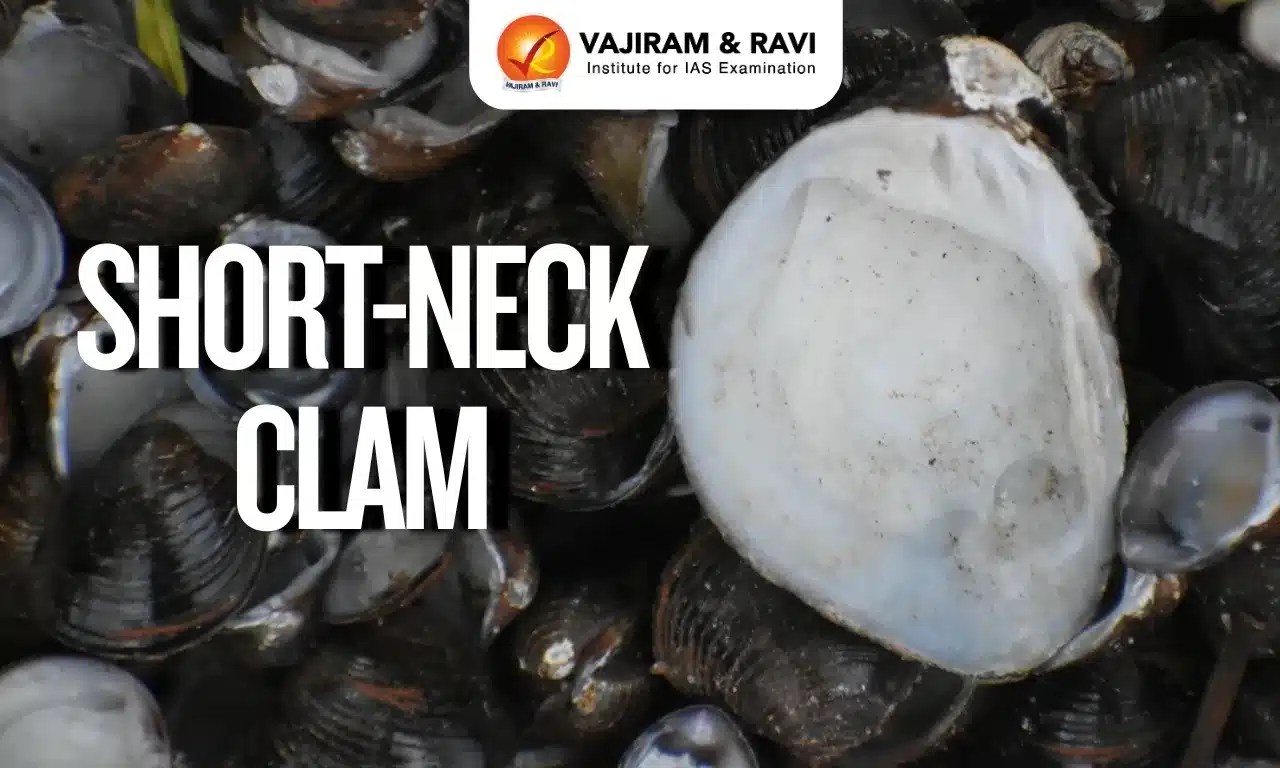
An initiative of the ICAR–Central Marine Fisheries Research Institute’s (CMFRI) to enhance stock of short-neck clam (Paphia malabarica) programme in Ashtamudi Lake is showing early signs of recovery. 

About Short Neck Clam

  • It is a valuable bivalve mollusk.
  • It is India’s first Marine Stewardship Council (MSC) certified fisheries. 
  • It is the major fishery resource of the brackish water Ashtamudi Lake in Kerala, India.
  • Reasons for its decline: Environmental pollution, invasion of non-native species like the Charru mussel, climate change, including altered salinity and water temperature, have significantly reduced the clam population.

Features of Short Neck Clam

  • Growth: It is a fast-growing species with a peak spawning season of December to February and has a maximum lifespan of around 3 years.
  • Maturity: It attains sexual maturity in its first year at a shell length of 30 mm.

Economic Significance of Short Neck Clam

  • It is used in cement production and to make carbide for use in welding.
  • The clams are bought by a local factory, heat-treated, frozen and sold on to retailers and restaurants, with around 80% being exported to Vietnam, Malaysia and Thailand.
  • The clam shell is used as the raw material for the manufacture of cement, calcium carbide and sand lime bricks.
  • They are also used for lime burning for construction, in paddy fields and fish farms for neutralizing acid soil and as slaked lime.

Source: TH

Short Neck Clam FAQs

Q1: Where is the Short Neck Clam primarily found?

Ans: Ashtamudi Lake, Kerala

Q2: What is the peak spawning season of Short Neck Clam?

Ans: December to February

Ellora Caves

Ellora Caves

Ellora Caves Latest News

Scottish historian William Dalrymple wants the Maharashtra government to showcase the lesser-known sites at Ellora, including the last Ottoman Caliph’s empty tomb, Malik Ambar’s tomb, the first Peshwa’s tomb, and the Sufi and Naga traditions at the caves.

About Ellora Caves

  • They are located near the village of Ellora in northwest-central Maharashtra.
  • They are located 30 km northwest of Aurangabad and 80 km southwest of the Ajanta Caves. 
  • Inscribed as a UNESCO World Heritage Site in 1983, the Ellora Caves are an extraordinary complex of 34 rock-cut monasteries and temples carved into a high basalt cliff. 
  • Spanning over 2 km, these structures date from the 6th to the 10th century CE and represent three major religions—Buddhism, Hinduism, and Jainism. 
  • The caves are adorned with sculptures that reflect the spiritual beliefs of the time.
  • The sculptures range from depictions of deities, celestial beings, and mythological scenes to portraits of royalty and everyday life.
  • The architectural brilliance of Ellora is most evident in the Kailasanatha Temple (Cave 16), the site’s grandest and most breathtaking structure.
    • It is one of the largest monolithic structures in the world. 
    • The structure is carved vertically from a single rock. It took 18 years to carve out the temple.
    • The temple features ornate pillars, detailed sculptures, massive courtyards, and elaborate carvings that depict stories from Hindu epics like the Ramayana and Mahabharata.
  • The Buddhist caves include large chaityas (prayer halls) and viharas (monasteries), while the Jain caves are known for their intricate detailing and depictions of Jain Tirthankaras.

Source: TH

Ellora Caves FAQs

Q1: The Ellora Caves are located in which Indian state?

Ans: Maharashtra

Q2: The Ellora complex consists of how many rock-cut monasteries and temples?

Ans: 34

Q3: The Ellora Caves represent the art and architecture of which three major religions?

Ans: Buddhism, Hinduism, and Jainism.

Q4: The structures at Ellora date from which period?

Ans: 6th to the 10th century CE.

Q5: Which is the grandest structure within Ellora Caves?

Ans: The most grand structure within the Ellora Caves is the Kailasanatha Temple (Cave 16).

Asia Power Index

Asia Power Index

Asia Power Index Latest News

Recently, India has secured third ranking in the Asia Power Index 2025, while the U.S. and China occupy the first and second spots.

About Asia Power Index

  • It is published annually by the Australia-based think tank, Lowy Institute.
  • It assesses the ability of nations, particularly of those in the Asian continent, to influence their external environment.
  • It is the seventh edition which evaluates the power of 27 countries and territories across Asia, based on 131 indicators across eight thematic measures, including Military Capability and Defence Networks, Economic Capability and Relationships, Diplomatic and Cultural Influence and  Resilience and Future Resources.

Highlights of Asia Power Index 2025

  • India ranks third for two measures: economic capability and future resources.
  • India’s economic and military capability have both increased in the 2025 edition of the Asia Power Index. 
  • India's weakest measure is defence networks, where it sits at 11th.
  • India's economy has continued to grow strongly and made small gains in terms of its geopolitical relevance - defined in terms of international leverage, connectivity, and technology.

Source: News On Air

Asia Power Index FAQs

Q1: What is India's rank in the Asia Power Index 2025?

Ans: Third

Q2: Which think tank releases the Asia Power Index annually?

Ans: Lowy Institute

Perseverance Rover

Perseverance Rover

Perseverance Rover Latest News

In a significant breakthrough, NASA's Perseverance rover recently detected electrical activity in Mars' atmosphere for the first time.

About Perseverance Rover

  • Perseverance, nicknamed “Percy“, is a semi-autonomous rover the size of a small car designed to explore the surface of Mars.
  • It is part of NASA’s ongoing Mars 2020 Mission.
  • Launch: It was launched on July 30, 2020, from Cape Canaveral, Florida.
  • Landing: Successfully landed on the surface of Mar’s Jezero Crater on February 18, 2021.
    • It is the first rover to actually land in an ancient Martian river delta, located inside the Jezero crater.
  • Main Job: Seek signs of ancient life and collect samples of rock and regolith (broken rock and soil) for possible return to Earth.
    • The rover will be able to detect organic matter and minerals, map the chemical composition of rocks and sediments, and zoom in on distant rocks and rugged terrain for further inspection.
    • The rover will collect samples of rock and soil, encase them in tubes, and leave them on the planet’s surface to be returned to Earth at a future date.
  • It is the first rover to record sounds on Mars and broadcast them back to Earth. 
  • It is the first rover to create oxygen on Mars.  Perseverance carries an instrument called MOXIE, which can generate oxygen from Mars’ carbon dioxide atmosphere.

Perseverance Rover Features

  • Perseverance is built from the same basic design as Curiosity, which landed on Mars about a decade before Perseverance.
  • It is about 3 metres long, 2.7 metres wide and 2.2 metres tall and its robotic arm is about 2.1 metres long.
  • It is about the size of a car but weighs only about 1,025 kilograms with all instruments on board.
  • Power source: Multi-Mission Radioisotope Thermoelectric Generator (MMRTG). It converts heat from the radioactive decay of plutonium into electricity.
  • It has a rectangular body, six wheels, a robotic arm, a drill for sampling rocks, cameras and scientific instruments.

Key Facts about Ingenuity Helicopter

  • It is a small, autonomous aircraft. 
  • Main Job: Technology demonstration to test the first powered flight on Mars. 
  • The helicopter rode to Mars attached to the belly of the Perseverance rover.
  • It became the first aircraft in history to make a powered, controlled flight on another planet.
  • Ingenuity uses solar power to charge its batteries and can operate autonomously. 
  • It is about 0.5 metres tall and its rotor blades span 1.2 metres across. 
  • It weighs about 1.8 kg and is equipped with computers, navigation systems and two cameras.

Source: NIE

Perseverance Rover FAQs

Q1: Perseverance Rover is part of which NASA mission?

Ans: It is part of NASA’s ongoing Mars 2020 Mission.

Q2: Perseverance Rover landed in which Martian crater?

Ans: Jezero Crater

Q3: What is the main objective of the Perseverance Rover?

Ans: Search for signs of ancient life and collect rock samples.

Q4: Which instrument on Perseverance created oxygen on Mars for the first time?

Ans: MOXIE

Important Days in September 2025, National & International Days

Important Days in September 2025

Important Days in September 2025 includes a list of national and international days that have specific importance. These important days include days like teachers’ day, international literacy day, World First Aid Day, Hindi Diwas etc. Having knowledge about these important days and dates in September 2025 not only helps improve general awareness but also increases knowledge for competitive exams. In this article, we are going to cover the important days in September 2025 in the areas of education, culture, environment and global causes.

Important Days in September 2025

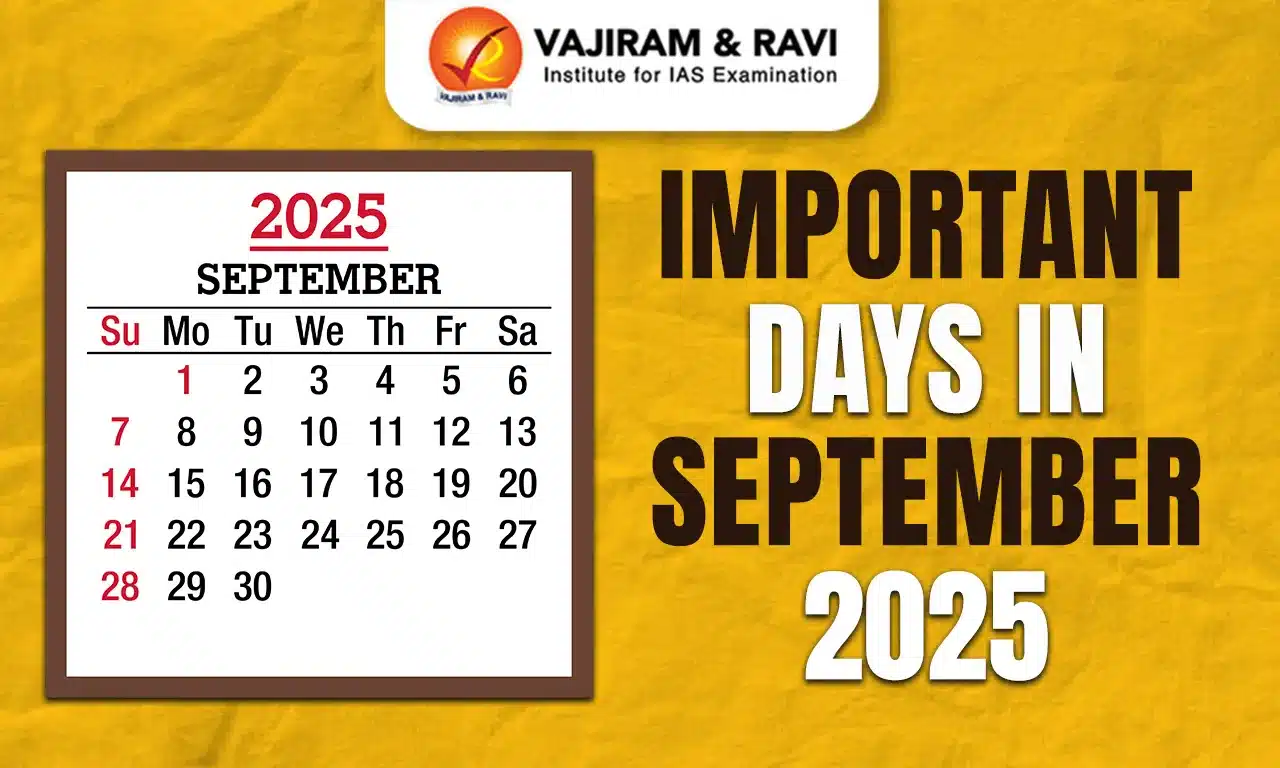
There are many important days in the month of September 2025. Some of these days include, Teachers' Day (India), Onam, Ananta Chaturdashi, International Literacy Day, Hindi Diwas, Vishwakarma Puja and various other observances. Here is a list of all the important days in September 2025

Dates & Days Event

1st September

National Nutrition Week

2nd September

World Coconut Day

3rd September

Skyscraper Day

5th September

Teachers’ Day

7th September

Independence Day Of Brazil

8th September

International Literacy Day

10th September

World Suicide Prevention Day

11th September

National forest Martyrs day

15th September

Engineers’ Day,

International Day of Democracy

16th September

World Ozone Day,

International Day of Preservation

21st September

Alzheimer’s Day,

International Day of Preservation

22nd September

Rose Day (Welfare of Cancer patients)

23rd September

International Day of Sign Language

25th September

Social justice day

(Last Saturday) September

World Rivers Day

26th September

World Contraception Day

27th September

World Tourism Day

29th September

World Heart Day

Important Days in September 2025 Explained

Here is a detailed explanation of a few important days in September 2025: 

  • 1–7 September – National Nutrition Week

      • Observed annually in India, this week-long event spreads awareness about the importance of proper nutrition and its important role in ensuring better health, immunity, and well-being. Many programmes highlight the link between nutrition and sustainable development.
  • 2 September – World Coconut Day

      • Celebrated to raise awareness of the importance of coconut in livelihood generation, especially in poverty reduction. The day also marks the foundation of the Asian Pacific Coconut Community (APCC), reflecting the crop’s global economic and cultural relevance.
  • 5 September – International Day of Charity

      • Designated by the United Nations, this day emphasises the importance of charity in eradicating poverty in all its forms and dimensions, thereby contributing to the Sustainable Development Goals.
  • 5 September – Teachers’ Day 

      • Observed on the birth anniversary of Dr. Sarvepalli Radhakrishnan, India’s second President, this day honours the selfless contributions of teachers in nurturing students and shaping responsible citizens.
  • 5 September – Onam

      • One of Kerala’s grandest festivals, Onam marks the legendary return of King Mahabali. Celebrated with floral carpets, boat races, cultural events, and feasts (Onasadya), it reflects Kerala’s cultural richness and communal harmony.
  • 8 September – International Literacy Day

      • Established by UNESCO, this day raises awareness about literacy as a fundamental human right and a driver of dignity, equality, and sustainable development.
  • 10 September – World Suicide Prevention Day

      • Organised by the International Association for Suicide Prevention (IASP) and co-sponsored by WHO, this day promotes global awareness to prevent suicide and support mental health.
  • 11 September – 9/11 Remembrance Day

      • Also known as the National Day of Service and Remembrance, it honours the victims of the September 11, 2001 attacks, encouraging acts of service and compassion in their memory.
  • 11 September – National Forest Martyrs Day

      • Commemorates the sacrifice of Amrita Devi and 360 Bishnoi villagers in 1730, who laid down their lives to protect trees in Khejarli, Rajasthan. The day honours their courage and environmental commitment.
  • 11 September – World First Aid Day

      • Observed on the second Saturday of September (11 September in 2025), it raises awareness about the lifesaving importance of first aid, ensuring it becomes a universal life skill.
      • Mark Swami Vivekananda’s historic address at the World’s Parliament of Religions in Chicago (1893), where he introduced Indian philosophy and Hinduism to the global stage.
  • 14 September – Hindi Diwas

      • Observed to mark the adoption of Hindi in the Devanagari script as India’s official language in 1949. The day celebrates India’s linguistic and cultural heritage.
  • 15 September – Engineer’s Day (India)

      • Celebrates the legacy of Bharat Ratna M. Visvesvaraya, one of India’s greatest engineers, whose contributions revolutionised engineering and water resource management in the country.
  • 15 September – International Day of Democracy

      • Reinforces that democracy is about people, human rights, and collective decision-making. The day provides an opportunity to reflect on the state of democracy worldwide.
  • 16 September – World Ozone Day

      • Commemorates the signing of the Montreal Protocol (1987), which led to global action to phase out substances depleting the ozone layer. The day reminds humanity of the importance of protecting the ozone shield.
  • 18 September – World Bamboo Day

      • Aims to raise awareness of bamboo as a sustainable resource with environmental and economic benefits worldwide.
  • 21 September – International Day of Peace

      • Declared by the United Nations, this day promotes global non-violence, ceasefire, and peacebuilding, first observed in 1982.
  • 21 September – World Alzheimer’s Day

      • Raises awareness about Alzheimer’s disease and dementia, supporting patients, caregivers, and global efforts in research and treatment.
      • Celebrated to create awareness about the conservation of rhinoceroses, highlighting threats such as poaching and habitat loss.
  • 23 September – International Day of Sign Languages

      • Proclaimed by the UN, this day promotes the preservation of sign languages, supporting the rights and cultural identity of the deaf community.
  • 25 September – Antyodaya Diwas

      • Observed in honour of Pandit Deendayal Upadhyaya’s birth anniversary, the day promotes the principle of ‘Antyodaya’—uplifting the last person in society.
  • 26 September – World Environmental Health Day

      • Declared by the International Federation of Environmental Health, it underscores the importance of environmental health to human well-being.
  • 27 September – World Tourism Day

      • Celebrated globally to highlight the role of tourism in cultural exchange, employment generation, and sustainable development.
  • 28 September – International Day for Universal Access to Information (IDUAI)

      • This UNESCO-led observance promotes the right to seek, share, and receive information, ensuring transparency and accountability.
  • 30 September – International Translation Day

    • Recognises the contributions of translators, interpreters, and language professionals in fostering global communication and peace.

Important Days in September 2025 FAQs

Q1: What is celebrated in September 2025?

Ans: September 2025 is marked by various national and international observances such as National Nutrition Week, Teachers’ Day, Hindi Diwas, World Ozone Day, World Tourism Day.

Q2: When is National Nutrition Week celebrated?

Ans: National Nutrition Week is celebrated from 1st to 7th September every year.

Q3: What are the important days in 2025?

Ans: Important days in September 2025 include World Coconut Day (2 Sept), Teachers’ Day (5 Sept), World Suicide Prevention Day (10 Sept), Hindi Diwas (14 Sept), World Ozone Day (16 Sept) etc.

Q4: When is World Rhino Day celebrated?

Ans: World Rhino Day is celebrated on 22nd September every year.

Q5: Why is Digvijay Diwas celebrated?

Ans: Digvijay Diwas is celebrated on 11th September to commemorate Swami Vivekananda’s historic address at the World’s Parliament of Religions in Chicago in 1893.

Sahariya Tribe

Sahariya Tribe

Sahariya Tribe Latest News

Recently, in Madhya Pradesh, a Sahariya tribal woman’s death puts spotlight on unending urea queues.

About Sahariya Tribe

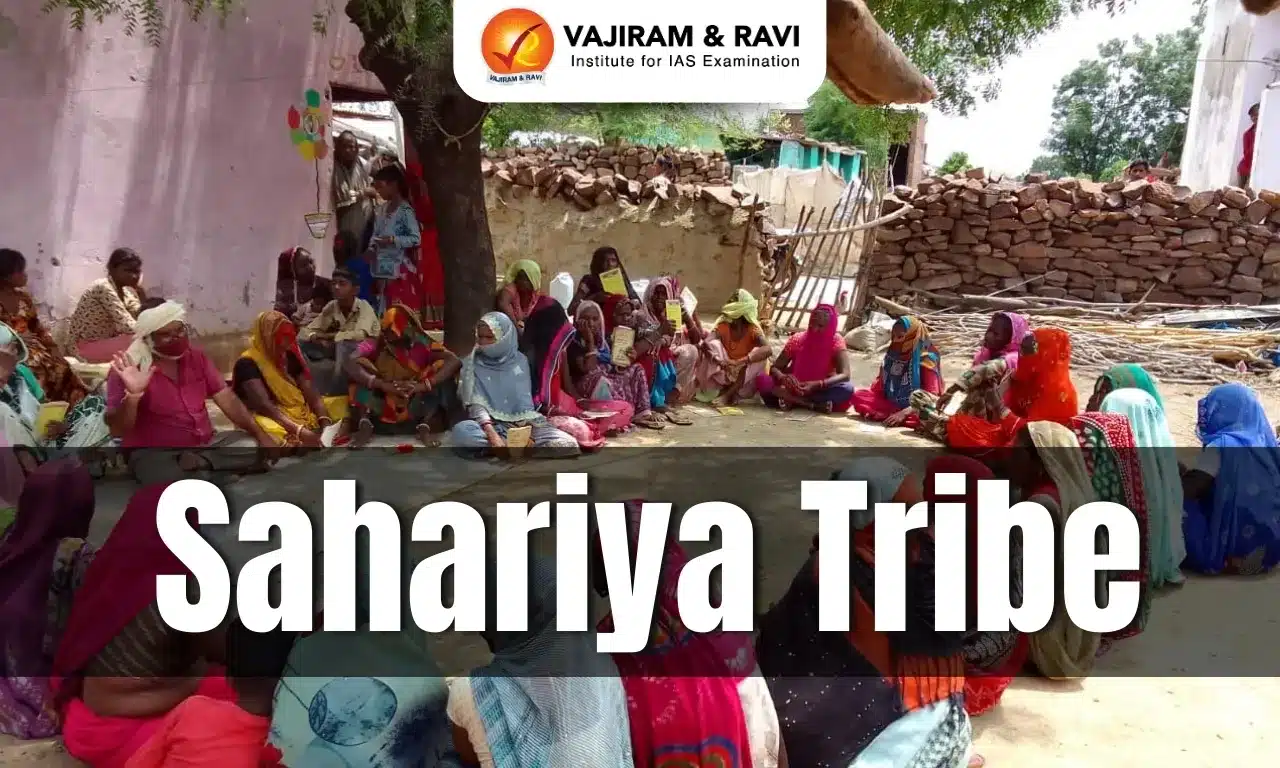
  • It is one of the Particularly Vulnerable Tribal Groups (PVTG).
  • The Sahariya community is also called by the names Seher, Sair, Savar, Saonar, Sahra, etc.
  • They live on the margins — in the forests and villages of Madhya Pradesh and Rajasthan. 

Living condition and Social Structure of Sahariya Tribe

  • They mostly live in a distinct settlement called ‘Seharana’ which is generally a cluster of houses.
  • The houses are made of some stone boulders, and the roofing is also made of stone slabs – locally called Patore. In some villages, mud structures are also constructed.
  • Religion and Language
    • Language: While the Sahariyas have lost their original language, they speak the local dialects of the regions they inhabit.
    • The Sahariya practice their traditional ethnic religions. 
    • They are known for their dance, the Saharia Swang, which is performed during the month of Holi.
    • The dance is performed to the beats of the dhol, nagari, and matki.
    • It features a male dressed in female attire who dances around the male performers.
  • Livelihood: They are predominantly forest dwellers and make their living from forest produce, additionally cultivating small plots of land and work as landless labourers. 
  • They are particularly skilled in making catechu from khair trees.

Source: IE

Sahariya Tribe FAQs

Q1: What is the traditional dance of the Sahariya tribe?

Ans: Saharia Swang

Q2: What is the traditional occupation of the Sahariya tribe?

Ans: Forest dwellers and laborers

Constitutional Legacy of the Basic Structure Doctrine and the Call for Indianising Jurisprudence

Basic Structure Doctrine

Basic Structure Doctrine Latest News

  • At the inauguration of the International Mooting Academy at O.P. Jindal University, Chief Justice of India (CJI) Surya Kant, along with other Supreme Court judges, reflected on the constitutional legacy.
  • He highlighted the 1973 Kesavananda Bharati judgment, the centrality of the Basic Structure Doctrine, and the evolving idea of ‘Indianisation’ of the legal system.

Significance of Kesavananda Bharati Judgment

  • Basic Structure doctrine: It is a legal principle, established by the SC in the landmark 1973 case of Kesavananda Bharati v. State of Kerala, that states the fundamental features of the Constitution cannot be amended by Parliament. 
  • Basic Structure as constitutional conscience:
    • CJI described the Basic Structure Doctrine as “the conscience that keeps our democracy from drifting into absolutism.”
    • The doctrine is not a mere precedent but a foundational affirmation of constitutionalism and rule of law.
  • An act of constitutional archaeology:
    • The CJI said the doctrine was not “judicial fancy” but an uncovering of principles embedded within the Constitution.
    • Judges “unearthed” its inherent moral core: liberty, equality, fraternity, human dignity.
  • The living constitution:
    • The Constitution's strength lies not in rigidity but its ability to adapt without losing moral compass.
    • Each generation must interpret it as a “living charge”, not a frozen document.

Judicial Perspectives on Basic Structure

  • Judicial independence and rule of law (Justice B.V. Nagarathna):
    • The doctrine flows from judicial independence, immune from political pressure.
    • It resulted in the protection of the core features (supremacy of Constitution, separation of powers, fundamental rights, judicial review) of the Constitution.
  • Constitutional supremacy (Justice P.S. Narasimha): Basic Structure is not judicial supremacy but affirmation of constitutional supremacy.
  • Natural rights foundation (Justice M.M. Sundresh): Basic Structure was never defined because it existed as a natural right embedded in justice, liberty, and equality.

Kesavananda as a Moral Milestone (CJI)

  • Resilience of Indian democracy:
    • The judgment proved that a young republic could assert a moral conscience comparable to older democracies.
    • It showcased India’s constitutional culture that bends without breaking.
  • Symbolism - The constitutional khaat:
    • The constitution is like a khaat (text = frame; institutions = legs).
    • Restraint, balance, moral discipline are interlaced ropes that hold everything together.

Indianisation of the Legal System

  • Swadeshi jurisprudence:
    • The SC noted that despite influences from UK and US, Indian interpretation has developed a distinct ‘swadeshi’ colour.
    • The government also endorsed building a unique Indian jurisprudence.
  • Earlier calls for indianisation:
    • Justice P.N. Bhagwati (1986): India must not rely on “crutches of foreign legal order”.
    • Justice N.V. Ramana: Indianisation needed for easy access to justice, especially for rural litigants.
    • Justice S.A. Bobde: Indian texts already reflected concepts such as privacy.
    • Cases citing Indian tradition: Decriminalising adultery and Sabarimala temple entry to women of a certain age quoted heavily from the Manusmriti.
  • Decolonising Indian legal thought: Justice S. Abdul Nazeer criticized over-reliance on colonial jurisprudence and urged recognition of ancient Indian legal thinkers: Manu, Kautilya, Yajnavalkya, Brihaspati, Narada, etc.

Technological Modernisation of Justice System

  • PM (Narendra Modi): Called for “ease of justice” even for the poorest. Highlighted virtual hearings, translated judgments for greater accessibility.
  • Union Law Minister (Arjun Ram Meghwal): Judicial competence now requires e-courts, AI-enabled systems. Invoked B.R. Ambedkar’s warning: “Freedom is not a licence to do whatever we want.”

Key Challenges

  • Balancing amendability with constitutional stability: Reconciling Parliament’s power to amend with preservation of Basic Structure.
  • Avoiding judicial overreach vs. ensuring constitutional supremacy: Maintaining legitimacy of judicial review without perceptions of activism.
  • Indianisation vs. universal constitutional values: Integrating indigenous traditions while upholding modern democratic principles.
  • Bridging the accessibility gap: Ensuring that technology-driven reforms reach rural and marginalised populations.

Way Forward

  • Strengthening constitutional culture: Promote civics education and constitutional awareness at all levels.
  • Continued modernisation: Expand e-courts, digital filing, translation tools, and AI-based case management.
  • Developing native jurisprudence: Encourage academic engagement with ancient Indian legal principles while retaining universal constitutional ethics.
  • Preserving institutional independence: Protect judiciary from political interference to uphold rule of law.
  • Harmonising tradition with modernity: Draw from Indian intellectual heritage without compromising rights-based democratic framework.

Conclusion

  • The enduring centrality of the Basic Structure Doctrine is not merely as a judicial creation but as the moral anchor of Indian democracy. 
  • The Kesavananda Bharati judgment remains a guiding force as India navigates modernisation, institutional reforms and debates on Indianising its legal system. 
  • The call is for a justice system that is technologically advanced, socially accessible, constitutionally rooted, and culturally resonant, ensuring that the Republic continues to uphold liberty, equality, fraternity, and human dignity.

Source: IE | TH

Basic Structure Doctrine FAQs

Q1: What is the significance of the Basic Structure Doctrine?

Ans: It acts as the constitutional conscience that prevents democratic drift into absolutism by safeguarding core features.

Q2: How did the Kesavananda Bharati judgment shape the concept of a “living Constitution” in India?

Ans: It recognised that while the Constitution can evolve through amendments, its moral core cannot be altered.

Q3: What is the idea of “Indianisation of the legal system”?

Ans: Indianisation seeks to adapt legal processes to India’s socio-cultural realities by reducing dependence on foreign jurisprudence.

Q4: Why is judicial independence considered essential for sustaining the Basic Structure Doctrine?

Ans: Because only an independent judiciary can safeguard the Constitution’s core principles against political pressures.

Q5: What is the role of technology in enhancing “ease of justice”?

Ans: Technological tools like e-courts, virtual hearings and translated judgments expand access, reduce delays.

Why Goa May Get a Tiger Reserve: CEC Report, Government Stand & Key Recommendations

Tiger Reserve

Tiger Reserve Latest News

  • The Supreme Court’s Central Empowered Committee (CEC) has advised the Goa government to create a tiger reserve in the State. 
  • It suggested doing this in a phased manner, indicating a gradual approach to setting up the reserve.

Why the CEC Recommended a Tiger Reserve in Goa

  • The CEC’s recommendation is rooted in earlier judicial and conservation actions. 
  • In July 2023, the Bombay High Court directed the Goa government to declare five protected areas as a tiger reserve within three months.
  • These five protected areas were:
    • Mhadei Wildlife Sanctuary, 
    • Bhagwan Mahavir Wildlife Sanctuary, 
    • Bhagwan Mahavir National Park, 
    • Netravali Wildlife Sanctuary, and 
    • Cotigao Wildlife Sanctuary.
  • The order followed a petition by the Goa Foundation after a tigress and her three cubs were allegedly poisoned in the Mhadei Sanctuary in 2020. 
  • The Court also asked the State to prepare a Tiger Conservation Plan and settle the rights of Scheduled Tribes and forest dwellers. 
  • Notably, the National Tiger Conservation Authority had already recommended these areas for tiger reserve status in 2016.

How the Goa Government Responded to the Tiger Reserve Order

  • The Goa government challenged the High Court’s directive by filing a Special Leave Petition in the Supreme Court, claiming that declaring the areas as a tiger reserve would affect nearly one lakh people. 
    • However, its own affidavit later revealed a much smaller number — roughly 1,274 households across 33 villages, amounting to 5,000–6,000 people.
  • The State also argued that Goa had no “resident” tigers and that those seen in its forests were merely “transient.” 
    • This stance contradicted its 2018 submission before the Mhadei Water Disputes Tribunal, where it had asserted evidence of a resident tiger population.
    • It had, then, described Goa’s forests as part of a contiguous tiger landscape linked to Karnataka’s Kali Tiger Reserve and Bhimgad Wildlife Sanctuary.
  • Due to these conflicting claims, the Supreme Court asked the Central Empowered Committee (CEC) to conduct a site visit and examine the matter. 

CEC Recommendation for Goa’s Tiger Reserve

  • The CEC’s report acknowledged fears among local residents about displacement and stressed that the Goa government must reassure affected communities.
  • It proposed creating the tiger reserve in phases, beginning with areas that are ecologically sensitive, least inhabited, and directly connected to Karnataka’s Kali Tiger Reserve, which has a permanent tiger presence.

Core Zone (Phase 1)

  • Include protected areas contiguous with Kali’s core area
  • Netravali Wildlife Sanctuary — 50 households
  • Cotigao Wildlife Sanctuary — 41 households
  • Total core area recommended: 296.7 sq km

Buffer Zone (Phase 1)

  • Include areas adjoining the buffer zone of Kali Tiger Reserve with minimal habitation
  • Northern Bhagwan Mahavir Wildlife Sanctuary — 9 households
  • Bhagwan Mahavir National Park — 2 households
  • The CEC said this phased approach would minimise community disturbance while strengthening landscape connectivity and ecological functionality across the Goa–Karnataka tiger habitat network.

Why the Tiger Reserve Designation Matters

  • Declaring an area a tiger reserve brings in greater funding for conservation, research, and habitat management compared to existing wildlife sanctuaries. 
  • It also requires dividing the landscape into core and buffer zones.
    • Core zones must remain inviolate, meaning human presence is discouraged. Residents cannot be forced out, but they may be offered incentives to voluntarily relocate.
    • Buffer zones allow regulated human activities and do not need to be free of habitation.
  • This zoning helps strengthen tiger protection while balancing community interests.

How a Tiger Reserve Is Declared in India

  • To create a tiger reserve, the state government first identifies a suitable area and submits a detailed proposal to the National Tiger Conservation Authority (NTCA)
  • The NTCA evaluates the site’s ecological suitability and tiger habitat potential, then forwards its recommendation to the Ministry of Environment, Forest and Climate Change (MoEFCC).
  • Following this, the state issues a preliminary notification, invites and addresses objections, and finally issues a formal notification under Section 38V of the Wildlife (Protection) Act, 1972, officially designating the area as a tiger reserve.

Source: TH  |TOI | NTCA

Tiger Reserve FAQs

Q1: Why did the CEC recommend a tiger reserve in Goa?

Ans: The CEC acted on court directives and ecological assessments showing Goa’s protected forests connect with Karnataka’s tiger habitats and require enhanced protection after poaching incidents.

Q2: What triggered the legal push for a tiger reserve?

Ans: A 2023 Bombay High Court order, based on a petition after tiger poisoning deaths in 2020, required notification of five sanctuaries as a tiger reserve.

Q3: How did the Goa government respond to the proposal?

Ans: Goa opposed the order, citing large population impact, but later admitted only 1,274 households would be affected and claimed tigers were transient, contradicting earlier claims.

Q4: What did the CEC recommend for the reserve’s structure?

Ans: The CEC proposed a phased creation: core areas contiguous with Karnataka’s Kali Tiger Reserve first, followed by buffer zones with minimal human habitation to reduce community disruption.

Q5: Why does tiger reserve status matter for Goa?

Ans: Tiger reserve designation brings more conservation funding, stronger legal protection, and core-buffer zoning while balancing forest preservation with community rights and regulated human activity.

Airbus A320 Recall: Software Flaw, Solar Radiation Risk & Global Fix Explained

Airbus A320 Recall

Airbus A320 Recall Latest News

  • Airlines worldwide are rushing to apply a mandatory Airbus fix for a software vulnerability affecting thousands of A320-family aircraft. 
  • Airbus found that intense solar radiation could corrupt flight-control data in the aircraft’s elevator aileron computer (ELAC), posing a potential safety risk. 
  • Of the more than 11,000 A320-series jets in service globally, over half may be impacted—making this the largest recall in Airbus’s history.

How the Airbus A320 Software Vulnerability Came to Light

  • Airbus revealed on Friday that a major software vulnerability had been discovered after an incident involving an A320-family aircraft. 
  • This prompted an urgent requirement for software updates—and in some cases hardware changes—across thousands of aircraft globally, including over 300 in India.

Solar Radiation Identified as Root Cause

  • Airbus stated that analysis of a recent event showed intense solar radiation could corrupt critical flight-control data in the Elevator Aileron Computer (ELAC). 
    • Solar radiation is the radiant energy emitted by the sun, traveling through space as electromagnetic waves. 
    • This energy includes visible light, infrared radiation (heat), and ultraviolet (UV) radiation. 
  • This malware-like corruption risk made a large portion of the in-service fleet vulnerable.

Immediate Regulatory Intervention

  • Soon after Airbus issued an Alert Operators Transmission (AOT), the European Union Aviation Safety Agency (EASA) released an Emergency Airworthiness Directive requiring airlines to implement the fixes “before next flight.”
  • EASA confirmed that the vulnerability was detected after an A320 experienced an uncommanded, brief pitch-down, causing a momentary loss of altitude without any pilot input.

Why ELAC Was at the Center of the Issue

  • The ELAC is a key computer that helps the pilots control the plane. It takes the pilots’ joystick (sidestick) movements and moves the parts on the wings and tail — which make the plane go up, down, or turn.
    • Basically, ELAC is a primary flight-control computer.
  • A specific combination of ELAC hardware and software was found to be susceptible to radiation-induced data corruption, creating a risk of uncommanded elevator movement that could, in the worst case, exceed the aircraft’s structural capability.

The Incident That Exposed the Flaw

  • While EASA did not name the aircraft, industry insiders report that the event involved a JetBlue flight from Cancun to Newark on October 30. 
  • The aircraft suffered an unexpected altitude drop, injuring some passengers. This incident triggered the technical investigation that uncovered the ELAC vulnerability.

How Airlines Implemented Airbus’s Fix for the A320 ELAC Vulnerability

  • Airbus prescribed an immediate rectification for affected A320-family aircraft.
  • For most jets, the solution was a quick software rollback—reverting to an earlier version of the ELAC (Elevator Aileron Computer) software.
  • Experts note this update takes around two hours.
  • However, a smaller group of older A320 variants may require complete ELAC hardware replacement, which takes longer and depends on unit availability.

Progress in India: Majority Fixed by Saturday Evening

  • According to the DGCA, nearly 80% of affected Indian aircraft had already undergone the software change.
  • Out of 338 A320-family aircraft identified across IndiGo, Air India, and Air India Express:
    • 270 aircraft were fully rectified by 5:30 pm
    • 68 aircraft were expected to be completed later the same day

Impact on Airline Operations

  • Despite concerns of large-scale disruption, the fix caused only minor delays and rescheduling, not widespread cancellations.
  • Officials reiterated that passengers need not panic, as operational impact remained modest.
  • A320-family jets operate multiple rotations per day, meaning even brief ground time for updates can cause cascading delays. 
  • Still, airlines managed to avoid significant cancellations.

Source: IE | NDTV | TH

Airbus A320 Recall FAQs

Q1: Why did Airbus issue the A320 recall?

Ans: Airbus recalled thousands of A320-family jets after discovering that intense solar radiation could corrupt ELAC flight-control data, risking uncommanded pitch movements and compromising flight safety.

Q2: What incident revealed the ELAC vulnerability?

Ans: A JetBlue A320 experienced an unexpected pitch-down due to suspected ELAC malfunction, prompting Airbus and EASA to investigate and mandate immediate corrective action globally.

Q3: What fix did Airbus prescribe for the A320 software issue?

Ans: Most aircraft required a quick software rollback to a stable ELAC version, while some older jets needed complete ELAC hardware replacement depending on availability.

Q4: How did airlines respond to Airbus’s emergency directive?

Ans: Airlines implemented the fix before the next flight, causing delays and rescheduling but avoiding major cancellations due to efficient, time-bound ground handling.

Q5: How were Indian airlines impacted by the recall?

Ans: India had 338 affected A320-family aircraft; nearly 80% were fixed by Saturday evening, with minimal cancellations and manageable delays reported by DGCA.

Revival of the Shipping Corporation of India – Explained

Shipping Corporation of India

Shipping Corporation of India Latest News

  • The Government of India has announced a major revival plan for the Shipping Corporation of India (SCI), including the purchase of over 200 merchant ships through joint ventures with other PSUs.

Evolution of the Shipping Corporation of India

  • For decades, the SCI stood as one of the world’s leading national carriers, operating over 120 ships across categories such as oil tankers, gas carriers, chemical tankers, passenger vessels, liners and offshore vessels. 
  • SCI symbolised India’s maritime pride, combining national service with commercial capability.
  • SCI also led technological upgrades, introducing the latest German marine engines, operating India’s first LNG carrier, and building vessels in Indian shipyards despite delays and cost overruns. 
  • Its diverse fleet and national obligations made it central to India’s maritime economy. 

Role in National Interest and Strategic Missions

  • Energy Security: Historically, SCI had first rights on transporting India’s oil, making tankers the backbone of its fleet.
  • National Service: It transported civilian workers at concessional rates to the Andaman Islands and supported defence logistics during crises.
  • Risk Operations: During the Iran-Iraq war, SCI tankers bore the word INDIA in large white letters to signal non-hostility and ensure safe passage.
  • Skill Development: SCI’s Mumbai-based training institute in Powai trained thousands of marine professionals who went on to earn significant foreign exchange for India. 

Decline During Liberalisation

  • The 1990s ushered in the era of Liberalisation-Privatisation-Globalisation (LPG), and Indian maritime policy moved in line with global trade norms. 
  • Under WTO rules, India had to dilute preferential treatment for its national carrier in EXIM cargo.
  • Key consequences included:
    • Loss of “right of refusal” over oil cargo, a major revenue source for SCI.
    • Neglect in fleet modernisation, only two ships were ordered in 10 years before the recent purchases.
    • Shrinking tanker capacity and rising average fleet age (18 years, nearing scrapping levels).
    • Collapse of Indian presence in container shipping after cabotage relaxation.
  • India’s share of EXIM cargo carried by Indian vessels fell from 27% earlier to just 7%, illustrating a precipitous decline. 

COVID-19 and the Reassessment of Strategic Shipping Capacity

  • The pandemic became a turning point. Global freight rates skyrocketed, up to 10 times pre-pandemic levels, as port delays and geopolitical bottlenecks grew. 
  • Many global carriers skipped developing country ports, disrupting India’s key exports such as rice and shrimp and affecting essential imports such as rubber.
  • India’s lack of national container capacity left it vulnerable to:
    • Supply chain disruptions
    • High freight costs
    • Loss of export competitiveness
  • This renewed recognition of maritime self-reliance prompted the shift away from privatisation and toward rebuilding SCI. 

Global Trends Supporting Public Ownership

  • The revival of SCI is not an isolated move. Across the world, governments have increased intervention in strategic sectors:
    • United States: The Biden administration invested billions in semiconductors, while the Trump administration acquired stakes in companies including Intel and U.S. Steel, abandoning earlier reluctance toward industrial ownership.
    • Rare Earth Sector: U.S. government investment has grown due to supply chain vulnerabilities.
  • This global shift toward strategic state-driven industrial capacity strengthens the logic behind reviving SCI. 

Government’s New Revival Plan for SCI

  • Large-Scale Ship Acquisition Through PSU Joint Ventures
    • The government plans to purchase 200+ merchant vessels for SCI through joint ventures with other PSUs using funds from the Maritime Development Fund. 
    • PSU partners, such as oil companies, the Container Corporation of India (CONCOR) and others, will provide long-term assured cargo contracts, enabling SCI to finance new ships sustainably. 
  • Rebuilding Container Shipping Capacity
    • One major initiative includes the creation of Bharat Shipping Line, a joint venture of SCI and CONCOR, to buy 20 new container ships, reviving India’s long-neglected container fleet.
  • Balancing Newbuilds and Market Realities
    • While the revival is ambitious, experts note that global ship prices are currently extremely high due to a prolonged post-pandemic shipping boom. 
    • Therefore, expansion will be gradual, balancing strategic needs with market conditions. 

Need to Support Private Indian Shipping

  • Industry experts emphasise that revival efforts should not remain limited to SCI. 
  • India’s broader merchant shipping capacity can grow only if private operators also receive:
    • Long-term cargo contracts
    • Support for capital investment
    • A competitive taxation and regulatory environment
  • A holistic approach would build India’s overall flag tonnage, enhancing supply chain resilience and global trade competitiveness.

Source: TH

Shipping Corporation of India FAQs

Q1: How many ships will SCI acquire under the revival plan?

Ans: The government plans to help SCI acquire over 200 merchant ships through PSU joint ventures.

Q2: Why did SCI decline after liberalisation?

Ans: Policy changes, loss of preferential cargo rights and lack of fleet modernisation weakened SCI.

Q3: What role did COVID-19 play in the revival decision?

Ans: The pandemic exposed India’s vulnerability due to lack of national shipping capacity.

Q4: What is Bharat Shipping Line?

Ans: A new SCI–CONCOR joint venture to purchase 20 container ships and revive India’s container fleet.

Q5: What is the strategic aim of reviving SCI?

Ans: To enhance national shipping capacity, economic security and resilience in global trade.

Enquire Now