
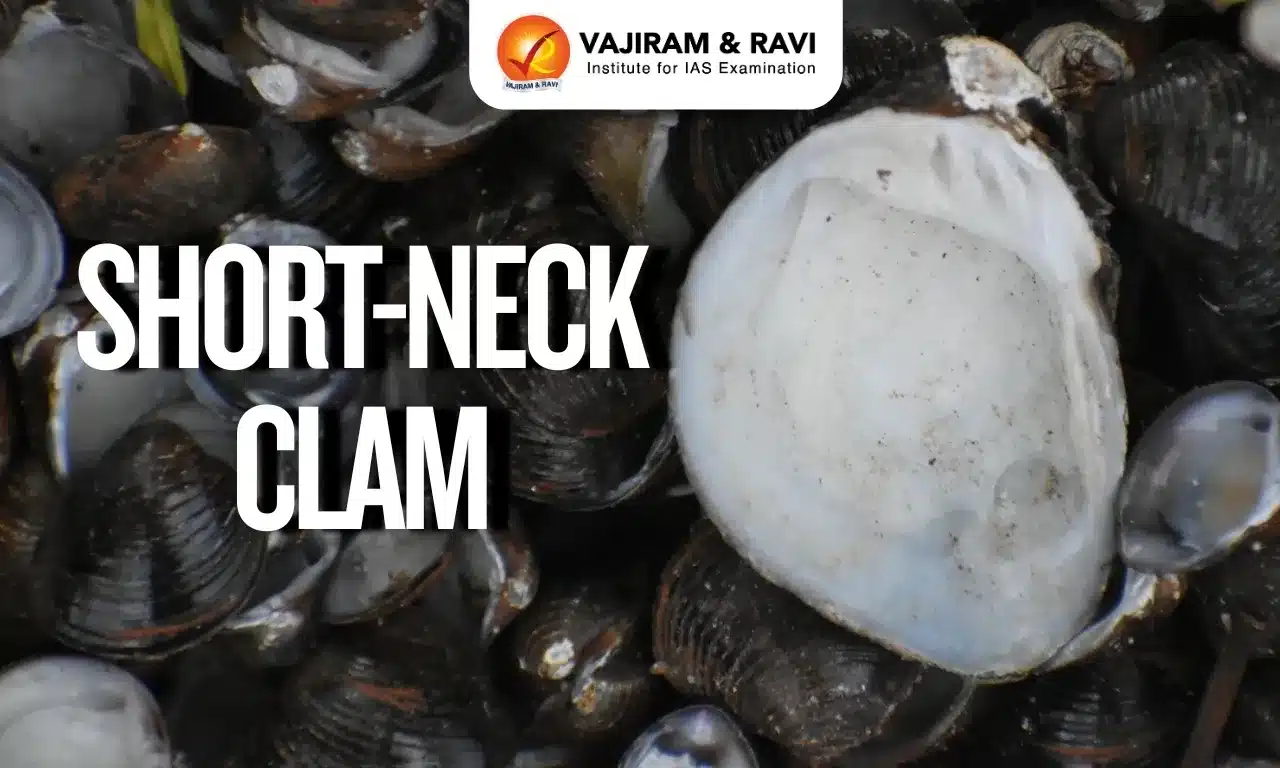
Short Neck Clam Latest News
An initiative of the ICAR–Central Marine Fisheries Research Institute’s (CMFRI) to enhance stock of short-neck clam (Paphia malabarica) programme in Ashtamudi Lake is showing early signs of recovery.
About Short Neck Clam
- It is a valuable bivalve mollusk.
- It is India’s first Marine Stewardship Council (MSC) certified fisheries.
- It is the major fishery resource of the brackish water Ashtamudi Lake in Kerala, India.
- Reasons for its decline: Environmental pollution, invasion of non-native species like the Charru mussel, climate change, including altered salinity and water temperature, have significantly reduced the clam population.
Features of Short Neck Clam
- Growth: It is a fast-growing species with a peak spawning season of December to February and has a maximum lifespan of around 3 years.
- Maturity: It attains sexual maturity in its first year at a shell length of 30 mm.
Economic Significance of Short Neck Clam
- It is used in cement production and to make carbide for use in welding.
- The clams are bought by a local factory, heat-treated, frozen and sold on to retailers and restaurants, with around 80% being exported to Vietnam, Malaysia and Thailand.
- The clam shell is used as the raw material for the manufacture of cement, calcium carbide and sand lime bricks.
- They are also used for lime burning for construction, in paddy fields and fish farms for neutralizing acid soil and as slaked lime.
Source: TH
Short Neck Clam FAQs
Q1: Where is the Short Neck Clam primarily found?
Ans: Ashtamudi Lake, Kerala
Q2: What is the peak spawning season of Short Neck Clam?
Ans: December to February
