Key Fact about Guinea-Bissau

Key Facts about Guinea-Bissau

Guinea-Bissau Latest News

Recently, the African country of Guinea-Bissau fell under military rule.

About Guinea-Bissau

  • It is one of the smallest countries in the African continent.
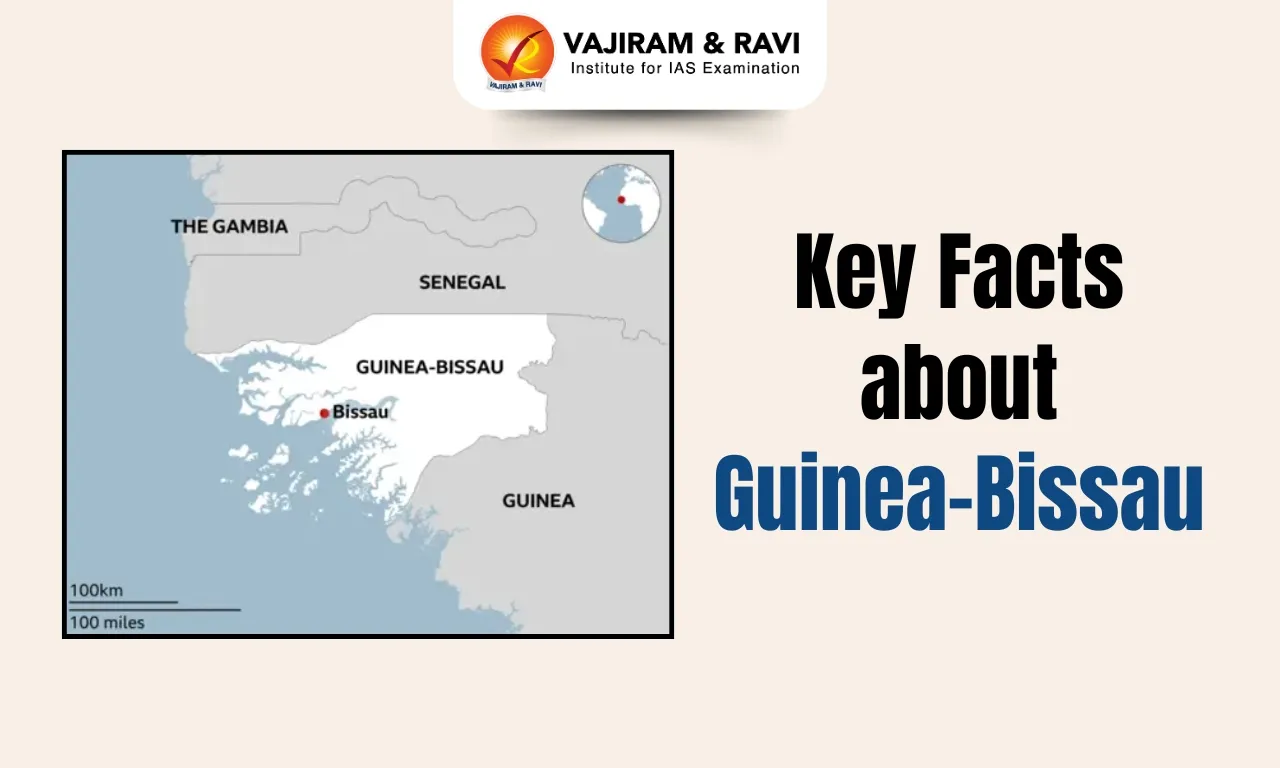
  • Bordering Countries: It borders Senegal to the north and Guina to its eastern and southern boundaries.
  • Maritime Boundary:  To the west, the country has a coastline on the Atlantic Ocean.
  • It includes the Bijagós (Bissagos) archipelago and other islands that lie off the coast.
  • Capital City: Bissau

Geographical Features of Guinea-Bissau

  • Terrain: Mostly low-lying coastal plain with a deeply indented estuarine coastline rising to savanna in the east.
  • Plateau : The Fouta Djallon Plateau dominates the southeastern part of the country.
  • Climate: It has a generally tropical climate influenced by the intertropical convergence zone (ITCZ).
  • Its environment is largely made up of swamps and marshlands.
  • Rivers: Corubal, Geba, and Cacheu ETC.
  • Economy: Fishing is a huge local industry of this country.
  • Natural resources: Phosphates, bauxite, clay, granite, limestone,

Source: DD News

Guinea-Bissau FAQs

Q1: Where is Guinea-Bissau located?

Ans: West Africa

Q2: What is the capital of Guinea-Bissau?

Ans: Bissau

Heron Mk II

Heron Mk II

Heron Mk II Latest News

To enhance their unmanned capabilities in the wake of Operation Sindoor, the Indian armed forces have signed up for more satellite-linked Heron Mk II UAVs under emergency procurement, sources in the Israeli defence industry said recently.

About Heron Mk II

  • It is a medium-altitude long-endurance (MALE) unmanned aerial vehicle (UAV).
  • It was developed by Israel Aerospace Industries (IAI).

Heron Mk II Features

  • It has a length of 8.5 m, a wingspan of 16.6 m, and a payload capacity of 490 kg.
  • It has a maximum takeoff weight of 1,430 kg. 
  • It offers an endurance of 45 hours and a top speed of 150 knots.
  • It can reach altitudes up to 35,000 ft and has an operating range of more than 1,000 km.
  • It can carry long-range radars and observation sensors, such as electro-optical/infra-red (EO/IR) systems for detection and tracking of targets.
  • The electronic intelligence (ELINT) and communications intelligence (COMINT) systems will be installed on board to detect, analyse, geolocate, and gather electronic and communication radio signals for actionable intelligence at long-range stand-off distances.
  • It is able to gather intelligence from tens of kilometers away without crossing borders.

Source: TH

Heron Mk II FAQs

Q1: What is Heron Mk II?

Ans: It is a medium-altitude long-endurance (MALE) unmanned aerial vehicle (UAV).

Q2: Which organisation developed the Heron Mk II UAV?

Ans: It was developed by Israel Aerospace Industries (IAI).

Q3: What is the payload capacity of the Heron Mk II?

Ans: 490 kg

Q4: What is the maximum endurance of the Heron Mk II?

Ans: 45 hours

Bioremediation

Bioremediation

Bioremediation Latest News

Bioremediation offers a cheaper, scalable, and sustainable alternative, especially in a country like India where vast stretches of land and water are affected but resources for remediation are limited.

About Bioremediation

  • Bioremediation literally means “restoring life through biology.” 
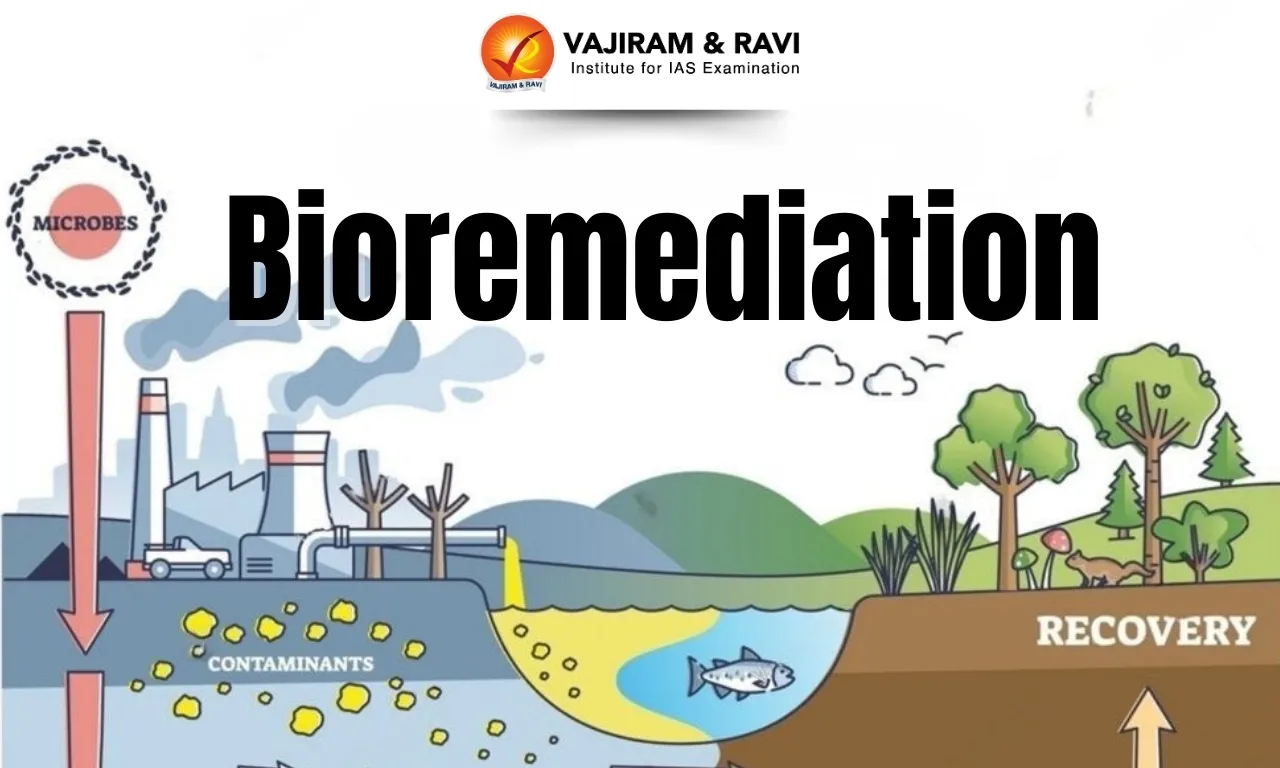
  • It is the use of living organisms, primarily microorganisms, to degrade environmental contaminants into less toxic forms.
  • It is used to clean up contaminated soil, air, and water.
  • It harnesses microorganisms such as bacteria, fungi, algae, and plants to sequester or transform toxic substances such as oil, pesticides, plastics, or heavy metals. 
  • These organisms metabolise these pollutants as food, breaking them down into harmless by-products such as water, carbon dioxide, or organic acids. 
  • In some cases, they can convert toxic metals into less dangerous forms that no longer leach into the soil or groundwater.
  • Two Broad Types of Bioremediation:
    • In situ bioremediation, where treatment happens directly at the contaminated site, such as when oil-eating bacteria is sprayed on an ocean spill; 
    • Ex situ bioremediation, where contaminated soil or water is removed, treated in a controlled facility, and returned once cleaned.
  • For bioremediation to be effective, the right temperature, nutrients, and food also must be present. 
  • Proper conditions allow the right microbes to grow and multiply—and eat more contaminants.

Bioremediation Advantages

  • It cleans up the environment naturally without the use of toxic chemicals. So, it is an environmentally friendly method. 
  • Contaminants are converted into water and harmless gases.
  • It is cost-effective, as extensive equipment and labor are not needed.
  • It is a permanent solution, as the degraded material cannot revert back to the previous one.
  • It is a recommended method for removing oil stains.

Bioremediation Disadvantages

  • It takes a large area and time from months to years.
  • It is limited to the compounds which are degradable.
  • It is not able to remove all kinds of impurities from the contaminated site. Like, some kind of inorganic contaminants cannot be treated with this bioremediation method.
  • Some heavy metals cannot be completely broken down, resulting in toxic by-products.

Source: TH

Bioremediation FAQs

Q1: What does bioremediation use to degrade environmental contaminants?

Ans: Bioremediation use of living organisms, primarily microorganisms, to degrade environmental contaminants into less toxic forms.

Q2: Which organisms are commonly harnessed in bioremediation processes?

Ans: It harnesses microorganisms such as bacteria, fungi, algae, and plants to sequester or transform toxic substances.

Q3: What is in situ bioremediation?

Ans: In situ bioremediation is a method where contaminants are treated directly at the site without removing the polluted soil or water.

Q4: Why is bioremediation considered an environmentally friendly method?

Ans: It cleans up the environment naturally without the use of toxic chemicals.

Biological Weapons Convention (BWC)

Biological Weapons Convention (BWC)

Biological Weapons Convention Latest News

The External Affairs Minister recently called for urgent reforms to strengthen global biosecurity and modernise the Biological Weapons Convention (BWC), warning that biological threats are becoming harder to manage in a rapidly evolving scientific landscape.

About Biological Weapons Convention 

  • It is a legally binding international treaty that bans the use of biological and toxin weapons and prohibits all development, production, acquisition, stockpiling, or transfer of such weapons. 
  • The treaty also bans any equipment or means of delivery that is designed to use biological agents or toxins for hostile purposes or armed conflict.
  • It requires signatories to destroy biological weapons, agents, and production facilities within nine months of the treaty’s entry into force.
  • It opened for signature on 10 April 1972 and entered into force on 26 March 1975
  • It was the first multilateral treaty categorically banning a class of weapon. 
  • Membership
    • It currently has 187 states-parties, including Palestine, and four signatories (Egypt, Haiti, Somalia, and Syria). 
    • Ten states have neither signed nor ratified the BWC (Chad, Comoros, Djibouti, Eritrea, Israel, Kiribati, Micronesia, Namibia, South Sudan, and Tuvalu).
    • India signed and ratified the BWC in 1974.
  • The convention stipulates that states shall cooperate bilaterally or multilaterally to solve compliance issues. 
  • States may also submit complaints to the United Nations Security Council (UNSC) should they believe another state is violating the treaty. 
  • However, there is no implementation body of the BWC, allowing for blatant violations. 
  • There is a review conference every five years to review the convention’s implementation, and establish confidence-building measures.

What Are Biological Weapons?

  • Biological weapons disseminate disease-causing organisms or toxins to harm or kill humans, animals, or plants.
  • They generally consist of two parts – a weaponized agent and a delivery mechanism. 
  • Almost any disease-causing organism (such as bacteria, viruses, fungi, prions, or rickettsiae) or toxin (poisons derived from animals, plants, or microorganisms, or similar substances produced synthetically) can be used in biological weapons.

Source: DDN

Biological Weapons Convention FAQs

Q1: In which year did the Biological Weapons Convention (BWC) enter into force?

Ans: 1975

Q2: How many states are currently parties to the Biological Weapons Convention (BWC)?

Ans: It currently has 187 states-parties, including Palestine, and four signatories (Egypt, Haiti, Somalia, and Syria).

Q3: Has India ratified the Biological Weapons Convention (BWC)?

Ans: India signed and ratified the BWC in 1974.

Masala Bonds

Masala Bonds

Masala Bonds Latest News

The Enforcement Directorate’s (ED) recent decision to issue notices to the Kerala Chief Minister in the KIIFB masala bond investigation marks a significant escalation in a long-running conflict between the LDF government and central agencies over the state’s financing model.

About Masala Bonds

  • They are rupee-denominated bonds issued outside India by Indian entities. 
  • The International Finance Corporation (IFC), an arm of the World Bank, issued the first masala bonds in October 2013 as part of its $2 billion dollar offshore rupee programme.
  • They are debt instruments which help to raise money in local currency from foreign investors. 
  • That means the currency risk—if exchange rates change—is on the investor, not the issuer. This helps Indian companies manage their risks better.
  • To offset the risk of exchange rate fluctuations, bonds typically offer attractive interest rates that are frequently greater than those offered in the investors’ home countries.
  • Both the government and private entities can issue these bonds. 
  • Who Can Invest?
    • Investors outside India who would like to invest in assets in India can subscribe to these bonds. 
    • Any resident of that country can subscribe to these bonds which are members of the Financial Action Task Force (FATF). 
    • That includes individuals, institutions, and even financial organisations from countries that follow international standards for fair and secure investing, like those under IOSCO (International Organisation of Securities Commissions). 
    • It also covers multilateral and regional financial institutions of which India is a member.
  • Maturity Period:
    • It depends on the size of the bond. 
    • For bonds up to USD 50 million, the maturity is usually 3 years. 
    • For larger amounts, it can go up to 5 years, giving investors more flexibility based on their goals.
  • What Can The Money Be Used For?
    • The funds raised through Masala bonds are generally earmarked for productive and regulated purposes.
    • The proceeds can fund affordable housing, infrastructure, refinance rupee loans, or meet corporate working capital requirements.
    • Activities like buying land, investing in the stock market, or funding real estate projects are off-limits—unless they’ve received specific government approvals.

Source: OI

Masala Bonds FAQs

Q1: What do you mean by Masala bond?

Ans: Masala bonds are rupee-denominated bonds issued outside India by Indian entities.

Q2: Who issued the first Masala bond in India?

Ans: The International Finance Corporation (IFC), an arm of the World Bank, issued the first masala bonds in October 2013.

Q3: Masala Bonds are issued in which currency?

Ans: Indian Rupee

Q4: Who bears the exchange-rate (currency) risk in Masala Bonds?

Ans: Foreign investor

Exercise EKUVERIN

Exercise Ekuverin

Exercise EKUVERIN Latest News

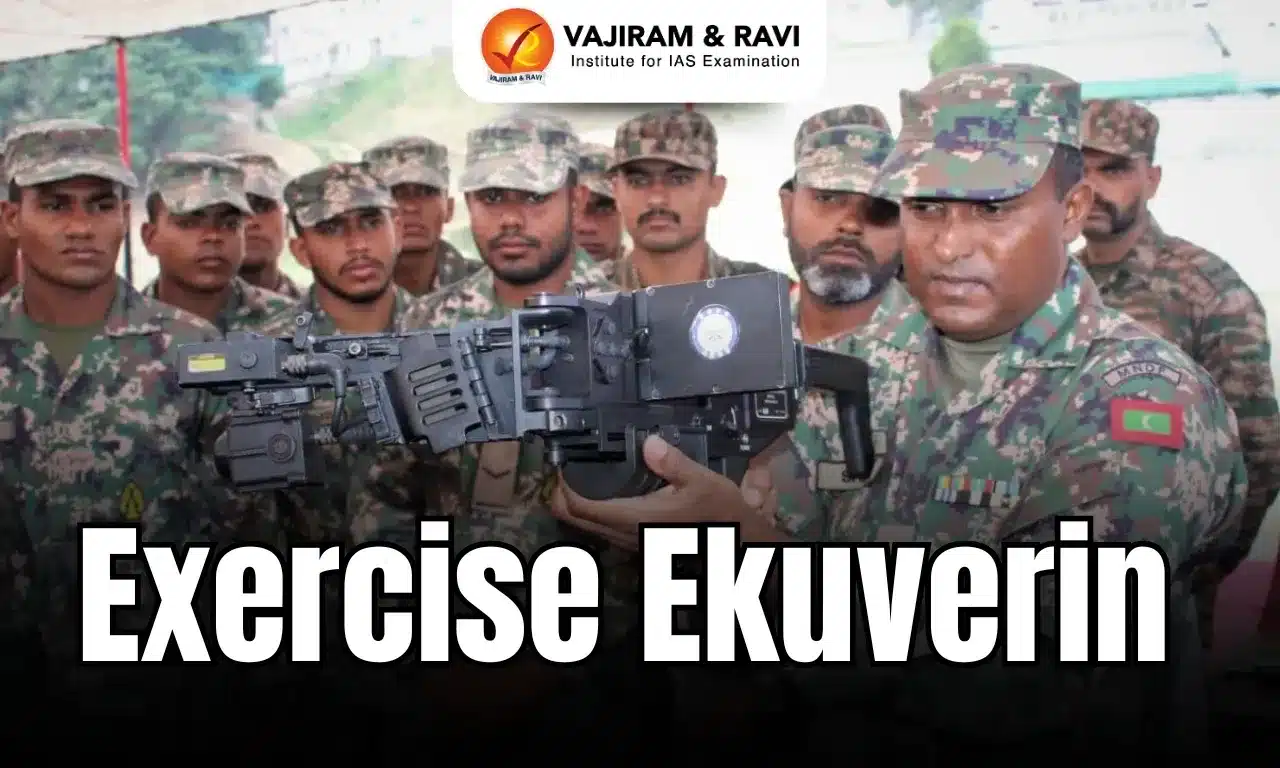
The 14th edition of the exercise EKUVERIN is set to take place in Thiruvananthapuram, Kerala. 

About Exercise EKUVERIN

  • Ekuverin meaning ‘Friends’ in Dhivehi language started in the year 2009.
  • Ekuverin is one of the three major joint exercises between India and the Maldives.
  • It is a bilateral military annual exercise conducted alternatively in India and Maldives.
  • The Exercise aims to enhance interoperability while carrying out counterinsurgency and Counter Terrorism operations in semi-urban, jungle and coastal terrain. 
  •  It further focus on integration of niche technology to enhance interoperability, the countries will share best practices, reflecting the shared commitment of India and the Maldives towards peace and security in the region.
  • Other Exercises between India and Maldives: The two bilateral exercises are “Ekuverin” and “Ekatha” and trilateral- “Dosti”, which includes Sri Lanka. 

India and Maldives Relationship

  • India was among the first to recognize Maldives after its independence in 1965 and to establish diplomatic relations with the country.
  • The both countries share ethnic, linguistic, cultural, religious and commercial links steeped in antiquity.

Source: News On Air

Exercise EKUVERIN FAQs

Q1: What is the meaning of 'Ekuverin'?

Ans: Friendship

Q2: What is Exercise Ekuverin?

Ans: A joint military exercise between India and Maldives

Vande Mataram 150 Years Celebration

Vande Mataram-150 years Celebration

Vande Mataram 150 Years Celebration Latest News

The Prime Minister of India will inaugurate the year-long commemoration of 150 years of the National Song “Vande Mataram” in New Delhi.

About Vande Mataram 150 Years Celebration

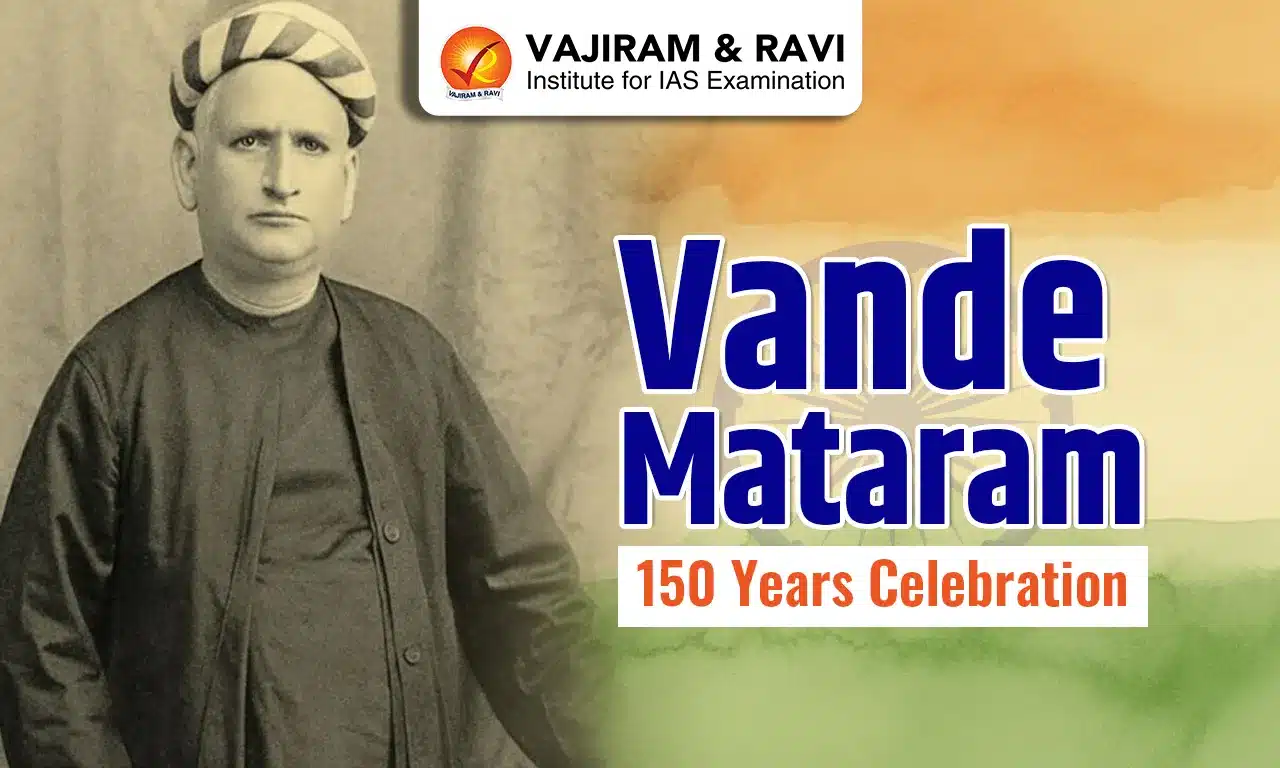
  • “Vande Mataram,” written by Bankim Chandra Chatterjee in a blend of Sanskrit and Bengali, is the National Song of India.
  • It was first featured in his novel Anand Math in 1882, with its tune composed by Yadunath Bhattacharya.
  • It became a symbol of patriotism during India’s freedom struggle.

Historical Background of Vande Mataram

  • It was initially composed independently and later included in Bankim Chandra Chatterjee’s novel “Anandamath” (published in 1882).
  • It was first sung by Rabindranath Tagore at the 1896 Congress Session in Calcutta.
  • Vande Mataram, as a political slogan, was first used on 7 August 1905.
  • In 1907, Madam Bhikaji Cama raised the tricolour flag for the first-time outside India in Stuttgart, Berlin. The words Vande Mataram were written on the flag.
  • On 24 January 1950, the Constituent Assembly adopted Vande Mataram as the National Song of India.
  • The National Song is held in equal reverence to the national anthem, but it is not mandatory to sing it at any given occasion.

Source: News On Air

Vande Mataram FAQs

Q1: In which novel was Vande Mataram first published?

Ans: Anandamath

Q2: When was Vande Mataram first sung at the Indian National Congress session?

Ans: 1896

Q3: What is the significance of Vande Mataram?

Ans: It is a patriotic song that inspired the Indian independence movement.

Sanchar Saathi

Sanchar Saathi

Sanchar Saathi Latest News

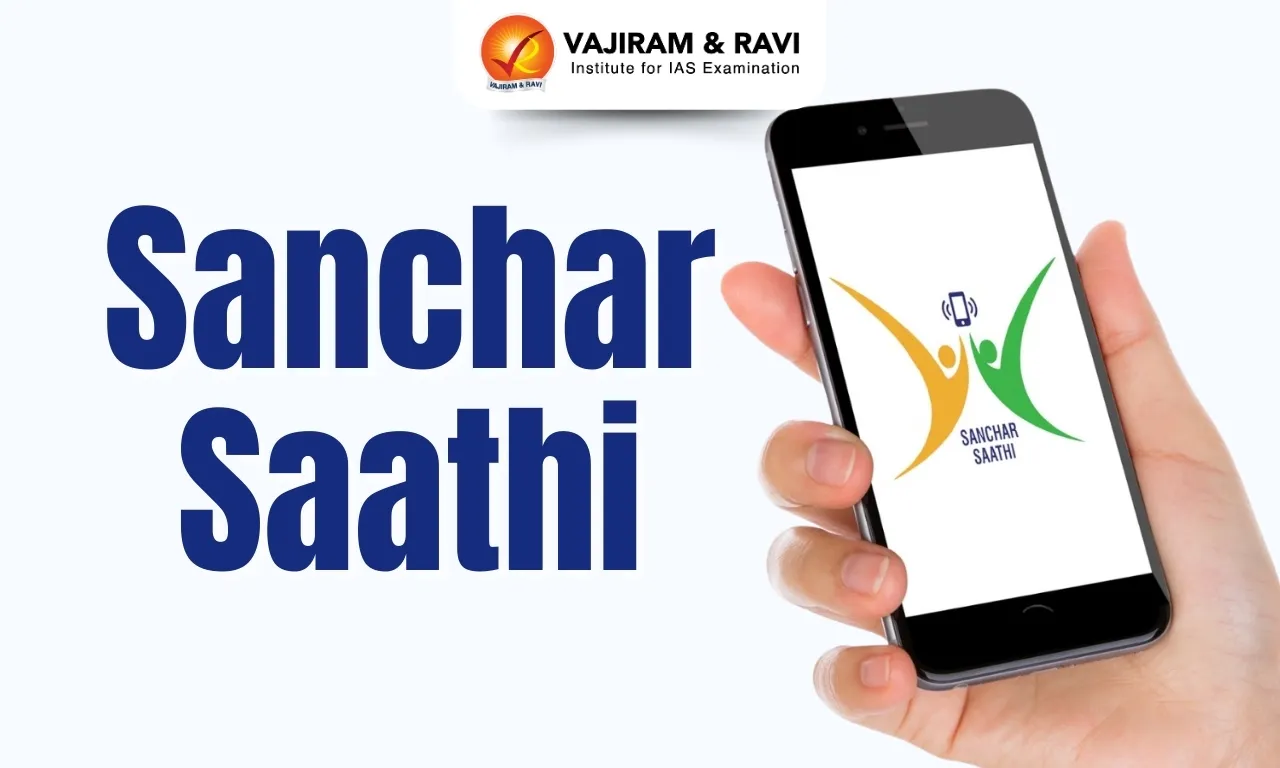
The Department of Telecommunications (DoT) has made it mandatory for all newly manufactured or imported mobile phones in India to come with the Sanchar Saathi app pre-installed.

About Sanchar Saathi

  • It is a security and awareness platform developed by the Department of Telecommunications (DoT). 
  • It is available both as an app and a web portal.
  • Purpose: To help mobile users manage their digital identity, report suspicious activity, and safeguard their devices. 
  • The platform also provides educational material on telecom safety and cyber risks, making it a combined service-and-awareness system.

Sanchar Saathi Features

  • ‘Chakshu' Feature: It lets users report suspicious calls, SMS, and WhatsApp messages, such as fake KYC alerts, impersonation scams, or phishing links.  It helps authorities spot fraud patterns.
  • Report Spam and Unwanted Commercial Calls: Users can report spam calls and messages that break TRAI rules. Complaints made within seven days can lead to action against the sender.
  • Report Malicious Links and Apps: Allows reporting of phishing links, unsafe APKs, and fraudulent websites. 
  • Checking Mobile Connections Linked To Your Identity: Shows how many mobile numbers are registered using your identity. Helps identify SIM cards taken without your knowledge.
  • Blocking Lost or Stolen Phones: Allows users to block the IMEI of a lost or stolen device so it can't be used. Phones can be unblocked if recovered.
  • Verifying The Authenticity Of A Device: Allows users to check if a phone is genuine by validating its IMEI. It is useful when buying second-hand phones.
  • Reporting International Calls That Appear As Indian Numbers: Some scammers use illegal telecom setups to make international calls appear as regular +91 calls. Sanchar Saathi enables users to report such cases.
  • Finding Your Local Internet Service Provider: The app also includes a feature that lets users check which wired internet service providers are available in their area by entering a PIN code, address, or provider name.
  • Verifying Trusted Contacts and Helpline Numbers: Provides a directory to confirm genuine customer-care numbers, emails, and websites of banks and other major institutions.

Source: FE

Sanchar Saathi FAQs

Q1: What is Sanchar Saathi?

Ans: It is a security and awareness platform.

Q2: Sanchar Saathi has been developed by which government department?

Ans: Department of Telecommunications (DoT)

Q3: Which feature of Sanchar Saathi allows users to report suspicious calls, SMS, or WhatsApp messages?

Ans: Chakshu feature.

Fluoride

Fluoride

Fluoride Latest News

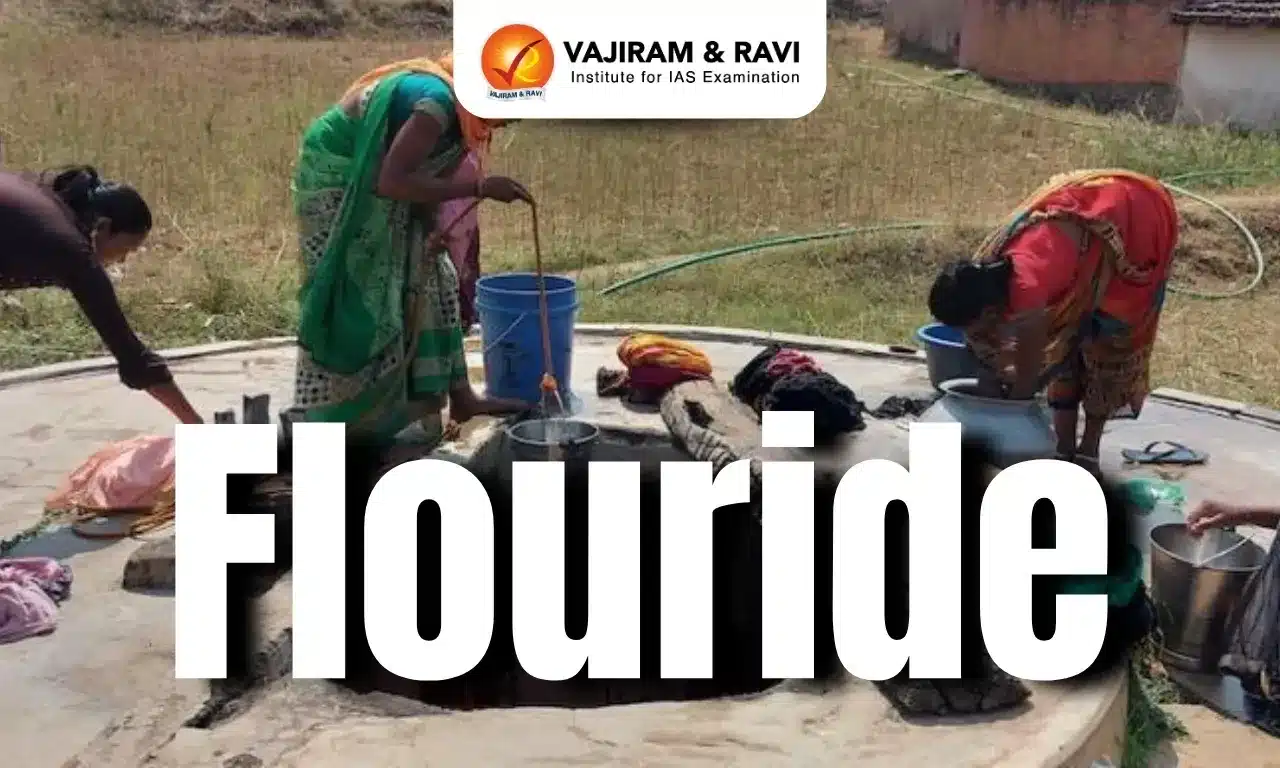
Recently, an NGO assessed that, in Odisha’s Mayurbhanj, excess fluoride in drinking water is causing widespread fluorosis in several villages.

About Fluoride

  • Fluoride is an inorganic, monatomic anion of fluorine with the chemical formula F−1. 
  • It is a common element that does not occur in the elemental state in nature because of its high reactivity.
  • It is considered a beneficial nutrient and is present in trace amounts in the body.
  • It is important for the integrity of bones and teeth. About 99% of the fluoride in the body is in the hard tissues.
  • Sources of Fluoride
    • It accounts for about 0.3 g/kg of the Earth’s crust and exists in the form of fluorides in a number of minerals, of which fluorspar, cryolite and fluorapatite are the most common.
    • It is a mineral naturally present in many foods and available as a dietary supplement.
    • Soil, water, plants, and foods contain trace amounts of fluoride.
  • Uses: It is used in aluminium production and as a flux in the steel and glass fibre industries. They can also be released to the environment during the production of phosphate fertilizers, bricks, tiles and ceramics.

Health Impact of Fluoride

  • Dental fluorosis: High fluoride water can negatively impact children’s health, leading to dental fluorosis (discoloured or stained teeth)
  • Skeletal (bone) fluorosis: It also causes potential skeletal fluorosis, which causes bone and joint issues. 

Source: DTE

Fluoride FAQs

Q1: What is the disease caused by excessive fluoride consumption?

Ans: Fluorosis

Q2: Which organization sets the standards for fluoride in drinking water in India?

Ans: BIS (Bureau of Indian Standards)

Trade Enablement and Marketing Scheme

Trade Enablement and Marketing Scheme

Trade Enablement and Marketing Scheme Latest News

Recently, the Minister of state for Micro, Small & Medium Enterprises informed the Rajya Sabha about the Trade Enablement and Marketing Scheme.

About Trade Enablement and Marketing Scheme

  • It is the sub scheme of the scheme ‘Raising and Accelerating MSME Performance’ (RAMP), which is a Central Sector Scheme. 
  • The initiative will empower MSMEs with digital tools and guidance to effectively utilize the e-commerce marketplace.
  • Objective: To support MSMEs to help them access different markets by integrating them with e-commerce platforms.
  • Financial Outlay and Duration: The outlay is Rs. 277.35 Cr. for the duration of 3 years from 2024 to 2027.
  • Eligibility Criteria: All the Udyam registered Micro and Small Enterprises (MSEs) under manufacturing and services sectors will be eligible for benefits under the Initiative.
  • Targeted beneficiaries: It envisages benefiting 5 lakh Micro and Small Enterprises (MSEs) of which 50% are to be women owned MSEs.
  • It focus on;
    • Connecting MSMEs with the ONDC Network.
    • Provides access to digital storefronts, integrated payment systems, and logistics support.
    • Reduce operational barriers and help businesses tap into wider customer bases.
    • It emphasizes formalizing operations and establishing digital transaction histories, which will enhance the credibility and trust of participating MSMEs.
  • Implementing Agency:  National Small Industries Corporation (NSIC)

Source: PIB

Trade Enablement and Marketing Scheme FAQs

Q1: What is the main objective of the TEAM Scheme?

Ans: To empower MSMEs in e-commerce

Q2: What is the duration of the TEAM Scheme?

Ans: 3 years (2024-2027)

Hornbill Festival

Hornbill Festival

Hornbill Festival Latest News

Recently, the 26th edition of Nagaland's iconic Hornbill Festival kicked off with great enthusiasm.

About Hornbill Festival

  • It was first organized in the year 2000.
  • It aims to promote inter-tribal interaction and preserve Nagaland’s heritage, blending the traditional with the contemporary in a harmonious display of unity.
  • It is also called the festival of festivals and is held every year.
  • Organised by: It is organized by the State Tourism and Art & Culture Departments of the Government of Nagaland.
  • It is celebrated at Naga Heritage Village, Kisama which is about 12 km from Kohima in Nagaland.
  • It has evolved into a celebration showcasing the diverse and vibrant cultural and traditional heritage of the tribes of Nagaland.
  • It was named after the Hornbill bird given its association with the socio-cultural life of the Nagas.
  • Theme of 2025 festival:  Cultural Connect
  • This year Nagaland has officially named Switzerland and Ireland as country partners for the Hornbill Festival 2025.

Source: IE

Hornbill Festival FAQs

Q1: Where is the Hornbill Festival celebrated?

Ans: Nagaland

Q2: Which bird is the Hornbill Festival named after?

Ans: Great Indian Hornbill

Enquire Now