Onchocerciasis

Onchocerciasis

Onchocerciasis Latest News

Niger becomes the first country in the African Region to eliminate onchocerciasis.

About Onchocerciasis

  • Onchocerciasis, or river blindness, is a disease caused by Onchocerca volvulus, a parasitic worm. 
  • The parasite can spread to humans through repeated bites of infected blackflies of the Simulium species. 
  • The flies breed by fast-flowing rivers and streams in certain remote, tropical, agricultural areas.
  • Onchocerciasis itself isn’t contagious because it can’t spread directly from one person to another. 
  • But the disease can spread when blackflies bite infected people, ingest the larvae, and then bite people who aren’t infected.
  • It is common throughout sub-Saharan Africa and certain areas of Brazil and Venezuela in South America. 
  • Symptoms include a potentially disfiguring skin rash and vision problems, even blindness.
  • Globally, it is second only to trachoma in causing infection-related blindness.
  • According to the World Health Organization (WHO), river blindness remains one of the most neglected tropical diseases, especially in remote and rural areas.
  • Treatment: Treatment for river blindness is ivermectin, an oral antiparasitic medication.

Source: NOA

Onchocerciasis FAQs

Q1: Onchocerciasis is caused by which organism?

Ans: Onchocerciasis is a disease caused by Onchocerca volvulus, a parasitic worm.

Q2: How is Onchocerciasis transmitted to humans?

Ans: Bites of infected blackflies (Simulium species).

Q3: Which regions of the world are most affected by Onchocerciasis?

Ans: It is common throughout sub-Saharan Africa and certain areas of Brazil and Venezuela in South America.

Q4: What is the primary treatment for Onchocerciasis?

Ans: Treatment for river blindness is ivermectin, an oral antiparasitic medication.

Director General of Civil Aviation (DGCA)

Director General of Civil Aviation (DGCA)

Director General of Civil Aviation (DGCA) Latest News

Recently, the Directorate General of Civil Aviation (DGCA) granted the  Indigo airline a temporary one-time exemption from some Flight Duty Time Limitation (FDTL) norms for pilots. 

About Director General of Civil Aviation (DGCA)

  • It is the regulatory body in the field of civil aviation primarily dealing with safety issues.
  • It is an attached office of the Ministry of Civil Aviation.
  • It is responsible for regulation of air transport services to/from/within India and for enforcement of civil air regulations, air safety and airworthiness standards.
  • It also coordinates all regulatory functions with the International Civil Aviation Organisation.
  • Headquarters: New Delhi 

Functions and Responsibilities of the Director General of Civil Aviation (DGCA)

  • One of the main functions of the DGCA is to ensure the safety of passengers and crew members on all flights operating in India.
  • It conducts regular safety inspections of all airlines and aircraft to meet the required safety standards.
  • It also investigates any incidents or accidents that occur within the Indian airspace.
  • It plays a crucial role in developing new airports and modernizing existing facilities to ensure that they can meet the growing demands of the aviation industry.
  • It is responsible for the regulation of air traffic in India. It works closely with the Airports Authority of India (AAI) to ensure air traffic is managed safely and efficiently.
  • The DGCA also plays a key role in developing new air traffic control systems and technologies to improve the overall efficiency of Indian airspace.
  • It is also responsible for issuing licenses and certificates to pilots, aircraft maintenance engineers, and other aviation personnel.

Source: IE

Director General of Civil Aviation (DGCA) FAQs

Q1: What is the primary function of DGCA?

Ans: To regulate air transport services

Q2: Under which ministry does DGCA operate?

Ans: Ministry of Civil Aviation

Infrastructure Investment Trust (InvIT)

Infrastructure Investment Trust

Infrastructure Investment Trust (InvIT) Latest News

Recently, National Highways Authority of India received the Securities and Exchange Board of India’s (SEBI) in-principle approval for ‘Raajmarg Infra Investment Trust’ (RIIT) as an Infrastructure Investment Trust (InvIT).

About Infrastructure Investment Trust (InvIT)

  • It is Collective Investment Scheme similar to a mutual fund, which enables direct investment of money from individual and institutional investors in infrastructure projects 
  • These are like mutual funds in structure which can be established as a trust and registered with Sebi.
  • Objective: To provide retail investors with access to investment opportunities in infrastructure projects, which were previously only available to large institutional investors. 

Features of the Infrastructure Investment Trust (InvIT)

  • An InvIT has 4 parties namely; Trustee, Sponsor(s) and Investment Manager and Project Manager.
  • INVITs are created by sponsors, who are typically infrastructure companies or private equity firms.
  • The sponsor sets up the INVITs and transfers ownership of the underlying infrastructure assets to the trust.
  • The trust then issues units to investors, which represent an ownership stake in the trust and thus the underlying assets.
  • While the trustee (certified by Sebi) has the responsibility of inspecting the performance of an InvIT, sponsor(s) are promoters of the company that set up the InvIT.
  • InvITs are regulated by the SEBI (Infrastructure Investment Trusts) Regulations, 2014.

Source: PIB

Infrastructure Investment Trust (InvIT) FAQs

Q1: Which regulator oversees InvITs in India?

Ans: SEBI

Q2: What is an Infrastructure Investment Trust (InvIT)?

Ans: A type of investment vehicle for infrastructure projects

Shingles Disease

Shingles Disease

Shingles Disease Latest News

A recent study found that Shingles vaccine reduces risk of death from dementia.

About Shingles Disease

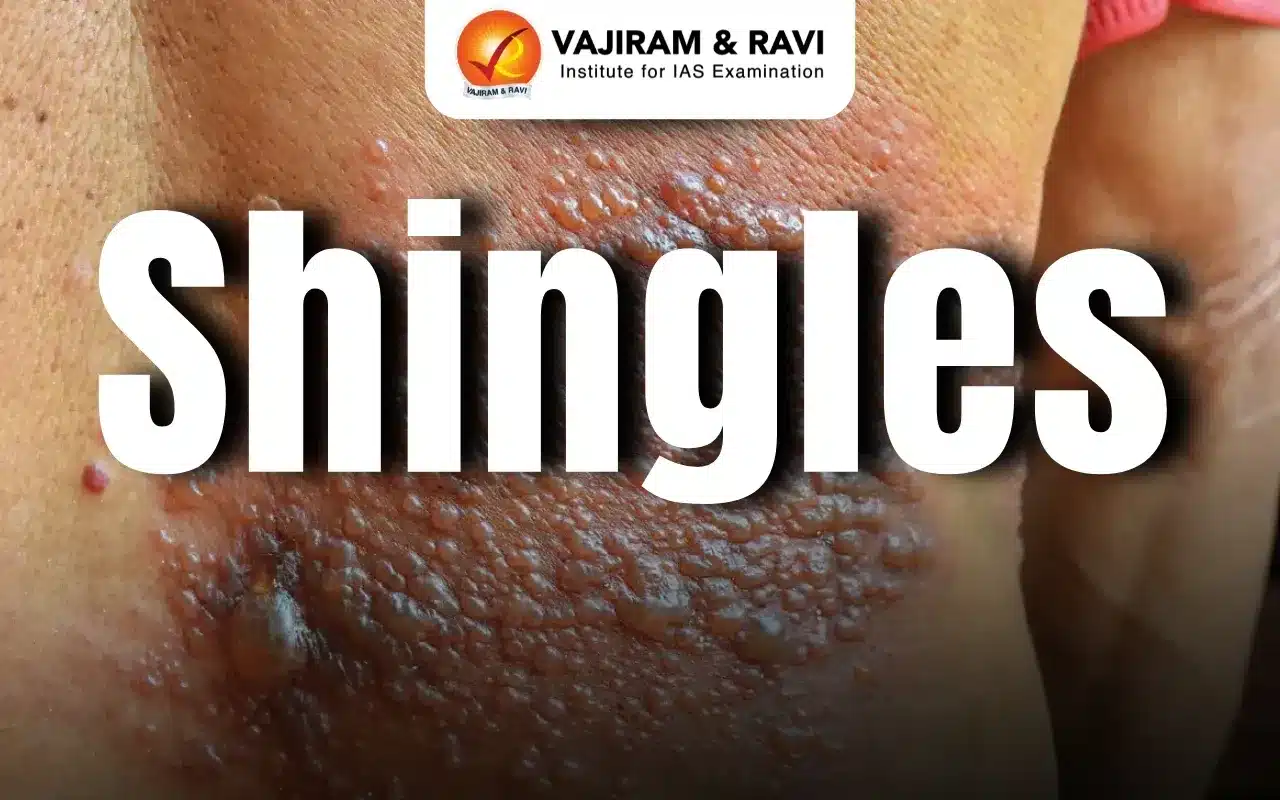
  • Shingles is a viral infection that causes a painful rash.
  • Cause: It is caused by the varicella-zoster virus — the same virus that causes chickenpox.
    • After a person recovers from chickenpox, the virus remains dormant in the nerve cells and can reactivate years later, especially when the immune system is weakened due to age, illness, or immunosuppressive medications.
  • Symptoms of Shingles
    • Shingles typically presents as a painful rash, often forming a stripe of blisters on one side of the torso, neck, or face.
    • Other symptoms may include itching, tingling, burning, headache, fever, and sensitivity to light or touch.
  • Transmission: It is not contagious, but the virus can be spread to someone who has never had chickenpox.
  • It is most common in people over 50 or those with weakened immune systems.
  • Treatment: There is a vaccine called Shingrix available, which helps in preventing shingles and its complications.

Source: DD News

Shingles Disease FAQs

Q1: What is another name for Shingles Disease?

Ans: Herpes Zoster

Q2: Which virus causes Shingles Disease?

Ans: Varicella-Zoster Virus (VZV)

Technology Development Fund (TDF) Scheme

Technology Development Fund (TDF) Scheme

Technology Development Fund (TDF) Scheme Latest News

Recently, the Defence Research and Development Organisation has handed over seven technologies developed under the Technology Development Fund (TDF) scheme to armed forces.

About Technology Development Fund (TDF) Scheme

  • It has been established to promote self-reliance in Defence Technology as a part of the ‘Make in India’ initiative.
  • It encourages the participation of public/private industries, especially MSMEs and startups, so as to create an ecosystem for enhancing cutting-edge technology capability in the defence sector.
  • Nodal Ministry: Ministry of Defence.
  • Funding Support
    • The project cost of up to INR 50 crore will be considered for funding.
    • The funding may be up to 90% of the total project cost.
    • Project Duration: The maximum development period will be four (4) years.

Eligibility criteria for Technology Development Fund (TDF) Scheme

  • Entity Type: A public limited company, a private limited company, a partnership firm, a limited liability partnership, a one-person company, or a sole proprietorship registered as per applicable Indian laws registered in India especially MSMEs and Startups.
  • The industry must be owned and controlled by a resident Indian citizen.
  • An entity with excess of 49 percent foreign investment not be eligible.
  • Start up
    • Startups must be recognized by the Department for Promotion of Industry and Internal Trade (DPIIT) as per Government of India (GOI) guidelines.
    • Startups incorporated for less than three years from date of submission of application will be considered as nascent startups.
    • A nascent Startup should be incubated at one of the Central/State government assisted incubators.
    • Startups should not have received any grants/grants-in-aid by any government scheme for a similar technology.
    • The startup must be owned and controlled by a Resident Indian citizen with a shareholding of at least 51%.

Source: PIB

Technology Development Fund (TDF) Scheme FAQs

Q1: What is the main objective of the TDF Scheme?

Ans: To support MSMEs and start-ups in developing dual-use technologies

Q2: Which ministry implements the TDF Scheme?

Ans: Ministry of Defence

Ramgarh Vishdhari Tiger Reserve

Ramgarh Vishdari Tiger Reserve

Ramgarh Vishdhari Tiger Reserve Latest News

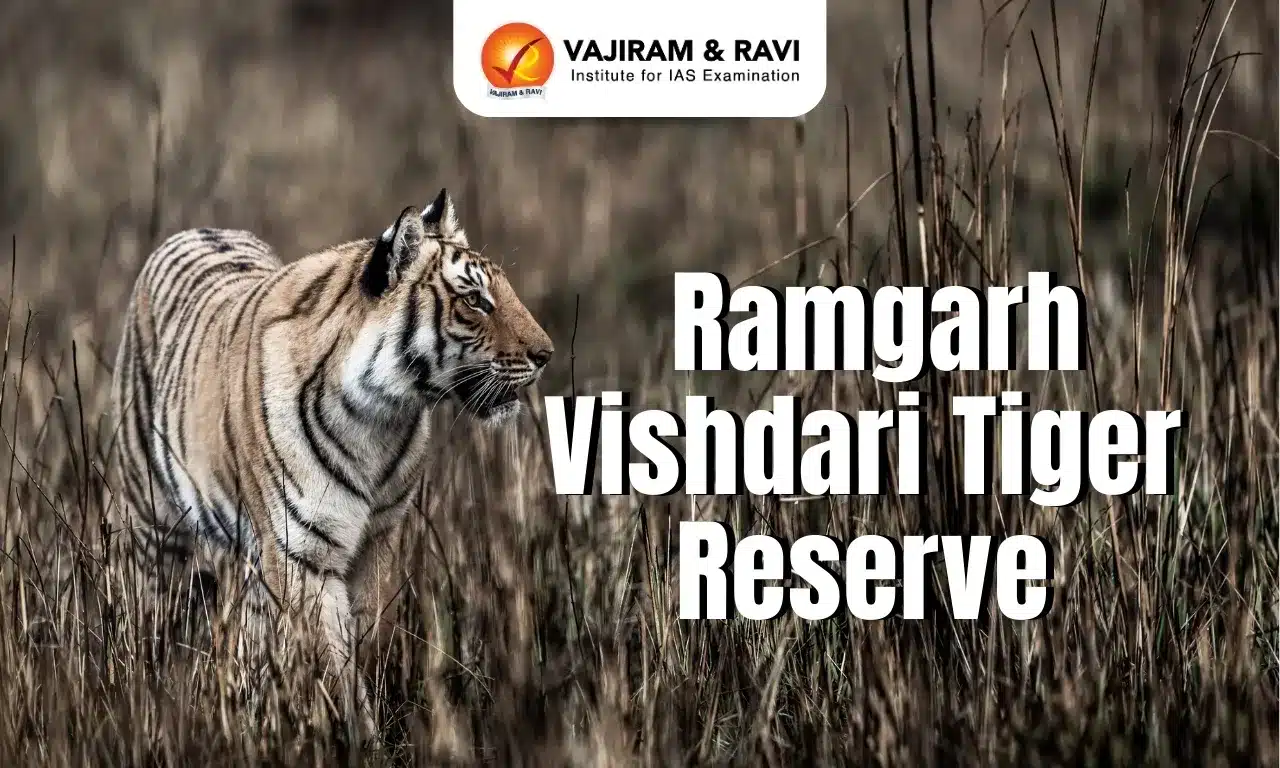
Marking the state's first inter-state tiger translocation and the country's second, a tigress is set to be airlifted from the Pench Tiger Reserve in Madhya Pradesh to around 800 km away in Ramgarh Vishdhari Tiger Reserve (RVTR) in Rajasthan's Bundi in the next few weeks.

About Ramgarh Vishdhari Tiger Reserve

  • It is located in Rajasthan’s Bundi district.
  • Spread over 1,501.89 sq.km., the reserve has a 481.90 sq.km. core area and a 1,019.98 sq.km. buffer zone.
  • It is strategically positioned to serve as a crucial corridor between the Ranthambore Tiger Reserve to the northeast and the Mukundara Hills Tiger Reserve to the south. 
  • It was notified as a tiger reserve on May 16, 2022.
  • The Mez River, a tributary of the Chambal River, meanders through the reserve.
  • The reserve’s topography is characterized by the rugged terrains of the Aravalli and Vindhyan mountain ranges, interspersed with valleys and plateaus. 
  • Vegetation: Dry Deciduous Forest
  • Flora:
    • The habitat is dominated by Dhok (Anogeissus pendula) trees.
    • Other important flora includes Khair, Ronj, Amaltas, Gurjan, Saler, etc.
  • Fauna:
    • The area is dominated by leopards and sloth bears.
    • Other important fauna include the Jungle cat, Golden jackal, Hyaena, Crested Porcupine, Indian Hedgehog, Rhesus macaque, hanuman langur, etc.

Key Facts about Pench Tiger Reserve 

  • It is located in the southern reaches of the Satpura hills in the Seoni and Chhindwara districts in Madhya Pradesh and shares the southern boundary with Maharashtra.
  • It is named after the Pench River, meandering through the reserve from north to south.
  • It comprises the Indira Priyadarshini Pench National Park, the Pench Mowgli Sanctuary, and a buffer.
  • The area of the PTR and the surrounding area is the real story area of Rudyard Kipling’s famous “The Jungle Book”.
  • Vegetation: The undulating topography supports a mosaic of vegetation ranging from a moist sheltered valley to an open, dry deciduous forest.
  • Flora:
    • The reserve boasts a diverse range of flora, including teak, saag, mahua, and various grasses and shrubs.
    • Teak forests are found in about one quarter of the area
  • Fauna:
    • The area is especially famous for large herds of Chital, Sambar, Nilgai, Gaur (Indian Bison), and wild boar.
    • The key predator is the tiger, followed by the leopard, wild dogs, and wolf.
    • There are over 325 species of resident and migratory birds, including the Malabar Pied Hornbill, Indian Pitta, Osprey, Grey Headed Fishing Eagle, White Eyed Buzzard, etc.

Source: WEEK

Ramgarh Vishdhari Tiger Reserve FAQs

Q1: Ramgarh Vishdhari Tiger Reserve is located in which Indian state?

Ans: Rajasthan

Q2: What is the total area of Ramgarh Vishdhari Tiger Reserve?

Ans: 1,501.89 sq.km.

Q3: Ramgarh Vishdhari Tiger Reserve serves as a crucial corridor between which two tiger reserves

Ans: Ranthambore Tiger Reserve and Mukundara Hills Tiger Reserve

Q4: Which river flows through Ramgarh Vishdhari Tiger Reserve?

Ans: The Mez River, a tributary of the Chambal River, meanders through the reserve.

Red-Breasted Parakeet

Red-Breasted Parakeet

Red-Breasted Parakeet Latest News

In a rare sighting, two pairs of red-breasted parakeets were recently spotted on the NIT-Patna campus by a group of environmentalists.

About Red-Breasted Parakeet

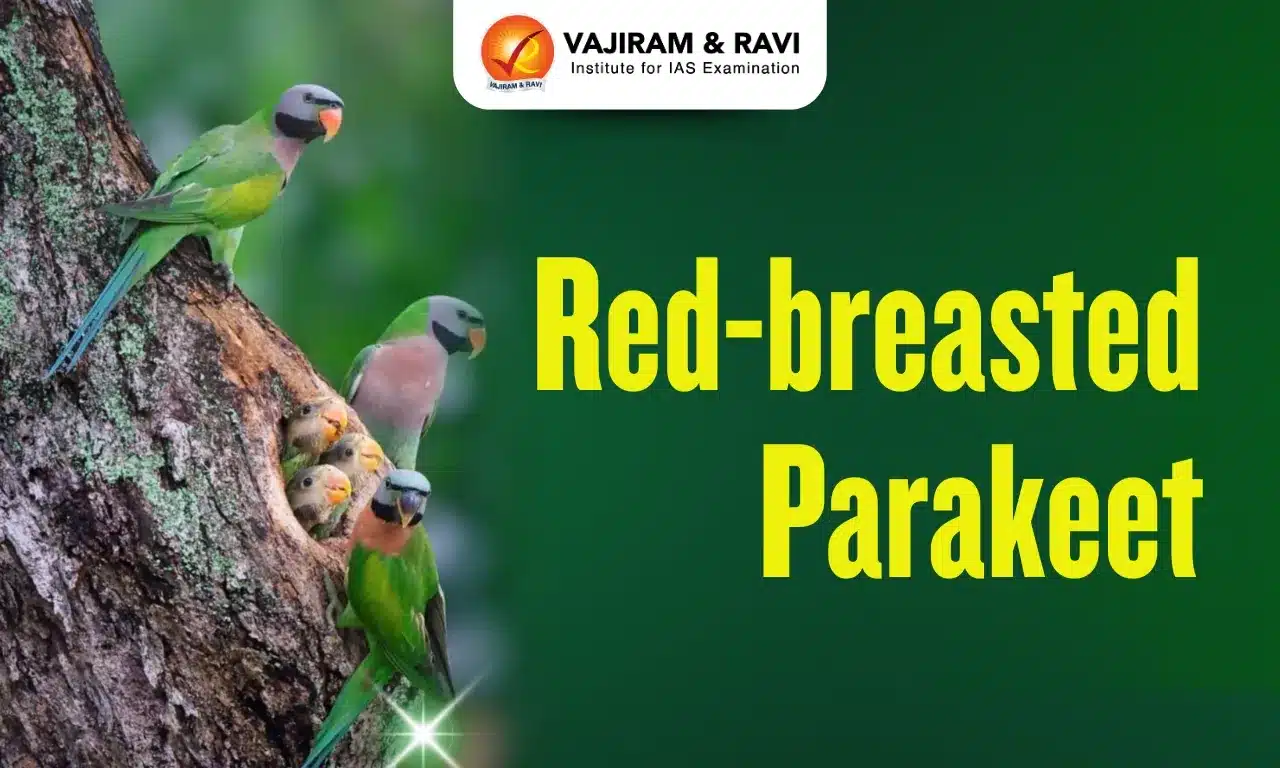
  • The red-breasted parakeet, or moustached parakeet, is a colorful bird found across many parts of Asia. 
  • Scientific Name: Psittacula alexandri
  • It's known for its bright feathers and a unique "moustache" marking. 
  • These parakeets are quite common and have several different looks depending on where they live.
  • Distribution: Their home stretches from parts of India and Nepal, through Southeast Asia, including countries like Thailand, Vietnam, and Indonesia. 
  • Habitat: They prefer living in forests, woodlands, and even in areas near farms or towns
  • Features:
    • It is a medium-sized parrot
    • It can grow to about 33 to 38 centimeters long, including its long tail. 
    • The male has overall green plumage with a distinct pink breast and belly, a grey head, a blue upper tail, a green tail tip, and a red upper bill. 
    • The female is similar to the male but has duller pink underparts and a black upper bill. 
    • These birds are very social and often live in small groups or larger flocks. 
    • They are quite noisy, especially when flying or feeding. 
    • Their calls are usually loud squawks and screeches.
  • Conservation Status:
    • IUCN Red List: Near Threatened

Source: TOI

Red-Breasted Parakeet FAQs

Q1: What is Red-breasted Parakeet?

Ans: It is a colorful bird found across many parts of Asia.

Q2: What is the scientific name of the Red-breasted Parakeet?

Ans: Psittacula alexandri

Q3: The Red-breasted Parakeet is classified under which IUCN category?

Ans: Near Threatened

Pradhan Mantri Formalisation of Micro Food Processing Enterprises (PMFME) Scheme

Pradhan Mantri Formalisation of Micro Food Processing Enterprises (PMFME) Scheme

Pradhan Mantri Formalisation of Micro Food Processing Enterprises (PMFME) Scheme Latest News

Stating that Pradhan Mantri Formalisation of Micro Food Processing Enterprises (PMFME) scheme has steadily expanded its reach, the Minister of State for Food Processing Industries recently said that major components of the scheme have made notable progress as of 31 October 2025.

About Pradhan Mantri Formalisation of Micro Food Processing Enterprises (PMFME) Scheme

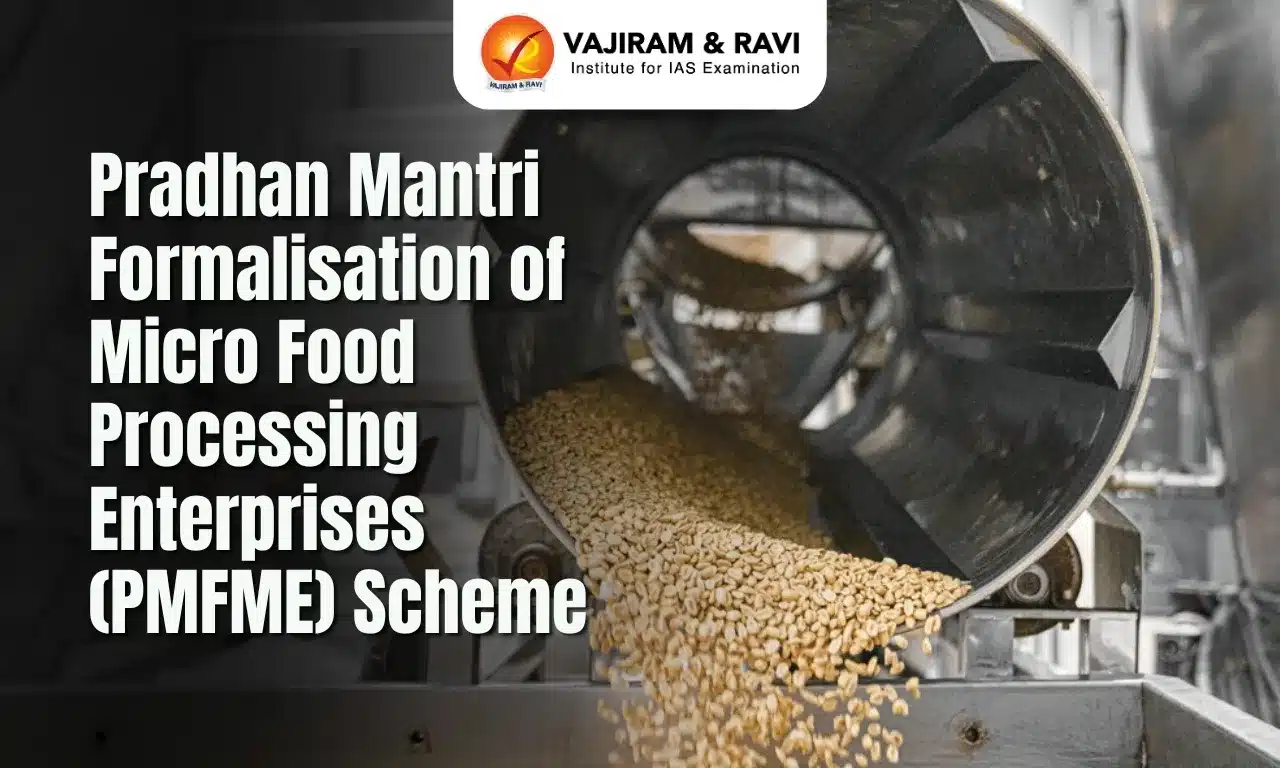
  • Launched on June 29, 2020, PMFMPE is a Centrally Sponsored Scheme by the Ministry of Food Processing Industries.
  • It is designed to address the challenges faced by micro-enterprises and to tap the potential of groups and cooperatives to support the upgradation and formalization of these enterprises.
  • Objectives: To build the capability of microenterprises to enable:
    • Increased access to credit by existing micro food processing entrepreneurs, FPOs, self-help groups, and co-operatives.
    • Integration with an organized supply chain by strengthening branding & marketing.
    • Support for the transition of existing 200,000 enterprises into a formal framework.
    • Increased access to common services like common processing facilities, laboratories, storage, packaging, marketing, and incubation services.
    • Strengthening of institutions, research, and training in the food processing sector; and
    • Increased access for enterprises to professional and technical support.
  • Outlay:
    • The scheme envisages an outlay of ₹ 10,000 crores over a period of five years from 2020-21 to 2024-25.
    • The expenditure under the scheme would be shared in a 60:40 ratio between Central and State Governments, in a 90:10 ratio with the Northeastern and the Himalayan States, a 60:40 ratio with UTs with the legislature, and 100% by the Center for other UTs.
  • Coverage:
    • Under the scheme, 2,00,000 micro food processing units will be directly assisted with credit-linked subsidies.
    • Adequate, supportive common infrastructure and institutional architecture will be supported to accelerate the growth of the sector.
  • Benefits: The program has four broad components addressing the needs of the sector:
    • Support to individuals and groups of micro-enterprises.
    • Branding and Marketing support.
    • Support the strengthening of institutions.
    • Setting up a robust project management framework.
  • Financial Support:
    • Support to Individual Micro Units:
    • Micro enterprises will get a credit-linked subsidy at 35% of the eligible project cost with a ceiling of Rs.10 lakh.
    • Beneficiary contribution will be a minimum of 10%, and balance from the loan.
    • On-site skill training & Handholding for DPR and technical upgradation.
  • Support to FPOs/SHGs/Cooperatives:
    • Seed capital will be given to SHGs (@Rs. 4 lakh per SHG) for loans to members for working capital and small tools.
    • Credit-linked capital subsidy at 35% subject to a maximum of Rs. 3 crore, to support FPOs, SHGs, cooperatives, and any Government agency for setting up common infrastructure. 
    • Grant up to 50% for branding and marketing to groups of FPOs/ SHGs/Cooperatives or an SPV of micro food processing enterprises.
    • Skill training & Handholding support.
    • Credit-linked capital subsidy
  • The Eligible Borrowers for PMFMPE can be:
    • Farmer Producer Organization (FPO)
    • Self-Help Groups
    • Co-operatives
    • Existing Micro Food Processing Entrepreneurs
    • New Units, whether for individuals or groups, would only be supported for One District One Product (ODOP).

Source: KNN

Pradhan Mantri Formalisation of Micro Food Processing Enterprises (PMFME) Scheme FAQs

Q1: The Pradhan Mantri Formalisation of Micro Food Processing Enterprises (PMFME) Scheme was launched in which year?

Ans: 2020

Q2: What is the total outlay of the Pradhan Mantri Formalisation of Micro Food Processing Enterprises (PMFME) Scheme?

Ans: The scheme envisages an outlay of ₹ 10,000 crores over a period of five years from 2020-21 to 2024-25..

Q3: What is the credit-linked subsidy percentage provided to individual micro-enterprises under PMFME Scheme?

Ans: 35%

Q4: What is the maximum credit-linked capital subsidy available for FPOs/SHGs/Cooperatives for common infrastructure under PMFME Scheme?

Ans: Rs. 3 crore

UMEED Portal

UMEED Portal

UMEED Portal Latest News

The union Minister said that the government will not impose any penalties and strict action for the next three months against those who have not registered waqf properties on the UMEED Portal. 

About UMEED Portal

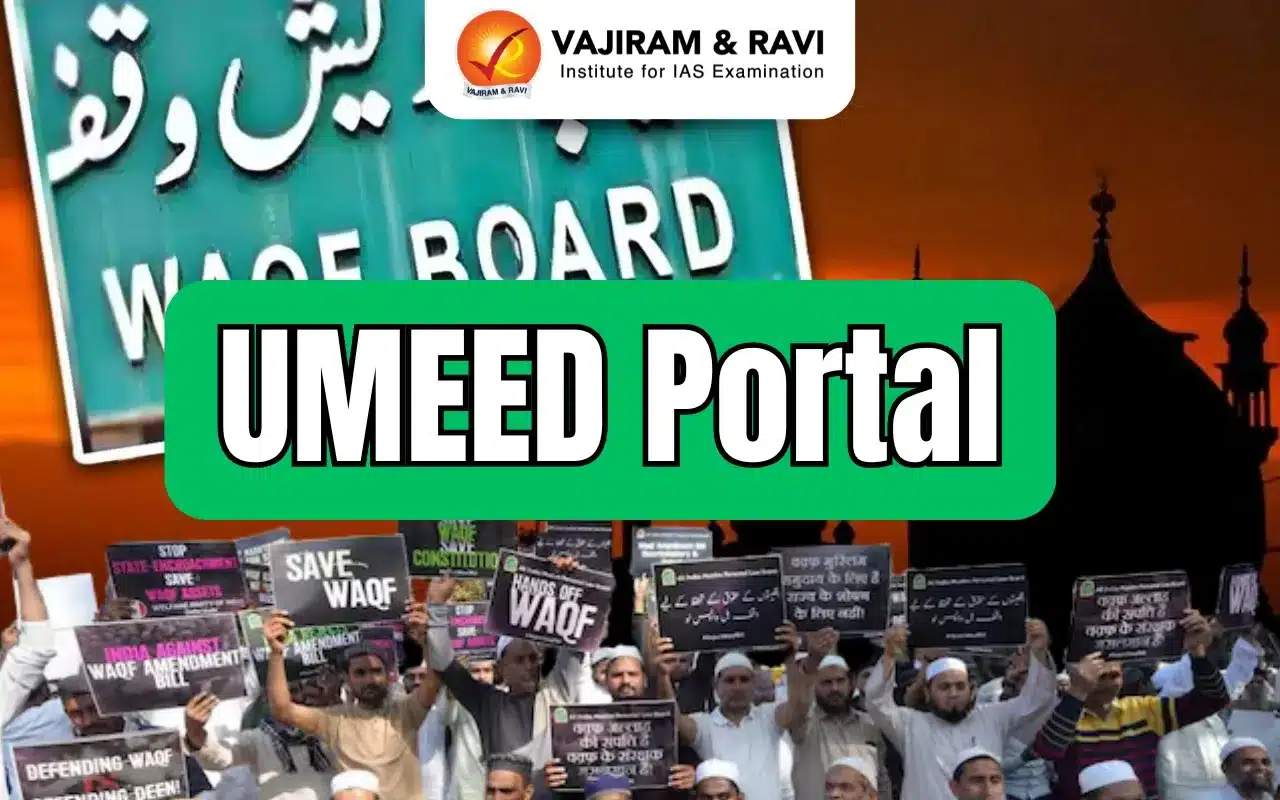
  • The ‘Unified Waqf Management, Empowerment, Efficiency, and Development (UMEED) Portal is a centralised digital platform to register Waqf properties across the country.
  • It aims to promote better management and enhance transparency.
  • It serves as a centralized digital platform for real-time uploading, verification, and monitoring of Waqf properties. 
  • Under this initiative registrations of properties are facilitated by respective State Waqf Boards.
  • Legal Support: It was formed under the Unified Waqf Management, Empowerment, Efficiency and Development Act, 1995.
  • Nodal Ministry: Ministry of Minority Affairs

Key Features of the Portal

  • Creation of a digital inventory with geo-tagging of all Waqf properties
  • Online grievance redressal system for better responsiveness
  • Transparent leasing and usage tracking
  • Integration with GIS mapping and other e-Governance tools
  • Public access to verified records and reports
  • Properties that are registered under women’s names will not be eligible to be classified as Waqf properties.

Source: News on Air

UMEED Portal FAQs

Q1: Who launched the UMEED Portal?

Ans: Ministry of Minority Affairs

Q2: What is the UMEED Portal?

Ans: A centralized digital platform for Waqf property registration

Zambezi River

Zambezi River

Zambezi River Latest News

A new study suggests the Zambezi River actually starts off in Angola’s southern highlands, at the source of a river called the Lungwebungu, giving the Zambezi a new total length of 3,421 km, or 342 km longer than previously thought.

About Zambezi River

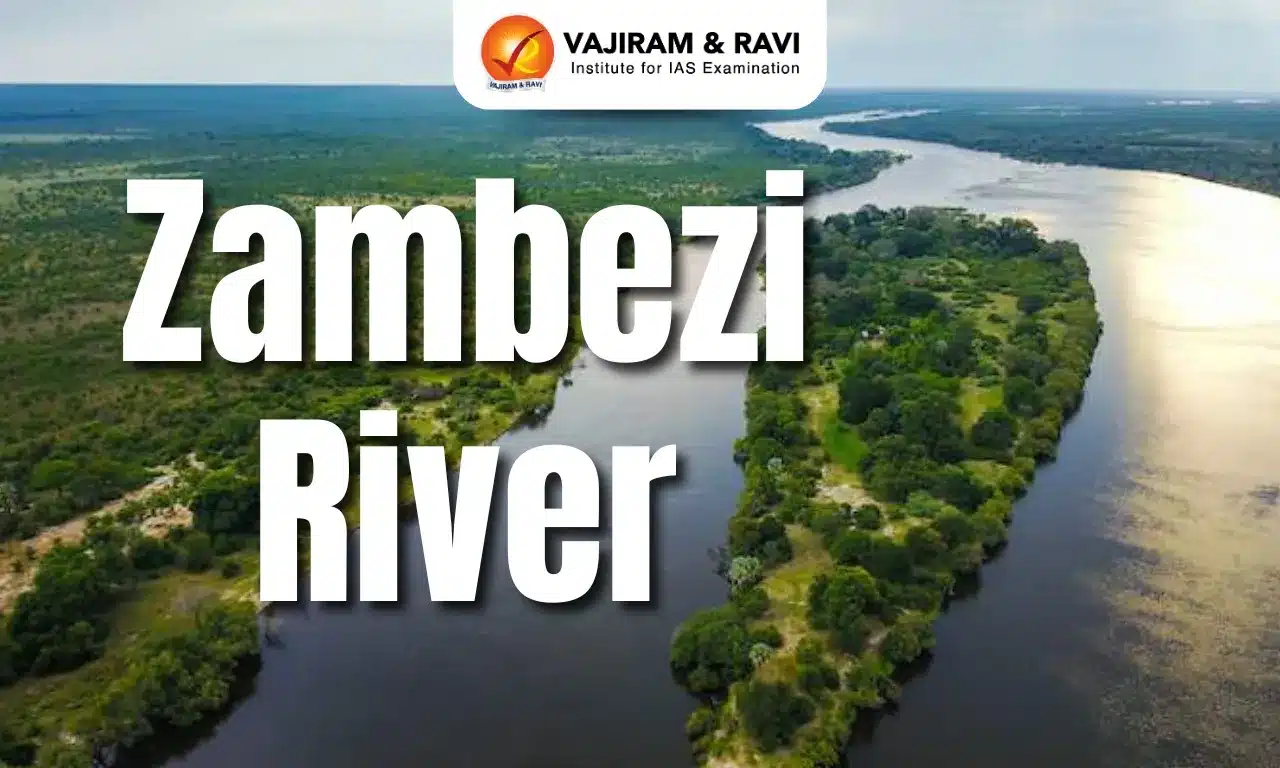
  • The Zambezi River, sometimes spelled as Zambesi or Zambeze, is Africa’s 4th longest river and the continent’s longest east-flowing stream.
  • Course
    • It starts off in Angola’s southern highlands, at the source of a river called the Lungwebungu.
    • It flows for about 3,421 kilometers through Angola, Zambia, Namibia, Botswana, Zimbabwe, and Mozambique before emptying into the Indian Ocean.
  • The river is known for several notable waterfalls, including Victoria Falls, one of the world’s largest waterfalls, and the Chavuma Falls on the Zambia-Angola border. 
  • The Cohara Bassa and Kariba Dams, two of Africa’s major hydroelectric power sources, are located along the Zambezi’s course.
  • Zambia accounts for the largest drainage area (41.6%) of the river.
  • Tributaries: The main tributaries of the Zambezi River include the Shire, Kafue, Luangwa, Kabompo, and Cuando (Kwando) rivers.

Source: MBY

Zambezi River FAQs

Q1: The Zambezi River originates in which country?

Ans: Angola

Q2: Into which ocean does the Zambezi River empty?

Ans: Indian Ocean

Q3: Which country accounts for the largest share of the Zambezi River basin area?

Ans: Zambia accounts for the largest drainage area (41.6%) of the river.

Q4: Victoria Falls, located along the Zambezi River, lies between which two countries?

Ans: Zambia and Zimbabwe

Circular Economy in India’s Dairy Sector

Circular Economy

Circular Economy Latest News

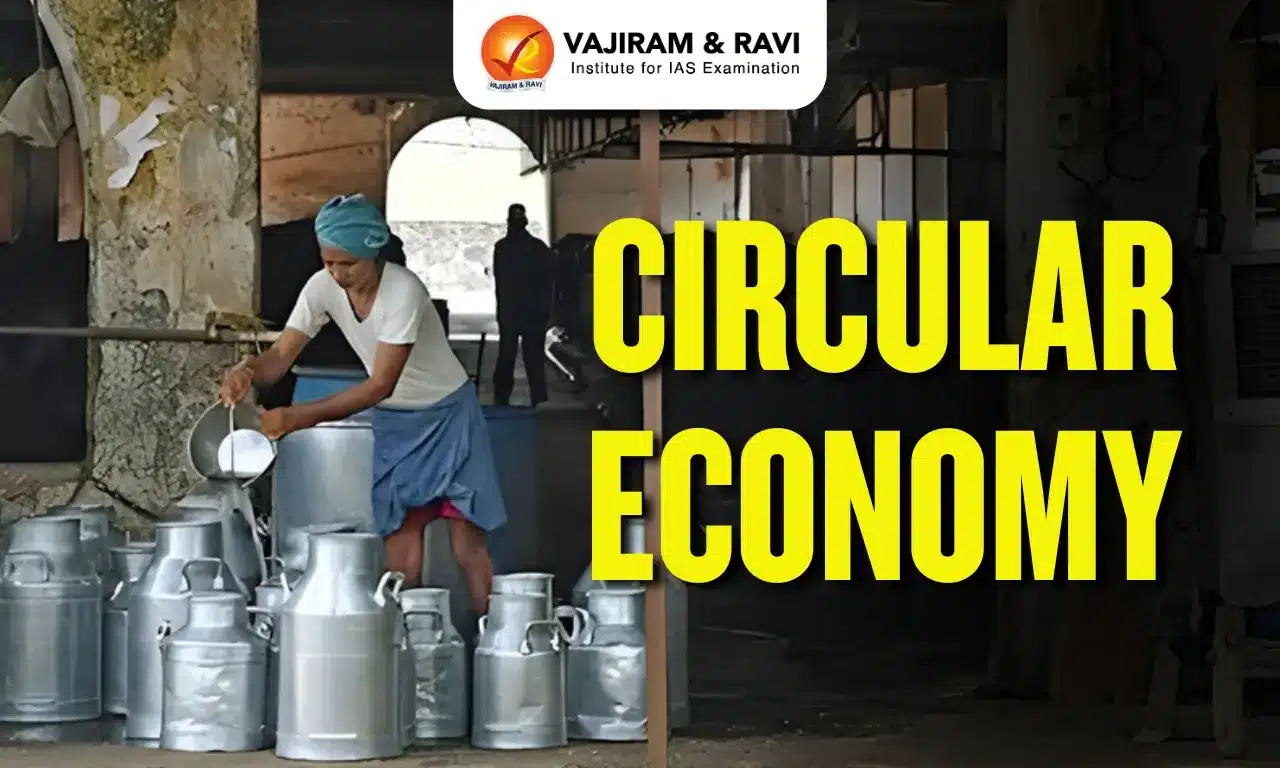
  • The Union Home and Cooperation Minister, during an event at Sanadar village, Vav-Tharad district (Gujarat), highlighted the potential of a circular economy model in the dairy sector to raise farmers’ income by 20% in the next five years. 
  • The event marked the inauguration of Banas Dairy’s bio-CNG and fertiliser plant and the groundbreaking of its milk-powder plant. 
  • Banas Dairy—Asia’s largest dairy cooperative—serves as a national model under the vision of White Revolution 2.0.

Circular Economy (CE)

  • Meaning: It is a system shifting from "take-make-dispose" to keeping resources in use longer via reuse, repair, refurbishing, and recycling, aiming to eliminate waste and regenerate nature. 
  • Key features:
    • Closed-loop system: Designs out waste and pollution, keeps products and materials in use, and regenerates natural systems.
    • Contrast to linear model: Moves away from consuming resources, making products, and discarding them.
    • Key actions: Involves sharing, leasing, repairing, refurbishing, remanufacturing, and recycling. 
  • Initiatives in India: India promotes CE through policies like the-
    • Vehicle Scrappage Policy, 
    • Mission LiFE for behavioural change, 
    • Promoting bio-CNG/fertilizer plants (like Banas Dairy's model), and 
    • Initiatives under Swachh Bharat, focusing on resource efficiency, waste-to-wealth, and sustainable consumption. 

The Circular Economy Model in Dairy

  • Towards a sustainable dairy economy:
    • India’s dairy sector has historically focused on milk procurement and processing.
    • The emphasis is now shifting to resource efficiency, waste-to-wealth, and diversification of dairy products.
  • The circular economy model: It represents a major structural reform linked to income enhancement, rural livelihoods, climate action, and cooperative federalism.
  • Waste-to-wealth approach:
    • Example, from cattle dung to biogas (bio-CNG) and bio-fertiliser.
    • It provides additional income streams to farmers, and reduces reliance on chemical fertilisers and fossil fuels, aiding energy security and soil health.
  • Dairy product diversification:
    • Global demand exists for several value-added dairy products not widely produced in India.
    • Diversification into global dairy products, milk powder, nutraceuticals, and specialty cheeses can boost exports.
    • It supports MSME growth, rural supply chains, and Make in India.
  • Leather from naturally deceased cattle:
    • Use of cattle hides from naturally deceased animals within a regulated, cooperative-based system.
    • Envisaged as part of the circular model to prevent waste and generate farmer income.

Role of Banas Dairy as a National Model

  • Asia’s largest dairy cooperative: With an annual turnover of ₹24,000 crore, it demonstrates integrated circular systems - bio-CNG plant, organic fertiliser production, milk-processing and powder plant expansion.
  • Capacity building and knowledge sharing: MPs were invited to Banaskantha to study the circular model for national replication. The chairpersons/MDs of major cooperative dairies will visit Banas Dairy for model adoption.

Government Interventions and Institutional Support

  • Strengthening the cooperative structure: Creation of three agriculture cooperatives and three dairy cooperatives by the Union Government. Policy push under Ministry of Cooperation.
  • Financial and technological support: The Indian government has ensured a system where dairies receive -
    • Affordable finance
    • Advanced technology
    • Regulatory and institutional backing
  • Alignment with national initiatives: Supporting White Revolution 2.0, Doubling Farmers’ Income, Atmanirbhar Bharat, Circular Economy Mission, etc.

Women’s Role in the Dairy Sector

  • Women dairy farmers in arid Gujarat have shown remarkable entrepreneurship.
  • Their income is directly credited to bank accounts, reflecting -
    • Financial inclusion
    • Women-led development
    • Demonstration effect for global NGOs advocating women empowerment

Challenges and Way Forward

  • Technological readiness: Small dairies may lack access to biogas plants and modern processing facilities. Promoting scaling circular economy plants across all major cooperative dairies.
  • Initial capital costs for waste-to-energy infrastructure: Dedicated funds for renewable energy and bio-fertiliser plants under NABARD and cooperative banks.
  • Training and skilling requirements for rural dairy communities: Skill training for farmers in waste management, organic fertiliser use, and value addition.
  • Market linkages and export standards for global dairy products: Promotion of niche/global dairy products for exports under APEDA.
  • Logistics and cold chain gaps in remote areas: Strengthening women-led dairy cooperatives as part of Lakhpati Didi and SHG models. Improving cold chain infrastructure through PPPs and FPOs.
  • Regulation of leather from natural death cattle: Ensure ethical and legal compliance.

Conclusion

  • The circular economy model in the dairy sector marks a transformational shift under White Revolution 2.0, aligning sustainability with rural prosperity. 
  • As India aims to boost farmers’ income and position itself as a global dairy leader, Banas Dairy’s success illustrates the potential for scalable, inclusive, and environmentally sustainable growth in the dairy economy.

Source: TH

Circular Economy FAQs

Q1: What is the significance of adopting a circular economy model in India’s dairy sector?

Ans: It enables a waste-to-wealth approach by converting cattle dung into bio-CNG and bio-fertiliser.

Q2: How does Banas Dairy serve as a model for White Revolution 2.0?

Ans: Banas Dairy demonstrates an integrated circular economy system—bio-CNG, fertiliser production, and value-added dairy processing.

Q3: What is the role of cooperative institutions in enhancing dairy farmers’ income?

Ans: Strengthened cooperatives provide finance, technology, and market linkages enabling farmers to benefit from diversified income sources.

Q4: Why is diversification into global dairy products important for India’s dairy sector?

Ans: Diversification helps tap high-value global demand, boosting exports and creating additional revenue streams for farmers and cooperatives.

Q5: What is the contribution of women dairy farmers to the dairy sector’s transformation in arid regions of Gujarat?

Ans: Women dairy farmers have strengthened cooperatives through consistent participation and ensured financial inclusion.

Putin’s India Visit: Key Outcomes, Economic Deals, and Strategic Signals

Putin’s India Visit

Putin’s India Visit Latest News

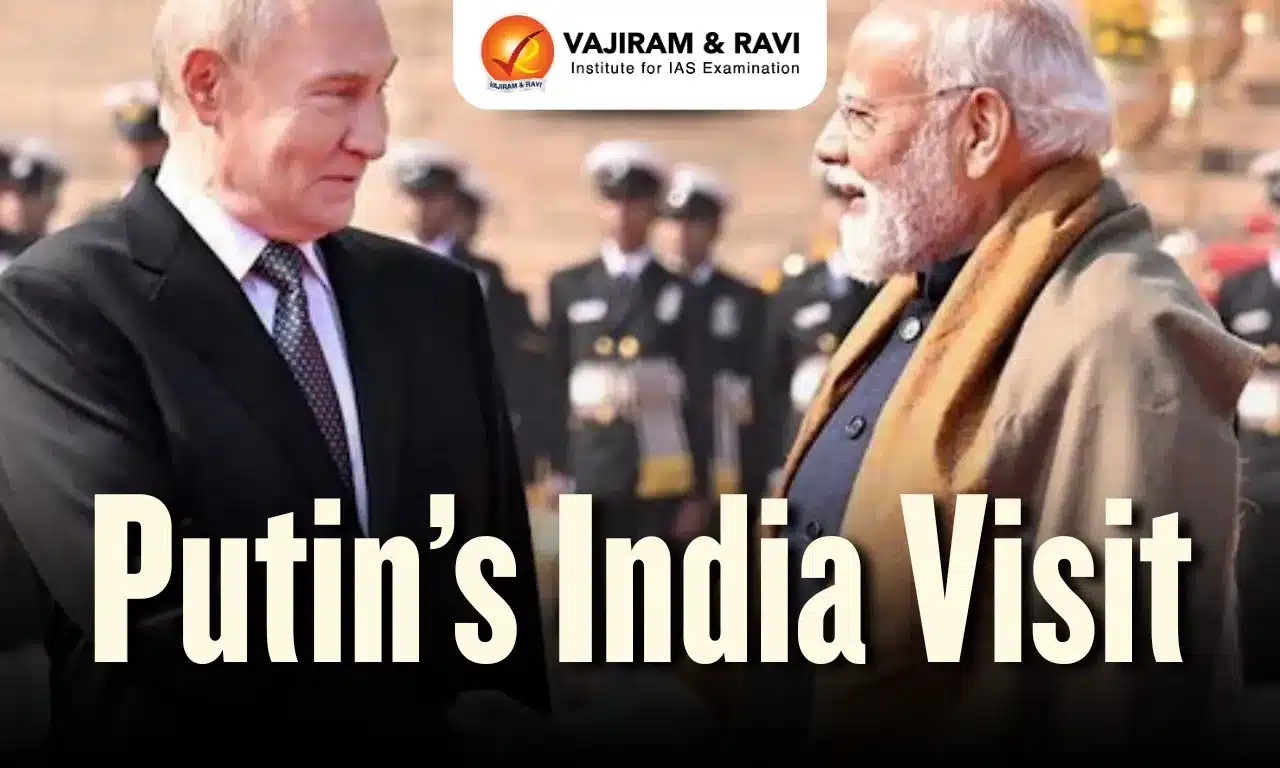
  • The government extended an exceptionally warm welcome to Russian President Vladimir Putin, with PM Modi personally receiving him at the Delhi airport, hosting a private dinner, and later attending a state banquet held by President Droupadi Murmu. 
  • PM Modi described the India–Russia partnership as steady and reliable “like a pole star.”

Main Takeaways from Putin’s Visit: A Focus on Economics, Not Defence

  • Despite the high-level protocol and symbolism, analysts believe, the tangible outcomes of the summit were modest, with limited breakthroughs announced beyond reaffirming the bilateral relationship and ongoing cooperation.

Defence Expectations Fall Flat

  • Before the visit, there was widespread speculation about major defence deals involving aircraft, missiles, drones, and air-defence systems.
  • However, the meeting between Defence Ministers Rajnath Singh and his counterpart from Russia ended without any announcements, signalling that defence cooperation did not move forward in any significant way.

Economic Cooperation Takes Centre Stage

  • Rather than defence, both sides focused on advancing the 2030 roadmap for India–Russia economic cooperation, first launched during Modi’s 2024 Moscow visit.
  • The emphasis shifted clearly toward long-term economic engagement.

Labour Mobility Agreement Announced

  • A major outcome was the signing of a Labour Mobility Agreement, enabling skilled Indian workers to take up jobs in Russia.
  • Russia expects a shortage of three million workers by the decade’s end, making this agreement economically and strategically important.

Investments in Fertilizer Supply Chain

  • Indian and Russian fertilizer companies signed an MoU to build a urea production plant in Russia, strengthening India’s fertilizer security and supply chain stability.

Maritime and Customs Cooperation Strengthened

  • Both countries inked multiple agreements on:
    • Maritime collaboration
    • Port connectivity
    • Customs cooperation
  • These aim to ease trade flows through the Chennai–Vladivostok Maritime Corridor and the International North-South Transport Corridor (INSTC).

Push for Rupee–Ruble Trade Settlement

  • India and Russia agreed to further efforts to increase trade settlement in national currencies, reducing reliance on the U.S. dollar and improving resilience to sanctions.

Noticeable Gaps: No Breakthrough on Oil, Space, or Nuclear

  • Despite expectations, there were no announcements on:
    • Russian oil procurement (which forms the bulk of bilateral trade)
    • Space cooperation
    • Nuclear energy collaboration
  • This contributed to the perception that the summit’s outcomes were modest compared to the ceremony and symbolism of the visit.

How the Ukraine War Shaped the Modi–Putin Talks

  • Putin arrived in India just as the Ukraine war approached its fourth year and during active negotiations in Moscow over a U.S.-led peace proposal.
  • Both leaders publicly expressed hope for an end to the conflict, with Modi emphasising that “India stands on the side of peace.”

War-Linked Sanctions Cast a Long Shadow

  • Despite warm optics, the summit was overshadowed by the heavy impact of Western sanctions on Russia, which have increasingly affected India as well:
    • European sanctions on Russian and Indian oil firms
    • A 25% U.S. tariff on Indian goods
    • Sharp decline in India’s Russian oil imports (38% y-o-y drop in October 2025)
  • While Putin promised “uninterrupted fuel supplies,” India signalled it would base purchases solely on commercial considerations.

Caution Over Defence, Space, and Nuclear Announcements

  • Both sides appeared deliberately restrained, avoiding major announcements in strategic sectors like:
    • Defence procurement
    • Space cooperation
    • Nuclear energy
  • This cautious approach may reflect concerns that the U.S. could revisit CAATSA sanctions, which target major Russian military and strategic transactions.

Subtle Western Pressure Ahead of the Summit

  • Just days before the visit, ambassadors from the U.K., Germany, and France published a piece urging India to rethink its Russia stance.
  • The MEA labelled this public advice “unacceptable,” but the timing likely influenced the government’s restrained posture.

The Road Ahead: Balancing Russia, the West, and Strategic Autonomy

  • For New Delhi, a resolution of the Ukraine conflict would significantly reduce the strain of navigating a deeply polarised global environment.
  • India has been balancing:
    • Its long-standing partnership with Russia,
    • Growing strategic and economic ties with Europe and the U.S., and
    • Concerns over Russia’s increasing dependence on China.
  • An end to the war would make this balancing act far less complicated.

High-Stakes Diplomatic Calendar With Europe and the U.S.

  • Putin’s visit comes ahead of a series of crucial engagements with Western leaders:
    • German Chancellor Friedrich Merz and EU leaders Ursula von der Leyen and Antonio Costa for Republic Day
    • Long-awaited EU–India Summit, where the India–EU FTA may finally be signed
    • French President Emmanuel Macron for the AI Summit in February
    • Expected visit by Canadian PM Mark Carney
  • These visits underscore the importance of India’s ties with Europe at a critical geopolitical moment.

India–U.S. Trade Deal at a Decisive Stage

  • India is also pushing hard to finalise a free trade agreement with the U.S., with hopes of reversing the recent wave of excessive American tariffs.
  • This adds another layer of sensitivity to how India manages public optics with Russia.

New Delhi Wanted the Putin Visit to Be ‘Win-Win’

  • The ideal outcome for India was twofold:
    • Reaffirm traditional ties with Russia — signalling continuity and reliability
    • Avoid provoking Western partners — ensuring no backlash ahead of crucial summits and trade negotiations
  • The deliberately modest outcomes of the summit reflect this delicate calibration.

Preserving Strategic Autonomy Remains the Core Principle

  • Ultimately, India’s approach seeks to reinforce its long-standing doctrine of strategic autonomy — retaining the flexibility to engage major powers independently, based on national interest rather than geopolitical camps.
  • Putin’s visit, carefully managed and cautiously outcome-oriented, was another step in preserving that space.

Source: TH | BBC

Putin’s India Visit FAQs

Q1: What were the main outcomes of Putin’s visit to India?

Ans: The visit delivered modest results—no major defence deals, but significant progress on economic cooperation, labour mobility, maritime connectivity, and national currency trade.

Q2: Why were defence announcements limited this time?

Ans: India avoided big defence deals amid U.S. tariffs, CAATSA risks, and European sanctions, choosing caution to prevent diplomatic backlash during crucial upcoming engagements.

Q3: What economic agreements were signed?

Ans: India and Russia agreed on labour mobility, a urea plant MoU, maritime and customs cooperation, and enhancing settlements in national currencies to boost trade resilience.

Q4: How did the Ukraine war influence discussions?

Ans: Both leaders expressed hope for peace, but sanctions pressure and falling Russian oil imports shaped a cautious tone, steering focus away from sensitive defence sectors.

Q5: What is the strategic way forward for India?

Ans: India aims to reaffirm ties with Russia while avoiding Western displeasure, maintaining strategic autonomy ahead of key EU, U.S., and G7 partner engagements.


DGCA Exemptions for IndiGo Explained: How Rules Were Relaxed to Stabilise Flights

CA Exemptions for IndiGo

DGCA Exemptions for IndiGo Latest News

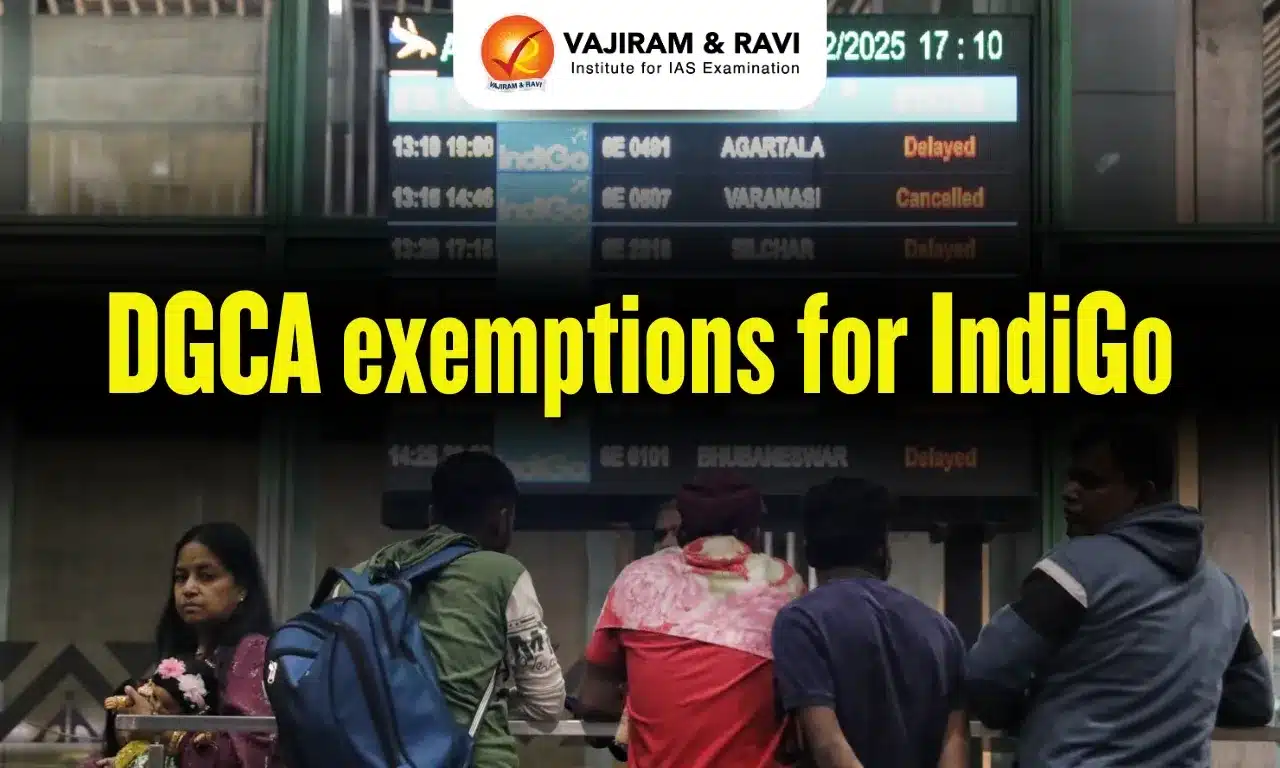
  • Amid severe operational chaos and over a thousand flight cancellations, the DGCA has granted IndiGo a temporary, one-time exemption from certain night-operations provisions in the newly implemented Flight Duty Time Limitation (FDTL) rules for pilots.
  • The relaxation—applicable to IndiGo’s Airbus A320 fleet—will remain in force until February 10. The regulator has also approved additional measures to boost pilot availability, giving the airline short-term manpower relief.

IndiGo Meltdown Triggers Nationwide Aviation Chaos

  • India’s largest airline, IndiGo, plunged into a full-blown crisis this week, crippling the country’s civil aviation system. 
  • With scores of daily cancellations and over 1,000 flights cancelled on Dec 5 alone, thousands of passengers were stranded and major airports saw widespread chaos.
  • As disruptions escalated, the DGCA initiated an inquiry into IndiGo’s operational collapse.
  • Yet, with the situation rapidly deteriorating, the regulator also granted the airline the relief it sought—a move seen as both corrective and reluctant.

What the DGCA’s Temporary Exemptions Mean for IndiGo

  • The DGCA approved a one-time exemption from parts of the new Flight Duty Time Limitation (FDTL) norms for IndiGo’s Airbus A320 pilots.
  • These relaxations aim to help the airline recover after being grossly unprepared for stricter crew rest requirements.

Redefining ‘Night’ to Ease Scheduling Pressure

  • The DGCA allowed IndiGo to roll back the new definition of ‘night’ from midnight–6 am to midnight–5 am.
  • This gives the airline more usable pilot duty hours during early mornings, where it operates many flights.

Restoring Six Night Landings Instead of Two

  • Under the new FDTL norms, pilots could perform only two night landings, but IndiGo has been temporarily allowed to revert to six landings, as earlier.
  • This removes a major bottleneck in IndiGo’s night-heavy network.

DGCA Releases IndiGo’s Own FOIs for Flying Duties

  • Twelve IndiGo Flight Operations Inspectors deputed with DGCA were temporarily released back to the airline for flying and simulator checks, boosting short-term pilot availability.

Weekly Rest Clause Withdrawn for All Airlines

  • A key clause requiring a mandatory 48-hour weekly rest (with no other leave substitutable) has been withdrawn for now.
  • This relaxation applies industry-wide to prevent cascading disruptions.

IndiGo’s Obligations Under the Exemptions

  • The DGCA has placed strict monitoring requirements:
    • Fortnightly review of the exemptions
    • IndiGo must submit biweekly reports on:
      • Crew utilisation
      • Steps taken to improve availability
      • Operational improvements achieved
      • Revised rostering strategies
    • IndiGo must submit a 30-day roadmap for full compliance with FDTL norms.

Backlash from Pilots and Rival Airlines

  • Pilot associations sharply criticised the exemptions, arguing that IndiGo should not be rewarded for poor planning.
  • Other airlines—who had spent months preparing for the new rules—are reportedly frustrated, alleging unfair advantage.
  • There are also accusations that IndiGo allowed the meltdown to worsen to pressure the regulator into loosening the rules.

‘Too Big to Fail’: Why the DGCA Blinked

  • With IndiGo commanding over 60% of India’s domestic market, its crisis cascaded across the entire aviation ecosystem, grounding national capacity and causing massive passenger disruption.
  • Given this scale, IndiGo is effectively too big to fail.
  • The DGCA and Civil Aviation Ministry found themselves between a rock and a hard place—forced to grant relief despite concerns of precedent.

Why IndiGo’s Crew Planning Collapsed Under New FDTL Rules

  • IndiGo’s massive disruptions stem directly from poor preparation for the second phase of the new Flight Duty Time Limitation (FDTL) norms.
  • According to the DGCA, IndiGo admitted that the chaos arose from “misjudgement and planning gaps”, as the airline underestimated the number of crew required under the new rest rules.
  • Data submitted to DGCA showed a clear shortfall in the required number of pilots. 

Airlines Had Adequate Time, But IndiGo Lagged Behind

  • The new FDTL norms—originally meant for June 2024—were delayed due to airline pushback and finally implemented after a Delhi High Court order.
  • DGCA emphasised that IndiGo received repeated reminders and ample notice to prepare, but still failed to scale up crew strength.

Why the Rules Hit IndiGo Harder Than Others

  • Several structural factors made IndiGo uniquely vulnerable:
    • Largest scale of operations: 400+ aircraft, 2,300 flights daily
    • High night-time and early-morning rotations
    • High aircraft and crew utilisation, leaving no buffer
    • Lean manpower model with fewer pilots per aircraft
    • Slow hiring despite knowing the upcoming FDTL changes
  • Other airlines faced fewer disruptions because they operate at lower utilisation levels due to aircraft on ground (AOG), giving them extra pilot flexibility.

The Red-Eye Rules Were the Breaking Point

  • IndiGo survived Phase 1 of FDTL (longer weekly rest) but Phase 2, implemented from November 1, introduced:
    • Restricted night duties
    • Tighter crew utilisation limits
    • Reduced permissible night landings
  • These disproportionately affected IndiGo, which relies heavily on late-night/early-morning operations to maximise fleet utilisation.

Source: IE | IE

DGCA Exemptions for IndiGo FAQs

Q1: Why did DGCA grant exemptions to IndiGo?

Ans: Severe disruptions and over 1,000 daily cancellations prompted DGCA to relax some FDTL rules temporarily, enabling IndiGo to stabilise operations and recover crew availability.

Q2: What changes were made to night-duty rules?

Ans: The definition of night was rolled back to midnight–5 am, and pilots were allowed up to six night landings instead of the newly imposed cap of two.

Q3: How is DGCA helping IndiGo increase pilot availability?

Ans: DGCA released 12 IndiGo Flight Operations Inspectors for flying duties and lifted a clause mandating strict 48-hour weekly rest, expanding crew deployment flexibility.

Q4: What conditions must IndiGo meet under these exemptions?

Ans: IndiGo must submit fortnightly reports on crew utilisation, availability improvements, rostering changes, and provide a 30-day roadmap for full FDTL compliance.

Q5: Why did IndiGo struggle more than other airlines?

Ans: IndiGo’s high utilisation model, massive night-time network, lean staffing, and slow hiring left it unprepared for FDTL’s second-phase restrictions, causing widespread cancellations.

Rupee Falls to 90 as RBI Shifts Currency Management

Currency Management

Currency Management Latest News

  • The rupee fell past the Rs. 90 per U.S. dollar mark on December 3, 2025, prompting debates on whether the sharp depreciation reflects a market meltdown or a deliberate policy shift by the Reserve Bank of India (RBI).

Market Forces Driving the Rupee’s Decline

  • The rupee’s movement is shaped by a combination of external shocks and domestic economic behaviour. 
  • Three major market developments have intensified pressure on the currency:
  • Tariff-Induced Export Slowdown
    • The 50% tariff imposed by the U.S., India’s largest export destination, has made Indian goods significantly more expensive. 
    • Exports to the U.S. fell 12% in September and 9% in October 2025, dragging overall monthly exports down by nearly 12% year-on-year.
    • The fall in demand meant exporters earned fewer dollars, contributing to a dollar scarcity and pushing the rupee lower.
    • A 0.5% increase in cumulative exports from April to October 2025, showing that exporters partly compensated through other global markets. 
    • Nevertheless, forward-looking indicators such as the Manufacturing PMI and new export orders sub-index are at their lowest in months, suggesting deeper export stress in the coming period.
  • Surge in Gold and Silver Imports
    • Gold imports surged by 200% to $14.7 billion, and silver imports jumped 528% to $2.7 billion in October.
    • Although festive demand plays some role, economists call this a “flight to safety”, a reaction to domestic financial volatility.
    • To buy bullion, domestic players sold rupees to purchase dollars, adding to exchange market pressure and worsening the trade balance. 
    • This import surge became a major driver of the rupee’s depreciation.
  • Record Foreign Portfolio Investor (FPI) Outflows
    • FPIs have withdrawn $17 billion from Indian equity markets in 2025, the largest outflow in two decades.
    • When FPIs exit, they sell rupees and buy dollars, accelerating the rupee’s fall. 
    • The scale of outflows is comparable to global distress years such as 2008 and 2022.

Understanding RBI’s Strategic Shift

  • While market factors exert pressure, the rupee’s actual value also depends heavily on the central bank’s intervention stance. 
  • From Aggressive Defence to Limited Intervention
    • Between 2022 and 2024, the RBI sold enormous amounts of foreign reserves, over $30 billion in Q3 2022 and $38 billion in Q4 2024, to prevent sharp depreciation.
    • However, in 2025, despite comparably adverse conditions, RBI sold only $10.9 billion in Q3. This signals a pivot away from protecting a fixed exchange rate.
    • Economists call this a managed float strategy: the RBI is no longer fixing the rupee at a particular level but smoothing volatility while allowing depreciation.

RBI’s Calculated Bet on a Weaker Rupee

  • RBI appears to be betting that a gradually weaker rupee can act as an economic shock absorber:
    • It could make Indian exports more competitive,
    • Partly offset tariff losses, and
    • Prevent excessive reserve depletion.
  • Experts support the strategy if executed slowly. Gradual depreciation allows firms time to renegotiate contracts and adjust supply chains. A sudden 15% fall would be disruptive.
  • However, they also offer a caution: a weaker nominal rupee does not automatically translate into a competitive real exchange rate, especially if domestic inflation is high. 
  • Historically, India saw nominal depreciation without export gains post-COVID because domestic costs rose faster. Weak U.S. demand may blunt any benefit from the rupee’s fall.

A Balancing Act Between Risks and Resilience

  • The rupee’s slide reflects a mixture of global shocks, domestic behaviour shifts, and a strategic central bank recalibration. 
  • While India faces near-term risks, such as rising import bills, volatility in investor sentiment, and uncertain export recovery, the deliberate moderation of forex interventions indicates confidence in the currency’s ability to seek a stable market level over time.
  • The coming months will test whether the RBI’s approach can stabilise macroeconomic pressures without triggering financial instability.

Source: TH

Currency Management FAQs

Q1: What triggered the rupee’s fall past Rs. 90?

Ans: A mix of falling exports, rising gold/silver imports, and heavy FPI outflows weakened the rupee.

Q2: How did U.S. tariffs affect India’s exports?

Ans: The 50% tariff made Indian goods more expensive, reducing demand and dollar inflows.

Q3: Why did gold and silver imports surge in 2025?

Ans: Domestic investors sought safe-haven assets amid financial uncertainty, driving massive bullion imports.

Q4: What is RBI’s new approach to currency management?

Ans: RBI has reduced forex market interventions, allowing the rupee to depreciate under a managed float.

Q5: Can a weaker rupee help India’s economy?

Ans: It may boost export competitiveness, but benefits depend on inflation control and global demand.

Enquire Now