UPSC Daily Quiz 8 December 2025

UPSC Daily Quiz

The Daily UPSC Quiz by Vajiram & Ravi is a thoughtfully curated initiative designed to support UPSC aspirants in strengthening their current affairs knowledge and core conceptual understanding. Aligned with the UPSC Syllabus 2025, this daily quiz serves as a revision resource, helping candidates assess their preparation, revise key topics, and stay updated with relevant issues. Whether you are preparing for Prelims or sharpening your revision for Mains, consistent practice with these Daily UPSC Quiz can significantly enhance accuracy, speed, and confidence in solving exam-level questions.

[WpProQuiz 40]

UPSC Daily Quiz FAQs

Q1: What is the Daily UPSC Quiz?

Ans: The Daily UPSC Quiz is a set of practice questions based on current affairs, static subjects, and PYQs that help aspirants enhance retention and test conceptual clarity regularly.

Q2: How is the Daily Quiz useful for UPSC preparation?

Ans: Daily quizzes support learning, help in revision, improve time management, and boost accuracy for both UPSC Prelims and Mains through consistent practice.

Q3: Are the quiz questions based on the UPSC syllabus?

Ans: Yes, all questions are aligned with the UPSC Syllabus 2025, covering key areas like Polity, Economy, Environment, History, Geography, and Current Affairs.

Q4: Are solutions and explanations provided with the quiz?

Ans: Yes, each quiz includes detailed explanations and source references to enhance conceptual understanding and enable self-assessment.

Q5: Is the Daily UPSC Quiz suitable for both Prelims and Mains?

Ans: Primarily focused on Prelims (MCQ format), but it also indirectly helps in Mains by strengthening subject knowledge and factual clarity.

Index of Eight Core Industries, Significance, Index of Industrial Production (IIP)

Index of Eight Core Industries

The Index of Eight Core Industries (ICI) measures the production performance of eight key sectors that drive India’s industrial growth, including Coal, Steel, Electricity, and Refinery Products. These core industries are significant as they contribute 40.27% to the IIP and influence overall economic activity and other industries.

The Index of Industrial Production (IIP) complements the ICI by tracking short-term changes in the volume of production across manufacturing, mining, and electricity sectors. Together, the ICI and IIP provide a clear picture of industrial trends and economic health in India.

The Eight Core Industries

The eight core industries are considered drivers of industrial growth due to their large contribution to economic activity. These industries collectively account for 40.27% of the weight of items in the Index of Industrial Production (IIP).

  1. Refinery Products
  2. Electricity
  3. Steel
  4. Coal
  5. Crude Oil
  6. Natural Gas
  7. Cement
  8. Fertilizers

Index of Eight Core Industries

The weightage of the eight core industries in the ICI indicates their relative contribution to overall industrial production, with Refinery Products having the highest weightage (28.04%) and Fertilisers the lowest (2.63%). These weights help assess the impact of each sector on the economy.

Index of Eight Core Industries
Industry Weightage (%)

Refinery Products Industry

28.04

Electricity Industry

19.85

Steel Industry

17.92

Coal Industry

10.33

Crude Oil Industry

8.98

Natural Gas Industry

6.88

Cement Industry

5.37

Fertilizers Industry

2.63

Significance of the Eight Core Industries in India

The eight core industries are considered the backbone of India’s industrial sector, as they have a direct impact on overall economic growth and industrial output.

  • These industries form the backbone of India’s industrial sector.
  • They contribute 40.27% to the Index of Industrial Production (IIP).
  • Their performance acts as a leading indicator of economic health.
  • Growth in these sectors supports employment, energy supply, and manufacturing.
  • They have a major influence on other industries in the economy.
  • Performance impacts GDP growth, inflation, and trade balance.

About Index of Industrial Production (IIP)

The Index of Industrial Production (IIP) is an economic indicator that measures the short-term changes in the volume of production of a basket of industrial goods in India. It reflects the performance of the industrial sector, which includes manufacturing, mining, and electricity.

  • Compiled by: Ministry of Statistics and Programme Implementation (MoSPI), Government of India.
  • Base Year: 2011-12 (revised from earlier 2004-05).
  • Sectors Covered: Mining, Manufacturing, and Electricity.
  • Purpose: To monitor industrial performance, inform policy decisions, and act as a leading indicator of economic activity.
  • Release Frequency: Monthly, with a one-month lag.
  • Use in Economy: Helps in analysing sectoral growth, inflation trends, and overall industrial development.

Index of Eight Core Industries FAQs

Q1: What is the Index of Eight Core Industries (ICI)?

Ans: The ICI is a production volume index that measures the collective and individual performance of eight key industries driving India’s industrial growth.

Q2: Which are the eight core industries included in the ICI?

Ans: The eight industries are: Natural Gas, Coal, Refinery Products, Crude Oil, Cement, Electricity, Steel, and Fertilizers.

Q3: Who releases the Index of Eight Core Industries?

Ans: It is released by the Office of the Economic Adviser (OEA), under the Department of Industrial Policy and Promotion (DIPP), Ministry of Commerce and Industry.

Q4: What is the significance of the eight core industries?

Ans: They form the backbone of industrial activity, contribute 40.27% to the IIP, and influence economic growth, inflation, and other industries.

Q5: How is the ICI calculated?

Ans: The ICI is calculated using the Laspeyres formula, which uses the weighted arithmetic mean of quantity relatives, with weights aligned to the Index of Industrial Production (IIP).

MSMED Act 2006, Objectives, Classification, Govt. Schemes

MSMED Act 2006

The MSMED Act 2006 (Micro, Small and Medium Enterprises Development Act, 2006) is a law that promotes and protects small businesses in India. It provides legal, financial, and institutional support to help MSMEs grow and become competitive. The Act ensures timely payments, easier access to credit, and better marketing opportunities for small enterprises. It also encourages formal registration and adoption of modern technology to strengthen the sector.

MSMED Act 2006 Objectives

The MSMED Act 2006 aims to support the growth and development of Micro, Small and Medium Enterprises across India. It provides legal, financial and institutional support so that MSMEs become stronger, competitive and more organised.

  • Promote and develop MSMEs in all sectors.
  • Improve credit access and financial support for small businesses.
  • Encourage modern technology, training and skill development.
  • Protect MSMEs from delayed payments by buyers.
  • Support marketing, exports and better market access.
  • Create institutions like the National Board for MSMEs to guide policy.
  • Strengthen MSME competitiveness and reduce challenges in doing business.

Also Read: Indian Forest Act 1927

Definition and Classification of MSMEs

MSMEs (Micro, Small, and Medium Enterprises) in India are defined based on their investment in plant, machinery, or equipment and their annual turnover. These classifications were first updated in 2020 and further revised in 2025 to include more growing businesses under the MSME category.

All enterprises must register on the Udyam Registration Portal to be officially recognised as Micro, Small or Medium units.

Classification of MSMEs
Enterprise Type Investment in Plant, Machinery, or Equipment Annual Turnover

Micro

Up to ₹2.5 crore

Up to ₹10 crore

Small

Up to ₹25 crore

Up to ₹100 crore

Medium

Up to ₹125 crore

Up to ₹500 crore

MSMED Act 2006 Features

The MSMED Act 2006 provides a strong legal structure to promote, support and protect Micro, Small and Medium Enterprises in India. It ensures easier access to credit, technology, markets, and helps MSMEs resolve payment disputes quickly.

  • Clear Classification of MSMEs: Provides a uniform and transparent definition of Micro, Small and Medium Enterprises.
  • Promotion and Development Measures: Guides the government to support MSMEs through finance, technology, training and market access.
  • National Board for MSMEs: Sets up a central advisory body to review MSME policies and recommend improvements.
  • MSME Facilitation Councils: Establishes state-level councils to resolve delayed payment issues efficiently.
  • Delayed Payment Protection: Buyers must pay MSMEs within 45 days or face compound interest on late payments.
  • Technology and Skill Support: Encourages technology upgradation, training and skill development for MSME competitiveness.
  • Udyam Registration Encouragement: Promotes formal MSME registration to help enterprises access government schemes and benefits.

Role of the National Board for MSMEs

The National Board for Micro, Small, and Medium Enterprises (NBMSME) is the highest advisory body created under the MSMED Act 2006 to support MSME growth. It works as a bridge between the government and MSMEs to improve policies, resolve issues, and promote sector development.

  • Advises the Government on MSME Policies: Suggests changes in laws, schemes, and programs to improve MSME competitiveness and ease of doing business.
  • Reviews Development Schemes: Monitors major MSME schemes like credit support, infrastructure development, technology upgrades, and skill training.
  • Promotes Technology and Quality Improvement: Encourages MSMEs to adopt modern technologies, digital tools, and quality certification systems (ISO, ZED).
  • Supports Cluster Development: Recommends measures to develop MSME clusters for better productivity, cost reduction, and shared resources.
  • Examines Delayed Payment Issues: Reviews the status of delayed payments and suggests corrective measures to ensure timely payments to MSMEs.
  • Strengthens MSME Access to Finance: Advises on credit-related challenges, collateral-free loans, and interest subvention programs.
  • Coordinates Between Ministries and States: Ensures better coordination among central ministries, state governments, and MSME bodies for effective policy implementation.

Impact of the MSMED Act on India’s MSME Sector

  • The Act helped MSMEs get legal protection, easier loans, and faster payments, making business operations smoother.
  • Clear definitions of Micro, Small, and Medium Enterprises improved government planning and scheme targeting.
  • MSME registration became simple through the Udyam Portal, helping more small businesses join the formal system.
  • Credit flow to MSMEs increased; by 2025, MSMEs receive over 17% of total bank credit, helping them expand and upgrade technology.
  • The Act protected MSMEs from delayed payments by making it compulsory for buyers to pay within 45 days.
  • Special Facilitation Councils were set up to quickly solve payment disputes and reduce financial stress.
  • The Act boosted the contribution of MSMEs to the economy: they now contribute around 30% of GDP, 48% of exports, and create jobs for over 11 crore people.
  • It encouraged technology adoption, skill development, and cluster development to help small industries stay competitive.

Government Schemes Linked to the MSMED Act

  • PMEGP (Prime Minister’s Employment Generation Programme): Offers credit-linked subsidies to set up new micro-enterprises and promotes self-employment.
  • Credit Guarantee Fund Scheme (CGTMSE): Provides collateral-free loans to MSMEs, with the government guaranteeing a large part of the risk.
  • Mudra Yojana: Gives loans up to ₹10 lakh to small and non-corporate businesses under Shishu, Kishor, and Tarun categories.
  • Stand-Up India: Provides loans to SC/ST and women entrepreneurs to start new businesses.
  • Entrepreneurship & Skill Development Programme (ESDP): Offers training programs for new and aspiring entrepreneurs.
  • Udyam Registration: A simple and online registration process that provides official recognition and access to MSME benefits.
  • PM Vishwakarma Scheme: Supports traditional artisans and craftspeople with training, toolkits, and easy credit.

Challenges Faced by MSMEs

  • Limited Access to Credit: Despite government schemes, around 40% of micro and small enterprises still struggle to get formal bank loans due to lack of collateral and high interest rates.
  • Delayed Payments: A survey by the Ministry of MSME shows that over 70% of MSMEs face delayed payments from buyers, causing severe cash-flow problems.
  • Low Technology Adoption: Only about 20–25% of MSMEs have adopted modern machinery or digital tools, leading to lower productivity and competitiveness.
  • Skill Shortages: Approximately 30% of MSMEs report difficulties in finding skilled workers, affecting production quality and innovation.
  • Competition from Imports: Cheap imports from countries like China have impacted domestic MSMEs, especially in electronics, textiles, and hardware sectors.
  • Low Formalization: Around 60% of MSMEs remain unregistered, missing out on government schemes, credit benefits, and official support.
  • Infrastructure Gaps: Many MSMEs lack access to industrial clusters, testing labs, storage facilities, and technology centers, limiting growth opportunities.

Way Forward

To strengthen the MSME sector and overcome its challenges, the following measures can be taken:

  • Improve Access to Credit: Expand collateral-free loan schemes like CGTMSE and Mudra Yojana. Currently, over 60% of micro units still struggle to get formal finance, so better credit flow is crucial.
  • Ensure Timely Payments: Enforce the 45-day payment rule and strengthen Facilitation Councils to reduce delays, which affect cash flow for 70% of MSMEs.
  • Promote Technology Adoption: Provide subsidies and training for digital tools, modern machinery, and automation. Only 20–25% of MSMEs currently use modern technology.
  • Skill Development and Entrepreneurship: Expand programs like ESDP and ASPIRE to train entrepreneurs and workers, addressing the 30% skill shortage reported by MSMEs.
  • Support Cluster and Infrastructure Development: Invest in industrial clusters, common facilities, testing labs, and storage centers to reduce costs and improve competitiveness.
  • Increase Market Access: Promote MSMEs through government procurement policies, export support, and marketing assistance. Currently, many small units struggle to reach national and international markets.

MSMED Act 2006 FAQs

Q1: What is the MSMED Act, 2006?

Ans: It is a law that supports the promotion, development and protection of Micro, Small and Medium Enterprises in India.

Q2: How are MSMEs classified today?

Ans: They are classified based on Investment and Annual Turnover (Micro, Small and Medium categories).

Q3: What is the delayed payment rule?

Ans: Buyers must pay MSMEs within 45 days, or pay compound interest on delayed amounts.

Q4: What is the purpose of Udyam Registration?

Ans: Udyam helps MSMEs register easily so they can access credit, schemes and government benefits.

Q5: What is the National Board for MSMEs?

Ans: It is an advisory body that reviews policies and recommends steps to support MSMEs.

Tuberculosis Elimination in India, Causes, Transmission, Govt. Initiatives

Tuberculosis Elimination in India

Tuberculosis (TB) is a major health challenge in India, affecting millions every year. The government is working to eliminate TB through programs like the National Tuberculosis Elimination Programme (NTEP) and Ni-Kshay Poshan Yojana (NPY), which provide free treatment, nutrition, and support to patients.

The World Health Organization (WHO) Global Tuberculosis Report 2025, released in November 2025, shows that global TB cases have decreased by 12% between 2015 and 2024, with India achieving an even larger reduction of 21% during the same period.

Causes and Transmission of Tuberculosis

Tuberculosis (TB) is caused by a bacterium called Mycobacterium tuberculosis. It mainly affects the lungs but can also affect other parts of the body. The causes and transmission of Tuberculosis (TB) have been discussed below in detail.

Causes of Tuberculosis

  • Bacterium: TB is caused by infection with Mycobacterium tuberculosis.
  • Weakened Immune System: People with weak immunity, such as those with HIV, diabetes, cancer, malnutrition, or taking certain medications, are at higher risk for TB becoming active.
  • Environmental Factors: Living or working in crowded places, like prisons, shelters, or healthcare facilities, increases exposure to TB bacteria.
  • Geographic Location: TB is more common in some countries in Asia, Africa, and Latin America. Travelers or immigrants from these regions have a higher risk of infection.

Transmission of Tuberculosis (TB)

  • Airborne Droplets: The main way TB spreads is by breathing in droplets from an infected person’s cough, sneeze, talk, or singing.
  • Active vs. Latent TB: Only people with active TB in their lungs or throat can spread the bacteria. People with latent TB carry the bacteria but do not spread it.
  • Close Contact: TB is more likely to spread to people you spend a lot of time with, such as family members or coworkers.
  • Not Spread By: TB is not transmitted through handshakes, sharing food or drinks, or touching surfaces.

Government Initiatives for TB Elimination

The Indian government has launched several initiatives to fight tuberculosis, focusing on early detection, free treatment, nutrition support, and awareness.

  • National Tuberculosis Elimination Programme (NTEP): Provides free diagnosis and treatment for all TB patients.
  • Ni-Kshay Poshan Yojana (NPY): Offers monthly financial and nutritional support to TB patients.
  • Ni-Kshay Mitra Initiative: Encourages community and organizational support for TB patients.
  • Mass Screening Campaigns: Detect TB cases early, especially in high-risk populations.
  • Focus on MDR-TB: Special treatment and monitoring for drug-resistant TB cases.

National Tuberculosis Elimination Programme (NTEP)

The National Tuberculosis Elimination Programme (NTEP) is India’s flagship program to eliminate TB by 2025. It focuses on early detection, free treatment, and monitoring of TB patients across the country.

  • Free Diagnosis and Treatment: All TB patients receive medicines and tests at no cost.
  • Case Notification: Both public and private health facilities report TB cases to track and monitor patients.
  • Advanced Diagnostics: Uses molecular tests like CBNAAT and TrueNat for quick and accurate TB detection.
  • MDR-TB Treatment: Special regimens are provided for multidrug-resistant TB; in 2023, over 63,000 MDR-TB cases were diagnosed.
  • Progress: India has improved TB detection and treatment success, with treatment coverage rising to around 85% and TB incidence reducing by 21% between 2015 and 2024.

Ni-kshay Poshan Yojana (NPY)

The Ni-Kshay Poshan Yojana (NPY) is a government scheme that provides financial and nutritional support to TB patients to help them recover faster. It ensures that patients have access to healthy food and the resources needed to complete their treatment successfully.

  • Monthly Support: Each TB patient receives ₹1,000 per month to buy nutritious food.
  • Direct Benefit: Funds are transferred directly to the patient’s bank account.
  • Community Support: Through the Ni-Kshay Mitra initiative, individuals and organizations can provide additional help, such as food, counseling, or other support.
  • Focus on Recovery: The scheme helps improve patients’ health and treatment outcomes by addressing undernutrition, a major risk factor for TB.
  • Coverage: Applies to all TB patients registered under the National Tuberculosis Elimination Programme (NTEP).

Challenges in Tuberculosis Elimination in India

  • Undiagnosed Cases: Many TB cases remain undiagnosed or unreported, especially in rural areas, slums, and among migrant populations.
  • Limited Healthcare Access: Remote and underserved areas often lack proper labs, diagnostic tools, and trained health workers, causing delays in detection and treatment.
  • Drug-Resistant TB (MDR-TB): Treating multidrug-resistant TB is longer, costlier, and more complex, with lower success rates.
  • Social and Economic Factors: Poverty, malnutrition, lack of awareness, and stigma prevent people from seeking timely treatment.
  • Continuity of Care for Migrants: Migrant workers and mobile populations may not complete the full treatment, increasing risk of relapse or drug resistance.
  • Private Sector Gaps: Some private clinics do not report TB cases, creating gaps in monitoring and treatment follow-up.

Way Forward

  • Expand healthcare access by increasing labs and diagnostic facilities like CBNAAT and TrueNat; currently, India has over 2,500 molecular testing sites, but more are needed in rural and remote areas.
  • Strengthen collaboration with the private sector, as around 40% of TB patients first visit private clinics, ensuring proper reporting and treatment follow-up.
  • Focus on drug-resistant TB, as over 63,000 MDR-TB cases were diagnosed in 2023; rapid detection and adherence to treatment are essential.
  • Raise awareness and reduce stigma, encouraging early diagnosis and complete treatment, with community campaigns already reaching millions of people.
  • Target high-risk populations such as slum dwellers, migrants, tribal communities, and people with HIV or diabetes, ensuring active case-finding and continuous care to reduce transmission.

Tuberculosis Elimination in India FAQs

Q1: What is Tuberculosis (TB)?

Ans: TB is a disease caused by the bacterium Mycobacterium tuberculosis. It mainly affects the lungs but can also affect other organs.

Q2: How does TB spread?

Ans: TB spreads through the air when a person with active lung TB coughs, sneezes, talks, or sings. It is not spread by shaking hands, sharing food, or touching surfaces.

Q3: What is the difference between latent and active TB?

Ans: In latent TB, the bacteria are in the body but inactive, and the person cannot spread the disease. In active TB, the bacteria multiply and the person can infect others.

Q4: What is the National Tuberculosis Elimination Programme (NTEP)?

Ans: NTEP is India’s main program to eliminate TB. It provides free diagnosis, treatment, and monitoring for all TB patients and works with both public and private health facilities.

Q5: What is Ni-Kshay Poshan Yojana (NPY)?

Ans: NPY is a government scheme that gives ₹1,000 per month to TB patients for nutrition and recovery support. It also encourages community help through the Ni-Kshay Mitra initiative.

Cosmic Filament

Cosmic Filament

Cosmic Filament Latest News

Recently, the University of Oxford researchers reported a roughly 50-million-lightyear-long cosmic Filament traced by at least 14 galaxies. 

About Cosmic Filament

  • Cosmic or galaxy filaments are the largest ‘threads’ in the universe’s cosmic web.
  • Size: A single cosmic filament is a structure spanning hundreds of millions of lightyears.
  • These filaments are the largest known structures in the Universe which are vast, thread-like formations of galaxies and dark matter that form a cosmic scaffolding. 
  • These cosmic web filaments serve as the nurseries where galaxies grow by accreting pristine gas that fuels their star formation.
  • Formation
    • It is formed as a result of gravity pulling in gas, dark matter, and galaxies into long, thin strands that link giant clusters of galaxies.
    • These filaments also surround large, empty regions of space called voids.
    • A filament forms where sheets of matter intersect and collapse; they’re also highways along which gas and smaller galaxies ‘flow’ towards big clusters.
  • Significance: These filaments help decide where galaxies form, how fast they grow, and how much fresh gas they receive over billions of years.

Source: TH

Cosmic Filament FAQs

Q1: What are Cosmic Filaments?

Ans: Vast, thread-like formations of galaxies and dark matter.

Q2: How are Cosmic Filaments formed?

Ans: Through gravity pulling in gas, dark matter, and galaxies.

Haemorrhagic Septicaemia

Haemorrhagic Septicaemia

Haemorrhagic Septicaemia Latest News

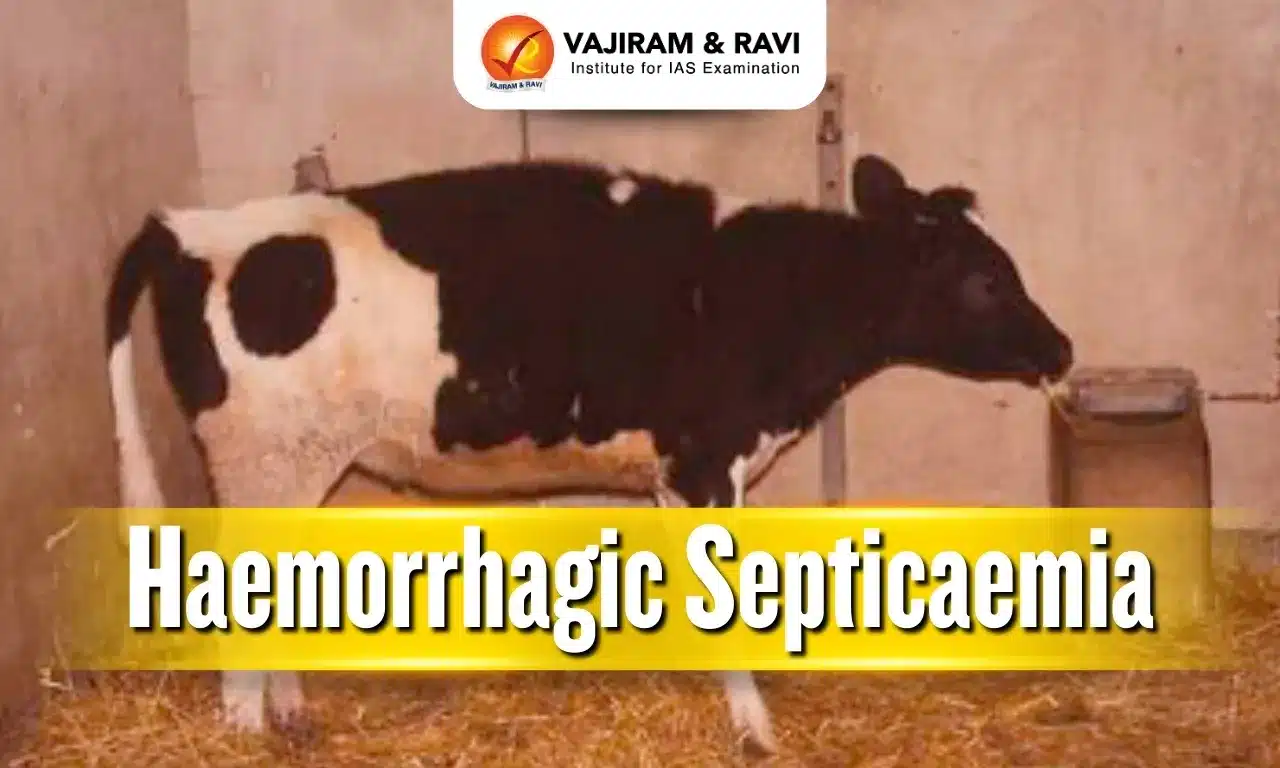
Recently, ten blackbucks have died in Jharkhand's Jamshedpur in Zoological Park due to suspected Haemorrhagic Septicaemia.

About Haemorrhagic Septicaemia

  • It is also known as Pasteurellosis.
  • It is a bacterial disease caused by certain serotypes of Pasteurella multocida.
    • The two common serotypes of P. multocida associated with the disease in these species are types B:2 (in Asia ) and E:2 (in Africa )
  • These are geographically restricted to some areas of Asia, Africa, the Middle East and southern Europe.
  • It is a major disease of cattle and buffaloes characterised by an acute, highly fatal septicaemia with high morbidity and mortality.
  •  In both species, young animals and young adults are more susceptible than older animals.
  • Germs of this disease survive longer in humid and waterlogged conditions.
  • Transmission:  It can be transmitted by ingestion or inhalation, either during direct contact or via fomites such as contaminated feed and water.
  • Symptoms of Haemorrhagic Septicaemia
    • Animals become dull and have high fever.  They refuse to eat and salivate more than normally. 
    • Swellings develop typically and quickly, especially around the throat, the brisket, the dewlap and sometimes around the head.
  • Treatment:  Vaccines are available; Antimicrobial treatment administered intravenously soon after the onset of disease can reduce mortality.

Source: TH

Haemorrhagic Septicaemia FAQs

Q1: What is Haemorrhagic Septicaemia?

Ans: A bacterial disease affecting cattle and buffaloes

Q2: Which bacterium causes Haemorrhagic Septicaemia?

Ans: Pasteurella multocida

Largest Lakes in the World, Top 10 List, Location, Area

Largest Lakes in the World

Lakes are the natural source of water and enhance the beauty of Earth’s landscapes. Found in mountains, valleys, and plains. From the vast Caspian Sea, which shares the boundaries with various countries, to iconic freshwater lakes like Superior, Victoria, and Baikal, each lake has unique geographical features. These bodies of water provide vital habitats for wildlife and contribute to local economies through fishing, tourism, and agriculture. Lakes not only add to the scenic beauty of the planet but are also essential for maintaining ecological balance, making them irreplaceable components of Earth's natural heritage.

Largest Lakes in the World

The Caspian Sea is recognized as the Largest Lake in the world, according to Britannica which is located between Europe and Asia and covers a vast area 389,000 square kilometres (150,000 square miles). The length of the Caspian Sea is approximately 1119 kilometres (745 miles) and reaches depths of up to 1,025 metres (3,365 feet). It has a volume of 78,200 cubic kilometres (18,800 cubic miles). This lake shares the boundaries with Eastern Europe, West Asia, and Central Asia, the Caspian Sea making an impression of lake as well as the sea.

List of Top 10 Largest Lakes in the World

Lakes act as the reservoirs of freshwater used for various purposes such as irrigation, agriculture,for drinking purposes, industrial purposes and many more. Below in the table we have shared the List of Top 10 Largest Lakes in the World:

List of Top 10 Largest Lakes in the World
Rank Lake Name Lake Type Area (km²) Countries with Shoreline

1

Caspian Sea

Saline water

389,000

Kazakhstan, Turkmenistan, Azerbaijan, Russia, Iran

2

Superior Lake

Freshwater

82,100

Canada, United States

3

Victoria Lake

Freshwater

59,940

Tanzania, Uganda, Kenya

4

Huron Lake

Freshwater

59,590

Canada, United States

5

Michigan Lake

Freshwater

58,030

United States

6

Tanganyika Lake

Freshwater

32,900

Tanzania, Democratic Republic of the Congo, Burundi, Zambia

7

Baikal Lake

Freshwater

31,722

Russia

8

Great Bear Lake

Freshwater

31,153

Canada

9

Malawi Lake

Freshwater

29,600

Malawi, Mozambique, Tanzania

10

Great Slave Lake

Freshwater

27,200

Canada

Largest Lakes in the World Facts

We have shared a brief description of the Largest Lakes in the World, including some important facts along:

Caspian Sea

The Caspian Sea, though referred to as a “sea,” is actually geologically more like a small ocean than a lake. Enclosed entirely by land, it holds the title of the World’s Largest Lake by area. Bordering five countries, it contains a huge volume of saltwater, surpassing that of all the freshwater lakes on Earth combined. This immense body of water is a key geographical feature in the surrounding region. Its length stretches to 1,199 km, with a maximum depth of 1,025 metres and a total volume of 78,200 km³.

Superior Lake

Lake Superior, the Largest Lake for Freshwater in the world by surface area, lies on the border between Canada and the United States and is a key part of the Great Lakes system. Renowned for its cold, crystal-clear waters and historical shipwrecks, it attracts both tourists and historians. The lake is surrounded by a stunning landscape that includes rugged coastlines, dense forests, and charming cities. Spanning a length of 616 kilometres, Lake Superior reaches a maximum depth of 406 metres and has a volume of 12,070 cubic kilometres.

Victoria Lake

Lake Victoria holds the title of Africa’s Largest Lake by area and ranks as the second-largest freshwater lake in the world. Spanning the borders of multiple countries, it plays a crucial role in feeding the Nile River and is renowned for its rich biodiversity. With numerous islands scattered across its surface, Lake Victoria is not only a vital natural resource but also a breathtaking view of nature. It stretches 322 km in length, reaches a maximum depth of 81 metres, and has a volume of 2,420 km³.

Huron Lake

Lake Huron, one of the finest lakes in North America, shares the borders of both Canada and the United States. It forms part of the world’s largest freshwater lake system, sharing this distinction with Lake Michigan. Notable for its fast-flowing streams and the beautiful Georgian Bay, Lake Huron possesses unique natural features. The lake, named after the indigenous Huron tribe, carries a rich historical legacy while also serving as a vital source of freshwater. It stretches 332 kilometres in length, reaches a maximum depth of 229 metres, and holds a volume of 3,520 cubic kilometres.

Michigan Lake

Lake Michigan, one of the Great Lakes, stands out among its remarkable neighbours. It stretches along the border of the United States and shares water connections with Lake Huron, forming part of the world's largest freshwater lake system. Known for its stunning beaches and diverse ecosystems, Lake Michigan plays a vital role as a freshwater source for the surrounding region. The iconic Mackinac Bridge serves as a geographic landmark, separating Lake Michigan from Lake Huron, though not affecting their hydrological connection.

With a length of 494 km, a maximum depth of 282 m, and a volume of 4,930 km³, Lake Michigan is both expansive and deep.

Tanganyika Lake

Lake Tanganyika is considered the second oldest freshwater lake in the world and ranks as the second deepest, following Lake Baikal. Spanning four countries: Tanzania, the Democratic Republic of the Congo, Burundi, and Zambia, it stretches an impressive 676 km in length. With a maximum depth of 1,470 metres, it holds a vast volume of 18,750 km³ of water. The Tanganyika Lake not only serves as a vital water source for the surrounding regions but is also home to a variety of unique fish species, making it a remarkable natural landmark.

Baikal Lake

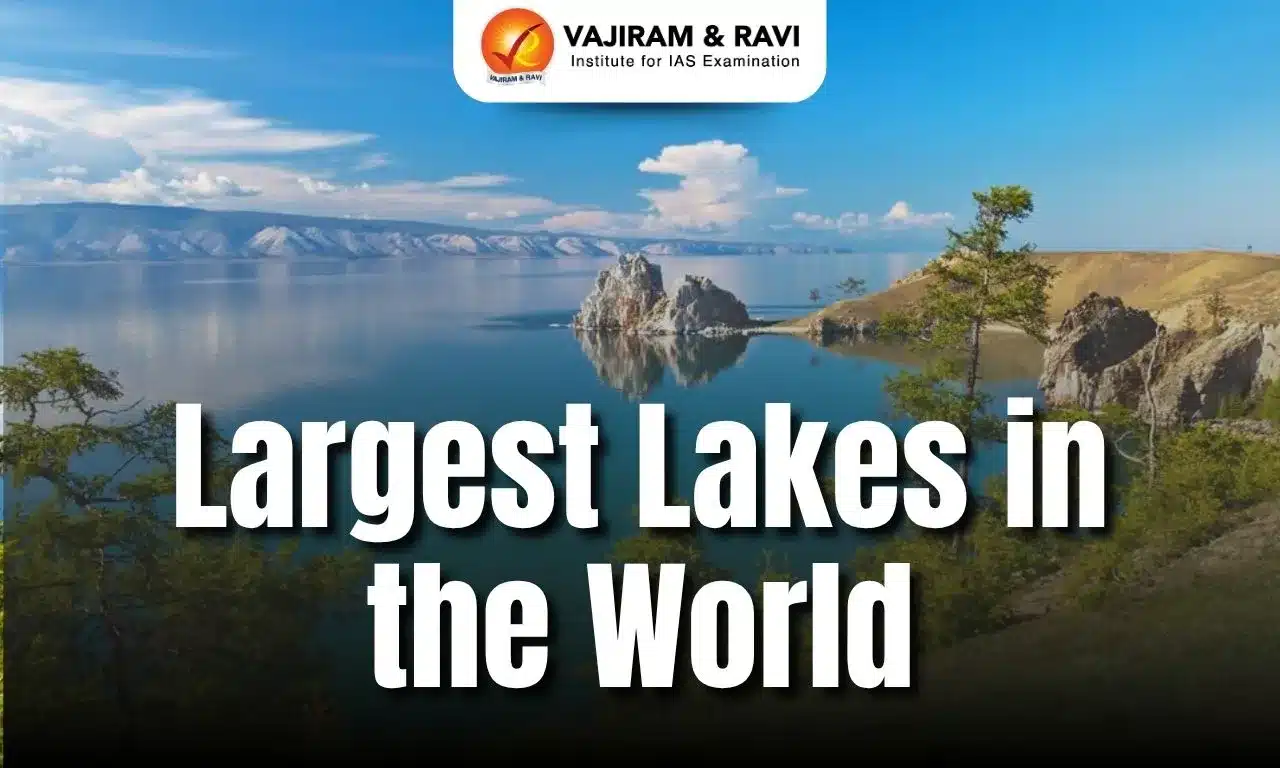
Lake Baikal is the world's deepest freshwater lake, reaching a maximum depth of 1,642 metres. It is also the oldest freshwater lake, believed to be millions of years old. This vast lake holds a significant portion of the planet’s freshwater supply, with an estimated volume of 23,610 cubic kilometres. Baikal Lake, a UNESCO World Heritage Site, is renowned for its exceptional biodiversity, hosting numerous unique aquatic ecosystems that cannot be found anywhere else. With a length of 636 kilometres, it stands as one of the most remarkable natural landmarks on Earth.

Great Bear Lake

Great Bear Lake, located in the Northwest Territories of Canada, is a stunning natural wonder despite its cold and remote setting. As the fourth-largest freshwater lake in the world, it holds an impressive volume of water. The lake is surrounded by vast tundra and boreal forests, offering a glimpse into an ancient landscape. Fishing is a popular pastime in the area, which is an essential part of the local ecosystem. Great Bear Lake is truly a breathtaking and significant feature of Canada's natural beauty.

It spans 373 kilometres in length, reaches a maximum depth of 446 metres, and holds a volume of 2,234 cubic kilometres of water.

Malawi Lake

Lake Malawi, often referred to as the “Lake of the Stars,” is located in East Africa, holding the border between Malawi and Mozambique. As the third-largest freshwater lake in Africa and the ninth-largest in the world, it is renowned for its exceptional biodiversity. The lake is particularly famous for its vibrant cichlid fish population, and holding a variety of aquatic ecosystems. The surrounding landscapes are equally breathtaking, featuring beautiful beaches, towering mountains, and national parks. The lake stretches 579 kilometres in length, reaches a maximum depth of 706 metres, and holds a volume of 8,640 km³ of water.

Great Slave Lake

Great Slave Lake, the second-largest freshwater lake in Canada after Great Bear Lake, is situated in the North-Western Region and is characterised by its harsh, subtropical climate with long, cold winters. This vast body of water serves as a crucial habitat for migratory birds and sustains local fishing communities, providing them with a vital source of livelihood. The lake also holds historical significance, with archaeological findings indicating the presence of indigenous settlements dating back thousands of years. During the winter months, the lake’s beauty is particularly breathtaking. Great Slave Lake stretches 480 km in length, has a maximum depth of 614 metres, and holds a volume of 1,115 km³.

What is the Difference Between a Lake and a Sea?

Difference Between a Lake and a Sea is essential in geography as both are large water bodies but vary significantly in terms of size, formation, and ecological impact. While lakes are generally enclosed freshwater bodies found inland, seas are large saltwater expanses connected to oceans. The table below highlights the key distinctions between a lake and a sea across various parameters.

Difference Between a Lake and a Sea
Feature Lake Sea

Location

Inland, surrounded by land

Partially enclosed by land, connected to an ocean

Water Type

Mostly freshwater (some saline)

Saltwater

Size

Generally smaller

Larger in area and depth

Connection

Not connected to oceans

Connected to oceans

Tides & Currents

No tides, minimal water movement

Affected by tides and ocean currents

Formation

Formed by glaciers, tectonic shifts, or dams

Formed by tectonic activity and part of ocean basins

Examples

Lake Victoria, Lake Superior, Dead Sea (salt lake)

Arabian Sea, South China Sea, Mediterranean Sea

Largest Lakes in the World FAQs

Q1: Which is the largest lake in the world?

Ans: The Caspian Sea is the largest lake in the world which covers an area of 389,000 km².

Q2: Which lake holds the title of largest lake by volume?

Ans: Baikal Lake holds the title of largest lake by volume (23,610 km³) and it is also the world's deepest lake (1,642 m).

Q3: Why is the Caspian Sea regarded as a lake?

Ans: The Caspian Sea does not feed into an ocean, but it has the size and depth of a sea. This distinction is not merely semantic. However, it has economic, military, and political implications.

Q4: How many countries border the Caspian Sea?

Ans: The Caspian Sea is bordered by five countries: Russia to the northwest, Kazakhstan to the northeast, Turkmenistan to the southeast, Iran to the south, and Azerbaijan to the west.

Q5: What country has 7000 lakes?

Ans: Switzerland is the country holding more than 7000 lakes.

Intergovernmental Committee for Safeguarding of the Intangible Cultural Heritage

Intergovernmental Committee for Safeguarding of the Intangible Cultural Heritage

Intergovernmental Committee for Safeguarding of the Intangible Cultural Heritage Latest News

India will host the 20th session of the UNESCO Intergovernmental Committee for Safeguarding of the Intangible Cultural Heritage from 8 to 13 December 2025 in New Delhi.

About Intergovernmental Committee for Safeguarding of the Intangible Cultural Heritage

  • Intangible cultural heritage (ICH), as UNESCO defines it, includes the practices, knowledge, expressions, objects, and spaces that communities see as part of their cultural identity.
  • For the Safeguarding of ICH, UNESCO adopted the 2003 Convention on 17th October 2003 during its 32nd General Conference in Paris. 
  • The Convention formally established mechanisms for international cooperation, support, and recognition, laying the foundation for UNESCO’s ICH lists and the subsequent work of the Intergovernmental Committee.
  • The purposes of this Convention are
    • To safeguard the ICH;
    • To ensure respect for the ICH of the communities, groups, and individuals concerned;
    • To raise awareness at the local, national, and international levels of the importance of the ICH, and ensure mutual appreciation thereof;
    • To provide for global cooperation and assistance.
  • The Intergovernmental Committee for Safeguarding of the ICH advances the objectives of the 2003 Convention and ensures their effective implementation across Member States. 
  • In fulfilling this mandate, the committee:
    • Promotes and monitors the objectives and implementation of the 2003 Convention.
    • Provides guidance on best practices and recommends measures for safeguarding ICH.
    • Prepares and submits to the General Assembly the draft plan for the use of the Intangible Cultural Heritage Fund.
    • Mobilises additional resources for the Fund in accordance with the Convention’s provisions.
    • Drafts and proposes operational directives for the implementation of the Convention.
    • Examines periodic reports submitted by States Parties and compiles summaries for the General Assembly.
    • Evaluates requests from States Parties and makes decisions regarding:
    • Inscription of elements on UNESCO’s ICH Lists (as per Articles 16, 17, and 18).
    • Granting of international assistance.
  • Membership
    • It has 24 members who are elected for a term of four years.
    • The election of new members takes place every two years during the ordinary session of the General Assembly of States Parties.
    • India is currently a member of the committee (2022-2026).

Source: PIB

Intergovernmental Committee for Safeguarding of the Intangible Cultural Heritage FAQs

Q1: What does UNESCO include under the term ‘intangible cultural heritage’?

Ans: It includes the practices, knowledge, expressions, objects, and spaces that communities see as part of their cultural identity.

Q2: How many members does the Intergovernmental Committee for Safeguarding of the Intangible Cultural Heritage have?

Ans: It has 24 members .

Q3: For how many years are members of the Intergovernmental Committee for Safeguarding of the Intangible Cultural Heritage elected?

Ans: Four years

Q4: Is India, currently a member of the Intergovernmental Committee for Safeguarding of the Intangible Cultural Heritage?

Ans: Yes, India is currently a member of the committee (2022-2026).

Benin

Benin

Benin Latest News

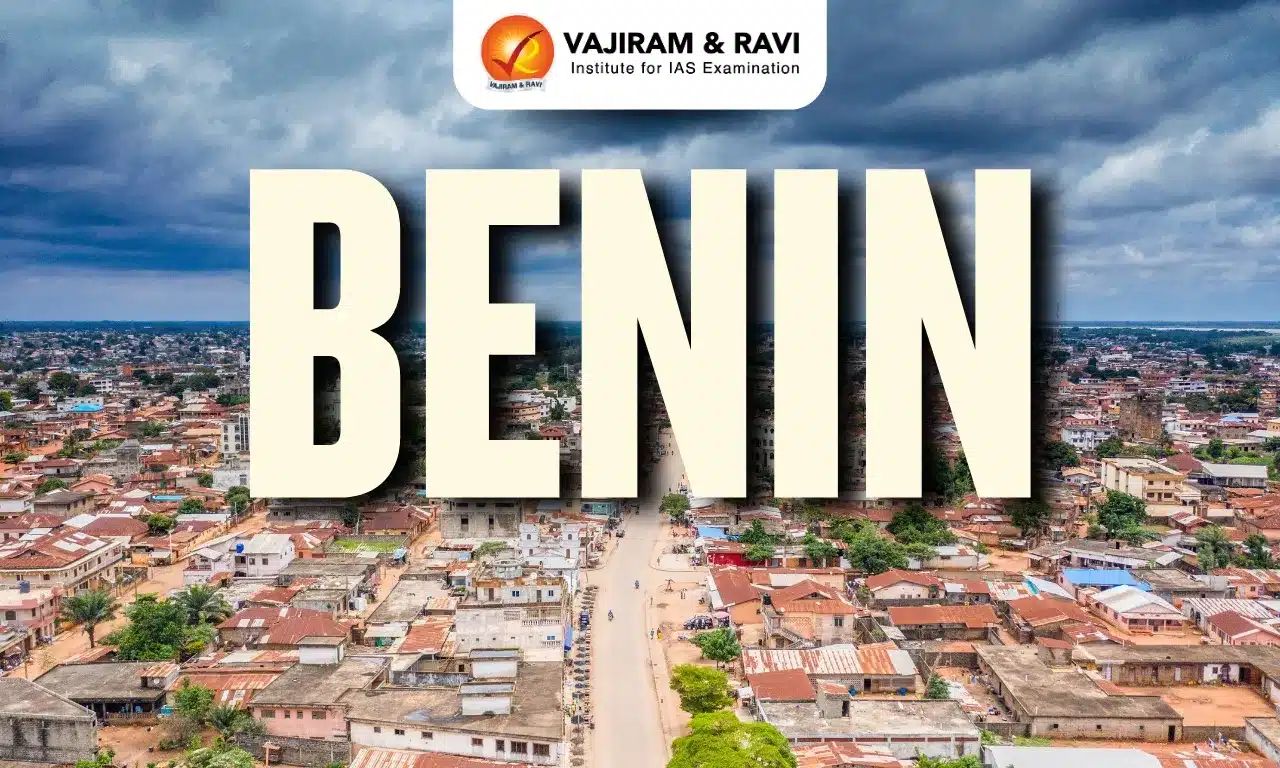
Benin President recently said that the West African nation's government and armed forces had thwarted a coup attempt by a group of soldiers and vowed to punish them.

About Benin

  • It is a country in West Africa.
  • It encompasses an area of 112,622 sq. km.
  • Four countries border Benin. These are Niger to the northeast, Nigeria to the east, Togo to the west, and Burkina Faso to the northeast. 
  • To the south, Benin has a small stretch of coastline on the Bight of Benin, which is part of the Gulf of Guinea in the Atlantic Ocean.
  • Drainage: Apart from the Niger River, which, with its tributaries the Mékrou, Alibori, and Sota, drains the northeastern part of the country, the three principal rivers in Benin are the Mono, the Couffo, and the Ouémé.
  • The official capital is Porto-Novo, but Cotonou is Benin’s largest city, its chief port, and its de facto administrative capital. 
  • Its population in 2016 was estimated to be approximately 10.87 million.
  • Language
    • The official language of Benin is French
    • However, indigenous languages such as Fon and Yoruba are commonly spoken. 
  • Currency: Communaute Financiere Africaine francs (XOF)
  • Benin was a French colony from the late 19th century until 1960. 
  • Type of Government:
    • It is a Presidential Republic.
      It follows a multi-party democratic system.

Source: CNBC

Benin FAQs

Q1: Benin is located in which region of Africa?

Ans: West Africa

Q2: Benin has a coastline along which water body?

Ans: Benin has a small stretch of coastline on the Bight of Benin, which is part of the Gulf of Guinea in the Atlantic Ocean.

Q3: Which city is Benin’s official capital?

Ans: Porto-Novo

Q4: Which city is Benin’s largest city and de facto administrative capital?

Ans: Cotonou

Q5: What is the official language of Benin?

Ans: The official language of Benin is French.

Daily Editorial Analysis 8 December 2025

Daily Editorial Analysis

Surveillance Apps in Welfare, Snake Oil for Accountability

Context

  • In recent years, India has turned to digital technologies to address persistent governance failures.
  • From workers photographing themselves at job sites to mandatory biometric authentication for welfare benefits, techno-centric solutions have become the default response to absenteeism, corruption, and inefficiency.
  • These interventions are promoted as tools of greater accountability, yet they often shift incentives in counterproductive ways, creating new forms of manipulation, exclusion, and demotivation while leaving underlying structural problems unresolved.

The Persistent Quest for Accountability

  • Technological interventions have been introduced to address issues such as absenteeism, delayed service delivery, and petty corruption.
  • Biometric attendance systems exemplify this trend. They were intended to curb evasion of duty but instead reshaped work priorities.
  • Officials in Jharkhand, for example, became preoccupied with marking timely attendance rather than completing essential tasks that required flexibility.
  • Evidence from Rajasthan showed that biometric monitoring failed to improve attendance among nurses, and in fact reduced it over time.
  • This pattern extends to welfare programmes. In MGNREGA, where inflated attendance records have long enabled wage theft, the National Mobile Monitoring System (NMMS) mandated twice-daily photographic evidence of worker presence.
  • Yet corrupt actors quickly adapted by uploading irrelevant images or photos of photos, exploiting the system’s technical loopholes.
  • Official documentation later confirmed widespread misuse, demonstrating how easily such accountability systems can be manipulated.

Biometric Dependence and Its Human Costs

  • Facial recognition and biometric authentication have been promoted to safeguard welfare entitlements by ensuring that benefits reach the intended recipients.
  • The Ministry of Women and Child Development’s decision to make Facial Recognition Technology (FRT) compulsory for Take-Home Rations aimed to prevent diversion.
  • Yet these verification procedures often burden beneficiaries, especially women in rural areas, who must grapple with poor connectivity, crowded centres, and app instability.
  • More critically, successful authentication does not guarantee access to benefits. Frontline workers retain discretionary power, and beneficiaries may still be denied rations after completing the required digital steps.
  • Similar issues arose with Aadhaar-Based Biometric Authentication (ABBA) in the Public Distribution System, where the elderly, disabled, and immobile were disadvantaged by rigid identity checks.
  • Meanwhile, corruption persisted through methods such as recording full entitlements while distributing less. These systems frequently imposed exclusion without reducing malpractice.

Perverse Incentives and Worker Demotivation

  • The use of digital monitoring to oversee frontline health workers creates further distortions.
  • Auxiliary Nurses and Midwives (ANMs) must upload geo-tagged photographs to document tasks such as breastfeeding counselling.
  • This produces perverse incentives, where uploading proof becomes more important than providing the service itself.
  • Completing a task without digital evidence risks punishment, while superficial compliance satisfies the system.
  • Cases where ANMs were reprimanded due to GPS fluctuations or connectivity issues reveal how such systems treat diligent workers with suspicion.
  • Instead of encouraging sincere service, they create an environment of surveillance-driven anxiety, eroding intrinsic motivation and diminishing public-spiritedness.

Accountability vs. Responsibility

  • The core problem lies in conflating accountability with responsibility.
  • Accountability enforces compliance, often in mechanical ways, whereas responsibility arises from intrinsic motivation and a commitment to the public good.
  • Digital tools grounded in monitoring and verification cannot cultivate this deeper sense of purpose.
  • By focusing narrowly on procedural control, they overlook the need to strengthen work culture, support frontline staff, and build trust-based systems.
  • This raises a fundamental question: why do so many nurses, teachers, doctors, and cleaners work diligently even in contexts with weak accountability?
  • The answer lies not in surveillance, but in professional ethics, community respect, and supportive environments, factors that technology cannot replicate.

Agnotology and the Politics of Not Knowing

  • Despite growing evidence of exclusion, inefficiency, privacy violations, and continued corruption, digital systems continue to expand.
  • This persistence reflects a deliberate cultivation of ignorance, or agnotology.
  • By disregarding the harms arising from these technologies, policymakers maintain the illusion of effectiveness.
  • This ignorance aligns with the interests of technology vendors who benefit from rapidly expanding markets for surveillance infrastructure, devices, authentication services, and data systems.
  • Like industries that historically obscured the harms of their products, these actors gain from framing digital tools as inevitable solutions, while structural problems remain unaddressed.

Conclusion

  • While digital tools promise transparency and efficiency, they often generate exclusion, new opportunities for corruption, worker demoralisation, and privacy risks.
  • They promote a narrow vision of governance where procedural compliance overshadows meaningful service.
  • The refusal to confront these failures suggests institutional inertia and vested interests rather than evidence-based policymaking.
  • In this context, tech-fixes function as snake oil, seductive but ineffective remedies that distract from the real work of strengthening institutions, improving work culture, and fostering responsibility among those who serve the public.

Surveillance Apps in Welfare, Snake Oil for Accountability FAQs

Q1. How do biometric systems affect access to welfare benefits?
Ans. Biometric systems can restrict access to welfare benefits by excluding people who face connectivity issues, physical limitations, or authentication failures.

Q2. What impact do surveillance apps have on frontline workers?
Ans. Surveillance apps demotivate frontline workers by prioritising documentation over genuine service and penalising them for technical issues beyond their control.

Q3. What is the difference between accountability and responsibility in public service?
Ans. Accountability enforces compliance with procedures, while responsibility reflects a worker’s intrinsic motivation to act in the public interest.

Q4. Why does the government continue promoting tech-fixes despite their failures?
Ans. The government continues promoting tech-fixes because of institutional inertia, commercial interests, and a cultivated ignorance of the harms these tools cause.

Q5. Why are tech-driven tools often ineffective in improving accountability?
Ans. Tech-driven tools are often ineffective because they can be easily manipulated and do not address the underlying structural problems in governance.

Source: The Hindu


A Black Friday for Aviation Safety in India

Context

  • The government’s response to IndiGo’s flight cancellations has raised serious aviation safety concerns.
  • After Indigo’s large-scale disruptions, the Civil Aviation Minister announced that DGCA’s new Flight Duty Time Limitation (FDTL) rules were being put under abeyance, prioritising operational stability and passenger relief.
  • Earlier, the DGCA had appealed to pilots and associations to cooperate and subtly signalled a dilution of FDTL norms—despite these rules being mandated under a High Court order to address crew fatigue.
  • Critics argue that these actions undermine flight safety, suggesting that India has compromised regulatory integrity to accommodate IndiGo’s commercial interests.
  • This article highlights how India’s aviation safety framework has come under severe strain following IndiGo’s mass flight cancellations, exposing long-standing regulatory weaknesses, chronic understaffing, dilution of safety norms.

A Pattern of Diluting Safety Measures

  • The DGCA had introduced a strong Civil Aviation Requirement (CAR) in 2007 to address crew fatigue and ensure adequate rest.
  • However, airline owners objected, and the Civil Aviation Ministry ordered the DGCA to keep the CAR in abeyance. In May 2008, the DGCA formally suspended the regulation.
  • This set a long-standing pattern: commercial interests consistently outweighing crew fatigue and aviation safety.
  • Judicial Intervention and Reversal
    • Pilot unions challenged the 2008 order in the Bombay High Court.
    • The Court initially granted interim relief and criticised the Ministry and DGCA for:
      • Endangering pilot and passenger safety
      • Arbitrarily increasing pilot duty hours
      • Prioritising airline profits over safety
    • The Court said airlines should reduce flights if pilot shortages existed.
    • Yet, in a surprising turn, the same High Court later reversed its stance and upheld the Ministry’s decision.

IndiGo and DGCA Ignored a Long-Known Deadline

  • The new FDTL rules were known more than a year in advance, with a clear implementation date of November 1, 2025.
  • Despite this, both IndiGo and the DGCA failed to prepare, resulting in nationwide chaos and thousands of stranded passengers.
  • Refunds may be issued, but passengers’ losses from hotels, transport, and missed commitments remain uncompensated.

Underlying Structural Problem: Chronic Understaffing

  • The root of the crisis links back to DGCA’s own requirement (CAR Series C, Part II, Section 3) issued in April 2022, which mandates:
    • At least three sets of crew per aircraft
    • All crew holding valid DGCA licences and endorsements
  • The regulation exists on paper, but enforcement has been lax.
  • Airlines—including IndiGo—operate with lean staffing models, making them vulnerable to even small regulatory changes and exposing deeper systemic weaknesses.
    • Even under the older and already inadequate FDTL rules, airlines were required to maintain at least six pilot sets per domestic aircraft and twelve for long-haul widebody aircraft.
    • However, airlines — particularly IndiGo — appear to have understaffed intentionally, exploiting gaps in the Civil Aviation Requirements (CAR).

ICAO’s Long-Standing Warning on India’s Aviation Oversight

  • The International Civil Aviation Organization (ICAO) warned in 2006 that India needed an independent aviation authority, not one controlled by the government.
  • Eighteen years later, the prediction appears validated: DGCA’s oversight has weakened, and airlines operate with the confidence that violations will be overlooked.

December 2025: A Clear Example of Collapsed Oversight

  • Recently, in December 2025, two contradictory actions exposed the regulatory breakdown:
    • DGCA appealed to pilots to cooperate with the existing FDTL rules (mandated by the High Court).
    • Hours later, the Ministry suspended those very rules, enabling IndiGo to continue operating without meeting safety-critical crew requirements.
  • This amounted to government-sanctioned dilution of safety norms, unprecedented even in developing aviation systems.
  • IndiGo has failed to comply with earlier CAR requirements for more than a year, yet the Ministry’s latest order gives the airline until February 10, 2026 to fall in line.
  • Given past behaviour, it is unrealistic to expect compliance within two months.
  • Further extensions are likely, compromising passenger safety and perpetuating a system where airlines face no meaningful accountability.

Aviation Safety Still Ignored Despite Past Crashes

  • India has witnessed three major aviation disasters since 2010 — in Mangaluru, Kozhikode, and Ahmedabad — yet meaningful lessons have not been learned.
  • The Air India AI 171 crash report remains inexplicably delayed by the Ministry.
  • Even as IndiGo assures that operations will stabilise in 10–15 days, safety has sunk to its lowest point, with flying in India reduced to being “on a wing and a prayer.”
  • Despite constant official claims that “safety is paramount,” the decisions taken on December 5, 2025, particularly the dilution of FDTL rules, demonstrate that aviation safety in India remains more myth than reality.

A Black Friday for Aviation Safety in India FAQs

Q1. What triggered fresh concerns about aviation safety in India?

Ans. IndiGo’s mass cancellations and the government’s decision to suspend new FDTL rules exposed systemic safety failures, weak oversight, and prioritisation of airline operations over pilot fatigue management.

Q2. Why is the dilution of FDTL rules considered dangerous?

Ans. FDTL rules prevent pilot fatigue, a major safety risk. Diluting them undermines global safety standards and allows airlines to operate without adequate crew rest.

Q3. How did regulatory lapses worsen the crisis?

Ans. Despite a year’s notice, both IndiGo and DGCA failed to prepare for new rules, ignoring chronic understaffing and allowing unsafe operational practices to persist unchecked.

Q4. What structural issues underlie India’s aviation safety problems?

Ans. Airlines routinely understaff crew, DGCA weakly enforces CAR requirements, and ICAO’s call for an independent regulator remains unaddressed for nearly two decades.

Q5. Why does the article argue that accountability is lacking?

Ans. Repeated dilution of safety norms, inconsistent judicial decisions, and tolerance of violations have created a system where airlines face no real consequences for compromising safety.

Source: TH


Towards Regional Climate Multilateralism in South Asia

Context

  • The message from COP30 (UN Climate Change Conference held in Belém, Brazil) is unequivocal: the world has overshot the 1.5°C warming threshold, and the remaining window for effective climate action is rapidly closing.
  • The Paris Agreement, while norm-setting, has failed to generate the scale of ambition, finance, and collective action required—especially for climate-vulnerable regions.
  • In this backdrop, there is a growing demand for a Global South–led climate multilateralism, with South Asia emerging as a critical region for cooperative climate action.

Why South Asia Needs a Regional Climate Approach

  • By 2050, South Asia could suffer losses of nearly 1.8% of annual GDP due to extreme heat, sea-level rise, floods and droughts.
  • The region also faces irreversible losses to lives, livelihoods, ecosystems, and cultural traditions.
  • Interconnected ecosystems (Himalayas, monsoons, river basins, coastal systems) make unilateral action insufficient.
  • Therefore, collective regional action offers scale, efficiency, and resilience.

Proposal - South Asian Climate Cooperation Council (SACCC)

  • A dedicated regional institutional mechanism to enable mutually beneficial climate action.
  • Inspired by precedents of crisis-led regional cooperation -
    • Quad (post-2004 Indian Ocean Tsunami)
    • Cooperation during Nepal earthquake and Maldives water crisis
  • Past failures of SAARC-style institutions should not deter innovation in climate governance.

Existing Foundation - Energy Cooperation

  • 2014 SAARC Framework Agreement for Energy Cooperation laid groundwork for cross-border electricity trade.
  • Operational Nepal–India–Bangladesh trilateral power transaction is a testimony of this agreement.
  • The One Sun One World One Grid (OSOWOG) provides scope for regional renewable energy pooling among India, Bhutan, Bangladesh, and Nepal.
  • This energy cooperation demonstrates that functional regionalism is possible.

Three Pillars of the Proposed SACCC

  • Regional knowledge and innovation hub

    • Network of co-managed centres across South Asia leveraging complementary strengths -
      • Maldives: Coastal climate resilience, coral restoration, fisheries, maritime renewables.
      • Sri Lanka: 30×30 conservation target; Life to Our Mangroves promotes nature-based solutions.
      • Bhutan: Gelephu Mindful City depicts sustainable and mindful urbanisation.
      • India: Mission LiFE promotes behavioural change; technical expertise in renewable energy and grid integration.
    • Focus areas: Adaptation, mitigation, nature-based solutions, sustainable urban transitions.
  • South Asia green climate finance facility

    • Climate action hinges on accessible and predictable finance.
    • A regional facility could -
      • Pool domestic and international resources
      • Enhance absorptive capacity for global climate funds
      • Build a pipeline of bankable, high-priority projects
    • In collaboration with ADB, World Bank, Green Climate Fund, it could -
      • Issue green bonds
      • Provide risk-mitigation instruments
      • Structure regional project portfolios to crowd in private climate investment
    • This could address chronic climate finance gaps in the Global South.
  • Scientific commission for South Asia

    • An independent, evidence-based body to -
      • Define the type, scale, and speed of climate action required
      • Identify low-cost, high-impact interventions
      • Promote R&D and data-sharing
      • Leverage institutional excellence across countries
    • This will be similar in spirit to the Intergovernmental Panel on Climate Change (IPCC), but region-specific and action-oriented.

Key Challenges and Way Forward

  • Political distrust and weak regional institutions: Build trust through pilot projects and crisis-response cooperation.
  • Uneven technical and financial capacities: Align SACCC goals with SDGs, NDCs, and Loss & Damage mechanisms.
  • Fragmented data and scientific coordination: Decouple climate cooperation from geopolitical rivalries. Ensure inclusive Global South leadership in climate governance.
  • Risk of duplication with global institutions: Begin with functional cooperation (energy, disasters, finance) rather than grand treaties.

Conclusion

  • South Asia stands at a climate crossroads. With shared vulnerabilities, interlinked ecosystems, and mounting economic risks, regional climate multilateralism is no longer optional but essential.
  • A homegrown initiative like the SACCC—anchored in knowledge-sharing, climate finance, and scientific guidance—can transform climate vulnerability into collective resilience.
  • Such cooperation can not only advance climate security but also foster peaceful coexistence and sustainable prosperity in one of the world’s most climate-exposed regions.

Climate Multilateralism in South Asia FAQs

Q1. Why is there a growing demand for Global South–led climate multilateralism, particularly in South Asia?

Ans. Because the Paris Agreement has failed to generate adequate ambition while South Asia faces disproportionate climate losses.

Q2. What is the rationale behind proposing a South Asian Climate Cooperation Council (SACCC)?

Ans. SACCC aims to pool regional resources, knowledge, finance, and technology to address transboundary climate risks.

Q3. How does cross-border energy cooperation strengthen the case for regional climate multilateralism in South Asia?

Ans. Existing initiatives like the SAARC Energy Framework, Nepal–India–Bangladesh power trade, show that functional regional cooperation is feasible.

Q4. What role can a South Asia Green Climate Finance Facility play in accelerating climate action?

Ans. It can enhance access to climate finance by pooling resources, issuing green bonds, mitigating risks, and creating bankable regional projects.

Q5. What is the significance of a regional scientific commission for climate governance in South Asia?

Ans. It would provide evidence-based guidance, promote data sharing, and provide climate solutions tailored to the region.

Source: IE

Daily Editorial Analysis 8 December 2025 FAQs

Q1: What is editorial analysis?

Ans: Editorial analysis is the critical examination and interpretation of newspaper editorials to extract key insights, arguments, and perspectives relevant to UPSC preparation.

Q2: What is an editorial analyst?

Ans: An editorial analyst is someone who studies and breaks down editorials to highlight their relevance, structure, and usefulness for competitive exams like the UPSC.

Q3: What is an editorial for UPSC?

Ans: For UPSC, an editorial refers to opinion-based articles in reputed newspapers that provide analysis on current affairs, governance, policy, and socio-economic issues.

Q4: What are the sources of UPSC Editorial Analysis?

Ans: Key sources include editorials from The Hindu and Indian Express.

Q5: Can Editorial Analysis help in Mains Answer Writing?

Ans: Yes, editorial analysis enhances content quality, analytical depth, and structure in Mains answer writing.

Longest Highway in India, Top 10 List, Distance, Route

Longest Highway in India

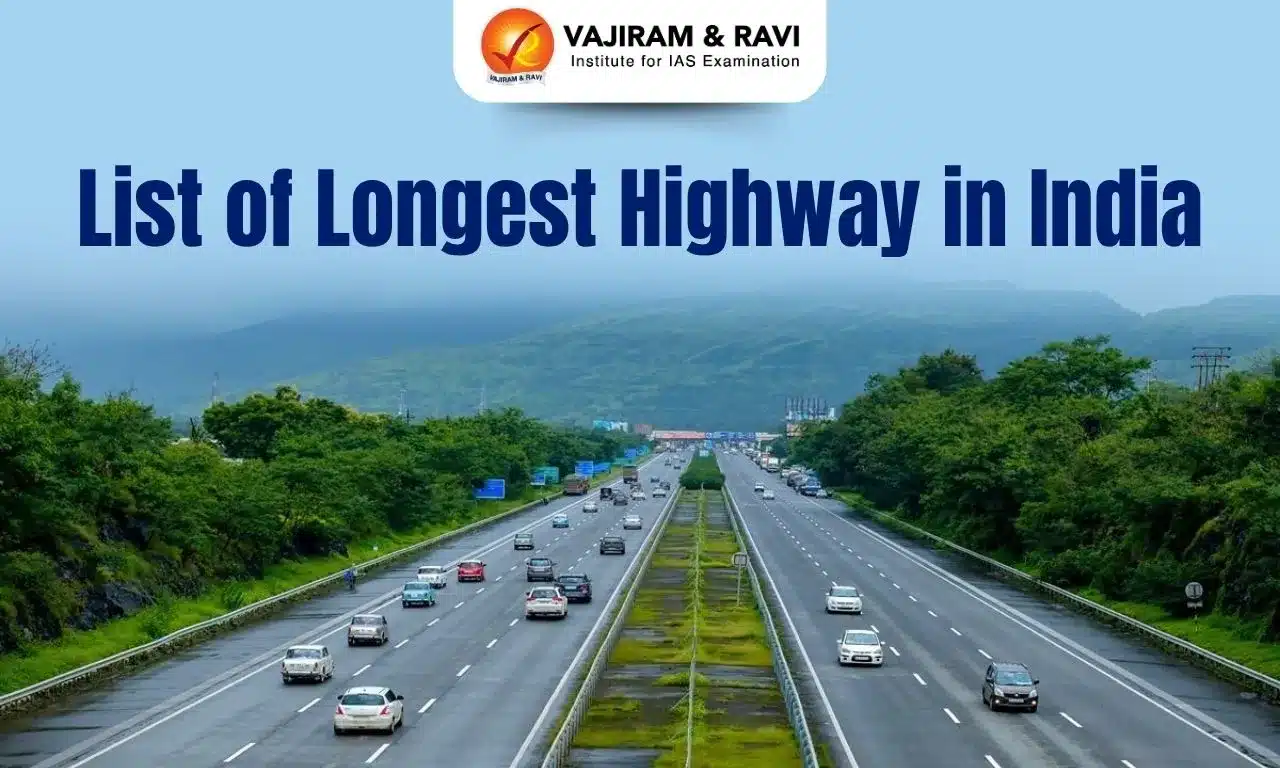
Highways in India form the backbone of the country's road network, connecting various regions and facilitating trade and transportation. The Longest Highway in India is NH 44, spanning 3,745 km from Srinagar (Jammu & Kashmir) to Kanyakumari (Tamil Nadu). Other major highways include NH 6 (1,873 km), NH 53 (1,781 km), NH 16 (1,711 km), NH 66 (1,622 km), and NH 19 (1,435 km). These highways play an important role in economic growth, infrastructure development, and seamless transportation across the country, enhancing connectivity between states and regions.

Longest Highway In India

National Highway 44 (NH 44) is the Longest National Highway In India, connecting Srinagar (Jammu & Kashmir) to Kanyakumari (Tamil Nadu). Previously known as National Highway 7, NH 44 is an important part of the North-South Corridor of the National Highways Development Project (NHDP). This highway was formed by merging seven major national highways from the old numbering system, including NH 1A, NH 1, NH 2, NH 3, NH 75, NH 26, and NH 7. NH 44 plays an important role in connecting the northernmost and southernmost parts of India, facilitating trade, travel, and economic growth across multiple states.

Route of Longest Highway of India

NH 44 serves as a crucial transportation corridor, linking Srinagar in Jammu & Kashmir to Kanyakumari in Tamil Nadu. Spanning the entire length of India, it provides a direct north-south route, enhancing connectivity across multiple states. The highway travels through Punjab, Haryana, Maharashtra, Telangana, Andhra Pradesh, and Karnataka, making it the best route for trade, travel, and economic activities. Its extensive reach ensures smooth movement of goods and people, significantly contributing to national integration and infrastructure development.

List of Longest Highway in India

India has an extensive network of national highways that connect various cities and states, facilitating smooth transportation and trade. These highways play a major role in India's infrastructure, ensuring efficient movement of goods and people. The National Highways Authority of India (NHAI) is responsible for their construction and maintenance, contributing significantly to economic growth and regional connectivity.

List of Longest Highway in India
S. No National Highway Distance (in km) Route

1

NH 44 (old NH 7)

3,745

Srinagar to Kanyakumari

2

NH 27

3,507

Porbandar in Gujarat to Silchar in Assam

3

NH 48 (old NH 8)

2,807

Delhi to Chennai

4

NH 52

2,317

Sangrur, Punjab to Ankola, Karnataka

5

NH 30 (Old NH 221)

2,040

Sitarganj in Uttarakhand to Ibrahimpatnam in Andhra Pradesh.

6

NH 6

1,873

Jorabat in Meghalaya and terminates at Selling in Mizoram

7

NH 53

1,781

Hajira in Gujarat and Pradip port in Odisha.

8

NH 16 (Old NH 5)

1,711

East coast of West Bengal to Chennai in Tamil Nadu.

9

NH 66 (Old NH 17)

1,622

Panvel and terminates at Kanyakumari

10

NH 19 (Old NH 20)

1,435

Delhi to Kolkata

11

NH 34

1,426

Gangotri Dham in Uttarakhand to Lakhnadon in Madhya Pradesh

Longest Highway in India Interesting Facts

India has an extensive road network, making it the second-largest in the world. With over 200 national highways covering 1,31,899 km, these roads play a crucial role in transportation. The development of national highways has significantly reduced traffic congestion by 40%. While NH 44 is the longest highway, the shortest ones include NH 118 and NH 548. NH 30 is considered one of the safest highways due to its simple connectivity. Highways are numbered systematically; two-digit numbers represent main highways, while three-digit numbers indicate branches of major routes.

Longest Highway In India FAQs

Q1: Which is longest, NH 7 or NH 44?

Ans: National Highway 44 (NH 44), formerly known as National Highway 7, is the longest national highway in India.

Q2: Why is NH 44 famous?

Ans: NH44 covers a total of 11 Indian states, making it famous according to the country's vastness and diversity.

Q3: What is the length of NH 27?

Ans: The overall length of the national highway 27 is 3507 kilometres.

Q4: What is the new name of NH 44?

Ans: NH44, also known as the Old NH 7, is the longest national highway in India.

Q5: What is NH 7 also known as?

Ans: The longest National highway in India is NH-7 which is now called NH 44.

Measles

Key Facts about Measles

Measles Latest News

Despite a highly effective vaccine, measles caused approximately 95,000 deaths globally in 2024, primarily among unvaccinated children under five.

About Measles

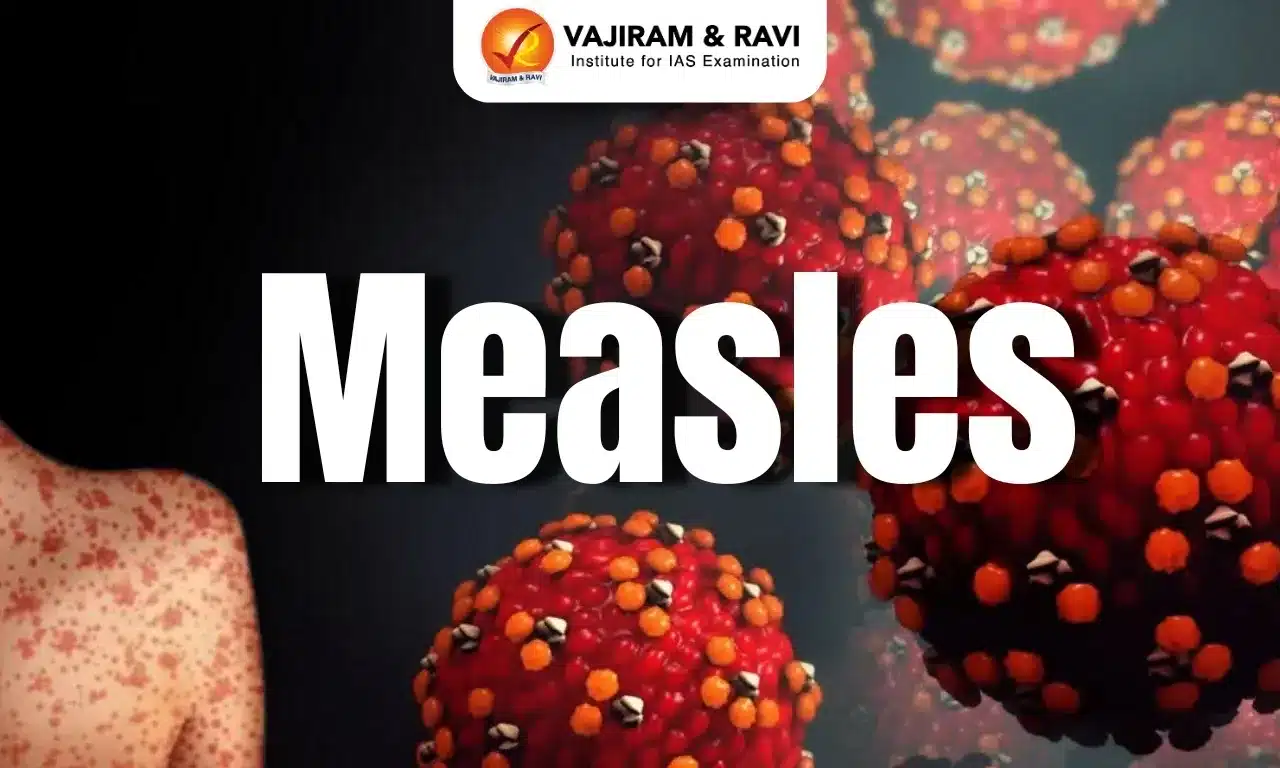
  • Measles is a highly contagious, serious airborne disease caused by a virus.
  • It is caused by a virus in the paramyxovirus family.

Measles Transmission

  • It is one of the world’s most contagious diseases, spread by contact with infected nasal or throat secretions (coughing or sneezing) or breathing the air that was breathed by someone with measles. 
  • The virus remains active and contagious in the air or on infected surfaces for up to two hours. 
  • For this reason, it is very infectious. 
  • The virus infects the respiratory tract, then spreads throughout the body, causing severe disease, complications, and even death.

Measles Symptoms

  • The first sign of measles is usually high fever, beginning about 10 to 14 days after exposure to the virus and lasting four to seven days.
  • A runny nose, cough, red and watery eyes, and small white spots inside the cheeks can develop in the initial stage.
  • A rash erupts after several days, usually on the face and upper neck. The rash spreads over about three days, eventually reaching the hands and feet, and lasts five to six days before fading. 

Who is at Risk of Measles?

  • Any non-immune person (not vaccinated or vaccinated but did not develop immunity) can become infected.
  • Unvaccinated young children and pregnant persons are at the highest risk of severe measles complications.
  • Measles is still common, particularly in parts of Africa, the Middle East, and Asia.

Measles Treatment

  • No specific antiviral treatment exists for measles.
  • It can be prevented with a safe and effective measles-rubella (MR) vaccine that gives long-term immunity.
  • The Government of India (GoI) introduced the measles vaccine in its Universal Immunization Programme in 1985.

Source: TOI

Measles FAQs

Q1: Measles is caused by which type of organism?

Ans: It is caused by a virus.

Q2: Who is at the highest risk of severe measles complications?

Ans: Unvaccinated young children and pregnant persons are at the highest risk of severe measles complications.

Q3: How is measles transmitted from one person to another?

Ans: It spread by contact with infected nasal or throat secretions (coughing or sneezing) or breathing the air that was breathed by someone with measles.

Q4: Is there any specific antiviral treatment available for measles?

Ans: No specific antiviral treatment exists for measles.

Q5: How measles can be prevented?

Ans: It can be prevented with a safe and effective measles-rubella (MR) vaccine.

Hoolock Gibbon

Hoolock Gibbon

Hoolock Gibbon Latest News

Recently, a stranded family of Hoolock gibbons was rescued in Arunachal Pradesh’s Lower Dibang Valley district by officials.

About Hoolock Gibbon

  • Gibbons, the smallest and fastest of all apes, live in tropical and subtropical forests in the southeastern part of Asia.
  • The hoolock gibbon is one of 20 species of gibbons on Earth. 

Distribution of Hoolock Gibbon

  • Its distribution in Southeast Asia spans India, Myanmar, Bangladesh, and southern China.
  • It is the only ape found in India.
  • In India, it is found in Assam, Meghalaya, Arunachal Pradesh, Nagaland, Manipur, Mizoram, and Tripura, south of the Brahmaputra.
    • Hollongapar Gibbon Sanctuary in Assam has the largest concentration of the hoolock gibbon.
  • It is categorised into Eastern Hoolock Gibbon (Hoolock leuconedys) found in a specific region of Arunachal Pradesh and Western Hoolock Gibbon (Hoolock hoolock) distributed elsewhere in the northeast. 

Characteristics of Hoolock Gibbon

  • They are diurnal and arboreal, brachiating through the trees with their long arms.
  • They are monogamous (same partner throughout life).
  • They live in small families and communicate with other gibbons by vocalisation.
  • Life span: 25 years

Conservation Status of Hoolock Gibbon

  • IUCN Red List
    • Eastern Hoolock Gibbon: Vulnerable 
    • Western Hoolock Gibbon: Endangered
  • Both are on Schedule I of the Wildlife (Protection) Act of India, 1972.

Source: The Print

Hoolock Gibbon FAQs

Q1: What is the scientific name of Hoolock Gibbon?

Ans: Hylobates hoolock

Q2: What is unique about Hoolock Gibbons?

Ans: They are known for their distinctive vocalizations

National Intelligence Grid

National Intelligence Grid

National Intelligence Grid Latest News

Recently, officials said that the National Intelligence Grid (NATGRID) is slowly gathering pace and receiving 45k requests a month.

About National Intelligence Grid

  • It is a platform for the police and investigating agencies to securely access government and private databases in real time.
  • It is conceptualised as a seamless and secure database for information on terrorists, economic crimes and similar incidents to help bolster India’s capabilities.
  • Background
    • The project was started in 2009 in the aftermath of the 26/11 Mumbai terror attacks.
    • NATGRID was set up as an attached Office of the Ministry of Home Affairs with effect from December 1, 2010.
    • It started its operations on December 31, 2020.
  • NATGRID database is available to 
    • Intelligence Bureau (IB), the Research and Analysis Wing (R&AW), the National Investigation Agency (NIA), the Enforcement Directorate (ED), the Financial Intelligence Unit (FIU), the Narcotics Control Bureau (NCB) and the Directorate of Revenue Intelligence (DRI).
    • Superintendent of Police (SP) rank officers.

Operation of National Intelligence Grid

  • It has been mandated to maintain a repository of intelligence databases.
  • It works as an integrated intelligence grid that connects databases of core security agencies of the government of India.
  • It will have data related to all immigration entry and exit, banking and financial transactions, credit card purchases, telecom, individual taxpayers, air flyers, train travellers besides others to generate intelligence inputs.
  • It will utilise Big Data and Analytics to study huge amounts of data generated to analyse events in order to get a better picture as well as to trail suspects.

Source: TH

National Intelligence Grid FAQs

Q1: When was NATGRID established?

Ans: 2010

Q2: Which ministry is responsible for NATGRID?

Ans: Ministry of Home Affairs

Karnataka Hate Speech Bill Explained: Key Features, Legal Gaps & Supreme Court’s Role

Karnataka Hate Speech Bill

Karnataka Hate Speech Bill Latest News

  • The Karnataka Hate Speech and Hate Crimes (Prevention) Bill, 2025 proposes 2–10 years’ imprisonment for offenders and introduces collective liability for organisations involved in hate-related offences.
  • The Karnataka govt argued that the Bill is required because no existing Indian law explicitly defines or addresses hate speech, exposing a long-standing gap in the country’s criminal framework despite frequent public debates on the issue.

How Hate Speech Is Currently Regulated in India

  • India lacks a standalone statute defining or penalising hate speech.
  • Instead, police rely on scattered provisions of the Bharatiya Nyaya Sanhita (BNS), which are designed mainly to preserve public order, not address hate speech as a distinct offence.

Section 196 BNS: The Most Commonly Invoked Provision

  • A successor to IPC Section 153A, Section 196 penalises:
    • Promoting enmity between groups
    • Acts prejudicial to harmony
  • Although arrests under this section are frequent, convictions remain rare — barely 20.2% in 2020, as per NCRB data.

Section 299 BNS: Protecting Religious Feelings

  • This provision (equivalent to IPC Section 295A) punishes deliberate and malicious acts intended to outrage religious sentiments.
  • It is often invoked in cases involving religious insult or provocation.

Section 353 BNS: Incitement Creating Public Disorder

  • Section 353 criminalises:
    • Statements or misinformation that incite offences
    • Material disturbing public order or targeting communities
  • All these offences are cognisable, allowing police to arrest without a warrant, and carry penalties of up to three years.

Online Hate Speech and the Fall of Section 66A IT Act

  • For years, Section 66A of the IT Act was used to prosecute online hate speech.
  • In 2015, the Supreme Court struck it down for being vague and unconstitutional, leaving a gap in digital regulation.

Supreme Court’s Evolving Stance on Hate Speech Enforcement

  • The Supreme Court has adopted a proactive yet shifting approach to combating hate speech in recent years.
  • In October 2022, the apex court stated that a “climate of hate prevails in the country” and directed police chiefs in Delhi, Uttar Pradesh, and Uttarakhand to take suo motu action against hate speech without waiting for complaints — warning that inaction would amount to contempt. 
    • The directive was extended to all states and union territories in April 2023. However, implementation challenges soon became evident. 
  • In August 2023, SC Judges acknowledged that defining hate speech is inherently complex and that enforcement failures, not legal gaps, were the main obstacle.
  • More recently, in November 2025, a SC bench held that the apex Court was “not inclined to monitor every incident of hate speech”, pointing out that police and High Courts are competent to act. 
  • The bench referred to the 2018 Tehseen Poonawalla judgment, which requires nodal officers to prevent mob violence and lynching, reaffirming that the existing framework must be followed.

Past Efforts to Formally Define Hate Speech in India

  • Efforts to create a clear legal definition of hate speech have been ongoing for years.
  • In 2017, the Law Commission’s 267th Report recommended adding Sections 153C and 505A to the IPC to criminalise incitement to hatred and provocation of violence, offering a more precise framework than existing public-order provisions.
  • In 2022, a Private Member’s Bill titled The Hate Speech and Hate Crimes (Prevention) Bill was introduced in the Rajya Sabha. 
  • However, the Bill was never passed, and India still lacks a statutory definition of hate speech.

Karnataka’s Proposed Hate Speech Bill

  • Karnataka has become the first state in India to introduce legislation specifically targeting hate speech.
  • It draws inspiration from the Law Commission’s recommendations and the 2022 Private Member’s Bill.

Key Features of The Karnataka Hate Speech and Hate Crimes (Prevention) Bill, 2025

  • The Bill defines hate speech as any expression that causes injury or disharmony against individuals or groups based on religion, race, caste, gender, sexual orientation, place of birth, or disability. 
  • Notably, it expands protected categories to include gender and sexual orientation, going beyond what the IPC and BNS currently safeguard.
  • A defining element is the introduction of “collective liability” — if hate speech is committed through an organisation, individuals holding positions of responsibility in that organisation may also be held guilty.
  • Additionally, the Bill authorises the state government to block or remove online content deemed hateful, giving it regulatory power over digital speech in a way not explicitly provided under national law.
  • The Bill prescribes strict penalties:
    • 1 to 7 years imprisonment and a ₹50,000 fine for first offences
    • 2 to 10 years imprisonment and a ₹1 lakh fine for repeat offences
  • Offences are cognisable, non-bailable, and triable by a Judicial Magistrate First Class.
  • The Bill mandates adequate compensation for victims. It also exempts material (books, pamphlets, artworks, etc.) proven to be published in the interest of public good.

Source: IE | TH

Karnataka Hate Speech Bill FAQs

Q1: What is the Karnataka Hate Speech Bill?

Ans: It is India’s first state-level law defining and criminalising hate speech, prescribing strict penalties, collective organisational liability, and powers to block online hate content.

Q2: How is hate speech currently regulated in India?

Ans: India relies on scattered BNS sections like 196 and 299, meant for public order, not explicit hate speech offences, leading to frequent arrests but very low conviction rates.

Q3: What has the Supreme Court said on hate speech?

Ans: The Court urged suo motu action against hate speech, acknowledged enforcement gaps, and later clarified it cannot monitor every incident, stressing implementation of existing frameworks.

Q4: What earlier attempts were made to define hate speech?

Ans: The Law Commission proposed adding new IPC sections, and a 2022 Private Member’s Bill sought clear definitions, but neither proposal was enacted into law.

Q5: What are the key features of Karnataka’s proposed law?

Ans: It defines hate speech broadly, expands protected groups, introduces collective liability for organisations, prescribes 1–10 years’ imprisonment, empowers content blocking, and mandates victim compensation.

Concerns Mount Over Draft Indian Statistical Institute Bill, 2025

Indian Statistical Institute

Indian Statistical Institute Latest News

  • The Ministry of Statistics and Programme Implementation has released the draft Indian Statistical Institute (ISI) Bill, 2025, to repeal the Indian Statistical Institute Act, 1959. 

Evolution and Significance of the Indian Statistical Institute

  • Founded in 1931 by P.C. Mahalanobis, the Indian Statistical Institute has grown into one of India’s most respected centres for statistical research and interdisciplinary studies. 
  • Registered initially as a society under the Societies Registration Act of 1860 and later under the West Bengal Societies Registration Act, 1961, the ISI obtained the status of an Institution of National Importance (INI) through the Indian Statistical Institute Act, 1959
  • The institution’s historical contributions include the development of the National Sample Survey Organisation (NSSO), which laid the foundation for India’s official statistical system. 
  • ISI has produced global stalwarts in statistics and mathematics, such as C.R. Rao and S.R.S. Varadhan
  • With six centres across India and nearly 1,200 students, ISI offers high-level education and research in Statistics, Mathematics, Quantitative Economics, Computer Science, Cryptology, Library and Information Science, and Operations Research. 

Key Features of the Draft ISI Bill, 2025

  • The proposed Bill seeks to transform ISI from a registered society into a statutory body corporate. 
  • This structural shift is framed by the government as a step toward modernising and strengthening ISI as it approaches its centenary in 2031. 
  • A press release cited by MoSPI states that multiple review committees, including the Mashelkar Committee (2020), recommended governance reforms and expansion of academic programmes for global competitiveness. 
  • The Bill introduces:
    • A new Board of Governors (BoG), empowered to make key administrative and academic decisions.
    • Provisions for ISI to significantly expand revenue generation through student fees, consultancy services, and sponsored research projects (Section 29). 
    • Centralised control over faculty selection, recruitment, and appointments.

Concerns Raised by Academicians and Students

  • The strongest criticism relates to the erosion of institutional autonomy. 
  • Academicians argue that converting ISI into a statutory body corporate undermines the original agreement under which the ISI society was formed. 
  • A letter signed by 1,500 academicians stated that the Bill violates the spirit of the Societies Registration Act and undermines cooperative federalism. 
  • Governance Structure Overhaul
    • Under the 1959 Act, ISI’s governance rested with a council that included significant academic representation, including 10 members from within ISI. 
    • The draft Bill’s new BoG is heavily dominated by government nominees, leaving no elected representatives from among faculty or researchers. 
    • This raises concerns of political interference, especially in appointments and academic decision-making. 
  • Threat to Academic Freedom and Long-term Research
    • Experts fear that increased focus on revenue generation may shift ISI away from basic research, which often lacks immediate commercial value. 
    • Critics highlighted that essential long-term research could suffer under a corporate-style funding model. 
  • Jurisdictional Conflict and Legal Ambiguity
    • Opponents argue that bypassing the existing society registered under state law infringes on state jurisdiction and risks undermining the established legal framework that has guided ISI for decades. 

Government’s Defence of the Proposed Legislation

  • The government maintains that the Bill aims to globalise ISI, strengthen accountability, modernise governance, and expand research programmes. 
  • It argues that the reforms are necessary to align ISI with global standards and to support its growth over the next decade. 
  • The Mashelkar Committee’s recommendations, cited as the foundation for the reforms, emphasise enhanced governance, restructuring, and institutional expansion.

Conclusion

  • The draft Bill remains open for stakeholder consultation. 
  • Opposition parties have signalled they will challenge the Bill if tabled in Parliament. 
  • Whether the government revises the governance structure, clarifies autonomy provisions, or addresses federalism concerns will determine the future relationship between ISI and the Union government. 
  • As India’s premier statistical institute, the outcome carries significant implications for academic freedom, research independence, and the integrity of the national statistical system.

Source: TH

Indian Statistical Institute FAQs

Q1: What is the draft ISI Bill, 2025?

Ans: It is a proposed law to replace the ISI Act, 1959 and restructure ISI as a statutory body corporate.

Q2: Why are stakeholders protesting?

Ans: They fear the Bill undermines ISI’s academic autonomy and increases central government control.

Q3: What changes does the Bill propose in governance?

Ans: It replaces the academic council with a government-heavy Board of Governors.

Q4: How might the Bill affect ISI’s funding model?

Ans: It encourages greater revenue generation through fees, consultancy, and sponsored research.

Q5: What justification has the government provided?

Ans: The government argues that the reforms will make ISI globally competitive ahead of its centenary.

Investor Education and Protection Fund Authority

Investor Education and Protection Fund Authority (IEPFA)

Investor Education and Protection Fund Authority Latest News

Recently, the Investor Education and Protection Fund Authority (IEPFA) collaborated with the Securities and Exchange Board of India (SEBI) organised a “Niveshak Shivir” in Jaipur 

About Investor Education and Protection Fund Authority

  • It was established in 2016 under the Companies Act, 2013.
  • Purpose: It is dedicated to promoting investor awareness and protection through sustained outreach, education, and strategic collaborations.
  • Functions 
    • It manages the Investor Education and Protection Fund (IEPF) and promotes investor awareness and financial protection.
    • It makes refunds of shares, unclaimed dividends, matured deposits/debentures etc. to investors and promotes awareness among investors.
    • It is dedicated to safeguarding investor interests by facilitating the return of unclaimed shares and dividends and advancing financial literacy nationwide.
  • Nodal Ministry: Ministry of Corporate Affairs
  • Initiatives: Through flagship initiatives such as Niveshak Didi, Niveshak Panchayat, and Niveshak Shivir, IEPFA empowers individuals to make informed financial choices and fosters a financially aware citizenry.
  • The IEPF consists of amounts that remained unclaimed for 7 years, including:
    • Unpaid dividends,
    • Application money is due for refund,
    • Matured deposits and debentures,
    • Interest on investments from the fund,
    • Grants or donations received from the government or other entities.

Source: PIB

Investor Education and Protection Fund Authority FAQs

Q1: Under which ministry does IEPF operate?

Ans: Ministry of Corporate Affairs

Q2: Which act established IEPF?

Ans: Companies Act, 2013

Kilauea Volcano

Kilauea Volcano

Kīlauea Volcano Latest News

Fresh lava fountains recently erupted from Hawaii’s Kilauea volcano nearly a year after one of the world’s most active volcanoes began its current eruptive phase.

About Kīlauea Volcano

  • It is one of the world’s most active volcanoes. 
  • It is a shield-type volcano located in the southeastern part of the island of Hawaii, Hawaii State, United States.
    • Hawaii is the southernmost and largest of the island chain, which owes its existence to the very active Hawaiian hot spot.
  • Kīlauea volcano’s 1,250-metre summit has collapsed to form a caldera, a broad shallow depression nearly 5 km long and 3.2 km wide with an area of more than 10 sq.km.
  • The summit caldera contains a lava lake known as Halema`uma`u that is said to be the home of the Hawaiian volcano goddess, Pele.
  • Kilauea’s slopes merge with those of the nearby volcano Mauna Loa on the west and north.
  • Kilauea has been erupting on a continuous basis since 1983.
  • Kilauea’s frequent eruptions are usually nonexplosive and are contained within Halema‘uma‘u, which sometimes rises and overflows along the floor and flanks of the caldera proper.

Source: HT

Kīlauea Volcano FAQs

Q1: Kīlauea is what type of volcano?

Ans: Kīlauea is a Shield volcano.

Q2: Where is Kīlauea Volcano located?

Ans: It located in the southeastern part of the island of Hawaii, Hawaii State, United States.

Q3: What is the approximate height of Kīlauea’s summit?

Ans: 1,250 metres

Q4: Kīlauea’s slopes merge with which nearby volcano?

Ans: Mauna Loa volcano

Border Roads Organisation (BRO)

Border Roads Organisation (BRO)

Border Roads Organisation Latest News

The Defence Minister recently dedicated 125 newly completed Border Roads Organisation (BRO) infrastructure projects to the nation, marking the highest number and value of inaugurations undertaken by the agency in a single day.

About Border Roads Organisation 

  • It is a road construction executive force in India that provides support to the Indian Armed Forces.
  • BRO was entirely brought under the Ministry of Defence in 2015.
  • Establishment: It was formed on 7 May 1960 to secure India’s borders and develop infrastructure in remote areas of the north and northeastern states of the country.
  • It develops and maintains road networks in India’s border areas and friendly neighboring countries.
    • This includes infrastructure operations in 19 states and three union territories (including Andaman and Nicobar Islands) and neighboring countries such as Afghanistan, Bhutan, Myanmar, Tajikistan, and Sri Lanka.
    • BRO specialises in constructing and maintaining Roads, Bridges, Tunnels, Airfields and Marine Works across some of the world’s most challenging terrains.
  • The BRO also has an operational role during national emergencies and the outbreak of hostilities, when it provides direct support to the Army in the maintenance of roads in the forward zones and executes other functions specified by the government.
  • It also provides the workforce for the rehabilitation of certain forward airfields of the Indian Air Force during operations.
  • BRO is also included in the Order of Battle of the Armed Forces, ensuring their support at any time.
  • In order to ensure coordination and expeditious execution of projects, the Government of India set up the Border Roads Development Board (BRDB) with the Prime Minister as Chairman of the Board and the Defence Minister as Deputy Chairman.
  • The executive head of the BRO is the Director General of Border Roads (DGBR), who holds the rank of Lieutenant General. 
  • Officers and personnel from the General Reserve Engineer Force (GREF) form the parent cadre of the BRO.
  • It is also staffed by officers and troops drawn from the Indian Army’s Corps of Engineers on extra-regimental employment (on deputation).
  • BRO also employs more than two lakh (200,000) local workers in the task of ensuring employment in far-flung areas.
  • Motto: Shramena Sarvam Sadhyam (everything is achievable through hard work).

Source: DDN

Border Roads Organisation FAQs

Q1: The Border Roads Organisation (BRO) functions under which ministry?

Ans: Ministry of Defence

Q2: What was the purpose behind the creation of the Border Roads Organisation (BRO) in 1960?

Ans: To secure borders and develop infrastructure in remote northern and northeastern regions.

Q3: Who chairs the Border Roads Development Board (BRDB)?

Ans: Prime Minister

Q4: What is the motto of the Border Roads Organisation (BRO)?

Ans: Shramena Sarvam Sadhyam (everything is achievable through hard work).

42nd Constitutional Amendment Act, Provisions, Key Details

42nd Constitutional Amendment Act

42nd Constitutional Amendment Act, 1976 is the most important constitutional amendment and also known as the ‘mini constitution’ of India. Indira Gandhi was heading the Indian Congress when these changes were implemented. In this article, we are going to cover the 42nd Constitutional Amendment Act, 1976 and its importance and major changes that were implemented. 

42nd Constitutional Amendment Act, 1976

The 42nd Constitutional Amendment Act, 1976 introduced some major changes in the Constitution of India. Also known as the constitution act, 1976, this act made the following changes in the constitution: 

  • Reduce the power of the supreme court and the high court
  • Laid down fundamental duties for citizens
  • Terms- socialist, secular and integrity were added to the Preamble 

42nd Constitutional Amendment as a ‘Mini Constitution’

The 42nd Constitutional Amendment Act 1976 altered the basic structure of the Constitution of India. The changes include: 

Changes in Provisions by the 42nd Amendment Act

Details of the Amendment

Preamble

  • For the words “Sovereign Democratic Republic”, the words “Sovereign
    Socialist Secular Democratic Republic” was substituted
  • For the words “unity of the Nation”, the words “unity and
    integrity of the Nation” was substituted.

7th Schedule

Transferred five subjects from the state list to the concurrent list:

  1. Education
  2. Forests
  3. Weights & Measures
  4. Protection of Wild Animals and Birds
  5. Administration of Justice

Article 51A

10 Fundamental Duties added for the citizens. (The Fundamental Duties of citizens were added upon the recommendations of the Swaran Singh Committee that was constituted by the government in 1976)

Parliament

  1. Made President bound to the advice of the cabinet
  2. Allowed Centre to deploy central forces in State to deal with the conflicting situations of law and order (Article 257A)
  3. Gave special discretionary powers to the speaker of  the Lok Sabha and Prime Minister (Article 329A)
  4. Directive Principles were given precedence over Fundamental Rights and any law made to this effect by the Parliament was kept beyond the scope of judicial review by the Court

Judicial Powers of HC

Curtailed the judicial review power of the High Courts

Articles 323A and 323B, Part XIV-A 

Part XIV-A added entitled as ‘Tribunals dealing with Administrative matters’ and ‘Tribunals for other matters’

DPSPs 

Three new DPSPs (Directive Principles of State Policy) were added to the existing list of DPSPs and one was amended:

  1. To secure opportunities for the healthy development of children (Article 39)
  2. To promote equal justice and to provide free legal aid to the poor (Article 39 A)
  3. To take steps to secure the participation of workers in the management of industries (Article 43 A)
  4. To protect and improve the environment and to safeguard forests and wildlife (Article 48 A)

42nd Constitutional Amendment Act FAQs

Q1: What is the 42nd amendment of India?

Ans: It is the Constitutional (42nd Amendment) Act, 1976, which made extensive changes to the Indian Constitution during the Emergency.

Q2: Which words are added in the Preamble by the 42nd amendment?

Ans: The words "Socialist", "Secular", and "Integrity" were added to the Preamble.

Q3: When was the 42nd amendment Act implemented?

Ans: It came into effect on 3 January 1977.

Q4: What were the major changes of the 42nd Constitutional Amendment?

Ans: It added Fundamental Duties, strengthened Directive Principles, curtailed judicial review, extended legislatures’ terms, and altered the Preamble.

Q5: Why is the 42nd amendment act also called a mini constitution?

Ans: The 42nd Constitutional amendment brought the most comprehensive and wide-ranging changes to the Constitution since its adoption.

Indo-Gangetic Plains, Feature, Location, Formation, Significance

Indo-Gangetic Plains

The Indo-Gangetic Plain, spanning India, Bangladesh, and Nepal, faces recurrent floods due to heavy monsoon rains, glacial melt, deforestation, and urbanization. These floods damage lives, agriculture, and infrastructure. Effective management demands an integrated approach combining sustainable land use, afforestation, advanced forecasting technologies, and active community participation. Building resilience through coordinated planning and environmental conservation is essential to reduce flood impacts and safeguard livelihoods in this densely populated region.

Indo-Gangetic Plains

The Indo-Gangetic Plains, or Indo-Gangetic-Brahmaputra Plains, are vast aggradational plains formed by alluvial deposits from the Indus, Ganga, Brahmaputra, and their tributaries. The Northern Plains of India are one of the five physiographic divisions of India and represent its youngest landform. Spanning a massive area, they hold the title of the world’s largest alluvial plain, supporting dense populations, fertile agriculture, and a rich cultural history shaped by these mighty river systems.

Indo-Gangetic Plains Features

The Indo-Gangetic Plains has some unique geographical, climatic, and socio-economic characteristics. The table below includes the Indo-Gangetic Plains Features for better understanding:

Indo-Gangetic Plains Features

North-South Extension

They extend from the south of the Himalayas upto the edge of the Peninsular Plateau.

East-West Extension

They extend from the mouth of the Indus in the west to the mouth of the Ganga in the east.

Boundaries

They are bounded by the Shiwalik range to the north, the Desert to the west, the Peninsular Plateau to the south, and the Puruvachal Hills to the east.

Length

The total length of this tract is 3200 km, of which around 2400 km lies in India and the rest lies in Bangladesh.

Width

The average width of the Great Northern Plains is 150-300 km. They are widest in the west where their width goes up to 500 km, and narrow down towards the east where their width shrinks down to 60-100 km.

Area

They occupy an area of around 7.8 lakh sq. km, making it the largest alluvial plain in the world.

States Covered

The Great Northern Plains of India spread over the states – Punjab, Haryana, Delhi, Uttar Pradesh, Bihar, parts of Jharkhand and West Bengal, and Assam.

Extreme Horizontality

Extreme horizontality is an important feature of this plain. With an average elevation of around 200 m and the highest elevation of about 291 m above the mean sea level, its average gradient range is just 15-20 cm.

Soil Cover

The rivers coming from the northern mountain carry a huge load of sediments which get deposited over these plains. Thus, these plains have a rich and fertile soil cover.

Indo-Gangetic Plains Formation

The Indo-Gangetic Plains were formed by the deposition of sediments from the Indus, Ganga, and Brahmaputra river systems, which filled a vast depression between the Peninsular Plateau and the Himalayas. During the Tertiary Period, the collision of the Indo-Australian and Eurasian plates created the Himalayas and a large syncline to the south. Over time, rivers from the Himalayas deposited immense alluvial material into this depression, giving rise to the Northern Plains of India.

Indo-Gangetic Plains Regional Division

Regionally, the Indo-Gangetic Plains are divided into four major sections:

  1. Rajasthan Plain - Occupies the arid western part, largely desert with some fertile tracts along river channels.
  2. Punjab-Haryana Plain - Known for extensive alluvial deposits and intensive agriculture, supported by canal irrigation.
  3. Ganga Plain - The largest and most fertile stretch, spanning several states from Uttarakhand to West Bengal.
  4. Brahmaputra Plain - A flood-prone yet highly fertile region in Assam, shaped by the Brahmaputra River and its tributaries.

Rajasthan Plain

Forming the western edge of the Indo-Gangetic Plains, this region includes the Thar or Great Indian Desert, extending across western Rajasthan and into Pakistan. It has two main parts:

Marusthali 

The true desert area in the east covers much of the Marwar plain. While it appears as an aggradational plain, geologically it belongs to the Peninsular Plateau, evident from scattered outcrops of gneiss, schist, and granite. Its eastern side is rocky; the west is dominated by shifting sand dunes called Dhrian.

Rajasthan Bagar

A semi-arid tract between the Thar desert and the Aravalli Range. Seasonal streams from the Aravallis create fertile patches called Rohi. The Luni River, flowing southwest into the Rann of Kutch, is the main watercourse. North of the Luni lies the sandy plain called Thali. The region also has saline lakes such as Sambhar, Didwana, and Khatu.

Punjab-Haryana Plain

Located east and northeast of the Rajasthan Plain, this region stretches about 640 km from northwest to southeast, with an average width of 300 km. It slopes gently southwest, so rivers follow the same direction. The soil is mainly silty and porous.

Key subdivisions and features:

  • Bet - Floodplain areas near riverbanks formed by new alluvium.
  • Bhabar Plain - Foothill zone with boulders, gravel, sand, and clay that cannot retain water.
  • Punjab Plain - Formed by the alluvium of the Satluj, Beas, Ravi, Chenab, and Jhelum; hence called the Land of Five Rivers. Divided into five Doabs:
    1. Bist-Jalandhar Doab - Between Beas and Satluj
    2. Bari Doab - Between Beas and Ravi
    3. Rachna Doab - Between Ravi and Chenab
    4. Chaj Doab - Between Chenab and Jhelum
    5. Sind Sagar Doab - Between Jhelum-Chenab and the Indus

Other notable features:

  • Bet Lands - Khadar-rich fertile floodplains replenished annually.
  • Dhayas - Broad Khadar floodplains bordered by bluffs.
  • Chos - Eroded tracts in the north near the Shiwalik Hills caused by seasonal streams.

Ganga Plain

The largest unit of the Indo-Gangetic Plains, covering about 3.75 lakh sq. km, formed by the alluvium of the Ganga and its Himalayan and Peninsular tributaries. It stretches from Delhi to Kolkata across Uttar Pradesh, Bihar, and West Bengal, sloping east and southeast.

Upper Ganga Plain

  • Location: Westernmost part, bounded by the Shiwaliks (north), Peninsular boundary (south), Yamuna River (west). Eastern limit unclear.
  • Gradient: ~25 cm/km; sluggish rivers.
  • Features: River bluffs, meanders, oxbow lakes, levees, abandoned channels, sandy bhurs.
  • Major Units: Ganga-Yamuna Doab, Rohilkhand Plains, Avadh Plains.

Middle Ganga Plain

  • Location: East of the Upper Ganga Plain; covers eastern Uttar Pradesh and Bihar.
  • Boundaries: Himalayas (north), Peninsular edge (south).
  • Features: Levees, bluffs, oxbow lakes, marshes, tals, ravines; highly flood-prone due to shifting river courses—Kosi, the “Sorrow of Bihar,” is most notorious.
  • Major Units: Ganga-Ghaghara Doab, Ghaghara-Gandak Doab, Gandak-Kosi Doab (Mithila Plain).

Lower Ganga Plain

  • Location: Eastern Bihar, West Bengal, most of Bangladesh.
  • Boundaries: Darjeeling Himalaya (north), Bay of Bengal (south), Chotanagpur Highlands (west), Bangladesh (east).
  • Features: Dominated by deltaic landforms. The Ganga-Brahmaputra Delta, the world’s largest is rich in mangroves and home to the Royal Bengal Tiger.

Brahmaputra Plain

  • Location & Names: Northeastern India; also called Brahmaputra Valley or Assam Valley.
  • Boundaries: Eastern Himalayas of Arunachal Pradesh (north), Patkai Bum & Naga Hills (east), Garo-Khasi-Jaintia & Mikir Hills (south), Indo-Bangladesh border and lower Ganga Plain (west).
  • Formation: An aggradational plain formed by the depositional work of the Brahmaputra and its tributaries.
  • Riverine Features: Alluvial fans, sandbars, meanders, oxbow lakes formed as northern tributaries enter the valley abruptly.
  • Notable Facts: Majuli Island, the world’s largest riverine island, lies here. The valley is also famous for its tea plantations.

Indo-Gangetic Plains Geomorphology

The table of the distinctive geomorphological features of the Indo-Gangetic Plains is shared below:

Indo-Gangetic Plains Geomorphology
Feature Location & Extent Composition Key Characteristics Fertility / Use

Bhabar

8–16 km belt along Shiwalik foothills (Indus to Tista)

Unassorted gravel and pebbles

Streams disappear underground due to porous sediments

Poor for cultivation

Tarai

South of Bhabar; 15-30 km wide

Finer alluvium

Marshy, waterlogged; streams re-emerge

Fertile; much converted to farmland

Khadar

Along river floodplains

New alluvium

Renewed annually; no calcareous deposits

Very fertile; intensively cultivated

Bhangar

Terraces above floodplains

Older alluvium with kankar

Not renewed frequently; higher than Khadar

Less fertile

Reh / Kallar

Dry tracts of UP and Haryana

Saline/alkaline efflorescence

Generally barren

Unfit for cultivation

Bhur

Elevated sandy ridges along Ganga

Wind-blown sand

Formed in hot, dry months

Limited agricultural use

Indo-Gangetic Plains Significance

  • Although the Northern Plains of India cover less than one-third of India’s total area, they support over 40% of the country’s population.
  • Fertile alluvial soils, flat terrain, slow-moving perennial rivers, and a favorable climate enable intensive agriculture, earning the northern plains the title of Granary of India.
  • The flat relief supports a dense network of roads and railways, promoting rapid urbanization and industrial growth.
  • The banks of rivers like the Ganga and Yamuna host numerous pilgrimage sites, adding deep cultural and spiritual significance to the region.

Indo-Gangetic Plains FAQs

Q1: What are the Indo-Gangetic Plains?

Ans: The Indo-Gangetic Plains are a vast, fertile lowland region stretching across northern India, Pakistan, and Bangladesh, formed by the Indus, Ganga, and Brahmaputra rivers.

Q2: Where are the Indo-Gangetic Plains located?

Ans: They extend from Punjab in the west to Assam in the east, covering major states like Punjab, Haryana, Uttar Pradesh, Bihar, and West Bengal.

Q3: How were the Indo-Gangetic Plains formed?

Ans: They were formed by alluvial deposits brought by rivers from the Himalayas over millions of years, creating fertile soil ideal for agriculture.

Q4: Why are the Indo-Gangetic Plains important?

Ans: They are India’s agricultural heartland, supporting dense populations, rich biodiversity, and major cultural and historical centers.

Q5: What type of soil is found in the Indo-Gangetic Plains?

Ans: Primarily alluvial soil, which is highly fertile and suitable for crops like wheat, rice, sugarcane, and pulses.

International Civil Aviation Day 2025, Theme, History, Significance

International Civil Aviation Day 2025

International Civil Aviation Day 2025 is celebrated each year to recognize the contribution of Civil Aviation Globally. International Civil Aviation has connected people across continents, enabling travel, trade and cultural exchange. Aircraft bring distant places within reach and support tourism, business, education and global cooperation. This day is marked each year to reflect on aviation’s role in social and economic development and to reaffirm a commitment to safe, inclusive and sustainable air transport for all.

International Civil Aviation Day 2025

The International Civil Aviation Day 2025 will be observed on December 7th 2025. It will continue the global tradition to highlight the importance of international air travel as a force for development, connectivity and cooperation. Air transport remains a vital instrument for global mobility, linking distant communities, enabling trade, tourism and humanitarian missions, making the observance of International Civil Aviation Day 2025. According to the International Civil Aviation Organization (ICAO), the 2025 celebration focuses on safe, sustainable and inclusive air transport for everyone.

International Civil Aviation Day 2025 Theme

The theme for International Civil Aviation Day 2025 is announced based on the recent efforts for a sustainable future. The 2025 theme focuses on “Safe Skies and a Sustainable Future for All” emphasizing safety, sustainability and accessibility in global aviation. Key aspects of the theme:

  • Promotion of safe and secure air transport to protect passengers, crews and communities.
  • Commitment to environmental sustainability, including efforts to reduce aviation’s carbon footprint and support net-zero carbon emissions by 2050.
  • Focus on inclusion and accessibility, ensuring air transport serves all regions and peoples, including underserved areas. 
  • Encouragement of innovation and cooperation among governments, airlines, airports and international organizations to enhance efficiency and resilience.

International Civil Aviation Day 2025 Historical Background

The historical evolution of the International CIvil Aviation Day 2025 is discussed below:

  • The roots of International Civil Aviation Day go back to 7 December 1944 when 54 nations signed the Chicago Convention, formally laying the foundation for modern international civil aviation under ICAO’s guidance.
  • In 1994, marking the 50th anniversary of that convention, ICAO celebrated the first International Civil Aviation Day.
  • Later, in 1996, with support from the Government of Canada, the United Nations General Assembly adopted a resolution (A/RES/51/33) officially recognizing 7 December as International Civil Aviation Day worldwide.
  • Since then, the day has been observed annually, inviting states, organizations and citizens worldwide to celebrate aviation’s achievements and reflect on its future role in global development.

International Civil Aviation Day 2025 Significance

International Civil Aviation Day 2025 matters for many reasons that shape how we travel and how nations connect. Observing this day highlights aviation's role in global development, connectivity, sustainability and cooperation among nations and communities worldwide. The major importance of the day is highlighted below:

  • Global connectivity: Air transport bridges distances between continents, linking people, cultures and economies.
  • Economic development: Civil aviation supports trade, tourism, business travel and employment, driving economic growth globally.
  • Social and cultural exchange: By making distant places accessible, aviation fosters cultural understanding, exchanges, and international cooperation.
  • Sustainability and climate action: Under the 2025 theme, the focus shifts toward reducing emissions, promoting cleaner technologies and aligning with sustainable development goals.
  • Safety and security: Aviation remains one of the safest modes of mass transport thanks to continuous improvements in regulation, technology and global cooperation. 
  • Global cooperation: The day reaffirms the role of ICAO and UN-member states in working together to ensure equitable, efficient and safe aviation for all.

International Civil Aviation Day 2025 Challenges

International Civil Aviation Day 2025 serves not just as celebration but also as a call to action on major challenges as given below:

  • Environmental Hazards: With increasing global passenger demand, aviation must balance growth with environmental responsibility, ensuring net-zero emissions goals are met.
  • Sustainable Transportation: Technological innovation such as more efficient aircraft, alternative fuels, smarter air traffic management, will be vital to achieving sustainable air transport.
  • Connectivity Issue: Ensuring equitable access to air travel and connectivity remains important, especially for remote or developing regions.
  • International Challenges: Maintaining safety, security and cooperation among nations, while navigating emerging global challenges, will require continued coordination through ICAO and other stakeholders.

International Civil Aviation Day 2025 UPSC

India has been re-elected to Part II of the ICAO Council for the 2025-2028 term, reinforcing its long-standing role in global aviation governance. ICAO was established in 1944 under the Chicago Convention. It sets international standards for safe and orderly air navigation and includes 193 member states. The 36-member Council (elected every 3 years) allocates Part II seats to major contributors such as India, Germany and Brazil. As a founding member, India aims to strengthen aviation safety, technology adoption and ICAO’s No Country Left Behind initiative.

International Civil Aviation Day 2025 FAQs

Q1: What is International Civil Aviation Day 2025?

Ans: International Civil Aviation Day 2025 is observed on 7 December to highlight the importance of global air transport and its role in connecting nations.

Q2: Why is International Civil Aviation Day celebrated every year?

Ans: It is celebrated to mark the 1944 Chicago Convention and to recognize aviation’s contribution to global development, safety, connectivity and cooperation.

Q3: What is the theme of International Civil Aviation Day 2025?

Ans: The theme is “Safe Skies and a Sustainable Future for All”, it focuses on promoting safe, inclusive and sustainable air transport to support global mobility and environmental responsibility.

Q4: Who organizes International Civil Aviation Day 2025 events?

Ans: The International Civil Aviation Organization (ICAO), United Nations member states, airlines, airports and aviation agencies organize awareness activities.

Q5: What is the significance of International Civil Aviation Day 2025?

Ans: It highlights the economic, social and environmental importance of aviation, and encourages countries to improve safety, innovation and sustainability in air transport.

National Song of India, Vande Mataram, Lyrics, Significance

National Song of India

The national song of India, Vande Mataram, holds a deeply rooted place in the country’s history and cultural heritage. Written by Bankim Chandra Chattopadhyay, it became a rallying cry in the freedom struggle. On 24 January 1950, the Constituent Assembly of India officially adopted it as the national song, giving it enduring significance.

National Song of India Why in News? 

Prime Minister Narendra Modi will inaugurate the year-long commemoration of 150 years of the National Song “Vande Mataram” on 7th November 2025 at the Indira Gandhi Indoor Stadium, New Delhi. Written by Bankim Chandra Chatterjee on Akshaya Navami in 1875, Vande Mataram symbolizes India’s unity and patriotism. The event features mass singing of the full version nationwide at 9:50 AM and the release of a commemorative stamp and coin, marking the beginning of celebrations that will continue until 7th November 2026 across the country.

National Song of India

A national song serves as a symbol of national pride, unity and cultural identity. In India, Vande Mataram represents devotion to the mother-land and the spirit of selfless service. Composed in a mix of Sanskrit and Bengali, it reflects India’s plurality and storied past.

National Song of India Historical Background

The key milestones related to the historical background of the National Song of India has been listed below:

  • Origin (1875): Bankim Chandra Chattopadhyay wrote the poem Vande Mataram on November 07, 1885.
  • 1882: Publication of Anandamath including Vande Mataram
  • First public rendition (1896): It was sung at the 1896 session of the Indian National Congress, evoking patriotic fervour.
  • 1905: Surge of popularity during the Swadeshi Movement
  • Adoption as National Song: On 24 January 1950, the Constituent Assembly declared Vande Mataram as the national song; President Rajendra Prasad emphasised its status equal to the national anthem. 
  • 2025: Celebration of 150 years of the song’s composition.

National Song of India Lyrics

The opening lines of the National Song of India is mentioned below:

“Vande Mataram!

Sujalam, suphalam, malayaja shitalam,

Shasyashyamalam, Mataram!

Vande Mataram!

Shubhrajyotsna pulakitayaminim,

Phullakusumita drumadala shobhinim,

Suhasinim sumadhura bhashinim,

Sukhadam varadam, Mataram!

Vande Mataram, Vande Mataram!”

The meaning of the refrain “Vande Mataram” is “I bow to thee, Mother.” It captures both reverence and devotion.

National Song of India during the Freedom Struggle

National Song of India- “Vande Mataram” became a beacon of resistance against colonial rule.

  • It inspired freedom fighters to embrace national service despite repression.
  • The British government at one point banned its public singing in Bengal, which only amplified its symbolic power.
  • The song unified diverse communities under the shared aspiration of independence.
  • Many of the freedom fighters sacrificed their life while chanting “Vande Mataram” including Shirish Kumar, Babu Genu, etc.

National Song of India Significance

Even today, National Song of India Vande Mataram is sung at national events, schools and flag hoist ceremonies. It stands as:

  • A tribute to India’s cultural heritage and freedom legacy.
  • A symbol of patriotism and collective identity.
  • A reminder of service and sacrifice for the nation.
  • Although the Constitution does not explicitly mention a “national song,” the Indian government’s official portal affirms its unique status.
  • It highlights unity in diversity, written in a mixed language form and sung across communities.
  • It embodies service to the nation and respect for freedom fighters’ sacrifice.
  • It enriches India’s national identity, alongside other national symbols like the flag and anthem.

National Song of India Code of Conduct

While the National Anthem of India has formal guidelines and a legally mandated duration (52 seconds) under the Prevention of Insults to National Honour Act, 1971, the National Song of India- “Vande Mataram” does not carry mandatory legal etiquette. However, it is deeply respected and has been accorded equal honour by the President.

National Song of India UPSC

Vande Mataram, the national song of India, is more than a melody, it’s a living legacy of the struggle for freedom, cultural pride and national unity. Its words echo the aspirations of a young nation and continue to stir hearts across generations. Its equal status with the national anthem underlines the importance of remembering where we came from, even as we look ahead.

National Song of India FAQs

Q1: Who wrote the National Song of India?

Ans: Bankim Chandra Chatterjee wrote Vande Mataram in 1875, originally appearing in his novel Anandamath.

Q2: When is the 150th anniversary of Vande Mataram being celebrated?

Ans: It will be celebrated from 7th November 2025 to 7th November 2026.

Q3: What special events are planned for the commemoration of National Song of India?

Ans: The events include a mass singing of Vande Mataram, and the release of a commemorative stamp and coin by the Prime Minister.

Q4: What does the National Song of India- Vande Mataram symbolize?

Ans: It symbolizes India’s strength, unity, and devotion to the motherland.

Q5: When was the National Song of India Vande Mataram first published?

Ans: It was first published in the literary journal Bangadarshan as part of the novel Anandamath in 1882.

Enquire Now