Top 10 Intercontinental Ballistic Missiles, List, Range, Speed

Top 10 Intercontinental Ballistic Missiles

The Top 10 Intercontinental Ballistic Missiles represent the most advanced nuclear deterrence systems globally, combining extreme range, payload capacity, accuracy, survivability, and penetration capabilities. These missiles form the backbone of nuclear triads maintained by major powers such as Russia, the United States, China, France, and India. Technological advancements like MIRVs, hypersonic glide vehicles, canisterised launches, and satellite-aided navigation have significantly enhanced their effectiveness. Deployed on land, sea, and mobile platforms, these missiles ensure credible deterrence and strategic stability in an era of evolving missile defence systems.

Intercontinental Ballistic Missiles (ICBMs)

Intercontinental Ballistic Missiles (ICBMs) are the most powerful long-range nuclear delivery systems in modern warfare. These missiles can strike targets beyond 5,500 kilometres, travelling through space before re-entering Earth’s atmosphere at hypersonic speeds exceeding Mach 20. ICBMs can be launched from underground silos, mobile road launchers, or submarines, ensuring survivability and second-strike capability. Equipped with Multiple Independently Targetable Re-entry Vehicles (MIRVs), a single missile can hit multiple targets simultaneously. As of 2025, Russia possesses the world’s largest ICBM force, with around 306 strategic missiles capable of carrying nearly 1,185 nuclear warheads.

Top 10 Intercontinental Ballistic Missiles List

The list of Top 10 Intercontinental Ballistic Missiles has been given below: 

  1. RS-28 Sarmat (Russia)
  2. DF-41 (China)
  3. LGM-35 Sentinel (United States)
  4. Trident II D5 (United States / United Kingdom)
  5. RS-24 Yars (Russia)
  6. M51 (France)
  7. R-29RMU2.1 Layner (Russia)
  8. LGM-30G Minuteman III (United States)
  9. JL-2 (China)
  10. Agni-V (India)

RS-28 Sarmat (Russia)

RS-28 Sarmat, also called Satan II, is Russia’s heaviest and longest-range ICBM, designed to defeat all existing missile defence systems globally. Features:

  • Launch weight: ~208 tonnes; length: 35.3 metres
  • Maximum range: up to 18,000 kilometres
  • Liquid-fuelled, silo-based missile
  • Carries 10-15 MIRVs or 3 Avangard hypersonic glide vehicles
  • Individual warhead yield: up to 750 kilotons
  • Uses Fractional Orbital Bombardment System (FOBS)
  • Can approach targets via South Pole trajectory
  • Central pillar of Russia’s strategic deterrence

DF-41 (China)

DF-41 is China’s most advanced road-mobile ICBM, enhancing survivability and long-range nuclear strike capability. Features:

  • Range: 12,000-15,000 kilometres
  • Solid-fuel, three-stage missile
  • Speed: approximately Mach 25
  • Capable of carrying up to 10 MIRVs
  • Uses BeiDou satellite-aided guidance
  • Accuracy: ~100 metres CEP
  • Operated by PLA Rocket Force
  • Entered service around 2017

LGM-35 Sentinel (United States)

LGM-35 Sentinel is a next-generation silo-based ICBM replacing Minuteman III for long-term land deterrence.

  • Range: approximately 13,000 kilometres
  • Three-stage, solid-fuel missile
  • Warheads: W87 Mod 0 or Mod 1 (300-475 kt)
  • Managed by Northrop Grumman
  • Program cost: about USD 140.9 billion
  • Deployment planned around 2030
  • Designed to remain operational until 2075

Trident II D5 (United States)

Trident II D5 is a highly accurate submarine-launched missile forming the sea-based nuclear deterrent of NATO powers. It was developed by the United States, although used by both the United States as well as the United Kingdom. Features:

  • Range: about 12,000 kilometres
  • Speed: Mach 24
  • Carries up to 8 MIRVs
  • Accuracy: ~90 metres CEP
  • Deployed on Ohio-class and Vanguard submarines
  • Over 190 successful test launches
  • Operational since the 1990s

RS-24 Yars (Russia)

RS-24 Yars is a modern Russian solid-fuel ICBM designed for both silo and mobile deployment. Features:

  • Range: ~10,500 kilometres
  • Launch weight: ~49,000 kg
  • Carries up to 10 MIRVs
  • Warhead yield: 150-300 kilotons
  • Uses inertial plus GLONASS guidance
  • Accuracy: ~250 metres CEP
  • Equipped with advanced decoys and penetration aids

Also Read: Missiles of India

M51 (France)

M51 is France’s primary submarine-launched ballistic missile ensuring independent nuclear deterrence capability at sea.

  • Range: ~8,000 kilometres
  • Three-stage solid-fuel missile
  • Launch weight: ~53,000 kg
  • Carries 4-6 MIRVs
  • Warheads: TN-75 or TNO (up to 150 kt)
  • Deployed on Triomphant-class submarines
  • Operational since 2010

R-29RMU2.1 Layner (Russia)

R-29RMU2.1 Layner strengthens Russia’s naval nuclear forces with flexible warhead configurations and extended strike range.

  • Range: up to 12,000 kilometres
  • Submarine-launched from Delta IV class
  • Carries up to 12 low-yield MIRVs
  • Designed to overwhelm missile defences
  • Uses advanced countermeasures and decoys
  • Ensures credible second-strike capability

LGM-30G Minuteman III (United States)

Minuteman III remains the backbone of America’s land-based nuclear deterrent despite gradual replacement plans. Features:

  • Range: ~13,000 kilometres
  • In service since 1970
  • Three-stage solid-fuel missile
  • Current load: single W78 or W87 warhead
  • Yield: 300-475 kilotons
  • Accuracy: ~120 metres CEP
  • Deployed in hardened underground silos

JL-2 (China)

JL-2 provides China with its first credible sea-based nuclear deterrence capability through submarine deployment.Features:

  • Range: ~7,000-8,000 kilometres
  • Deployed on Type-094 Jin-class submarines
  • Solid-fuel propulsion
  • Carries 3-4 MIRVs
  • Warhead yield: ~90 kilotons each
  • Uses inertial and satellite-assisted guidance

Agni-V (India)

Agni-V is India’s longest-range missile, enabling credible minimum deterrence and strengthening strategic reach beyond Asia. Features:

  • Range: 7,000-8,000 kilometres
  • Three-stage solid-fuel missile
  • Road-mobile and canisterised launch system
  • Speed: up to Mach 24
  • Carries 3-6 MIRVs (future capability- 10-12)
  • Accuracy: less than 10 metres CEP
  • Uses inertial navigation with NavIC/ GPS support
  • Core component of India’s nuclear triad

Top 10 Intercontinental Ballistic Missiles FAQs

Q1: What are the Top 10 Intercontinental Ballistic Missiles?

Ans: The Top 10 Intercontinental Ballistic Missiles include RS-28 Sarmat, DF-41, LGM-35 Sentinel, Trident II D5, RS-24 Yars, M51, Layner, Minuteman III, JL-2, and Agni-V.

Q2: Which country has the most missiles in the Top 10 Intercontinental Ballistic Missiles list?

Ans: Russia leads the Top 10 Intercontinental Ballistic Missiles list with Sarmat, Yars, and Layner systems forming its strategic core.

Q3: Which is the most powerful among the Top 10 Intercontinental Ballistic Missiles?

Ans: RS-28 Sarmat (Russia) is the most powerful among the Top 10 Intercontinental Ballistic Missiles, with up to 18,000 km range and heavy MIRV payload.

Q4: Why are MIRVs important in the Top 10 Intercontinental Ballistic Missiles?

Ans: MIRVs allow Top 10 Intercontinental Ballistic Missiles to strike multiple targets simultaneously, overwhelming missile defence systems effectively.

Q5: Which missile represents India in the Top 10 Intercontinental Ballistic Missiles?

Ans: Agni-V represents India in the Top 10 Intercontinental Ballistic Missiles, with a 7,000-8,000 km range and canisterised road-mobile launch.

Battle of Hydaspes, Causes, Outcomes, Reasons for Porus’ Defeat

Battle of Hydaspes

The Battle of Hydaspes, fought in May 326 BCE on the banks of the Hydaspes River (present day Jhelum in Pakistan) was one of the most challenging and significant military engagements of Alexander. It stands out as Alexander’s toughest battlefield victory and the first major encounter between Greek and Indian military systems with Hydaspes marking the easternmost reach of his conquests. The battle is remembered for its complex river-crossing strategy, large-scale use of war elephants, and its long-term political and cultural impact on the Indian subcontinent.

Battle of Hydaspes

The Battle of Hydaspes was fought between the Macedonian Empire under Alexander and the Paurava forces led by King Porus. Despite being outnumbered and facing formidable war elephants, the Macedonian army achieved a decisive victory through superior tactics, discipline and leadership. The battle resulted in the annexation of large parts of Punjab into Alexander’s empire. Unlike many defeated rulers, Porus was spared, reinstated as a Satrap, and allowed to govern his territory under Macedonian overlordship.

Also Read: Battle of Wandiwash

Battle of Hydaspes Causes

The Battle of Hydaspes occurred due to Alexander’s eastward expansion and Porus’ refusal to submit to Macedonian authority.

  • Indian campaign objective: Alexander aimed to extend his empire beyond Persia into the Indian subcontinent.
  • Strategic location: Porus ruled the region between the Hydaspes and Acesines rivers, blocking Alexander’s advance.
  • Refusal to surrender: Porus rejected Alexander’s demand for submission, choosing armed resistance.
  • Alliance politics: Alexander allied with Taxiles of Taxila against his rival Porus.
  • Imperial credibility: Leaving Porus undefeated would have threatened Alexander’s control over subdued Indian rulers.

Battle of Hydaspes Course

The Battle of Hydaspes unfolded through careful planning, deception and a decisive combined-arms assault by Alexander.

  • Initial deployment: Porus stationed his army on the south bank of the Hydaspes during the monsoon, using the swollen river as defense.
  • Strategic deception: Alexander used repeated feints and night movements to confuse Porus about the crossing point.
  • River crossing: Around 27 km upstream, Alexander crossed the river at night using boats and skin floats during a storm.
  • First engagement: Porus’ son led cavalry and chariots to block the crossing but was defeated and killed.
  • Battle formation: Porus deployed infantry supported by 85-200 war elephants, with cavalry on flanks.
  • Cavalry attacks: Macedonian cavalry under Alexander and Coenus broke the Indian cavalry through flanking maneuvers.
  • Elephant phase: War elephants inflicted heavy casualties but were neutralized by Macedonian infantry attacks on mahouts.
  • Final rout: A hammer-and-anvil tactic by infantry and cavalry shattered Porus’ army.

Also Read: Battle of Plassey

Battle of Hydaspes Outcomes

The victory at the Battle of Hydaspes strengthened Alexander’s control in northwest India but marked the limits of his eastward expansion.

  • Territorial gains: Macedon annexed territories from the Hydaspes to the Hyphasis (Beas) River.
  • Capture of Porus: King Porus was captured but treated with honor and reinstated as ruler.
  • Status of Porus: Porus was restored as king and appointed Macedonian satrap.
  • Foundation of cities: Alexander founded Nikaia to commemorate victory and Bucephala in memory of his horse Bucephalus.
  • Military exhaustion: Macedonian casualties were higher than previous battles, weakening troop morale.
  • Advance halted: At the Hyphasis River, troops refused to march further east, forcing Alexander to turn back.
  • Indirect rule model: Alexander adopted governance through local rulers instead of direct annexation.
  • Strategic impact: This arrangement stabilized Macedonian control in Punjab without prolonged resistance.
  • Alexander’s Death: Although Alexander died in Babylon (in present-day Iraq) in June 323 during his return journey from India to Greece.

Why was Porus Defeated at the Battle of Hydaspes?

The result of the defeat of Porus in the Battle of Hydaspes was due to tactical disadvantages and following reasons:

  • Superior Macedonian tactics: Alexander’s flanking cavalry maneuvers outmatched Porus’ static formation.
  • River-crossing mastery: Successful monsoon crossing nullified Porus’ defensive advantage.
  • Elephant limitations: War elephants caused disorder within Porus’ own ranks when wounded.
  • Inferior equipment: Indian infantry lacked armor and long spears like the Macedonian sarissa.
  • Chariot failure: Muddy terrain rendered Indian chariots ineffective.

Command coordination: Macedonian units operated with higher discipline and battlefield coordination.

Battle of Hydaspes FAQs

Q1: When and where was the Battle of Hydaspes fought?

Ans: The Battle of Hydaspes was fought in May 326 BCE on the banks of the Hydaspes River, modern Jhelum, in present-day Pakistan.

Q2: Who fought the Battle of Hydaspes?

Ans: The battle was fought between Alexander the Great of the Macedonian Empire and King Porus of the Paurava kingdom.

Q3: Why is the Battle of Hydaspes historically important?

Ans: It marked Alexander’s most difficult victory and led to Greek political and cultural influence reaching the Indian subcontinent.

Q4: What role did war elephants play in the Battle of Hydaspes?

Ans: Porus used 85-200 war elephants, which caused heavy Macedonian casualties but were eventually neutralized by disciplined infantry tactics.

Q5: What happened to King Porus after the Battle of Hydaspes?

Ans: Porus was captured but reinstated as ruler and appointed a satrap by Alexander, retaining control over his kingdom.

UPSC Daily Quiz 13 December 2025

UPSC Daily Quiz

[WpProQuiz 45]

UPSC Daily Quiz FAQs

Q1: What is the Daily UPSC Quiz?

Ans: The Daily UPSC Quiz is a set of practice questions based on current affairs, static subjects, and PYQs that help aspirants enhance retention and test conceptual clarity regularly.

Q2: How is the Daily Quiz useful for UPSC preparation?

Ans: Daily quizzes support learning, help in revision, improve time management, and boost accuracy for both UPSC Prelims and Mains through consistent practice.

Q3: Are the quiz questions based on the UPSC syllabus?

Ans: Yes, all questions are aligned with the UPSC Syllabus 2025, covering key areas like Polity, Economy, Environment, History, Geography, and Current Affairs.

Q4: Are solutions and explanations provided with the quiz?

Ans: Yes, each quiz includes detailed explanations and source references to enhance conceptual understanding and enable self-assessment.

Q5: Is the Daily UPSC Quiz suitable for both Prelims and Mains?

Ans: Primarily focused on Prelims (MCQ format), but it also indirectly helps in Mains by strengthening subject knowledge and factual clarity.

Indian Parliament Attack, Challenges Revealed, Government Initiatives

Indian Parliament Attack

The Indian Parliament Attack of 13 December 2001 was a major terrorist strike on India’s democratic core, exposing grave internal security threats. Five heavily armed terrorists breached the Parliament complex in New Delhi using forged government markings. Although Parliament had adjourned with over 100 officials present. The assault killed 14 people, including security personnel and terrorists, and injured 18, triggering a decisive security, legal, and diplomatic response with long-term national implications.

Indian Parliament Attack 2001

The Indian Parliament Attack occurred amid heightened militancy, regional instability, and cross-border terrorism, marking a turning point in India’s counter-terror framework.

  • Date and location: 13 December 2001, Parliament House, New Delhi
  • Attack type: Mass shooting using AK-47s, grenades, and explosive vests
  • Perpetrators: Five Jaish-e-Mohammed terrorists, all neutralized on site
  • Casualties: 14 killed including 9 security staff; 18 injured
  • Security breach enabled by forged Home Ministry and Parliament vehicle labels
  • Immediate linkage drawn with earlier October 2001 Srinagar Assembly attack

Indian Parliament Attack Revealing Challenges in Security

The Indian Parliament Attack highlighted systemic gaps in access control, intelligence coordination, and high-value institutional protection mechanisms.

  • Vehicle-based deception bypassed layered security checks
  • Inadequate real-time intelligence sharing on imminent threats
  • Absence of advanced biometric and RFID-based access systems
  • Limited perimeter hardening against armed vehicle intrusion
  • High dependence on manual verification at sensitive installations
  • Delayed institutionalization of centralized counter-terror response

Indian Parliament Attack Government Initiatives

The Indian Parliament Attack prompted immediate military, diplomatic, legal, and institutional reforms to deter terrorism and strengthen national security architecture.

  • Operation Parakram: Largest troop mobilization since 1971, lasting nearly 10 months
  • POTA 2002: To counter terrorism, the government passed the act- Prevention of Terrorism Act (POTA) 2002, later repealed.
  • Diplomatic action: India recalled its envoy and demanded action against JeM and LeT
  • International outreach: Engagement with US, Russia, UK for counter-terror pressure
  • Judicial process: Special court trials concluded within six months; convictions secured
  • Key neutralization: JeM chief Ghazi Baba eliminated in 2003 in Srinagar
  • Parliament complex fortified with CCTV grids, biometric access, RFID vehicle tagging
  • Installation of hydraulic bollards, tyre deflators, and electric fencing
  • Creation of Parliament Duty Group under CRPF with NSG support and specialized SWAT units for rapid counter-terror response.
  • Expansion of Multi-Agency Centre for real-time intelligence coordination
  • Establishment of National Investigation Agency in 2009 for federal terror probes
  • Development of NATGRID to integrate security databases across agencies

Indian Parliament Attack FAQs

Q1: When did the Indian Parliament attack take place?

Ans: The Indian Parliament attack occurred on 13 December 2001 in New Delhi.

Q2: Who carried out the Indian Parliament attack?

Ans: The attack was carried out by five terrorists belonging to Jaish-e-Mohammed.

Q3: What was the main target of the attack?

Ans: The main target was the Parliament of India, the supreme legislative institution.

Q4: How many people were killed in the Indian Parliament attack?

Ans: Fourteen people were killed, including security personnel and the terrorists.

Q5: What was the major outcome of the attack?

Ans: The attack led to major security reforms and heightened India-Pakistan tensions.

Battle of Wandiwash 1760, Causes, Outcomes, Reasons for French Defeat

Battle of Wandiwash

The Battle of Wandiwash, fought on 22 January 1760, was a decisive military engagement in South India that permanently altered the balance of European power in the subcontinent. It occurred during the Third Carnatic War, which itself was part of the global Seven Years’ War. The battle marked the final collapse of French political and military ambitions in India and paved the way for British supremacy through the East India Company.

Battle of Wandiwash

The Battle of Wandiwash was fought between the British East India Company forces under Sir Eyre Coote and the French army led by Count Thomas Arthur de Lally. It took place near the fortified town of Vandavasi (Anglicised as Wandiwash), strategically located inland from the Coromandel Coast. Despite having comparable troop strength, the French army suffered a decisive defeat. The British victory eliminated the last serious European rival in India. Notably, Indian sepoys fought on both sides, highlighting how European dominance was built using local manpower. Wandiwash thus stands as a critical milestone that enabled the British East India Company to move from a trading entity to a territorial power ruling India.

Battle of Wandiwash Causes

The Battle of Wandiwash resulted from escalating Anglo-French rivalry in India during the Seven Years’ War and the struggle for political dominance in the Carnatic region.

  • Seven Years’ War impact (1756-1763): European conflict between Britain and France expanded to India, making Carnatic a major theatre.
  • Third Carnatic War (1758-1763): Continued struggle between British and French East India Companies for supremacy in South India.
  • French offensive under Count de Lally (1758): Capture of Fort St. David and attacks on Madras intensified hostilities.
  • British recovery strategy: Sir Eyre Coote reorganised British forces after losses and planned decisive engagement.
  • Strategic importance of Wandiwash: Control of Vandavasi secured inland communication lines to Pondicherry.
  • Declining French resources: Weak naval support under Admiral d’Aché and shortage of funds forced risky French campaigns.

Battle of Wandiwash Course

The Battle of Wandiwash on 22 January 1760 unfolded through a well-planned British counterattack against a resource-strained French force attempting to capture Vandavasi.

  • French objective: Count de Lally advanced to recapture the fort of Wandiwash to restore French strategic control in Carnatic.
  • British response: Sir Eyre Coote marched rapidly from Arcot to intercept French forces before fort consolidation.
  • Troop deployment: British fielded about 1,900 European infantry, 2,100 sepoys, 330 cavalry and 26 guns.
  • French strength: French forces comprised nearly 2,250 European infantry, 1,300 sepoys, 300 cavalry and 16 guns.
  • Artillery dominance: Superior British artillery fire disrupted French formations early in the engagement.
  • Cavalry failure: French cavalry charges collapsed due to poor coordination and terrain constraints.
  • Decisive outcome: The French line broke, leading to rout, heavy losses and capture of Marquis de Bussy.

Battle of Wandiwash Outcomes

The British victory at the Battle of Wandiwash dismantled French military power in South India and reshaped colonial politics permanently.

  • The British captured key French-held territories: Chetpattu, Tiruvannamalai, Tindivanam and Perumukkal during 1760.
  • Marquis de Bussy’s forces withdrew, restricting French presence to Pondicherry alone.
  • Pondicherry surrendered to the British on 16 January 1761 after an eight-month siege.
  • The French lost strategic centres including Gingee, Mahe and Karaikal soon after.
  • The defeat compelled France to accept the Treaty of Paris in 1763.
  • France retained Pondicherry and Chandannagar only for trade, without fortifications or troops.
  • The British East India Company emerged as the supreme European power in India.

Battle of Wandiwash Reason for French Defeat

The French defeat was not merely tactical but structural, reflecting deeper administrative, naval and financial weaknesses.

  • Inferior naval support: British naval dominance cut French sea links with France, disrupting reinforcements and supplies after 1758.
  • Financial weakness: French focus on territorial control weakened their commercial revenue base.
  • State-controlled company: The French East India Company suffered from bureaucratic delays and rigid control due to direct state control from Paris.
  • Leadership limitations: Apart from Lally and Dupleix, France lacked strong military leadership in India.
  • Artillery disadvantage: French deployed only 16 guns compared to the British 26 guns during the battle, although similar deployment of troops.
  • British command superiority: Leaders like Eyre Coote and Stringer Lawrence ensured better coordination.
  • Strategic depth disadvantage: British control of Madras, Bombay and Calcutta gave logistical superiority as the French hold only Pondicherry.

Battle of Wandiwash Treaty

The Treaty of Paris (1763) formally ended the War and confirmed British political supremacy in India. Although, it was not directly signed after the Battle of Wandiwash, but after the resulting victory in the Third Carnatic War.

  • Treaty date: Signed in February 1763, concluding the global Seven Years’ War (1756-1763).
  • Territories restored: France regained Pondicherry and Chandannagar, along with Mahe, Karaikal and Yanam for trade purposes.
  • Military restrictions: France was prohibited from fortifying settlements or maintaining troops in India.
  • Political impact: French East India Company lost all political and military authority in the subcontinent.

British advantage: British East India Company emerged as the sole dominant European power in India.

Battle of Wandiwash FAQs

Q1: When and where was the Battle of Wandiwash fought?

Ans: The Battle of Wandiwash was fought on 22 January 1760 at Vandavasi, present-day Tamil Nadu, during the Third Carnatic War.

Q2: Who led the British and French forces in the Battle of Wandiwash?

Ans: The British forces were commanded by Sir Eyre Coote, while the French army was led by Count Thomas Arthur de Lally.

Q3: Why is the Battle of Wandiwash historically important?

Ans: It ended French political and military ambitions in India and established the British East India Company as the dominant European power.

Q4: Which war was the Battle of Wandiwash a part of?

Ans: The battle was part of the Third Carnatic War, which was the Indian theatre of the global Seven Years’ War.

Q5: What was the main outcome of the Battle of Wandiwash?

Ans: The British victory led to the fall of Pondicherry and confined the French in India to limited trading activities only.

Committee on Public Undertakings, Functions, Composition, Working

Committee on Public Undertakings

The Committee on Public Undertakings is a financial Parliamentary Committee created to ensure continuous scrutiny of India’s public sector enterprises. Established on 1 May 1964, it functions under provisions of the Rules of Procedure of the Lok Sabha and evaluates how Public Sector Undertakings (PSUs) are managed. The committee analyses their accounts, examines audit findings of the Comptroller and Auditor General, and checks whether PSUs operate using sound commercial principles. With a one-year tenure and members drawn from both Houses, it strengthens accountability and efficiency across government-owned enterprises.

Committee on Public Undertakings Objectives

The Committee on Public Undertakings aims to ensure transparent, accountable, and efficient functioning of public undertakings. The key objectives of the Committee has been given below:

  • Examine the reports and accounts of listed public undertakings.
  • Review CAG findings related to PSU performance.
  • Assess whether PSU management aligns with prudent commercial practices.
  • Ensure autonomy, efficiency, and responsible financial conduct.
  • Bring PSU operations under systematic parliamentary oversight.

Committee on Public Undertakings Features

The Committee on Public Undertakings has a structured membership system, defined tenure and clear constitutional grounding within parliamentary financial committees.

  • Formation: Constituted as one of the three financial standing committees of Parliament. Formed under Rules 312A and 312B of the Rules of Procedure.
  • Annual Tenure: The Committee’s term is limited to one year, requiring fresh election of members each cycle.
  • Election: Annual election using proportional representation with a single transferable vote.
  • Restricted Membership: It comprises not more than 22 members, ensuring manageable and focused deliberations.
  • Bicameral Representation: 15 members come from Lok Sabha and up to 7 from Rajya Sabha through proportional representation.
  • Speaker’s Authority: The Chairperson is appointed by the Speaker.
  • Membership Exclusion: Ministers cannot serve on the Committee.

Committee on Public Undertakings Functions

The functions of the Committee on Public Undertakings revolve around examining PSU reports, audit findings and managerial efficiency to promote financial discipline in public enterprises.

  • Reviews reports and accounts of PSUs listed under the Fourth Schedule.
  • Analyses CAG reports directly related to PSU functioning.
  • Evaluates PSU efficiency, autonomy and adherence to commercial prudence.
  • Conducts broad studies on systemic issues affecting PSU operations.
  • Exercises functions of the Public Accounts Committee and Estimates Committee where specifically assigned by the Speaker.

Committee on Public Undertakings Working

The Committee on Public Undertakings follows a structured examination process involving evidence collection, study groups and field visits to understand PSU operations.

  • Selects PSUs or subjects for examination based on set terms of reference.
  • Seeks detailed information and documents from relevant ministries and undertakings.
  • Forms study groups for intensive subject-wise examination.
  • Undertakes field visits and on-site assessments of projects and facilities.
  • Holds informal discussions during tours without recording evidence.
  • Conducts formal evidence sessions in Delhi with officials and experts.
  • Maintains strict confidentiality of all discussion proceedings.
  • Prepares reports with findings and recommendations and presents them to both Houses.
  • Reviews government responses through Action Taken Reports for follow-up scrutiny.

Committee on Public Undertakings Composition

The committee has a fixed strength of 22 members chosen through proportional representation using the single transferable vote system.

  • 15 members elected from Lok Sabha.
  • Maximum 7 members elected from Rajya Sabha.
  • Annual election ensures rotation and broad political representation.
  • Chairperson selected by the Speaker, present chairman is- Shri Baijayant 'Jay' Panda.
  • Ministers barred from membership; appointment as Minister leads to automatic disqualification.
  • Party representation proportionally reflects strength in each House.
  • Recent composition includes members from BJP, INC, DMK, TDP, SP, AITC, JDU, SS, AAP, BJD, etc.
  • Uses these reports to highlight inefficiencies and drive managerial reforms in PSUs.

Committee on Public Undertakings List

The Committee on Public Undertakings covers statutory corporations, government companies and major PSUs listed in the Fourth Schedule for parliamentary scrutiny.

  • Includes corporations established by central legislation such as Damodar Valley Corporation and Life Insurance Corporation of India.
  • Covers national-level authorities like Airports Authority of India and National Highways Authority of India.
  • Examines Food Corporation of India and Central Warehousing Corporation.
  • Evaluates major defence PSUs such as Hindustan Aeronautics Ltd and Bharat Electronics Ltd.
  • Covers shipbuilding undertakings including Mazagon Dock Shipbuilders and Garden Reach Shipbuilders.
  • All government companies whose annual reports are tabled under Section 619A of the Companies Act are included.

Committee on Public Undertakings Reports

The Committee on Public Undertakings generates detailed reports evaluating PSU performance and follows up through Action Taken Reports to ensure accountability.

  • Has produced 604 reports since its establishment.
  • 301 are original reports examining PSU performance and systemic issues.
  • 303 are Action Taken Reports reviewing government compliance with recommendations.
  • 37 original reports are broad horizontal studies on PSU functioning.
  • Notable examinations include BSNL’s high staff cost (nearly half its revenue in 2011-12).
  • Probed ONGC Videsh Ltd’s losses exceeding Rs. 1182 crore due to overestimated reserves.

Committee on Public Undertakings FAQs

Q1: What is the main role of the Committee on Public Undertakings?

Ans: It examines PSU accounts, CAG reports and evaluates managerial efficiency of public undertakings.

Q2: How many members does the Committee on Public Undertakings have?

Ans: It includes up to 22 members elected annually from both Houses.

Q3: Who appoints the Chairperson of the Committee on Public Undertakings?

Ans: The Speaker of Lok Sabha appoints the Chairperson from among Committee members.

Q4: Can Ministers be part of the Committee on Public Undertakings?

Ans: No. Any member becoming a Minister immediately loses Committee membership.

Q5: What types of undertakings fall under the Committee on Public Undertakings?

Ans: Statutory corporations, central government companies and major PSUs listed in the Fourth Schedule.

Chhattisgarh Gets Its First Ramsar Site with Kopra Reservoir Declaration

Chhattisgarh Gets Its First Ramsar Site

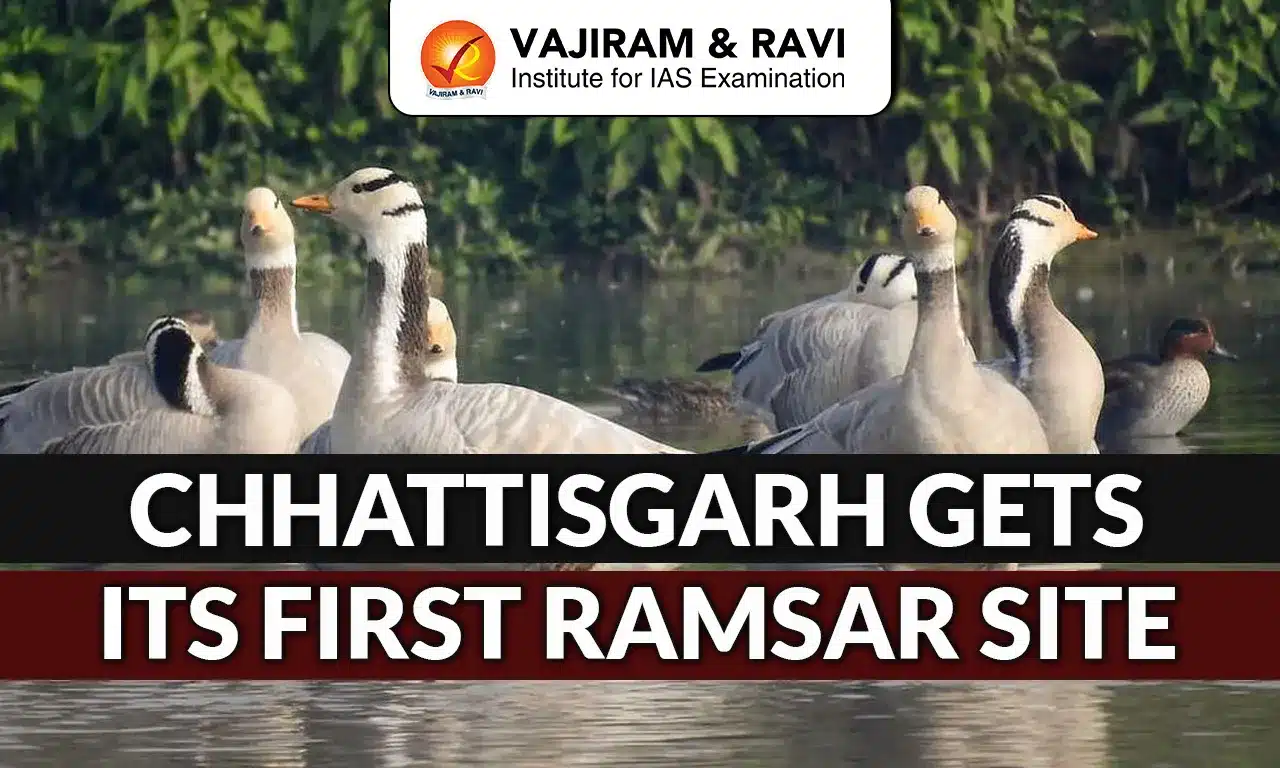
Chhattisgarh has entered India’s wetland conservation map with the declaration of Kopra Reservoir as its first Ramsar site. Ramsar recognition is given only to wetlands of international importance, and this step highlights the growing role of central Indian wetlands in biodiversity protection and climate resilience.

For Chhattisgarh, this recognition brings better protection, scientific management, and sustainable livelihood opportunities for local communities dependent on the reservoir.

Kopra Reservoir: Location and Features

Kopra Reservoir is located in the Baloda Bazar-Bhatapara district of Chhattisgarh, a region dominated by agriculture and seasonal rivers. The reservoir was originally constructed for irrigation and water storage, but over time, it developed the characteristics of a natural wetland.

Ecological Importance of Kopra Reservoir

Kopra Reservoir plays a vital role in maintaining the ecological balance of the surrounding region. Wetlands like Kopra act as natural buffers against climate-related disasters such as floods and droughts.

  • Absorbs excess rainwater during monsoon and reduces flooding
  • Recharges groundwater used for drinking and farming
  • Regulates local temperature and humidity
  • Improves water quality by trapping sediments and pollutants
  • Stores carbon and helps reduce the impact of climate change

Biodiversity and Species Found in Kopra Wetland

Kopra Wetland (Jalashay) located in Bilaspur district of Chhattisgarh is an ecologically important freshwater wetland known for its rich bird diversity. The wetland supports a wide range of resident and migratory bird species due to the availability of food, nesting sites, and safe resting areas.

  • Documented presence of 161 bird species, showing high avian diversity
  • 103 resident species that depend on the wetland throughout the year
  • 58 migratory species that use it as a seasonal stopover site
  • Endangered species recorded include the Egyptian Vulture (Neophron percnopterus)
  • Vulnerable species include Common Pochard, Woolly-necked Stork, and Lesser Adjutant Stork
  • Near Threatened species such as Painted Stork, Black-headed Ibis, and Black-tailed Godwit
  • Aquatic plants like Ipomea carnea, Otellia alismoides, and Cyperaceae species support food chains
  • Surrounding tree species such as Acacia nilotica (Babool) and Ficus religiosa (Peepal) provide nesting and roosting sites

Significance of the First Ramsar Site for Chhattisgarh

  • Brings international recognition to Chhattisgarh for wetland conservation under the Ramsar Convention
  • Strengthens legal and policy protection for Kopra Wetland against encroachment and degradation
  • Helps in scientific management and regular monitoring of the wetland ecosystem
  • Conserves rich biodiversity, especially migratory and endangered bird species
  • Supports climate change mitigation and adaptation by regulating floods and storing carbon
  • Improves groundwater recharge and water availability for nearby villages
  • Promotes eco-tourism and bird-watching, creating local employment opportunities
  • Encourages community participation in conservation and sustainable livelihood activities

What is the Ramsar Convention?

The Ramsar Convention is an international environmental treaty adopted in 1971 at Ramsar, Iran, with the aim of conserving wetlands and promoting their wise and sustainable use. It recognizes wetlands as vital ecosystems for biodiversity conservation, water security, climate regulation, and human livelihoods.

India became a signatory to the Ramsar Convention in 1982, and since then has actively designated wetlands to strengthen ecological protection and biodiversity conservation.

Chhattisgarh Gets Its First Ramsar Site FAQs

Q1: Which is the first Ramsar site of Chhattisgarh?

Ans: Kopra Reservoir is the first Ramsar site of Chhattisgarh.

Q2: In which district is Kopra Reservoir located?

Ans: It is located in the Baloda Bazar–Bhatapara district.

Q3: Why is Ramsar status important?

Ans: It provides international recognition, conservation support, and sustainable management frameworks for wetlands.

Q4: When was the Ramsar Convention adopted?

Ans: The Ramsar Convention was adopted in 1971.

Q5: Which ministry oversees wetland conservation in India?

Ans: The Ministry of Environment, Forest and Climate Change (MoEFCC).

Asian Development Bank (ADB), History, Objectives, Functions

Asian Development Bank

The Asian Development Bank (ADB) is a regional development bank that promotes social and economic progress across Asia and the Pacific. It provides loans, grants, technical assistance, and policy advice to member countries to support infrastructure, education, healthcare, environmental sustainability, and regional cooperation. 

The ADB headquarters is located in Mandaluyong, Metro Manila, Philippines, and it has 42 field offices in Asia and the Pacific along with representative offices in Washington, Tokyo, Frankfurt, and Sydney.

Asian Development Bank (ADB) History

  • Concept and Establishment: The idea of a regional development bank was first suggested by Japan in the late 1950s and formalized in the 1960s. ADB was officially established on 19 December 1966.
  • Initial Membership: Started with 31 countries, including regional and non-regional members.
  • Headquarters Location: Manila was chosen over Tokyo after votes by prospective member countries.
  • Early Focus: The bank initially concentrated on food production, rural development, and infrastructure in countries like Indonesia, Thailand, Malaysia, South Korea, and the Philippines.
  • Expansion: Over the decades, ADB expanded to include 69 member countries (50 from the Asia-Pacific region and 19 from outside the region).

Also Read: World Bank

Asian Development Bank Objectives

Asian Development Bank’s (ADB) main objectives are:

  • Reduce Poverty: Improve living standards for low-income populations.
  • Promote Inclusive Economic Growth: Support infrastructure, financial systems, and governance reforms.
  • Support Environmental Sustainability: Fund climate-resilient and environmentally friendly projects.
  • Enhance Social Development: Improve education, healthcare, and social welfare programs.
  • Foster Regional Cooperation: Strengthen trade, investment, and connectivity among member countries.
  • Encourage Private Sector Development: Support private investment in projects with social and economic benefits.

Asian Development Bank Functions

  • Provides loans and grants to member countries for development projects in infrastructure, social sectors, and environmental sustainability.
  • Offers technical assistance and advisory services to improve policy-making, governance, and institutional capacity.
  • Promotes regional cooperation and integration by funding cross-border projects and encouraging trade and investment.
  • Supports private sector development by providing financing, guarantees, equity, and mezzanine funds for socially beneficial projects.
  • Helps countries prepare for and respond to natural disasters and health emergencies, providing rapid financial and technical support.
  • Facilitates knowledge sharing and capacity building through research, training programs, and development forums.
  • Encourages environmental sustainability and climate resilience through funding renewable energy, disaster risk management, and resource-efficient projects.

Also Read: Public Sector Banks in India

Organization and Governance of ADB

ADB is governed through a structured system ensuring member participation and accountability. Its governance framework includes a Board of Governors, a Board of Directors, and a President who oversees daily operations. This ensures transparency and effective decision-making in development initiatives.

  • Board of Governors: One representative from each member country; top policy-making body.
  • Board of Directors: Twelve directors manage operations; eight from regional members, four from non-regional members.
  • President: Chairs the Board of Directors and manages ADB; current president is Masato Kanda (since February 2025).
  • Voting System: Weighted voting based on each country’s capital contribution.

Membership and Voting Structure of ADB

ADB has grown to include 69 member countries, including both regional and non-regional nations. Voting power is determined by each country’s capital contribution, with major shareholders holding significant influence over policies and lending.

  • Total Members: 69 (50 regional, 19 non-regional).
  • Major Shareholders: Japan and US (15.571% each), China (6.429%), India (6.317%), Australia (5.773%).
  • Voting System: Weighted votes according to capital subscriptions.
  • Regional Members Include: Afghanistan, India, Indonesia, Japan, Malaysia, Philippines, South Korea, Thailand, Vietnam, Bangladesh, Bhutan, China, and Pacific nations.

Funding and Financial Instruments of ADB

ADB raises funds from multiple sources to provide loans and grants for development projects. Its funding ensures that both middle-income and low-income countries can access financial support for social and economic development.

  • Ordinary Capital Resources (OCR): Loans for middle-income countries.
  • Asian Development Fund (ADF): Concessional loans and grants for low-income countries.
  • Private Sector Operations: Offers loans, equity, and guarantees to private enterprises.
  • Co-Financing: Collaborates with other development organizations to increase funding.
  • Bond Issuance: Raises capital from global financial markets.
  • 2022 Funding Snapshot: $20.5 billion in total assistance; $6.7 billion for climate initiatives; $14 billion for food security.

Role of ADB in Asia-Pacific Development

  • Provides loans, grants, and technical assistance to improve living standards and reduce poverty in member countries, such as the Rural Roads Sector II Investment Program in India, which enhanced connectivity and access to education and healthcare.
  • Funds infrastructure projects such as roads, bridges, energy, urban transport, and water supply to support economic growth, like the North–South Commuter Railway Project in the Philippines.
  • Supports countries in preparing for natural disasters, climate change impacts, and pandemic responses, including the $2 million grant to Armenia during COVID-19.
  • Encourages trade, investment, and economic collaboration among countries, such as initiatives in Mekong River countries to promote regional connectivity and shared resources.
  • Provides financing to private companies to generate economic growth and social benefits, including the Pacific Private Sector Development Initiative in Solomon Islands.
  • Supports education, vocational training, and skill development programs, including the ADB-Japan Scholarship Program, which trains students to contribute to regional development.
  • Funds projects to improve food availability, nutrition, and healthcare systems, such as the $14 billion food security package in 2022 to address rising food prices in member countries.

Asian Development Bank FAQs

Q1: What is the Asian Development Bank (ADB)?

Ans: The ADB is a regional development bank established to promote social and economic development across Asia and the Pacific.

Q2: When was the ADB established?

Ans: The ADB was established on 19 December 1966 with 31 founding members. Its headquarters is in Mandaluyong, Metro Manila, Philippines.

Q3: How many member countries does ADB have?

Ans: ADB has 69 member countries, including 50 regional members from Asia and the Pacific and 19 non-regional members from outside the region.

Q4: What sectors does ADB focus on?

Ans: ADB focuses on education, infrastructure, finance, environment and climate change, regional cooperation, private sector development, and social development such as health and food security.

Q5: How does ADB fund its operations?

Ans: ADB funds its operations through loans from member countries, capital contributions, bond issuance in international markets, co-financing with other organizations, and retained earnings from previous lending.

Sujalam Bharat App

Sujalam Bharat App

Sujalam Bharat App Latest News

Recently, the Union Minister of Jal Shakti launched the Sujalam Bharat App.

About Sujalam Bharat App

  • It is a key digital initiative designed to transform rural drinking water governance.
  • It has been developed with the support of Bhaskaracharya National Institute for Space Applications and Geo-informatics (BISAG-N) 

Features of Sujalam Bharat App

  • It enables advanced geo-referencing, monitoring and management of rural water supply infrastructure under Jal Jeevan Mission.
  • It integrates critical data including water sources, asset inventories, scheme designs, operational records, water quality reports, supply metrics, and community feedback into a single platform.
  • With the introduction of the Sujal Gaon ID, every habitation will have a clear digital profile showing:
    • Its source of drinking water (local or bulk supply)
    • The nature and condition of its infrastructure
    • Supply reliability
    • Water quality status
    • O&M arrangements
  • It is integrated with PM Gati Shakti GIS  which provides up-to-date geospatial mapping of rural water networks, supporting future planning, repair, and expansion with greater precision.
  • Significance: It will ensure transparency in the performance of Gram Panchayats, Village Water and Sanitation Committees (VWSCs) and service providers, thereby promoting community participation and oversight

Source: PIB

Sujalam Bharat App FAQs

Q1: Which ministry launched the Sujalam Bharat App?

Ans: Ministry of Jal Shakti

Q2: What is the primary objective of Sujalam Bharat App?

Ans: To monitor rural drinking water supply

Key Facts about Mexico

Key Facts about Mexico

Mexico Latest News

Recently, the Mexico’s Senate approved tariffs of up to 50% on imports from Asian countries, including India.

About Mexico

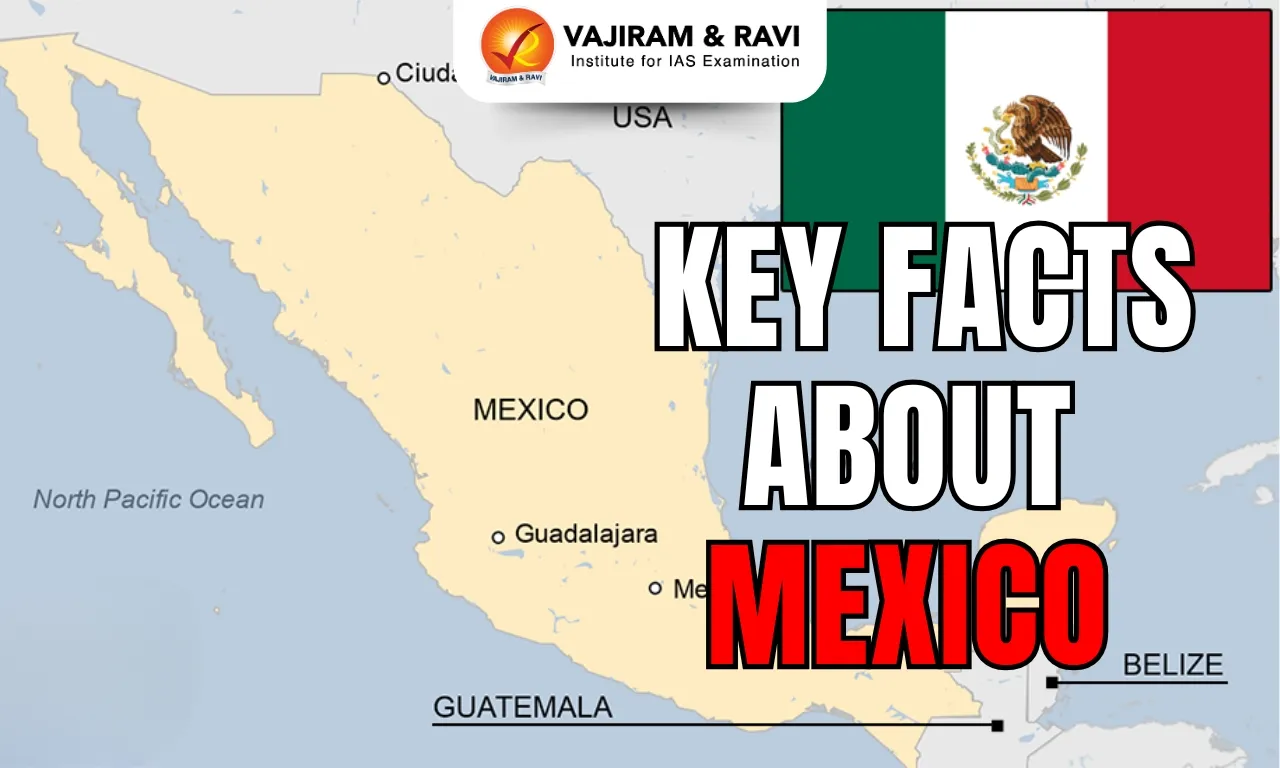
  • Location: It is located in the southern part of North America. 
  • Bordering Countries: It shares its land border with the United States of America to the north and with Guatemala and Belize to the southeast. 
  • Maritime boundaries: It is surrounded by the Pacific Ocean to the south and west; by the Gulf of Mexico and the Caribbean Sea to the east. 
  • Capital City: Mexico City

Geographical Features of Mexico

  • It is a part of the circum-Pacific “Ring of Fire”—a region of active volcanism and frequent seismic activity. 
  • Peninsulas: It consists of the Baja Peninsula and Yucatan Peninsula.
  • Major Rivers: Rio Grande river and Colorado river (which is shared with US)
  • Lakes: Lake Chapala and Lake Cuitzeo.
  • Major mountain range: Sierra Madre.
  • Natural Resources: Petroleum, silver, Antimony, Copper, Gold, Lead, zinc, natural gas.

Source: TH

Mexico FAQs

Q1: What is the capital of Mexico?

Ans: Mexico City

Q2: Which mountain range runs along the western coast of Mexico?

Ans: Sierra Madre Occidental

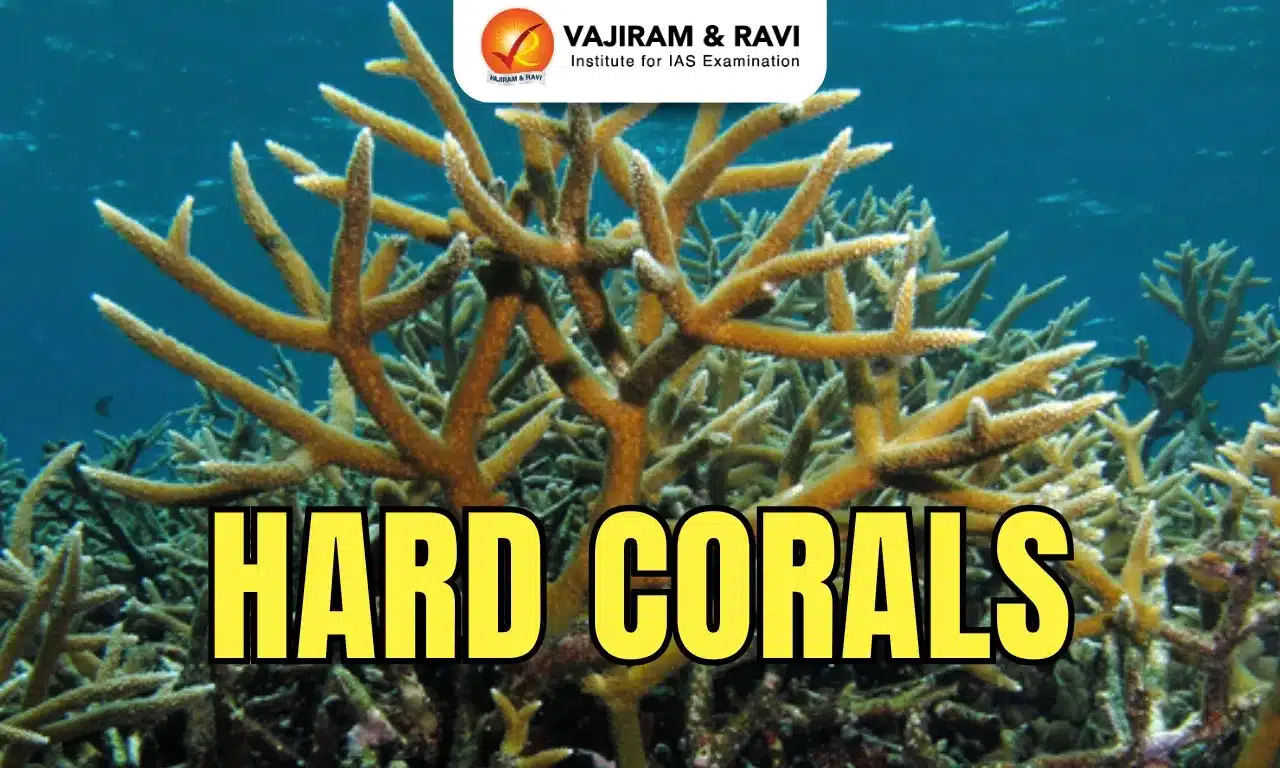
Hard Corals

Hard Corals

Hard Corals Latest News

A major new assessment by the Global Coral Reef Monitoring Network (GCRMN) has reported a dramatic decline in hard coral populations across the Caribbean.

About Hard Corals

  • Hard corals, also known as stony corals, are marine animals that build the limestone frameworks upon which reefs form.
  • They grow in colonies and are often referred to as “reef-building corals.”

Key Features of Hard Corals

  • They are composed of thousands of tiny polyps that secrete calcium carbonate.
  • Hard corals create skeletons out of calcium carbonate, a hard substance that eventually becomes rock.
  • Over time, this rock builds up to form the foundation of a coral reef and provides a structure upon which baby corals can settle.
  • These corals depend upon tiny algae called zooxanthellae that live inside them. 
  • They share a symbiotic relationship (the corals provide the zooxanthellae with shelter, and in return, the zooxanthellae provide the corals with food).

Threats to Hard Corals

  • Bleaching events driven by extreme heat
  • Stony Coral Tissue Loss Disease: It is spread across 30 countries which is causing unprecedented mortality of corals.
  • Losses of key herbivores such as the Diadema sea urchin have fuelled an 85% surge in macroalgae.

Source: DTE

Hard Corals FAQs

Q1: What is the primary component of hard corals?

Ans: Calcium carbonate

Q2: Where are hard coral reefs typically found?

Ans: Tropical oceans

Major Crops of India, State Wise List, Classification, Government Initiatives

Major Crops of India

India is one of the largest agricultural countries in the world, producing a wide variety of crops due to its diverse climate, soil, and irrigation facilities. Crops in India are mainly classified into food crops, cash crops, fibre crops, oilseeds, and plantation crops. These crops not only meet the country’s domestic consumption needs but also contribute to exports and rural employment. 

Understanding the Major Crops of India and their distribution is essential for food security and economic planning.

Classification of Major Crops in India

  • Food Crops: Crops grown primarily for human consumption, including cereals like rice, wheat, and millets, as well as pulses.
  • Cash Crops: Crops cultivated for commercial purposes, such as cotton, sugarcane, and tobacco.
  • Fibre Crops: Crops like cotton, jute, and hemp used in textiles and industrial applications.
  • Plantation Crops: Long-duration crops like tea, coffee, rubber, and spices grown mainly in hilly regions.
  • Oilseed Crops: Crops like groundnut, mustard, soybean, and sunflower cultivated for oil extraction.
  • Horticultural Crops: Fruits, vegetables, and flowers grown for domestic consumption and export.

Major Crops of India

1. Rice

  • Rice is a staple food crop for a large part of India, especially in eastern and southern states.
  • Requires high temperature (20-37°C), high humidity, and abundant water for cultivation.
  • India is the second-largest producer of rice in the world.
  • Primarily a Kharif crop, sown with the onset of monsoon and harvested in autumn.
  • Important varieties include Basmati, Sona Masuri, Ponni, and non-Basmati hybrids.
  • Grown in alluvial soils of river valleys and irrigated plains.
  • Major Producing States: West Bengal, Uttar Pradesh, Punjab, Andhra Pradesh, Tamil Nadu

Also Read: Rice Cultivation in India

2. Wheat

  • Wheat is a Rabi crop and staple food in northern and north-western India.
  • Requires cool and dry climate with moderate rainfall (50-75 cm) and fertile, well-drained loamy soil.
  • Grown under irrigated conditions, making it suitable for areas like Punjab, Haryana, and Uttar Pradesh.
  • India ranks among the top three wheat-producing countries globally.
  • Varieties include Sharbati, Lok-1, PBW-343, and HD-2967.
  • Plays a major role in food security and national buffer stocks.
  • Major Producing States: Uttar Pradesh, Punjab, Haryana, Madhya Pradesh, Rajasthan, Bihar and Gujarat.

Also Read: Wheat Cultivation in India

3. Maize (Corn)

  • Maize is a versatile crop used for human consumption, animal feed, and industrial purposes.
  • Can be cultivated in both Kharif and Rabi seasons depending on climatic conditions.
  • Requires moderate rainfall (50-100 cm), well-drained fertile soil, and warm temperature.
  • Varieties include sweet corn, hybrid maize, and popcorn, with high-yield hybrids increasing productivity.
  • India is among the top 10 maize-producing countries.
  • Contributes to processed foods, poultry feed, and starch industries.
  • Major Producing States: Karnataka, Madhya Pradesh, Bihar, Tamil Nadu, Telangana, Maharashtra and Andhra Pradesh.

Also Read: Maize Cultivation in India

4. Millets (Jowar, Bajra, Ragi)

  • Millets are drought-resistant cereals suitable for semi-arid and arid regions.
  • Require minimal irrigation, grow in poor or less fertile soils, and are nutritionally rich.
  • Includes Jowar, Bajra, and Ragi, widely used for human consumption and fodder.
  • Serve as subsistence crops in dry regions, ensuring food security.
  • Can withstand high temperatures and low rainfall, making them climate-resilient.
  • India is a major producer of millets, supporting rural livelihoods.
  • Major Producing States: Rajasthan is the largest producer, followed by Uttar Pradesh, Karnataka, and Maharashtra.

Also Read: Millets in India

5. Pulses

  • Pulses are a vital protein source, complementing cereals in the Indian diet.
  • Mostly grown as Rabi crops, requiring moderate water and well-drained soil.
  • Improve soil fertility by nitrogen fixation, making them important in crop rotation.
  • Common varieties: Gram (chana), Moong, Urad, Arhar (Tur), Masoor.
  • Essential for nutrition, protein supply, and soil conservation.
  • India is the largest producer of pulses, contributing 25% of global production, the largest consumer with 27% of world consumption, and also accounts for 14% of global imports.
  • Major Producing States: Madhya Pradesh, Maharashtra, Rajasthan, Uttar Pradesh, Karnataka

6. Sugarcane

  • Sugarcane is a major cash crop cultivated for sugar, jaggery, and ethanol.
  • Requires tropical to subtropical climate, high temperature, and abundant water.
  • Long-duration crop grown mainly in irrigated regions due to high water requirement.
  • Varieties include Co 86032, Co 0238, and others suitable for sugar mills.
  • Supports sugar, ethanol, and paper industries, generating rural employment.
  • India ranks second globally in sugarcane production.
  • Major Producing States: Uttar Pradesh, Maharashtra, Karnataka, Tamil Nadu, Andhra Pradesh

7. Cotton

  • Cotton is the primary fibre crop for India’s textile industry.
  • Requires warm, frost-free climate and moderate rainfall (50-100 cm).
  • Can be grown under rainfed or irrigated conditions depending on region.
  • Varieties include Hirsutum (long-staple) and Desi cotton (short-staple).
  • Supports cotton textile industry, exports, and employment in rural areas.
  • India is among the top five cotton-producing countries globally.
  • Major Producing States: Gujarat, Maharashtra, Telangana, Punjab, Haryana

Also Read: Cotton Production in India

8. Tea

  • Tea is a plantation crop grown mainly in hilly and high rainfall areas.
  • Requires acidic soil, humidity, well-distributed rainfall (200-250 cm), and cool climate.
  • Varieties include Assam, Darjeeling, Nilgiri, each with unique characteristics.
  • India is the second-largest tea producer and a major exporter.
  • Plantation sector provides employment in rural and tribal areas.
  • Tea is used domestically and internationally as a beverage commodity.
  • Major Producing States: Assam, West Bengal, Tamil Nadu, Kerala

9. Coffee

  • Coffee is grown in tropical regions with high rainfall and shade conditions.
  • Requires well-drained soil, moderate temperature (15-28°C), and humidity.
  • Produces Arabica and Robusta varieties, used domestically and exported.
  • Plantation crop providing employment in hilly and forested areas.
  • India ranks among top 10 coffee producers globally.
  • Major for export revenue and specialty coffee industry.
  • Major Producing States: Karnataka, Kerala, Tamil Nadu

10. Rubber

  • Rubber is a plantation crop cultivated for latex production.
  • Requires tropical climate, rainfall above 2000 mm, and temperatures 25-35°C.
  • Supports industrial sectors like tires, gloves, and adhesives.
  • Plantation cultivation ensures employment in rural southern India.
  • India is among the top 10 rubber producers, mainly in tropical south.
  • Varieties include RRII 105, RRII 414, and high-yield clones.
  • Major Producing States: Kerala, Tamil Nadu, Karnataka

Major Crops Producing States in India​

India’s diverse climate and fertile soils support the cultivation of a wide variety of crops across different states. Each state specialises in certain major crops based on regional climate, soil type, and irrigation facilities, contributing significantly to national agricultural production. Here is the List of Major Crops Producing States in India​.

Major Crops Producing States in India​
State Major Crops Produced

Uttar Pradesh

Wheat, Sugarcane, Rice, Maize

Punjab

Wheat, Rice, Cotton

Madhya Pradesh

Soybean, Wheat, Rice, Pulses

Maharashtra

Sugarcane, Cotton, Rice

West Bengal

Rice, Jute, Pulses, Oilseeds

Rajasthan

Bajra (Pearl Millet), Wheat, Pulses, Oilseeds

Bihar

Rice, Wheat, Maize

Karnataka

Coffee, Sugarcane, Rice, Oilseeds

Andhra Pradesh

Rice, Sugarcane, Cotton

Tamil Nadu

Rice, Sugarcane, Banana, Oilseeds

Major Crops and Cropping Seasons

India’s agriculture follows three main cropping seasons: Kharif, Rabi, and Zaid, determined by the monsoon and climatic conditions. Different crops are cultivated in these seasons based on temperature, rainfall, and soil requirements.

Major Crops and Cropping Seasons (Kharif, Rabi, Zaid)
Season Months Major Crops Features

Kharif

June - October

Rice, Maize, Cotton, Sugarcane, Soybean, Millets

Sown with the onset of monsoon; requires high rainfall and warm temperature; harvested in autumn

Rabi

November - April

Wheat, Barley, Gram, Mustard, Peas

Sown after monsoon; requires cool, dry climate; harvested in spring

Zaid

March - June

Watermelon, Muskmelon, Cucumber, Maize, Vegetables

Short-duration crops grown between Rabi and Kharif; require warm and sunny climate

Perennial/Plantation

Year-round (specific to crop)

Tea, Coffee, Rubber, Sugarcane

Long-duration crops grown in tropical/hilly regions; require specific climatic and soil conditions

Factors Influencing Crop Distribution in India

Crop distribution in India is influenced by natural and human factors, determining which crops are suitable for different regions. Key factors include:

  • Climate: Temperature, rainfall, and humidity directly affect crop growth.
    • Example: Rice requires annual rainfall above 100 cm and temperatures of 20-37°C, which is why it is mainly grown in West Bengal, Uttar Pradesh, and Punjab.
    • Wheat grows best in cool, dry climates with rainfall 50-75 cm, making Punjab, Haryana, and Madhya Pradesh major producers.
  • Soil Type: Fertility and soil texture influence crop suitability.
    • Example: Alluvial soils of the Indo-Gangetic plains support rice and wheat, while black soils of Maharashtra and Gujarat are ideal for cotton cultivation.
    • Laterite soils in Kerala and Tamil Nadu are suited for tea and coffee plantations.
  • Irrigation Availability: Access to water determines high-yield crop cultivation.
    • Example: Sugarcane, which requires 150-250 cm of water, is grown in Uttar Pradesh and Maharashtra, where irrigation infrastructure is well-developed.
  • Topography: Landforms and elevation impact crop choice.
    • Example: Hilly areas like Assam, Darjeeling, and Nilgiris grow tea due to sloping terrain and high rainfall, while the plains of Punjab and Haryana favour wheat and rice.
  • Technology and Inputs: High-yield varieties (HYVs), fertilisers, pesticides, and mechanisation improve productivity.
    • Example: Adoption of HYV wheat and rice varieties during the Green Revolution doubled yields in Punjab and Haryana between 1965-1975.
  • Socio-Economic Factors: Market demand, government policies, and cropping patterns influence decisions.
    • Example: Cotton cultivation in Gujarat and Maharashtra is promoted due to domestic textile industry demand and government support for cash crops.

Government Initiatives Related to Major Crops

The Indian government has implemented several schemes and programs to enhance crop production, improve farmers’ income, and ensure food security. These initiatives focus on insurance, diversification, technology adoption, and crop management.

  • Pradhan Mantri Fasal Bima Yojana (PMFBY):
    • Provides crop insurance against natural calamities, pests, and diseases.
    • Ensures farmers receive compensation for crop losses, reducing financial risk.
    • In 2022-23, over 50 million farmers were covered under this scheme, with claims of around ₹30,000 crore paid.
  • National Food Security Mission (NFSM):
    • Aims to increase production of rice, wheat, pulses, and coarse cereals.
    • Promotes high-yield varieties, improved seeds, fertilizers, and crop management practices.
    • Between 2019-2023, NFSM contributed to ~10-15% increase in pulse production in targeted districts.
  • Rashtriya Krishi Vikas Yojana (RKVY):
    • Encourages crop diversification, modernization, and infrastructure development.
    • Supports irrigation projects, farm machinery, and post-harvest storage.
    • States like Maharashtra and Madhya Pradesh used RKVY funds for modern storage and drip irrigation projects.
  • Soil Health Card Scheme:
    • Provides farmers with soil nutrient status and fertilizer recommendations.
    • Promotes balanced fertilization and enhances crop productivity.
    • As of 2023, 12 crore soil health cards were issued to farmers across India.
  • National Mission on Oilseeds and Oil Palm (NMOOP):
    • Focuses on increasing oilseed crop production to reduce dependency on imports.
    • Supports high-yielding varieties, technology, and extension services.
    • Oilseed production increased from 27 million tonnes in 2014-15 to 35 million tonnes in 2023.

Challenges Related to Crop Production in India

  • Climate change and erratic rainfall reduce crop yields; e.g., 2022 monsoon caused an almost 15% decline in Kharif rice in eastern states.
  • Soil degradation and nutrient depletion from monocropping and overuse of fertilisers affect fertility; Punjab and Haryana face declining soil health.
  • Water scarcity and inefficient irrigation limit high-water crops like sugarcane; Maharashtra suffers from falling water tables.
  • Post-harvest losses due to inadequate storage and transport infrastructure lead to 20-25% loss in fruits and vegetables.
  • Low mechanisation and limited technology adoption reduce productivity, especially in rainfed regions of Rajasthan and Madhya Pradesh.
  • Pest and disease outbreaks damage crops; e.g., 2020 locust swarms affected wheat and millet in Rajasthan and Madhya Pradesh.
  • Market and price volatility impact farmers’ income; cotton and soybean farmers in Maharashtra faced losses due to low MSP in 2021-22.

Way Forward

  • Promote climate-resilient and drought-tolerant crop varieties to withstand erratic weather, as seen with drought-resistant jowar and pulses in Maharashtra, increasing yields by 15–20%.
  • Improve irrigation efficiency through drip, sprinkler systems, and watershed management, like the Mula Pravara project in Maharashtra, reducing water use by 40% for sugarcane.
  • Encourage modern farming techniques such as mechanisation, precision agriculture, and high-yield seeds, similar to Punjab’s adoption of PBW-343 wheat during the Green Revolution.
  • Strengthen storage, cold chain, and processing infrastructure to reduce post-harvest losses, exemplified by the Amul cold chain system in Gujarat.
  • Provide better market access, MSP support, and crop insurance to stabilize farmers’ income, as under PMFBY where 50 million farmers received ₹30,000 crore in claims in 2022–23.
  • Enhance research, extension services, and farmer training for sustainable agriculture practices, like ICAR-KVK programs increasing yields by 10–15%.
  • Promote crop diversification and organic farming to improve soil health and reduce dependency on a few crops, following Sikkim’s 100% organic farming policy.

Major Crops of India FAQs

Q1: What are the main food crops of India?

Ans: Rice, wheat, maize, millets (jowar, bajra, ragi), and pulses (gram, moong, urad, arhar, masoor).

Q2: Which crops are grown in Kharif season?

Ans: Rice, maize, cotton, sugarcane, soybean, and millets; sown with the onset of monsoon and harvested in autumn.

Q3: Which crops are grown in Rabi season?

Ans: Wheat, barley, gram, mustard, peas; sown after monsoon and harvested in spring.

Q4: Which crops are grown in Zaid season?

Ans: Watermelon, muskmelon, cucumber, maize, and vegetables; grown between Rabi and Kharif seasons.

Q5: Which states are major rice producers?

Ans: West Bengal, Uttar Pradesh, Punjab, Andhra Pradesh, and Tamil Nadu.

Uchi Pillaiyar Temple

Uchi Pillaiyar Temple

Uchi Pillaiyar Temple Latest News

The Tamil Nadu government recently informed the Madurai Bench of the Madras High Court that the deepam (lamp) was lit at the Uchipillaiyar temple mandapam in Thirupparankundram hill during Karthigai Deepam this year too as it was done for over the last 150 years.

About Uchi Pillaiyar Temple

  • The Uchi Pillaiyar Temple, also known as Rockfort Temple, is located at the top of Rockfort Hill, Trichy, in Tamil Nadu.
  • It is a 7th-century-CE Hindu temple, dedicated to Lord Ganesha.
  • The temple stands 83 metres (272 ft) tall, perched atop a rock. 
    • Trichy Rockfort hill is made of granite that is estimated to be over 3.8 billion years old. 
    • It is one of the oldest rock formations in the world. 
    • In comparison, the Himalayas are much younger—they began forming only about 50 million years ago when the Indian tectonic plate collided with the Eurasian plate.
  • The smooth rock was first cut by the Pallavas, but it was the Nayaks of Madurai who completed the temples under the Vijayanagara empire. 
  • There are three temples located closely on the rock fort:
    • Maanikka Vinayakar Temple situated at the foothill, dedicated to Lord Ganesha.
    • Uchchi Pillayar Temple at the top of the hill, dedicated to Lord Ganesha.
    • Thayumanaswamy Temple, dedicated to Lord Shiva, situated close to the base of the rockfort on the way to Uchchi
  • This Rockfort Temple gives an aerial view of the entire Trichy City along with Srirangam Temple, River Kaveri, and River Kollidam.

Source: TH

Uchi Pillaiyar Temple FAQs

Q1: The Uchi Pillaiyar Temple is located at which place?

Ans: It is located at the top of Rockfort Hill, Trichy, in Tamil Nadu.

Q2: The Uchi Pillaiyar Temple is dedicated to which Hindu deity?

Ans: Lord Ganesha

Q3: The Uchi Pillaiyar Temple dates back to which period?

Ans: 7th century CE

Q4: Why is Rockfort Hill considered geologically significant?

Ans: It is one of the oldest rock formations in the world.

Supernova

Supernova

Supernova Latest News

A distant gamma-ray burst has led astronomers to a rare supernova from the Universe’s early years, revealed recently by the James Webb Space Telescope (JWST).

About Supernova

  • A supernova is the name given to the cataclysmic explosion of a massive star.
  • They are the largest explosions that take place in space.
  • A star can go supernova in one of two ways:
    • Type I Supernova: A star accumulates matter from a nearby neighbor until a runaway nuclear reaction ignites.
    • Type II Supernova: A star runs out of nuclear fuel and collapses under its own gravity.
  • It can emit more energy in a few seconds than our sun will radiate in its lifetime of billions of years.
  • These spectacular events can be so bright that they outshine their entire galaxies for a few days or even months. 
  • They can be seen across the universe.
  • They’re also the primary source of heavy elements in the universe.
  • How Common are Supernovas?
    • Astronomers believe that about two or three supernovas occur each century in galaxies like our own Milky Way. 
    • Because the universe contains so many galaxies, astronomers observe a few hundred supernovas per year outside our galaxy.

Source: MC

Supernova FAQs

Q1: What is a supernova?

Ans: A supernova is the name given to the cataclysmic explosion of a massive star.

Q2: Why are supernovae considered the largest explosions in space?

Ans: Because they release enormous amounts of energy and matter in a very short time.

Q3: How can a star go supernova?

Ans: Either by accumulating matter from a companion star (Type I) or by collapsing after exhausting nuclear fuel (Type II).

Q4: How much energy can a supernova emit compared to the Sun?

Ans: More energy in a few seconds than the Sun will emit over its entire lifetime.

State Election Commission, Constitutional Provisions, Powers, Functions

State Election Commission

The State Election Commission (SEC) is an autonomous and constitutional authority responsible for conducting elections to local self-government institutions in India. These include Rural Panchayati Raj Institutions (PRIs) and Urban Local Bodies (ULBs)

The SEC ensures that local elections are conducted in a free, fair, and impartial manner, strengthening grassroots democracy. Its constitutional status provides it with independence from undue political interference.

State Election Commission Constitutional Provisions

The State Election Commission is a constitutional body established to ensure free and fair elections to local self-government institutions. Its constitutional basis is provided under Part IX and Part IXA of the Indian Constitution, which empower the SEC to conduct elections to Panchayats and Municipalities.

State Election Commission Constitutional Provisions
Constitutional Provision Part of Constitution Subject Matter Features

Article 243K

Part IX (Panchayats)

State Election Commission for Panchayats

Vests superintendence, direction, and control of preparation of electoral rolls and conduct of Panchayat elections in the SEC

Article 243ZA

Part IXA (Municipalities)

State Election Commission for Municipalities

Empowers SEC to supervise electoral rolls and conduct elections to Municipal Bodies

73rd Constitutional Amendment Act, 1992

Part IX

Rural Local Self-Government

Gave constitutional status to Panchayats and provided for SEC

74th Constitutional Amendment Act, 1992

Part IXA

Urban Local Self-Government

Gave constitutional status to Municipalities and strengthened SEC role

Governor’s Role

Articles 243K & 243ZA

Appointment & Service Conditions

Governor appoints the State Election Commissioner and determines service conditions subject to state law

Removal Safeguard

Article 243K

Independence of SEC

State Election Commissioner can be removed only in the same manner and on the same grounds as a High Court Judge

State Legislature’s Power

Articles 243K(4) & 243ZA(2)

Law-making power

State Legislature may make laws relating to local body elections, subject to the Constitution

State Election Commission Composition

The State Election Commission is generally headed by a State Election Commissioner, assisted by such officers and staff as provided under the laws of the respective state. The structure and size of the Commission vary from state to state, but it functions as an independent constitutional authority for local body elections.

State Election Commission Appointment and Removal

The State Election Commissioner is appointed by the Governor of the State, as provided under Articles 243K and 243ZA of the Constitution. The conditions of service, tenure, and qualifications of the Commissioner are prescribed by state laws, ensuring a formal and legal appointment process.

  • Appointed by the Governor
  • Service conditions and tenure decided by state law
  • Cannot be removed except in the same manner and on the same grounds as a High Court Judge
  • Service conditions cannot be changed to the disadvantage of the Commissioner after appointment

State Election Commission Power and Functions

  • Conducts elections to Panchayats and Municipal Bodies in the state
  • Supervises the preparation, revision, and updating of electoral rolls for local elections
  • Issues election notifications, schedules, and guidelines
  • Ensures free, fair, and transparent local body elections
  • Enforces the Model Code of Conduct during local elections
  • Carries out delimitation of constituencies for local bodies before elections
  • Registers and deregisters political parties for local body elections (as per state laws)
  • Oversees nomination, polling, counting of votes, and declaration of results
  • Resolves election-related issues and disputes within its jurisdiction

Issues with State Election Commission

  • Administrative dependence on states: SECs rely on state governments for staff and logistics, limiting operational freedom. Example: In Tamil Nadu, delays in providing staff affected timely conduct of local body elections.
  • Delay in conducting elections: States often postpone elections citing delimitation or reservation issues. Example: Madhya Pradesh local body elections were delayed for years due to OBC reservation disputes.
  • Weak financial autonomy: SECs do not have an independent budget and depend on state grants. Example: Several SECs have reported difficulties in deploying technology due to fund constraints.
  • Politicised appointments: Lack of a transparent selection process affects credibility. Example: Appointment of serving or recently retired bureaucrats as SECs in multiple states raised neutrality concerns.
  • Frequent litigation: Election schedules and decisions are often challenged in courts, disrupting the process. Example: Urban local body elections in Maharashtra witnessed repeated judicial interventions.

Suggestions for Reforms in State Election Commission

  • Supreme Court directions: State governments must strictly follow SEC orders during Panchayat and Municipal elections, as laid down in Kishan Singh Tomar vs Municipal Corporation of Ahmedabad, ensuring timely and independent local body elections.
  • Ban on serving bureaucrats (Supreme Court): The Supreme Court (2021) held that appointing serving government officials as State Election Commissioners undermines independence and should be avoided.
  • Collegium-based appointment (2nd ARC): The Second Administrative Reforms Commission recommended that the Governor appoint the State Election Commissioner on the recommendation of a collegium consisting of the Chief Minister, Speaker of the Legislative Assembly, and Leader of the Opposition.
  • Permanent and independent secretariat (Law Commission): The 255th Law Commission Report on Electoral Reforms recommended establishing a separate, permanent, and independent secretariat for SECs, similar to the Parliament Secretariat, to ensure autonomy and fair local body elections.

State Election Commission FAQs

Q1: What is the State Election Commission (SEC)?

Ans: The State Election Commission is a constitutional body responsible for conducting free and fair elections to Panchayats and Municipal Bodies in a state.

Q2: Which constitutional provisions deal with the SEC?

Ans: Article 243K deals with Panchayat elections and Article 243ZA deals with Municipal elections.

Q3: Who appoints the State Election Commissioner?

Ans: The State Election Commissioner is appointed by the Governor of the State.

Q4: How is the independence of the SEC ensured?

Ans: The Constitution protects the State Election Commissioner from arbitrary removal by providing safeguards similar to those of a High Court Judge.

Q5: What elections are conducted by the SEC?

Ans: The SEC conducts elections to Rural Panchayats and Urban Local Bodies within the state.

Kaimur Wildlife Sanctuary

Kaimur Wildlife Sanctuary

Kaimur Wildlife Sanctuary Latest News

A forest department team seized a large number of deer heads, horns, and animal flesh and arrested a poacher during a raid in the Kaimur Wildlife Sanctuary recently.

About Kaimur Wildlife Sanctuary

  • It is located in the Kaimur District of Bihar.
  • It is located in the famous Kaimur Hills range. 
    • The Kaimur Hills, known for their invincibility, are home to two forts and the ancient Mundeshwari Temple, one of the oldest Hindu temples in India.
  • It is the largest sanctuary in the state and occupies an area of about 1342 sq.km.
  • It is bounded by the Son River to the north and the Karmanasa River to the south.
  • It is connected to the Bandhavgarh-Sanjay-Guru Ghasidas-Palamau tiger meta-population landscape through fragmented forest patches along the Son basin. 
  • The valley part is filled with many waterfalls such as Karkat and Telhar and various lakes such as Anupam Lake. 
  • Prehistoric rock paintings, stone inscriptions, and monuments have also been discovered here.
    • Prehistoric murals found in the "Lakhania" and other hilly regions and the prehistoric fossils of the Pre-Cambrian times in the "Salakhan" area bear testimony to the ancient origin and existence of this region.
  • The Oraon tribe is believed to have originated from this region.
  • Flora: A large variety of vegetation is found in the mixed, dry, deciduous forests that cover the area, the primary tree vegetation being Baakli, Mahua, Dhaak, and Bamboo. 
  • Fauna
    • The wildlife comprises of Black Bucks, Chinkaras, Four-Horned Deers, Blue-Bulls, Sambar, Cheetals, Bears, Leopards, etc.
    • Apart from these pythons, Gharials/Crocodiles and different species of snakes are also found.

Source: HT

Kaimur Wildlife Sanctuary FAQs

Q1: Kaimur Wildlife Sanctuary is located in which State?

Ans: Bihar

Q2: What is the total area of Kaimur Wildlife Sanctuary?

Ans: It occupies an area of about 1342 sq.km.

Q3: Anupam Lake is located in which wildlife sanctuary?

Ans: Kaimur Wildlife Sanctuary

Q4: What is the approximate area of Kaimur Wildlife Sanctuary?

Ans: About 1,342 sq.km.

Q5: Which rivers bound Kaimur Wildlife Sanctuary to the north and south?

Ans: The Son River to the north and the Karmanasa River to the south.

Daily Editorial Analysis 13 December 2025

Daily Editorial Analysis

A Critical Story That a Chunk of the Media Missed

Context

  • India’s reported 8.2% GDP growth in the second quarter generated widespread optimism and celebratory media coverage.
  • However, this enthusiasm coincided with a critical development: the International Monetary Fund (IMF) assigned India’s national accounts statistics a ‘C’ grade, the second lowest possible.
  • This assessment raised serious concerns about the credibility and reliability of India’s GDP and Gross Value Added (GVA) estimates.
  • The limited media attention given to this issue underscores both statistical weaknesses and failures in economic journalism, warranting closer examination.

IMF’s Assessment of India’s National Accounts

  • The Significance of the ‘C’ Grade

    • The IMF’s grading reflects the quality, consistency, and transparency of national economic data.
    • India’s ‘C’ grade indicates significant deficiencies in data compilation and methodology, casting doubt on headline growth figures.
    • When strong growth numbers coexist with low data credibility, economic performance becomes difficult to interpret accurately.
  • Media Response to the IMF Report

    • Despite the seriousness of the IMF’s evaluation, most mainstream and financial newspapers offered minimal coverage.
    • Only limited reporting brought the issue to public attention, while many outlets either ignored it or relegated it to less visible pages.
    • This lack of prominence prevented informed public debate and reinforced a one-sided growth narrative.

Methodological Issues in GDP Estimation

  • Reliance on the Organised Sector as a Proxy

    • A central concern lies in India’s method of estimating the unorganised sector.
    • Growth in the informal economy is calculated using organised sector data as a proxy, despite the unorganised sector, excluding agriculture, accounting for around 30% of GDP.
    • Estimating such a large segment indirectly raises serious questions about accuracy and reliability.
  • Divergence Between Organised and Unorganised Sectors

    • This proxy-based approach assumes that organised and unorganised sectors move in the same direction.
    • However, this assumption fails during periods of disruption. Events such as demonetisation, the introduction of GST, and the COVID-19 pandemic affected the two sectors very differently.
    • While the organised sector expanded or recovered, the unorganised sector contracted sharply, resulting in systematic overestimation of economic growth.

Challenges in Quarterly GDP Estimates

  • Dependence on Assumptions and Historical Trends

    • Quarterly GDP estimates face additional limitations due to the absence of comprehensive high-frequency data.
    • As a result, calculations rely heavily on assumptions, past trends, and historical relationships rather than real-time information.
    • During periods of structural change, these assumptions become increasingly unreliable.
  • Implications for Reported Growth Rates

    • The celebrated 8.2% quarterly growth figure must therefore be viewed cautiously.
    • Given the methodological constraints and data gaps, quarterly estimates may reflect statistical modelling rather than actual economic conditions, especially in the informal sector.

Can the IMF’s Concerns Be Resolved?

  • Limits of Methodological Revisions

    • Efforts are underway to update the GDP base year and revise estimation methods, but such technical changes alone cannot address deeper structural problems.
    • The lack of direct, reliable data on the unorganised sector remains a fundamental weakness in India’s national accounts system.
  • A Pessimistic Expert Assessment

    • Expert assessments suggest that fully resolving the IMF’s concerns is unlikely in the near future.
    • The challenges are systemic, rooted in data collection capacity rather than merely calculation techniques.

The Role of the Media in Economic Understanding

  • Media as an Informational Gatekeeper

    • The media plays a crucial role in shaping public understanding of economic performance.
    • By downplaying or ignoring critical evaluations, it limits the public’s ability to interpret growth figures critically and independently.
  • Consequences of Media Silence

    • This selective reporting results in an uninformed public and weakened accountability.
    • When methodological flaws are sidelined, policymakers face less scrutiny, and economic narratives remain incomplete.

Conclusion

  • The IMF’s low grading of India’s national accounts highlights serious weaknesses in GDP estimation, particularly concerning the unorganised sector and quarterly data compilation.
  • While headline growth figures may appear strong, their credibility is undermined by methodological limitations and inadequate data.
  • The media’s failure to engage meaningfully with these issues further compounds the problem.
  • Sustainable and credible economic assessment requires transparent statistical practices and responsible journalism, without which growth narratives risk becoming misleading rather than informative.

A Critical Story That a Chunk of the Media Missed FAQs

 Q1. Why did the IMF assign India’s national accounts a ‘C’ grade?
Ans. The IMF assigned a ‘C’ grade because India’s GDP data suffers from methodological weaknesses and limited reliability, particularly in estimating the unorganised sector.

Q2. What is the main problem with using the organised sector as a proxy for the unorganised sector?
Ans. The main problem is that the organised and unorganised sectors do not always move in the same direction, especially during economic disruptions.

Q3. Why should the 8.2% quarterly GDP growth figure be viewed cautiously?
Ans. The figure should be viewed cautiously because quarterly GDP estimates rely heavily on assumptions and incomplete data rather than real-time measurements.

Q4. Which economic events exposed flaws in India’s GDP estimation method?
Ans. Demonetisation, the introduction of GST, and the COVID-19 pandemic exposed flaws by affecting the organised and unorganised sectors differently.

Q5. How did media coverage affect public understanding of the IMF’s concerns?
Ans. Media coverage affected public understanding by downplaying the IMF’s assessment, thereby limiting informed debate and accountability.

Source: The Hindu


From Licence Raj to Jan Vishwas - Reimagining India’s Regulatory State

Context

  • India’s entrepreneurial ecosystem has historically been constrained by an overbearing regulatory framework shaped by statist interventions in 1956, 1967 and 1976.
  • While the 1991 economic reforms partially restored trust between the state and markets, deregulation remains incomplete.
  • The proposed Jan Vishwas Siddhant seeks to shift India from a permission-based regulatory regime to a trust-based governance model, with deep implications for entrepreneurship, job creation, and economic growth.

Core Argument

  • Entrepreneurship is inherently permissionless, protected under Article 19(1)(g) of the Constitution.
  • However, India’s regulatory “cholesterol” has created systemic barriers that prevent firms from scaling, leading to a predominance of dwarfs rather than babies in India’s enterprise ecosystem.

Six Pathologies of India’s Regulatory Framework

  • Prior approval raj

    • Excessive ex-ante approvals (based on forecast rather than actual results) undermine innovation. Entrepreneurs face almost 500 central and over 3,200 state-level approvals.
    • It contradicts the constitutional idea of freedom to practice any profession or business.
  • Instrument proliferation

    • Beyond Acts and Rules, the state uses notifications, circulars, guidelines, SOPs, FAQs, office orders, etc.
    • Over 12,000 estimated non-law, non-rule instruments affecting employers, and creates opacity, uncertainty, and compliance overload.
  • Compliance blind spot

    • Compliance is legally enforceable “shall” obligations, not guidance.
    • Policymakers focus on laws, ignoring cumulative compliance burden. For example, 2025 began with over 69,000 compliances.
    • Though labour codes reduced labour compliances by 75%, replication is pending.
  • Enforcing the unenforceable

    • Unenforceable laws breed corruption, discretion, and implementation gaps. Example, one inspector checking 3.3 lakh weight and measuring instruments.
    • It violates constitutional wisdom distinguishing Fundamental Rights from Directive Principles.
  • Process as punishment

    • Criminal provisions rarely lead to conviction but are used as threats.
    • It results in judicial backlog, regulatory harassment. Example: Cheque bounce criminalisation - constitute 43 lakh cases and 10% of court pendency.
  • No single source of truth

    • Absence of a unified, live database of obligations. Entrepreneurs face unverifiable and outdated compliance demands, encouraging rent-seeking and corruption.

Jan Vishwas Siddhant - Key Features

  • Trust-based deregulation - “Everything is permitted till prohibited”: All licences outside the four areas of national security, public safety, human health and environment will be converted to perpetual self-registration.
  • Risk-based and third-party inspections: Random, data-driven inspections to reduce inspector discretion.
  • Decriminalisation and proportionality: Apply DPIIT decriminalisation principles across all laws. Replace jail terms with civil penalties where appropriate.
  • Regulatory predictability: Mandatory consultations, adequate transition periods, annual fixed date for regulatory changes (e.g., January 1).
  • Digitisation and legal clarity: Filings will be digitised, and regulatory instruments with penal provisions will be restricted to laws and rules.
  • Single source of truth:
    • IndiaCode will become the live database with all Acts and rules, and after integration with e-gazette, a single source of truth for all obligations.
    • An annual regulatory impact assessment framework by all central ministries will lead to annual reports on compliance and punishment.

Challenges and Way Forward

  • Resistance from entrenched bureaucratic structures: Strengthen civil service performance management.
  • Capacity constraints in risk-based regulation: Shift regulatory focus from microspecification to outcomes.
  • Need for coordination between Centre and States: Promote cooperative federalism in regulatory reforms.
  • Ensuring accountability without over-regulation: Replicate labour law compliance rationalisation across sectors.

Conclusion

  • The Jan Vishwas Siddhant represents a paradigm shift from ruling to governing, and from praja (subjects) to nagrik (citizens).
  • By freeing entrepreneurs from ijaazat and empowering them to focus on koshish, India can unlock non-farm job creation, firm scaling, and global competitiveness.
  • Entrepreneurship thrives not on the absence of the state, but on a credible, minimal, and trust-based state—a necessary condition for India’s aspirations of mass prosperity and global power.

From Licence Raj to Jan Vishwas FAQs

Q1.  What is the concept of “regulatory cholesterol” and its impact on entrepreneurship in India?

Ans. Regulatory cholesterol refers to excessive approvals, compliances, criminalisation and regulatory opacity that prevent firms from scaling.

Q2. How does Jan Vishwas Siddhant reinterpret the relationship between the state and entrepreneurs?

Ans. It shifts governance from a permission-based regime to a trust-based model by replacing prior approvals with self-registration and risk-based oversight.

Q3. Why is prior approval inconsistent with the constitutional vision of economic freedom in India?

Ans. Because innovation is permissionless and Article 19(1)(g) guarantees the fundamental right to practice any profession or carry on any trade or business.

Q4. How excessive criminalisation of economic laws affects judicial efficiency in India?

Ans. Disproportionate criminal penalties lead to low conviction rates and massive pendency.

Q5. How can a “single source of truth” improve regulatory governance and reduce corruption?

Ans. A unified, live digital database of all enforceable laws and rules ensures transparency, legal certainty and prevents arbitrary.

Source: IE


The Indian Ocean as Cradle of a New Blue Economy

Context

  • India has long viewed the oceans as central to global equity and its own future.
  • During the negotiation of United Nations Convention on the Law of the Sea (UNCLOS), it stood with vulnerable island states to uphold the seabed as the “common heritage of mankind,” reflecting a principled commitment to fairness.
  • This stance built on Jawaharlal Nehru’s early recognition of the ocean’s importance to India’s security and prosperity.
  • Today, as climate change, rising sea levels, and overfishing place unprecedented stress on marine ecosystems—especially in the highly vulnerable Indian Ocean—India again faces a historic responsibility.
  • The challenge now is to lead in practice, transforming the Indian Ocean into a space of sustainability, innovation, and resilience rather than competition.
  • This article highlights India’s historic responsibility and emerging opportunity to transform the Indian Ocean into the cradle of a new blue economy—anchored in sustainability, resilience, equity, and cooperative regional leadership.

India’s Blue Ocean Strategy: A New Vision for the Indian Ocean

  • India’s proposed Blue Ocean Strategy rests on three core pillars—stewardship, resilience, and inclusive growth.
  • This is aimed at transforming the Indian Ocean into a zone of cooperation and sustainability rather than rivalry.
  • Stewardship of the Ocean Commons
    • India should reinforce the idea of the Indian Ocean as a shared global commons.
    • By promoting ecosystem restoration, biodiversity conservation, and sustainable fisheries, India can lead cooperative ocean governance and discourage competitive exploitation.
  • Building Climate Resilience
    • With climate risks intensifying, India can champion resilience by creating a Regional Resilience and Ocean Innovation Hub.
    • Such a platform would enhance ocean monitoring, early-warning systems, and technology transfer to vulnerable island and African coastal states.
  • Promoting Inclusive and Green Growth
    • Sectors like green shipping, offshore renewables, sustainable aquaculture, and marine biotechnology offer climate-compatible growth opportunities.
    • Unlocking this potential requires long-term investment and coordinated regional action.

Global Finance Turning Blue

  • Recent global initiatives signal rising financial commitment to ocean action.
  • Forums like Blue Economy and Finance Forum (BEFF) 2025 and COP30 have mobilised tens of billions of dollars for blue economy projects, bringing oceans firmly into climate finance priorities.
    • At the 2025 BEFF in Monaco, stakeholders showcased a €25 billion pipeline of ocean investments and announced €8.7 billion in new commitments, evenly split between public and private sources.
    • Public development banks, through the Finance in Common Ocean Coalition, pledged $7.5 billion annually, while the Development Bank of Latin America raised its blue economy target to $2.5 billion by 2030.
    • This push was reinforced at COP30 in Belém, where Brazil launched the One Ocean Partnership, committing to mobilise $20 billion for ocean action by 2030.
  • India should capitalise on this momentum by establishing an Indian Ocean Blue Fund.
  • Seeded by India and supported by development banks, philanthropy, and private investors, it could convert global pledges into tangible regional projects.

Security Through Sustainability in the Indian Ocean

  • Debates on the Indian Ocean often focus on naval power and strategic competition, but true ocean security begins with protecting ecosystems and addressing climate threats.
  • Challenges such as illegal fishing, coral degradation, and rising storm intensity undermine livelihoods and regional stability.
  • India’s SAGAR (Security and Growth for All in the Region) doctrine reframes maritime security around sustainability, cooperation, and shared prosperity.
  • By integrating environmental stewardship with maritime awareness, disaster response, and regional collaboration, India can promote a vision of responsibility over rivalry — positioning the Indian Ocean as a global model of sustainable and cooperative security.

India’s Enduring Environmental Vision

  • India’s commitment to balancing development and environmental protection dates back to 1972, when Prime Minister Indira Gandhi warned against impoverishing either people or nature — a principle that remains deeply relevant today.
  • Recent forums such as COP30 in Belém and the G-20 Summit in Johannesburg have underscored the central role of marine and terrestrial ecosystems in climate stability, sustainable development, and resilience, while emphasising equity and finance for developing countries.
  • Momentum is Building
    • With the outcomes of the 3rd United Nations Ocean Conference (UNOC3) in Nice, COP30 in Belém, and the entry into force of the Biodiversity Beyond National Jurisdiction (BBNJ) Agreement, 2026 is shaping up to be a pivotal year for ocean governance.
    • India’s potential ratification of BBNJ offers a chance to lead through innovations like green shipping corridors, blue bonds, inclusive technology transfer, and well-governed ocean carbon solutions.

India’s Opportunity to Lead the Indian Ocean Region

  • India’s ocean diplomacy legacy gives it credibility, while its future ambitions confer responsibility.
  • Through platforms like the Indian Ocean Rim Association, India can help shape a sustainable and just blue economy for the region.
  • The challenge ahead is to translate vision into finance, partnerships, and lasting institutions.
  • By leading with ambition, humility, and inclusivity, India can show that cooperation and solidarity in ocean governance can prevail over rivalry — and that the Indian Ocean can anchor a new, sustainable global future.

The Indian Ocean as Cradle of a New Blue Economy FAQs

Q1. Why does India have a historic responsibility in Indian Ocean governance?

Ans. India’s leadership during UNCLOS negotiations and its long-standing ocean diplomacy give it credibility and responsibility to guide the Indian Ocean toward equity, sustainability, and cooperative governance.

Q2. What are the three pillars of India’s Blue Ocean Strategy?

Ans. India’s Blue Ocean Strategy rests on stewardship of ocean commons, climate resilience through innovation and preparedness, and inclusive growth via sustainable, climate-compatible marine industries.

Q3. How can India enhance climate resilience in the Indian Ocean region?

Ans. India can establish a Regional Resilience and Ocean Innovation Hub to strengthen monitoring, early-warning systems, and technology transfer to vulnerable island and African coastal nations.

Q4. Why is global finance important for advancing the blue economy?

Ans. Rising global commitments through BEFF and COP30 show finance is shifting toward ocean action, enabling large-scale investment in sustainable marine development and regional resilience projects.

Q5. How does sustainability redefine security in the Indian Ocean?

Ans. Ecosystem degradation and climate impacts threaten livelihoods and stability, making environmental protection central to maritime security under India’s SAGAR doctrine of cooperative regional prosperity.

Source: TH

Daily Editorial Analysis 13 December 2025 FAQs

Q1: What is editorial analysis?

Ans: Editorial analysis is the critical examination and interpretation of newspaper editorials to extract key insights, arguments, and perspectives relevant to UPSC preparation.

Q2: What is an editorial analyst?

Ans: An editorial analyst is someone who studies and breaks down editorials to highlight their relevance, structure, and usefulness for competitive exams like the UPSC.

Q3: What is an editorial for UPSC?

Ans: For UPSC, an editorial refers to opinion-based articles in reputed newspapers that provide analysis on current affairs, governance, policy, and socio-economic issues.

Q4: What are the sources of UPSC Editorial Analysis?

Ans: Key sources include editorials from The Hindu and Indian Express.

Q5: Can Editorial Analysis help in Mains Answer Writing?

Ans: Yes, editorial analysis enhances content quality, analytical depth, and structure in Mains answer writing.

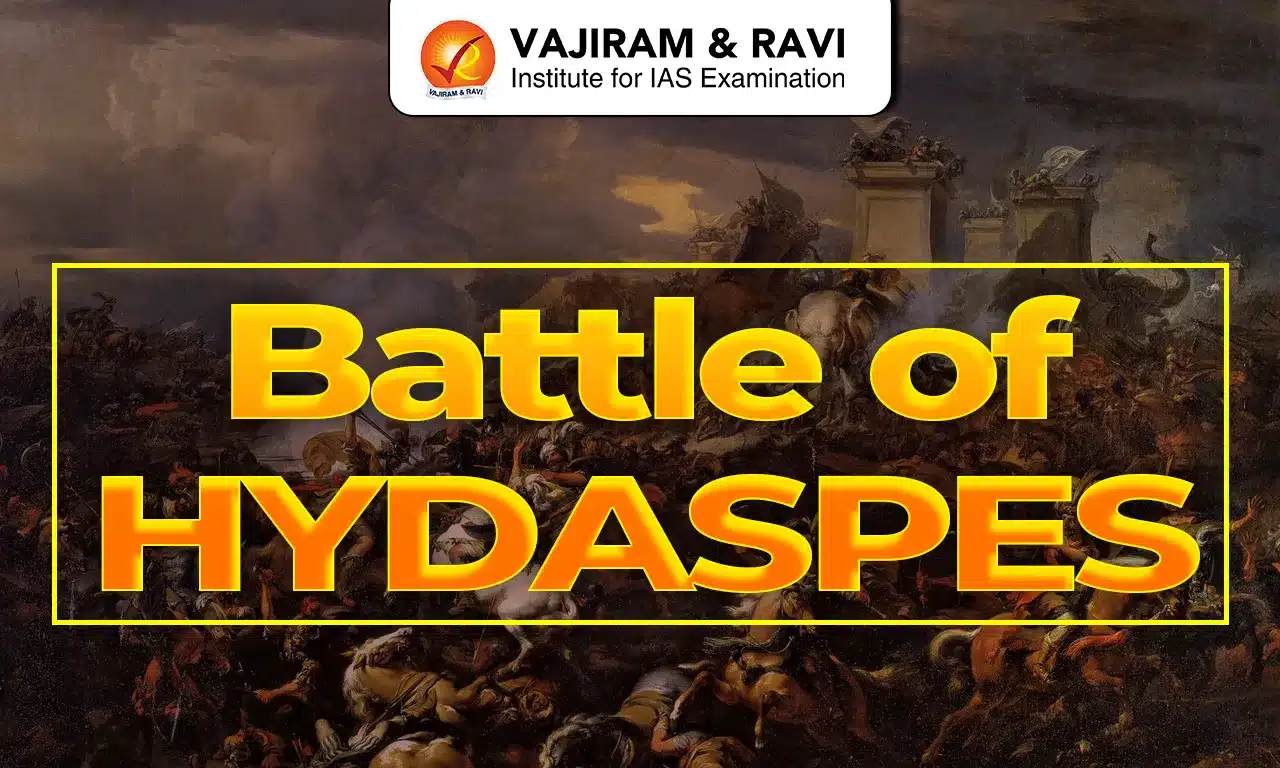
The Inequality–Education–Growth Nexus: Why Public Education Shapes Economic Growth

Inequality Education Growth Nexus

Inequality Education Growth Nexus Latest News

  • The World Inequality Report 2026 highlights stark and widening global disparities. It shows that the top 10% of income earners receive more than the remaining 90% combined, while the poorest half earns under 10% of global income. 
  • Wealth inequality is even sharper, with the top 10% owning about 75% of global wealth and the bottom 50% holding just 2%.

Deep Regional Divides in Income Levels

  • Global averages mask vast regional inequalities. The world is divided into income tiers:
    • High-income regions: North America & Oceania, Europe
    • Middle-income regions: Russia & Central Asia, East Asia, Middle East & North Africa
    • Low-income, populous regions: Latin America, South & Southeast Asia (including India), Sub-Saharan Africa
  • Even after adjusting for price differences, income gaps remain extreme. 
  • An average person in North America & Oceania earns about 13 times more than someone in Sub-Saharan Africa and three times the global average. 
  • Daily average income stands at around €125 in North America & Oceania versus €10 in Sub-Saharan Africa — and many earn far less than these averages.

Inequality Debates Miss the Core Issue

  • Discussions often get stuck on whether inequality exists or how severe it is, diverting attention from more critical questions — especially which policies can actually reduce inequality. 
  • This distraction prevents meaningful engagement with solutions.

Public Investment: The Strongest Equaliser

  • The report identifies public investment in education and health as the most powerful tool to reduce inequality. 
  • Free, high-quality schools, universal healthcare, childcare, and nutrition programs help narrow early-life gaps, promote lifelong learning, and ensure that opportunity depends on talent and effort rather than background.

Education Spending: A 1-to-41 Gap Across Regions

  • Public education expenditure varies dramatically by region. 
  • In 2025, average government spending per school-age individual (ages 0–24) ranged from €220 in Sub-Saharan Africa to €9,025 in North America & Oceania (PPP, 2025 prices). 
  • This represents an almost 1:41 gap, underlining how unequal public investment reinforces global inequality.

The Nexus between Inequality, Education and Growth

  • The Inequality–Education–Growth Nexus describes a critical relationship where these three factors reinforce one another.

High Economic Inequality Creates a Vicious Cycle

  • Poor families face credit constraints, limiting investment in quality education for their children. 
  • This leads to educational inequality and an inefficient allocation of human capital across the workforce. 
  • The result is lower aggregate productivity, slower innovation, and ultimately, dampened long-term economic growth.
  • Conversely, promoting educational equity for all fuels a virtuous cycle, raising the entire nation's skill level, boosting productivity, and generating inclusive, sustained economic growth that helps reduce inequality over time.

Education as a Pathway to Reducing Inequality

  • Education is widely recognised as a key tool for reducing economic, social, and environmental inequalities. 
  • SDG 4 reflects the global commitment to “leave no one behind.” While access to education has expanded, gains have largely benefited the least marginalised, leaving deep inequalities unresolved.
  • Instead of fostering social mobility and cohesion, many education systems are reinforcing existing fault lines. 
  • Marginalised communities remain underserved due to gaps in funding, weak data systems, and exclusionary practices, limiting their access to broader social and economic opportunities.

Conclusion

  • Inequality is not only about income and wealth distribution but also about who gets access to quality public services
  • Without substantial and equitable public investment — especially in education — global and national inequalities will continue to widen rather than narrow.

Source: IE | IE

Inequality Education Growth Nexus FAQs

Q1: What does the World Inequality Report 2026 reveal about global inequality?

Ans: The report shows extreme concentration of income and wealth, with the top 10% earning more than the bottom 90% combined and owning about 75% of global wealth.

Q2: How do regional income disparities shape global inequality?

Ans: Even after price adjustments, high-income regions earn many times more than low-income regions, masking deep inequalities behind misleading global averages.

Q3: Why are inequality debates often ineffective?

Ans: They focus on whether inequality exists rather than on policy solutions, diverting attention from actionable measures like public investment in education and health.

Q4: Why is public education spending called the strongest equaliser?

Ans: Quality public education reduces early-life disadvantages, expands opportunity, improves human capital allocation, and promotes long-term inclusive economic growth.

Q5: How does inequality affect long-term economic growth?

Ans: High inequality limits educational access, misallocates talent, lowers productivity, and slows innovation, creating a vicious cycle of weak growth and persistent inequality.

UNEA-7 Endorses India’s Wildfire Management Initiative: Key Outcomes Explained

UNEA-7

UNEA-7 Latest News

  • India’s resolution on “Strengthening the Global Management of Wildfires” was adopted at the 7th session of the United Nations Environment Assembly (UNEA-7) in Nairobi. 
  • Backed by broad support from Member States, the move underscores global acknowledgement of the growing wildfire threat and the need for coordinated international action.

UN Environment Assembly (UNEA): An Overview

  • The United Nations Environment Assembly (UNEA) is the world’s highest-level decision-making body on environmental matters. 
  • It provides a global platform for addressing pressing environmental challenges.
  • UNEA was established in 2012 following the UN Conference on Sustainable Development (Rio+20) held in Brazil, as part of efforts to strengthen global environmental governance.

Membership and Participation

  • UNEA has universal membership, comprising all 193 UN Member States, with active participation from major groups and stakeholders. 
  • It convenes every two years in Nairobi, Kenya, bringing together environment ministers from across the world.

Functions and Mandate

  • UNEA:
    • Sets the global environmental agenda
    • Provides overarching policy guidance and responses to emerging environmental issues
    • Reviews policies, facilitates dialogue, and promotes exchange of experiences
    • Defines the strategic direction of UNEP
    • Encourages partnerships and mobilises resources for environmental goals

UNEA-7 (2025) Session

  • The seventh session of UNEA (2025) is being held in Nairobi, Kenya, under the theme: “Advancing sustainable solutions for a resilient planet.”

Wildfires as a Growing Global Environmental Risk

  • India highlighted that wildfires have evolved from seasonal events into frequent and prolonged disasters worldwide. 
  • Climate change, rising temperatures, extended droughts, and human activities are driving increases in their scale and intensity, causing widespread ecological and economic damage.

Environmental and Socio-Economic Impacts

  • Each year, millions of hectares are affected by fires, leading to the loss of forests and biodiversity, degradation of water and soil health, deterioration of air quality, and disruption of livelihoods. 
  • Wildfires also emit large volumes of greenhouse gases, weaken carbon sinks, and severely impact forest-dependent communities and national economies.

Scientific Warnings and Need for Proactive Action

  • Citing UNEP’s Spreading Like Wildfire report, India noted projections that wildfires could increase by 14% by 2030, 30% by 2050, and 50% by 2100 if current trends persist. 
  • These findings underline wildfires as a long-term, climate-driven global risk requiring coordinated international action and a shift from reactive response to proactive prevention.

Towards Integrated Fire Management

  • India emphasised a global transition towards Integrated Fire Management, focusing on early-warning systems, risk mapping, satellite-based monitoring, and the involvement of local communities and frontline personnel. 
  • UNEP’s role in supporting adaptation, ecosystem restoration, and strategy development was underscored, along with the importance of the Global Fire Management Hub established by FAO and UNEP in 2023.

Key Provisions of the Resolution

  • The resolution calls for:
    • Stronger international cooperation on early-warning systems, risk assessment tools, ecosystem monitoring, and community-based alerts.
    • Enhanced regional and global collaboration for prevention, recovery, and ecosystem restoration.
    • Knowledge sharing and capacity building through best-practice platforms and training programmes.
    • Support for national and regional action plans on integrated fire management and wildfire resilience.
    • Improved access to international finance, including assistance in project preparation for multilateral and results-based funding mechanisms.

Other Highlights of UNEA-7

  • The seventh session of the United Nations Environment Assembly (UNEA-7) ended in Nairobi with the adoption of 11 resolutions.
  • This marked both strong multilateral environmental commitments and sharp political disagreements, most notably the United States’ withdrawal from all resolution negotiations.

Wide Range of Environmental Issues Addressed

  • Alongside the wildfire resolution, UNEA-7 adopted decisions on: 
    • coral reef protection, 
    • minerals and metals governance, 
    • sargassum management, 
    • chemicals and waste, 
    • antimicrobial resistance, 
    • AI sustainability, 
    • glacier and cryosphere protection, 
    • youth participation, and 
    • coordination among multilateral environmental agreements.
  • With Jamaica set to assume the presidency for UNEA-8, member states emphasised the need to rebuild trust, strengthen multilateral cooperation, and sustain momentum in the face of escalating global environmental crises.

US Withdrawal Casts a Shadow Over the Assembly

  • Despite broad consensus on several issues, UNEA-7 was overshadowed by the US decision to disengage from negotiations. 
  • Washington criticised resolutions for including contentious language and themes beyond UNEA’s environmental mandate, disassociated itself from all adopted outcomes, and signalled a review of its participation in global environmental bodies.
  • Diplomats described the US stance as a setback for collective environmental ambition. 
  • Several delegates warned that disengagement could undermine progress on chemicals management, biodiversity loss linked to climate change, and environmental finance.

Source: IE | PIB

UNEA-7 FAQs

Q1: What is UNEA and why is it important?

Ans: The UN Environment Assembly is the world’s highest environmental decision-making body, setting global agendas and guiding UNEP’s response to emerging challenges.

Q2: Why did India propose a resolution on wildfires at UNEA-7?

Ans: India highlighted that climate change has turned wildfires into frequent, intense global disasters, threatening ecosystems, livelihoods, carbon sinks, and economic stability.

Q3: What scientific warnings were cited to support the resolution?

Ans: UNEP projections warn wildfires could rise 14% by 2030, 30% by 2050, and 50% by 2100 without coordinated global preventive action.

Q4: What does Integrated Fire Management focus on?

Ans: It emphasises early-warning systems, risk mapping, satellite monitoring, community participation, ecosystem restoration, and preparedness rather than reactive firefighting.

Q5: What other major outcomes emerged from UNEA-7?

Ans: UNEA-7 adopted 11 resolutions covering coral reefs, chemicals, AI sustainability, glaciers, biodiversity, and youth participation, despite US withdrawal from negotiations.

Parliamentary Panel’s Key Recommendations on Delhi’s Air Pollution

Air Pollution

Air Pollution Latest News

  • A recent Delhi-NCR air pollution report tabled in Parliament has highlighted the urgent need to curb vehicular emissions, recommending a comprehensive review of India’s emission standards.

Delhi-NCR Air Pollution: Parliamentary Panel Calls for Stronger Standards and Systemic Reforms

  • Air pollution in Delhi-NCR continues to be one of India’s most complex environmental challenges, driven by vehicular emissions, industrial activities, stubble burning, and unfavourable meteorological conditions. 
  • A recent report by the Parliamentary Standing Committee on Science and Technology, Environment, Forests and Climate Change has made several policy recommendations aimed at strengthening India’s regulatory and technological response to deteriorating air quality. 
  • These recommendations are designed to guide government action, address existing gaps, and protect vulnerable populations.

Need to Strengthen Vehicular Emission Standards

  • Vehicular emissions remain a major contributor to Delhi-NCR’s particulate matter and ozone levels. 
  • The panel has emphasised that a comprehensive review of India’s vehicular emission standards is necessary to align with evolving scientific knowledge and global best practices.
  • While acknowledging the government’s push for ethanol blending to enhance energy security, the panel cautioned against unintended environmental impacts. 
  • Increased nitrogen oxide (NOx) emissions from ethanol-blended fuels and the problem of evaporative emissions, fuel vapours escaping from vehicles and generating ground-level ozone, require closer scrutiny.
  • To mitigate this, the panel recommended adopting more stringent evaporative emission standards, which would require automobile manufacturers to incorporate better emission control systems. 
  • This is crucial for India’s transition to cleaner fuels and sustainable mobility.

Encouraging Adoption of Electric Vehicles

  • The report highlights that while India aims to increase the adoption of EVs, several bottlenecks continue to hinder progress. 
  • To accelerate EV uptake, the committee suggested a combination of incentives and disincentives:
    • Cheaper or free public parking for EVs
    • Higher parking rates for petrol and diesel vehicles
    • Offering tax incentives on EV loans
    • Considering an annual ceiling on the registration of non-electric vehicles in Delhi-NCR
  • These measures aim to shift consumer behaviour while simultaneously easing the region’s pollution burden.

Air Purifiers in Schools, Hospitals, and Government Offices

  • Children and patients are among the most vulnerable to toxic air. The committee therefore recommended mandatory installation of air purifiers in:
    • All public schools in Delhi-NCR
    • All public hospitals, especially the critical wards
    • All government offices
  • It also pointed out that levying GST on air purifiers, devices essential for mitigating public health risks, effectively “monetises a public health failure.” 
  • The panel suggested abolishing or reducing GST on air purifiers and HEPA filters to increase accessibility.

Upgrading National Ambient Air Quality Standards

  • The panel called for the Centre to expedite the revision of National Ambient Air Quality Standards (NAAQS)
  • These standards, last updated in 2009, need to reflect new scientific research, health data, and WHO benchmarks.
  • The committee also recommended installing pollution-cutting devices in all thermal power plants within a 300-km radius of Delhi-NCR. 
  • This would ensure a significant reduction in SO₂, NOx, and particulate emissions from one of the region’s largest polluting sources.
  • Delhi’s PM2.5 levels, the report noted, must fall by 62% to meet India’s air quality norms and by 95% to meet WHO standards, indicating the magnitude of intervention required.

Monitoring Stubble Burning More Effectively

  • Stubble burning remains a recurrent seasonal crisis in North India. The panel expressed concern that some farmers are finding ways to evade satellite detection of crop fires.
  • To strengthen enforcement, the committee recommended:
    • Launch of a high-resolution ISRO satellite dedicated to monitoring farm fires 24×7
    • Integration of satellite data with digital farm records for real-time tracking
  • This would help the government respond more effectively while also supporting early warning systems and targeted assistance programmes.

Holistic Approach to Air Quality Management

  • The report stresses that no single policy can solve the region’s pollution crisis. Instead, a coordinated approach, combining emissions control, technological investment, regulatory reform, and behavioural incentives, is essential.
  • By addressing systemic issues in transportation, energy production, agriculture, and urban infrastructure, the recommendations aim to align Delhi-NCR’s air quality management with global best practices.

Source: IE

Air Pollution FAQs

Q1: What major reform did the panel recommend on vehicular emissions?

Ans: It called for a comprehensive review of India’s vehicular emission standards, including evaporative emission norms.

Q2: What did the panel suggest regarding air purifiers in Delhi-NCR?

Ans: Mandatory installation of air purifiers in public schools, hospitals, and government offices.

Q3: How did the committee propose boosting EV adoption?

Ans: Through parking incentives, tax benefits, and limiting non-electric vehicle registrations.

Q4: What solution was suggested for tracking stubble burning more accurately?

Ans: A dedicated high-resolution ISRO satellite for 24×7 monitoring of farm fires.

Q5: What did the panel highlight about Delhi’s PM2.5 levels?

Ans: They must fall by 62% to meet national norms and 95% to meet WHO standards.

International Fund for Agricultural Development

International Fund for Agricultural Development

International Fund for Agricultural Development Latest News

Recently, the Government of India highlighted the country's pioneering achievements in rural transformation and development leadership at the International Fund for Agricultural Development - India Day event held in Rome.

About International Fund for Agricultural Development

  • It is an international financial institution and a specialized agency of the United Nations.
  • It was established as an international financial institution in 1977 through United Nations General Assembly Resolution.
  • Objective: It is dedicated to eradicating poverty and hunger in rural areas of developing countries.
  • IFAD seeks to empower rural people to increase their food security, improve the nutrition of their families.
    • Its projects and programmes are carried out in remote and environmentally fragile locations, including least-developed countries and Small Island developing States.
  • It is a member of the United Nations Development Group (UNDP).
  • IFAD grants support research, innovation, institutional change, and pro-poor technologies.
    • IFAD extends two types of grants, depending on the nature of the innovation and the scope of intervention: global or regional grants and country-specific grants.
  • Membership: Currently, IFAD has 180 Member States, including India. (India is a founding member of IFAD).
  • Governance: Its Governing Council is the highest decision-making body which meets every three years.
  • Headquarter: Rome, Italy.

Source: PIB

International Fund for Agricultural Development FAQs

Q1: What is the primary objective of International Fund for Agricultural Development?

Ans: To reduce poverty and hunger

Q2: Where is IFAD headquartered?

Ans: Rome, Italy

Chenchu Tribe

Chenchu Tribe

Chenchu Tribe Latest News

The National Sanskrit University (NSU) organised a symposium, panel discussion, and exhibition recently highlighting the unique privilege the Chenchu tribal community has with the Ahobilam shrine and the deity of Lord Narasimha.

About Chenchu Tribe

  • The Chenchus are a food-gathering tribe primarily residing in the Nallamalai forests of Andhra Pradesh.
  • They are one of the Particularly Vulnerable Tribal Groups (PVTGs) in Andhra Pradesh.
  • They are also found in Telangana, Karnataka, and Odisha.
  • Language: They speak variants of Telugu, the Dravidian language of the region.
  • A Chenchu village is known as “Penta“. 
    • Each penta consists of a few huts that are spaced apart and are grouped together based on kinship patterns. 
  • Small conjugal families predominate, women taking equal rank with men and marrying only upon maturity.
  • Peddamanishi” or the village elder, is generally the authority to maintain social harmony in a family or a village. 
  • Their rituals are few and simple; religious and political specializations are slight. 
  • Livelihood
    • The Chenchu live life with exemplary simplicity.  Most of them still gather food from the forest and roam in it to find things to meet their needs.
    • The bow and arrow and a small knife are all the Chenchus possess to hunt and live.
    • The Chenchus collect forest products like roots, fruits, tubers, beedi leaf, mohua flower, honey, gum, tamarind, and green leaves and make a meagre income from it by selling these to traders and government cooperatives.
    • Though at times they work as forest labourers, they mostly prefer to fall back on their native skills to hunt and gather food.
    • The Chenchus do not care much for money or material wealth.
  • Religion:
    • Chenchus worship a number of deities. Chenchus have also adopted certain religious practices from Hindus.
    • For ages, the Chenchus have been associated with the famous Srisailam temple (dedicated to Lord Shiva and Devi Brahmaramba) in Andhra Pradesh, situated at the heart of Chenchu land.
    • The Chenchus enjoy special privileges at Srisailam temple.

Source: TH

Chenchu Tribe FAQs

Q1: The Chenchu tribe primarily resides in which region?

Ans: Nallamalai forests of Andhra Pradesh.

Q2: What language do the Chenchus primarily speak?

Ans: They speak variants of Telugu, the Dravidian language of the region.

Q3: What is the primary livelihood of the Chenchu tribe?

Ans: Hunting and food gathering.

Q4: With which famous temple are the Chenchus historically associated?

Ans: Srisailam temple (dedicated to Lord Shiva and Devi Brahmaramba) in Andhra Pradesh.

Bar-Headed Goose

Bar-Headed Goose

Bar-Headed Goose Latest News

In a first-of-its kind study in eastern India, a bar-headed goose fitted with a GSM-GPS transmitter has revealed its migration route and flying pattern.

About Bar-Headed Goose

  • It is a migratory bird species which is known to be one of the highest-flying birds in the world. 
  • It can fly at altitudes of 25,000 feet, while migrating over the Himalayas, where oxygen and temperature levels are extremely low.
  • Distribution:  It is native to central Asia, where the species breeds, Bar-headed Geese, are found in countries like India, Pakistan, Nepal, Kazakhstan, Bangladesh, Myanmar, Japan, and other nearby regions. 
    • In India, their geographical range extends from the northeast to the southern parts of the country.
  • Habitat: They reside near water bodies, preferring high-altitude lakes during the breeding season and freshwater lakes, rivers, and streams in their wintering habitats. 
  • Features of Bar-Headed Goose
    • This species is gray and white with two horseshoe-shaped, brownish-black bars on the back of its white head. 
    • Although male and female birds appear similar, the male bird is slightly larger than the female.
    • They usually form monogamous pairs and are seasonal breeders.
  • Conservation Status: It is classified as ‘Least Concern’ under the IUCN Red List.

Source: DTE

Bar-Headed Goose FAQs

Q1: What is the scientific name of the Bar-Headed Goose?

Ans: Anser indicus

Q2: What is the conservation status of the Bar-Headed Goose?

Ans: Least Concern

Death Valley National Park

Death Valley National Park

Death Valley National Park Latest News

After record-breaking rains, an ancient lake in Death Valley national park that had vanished has returned to view.

About Death Valley National Park

  • It is a desert valley located in the southeastern part of California, United States.
  • It is the hottest and driest place in North America, with summer temperatures peaking above 120 degrees and average rainfall a mere two inches per year.
  • It is the location of the highest temperature (134°F on July 10, 1913) ever recorded in the United States.
  • Also extreme are the park’s elevations: Badwater Basin rests at 282 feet below sea level (the lowest area in North America), while Telescope Peak soars to 11,049 feet. 
  • It is the largest national park in the continental United States.
  • It is a rift valley, or a graben, that has been formed due to the sinking of a huge expanse of rock located between major block-faulted mountains running parallelly in the east and west.
  • It lies in the Great Basin to the east of the Sierra Nevada Mountains, in the northern part of the Mojave Desert.
  • Death Valley hosts landscapes ranging from snow-covered mountains and dunes to wildflower-filled meadows and steep, rugged canyons.
  • Despite the low precipitation and extreme summer temperatures, Death Valley is home to many diverse species, several of which are endemic (found nowhere else in the world).

Source: TG

Death Valley National Park FAQs

Q1: Death Valley National Park is located in which country?

Ans: United States of America

Q2: Why is Death Valley National Park famous climatically?

Ans: It is the hottest and driest place in North America.

Q3: Which is the highest peak within Death Valley National Park?

Ans: Telescope Peak, with an elevation of 11,049 feet.

Q4: How was Death Valley formed geologically?

Ans: By the sinking of a block of land between parallel block-faulted mountain ranges.

Enquire Now