Money Supply, Types, Components, Role of RBI, Impact

Money Supply

What is Money?

Money is anything that is widely accepted in exchange for goods and services. It serves as a medium to buy and sell, a way to measure value, and a store of wealth for future use. Money can exist in physical forms like coins and notes or in digital forms like bank deposits and online payments. It is essential for smooth economic transactions and trade.

Characteristics and Functions of Money

  • Medium of Exchange: Money eliminates the inefficiencies of barter trade by providing a common standard accepted by all for buying and selling goods and services.
  • Unit of Account: Money provides a consistent measure to value goods and services, enabling price comparison and economic calculation.
  • Store of Value: Money retains its value over time, allowing individuals and businesses to save and plan for the future.
  • Standard of Deferred Payment: Money is used to settle debts and contractual obligations, facilitating credit and lending.
  • Liquidity: Money is the most liquid asset, easily convertible into goods, services, or other forms of wealth.
  • Acceptability: Money is widely accepted within an economy for transactions and payments.

Types of Money

Money exists in different forms depending on its nature, acceptability, and the way it is used in the economy. Understanding the different types of money is essential to study money supply, monetary policy, and banking.

1. Commodity Money

Commodity money is a form of money that has intrinsic value, meaning it is valuable in itself and can be used for purposes other than trade. Historically, people used metals or goods as a medium of exchange. Examples: Gold coins, silver coins, copper coins, salt, or cattle in ancient economies.

2. Fiat Money

Fiat money is money issued by a government and accepted as legal tender, even though it has no value in itself. Its value comes entirely from the trust people place in the issuing authority and its legal acceptance for payments. Examples: Indian rupee notes and coins, US dollar bills.

3. Representative Money

Representative money consists of paper or tokens that represent a claim on a physical commodity, which can be exchanged on demand. It allows people to trade easily without carrying heavy commodities. Examples: Gold certificates, silver certificates, old currency notes backed by gold reserves.

4. Bank Money

Bank money exists as deposits in banks that can be transferred electronically or through instruments like cheques. This type of money is created when banks lend money, effectively increasing the money available in the economy. Examples: Savings account deposits, current account balances, demand deposits.

5. Digital Money

Digital money is money that exists only in electronic form. It is used for online transactions, mobile payments, and cashless banking. This form of money has become increasingly important in modern economies. Examples: UPI transfers, Paytm balances, Google Pay, cryptocurrencies like Bitcoin.

Components of Money Supply

Money supply refers to the total amount of money circulating in an economy at a particular time. Economists classify money into different categories, called aggregates, to measure liquidity and help the Reserve Bank of India (RBI) regulate the economy effectively.

  • M0 (Reserve Money/Base Money):
    • Includes all currency notes and coins in circulation with the public.
    • Includes deposits of commercial banks held with the RBI.
    • Forms the foundation for all other money supply measures.
  • M1 (Narrow Money):
    • Consists of currency held by the public, demand deposits in banks, and other liquid deposits.
    • Used for day-to-day transactions and payments.
  • M2:
    • Includes all of M1 plus savings deposits with post offices.
    • Represents slightly less liquid money than M1 but still readily accessible.
  • M3 (Broad Money):
    • Includes M1 plus time deposits with commercial banks.
    • Widely used to measure total money available in the economy.
  • M4:
    • Includes M3 plus total deposits with post office savings institutions (excluding National Savings Certificates).
    • Represents the broadest measure of money supply in the economy.

Here’s the money supply hierarchy arranged from most liquid to least liquid: M0 > M1 > M2 > M3 > M4

Factors Affecting Money Supply

The total money circulating in an economy depends on several key factors that influence liquidity, inflation, and economic growth:

  1. Banks create money by giving loans and advances, which increases deposits and circulation in the economy.
  2. The Reserve Bank of India controls money supply through tools like Cash Reserve Ratio (CRR), Statutory Liquidity Ratio (SLR), and repo/reverse repo rates.
  3. Government borrowing absorbs money from the economy, while government spending injects money into circulation.
  4. Foreign inflows like exports, foreign investment, and remittances increase money supply, while imports and capital outflows reduce it.
  5. Public preference for cash or bank deposits affects liquidity; more cash holdings reduce deposits, while more deposits increase money supply.
  6. Economic activity and business confidence affect circulation; during growth, borrowing and spending increase money supply, while in slowdown, saving increases and circulation decreases.

Role of Reserve Bank of India in Controlling Money Supply

The Reserve Bank of India (RBI) plays a key role in managing the money supply to ensure economic stability, control inflation, and support growth.

  1. RBI uses the Cash Reserve Ratio (CRR) to control the amount of money banks can lend, affecting liquidity in the economy.
  2. The Statutory Liquidity Ratio (SLR) requires banks to maintain a certain percentage of deposits in approved government securities, regulating credit availability.
  3. Through repo and reverse repo rates, RBI controls borrowing and lending rates, influencing money supply and interest rates.
  4. Open Market Operations (OMO) involve buying or selling government securities to inject or absorb money from the economy.
  5. RBI monitors and regulates credit creation by banks to prevent excessive or inadequate money supply.
  6. By maintaining price stability and controlling inflation, RBI ensures that money supply supports sustainable economic growth without destabilizing the economy.

Money Supply Impact on Inflation and Economic Growth

  • Excessive money supply increases aggregate demand for goods and services, leading to higher prices and inflation, which reduces the real purchasing power of money.
  • A low or shrinking money supply decreases spending and demand, slowing down production, reducing employment, and potentially causing deflation.
  • Adequate money supply encourages borrowing and lending by businesses and individuals, promoting investment, industrial growth, and capital formation.
  • Increased money circulation stimulates consumption, trade, and entrepreneurship, contributing to higher GDP and overall economic development.
  • Changes in money supply influence interest rates; higher liquidity lowers borrowing costs, while lower liquidity increases interest rates, affecting investment and consumption.
  • Maintaining a balanced money supply ensures price stability, prevents financial crises, supports smooth functioning of markets, and promotes long-term sustainable economic growth.

Money Supply FAQs

Q1: What is money supply?

Ans: Money supply is the total amount of money available in an economy at a given time, including currency, deposits, and other liquid forms.

Q2: What are the main components of money supply?

Ans: The main components are M0 (currency in circulation + bank reserves), M1 (narrow money), M2 (M1 + savings deposits), M3 (M1 + time deposits), and M4 (M3 + post office deposits).

Q3: How does RBI control money supply?

Ans: RBI controls money supply using tools like Cash Reserve Ratio (CRR), Statutory Liquidity Ratio (SLR), repo and reverse repo rates, and open market operations.

Q4: How does money supply affect inflation?

Ans: An excessive money supply can increase demand, causing prices to rise (inflation), while low money supply can reduce demand, potentially causing deflation.

Q5: Can digital money impact money supply?

Ans: Yes, digital money in bank accounts and electronic payments contributes to M1 and M3, affecting overall liquidity.

Moral Policing, Meaning, History, Laws, Features, Recent Developments

Moral policing

Moral Policing refers to actions by individuals, groups, or institutions that monitor, judge, or punish behaviour considered immoral according to prevailing social, cultural, or religious norms. In India, moral policing has emerged as a significant social and governance concern, involving vigilante groups, police authorities, and sometimes state institutions. It often targets personal choices related to clothing, relationships, food habits, expression, and lifestyle. Empirical evidence shows that moral policing frequently intersects with constitutional freedoms, public order, and misuse of legal provisions.

Moral Policing

Moral Policing involves monitoring and controlling behaviour perceived as violating cultural, religious, or social norms. It operates through vigilante groups, community pressure, and sometimes law enforcement overreach. Acts include harassment of couples, censorship of art, targeting women’s clothing, attacks on minorities, and policing of sexuality. Data from NCRB and court records show moral policing disproportionately affects women, LGBTQIA+ persons, interfaith couples, and youth. Its justification often invokes tradition, culture, or public decency rather than codified law.

Moral Policing History

Moral Policing in India evolved alongside colonial-era obscenity laws and post-independence socio-cultural anxieties about modernity and western influence.

  • Colonial obscenity laws: British-era penal provisions regulated morality through vague public decency norms.
  • Post-independence continuity: Sections 292-294 IPC continued regulating obscenity after 1950.
  • 1990s cultural anxieties: Liberalisation intensified resistance to western lifestyles.
  • Punjab insurgency era: Vigilantism justified as cultural protection.
  • Rise of vigilante groups: Right-wing and religious outfits gained prominence.
  • Media amplification: Television and print expanded public shaming incidents.
  • Digital age escalation: Social media accelerated mobilisation and misinformation.

Moral Policing Features

Moral Policing displays identifiable operational and social characteristics across regions and actors.

  • Vigilante Enforcement: Non-state actors administer punishment without legal authority.
  • Gendered Targeting: Women face disproportionate scrutiny over clothing, relationships, and mobility.
  • Cultural Justification: Actions justified as protection of tradition or social values.
  • Public Shaming: Victims are humiliated publicly through violence or media exposure.
  • Mob Mobilisation: Groups act collectively, reducing individual accountability.
  • Legal Ambiguity: Exploits vague legal terms like obscenity or public indecency.
  • Selective Morality: Moral standards applied inconsistently across communities and classes.
  • Political Patronage: Some groups receive indirect political support or silence.
  • Fear Enforcement: Deterrence achieved through intimidation rather than lawful process.
  • Rights Erosion: Individual autonomy and privacy are systematically undermined.

Moral Policing Laws

India lacks a specific anti-moral policing law, but existing statutes are frequently misused.

  • BNS Section 294 and 296: Criminalises obscene material using undefined moral standards, Restricts sale of allegedly obscene material to persons below 20, Penalises obscene acts in public without clear legal definition.
  • Immoral Traffic Prevention Act: Intended for trafficking, misused against consenting adults.
  • Bombay Police Act Section 110: Used to harass couples for alleged indecent behaviour.
  • Cinematograph Act 1952: CBFC accused of enforcing moral censorship beyond certification.
  • IT Act Section 67A: Applied against online expression labelled sexually explicit.
  • Cable TV Rules 1994: Invoked to suspend channels for moral content violations.
  • State Excise Laws: Used to restrict nightlife under moral pretexts.
  • Judicial Clarifications: Supreme Court ruled in 2022 police cannot morally police citizens.

Moral Policing in India Recent Developments

Recent years show judicial pushback and continued societal challenges regarding Moral Policing.

  • Supreme Court 2022 ruling: Police barred from engaging in moral policing.
  • Anti-Romeo Squads scrutiny: Allegations of harassment and extortion surfaced.
  • Hotel raid backlash: Mumbai Police restricted misuse of public indecency laws.
  • LGBTQIA+ rights expansion: Courts intervened against harassment of same-sex couples.
  • Digital moral policing: Influencers targeted for attire and lifestyle choices.
  • Valentine’s Day incidents: Continued resistance to perceived western customs.
  • CBFC criticism: Filmmakers allege excessive moral oversight.
  • Nightlife restrictions: State-imposed curbs justified through moral arguments.
  • Educational content opposition: Sex education programs diluted or banned.
  • Judicial compensation orders: Courts penalised police for wrongful moral action.

Moral Policing FAQs

Q1: What is Moral Policing?

Ans: Moral policing refers to actions taken by individuals or groups to enforce personal or social moral values, often without legal authority.

Q2: Is Moral Policing legal in India?

Ans: No, moral policing has no legal basis. The Supreme Court has stated that police cannot enforce morality beyond the law.

Q3: Who are the common victims of Moral Policing?

Ans: Women, young couples, LGBTQIA+ persons, interfaith partners, and minorities are most frequently targeted.

Q4: Which laws are misused for Moral Policing?

Ans: IPC Sections 292, 293, 294, local police acts, and public nuisance provisions are often misapplied.

Q5: How has the judiciary responded to Moral Policing?

Ans: Courts have consistently upheld personal liberty, privacy, and freedom of expression against moral policing practices.
Indian Companies Act 2013, Objectives, Provisions, Features

Indian Companies Act

The Indian Companies Act, 2013 is the principal law governing the incorporation, regulation, management, and dissolution of companies in India. Enacted by Parliament and receiving presidential assent on 29 August 2013, it replaced the Companies Act, 1956 to modernise corporate regulation. The Act came into force in phases between September 2013 and April 2014. It applies uniformly across India and establishes a comprehensive legal framework to enhance corporate governance, transparency, accountability, and investor protection in both listed and unlisted companies.

Indian Companies Act

The Indian Companies Act 2013 represents a landmark shift in India’s corporate legal framework. By replacing outdated provisions with modern governance standards, it balances regulatory control with business flexibility. The Act strengthens shareholder rights, enhances accountability of management, and aligns Indian corporate law with global best practices, making it a foundational pillar of India’s economic and institutional architecture.

Also Read: Official Secrets Act 1923

Indian Companies Act Objectives

The Indian Companies Act aims to create a transparent, accountable, and efficient corporate ecosystem aligned with modern economic requirements.

  • Consolidate and amend company law
  • Improve corporate governance standards
  • Protect shareholders and stakeholders
  • Strengthen regulatory oversight
  • Promote ease of doing business

Indian Companies Act Provisions

The Indian Companies Act lays down detailed provisions covering the entire lifecycle of companies in India.

  1. Incorporation and Types of Companies
  • Regulates registration and formation of companies
  • Recognises private, public, and One Person Companies
  • Introduces Section 8 non-profit companies
  • Provides for Producer Companies for agricultural activities
  • Allows maximum 200 members in private companies
  1. Management and Administration
  • Defines roles, duties, and liabilities of directors
  • Mandates at least one resident director with 182 days stay in India
  • Requires board meetings with minimum seven days’ notice
  • Empowers shareholders through approval-based decision-making
  • Introduces electronic governance for filings and records
  1. Key Managerial Personnel (KMP)
  • Recognises Company Secretary as KMP under Section 203
  • Mandatory appointment for listed companies
  • Applies to companies with paid-up capital above ₹10 crore
  • Enhances compliance and governance oversight
  • Ensures professional accountability
  1. Corporate Governance Framework
  • Mandates independent directors in listed companies
  • Requires one woman director for prescribed classes of companies
  • Limits independent director tenure to two consecutive terms
  • Defines statutory duties of directors
  • Introduces class action suits for shareholders
  1. Corporate Social Responsibility (CSR)
  • Section 135 introduces mandatory CSR spending
  • Applies to companies crossing net worth, turnover, or profit thresholds
  • Requires minimum 2% of average net profits spent on CSR
  • Mandates formation of a CSR committee
  • Makes India the first country with mandatory CSR law
  1. Audit and Financial Reporting
  • Provides for rotation of auditors and audit firms
  • Prohibits auditors from providing non-audit services
  • Establishes National Financial Reporting Authority (NFRA)
  • Enhances independence and accountability of auditors
  • Strengthens disclosure norms in financial statements
  1. Adjudication and Dispute Resolution
  • Establishes National Company Law Tribunal (NCLT)
  • Creates National Company Law Appellate Tribunal (NCLAT)
  • Transfers company law disputes from civil courts
  • Provides specialised and time-bound adjudication
  • Simplifies insolvency and winding-up processes

Also Read: Indian Ports Act 2025

Indian Companies Act Features

The Indian Companies Act introduces structural reforms to modernise Indian corporate law.

  • Consists of 29 chapters, 470 sections, and 7 schedules
  • Replaces 658 sections of the Companies Act, 1956
  • Introduces One Person Company for single entrepreneurs
  • Increases private company member limit from 50 to 200
  • Provides statutory backing to corporate governance principles
  • Enables electronic maintenance of accounts and records
  • Introduces fast-track mergers for small and group companies
  • Allows cross-border mergers with regulatory approval
  • Strengthens director accountability through defined duties
  • Makes rehabilitation and liquidation processes time-bound

Indian Companies Act Amendments

The Indian Companies Act has been amended to improve compliance and promote business efficiency.

  • It has been amended in 2017, 2019, 2020, etc.
  • Reduced penalties for procedural and technical defaults
  • Relaxed CSR compliance requirements in specific cases
  • Shortened timelines for rights issues
  • Created additional benches for NCLAT
  • Allowed Non-Resident Indians to form One Person Companies
  • Enhanced transparency in auditor resignations
  • Strengthened independence of statutory auditors
  • Proposed allowance of fractional and discounted shares
  • Aimed at improving ease of doing business and investor confidence

Indian Companies Act FAQs

Q1: When did the Indian Companies Act 2013 come into force?

Ans: It came into force in phases between September 2013 and April 2014 across India.

Q2: Which Act did the Indian Companies Act 2013 replace?

Ans: It largely replaced the Companies Act, 1956 to modernise corporate regulation.

Q3: What is the maximum number of members in a private company?

Ans: A private company can have up to 200 members under the Companies Act, 2013.

Q4: What is mandatory CSR under the Indian Companies Act 2013?

Ans: Eligible companies must spend at least 2 percent of average net profits on CSR activities.

Q5: Which body adjudicates company law disputes under the Indian Companies Act?

Ans: Company law disputes are handled by the National Company Law Tribunal and NCLAT.

Kigali Agreement 2016, History, Features, Montreal Protocol

Kigali Agreement

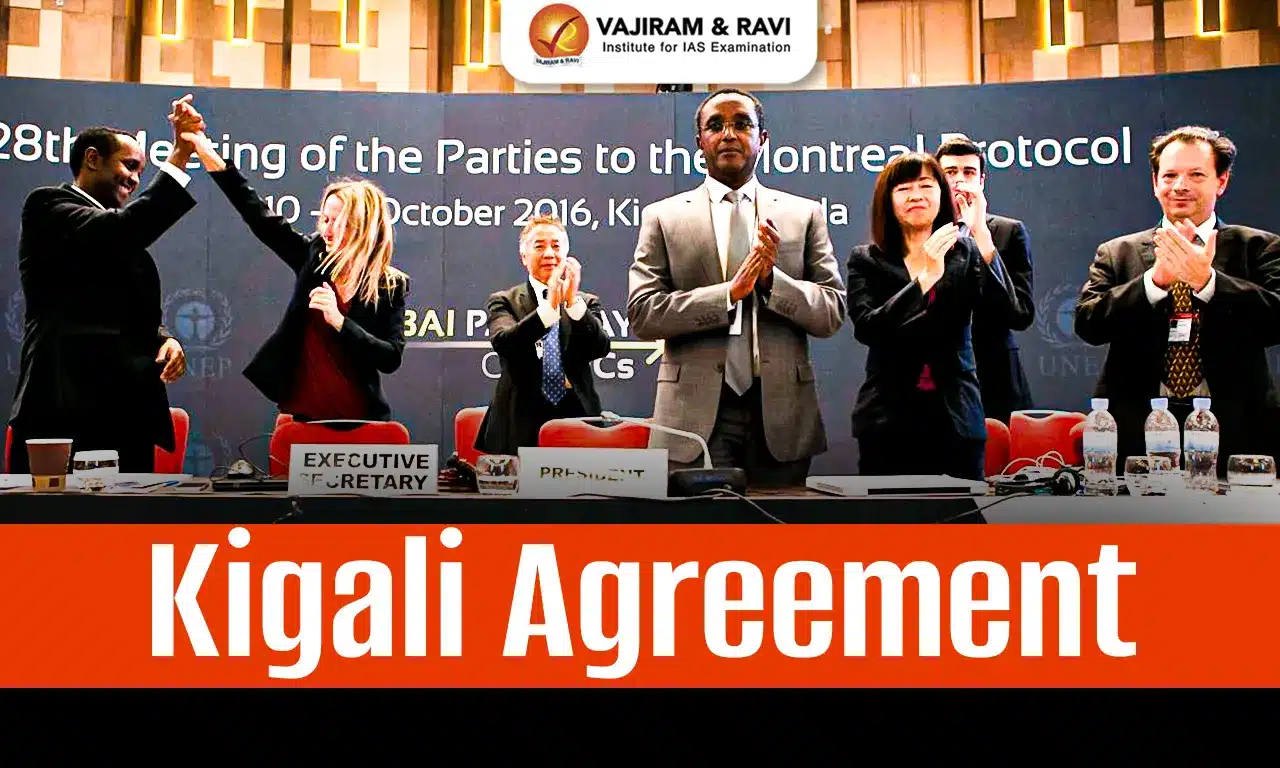
The Kigali Agreement is a landmark international climate accord adopted in October 2016 to control hydrofluorocarbons, chemicals widely used in cooling technologies. It functions as an amendment to the Montreal Protocol and addresses climate change rather than ozone depletion directly. By legally binding countries to phase down high global warming potential gases, the Kigali Agreement connects ozone protection with climate mitigation. Scientific assessments estimate that its full implementation can significantly limit long-term temperature rise while supporting sustainable industrial transitions worldwide.

Kigali Agreement

The Kigali Agreement, formally known as the Kigali Amendment to the Montreal Protocol, mandates a gradual reduction in hydrofluorocarbons across developed and developing economies. Signed on 15 October 2016 in Kigali, Rwanda, it entered into force on 1 January 2019 after achieving the required ratifications. As of 2025, over 170 countries and the European Union are parties. The agreement is legally binding and establishes differentiated timelines based on economic capacity and climatic conditions.

Kigali Agreement History

The Kigali Agreement emerged from growing concerns over climate impacts of non-ozone-depleting refrigerants.

  • Discovery of ozone depletion science: Ozone damage linked to CFCs identified by Crutzen, Molina, and Rowland in 1974.
  • Montreal Protocol adoption: Global treaty signed in 1987 to eliminate ozone-depleting substances.
  • Shift to HFCs: HFCs adopted worldwide as CFC substitutes during the 1990s.
  • Climate concern recognition: IPCC highlighted HFCs’ high global warming potential in early 2000s.
  • Negotiation launch: Formal talks on HFC control initiated under Montreal Protocol framework in 2015.
  • Adoption in Kigali: Amendment adopted by 197 parties on 15 October 2016.
  • Entry into force: Kigali Amendment became effective globally on 1 January 2019.

Kigali Agreement Objectives

The Kigali Agreement aims to address climate change through targeted chemical regulation.

  • HFC phase-down: Reduce global HFC consumption and production by 80–85 percent by late 2040s.
  • Climate mitigation: Avoid up to 0.5°C global temperature rise by 2100.
  • Legal enforcement: Establish binding international obligations with compliance mechanisms.
  • Equity-based approach: Different timelines for developed, emerging, and developing economies.
  • Technology transition: Promote adoption of low-global-warming refrigerants.
  • Financial support: Assist developing nations through multilateral funding mechanisms.

Kigali Agreement Features

The Kigali Agreement introduces structured, science-based controls under an existing treaty.

  • Legally binding nature: Obligations enforceable under international environmental law.
  • Three compliance groups: Countries classified based on development status and climate needs.
  • Baseline calculation: Reduction targets measured against specific historical consumption periods.
  • Temperature waiver: Special flexibility for nations with sustained extreme heat conditions.
  • Multilateral Fund access: Financial assistance for technology transfer and capacity building.
  • Periodic review: Technology and Energy Assessment Panel evaluates alternatives and safety standards.
  • High mitigation potential: Expected to prevent emissions equivalent to 70 billion tonnes CO₂.

Montreal Protocol

The Montreal Protocol provides the legal and institutional foundation for the Kigali Agreement.

  • Adoption year: Signed in 1987 and entered into force in 1989.
  • Universal participation: Ratified by all 197 UN member states.
  • Primary objective: Eliminate ozone-depleting substances like CFCs and halons.
  • Environmental success: Achieved over 98 percent phase-out of controlled ODS chemicals.
  • Ozone recovery: Scientific projections indicate near-complete ozone layer recovery by mid-21st century.
  • Multiple amendments: Kigali represents the eighth amendment to the Protocol.
  • Institutional strength: Features financial mechanisms, compliance committees, and technical panels.

Kigali Agreement in India Recent Developments

India’s engagement with the Kigali Agreement reflects a balance between climate responsibility and development needs.

  • Ratification status: India ratified the Kigali Amendment on 27 September 2021.
  • Compliance group: Placed in third group with phase-down starting in 2028.
  • Reduction pathway: Targets include 10 percent cut by 2032 and 85 percent by 2047.
  • Low consumption share: India accounts for nearly 3 percent of global HFC usage.
  • Policy action: Voluntary ban on HFC-23 production reduces 100 million tonnes CO₂ equivalent emissions.
  • National strategy: India committed to finalizing HFC phase-down roadmap by 2023.
  • Regulatory reform: Amendments to ODS Rules planned by mid-2024.
  • Climate benefit: Expected prevention of 105 million tonnes CO₂ equivalent emissions.
  • Industrial transition: Encourages domestic innovation in low-GWP refrigerants and equipment.
  • Global role: Strengthens India’s alignment with Paris Agreement climate objectives.

Kigali Agreement FAQs

Q1: What is the Kigali Agreement?

Ans: The Kigali Agreement is a 2016 amendment to the Montreal Protocol to phase down hydrofluorocarbons globally.

Q2: Why is the Kigali Agreement important for climate change?

Ans: It targets high global warming potential HFCs and can prevent up to 0.5°C temperature rise by 2100.

Q3: When did the Kigali Agreement come into force?

Ans: The Kigali Agreement became effective on 1 January 2019 after sufficient country ratifications.

Q4: How does the Kigali Agreement treat developing countries?

Ans: It provides delayed timelines, financial support, and technology transfer for developing and hotter countries.

Q5: What is India’s commitment under the Kigali Agreement?

Ans: India will start phasing down HFCs from 2028 and achieve an 85% reduction by 2047.

Ahrar Movement, History, Founder, Leaders, Features, Impact

Ahrar Movement

The Ahrar Movement emerged as a significant Islamic political and reformist organization in early twentieth century British India. It developed during a period marked by colonial dominance, rising nationalist resistance, and intense debate over Muslim political identity. The movement combined religious activism with anti imperial politics and played a visible role in mobilizing Muslim opinion against British rule. It influenced debates on nationalism, communal unity, and religious authority, leaving a lasting imprint on the political history of the Indian subcontinent.

Ahrar Movement

The Ahrar Movement was a Sunni Muslim political organization that sought to defend Islamic values while actively opposing British colonial control. It rejected Western imperial influence and promoted social equality, religious revivalism, and political mobilization among Indian Muslims. The movement emphasized grassroots activism, mass protests, and religious symbolism to mobilize support. It gained momentum after major colonial crises and positioned itself as both a nationalist and religious force during India’s freedom struggle.

Ahrar Movement History

The Ahrar Movement developed amid political unrest, religious revival, and growing resistance to colonial authority.

  • 1919 Foundation Context: Emerged after Jallianwala Bagh massacre intensified anti British sentiment among Muslims.
  • Khilafat Association: Closely aligned with Khilafat agitation defending Ottoman Caliphate post World War I.
  • 1920s Expansion: Gained influence in Punjab through mosque networks and religious preaching.
  • 1930s Mobilization: Organized mass protests against colonial laws and perceived cultural domination.
  • Opposition to Communal Division: Rejected separate electorates and emphasized Hindu Muslim unity.
  • Conflict with Ahmadiyya: Actively opposed Ahmadi religious claims, triggering communal tensions.
  • 1940 Political Shift: Strongly opposed Lahore Resolution advocating partition of India.
  • Post 1947 Decline: Lost relevance after independence and political realignments.
  • 1953 Crisis: Anti Ahmadi agitation escalated into riots, prompting state intervention.
  • 1954 Ban: Pakistani government outlawed the movement citing public order concerns.

Ahrar Movement Features

The movement was defined by religious activism, political resistance, and social reform agendas.

  • Sunni Islamic Orientation: Promoted orthodox Sunni interpretations of Islamic faith and practice.
  • Anti Imperialist Ideology: Rejected British political, cultural, and economic dominance.
  • Grassroots Mobilization: Relied on sermons, rallies, and local religious leaders.
  • Islamic Social Justice: Advocated equality and welfare rooted in Islamic principles.
  • Rejection of Westernization: Criticized Western cultural influence on Muslim society.
  • Political Activism: Participated in national movements including Non Cooperation.
  • Mass Protest Strategy: Preferred civil resistance over constitutional negotiations.
  • Religious Nationalism: Linked Islamic identity with political freedom.
  • Anti Ahmadi Position: Declared Ahmadis outside Islam, shaping later religious politics.
  • Transregional Influence: Extended influence beyond India into Pakistan and Afghanistan.

Ahrar Movement Founder

The Ahrar Movement was initiated by prominent Islamic scholars committed to religious revival and anti colonialism.

  • Maulana Mahmood Hasan: Inspired the movement through Deobandi reformist ideology.
  • Maulana Muhammad Ali Mohamed: Provided religious leadership and political direction.
  • Ajmal Hikmat Khan: Supported organizational expansion and intellectual outreach.
  • Ideological Roots: Influenced by Deoband school’s emphasis on Islamic orthodoxy.
  • Anti Colonial Vision: Sought liberation through religious unity and political resistance.
  • Educational Emphasis: Promoted Islamic education as resistance to colonial dominance.
  • Khilafat Alignment: Founders actively participated in pan Islamic movements.
  • Mass Mobilization Strategy: Used religious authority to mobilize common Muslims.
  • Opposition to Elite Politics: Rejected Western educated Muslim leadership models.
  • Moral Authority: Derived legitimacy from religious scholarship rather than institutions.

Ahrar Movement Leaders

Several influential leaders shaped the ideological and political direction of the movement.

  • Maulana Habib-ur-Rehman Ludhianvi: Led organizational activities in Punjab region.
  • Sheikh Hissam-ud-Din: Key mobilizer arrested during colonial crackdowns.
  • Hakim Ajmal Khan: Strengthened Muslim participation during early independence phase.
  • Mazhar Ali Azhar: Vocal critic of colonial policies and communal division.
  • Atiq-ur-Rehman: Coordinated mass demonstrations and religious outreach.
  • Public Orators: Leaders used sermons to influence political opinion.
  • Anti Partition Figures: Consistently opposed Muslim League’s separatist agenda.
  • Congress Interaction: Occasionally collaborated with nationalist leaders.
  • Grassroots Leadership: Leaders emerged from local religious communities.
  • Post Independence Activists: Some leaders remained active until movement ban.

Also Read: Social Movements in India

Ahrar Movement Impact

The movement significantly shaped Muslim political consciousness in colonial and post colonial contexts.

  • Anti Colonial Mobilization: Contributed to Muslim participation in freedom struggle.
  • Religious Politicization: Integrated Islamic identity into nationalist discourse.
  • Khilafat Support: Strengthened mass Muslim engagement in global Islamic causes.
  • Communal Polarization: Intensified religious divisions, especially with Ahmadis.
  • Opposition to Partition: Challenged Muslim League dominance pre 1947.
  • Political Awareness: Raised consciousness among rural Muslim populations.
  • Islamic Nationalism: Influenced later Islamist political movements.
  • State Religion Debate: Shaped discourse on role of Islam in governance.
  • Pakistan Politics: Became major opposition force in early Pakistani years.
  • Historical Legacy: Continues to inform debates on religion and politics.

Ahrar Movement Decline

The decline occurred due to state repression, political isolation, and internal contradictions.

  • Colonial Suppression: British authorities arrested thousands during late 1930s.
  • 1939 Arrests: Over 7,500 members detained under Defense of India regulations.
  • Leadership Imprisonment: Senior leaders removed from public life.
  • Congress Non Support: Limited backing weakened political leverage.
  • Partition Shock: Loss of unified political base post 1947.
  • 1953 Riots: Anti Ahmadi violence triggered martial law in Lahore.
  • Government Crackdown: Pakistan banned organization in 1954.
  • Ideological Marginalization: Lost relevance amid modern political frameworks.
  • Fragmentation: Members dispersed into smaller religious groups.
  • Enduring Influence: Ideas persisted despite organizational dissolution.

Ahrar Movement FAQs

Q1: What was the Ahrar Movement?

Ans: The Ahrar Movement was a Sunni Muslim political and religious organization opposing British rule in India.

Q2: When was the Ahrar Movement founded?

Ans: The Ahrar Movement emerged around 1919, following the Khilafat Movement and anti colonial unrest.

Q3: Who were the main leaders of the Ahrar Movement?

Ans: Key leaders included Maulana Mahmood Hasan, Maulana Muhammad Ali Mohamed, and Hakim Ajmal Khan.

Q4: What was the Ahrar Movement’s stand on Partition?

Ans: The Ahrar Movement opposed the partition of India and rejected the demand for Pakistan.

Q5: Why was the Ahrar Movement banned in Pakistan?

Ans: It was banned in 1954 due to involvement in communal violence and challenges to state authority.

Environmental Conventions and Protocols, Objectives, Timelines

Environmental Conventions and Protocols

Environmental degradation, climate change, biodiversity loss, and pollution have emerged as some of the most critical global challenges of the 21st century. To address these concerns, nations across the world have come together under various international environmental conventions and protocols, creating legal, institutional, and cooperative mechanisms for environmental protection.

This article presents a comprehensive and updated overview of major international environmental conventions, protocols, and summits, their objectives, timelines, and relevance for India.

Major Environmental Conventions and Protocols

Environmental Conventions and Protocols are international agreements aimed at protecting the environment, biodiversity, and climate. All the Major Environmental Conventions and Protocols have been tabulated below.

Major Environmental Conventions and Protocols
Convention / Protocol Year Organisation / Framework

Ramsar Convention

1971

International Convention

CITES

1973

International Agreement

Bonn Convention (CMS)

1979

UNEP

Vienna Convention

1985 (in force 1988)

Multilateral Environmental Agreement

Montreal Protocol

1987

Multilateral Environmental Agreement

Basel Convention

1989

Multilateral Environmental Agreement

CBD

1992

Multilateral Treaty

UNFCCC

1992

Inter-governmental Treaty

Rio Earth Summit

1992

United Nations

UNCCD

1994

United Nations

Kyoto Protocol

1997

UNFCCC

Rotterdam Convention

1998

UN Treaty

Cartagena Protocol

2000

CBD Protocol

Stockholm Convention

2001

Global Treaty

UN-REDD

2008

UN Programme

Nagoya Protocol

2010

CBD Protocol

Minamata Convention

2013

International Treaty

Kigali Amendment

2016

Montreal Protocol

Ramsar Convention on Wetlands (1971)

  • The Ramsar Convention on Wetlands was adopted on 2 February 1971 at Ramsar, Iran, it is the first global treaty dedicated to the conservation and sustainable use of wetlands.
  • The Convention aims at the “wise use” of wetlands, ensuring ecological conservation while allowing sustainable human use.
  • Wetlands under Ramsar include natural and man-made ecosystems such as lakes, rivers, marshes, mangroves, coral reefs, reservoirs, and rice fields.
  • Member countries designate Ramsar Sites based on ecological importance, biodiversity value, and significance for waterfowl and aquatic species.
  • India became a contracting party in 1982 and currently has 96 Ramsar Sites, reflecting its commitment to wetland conservation.
  • The Convention promotes international cooperation, especially for transboundary wetlands and migratory species, and is supported by NGOs like WWF and IUCN.

Convention on International Trade in Endangered Species (CITES), 1973

  • CITES was adopted in 1973 at Washington D.C. and came into force in 1975 to regulate international trade in endangered wild fauna and flora.
  • Its primary objective is to ensure that international trade does not threaten the survival of species, covering live specimens, animal parts, and plant derivatives.
  • Species are listed under Appendix I (trade prohibited except in exceptional cases), Appendix II (regulated trade), and Appendix III (protected in at least one country).
  • CITES is a legally binding international agreement with over 180 member countries, including India, which joined in 1976.
  • Implementation is carried out through a permit and licensing system, monitored by Management and Scientific Authorities in each member country.
  • CITES focuses on trade regulation rather than habitat protection, making it a key convention for controlling wildlife trafficking and illegal trade.

Bonn Convention 1979

  • The Bonn Convention, officially called the Convention on the Conservation of Migratory Species of Wild Animals (CMS), was adopted in 1979 and came into force in 1983.
  • It is the only global treaty dedicated exclusively to the conservation of migratory species, their habitats, and migration routes across international boundaries.
  • Migratory species are protected through Appendix I (endangered migratory species - strict protection) and Appendix II (species requiring international cooperation).
  • The Convention brings together Range States, countries through which migratory species pass, to ensure coordinated conservation efforts.
  • The CMS Secretariat is headquartered in Bonn, Germany, and operates under the aegis of UNEP.
  • India has been a party since 1983, with notable migratory species including Amur Falcons, Bar-headed Geese, and marine turtles.

Vienna Convention (1985)

  • The Vienna Convention was adopted in 1985 and entered into force in 1988 to protect the Earth’s ozone layer from depletion.
  • It provides a framework for international cooperation rather than imposing legally binding emission-reduction targets.
  • The Convention promotes scientific research, systematic observation, and information exchange on ozone-depleting substances.
  • It laid the institutional and legal foundation for the Montreal Protocol (1987).
  • Parties commit to cooperate on technology transfer and policy coordination related to ozone protection.
  • India became a Party in 1991, aligning with global efforts to safeguard the ozone layer.

Montreal Protocol (1987)

  • Adopted in 1987 and enforced from 1989, the Montreal Protocol is a legally binding agreement under the Vienna Convention.
  • It aims to phase out production and consumption of ozone-depleting substances (ODS) such as CFCs, halons, and carbon tetrachloride.
  • The Protocol operates on the principle of common but differentiated responsibilities, granting developing countries extended timelines.
  • It has been revised multiple times (London, Copenhagen, Beijing, etc.) to include additional substances and stricter controls.
  • The Kigali Amendment (2016) further expanded its scope to phase down climate-warming HFCs.

Basel Convention (1989)

  • Adopted in 1989 and entered into force in 1992, the Basel Convention regulates cross-border movement of hazardous wastes.
  • It was framed in response to the dumping of toxic wastes in developing countries, particularly in Africa.
  • The Basel Convention aims to protect human health and the environment from adverse impacts of hazardous and other wastes.
  • It mandates prior informed consent (PIC) of importing countries before waste shipment.
  • The scope includes industrial hazardous waste, biomedical waste, household waste, and incinerator ash.

Convention on Biological Diversity (CBD)

  • CBD was adopted in 1992 at the Rio Earth Summit and entered into force in 1993.
  • It has three objectives: conservation of biodiversity, sustainable use, and fair benefit sharing.
  • It is a legally binding multilateral treaty with near-universal membership.
  • The United States is the only UN member not to have ratified CBD.
  • Cartagena Protocol and Nagoya Protocol are its supplementary agreements.
  • CBD promotes ecosystem, species, and genetic diversity conservation.

United Nations Framework Convention on Climate Change (UNFCCC)

  • UNFCCC was adopted in 1992 at Rio to address global climate change.
  • Its objective is to stabilize greenhouse gas concentrations to prevent dangerous climate change.
  • It operates on the principle of Common but Differentiated Responsibilities (CBDR).
  • It provides the framework for the Kyoto Protocol and Paris Agreement.
  • The UNFCCC Secretariat is headquartered in Bonn, Germany.
  • Annual Conference of Parties (COP) meetings guide global climate action.

Rio Earth Summit (1992)

  • The Rio Summit was held in Rio de Janeiro, Brazil (1992).
  • It marked a turning point in global environmental diplomacy.
  • Key outcomes included Agenda 21, Rio Declaration, UNFCCC, and CBD.
  • It emphasized sustainable development linking environment and development.
  • Participation included 179 countries and numerous NGOs.
  • It institutionalized the concept of global environmental cooperation.

United Nations Convention to Combat Desertification (UNCCD)

  • UNCCD was adopted in 1994 to combat desertification, land degradation, and drought, especially in dryland regions.
  • It is a legally binding convention linking environmental protection with sustainable development and poverty reduction.
  • The Convention focuses on arid, semi-arid, and dry sub-humid areas, which are ecologically fragile and highly vulnerable.
  • Member countries implement the Convention through National Action Programmes (NAPs) with community participation.
  • It promotes Land Degradation Neutrality (LDN) to balance land degradation with restoration efforts.
  • India is a Party to UNCCD and hosted COP-14 in New Delhi (2019), highlighting sustainable land management.

Kyoto Protocol

  • The Kyoto Protocol was adopted in 1997 under the UNFCCC and entered into force in 2005.
  • It imposed legally binding greenhouse gas emission reduction targets on developed (Annex-I) countries.
  • The Protocol operationalised the principle of Common but Differentiated Responsibilities (CBDR).
  • It introduced market-based mechanisms such as the Clean Development Mechanism (CDM), Joint Implementation, and Emissions Trading.
  • Developing countries, including India, had no mandatory emission reduction obligations.
  • The Protocol laid the foundation for global carbon markets and future climate agreements.

Rotterdam Convention

  • The Rotterdam Convention was adopted in 1998 and entered into force in 2004.
  • It regulates the international trade of certain hazardous chemicals and pesticides.
  • The Convention is based on the Prior Informed Consent (PIC) procedure, requiring importing countries’ approval.
  • Its objective is to protect human health and the environment from potential chemical hazards.
  • It promotes information exchange on risks and safe handling of hazardous chemicals.
  • The Convention covers industrial chemicals and pesticides that are banned or severely restricted.

Stockholm Convention

  • The Stockholm Convention was adopted in 2001 and entered into force in 2004.
  • It aims to eliminate or restrict persistent organic pollutants (POPs) globally.
  • POPs are toxic, bio-accumulative, long-lasting, and capable of long-range environmental transport.
  • The Convention applies the precautionary principle in managing chemical risks.
  • It seeks to protect human health and the environment, especially vulnerable populations.
  • Parties are required to reduce, restrict, or eliminate POPs through national action plans.

Cartagena Protocol on Biosafety

  • The Cartagena Protocol on Biosafety was adopted in 2000 under the Convention on Biological Diversity (CBD).
  • It entered into force in 2003 and is a legally binding international agreement.
  • The Protocol regulates the transboundary movement of Living Modified Organisms (LMOs) resulting from modern biotechnology.
  • It follows the precautionary approach, allowing countries to restrict LMOs even in the absence of full scientific certainty.
  • It mandates risk assessment and risk management before approval of LMOs.
  • The Protocol aims to protect biological diversity and human health from potential adverse effects of LMOs.

UN-REDD

  • The United Nations Collaborative Programme on Reducing Emissions from Deforestation and Forest Degradation (UN-REDD) was launched in 2008 as a United Nations collaborative programme.
  • It is jointly implemented by UNDP, UNEP, and FAO.
  • The programme supports developing countries in reducing emissions from deforestation and forest degradation.
  • It provides technical assistance, capacity building, and policy support for forest governance.
  • UN-REDD strengthens forest monitoring, measurement, reporting, and verification (MRV) systems.
  • It contributes to climate change mitigation, biodiversity conservation, and sustainable livelihoods.

REDD+

  • REDD+ is a climate change mitigation mechanism developed under the UNFCCC framework.
  • It aims to reduce emissions from deforestation and forest degradation in developing countries.
  • The “+” includes forest conservation, sustainable forest management, and enhancement of forest carbon stocks.
  • The framework was formally adopted as the Warsaw Framework for REDD+ at COP-19 (2013).
  • REDD+ is recognised under Article 5 of the Paris Agreement.
  • It encourages results-based finance and incentives for verified emission reductions.

Nagoya Protocol

  • The Nagoya Protocol was adopted in 2010 in Nagoya, Japan, as a supplementary agreement to the Convention on Biological Diversity (CBD).
  • It focuses on Access and Benefit Sharing (ABS) of genetic resources.
    The Protocol ensures fair and equitable sharing of benefits arising from the utilization of genetic resources.
  • It provides a legal framework for researchers and companies accessing genetic resources.
  • It strengthens sovereign rights of countries over their genetic resources.
  • Implementation supports biodiversity conservation and sustainable use through economic and scientific incentives.

Minamata Convention

  • The Minamata Convention was adopted in 2013 and entered into force in 2017 to address mercury pollution.
  • It aims to protect human health and the environment from the harmful effects of mercury.
  • The Convention bans new mercury mines and phases out existing ones.
  • It regulates mercury use in products, industrial processes, and artisanal small-scale gold mining (ASGM).
  • It establishes control measures for air emissions, waste disposal, and contaminated sites.

Kigali Amendment

  • The Kigali Amendment was adopted in 2016 under the Montreal Protocol to address hydrofluorocarbons (HFCs).
  • HFCs do not deplete the ozone layer but have a high global warming potential, contributing to climate change.
  • The Amendment mandates a gradual phase-down of HFC production and consumption.
  • India will implement the phase-down in four stages from 2032 to 2047.

Carbon Credit Trading Scheme (CCTS), 2022

  • The CCTS was enabled through the Energy Conservation (Amendment) Act, 2022, establishing a domestic carbon market in India.
  • It allows trading of Carbon Credit Certificates for verified greenhouse gas (GHG) emission reductions.
  • The scheme operates through two mechanisms:
    • Compliance Mechanism – for obligated entities to meet emission reduction targets.
    • Offset Mechanism – for non-obligated entities to earn credits by reducing/removing emissions.
  • The Bureau of Energy Efficiency (BEE) manages the scheme and ensures transparency via the Measurement, Reporting, and Verification (MRV) framework.
  • The National Steering Committee for Indian Carbon Market (NSCICM) provides strategic oversight.
  • CCTS supports India’s Nationally Determined Contributions (NDCs) and climate mitigation targets under the Paris Agreement.

Difference Between Conferences, Conventions and Protocols

Environmental agreements have different forms based on purpose and legal binding nature. The Difference Between Conferences, Conventions and Protocols has been highlighted below.

Difference Between Conferences, Conventions and Protocols
Aspect Conference Convention Protocol

Definition

A formal meeting or discussion on a topic.

A framework agreement establishing rules or principles.

A supplementary agreement specifying detailed targets or obligations.

Purpose

To discuss issues and plan future actions.

To set fundamental principles for cooperation.

To provide legally binding commitments under a Convention.

Legal Status

Usually non-binding.

Can be legally binding or framework-based.

Legally binding for signatory parties.

Participants

Representatives, experts, and stakeholders.

Member countries agreeing on a framework.

Signatory countries of the original Convention.

Example

Earth Summit meetings, COP meetings.

UNFCCC, CBD, Ramsar Convention.

Kyoto Protocol, Montreal Protocol, Nagoya Protocol.

Environmental Conventions and Protocols FAQs

Q1: What are Environmental Conventions and Protocols?

Ans: International agreements to protect biodiversity, ecosystems, and the climate through cooperation and legal frameworks.

Q2: Difference between Conference, Convention, and Protocol?

Ans: Conference – meeting; Convention – framework agreement; Protocol – specific obligations under a convention.

Q3: Why are they important for India?

Ans: To conserve biodiversity, combat climate change, manage wetlands, and fulfill international commitments.

Q4: What is REDD+?

Ans: A UNFCCC mechanism to reduce emissions from deforestation and enhance forest carbon stocks.

Q5: What is the Kigali Amendment?

Ans: A 2016 amendment to phase down HFCs to mitigate global warming.

Panchsheel Agreement, Background, Five Principles, Objectives

Panchsheel Agreement

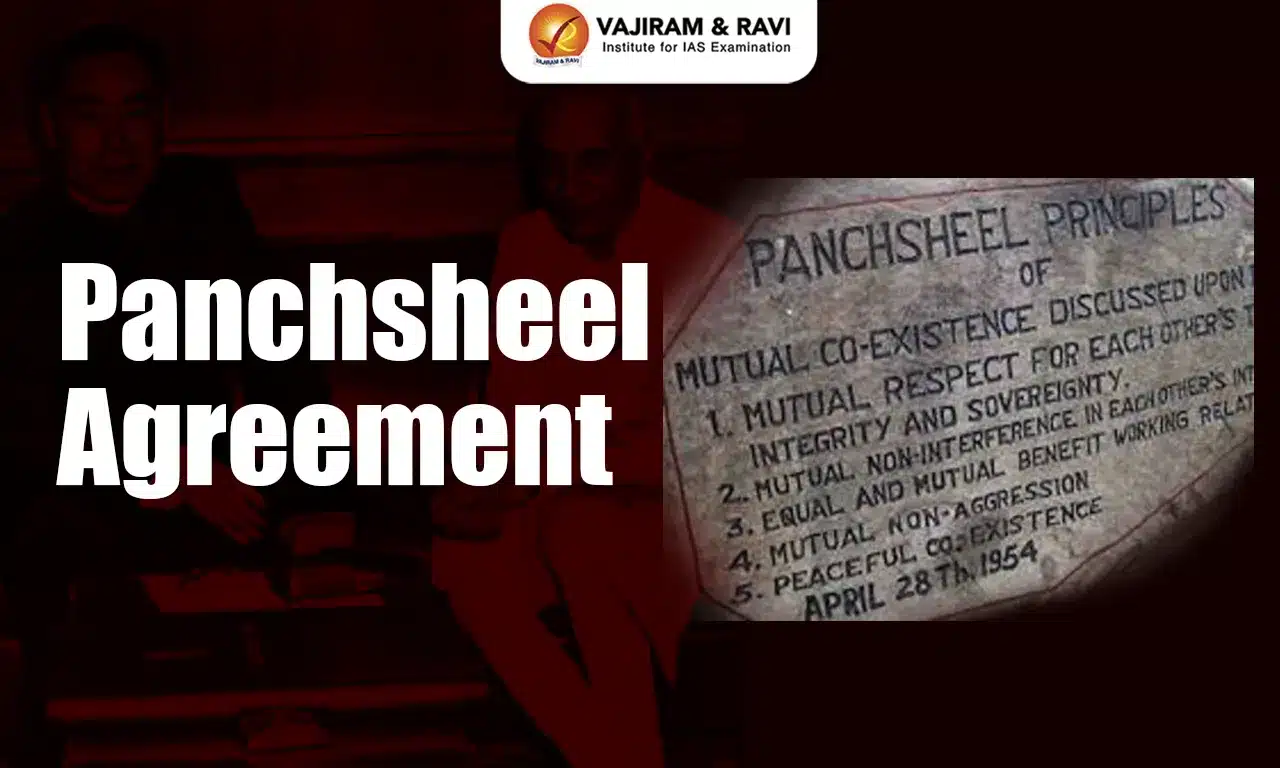
The Panchsheel Agreement refers to the Five Principles of Peaceful Coexistence that guide relations between sovereign states. These principles were formally articulated in 1954 during negotiations between India and China regarding trade and intercourse between the Tibet region of China and India. Panchsheel became a foundational concept in India’s foreign policy and later influenced global diplomatic norms, emphasising peace, sovereignty, and mutual respect.

The term Panchsheel is derived from Sanskrit, meaning five principles, and reflects India’s civilizational ethos of harmony, coexistence, and non-violence in international relations.

Panchsheel Agreement Historical Background

  • The Panchsheel Agreement was a five-point agreement between India and China, signed on 29 April 1954.
  • It laid down the Five Principles of Peaceful Coexistence to govern bilateral relations.
  • These principles aimed to establish a framework of lasting peace, cooperation, and stability between the two nations.
  • Popular slogans associated with the agreement were “Hindi-Chini Bhai Bhai” and “Asia for Asians,” reflecting the spirit of Asian solidarity.
  • Panchsheel was viewed as a major step toward normalizing India–China relations during the 1950s.
  • The concept of Panchsheel emerged in response to a global demand for new principles of international relations based on peace, harmony, and mutual respect.
  • Panchsheel became one of the Ten Principles of International Peace and Cooperation adopted in the Bandung Declaration (April 1955) by 29 Afro-Asian countries.
  • Its international relevance was reinforced when a resolution on peaceful coexistence, based on Panchsheel principles, was jointly presented by India, Yugoslavia, and Sweden and adopted by the UN General Assembly on 11 December 1957.

Five Principles of the Panchsheel Agreement

The Five Principles of the Panchsheel Agreement emphasize mutual respect for sovereignty and territorial integrity, non-aggression, and non-interference in internal affairs.

  • Mutual respect for sovereignty and territorial integrity: Each country acknowledges and respects the independence, borders, and territorial unity of the other.
  • Mutual non-aggression: Both states agree not to use force or military threats against one another under any circumstances.
  • Mutual non-interference in internal affairs: No state should вмеш in the domestic political, economic, or social matters of another sovereign state.
  • Equality and mutual benefit: Relations should be based on equality, fairness, and cooperation that benefits all parties involved.
  • Peaceful coexistence: States with different political, economic, and ideological systems can live together peacefully without conflict.

Panchsheel Agreement Objectives

  • To promote peaceful coexistence between India and China.
  • To ensure mutual respect for sovereignty and territorial integrity.
  • To prevent the use of force through mutual non-aggression.
  • To avoid interference in each other’s internal affairs.
  • To establish relations based on equality and mutual benefit.
  • To encourage dialogue and cooperation instead of conflict.
  • To create a moral and ethical framework for international relations.
  • To support peace, stability, and harmony at regional and global levels.

Panchsheel and India-China Relations

  • Foundation of relations (1954): Panchsheel provided the first formal diplomatic framework guiding India-China relations after independence and revolution.
  • Spirit of cooperation: The agreement fostered goodwill and optimism, reflected in the slogan “Hindi-Chini Bhai-Bhai.”
  • Tibet issue: Panchsheel facilitated India’s recognition of China’s sovereignty over Tibet to maintain peaceful ties.
  • Cold War context: It symbolized Asian solidarity and India’s non-aligned approach in a bipolar world.
  • 1962 war impact: The Sino-Indian War undermined Panchsheel, exposing violations of non-aggression and peaceful coexistence.
  • Post-war mistrust: The conflict led to long-term distrust and weakened the practical relevance of Panchsheel.
  • Diplomatic reference: Despite tensions, both countries continue to invoke Panchsheel in bilateral dialogues.
  • Border management: Its principles inform confidence-building measures and calls for peaceful dispute resolution.
  • Contemporary relevance: Panchsheel remains a normative guide, though strategic competition limits its practical application.

Role of Panchsheel in India’s Foreign Policy

  • Foundation of peaceful diplomacy: Panchsheel established peace, dialogue, and non-violence as core principles of India’s foreign policy.
  • Support to Non-Alignment: It reinforced India’s commitment to strategic autonomy and later became the philosophical basis of the Non-Aligned Movement.
  • Respect for sovereignty: Panchsheel guided India’s consistent emphasis on sovereignty and territorial integrity in international relations.
  • Opposition to power politics: The principles reflected India’s rejection of military alliances, coercion, and Cold War bloc politics.
  • Promotion of South-South cooperation: Panchsheel strengthened India’s leadership role among newly independent Asian and African nations.
  • Normative global influence: It enabled India to project itself as a responsible global actor advocating ethical and rule-based international conduct.

Global Influence of Panchsheel Principles

  • Bandung Conference, 1955: Panchsheel formed the ideological basis of the Ten Principles of International Peace and Cooperation adopted by 29 Afro-Asian countries, promoting sovereignty, equality, and peaceful coexistence among newly independent nations.
  • United Nations recognition (1957): A UN General Assembly resolution on peaceful coexistence, jointly sponsored by India, Yugoslavia, and Sweden, incorporated Panchsheel principles and was adopted in December 1957, giving them global legitimacy.
  • Foundation of the Non-Aligned Movement (NAM): Panchsheel was accepted as the philosophical core of NAM at the Belgrade Conference, 1961, influencing over 120 member countries to pursue strategic autonomy during the Cold War.
  • Support for decolonisation: Newly independent states in Asia, Africa, and Latin America used Panchsheel to assert sovereignty, oppose imperialism, and resist political or military intervention by major powers.
  • Contribution to international norms: The principles strengthened global acceptance of non-aggression, equality of states, and peaceful dispute settlement, aligning closely with the objectives of the UN Charter.

Criticism and Limitations of the Panchsheel Agreement

  • Panchsheel was overly idealistic, relying on moral principles and mutual trust while ignoring strategic realities and power politics.
  • The agreement lacked any enforcement or dispute-resolution mechanism, making it declaratory rather than legally binding.
  • Its credibility was seriously weakened by the 1962 Sino-Indian War, which violated the principles of non-aggression and peaceful coexistence.
  • The principles were vaguely defined, allowing selective interpretation by states according to national interests.
  • Panchsheel failed to address asymmetry in power and military capabilities, reducing its effectiveness in ensuring security.
  • It had limited deterrence value, as ethical norms alone could not prevent conflict without supporting diplomatic and security measures.

Panchsheel Agreement FAQs

Q1: What is the Panchsheel Agreement?

Ans: The Panchsheel Agreement is a five-point framework of peaceful coexistence signed between India and China on 29 April 1954 to guide their bilateral relations.

Q2: What are the five principles of Panchsheel?

Ans: The five principles are: mutual respect for sovereignty and territorial integrity, non-aggression, non-interference in internal affairs, equality and mutual benefit, and peaceful coexistence.

Q3: Why was Panchsheel important?

Ans: It established a normative framework for India’s foreign policy, promoted peace, and guided relations with China and other newly independent nations.

Q4: What slogans were associated with Panchsheel?

Ans: Popular slogans included “Hindi-Chini Bhai-Bhai” and “Asia for Asians,” reflecting goodwill and regional solidarity.

Q5: What is its international significance?

Ans: Panchsheel influenced the Bandung Conference (1955), the UN General Assembly resolution (1957) on peaceful coexistence, and became the philosophical basis of the Non-Aligned Movement (1961).

Primary Sclerosing Cholangitis (PSC)

Primary Sclerosing Cholangitis (PSC)

Primary Sclerosing Cholangitis (PSC) Latest News

A new monoclonal antibody treatment has shown promising results for a rare liver disease called primary sclerosing cholangitis (PSC).

About Primary Sclerosing Cholangitis (PSC)

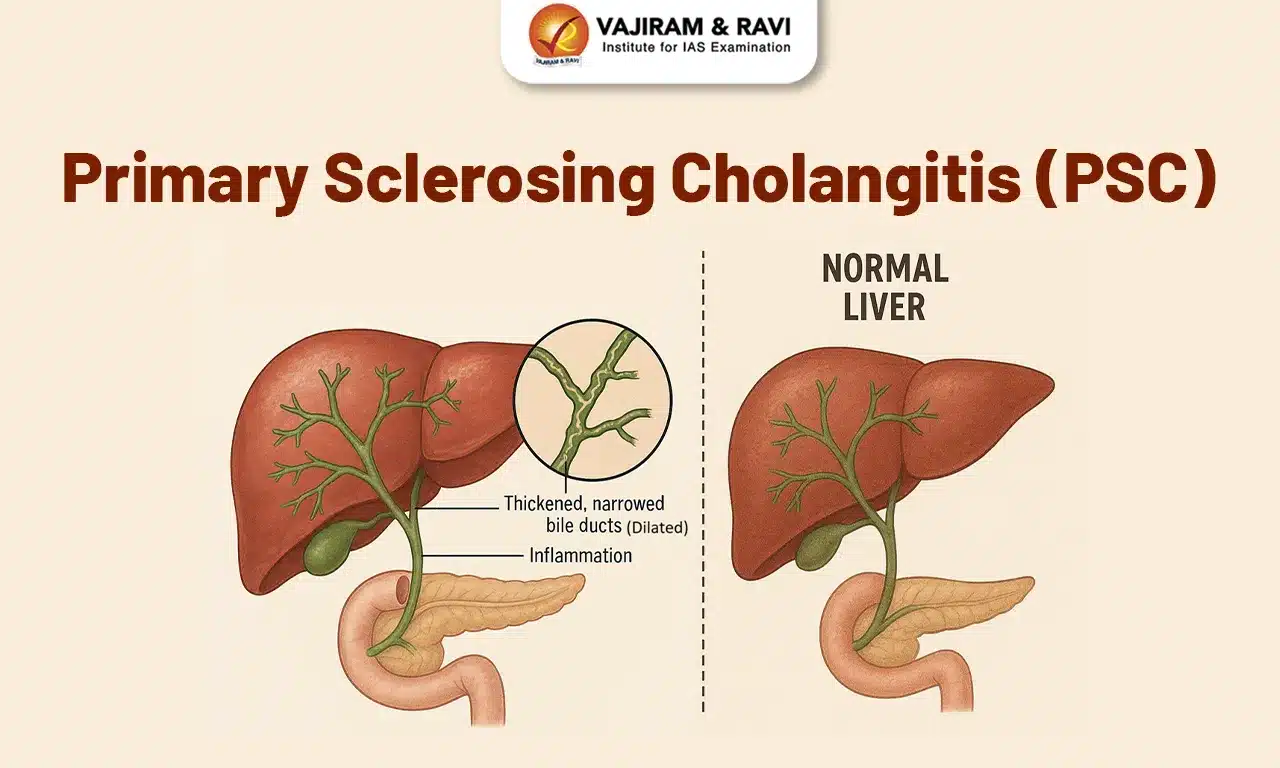
  • It is a rare, long-term disease of the liver caused by inflammation of tubes in the liver called bile ducts.
    • These ducts carry bile (a fluid that helps to digest fats) from the liver, where bile is produced, to the gallbladder, where it is stored, and to the small intestine, where it aids in digestion.
  • Scarring and narrowing of bile ducts leads to liver damage. 
  • Over time, the liver loses its ability to filter blood and support digestion.
  • People with PSC are at higher risk of liver failure and cancers of the bile ducts, gallbladder, and colon. 
  • Causes: It’s not entirely clear what causes PSC, but it appears to involve a combination of factors, including:
    • Genetics
    • Immune system problems
    • Changes to the bacteria in your gut microbiome
    • Environmental factors
  • Symptoms
    • Symptoms of PSC develop slowly. You may have PSC for many years without any symptoms. 
    • After symptoms develop, they may come and go. But they often get worse over time. 
    • Bile that backs up into your liver may over time cause a type of liver scarring known as cirrhosis. This leads to liver failure. 
    • Symptoms of PSC include:
      • Itchy skin.
      • Extreme tiredness (fatigue).
      • Belly pain.
      • Yellowing of the skin and eyes, called jaundice.
      • Chills and fever from infection of your bile ducts.
  • Treatment
    • Care focuses on monitoring liver health and managing symptoms. 
    • Procedures can temporarily open blocked ducts, but liver transplant is the only cure for advanced disease.
    • Median survival from the time of diagnosis to death without liver transplantation is around 10 years.

Source: NDTV

Primary Sclerosing Cholangitis (PSC) FAQs

Q1: What is Primary Sclerosing Cholangitis (PSC)?

Ans: It is a rare, long-term disease of the liver caused by inflammation of tubes in the liver called bile ducts.

Q2: Primary Sclerosing Cholangitis (PSC) primarily affects which structure in the body?

Ans: Bile ducts

Q3: Which complication occurs when bile backs up into the liver?

Ans: Cirrhosis

Q4: What is the only cure for advanced Primary Sclerosing Cholangitis (PSC)?

Ans: Liver transplant.

Bezymianny Volcano

Bezymianny Volcano

Bezymianny Volcano Latest News

The Bezymianny volcano that once blew itself apart in a massive explosion is now rising from the ashes—faster than scientists expected.

About Bezymianny Volcano

  • It is a cone-shaped stratovolcano on the Kamchatka Peninsula in the Russian Far East. 
  • It is located on the southeast slope of the extinct volcano Kamen. These two volcanoes are separated by a high, narrow saddle.
  • The east and west slopes of Bezymianny are cut by two wide and sloping valleys. 
  • Several lava flows can be found on the upper portions of its slopes. 
  • Lower in elevation, a row of domes exists along the southern and western sides of the volcano.
  • It has had eruptions since 1955 characterized by dome growth, explosions, pyroclastic flows, ash plumes, and ashfall.  
  • Bezymianny’s 1956 eruption was one of the most significant explosive events of the 20th century.
  • But instead of going quiet, the volcano began to recover almost immediately.  Since then, ongoing eruptions, mostly small to moderate in scale, have contributed to a near-continuous process of rebuilding.

Key Facts about Stratovolcano

  • It is a tall, steep, and cone-shaped type of volcano.
  • Unlike flat shield volcanoes, they have higher peaks.
  • They are typically found above subduction zones, and they are often part of large volcanically active regions, such as the Ring of Fire that frames much of the Pacific Ocean.
  • Stratovolcanoes comprise the largest percentage (~60%) of the Earth’s individual volcanoes, and most are characterized by eruptions of andesite and dacite, lavas that are cooler and more viscous than basalt.
  • These more viscous lavas allow gas pressures to build up to high levels. Therefore, these volcanoes often suffer explosive eruptions. 
  • They are usually about half-half lava and pyroclastic material, and the layering of these products gives them their other common name of composite volcanoes.
  • At the peak, stratovolcanoes usually have a small crater.

Source: IDR

Bezymianny Volcano FAQs

Q1: Where is Bezymianny Volcano located?

Ans: It is located on the Kamchatka Peninsula in the Russian Far East.

Q2: Bezymianny is situated on the southeast slope of which extinct volcano?

Ans: It is located on the southeast slope of the extinct volcano Kamen.

Q3: What type of volcano is Bezymianny?

Ans: It is a cone-shaped stratovolcano.

Q4: When did Bezymianny begin its modern eruptive activity?

Ans: 1955

Haka Dance

Haka Dance

Haka Dance Latest News

A Sikh Nagar Kirtan or religious procession in South Auckland, New Zealand, was protested in the form of a traditional tribal “haka” dance recently.

About Haka Dance

  • It is a traditional dance of the indigenous Māori people of New Zealand. 
  • It is known for its powerful energy, fierce facial expressions (pukana), and physical movements like stamping, hand gestures, and chanting. 
  • Haka varies by tribal region, with many haka telling the story of significant events in a tribe’s history. 
  • Traditionally, the haka was performed for war, to celebrate achievements, or to welcome guests. 
  • Today, it is performed at important occasions like sporting events, weddings, and funerals.
  • It symbolizes tribal pride, strength, and unity.
  • It became known to the world at large when, in the early 20th century, it was incorporated into the pregame ritual of New Zealand’s national rugby union team, the All Blacks.
  • It also made headlines globally in November 2024 when two lawmakers used Haka to protest against a bill in the New Zealand parliament.

Source: IE

Haka Dance FAQs

Q1: What is the Haka dance?

Ans: It is a traditional dance of the indigenous Māori people of New Zealand.

Q2: For what occasions was the Haka traditionally performed?

Ans: Traditionally, it was performed for war, to celebrate achievements, or to welcome guests.

Q3: What does the Haka symbolize?

Ans: The Haka symbolizes tribal pride, strength, and unity.

Q4: Which sports team popularized the Haka internationally in the early 20th century?

Ans: The New Zealand national rugby union team, the All Blacks, popularized the Haka internationally.

K-4 Missile

K-4 Missile

K-4 Missile Latest News

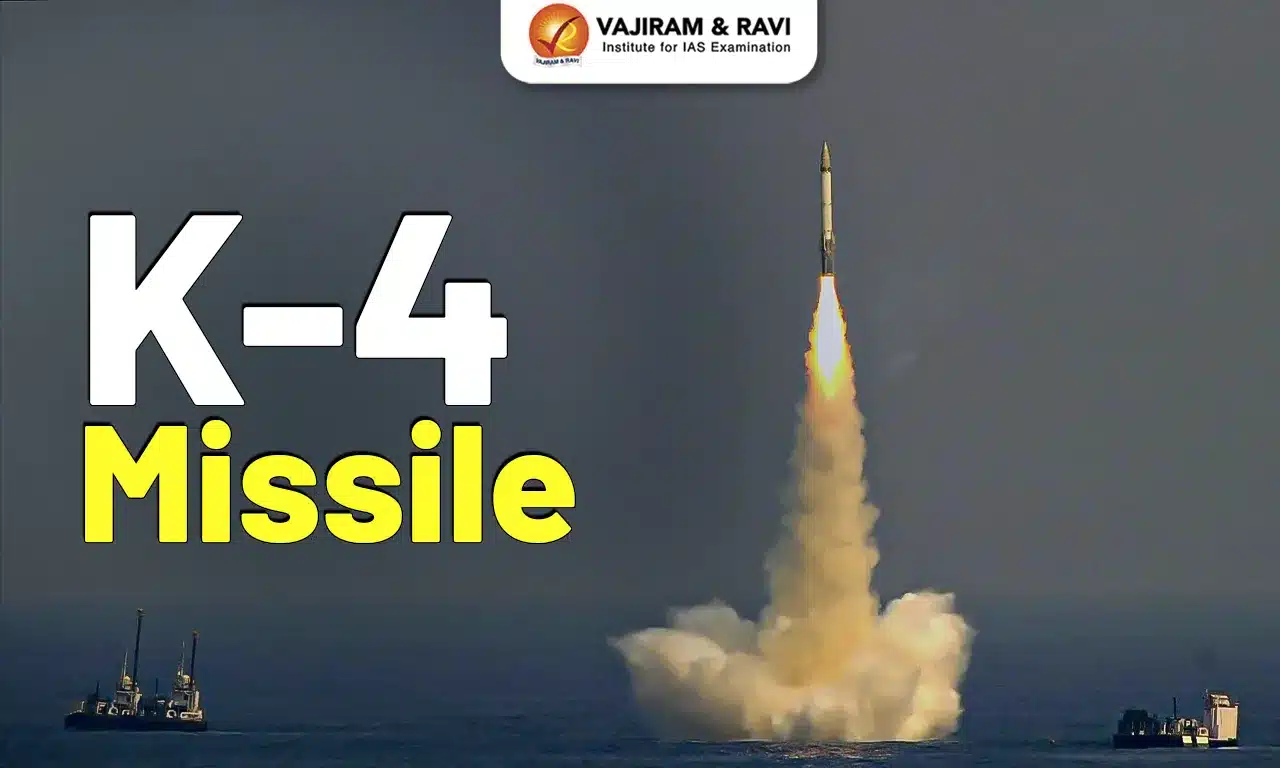
India tested an intermediate-range ballistic missile called K-4, which is designed to hit targets 3,500-km away, from the nuclear-powered submarine INS Arighaat in the Bay of Bengal recently.

About K-4 Missile

  • Kalam-4 or K-4 Missile, is a nuclear-capable intermediate-range submarine-launched ballistic missile (SLBM) designed mainly for deployment on Arihant-class submarines.
  • Each Arihant-class submarine can carry four K-4 missiles. 
  • K-4 was indigenously developed by the Defence Research and Development Organisation (DRDO).

K-4 Missile Features

  • The 12-metre-long missile weighing 17 tonnes has a two-stage solid-fuel system. 
  • It has a range of around 3,500 km. It is a major improvement over the older K-15 missile, which had a much shorter range of only 750 kilometers.
  • Payload: Up to 2 tons, including a nuclear warhead.
  • One of its key features is its ability to be cold-launched from underwater, which allows the missile to be ejected from the submarine before the engine ignites.
  • It is guided by an advanced inertial navigation system supported by GPS and India’s NavIC system.
  • This combination ensures high accuracy, with a reported circular error probable of less than 10 metres. 
  • The missile is also equipped with manoeuvring features that help it evade missile defence systems.

Source: TOI

K-4 Missile FAQs

Q1: What type of missile is the K-4?

Ans: The K-4 is a nuclear-capable submarine-launched ballistic missile (SLBM).

Q2: Which organisation developed the K-4 missile?

Ans: It was developed by the Defence Research and Development Organisation (DRDO).

Q3: On which class of submarines is the K-4 primarily deployed?

Ans: The K-4 is designed for deployment on Arihant-class submarines.

Q4: What is the range of the K-4 missile?

Ans: The K-4 missile has a range of approximately 3,500 km.

Thanjavur Painting

Thanjavur Painting

Thanjavur Painting Latest News

Recently, the Department of Posts successfully undertook the transmission of a priceless Thanjavur painting of the Shri Ram from Bengaluru to Ayodhya using its Logistics Post service.

About Thanjavur Painting

  • It is a classical South Indian art form originating in the town of Thanjavur (Tanjore), Tamil Nadu, around 1600 AD.
  • Tanjore or Thanjavur paintings are created on wooden panels, commonly known as palagai padam.
  • It flourished under the Nayakas of Thanjavur.
  • It has received the Geographical Indication tag.

Features of Thanjavur Painting

  • Tanjore paintings are traditionally created on canvas affixed to wooden planks, typically made from jackfruit or teak, and bound with Arabic gum.
  • Rich Colors:    These paintings are known for their vibrant colors. They often use bright shades of red, blue, green, and gold leafwork to create an opulent effect.
  • Gesso Work: One of the unique features of Tanjore paintings is the use of gesso work. Gesso is a mixture of chalk, gypsum, and glue applied to the surface to create embossed patterns and motifs.
  • Theme: Tanjore paintings typically depict Hindu gods and goddesses, especially figures like Lord Krishna, Lord Ganesha, and Goddess Lakshmi.
  • Gold Leaf: Gold foil or leaf is extensively used in Tanjore paintings to embellish the artwork.

Source: PIB

Thanjavur Painting FAQs

Q1: Thanjavur Painting is a classical art form from which state?

Ans: Tamil Nadu

Q2: What is a distinctive feature of Thanjavur Paintings?

Ans: Use of gold leaf and precious stones

Samudra Pratap

Samudra Pratap

Samudra Pratap Latest News

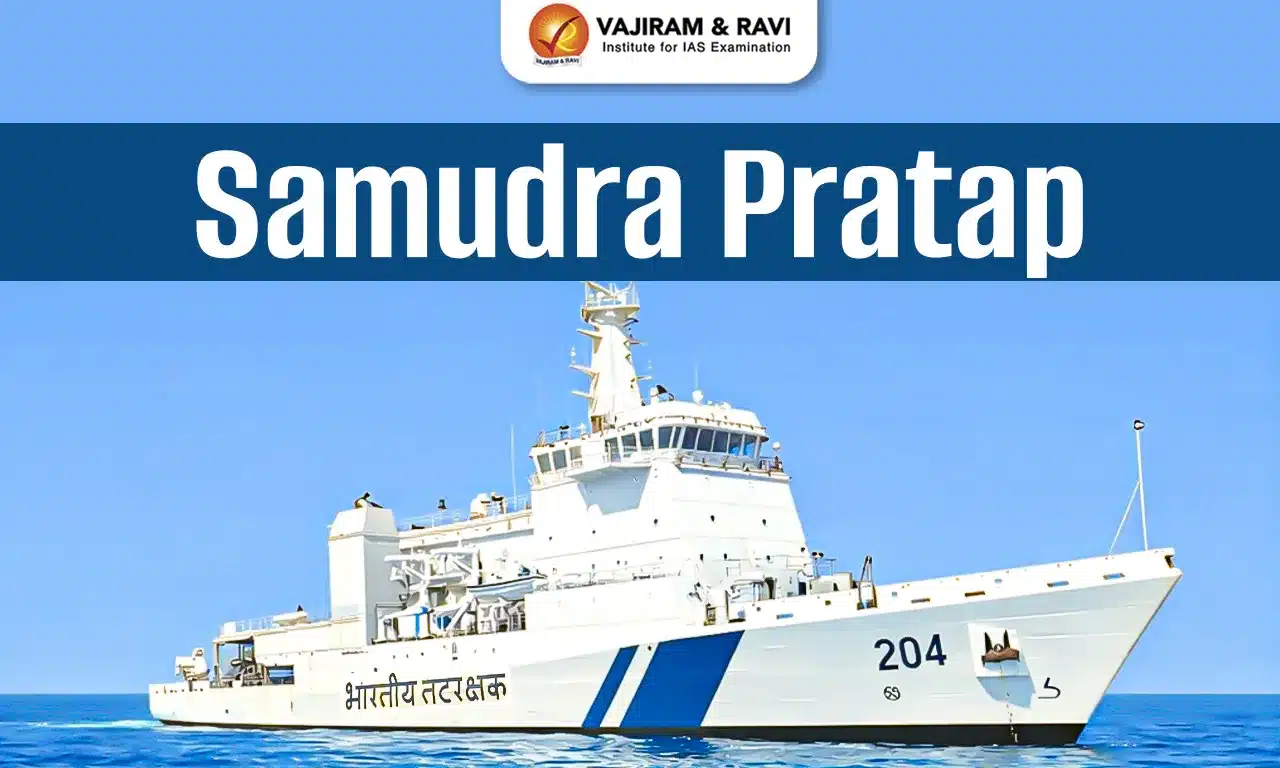
Recently, the Indian Coast Guard inducted the first in-built Pollution Control Vessel (PCV), Samudra Pratap under the 02 PCV project of Goa Shipyard Limited.

About  Samudra Pratap

  • It is the first indigenously designed and built Pollution Control Vessel of the Indian Coast Guard.
  • It is the largest ship in the ICG fleet, significantly enhancing the Coast Guard’s operational reach and capability.

Features of Samudra Pratap

  • Capacity: It has a displacement capacity of 4,170 tonnes.
  • Armament: The vessel is equipped with state-of-the-art technology, including a 30mm CRN-91 gun, two 12.7mm stabilised remote-controlled guns with integrated fire control systems.
  • Advanced Systems: It consists of Integrated Bridge System, Integrated Platform Management System, Automated Power Management System, and a high-capacity external firefighting system.
  • It is the first Indian Coast Guard ship to be equipped with Dynamic Positioning capability (DP-1), with FiFi-2 / FFV-2 notation certificate.
  • It is equipped with advanced systems to detect oil spills.
  • It is capable of high precision operations, recover pollutants from viscous oil, analyse contaminants, and separate oil from contaminated water.

Source: PIB

Samudra Pratap FAQs

Q1: What is Samudra Pratap?

Ans: A Pollution Control Vessel of the Indian Coast Guard

Q2: Where was Samudra Pratap built?

Ans: Goa Shipyard Limited, Goa

Daily Editorial Analysis 25 December 2025

Daily Editorial Analysis

The Deliberate Unmaking of India’s ‘Right to Work’

Context

  • The replacement of the Mahatma Gandhi National Rural Employment Guarantee Act (MGNREGA) with the Viksit Bharat–Guarantee for Rozgar and Ajeevika Mission (Gramin) Act, 2025 marks a decisive transformation in India’s welfare regime.
  • Enacted in 2005, MGNREGA established a demand-driven, legally enforceable guarantee of employment for rural citizens.
  • The new law overturns this framework, replacing entitlement with discretion and decentralised implementation with centralised authority.
  • This transition represents a fundamental ideological redefinition of welfare, altering the relationship between the state and its most vulnerable citizens.

Background: The Origins and Significance of MGNREGA

  • MGNREGA emerged from the contradictions of post-liberalisation India, where economic growth failed to generate adequate employment or livelihood security.
  • Persistent agrarian distress, jobless growth, and widening inequalities exposed the limits of market-led development.
  • In response, the United Progressive Alliance introduced a rights-based legislative framework that included the Right to Information Act and the Forest Rights Act.
  • MGNREGA stood at the centre of this framework. It recognised Employment as a legally enforceable right, affirming that political equality requires material security.
  • Rather than rejecting liberalisation, the programme sought to mitigate its social costs by embedding enforceable entitlements within governance.
  • Employment was treated as the most dignified and effective form of social protection in an economy dominated by informal labour.

Structural Changes under the VB-G RAM G Act

  • The VB-G RAM G Act reverses the defining principle of guaranteed employment.
  • By shifting from a demand-driven to a supply-driven model, it grants the Centre decisive authority over allocations, scope, and implementation.
  • Work becomes contingent on administrative approval rather than citizen demand, reinforcing the centralisation of power and discretion.
  • The revised funding structure deepens this shift. The Centre–State cost-sharing ratio has changed from 90:10 to 60:40, transferring substantial financial responsibility to States without corresponding fiscal support.
  • Many poorer States may struggle to meet these obligations, compelling them to curtail project approvals and suppress employment generation.
  • This combination of fiscal decentralisation and administrative centralisation undermines both federal balance and programme viability.

Ideological and Political Dimensions

  • The repeal of MGNREGA represents a deliberate ideological break.
  • The removal of Mahatma Gandhi’s name severs the programme from a moral legacy grounded in justice, dignity, and the upliftment of the poorest.
  • This symbolic shift aligns with a broader political economy that prioritises market imperatives and corporate interests.
  • Rights-based welfare schemes empower workers, decentralise authority, and institutionalise claims on the state.
  • Such features conflict with governance models that favour executive discretion and market dominance.
  • Discretionary welfare reframes social protection as benevolence, depoliticising structural inequality and transforming welfare into an instrument of political loyalty rather than social justice.

Democratic and Legislative Implications

  • The legislative trajectory of the VB-G RAM G Act contrasts sharply with that of MGNREGA.
  • While MGNREGA was enacted with unanimous parliamentary support, the 2025 Act was rushed through Parliament amid Opposition walkouts and without scrutiny by a Parliamentary Standing Committee.
  • The absence of consultation with affected communities further underscores the erosion of democratic accountability.
  • Restrictions on public protest and the procedural hurdles imposed on dissent highlight a shrinking civic space.
  • Long-standing rights can be dismantled swiftly, while opposition is delayed through bureaucratic regulation, weakening participatory democracy.

Broader Consequences for Social Justice and Federalism

  • MGNREGA demonstrated that large-scale welfare programmes could enhance productivity, raise rural wages, and strengthen democratic participation.
  • Its nationwide reach and rights-based design converted welfare into enforceable citizenship claims.
  • Its repeal, particularly after its critical role during the COVID-19 pandemic, constitutes a rollback of legal, fiscal, and institutional safeguards.
  • By making livelihoods contingent on fiscal discretion, the new framework weakens constitutional commitments to dignity through work as a right and redefines welfare as conditional assistance rather than obligation.

Conclusion

  • The dismantling of MGNREGA marks the end of India’s most ambitious experiment with rights-based welfare.
  • The repeal signifies a retreat from enforceable entitlements and a reorientation toward discretionary governance.
  • Beyond the fate of a single programme, it raises fundamental questions about social justice, federalism, and the future of democratic accountability in India.

The Deliberate Unmaking of India’s ‘Right to Work’ FAQs

 Q1. What core principle of MGNREGA was reversed by the VB-G RAM G Act?
Ans. The Act replaced the demand-driven right to employment with a supply-driven, discretionary framework.

Q2. Why was MGNREGA significant in post-liberalisation India?
Ans. It addressed jobless growth and livelihood insecurity through a legally enforceable employment guarantee.

Q3. How did the new funding structure affect States?
Ans. The revised cost-sharing ratio increased States’ financial burden without providing adequate fiscal support.

Q4. What ideological shift does the repeal of MGNREGA represent?
Ans. It marks a move away from rights-based welfare toward market-oriented and discretionary governance.

Q5. How does the repeal impact democratic accountability?
Ans. It weakens participatory law-making by reducing consultation and limiting citizens’ ability to assert rights.

Source: The Hindu


New Labour Codes, the Threats to Informal Workers

Context

  • The labour reforms enacted by the Indian government in 2019 and 2020 have faced sustained opposition from trade unions and worker collectives across the country.
  • These labour reforms have generated widespread concern, particularly for unorganised workers, who form over 90% of India’s workforce and contribute nearly 65% of national output.
  • The new labour codes, covering wages, industrial relations, social security, and working conditions, were passed without tripartite consultation.
  • Their implementation raises serious concerns about the future of worker rights and protections in India.

Background and Claims of the Labour Codes

  • The Union government has justified the reforms as an attempt at consolidation of labour laws and expansion of social protection.
  • However, the restructuring has instead resulted in the dilution of several sector-specific protections that previously addressed the realities of informal employment.
  • Rather than strengthening safeguards, the reforms centralise authority while weakening legal mechanisms built through decades of labour struggles.

Criticism of New Labour Codes

  • Dilution of Occupational Safety and Health Protections

    • One of the most significant consequences of the reforms is the weakening of occupational safeguards under the Occupational Safety Health and Working Conditions framework.
    • The repeal of protections governing the construction sector has removed detailed safety regulations despite the hazardous nature of work and high fatality rates.
    • The shift from physical workplace inspections to digital systems has undermined effective inspections, limiting enforcement and accountability.
    • This approach reduces on-ground verification and weakens compliance mechanisms essential for protecting workers in informal and high-risk settings.
  • Neglect of Occupational Health of Informal Workers

    • Informal workers face severe occupational health risks across sectors.
    • Construction workers suffer from silicosis, agricultural labourers are exposed to carcinogenic pesticides, and salt workers experience chronic eye, skin, and kidney ailments.
    • The absence of structured mechanisms for diagnosis, treatment, and rehabilitation leaves these workers without meaningful protection.
    • Without access to formal insurance systems, occupational diseases remain unrecognised, untreated, and uncompensated, deepening health-related vulnerabilities among informal workers.
  • Threats to Welfare Boards and Social Security

    • The restructuring of social protection frameworks poses serious risks to worker welfare.
    • Sector-specific funding mechanisms, including dedicated cesses, have been removed without viable alternatives.
    • This has disrupted financial support systems for workers in mining, construction, beedi, and salt industries.
    • The move towards a single welfare structure undermines existing State-level boards that provide pensions, maternity benefits, and educational assistance.
    • These boards were designed to address sector-specific needs and have played a crucial role in supporting informal workers.

Federal Concerns and the Case of Tamil Nadu

  • The reforms raise important federal concerns, particularly for States with long-standing welfare architectures.
  • Tamil Nadu has built an extensive system supporting informal workers through legislation and welfare boards developed over decades.
  • The introduction of the e-Shram registry raises apprehensions regarding central control over accumulated welfare funds, estimated to be substantial.
  • Such centralisation threatens State autonomy and risks diverting resources away from intended beneficiaries.

Conclusion

  • The labour reforms mark a significant retreat from worker-centric protections.
  • The erosion of safety standards, weakening of welfare mechanisms, and centralisation of authority have intensified worker precarity.
  • Without corrective measures, these changes risk deepening inequality and insecurity among informal workers.
  • Preserving State initiatives and ensuring participatory reform processes are essential to uphold worker dignity and long-term social justice.

New Labour Codes, the Threats to Informal Workers FAQs

 Q1. Why did trade unions oppose the new labour codes?
Ans. Trade unions opposed the labour codes because they were passed without tripartite consultation and weaken existing worker protections.

Q2. Which group of workers is most affected by the labour codes?
Ans. Unorganised workers are most affected because they form the majority of the workforce and lack strong legal safeguards.

Q3. How did the new codes affect occupational safety regulations?
Ans. The new codes weakened occupational safety by repealing sector-specific laws and reducing effective workplace inspections.

Q4. Why are welfare boards important for informal workers?
Ans. Welfare boards are important because they provide pensions, maternity benefits, and educational assistance tailored to sector-specific needs.

Q5. Why is Tamil Nadu cautious about implementing the Social Security Code?
Ans. Tamil Nadu is cautious because the Code threatens its existing welfare boards and centralises control over worker welfare funds.

Source: The Hindu

Daily Editorial Analysis 25 December 2025 FAQs

Q1: What is editorial analysis?

Ans: Editorial analysis is the critical examination and interpretation of newspaper editorials to extract key insights, arguments, and perspectives relevant to UPSC preparation.

Q2: What is an editorial analyst?

Ans: An editorial analyst is someone who studies and breaks down editorials to highlight their relevance, structure, and usefulness for competitive exams like the UPSC.

Q3: What is an editorial for UPSC?

Ans: For UPSC, an editorial refers to opinion-based articles in reputed newspapers that provide analysis on current affairs, governance, policy, and socio-economic issues.

Q4: What are the sources of UPSC Editorial Analysis?

Ans: Key sources include editorials from The Hindu and Indian Express.

Q5: Can Editorial Analysis help in Mains Answer Writing?

Ans: Yes, editorial analysis enhances content quality, analytical depth, and structure in Mains answer writing.

Karbi Anglong Violence – Land Rights, Sixth Schedule Autonomy and Ethnic Tensions

Karbi Anglong Violence

Karbi Anglong Violence Latest News

  • Fresh violence erupted in West Karbi Anglong district of Assam, leading to two deaths, multiple injuries, arson of shops and markets, suspension of mobile internet services, and imposition of prohibitory orders.
  • The unrest is rooted in long-standing disputes over land rights, particularly encroachment on grazing reserve lands under the jurisdiction of the Karbi Anglong Autonomous Council (KAAC).

Immediate Trigger of the Violence

  • Hunger strike over grazing lands:
    • For over two weeks, nine Karbi protesters were on a fast unto death at Phelangpi in West Karbi Anglong.
    • Their demand - eviction of alleged encroachers from PGR (Professional Grazing Reserve) lands and VGR (Village Grazing Reserve) lands.
    • These lands are traditionally reserved for livestock grazing, dating back to British colonial land policies, and are crucial for tribal livelihoods.
  • Perception of arrest: When protesters were shifted to Guwahati for medical reasons, locals believed they were arrested, triggering stone-pelting, arson, and escalation into widespread violence.

Background of the Karbi Anglong Dispute

  • Sixth Schedule and autonomous governance:
    • Karbi Anglong and West Karbi Anglong are tribal-majority hill districts governed under the Sixth Schedule of the Constitution.
    • The KAAC enjoys powers over land, forest management, and local governance, aimed at protecting tribal identity and resources.
  • History of insurgency:
    • Since the late 1980s, Karbi insurgent groups have operated in the region.
    • The original demand was for a separate Karbi state, which later moderated to greater autonomy under KAAC.
    • The legacy of insurgency has deepened hostility towards ‘outsiders’.

The Land Question - PGR and VGR

  • Encroachment vs settlement claims:
    • Karbi tribal bodies allege large-scale illegal settlement on grazing lands.
    • Settlers (Biharis, Bengalis, Nepalis) claim residence for decades, seeking regularisation.
    • For example, KAAC identified 1,983 families encroaching in Hawaipur mouza, and reported 103 families encroaching in Phuloni circle.
  • Political flashpoint:
    • Protests intensified after a Bihari Nonia community organisation submitted a memorandum to the President of India, demanding legalisation of settlers.
    • Karbi groups viewed this as a threat to Sixth Schedule protections.

Legal Constraints on Evictions

  • KAAC issued 15-day eviction notices. However, evictions were stalled due to a PIL pending in the Gauhati High Court.
  • Authorities cited risk of contempt of court if evictions proceeded during judicial consideration.

Challenges and Way Ahead

  • Conflict between customary rights and settlers’ claims: Transparent rehabilitation or relocation policy for long-settled non-tribal populations.
  • Weak enforcement of Sixth Schedule: Legal clarity on status and protection of PGR and VGR lands. Strengthening KAAC capacity for land governance and conflict resolution.
  • Judicial delays: Time-bound judicial resolution of PILs related to land disputes.
  • Mistrust between administration and local communities: Dialogue-based approach involving tribal bodies, settlers, and state authorities.
  • Risk of ethnic polarisation: Early warning and community policing mechanisms to prevent escalation.

Conclusion

  • The Karbi Anglong violence underscores the fragile balance between tribal autonomy, land rights, and demographic pressures in Sixth Schedule areas. 
  • Without institutional clarity, sensitive governance, and inclusive conflict resolution, such disputes risk recurring, threatening social cohesion, constitutional safeguards, and internal security in Northeast India. 
  • Addressing land issues through rule of law and participatory governance is essential for lasting peace.

Source: IE

Karbi Anglong Violence FAQs

Q1: How the Sixth Schedule aims to protect tribal land rights in Assam?

Ans: It empowers autonomous councils like KAAC to safeguard tribal land and governance.

Q2: What role did PGR and VGR lands play in triggering the recent unrest in West Karbi Anglong?

Ans: The dispute arose over alleged encroachment on PGR and VGR lands reserved for tribal livelihoods.

Q3: What is the link between historical insurgency and present-day ethnic tensions in Karbi Anglong?

Ans: Past insurgency rooted in demands for autonomy has sustained distrust against ‘outsiders’.

Q4: Why have eviction drives in Karbi Anglong become legally and politically contentious?

Ans: Evictions are stalled due to pending PILs in the Gauhati High Court, creating a legal-administrative impasse.

Q5: How can a balanced administrative approach resolve land conflicts in Sixth Schedule areas?

Ans: A mix of judicial clarity, protection of tribal land rights, rehabilitation of genuine settlers, etc., is essential for durable peace.

Structural and Policy Constraints to Manufacturing in India

Manufacturing in India

Manufacturing in India News

  • India’s persistent lag in manufacturing growth has come under focus due to renewed debate on structural constraints, wage dynamics, and their impact on industrial competitiveness. 

Manufacturing and Structural Transformation

  • Manufacturing has historically played a central role in economic development by absorbing surplus labour, driving productivity growth, and enabling exports. 
  • Countries such as China and South Korea used manufacturing-led growth to transition from low-income to middle- and high-income economies. 
  • In contrast, India’s structural transformation has followed an atypical path, with services expanding rapidly while manufacturing’s share in GDP has remained broadly stagnant.
  • Despite beginning the 20th century at levels comparable to several East Asian economies, India did not experience a sustained manufacturing boom. 
  • Instead, growth increasingly shifted toward services such as software, finance, and business process outsourcing. 
  • This divergence raises important questions about the structural weaknesses of India’s industrialisation strategy.

India’s Manufacturing Performance

  • Manufacturing’s share in India’s GDP has remained roughly constant over decades and has recently ceded further ground to services. 
  • While India has witnessed pockets of industrial success, these have not translated into large-scale employment generation or broad-based technological upgrading. 
  • This underperformance becomes more apparent when compared with China and South Korea, where manufacturing expanded both in scale and sophistication.
  • The limited growth of manufacturing has also constrained India’s ability to absorb low-skilled labour from existing agriculture, contributing to informal employment and underemployment. 
  • As a result, India faces the challenge of high economic growth without commensurate job creation in productive sectors.

Role of Public Sector Wages

  • One explanation for India’s manufacturing stagnation lies in the wage structure shaped by public sector policies. 
  • Experts argue that relatively high government salaries drew workers away from manufacturing, pushing up economy-wide wages. 
  • Manufacturing firms, operating with lower productivity levels, found it difficult to match these wages, reducing their competitiveness.
  • Higher public sector incomes also increased demand for domestic goods and services, raising prices. 
  • This indirectly hurt manufacturing by making domestically produced goods less competitive compared to imports. Over time, these dynamics weakened incentives for industrial expansion and discouraged firms from scaling up operations.

Dutch Disease Framework

  • Traditionally, Dutch disease describes how a resource boom, such as oil or gas, raises wages and appreciates the currency, harming manufacturing exports. 
  • In India’s case, the analogy is applied to non-tradable government services rather than natural resources.
  • Expansion of the public sector with high wages raised domestic prices and led to a real exchange rate appreciation, even without changes in the nominal exchange rate. 
  • This made imports cheaper and domestic manufacturing less competitive, reducing demand for locally produced goods. 
  • Thus, policy-driven wage increases functioned similarly to a resource windfall in weakening manufacturing.

Technology and Productivity Constraints

  • A key question emerging from this analysis is why Indian manufacturing failed to respond through technological upgrading. 
  • Economic theory suggests that high wages can induce innovation, pushing firms to adopt labour-saving technologies and improve productivity. 
  • This process played a crucial role in historical industrialisation in countries like Britain, Germany, and Japan.
  • In India, however, manufacturing firms did not sufficiently invest in technology or capital-intensive production. 
  • Instead, many industries continued to rely on abundant cheap labour, limiting productivity growth. 
  • This failure to move up the value chain meant that manufacturing could neither sustain higher wages nor compete effectively in global markets.

Uneven Growth and Rising Inequality

  • India’s growth story has been marked by strong performance in services alongside weak wage growth for a large segment of workers. 
  • Even in fast-growing sectors such as software and platform-based services, entry-level wages have stagnated over long periods. 
  • Many modern Indian “unicorns” depend more on labour reserves than on genuine technological innovation.
  • This pattern has contributed to rising income inequality. While the private sector has generated wealth and entrepreneurship, its growth has been uneven and insufficiently linked to mass employment creation. 
  • Manufacturing’s stagnation thus reflects deeper issues in India’s development trajectory, including inadequate diffusion of technology and skills.

Implications for Economic Policy

  • The lag in manufacturing has significant implications for India’s long-term growth and employment prospects. 
  • Without a strong industrial base, India risks premature deindustrialisation, where services dominate before manufacturing reaches maturity. 
  • This limits job creation for semi-skilled workers and constrains export diversification.
  • Policy responses need to focus on improving manufacturing productivity, encouraging technological adoption, and aligning wage growth with productivity gains. 
  • Investments in skills, infrastructure, and industrial clusters are critical to revive manufacturing as a driver of inclusive growth.

Source: TH

Manufacuring in India FAQs

Q1: Why has manufacturing remained weak in India?

Ans: India’s manufacturing has lagged due to policy-driven wage pressures, low productivity, and limited technological upgrading.

Q2: What is the Dutch disease in the Indian context?

Ans: It refers to how high public sector wages raised prices and reduced manufacturing competitiveness, similar to a resource boom.

Q3: How does India differ from China and South Korea?

Ans: Unlike these countries, India did not experience sustained manufacturing-led industrialisation.

Q4: Why did manufacturing not respond through innovation?

Ans: Firms relied on cheap labour instead of investing in productivity-enhancing technologies.

Q5: What are the long-term risks of weak manufacturing?

Ans: It limits job creation, increases inequality, and constrains India’s structural transformation.

Bureau of Port Security – Strengthening India’s Coastal Security

Port Security

Port Security Latest News

  • The Union government has constituted the Bureau of Port Security as a statutory body under the Merchant Shipping Act, 2025, to strengthen port and maritime security governance.

India’s Maritime and Coastal Landscape

  • India has a long coastline of over 7,500 km and a rapidly expanding maritime economy. 
  • As of 2025, the country has 12 major ports and 217 non-major ports, of which 66 are cargo-handling ports, while the rest largely serve fishing and coastal activities. 
  • Major ports, administered by the Union government, handle more than half of India’s maritime cargo traffic. 
  • In recent years, India has witnessed a sharp rise in port capacity, coastal shipping, and inland waterway cargo movement.
  • This growth has significantly enhanced India’s trade connectivity and logistics efficiency, but it has also increased exposure to security threats such as smuggling, terrorism, cyber intrusions, and illegal migration through maritime routes. 
  • Ensuring secure ports and vessels has therefore emerged as a key national security priority.

Need for a Dedicated Port Security Authority

  • Until recently, India’s coastal and port security responsibilities were distributed across multiple agencies, including the Indian Navy, Coast Guard, CISF, State maritime police, and port authorities. 
  • While operational agencies remain crucial, the absence of a single statutory body for regulatory oversight and coordination often leads to gaps in communication, duplication of efforts, and uneven implementation of security standards.
  • Recognising these challenges, the government decided to establish a specialised institution that could function as the nodal regulator for port and ship security, similar to how aviation security is governed in India.

Bureau of Port Security: Mandate and Structure

  • The Bureau of Port Security (BoPS) has been constituted under Section 13 of the Merchant Shipping Act, 2025, as a statutory body. 
  • It functions under the Ministry of Ports, Shipping and Waterways and is modelled on the Bureau of Civil Aviation Security (BCAS).
  • The BoPS is responsible for regulatory oversight relating to the security of ships, port facilities, and maritime infrastructure. 
  • Its role is not operational in nature but focuses on standard-setting, compliance, coordination, and supervision across both major and non-major ports.

Key Functions of the Bureau of Port Security

  • The BoPS addresses a wide range of maritime security concerns. 
  • These include maritime terrorism, arms and drug trafficking, human trafficking, illegal migration, piracy, poaching, and other illicit activities carried out through sea routes.
  • A notable feature of the BoPS is its emphasis on cybersecurity. 
  • With ports increasingly dependent on digital systems, the Bureau is expected to monitor and protect port IT infrastructure from cyber threats, in coordination with national cybersecurity agencies.
  • The BoPS has the legal authority to ensure compliance with international obligations such as the International Ship and Port Facility Security (ISPS) Code, which mandates minimum security standards for ports and vessels engaged in international trade.

Role of CISF and Security Implementation

  • Under the BoPS framework, the Central Industrial Security Force (CISF) has been designated as a recognised security organisation. 
  • The CISF will prepare standardised security plans, conduct security assessments, and train private security agencies deployed at ports.
  • Security measures are to be implemented in a graded and risk-based manner, taking into account factors such as vulnerability, trade volume, location, and threat perception. This approach aims to balance security needs with ease of doing business.

Maritime Growth and Strategic Context

  • India’s maritime sector has expanded rapidly over the last decade. Cargo handled at ports increased from 974 million tonnes in 2014 to nearly 1,600 million tonnes by 2025. 
  • Ship turnaround time has halved, and coastal shipping volumes have more than doubled. Inland waterway cargo movement has increased eightfold during the same period.
  • The creation of the BoPS aligns with the Maritime India Vision 2030, which seeks to develop world-class port infrastructure, promote green shipping, and ensure a safe and secure maritime ecosystem.

Concerns and Criticism

  • Some coastal States have expressed concerns that recent port legislation, including the Indian Ports Act, 2025, increases Union government control over non-major ports, raising questions related to maritime federalism. 
  • There are also criticisms regarding wide inspection powers granted to port officials under the new legal framework, though these concerns relate to legislation as a whole rather than the BoPS specifically.

Source: TH

Port Security FAQs

Q1: What is the Bureau of Port Security?

Ans: It is a statutory body established under the Merchant Shipping Act, 2025 for regulatory oversight of port and ship security.

Q2: Which ministry oversees the BoPS?

Ans: The Ministry of Ports, Shipping and Waterways.

Q3: What international standard does the BoPS enforce?

Ans: The International Ship and Port Facility Security (ISPS) Code.

Q4: Which force supports BoPS in port security planning?

Ans: The Central Industrial Security Force (CISF).

Q5: Why is cybersecurity important for ports?

Ans: Modern ports rely heavily on digital systems, making them vulnerable to cyber threats.

Good Governance Day 2025, Objective, Importance, Significance

Good Governance Day 2025

Good Governance Day is observed every year on December 25th in India to honor the birth anniversary of Atal Bihari Vajpayee, the 10th Prime Minister of India. The day was instituted by the Government of India in 2007. The day aims to promote awareness of accountability in government, transparency in public administration, and efficient delivery of services to citizens.

Good Governance Day 2025 is not just a tribute to Vajpayee’s legacy but also a reminder of the importance of ethical and responsible governance in building a strong, equitable nation.

Good Governance Day Objective

The objectives of Good Governance Day are designed to strengthen the relationship between the government and citizens. These include:

  • Promoting Transparency: Encouraging open communication and access to information for all citizens.
  • Enhancing Accountability: Ensuring government officials and departments remain answerable for their actions and decisions.
  • Efficient Public Service Delivery: Improving the quality and timeliness of government services for citizens.
  • Citizen Participation: Motivating citizens to engage actively in governance processes and decision-making.
  • Encouraging Innovation: Supporting the adoption of technology and new ideas to enhance government efficiency.
  • Honoring Leadership: Remembering the contributions of Atal Bihari Vajpayee in promoting good governance practices.

About Atal Bihari Vajpayee

Atal Bihari Vajpayee (25 December 1924 - 16 August 2018) was a visionary Indian leader, poet, and statesman who served as the 10th Prime Minister of India. Known for his eloquence, pragmatic approach, and ability to build consensus, Vajpayee played a pivotal role in shaping modern India’s political and economic landscape.

  • Prime Ministerial Tenure: Served three terms as India’s Prime Minister (1996, 1998–2004), bringing stability and growth.
  • Economic Reforms: Promoted liberalization, infrastructure development, and policies to encourage foreign investment.
  • Golden Quadrilateral Project: Launched this flagship highway project to improve road connectivity between major cities.
  • Nuclear Policy Leadership: Conducted India’s nuclear tests in 1998, strengthening national security while pursuing global diplomacy.
  • Peace Initiatives: Advocated for better relations with neighboring countries, especially Pakistan, promoting dialogue and peace efforts.
  • Parliamentary Excellence: Known for his oratory skills, Vajpayee inspired both citizens and politicians with his speeches and vision.
  • Poetic Talent: Wrote several poems reflecting patriotism, human values, and social issues.
  • Democracy and Ethics: Strengthened democratic institutions and emphasized transparency, accountability, and good governance.
  • Awards and Recognition: Honored with India’s Bharat Ratna in 2015 for his exceptional contributions to the nation.

Importance of Good Governance in Modern India

  • Strengthens democracy by ensuring transparency, accountability, and protection of citizens’ rights.
  • Promotes economic growth and stability through predictable policies and encouragement of investments.
  • Ensures social justice and equity by providing access to education, healthcare, and welfare for marginalized communities.
  • Enhances efficiency in public resource management and reduces corruption and wastage.
  • Improves delivery and quality of essential services such as healthcare, education, and infrastructure.
  • Empowers citizens to participate actively in governance and understand their rights and responsibilities.
  • Builds trust in government institutions and fosters social cohesion.
  • Encourages innovation and adoption of digital tools for effective governance and service delivery.

Good Governance Day 2025 Significance

  • Honoring Atal Bihari Vajpayee: Celebrates his contributions to India’s development, leadership, and vision for good governance.
  • Promoting Citizen-Centric Governance: Encourages government policies and programs that focus on the welfare of citizens.
  • Encouraging Transparency and Accountability: Reminds officials to be responsible and answerable for their actions.
  • Spreading Awareness: Educates citizens about their rights and how government services work.
  • Focus on Digital and Efficient Governance: Highlights the use of technology to improve government services and make them faster and easier to access.
  • Inspiring Ethical Leadership: Motivates officials and citizens to follow honesty, integrity, and fairness in their work and life.

Impact of Good Governance on Society and Economy

  • Economic Growth: Countries with better governance experience higher growth. Studies show that improving governance indicators can increase national income by up to 3 times over the long term.
  • Better Public Services: Programs like Direct Benefit Transfer (DBT) in India have reduced leakages, ensuring that over ₹2 lakh crore of subsidies reach intended beneficiaries efficiently.
  • Reduced Corruption: Transparency and accountability measures, such as the Right to Information (RTI) Act, have empowered citizens to monitor government work and reduce misuse of funds.
  • Social Inclusion: Initiatives like Pradhan Mantri Jan Dhan Yojana (PMJDY) have brought over 50 crore people into the formal banking system, improving financial access for marginalized communities.
  • Enhanced Quality of Life: Public health and sanitation programs, like Swachh Bharat Mission, built over 11 crore toilets, improving sanitation and reducing open defecation-related diseases.
  • Stronger Institutions: Good governance strengthens institutions that enforce laws, deliver services, and ensure stability, making India a more predictable and safe environment for citizens and investors.
  • Citizen Empowerment: By promoting participation and awareness, governance reforms allow citizens to engage in decision-making, improving responsiveness and accountability.

Good Governance Day 2025 FAQs

Q1: When is Good Governance Day observed?

Ans: Good Governance Day is observed every year on 25th December, coinciding with the birth anniversary of Atal Bihari Vajpayee.

Q2: Why is Good Governance Day celebrated?

Ans: It is celebrated to honor Atal Bihari Vajpayee’s legacy and to promote transparency, accountability, and citizen-centric governance across India.

Q3: What is the significance of Good Governance Day 2025?

Ans: In 2025, the day highlights digital governance, efficient public service delivery, and citizen participation, while remembering Vajpayee’s contributions to ethical and responsible leadership.

Q4: How is Good Governance Day celebrated?

Ans: The government organizes seminars, workshops, awards, and awareness campaigns. Departments showcase initiatives that improve service delivery, reduce corruption, and enhance citizen engagement.

Q5: Who can participate in Good Governance Day activities?

Ans: Government officials, citizens, NGOs, and students can participate through public events, online initiatives, and awareness programs.

Tunnel Safety Guidelines – Lessons from the Silkyara Collapse

Tunnel Safety Guidelines

Tunnel Safety Guidelines Latest News

  • On November 12, 2023, the Silkyara Bend–Barkot Tunnel on NH-134 (Char Dham Mahamarg Pariyojana) collapsed, trapping 41 workers for 17 days. 
  • Though all were rescued safely, the incident exposed systemic weaknesses in tunnel planning, geological assessment, and emergency preparedness, especially in fragile Himalayan terrain.
  • In response, the Ministry of Road Transport and Highways (MoRTH) issued comprehensive guidelines to prevent and mitigate road tunnel collapses, particularly relevant for strategic and border area connectivity projects.

Why Tunnel Safety Matters

  • Tunnels enable seamless connectivity in mountainous, snow-bound, eco-sensitive, congested and border areas.
  • India’s expanding highway network under strategic and Char Dham projects has increased tunnelling activity, raising geological and safety risks.

Key Provisions of the New Guidelines

  • Strengthening planning (DPR, GBR and risk register):
    • Issues identified: Many Detailed Project Reports (DPRs) reduced to procedural formalities. Inadequate geological and geotechnical investigations.
  • Guidelines: 
    • Project authority responsible for verifying correctness of geological investigations.
    • Mandatory preparation of Geotechnical Baseline Report (GBR), risk register (hazards, risks, mitigation measures).
    • Principle of risk allocation: “Risk shall be borne by the party best equipped to manage it.”
    • GBR and risk register to be shared with bidders to ensure transparency and realistic costing.
  • Geological realities and design challenges:
    • Issues:
      • Tunnel design is critical as ground itself acts as a support system.
      • Predicting ground properties from limited tests is an oversimplification, especially in the Himalayas.
      • Poor investigations lead to time overruns, cost escalation, and safety failures.
    • Special conditions to be assessed: Squeezing and swelling ground, rock bursts, shallow cover zones, tunnels below perennial streams/nalas, hot water ingress, and toxic/flammable gases (long tunnels).
  • Tunnelling technologies (NATM vs TBM):
    • NATM (New Austrian Tunnelling Method): “Design-as-you-go” approach, suitable for non-uniform rock conditions, controlled blasting, and mandatory excavation and support sheet for each round.
    • TBM (Tunnel Boring Machine): Used in uniform geological stretches, requires vigilance against roof collapse and water ingress.
  • Collapse risk zoning and safety infrastructure: Tunnels to be classified into collapse-risk zones. High-risk zones must include Np-4 escape pipe (minimum 0.9 m diameter), mobile rescue containers, fixed rescue containers, minimum 24-hour survival capacity.
  • Emergency response and human capacity:
    • Shift managers must be trained as first responders.
    • Emergency Response Plan (ERP): Prepared in advance, updated weekly based on site conditions.

India’s Tunnel Infrastructure Snapshot

  • According to MoRTH’s reply in Parliament (December 12, 2024), a total of 42 tunnels covering 60.37 km in length in 27 projects of National Highways have been completed to date. 
  • Apart from this, 57 tunnels covering 93.96 km in length are currently under implementation in 37 projects on NHs in the country.
  • 3 tunnels covering 9.68 km in length have been approved for construction in 3 projects at an estimated cost of Rs 1,962 crore. 
  • One 6-lane project in Maharashtra costing Rs 4501 crore, including the construction of 2 tunnels having a total length of 3.47 km, has been apprised by Public Private Partnership Appraisal Committee (PPPAC).

Challenges and Way Forward

  • Weak DPR quality: Institutionalise scientific, data-driven DPRs.
  • Complex Himalayan geology: Integrate real-time geological monitoring.
  • Inadequate on-site emergency preparedness: Strengthen capacity-building of site managers. Periodic independent safety audits. 
  • Coordination gaps during rescue operations: Clear role definition for -
    • Incident commander (District Magistrate)
    • Construction agencies
    • Local administration
    • NDRF/SDRF commanders
    • The Armed Forces must ensure coordination, technical support, and responder safety.
  • Use guidelines as a template: For other infrastructure sectors (metros, hydropower).

Conclusion

  • The Silkyara tunnel collapse was a watershed moment in India’s infrastructure journey. 
  • MoRTH’s new guidelines mark a shift from procedural compliance to risk-based engineering, emphasising geological realism, accountability, and human safety. 
  • Effective implementation will be crucial to ensuring that India’s push for strategic connectivity and infrastructure-led growth does not come at the cost of lives and sustainability.

Source: IE

Tunnel Safety Guidelines FAQs

Q1: How did the Silkyara tunnel collapse influence India’s approach to road tunnel safety?

Ans: It exposed systemic flaws in DPR preparation and risk management, prompting MoRTH to issue comprehensive guidelines.

Q2: What is the significance of the Geotechnical Baseline Report (GBR) in tunnel projects?

Ans: GBR provides a realistic reference of ground conditions, improves risk allocation, and reduces disputes, cost overruns, and safety failures.

Q3: Why is tunnelling in the Himalayas particularly challenging compared to other regions?

Ans: Due to complex and unpredictable geology involving squeezing ground, rock bursts, water ingress, and shallow cover zones.

Q4: What is the difference between NATM and TBM as per MoRTH guidelines?

Ans: NATM follows a “design-as-you-go” approach for variable geology, while TBM is suited for long stretches of uniform rock formations.

Q5: How do MoRTH’s new guidelines strengthen emergency preparedness in tunnel projects?

Ans: By mandating risk zoning, escape pipes, rescue containers, trained shift managers, and regularly updated Emergency Response Plans.

Teesta River

Teesta River

Teesta River Latest News

An army jawan died after a raft capsized in the Teesta River during a training exercise in Sikkim’s Pakyong district recently.

About Teesta River

  • It is a major tributary of the Brahmaputra River (known as the Jamuna in Bangladesh) and flows through India and Bangladesh.
  • Course
    • It originates from the Tso Lhamo Lake at an elevation of approximately 5,280 meters in North Sikkim, India.
    • It then flows to the south, cutting a deep gorge through the Siwalik Hills east of Darjiling (in West Bengal, India).
    • It turns southeast to run through the Sivok Khola pass onto the plains of West Bengal.
    • It then enters Bangladesh, where it joins the Brahmaputra River (known as the Jamuna River in Bangladesh). 
    • It is glacier-fed, with sources like Pahurni Glacier, Khangse Glacier, and ChhoLhamo Lake contributing to its flow.
  • Length: The river spans approximately 414 kilometers.
  • Notably, 83% of the basin lies in India, while 17% is in Bangladesh.
  • Tributaries: Major tributaries include Lachung Chhu, Dik Chhu, and Rangpo Chhu on the left bank and the Rangit River on the right bank.
  • Hydroelectric Projects and Barrages:
    • In India:
      • Teesta-V Dam: 510 MW, located in Gangtok district, Sikkim.
      • Teesta-III Dam: 1,200 MW, situated in Mangan district, Sikkim.
      • Teesta Low Dam III & IV: 132 MW and 160 MW, respectively, both in Kalimpong district, West Bengal.
      • Gajoldoba Barrage: Primarily for irrigation purposes in West Bengal.
    • In Bangladesh:
      • Duani Barrage: Used mainly for irrigation in Bangladesh.
      • Barakhata Teesta Barrage: Another significant irrigation infrastructure.
  • The Teesta River is famous for water sports like whitewater river rafting.

Source: TELE

Teesta River FAQs

Q1: The Teesta River is a major tributary of which river?

Ans: Brahmaputra

Q2: Where does Teesta River originates from?

Ans: It originates from the Tso Lhamo Lake at an elevation of approximately 5,280 meters in North Sikkim, India.

Q3: The Teesta River flows through which countries?

Ans: It flows through India and Bangladesh.

Q4: What is the total length of the Teesta River?

Ans: 414 km

PM-SETU Scheme

PM-SETU Scheme

PM-SETU Scheme Latest News

Recently, the Ministry of Skill Development and Entrepreneurship has invited industry leaders to participate in the PM-SETU scheme.

About PM-SETU Scheme

  • Pradhan Mantri Skilling and Employability Transformation through Upgraded ITIs (PM-SETU) is a Centrally Sponsored Scheme launched to strengthen India’s vocational training ecosystem.
  • It aims to modernise the ITI ecosystem by upgrading 1000 government ITIs across India into modern, industry-aligned training institutions
  • Implementation: It is implemented as a hub-and-spoke model, with 200 hub ITIs linked to 800 spoke ITIs.
  • Each hub will be equipped with advanced infrastructure, innovation and incubation centres, production units, training of trainer facilities, and placement services, while the spokes will extend access and outreach. 
  • Financial outlay:  ₹60,000 crore, over a five- year period.
  • Nodal Ministry: Ministry of Skill Development and Entrepreneurship

Components of PM-SETU Scheme

  • Introduce new, demand-driven courses and revamp existing ones in collaboration with industry;
  • Special Purpose Vehicles: Set up Special Purpose Vehicles (SPVs) with credible Anchor Industry Partners to manage clusters and ensure outcome-based training;
  • Create pathways for long-term diplomas, short-term courses, and executive programs;
  • Strengthen 5 National Skill Training Institutes in – Bhubaneswar (Odisha), Chennai (Tamil Nadu), Hyderabad (Telangana), Kanpur (Uttar Pradesh), Ludhiana (Punjab), as Centres of Excellence with global partnerships.
  • The initiative is backed by global co-financing from the World Bank and Asian Development Bank.

Source: News On Air

PM-SETU Scheme FAQs

Q1: What is the budget allocation for PM-SETU Scheme?

Ans: ₹60,000 crore

Q2: What is the full form of PM-SETU Scheme?

Ans: Pradhan Mantri Skilling and Employability Transformation through Upgraded ITIs

Long-Billed Vulture

Long-Billed Vulture

Long-Billed Vulture Latest News

Recently, the Bombay Natural History Society (BNHS), along with the Maharashtra Forest Department, successfully carried out the tagging of 15 long-billed vultures at Melghat Tiger Reserve.

About Long-Billed Vulture

  • It is an old World vulture native to the Asian region.
  • They are also known as Indian long-billed vultures due to their comparatively longer beak. 
  • Appearance: It is a medium-sized and bulky scavenger feeding mostly on the carcasses of dead animals.
  • Females of this species are smaller than males.
  • Habitat: They are usually found in savannas and other open habitats around villages, cities, and near cultivated areas.
  • Distribution: These are native to India, Pakistan, and Nepal.
  • Conservation status: IUCN Red List: Critically Endangered

Key Facts about Melghat Tiger Reserve

  • Location: It is located in the Amaravati district of Maharashtra, specifically on the Gavilgarh Hill, a southern offshoot of the Satpura Hill Range in Central India.
  • Vegetation: The forest is tropical dry deciduous in nature, dominated by teak.
  • Rivers: The reserve is a catchment area for five major rivers: the Khandu, Khapra, Sipna, Gadga, and Dolar, all of which are tributaries of the river Tapti.
  • The Tapti River and the Gawilgadh ridge of the Satpura Range form the boundaries of the reserve.
  • Tribes: The Korkus are the largest tribal community in Melghat. Other communities include the Gawli community and the Gond tribe etc.
  • Flora: Some of the common species are teak, Lagerstroemia Parviflora, Terminalia Tomentosa, Ougeinia Oojeinensis, Emblica Officinalis, Bamboo, etc.
  • Fauna: It includes Sloth Bear, Indian Gaur, Sambar deer, Leopard, Nilgais, dhole, hyena, jungle cat, langur, etc.

Source: DH

Long-billed Vulture FAQs

Q1: What is the scientific name of the Long-billed Vulture?

Ans: Gyps indicus

Q2: What is the main threat to Long-billed Vulture populations?

Ans: Diclofenac poisoning

Pradhan Mantri Rashtriya Bal Purask

Pradhan Mantri Rashtriya Bal Purask

Pradhan Mantri Rashtriya Bal Puraskar Latest News

President of India to confer the Pradhan Mantri Rashtriya Bal Puraskar (PMRBP) to children who have demonstrated outstanding achievements in diverse fields on 'Veer Bal Diwas'.

About Pradhan Mantri Rashtriya Bal Puraskar

  • It is a prestigious national honour conferred annually by the Government of India.
  • It is awarded to children for exceptional excellence in Bravery, Art & Culture, Environment, Social Service, Science & Technology, and Sports.
  • The Pradhan Mantri Rashtriya Bal Puraskar organized by the Ministry of Women and Child Development Government of India.

Eligibility for Pradhan Mantri Rashtriya Bal Puraskar

  • A child should be an Indian Citizen.
  • Age: A child above the age of 5 years and not exceeding 18 years (as of 31st July of respective year).
  • The act/incident/achievement should have been within 2 years of the last date of receipt of application/nomination for the year of consideration.
  • The number of Awards will be 25, however, any relaxation to this maximum number may be permitted at the discretion of the National Selection Committee.
  • Each awardee will receive a medal, certificate and citation booklet.

Source: PIB

Pradhan Mantri Rashtriya Bal Puraskar FAQs

Q1: What is Pradhan Mantri Rashtriya Bal Puraskar?

Ans: India's highest civilian honor for children

Q2: Who is eligible for Pradhan Mantri Rashtriya Bal Puraskar?

Ans: Children aged 5-18 years

Enquire Now