
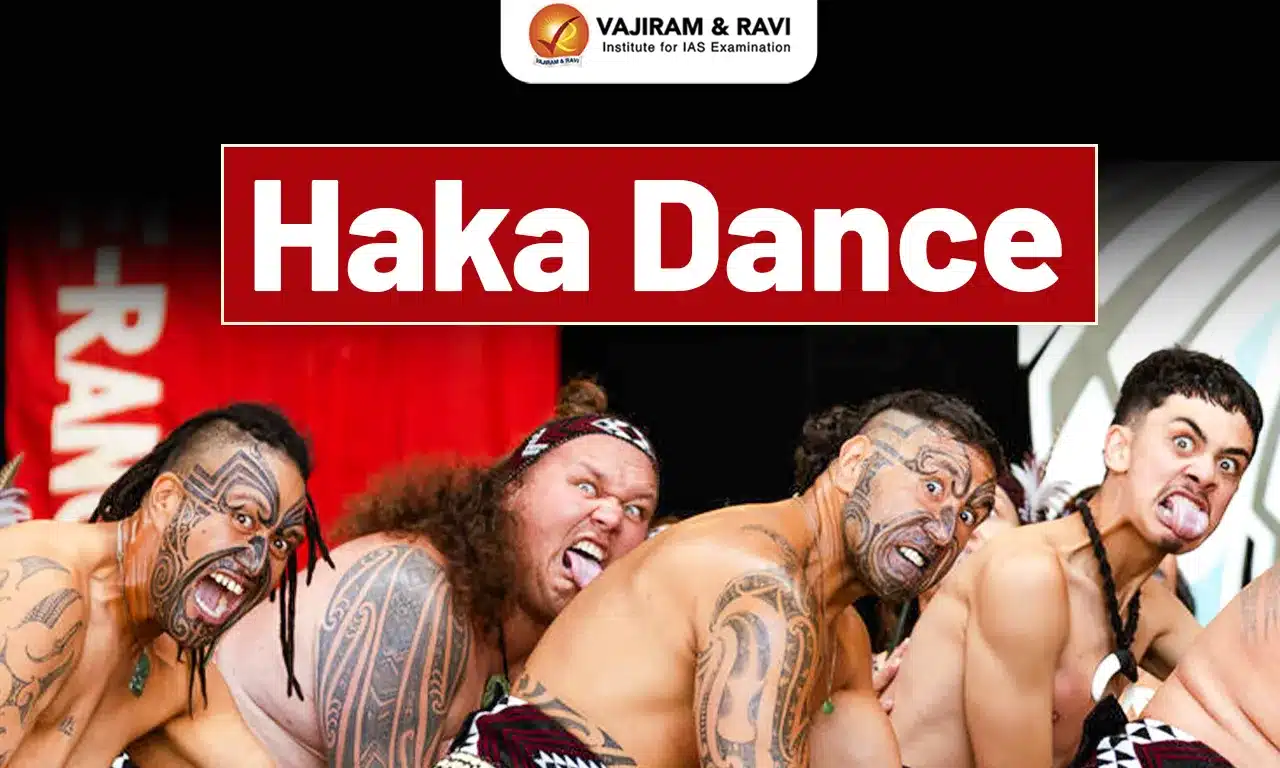
Haka Dance Latest News
A Sikh Nagar Kirtan or religious procession in South Auckland, New Zealand, was protested in the form of a traditional tribal “haka” dance recently.
About Haka Dance
- It is a traditional dance of the indigenous Māori people of New Zealand.
- It is known for its powerful energy, fierce facial expressions (pukana), and physical movements like stamping, hand gestures, and chanting.
- Haka varies by tribal region, with many haka telling the story of significant events in a tribe’s history.
- Traditionally, the haka was performed for war, to celebrate achievements, or to welcome guests.
- Today, it is performed at important occasions like sporting events, weddings, and funerals.
- It symbolizes tribal pride, strength, and unity.
- It became known to the world at large when, in the early 20th century, it was incorporated into the pregame ritual of New Zealand’s national rugby union team, the All Blacks.
- It also made headlines globally in November 2024 when two lawmakers used Haka to protest against a bill in the New Zealand parliament.
Source: IE
Haka Dance FAQs
Q1: What is the Haka dance?
Ans: It is a traditional dance of the indigenous Māori people of New Zealand.
Q2: For what occasions was the Haka traditionally performed?
Ans: Traditionally, it was performed for war, to celebrate achievements, or to welcome guests.
Q3: What does the Haka symbolize?
Ans: The Haka symbolizes tribal pride, strength, and unity.
Q4: Which sports team popularized the Haka internationally in the early 20th century?
Ans: The New Zealand national rugby union team, the All Blacks, popularized the Haka internationally.
