
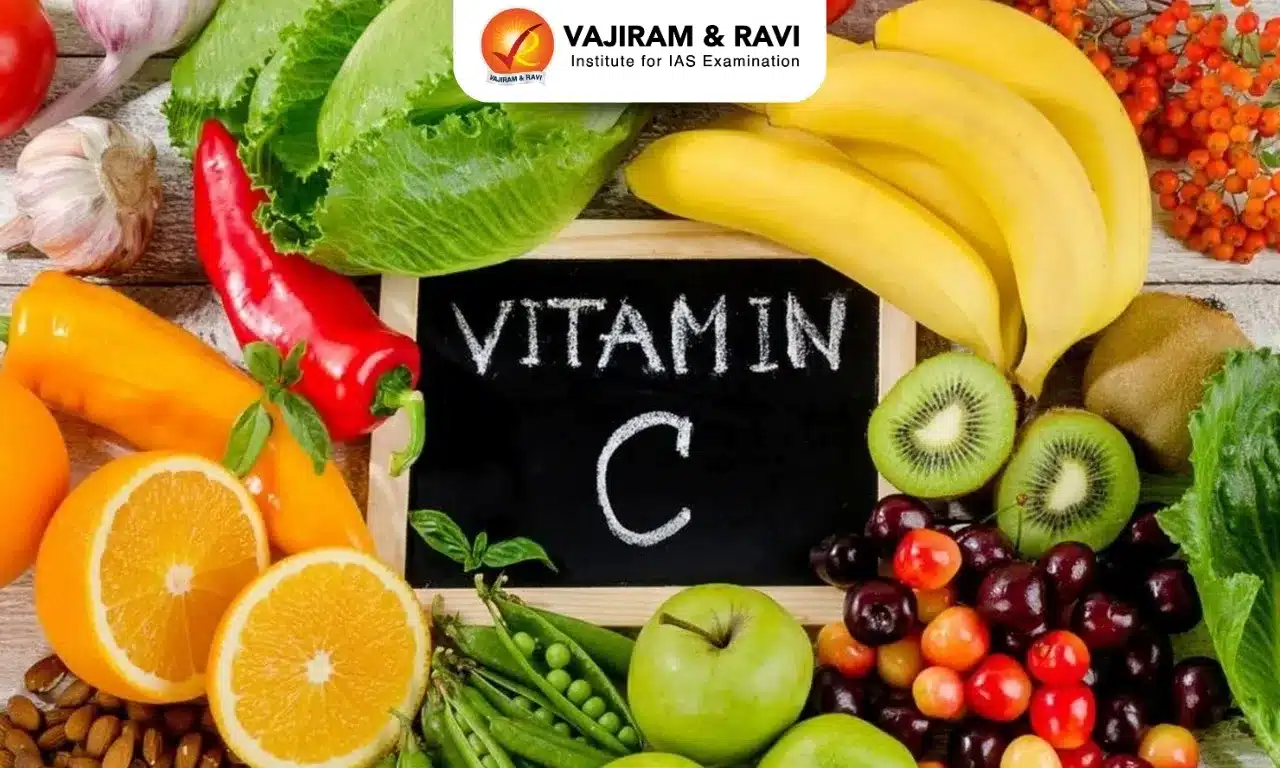
Vitamin C Latest News
Recent research suggests that large doses of vitamin C may provide our lungs with a degree of protection from the harmful effects of fine particles in the air.
About Vitamin C
- Vitamin C, also known as ascorbic acid, is a water-soluble vitamin.
- Function:
- It is needed for the growth and repair of tissues in all parts of your body. It is used to:
- Form an important protein called collagen, used to make skin, tendons, ligaments, and blood vessels.
- Heal wounds and form scar tissue.
- Repair and maintain cartilage, bones, and teeth.
- Aid in the absorption of iron.
- It is a powerful antioxidant that can neutralize harmful free radicals.
- It helps make several hormones and chemical messengers used in the brain and nerves.
- It is needed for the growth and repair of tissues in all parts of your body. It is used to:
- The body doesn't make vitamin C. It comes from the diet.
- Sources:
- Vitamin C comes from fruits and vegetables.
- Good sources include citrus, red and green peppers, tomatoes, broccoli, and greens.
- Some juices and cereals have added vitamin C.
- Vitamin C is sensitive to heat, so some of its nutritional benefits can be lost during cooking. Raw foods are more beneficial as dietary sources.
- Vitamin C is not stored in your body, so deficiency can happen quickly.
- Sometimes, vitamin C deficiency can lead to scurvy.
- Scurvy symptoms and signs can include anemia, exhaustion, spontaneous bleeding, limb pain, swelling, and sometimes ulceration of the gums and loss of teeth.
Source: SA
Vitamin C FAQ's
Q1: What is another name for Vitamin C?
Ans: Vitamin C is also known as ascorbic acid.
Q2: Is Vitamin C water-soluble or fat-soluble?
Ans: Vitamin C is water-soluble.
Q3: Does the human body produce Vitamin C on its own?
Ans: No, the body does not make Vitamin C; it must come from the diet.
Q4: Which are the good sources of Vitamin C?
Ans: Good sources include citrus, red and green peppers, tomatoes, broccoli, and greens.
Q5: Is Vitamin C sensitive to heat?
Ans: es, Vitamin C is sensitive to heat and can be lost during cooking.
