3D Microscope

3D Microscope

3D Microscope Latest News

For the first time, the Indian Army's Department of Ophthalmology at Army Hospital (Research and Referral), New Delhi, has successfully performed Minimally Invasive Glaucoma Surgery (MIGS) using a 3D Microscope.

What is a Microscope?

  • microscope is an instrument that magnifies small objects, making them visible to the naked eye by bending (refracting) light rays through curved lenses.
  • The most commonly used microscopes are optical microscopes, where visible light is focused through lenses to create an enlarged image.

What is a 3D Microscope?

  • A 3D microscope produces images with depth information (X, Y, and Z axes), allowing researchers to visualize and measure the topography, volume, and internal structures of samples.
  • Unlike traditional light microscopes, which provide flat, 2D images, 3D microscopes use advanced optical, electron, or computational techniques to capture and reconstruct three-dimensional data.
  • This is particularly useful for studying complex biological or environmental samples, such as soil microbes, aquatic organisms, or microplastics.

Features of the 3D Microscope

  • The 3D Microscope uses advanced three-dimensional visualisation, assisting in complex eye surgeries such as treatment for squint, cataract, corneal diseases, glaucoma, and retinal conditions.
  • It employs special 3D polarisation glasses for surgeons and a 55-inch 4K ultra-HD display.
  • Key advantages include:
    • Reduced surgical time and lower complication rates compared to conventional microscopes.
    • Decreased endoilluminator power requirements, thereby reducing photo-toxicity risks.
    • Ease of performing surgeries in complex and rare cases.

3D Microscope FAQs

Q1: What is a 3D Microscope?
Ans: A 3D Microscope is an advanced imaging tool that creates three-dimensional, highly detailed visualizations of microscopic samples, enhancing depth perception.

Q2: Which technologies are used in 3D Microscopy?
Ans: Techniques like confocal microscopy, two-photon microscopy, and light-sheet fluorescence microscopy are commonly used for 3D imaging.

Q3: How does a 3D Microscope differ from a traditional microscope?
Ans: Unlike traditional microscopes that provide flat, two-dimensional images, 3D microscopes generate volumetric images that can be rotated and analysed from different angles.

Source: PIB

StormBreaker Missile

StormBreaker Missile

StormBreaker Missile Latest News

US fighter jets appear to be using advanced "StormBreaker" precision glide bombs in combat against the Houthis, part of the intense bombing campaign against the Iran-backed rebels.

About StormBreaker Missile

  • The Stormbreaker, designated as the GBU-53/B and also known as the Small Diameter Bomb II (SDB-II), is an American air-launched, precision-guided glide bomb developed by Raytheon.
  • It is designed for all-weather precision strikes against both stationary and moving targets.

StormBreaker Missile Features

  • The weapon weighs 93 kg, measures 1.76 meters in length, and has a diameter ranging from 15 to 18 cm. 
  • It features a multi-mode guidance system that combines millimeter-wave radar, uncooled infrared imaging, and a digital semi-active laser. 
  • Its GPS/INS navigation system allows for real-time in-flight target updates, enhancing adaptability to evolving mission requirements.
  • It incorporates TacNet Data Link (DL) technology, enabling weapon-to-weapon collaboration. 
  • This system facilitates Automatic Target Recognition (ATR) to identify and engage tracked or wheeled vehicles.
  • It features a multi-effects warhead that enhances lethality against a range of targets. 
  • The weapon, which combines blast, fragmentation, and shaped charge modes, guarantees decisive outcomes with each attack, efficiently eliminating threats on the battlefield.
  • It can strike moving targets at a range of 45 miles and stationary targets at a maximum range of 69 miles.

StormBreaker Missile FAQs

Q1. Which company developed the StormBreaker missile?

Ans. Raytheon

Q2. What is the maximum range of StormBreaker against stationary targets?

Ans. 69 miles

Q3. What is another name for the StormBreaker missile?

Ans. Small Diameter Bomb II (SDB-II)

SourceBI

Anaemia

Anaemia

Anaemia Latest News

According to a recent study conducted on women in the UK, being anaemic during pregnancy could be linked to a 47 percent higher chance of the child having a heart condition at birth.

About Anaemia

  • Anemia is a problem of not having enough healthy red blood cells or hemoglobin to carry oxygen to the body's tissues. 
    • Hemoglobin is a protein found in red cells that carries oxygen from the lungs to all other organs in the body. 
  • Having anemia can cause tiredness, weakness, and shortness of breath.
  • There are many forms of anemia. Each has its own cause. 
  • Some types of anemia are inherited, but people may also acquire or develop the condition during their lifetimes.
  • WHO estimates that 40% of children 6–59 months of age, 37% of pregnant women, and 30% of women 15–49 years of age worldwide are anaemic.
  • Anemia can be short-term or long-term. It can range from mild to severe. 
  • Severe anemia can be life-threatening. This condition may also be a symptom of serious conditions like cancer.
  • common type of anaemia is iron-deficiency anaemia, which is usually caused by not eating or absorbing enough iron, or by losing blood.
  • Treatments for anemia might involve taking supplements or having medical procedures. 
  • Eating a healthy diet might prevent some forms of anemia.

Anaemia FAQs

Q1. What is the main reason for anaemia?

Ans. The main reason for anaemia is a lack of healthy red blood cells or hemoglobin in the blood.

Q2. Is anemia life threatening?

Ans. Yes, severe or untreated anemia can be life-threatening. 

Q3. What is the main role of hemoglobin in the body?

Ans. Carry oxygen from the lungs to other organs.

SourceBS

Iran

Iran

Iran Latest News

Recently, a massive explosion occurred at Shahid Rajaee Port near the southern Iranian city of Bandar Abbas, resulting in 18 deaths and 800 injuries.

About Iran

  • Iran, with its capital at Tehran, is a prominent country located in West Asia.
  • Iran shares land boundaries with ArmeniaAzerbaijan, and Turkmenistan to the northAfghanistan and Pakistan to the eastIraq to the west, and Turkey to the northwest.
  • Iran has maritime borders with BahrainKuwaitOmanQatar, and Saudi Arabia.
  • It is bordered by major water bodies, namely the Caspian Sea to the north, and the Persian Gulf and the Gulf of Oman to the south.

Geographical Features of Iran

  • Iran's terrain is predominantly marked by the Iranian Plateau, characterised by vast deserts like the Dasht-e Kavir and Dasht-e Lut.
  • The country is home to important mountain ranges such as the Zagros Mountains in the west and the Alborz Mountains in the north.
  • Mount Damavand, located in the Alborz Mountain Range, is the highest peak in Iran and also the highest volcano in the Middle East.
  • Iran's climate varies from arid and semi-arid conditions to subtropical regions, especially along the Caspian coast.
  • Major rivers in Iran include the KarunDezKarkheh, and Diyala rivers, essential for irrigation and agriculture.
  • Iran's natural resources are abundant and include oil and natural gas, along with coalchromiumcopperiron oreleadmanganesezinc, and sulphur.

Strategic Importance of Shahid Rajaee Port

  • Location: The port is located near the Strait of Hormuz, through which nearly 20% of global oil trade passes, making it a critical chokepoint in global energy security.
  • Economic role: It is Iran’s largest and most technologically advanced container port, handling a significant share of the country’s import-export trade.

Iran FAQs

Q1: What is the significance of Iran for India’s foreign policy?
Ans: Iran is crucial for India's energy security, connectivity projects like the Chabahar Port, and as a gateway to Central Asia under the International North-South Transport Corridor (INSTC).

Q2: What is the Chabahar Port project?
Ans: The Chabahar Port in Iran, developed with Indian assistance, provides India direct access to Afghanistan and Central Asia, bypassing Pakistan.

Source: TH

Continental Shelf

Continental Shelf

Continental Shelf Latest News

India has increased its claim in the Central Arabian Sea, as part of its ‘extended continental shelf’ by nearly 10,000 sq.km but also modified an earlier claim to avoid a long-standing dispute with Pakistan over the maritime boundary between the two countries.

About Continental Shelf

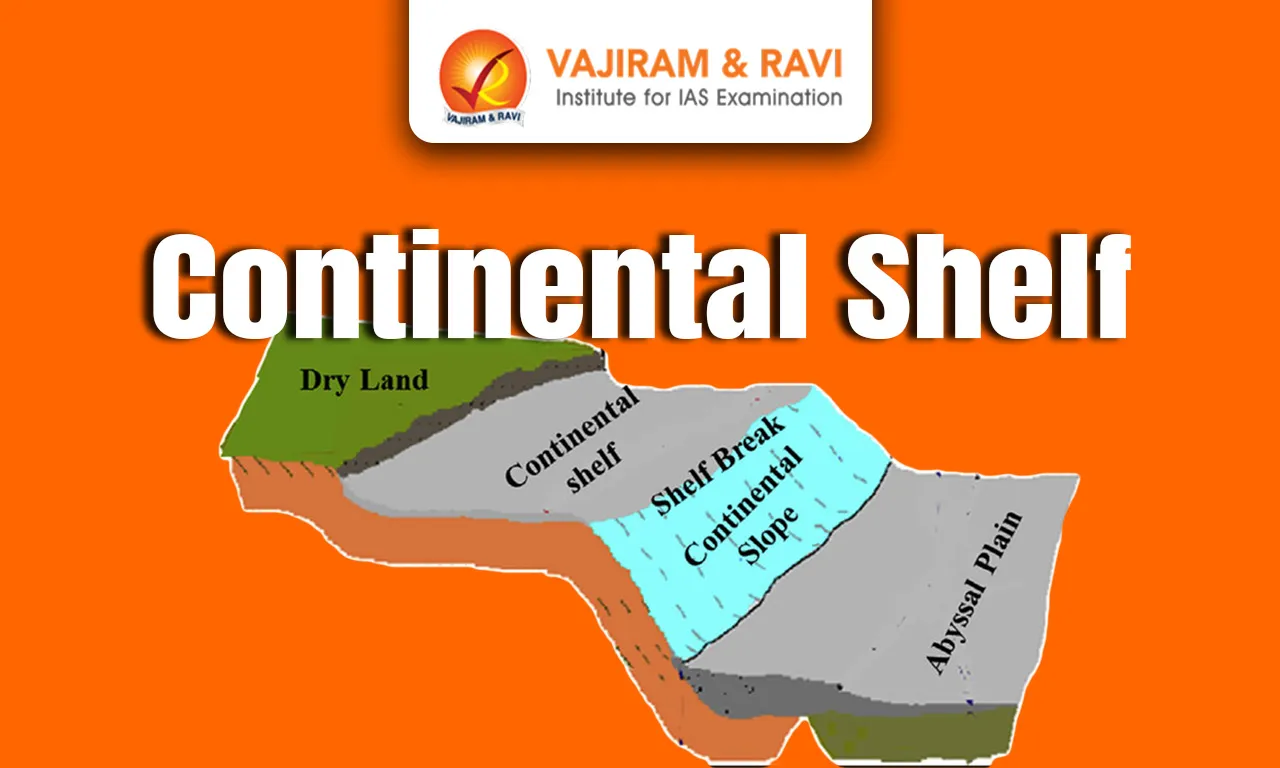
  • It is the edge of a continent that lies under the ocean.
  • It is the extension of a coastal State’s land territory under the sea.
  • It extends from the coastline of a continent to a drop-off point called the shelf break.
  • From the break, the shelf descends toward the deep ocean floorin what is called the continental slope.
  • The actual boundary of a continent is not its coastline, but the edge of the continental shelf. 
  • Formation: 
    • Over many millions of years, organic and inorganic materials formed continental shelves. 
    • Inorganic material built up as rivers carried sediment—bits of rock, soil, and gravel—to the edges of the continents and into the ocean. 
    • These sediments gradually accumulated in layers at the edges of continents. 
    • Organic material, such as the remains of plants and animals, also accumulated.
  • The widths of the continental shelves vary.
  • Most continental shelves are broad, gently sloping plains covered by relatively shallow water. 
  • The average width of continental shelves is about 65 km (40 miles). 
  • Water depth over the continental shelves averages about 60 meters (200 feet). 
  • Sunlight penetrates the shallow waters, and many kinds of organisms flourish—from microscopic shrimp to giant seaweed called kelp. 
  • Ocean currents and runoff from rivers bring nutrients to organisms that live on continental shelves.
  • Plants and algae make continental shelves rich feeding grounds for sea creatures. 
  • The shelves make up less than 10 percent of the total area of the oceans.
  • In some places, deep canyons and channels cut through the continental shelves. 
  • Little light penetrates these submarine canyons, and they are sometimes the least-explored areas of continents. 

What is the Extended Continental Shelf?

  • Geopolitically, under the United Nations Convention on the Law of the Sea (UNCLOS), coastal countries have special rights over the continental shelf for exploring and exploiting natural resources up to 200 nautical miles (exclusive economic zone).
  • In addition to this, such States can make claims for more area in the ocean provided they can scientifically establish to a UN body, called the Commission on the Limits of the Continental Shelf (CLCS), that this claimed area extends unbroken from their landmass all the way to the seabed.
  • All of this oceanic area is considered part of a country’s extended continental shelf. 
  • This gives them rights to commercially mine for valuable minerals, polymetallic nodules, and oil reserves. 

Continental Shelf FAQs

Q1. What is the difference between EEZ and continental shelf?

Ans. The continental shelf includes only the seabed and subsoil, whereas the EEZ also includes the water column.

Q2. Which is the largest continental shelf in the world?

Ans. The world's largest continental shelf extends 1,500 km (about 930 miles) from the coast of Siberia into the Arctic Ocean.

Q3. Which is the longest continental shelf in India?

Ans. The Indian state with the broadest continental shelf is Gujarat.

SourceTH

National Industrial Corridor Development Programme (NICDP)

National Industrial Corridor Development Programme

National Industrial Corridor Development Programme (NICDP) Latest News

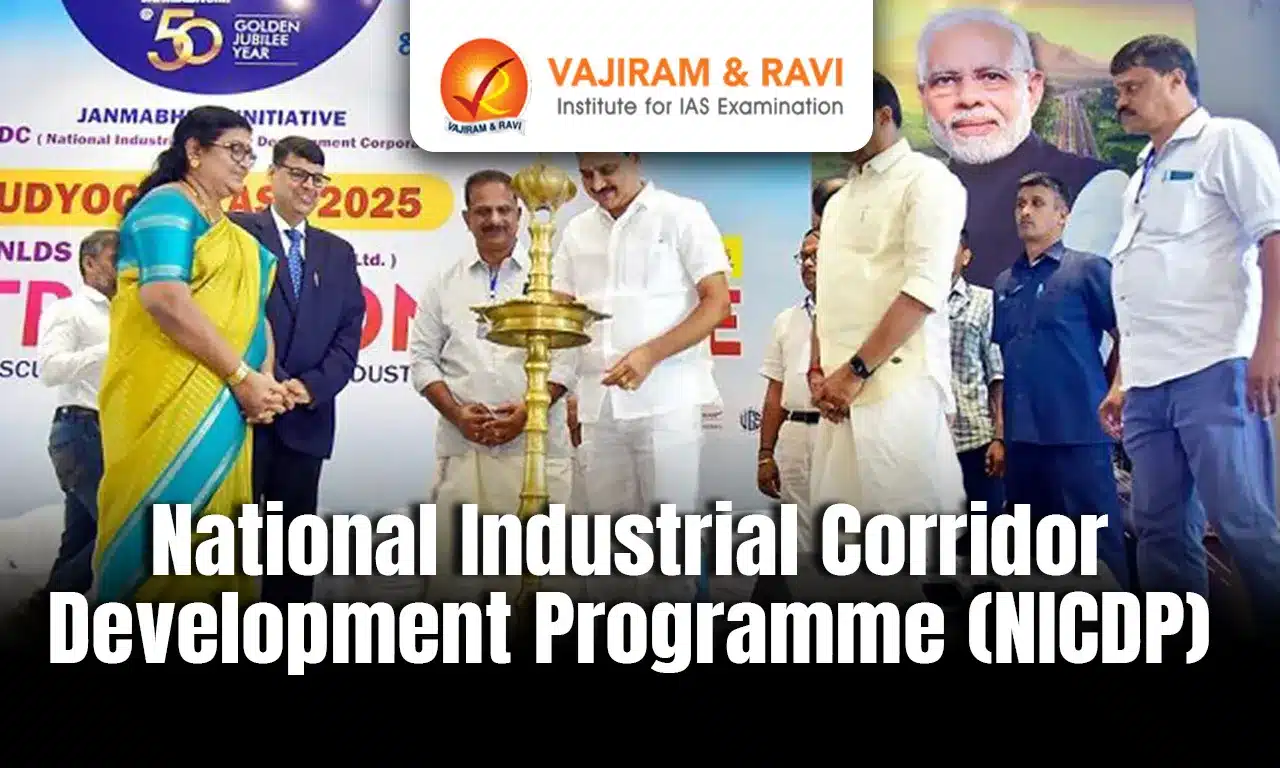
Recently, NICDC was honoured with the Udyog Vikas Award at the Udyog Vikas event organised by Janmabhumi Daily in Kerala.

About National Industrial Corridor Development Programme (NICDP)

  • NICDP is India's most ambitious infrastructure initiative aimed at developing new industrial cities as "Smart Cities", integrating next-generation technologies across infrastructure sectors.
  • National Industrial Corridor Development Corporation (NICDC) is the nodal agency managing the programme.
  • NICDP is designed to attract investments from both large anchor industries and Micro, Small, and Medium Enterprises (MSMEs), acting as a catalyst for achieving the Government’s goal of $2 trillion in exports by 2030.
  • Newly sanctioned industrial areas under NICDP include: Khurpia (Uttarakhand), Rajpura-Patiala (Punjab), Dighi (Maharashtra), Palakkad (Kerala), Agra and Prayagraj (Uttar Pradesh), Gaya (Bihar), Zaheerabad (Telangana), Orvakal and Kopparthy (Andhra Pradesh), and Jodhpur-Pali (Rajasthan).
  • These projects are closely aligned with the PM GatiShakti National Master Plan, ensuring integrated, seamless multi-modal connectivity across the country.

Palakkad Industrial Smart City (Kerala)

  • The Palakkad Industrial Smart City, spanning 1,710 acres across Pudussery CentralPudussery West, and Kannambra, is set to reshape Kerala’s industrial landscape.
  • Strategic location advantages:
    • 21 km from Palakkad city
    • 120 km from Cochin
    • 50 km from Coimbatore
    • Offering seamless interstate connectivity and strong logistical benefits.
  • Designed to be South India's key industrial gateway, it ensures multi-modal connectivity via road, rail, and air, making it attractive for high-quality investments, regional employment generation, and innovation.

National Industrial Corridor Development Programme (NICDP) FAQs

Q1: What is the objective of the National Industrial Corridor Development Programme (NICDP)?
Ans: The NICDP aims to develop world-class industrial nodes and integrated infrastructure to boost manufacturing, attract investments, and enhance India's competitiveness globally.

Q2: Which government agency is responsible for implementing NICDP?
Ans: The National Industrial Corridor Development Corporation (NICDC) is the main agency coordinating the development of industrial corridors under NICDP.

Source: PIB

What is United Nations High Seas Treaty?

United Nations High Seas Treaty

United Nations High Seas Treaty Latest News

Two years after countries adopted the high seas treaty, delegates recently gathered at the first session of the Preparatory Commission meeting in New York, to develop rules needed to implement the agreement and set the stage for the first Conference of Parties (COP1).

About UN High Seas Treaty

  • The Biodiversity Beyond National Jurisdiction (BBNJ) Agreement , or the ‘High Seas Treaty’, is an international treaty under the United Nations Convention on the Law of the Sea (UNCLOS).
  • It is the first-ever treaty to protect the world's oceans that lie outside national boundaries.
  • It is also known as the ‘Paris Agreement for the Ocean.’
  • It is a legally binding treaty to protect marine life in international waters.
  • It sets precise mechanisms for the sustainable use of marine biological diversity through international cooperation and coordination. 
  • It would also contribute to achieving several SDGs, particularly SDG14 (Life Below Water).
  • The treaty will enter into force 120 days after the 60th country formally ratifies the agreement.

UN High Seas Treaty Features

  • It contains 75 articles that aim at protecting, caring for, and ensuring the responsible use of the marine environment, maintaining the integrity of ocean ecosystems, and conserving the inherent value of marine biological diversity.
  • It aims to place 30% of the seas into protected areas by 2030 (a pledge made by countries at the UN biodiversity conference in 2022).
  • It will provide a legal framework for establishing vast marine protected areas (MPAs) to protect against the loss of wildlife and share out the genetic resources of the high seas.
  • It also covers environmental assessments to evaluate the potential damage of commercial activities, such as deep-sea mining.
  • It will establish a conference of the parties (CoP) that will meet periodically and enable member states to be held to account on issues such as governance and biodiversity.
  • The treaty also includes a pledge by signatories to share ocean resources.
  • Parties cannot claim or exercise sovereign rights over marine resources derived from the high seas and ensure fair and equitable sharing of benefits. 
  • It follows an inclusive, integrated, ecosystem-centric approach based on the precautionary principle and promotes using traditional knowledge and the best available scientific knowledge. 
  • It helps minimise impacts on the marine environment through area-based management tools and establishes rules for conducting environmental impact assessments. 

What are High Seas?

  • The high seas begin at the border of countries’ exclusive economic zones, which extend up to 370 km (200 nautical miles) from coastlines.
  • Beyond that point, the seas are under the jurisdiction of no country, and all countries have a right to fish, ship, and do research.
  • They make up more than 60% of the world’s oceans by surface area.
  • Activities on the high seas are often unregulated and insufficiently monitored, leaving them vulnerable to exploitation.

United Nations High Seas Treaty FAQs

Q1. Is India part of the UN High Seas Treaty?

Ans. Yes, India is a signatory to the United Nations High Seas Treaty.

Q2. What does the UN High Seas Treaty do?

Ans. It is a landmark international agreement aimed at protecting marine life in the high seas.

Q3. Is the UN High Seas Treaty legally binding?

Ans. Yes, the UN High Seas Treaty is a legally binding treaty. 

SourceDTE

RBI’s Migration to ‘.bank.in’ Domain: Enhancing Digital Banking Security

RBI's Migration to ‘.bank.in’ Domain: Enhancing Digital Banking Security

What’s in Today’s Article?

  • Migration to .bank.in Latest News
  • Migration to ‘.bank.in’ Domain
  • Current Domain Usage and Transition to ‘.bank.in’ Domain
  • Rationale Behind the Domain Change
  • Migration to .bank.in FAQ’s

Migration to .bank.in Latest News

  • The Reserve Bank of India (RBI) has directed banks to migrate to the exclusive '.bank.in' domain by October 31, 2025, to combat rising digital payment frauds. 
  • This move aims to enhance cybersecurity and strengthen trust in India's digital banking and payment services.

Migration to ‘.bank.in’ Domain

  • The Reserve Bank of India (RBI) has operationalised the exclusive ‘.bank.in’ internet domain for Indian banks and directed all banks to migrate to it by October 31, 2025.
    • A domain name serves as a unique and easy-to-remember address for accessing websites on the internet. 
  • This step aims to enhance cybersecurity and strengthen trust in digital banking services.

Implementation and Management

  • The Institute for Development and Research in Banking Technology (IDRBT) has been authorised to act as the exclusive registrar for the ‘.bank.in’ domain. 
  • The authorisation comes from the National Internet Exchange of India (NIXI), under the Ministry of Electronics and Information Technology (MeitY).
    • NIXI is a not-for-profit organisation set up to enable Internet Service Providers (ISPs) to route domestic internet traffic within India, improving service quality and reducing international bandwidth costs.

Significance of the ‘.IN’ Domain

  • The ‘.IN’ domain is India’s Country Code Top Level Domain (ccTLD), symbolising national identity on the global internet.
    • A ccTLD is a two-letter code that represents a specific country or territory on the internet. 
    • It's used in a website's domain name to indicate the geographic location or affiliation of the website. 
    • Example - .us for the United States, .ca for Canada, and .in for India. 

Current Domain Usage and Transition to ‘.bank.in’ Domain

  • At present, banks in India use generic domains like ‘.com’ or ‘.co.in’ for their websites.

Transition to ‘.bank.in’ Domain

  • With RBI’s directive, all banks will migrate to the exclusive ‘.bank.in’ domain by October 31, 2025. 
  • Until the full migration, banks will maintain both their old and new domains, with the old domain redirecting users to the new ‘.bank.in’ website.

Customer Guidance

  • Post-migration, customers should verify that their bank’s website and any official emails end with ‘.bank.in’ to confirm authenticity and avoid fraud.

Rationale Behind the Domain Change

  • The rapid digitalisation of financial services has increased exposure to cyber threats and digital risks, leading to a surge in sophisticated digital frauds. 
  • These frauds pose reputational, operational, and business risks, and threaten financial stability by eroding customer trust.

RBI’s Response

  • To combat rising frauds, the RBI announced the introduction of the exclusive ‘.bank.in’ internet domain for Indian banks during the February 2025 monetary policy.

Issues with Existing Domains

  • Currently, anyone can register domain names with minor alterations (e.g., using "0" instead of "O"), making it hard for customers to distinguish real bank websites from fake ones, leading to phishing and fraud.

Advantages of the ‘.bank.in’ Domain

  • Only RBI-regulated banks will be allowed to register under the ‘.bank.in’ domain, making it difficult for fraudsters to create fake banking websites. 
  • This move will help reduce cyber threats, prevent phishing attacks, and enhance trust in digital banking and payment services.

Rising Digital Payment Frauds

  • According to the RBI, during April–September 2024, internet and card frauds accounted for about 20% of the total amount involved and nearly 84% of the total number of fraud cases. 
  • In the first half of FY24, India reported 18,461 banking frauds amounting to ₹21,367 crore. 
  • Phishing attacks using fake banking websites were a major cause.

Strengthening India’s Digital Economy

  • With a goal to become a $1 trillion digital economy by 2025 and $5.4–6.9 trillion by 2047, protecting digital transactions is crucial. 
  • The RBI’s domain initiative supports secure digital growth and encourages financial inclusion.

Migration to .bank.in FAQ’s

Q1. Why are banks migrating to the ‘.bank.in’ domain?

Ans. To improve cybersecurity and combat rising digital payment frauds in India’s digital banking services.

Q2. When is the migration deadline for banks?

Ans. Banks must migrate to the ‘.bank.in’ domain by October 31, 2025, as per RBI's directive.

Q3. Who manages the ‘.bank.in’ domain?

Ans. The Institute for Development and Research in Banking Technology (IDRBT) manages the domain under NIXI’s authorization.

Q4. Why is the ‘.bank.in’ domain important?

Ans. It ensures only RBI-regulated banks can register, reducing fraudulent banking websites and enhancing customer trust.

Q5. What issues exist with current banking domains?

Ans. Fraudsters can register domains with minor alterations, making it hard for users to distinguish real bank websites from fake ones.

Source:  IE | BT

Line of Control (LoC)

Line of Control (LoC)

Line of Control Latest News

Pakistan violated the ceasefire along the Line of Control in the Kashmir Valley by resorting to unprovoked firing, a defence official said recently and added the army responded appropriately.

About Line of Control

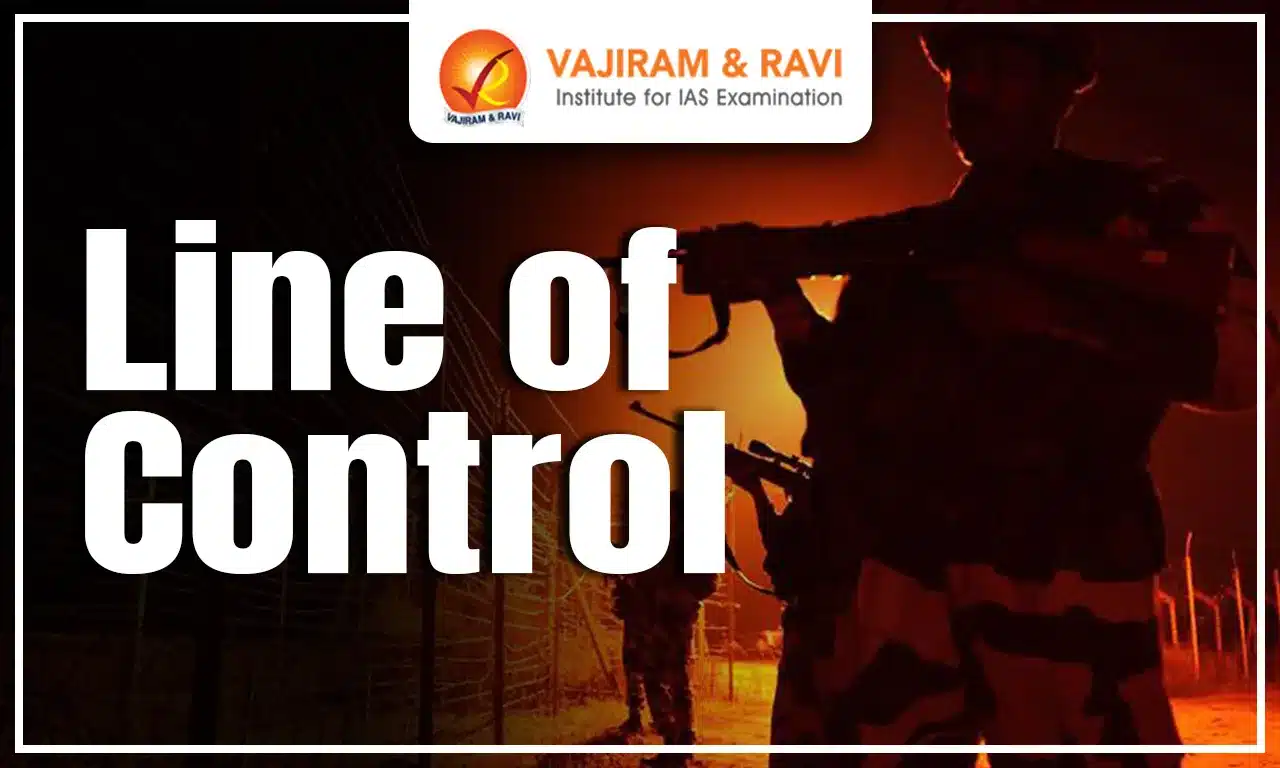
  • The LoC is the de facto military boundary between India and Pakistan in the region of Jammu and Kashmir.
  • It is not an international boundary but a ceasefire line that was established after the 1947-48 India-Pakistan war over Kashmir.
  • Then called the Ceasefire Line (CFL), it was redesignated as the "Line of Control" following the Simla Agreement, which was signed on 3 July 1972, following the 1971 Indo-Pakistan war.
  • The LoC stretches about 740 kilometers, from the region of Ladakh in the north down to the Poonch district in the south.
  • It is heavily militarized, with frequent skirmishes and exchanges of fire between Indian and Pakistani forces.
  • On the Indian side of the LoC comes a part of Jammu and Kashmir and Ladakh. On the Pakistani side comes the part of Pakistan Occupied Kashmir (POK), Gilgit, and Baltistan
  • The LoC is different from the International Border (IB), which is the officially recognized border between India and Pakistan elsewhere.

Line of Control FAQs

Q1. The Line of Control (LoC) was established after which conflict?

Ans. 1947-48 India-Pakistan War over Kashmir

Q2. Under which agreement was the Ceasefire Line renamed as the "Line of Control"?

Ans. Simla Agreement

Q3. Approximately how long is the Line of Control (LoC)?

Ans. 740 kilometers

SourceTH

Sarvam AI Selected to Build India’s First Homegrown Sovereign AI Model

Sarvam AI Selected to Build India’s First Homegrown Sovereign AI Model

What’s in Today’s Article?

  • IndiaAI Mission Latest News
  • Introduction
  • About the Sarvam AI Model Initiative
  • Model Variants Under Development
  • Strategic Significance of the Project
  • The IndiaAI Mission and National AI Infrastructure
  • Challenges and Opportunities Ahead
  • Future Prospects
  • IndiaAI Mission FAQs

IndiaAI Mission Latest News

  • The government has selected Bengaluru-based start-up Sarvam to build the country’s first indigenous artificial intelligence (AI) large language model (LLM) amid waves made by China’s low cost model DeepSeek.

Introduction

  • In a landmark move to bolster India’s strategic autonomy in artificial intelligence (AI), Bengaluru-based start-up Sarvam AI has been selected to build the country’s first homegrown sovereign large language model (LLM). 
  • The project, undertaken under the government’s ambitious ₹10,370 crore IndiaAI Mission, aims to create a robust AI infrastructure fully developed, deployed, and optimized within India. 
  • This development marks a critical step toward ensuring India’s leadership in the AI domain and promoting domestic innovation through indigenous capabilities.

About the Sarvam AI Model Initiative

  • The government chose Sarvam after a rigorous selection process involving 67 applicants. The start-up will receive extensive support, including access to 4,000 high-end GPUs for six months to build the model from scratch. 
  • The GPUs will be provided through companies such as Yotta Data Services, Tata Communications, and E2E Networks, which were separately empanelled to create AI data centres in India.
  • The model, to be built entirely using local talent and infrastructure, will have 70 billion parameters, positioning it to compete with some of the best global AI models. 
  • According to Sarvam, the LLM will focus on advanced reasoning, voice-based tasks, and fluency in Indian languages, making it uniquely suited for India's diverse population.

Model Variants Under Development

  • Sarvam AI plans to develop three key variants of its LLM:
    • Sarvam-Large: Designed for advanced reasoning and complex generation tasks.
    • Sarvam-Small: A lightweight model optimized for real-time interactive applications.
    • Sarvam-Edge: A compact model tailored for on-device processing, enabling AI capabilities on mobile and IoT devices.
  • These variants aim to cater to a wide range of applications, from citizen services to enterprise solutions, ensuring adaptability across various use cases.

Strategic Significance of the Project

  • This initiative goes beyond technological advancement; it is a strategic move to establish critical national AI infrastructure
  • The company emphasized that the goal is to create multi-modal, multi-scale foundation models that are not just functional but deeply integrated with Indian languages and societal needs.
  • For citizens, this means AI systems that feel familiar and culturally relevant. 
  • For enterprises, it unlocks the potential to harness AI capabilities without concerns over data sovereignty, as all processes will remain within India's borders.

The IndiaAI Mission and National AI Infrastructure

  • The IndiaAI Mission, approved by the Union Cabinet, is focused on scaling India's AI ecosystem by investing in compute capacity, skilled research talent, datasets, AI applications, and trusted AI practices. 
  • One of its key initiatives is the IndiaAI Compute Capacity program, which aims to deploy over 10,000 GPUs to democratize access to AI resources for startups, researchers, and institutions.
  • To facilitate greater participation, especially by smaller companies, the government has also eased eligibility norms for accessing these resources, offering GPU services at globally competitive subsidized rates.
  • Sarvam’s selection to develop the first sovereign AI model exemplifies the mission’s objective of nurturing homegrown champions capable of competing on the global stage.

Challenges and Opportunities Ahead

  • While the opportunity is historic, building a population-scale LLM is a complex challenge. 
  • It demands seamless integration of vast datasets, engineering innovations to handle diverse languages and dialects, and fine-tuning for cultural and contextual understanding.
  • Additionally, unlike some global LLMs that are open-sourced, Sarvam’s model is expected to be closely managed and fine-tuned specifically for Indian use cases
  • This positions it as a secure and specialized alternative in an era where data privacy and localized solutions are paramount.

Future Prospects

  • Sarvam’s success could unlock a universe of possibilities, from enabling AI-driven citizen services in rural areas to building enterprise-grade AI applications with localized intelligence. 
  • It sets the foundation for India to not merely consume global AI solutions but to become a co-creator and leader in AI innovation.
  • With investments from prominent venture capitalists like Lightspeed Venture Partners and Peak XV Partners, Sarvam is well-resourced to deliver on this ambitious national mission.

IndiaAI Mission FAQs

Q1. What is Sarvam AI’s project about?

Ans. Sarvam AI has been selected to build India’s first indigenous large language model under the IndiaAI Mission.

Q2. What are the main features of Sarvam’s AI model?

Ans. The model focuses on reasoning, supports voice tasks, and is fluent in multiple Indian languages.

Q3. How is the government supporting Sarvam AI?

Ans. Sarvam will get access to 4,000 GPUs and dedicated infrastructure to develop the model from scratch.

Q4. What are the different versions of the Sarvam model?

Ans. Sarvam is developing Sarvam-Large, Sarvam-Small, and Sarvam-Edge for different use cases.

Q5. What is the strategic importance of this project?

Ans. It enhances India’s AI sovereignty, promotes domestic innovation, and ensures secure, localized AI solutions.

Source : IE | TH

India Expands its Extended Continental Shelf Claim in the Arabian Sea

India Expands its Extended Continental Shelf Claim in the Arabian Sea

What’s in Today’s Article?

  • India’s Maritime Boundary Dispute with Pakistan Latest News
  • Background - Exclusive Economic Zone (EEZ) and ECS
  • India’s Current Oceanic Claims
  • Dispute with Pakistan and Sir Creek Issue
  • India’s Strategic Response - Modified and Partial Claims
  • Overlap with Other Countries - Oman, Myanmar, and Sri Lanka
  • India’s Maritime Boundary Dispute with Pakistan FAQs

India’s Maritime Boundary Dispute with Pakistan Latest News

  • India has expanded its Extended Continental Shelf (ECS) claim by nearly 10,000 sq km in the Central Arabian Sea.
  • India has also modified earlier claims to avoid a long-standing maritime boundary dispute with Pakistan.
  • Revised submissions were made in April 2025 to the United Nations' Commission on the Limits of the Continental Shelf (CLCS).

Background - Exclusive Economic Zone (EEZ) and ECS

  • EEZ: Coastal countries have exclusive rights to mining, fishing, and resources up to 200 nautical miles from their baselines.
  • ECS:
    • Countries can claim additional seabed areas if they can scientifically prove it is a natural extension of their landmass to the CLCS.
    • Rights include commercial mining of polymetallic nodules, oil reserves, and other valuable minerals.

India’s Current Oceanic Claims

  • 12 nautical miles: Territorial sea.
  • 200 nautical miles: EEZ.
  • New extension: ~1.2 million sq km of ECS being added to ~2 million sq km EEZ.
  • Combined seabed and sub-seabed area: It would become almost equal to India's land area of 3.274 million sq km.
  • India's first submission to the CLCS: It was made in 2009 covering the Bay of Bengal, Indian Ocean, and Arabian Sea.

Dispute with Pakistan and Sir Creek Issue

  • In 2021, Pakistan objected to India's claims, citing an overlap of 100 nautical miles near the disputed Sir Creek region.
    • Sir Creek is a disputed tidal estuary between Rann of Kutch in Gujarat and Sindh province (Pakistan).
  • As a result, CLCS rejected India's full claim in the Arabian Sea in March 2023.

India’s Strategic Response - Modified and Partial Claims

  • April 3, 2025: India submitted two partial claims to safeguard uncontested regions.
    • This approach avoids weakening India’s position in the valuable Central Arabian Sea region.
  • Statement by M Ravichandran [Secretary, Ministry of Earth Sciences (MoES)]: “We have increased our claim by an additional 10,000 sq km based on new data.”
  • Institutions of the MoES, such as the National Centre for Polar and Ocean Research (NCPOR, Goa), have played a key role in the technical aspects of determining India’s continental shelf.

Overlap with Other Countries - Oman, Myanmar, and Sri Lanka

  • Oman: Overlaps exist but not under dispute due to a 2010 agreement.
  • Myanmar and Sri Lanka:
    • India's claims in the Bay of Bengal and Indian Ocean (~300,000 sq km) face objections from Myanmar and Sri Lanka.
    • CLCS will begin new consultations later this year on these claims.

India’s Maritime Boundary Dispute with Pakistan FAQs

Q1. What is the significance of India's extended continental shelf (ECS) claim in the Central Arabian Sea?

Ans. The ECS claim enhances India's sovereign rights over seabed resources like minerals and hydrocarbons, almost matching India's land area and strengthening the Blue Economy.

Q2. Why did India modify its original ECS claim in the Arabian Sea recently?

Ans. India modified its claim to avoid overlap with the Pakistan-disputed Sir Creek region, ensuring uncontested areas in the Central Arabian Sea are secured.

Q3. What role does the Commission on the Limits of the Continental Shelf (CLCS) play in maritime boundary claims?

Ans. The CLCS scientifically evaluates and recommends states' extended continental shelf claims beyond their EEZ based on geological and geomorphological evidence.

Q4. Explain the Sir Creek dispute and its impact on India's maritime boundary claims.

Ans. The Sir Creek dispute between India and Pakistan over a tidal estuary led to Pakistan’s objection and the CLCS’s rejection of parts of India's original Arabian Sea claim.

Q5. Name the key institutions involved in supporting India's technical claims for the extended continental shelf.

Ans. The National Centre for Polar and Ocean Research (NCPOR) and the Ministry of Earth Sciences (MoES) are leading institutions involved in India's ECS submissions.

Source: TH

Frequent Downtimes in UPI Services: Causes, Impact & Solutions

Frequent Downtimes in UPI Services: Causes, Impact & Solutions

What’s in Today’s Article?

  • UPI downtimes Latest News
  • How UPI Works
  • Why NPCI Faced Several Outages
  • Why Banks Are Displeased with UPI
  • UPI downtimes FAQ’s

UPI downtimes Latest News

  • In March and April, the Unified Payments Interface (UPI) system faced three outages, disrupting payments on apps like GPay and PhonePe. 
  • One major cause was individual banks overwhelming the National Payments Corporation of India’s (NPCI) systems by sending excessive transaction status check requests.

How UPI Works

  • UPI is built on the Immediate Payment Service (IMPS) architecture. 
  • For UPI transactions, banks must join the UPI system and allow users to link their bank accounts via a mobile number on a Payment Service Provider (PSP) app like PhonePe or GPay. 
  • Almost all public and private banks are part of this network.

Interoperability

  • UPI is designed to be interoperable, enabling users to access their bank accounts through any UPI-enabled app and even register on multiple apps simultaneously.

Role of NPCI

  • While UPI appears to be a peer-to-peer system, nearly all transactions are routed through the National Payments Corporation of India (NPCI). 
  • NPCI encrypts the user's PIN and forwards payment information to the payer’s bank, which then processes the transaction.

Single Point of Failure

  • Since NPCI handles critical encryption and transaction routing, any downtime at NPCI results in complete disruption, as banks cannot independently process UPI transactions without it.

Why NPCI Faced Several Outages

  • NPCI is a collective of banks, with public sector banks holding the majority stake, as required by the Payment and Settlement Systems Act, 2007. 
  • Being bank-led, much of the system's implementation is left to individual banks, though NPCI oversees the UPI design and management.

Cause of Outages

  • Recently, individual banks overwhelmed the NPCI systems by sending excessive “check transaction” requests to verify completed payments. 
  • This stressed the system’s single point of failure and caused brief outages.

Introduction of UPI Lite

  • To reduce downtime impact, NPCI introduced UPI Lite, allowing users to make small payments (up to ₹2,000) without entering a PIN. 
  • However, even UPI Lite transactions still pass through NPCI servers for device verification, meaning NPCI remains a critical intermediary.

Persistent Single Point of Failure

  • Despite lighter processes like UPI Lite, NPCI continues to be at the center of all UPI activity, maintaining its position as a single point of vulnerability.

Why Banks Are Displeased with UPI

  • Lack of Significant Fees
    • Although UPI has revolutionized payments in India, banks have limited opportunities to collect fees from transactions, despite the associated costs. 
    • Banks incur around ₹0.80 per transaction, mainly due to SMS notification charges and the costs of maintaining payment records. 
    • However, they cannot charge a Merchant Discount Rate (MDR) for these services.
  • Impact on Bank Incentives
    • Without the ability to charge MDR, banks have few incentives to maintain rigorous uptime standards, leading to more frequent outages compared to the National Payments Corporation of India (NPCI). 
    • These outages result in increased payment declines.
  • Comparison with Card Networks
    • Commercial card networks like MasterCard and Visa experience fewer and shorter downtimes, thanks to better monitoring and enforceable service level agreements (SLAs).
  • Government’s Incentive Programme
    • To address the issue, the Ministry of Electronics and Information Technology (MeitY) has introduced a “carrot and stick” approach. 
    • This includes an annual UPI incentive program that rewards banks based on their performance and penalizes those with poor uptime. 
    • The subsidy compensates banks for not being able to charge MDR. 
    • Banks with the lowest performance in uptime receive no compensation.

UPI downtimes FAQ’s

Q1. What caused UPI outages in March and April?

Ans. Banks overwhelmed NPCI systems with excessive transaction status check requests, causing service disruptions.

Q2. How does UPI work?

Ans. UPI connects banks to apps, allowing users to make transactions via linked phone numbers, routed through NPCI.

Q3. What is the role of NPCI in UPI?

Ans. NPCI encrypts transaction details and routes them between banks, ensuring smooth UPI transactions.

Q4. Why are banks displeased with UPI?

Ans. Banks can't charge MDR fees, despite incurring transaction costs, leading to reduced incentives for maintaining uptime.

Q5. What is UPI Lite?

Ans. UPI Lite allows small payments without a PIN, but still relies on NPCI for verification and routing.

Source: TH

‘Phenome India’ Project

'Phenome India' Project

'Phenome India' Project Latest News

The Department of Biotechnology (DBT) had initiated a proposal call for 'Translational Research using GenomeIndia data' without disclosing crucial information about the available phenotype data, causing concerns among researchers across India.

Background

  • The project successfully collected blood samples and associated phenotype data from over 20,000 individuals belonging to 83 population groups, comprising 30 tribal and 53 non-tribal populations spread across India.
  • Preliminary findings based on the genetic data of 9,772 individuals were published in the journal Nature Genetics on April 8, 2025.

Types of Phenotype Data Collected

  • The collected phenotype data included anthropometric measurements such as heightweighthip circumferencewaist circumference, and blood pressure.
  • From the blood samples, complete blood counts and biochemical data such as glucose levelslipid profilesliver function, and kidney function tests were measured.

About 'Phenome India' Project

  • The "Phenome India" project, officially named Phenome India-CSIR Health Cohort Knowledgebase (PI-CheCK) is an initiative launched by the Council of Scientific and Industrial Research (CSIR) on December 7, 2023.
  • The main objective of the project is to develop India-specific risk prediction models for cardio-metabolic diseases including diabetesliver diseases, and cardiac diseases.
  • It is India’s first-ever pan-India longitudinal health monitoring study focused specifically on cardio-metabolic health.
  • Participants include around 10,000 individuals—primarily CSIR employeespensioners, and their spouses—from across 17 states and 24 cities.
  • Collected data includes clinical questionnaireslifestyle and dietary habitsanthropometric measurementsimaging and scanning data, and extensive biochemical and molecular data.
  • This study is crucial for understanding how ethnic diversity and lifestyle patterns unique to India influence the risk and incidence of cardio-metabolic disorders.
  • Through this project, CSIR is promoting a Predictive, Personalised, Participatory, and Preventive (P4) healthcare model suited to Indian genetic and phenotypic profiles.

'Phenome India' Project FAQs

Q1: What is the GenomeIndia Project?
Ans: The GenomeIndia Project is a national initiative to sequence the whole genomes of 10,000 Indian citizens to create a reference genome for the Indian population.

Q2: Which institutions are leading the GenomeIndia Project?
Ans: The project is coordinated by the Indian Institute of Science (IISc), Bengaluru, along with 20 other institutions across India.

Q3: Under which ministry is the GenomeIndia Project initiated?
Ans: The project is supported by the Department of Biotechnology (DBT), Ministry of Science and Technology, Government of India.

Source: TH

Enquire Now