Vajiram & Ravi provides Daily articles for 29 April 2025, tailored for aspirants. We cover all relevant news and events crucial for the exam, ensuring you stay updated & well-prepared.
Gavi, the international vaccine alliance, is trying to convince President Donald Trump’s administration to maintain vital funding for the body by arguing that a donation would boost the US vaccine industry.
About GAVI the Vaccine Alliance
It is an independent public-private partnership that was created in 2000 to improve access to new and underused vaccines for childrenliving in the world’s poorest countries.
Based in Geneva, Switzerland, Gavi brings together public and private sectors with the shared goal of creating equal access to vaccines for children, wherever they live.
It brings together developing country and donor governments, the World Health Organization, UNICEF, the World Bank, the vaccine industry, research and technical agencies, civil society organizations, and private philanthropists.
Gavi’s main activities include supporting low- and middle-income countries’ access to new and underused vaccines for vulnerable children through financial support, technical expertise, and market-shaping efforts, such as negotiating with manufacturers, to help lower the cost of procuring vaccines.
By bringing the key stakeholders in global immunisation together around one mission, Gavi combines the technical expertise of the development community with the business know-how of the private sector.
Since its beginnings, Gavi has vaccinated more than 1.1 billion children and saved an estimated 18.8 million lives (2023 figures).
Gavi was one of the organizations leading COVAX, a multilateral effort that supported the equitable development, procurement, and delivery of COVID-19 vaccines globally that began in 2020 and ended in 2023.
GAVI the Vaccine Alliance FAQs
Q1. Where is Gavi, the Vaccine Alliance, located?
Ans. Geneva, Switzerland
Q2. Is Gavi part of Unicef?
Ans. UNICEF is a founding partner of the Gavi Alliance, one of four permanent Gavi board members, and a strategic partner within the Alliance.
Q3. Who is Gavi funded by?
Ans. As a public-private partnership, Gavi is funded by governments, foundations, institutions, organisations, corporations and private individuals.
In the heart of the US state of Michigan, known for building cars, there’s a peaceful little island called Mackinac Island, where motor vehicles are not allowed and horses are everywhere.
About Mackinac Island
It is an island and city located in northern Michigan, United States.
It sits in the extreme northeast part of Lake Huron, just as it prepares to join the waters of Lake Michigan - two of North America's Great Lakes.
It has an area of approximately 4.35 square miles.
The island is bordered by limestone cliffs and rises in the east to 339 feet (103 metres) above the surrounding waters.
History:
The French arrived in the territory encompassing the island, which had long been the home of the Anishinaabek People, back in the 1600s.
By the 1700s, the British had taken over, and Americans claimed it shortly thereafter.
The Mackinac Island State Park covers the vast majority of the island and provides hiking trails, wooded canopies, and the famous Arch Rock limestone formation.
It retains an 18th- and 19th-century atmosphere; automobiles are banned, and horses and buggies and bicycles are used for transport.
The restored Fort Mackinac, Beaumont Memorial (dedicated to U.S. Army surgeon William Beaumont, who, while serving at the fort, made discoveries regarding human digestion), and the Stuart House (1817; the residence of the island’s American Fur Company agent) are preserved as historical museums.
Mackinac Island FAQs
Q1. Which country is Mackinac Island in?
Ans. United States
Q2. Which two Great Lakes surround Mackinac Island?
Ans. Lake Michigan and Lake Huron
Q3. What makes Mackinac Island unique in terms of transportation?
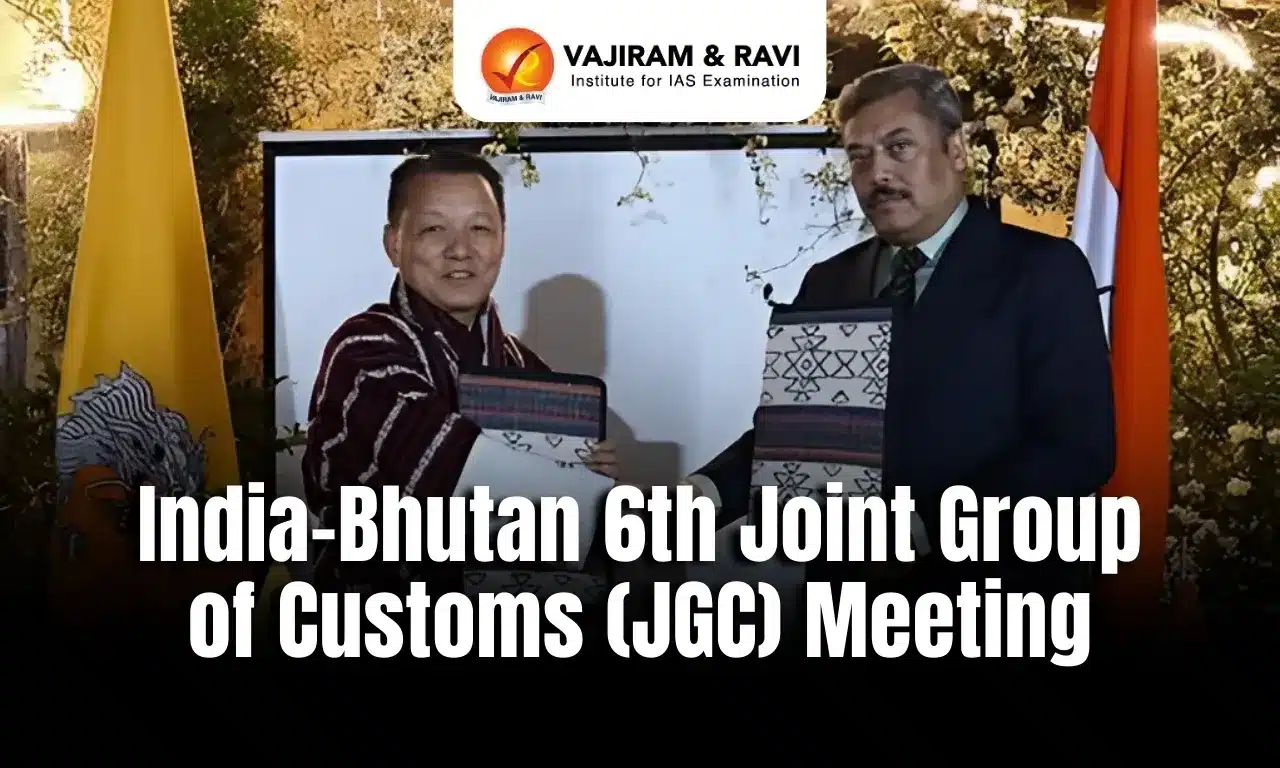
India–Bhutan 6th Joint Group of Customs (JGC) Meeting Latest News
The 6th Joint Group of Customs (JGC) Meeting between India and Bhutan was held recently in Thimphu, Bhutan.
Key Facts about Bhutan
Bhutan is a landlocked Himalayan country, bordered by India to the south, east, and west, and China (Tibet Autonomous Region) to the north.
Indian states bordering Bhutan: Sikkim, West Bengal, Assam, and Arunachal Pradesh.
Thimphu is the capital and largest city of Bhutan.
Phuntsholing is Bhutan’s key financial and trade hub, located along the India-Bhutan border.
Political System: Bhutan is a parliamentary monarchy.
It transitioned to democracy in 2008 with the first democratic elections.
The King of Bhutan remains the Head of State.
Official name: Kingdom of Bhutan.
Local name: Druk Gyal Khap, meaning "Land of the Thunder Dragon".
Longest River: The Manas River (376 km), a transboundary river flowing through southern Bhutan into India, forms an important ecological and trade corridor.
Significance of India–Bhutan Customs Cooperation
India is Bhutan’s largest trading partner, accounting for about 80% of Bhutan’s total trade, making border customs cooperation vital for both countries.
Bhutan, being a landlocked country, relies heavily on Land Customs Stations (LCSs) for trade. There are 10 India-Bhutan LCSs—6 in West Bengal and 4 in Assam.
The JGC is an annual bilateral mechanism aimed at strengthening Customs cooperation, facilitating cross-border trade, and reforming customs procedures in line with global best practices.
India–Bhutan 6th Joint Group of Customs (JGC) Meeting FAQs
Q1. What is the India–Bhutan Joint Group of Customs (JGC)? Ans. The JGC is a bilateral platform for cooperation in customs and trade facilitation between India and Bhutan.
Q2. When and where was the 6th JGC meeting held? Ans. The 6th JGC meeting was held in April 2025 in in Thimphu, Bhutan.
Trends in World Military Expenditure Report Latest News
According to the 2024 edition of the “Trends in World Military Expenditure” report by the Stockholm International Peace Research Institute (SIPRI), India’s military spending was nearly nine times higher than Pakistan’s last year.
About Trends in World Military Expenditure Report
It is an annual report published by the leading Swedish think tank, the Stockholm International Peace Research Institute (SIPRI).
It provides a comprehensive analysis of military spending across the globe.
Highlights of 2024 Report:
The global defence expenditures reached $2.46 trillion in 2024, an increase from $2.24 trillion in the previous year, bringing the average defence spending to 1.9% of global GDP, up from 1.6% in 2022 and 1.8% in 2023.
Military spending increased in all world regions, with particularly rapid growth in both Europe and the Middle East, courtesy of the ongoing Ukraine-Russia war and Israel-Hamas conflict.
Military spending in Europe (including Russia) rose by 17 percentto $693 billion and was the main contributor to the global increase in 2024.
Military spending by the USA rose by 5.7 percent to reach $997 billion, which was 66 percent of total NATO spending and 37 percent of world military spending in 2024.
Military expenditure in the Middle East reached an estimated $243 billion in 2024, an increase of 15 percent from 2023, with Israel and Lebanon emerging as the biggest spenders in the region.
60 percent of the world’s military spending came from only five countries – the USA (37 percent), China (12 percent), Russia (5.5 percent), Germany (3.3 percent) and India (3.2percent).
India, the fifth biggest military spender in the world in 2024, increased its spending to $86.1 billion, up by 1.6 percent from 2023 and by 42 percent from 2015.
India's military spending in 2024 was nearly nine times that of Pakistan's expenditure.
China's military spending rose by 7.0 percent to an estimated USD 314 billion, marking three decades of uninterrupted growth. China alone accounted for half of the defence spending across Asia and Oceania.
Trends in World Military Expenditure Report FAQs
Q1. Who publishes the annual "Trends in World Military Expenditure" report?
Ans. Stockholm International Peace Research Institute (SIPRI).
Q2. Which country has the highest military expenditure?
Ans. The United States has the highest military expenditure in the world.
Q3. What is India’s rank in world military expenditures?
Ans. India is the fifth biggest military spender in the world in 2024.
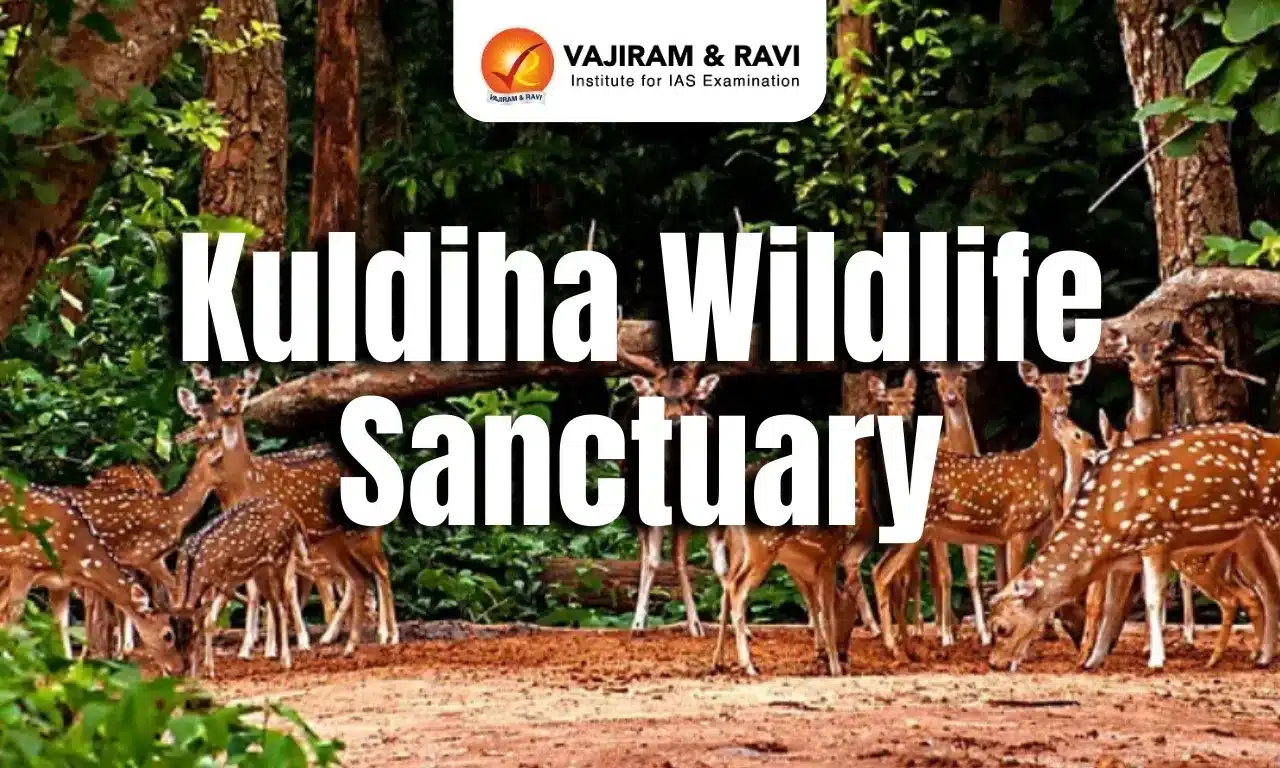
It is a major wildlife sanctuary in Odisha which was established in 1984.
It is spread across the Chota Nagpur Plateau region.
It is connected with Simlipal Reserve via Nato and Sukhupada Hill ranges.
Flora: It contains mixed deciduous forest.
Fauna: It consists of lot of wild animals like the tigers, elephants, leopards, bison, gaur, giant squirrels and sambar etc.
Key facts about National Green Tribunal
It has been established under the National Green Tribunal Act 2010.
New Delhi is the Principal Place of Sitting of the Tribunal and Bhopal, Pune, Kolkata and Chennai shall be the other four places of sitting of the Tribunal.
NGT is mandated to make disposal of applications or appeals finally within 6 months of the filing of the same.
Composition
The tribunal comprises the Chairperson, the Judicial Members, and Expert Members.
They shall hold office for a term of 5 years and are not eligible for reappointment.
The Chairperson is appointed by the Central Government in consultation with the Chief Justice of India (CJI).
A Selection Committee shall be formed by the central government to appoint the Judicial Members and Expert Members.
There are to be at least 10 and a maximum of 20 full-time Judicial members and Expert Members in the tribunal.
Q1) What is tribunal?
A tribunal is a legal forum or court of justice that is established to resolve specific types of disputes or cases. It is a formal process for adjudicating matters of law and fact, similar to a court, but tribunals often have a narrower jurisdiction and focus on specialized areas of law.
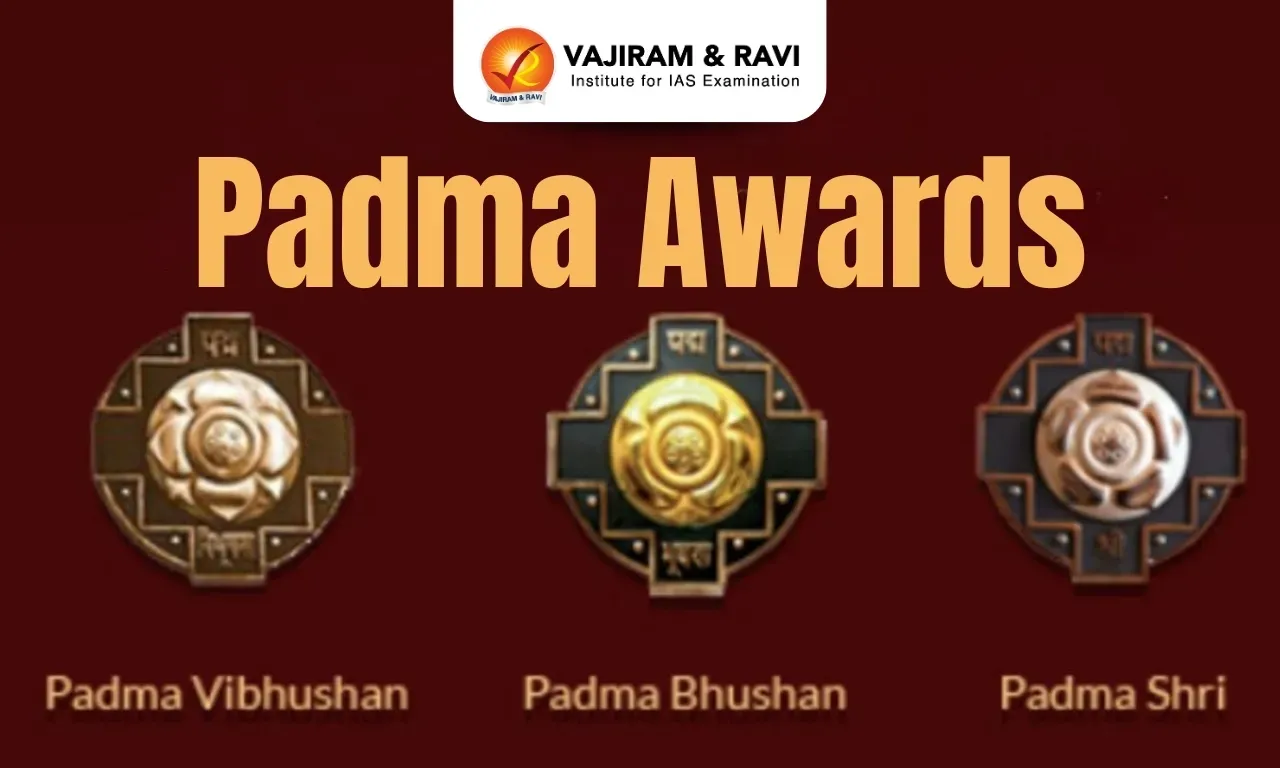
Recently, the President of India conferred 4 Padma Vibhushan, 10 Padma Bhushan, and 57 Padma Shri Awards at the Civil Investiture Ceremony-I at Rashtrapati Bhawan’s Ganatantra Mandap.
Padma Awards Historical Background
The Padma Awards were established in 1954 alongside the Bharat Ratna.
Initially, Padma Awards had three classes: Pahela Varg, Dusra Varg, and Tisra Varg.
These were renamed in 1955 via Presidential Notification as: Padma Vibhushan, Padma Bhushan and Padma Shri
Padma Awards Categories
Padma Vibhushan: Awarded for exceptional and distinguished service.
Padma Bhushan: Conferred for distinguished service of a high order.
Padma Shri: Recognises distinguished service in any field.
Eligibility Criteria
All persons, regardless of race, occupation, position or gender, are eligible for the award.
Government servants, including employees of Public Sector Undertakings (PSUs), are not eligible, except doctors and scientists.
Awards are normally not conferred posthumously, but in highly deserving cases, exceptions are allowed.
A minimum 5-year gap is required for conferring a higher category Padma award upon a previously awarded individual. However, this can be relaxed by the Awards Committee in exceptional cases.
Nominations are open to the public, and self-nomination is also allowed.
Selection Process
All nominations are evaluated by the Padma Awards Committee, which is constituted annually by the Prime Minister.
The Committee is headed by the Cabinet Secretary.
Its recommendations are submitted to the Prime Minister and President for final approval.
The awards are presented by the President, usually in March or April.
Awardees receive a Sanad (certificate) signed by the President and a medallion.
Other Key Features
The total number of Padma awards per year is capped at 120, excluding:
Posthumous awards
Awards to NRIs, foreign nationals, and Overseas Citizens of India (OCIs)
The award does not constitute a title and cannot be used as a prefix or suffix to the awardee’s name.
Disciplines covered: Awards span across art, social work, public affairs, science and engineering, trade and industry, medicine, literature and education, sports, civil service, among others.
Padma Awards FAQs
Q1. What are the Padma Awards? Ans. The Padma Awards are civilian honours given by the Government of India to recognise exceptional service in various fields such as arts, education, public affairs, and science.
Q2. What are the three categories of Padma Awards? Ans. The three categories are Padma Vibhushan (second-highest civilian award), Padma Bhushan (third-highest), and Padma Shri (fourth-highest).
Q3. Are Padma Awards given posthumously? Ans. Yes, the awards can be conferred posthumously in deserving cases.
National Supercomputing Mission: Powering India's Future with Indigenous High-Performance Computing.
About National Supercomputing Mission (NSM)
The National Supercomputing Mission (NSM) is a flagship initiative launched in 2015 by the Government of India to strengthen the nation’s High-Performance Computing (HPC) capabilities.
It aims to enhance India’s computational capacity in sectors like science, technology, academia, research, and industry, making the country self-reliant in supercomputing technologies.
The mission is jointly steered by the Department of Science and Technology (DST) and the Ministry of Electronics and IT (MeitY), and is implemented by C-DAC, Pune and IISc, Bengaluru.
The key goal is to position India globally among top nations in supercomputing by enabling research, reducing technological import dependence, and creating a robust indigenous HPC ecosystem.
Indigenisation Milestones
"Rudra" HPC servers, developed indigenously, are the first HPC-class servers built in India, matching global standards.
Supercomputers like PARAM Rudra (Pune, Delhi, Kolkata) have been dedicated for advanced research in physics, cosmology, and earth sciences.
The Trinetra high-speed network (developed under NSM) boosts data transfer rates up to 200 Gbps and is being rolled out in phases – PoC, Trinetra-A (100 Gbps), and Trinetra-B (200 Gbps).
AI Supercomputing: AIRAWAT
The AIRAWAT project is India’s AI-focused supercomputing initiative under NSM, offering a common AI computing platform for start-ups, researchers, and innovation hubs.
The Proof of Concept (PoC) system of AIRAWAT features 200 petaflops of AI processing power, scalable to 790 AI petaflops.
AIRAWAT secured 75th rank in the Top 500 Global Supercomputing List (ISC 2023, Germany), placing India among the top AI supercomputing nations.
Institutional Milestones
PARAM Shivay (2019) at IIT-BHU was the first indigenous supercomputer under NSM.
PARAM Pravega (2022) at IISc Bengaluru is among the largest academic supercomputers in India, with 3.3 petaflops processing power.
National Supercomputing Mission (NSM) FAQs
Q1. What is the objective of the National Supercomputing Mission (NSM)? Ans. The NSM aims to develop a high-performance computing (HPC) ecosystem in India, including indigenous supercomputers and advanced computing facilities.
Q2. Which two bodies jointly implement the NSM? Ans. The NSM is jointly implemented by C-DAC (Centre for Development of Advanced Computing) and IISc Bengaluru (Indian Institute of Science).
Q3. When was the National Supercomputing Mission launched? Ans. The NSM was launched in 2015.
National Mission for Clean Ganga (NMCG) Latest News
Namami Gange Programme
Recent Developments
Background and Legal Transition of NMCG
Income Tax Issues Related to NMCG
National Mission for Clean Ganga (NMCG) FAQs
National Mission for Clean Ganga (NMCG) Latest News
The Central Board of Direct Taxes (CBDT) has notified the National Mission for Clean Ganga (NMCG) as an authority under the Income Tax (IT) Act, 1961.
This grants NMCG income tax exemptions, aiding its functioning under the Namami Gange Programme.
Namami Gange Programme
It is an integrated conservation mission, approved as ‘Flagship Programme’ by the Union Government in 2014 with budget outlay of Rs.20,000 Crores.
It is administered by the Ministry of Jal Shakti's Department of Water Resources, River Development and Ganga Rejuvenation, to accomplish the twin objectives of -
Effective abatement of pollution,
Conservation and rejuvenation of National River Ganga.
The program would be implemented by the National Mission for Clean Ganga (NMCG), and its state counterpart organisations i.e., State Program Management Groups (SPMGs).
NMCG is the implementation wing of National Ganga Council (NGC), which replaced the National Ganga River Basin Authority.
NGC was created in 2016 under the River Ganga (Rejuvenation, Protection and Management) Authorities Order, 2016.
NGC oversees efforts to clean and rejuvenate the Ganga River, and is headed by the PM.
In order to implement the programme, a three-tier mechanism has been proposed for project monitoring comprising of:
A high-level task force chaired by Cabinet Secretary assisted by NMCG at the national level,
State level committee chaired by Chief Secretary assisted by SPMG at the state level, and
District level committee chaired by the District Magistrate.
Medium-Term Activities (to be implemented within 5 years of time frame) and
Long-Term Activities (to be implemented within 10 years).
Recent Developments
Legal basis of the CBDT notification:
Clause 46A of Section 10, IT Act, 1961: Exemption for income of bodies constituted under a Central/State Act for specified purposes. NMCG was constituted under the Environment (Protection) Act, 1986.
Effective from: Assessment Year (AY) 2024-25.
Condition: NMCG must continue as an authority under the Environment (Protection) Act with relevant purposes.
Significance: It ensures financial autonomy and operational efficiency for NMCG, crucial for the effective execution of the Namami Gange Programme.
Background and Legal Transition of NMCG
Initial status: Registered as a society (August 12, 2011) under the Societies Registration Act, 1860.
Upgradation: Declared an ‘authority’ (October 7, 2016) under the Environment (Protection) Act, 1986.
Technical issue: Despite this transition,PAN status continued as Association of Persons (AOP), attracting scrutiny and tax demands.
Income Tax Issues Related to NMCG
Tax demands: NMCG faced income tax demands totaling ₹243.74 crore.
Condonation by CBDT:
Allowed delayed filing of revised returns for the three assessment years.
Enables NMCG to claim tax exemptions retrospectively.
Reason for relief: Jal Shakti Ministry intervened with the Ministry of Finance.
National Mission for Clean Ganga (NMCG) FAQs
Q1. Under which legal provision has the National Mission for Clean Ganga (NMCG) been granted income tax exemption by the CBDT?
Ans. NMCG has been granted tax exemption under Clause 46A of Section 10 of the Income Tax Act, 1961.
Q2. What is the significance of the Environment (Protection) Act, 1986, in the context of NMCG’s current status?
Ans. NMCG was upgraded from a society to an authority under the Environment (Protection) Act, 1986, making it eligible for tax exemptions under the notified clause.
Q3. What major administrative challenge did NMCG face with the Income Tax Department despite its change in status?
Ans. Despite being an authority, NMCG’s PAN continued as an Association of Persons (AOP), causing repeated income tax notices and demands.
Q4. How did the intervention of the Jal Shakti Ministry influence the CBDT’s decision regarding NMCG’s tax matters?
Ans. After the Jal Shakti Ministry’s intervention following media reports, the CBDT allowed NMCG to revise its returns and granted retrospective tax exemption.
Q5. Why is the CBDT’s notification regarding NMCG important from a governance and policy implementation perspective?
Ans. It ensures financial autonomy and operational efficiency for NMCG, crucial for the effective execution of the Namami Gange Programme.
Political Divisions within the College of Cardinals
Geographical Shifts in Power Dynamics
Key Issues Likely to Shape the Conclave Deliberations
The Unpredictability of the Outcome
Papal Conclave 2025 FAQs
Papal Conclave Latest News
On 21 April 2025, Pope Francis died at the age of 88 at Domus Sanctae Marthae in Vatican City.
Introduction
The Catholic Church has entered a historic moment with the passing of Pope Francis.
The Church now stands in the sede vacante period, the interregnum until a new Pope is elected.
At the heart of this transition is the Papal Conclave, an ancient, deeply spiritual, yet inherently political process.
Governed by strict rules under the apostolic constitution Universi Dominici Gregis (UDG), the Conclave blends ritual, secrecy, diplomacy, and strategic negotiation to determine the next leader of the global Catholic community.
Governing Rules and Procedures of the Conclave
The Conclave’s procedures are strictly dictated by UDG, emphasizing complete secrecy and isolation within Vatican City to minimize external influence.
Only cardinals under 80 years of age are eligible to vote.
Voting requires a two-thirds majority, necessitating broad consensus and preventing narrow factional control.
Despite being barred from voting, senior cardinals (over 80) still participate in pre-Conclave deliberations, potentially influencing the electors.
Behind the locked doors of the Sistine Chapel, alliances are built, negotiations unfold, and influence is wielded through respected figures known as the 'great electors'. The secrecy ensures that decisions are made based on conscience, away from public or political pressure.
Political Divisions within the College of Cardinals
The College of Cardinals is notably divided, largely reflecting debates over Pope Francis's reformist legacy and the Church’s future direction. Two broad camps emerge:
Reformists/Progressives:
Support Pope Francis’s emphasis on pastoral theology over rigid doctrine.
Advocate for social justice, climate action, migration rights, and greater inclusion of women and LGBTQ+ Catholics.
Conservatives/Traditionalists:
Stress liturgical tradition, doctrinal clarity, and a return to pre-Francis norms.
Seek to reaffirm established moral teachings and resist perceived doctrinal dilution.
However, these divisions are nuanced. Many cardinals from the Global South, Africa, Asia, and Latin America, combine social conservatism (e.g., opposition to same-sex blessings like the Fiducia Supplicans) with a strong commitment to social justice and environmental advocacy, making their voting behaviour less predictable.
Geographical Shifts in Power Dynamics
Pope Francis deliberately altered the traditional European dominance in the College of Cardinals:
Europeans now constitute only about 39.3% of the electors, down from over 50% in 2013.
Asia-Pacific represents about 17%, Latin America 15.6%, and Africa 13.3%.
This diversification reflects the global nature of Catholicism and introduces new political complexities.
Cardinals from the Global South, shaped by poverty, migration, and interreligious dynamics, will likely influence the focus of the Conclave toward broader global challenges rather than traditional European concerns.
The shrinking European share and growing southern representation increase the possibility of a non-European Pope, and make cross-regional coalition-building essential to reach the two-thirds voting threshold.
Key Issues Likely to Shape the Conclave Deliberations
Several pressing theological and social issues are expected to dominate discussions:
Synodality: Pope Francis’s project to promote a more consultative Church faces uncertain prospects, with some seeing it as renewal, others as a threat to hierarchical authority.
Handling of LGBTQ+ Issues: The backlash to Fiducia Supplicans (allowing blessings for same-sex couples) highlights tensions between pastoral outreach and doctrinal purity.
Role of Women: Calls for greater inclusion, including possibilities like women deacons, are gaining momentum.
Clerical Celibacy and Bioethics: Sensitive discussions on evolving traditional stances are expected.
Sexual Abuse Crisis: Despite reforms like Vos Estis Lux Mundi, concerns about enforcement and accountability persist, making transparency and survivor support key litmus tests for candidates.
Geopolitical and Internal Reforms: The next Pope must address international conflicts (e.g., Ukraine, Gaza), navigate relations with powers like China (especially regarding the controversial Vatican-China deal), and continue internal financial reforms after scandals like the London property case.
The Unpredictability of the Outcome
Unlike previous Conclaves where front-runners were clear, the 2025 Conclave is marked by unpredictability:
The diverse composition of cardinals, many unfamiliar with each other, adds complexity.
The secrecy of the proceedings ensures that real alliances and shifts remain invisible until the white smoke announces the decision.
The traditional Vatican saying, "He who enters the Conclave as Pope, leaves it as a cardinal," reflects the uncertainty, often, unexpected candidates emerge as compromise choices acceptable to various factions.
The final choice will be a product of political manoeuvring, individual discernment, and, for believers, divine guidance within the sacred walls of the Sistine Chapel.
Papal Conclave 2025 FAQs
Q1. What governs the procedures of the Papal Conclave?
Ans. The Conclave is governed by the apostolic constitution Universi Dominici Gregis (UDG).
Q2. What majority is needed to elect the next Pope?
Ans. A two-thirds majority among voting cardinals is required.
Q3. How has the geographical composition of the College of Cardinals changed?
Ans. Europeans now make up only about 39.3% of the electors, reflecting a more global Church.
Q4. What are the main ideological camps among the cardinals?
Ans. The cardinals are broadly divided between reformists supporting pastoral changes and conservatives upholding traditional doctrines.
Q5. Why is the outcome of the 2025 Conclave considered unpredictable?
Ans. Diverse cardinal appointments, shifting alliances, and the two-thirds majority rule make predicting the result extremely difficult.
Central Consumer Protection Authority (CCPA) Latest News
The Central Consumer Protection Authority (CCPA) has taken suo moto cognizance against five Delhi restaurants for non-refund of mandatory service charges despite the Delhi High Court's judgment.
Significance of Action
The move is aimed at protecting consumer rights and preventing undue pressure on consumers to pay additional charges during service availing.
As per law, no hotel or restaurant can force consumers to pay a service charge, nor can a service charge be collected under any alternative name.
About Central Consumer Protection Authority (CCPA)
The CCPA was established under Section 10 of the Consumer Protection Act, 2019.
The Consumer Protection Act, 2019, which replaced the 1986 Act, was notified on August 9, 2019, and came into force on July 20, 2020.
Nodal Ministry: Ministry of Consumer Affairs, Food & Public Distribution.
Functions and Powers of CCPA
The CCPA protects, promotes, and enforces the rights of consumers as a class under the Act.
It prevents unfair trade practices and curbs false or misleading advertisements.
The CCPA ensures that no one publishes or disseminates false or misleading advertisements.
The CCPA can initiate class-action suits, including recalls, refunds, and cancellation of licenses, when necessary.
The CCPA can conduct inquiries and investigations through its Investigation Wing, headed by a Director-General.
It can order the discontinuation of unfair practices, impose penalties on errant businesses, and enforce consumer welfare measures.
Composition of CCPA: A Chief Commissioner heads the CCPA and has two other commissioners:
One commissioner deals with goods-related issues.
The other commissioner handles service-related complaints.
Central Consumer Protection Authority (CCPA) FAQs
Q1. What is the Central Consumer Protection Authority (CCPA)? Ans. The CCPA is a statutory body established under the Consumer Protection Act, 2019, to protect consumer rights, prevent unfair trade practices, and ensure consumer awareness.
Q2. Under which Ministry does the CCPA function? Ans. The CCPA functions under the Ministry of Consumer Affairs, Food and Public Distribution.
Q3. Where is the headquarters of CCPA located? Ans. The headquarters of the CCPA is located in New Delhi.
Rajamannar Committee's Observations on Centre-State Relations
Renewed Push for Federalism
State Autonomy in India FAQs
State Autonomy in India Latest News
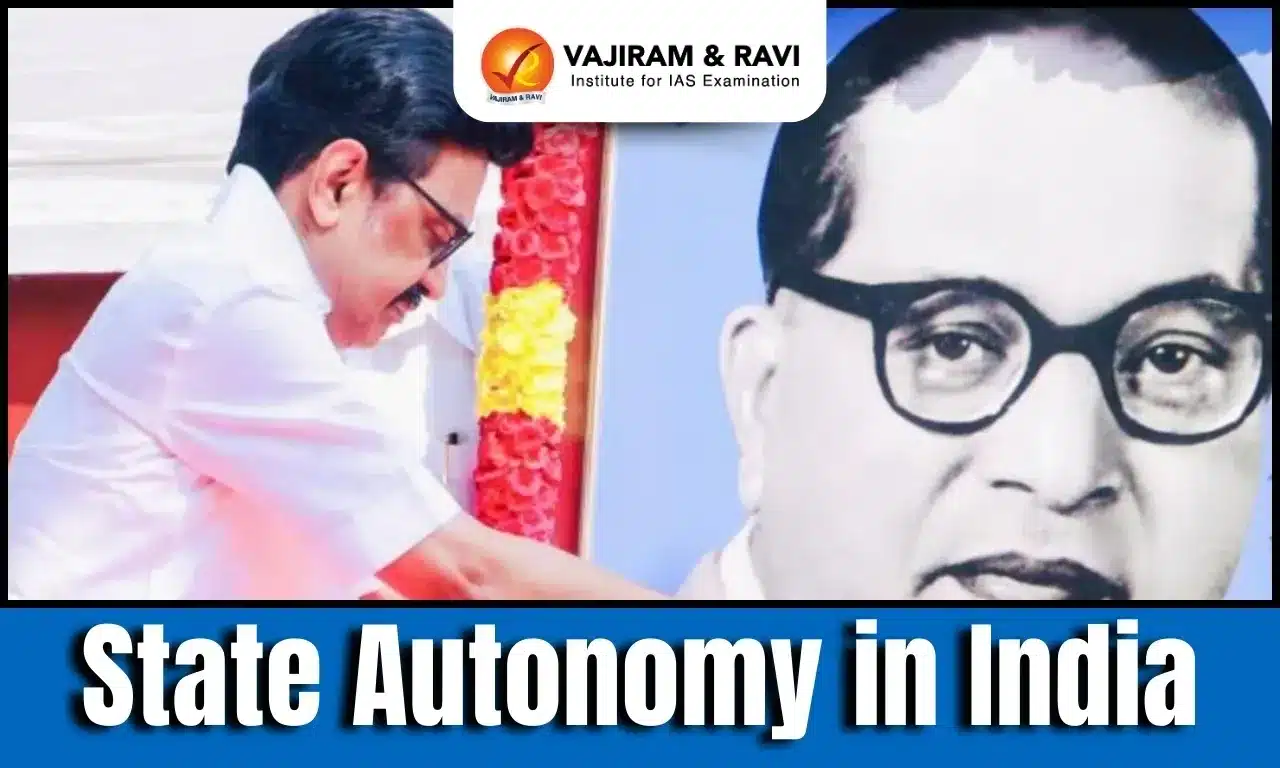
Citing concerns over the erosion of state powers, Tamil Nadu Chief Minister M K Stalin has set up a high-level committee led by former Supreme Court judge Justice Kurian Joseph to review Centre-State relations and suggest ways to strengthen states' constitutional rights.
Nearly 50 years ago, then CM C N Annadurai had formed a similar committee under Dr. P V Rajamannar to recommend measures for maximizing state autonomy without compromising national integrity.
Rajamannar Committee's Observations on Centre-State Relations
The Rajamannar Committee noted a growing dominance of the Centre over the States, with state-specific matters increasingly controlled by the Centre, often because the same party ruled both levels of government.
Though initiated during Annadurai’s tenure, the Rajamannar Committee report was submitted under M Karunanidhi's leadership to then PM Indira Gandhi.
De Facto Centralisation of States
The committee argued that although the Constitution appeared federal, its practical implementation had reduced States to mere administrative units of the Centre.
Constitutional Provisions Enabling Central Control
The report cited Articles 256, 257, and 365. These provisions gave sweeping powers to the Centre.
The Centre could issue directions to the States and enforce them.
The committee said President’s Rule was used as a drastic and unprecedented constitutional weapon.
Key Recommendations
Repeal Article 356 to prevent misuse of President’s Rule.
Establish a robust Inter-State Council under Article 263 to resolve Centre-State differences through dialogue rather than coercion.
Criticism of Extra-Constitutional Institutions
The Rajamannar Committee criticised the rise of bodies like the Planning Commission, created by an executive order and not by the Constitution.
Central Control Through Financial Powers
The committee noted that discretionary grants from the Centre gave it a "whip in its hands," allowing it to control States through financial dependence.
It argued that this made the constitutionally mandated Finance Commission irrelevant and reduced States to "suppliants for aid" in their own areas.
Erosion of Federal Balance
The report warned of a growing "Triple" threat—central planning, massive grants, and party politics—which was steadily eroding the federal structure.
Increasing Central Interference
The committee observed that the Centre’s frequent involvement in State matters created the impression of an anxiety to exercise overall supervision, undermining State autonomy.
Rethinking the Idea of a Strong Centre
The Rajamannar Committee challenged the notion that centralisation strengthens India.
It warned that by taking on too many responsibilities, the Centre risks becoming weak.
True strength, it argued, lies in restraint and clear focus, not in expansionism.
Quoting C N Annadurai’s 1967 speech, the report stressed that while the Centre must have enough powers to safeguard India’s sovereignty.
It should not encroach on subjects like health and education, which do not contribute to national security.
Renewed Push for Federalism
Half a century later, the Stalin-led DMK government is once again questioning the Centre-State balance, amid disputes over NEET, GST compensation, delimitation, and language policy.
Mandate of the New Committee
The newly formed committee will review the current legal framework and suggest measures to restore the rights of States within the constitutional setup.
Uncertain Impact
It remains unclear if New Delhi will act on the new committee’s recommendations, as the Rajamannar Report and later reviews by the Sarkaria and Punchhi Commissions were largely ignored.
A Call for Cooperation
The spirit behind these efforts echoes Annadurai’s 1967 vision of strengthening Centre-State relations through mutual goodwill and understanding.
State Autonomy in India FAQs
Q1. What is the Rajamannar Committee?
Ans. A 1969 Tamil Nadu panel that studied Centre-State relations and recommended steps to enhance state autonomy without harming national unity.
Q2. Why did Stalin form a new committee?
Ans. Stalin formed a panel to review Centre-State relations, amid disputes over NEET, GST, and language policies, aiming for federal reforms.
Q3. What powers did Rajamannar Committee criticize?
Ans. The committee criticized Articles 256, 257, and 365, which allowed excessive Centre control, reducing States to administrative units.
Q4. What key recommendation did the Rajamannar Committee make?
Ans. The committee recommended repealing Article 356 and strengthening the Inter-State Council to resolve Centre-State issues through dialogue, not coercion.
Q5. Will the new committee’s report be implemented?
Ans. Uncertain. Past reports like Rajamannar, Sarkaria, and Punchhi Commission were largely ignored by successive Central governments.
Carbon Credit Trading Scheme (CCTS) 2023 and Its Importance
Draft Rules Tie into India’s Carbon Credit Trading Scheme
Draft GEI Target Rules 2025 FAQs
Draft GEI Target Rules 2025 Latest News
The Ministry of Environment, Forest and Climate Change has released the Draft Greenhouse Gases Emissions Intensity (GEI) Target Rules, 2025.
These rules set emission reduction targets for "obligated entities" in energy-intensive sectors and establish a compliance mechanism under the Carbon Credit Trading Scheme (CCTS), 2023.
The CCTS aims to enable carbon credit trading to reduce emissions and support India’s climate goals under the 2015 Paris Agreement.
Greenhouse Gases (GHGs)
GHGs are gases that trap heat in the atmosphere, contributing to the "greenhouse effect" and raising Earth's surface temperature.
The five most abundant GHGs are water vapour, carbon dioxide, methane, nitrous oxide, and ozone.
Other GHGs include synthetic gases like chlorofluorocarbons (CFCs) and hydrochlorofluorocarbons (HCFCs).
Greenhouse Gases Emissions Intensity (GEI)
GEI refers to the amount of GHGs emitted per unit of product output, such as emissions per tonne of cement, aluminium, or paper produced.
Definitions under the Draft Rules
GEI Definition: The Draft Greenhouse Gases Emissions Intensity (GEI) Target Rules, 2025, define GEI as "greenhouse gases emission intensity in tCO₂e/ equivalent output or product."
tCO₂e Meaning: tCO₂e (tonnes of carbon dioxide equivalent) is the standard unit used to measure the warming impact of all GHGs.
Summary of Draft GEI Target Rules
Baseline Emissions & Reduction Targets
Establishes 2023-24 as the baseline year for emissions.
Gradual GHG reduction targets set for 2025-26 and 2026-27.
Part of India's Carbon Credits Trading Scheme, 2023.
Industries & Entities Covered
Applies to energy-intensive industries:
Aluminium – 13 plants
Cement – 186 plants
Pulp & Paper – 53 plants
Chlor-Alkali – 30 plants
Total of 282 industrial units affected.
Major Companies Assigned Targets
Includes leading corporations such as:
Vedanta, Hindalco, Bharat Aluminium, SW Cement, Ultratech, Nalco, JK Cement, Dalmia Cement, Shree Cement, Grasim Industries, and JK Paper.
Compliance & Penalties
Rules define compliance mechanisms for industries.
Penalties prescribed for non-compliance with reduction targets.
Carbon Credit Trading Scheme (CCTS) 2023 and Its Importance
Foundation: The PAT Scheme (Since 2012)
PAT (Perform, Achieve, Trade) was launched in 2012 to enhance energy efficiency.
It set energy consumption reduction targets for selected energy-intensive industries.
Companies achieving more than their targets earned Energy Saving Certificates (ESCerts), which could be traded with those who underperformed.
CCTS builds upon the PAT scheme, expanding the focus from energy efficiency to greenhouse gas (GHG) emissions reduction.
It introduces GHG emissions intensity (GEI) reduction targets specific to industries.
Why Industry-Specific Targets Matter
Critical to achieving India’s climate goals and low-carbon growth.
Helps industries reduce, remove, or avoid GHG emissions.
Example: Cement plants can lower emissions by using biomass instead of coal or adopting energy-efficient kilns.
Alignment with International Commitments
Supports India’s Paris Agreement pledge:
Reduce emissions intensity of GDP by 45% by 2030 (compared to 2005 levels).
Encourages the adoption of sustainable and advanced technologies in high-emission sectors.
Key Objective
Drive systemic change in emission-heavy industries by integrating climate action with industrial growth.
Draft Rules Tie into India’s Carbon Credit Trading Scheme
Framework of the Carbon Credit Trading Scheme (CCTS)
CCTS establishes a system for generating, trading, and utilizing carbon credit certificates.
Inspired by Article 17 of the Kyoto Protocol, which allowed trading of unused emission units among countries.
The trade mainly revolves around carbon dioxide, the principal GHG.
Role of GEI Targets in Carbon Credit Generation
GHG Emission Intensity (GEI) targets clearly define goals for industries.
Industries must prepare action plans to achieve these targets.
Carbon credits are awarded to industries that reduce their emissions intensity.
Trading and Compliance Mechanism
Carbon credits are traded on the Indian Carbon Market platform.
Oversight by: Bureau of Energy Efficiency (BEE), Union Ministry of Power.
Industries falling short must either:
Buy credits to cover the gap, or
Face penalties imposed by the Central Pollution Control Board (CPCB).
Incentives for Industries
Availability of carbon credits motivates industries to decarbonize.
Resource-rich industries can adopt clean technologies and profit from surplus credits.
Resource-constrained industries can transition gradually by purchasing credits.
Global Context
Similar carbon credit markets have been operational: Europe since 2005; China since 2021.
Draft GEI Target Rules 2025 FAQs
Q1. What are the Draft GEI Target Rules 2025?
Ans. They set greenhouse gas emissions intensity reduction targets for energy-intensive industries and establish compliance under India's Carbon Credit Trading Scheme.
Q2. Which industries are covered under the Draft GEI Target Rules 2025?
Ans. Industries like aluminium, cement, pulp & paper, and chlor-alkali sectors covering 282 units are included under the rules.
Q3. What is the Carbon Credit Trading Scheme (CCTS) 2023?
Ans. CCTS 2023 builds on PAT scheme and allows industries to generate, trade, and utilize carbon credits based on emissions reduction.
Q4. How do industries benefit from meeting GEI targets?
Ans. Industries cutting emissions earn carbon credits, which they can trade for profit or use to offset future emission obligations.
Q5. How does CCTS 2023 align with India's climate goals?
Ans. CCTS supports India's Paris Agreement pledge to reduce GDP emissions intensity by 45% by 2030 from 2005 levels.