New Approach for Green Hydrogen Production

New Approach for Green Hydrogen Production

New Approach for Green Hydrogen Production Latest News

Researchers at the Institute of Nano Science and Technology (INST), Mohali, have developed new insights into proton adsorption on catalyst surfaces, paving the way for more efficient green hydrogen production.

Key Scientific Findings

  • novel heterostructure, combining Copper Tungsten Oxide (CuWO₄) and Copper Oxide (CuO), has been created to exploit the Built-In Electric Field (BIEF) effect for enhanced hydrogen evolution.
  • The structure is formed by growing CuWO₄ nanoparticles over a Cu(OH)₂ precursor, leading to a p-n heterojunction that creates an asymmetric electronic environment.
  • This BIEF plays a crucial role in modulating proton adsorption and desorption, directly influencing the Hydrogen Evolution Reaction (HER) efficiency.

Mechanism of Proton Adsorption

  • The interface between CuO and CuWO₄ shows variation in Gibbs Free Energy (∆G), especially near the depletion region.
  • gradient in ∆G across this interface enhances hydrogen adsorption at CuO and desorption at CuWO₄, making the system more favourable for HER.
  • This showcases "negative cooperativity", where increased proton binding at one site reduces affinity at other sites, facilitating proton desorption, a key step in alkaline hydrogen production.

What is Green Hydrogen?

  • Green Hydrogen is produced through the electrolysis of water using renewable energy sources like solar, wind, or hydropower, releasing no greenhouse gases.
  • It is a clean, sustainable, and flexible energy carrier, with water vapour as its only by-product.
  • Unlike grey hydrogen (from fossil fuels), green hydrogen contributes to zero carbon emissions.

Green Hydrogen Production Methods

  • Alkaline Electrolysis: Mature, low-cost method using KOH/NaOH; needs nickel/platinum electrodes.
  • Proton Exchange Membrane (PEM) Electrolysis: High efficiency, fast, but expensive due to precious metal catalysts.
  • Solid Oxide Electrolysis (SOEC): Works at 700–1000°C, enables co-electrolysis of H₂O and CO₂, but involves complex materials and high costs.

New Approach for Green Hydrogen Production FAQs

Q1. What is green hydrogen?
Ans. Green hydrogen is hydrogen produced using renewable energy sources like solar or wind, without emitting carbon dioxide.

Q2. What is the new method recently developed for green hydrogen production?
Ans. Scientists have developed methods like photoelectrochemical water splitting, solid oxide electrolysis, and enzyme-assisted electrolysis, improving efficiency and scalability.

Source: PIB

Accelerating Innovative Monitoring for Nature Restoration (AIM4NatuRe) Initiative

Accelerating Innovative Monitoring for Nature Restoration (AIM4NatuRe) Initiative

AIM4NatuRe Initiative Latest News

The Food and Agriculture Organization (FAO) of the United Nations recently launched a significant new initiative, Accelerating Innovative Monitoring for Nature Restoration (AIM4NatuRe).

About AIM4NatuRe Initiative

  • It is an Food and Agriculture Organization (FAO)-led global initiative aimed at enhancing the capacity of countries to monitor and report on ecosystem restoration.
  • It is a US$ 9 million programme funded by the United Kingdom, with a contribution of GBP 7 million, and is set to run from 2025 to 2028.
  • AIM4NatuRe will leverage cutting-edge technology, standardized data frameworks, and capacity development to support global efforts to restore at least 30 percent of degraded ecosystems by 2030, as outlined inTarget 2 of the Global Biodiversity Framework (GBF).
  • By fostering transparency, accountability, and data interoperability, the initiative will enable countries to track restoration efforts across forests, wetlands, grasslands, marine ecosystems, and agricultural landscapes.
  • AIM4NatuRe is part of FAO’s AIM4Forests Programme, expanding the scope beyond forests to provide a holistic approach to nature restoration monitoring.
  • The initiative prioritizes a comprehensive approach to ecosystem restoration, encompassing a wide range of activities, from reforestation, restoration of degraded agricultural lands, and wetland rehabilitation to the recovery of grasslands and marine ecosystems. 
  • AIM4NatuRe will also develop practical guidance documents and technical solutions, namely the Framework for Ecosystem Restoration Monitoring (FERM), to support countries in data collection, analysis, and reporting, ensuring that information is readily available and usable.
  • Notably, the initiative will support Indigenous Peoples in the monitoring of biocentric nature restoration, a holistic approach that prioritizes the well-being of all living things within an ecosystem.

AIM4NatuRe Initiative FAQs

Q1. What is the primary goal of the AIM4NatuRe initiative?

Ans. To monitor and report on ecosystem restoration

Q2. Which organization leads the AIM4NatuRe initiative?

Ans. Food and Agriculture Organization (FAO)

Q3. Food and Agriculture Organization (FAO)

Ans. AIM4Forests

Source: KRISHI

Near-Surface Shear Layer (NSSL)

Near-Surface Shear Layer (NSSL)

Near-Surface Shear Layer (NSSL) Latest News

An international team of solar physicists, including scientists from the Indian Institute of Astrophysics (IIA), has mapped dynamic plasma currents in the Sun’s Near-Surface Shear Layer (NSSL), revealing patterns that correlate with the Sun’s 11-year magnetic activity (sunspot) cycle.

About Near-Surface Shear Layer (NSSL) & Key Findings

  • The Near-Surface Shear Layer (NSSL) is a crucial region located just beneath the Sun’s visible surface, extending to a depth of about 35,000 km.
  • In the NSSL, the Sun's angular velocity (rotation speed) decreases rapidly with radius, creating a rotational shear that varies with depth, latitude, and solar magnetic activity.
  • The study revealed surface plasma flows converge towards sunspot latitudes but reverse midway in the NSSL and flow outward, forming large circulation cells.
  • These flows are shaped by the Sun's rotation and the Coriolis force, which also influences Earth's hurricanes. This connection helps explain how the Sun's spin behaviour varies with depth.
  • Despite being dynamic, these localised flows do not drive the Sun's large-scale zonal flows, known as torsional oscillations, implying the presence of deeper unknown forces in the Sun’s interior.

Techniques Used

  • Scientists employed helioseismology, a method that uses sound waves travelling inside the Sun to map internal structures and dynamics.
  • They used over a decade’s worth of data from:
    • NASA’s Solar Dynamics Observatory (SDO), specifically the Helioseismic and Magnetic Imager (HMI), and
    • The Global Oscillations Network Group (GONG) of the National Solar Observatory (NSO), USA.
  • The research confirmed the findings using 3D velocity maps of sunspot regions, showing matching surface inflows and deeper outflows.

Near-Surface Shear Layer (NSSL) FAQs

Q1. What is the Near-Surface Shear Layer (NSSL)?
Ans. NSSL is a thin zone beneath the Sun’s surface where the rotation rate of solar plasma changes rapidly with depth, affecting solar dynamics and sunspots.

Q2. Why is NSSL important in solar physics?
Ans. NSSL helps scientists understand solar magnetic fields, solar cycles, and space weather phenomena like solar flares.

Q3. Which mission has studied the NSSL recently?
Ans. The Solar Orbiter (ESA) and NASA’s Solar Dynamics Observatory have provided key data to study the NSSL.

Source: PIB

WAM! and WAVES 2025

WAM! and WAVES 2025

WAM! and WAVES 2025 Latest News

Finalists from 11 cities were selected through months of regional contests and will participate in the WAM! national finale at WAVES 2025.

About WAM!

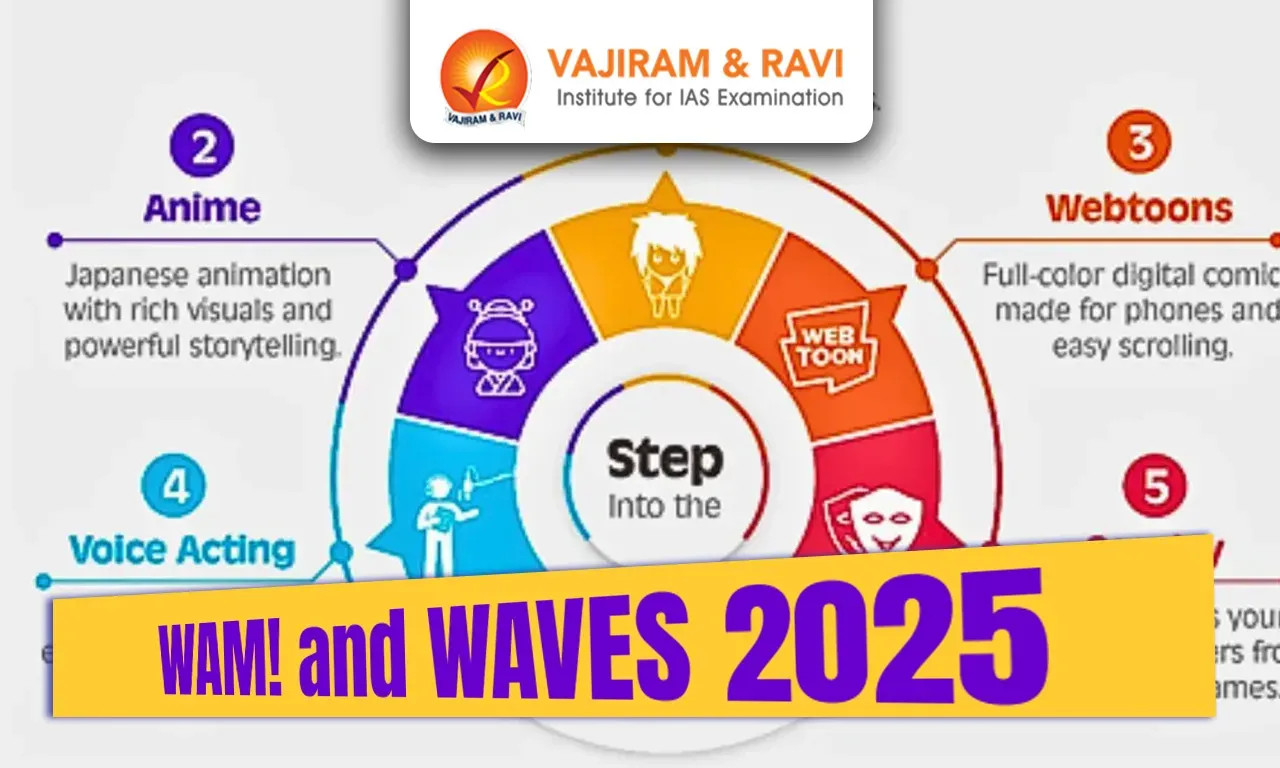
  • WAM! (WAVES Anime & Manga Contest) is India’s first national initiative focused on discovering, nurturing, and promoting original Indian Intellectual Properties (IPs) in anime, manga, webtoons, and cosplay.
  • It is being organised by the Ministry of Information and Broadcasting in collaboration with the Media & Entertainment Association of India (MEAI).
  • The initiative will culminate in the WAVES 2025 national finale, which will be held from May 1–4, 2025 at the Jio World Convention Centre, Mumbai.

About WAVES 2025 

  • WAVES (World Audio-Visual & Entertainment Summit) 2025 is a pioneering event designed to promote India's strength in the AVGC-XR sector — Animation, Visual Effects, Gaming, Comics, and Extended Reality.
  • WAVES is being hosted under the central theme: “Create in India, Create for the World”, emphasising India’s ambition to become a global creative hub.
  • The summit brings together global leaders, innovators, studios, and creators, providing a collaborative platform for India's media and entertainment economy.
  • WAVES features the Create in India Challenges (CIC) — an initiative that received over 1 lakh registrations, including 1,100 international participants, reflecting global interest in India’s creative ecosystem.
  • The summit includes discussions and showcases on Broadcasting, Films, Print Media, Radio, Digital Media, Advertising, Social Media Platforms, and Generative AI.
  • It also highlights technological advancements in Augmented Reality (AR)Virtual Reality (VR), and Extended Reality (XR).

WAM! and WAVES 2025 FAQs

Q1. What does WAM! stand for?
Ans. WAM! (WAVES Anime & Manga Contest) is India's first national initiative aimed at discovering and promoting original Indian Intellectual Properties (IPs) in anime, manga, webtoons, and cosplay.

Q2. What is WAVES 2025?
Ans. WAVES 2025 is an innovative event aimed at showcasing India's strength in the AVGC-XR sector: Animation, Visual Effects, Gaming, Comics, and Extended Reality.

Q3. Who organises WAM!?
Ans. It is being organised by the Ministry of Information and Broadcasting in collaboration with the Media & Entertainment Association of India (MEAI).

Source: PIB

Special 301 Report

Special 301 Report

Special 301 Report Latest News

India has yet again been placed on the ‘priority watch’ list of the US Trade Representative (USTR) office’s Special 301 Report on intellectual property rights.

About Special 301 Report

  • It is an annual report by the United States Trade Representative (USTR) under the Trade Act of 1974.
  • It identifies countries that are considered by the US as not providing adequate and effective protection of intellectual property rights (IPRs) or fair and equitable market access to IP rights holders from the US. 
  • The report has been issued every year since 1989. 
  • It designates countries as “priority foreign country”, “priority watch country”, and “watch list country”. 
  • Designation as a priority foreign country initiates an investigationand possible application of sanctions on the foreign country, while designation on a Priority Watchlist suggests serious IPR deficiencies that require greater US attention.
  • Other countries that are considered to have serious IPR deficiencies but are not designated for greater US attention are placed on a Watchlist. 
  • The report includes both developed and developing countries.
  • The targeting of countries in the Section 301 Report is arbitrary. 
  • The report lacks empirical evidence and objective analysis and is biased to the concerns raised by segments of the industry of the US with regard to the protection and enforcement of IP rights abroad.

Special 301 Report FAQs

Q1. What is the Special 301 Report related to?

Ans. It identifies countries with inadequate protection of intellectual property rights (IPRs).

Q2. The Special 301 Report is issued by which entity?

Ans. United States Trade Representative (USTR)

Q3. What does designation as a "priority foreign country" in the Special 301 Report initiate?

Ans. An investigation and possible sanctions

Source: THBL

Phthalates

Phthalates

Phthalates Latest News

A recent study found that a daily exposure to phthalates is linked to 3.5 lakh, or 13 percent, of deaths in the world due to heart disease in 2018 among people aged between 55 and 65 years of age.

About Phthalates

  • Phthalates are a family of chemical compounds primarily used in plastic products (most commonly in the specific type of plastic named polyvinyl chloride, also known as PVC or vinyl). 
  • Phthalates are the most commonly used plasticisers in the world and are categorised as high and low phthalates depending on the molecular weight. 
  • Applications:
    • Phthalates may beblended as an additive into special plastics in order to increase the performance of the material. 
    • Phthalates are used to soften plastics, making them more flexible or more durable. 
    • Phthalates are sometimes used to decrease the melting temperature of plastics to aid the moulding process. 
    • Phthalates are used in hundreds of products, including vinyl flooring, adhesives, detergents, lubricating oils, automotive plastics, plastic clothes (raincoats), and personal-care products (soaps, shampoos, hairsprays, and nail polishes). 
    • Phthalates are used widely in polyvinyl chloride plastics, which are used to make products such as plastic packaging film and sheets, garden hoses, inflatable toys, blood storage containers, medical tubing, and some children’s toys.
    • There has also been a wide application in screen print, heat transfer inks, and plastisol inks.
  • Since phthalates are not chemically bound to the polymer molecule, they can be released from products or dissolve when in contact with liquids or fats.
  • As a result, phthalates may migrate out of a material, resulting in exposure to humans and the environment.
  • Health Impacts:
    • Some phthalates are endocrine disruptors, a class of potent chemicals that interfere with our hormone systems. 
    • Some of the health harms associated with phthalates are changes to fertility, early puberty and risk of low birth weight, obesity, diabetes, impacts to the immune system, cardiovascular and respiratory problems, some cancers, and neurological and behavioral problems. 

Phthalates FAQs

Q1. What is meant by phthalates?

Ans. Phthalates are a family of chemical compounds primarily used in plastic products.

Q2. In which type of plastic are phthalates most commonly used?

Ans. Polyvinyl chloride (PVC)

Q3. Why can phthalates migrate out of plastic materials?

Ans. They are not chemically bound to the polymer molecule.

Source: INDIATV

India Signs $7.4 Billion Rafale M Deal: Boost to Naval Aviation and Aircraft Carrier Power

India Signs $7.4 Billion Rafale M Deal: Boost to Naval Aviation and Aircraft Carrier Power

What’s in Today’s Article?

  • Rafale M for Indian Navy Latest News
  • Naval Aviation: An Overview
  • Aircraft Carrier: An Overview
  • History of Carrier Aviation in India
  • Why India Needs Aircraft Carriers
  • How Rafale M Will Help the Indian Navy
  • Rafale M for Indian Navy FAQs

Rafale M for Indian Navy Latest News

  • India and France have signed a government-to-government deal worth $7.4 billion (around ₹63,000 crore) for 26 Rafale Marine fighter jets for the Indian Navy. 
  • Earlier, 36 Rafale jets were inducted into the Indian Air Force starting in 2021. 

Naval Aviation: An Overview

  • Naval aviation refers to the use of military aircraft by naval forces, operating from aircraft carriers, helicopter-equipped ships, or land bases to support maritime operations.

Specialised Aircraft and Operations

  • Naval aviation includes aircraft designed for:
    • Short takeoffs and arrested landings on carriers
    • Air-to-air combat and surface/submarine attacks
    • Maritime reconnaissance and search & rescue
    • Logistics and supply missions

Key Roles of Naval Aviation

  • Fleet Air Defence: Protects naval forces beyond the range of land-based air cover.
  • Strategic Power Projection: Projects air power globally without relying on land bases.
  • Anti-Surface Warfare: Targets enemy ships with air-launched weaponry.
  • Support for Amphibious Warfare: Assists in marine landings and inland operations.
  • Mine Countermeasures: Detects and neutralizes enemy sea mines using aerial assets.

Importance

  • Naval aviation is vital for sea control, supporting joint naval-ground operations, and projecting power far from home bases. 
  • It comprises carrier-based jets, maritime patrol aircraft, helicopters, and unmanned aerial systems.

Aircraft Carrier: An Overview

  • An aircraft carrier is a warship that functions as a floating airbase. 
  • It is equipped with a full-length flight deck and hangar facilities to support, arm, deploy, and recover aircraft.

Key Functions

  • Seaborne Air Power Projection
    • Enables naval forces to project air power far from land-based airfields, enhancing operational reach.
  • Carrier Battle Groups
    • Often the centerpiece of modern naval warfare, playing a critical role in deterrence, sea control, and achieving air superiority.

Strategic and Tactical Capabilities

  • Adaptability and Survivability: Aircraft carriers can control seas, conduct strikes, and operate across the electromagnetic spectrum and cyberspace.

Global Presence

  • About 50 active carriers are currently in service worldwide.
  • The United States Navy leads with 11 large nuclear-powered carriers, followed by countries such as Brazil, China, France, India, Italy, Russia, Spain, Thailand, and the United Kingdom.

History of Carrier Aviation in India

  • India's carrier aviation began with the commissioning of INS Vikrant in 1961, marking the start of the country's naval aviation journey.
  • India continues to expand its carrier fleet, with future plans for additional indigenous carriers.

Key Aircraft Carriers in India

  • INS Vikrant (1961-1997): India’s first aircraft carrier, operational for several decades.
  • INS Viraat (1987-2017): Served the Indian Navy for 30 years after being commissioned in 1987.
  • INS Vikramaditya (Since 2013): A Russian-origin carrier, currently in service with the Indian Navy.
  • INS Vikrant (Commissioned in 2022): India’s first indigenously built aircraft carrier, joining the fleet in 2022.

Why India Needs Aircraft Carriers

  • Strategic Deterrence and Power Projection
    • Aircraft carriers allow India to assert influence and maintain a favourable balance of power in the Indian Ocean, a region vital for trade, energy, and security.
  • Protection of Maritime Interests
    • With over 90% of India’s trade by volume transported by sea, aircraft carriers help secure Sea Lines of Communication (SLOCs), protect island territories, and deter potential threats.
  • Blue Water Navy Capability
    • Carriers enable the Indian Navy to operate far from its shores, establishing India as a blue water navy capable of extended operations and rapid crisis responses.
  • Continuous Operational Readiness
    • Multiple carriers ensure that at least one is always operational on each coast, even when others are undergoing maintenance or refit.
  • Non-Military Roles
    • In addition to military functions, aircraft carriers are essential for Humanitarian & Disaster Relief (HADR) operations, projecting India’s soft power and providing rapid responses to regional emergencies.

How Rafale M Will Help the Indian Navy

  • Enhancing Carrier-Based Fighter Fleet
    • Rafale M jets will augment the current MiG-29K fleet, joining a legacy of carrier-based fighters like Sea Hawks, Alizes, and Sea Harriers.
  • Future Compatibility
    • While India is developing the Twin Engine Deck Based Fighter (TEDBF) for the next decade, the Rafale Ms will fill the capability gap in the interim with their advanced features.
  • Combat-Ready and Proven
    • As a four-and-a-half-generation battle-proven aircraft, Rafale M brings superior combat performance to India's naval aviation.
  • Interoperability with IAF
    • A major benefit is the commonality with Indian Air Force Rafales, allowing for joint training, shared maintenance protocols, and streamlined logistics between the Navy and the Air Force.
  • Boost to Military Capability
    • The induction of Rafale M will significantly strengthen India's maritime strike power and enhance overall military readiness and effectiveness across all domains.

Rafale M for Indian Navy FAQs

Q1. What is the Rafale M deal between India and France?

Ans. India signed a $7.4 billion deal with France to acquire 26 Rafale M fighter jets for its Navy.

Q2. Why does India need aircraft carriers?

Ans. India needs carriers to project power, protect maritime interests, and ensure continuous operational readiness in the Indian Ocean.

Q3. How will Rafale M help the Indian Navy?

Ans. Rafale M will enhance combat capabilities, fill interim gaps, and offer interoperability with Indian Air Force operations.

Q4. What is naval aviation’s main role?

Ans. Naval aviation enables sea control, air defense, anti-ship warfare, and humanitarian operations through aircraft launched from sea platforms.

Q5. How many aircraft carriers has India operated?

Ans. India has operated four aircraft carriers: INS Vikrant (old and new), INS Viraat, and INS Vikramaditya since 1961.


Source: IE | IE

Rabies

Rabies

Rabies Latest News

A six-year-old girl who was bitten by a stray dog died of rabies recently despite receiving preventive vaccination in Kerala's Malappuram district.

About Rabies

  • It is a deadly zoonotic disease caused by the Rabies virus (RABV) that attacks the nervous system. 
  • RABV is an RNA virus of the rhabdovirus family that can affect the body in one of two ways.
    • It can enter the peripheral nervous system directly and migrate to the brain. 
    • It can also replicate within muscle tissue, where it is safe from the host’s immune system. From here, it enters the nervous system through the neuromuscular junctions.
    • Once inside the nervous system, the virus produces acute inflammation of the brain. 
  • Transmission:
    • The virus spreads through the saliva of infected animals. 
    • Infected animals can spread the virus by biting another animal or a person.
    • In rare cases, rabies can be spread when infected saliva gets into an open wound or the mucous membranes, such as the mouth or eyes. 
    • In up to 99% of the human rabies cases, dogs are responsible for virus transmission. 
  • Symptoms:
    • The incubation period for rabies is typically 2–3 months but may vary from one week to one year, depending on factors such as the location of virus entry and the viral load. 
    • Initial symptoms of rabies include generic signs like fever, pain, and unusual or unexplained tingling, pricking, or burning sensations at the wound site. 
    • As the virus moves to the central nervous system, progressive and fatal inflammation of the brain and spinal cord develops. 
    • Once the virus infects the central nervous system and clinical symptoms appear, rabies is fatal in 100% of cases.
  • Clinically, it has two forms: 
    • Furious rabies – characterized by hyperactivity and hallucinations.
    • Paralytic rabies – characterized by paralysis and coma.
  • It is one of the neglected tropical diseases (NTD) that predominantly affects already marginalized, poor, and vulnerable populations. 
  • Rabies is most common in rural parts of Asia and Africa, though it’s found on all continents except Antarctica.
  • Prevention:
    • It is a vaccine-preventable disease.
    • Vaccinating dogs, including puppies, is the most cost-effective strategy for preventing rabies in people because it stops the transmission at its source.
  • Treatment:
    • Medical care following a rabies exposure is called post-exposure prophylaxis, or PEP.
    • PEP includes wound care, a dose of human rabies immune globulin (HRIG), and a series of four or five rabies vaccines, which must be administered as soon as possible after exposure. 
    • This care is vital to prevent the disease from developing. It is nearly 100% effective if administered promptly.

Rabies FAQs

Q1. Is rabies 100% preventable?

Ans. Although fatal once clinical signs appear, rabies is entirely avoidable; vaccines, medicines and technologies have long been available to prevent death from rabies.

Q2. Rabies is caused by which type of virus?

Ans. RNA virus

Q3. How is rabies primarily transmitted to humans?

Ans. Through the saliva of infected animals.

Source: PTI

SC Backs Spyware Use for National Security in Pegasus Case, Cites Privacy Concerns

SC Backs Spyware Use for National Security in Pegasus Case, Cites Privacy Concerns

What’s in Today’s Article?

  • Pegasus Spyware Case Latest News
  • Spyware
  • SC Emphasizes National Security Over Disclosure
  • Pegasus Spyware Case FAQs

Pegasus Spyware Case Latest News

  • The Supreme Court, while hearing the Pegasus case, said there is no issue with a country having spyware for national security, but the real concern is its use against individuals, which will be examined.

Spyware

  • Spyware is a type of malicious software (malware) designed to secretly gather data from a user’s device and transmit it to third parties without consent. 
  • It is often used for financial gain by advertisers, data brokers, or cybercriminals.

Purpose and Risks

  • Spyware collects sensitive information like browsing history, financial details, and login credentials. 
  • It poses serious threats by:
    • Enabling identity theft and financial fraud
    • Slowing device and network performance
    • Causing data breaches in businesses
    • Installing additional malicious software

Common Types of Spyware

  • Adware – Monitors activity to serve or sell targeted ads.
  • Infostealer – Gathers specific data and chat logs.
  • Keyloggers – Records every keystroke to steal usernames, passwords, and messages.
  • Rootkits – Grants deep access to a system, often undetectable.
  • Red Shell – Tracks user activity during PC game installations.
  • System Monitors – Captures emails, websites visited, and keystrokes.
  • Tracking Cookies – Follows user behavior across the web.
  • Trojan Horse Virus – Delivers spyware by disguising as legitimate software.

How Spyware Works: The 3-Step Process

  • Infiltration – Installed via apps, malicious websites, or attachments.
  • Monitoring and Data Capture – Tracks browsing, captures keystrokes, and takes screenshots.
  • Transmission or Sale – Sends stolen data to attackers or sells it on the dark web.

Impact

  • Spyware compromises personal and business data, facilitates identity theft, and weakens cybersecurity defenses. 
  • Detecting and removing spyware can be challenging due to its stealthy nature.

SC Emphasizes National Security Over Disclosure

  • The Supreme Court stated that national security cannot be compromised, and there is nothing wrong with a country possessing or using spyware for security purposes. 
  • The bench, led by Justice Surya Kant and Justice N Kotiswar Singh, clarified that the key concern is not ownership of spyware but against whom it is deployed.

Individual Right to Privacy Recognised

  • While declining to make the full report public, the Court acknowledged that individuals have a Constitutionally protected right to privacy
  • It stated that people who suspect their phones were hacked deserve to know the truth, and the court would consider informing them individually.

Petitions Alleging Government Surveillance

  • The case stems from petitions filed in 2021 by journalists, activists, and public figures. 
  • They alleged that the government used Pegasus spyware, a military-grade surveillance tool made by Israel’s NSO Group, to monitor citizens.
  • Petitioners argued that the core issue remains whether the government possesses and has used Pegasus. 
  • They stressed that ownership implies the potential for continued surveillance.

Justice R V Raveendran Committee Report: No Public Disclosure

  • On demands to release the report of the SC-appointed Justice R V Raveendran committee, the bench refused, citing national security and sovereignty concerns. 
    • In October 2021, the Supreme Court appointed a technical committee to investigate whether individuals' phones were hacked using Pegasus spyware. 
    • The committee was supervised by Justice (retd) R.V. Raveendran, and in 2022, it submitted its findings to the court in a sealed cover.
    • In August 2022, the Supreme Court noted the committee had found no conclusive evidence of Pegasus spyware use in the phones examined. 
    • Malware was detected in five devices, but its nature could not be definitively linked to Pegasus. 
    • The Centre did not cooperate with the investigation, as per the report.
  • SC remarked that while individuals can be informed if their phones were targeted, the report cannot become a public debate document.

Pegasus Spyware Case FAQs

Q1. What did the Supreme Court say about spyware in the Pegasus case?

Ans. The SC said owning spyware is acceptable for national security but emphasized concern over misuse against individuals.

Q2. What is spyware and how does it work?

Ans. Spyware secretly collects data from devices through infiltration, monitoring, and transmits it to unauthorized third parties.

Q3. What did the Justice R V Raveendran committee report conclude?

Ans. The committee found no clear Pegasus use; malware existed in five devices but was not conclusively linked to Pegasus.

Q4. Why won’t the Pegasus report be made public?

Ans. The Supreme Court cited national security and sovereignty risks as reasons for not disclosing the committee’s full report.

Q5. What are the privacy implications in the Pegasus case?

Ans. The SC acknowledged privacy as a fundamental right and may individually inform those whose phones were potentially compromised.

Source: IE | HT | IT

Brain-Computer Interface (BCI)

Brain-Computer Interface (BCI)

Brain-Computer Interface (BCI) Latest News

Researchers at the University of California, San Francisco (UCSF) have developed a stable Brain-Computer Interface (BCI) that allows a paralysed person to control a robotic arm using only their thoughts, over 7 months, with minimal recalibration.

What is a Brain-Computer Interface (BCI)?

  • Brain-Computer Interface (BCI) is a system that enables direct communication between the brain and an external device, such as a computer or robotic limb.
  • It decodes brain signals and translates them into commands to control machinesbypass damaged neural pathways, and restore lost functions in persons with neurological disorders.
  • Earlier BCI systems could only translate brain signals into text, and that too with limited vocabularyslow processing speed, and reduced accuracy.

How Does It Work?

  • Sensor implantation: Electrodes were surgically placed on the motor cortex (brain region controlling movement).
  • Signal interpretation: The system decodes neural signals of imagined movement, using machine learning to predict changes over time in signal patterns.
  • Virtual training: The user was first trained using a virtual robotic arm, allowing refinement of mental control.
  • Real-world application: The participant performed complex tasks like picking up blocksopening a cabinet, and holding a cup under a water dispenser, indicating precise, consistent control.

Applications of BCI Technology

  • The BCI also has potential for restoring speech in individuals with conditions like brainstem stroke or Amyotrophic Lateral Sclerosis (ALS).
  • Fine electrodes and artificial neural networks can decode intended speech and generate text output, Audible speech, and a speaking avatar.
  • One study showed a patient with ALS communicating at 62 words per minute, 3.4 times faster than previous BCI systems.

Brain-Computer Interface (BCI) FAQs

Q1. What is a Brain-Computer Interface (BCI)?
Ans. A Brain-Computer Interface (BCI) is a system that allows direct communication between the brain and an external device by interpreting brain signals, often for assistive technologies or medical applications.

Q2. What are the main applications of BCI?
Ans. BCIs are used in neuroprosthetics, communication for disabled individuals, gaming, cognitive training, and even military research.

Source: TH

Egypt

Egypt

Egypt Latest News

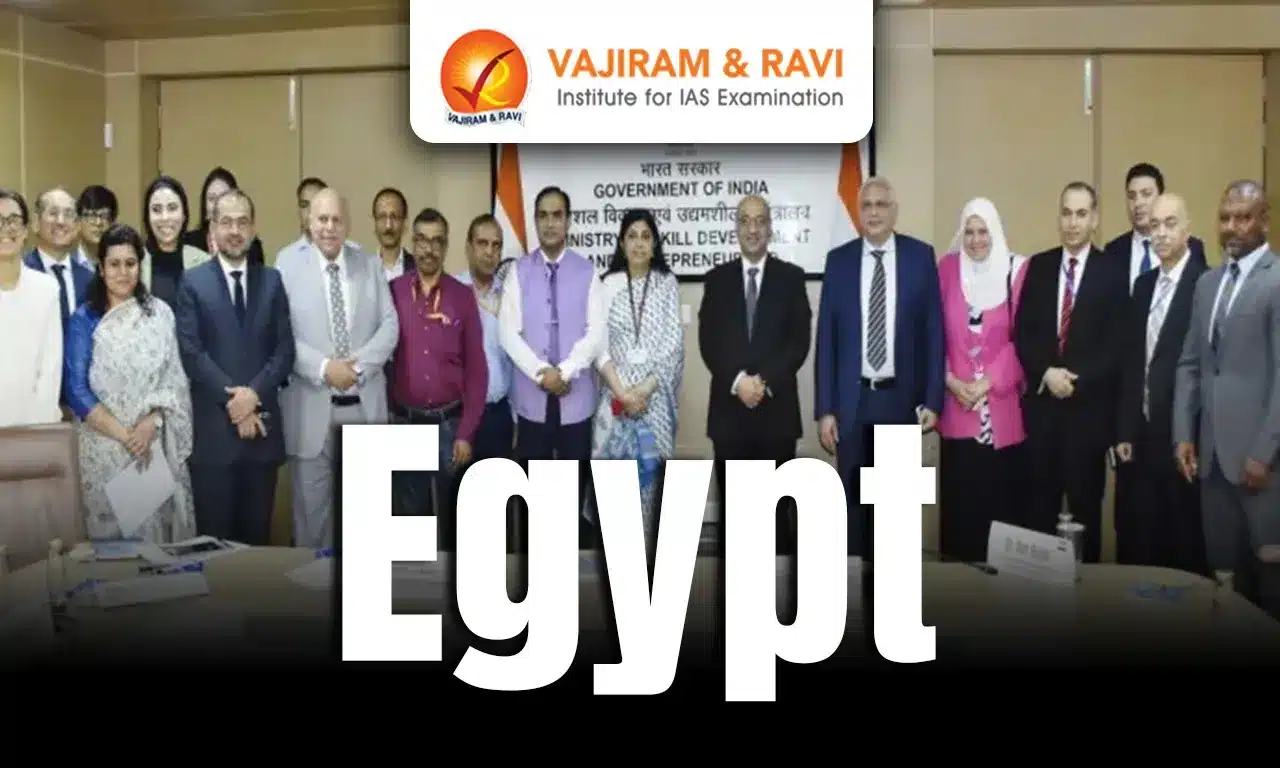
India and Egypt are enhancing bilateral ties through strategic cooperation in the field of skill development, as part of their broader Strategic Partnership established in 2023.

Key Facts of Egypt

  • Egypt’s Location: Located in northeast Africa, extending into southwest Asia through the Sinai Peninsula. It is a transcontinental country.
  • Bordering Nations: Shares borders with: Libya (west), Sudan (south), Israel and the Gaza Strip (northeast)
    • Coastlines along the Mediterranean Sea (north) and the Red Sea (east).

Key Geographical Features

  • The Nile River, the longest river in the world, flows from south to north through Egypt.
  • Aswan High Dam: Inaugurated in 1971, it is one of the world’s largest embankment dams. Functions:
    • Controls annual Nile flooding.
    • Provides water storage for irrigation.
    • Generates hydroelectric power.
    • Created Lake Nasser, one of the largest artificial lakes, extending into Sudan.

Egypt FAQs

Q1. Where is Egypt located and why is it geopolitically important?
Ans. Egypt is located in Northeast Africa and controls the Suez Canal, a vital global trade route linking the Mediterranean Sea and the Red Sea.

Q2. What is the significance of the Suez Canal for India?
Ans. Around 12% of India’s global trade passes through the Suez Canal, making Egypt a crucial partner for India’s maritime and trade interests.

Source: PIB

Modernising India’s Education System: Government’s Push for 21st Century Readiness

Modernising India’s Education System: Government’s Push for 21st Century Readiness

What’s in Today’s Article?

  • Education Sector Reforms Latest News
  • Introduction
  • Driving Forces Behind Education Reform
  • Key Interventions and Infrastructure Development
  • Empowering Research and Innovation
  • Global Engagement and Academic Mobility
  • Access to World-Class Knowledge
  • India’s AI Ambitions in Education
  • India’s Education System Modernisation FAQs

Education Sector Reforms Latest News

  • Prime Minister Narendra Modi has said that the government is modernising the country’s education system to meet the needs of the 21st century.

Introduction

  • India is undergoing a significant transformation in its education landscape, with the government taking proactive steps to modernise the system in alignment with global standards and the needs of a rapidly evolving knowledge economy. 
  • Addressing the first-ever YUGM Innovation Conclave held at Bharat Mandapam, New Delhi, Prime Minister Narendra Modi reaffirmed the government’s commitment to creating a dynamic, inclusive, and future-ready education ecosystem. 
  • The centrepiece of this transformation is the New Education Policy (NEP), which aims to equip India’s youth with the skills, resources, and mindset necessary to make the country a global innovation hub.

Driving Forces Behind Education Reform

  • At the heart of this reform initiative is the belief that India’s future depends on its youth, and preparing them for global competitiveness is crucial. 
  • The government’s approach encompasses three key elements: Talent, Technology, and Temperament, which together form the trinity envisioned to drive India’s ascent on the world stage.
  • The NEP, introduced in 2020 and continuously refined, has become the cornerstone of this vision. 
  • From curriculum redesign to technological integration, the focus is on transforming Indian classrooms, research spaces, and learning ecosystems to meet international benchmarks.

Key Interventions and Infrastructure Development

  • National Curriculum Framework and School Reforms
  • The development of new textbooks and teaching-learning materials for Classes 1 to 7 under the National Curriculum Framework represents a foundational shift. 
  • The framework prioritises conceptual clarity, experiential learning, and multilingual education, addressing the diversity of India's learners.
  • Higher Education Expansion
  • The government has committed to increasing seats and capacity in premier institutions such as IITs, and to launching meditech courses in partnership with institutions like AIIMS. 
  • These efforts aim to bridge the gap between academia and industry, especially in areas such as biomedical engineering and AI-driven healthcare.
  • Digital Education Infrastructure
  • Under the PM e-Vidya initiative and the DIKSHA platform, a robust digital backbone is being developed to enable ‘One Nation, One Digital Education Infrastructure’
  • Educational content is now being created in over 30 Indian languages and seven foreign languages, enhancing accessibility and equity across socio-economic groups.

Empowering Research and Innovation

  • Research Parks and R&D Cells
  • India’s research ecosystem has witnessed significant growth. Since 2014, the number of operational research parks has grown from 3 to 9, with 13 more planned. 
  • Nearly 6,000 higher education institutions now house Research and Development Cells, encouraging a research-driven academic culture.
  • National Research Foundation
  • The proposed Anusandhan National Research Foundation (ANRF) will play a central role in promoting frontier research. 
  • With the Gross Expenditure on R&D (GERD) doubling from ₹60,000 crore in 2013-14 to ₹1.25 lakh crore, India is signalling a shift from rote-based education to a discovery-driven model.
  • Innovation and Commercialisation
  • To shorten the gap between idea, prototype, and product, the government is actively facilitating lab-to-market transitions
  • This includes catalysing public-private-academic partnerships and encouraging youth-led innovation, making university campuses the new epicentres of transformative ideas.

Global Engagement and Academic Mobility

  • India is not only transforming education domestically but also internationalising its institutions
  • Campuses of IIT Delhi in Abu Dhabi, IIT Madras in Tanzania, and upcoming plans for IIM Ahmedabad in Dubai signal India’s academic footprint going global. 
  • Simultaneously, top foreign universities are being invited to establish campuses in India, enhancing cross-border knowledge flows.

Access to World-Class Knowledge

  • The ‘One Nation, One Subscription’ initiative ensures that Indian students and researchers can access top-tier research journals without institutional barriers. 
  • This initiative aims to democratise academic access and foster a culture of continuous learning.

India’s AI Ambitions in Education

  • Aligning with the larger IndiaAI Mission, the government is also investing in AI-based educational infrastructure
  • The objective is to leverage AI not just for administrative efficiency but to personalise learning, predict skill gaps, and transform pedagogy across education levels.

India’s Education System Modernisation FAQs

Q1. What is the focus of India’s current education reforms?

Ans. The reforms aim to modernise the education system in line with 21st-century global standards.

Q2. What is the role of the New Education Policy (NEP)?

Ans. NEP is central to India’s education transformation, focusing on skill development, innovation, and inclusivity.

Q3. What digital platforms are being used to expand education access?

Ans. PM e-Vidya and DIKSHA platforms support digital education in over 30 Indian and 7 foreign languages.

Q4. How is India boosting research and innovation?

Ans. Through Research Parks, R&D Cells, the ANRF, and increased GERD, India is strengthening its innovation ecosystem.

Q5. What is the significance of ‘One Nation, One Subscription’?

Ans. It enables students and researchers to access world-class research journals across institutions in India.


Source: IE | TOI

Enquire Now