S8 Tension

S8 Tension

S8 Tension Latest News

The Subaru Telescope in Hawaii, using the Hyper Suprime-Cam, conducted a deep sky survey from the University of Tokyo, reported an S8 value of 0.747, consistent with prior lensing estimates.

What is S8?

  • S8 (Sigma Eight) is a parameter used in cosmology to quantify the "clumpiness" or clustering of matter in the universe on a scale of about 26 million light-years.
  • It helps determine how much matter (both visible and dark) is clustered in different cosmic regions.

Background

  • The universe began with the Big Bang ~13.8 billion years ago, starting off highly uniform, as revealed by the Cosmic Microwave Background (CMB).
  • Small fluctuations in density (1 in 100,000) eventually evolved into galaxies, star clusters, and filaments, forming the lumpy structure of the present universe.

What is the S8 Tension?

  • The S8 tension refers to the mismatch in the value of S8 as obtained by:
    • CMB measurements (higher value).
    • Cosmic shear/lensing surveys (lower value).
  • This discrepancy challenges the ΛCDM (Lambda Cold Dark Matter) model, the standard model of cosmology.

Cosmic Microwave Background (CMB)

  • CMB is a sea of photons, the particles of light, present throughout the universe. They are left over from the Big Bang, its afterglow.
  • Scientists have measured temperature changes in the CMB and studied its large-scale properties using complicated trigonometry.
  • Based on these studies, cosmologists have estimated space to be expanding at around 68 kilometres per second per megaparsec ((km/s)/Mpc). That is, an object one megaparsec (3.26 million lightyears) away is moving away at 68 km/s)/Mpc.

Cosmic Shear & Gravitational Lensing

  • Cosmic shear refers to the distortion in galaxy shapes due to gravitational lensing by intervening matter.
  • This lensing helps map dark matter distribution and provides an indirect method to calculate S8.
  • Lower S8 from lensing suggests less clumping than expected.

Source: TH

S8 Tension FAQs

Q1: What is the Cosmic Microwave Background (CMB)?

Ans: The Cosmic Microwave Background (CMB) is the residual thermal radiation from the Big Bang, uniformly filling the universe and acting as a snapshot of the universe when it was around 380,000 years old.

Q2: What type of radiation is the CMB?

Ans: The CMB is microwave radiation, specifically a type of electromagnetic radiation in the microwave spectrum, with a temperature of approximately 2.7 Kelvin.

Q3: Which missions have studied the CMB in detail?

Ans: Major space missions like COBE (1990), WMAP (2001), and Planck (2009) have studied the CMB, improving our understanding of cosmic inflation, dark matter, and dark energy.

Raghuji Bhosale I

Raghuji Bhosale I

Raghuji Bhosale I Latest News

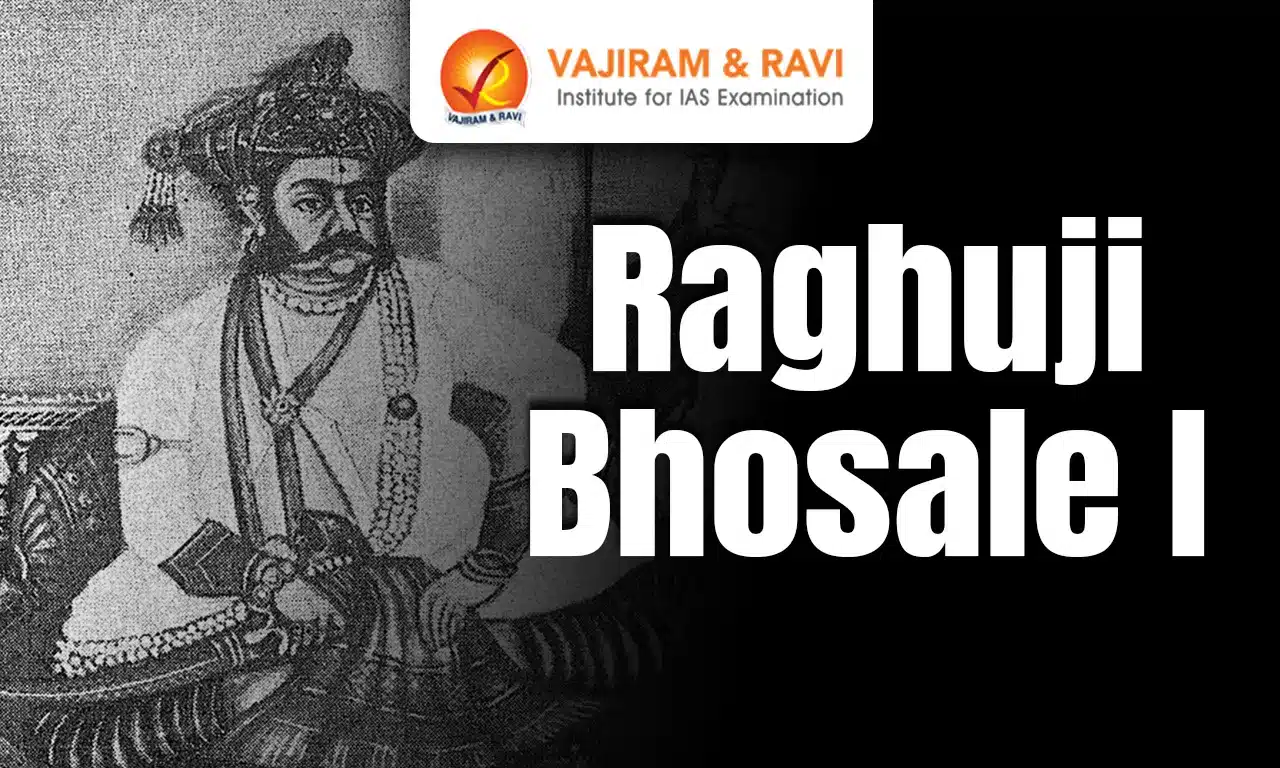
The Maharashtra government recently reclaimed the iconic sword of legendary Maratha warrior Raghuji Bhosale I.

About Raghuji Bhosale I

  • Raghuji Bhosale I (1695–February 14, 1755) was the founder of the Bhosale family of Nagpur and an important commander in the Maratha army during the reign of Chhatrapati Shahu Maharaj. 
  • Chhatrapati Shahu Maharaj had bestowed the title of 'Senasahibsubha' on Raghujiraje for his bravery and war strategy.
  • Raghujiraje Bhosale I led military campaigns against the Nawab of Bengal in 1745 and 1755 and expanded the Maratha empire to Bengal and Odisha.
  • Along with this, he established his dominance over the regions of Chanda, Chhattisgarh, and Sambalpur during his reign. 
  • He also defeated the Nawabs of Cuddapah and Kurnool and established his military and political dominance in South India. 
  • Raghujiraje Bhosale is also considered the most courageous Maratha warrior of the 18th century.

Who were Nagpur Bhonsles?

  • Like the Peshwe, Holkar, Gaikwad, and Scindia families, the Nagpur Bhonsle family also played a significant role in expanding the Maratha Empire. 
  • The Nagpur branch of the Bhonsle dynasty was founded by Raghoji Bhonsle I in the early 18th century. 
  • He expanded Maratha influence in central and eastern India, including parts of present-day Madhya Pradesh, Chhattisgarh, Jharkhand, and Odisha.
  • The family was one of the royal or Kshatriya clans of the Marathas, and considered itself as the descendant of Udaipur’s Sisodia Rajputs.
  • The Bhonsles of Nagpur were known as Hinganikar as one of their ancestors — who was probably a contemporary of Maloji, the grandfather of Chhatrapati Shivaji Maharaj — rehabilitated the village Beradi near Hingani in the present district of Pune.
  • The Nagpur Bhosales ruled over a mineral-rich region abundant in iron and copper, which were skillfully used to craft both everyday items and formidable weapons. 
  • The quality and artistry of the weaponry crafted by the Bhosales are renowned for their exceptional craftsmanship.

Source: IE

Raghuji Bhosale I FAQs

Q1: Who was Raghuji Bhonsle I?

Ans: He was the founder of the Bhosale family of Nagpur and an important commander in the Maratha army during the reign of Chhatrapati Shahu Maharaj.

Q2: Which title was conferred upon Raghuji Bhosale I by Chhatrapati Shahu Maharaj?

Ans: Senasahibsubha

Q3: Which metals were abundant in the region ruled by the Nagpur Bhosales?

Ans: Iron and Copper

Natural Hydrogen

Natural Hydrogen

Natural Hydrogen Latest News

Recently, the American Association of Petroleum Geologists and USGS have started formal hydrogen exploration initiatives.

What is Natural Hydrogen?

  • Hydrogen is considered the fuel of the future due to its potential to decarbonise the global economy and reduce greenhouse gas emissions significantly.
  • Natural hydrogen, also known as white hydrogen, refers to naturally occurring molecular hydrogen in the Earth’s crust, unlike industrially produced hydrogen.

How is Natural Hydrogen Formed?

  • It is generated through geological processes, primarily:
    • Serpentinisation – a reaction between water and iron-rich rocks.
    • Radiolysis – breakdown of water molecules by radioactive rocks.
    • Decomposition of organic matter in deep geological formations.

Why is Natural Hydrogen Important?

  • Natural hydrogen is a clean energy source that, if harvested sustainably, can significantly reduce carbon emissions.
  • It can provide a low-cost and low-emission alternative to conventional hydrogen sources like grey hydrogen (from natural gas) and green hydrogen (from renewable electricity).
  • The cost of natural hydrogen extraction may fall to around $1/kg or less, which is lower than current green hydrogen production costs.
  • Natural hydrogen is typically associated with tectonically active regionsultramafic and basaltic rocksophiolite complexes, and hydrothermal systems.
  • In India, potential-rich regions include:
    • Cratonic belts (e.g., DharwarSinghbhum)
    • Sedimentary basins (e.g., VindhyanCuddapahGondwanaChhattisgarh)
    • Ophiolitic zones in the Andaman Islands and Himalayas.
    • Basement rock fracture zones and hot springs.

Source: TH

Natural Hydrogen FAQs

Q1: What is Natural Hydrogen?

Ans: Natural Hydrogen refers to molecular hydrogen (H₂) that is naturally present in the Earth’s subsurface, unlike hydrogen produced through industrial processes.

Q2: How is Natural Hydrogen different from Green Hydrogen?

Ans: Natural Hydrogen occurs geologically, while Green Hydrogen is produced using renewable energy sources via electrolysis.

Foreign Institutional Investors (FIIs)

Foreign Institutional Investors

Foreign Institutional Investors (FIIs) Latest News

Foreign Institutional Investors (FIIs) became net buyers of Indian equities for the first time in four months in April 2025, registering an inflow of ₹4,223 crore.

About Foreign Institutional Investors (FIIs)

  • FIIs are a subset of Foreign Portfolio Investors (FPIs), comprising large institutional investors like mutual funds, pension funds, insurance companies, and hedge funds.
  • FIIs typically adopt a strategic and structured investment approach in foreign financial markets, offering long-term capital inflows to emerging economies like India.
  • However, rapid FII outflows can destabilise domestic markets, making regulatory oversight crucial.

Regulatory Framework Governing FIIs in India

  • FIIs are regulated by:
    • The Foreign Exchange Management Act (FEMA), 1999
    • SEBI (Foreign Portfolio Investors) Regulations
    • The Reserve Bank of India (RBI) monitors sectoral investment ceilings daily.

Investment Ceilings and Eligibility

  • FIIs can invest up to 10% in any single Indian company, subject to a cumulative FII/NRI/PIO limit of 24%.
  • Eligible FII entities now include university funds, charitable endowments, and trusts with a minimum five-year operational track record.
  • FIIs are permitted to invest in unlisted securities and use their proprietary funds.

 Macroeconomic Drivers

  • A major reason cited for the increased FII participation is the softening of the U.S. Dollar Index, which has declined from 104–105 to nearly 99–100, improving the relative strength of the Indian rupee.
  • The Reserve Bank of India's accommodative stance and macro-stability have encouraged investments, particularly in banking, financial services, and insurance (BFSI) sectors.
  • Meanwhile, FIIs reduced their exposure to the IT sector due to concerns about a potential U.S. recession and its impact on tech earnings.

Source: TH

Foreign Institutional Investors (FIIs) FAQs

Q1: What is a Foreign Institutional Investor (FII)?

Ans: Foreign Institutional Investors (FIIs) are entities established outside India that invest in the country’s financial markets, typically in equities and debt instruments.

Q2: How are FIIs different from Foreign Direct Investment (FDI)?

Ans: FIIs invest in stock markets and are short-term in nature, while FDI involves long-term investments in physical assets such as factories and infrastructure.

Q3: Which regulatory body governs FIIs in India?

Ans: FIIs in India are regulated by Securities and Exchange Board of India (SEBI) and must also comply with RBI guidelines.

National Human Rights Commission (NHRC)

National Human Rights Commission (NHRC)

National Human Rights Commission (NHRC) Latest News

The National Human Rights Commission (NHRC), India has taken suo motu cognizance of a media report regarding the abduction, rape, and murder of a minor girl in Hubballi, Karnataka, followed by the death of the accused in a police encounter.

About the National Human Rights Commission (NHRC)

  • The NHRC is a statutory body, constituted under the Protection of Human Rights Act, 1993.
  • It was established on 12th October 1993 as an independent institution to protect and promote human rights, defined under Section 2(1)(d) of the Act.

Mandate and Objectives

  • The NHRC safeguards rights related to life, liberty, equality, and human dignity, guaranteed by the Constitution of India and international human rights treaties.
  • Its primary objectives include:
    • Strengthening institutional frameworks to address human rights issues.
    • Independent investigation of alleged human rights violations.
    • Supporting and enhancing the work of other institutions in promoting human rights.

Composition and Structure

  • The NHRC consists of a Chairperson and up to five members, including:
    • retired Chief Justice of India (as Chairperson).
    • retired or sitting Supreme Court judge.
    • retired or sitting Chief Justice of a High Court.
    • Three experts in human rights, with at least one woman among them.
  • Additionally, seven ex-officio members include the Chairpersons of:
    • National Commissions for SCs, STs, Minorities, Women, BCs, Child Rights, and the Chief Commissioner for Persons with Disabilities.

Appointment and Tenure

  • Members are appointed by the President of India based on the recommendation of a six-member committee led by the Prime Minister.
  • Tenure: Three years or until the age of 70, whichever is earlier. Members are eligible for reappointment but barred from further government employment post-tenure.

Source: PIB

National Human Rights Commission (NHRC) FAQs

Q1: When was the NHRC of India established?

Ans: The NHRC was established on October 12, 1993 under the Protection of Human Rights Act, 1993.

Q2: What is the primary role of NHRC?

Ans: NHRC is a statutory body responsible for protecting and promoting human rights, including rights related to life, liberty, equality, and dignity.

Q3: Who appoints the Chairperson of the NHRC?

Ans: The President of India appoints the Chairperson, who is usually a former Chief Justice of the Supreme Court.

Global Antibiotic Research & Development Partnership (GARDP)

Global Antibiotic Research & Development Partnership

Global Antibiotic Research & Development Partnership Latest News

A recent research carried out by Global Antibiotic Research and Development Partnership (GARDP) has revealed that a significant number of multidrug-resistant infections in low- and middle-income countries (LMICs), including India, are not being treated appropriately, because of large gaps in access.

About Global Antibiotic Research & Development Partnership

  • It is a not-for-profit organization that develops new antibiotic treatments for drug-resistant bacterial infections that pose the greatest threat to human health and makes them accessible to the people who need them.
  • It puts public health needs at the centre of antibiotic drug development to address both the immediate antimicrobial resistance (AMR) crisis and to ensure people continue to get access to essential antibiotics for generations to come. 
  • GARDP was created by the World Health Organization (WHO) and Drugs for Neglected Diseases initiative (DNDi)to deliver on the Global Action Plan on AMR (2015), which underscores the need for new initiatives to develop novel antibiotic treatments. 
  • Legally established as an independent foundation in Geneva, Switzerland, in 2018, GARDP responds to the urgent need for antibiotic research, development, and access.
  • It brings together public and private partners to accelerate the development and global availability of new antibiotics.

Source: TH

Global Antibiotic Research & Development Partnership FAQs

Q1: What is the main goal of GARDP?

Ans: To develop and provide access to new antibiotics for drug-resistant infections.

Q2: Who co-created GARDP?

Ans: WHO and Drugs for Neglected Diseases initiative (DNDi)

Q3: Where is the headquarters of GARDP?

Ans: Geneva, Switzerland

Cabinet Approves Caste Census: Key Highlights, History & Policy Impact

Cabinet Approves Caste Census: Key Highlights, History & Policy Impact

What’s in Today’s Article?

  • Caste Census Latest News
  • Census in India
  • History and Status of Caste Census
  • Key Highlights on Caste Census Decision
  • What Happens Now
  • Caste Census FAQs

Caste Census Latest News

  • The Cabinet Committee on Political Affairs has approved the inclusion of caste data in the upcoming population census. The 2021 Census was postponed due to COVID-19 and remains indefinitely delayed.
  • This decision reignites the ongoing debate over the role of caste-based enumeration in governance, policymaking, and politics. 

Census in India

  • Overview of Population Census
    • The Population Census offers essential statistics on human resources, demographics, culture, and the economic structure at all administrative levels.
    • The first census in India began in 1872 (non-synchronous), while the first synchronous census was held in 1881 under British rule by W.C. Plowden.
    • It is conducted every 10 years by the Office of the Registrar General and Census Commissioner under the Ministry of Home Affairs.
  • Legal and Constitutional Basis
    • Census is a Union subject under Entry 69, Union List, Seventh Schedule of the Indian Constitution.
    • It is governed by the Census Act, 1948.

History and Status of Caste Census

  • Caste data was collected during British India censuses from 1881 to 1931.
  • Post-1951, caste enumeration was discontinued, except for Scheduled Castes (SCs) and Scheduled Tribes (STs).
  • In 1961, the Centre recommended that States conduct their own OBC surveys, since central OBC reservations did not exist then.
  • Though census is a central subject, the Collection of Statistics Act, 2008 enables states and local bodies to collect data — as done by Karnataka (2015) and Bihar (2023).

Socio-Economic and Caste Census (SECC)

  • The last attempt at caste data collection at a national level took place in 2011 through the SECC, intended to assess the socio-economic condition of households alongside caste information.
    • Ministry of Rural Development oversaw the rural survey.
    • Ministry of Housing & Urban Poverty Alleviation handled urban areas.
  • Only the socio-economic data was published in 2016; the caste data was withheld.
  • The raw caste data was handed over to the Ministry of Social Justice and Empowerment, which constituted an Expert Group led by Arvind Panagariya for classification.
  • It is unclear if the group submitted its report—no report was ever made public.

Learnings from the SECC (2011)

  • The SECC recorded 46 lakh caste names due to its open-ended format, compared to 4,147 castes in 1931.
  • People wrote sub-caste names or surnames (e.g., Gupta, Agarwal), causing data inflation.
  • This time, a standardised code directory will be used to avoid such inconsistencies.

Key Highlights on Caste Census Decision

  • Digital Mode & Drop-Down Caste Directory
    • For the first time, the Census will be conducted in digital mode, using a mobile app.
    • A new “Other” column with a drop-down caste code directory will be included beside the SC/ST column.
    • Software is currently undergoing testing to ensure smooth implementation.
  • Directory Development & Testing
    • The Central OBC list (2,650 communities), SC list (1,170), and ST list (890) will be merged with State OBC lists to form a comprehensive codebook.
    • A pre-test will be conducted to iron out glitches before the actual enumeration.
  • Major Policy Shift After Decades
    • The CCPA’s approval to include caste data in the upcoming census marks the first comprehensive caste enumeration since 1931 (excluding SC/ST data).
  • Historical Context of Caste Enumeration
    • Caste data was excluded from post-Independence censuses (1951–2011), except for SC/ST figures. 
    • The last full caste census was in 1931, with unpublished data from 1941.
  • Reliance on Estimates So Far
    • In the absence of official data, estimates like the Mandal Commission’s 52% OBC figure have guided policy and electoral decisions.
  • Bureaucratic and Data Classification Hurdles
    • Accurate caste data collection is hampered by overlapping caste names, classification ambiguities, and lack of clarity on inter-caste or migrant identities.
  • Inconsistent State-Level OBC Lists
    • Different states have varying OBC lists and sub-categories like Most Backward Classes, complicating efforts to create a standardized national caste database.
  • Renewed Debate on Governance and Representation
    • The move revives the broader debate on how caste data should inform governance, social justice, and political representation in India.

What Happens Now

  • About 30 lakh government officials will need retraining for the new digital format.
  • The Census will occur in two phases:
    • Phase 1: House listing & housing schedule (31 questions; already notified in 2020).
    • Phase 2: Population enumeration (28 questions; tested in 2019, yet to be officially notified).

Significance for Delimitation & Women’s Reservation

  • The new Census findings will be used to:
    • Redraw Lok Sabha constituencies (delimitation).
    • Implement 33% women’s reservation in Parliament and State Assemblies.

Caste Census FAQs

Q1. What is the Caste Census?

Ans. A detailed enumeration of caste data alongside population statistics to improve governance and social justice policy-making.

Q2. Why is the Caste Census important now?

Ans. It informs decisions on reservations, representation, and socio-economic planning based on current caste demographics.

Q3. When was the last full caste census held?

Ans. In 1931, with SECC 2011 being a partial and unpublished effort.

Q4. What is new in this caste census?

Ans. It will be digital with a standardized caste code directory to avoid data duplication.

Q5. How does it impact governance?

Ans. It helps in targeted policymaking, accurate delimitation, and implementing women’s and caste-based reservations.


Source: TH | IE | IE | ToI

International Labour Day 2025

International Labour Day

International Labour Day Latest News

Vast portions of the world are gearing up to celebrate International Labor Day, or International Workers' Day, with government holidays and remembrance events.

About International Labour Day

  • International Labour Day, also known as May Day, is observed annually on May 1 to honor the dedication and contributions of workers across the globe.
  • It is a memorial to the labor movement's struggles and victories.
  • History:
    • The origins of International Labor Day are found in Chicago, where on May 1, 1886, workers called for a strikefor an eight-hour workday.
    • The protest, which turned into what is now remembered as the Haymarket Affair, was a turning point in labor history.
    • On May 4, violence broke out in Haymarket Square when a bomb was thrown at police officers. 
    • The resulting gunfire resulted in several deaths, including six officers and a number of civilians.
    • This turning point stimulated trade unions and socialist federations across Europe to declare May 1 an international day of workers' solidarity, formally approved in 1889 at the Paris meeting of the Second International.
  • While International Labour Day commemorates events in the United States, both the US and Canada observe Labour Day on the first Monday of September, not May 1.
  • Over 80 countries, including India, Cuba, and China, mark International Labour Day.
  • In India, the first Labour Day celebration was held in Chennai (then Madras) in 1923 by the Labour Kisan Party of Hindustan.
  • The day usually involves parades, union gatherings, and celebrations that emphasize employee rights.

SourceET

International Labour Day 2025 FAQs

Q1: When is International Labour Day observed?

Ans: May 1

Q2: In which year did the Second International declare May 1 as International Workers' Day?

Ans: 1889

Q3: Where in India was Labour Day first celebrated in 1923?

Ans: Chennai

Red-Crowned Roofed Turtle

Red-Crowned Roofed Turtle

Red-Crowned Roofed Turtle Latest News

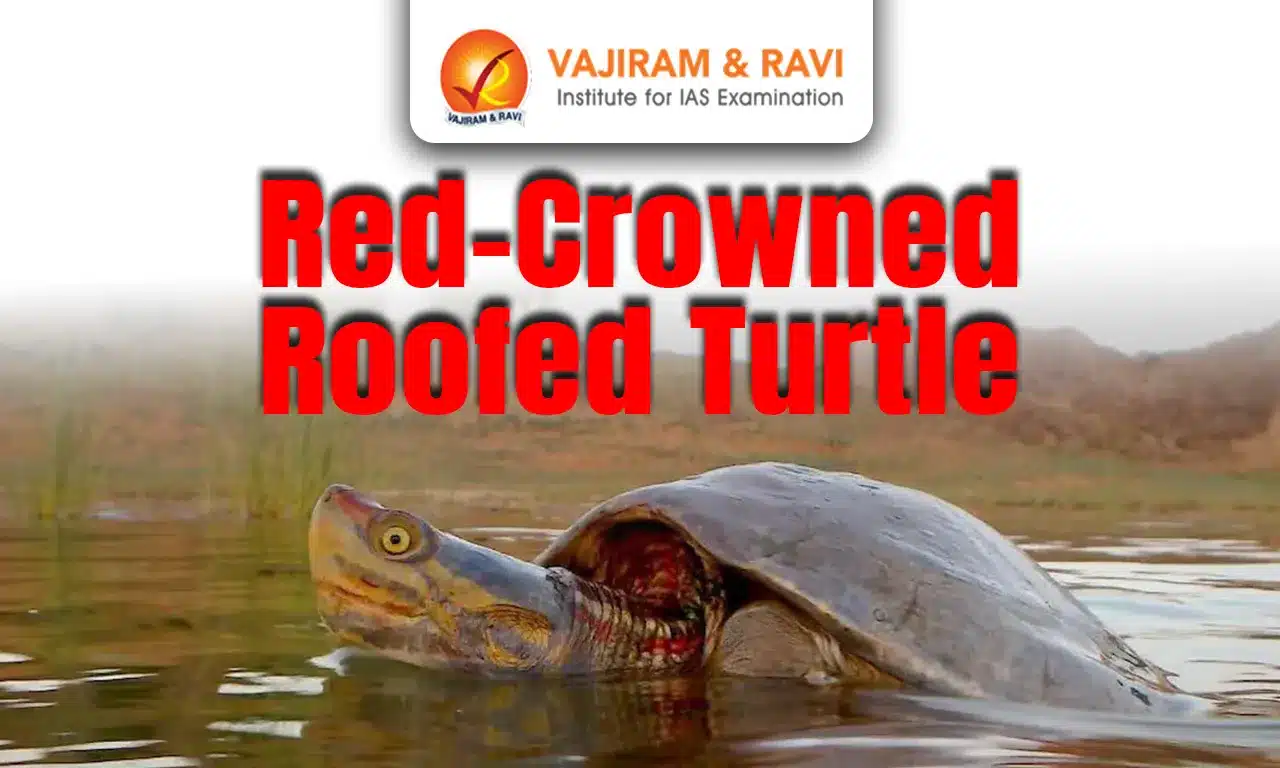
In a landmark achievement for biodiversity conservation, the endangered Red-Crowned Roofed Turtle (Batagur kachuga) has made a triumphant return to the Ganga River after three decades of absence.

About Red-Crowned Roofed Turtle

  • The red-crowned roofed turtle, or Bengal roof turtle, is a species of freshwater turtle endemic to South Asia.
  • Scientific Name: Batagur kachuga

Red-Crowned Roofed Turtle Distribution

  • It is native to India, Bangladesh, and Nepal. 
  • Historically, the species was widespread in the Ganga River, both in India and Bangladesh.
  • It also occurs in the Brahmaputra basin. 
  • Currently in India, the National Chambal River Gharial Sanctuaryis the only area with a substantial population of the species.

Red-Crowned Roofed Turtle Features

  • It is a medium-sized turtle that can grow up to 56 cm in length and can weigh up to 25 kg.
  • In comparison to their female counterparts, the males are shorter and reach only half their length. 
  • They have a reddish-orange colored head with a black crown and a greenish-brown carapace (upper shell) with yellowish patterns. 
  • Their plastron (lower shell) is yellow with black markings. 
  • They have a broad head, strong jaws, and webbed feet.
  • It is omnivorous and feeds on a variety of plants and animals.

Red-Crowned Roofed Turtle Conservation Status

  • IUCN : Critically Endangered
  • Wild Life (Protection) Act of 1972: Schedule I
  • CITES : Appendix II

Source: DDN

Red-Crowned Roofed Turtle FAQs

Q1: What is the scientific name of the red-crowned roofed turtle?

Ans: Batagur kachuga

Q2: Under which Schedule of the Indian Wildlife (Protection) Act, 1972, is the red-crowned roofed turtle listed?

Ans: Schedule I

Q3: What is the IUCN status of the red-crowned roofed turtle?

Ans: Critically Endangered

National Security Advisory Board Revamped: Members, Mandate & Strategic Role Explained

Default Image

What’s in Today’s Article?

  • National Security Advisory Board Latest News
  • National Security Advisory Board (NSAB)
  • NSAB Reconstituted
  • National Security Advisory Board FAQs

National Security Advisory Board Latest News

  • The Union government has restructured the National Security Advisory Board (NSAB), appointing former RAW chief Alok Joshi as its new chairman, along with six other members. 
  • This move comes at a time of rising tensions between India and Pakistan in the aftermath of the recent terror attack in Pahalgam.

National Security Advisory Board (NSAB)

  • The National Security Advisory Board (NSAB) is a key body under India’s three-tier national security structure.
    • National Security Council (NSC) – Apex body headed by the Prime Minister.
    • Strategic Policy Group (SPG) – Chaired by the National Security Advisor.
    • National Security Advisory Board (NSAB) – Advisory body providing long-term analysis.
  • It provides inputs on strategic and security-related matters and plays a crucial role in shaping India’s national security policies by bringing together domain experts from various fields.

Need for NSAB

  • To provide a broad-based perspective on national security challenges.
  • To incorporate views from outside the government structure for innovative and non-bureaucratic insights.
  • To ensure informed decision-making on complex and evolving threats (e.g., cyber, space, terror, climate).
  • To enhance strategic thinking and foresight on foreign and security policy matters.

Legal Mandate

  • The NSAB has no statutory or constitutional status.
  • It operates under the framework of the National Security Council Secretariat (NSCS).
  • It is an advisory and non-binding body — its recommendations are not enforceable but carry weight.

Composition

  • Headed by a Chairperson (usually a former senior official or expert).
  • Includes 7 members from diverse fields such as diplomacy, military, academia, economics, science & tech.
  • Members are appointed by the Prime Minister’s Office (PMO) or on NSA’s recommendation.
  • It is non-permanent, and its composition may change based on government needs.

Functions and Responsibilities

  • Provides policy perspectives and recommendations to the National Security Council (NSC).
  • Offers strategic guidance on evolving threats and national interests.
  • Focuses on research, foresight, and independent analysis to support government decision-making.

Current Agenda of NSAB

  • Neighbourhood strategy and Western neighbourhood
  • Border management
  • Maritime security
  • Internal security
  • Strategic industries and technology
  • Strategic communications

NSAB Reconstituted

  • The government has reconstituted the National Security Advisory Board (NSAB) and appointed former R&AW chief Alok Joshi as its new chairman. 
  • The seven-member board includes:
    • Military Veterans:
      • Air Marshal P.M. Sinha (Former Western Air Commander)
      • Lt Gen A.K. Singh (Former Southern Army Commander)
      • Rear Admiral Monty Khanna
    • Police Officers:
      • Rajiv Ranjan Verma (Retired IPS)
      • Manmohan Singh (Retired IPS)
    • Diplomat:
      • B. Venkatesh Varma (Retired IFS)

National Security Advisory Board FAQs

Q1. What is the NSAB?

Ans. An advisory body under the NSC providing long-term strategic analysis on national security issues to the government.

Q2. Who heads the NSAB now?

Ans. Former RAW chief Alok Joshi has been appointed chairman in the latest reconstitution.

Q3. What does the NSAB do?

Ans. It offers perspectives, policy recommendations, and studies referred issues related to security and strategy.

Q4. Is NSAB a statutory body?

Ans. No, it has no legal status and functions as an advisory group under the NSC Secretariat.

Q5. What’s NSAB’s current agenda?

Ans. Focus areas include border security, neighbourhood strategy, internal threats, maritime safety, and strategic technologies.

Source: IE | ToI | MHA

Enquire Now