Altermagnets, Spintronics & Valleytronics

Altermagnets, Spintronics & Valleytronics

Altermagnets, Spintronics & Valleytronics Latest News

A research team led by the Hong Kong University of Science and Technology (HKUST) has reported the first-ever experimental observation of a two-dimensional layered room-temperature altermagnet.

About Altermagnets

  • Altermagnets are a new class of antiferromagnetic materials that exhibit momentum-dependent spin splitting without requiring spin–orbit coupling (SOC) or net magnetization.
  • This novel spin splitting mechanism arises due to exchange interactions between crystal-symmetry-connected magnetic sublattices, creating a phenomenon known as C-paired spin-valley locking (SVL).
  • Altermagnetism combines the long spin lifetimes and magnetic stability of antiferromagnets with the advantage of spin-split energy bands, making them ideal for spintronic applications.

About Spintronics

  • Spintronics (short for spin transport electronics) is a field of electronics that utilises both the intrinsic spin and charge of electrons to store, process, and transfer data.
  • It offers faster processing speedshigher integration densities, and reduced energy consumption.
  • Key spintronic devices include spin transistorsspin diodesspin filtersspin RAM, and spin logic gates.
  • In contrast to conventional electronics, which rely solely on electron charge, spintronics provides an additional degree of freedom—electron spin, enabling energy-efficient computation.
  • Valleytronics is an emerging field that uses valley degrees of freedom (minima in energy bands) to store and manipulate data. Like spin, valley indices can be used as binary information units, potentially offering faster and denser data processing.

Source: PHY

Altermagnets, Spintronics & Valleytronics FAQs

Q1: What are altermagnets?

Ans: Altermagnets are a newly discovered class of magnetic materials that combine antiferromagnetic order with strong spin polarisation, allowing spin control without net magnetisation.

Q2: What is spintronics?

Ans: Spintronics (spin transport electronics) is a technology that exploits the intrinsic spin of electrons and their associated magnetic moment in solid-state devices.

Q3: What is valleytronics?

Ans: Valleytronics is a branch of electronics that exploits the valley degree of freedom (energy extremes in electronic band structures) for information encoding, offering an alternative to charge-based systems.

Lairai Devi Temple

Lairai Devi Temple

Lairai Devi Temple Latest News

In a tragic turn of events, at least six people died, and over 70 others were injured after a stampede at wee hours of Saturday in Shirgaon village in North Goa's Bicholim, during the annual Lairai Jatra procession at Shree Lairai Devi temple.

About Lairai Devi Temple

  • The Lairai Devi Temple is a revered spiritual site located in Shirgao village, Bicholim taluka, North Goa. 
  • Dedicated to Goddess Lairai, who is believed to be an incarnation of Goddess Parvati, the temple holds immense cultural and religious significance for the local community.
  • The temple's architecture reflects traditional Goan design, with intricate carvings and vibrant interiors that add to its sacred charm. 
  • The temple is a symbol of religious harmony, with local Hindus and Catholics regarding Lairai Devi and the Virgin Mary of Mapusa as sisters.
  • It is best known for hosting the annual Lairai Devi Jatra (Shirgao Jatra), where the dramatic fire-walking ritual (Agnidivya) is performed by devotees called "dhonds." 
  • The festival begins with processions, devotional dances, and drumming. At midnight, a massive bonfire is lit, and in the early hours, the fire-walking ritual commences. Devotees chant the goddess’s name as they cross the embers, believing the righteous will remain unharmed.
  • The event draws tens of thousands of devotees from Goa, Maharashtra, and Karnataka, fostering strong community bonds and reinforcing local traditions.

SourceMINT

Lairai Devi Temple FAQs

Q1: Why is Lairai Devi famous?

Ans: Lairai Devi is famous for her temple in Shirgao, Goa, and the annual fire-walking festival called Shigmo Jatra, where devotees walk over burning coals as an act of faith.

Q2: What is the story of Aai Lairai Devi?

Ans: Aai Lairai Devi is believed to be one of seven divine sisters who settled in different parts of Goa, choosing Shirgao as her abode and performing penance by walking on fire with her devotees.

Q3: Who are the 7 sisters and 1 brother of Goa?

Ans: The seven sisters are Lairai, Kelbai, Mahamaya, Mirabai, Morjai, Shitalai, and Ajidipa, and their brother is Khetoba.

Indian Institute of Creative Technology

Indian Institute of Creative Technology

Indian Institute of Creative Technology Latest News

The Government of India has announced the establishment of the Indian Institute of Creative Technology (IICT) in Mumbai, modelled after the IITs and IIMs.

About Indian Institute of Creative Technology

  • The Indian Institute of Creative Technology (IICT) is India’s first dedicated institute for Animation, Visual Effects, Gaming, Comics, and Extended Reality (AVGC-XR), established as a National Centre of Excellence in Mumbai.
  • IICT is modelled after the Indian Institutes of Technology (IITs) and Indian Institutes of Management (IIMs), aiming to set new benchmarks in creative technology education and research.
  • The institute’s mission is to create Indian intellectual property leveraging the country’s rich cultural heritage and to cultivate talent for the global digital content industry.
  • IICT will feature state-of-the-art infrastructure, including immersive studios, animation and gaming labs, virtual production setups, editing and sound suites, and smart classrooms.
  • The permanent campus will be developed over ten acres at Dadasaheb Phalke Chitranagari (Film City), Goregaon, Mumbai, while initial operations will begin at Bandra-Kurla Complex (BKC).

SourceTOI

Indian Institute of Creative Technology FAQs

Q1: Where is the Indian Institute of Creative Technology located?

Ans: IICT is located in Mumbai, Maharashtra, with its permanent campus planned at Dadasaheb Phalke Chitranagari (Film City), Goregaon, and initial operations at Bandra-Kurla Complex (BKC).

Q2: What sectors will IICT focus on?

Ans: IICT is dedicated to the AVGC-XR sector, which includes Animation, Visual Effects, Gaming, Comics, and Extended Reality.

Turbidity Currents in Submarine Canyons

Turbidity Currents in Submarine Canyons

Turbidity Currents in Submarine Canyons Latest News

A recent study published in ACS Environmental Science & Technology has provided the first direct evidence of turbidity currents transporting microplastics into the deep sea through submarine canyons, even in areas not fed by rivers (e.g., Whittard Canyon off Ireland).

What are Turbidity Currents?

  • Turbidity currents are rapid, downslope flows of water heavily laden with sediments, increasing the water’s density.
  • They function similarly to underwater avalanches, triggered by:
    • Earthquakes
    • Submarine landslides
    • Slope failures and other geological disturbances
  • Key Features of Turbidity Currents
    • As turbidity increases, water becomes denser and less transparent.
    • These flows erode the seafloor, forming and enlarging submarine canyons.
    • They deposit sediment in graded layers, with coarser particles settling first and finer ones later.
    • Aid in deep-sea sedimentation and shaping oceanic topography.

Submarine Canyons

  • Submarine canyons are narrow, steep-sided underwater valleys found on continental slopes and rises, often extending from the continental shelf into the deep ocean.
  • They are carved out mainly by erosional forces like turbidity currents, similar to how river canyons are formed on land.
  • Globally, there are about 9,477 known submarine canyons, covering nearly 11% of continental slope areas.
  • Canyons on active margins (tectonically active zones) tend to be steeper and shorter, while those on passive margins are more gradual.
  • Their walls can be nearly vertical and are prone to collapse, adding sediment to turbidity flows.

Types of Submarine Canyons

  • Bank: A flat-topped elevation on continental margins, formed by erosional and depositional processes, e.g., Dogger Bank in the North Sea.
  • Shoal: A shallow area of sediment accumulation, often hazardous to navigation, and generally found at depths <10 meters at low tide.
  • Reef: Built from calcareous skeletons of corals and algae; coral reefs are biodiversity hotspots and prominent in the Pacific Ocean, associated with guyots and seamounts.

Source: PHY

Turbidity Currents in Submarine Canyons FAQs

Q1: What are turbidity currents?

Ans: Turbidity currents are underwater density flows carrying sediments down continental slopes, typically triggered by earthquakes or slope failures.

Q2: How do turbidity currents form submarine canyons?

Ans: These high-energy flows erode deep channels into the seafloor, shaping submarine canyons over geological timescales.

Q3: Where are major submarine canyons located?

Ans: Submarine canyons are found off continental margins, like the Monterey Canyon (USA), Swatch of No Ground (Bay of Bengal), and Indus Canyon (Arabian Sea).

Microgravity

Microgravity

Microgravity Latest News

Researchers at the Indian Institute of Space Science and Technology (IIST) have developed a 3D computational model that shows microgravity consistently increases human core body temperature, which is crucial for long-duration space missions.

What is Microgravity?

  • Microgravity is a condition of apparent weightlessness experienced in space when objects are in free-fall orbit around Earth.
  • Microgravity does not mean the absence of gravity. At orbital altitudes (~250 miles above Earth), gravity is ~89% as strong as on Earth.
  • Objects appear to float because they are in continuous free fall around the Earth, a state first explained by Isaac Newton's orbiting cannonball thought experiment.
  • Weightlessness ≠ no gravity; rather, it results from free-fall motion, where objects, spacecraft, and astronauts all fall simultaneously.
  • In such an environment, physiological changes occur, affecting bones, muscles, blood circulation, metabolism, and thermoregulation.
  • Thermoregulation is the process by which the human body maintains a stable core temperature. It is crucial during long-duration space travel, where the microgravity environment significantly alters normal physiological responses.

Thermoregulation Model

  • IIST's Thermoregulation Model: Developed a 3D computational model to simulate how heat moves through the human body under microgravity.
  • Incorporates sweatingshiveringclothing effectsorgan heat, and blood redistribution to simulate real conditions.
  • Key findings of the model include:
    • Hands and feet become cooler in space over time.
    • Head, abdomen, and core body regions become warmer.
    • During exercise in space, the body temperature rises faster than it does on Earth.
    • Core body temperature can rise from 36.3°C to 37.8°C in 2.5 months of microgravity exposure.
    • With exercise, the temperature may rise to nearly 40°C, a potentially dangerous level.
  • The model’s accuracy was validated using past data from astronauts onboard the Mir Space Station and the International Space Station (ISS). The predicted results matched historical observations.
  • The model also estimates the Universal Thermal Climate Index (UTCI), which reflects how hot or cold it feels outside by factoring in wind, humidity, and solar radiation.

Source: TH

Microgravity FAQs

Q1: What is microgravity?

Ans: Microgravity refers to a condition of very weak gravity, typically experienced in orbiting spacecraft, where objects appear to be weightless and fall at the same rate as the spacecraft.

Q2: How is microgravity different from zero gravity?

Ans: Microgravity is a near-zero gravity condition, while zero gravity is an idealised, absolute absence of gravity, which does not exist in practical terms.

Insider Trading

Insider Trading

Insider Trading Latest News

Nestle India recently said it received a warning from the country’s markets regulator for a breach of insider trading regulations “by a designated person of the company”.

About Insider Trading

Insider trading, also known as insider dealing, is the malpractice of selling or buying a company's securities by the insiders of a company.

  • Who is an insider?
    • The Securities and Exchange Board of India (SEBI) defines an ‘insider’ as someone who has access to price-sensitive information about a particular company's shares or securities. 
    • An insider can be anyone who has been associated with the company in some way during the six months preceding the insider trade.
    • That person could be an employee, a director, relative, banker or a legal counsel to the company, or even an official of the stock exchanges, trustees or employees of an asset management company (AMC) that worked with the company.
    • Insiders, who have access to confidential and exclusive information about the issuer of a particular security or stock, benefit from buying or selling undisclosed securities before they fluctuate in price.
  • What is Unpublished Price Sensitive Information (UPSI)?
    • UPSI refers to a piece of exclusive information related to a firm’s stock prices, quarterly results, acquisition deals, mergers, or any kind of sensitive activities that have not been shared with the public at large. 
    • When insiders are able to access the UPSI, they illegally conduct trade dealings for personal gains.
  • Insider trading is one of the most serious malpractices that exists in the market.
  • In India, insider trades are regulated by the SEBI under the Insider Trading Regulations, 2015. 
    • To prevent such acts of insider trading and to promote fair trading in the market for the interest of common investors, SEBI has prohibited the firms from purchasing their own shares from the secondary market.
    • SEBI can impose fines and prohibit individuals or entities from trading in the capital market if found in violation of rules.
  • For example, a company director informs his friend about a yet-to-be-declared deal, and the latter disseminates that information to his colleagues, who then buy that company’s stocks. 
    • Then, the manager, his friend, and his colleagues are liable to be booked by SEBI for violation of PTI (Prohibition of Insider Trading) Regulations.

Insider Trading FAQs

Q1. Is insider trading legal in India?

Ans. No, insider trading is illegal in India.

Q2. What is front-running?

Ans. Front Running involves trading securities based on knowledge of pending orders or anticipated market movements. 

Q3. What is an asset management company (AMC)?

Ans. An AMC is a financial institution that pools funds from multiple investors and invests in various financial instruments, such as stocks, bonds, and real estate.

Source: TH

Abdali Missile

Abdali Missile

Abdali Missile Latest News

Pakistan claimed on Saturday that it has conducted a ‘successful’ training launch of the Abdali Weapon System.

About Abdali Missile

  • The Abdali (Hatf-II) is a short-range, road-mobile, solid-fuel ballistic missile developed by Pakistan’s Space and Upper Atmosphere Research Commission (SUPARCO).
  • It is designed for tactical battlefield use and can deliver both conventional and nuclear warheads.
  • The latest test claims a maximum range of 450 kilometers (about 280 miles), doubling the previously reported operational range of 180–200 km.
  • The missile is equipped with an advanced inertial navigation system, offering a Circular Error Probable (CEP) of 100–150 meters, indicating high accuracy.
  • It is launched from a road-mobile Transporter-Erector-Launcher (TEL), enabling rapid deployment and mobility.
  • The Abdali can carry a single payload (high explosive, submunitions, or conventional warhead) weighing between 250–500 kg.
  • The missile’s solid-propellant engine allows for quick reaction and storage, enhancing its battlefield utility.
  • The system is already in operational service with Pakistan’s Army Strategic Forces Command since 2005.

SourceMINT

Abdali Missile FAQs

Q1: What is the Abdali missile’s range?

Ans: Pakistan claims a range of 450 km for the latest version, though earlier variants had a range of 180–200 km.

Q2: What type of warheads can Abdali carry?

Ans: The missile can carry high explosive, submunitions, conventional, and is reportedly capable of delivering nuclear payloads.

Q3: Who developed the Abdali missile?

Ans: It was developed by Pakistan’s Space and Upper Atmosphere Research Commission (SUPARCO).

Caste Enumeration in India’s Next Census: Objectives, Implications, and Challenges

Caste Enumeration in India’s Next Census: Objectives, Implications, and Challenges

What’s in Today’s Article?

  • Caste Census Latest News
  • Introduction
  • Historical Background of Caste-Based Enumeration
  • Objectives of the Caste Census
  • Political Significance and Reversal of Stance
  • Potential Impacts on Reservation Policies
  • Implementation Challenges
  • Way Ahead
  • Caste Census FAQs

Caste Census Latest News

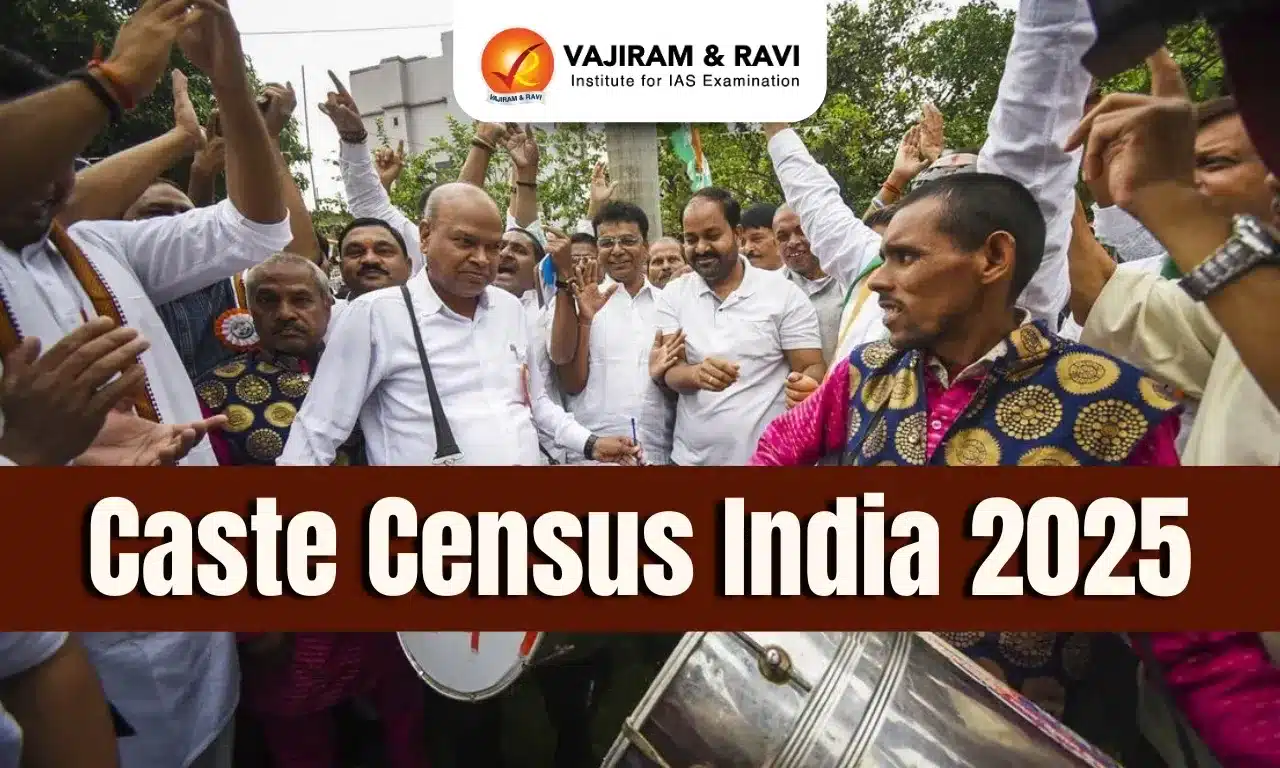
  • The Union Cabinet has decided that the next Census will include questions on caste to its enumeration of India’s population, for the first time in almost a century.

Introduction

  • In a landmark shift, the Union Cabinet has approved the inclusion of caste-based data in India’s next Census. 
  • This marks the first time in nearly a century that caste information, beyond the Scheduled Castes (SCs) and Scheduled Tribes (STs), will be collected in a national enumeration exercise
  • The decision comes at a politically sensitive time, ahead of the Bihar Assembly elections and following growing demands from opposition parties for updated caste-based demographic data to inform welfare and reservation policies.

Historical Background of Caste-Based Enumeration

  • Caste data was first collected in India in the 1881 Census under British rule and continued until the 1931 Census, which remains the last official dataset providing a detailed caste breakdown. 
  • The 1941 Census did collect caste data, but the findings were never published due to the Second World War. Post-Independence, India officially discontinued this practice, choosing only to count SC and ST populations for administrative purposes. 
  • However, the 1931 data later formed the basis for the Mandal Commission recommendations, which proposed a 27% reservation for Other Backward Classes (OBCs) based on the finding that OBCs comprised 52% of the population.
  • In 2011, the Socio-Economic and Caste Census (SECC) was conducted but failed to deliver a reliable caste breakdown, partly due to its open-ended format which recorded over 46 lakh caste entries, making the data unusable for policy purposes.

Objectives of the Caste Census

  • The key goals behind including caste in the upcoming Census are:
    • Informed Policy-Making: Updated caste data will help refine the allocation of welfare benefits and development programs based on actual demographics.
    • Reservation Reassessment: Current reservation percentages are based on outdated or projected data. The caste census will enable a fresh evaluation of the need and extent of quotas for various communities.
    • Social Justice: It is expected to support more inclusive governance by bringing visibility to marginalized and underrepresented communities within the OBC, SC, and ST categories.
    • Evidence-Based Governance: Reliable caste data will aid academic research and enable evidence-backed political and economic interventions.

Political Significance and Reversal of Stance

  • The inclusion of caste data comes as a surprise given the BJP’s earlier resistance to such measures. 
  • The party has historically criticized caste-based politics as divisive. Yet, after the Bihar government conducted its own caste survey in 2023, followed by similar exercises in Telangana and Karnataka, the national discourse began to shift. 
  • These state-level surveys revealed that backward classes make up over 60% of the population in many regions, fuelling demands for increased representation.
  • In this context, the Centre’s announcement appears aimed at regaining political ground, particularly as opposition parties campaign on themes of social justice and demand enhanced reservation caps.

Potential Impacts on Reservation Policies

  • One of the most significant implications of the caste census is its potential to alter existing affirmative action policies. 
  • The current cap on reservations is set at 50% by the Supreme Court. However, data from recent state surveys suggest that OBCs and other backward groups may warrant a higher quota, pushing political parties to demand an increase.
  • In Karnataka, for example, the caste census revealed an OBC population of nearly 70%, prompting calls to raise their reservation from 32% to 51%. Similar demands are likely to emerge across other states, challenging the legal limit on quotas.

Implementation Challenges

  • The decision to include caste in the Census presents several operational and political challenges:
    • Caste Classification: Preparing a national-level caste code directory is a complex task, given the regional, linguistic, and sub-group variations in caste identities.
    • Overlap and Disputes: Different states maintain their own OBC lists, leading to discrepancies. There is also contention over classifications of certain castes as SC, ST, or OBC.
    • Political Sensitivities: Any inclusion or exclusion in caste lists is likely to spark political controversy, especially in election-bound states.
    • Delayed Timeline: Although the announcement has been made, the actual Census has not been scheduled. The 2021 Census was indefinitely postponed due to the COVID-19 pandemic, and no new date has been announced.

Way Ahead

  • The inclusion of caste enumeration in the national Census marks a major step toward data-driven governance and equitable policymaking. 
  • While it is likely to provide much-needed clarity on the actual demographic composition of India’s various caste groups, the process will require careful planning to ensure accuracy and avoid further social fragmentation.
  • Given the political sensitivities and legal implications, the implementation of caste-based policies based on this data may take time. 
  • However, this decision represents a turning point in India's journey toward a more inclusive governance framework.

Caste Census FAQs

Q1. When was the last time caste was officially counted in the Indian Census?

Ans. The last caste enumeration was conducted in the 1931 Census.

Q2. What is the main goal of the caste census?

Ans. To gather accurate data to inform policies on welfare, reservations, and inclusive development.

Q3. Which states have already conducted caste surveys?

Ans. Bihar, Telangana, and Karnataka have completed caste-based surveys recently.

Q4. How could the caste census affect reservation policies?

Ans. It may lead to demands for increasing quotas beyond the 50% Supreme Court limit.

Q5. What are the key challenges in implementing the caste census?

Ans. Creating a standardized caste code list, managing state-centre discrepancies, and addressing political sensitivities.

Source : TH

Evaluation of Innovation in Public-Funded R&D Organisations in India

Evaluation of Innovation in Public-Funded R&D Organisations in India

What’s in Today’s Article?

  • Role of Public-Funded R&D Institutions in India Latest News
  • Scope of the Study
  • Objective of the Study
  • Methodology of the Study
  • Key Findings of the Study
  • Recommendations of the Report
  • Conclusion
  • Role of Public-Funded R&D Institutions in India FAQs

Role of Public-Funded R&D Institutions in India Latest News

  • A detailed report titled ‘Evaluation of Innovation Excellence Indicators of Public Funded R&D Organizations’ was released by the Office of the Principal Scientific Adviser, CII, and the Centre for Technology, Innovation, and Economic Research. 
  • It aimed to assess the innovation outcomes and national contributions of public-funded R&D institutions in India.

Scope of the Study

  • Institutions covered: 244 public-funded R&D organisations affiliated to various ministries.
  • Excluded: Scientific institutions such as those belonging to - 
    • Defence research and development, space research, and atomic energy research - these make up the dominant share of India’s overall R&D spend.
    • Academic institutions and universities.
  • Rationale for exclusions:
    • Sensitive nature of work in defence, atomic, and space domains.
    • Academic institutions not included due to differing mandates.

Objective of the Study

  • Core purpose: To examine whether public-funded labs are:
    • Engaged in academic (curiosity-driven) science,
    • Or aligned with industry-driven innovations and product development.
  • Broader goals:
    • Contribute to Sustainable Development Goals (SDGs).
    • Align with National Missions (e.g., Deep Ocean Mission, National Quantum Mission).
    • Support women scientists, skilling, and employment generation.
    • Guide labs to address socio-economic challenges.

Methodology of the Study

  • Survey format:
    • Online questionnaire with 62 parameters.
    • Labs/institutes self-select themselves as ‘Basic, Applied or Services’ or as ‘hybrid’ (if their research falls into more than one of the first three categories). 
    • All the data submitted by the labs/institutes was signed off by each lab director to ensure authenticity.
  • Key parameters measured:
    • Annual R&D expenditure.
    • Share of young scientists.
    • Number of patents and technologies developed.
    • Participation of women scientists.
    • Contributions to national missions.
    • Collaboration with industry (domestic and international).
    • Incubation support to startups.

Key Findings of the Study

  • Limited industry and startup engagement:
    • Only 25% of the labs surveyed gave incubation support to startups.
    • Merely 16% provided support to ‘deep tech’ startups. 
    • Just 15% collaborated with industry overseas.
  • Access and openness: About 50% opened facilities to external researchers/students.
  • Contribution to national missions:
    • 50% contributed to ‘Make in India’.
    • 35% aligned with Skill India.
    • 30% targeting the Swachh Bharat.
  • Human resource trends:
    • Decline in permanent staff.
    • Rise in contractual staff from 17,234 to 19,625.
    • Young researchers' share increased from 54% to 58%.
    • Women scientists' representation remained stagnant.
  • Budget growth: The combined budget of 155 labs/institutes increased from ₹9,924 crore in 2017-18 to ₹13,162 crore in 2022-23. 

Recommendations of the Report

  • Mandate realignment:
    • All labs to review and align mandates with ‘Viksit Bharat’ vision.
    • Prioritise critical technologies on a war footing.
  • Strategic collaboration and capacity building: Strengthen partnerships with:
    • Industry
    • Startups
    • Other R&D labs
    • Higher Education Institutions
  • Institutional reforms: Promote establishment of Section 8 Companies (nonprofit organisations established under the Companies Act, 2013) to - 
    • Provide support to startups, 
    • Open research and testing facilities, and,
    • Improve cross-linkages with higher educational institutes.

Conclusion

  • Strengthening public-funded R&D institutions through targeted innovation, industry collaboration, and alignment with national missions is essential to propel India towards its vision of Viksit Bharat.
  • With strategic reforms and inclusive participation, these institutions can become powerful engines driving sustainable development, technological self-reliance, and global scientific leadership.

Role of Public-Funded R&D Institutions in India FAQs

Q1. What was the main objective of the study titled ‘Evaluation of Innovation Excellence Indicators of Public Funded R&D Organizations’?

Ans. The study aimed to assess whether public-funded R&D labs in India are contributing meaningfully to innovation and national development goals or are primarily engaged in academic science.

Q2. Why were institutions under defence, space, and atomic energy excluded from the study?

Ans. These institutions were excluded due to the sensitive and strategic nature of their research activities.

Q3. What key recommendation did the report make regarding alignment with national goals?

Ans. The report recommended that all public-funded R&D organisations must realign their mandates to support the vision of Viksit Bharat and focus on critical technologies.

Q4. What was a significant finding regarding industry and startup collaboration?

Ans. Only a small fraction of labs (25%) supported startup incubation and even fewer (16%) supported deep-tech startups, indicating limited industry engagement.

Q5. What human resource trend was observed in public-funded R&D institutions in recent years?

Ans. There was a decline in permanent staff and an increase in contractual staff, alongside a modest rise in the share of young researchers.

Source: TH

Global Rise in Vaccine-Preventable Diseases: Urgent Call for Immunisation Investment

Global Rise in Vaccine-Preventable Diseases: Urgent Call for Immunisation Investment

What’s in Today’s Article?

  • Vaccine-Preventable Diseases Latest News
  • Alarming Global Vaccination Crisis
  • Importance of Vaccination
  • India’s Progress through Immunisation
  • Way Forward: Strengthening Global Immunisation Efforts
  • Vaccine-preventable diseases FAQ’s

Vaccine-Preventable Diseases Latest News

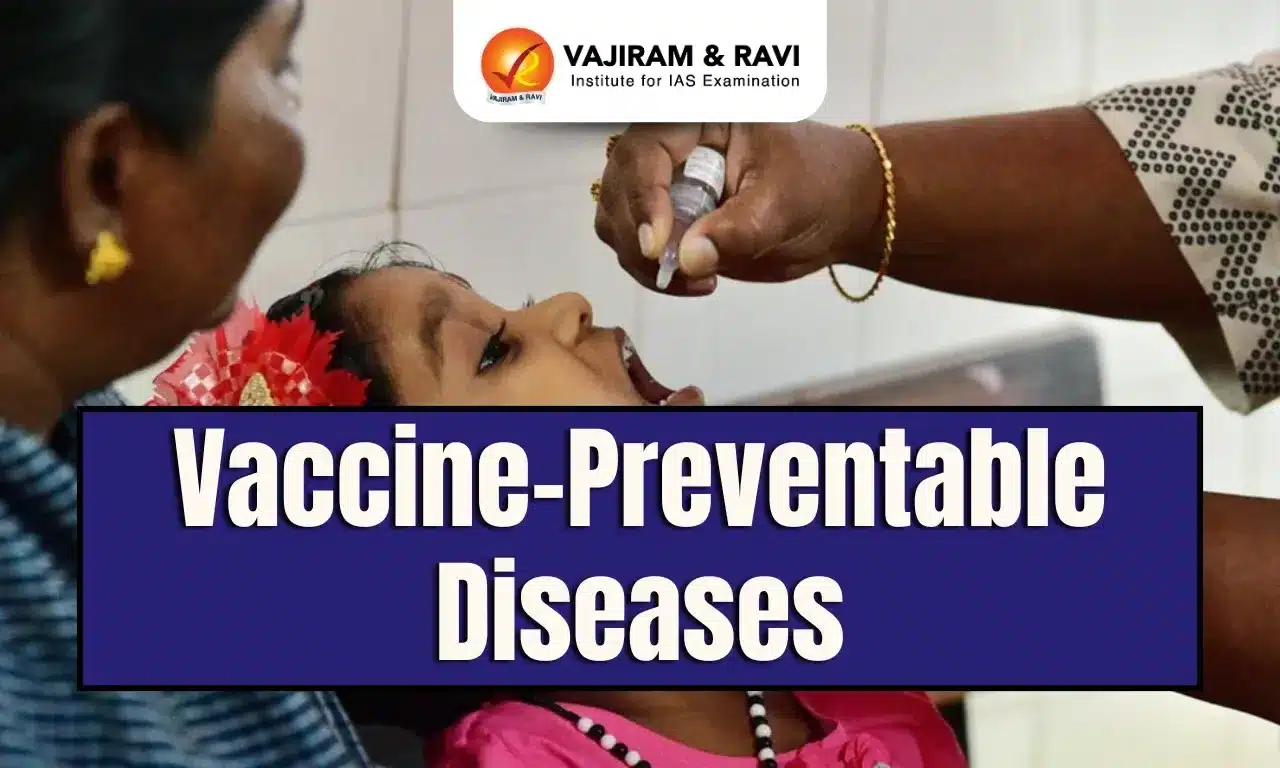
  • Diseases preventable by vaccines, like measles, meningitis, and yellow fever, are resurging as millions of children miss vaccinations due to funding cuts and disrupted immunisation efforts. 
  • WHO, UNICEF, and Gavi warn that misinformation, population growth, and humanitarian crises are further threatening progress. 
  • They urge global leaders to prioritise and strengthen vaccination programmes with urgent and sustained political commitment. 

Alarming Global Vaccination Crisis

  • A WHO rapid review across 108 low- and lower-middle-income countries revealed that nearly half face moderate to severe disruptions in vaccination campaigns and access to supplies due to reduced donor funding.

Rising Number of Unvaccinated Children

  • Routine immunisation coverage is declining. 
  • In 2023, 14.5 million children missed all routine vaccines — an increase from 13.9 million in 2022 and 12.9 million in 2019. 
  • Over half of these children live in fragile or conflict-affected regions.

Impact on Disease Surveillance

  • More than half of the surveyed countries reported disruptions in disease surveillance, increasing the risk of unchecked outbreaks of vaccine-preventable diseases.

Resurgence of Vaccine-Preventable Diseases

  • Even countries with strong healthcare systems are affected. 
  • The U.S. has reported 935 measles cases as of May 1, 2025 — more than triple the 2024 count — despite the disease being declared eliminated there in 2000.

Alarm from Global Health Leaders

  • WHO Director-General Tedros Ghebreyesus and UNICEF Executive Director Catherine Russell warned that funding cuts are threatening global health gains. 
  • They emphasized the cost-effectiveness and life-saving impact of vaccines.

Call for Urgent Investment

  • Leaders stressed the importance of sustained political and financial commitment to initiatives like the ‘Big Catch-Up’, which aims to vaccinate children who missed routine doses during the COVID-19 pandemic.

Importance of Vaccination

  • High Return on Investment and Life-Saving Impact
    • WHO describes immunisation as a top health investment, yielding a return of $54 for every $1 spent. 
    • Over the past 50 years, vaccines have saved at least 154 million lives — approximately six lives every minute. 
    • Measles vaccine alone accounts for 60% of these lives saved.
  • Major Role in Reducing Infant Mortality
    • Vaccination has contributed to 40% of the global improvement in infant survival. 
    • More children today survive past their first birthday than ever before in human history.
  • Eradication and Control of Deadly Diseases
    • Vaccines have eradicated smallpox and nearly eradicated polio. 
    • Annually, they prevent nearly 4.2 million deaths from 14 major diseases.
  • Building Herd Immunity and Protecting Public Health
    • Vaccines not only protect individuals but also reduce disease spread by building herd immunity, crucial in preventing outbreaks.

India’s Progress through Immunisation

  • India has achieved major health milestones due to widespread immunisation — including being declared polio-free in 2014 and eliminating maternal and neonatal tetanus in 2015. 
  • New vaccines like Measles-Rubella, Pneumococcal Conjugate Vaccine (PCV) and Rotavirus Vaccine (RVV) have been added to its immunisation programme.

Universal Immunization Programme (UIP)

  • UIP is one of India’s largest public health efforts, targeting 26 million newborns and 34 million pregnant women annually. 
  • Over 13 million immunisation sessions are conducted nationwide.

Gaps in Coverage Remain

  • Despite significant progress, 23.9% of Indian children still miss out on full immunisation, as reported in the National Family Health Survey-5 (2019–21).

Way Forward: Strengthening Global Immunisation Efforts

  • WHO, UNICEF, and Gavi urge parents, the public, and political leaders to reinforce their support for immunisation. 
  • They call for sustained investment in vaccines and adherence to the Immunisation Agenda 2030. 
  • A key milestone will be Gavi’s pledging summit, to be held in June 2025, which aims to raise at least $9 billion to protect 500 million children and save over eight million lives between 2026 and 2030.

Vaccine-preventable diseases FAQ’s

Q1. Why are vaccine-preventable diseases resurging globally?

Ans. Due to funding cuts, missed vaccinations, misinformation, and weakened immunisation efforts, many children remain unprotected against deadly diseases.

Q2. How many children missed routine vaccines in 2023?

Ans. In 2023, 14.5 million children globally missed all routine vaccinations, up from 13.9 million in 2022.

Q3. What role does vaccination play in infant survival?

Ans. Vaccination has driven 40% of the global improvement in infant survival, saving millions of lives over decades.

Q4. How is India addressing immunisation gaps?

Ans. India expanded UIP, introduced new vaccines, but still 23.9% of children missed full immunisation (NFHS-5 data).

Q5. What is the goal of Gavi’s June 2025 summit?

Ans. To raise $9 billion, protect 500 million children, and save 8 million lives between 2026 and 2030.

Source: TH | WHO

India Tightens Pressure on Pakistan with Water, Trade, Shipping & Postal Bans

India Tightens Pressure on Pakistan with Water, Trade, Shipping & Postal Bans

What’s in Today’s Article?

  • India-Pakistan Relations Latest News
  • India Restricts Water Flow from Baglihar Dam
  • India Imposes Total Trade Ban on Pakistan Following Pahalgam Terror Attack
  • India Bans Maritime Link with Pakistan Following Pahalgam Attack
  • India Suspends Postal Services with Pakistan
  • India-Pakistan Relations FAQ’s

India-Pakistan Relations Latest News

  • Just over 10 days after the Pahalgam terror attack that killed 26 people, India has intensified its diplomatic pressure on Pakistan. 
  • Key steps include curbing water flow through the Baglihar dam, halting imports from Pakistan, banning Pakistani ships from docking, and suspending all mail and parcel exchanges. 
  • These measures come alongside India’s strong condemnation of Pakistan’s recent ballistic missile test and signal a move towards suspending the Indus Water Treaty. 

India Restricts Water Flow from Baglihar Dam

  • India has temporarily restricted the flow of water from the Baglihar dam on the Chenab River, targeting Pakistan’s Punjab region. 
    • The Chenab River plays a critical role in irrigating Pakistani farmlands.
  • The move is intended as a short-term punitive measure in response to the recent Pahalgam terror attack.
    • Even a brief choke in water flow serves as a signal that India is prepared to take coercive steps. 

Treaty-Compliant Yet Strategic

  • Though the Baglihar dam is a run-of-the-river hydroelectric project permitted under the Indus Water Treaty, India’s action highlights its ability to use treaty-compliant infrastructure strategically in response to cross-border terrorism.

Possible Action on Kishanganga Dam

  • As per analysts, similar measures could soon be implemented at the Kishanganga dam on the Jhelum River, indicating a broader strategy to pressure Pakistan using water resources.

India Imposes Total Trade Ban on Pakistan Following Pahalgam Terror Attack

  • In response to the April 22 Pahalgam terror attack, India has banned all direct and indirect imports from Pakistan with immediate effect. 
  • The move is aimed at safeguarding national security and public policy.
  • With this, India-Pakistan trade, once valued at over $2.4 billion annually, has now come to a complete standstill.

Foreign Trade Policy Updated

  • A new provision has been inserted in the Foreign Trade Policy (FTP) 2023, explicitly prohibiting the import or transit of any goods originating in or exported from Pakistan. 
  • Exceptions, if any, will require special government approval.

Trade Already at a Historic Low

  • Due to strained bilateral ties, trade between the two nations was already minimal. 
  • In April-January 2024–25, India’s exports to Pakistan stood at $447.65 million, while imports were just $0.42 million. 
    • The two-way trade had significantly declined post the 2019 Pulwama attack.

India’s Major Exports to Pakistan

  • Exports included pharmaceutical products ($110.06 million), organic chemicals ($129.55 million), auto components, sugar, petroleum products, and food items like cereals and spices.

Previous Trade Measures & MFN Status Withdrawal

  • Post-Pulwama, India had imposed a 200% import duty on Pakistani goods and revoked Pakistan’s Most Favoured Nation (MFN) status under WTO rules. 
  • Pakistan never reciprocated India’s 1996 MFN gesture and retracted its 2012 NDMA promise due to domestic opposition.

Pakistan’s Countermove

  • In retaliation, Pakistan has also suspended all trade with India, including indirect trade via third countries.

India Bans Maritime Link with Pakistan Following Pahalgam Attack

  • India has banned all Pakistani-flagged vessels from docking at Indian ports. The ban is effective immediately and will remain in force until further notice.

Indian Vessels Also Restricted from Pakistani Ports

  • The Directorate General of Shipping (DGS) has also prohibited Indian-flagged ships from visiting Pakistani ports.
  • It invoked Section 411 of the Merchant Shipping Act, 1958, in the interest of national security and public infrastructure safety.

Limited Scope, Exemptions Possible

  • The order applies only to ships flying the Indian or Pakistani flags. 
  • Vessels flagged under third countries are not covered by the directive. 
  • Exemptions may be considered on a case-by-case basis, especially for ships already en route.

Minimal Impact Due to Low Trade Volume

  • Maritime trade between the two countries has been negligible, with only about 14 ship visits in 2024. 
  • Most trade has traditionally occurred via land borders or through third countries. Hence, the ban is expected to have limited economic impact.

India Suspends Postal Services with Pakistan

  • India has suspended the exchange of all categories of mail and parcels with Pakistan via both air and surface routes. 
  • The directive was issued by the Department of Posts under the Ministry of Communication, effectively halting all postal communication between the two countries.

India-Pakistan Relations FAQ’s

Q1. Why has India restricted water flow from the Baglihar dam?

Ans. To signal a punitive response to the Pahalgam terror attack while remaining compliant with the Indus Water Treaty.

Q2. What trade action has India taken against Pakistan?

Ans. India has imposed a total ban on all direct and indirect imports from Pakistan under the updated Foreign Trade Policy 2023.

Q3. What maritime restrictions has India placed on Pakistan?

Ans. India banned Pakistani-flagged ships from Indian ports and restricted Indian vessels from visiting Pakistan, citing national security.

Q4. How has India affected postal communication with Pakistan?

Ans. India has suspended all categories of mail and parcel exchanges with Pakistan via both air and land routes.

Q5. What is the expected impact of these measures on India-Pakistan trade?

Ans. The impact is minimal due to already low bilateral trade volumes post-2019 Pulwama attack and previous sanctions.

Source: IE | TH | IT | IE

Enquire Now