Raigad Fort

Raigad Fort

Raigad Fort Latest News

The Archaeological Survey of India and the Raigad Development Authority's joint excavation recently unearthed a ‘yantraraj' (astrolabe) at Raigad, Chhatrapati Shivaji Maharaj's capital fort.

About Raigad Fort

  • It is a hill fort situated in Raigad district, Maharashtra.
  • It is situated in the Sahyadri mountain ranges, or the western ghats.
  • It stands at an elevation of 2,700 feet (820 meters) above its base and 4,449 feet (1,356 meters) above sea level.
  • Raigad, surrounded by valleys shaped by the Kal and Gandhari rivers, stands as an isolated massif without connections to neighbouring hills. 
  • The fort also overlooks an artificial lake known as the ‘Ganga Sagar Lake’.
  • It is only accessible by a pathway on one side, through several steps in a stiff climb.
  • There is a famous tower built on a high valley near Raigad Fort, which is called “Hirkani Buruj”.
  • It isone of the strongest-ever fortresses of the Deccan Plateau and is known as the ‘Gibraltar of the East’ across the world.
  • It was seized by Chhatrapati Shivaji Maharaj in 1656 from Chandraraoji More, the King of Jawali. 
  • Chhatrapati Shivaji Maharaj renovated this fort and declared it the capital of the Maratha Empire in 1674 AD.
  • The fort’s layout is strategically designed to maximize its defensive capabilities, with multiple layers of fortification, bastions, and gateways.
  • The fort was the location for an armed campaign executed by the British East India Company in 1765
  • On May 9, 1818, the fort was looted and subsequently destroyed by British forces.

Raigad Fort FAQs

Q1: Raigad Fort is located in which Indian state?

Ans: Maharashtra

Q2: The Raigad Fort was made the capital of the Maratha Empire by Chhatrapati Shivaji Maharaj in which year?

Ans: 1674

Q3: Which nickname is often used to refer to Raigad Fort?

Ans: Gibraltar of the East

SourceTOI

National Centre for Disease Informatics and Research (NCDIR)

National Centre for Disease Informatics and Research

National Centre for Disease Informatics and Research Latest News

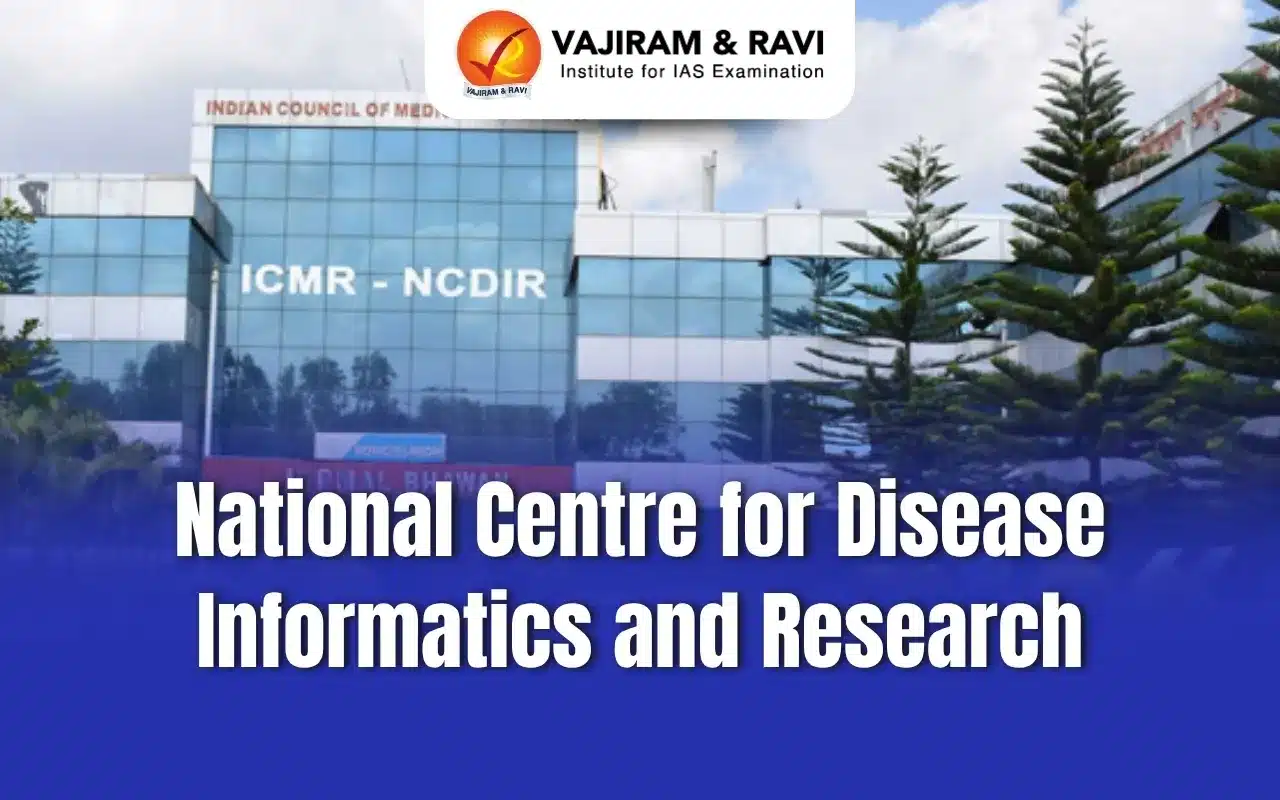
Public Primary Health Centres (PHCs) are better prepared for diabetes and hypertension care than Sub-Centres, Community Health Centres (CHCs), and Sub-District Hospitals, a study undertaken by the National Centre for Disease Informatics and Research (ICMR-NCDIR), Bengaluru, has found. 

About National Centre for Disease Informatics and Research

  • It is a permanent institute of the Indian Council of Medical Research (ICMR), an autonomous organization under the Department of Health Research, Ministry of Health & Family Welfare, Government of India.
  • Location: Bengaluru, Karnataka
  • It is one of its kind of unique institutions which utilizes information science for health research as its integral component.
  • The main broad and overall objective of the centre is to sustain and develop a national research database on cancer, diabetes, cardiovascular Diseases (CVD), and stroke through recent advances in electronic information technology with a national collaborative network so as to undertake aetiological, epidemiological, clinical, and control research in these areas.
  • The centre closely works with the Ministry of Health, Government of India, and other Central/State Government or other agencies to provide or plan to provide baseline information and technically help in designing, monitoring, and evaluating control programmes and activities.
  • The centre encourages and extends technical support to all Central/Regional/State medical institutions and medical colleges,non-governmental or private centres for constituting and establishing data collection (on cancer, CVD, diabetes, and stroke) in their institutions along internationally acceptable and nationally adaptable formats and standards. Use of the internet and electronic information networking will be a regular feature.
  • The centre plan, innovates and integrates recent advances in communicationsand electronic information technology to develop the emerging field of health/disease informatics and develop software modules for data capture, checking, and analysis.

National Centre for Disease Informatics and Research FAQs

Q1: The National Centre for Disease Informatics and Research (NCDIR) is a permanent institute under which organization?

Ans: Indian Council of Medical Research (ICMR)

Q2: Where is the National Centre for Disease Informatics and Research located?

Ans: Bengaluru

Q3: What is the main objective of the NCDIR?

Ans: To sustain and develop a national research database on cancer, diabetes, cardiovascular Diseases (CVD), and stroke.

SourceTH

International Air Transport Association

International Air Transport Association

International Air Transport Association Latest News

Recently, the Prime Minister of India addressed the International Air Transport Association's (IATA) 81st Annual General Meeting (AGM) and the plenary session of World Air Transport Summit (WATS) at Bharat Mandapam in New Delhi.

About International Air Transport Association

  • It was founded in Havana, Cuba, on 19 April 1945.
  • It is the prime vehicle for inter-airline cooperation in promoting safe, reliable, secure and economical air services - for the benefit of the world's consumers. 
  • Members: At its founding, IATA had 57 members from 31 nations, mostly in Europe and North America. Today it has some 350 members from 120 nations in every part of the globe.
  • The modern IATA is the successor to the International Air Traffic Association founded in the Hague in 1919.
  • The last AGM in India was held 42 years ago in 1983.
  • Head Office: Montreal, Canada.

Objectives of International Air Transport Association

  • Promote the development and growth of international air transportation.
  • Promote and guarantee collaboration between the different international air transport companies.
  • Strengthen safety within all areas of air transportation.
  • Creation of international air traffic rules and regulations.

International Air Transport Association FAQs

Q1: What is the International Air Transport Association?

Ans: The International Air Transport Association (IATA) is the trade association for the world's airlines, representing some 350 airlines over 80% of global air traffic.

Q2: Who was the first Indian to join IATA?

Ans: Spice Jet

Source: PIB

Government Notifies Guidelines to Promote Manufacturing of Electric Passenger Cars in India

India’s Green Mobility Push

India’s Green Mobility Push Latest News

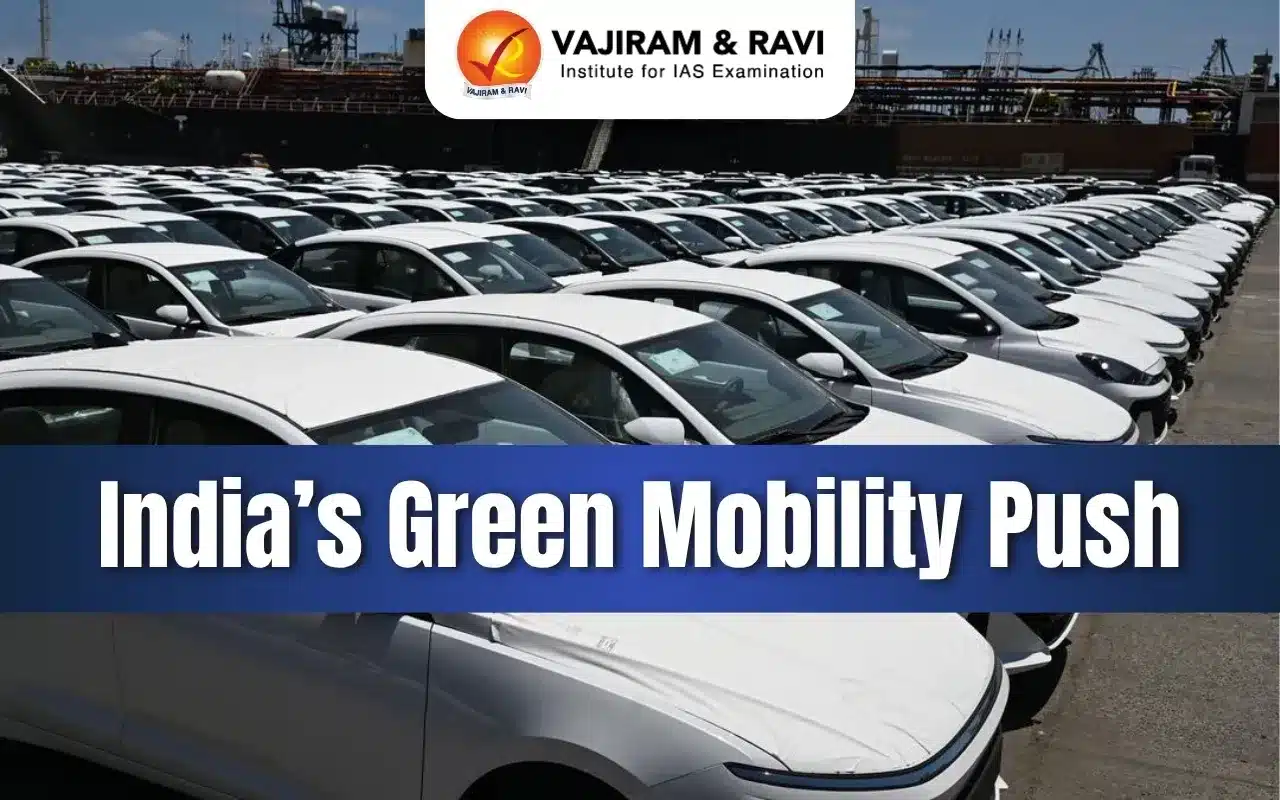
  • The Ministry of Heavy Industries issued detailed guidelines under the Scheme to Promote Manufacturing of Electric Passenger Cars in India (SPMEPCI), first notified on March 15, 2024. 
  • The scheme offers reduced import duties to global electric vehicle (EV) manufacturers in return for significant investments in domestic manufacturing.
  • The Union Heavy Industries Minister also noted that the global EV giant Tesla is not interested in manufacturing cars in India but keen on establishing showrooms in the country.
  • Earlier, the U.S. President Donald Trump has said that if Tesla were to build a factory in India to circumvent that country's tariffs, it would be "unfair" to the U.S.

Key Highlights of the Scheme

  • Reduced import duties on electric vehicles:
    • Companies can import up to 8,000 electric four-wheeler (e-4W) units annually at a reduced customs duty of 15%, compared to the existing 70–100%.
    • The benefit is applicable for 5 years from the date of application approval.
    • Applicable only on CBUs (Completely Built Units) with a minimum CIF value of $35,000.
  • Investment mandate:
    • Approved applicants would be required to make minimum investment of Rs. 4,150 crore in line with the provisions of the scheme.
    • Manufacturing operations must commence within 3 years of application approval.
    • Eligible investment includes:
      • New plant, machinery, equipment, and associated utilities
      • Engineering Research and Development (ER&D)
      • New buildings (up to 10% of committed investment)
      • Charging infrastructure (up to 5% of committed investment)
    • Land costs are excluded from eligible expenditure.
  • Domestic value addition (DVA) requirements:
    • Minimum 25% DVA within 3 years.
    • Minimum 50% DVA within 5 years from the approval date.

Safeguard and Compliance Mechanisms

  • The Applicant’s commitment to set up manufacturing facilities, shall be backed by a Bank Guarantee from a scheduled commercial bank in India equivalent to -
    • The total duty to be forgone (capped at ₹6,484 crore per applicant) or 
    • Rs 4,150 crore, whichever is higher.
  • The Bank Guarantee should be valid at all times during the tenure of the Scheme.

Eligibility Criteria for Applicants

  • To qualify and receive benefits under the scheme, an applicant is required to have a global group revenue from automotive manufacturing of a minimum ₹10,000 crore
  • Moreover, the global investment of a company or its group companies in fixed assets must be at least ₹3,000 crore.

Application Process

  • Application window: At least 120 days, starting soon (June 2025).
  • The Ministry of Heavy Industries shall have the right to open the application window, as and when required till March 15, 2026.
  • A non-refundable application fee of ₹5,00,000 will be payable by the applicant while filing the application form.

Schemes for Advancing India’s EV Ecosystem

  • PM Electric Drive Revolution in Innovative Vehicle Enhancement (PM E-DRIVE) Scheme:
    • Notified on 29th September, 2024, to incentivise sale of e-2W, e-3W, e-Trucks, e-Ambulances, and e-buses. 
    • The scheme also supports development of charging infrastructure and upgradation of vehicle testing agencies.
  • Production Linked Incentive Scheme for Automobile and Auto Component Industry (PLI-Auto): Approved on 15th September, 2021, for enhancing India's manufacturing capabilities for Advanced Automotive Technology (AAT) products.
  • PLI Scheme for Manufacturing Advanced Chemistry Cells (ACC): Approved on 12th May, 2021, the scheme envisages to establish a cumulative ACC battery manufacturing capacity of 50 GWh.
  • FAME-II: It was introduced with the objective of domestic manufacturing of electric vehicles, its assemblies/ sub-assemblies and parts/sub-parts thereby increasing the domestic value addition. 
  • PM e-Bus Sewa-Payment Security Mechanism (PSM) Scheme: The scheme aims to support deployment of more than 38,000 electric buses.
  • SPMEPCI: This scheme promotes the manufacturing of electric cars in India.

Conclusion

  • This scheme is a significant policy step under India’s green mobility and manufacturing push, aligning with net-zero emission goals, job creation, and boosting local value chains.
  • It seeks to make India an attractive destination for global EV manufacturers while ensuring significant domestic economic benefits.

India’s Green Mobility Push FAQs

Q1. What are the key conditions for electric vehicle manufacturers to avail reduced import duties under the Government’s new EV manufacturing scheme (SPMEPCI)?

Ans. To avail the reduced 15% import duty on electric four-wheelers, manufacturers must invest a minimum of ₹4,150 crore and set up local manufacturing within 3 years.

Q2. What is the Domestic Value Addition (DVA) requirement under the electric passenger vehicle manufacturing scheme?

Ans. Applicants must achieve at least 25% DVA within 3 years and 50% within 5 years from the date of approval.

Q3. How has the scheme ensured accountability and compliance from the participating manufacturers?

Ans. Compliance is ensured through a mandatory bank guarantee equal to the duty foregone or ₹4,150 crore, whichever is higher.

Q4. How does the scheme align with India’s industrial and environmental policy goals?

Ans. The scheme supports the Make in India initiative, promotes green mobility, and encourages foreign investment in clean technology manufacturing.

Q5. What are the eligibility criteria for companies to apply under this scheme?

Ans. Eligible companies must have a global automotive manufacturing revenue of ₹10,000 crore and a minimum global fixed asset investment of ₹3,000 crore.

Source: TH | TH

Reviving India’s Tourism Sector: Focus on Foreign Tourist Arrivals and Industry Demands

Tourism Industry in India

Tourism Industry in India Latest News

  • The Indian Association of Tour Operators (IATO) has asked Prime Minister Narendra Modi to make an immediate budgetary allocation of Rs. 1,000 crore under the ‘Incredible India’ campaign.

Tourism Industry in India

  • India’s tourism sector is one of the largest contributors to its economy, generating employment, foreign exchange, and socio-cultural growth. 
  • It plays a critical role in promoting India’s heritage, diversity, and natural landscapes across the world. 
  • According to the Ministry of Tourism, the industry contributed nearly 5.03% to India’s GDP (direct and indirect) in pre-COVID years and supported millions of jobs across formal and informal sectors.

Strengths of the Tourism Sector

  • Cultural and Natural Diversity: India boasts 43 UNESCO World Heritage Sites, diverse ecosystems, spiritual tourism hubs, and medical tourism facilities.
  • Robust Domestic Market: With a growing middle class, domestic travel acts as a stabilizing force during international slowdowns.
  • Soft Power and Diplomacy: Tourism contributes to India's image globally and acts as a diplomatic channel through cultural exchange.

Challenges Facing Foreign Tourist Arrivals (FTA)

  • While domestic tourism is recovering rapidly, foreign tourist arrivals (FTAs) are lagging. Key challenges include:
    • Complex Visa Processes: Lengthy documentation, high fees, and limited group visa options deter many international travellers.
    • Air Connectivity Gaps: Limited direct international flights to second-tier cities restrict access to unexplored destinations.
    • Inadequate Infrastructure: Last-mile connectivity, poor sanitation, and underdeveloped hospitality in many areas remain persistent issues.
    • Insufficient Promotion: Compared to countries like Thailand or UAE, India invests less in global tourism marketing campaigns.

Policy and Institutional Measures

  • Over the years, the Government of India has introduced several policies to revitalize tourism, including:
    • e-Visa Expansion: Covering over 150 countries to simplify tourist entry.
    • Dekho Apna Desh & Swadesh Darshan schemes: Focused on domestic travel and infrastructure upgrades.
    • Incredible India Campaign: India’s flagship international marketing initiative.
      However, stakeholders argue that more targeted action and better implementation are needed, especially for the foreign tourism segment.

News Summary: Industry’s Appeal to Boost Foreign Tourist Arrivals

  • In a recent appeal, the Indian Association of Tour Operators (IATO) urged Prime Minister Narendra Modi to immediately allocate Rs. 1,000 crore under the ‘Incredible India’ campaign and establish an ‘India Tourism Board’ under the PM’s leadership. 
  • The proposal comes in light of India’s continued underperformance in attracting foreign tourists.
  • Despite a post-pandemic recovery, foreign tourist arrivals in 2023 stood at 9.52 million, only 87% of the 2019 figure of 10.93 million. 
  • While this reflects a 47.89% increase over 2022 (6.44 million), the numbers remain below pre-COVID benchmarks. 
  • IATO highlighted that inbound tourism plays a vital role in foreign exchange earnings and employment, and it operates independent of global trade tariffs, making it a stable economic contributor.
  • The association emphasized the need for timely action before the upcoming tourist season to maximize impact. Specific recommendations include:
    • Visa Process Reforms: Expand e-Visa options, fast-track group visas, and waive fees for select countries.
    • Air Connectivity: Incentivize international airlines and charter services to connect with tier-2 and tier-3 destinations.
    • Unified Tourism Board: A centralized body to coordinate tourism promotion, policy, and infrastructure at the national level.

Tourism Industry in India FAQs

Q1. What was the number of foreign tourist arrivals in India in 2023?

Ans. India recorded 9.52 million foreign tourist arrivals in 2023, 87.09% of the 2019 levels.

Q2. Why is inbound tourism important for India’s economy?

Ans. Inbound tourism brings foreign exchange, supports employment, and contributes to India’s current account.

Q3. What reforms has the tourism industry suggested to the government?

Ans. The industry has recommended a Rs. 1,000 crore allocation, simplified visa procedures, and better air connectivity.

Q4. Which body made the request to PM Modi for boosting tourism?

Ans. The Indian Association of Tour Operators (IATO) made the formal appeal to the Prime Minister.

Q5. What is the proposed solution to coordinate India’s tourism promotion?

Ans. IATO has suggested forming an ‘India Tourism Board’ under the Prime Minister’s leadership.

Source: TH

Lysosomal Storage Disorders (LSDs)

Lysosomal Storage Disorders (LSDs)

Lysosomal Storage Disorders Latest News

Despite the establishment of the National Policy for Rare Diseases (NPRD) in 2021 and a nationwide financial assistance programme, over 300 patients, predominantly children diagnosed with Lysosomal Storage Disorders (LSDs), are left without essential medical care.

About Lysosomal Storage Disorders

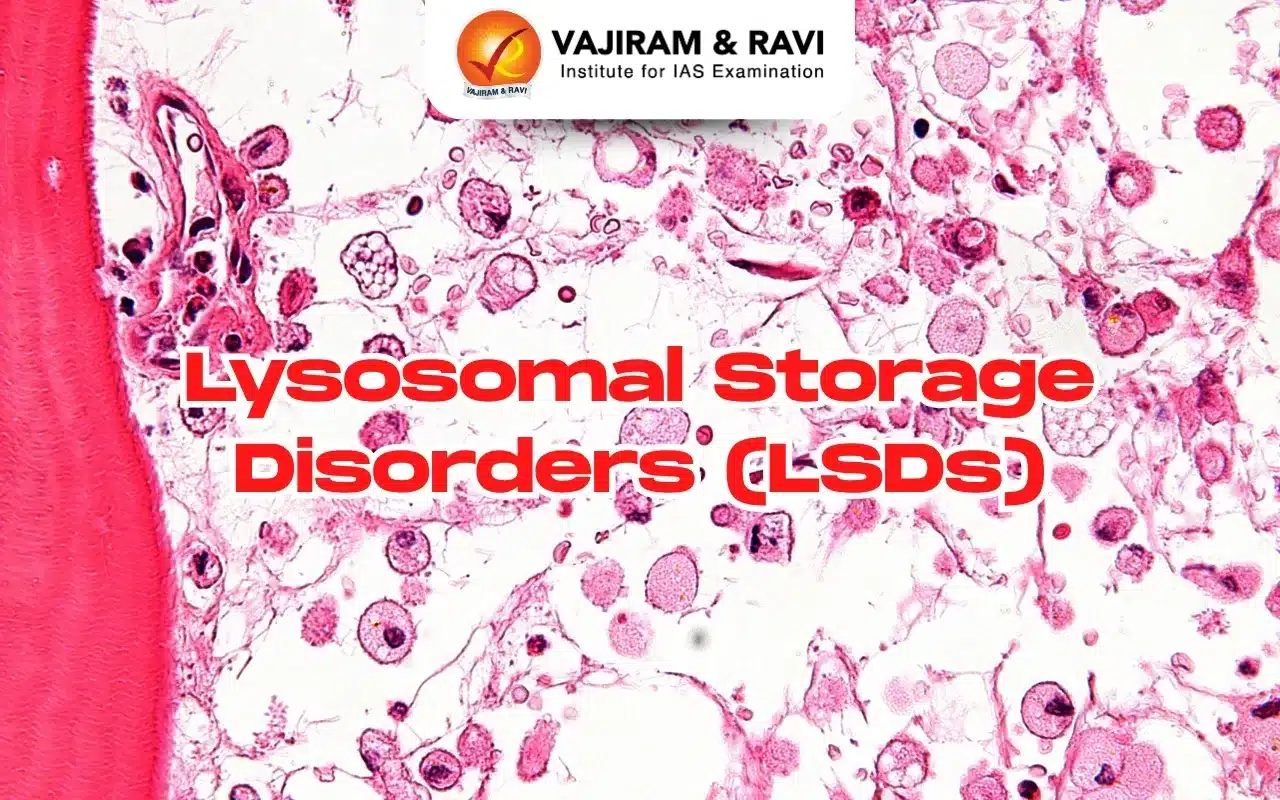
  • LSDs are rare genetic conditions that cause a buildup of toxic materials in your body’s cells.
  • Examples include Gaucher, Pompe, Fabry, MPS I, MPS II, mucopolysaccharidoses, mucolipidoses, oligosaccharidoses, etc.
  • The majority of the LSDs are caused by mutations in the genes encoding a lysosomal enzyme.
    • lysosome is a membrane-bound cell organelle that contains digestive enzymes. 
    • Lysosomes are involved with various cell processes. They break down excess or worn-out cell parts.
    • People with LSDs lack certain enzymesor a substance that helps the enzyme work (enzyme activator or modifier). Enzymes assist your cells’ lysosomes with metabolism. 
    • Without functioning enzymes, your body can’t break down fats, sugars and other substances. 
    • If those build up in your body, they can be harmful. They cause dysfunction of those organs where they accumulate and contribute to great morbidity and mortality.
  • All LSDs except Hunter syndrome (MPS II) and Fabry disease are autosomal recessive disorders. This means both parents must carry the abnormal gene that prevents the body from making an enzyme with normal activity.
  • LSDs usually appear during pregnancy or soon after birth. 
  • More rarely, adults may develop LSDs. 
  • People usually have more severe cases when an LSD starts early and more mild cases when an LSD starts later.
  • Treatment
    • There are no cures for lysosomal storage diseases. 
    • But treatments can help you to manage your symptoms and lessen damage to organs and tissues.

Lysosomal Storage Disorders FAQs

Q1: What are the most common lysosomal storage disorders?

Ans: The most common are Gaucher disease, Fabry disease, Hunter syndrome, Hurler syndrome, Tay-Sachs disease, and Pompe disease.

Q2: What is the primary cause of Lysosomal Storage Disorders (LSDs)?

Ans: Mutations in genes encoding lysosomal enzymes

Q3: What is the main function of lysosomes?

Ans: Lysosomes function as the digestive system of the cell, serving both to degrade material taken up from outside the cell and to digest obsolete components of the cell itself.

SourceTOI

Caspian Gull

Caspian Gull

Caspian Gull Latest News

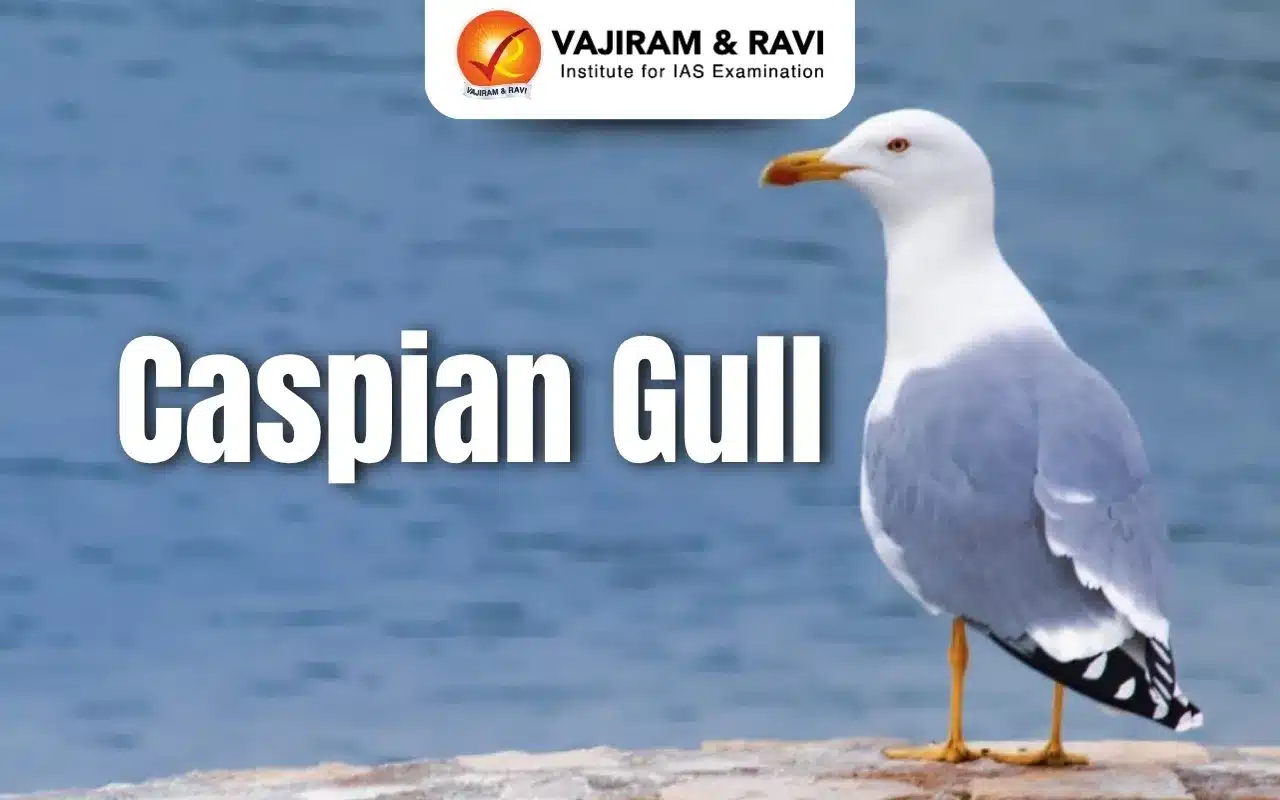
Kozhikode-based ornithologist has reported the sighting of a rare migratory bird Caspian Gull(Larus cachinnans) for the first time in Kerala.

About Caspian Gull

  • It is a monotypic, large, white-headed gull and is one of the rarest gulls to be seen in India.
  • Habitat: It typically nests on flat, low-lying ground by water
  • During the breeding season the species nests near lakes surrounded by reedbeds in steppe and semi-desert (Central Asia) reservoirs, rivers, and on grassy or shrubby river islands
  • Diet: Its diet consists of fish, invertebrates including insects, molluscs etc.
  • It is very difficult to identify since it closely resembles the Steppe Gull.
  • The Caspian Gull, usually found in Central Asia, visits northwestern India, such as Gujarat, in winter.
  • They move from the Black Sea to the Caspian Sea, then to southern and eastern Kazakhstan and western China. They winter in Asia and Africa.
  • Traditionally, its wintering areas are from the eastern Mediterranean to the Persian Gulf and western India but increasing numbers now disperse into Europe, into countries such as Sweden, Norway and Denmark.
  • Conservation status
    • IUCN: Least Concern

Caspian Gull FAQs

Q1: What is the rarest gull in the world?

Ans: The Galapagos lava gull

Q2: What is the second largest gull species in the world?

Ans: Glaucous Gulls

Source: TH

First-Person View Drones

First-Person View Drones

First-Person View Drones Latest News

Recently, Ukraine used First-person view drones to attack Russia and destroyed more than 40 planes. 

About First-Person View Drones

  • These drones are unmanned aerial vehicles enhanced with artificial intelligence to perform advanced tasks with greater precision and autonomy. 
  • By processing real-time video data through AI algorithms, FPV drones are able to avoid obstacles, and carry out mission-specific operations such as surveillance and search and rescue.
  • First-person view (FPV) means that a person piloting a drone can see what the drone sees, through a camera attached to its body.
  • The live video can be seen through specialised goggles, or on smartphones and other kinds of screens, and the drone can be manoeuvred remotely.
  • Before FPV drones are deployed, a reconnaissance drone with a larger range first goes to survey the area and zero in on a specific region that needs to be targeted.
  • FPV drones have a much smaller range, of a few kilometres.
  • Advantage: The key advantages are cost and deep strike capabilities while remaining largely undetected.
  • Challenge: One major challenge is that the drones’ movement through their surroundings cannot be seen by the drone operator.
  • This can limit situational awareness and may lead to disorientation. At times, another person, a visual observer, may be needed to guide the person controlling the drone.
  • Uses: Such drones are also used in filming and other non-defence purposes.

Features of First-Person View Drones

  • GPS-independent navigation: Operates without relying on satellite-based GPS, enhancing resilience against jamming or signal loss.
  • SmartPilot system: Utilises advanced visual-inertial navigation, interpreting camera data to determine position and movement.
  • LiDAR technology: LiDAR technology complements the SmartPilot system, boosting precision in complex or cluttered environments.

First-Person View Drones FAQs

Q1: What is a nano drone?

Ans: A nano drone is a type of unmanned aerial vehicle (UAV) that typically weighs less than 250 grams and measures less than 20 centimeters in size.

Q2: What is a drone used for?

Ans: Drones now have many functions, ranging from monitoring climate change to carrying out search operations after natural disasters, photography, filming, and delivering goods.

Source: IE

Asian Development Bank (ADB)

asian development bank

Asian Development Bank Latest News

The Asian Development Bank (ADB) president recently announced a five-year initiative to transform urban infrastructure across India, with an estimated investment of $10 billion.

About Asian Development Bank

  • It is a multilateral development bank established on 19th December 1966.
  • It is the principal international development finance institution for the Asia-Pacific region.
  • It envisions a prosperous, inclusive, resilient, and sustainable Asia and the Pacific, while sustaining its efforts to eradicate extreme poverty in the region.
  • Headquarters: Manila, Philippines.
  • In terms of financial commitments to members that are developing countries, India ranks first with 14% of the bank’s financial commitment, followed by China, Bangladesh, the Philippines, and Pakistan.

Asian Development Bank Functions

  • It provides assistance to its developing member countries, the private sector, and public-private partnerships through grants, loans, technical assistance, and equity investments to promote social and economic development.
  • ADB maximizes the development impact of its assistance by facilitating policy dialogues, providing advisory services, and mobilizing financial resources through cofinancing operations that tap official, commercial, and export credit sources.
  • The Bank focuses on six key areas that align with the UN’s Sustainable Development Goals (SDGs): education, health, transport, energy, finance, and climate change.
  • The ADB also works in partnership with NGOs and private companies to improve capital markets and the business infrastructure of developing countries in the region.

Asian Development Bank Membership

  • Membership in the ADB is open to members and associate members of the United Nations Economic Commission for Asia and the Far East.
  • It's also open to other regional countries and non-regional developed countries that are members of the U.N. or of any of its specialized agencies. 
  • From 31 members at its establishment in 1966, ADB has grown to encompass 69 members, including 49 regional members from Asia and the Pacific, such as India, China, Japan, South Korea, Australia, and many others, and 20 non-regional members from Europe, North America, and other regions.

Asian Development Bank Governance

  • It is operated by a Board of Governors, which is composed of one representative from each member state. 
  • The Board then votes to choose 12 of their members to serve as the Board of Directors, with eight members coming from members from the Asia and Pacific region and the other four from non-regional members.
  • The Board of Governors is also responsible for electing a president who serves a five-year term as the chairperson of the Board as well as being responsible for the bank’s operations.
  • Because Japan founded the ADB and remains the largest shareholder of the bank, every single president of the ADB has been from Japan.

Asian Development Bank Voting Power

  • The ADB was modelled closely on the World Bank and has a similar weighted voting system where votes are distributed in proportion to members' capital subscriptions.
  • ADB's five largest shareholders are Japan and the United States (each with 15.6% of total shares), the People's Republic of China (6.4%), India (6.3%), and Australia (5.8%).

Asian Development Bank Source of Funding

  • It raises capital regularly through the international bond markets.
  • The ADB also relies on member contributions, retained earnings from lending, and the repayment of loans for the funding of the organization.

Asian Development Bank FAQs

Q1: Where is the headquarters of Asian Development Bank situated?

Ans: Manila, Philippines

Q2: How is voting power determined in the ADB?

Ans: Proportional to members' capital subscriptions.

Q3: Which two countries are the largest shareholders of the ADB?

Ans: Japan and the United States

SourceFE


BharatGen

BharatGen

BharatGen Latest News

Recently, the Union Minister launched Bharat Gen Multimodal LLM at BharatGen Summit.

About BharatGen

  • It is India’s first-of-its-kind, indigenously developed, Artificial Intelligence (AI) based, government-funded, Multimodal Large Language Model (LLM) for Indian languages,
  • It is developed under the National Mission on Interdisciplinary Cyber-Physical Systems (NM-ICPS) and implemented through TIH Foundation for IoT and IoE at IIT Bombay.
  • BharatGen aims to revolutionize AI development across India’s linguistic and cultural spectrum.
  • The initiative is supported by the Department of Science and Technology (DST) and brings together a robust consortium of leading academic institutions, experts, and innovators.
  • The platform integrates text, speech, and image modalities, offering seamless AI solutions in 22 Indian languages.
  • This initiative will empower critical sectors such as healthcare, education, agriculture, and governance, delivering region-specific AI solutions that understand and serve every Indian,
  • The BharatGen initiative is being executed through a network of 25 Technology Innovation Hubs (TIHs), four of which have been upgraded to Technology Translational Research Parks (TTRPs).
  • The Mission’s four pillars include technology development, entrepreneurship, human resource development, and international collaboration.

Key Features of BharatGen

  • Multilingual and multimodal models
  • Bhartiya dataset-based training
  • Open-source platform
  • Generative AI research ecosystem in India

BharatGen FAQs

Q1: What is BharatGen?

Ans: BharatGen is an initiative by BharatGen Consortium

Q2: What is a Large Language Model (LLMs)?

Ans: A large language model (LLM) is a type of artificial intelligence (AI) program that can recognize and generate text, among other tasks. These are built on machine learning: specifically, a type of neural network called a transformer model.

Source: PIB

Phytoplankton

Phytoplankton

Phytoplankton Latest News

According to the researchers, from across institutions in the U.S., iron released due to human activities enhances spring phytoplankton blooms as well as speeds up the rate at which nutrients are consumed. 

About Phytoplankton

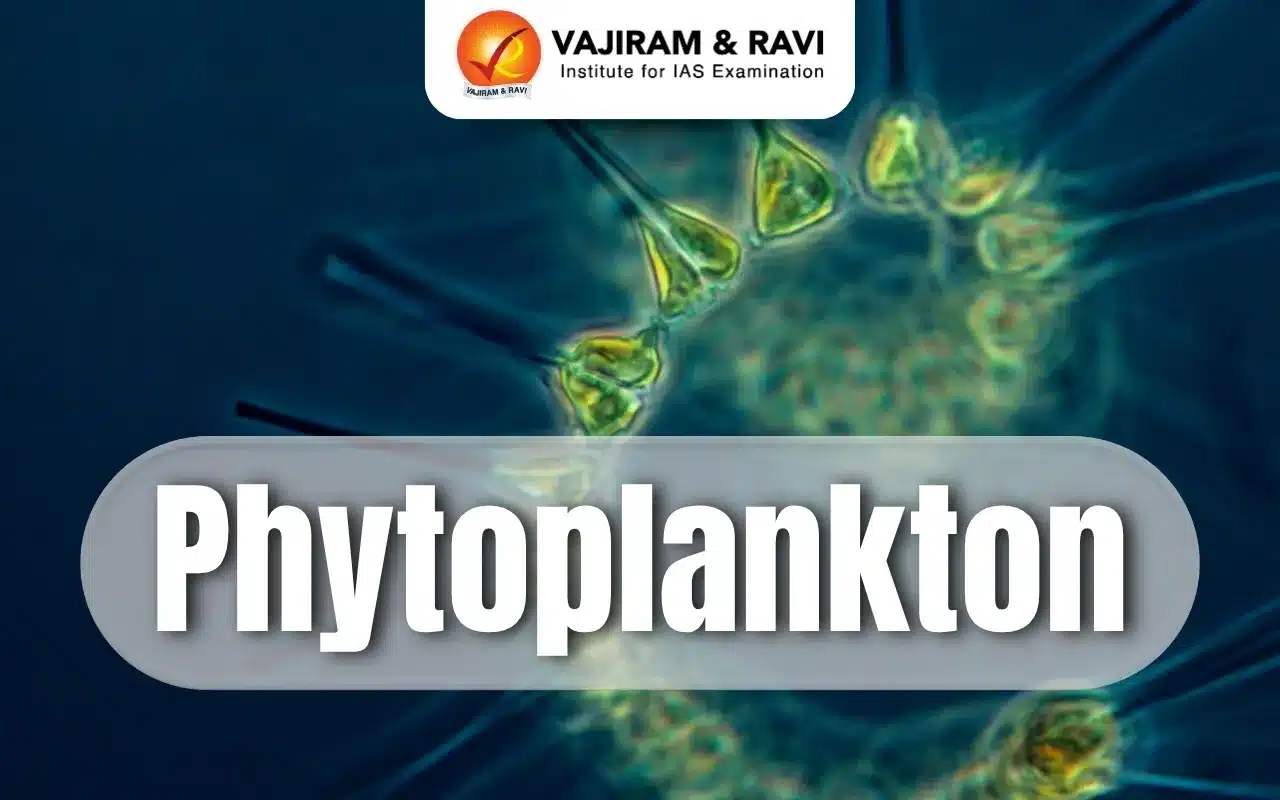
  • Phytoplanktons are microscopic plants, but they play a huge role in the marine food web.
  •  Phytoplankton, also known as microalgae, are similar to terrestrial plants in that they contain chlorophyll and require sunlight in order to live and grow.
  • Most phytoplankton are buoyant and float in the upper part of the ocean, where sunlight penetrates the water.
  • They require inorganic nutrients such as nitrates, phosphates, and sulfur which they convert into proteins, fats, and carbohydrates.
  • The two main classes of phytoplankton are dinoflagellates and diatoms.
    • Dinoflagellates use a whip-like tail, or flagella, to move through the water and their bodies are covered with complex shells.
    • Diatoms also have shells, but they are made of a different substance and their structure is rigid and made of interlocking parts. Diatoms do not rely on flagella to move through the water and instead rely on ocean currents to travel through the water.
  • In a balanced ecosystem, phytoplankton provide food for a wide range of sea creatures including shrimp, snails, and jellyfish.
  • When too many nutrients are available, phytoplankton may grow out of control and form harmful algal blooms (HABs).
  • These blooms can produce extremely toxic compounds that have harmful effects on fish, shellfish, mammals, birds, and even people.

Ecological Significance of Phytoplankton

  • Phytoplankton is estimated to produce about 50 per cent of Earth’s oxygen.
  • They have a crucial role in the global carbon cycle.
  • They provide an essential food source for organisms like zooplanktons.
  • Just like land plants, they grow more in certain seasons.

Phytoplankton FAQs

Q1: What is the difference between phytoplankton and zooplankton?

Ans: Phytoplanktons and zooplanktons are two types of planktons that are found in water. Phytoplanktons are plants, while zooplanktons are animals.

Q2: What causes algal blooms?

Ans: Algal blooms can be dramatic and are a result of excess nutrients from fertilizer, wastewater and stormwater runoff, coinciding with lots of sunlight, warm temperatures and shallow, slow-flowing water.

Q3: What are phytoplankton and its role?

Ans: Phytoplankton is microscopic marine algae. In a balanced ecosystem, they provide food for a wide range of sea creatures.

Source: TH

Enquire Now