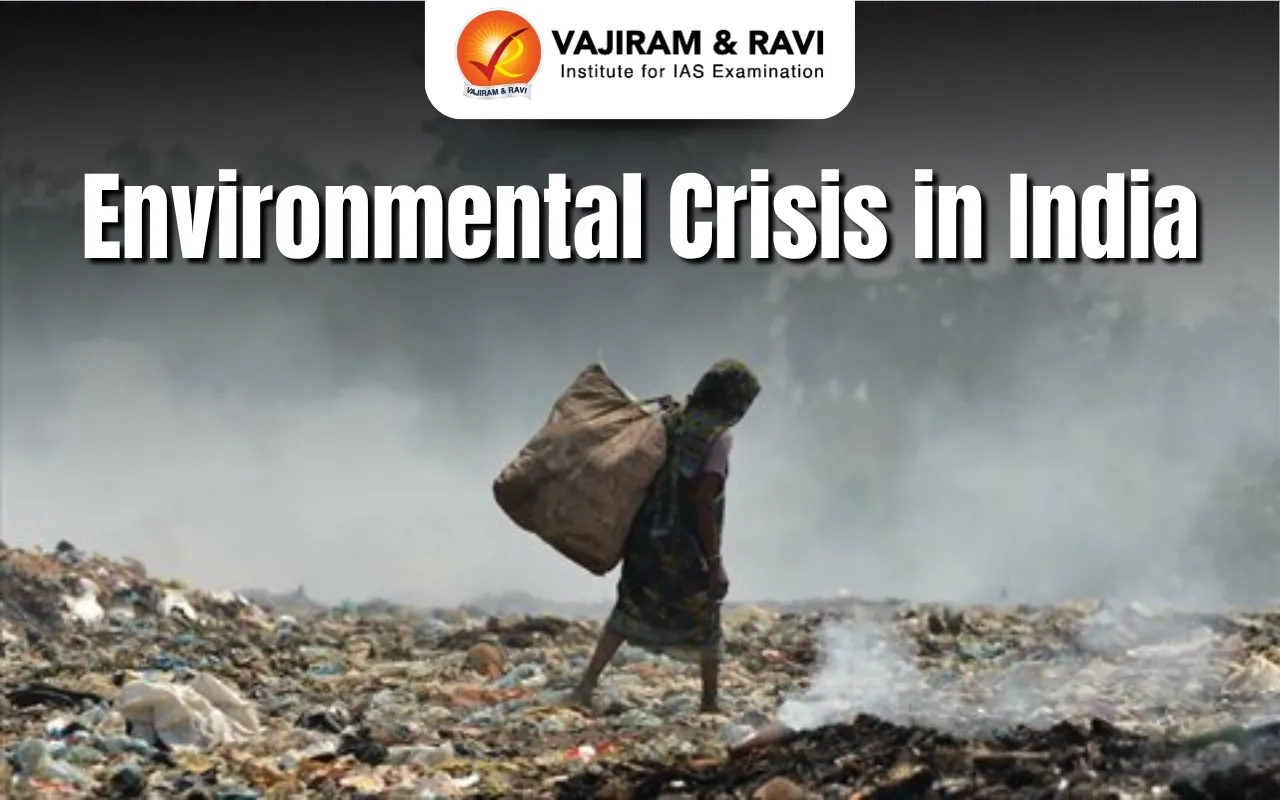
India’s Growing Environmental Crisis: Causes, Impact, and Solutions

Environmental Crisis in India

Environmental Crisis in India Latest News

  • On World Environment Day (June 5), it is a moment to reflect on how the past decade has either worsened or helped address ongoing environmental crises.

Major Environmental Crises in India and the World

  • Triple Planetary Crisis
    • The world is currently facing three interlinked environmental challenges:
      • Carbon Emissions
      • Biodiversity Loss
      • Pollution
  • Rising Carbon Emissions
    • Between 2015 and 2024:
      • Global CO₂ emissions increased by nearly 10%, from 34.1 to 37.4 billion metric tonnes.
      • India’s emissions rose from 2.33 to 3.12 billion metric tonnes, primarily due to continued reliance on coal and oil.
  • Biodiversity Under Threat
    • India’s rich biodiversity is under severe stress due to:
      • Deforestation
      • Wetland degradation
      • Expansion of monoculture agriculture
    • Mass extinctions and ecological disruptions are becoming increasingly common.
  • Persistent Pollution
    • Air pollution remains a major issue, with India among the most polluted countries globally.
    • Delhi consistently ranks at the top of global pollution indexes.

Root Causes of Environmental Degradation

  • Fossil Fuel Dependency
    • Major source of global carbon emissions.
    • In India, nearly 70% of electricity is generated from coal.
    • Emissions from power generation, transport, and industry are key contributors.
  • Deforestation and Land-Use Change
    • Forest clearances for infrastructure projects (roads, mining, dams) are rising.
    • Biodiversity-rich regions like the Western Ghats and Northeast are most affected.
  • Agricultural Intensification
    • High-input monocultures by agribusinesses damage ecosystems.
    • Water bodies are polluted with nitrates, pesticides, and plastics.
  • Waste Mismanagement and Urbanisation
    • Rapid, unchecked urban growth leads to unregulated landfills and untreated sewage.
    • Rivers like the Ganga and Yamuna are heavily polluted.
    • India produces 62 million tonnes of waste annually; only 20% is processed properly.
  • Overconsumption and Industrialisation
    • Excessive consumption in the Global North shifts environmental costs to the Global South.
    • Global supply chains externalise pollution and ecological harm to developing countries.

India’s Position in the Global Environmental Crisis

  • Low Per Capita Emissions, High Aggregate Impact
    • India’s per capita carbon footprint is ~1.9 tonnes/year, much lower than the U.S. (~14.7 tonnes).
    • However, overall emissions are increasing due to industrialisation and urbanisation.
  • Disproportionate Impact on the Poor
    • Marginalised communities suffer most from pollution and climate shocks.
    • Examples include air pollution in Delhi’s slums and droughts in rural Maharashtra.
  • Victim of Global Environmental Damage
    • Historical emissions from richer countries have worsened India’s climate.
    • Impacts include erratic monsoons, floods, and extreme heat.
    • Biodiversity loss is undermining India’s food security and health systems.

Steps Toward Addressing the Environmental Crisis

  • Global North Accountability
    • Wealthy nations must reduce emissions significantly.
    • Provide climate finance to developing countries.
    • End the outsourcing of polluting industries.
  • Corporate Responsibility
    • Enforce strict environmental laws and implement carbon taxes.
    • Ban market access for companies violating green policies.
    • Promote corporate adherence to sustainable practices.
  • Ecological Development Models
    • Development should prioritize ecological sustainability.
    • Support for low-carbon livelihoods and eco-friendly industries is essential.
  • Promote Sustainable Practices
    • Encourage ecological agriculture and reduce monocultures.
    • Foster community-led conservation initiatives.
    • Implement systemic changes for long-term environmental resilience.

Environmental Crisis in India FAQs

Q1. What are the major environmental crises India faces today?

Ans. India faces carbon emissions, biodiversity loss, and severe pollution, forming a triple planetary crisis.

Q2. Why is fossil fuel dependency a major issue?

Ans. Coal powers 70% of India's electricity, increasing emissions from energy, transport, and industries.

Q3. How does urbanisation worsen environmental degradation?

Ans. Unchecked urbanisation causes waste mismanagement, pollution, and stress on natural resources and ecosystems.

Q4. Why is India vulnerable to global environmental damage?

Ans. Climate change impacts India’s monsoons, floods, and food systems due to historical emissions of richer nations.

Q5. What are key solutions to India’s environmental crisis?

Ans. Global accountability, corporate regulation, green policies, and sustainable, low-carbon development models are essential.
Source: IE | TH | IE

India’s New National Policy for Senior Citizens: Demographic Realities and Welfare Reforms

National Policy for Senior Citizens India

India’s National Policy for Senior Citizens Latest News

  • A new national policy on senior citizens is in the draft stages with the Union Ministry of Social Justice and Empowerment.

Constitutional and Legal Framework for the Elderly

  • Article 41 of the Indian Constitution directs the state to make effective provisions for securing the right to public assistance in cases of old age. 
  • Further, under the Maintenance and Welfare of Parents and Senior Citizens Act, 2007, children and legal heirs are obligated to care for their elderly parents, including financial and physical support.
    • The Act provides mechanisms for senior citizens to claim maintenance through tribunals, and mandates state governments to establish old age homes
  • Provisions have also been made in personal laws, income tax rebates, and transport benefits to ease the lives of older citizens.
  • In addition, the National Policy on Older Persons (NPOP) 1999, and its revised draft in 2011, laid the groundwork for inclusive elder care policies. 
  • However, with India’s changing demographic profile and emerging challenges, a new policy has become necessary.

Challenges Faced by the Elderly in India

  • Despite supportive legal provisions, senior citizens in India continue to face numerous challenges:
    • Healthcare Accessibility: Limited geriatric care facilities, lack of regular health check-ups, and high out-of-pocket expenditures remain persistent concerns.
    • Economic Insecurity: Many older individuals are without formal pension systems and rely on informal family support, which is eroding due to migration and urbanization.
    • Social Isolation and Abuse: Changing family structures, reduced intergenerational interactions, and neglect have contributed to emotional and sometimes physical abuse of the elderly.
    • Digital Exclusion: With increasing digitization of services, elderly citizens are often unable to access essential facilities such as banking, healthcare, and government benefits.
    • Inadequate Infrastructure: Old age homes and care centres are unevenly distributed and often fail to meet quality standards.
  • These issues demand a holistic policy that combines welfare, dignity, and active aging principles.

News Summary: Drafting a New National Policy on Senior Citizens

  • On June 4, 2025, the Union Ministry of Social Justice and Empowerment announced that a new National Policy for Senior Citizens is under formulation. 
  • This was revealed during the fourth meeting of the National Council for Senior Citizens, chaired by Union Minister Virendra Kumar. 
  • The draft policy is being shaped by inputs from various stakeholders and will align with the country’s evolving demographic landscape.

Demographic Projections and Policy Context

  • As per government estimates, the proportion of senior citizens in India is expected to grow significantly from 8.23% in 2011 to 12.16% in 2026, and further to 20% by 2047
  • The policy aims to reflect these demographic realities and ensure adequate provisions for a growing elderly population. 
  • The government also confirmed that the reference period for the upcoming Census would be March 2027.

Key Areas of Focus

  • The Council meeting included deliberations on several critical areas:
    • Digital Inclusion: Aimed at bridging the digital divide, especially for services like healthcare, pension disbursal, and grievance redressal.
    • Role of NGOs and Associations: Efforts are being made to institutionalise senior citizen groups and NGOs into policymaking, implementation, and feedback systems.
    • Grievance Redressal and Elder Abuse: The draft policy may include mechanisms to address elder abuse and neglect, a growing concern.
    • Minimum Standards for Care Facilities: Discussions were held on setting and monitoring standards for old age homes and senior care institutions to ensure better quality of life.
    • Community Engagement and Intergenerational Bonding: The policy may also aim to promote social inclusion through community-based initiatives and intergenerational ties.
  • Review of Ongoing Schemes
    • The government also reviewed progress under key schemes such as the Rashtriya Vayoshri Yojana (RVY) and the Integrated Programme for Senior Citizens (IPSrC):
      • Over 5 lakh senior citizens have received free assisted-living devices under RVY.
      • The IPSrC supports 708 NGOs running old age homes, physiotherapy centres, and mobile medicare units.
    • These schemes fall under the broader National Action Plan for Welfare of Senior Citizens (2020), which replaced the earlier 2011 policy.

India’s Senior Citizen Policy FAQs

Q1. What is the purpose of the new National Policy for Senior Citizens?

Ans. The policy aims to address demographic changes and enhance welfare measures for India’s growing elderly population.

Q2. How many elderly people will India have by 2047?

Ans. India is projected to have 20% of its population as senior citizens by the year 2047.

Q3. What are some focus areas of the new policy?

Ans. Key areas include digital inclusion, elder abuse redressal, minimum standards for care institutions, and community engagement.

Q4. Which schemes are currently supporting elderly welfare in India?

Ans. Major schemes include Rashtriya Vayoshri Yojana (RVY) and the Integrated Programme for Senior Citizens (IPSrC).

Q5. What is the National Council for Senior Citizens?

Ans. It is a government body responsible for reviewing and advising on senior citizen-related policies and welfare initiatives.

Source: TH

India’s Digital Population Census 2027: Caste Enumeration and Delimitation Impact

Population Census 2027 India

Population Census 2027 India Latest News

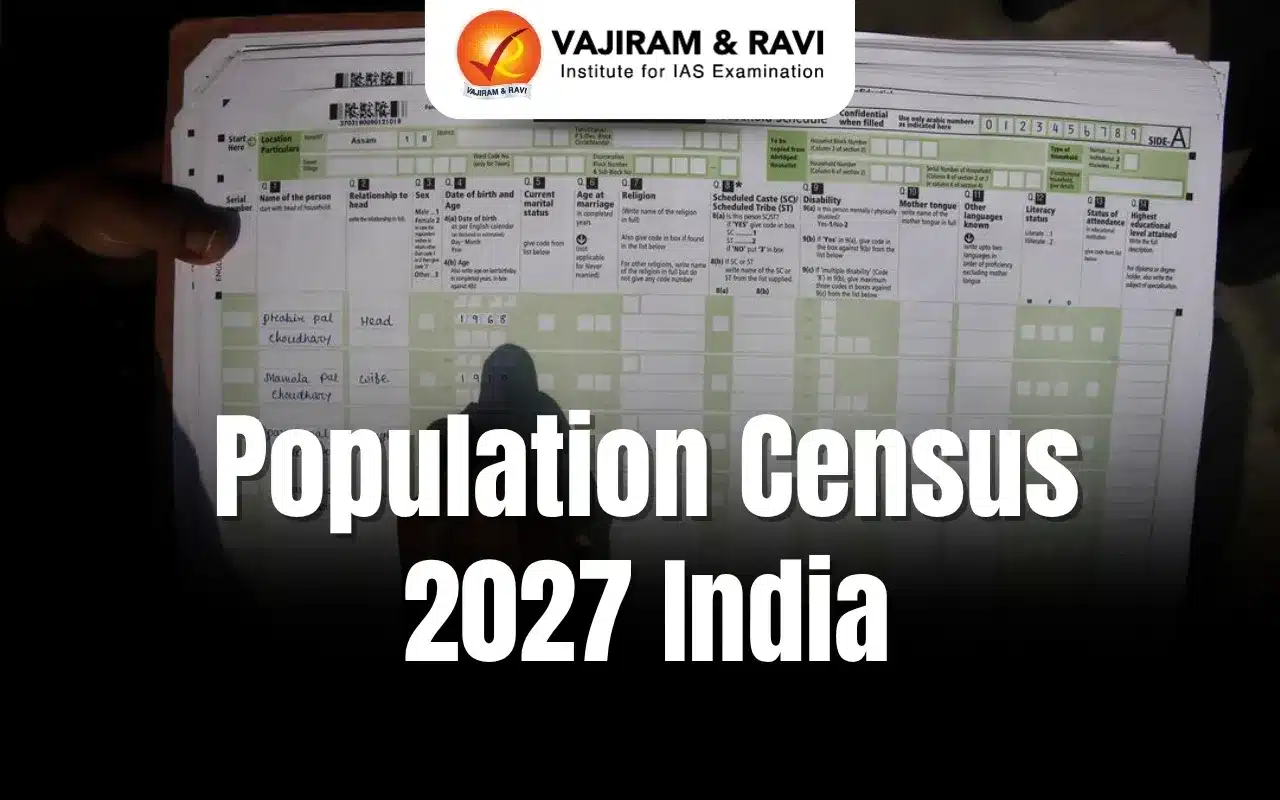
  • India will conduct its next population census by March 1, 2027, after a historic 16-year gap, as announced by the Union Ministry of Home Affairs. This will be India’s first digital census and the first post-Independence census to include caste enumeration.

India’s Next Census Scheduled for 2027

  • The government has announced that the next nationwide population census will begin on April 1, 2026. 
  • Key Features of the 2027 Census
    • First Digital Census: The upcoming exercise will be India’s first fully digital census.
    • Caste Enumeration: For the first time since Independence, the census will include caste-based data collection.
  • Timeline and Phases
    • The census will be held in two phases:
      • House Listing and Housing Schedule
      • Population Enumeration (includes caste data)
    • Both phases will span April 1, 2026 to February 28, 2027.
  • Reference Date:
    • March 1, 2027 (for most of India)
    • October 1, 2026 (for Ladakh and snow-bound areas in J&K, Himachal Pradesh, and Uttarakhand)
  • Legal and Procedural Aspects
    • The census will be conducted under the Census Act, 1948 and the Census Rules, 1990.
    • A gazette notification under Section 3 of the Census Act is expected soon, which will formally announce the schedule.
  • Political Implications
    • As per the constitutional mandate, the first census after 2026 can be used for the delimitation of Lok Sabha constituencies.
    • This data could form the basis for electoral constituency restructuring before the 2029 General Elections.
  • Impact on Women's Reservation
    • The 33% reservation for women in the Lok Sabha and State Assemblies, as mandated by the recently passed Women’s Reservation Act, will also come into force only after a new delimitation exercise is conducted based on post-2026 census data.
  • No Update on NPR
    • There was no mention of updating the National Population Register (NPR) during the announcement. 
      • As per Citizenship Rules, 2003, NPR is the first step toward compiling a National Register of Indian Citizens (NRIC/NRC).
  • Background
    • The last census was conducted in 2011, with the first phase held in 2010.
    • The 2021 census was delayed due to the COVID-19 pandemic and other administrative reasons.

Delimitation to Begin After Release of Census 2027 Data

  • Once the final census data is released in late 2027, the process of delimitation will begin. 
  • The Parliament must first pass a new Delimitation Act to legally empower the formation of a Delimitation Commission.

Legal Provision and mandate

  • The process is mandated under Articles 81 and 82 of the Constitution, which require delimitation after every Census.
  • Once formed, the Commission will consult state governments and stakeholders to devise a formula based on population per constituency.

Formation and Composition of the Delimitation Commission

  • The Delimitation Commission will be:
    • Headed by a retired Supreme Court judge
    • Include the Chief Election Commissioner and State Election Commissioners
    • Assisted by MPs and MLAs from states as associate members (without voting rights)

Historical Background

  • Delimitation was done after the 1951, 1961, and 1971 censuses.
  • The 42nd Constitutional Amendment (1976) froze the number of seats until after the 2001 Census.
  • The 84th Constitutional Amendment (2002) extended this freeze until the first census after 2026.

Current Scenario

  • The current 543 Lok Sabha seats are based on the 1971 Census.
  • The Delimitation Act of 2002 allowed only boundary redrawing, not an increase in seat numbers.
  • To increase seats, a Constitutional Amendment is required, needing a two-thirds majority in Parliament.

Political and Regional Challenges

  • Southern states may lose out in a population-based seat redistribution, as they have successfully controlled population growth.
  • Maintaining the current cap of 550 seats (Article 81) without increasing total seats could disadvantage them further.

Population Census 2027 India FAQs

Q1. When will the next census in India be held?

Ans. India’s next census begins April 1, 2026, with data reference set for March 1, 2027.

Q2. What makes the 2027 census historic?

Ans. It will be India’s first digital census and first post-Independence caste enumeration.

Q3. What is the significance of this census for delimitation?

Ans. Census 2027 data will guide redrawing of Lok Sabha and Assembly constituencies after 2026.

Q4. What is the legal framework for the census?

Ans. It follows the Census Act, 1948 and Census Rules, 1990, requiring gazette notification.

Q5. How does the census affect women’s reservation?

Ans. Women’s 33% reservation in Parliament/Assemblies depends on delimitation using post-2026 census data.

Source: TH | IE | ToI

Kerch Strait

Kerch Strait

Kerch Strait Latest News

Recently, Ukraine claimed responsibility for a powerful underwater explosion that targeted the Kerch Bridge, a critical link between the Russian mainland and occupied Crimea.

About Kerch Strait

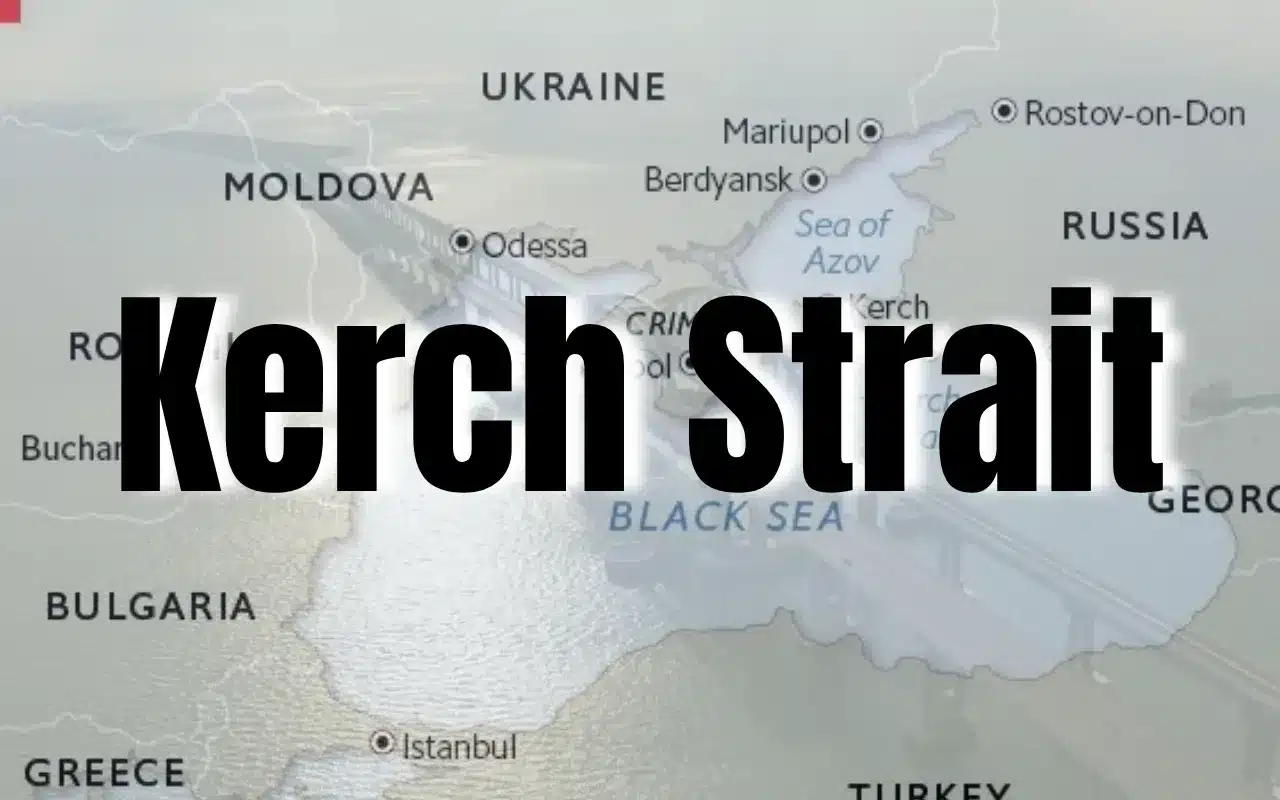
  • Location: It is the only water body that connects the Black Sea with the Sea of Azov.
  • It separates the Kerch Peninsula towards the west from the Taman Peninsula (Russia), lying in the east.
  • At its narrowest point, which lies at the northern end of the Chushka Landspit, it is only three to five kilometres wide.
  • The city of Kerch lies near the middle of the strait, on the Crimean side.
  • It has also been a key point of conflict between Russia and Ukraine after Moscow annexed the peninsula from Ukraine in 2014.
  • Significance: It is an important global shipping route, providing passage from the Sea of Azov to the Black Sea.

Key Facts about Kerch Strait Bridge

  • It is also known as the Crimean Bridge, this infrastructure links mainland Russia with Crimea.
  • Completed in 2018, it includes a road and rail connection and is the longest bridge in Europe at 19 km.
  • It is a symbol of Russia's annexation of Crimea in 2014.

Kerch Strait FAQs

Q1: Where is Black Sea located?

Ans: The Black Sea is located at the southeastern extremity of Europe

Q2: What is a Strait?

Ans: It is a narrow waterway between two pieces of land that connects two large bodies of water. 

Source: LM

Kichan and Menar Wetlands

Kichan and Menar Wetlands

Kichan and Menar Wetlands Latest News

Recently, the Union environment ministry announced that two new wetlands — Kichan in Phalodi and Menar in Udaipur — from Rajasthan have been designated as Ramsar sites.

About Menar Wetland

  • It is a freshwater monsoon wetland complex located in Rajasthan.
  • It is formed by three ponds, Braham talab, Dhand talab and Kheroda talab, and agricultural land that connect the latter two. 
  • During the monsoon season the farmland floods, providing habitat for species of water birds.
  • Among the notable bird species at the Site are the critically endangered white-rumped vulture (Gyps bengalensis) and long-billed vulture (Gyps indicus).
  • Over 70 plant species are found, including mango trees (Mangifera indica) around Braham talab that host a large colony of Indian flying fox (Pteropus giganteus). 
  • The Site is recognized as one of the best examples of community-led conservation in Rajasthan, with residents of the nearby Menar village playing a key role in conserving wildlife by preventing poaching or fishing. 

About Khichan Wetland

  • It is located in the northern Thar Desert, Rajasthan.
  • It comprises two water bodies, Ratri nadi (river) and Vijaysagar talab (pond), riparian habitat and scrub land.
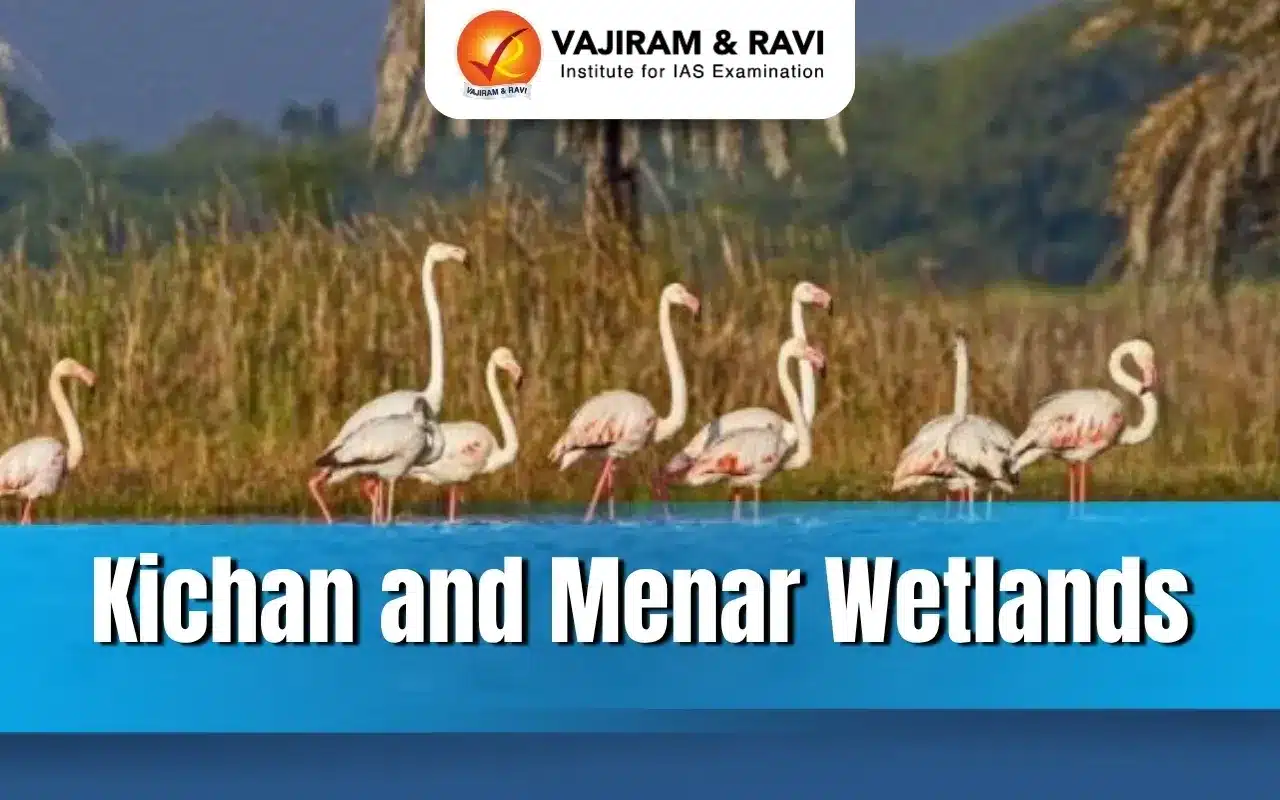
  • This desert ecosystem supports drought-resistant plant species that provide habitat for over 150 species of birds. 
  • It is especially recognized for hosting large wintering flocks of migratory demoiselle cranes (Anthropoides virgo), making up over 22,000 individuals each year.
  • The Site attracts bird-watchers, tourists, students and scientists, drawn primarily by the large seasonal gathering of the cranes.

Kichan and Menar Wetlands FAQs

Q1: Which is the smallest wetland in India?

Ans: Renuka Wetland

Q2: Which ministry is related to wetlands in India?

Ans: Ministry of Environment, Forest, and Climate Change (MoEFCC)

Q3: Which was the first Ramsar site in Rajasthan?

Ans: Keoladeo National Park

Source: HT

Deen Dayal Antyodaya Yojana, Components, Achievements, Benefits

Deen Dayal Antyodaya Yojana

The Deen Dayal Antyodaya Yojana aims to alleviate poverty and improve livelihood opportunities for people. The scheme has two major components: The National Urban Livelihoods Mission (Day- NULM) targeting the urban areas and the National Rural Livelihoods Mission for the rural areas. In this article, we are going to cover the objectives, features and significance of Deen Dayal Antyodaya Yojana. 

Deen Dayal Antyodaya Yojana Overview 

The Deen Dayal Antyodaya Yojana, a flagship scheme of Government of India focuses on eradication of poverty and provision of livelihood opportunities for the poor. The scheme provides entrepreneurship, skill development and community empowerment. 

Deen Dayal Antyodaya Yojana Details

Scheme Name

Deen Dayal Antyodaya Yojana (DAY)

Objective

To uplift the urban and rural poor by enhancing sustainable livelihood opportunities through skill development and self-employment.

Components

  1. Rashtriya Shahri Aajeevika Mission (DAY-NULM)
  2. Deen Dayal Upadhyaya Grameen Kaushalya Yojana (DAY-NRLM)

Implementing Ministries

  • Urban Component: Ministry of Housing and Urban Poverty Alleviation (HUPA)
  • Rural Component: Ministry of Rural Development

Coverage

  • Urban: All 4041 statutory cities and towns in India
  • Rural: Operates across 4,459 blocks in 586 districts across 29 states and 5 union territories.

Funding

Rs. 500 crore allocated for DAY-NULM scheme.

Target Beneficiaries

Economically disadvantaged individuals in both urban and rural areas, including street vendors, homeless individuals, and women in SHGs.

Eligibility Criteria

Must be an Indian citizen demonstrating economic need; required documents include Aadhar card, voter ID, proof of address, etc.

Deendayal Antyodaya Yojana Components

The Deendayal Antyodaya Yojana (DAY) addresses poverty alleviation through two components—one focused on urban India and the other on rural India:

Urban Component: Deendayal Antyodaya Yojana - National Urban Livelihoods Mission (DAY-NULM)

  • Also Known As: Rashtriya Shahri Aajeevika Mission
  • Implemented By: Ministry of Housing and Urban Poverty Alleviation
  • Objective: To reduce poverty and vulnerability among urban poor households by promoting self-employment, skill-based wage opportunities, and providing shelters for the homeless while addressing the needs of street vendors.
  • Key Features:
    • Provides Rs. 15,000 per person for training urban poor, with Rs. 18,000 allocated for residents of North-East and J&K.
    • Offers interest subsidies of 5%-7% to support micro-enterprises.
    • Establishes City Livelihood Centres to impart market-relevant skills.
    • Encourages the formation of Self-Help Groups (SHGs) for economic empowerment and community mobilization.

Rural Component: Deendayal Antyodaya Yojana - National Rural Livelihoods Mission (DAY-NRLM)

  • Also Known As: Deen Dayal Upadhyaya Grameen Kaushalya Yojana
  • Implemented By: Ministry of Rural Development
  • Objective: To build sustainable institutional platforms for the rural poor, enhancing their household incomes through better livelihoods and financial services access.
  • Key Features:
    • Partly funded by the World Bank.
    • Aims to reach 10 crore rural poor households in phases.
    • Includes four sub-components: social mobilization, financial inclusion, sustainable livelihoods, and social inclusion.
    • Features sub-schemes like the Start-up Village Entrepreneurship Programme (SVEP) and Aajeevika Grameen Express Yojana (AGEY).

This comprehensive approach ensures tailored support to urban and rural communities, empowering them through livelihood enhancement and poverty alleviation strategies.

Deendayal Antyodaya Yojana Achievements 

The Deen Dayal Antyodaya Yojana has achieved significant milestones since its inception: 

DAY-NULM Achievements

  • 8.74 lakh Self-Help Groups have been created in urban areas with more than 89.33 lakh women being a part of them. 
  • Skill training has been provided to 15 lakh people with 8.20 lakh people successfully having gotten jobs. 
  • 8.83 lakh people have been provided the assistance to set up their own individual or group businesses. 

DAY-NRLM Achievements 

  • More than 8 lakh women have been mobilised under 80 Self-Help Groups all over India. 
  • Rural women are empowered by forming 4.63 lakh Village Organisations. 
  • Mahila Kisans have been supported under the Farm Livelihood intervention. 
  • Capitalization Support Funds provides Rs. 19, 750 crores and bank credits worth Rs. 5.83 to Self Help Groups. 

DAY-NULM 2.0 

The Deendayal Antyodaya Yojana 2.0 was proposed after the successful completion of Deendayal Antyodaya Yojana- National Urban Livelihoods Mission with an aim to alleviate urban poverty. Under the scheme, the government will assist urban poor individuals or group access microcredit of upto Rs 20 lakhs at a subsidised interest rate.

Deen Dayal Antyodaya Yojana Benefits

The Deen Dayal Antyodaya Yojana uplifts millions in urban and rural areas by enhancing skills, promoting financial inclusion, and creating livelihood opportunities.

  • Skill Development: Provides market-oriented training to improve employability.
  • Microfinance Support: Offers subsidized credit for micro-enterprises and group businesses.
  • Self-Help Groups (SHGs): Strengthens communities through financial inclusion and entrepreneurship.
  • Livelihood Opportunities: Supports street vendors, farmers, and women entrepreneurs.
  • Women’s Empowerment: Helps rural women achieve financial independence through SHGs and community institutions.

This initiative plays a vital role in poverty reduction and inclusive growth, fostering a more equitable society. 

Deen Dayal Antyodaya Yojana FAQs

Q1: What is the purpose of Deen Dayal Antyodaya Yojana?

Ans: To alleviate poverty by promoting sustainable livelihoods through skill development, self-employment, and financial inclusion.

Q2: When was Deen Dayal Antyodaya Yojana launched?

Ans: It was launched in 2011 as part of the National Rural Livelihoods Mission (NRLM) and restructured in 2014.

Q3: What is the main aim of DAY?

Ans: To empower the rural and urban poor by enhancing their income through skill-based opportunities and better financial access.

Q4: What is the budget of Deen Dayal Antyodaya Yojana?

Ans: The budget allocation varies annually; for 2023-24, it was ₹5,300 crores for rural and urban components combined.

Q5: What are the benefits of Deen Dayal Yojana?

Ans: It provides skill training, self-employment opportunities, financial assistance, and market-relevant skill development for sustainable livelihoods.

International Institute of Administrative Sciences

International Institute of Administrative Sciences

International Institute of Administrative Sciences Latest News

India has won the Presidency of the International Institute of Administrative Sciences (IIAS) for the 2025–2028 terms.

About International Institute of Administrative Sciences

  • It was established in 1930.
  • It is a federation of member States, national sections and academic research centres jointly elaborating public administration solutions to the policy challenges of the day.
  • Members: It is a Federation of 31 Member Countries, 20 National Sections and 15 Academic Research Centres jointly collaborating for scientific research on public administration.
  • Key member countries include - India, Japan, China, Germany, Italy, Korea, Saudi Arabia, South Africa, Switzerland, Mexico, Spain, Qatar, Morocco, Indonesia etc.
  • Objectives 
    • Enable collaborative and strategic projects with members and partners.
    • Accredit both academic and professional training programs in line with standards of best practices in public management.
    • To produce and promote comprehensive content on public governance research and practice to different audiences.
  • The IIAS maintains a close working relationship with the United Nations, and participates in the UN’s Committee of Experts on Public Administration (CEPA) and the UN Public Administration Network (UNPAN).
  • It is not a formally affiliated body of the UN, it actively engages with the UN’s work in public administration.
  • The Department of Administrative Reforms and Public Grievances has represented India as a Member State of the International Institute of Administrative Sciences since 1998.
  • It is the first time that India has secured the historic mandate for the Presidency of the IIAS.
  • Headquarters: Brussels, Belgium.

International Institute of Administrative Sciences FAQs

Q1: Where will the IIAS annual conference 2025 be held?

Ans: New Delhi

Q2: What is the role of DARPG?

Ans: The Department of Administrative Reforms and Public Grievances is the nodal agency of the Government of India for administrative reforms as well as redressal of public grievances relating to the states in general and those pertaining to Central Government agencies in particular.

Source: TH

Kulsi River

Kulsi River

Kulsi River Latest News

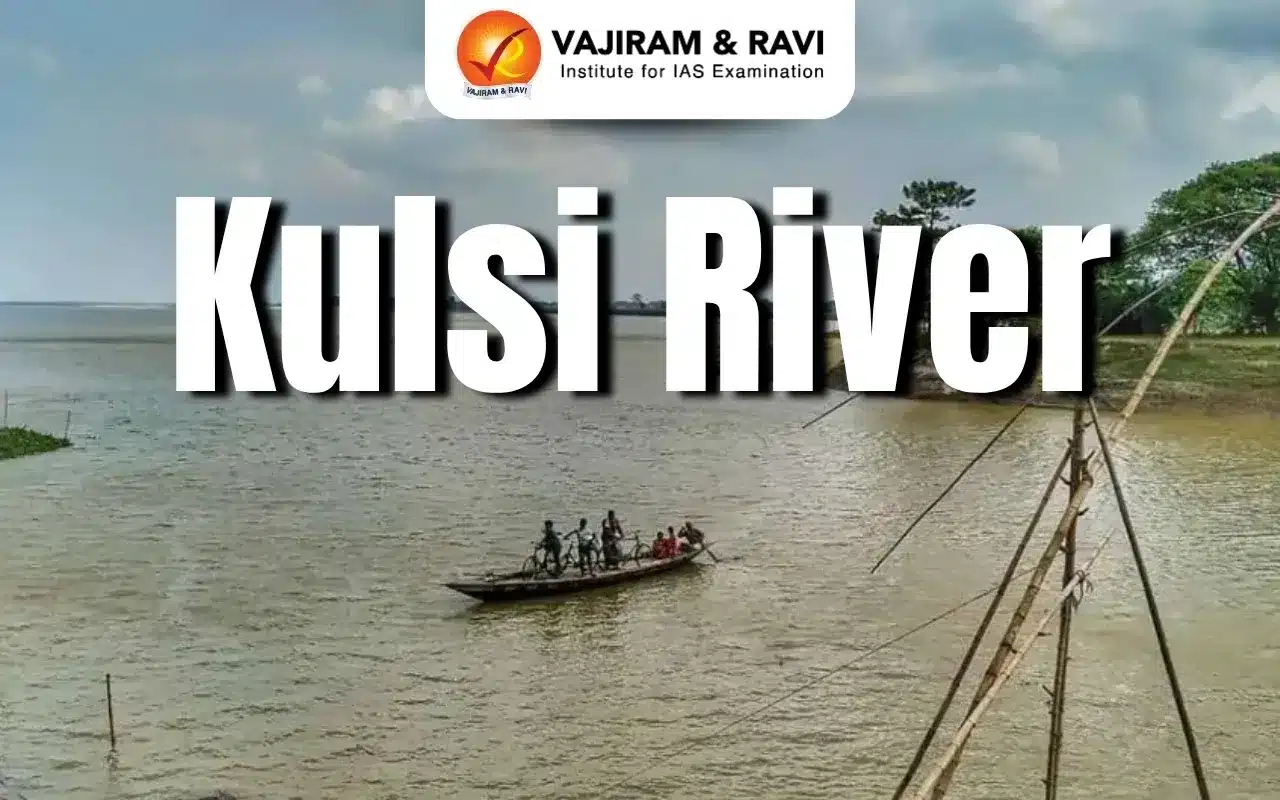
Ignoring warnings by environmentalists, the Assam and Meghalaya governments have decided to jointly set up a 55 MW hydropower project on the Kulsi, a small river known as a nesting ground for the endangered river dolphins.

About Kulsi River

  • It is a south-bank tributary of the mighty Brahmaputra River.
  • Course
    • It is composed of three rivers, namely Khri, Krishniya, and Umsiri, all of which originate from the West Khasi hill ranges of Meghalaya from an elevation of over 1800 metres and flow north. 
    • The river is known as Khri in the upper catchments, and after being joined by two other tributaries, namely Krishniya and Umsiri, within the Khasi hills in Meghalaya, it flows northwest and enters Assam at Ukium.
    • After that it flows north upto Kulsi village through the plains of Kamrup District of Assam. 
    • Finally, it outflows into the Brahmaputra near Nagarbera. 
  • The river Kulsi drains out a total area of 3770 sq. km. Out of the total catchment, 685 sq. km. is plain catchment in Assam, and 3085 sq. km. is hill catchment in Meghalaya and Assam.
  • The total length of Kulsi from its source to outfall is about 220 km, out of which 100 km is in Meghalaya and the rest, 120 km, is in Assam.
  • It is considered one of the last refuges of the endangered Gangetic dolphin (Platanista gangetica gangetica) in Assam.

Kulsi River FAQs

Q1: The Kulsi River is a tributary of which major Indian river?

Ans: Brahmaputra

Q2: The Kulsi River originates from which hill range?

Ans: West Khasi hill ranges of Meghalaya

Q3: What is the name of the endangered species found in the Kulsi River?

Ans: Gangetic dolphin

SourceDH

World Wealth Report 2025

World Wealth Report 2025

World Wealth Report Latest News

India saw an 8.8 percent rise in high-net-worth individual (HNWI) wealth in 2024, witnessing 378,810 millionaires with a total wealth of $1.5 trillion by the end of last year, according to the World Wealth Report 2025 released recently.

About World Wealth Report 2025

  • It is released by the Capgemini Research Institute.
  • It covers 71 countries, accounting for more than 98% of global gross national income and 99% of world stock market capitalization. 

Highlights of World Wealth Report 2025

  • The Global high-net-worth individuals (HNWIs) population rose by 2.6 percent in 2024.
  • This increase was driven by the growth in the population of ultra-high-net-worth individuals (UHNWIs), which grew by 6.2 percent, as strong stock markets and AI optimism boosted portfolio returns.
    • HNWIs are individuals with investable assets of $1 million or more, excluding their primary residence, collectibles, consumables, and consumer durables. 
    • HNWIs are segmented into three categories based on wealth bands: Ultra-HNWIs($30 million or more), Mid-Tier Millionaires ($5-30M), and Millionaires Next Door (USD 1-5M).
  • The data indicates that alternative investmentssuch as private equity and cryptocurrencies, are now an established presence in HNWI holdings, representing 15 percent of their portfolios.
  • Within the largest individual markets, the U.S. was the clear leader, adding 562,000 millionaires as the country’s HNWI population grew by 7.6% to 7.9 million.
  • This dominance in wealth extends across all tiers: 36% of the world’s centi-millionaires (those with over $100 million) and 33% of the world’s billionaires reside in the United States.
  • India and Japan were standouts in the Asia-Pacific region, with both countries registering 5.6% growth, adding 20,000 and 210,000 millionaires, respectively. 
  • In contrast, growth in China was negative, with the HNWI population declining by 1.0%.
  • India saw an 8.8 percent rise in high-net-worth individual (HNWI) wealth in 2024, witnessing 378,810 millionaires with a total wealth of $1.5 trillion by the end of last year.
  • The report further highlights the presence of a growing segment of "millionaires next door," with India counting 333,340 individuals in this category, holding a combined wealth of $628.93 billion. 
  • At the pinnacle of wealth, India also saw 4,290 ultra-high-net-worth individuals (UHNWIs) by the close of 2024, collectively possessing $534.77 billion.

World Wealth Report FAQs

Q1: Who releases the World Wealth Report 2025?

Ans: Capgemini Research Institute

Q2: What was the growth rate of India's high-net-worth individual (HNWI) wealth in 2024?

Ans: 8.8%

Q3: According to the report, which country added the largest number of millionaires in 2024?

Ans: United States

SourceZEE

National Commission for Scheduled Tribes (NCST)

National Commission for Scheduled Tribes

The National Commission for Scheduled Tribes celebrates its 22nd Foundation Day in the year 2025. Constituted as a constitutional body, NCST safeguards and promotes the rights of Scheduled Tribes in India. The commission plays the role of advising the government on policies related to socio-economic development of STs and their function of watchdog to ensure justice. In this article, we are going to discuss the functions and powers of the National Commission for Scheduled Tribes.

NCST Foundation Day 2025

The National Commission for Scheduled Tribes celebrates its 22nd Foundation Day this year, working towards the welfare of Scheduled Tribe communities. The day included the discussions about the monitoring of Forest Rights Act, promotion of Eklavya Model Residential schools and the Particularly Vulnerable Tribal Groups. The NCST Foundation Day 2025 also focuses on the tribal community and their developmental progress, entrepreneurship and skill development showing the commitment towards social justice and holistic growth. 

NCST Overview 

NCST stands for National Commission for Scheduled Tribes and is central to the government's effort towards empowering and uplifting the Scheduled tribes across India. The organisation works towards providing the community the benefits from state and central government schemes along with the protection from social discrimination. 

National Commission for Scheduled Tribes 

Constitutional Provision 

Article 338-A 

Composition 

Chairperson, Vice-Chairperson, and three other members. 

National Commission for Scheduled Tribes Chairman 

Antar Singh Arya 

Ministry 

Ministry of Tribal Affairs 

Appointment 

Appointed by the President 

Tenure 

3 years 

Post-Tenure Appointment 

Not eligible for more than two terms. 

Reporting 

Annual reports to the President 

What is National Commission for Scheduled Tribes?

The National Commission for Scheduled Tribes is a constitutional body that safeguards and monitors the rights of India’s scheduled tribes. Constituted under Article 338A of Constitution of India, the organisation monitors policies, scheme implementation for the benefits of STs communities and make sure that they receive the right treatment and equal opportunity in the society. 

Scheduled Tribes are tribal communities/tribes that are recognised and listed under Article 342 of the Indian Constitution. This article gives the power to the President to notify the communities that are considered Scheduled Tribes based on factors like socio-economic backwardness and cultural distinctiveness. 

National Commission for Scheduled Tribes Evolution 

The origin of NCST can be traced back to the Indian Constitution’s initial provisions, which evolved over time through key amendments:

  • Originally, Article 338 provided for a Commissioner for SCs and STs, responsible for investigating constitutional safeguards and reporting to the President.
  • Article 338 was amended to establish a National Commission for SCs and STs, replacing the earlier Commissioner with a high-level constitutional body.
  • This amendment led to the bifurcation of the Commission into two distinct bodies:
    • National Commission for Scheduled Castes (NCSC) under Article 338
    • National Commission for Scheduled Tribes (NCST) under Article 338-A

Finally, in 2004, the National Commission for Scheduled Tribes (NCST) was formally established as an independent constitutional body, ensuring dedicated focus on the rights and welfare of Scheduled Tribes in India.

NCST Power and Functions

The National Commission for Scheduled Tribes (NCST) derives its authority from Article 338A of the Indian Constitution, which outlines its structure, composition, and operational framework:

  • According to article 338A, the constitution of India makes it mandatory to form a National Commission for Scheduled Tribes to protect the rights of Scheduled Tribes. 
  • The President of India is responsible for creation of the commission and the appointment of the members including the Chairperson, Vice-Chairperson and other three members. The President determines the powers and the tenure of their service. 
  • The NCST Commission also has the power and liberty to regulate its own procedures, ensuring effective and independent functioning. 

This constitutional framework empowers the NCST to uphold and protect the rights of Scheduled Tribes across the country.

Composition of NCST 

The National Commission for Scheduled Tribes consists of the Chairperson, Vice-Chairperson, and three other members all chosen by the President of India under his/her warrant and seal. One of the members of the committee has to be a woman. At present, the NCST committee has four members, with the position of vice-president being vacant. 

Tenure of NCST

All members of the NCST Commission are appointed for a period of three years and cannot be reappointed for more than two terms. During their tenure, the tribal community addresses the grievances, policies and recommendations related to the improvement of the tribal community. 

NCST Functions and Duties 

The National Commission for Scheduled Tribes has the following responsibilities: 

  • Implementation of the safeguards and rules of the constitution meant for Scheduled Tribes. 
  • Addressing the complaints and grievances regarding the rights and problems faced by the ST community. 
  • Making recommendations and preparing annual reports to improve the rights for STs. 
  • Making recommendations to the government on improvement measures like educational development, welfare initiatives and socio-economic development. 
  • Advicing actions to curb practices like atrocities and discrimination against STs. 

These duties ensure that NCST actively advocates for the rights and welfare of STs while helping formulate policies that meet their needs. 

Powers of NCST 

The NCST is vested with substantial powers to safeguard the rights and welfare of Scheduled Tribes (STs). Its key functions include:

  • The commission can investigate complaints and make the necessary recommendations when it comes to the rights of the ST community.
  • The organisation can make recommendations that impact laws and policies, guiding the ST community towards their development. 
  • The NCST Committee can demand evidence, examine documents and summon individuals to ensure accountability in cases of rights violations. 
  • The committee has the power to take disciplinary action against individuals for violating the rights and policies of the ST community. 
  •  The committee makes the reports and recommendation for the ST Welfare that is presented to the President of India who tables these reports in both the houses of parliament. 

National Commission for Scheduled Tribes FAQs

Q1: Who is the current chairman of the National Commission for Scheduled Tribes?

Ans: The Chairman of NCST is Antar Singh Arya.

Q2: What is the 89th Amendment Act?

Ans: The Constitution (Eighty-Ninth Amendment) Act, 2003 established separate National Commissions for Scheduled Castes and Scheduled Tribes by introducing Article 338A.

Q3: Is the National Commission for Scheduled Tribes a constitutional body?

Ans: Yes, it is a constitutional body established under Article 338A of the Indian Constitution.

Q4: What are Articles 338 and 338A?

Ans: Article 338 pertains to the National Commission for Scheduled Castes, while Article 338A relates to the National Commission for Scheduled Tribes.

Q5: What is IPC 338 and its punishment?

Ans: Section 338 of the Indian Penal Code deals with causing grievous hurt by an act endangering life or personal safety, punishable by imprisonment up to two years, a fine up to ₹1,000, or both.

Indian Navy Day 2024, Theme, Date, Significance, History

Indian Navy Day 2024

Indian Navy Day is celebrated every year on 4th December to honor the achievements and dedicated service of the Indian Navy. The day celebrates the success of Operation Trident conducted during the 1971 Indo-Pak war. The day aims to pay tribute to the naval forces and brings to spotlight their critical role in safeguarding India’s maritime boundaries. Indian Navy Day 2024 highlights the significance of the Navy in maintaining national security, fostering International relations and cooperations and promoting a sustainable maritime environment. 

Indian Navy Day 2024 Overview

Indian Navy Day 2024 is celebrated to honor the Indian Navy and its contributions towards national security. The day brings awareness about Operation Trident, a successful operation conducted during the 1971 war. This day aims to spread inspiration among the youth about our Navy heritage and achievements. Following is the overview of Indian Navy Day 2024: 

Indian Navy Day 2024 Overview 
Aspect Details
Date December 4, 2024
Theme “Strength and Power through Innovation and Indigenisation”
Significance Celebrates the achievements and role of the Indian Navy in safeguarding the nation’s maritime borders.
History Indian Navy Day marks the successful launch of Operation Trident during the Indo-Pak War of 1971.
Operation Trident A naval operation conducted on the night of December 4, 1971, resulted in significant damage to Karachi port.
First Observed 1971
Objective To honor the bravery, dedication, and service of Indian Navy personnel and their contribution to national security.
The motto of Indian Navy “Sam no Varunah” (May the Lord of Water be auspicious unto us)
Key Events Wreath-laying ceremonies, naval exhibitions, open-ship visits, air shows, and cultural performances.
Command Headquarters Integrated Headquarters, Ministry of Defence (Navy), New Delhi
Current Chief of Naval Staff Admiral R. Hari Kumar (as of 2024)
Special Recognition Indian Navy’s role in disaster relief, anti-piracy operations, and international maritime exercises.
Interesting Fact The Indian Navy is the fifth-largest naval force in the world.
2024 Special Focus Enhancing maritime partnerships and showcasing advancements in indigenization and technology.

Indian Navy Day 2024 Theme

The theme of Indian Navy Day 2024 is “Strength and Power through Innovation and Indigenisation” with the goal to highlight the Indian Navy’s commitment and demonstrations towards self-reliance and technological advancements. The theme aligns with india’s goal towards achieving indigenous capabilities, fostering innovation to enhance maritime security and solidify the nation's position as a global maritime. 

Indian Navy Day History

The Indian Navy can find its origins back in 1612 when the East India Company formed a maritime force to protect its interests. After Indian Independence, the forces evolved into becoming the Indian Navy. 

  • In 1950, Royal Indian Navy was renamed Indian Navy
  • December 4th was chosen to honor Operation Trident, during which the Navy launched a successful attack on Karachi Harbor in 1971.
  • The operation resulted in significant damage to the Pakistani Navy, marking one of the first major uses of anti-ship missiles in combat.

Indian Navy Day 2024 Celebration

The Indian Navy Day Utsav, organized by the Ministry of Defence and the Chief of Naval Staff, will be held in Visakhapatnam, featuring an array of activities to celebrate the valor and capabilities of the Indian Navy. Highlights of the 2024 celebrations include:

  1. Indian Naval ships, submarines, helicopters, and aircraft will showcase their operational readiness and advanced capabilities at RK Beach, Visakhapatnam
  2. Tribute will be paid to the sailors who made the ultimate sacrifice for the nation’s security.
  3. Live demonstration will feature the versatility of Naval ships, submarines, aircraft, and special forces, including rescue operations and combat exercises.
  4. The Indian Navy Band will perform patriotic and ceremonial music.
  5. Online campaigns by the Ministry of Defence and Indian Navy will spotlight the Navy’s history, achievements, and ongoing missions, with live updates from the celebrations.

The Indian Navy Day Utsav 2024 promises a vibrant and meaningful celebration of the Navy's contributions to safeguarding the nation's waters and sovereignty.

Indian Navy Day 2024 FAQs

Q1: Why do we celebrate Indian Navy Day?

Ans: Indian Navy Day is celebrated to honor the Navy's role in safeguarding the nation's maritime borders and commemorate the success of Operation Trident during the 1971 Indo-Pak war.

Q2: Which Indian Navy Day is 2024?

Ans: The 2024 celebration marks the 53rd Indian Navy Day.

Q3: Who is the father of Indian Navy Day?

Ans: Shivaji Maharaj, known for establishing a naval force, is often regarded as the "Father of the Indian Navy."

Q4: What is the slogan of Indian Navy Day?

Ans: The slogan for Indian Navy Day is "Sham No Varunah," meaning "May the Lord of Water be auspicious unto us."

Q5: What is the program of Indian Navy Day?

Ans: Indian Navy Day features naval demonstrations, ceremonies honoring sailors, band performances and operational displays.

Mahaparinirvan Diwas 2024, Theme, History, Importance

Default Image

Mahaparinirvan Diwas, observed on December 6 every year, honors Dr. Bhimrao Ramji Ambedkar on his death anniversary by remembering his dedication and contribution in drafting the Indian Constitution. This year Mahaparinirvan Diwas marks the 68th death anniversary of Dr. BR Ambedkar. The day will be observed at Chaitya Bhoomi in Mumbai where followers will gather to pay their tribute to him. 

Mahaparinirvan Diwas 2024

Mahaparinirvan Diwas, marks an important date of December 6 where we remember Dr. BR Ambedkar on his death anniversary. Dr. BR Ambedkar is remembered as a prominent figure during the time of Indian Freedom struggle. He played an important role in promoting the idea of social justice and equality by fighting for the rights of dalits and eventually being the guiding figure during the framing of the Indian Constitution. 

What is Mahaparinirvan?

The word “Mahaparinirvan” is deciphered from the Buddhist Philosophy which represents the state of nirvana which is achieved after death. In Buddhism, Mahaparinirvan is the ultimate state of liberation from death, suffering and birth. The word. “Parinirvan” describes the departure of Buddha.

Why is Dr. BR Ambedkar Death Anniversary Named as Mahaparinirvan Diwas?

In 1956, Dr. Ambedkar converted to Buddhism also with thousands of his followers following the same path. This day honors him by representing his death as a moment of significance. 

Dr. BR Ambedkar Biography 

Also known as Babasaheb, and born on 14 April, 1891 in Madhya Pradesh, Dr. BR Ambedkar was born in a dalit family. He faced discrimination during a young age that eventually fuelled his determination to fight against social inequalities. Here is a biography about Dr B.R Ambedkar: 

Biography of Dr. BR Ambedkar

Full Name

Bhimrao Ramji Ambedkar

Birth

April 14, 1891, Mhow, Madhya Pradesh, India.

Father

Ramji Maloji Sakpal

Mother

Bhimabai

Education

  • B.A. from Elphinstone College (1912).
  • M.A. from Columbia University (1916).
  • D.Sc. from LSE.

Key Events

  • Mahad Satyagraha (1927)
  • Round Table Conferences (1930-32)
  • Poona Pact (1932)

Organisations Founded

  • Bahishkrit Hitakarini Sabha (1924). 
  • Independent Labour Party (1936).
  • Scheduled Castes Federation (1942).

Newspapers Founded

  • Mooknayak (1920).
  • Bahishkrit Bharat (1927).
  • Janata (1930).

Political Career

Labor Minister (1942-46), First Law Minister of India.

Post Independence

Chairman of Drafting Committee, key architect of India’s Constitution (1946-1949)

Electoral Politics

Founded Republican Party of India in 1956; passed away before its full development.

Later Lifer

Converted to Buddhism on October 14, 1956, with 500,000 followers.

Authored Works

The Buddha and His Dhamma – advocated Buddhism as a path to social equality.

Death

December 6, 1956.

Legacy

Bharat Ratna in 1990

Memorial

Chaitya Bhoomi, Mumbai

Dr BR Ambedkar Contributions

Dr. B.R. Ambedkar’s contributions to Indian society and governance remain unmatched, shaping the nation’s modern identity through his visionary leadership and transformative efforts:

  • Opposing Discrimination: Dr. Ambedkar dedicated his life to fight against caste-based discrimination. Through his legislative initiatives, writings, and social activism, he fought for equality and dignity for all. 
  • Leader of Dalit Movement: As a leader of the Dalit movement, Dr. Ambedkar took initiatives like the Mahad Satyagraha, which aimed to secure the right of Dalits to access public resources. His leadership empowered marginalized communities, providing them with a voice to demand justice and equality.
  • Architect of Indian Constitution: As the chairman of the Drafting Committee, Dr. Ambedkar played a pivotal role in framing the Indian Constitution. He ensured that it enshrined the principles of equality, liberty, and justice, with special provisions to protect the rights of marginalized communities, underscoring his vision for an inclusive and progressive nation.
  • Economic Visionary. Dr. Ambedkar’s economic insights were far-sighted. He championed industrialization, labor rights, and social justice, contributing to policies that laid the foundation for India’s economic growth and equitable development.

On Mahaparinirvan Diwas 2024, we honor Dr. Ambedkar’s vision of an equitable and just society. His enduring contributions as a reformer, lawmaker, and economist continue to inspire generations, reminding us of the ongoing pursuit of his ideals. 

Mahaparinirvan Divas FAQs

Q1: What happened on 6 December 1956?

Ans: Dr. B.R. Ambedkar passed away on 6 December 1956.

Q2: What is the meaning of Nirvan Diwas?

Ans: Nirvan Diwas marks the day of Dr. Ambedkar's passing, symbolizing his spiritual liberation and remembrance of his contributions.

Q3: Why is 6 December celebrated as in India?

Ans: It is observed as Mahaparinirvan Diwas to honor Dr. B.R. Ambedkar's legacy and contributions to Indian society.

Q4: How many years ago Ambedkar died?

Ans: As of 2024, it has been 68 years since Dr. Ambedkar's demise.

Q5: What is Mahaparinirvana Day?

Ans: Mahaparinirvana Day commemorates the death anniversary of Dr. B.R. Ambedkar and his journey toward spiritual liberation.

Coringa Wildlife Sanctuary

Coringa Wildlife Sanctuary

Coringa Wildlife Sanctuary Latest News

Recently, experts from the Wildlife Institute of India (WII), Dehradun, have collared three endangered fishing cats (Prionailurus viverrinus) for the first time in India to study various factors such as home range, behaviour, breeding, and prey patterns of the species, in the Coringa Wildlife Sanctuary (CWS).

About Coringa Wildlife Sanctuary

  • It is part of the Godavari estuary, where the Coringa river confluences into the Bay of Bengal in the Kakinada district of Andhra Pradesh.
  • About 40% of the sanctuary is only sea-backwaters and the rest of the area is intermingled with creeks and gets inundated with tidal waters.
  • Vegetation: It has extensive mangrove and dry deciduous tropical forests. It is the second-largest stretch of mangrove forests in India.
  • Flora: Mangrove plants like Rhizophora spp, Avicennia spp, Sonnertia spp, etc; grow here.
  • Fauna: It is home toendangered mammals like Smooth Indian otter, Fishing cat, Jackal, etc. Mangroves offer excellent habitat for birds like Black capped kingfisher, Brahminy kite, Sea gulls, Reef heron, Sand piper, etc.
  • The sea coast of the Coringa Wildlife Sanctuary is a breeding ground for Olive ridley turtles.

Key Facts about Fishing Cat

  • It is a medium-sized wild cat.
  • It is solitary and nocturnal hunters that rest during the day amongst dense vegetation and then at night head to the water to find food. They are very strong swimmers.
  • Appearance: It is a “small” cat of medium size and stocky build, with short legs, a short tail, and a face that is round but elongated. Females are noticeably smaller than males.
  • Habitat: They live primarily in wetland areas, swamps, and marshy areas around oxbow lakes, reed beds, tidal creeks, and mangrove forests. 

Distribution of Fishing Cat

  • In India, fishing cats are mainly found in the mangrove forests of the Sundarbans, on the foothills of the Himalayas along the Ganga and Brahmaputra river valleys and in the Western Ghats.
  • They are mainly found in Southeast Asia, including Sri Lanka and parts of Pakistan, in western India to southern China, Java, and Sumatra.

Conservation Status of Fishing Cat

  • IUCN: Vulnerable
  • CITES: Appendix II
  • Wildlife Protection Act 1972: Schedule I

Coringa Wildlife Sanctuary FAQs

Q1: Which river flows through Coringa Wildlife Sanctuary?

Ans: River Godavari

Q2: What are Mangroves?

Ans: Mangroves are unique coastal ecosystems found in tropical and subtropical regions around the world.

Source: TH

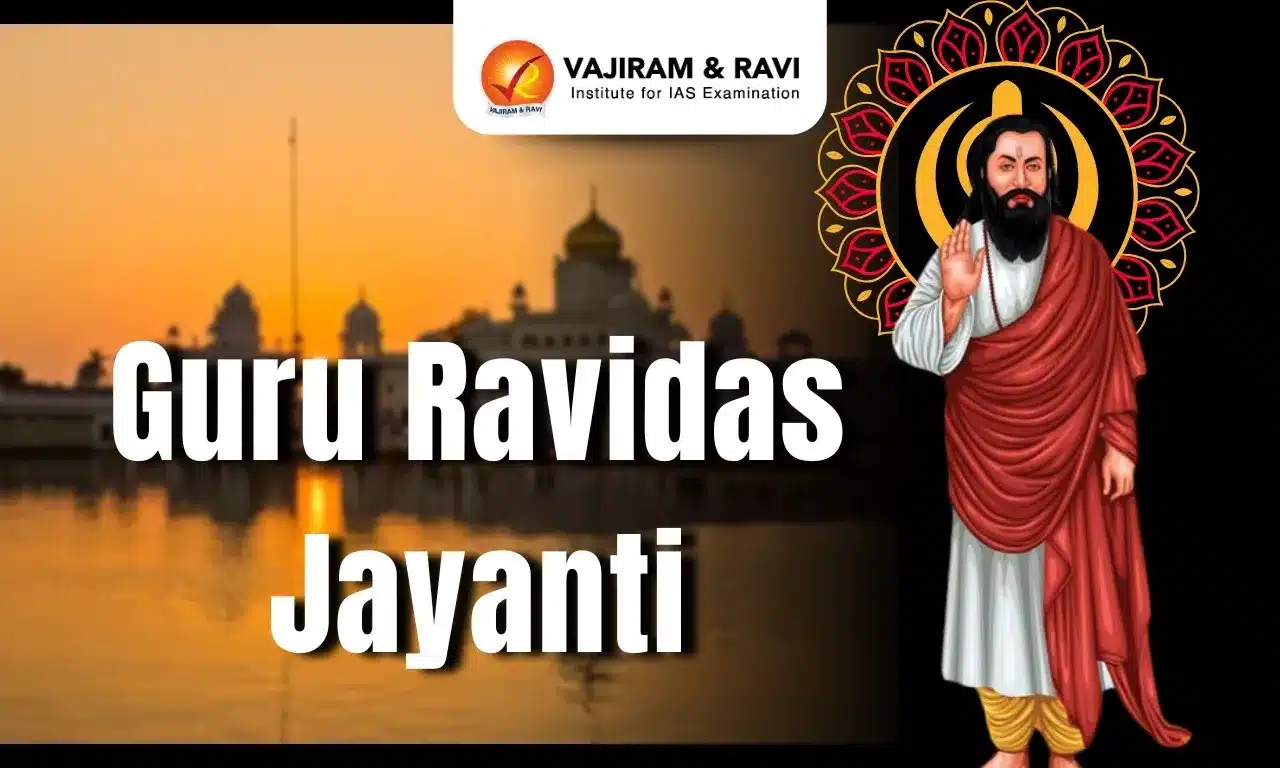
Guru Ravidas Jayanti 2025, Biography, Celebrations, Quotes

Guru Ravidas Jayanti

Guru Ravidas Jayanti is celebrated to honour saint Ravidas. He was a social reformer of the Bhakti Movement and a poet as well making this birth anniversary a celebratory event in North India. This year, Guru Ravidas Jayanti is being celebrated on 12 February, the full moon day of Hindu Magh month. 

Guru Ravidas Biography

Guru Ravidas, born in 1377 CE in Manduadih, Varanasi, Uttar Pradesh and was a 15th century mystic poet and social reformer. Being a prominent reformer in the Bhakti Movement, preaching social justice, equality and elimination of caste-based discrimination. His learnings focused on unity, devotion to god and humanitarian values. 

Key Teachings and Contributions of Guru Ravidas

  1. Abolition of the Caste System: Guru Ravidas was a staunch opponent of untouchability and caste-based discrimination. He advocated for the equality of all human beings, regardless of their caste or social status.
  2. Mentor to Meera Bai: Guru Ravidas was a spiritual guide to Meera Bai, the renowned Rajput princess and an ardent devotee of Lord Krishna, influencing her devotional path.
  3. Compositions in Guru Granth Sahib: His teachings and verses are immortalized in the Guru Granth Sahib, the holy scripture of Sikhism, demonstrating his profound influence that extended beyond Hinduism.

Guru Ravidas Jayanti Significance

Guru Ravidas Jayanti is celebrated to honor the life and contributions of Guru Ravidas towards creating a social equality and spiritual upliftment. His teaching has inspired millions of people and the day is marked by spiritual discourses and devotional activities. 

Guru Ravidas Jayanti Celebrations

Guru Ravidas Jayanti is celebrated especially in North India in Uttar Pradesh, Punjab, Delhi, Rajasthan and Madhya Pradesh. The day is celebrated in the following manner: 

  1. Nagar Kirtan (Religious Processions): Devotees organize processions, carrying the sacred scripture while chanting hymns composed by Guru Ravidas.
  2. Aarti and Bhajan-Kirtan: Special prayer sessions, along with devotional songs, are conducted in temples and homes to honor the Guru’s teachings.
  3. Reading Guru Ravidas’ Teachings: Followers read, reflect, and discuss his verses to imbibe his values of equality and spirituality.
  4. Langar (Community Feasting): Free meals are served to everyone, regardless of caste or creed, embodying Guru Ravidas’ vision of equality and unity.
  5. Holy Bath Rituals: Devotees participate in ritualistic baths in sacred rivers, especially in Varanasi, the birthplace of Guru Ravidas.

The Delhi government has announced February 12, 2025, as a public holiday to honor Guru Ravidas. Previously marked as a restricted holiday, 2025 will witness the closure of all government offices, autonomous bodies, and public sector undertakings. 

Guru Ravidas Teachings and Quotes

Guru Ravidas’ teachings focus on spiritual enlightenment, social justice and universal love. Guru Ravidas quotes include: 

  • “Man changa toh kathoti mein Ganga” – If your mind is pure, even a small vessel of water is as sacred as the Ganges.
  • “Begumpura shahar ka nao” – He envisioned a city free from sorrow, discrimination, and suffering, known as Begumpura.
  • “Jaati paati puchhe nahi koi, hari ko bhaje so hari ka hoi” – God does not ask for caste or status; one who prays to Him belongs to Him.

Guru Ravidas and his Impact on Modern Society

Guru Ravidas’ life principles remain as important in contemporary times, especially related to caste discrimination and social equality. These teachings about respecting all communities, universal brotherhood and devotion to god continue to inspire movements against injustice and oppression. 

Guru Ravidas Jayanti 2025 honors the legacy of Guru Ravidas saint and his influence on the Indian Society. His teachings about devotion, compassion and equality have inspired a vision of a just and harmonious world. The festival provides an opportunity to renew his dedication to his timeless principles. 

Guru Ravidas Jayanti FAQs

Q1: Which Jayanti is on 12 February?

Ans: Guru Ravidas Jayanti.

Q2: Why is Guru Ravidas Jayanti important?

Ans: It honors Guru Ravidas’ teachings of equality, devotion, and compassion.

Q3: Is Guru Ravidas Jayanti a gazetted holiday?

Ans: No, it is not a gazetted holiday but is observed as a public holiday in some states like Delhi.

Q4: What is the date of Ravidas?

Ans: Guru Ravidas Jayanti is on 12 February 2025.

Q5: Did Guru Nanak meet Ravidas?

Ans: Historical accounts suggest that Guru Nanak and Guru Ravidas may have met, though it is not definitively confirmed.

World Environment Day 2025

World Environment Day

World Environment Day Latest News

World Environment Day 2025, hosted by the Republic of Korea, will spotlight the urgent need to beat plastic pollution.

About World Environment Day

  • It is observed every year on June 5 across more than 150 countries. 
  • Led by the United Nations Environment Programme (UNEP), it is an international day dedicated to raising global awareness about environmental issues and encouraging individuals, organisations, and others to take a step towards protecting the planet.

World Environment Day History

  • World Environment Day was established in 1972 during the United Nations Conference on the Human Environment held in Stockholm. 
  • The UNEP was established in the same year.
  • Later that year, the UN General Assembly officially designated June 5 as World Environment Day. 
  • The first celebration took place in 1973 with the theme “Only One Earth,” marking the beginning of what would become the largest global platform for environmental awareness.
  • Each year, a host nation spearheads the campaign, which raises awareness of a certain issue. 

World Environment Day 2025

  • Theme: Beat Plastic Pollution
  • This year, the Republic of Korea is leading the campaign to spread awareness with a focus on ending plastic pollution globally. 

World Environment Day FAQs

Q1: When was World Environment Day started?

Ans: It was established by the United Nations General Assembly in 1972, and the first official observance was held on June 5, 1973.

Q2: What is the theme for World Environment Day 2025?

Ans: Beat Plastic Pollution

Q3: Who will host 2026 World Environment Day?

Ans: The Republic of Azerbaijan will host World Environment Day 2026

SourceTOI

Enquire Now