Global Education Monitoring Report

Global Education Monitoring

Global Education Monitoring Report Latest News

According to the Global Education Monitoring Team (GEM) report the global out-of-school population is now estimated to be 272 million, over 21 million more than the last estimate. 

About Global Education Monitoring Report

  • It is an annual publication produced by UNESCO (United Nations Educational, Scientific and Cultural Organization).
  • It is an authoritative and evidence-based assessment of progress, challenges, and trends in education worldwide. 
  • The GEM Report was launched in 2002 as the Education for All Global Monitoring Report and transitioned to its current name in 2016.
  • Its primary purpose is to monitor and analyze global education trends and provide policy recommendations to governments and stakeholders to improve education systems and outcomes.

Highlights of the Report

  • It has pointed out that by 2025, countries will be off-track by 75 million relative to their national targets.
  • The out-of-school model estimates assume stable patterns of school-age population progression through the education system. 
  • The model used multiple data sources ( administrative, survey and census) to generate internally consistent trends of regional and global averages.

Source: TH

Global Education Monitoring Report

Q1: Who releases the Global education Monitoring Report?

Ans: UNESCO

Q2: What is the United Nations Economic and Social Council?

Ans: The United Nations Economic and Social Council (ECOSOC) is one of the six principal organs of the United Nations (UN) responsible for promoting international economic and social cooperation and development.

Cyprus

Cyprus

Cyprus Latest News

The Prime Minister recently began his five-day, three-nation visit with a stop in Cyprus, marking the first visit by an Indian Prime Minister to the island nation in over two decades.

About Cyprus

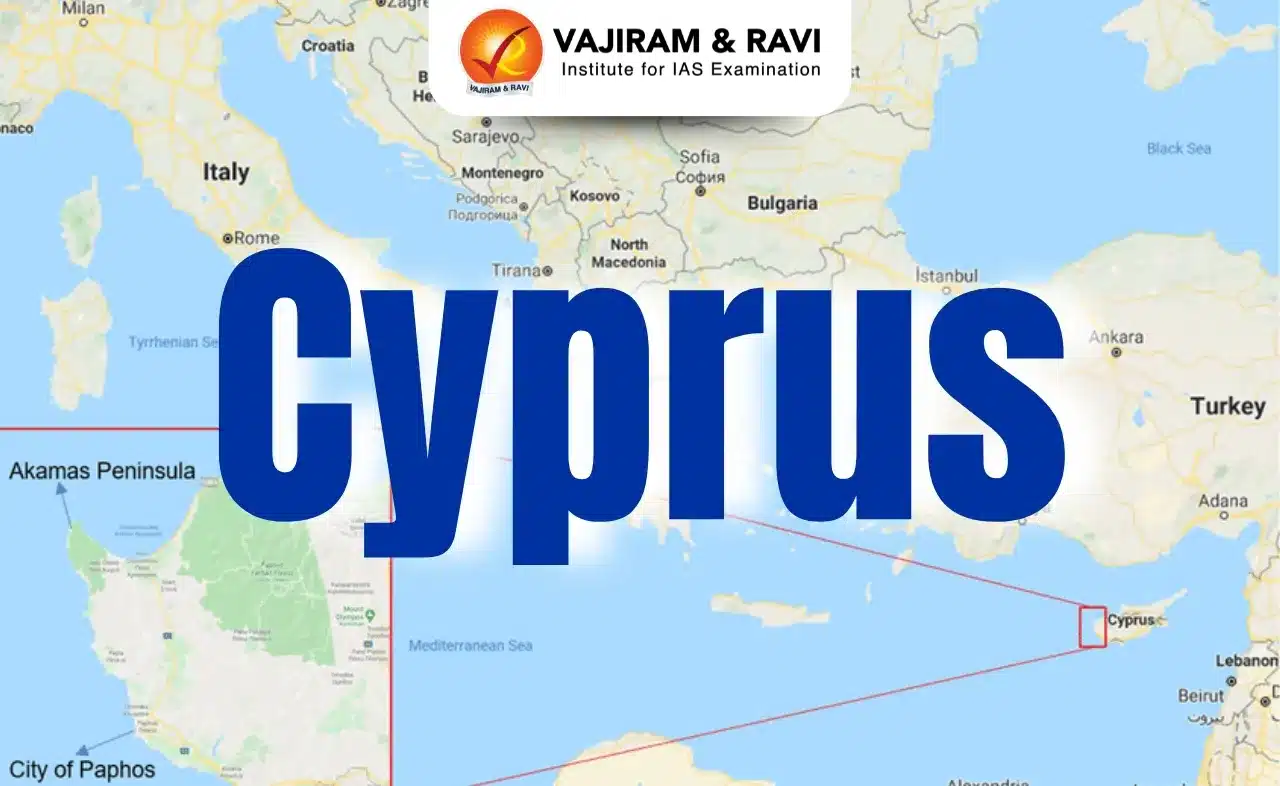
  • Cyprus is a Eurasian island country located in the extreme northeastern corner of the Mediterranean Sea, south of the Anatolian peninsula (Asia Minor) or modern-day Turkey.
  • With an area of 9,251 sq. km, Cyprus is the third largest Mediterranean island after Sicily and Sardinia.
  • Capital: Nicosia  
  • Major Cities: Limassol, Larnaca, Famagusta, and Paphos.
  • Cyprus belongs geographically to Western Asia (Middle East) and politically to Europe.
  • Cyprus is positioned both in the Northern and Eastern hemispheres of the earth.
  • Across the sea, it is located to the southeast of Greece, to the south of Turkey, to the west of Lebanon and Syria, and to the north of Egypt, Israel, and the Palestinian Gaza Strip. 
  • The culture of Cyprus is divided between the northern Turkish and the southern Greek sections of the country.
  • Climate: Temperate and Mediterranean with dry summers and variably rainy winters. 
  • Highest Point: Mount Olympus (1,952 m) 
  • History
    • In 1960 Cyprus became independent of Britain as the Republic of Cyprus. 
    • Cyprus has been divided since 1974, when Turkey invaded the north in response to a military coup on the island which was backed by the Greek government.
    • The island was effectively partitioned, with the northern third run by a Turkish Cypriot government and the southern two-thirds by the internationally recognised government led by Greek Cypriots. 
    • The status of Northern Cyprus as a separate political entity is recognised only by Turkey.
    • United Nations troops patrol the "Green Line" dividing the two parts, and reunification talks have made slow progress. 
  • Political System: Cyprus is a presidential republic. The president is both head of state and government.
  • Official languages: Greek and Turkish.
  • It is a developed country and a member of the European Union since May 1, 2004.

Source: IT

Cyprus FAQs

Q1: What is the capital of Cyprus?

Ans: Nicosia

Q2: Cyprus is located in which sea?

Ans: Mediterranean Sea

Q3: Which country is located directly north of Cyprus?

Ans: Turkey

Special Economic Zones (SEZs)

Special Economic Zones

Special Economic Zones Latest News

The government recently relaxed key rules related to Special Economic Zones (SEZs) to further encourage the domestic manufacture of semiconductors and electronics.

About Special Economic Zones 

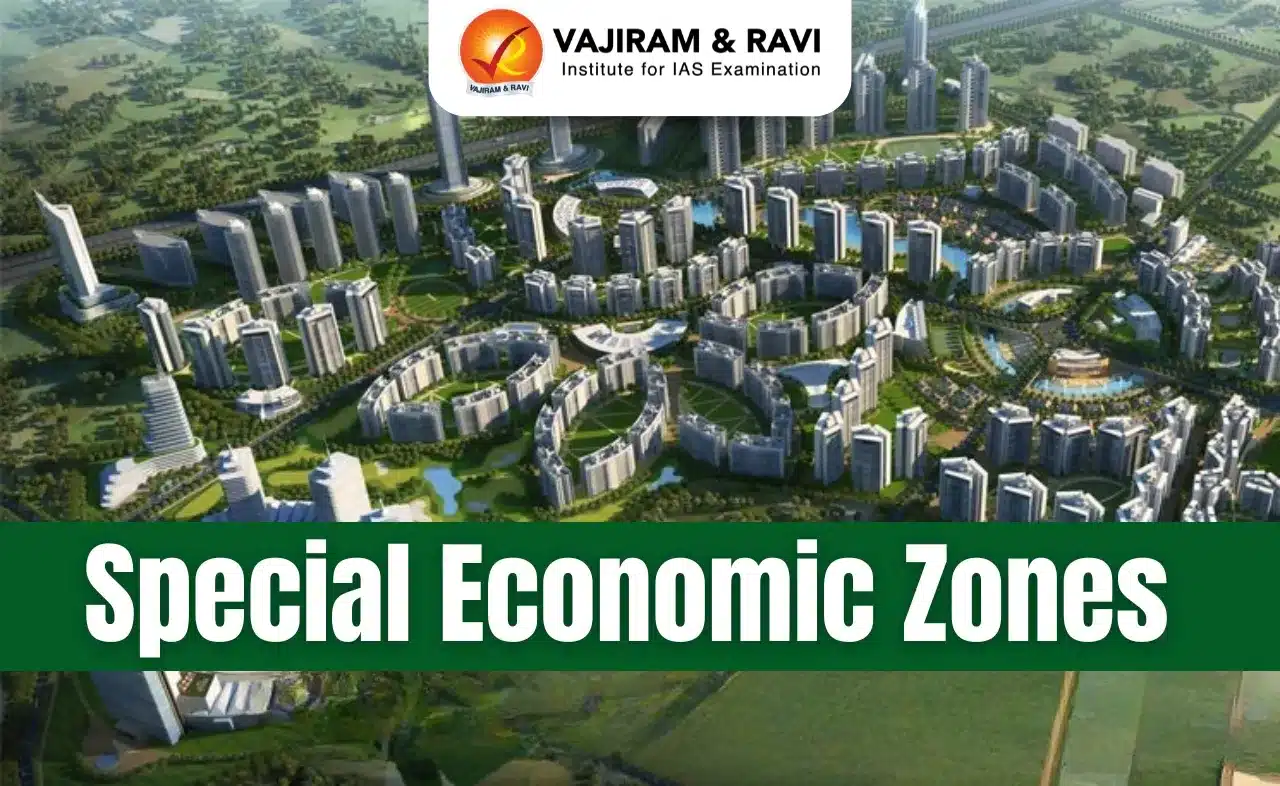
  • SEZs are special areas within a country that offer incentives to business and trade regulations operating in those areas. 
  • SEZs typically offer competitive infrastructure, duty-free exports, tax incentives, and other measures designed to make it easier to conduct business.
  • The main objectives of the SEZ are generating additional economic activity, promoting exports of goods and services from the country, promoting foreign and domestic investment, and creating more employment opportunities besides the development of infrastructure facilities. 
  • The category ‘SEZ’ covers a broad range of zone types, few of which are free zones (FZs), industrial estates (IEs), free ports, free trade zones (FTZs), and export processing zones (EPZs). 

SEZs in India

  • Asia’s first EPZ was set up in Kandla, Gujarat, in 1965, followed by seven more EPZs in the country. 
  • The SEZ policy was introduced in April 2000, and it is envisioned to make SEZs a driver for economic growth supported by quality infrastructure and accompanied by an attractive incentives package, at the centre and state levels in the country. 
  • The eight pre-existing EPZs located at Kandla and Surat (Gujarat), Mumbai (Maharashtra), Cochin (Kerala), Chennai (Tamil Nadu), Visakhapatnam (Andhra Pradesh), Falta (West Bengal), and Noida (Uttar Pradesh) were converted into SEZs under this scheme. 
  • Later, the SEZ Act, 2005 was passed by the Indian Parliament in May 2005, and the act, supported by SEZ Rules, came into effect on February 10, 2006
  • As of March 31, 2024, there are 280 operational SEZs in India.

Rules Pertaining to SEZs in India

  • A designated duty-free enclave is considered as a territory outside the customs jurisdiction of India for authorized operations within the Special Economic Zone (SEZ). 
  • Duty free import and domestic procurement of goods for the development, operation, and maintenance of your company/SEZ unit.
  • No import license is necessary, and both manufacturing and service activities are permitted. 
  • 100 percent income tax exemption on export income for SEZ units under Section 10AA of the Income Tax Act for the first five years, 50 percent for the next five years thereafter and 50 percent of the ploughed back export profit for the next five years.
  • Exemption from the Goods and Service Tax (GST) and levies imposed by the state government (supplies to SEZs are zero rated under the IGST Act, 2017, meaning they are not taxed).
  • Units within the SEZ must demonstrate Positive Net Foreign Exchange over a cumulative period of five years from the start of production. 
  • Domestic sales are subject to full customs duty and adhere to the current import policy. 
  • Minimum Alternate Tax (MAT) must be paid by SEZ units.
  • Single window clearances for all state and federal government approvals.
  • SEZ units have the liberty to engage in subcontracting. 
  • Routine inspections of export/import cargo by customs authorities are not required. 
  • SEZ Developers/Co-Developers and Units are entitled to direct and indirect tax benefits as stipulated in the SEZs Act of 2005.
  • On June 9, 2025, India announced a series of regulatory amendments aimed at promoting SEZs focused on semiconductor and electronic component manufacturing.
    • One of the major revisions is the amendment to Rule 5 of SEZ Rules, 2006, which reduces the minimum land requirement for SEZs dedicated exclusively to semiconductors or electronic components from 50 hectares to 10 hectares. 
    • Additionally, Rule 18 has been amended to allow these SEZ units to sell their products in the domestic market, subject to payment of applicable duties.
    • Further, an amendment to Rule 7 empowers the SEZ Board of Approval to waive the requirement for land to be encumbrance-free in specific cases. This provision applies when the land is mortgaged or leased to central or state governments or their authorized agencies, offering greater flexibility in land acquisition and development.

Source: TH

Special Economic Zones (SEZs) FAQs

Q1: Which was the first Export Processing Zone (EPZ) in Asia?

Ans: Kandla

Q2: As per the SEZ Rules, how is a designated SEZ area treated for customs purposes?

Ans: As territory outside the customs jurisdiction of India.

Q3: When was the SEZ Act passed by the Indian Parliament?

Ans: 2005

AviList

AviList

AviList Latest News

Recently, the AviList became live after four years of work by the Working Group on Avian Checklists.

About AviList

  • It is the first-ever unified global checklist of bird species.
  • The new checklist will replace the International Ornithological Committee (IOC) and Clements lists and will be updated annually.
  • Launched by:  Under the Working Group on Avian Checklists included representatives from BirdLife International, the Cornell Lab of Ornithology, the American Ornithologists Society, the International Ornithologists’ Union, and Avibase.
  • The list contains 11,131 species, 19,879 subspecies, 2,376 genera, 252 families and 46 orders. It has thus brought together global thinking on what constitutes a species and shakes up humanity’s understanding of the avian world.

Benefits of new AviList

  • The new list will especially help scientists get clarity on conservation priorities.
  • It will benefit conservation, removing the current confusion and uncertainty resulting from the existence of multiple lists.
  • It will make it easier for birders, scientists, policymakers and conservationists to share information, use and link different online platforms, and share a common understanding of avian distribution, ecology and conservation priorities.

 Source: DTE

AviList FAQs

Q1: What is BirdLife International?

Ans: It is a global Partnership of over 100 national conservation organisations with a focus on birds and working together on shared priorities, policies and programmes of conservation exchanging skills, achievements and information, and so growing in ability, authority and influence.

Q2: Where is the headquarters of BirdLife International?

Ans: Cambridge, United Kingdom

Q3: What does ornithology mean?

Ans: Ornithology is the scientific study of birds, a field that combines elements of natural history and biology.

Goan Feni

Goan Feni

Goan Feni Latest News

Goan Feni, popularly known as Ozzo Feni, has also received the Geographical Indication (GI) tag. 

About Goan Feni

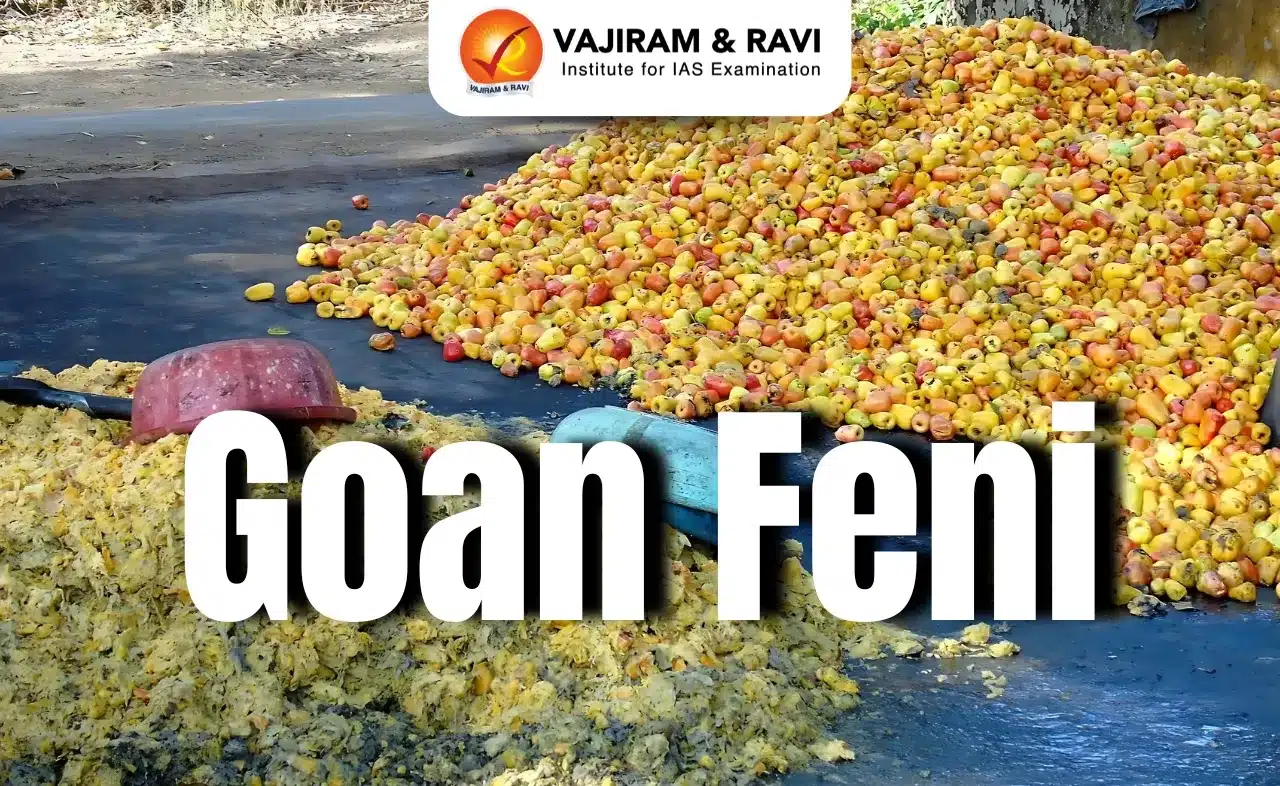
  • It is a traditional Indian spirit native to Goa, and is made from the fermentation and double distillation of either cashew apples or coconut sap.
  • It's strong, clear liquor with a unique flavour.
  • History: Feni was introduced to India by the Portuguese missionaries in the 1600s when they came to trade. They brought with them cashew plant trees and also the method of distillation, which was then passed on to the locals. 
  • The people who made feni were called bhatikars, who used earthen pots or bhatis under a fire. Today, copper pots under the coil method are used to make Feni.

How is it prepared?

  • As per a study, cashew feni production is a relatively laborious and lengthy process that does not require specialized equipment.
  • It is a four-step process consisting of the harvesting of cashew apples, juice extraction through stomping with feet, natural fermentation in earthen pots, and subsequent distillation and condensation in a clay still over a low wood fire.
  • The distilled Feni is then aged for a couple of months and bottled.

Source: TOI

Goan Feni FAQs

Q1: What is goan Feni made of?

Ans: Feni is a traditional Indian spirit, well-known in Goa, made from the fermentation and double distillation of either cashew apples or coconut sap.

Q2: What are the two types of feni?

Ans: Cashew feni and coconut feni

Indian Rat Snake

Indian Rat Snake

Indian Rat Snake Latest News

The State Board for Wildlife, which will meet next week, will consider a proposal for notifying the snake as the official reptile. 

About Indian Rat Snake

  • It is a non-venomous commonly seen snake which is famous for its fast crawling speed and much larger size than most of the widely distributed species found in India. 
  • It is also known as Manja Chera and Karinchera in Kerala.
  • Rat Snakes are carnivorous; also consume the hatchlings of venomous and dangerous snakes, such as cobras.
  • Behaviour: It is a diurnal species which shows both arboreal and terrestrial activity depending upon foraging and resting needs.
  • Habitat: The snake is found in diverse habitats, including forests, forest clearings and edges, open tropical dry forests, savannas, scrublands, plantations, villages and cultivated areas.

Distribution of Indian Rat Snake

  • India, throughout South and Southeast Asia, China, Pakistan, Turkmenistan
  • The species is found in most parts of the country including Andaman Island.

Ecological Significance of Indian Rat Snake

  • The species is commonly found in human habitations, plays a major role in controlling the rodent population that damages agricultural crops including grains and tubers in fields and farmlands that spread infectious diseases.
  • Rat snakes, also known as friends of farmers, have great conservation value.

Conservation status of Indian Rat Snake

  • IUCN: Least Concern  
  • Wildlife (Protection) Act: Schedule One

Source:  TH

Indian Rat Snake FAQs

Q1: Is Indian rat snake poisonous?

Ans: It is non-venomous

Q2: What is another name for the Indian rat snake?

Ans: Oriental rat snake and dhaman

Narmada River

Narmada River

Narmada River Latest News

Since the launch of the Madhya Pradesh government’s Jal Ganga Sanvardhan Abhiyan, the Ghoda Pachhad River-a tributary of the Narmada-has been revived in Khandwa district.

About Narmada River

  • It is the largest west-flowing river in peninsular India.
  • Of the major rivers of peninsular India, only the Narmada, the Tapti, and the Mahirun from east to west.
  • It has long been an important route between the Arabian Sea and the Ganges (Ganga) River valley. 
  • The Narmada was called Namade by the 2nd-century-ce Greek geographer Ptolemy.
  • Course:
    • The origin of the river is a tiny reservoir named Narmada Kund, which is situated on the Amarkantak Hill in East Madhya Pradesh at an elevation of 1,057 m on the border with Chhattisgarh.
    • The river flows through Madhya Pradesh, Maharashtra, and Gujarat between Vindhya and Satpura hill ranges before falling into the Gulf of Cambay in the Arabian Sea about 10 km north of Bharuch, Gujarat.
  • Length: The total length of the river is 1312 kilometres (815 miles). It is the fifth longest river of India.
  • The Narmada basin extends over an area of 98,796 sq. km., and includes a portion of Chhattisgarh state.
  • Narmada flows through the Hoshangabad plains, the Dhar upland, the Mahishmati plains, and the gorges at Mandhata and Murakta.
  • The basin is bounded on the north by the Vindhyas, on the east by the Maikala range, on the south by the Satpuras, and on the west by the Arabian Sea.
  • The Tropic of Cancer crosses the Narmada basin in the upper plains area, and a major part of the basin lies just below this line.
  • It is one of the rivers that flow in a rift valley and acts as a divider between north India and south India.
    • These rift valleys are the result of the faulting that took place when the northern flank of the Peninsula suffered subsidence.
  • The river has numerous waterfalls, notably the Dhuandhar Falls, southwest of Jabalpur, Madhya Pradesh. 
  • Tributaries:
    • The main tributaries of Narmada River are, namely, Hallon River, Banjar River, Barna River, and Tawa River.
    • The Tawa River is the longest tributary of the Narmada River.
  • There are also numerous pilgrimage spots on the banks of the river, the most important among them are Mahewswar and Omkareshwar temples.
  • There are several dams along the course of the river, including major hydroelectric projects, such as the Sardar Sarovar Dam, the Indira Sagar Dam, the Omkareshwar Dam, the Bargi Dam, and the Maheshwar Dam.

Source: TWEEK

Narmada River FAQs

Q1: Where does the Narmada River start and end?

Ans: The Narmada River rises in Amarkantak, Madhya Pradesh, and empties into the Arabian Sea via the Gulf of Khambhat.

Q2: Which is the 5th longest river in India?

Ans: Narmada River

Q3: Which river is twin of Narmada?

Ans: The Tapi (or Tapti) River is often referred to as the twin of the Narmada River.

SCORES Portal

SCORES Portal

SCORES Portal Latest News

Capital markets regulator Sebi resolved 4,493 investor complaints through its online grievance redressal platform SCORES last month.

About SCORES Portal

  • SCORES, or the SEBI Complaints Redress System, is an online platform launched in 2011 that enables investors to file and track complaints against listed entities and SEBI-registered market intermediaries. 
  • As per the upgraded SCORES 2.0 framework, complaints are automatically directed to the concerned entities, which are mandated to respond with an Action Taken Report (ATR) within 21 days.
  • If the investor is dissatisfied with the response, they may seek a First Level Review within 15 days.
    • During this review period, complaints remain classified as pending, even if an ATR has already been submitted
    • In cases where the grievance remains unresolved following the First Level Review, investors have the option to escalate the matter to SEBI for a Second Level Review. 
    • The complaints may be closed if the investor opts for resolution through the Online Dispute Resolution (ODR) mechanism. 
  • Thus, the SCORES Portal enables market intermediaries and listed companies to receive complaints online from investors, redress such complaints, and report redressal online.
  • An investor who is not familiar with SCORES or does not have access to SCORES can lodge complaints in physical form at any of the offices of SEBI.
    • Such complaints would be scanned and also uploaded in SCORES for processing.

Source: BS

SCORES Portal FAQs

Q1: Who launched scores portal?

Ans: Securities and Exchange Board of India (SEBI)

Q2: SCORES is meant to redress complaints against which of the following?

Ans: Listed entities and SEBI-registered market intermediaries.

Q3: In which year was the SCORES portal launched?

Ans: 2011

G7 Grouping

G7

G7 Grouping Latest News

The Prime Minister recently headed to Canada to attend the G7 summit on the invitation of his counterpart, Mark Carney.

About G7 Grouping

  • The Group of Seven (G7) is an informal grouping of seven of the world’s advanced economies, including Canada, France, Germany, Italy, Japan, the United Kingdom, and the United States.
  • The European Union (EU) also participates in the Group and is represented at the summits by the President of the European Council and the President of the European Commission.
  • G7 was founded in 1975 in response to the oil crisis. 
  • With the inclusion of Russia in 1998, the group temporarily became the G8. In 2014, the group returned to the G7 format. 
  • The G7 originally dealt exclusively with issues related to the development of the global economy. 
  • Over the years, it has broadened its agenda. It now covers the entire spectrum of global issues, such as foreign and security policy, trade, climate, and development.

G7 Grouping Governance Structure

  • There is no firmly established secretariat, procedural guidelines, or administrative structures. 
  • The G7 presidency rotates each calendar year among the member states. The EU does not hold the rotating presidency of the G7.
  • The Summit, the G7 Presidency’s centerpiece, is attended by the Heads of State and Government of the seven Member States, representatives of the European Union, and States and International Organizations invited by the Presidency.
  • The changing agenda and thematic priorities of the G7 are determined by the respective presidency
  • Decisions are usually taken by consensus.
  • The G7 Summit concludes with the adoption of a communiqué outlining important political commitments. 
  • These communiques–and more broadly the G7 decisions–have a significant influence on global governance and decision-making processes.

Source: FP

G7 Grouping FAQs

Q1: What are the 7 countries in the G7?

Ans: Canada, France, Germany, Italy, Japan, the United Kingdom, and the United States.

Q2: When was the G7 founded?

Ans: G7 was founded in 1975 in response to the oil crisis. 

Q3: Why was Russia removed from the G8, reverting the group to the G7?

Ans: Annexation of Crimea.

DNA Analysis in Air India Crash: How Victims Are Identified

DNA Identification in Disaster

DNA Identification in Disaster Latest News

  • Following the Air India Boeing 787 crash in Ahmedabad, authorities are using DNA analysis to identify victims’ remains. 
  • Family members' DNA samples have been collected, and some matches have been made. 
  • Since each person’s DNA is unique (except in identical twins), it serves as the most reliable method for identifying bodies, especially in mass fatality incidents where visual or physical identification is difficult.

About DNA 

  • Deoxyribonucleic Acid (DNA) is the hereditary material in almost all living organisms. 
  • It carries the genetic instructions used in growth, development, functioning, and reproduction.

Structure

  • DNA is composed of two long strands forming a double helix, made up of repeating units called nucleotides. 
  • Each nucleotide contains a sugar, a phosphate group, and one of four nitrogenous bases — Adenine (A), Thymine (T), Cytosine (C), or Guanine (G). The specific sequence of these bases encodes genetic information.

Location

  • DNA is primarily located in the nucleus of cells (nuclear DNA), while a small amount is also found in mitochondria (mitochondrial DNA or mtDNA). 
  • Nuclear DNA is unique to each individual (except identical twins), whereas mtDNA is inherited maternally and found in multiple copies per cell.

Function

  • DNA controls cellular functions by coding for proteins, and it passes genetic traits from one generation to the next.

Role of DNA in Identifying Crash/Disaster Victims

  • In mass fatality events like plane crashes or natural disasters, physical features may be unrecognizable. 
  • DNA becomes the most reliable method of identification in such cases.

Challenges

  • Decomposition and Damage: Disasters can severely damage or decompose remains, making DNA extraction and profiling challenging. 
  • Contamination: Contamination of samples from other sources can complicate the process. 
  • Time and Resources: The process can be time-consuming and require significant resources, especially for large-scale disasters. 

DNA Collection and Storage After a Plane Crash

  • Ideal Storage Conditions
    • DNA survives best in cold, dry environments.
    • Samples should be frozen at -20°C or stored in 95% ethanol (for soft tissues).
    • Soft tissues degrade faster than hard tissues like bones and teeth, which are more resistant to decomposition.
    • Forensic teams prefer bones and teeth as DNA sources due to their protection from environmental damage and decomposition.
  • Timeline for Sample Collection
    • Post-crash recovery and collection can take weeks.
    • Example: It took 10 months to collect DNA from victims of the 9/11 attacks due to the scale of destruction.
  • Importance of Reference Samples
    • To match unidentified remains, DNA from biological relatives—especially parents or children—is collected, as they share 50% of their DNA with the victim.

DNA Analysis Methods in Identifying Human Remains

  • Once samples are collected, DNA is extracted. The quality and condition of the DNA determine which analysis method is used.

Short Tandem Repeat (STR) Analysis

  • STR analysis examines repeating DNA sequences that vary between individuals. 
  • It is highly accurate for identification and family matching when at least 15 STR regions are analyzed. 
  • Since STRs are found in nuclear DNA, this method requires non-degraded nuclear DNA for effective results.

Mitochondrial DNA (mtDNA) Analysis

  • Used when nuclear DNA is degraded, mtDNA is easier to recover as it exists in many copies per cell. 
  • Since it’s passed unchanged from mother to all children, identification is done by matching remains with maternal relatives like the mother, siblings, maternal grandmother, or maternal uncles/aunts.

Y Chromosome Analysis

  • This method examines STRs on the Y chromosome, which is passed from father to son. 
  • It helps identify male victims by matching their DNA with male relatives in the paternal line—such as brothers, paternal uncles, or male cousins. 
  • It is especially useful when close relatives are unavailable for comparison.

Single Nucleotide Polymorphisms (SNPs) Analysis

  • SNP analysis is used when DNA is highly degraded. It identifies variations at single base points (A, C, G, or T) in the DNA sequence. 
  • Though less accurate than STR analysis, it can still aid identification using reference samples from personal items like toothbrushes or hairbrushes.

Source: IE | IETNM

DNA Identification in Disaster FAQs

Q1: What is DNA's role in disaster victim identification?

Ans: It provides a unique genetic profile for each person, enabling identification when visual or physical recognition isn’t possible.

Q2: Why is DNA from bones and teeth preferred?

Ans: Hard tissues like bones and teeth resist decomposition better, preserving DNA longer in crash or disaster conditions.

Q3: How is STR analysis used in identification?

Ans: STR analysis examines repeating DNA sequences; it's accurate but requires high-quality, non-degraded nuclear DNA.

Q4: When is mitochondrial DNA used?

Ans: mtDNA is used when nuclear DNA is degraded. It’s passed maternally and matched with maternal-line relatives.

Q5: What makes SNP analysis suitable for degraded DNA?

Ans: SNPs detect single base changes, making them useful for highly degraded DNA from personal items like combs or brushes.

MGNREGS Spending Cap: Centre’s Rationale and the Legal Backlash

MGNREGS Spending Cap

MGNREGS Spending Cap Latest News

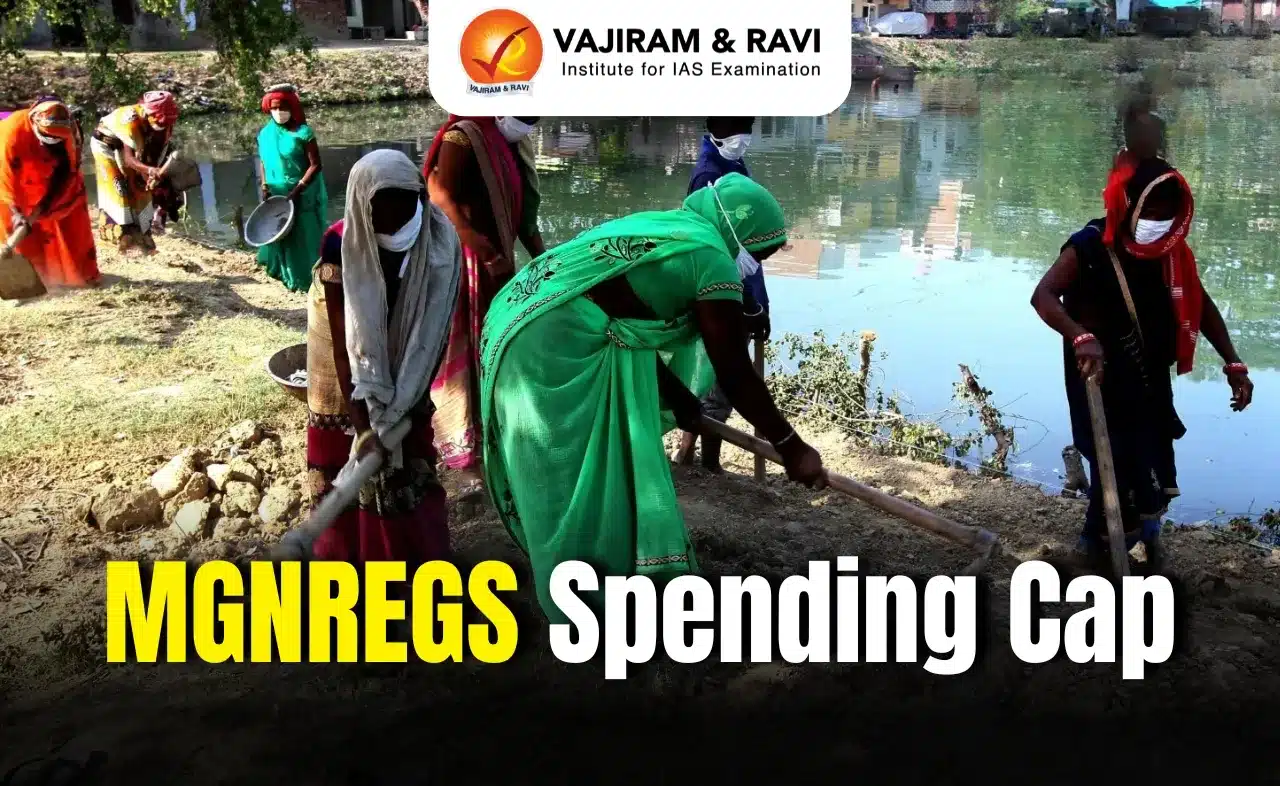
  • The Union Finance Ministry has, for the first time, capped MGNREGS spending at 60% of its annual budget for the first half of FY 2025-26. 
  • Previously exempt due to its demand-driven nature, the scheme has now been brought under the Monthly/Quarterly Expenditure Plan (MEP/QEP), a spending control mechanism introduced in 2017.
    • MEP/QEP is a financial tool used by government ministries and departments to track and manage their spending against allocated budgets. 
    • It helps in forecasting cash flow, monitoring expenditure, and ensuring that spending aligns with budgetary provisions.

Finance Ministry’s Rationale Behind MGNREGS Spending Cap

  • Chronic Budget Overruns
    • Historically, over 70% of the MGNREGS budget gets exhausted by September, prompting supplementary allocations in December, which are usually depleted by January.
  • Mounting Pending Dues
    • In the past five years, year-end pending dues have ranged between ₹15,000 crore and ₹25,000 crore. 
    • On average, 20% of the next year’s budget goes toward clearing these dues.
  • Objective of the Spending Cap
    • The Finance Ministry aims to regulate cash flow through the MEP/QEP mechanism to prevent early exhaustion of funds and avoid mid-year supplementary allocations.
  • Current Financial Snapshot (FY 2025-26)
    • Budget: ₹86,000 crore
    • Released so far: 28%
    • Pending dues from FY 25: ₹19,200 crore
    • Pending dues from FY 26 (as on June 12): ₹3,262 crore
    • Nearly 50% of the budget may go toward clearing past dues alone.

Key Issues with MGNREGS Spending Cap

  • Fluctuating Rural Work Demand Ignored
    • MGNREGS demand varies due to agricultural cycles and weather. Work peaks in April–June and post-Kharif in September. 
    • However, climate anomalies—like delayed rains or droughts—can increase demand unpredictably.
    • Example: In 2023, low rainfall caused a 20% spike in demand in July–August. 
      • Karnataka spent over 70% of its budget within six months due to severe drought.
    • The fixed expenditure cap fails to account for such contingencies, undermining the scheme’s role as a rural safety net.
  • Legal Concerns over Statutory Rights
    • MGNREGS is not a discretionary welfare scheme; it is backed by law (MGNREG Act, 2005) and guarantees employment as a legal right.
    • Unlike schemes such as PM-KISAN, which can be altered by governments, rights-based programmes limit executive discretion.
    • Capping expenditure limits the state's ability to honour a legal guarantee of work on demand, violating the core mandate of the Act.
  • Constitutional and Judicial Safeguards
    • Courts have consistently held that financial constraints cannot be used to justify non-fulfilment of statutory or constitutional obligations.
  • Key judgments
    • Swaraj Abhiyan v Union of India (2016)
    • Municipal Council, Ratlam v Vardhichand (1980)
    • Paschim Banga Khet Mazdoor Samity v State of W.B. (1996)
    • These rulings reinforce the principle that the government cannot evade its duties—especially in welfare laws—on the grounds of budgetary limitations.

Lack of Clarity and Legal Risks in MGNREGS Spending Cap

  • No Clarity Post-Spending Cap
    • The government has not specified what will happen once the 60% ceiling is reached. This creates two problematic possibilities:
      • States may deny employment despite genuine demand.
      • Workers may continue working but face indefinite wage delays.
      • Both scenarios risk violating statutory provisions of the MGNREG Act.
  • Violation of Legal Entitlements
    • The cap risks breaching key rights under the law:
      • Section 3: Right to employment within 15 days of demand.
      • Schedule II, Para 29: Right to receive wages within 15 days of work completion.
  • Ongoing Issues Already Exist
    • Wage delays, non-payment of unemployment allowance, and inadequate compensation for delays are already common in MGNREGS.
    • The Supreme Court has noted these systemic failures.
    • The spending cap may worsen these problems rather than resolve them.
  • Undermining the Act’s Purpose
    • While aiming to manage fiscal pressure, the Finance Ministry’s move weakens the core intent of the MGNREG Act — to provide timely, legally guaranteed employment and payment during rural distress.

Source: IEET

MGNREGS Spending Cap FAQs

Q1: Why did the Centre cap MGNREGS spending?

Ans: To prevent early budget exhaustion and reduce year-end dues by controlling fund release through MEP/QEP limits.

Q2: How does demand fluctuate in MGNREGS?

Ans: Work demand changes seasonally and rises during rural distress, which fixed caps fail to accommodate.

Q3: What legal issue does the spending cap raise?

Ans: It violates the MGNREG Act, which legally guarantees employment and timely payment under statutory obligations.

Q4: How have courts ruled on such obligations?

Ans: Courts have stated financial constraints can’t justify ignoring legal or constitutional duties, citing landmark welfare-related judgments.

Q5: What happens when the spending cap is reached?

Ans: Lack of clarity may lead to work denial or delayed wages, both violating workers’ statutory rights under the Act.

SEZ Norms Relaxed to Boost India’s Semiconductor and Electronics Manufacturing

SEZ Rules for Semiconductor Manufacturing

SEZ Reforms Latest News

  • The Central government has relaxed key rules related to Special Economic Zones (SEZs) to further encourage the domestic manufacture of semiconductors and electronics.

Introduction

  • In a strategic push to localise high-tech manufacturing, India has amended key provisions of its Special Economic Zones (SEZ) Rules, 2006
  • These reforms primarily target the semiconductor and electronics component manufacturing sectors, which are crucial for India’s ambitions of technological self-reliance and reduced import dependence.
  • Notified by the Ministry of Commerce and Industry in June 2025, the new rules mark a significant shift in India’s industrial policy approach, particularly given post-pandemic supply chain disruptions and rising global digital demand.

Significance of Semiconductors and Electronics Manufacturing

  • Semiconductors are the foundational technology powering modern electronics, from smartphones and laptops to electric vehicles and smart appliances. 
  • With increasing digitisation and the rise of technologies like Artificial Intelligence (AI) and the Internet of Things (IoT), semiconductors have become central to economic and national security.
  • India, like many other countries, became acutely aware of its import vulnerability during the COVID-19 pandemic when semiconductor shortages disrupted key industries. 
  • Given that China accounted for around 35% of global semiconductor manufacturing in 2021, countries including India have sought to de-risk their supply chains through domestic production.

Key Changes in SEZ Rules

  • The recent amendments in the SEZ framework aim to reduce regulatory burdens and attract capital-intensive, technology-oriented investments.
  • Reduction in Land Requirement (Rule 5 Amendment):
    • The minimum land requirement for SEZs focused on semiconductors or electronic components has been slashed from 50 hectares to just 10 hectares.
    • This reform facilitates smaller yet high-value investments by allowing firms to avail SEZ benefits such as duty-free imports and tax exemptions without the need for large land parcels.
  • Easing of Encumbrance Norms (Rule 7 Amendment):
    • SEZs no longer need to have “encumbrance-free” land if the land is mortgaged or leased to Central/State governments or their agencies.
    • This is especially significant in India, where legal land records and title clearances often delay industrial development.
  • Domestic Sales Permitted (Rule 18 Amendment):
    • Units in semiconductor and electronics SEZs are now allowed to sell in the Domestic Tariff Area (DTA) after paying applicable duties.
    • Earlier, SEZs were exclusively export-oriented. The new rule provides flexibility amid global trade uncertainties and boosts domestic supply chains.
  • Revised Net Foreign Exchange (NFE) Calculations (Rule 53 Amendment):
    • Goods received and supplied on a free-of-cost basis can now be included in NFE calculations and assessed using customs valuation rules.
    • This is particularly helpful for industries like semiconductor manufacturing that often involve high-cost prototypes and design iterations.

Early Impact and Industry Response

  • The reforms have already started to bear fruit. The Board of Approval for SEZs has cleared two major proposals:
    • Micron Semiconductor Technology India Pvt. Ltd. will establish a semiconductor manufacturing SEZ over 37.64 hectares in Sanand, Gujarat, with an investment of Rs. 13,000 crore.
    • Hubballi Durable Goods Cluster Pvt. Ltd. (Aequs Group) will set up an electronics component SEZ in Dharwad, Karnataka, spanning 11.55 hectares, with an investment of Rs. 100 crore.
  • These investments signal a shift in India’s manufacturing landscape and align with larger initiatives like the Semicon India Programme (Rs. 76,000 crore outlay), aimed at building a complete semiconductor ecosystem.

Challenges in Execution

  • Skilled Workforce: Semiconductor manufacturing requires highly trained professionals, which India is still developing at scale.
  • Infrastructure Readiness: High-tech units need stable power, clean rooms, and water-intensive facilities, logistics that require substantial state support.
  • Global Competition: Other countries, including the U.S., Taiwan, and South Korea, are also rolling out incentives. India must ensure competitiveness in its policy offerings.

Strategic Importance and Future Outlook

  • India’s SEZ reforms are not isolated but part of a broader national effort to position the country as a trusted global hub for electronics manufacturing. 
  • The flexibility offered through SEZs, coupled with Production Linked Incentives (PLI), reflects a strategic understanding that manufacturing capability in semiconductors and electronics is essential for both economic growth and national resilience.
  • By reducing regulatory friction, allowing domestic sales, and facilitating faster approvals, India is making itself a more attractive destination for global investors looking to diversify from traditional supply chains.

Source : TH | PIB

India’s SEZ Reforms FAQs

Q1: What are the recent SEZ rule changes for semiconductor manufacturing?

Ans: The SEZ land requirement has been reduced to 10 hectares, and domestic sales are now permitted after duty payment.

Q2: Why is the encumbrance-free clause relaxed under SEZ norms?

Ans: It was eased to address delays caused by legal complexities in land title clearances.

Q3: Which companies have received approvals under the revised SEZ rules?

Ans: Micron Semiconductor and Hubballi Durable Goods Cluster (Aequs Group) have received approvals for setting up SEZs.

Q4: How will the revised rules benefit domestic markets?

Ans: By allowing SEZs to sell locally, India ensures a stable domestic supply of critical electronic components.

Q5: What broader programs support India’s semiconductor ambitions?

Ans: India’s efforts are backed by the ₹76,000 crore Semicon India Programme launched in 2022.

Enquire Now