Historical Monuments in India, Top 10 List, Location, Facts

Historical Monuments in India

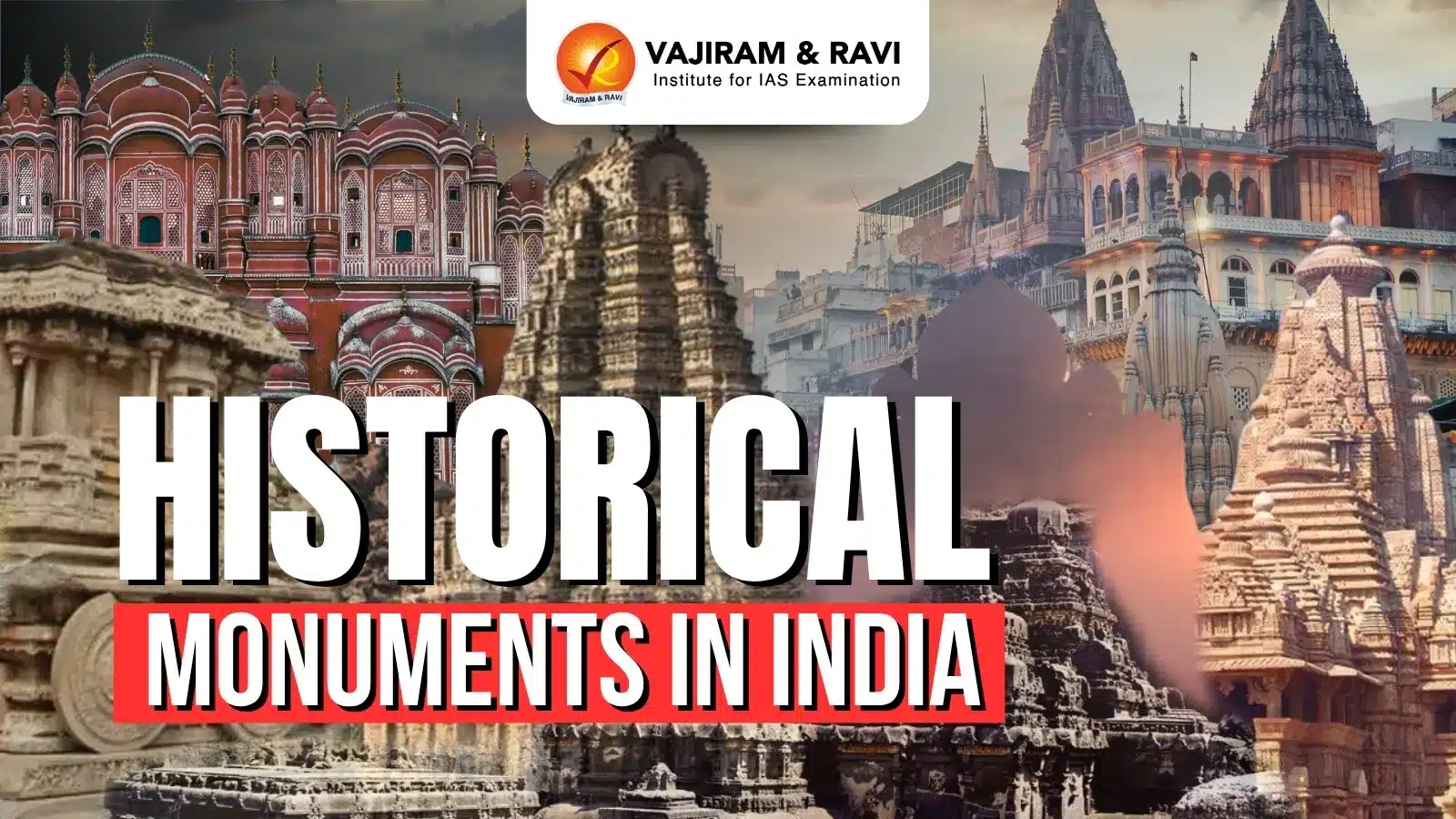
India is a land of Historical Monuments that narrate stories of dynasties, religions, and cultures. These Historical Monuments in India not only attract various tourists each year but also stand as symbols of India’s glory. The List of Historical Monuments of India preserved under the Archaeological Survey of India (ASI) and many are UNESCO World Heritage Sites.

List of Historical Monuments of India

The Historical Monuments of India are spread across its states and represent different time periods, rulers, and religions. These include Buddhist stupas, Hindu temples, Islamic forts, and Jain rock-cut caves. Each monument tells a unique story and showcases the craftsmanship of ancient Indian artisans. Below is a table summarizing the List of Historical Monuments of India:

List of Historical Monuments of India

Monument

Location

Built By

Year Built

Taj Mahal

Agra, Uttar Pradesh

Mughal Emperor Shah Jahan

1631-1648

Red Fort

Delhi

Shah Jahan

Mid 17th century

Qutub Minar

Delhi

Mamluk Dynasty

1193-1368

Humayun's Tomb

Delhi

Empress Bega Begum

1565-1570

Fatehpur Sikri

Agra, Uttar Pradesh

Mughal Emperor Akbar

1571-1585

Ajanta Caves

Aurangabad, Maharashtra

Buddhist monks

2nd century BCE - 6th century CE

Ellora Caves

Aurangabad, Maharashtra

Buddhist, Hindu, Jain monks

6th-11th centuries

Khajuraho Temples

Khajuraho, Madhya Pradesh

Chandela Dynasty

950-1050

Konark Sun Temple

Konark, Odisha

Eastern Ganga Dynasty

13th century

Meenakshi Temple

Madurai, Tamil Nadu

Pandya Dynasty

7th century

Sanchi Stupa

Sanchi, Madhya Pradesh

Maurya Empire

1st - 3rd century BCE

Hampi

Karnataka

Vijayanagar Empire

14th century

Mahabalipuram

Tamil Nadu

Pallava Dynasty

7th century

Elephanta Caves

Maharashtra

Rashtrakuta rulers

5th to 6th centuries

Rani ki Vav

Patan, Gujarat

Chalukya Dynasty

11th century

Charminar

Hyderabad, Telangana

Muhammad Quli Qutb Shah

1591

Qutb Shahi Tombs

Hyderabad, Telangana

Qutb Shahi dynasty

16th-17th centuries

Golconda Fort

Hyderabad, Telangana

Bahmani Sultanate

13th century

Brihadeeswara Temple

Thanjavur, Tamil Nadu

Rajaraja Chola I

11th century

Mahabodhi Temple

Bodh Gaya, Bihar

Ashoka

3rd century BCE

Top 10 Historical Monuments in India

Top 10 Historical Monuments in India are globally recognized for their heritage value. These include museums, temples, forts, and rock-cut caves that span centuries of Indian history. Each of these monuments has been recognized for its historical relevance.

Top 10 Historical Monuments in India

Monument

Location

Built Year

Key Highlights

Taj Mahal

Agra, Uttar Pradesh

1648

A global symbol of love built by Mughal Emperor Shah Jahan for Mumtaz Mahal. Crafted in white marble and counted among the Seven Wonders of the World.

Qutub Minar

Delhi

1193

World’s tallest brick minaret at 73 meters, showcasing Indo-Islamic design with detailed carvings and inscriptions.

Ajanta Caves

Maharashtra

2nd Century BCE – 6th Century CE

Rock-cut caves featuring intricate Buddhist paintings and sculptures; designated as a UNESCO World Heritage Site.

Ellora Caves

Maharashtra

6th – 10th Century CE

Houses temples and monasteries of Hinduism, Buddhism, and Jainism. The Kailasa Temple is especially famous for its architectural excellence.

Sun Temple

Konark, Odisha

1250 CE

Designed like a colossal chariot dedicated to the Sun God, adorned with exquisitely carved wheels and panels.

Khajuraho Temples

Madhya Pradesh

950 – 1050 CE

Known for their detailed sculptures and symbolic carvings. Built by the Chandela dynasty, listed as a UNESCO World Heritage Site.

Hampi Monuments

Karnataka

14th – 16th Century CE

Former capital of the Vijayanagara Empire, featuring ruins, palaces, and temples that reflect Dravidian architecture.

Great Living Chola Temples

Tamil Nadu

11th – 12th Century CE

Examples of Chola dynasty brilliance, including Brihadeeswarar Temple, with towering gopurams and detailed stone carvings.

Humayun's Tomb

Delhi

1570

A garden-tomb that set the precedent for later Mughal architecture, including the Taj Mahal. Features Persian-style layouts.

Fatehpur Sikri

Uttar Pradesh

Late 16th Century

Once the Mughal capital under Akbar. Constructed in red sandstone, blending Islamic and Hindu architectural styles.

Historical Monuments in India Interesting Facts

Historical Monuments in India Interesting Facts reveal the details of its construction, symbolism, and purpose. The table below includes the facts about the major monuments.

Historical Monuments in India Interesting Facts

Monument

Interesting Fact

Taj Mahal

Referred to as the “Crown of Palaces,” it symbolizes eternal love and Mughal architectural brilliance.

Qutub Minar

Recognized as the tallest brick minaret globally, standing at 73 meters.

Red Fort

Originally called “Qila-e-Mubarak,” it served as the royal residence of Mughal emperors.

India Gate

A war memorial honoring 82,000 Indian soldiers who lost their lives in World War I.

Humayun’s Tomb

The first garden-style tomb built in the Indian subcontinent, inspiring later Mughal architecture.

Ajanta Caves

Stone carvings were intricately made using only chisels and hammers, showcasing ancient craftsmanship.

Ellora Caves

Features a rare blend of Buddhist, Hindu, and Jain temples carved into rock cliffs.

Gateway of India

Constructed to mark the 1911 visit of King George V and Queen Mary to India.

Hawa Mahal

The “Palace of Winds” was designed to let royal women watch street festivities while remaining unseen.

Amer Fort

Renowned for its elaborate Hindu-style artistic elements and grandeur.

City Palace, Jaipur

A perfect fusion of Mughal and Rajput architectural designs.

Jaisalmer Fort

Among the largest and best-preserved fortified cities still inhabited today.

Mysore Palace

Famous for its extravagant Dussehra celebrations and Indo-Saracenic architecture.

Charminar

Erected to commemorate the end of a devastating plague in Hyderabad.

Sanchi Stupa

One of India’s oldest stone structures, reflecting early Buddhist art and architecture.

Khajuraho Temples

Recognized by ASI for being among the best-preserved monuments from ancient times.

Konark Sun Temple

Features a sundial that measures time in three-hour intervals, known as ‘pahar’.

Mahabalipuram

Notable for its monolithic rock-cut architecture, with many structures carved from a single rock.

Brihadeeswarar Temple

One of South India’s largest temples, built entirely from a single granite block.

Victoria Memorial

A grand marble monument erected in memory of Queen Victoria during the British era.

Historical Monuments in India FAQs

Q1: How many UNESCO World Heritage Sites are in India?

Ans: India has 42 UNESCO World Heritage Sites, many of which are historical monuments of global significance.

Q2: Which monument is known as the "Crown of Palaces"?

Ans: The Taj Mahal is famously referred to as the "Crown of Palaces" due to its magnificent white marble design.

Q3: What is the oldest monument in India?

Ans: The Sanchi Stupa, dating back to the 3rd century BCE, is considered one of India’s oldest stone structures.

Q4: Which Indian monument is a blend of Hindu and Islamic architecture?

Ans: Fatehpur Sikri, built by Akbar, represents a unique blend of Hindu and Islamic architectural styles.

Q5: Why are historical monuments important for UPSC preparation?

Ans: They reflect India's cultural, religious, and architectural diversity and are often featured in Prelims and Mains.

International Energy Agency (IEA)

International Energy Agency

International Energy Agency Latest News

India, the world's third-largest oil-consuming and importing nation, will lead global oil demand growth by a large margin, adding a steep 1 million barrels per day by 2030, the International Energy Agency (IEA) said recently.

About International Energy Agency

  • It is an autonomous intergovernmental organisation established in 1974 within the framework of the Organisation for Economic Co-operation and Development (OECD).
  • It is based in Paris, France.
  • It was created in 1974 to help coordinate a collective response to major disruptions in the supply of oil. 
  • While oil security remains a key aspect of their work, the IEA has evolved and expanded significantly since its foundation.
  • The IEA has four main areas of focus: energy security, economic development, environmental awareness, and engagement worldwide.
  • Taking an all-fuels, all-technology approach, the IEA recommends policies that enhance the reliability, affordability, and sustainability of energy. 
  • It examines the full spectrum issues, including renewables, oil, gas and coal supply and demand, energy efficiency, clean energy technologies, electricity systems and markets, access to energy, demand-side management, and much more.
  • One of the flagship programs of the IEA has been the International Energy Program, according to which its members agree to withhold large stocks of oil in order to respond to any future unforeseen disruption in the oil supply.
  • Membership:
    • The IEA is made up of 32 member countries
    • It also includes thirteen Association countries, including India and China. 
  • Criteria for Membership: A candidate country to the IEA must be a member country of the OECD. In addition, it must demonstrate several requirements. These are:
    • Crude oil and/or product reserves equivalent to 90 days of the previous year’s net imports, to which the government has immediate access (even if it does not own them directly) and could be used to address disruptions to global oil supply;
    • A demand restraint programme to reduce national oil consumption by up to 10%;
    • Legislation and organisation to operate the Coordinated Emergency Response Measures (CERM) on a national basis;
    • Legislation and measures to ensure that all oil companies under its jurisdiction report information upon request;
    • Measures in place to ensure the capability of contributing its share of an IEA collective action.
  • Funding: IEA is funded by its member countries and voluntarily by non-member countries and stakeholders such as energy companies and private donations.
  • Reports published by IEA: World Energy Outlook, World Energy Balances, Energy Technology Perspectives, World Energy Statistics, and Net Zero by 2050.

Source: ET

International Energy Agency FAQs

Q1: When was the International Energy Agency (IEA) established?

Ans: It was created in 1974 to help coordinate a collective response to major disruptions in the supply of oil.

Q2: Where is the headquarter of IEA?

Ans: Paris, France

Q3: Is India member of International Energy Agency?

Ans: India is not a full member of the International Energy Agency (IEA), but it is an associate country.

Q4: A country must be a member of which organisation to become a full member of the IEA?

Ans: OECD

What is Fattah 2?

Fattah 2 Missile

About Fattah 2 Missile

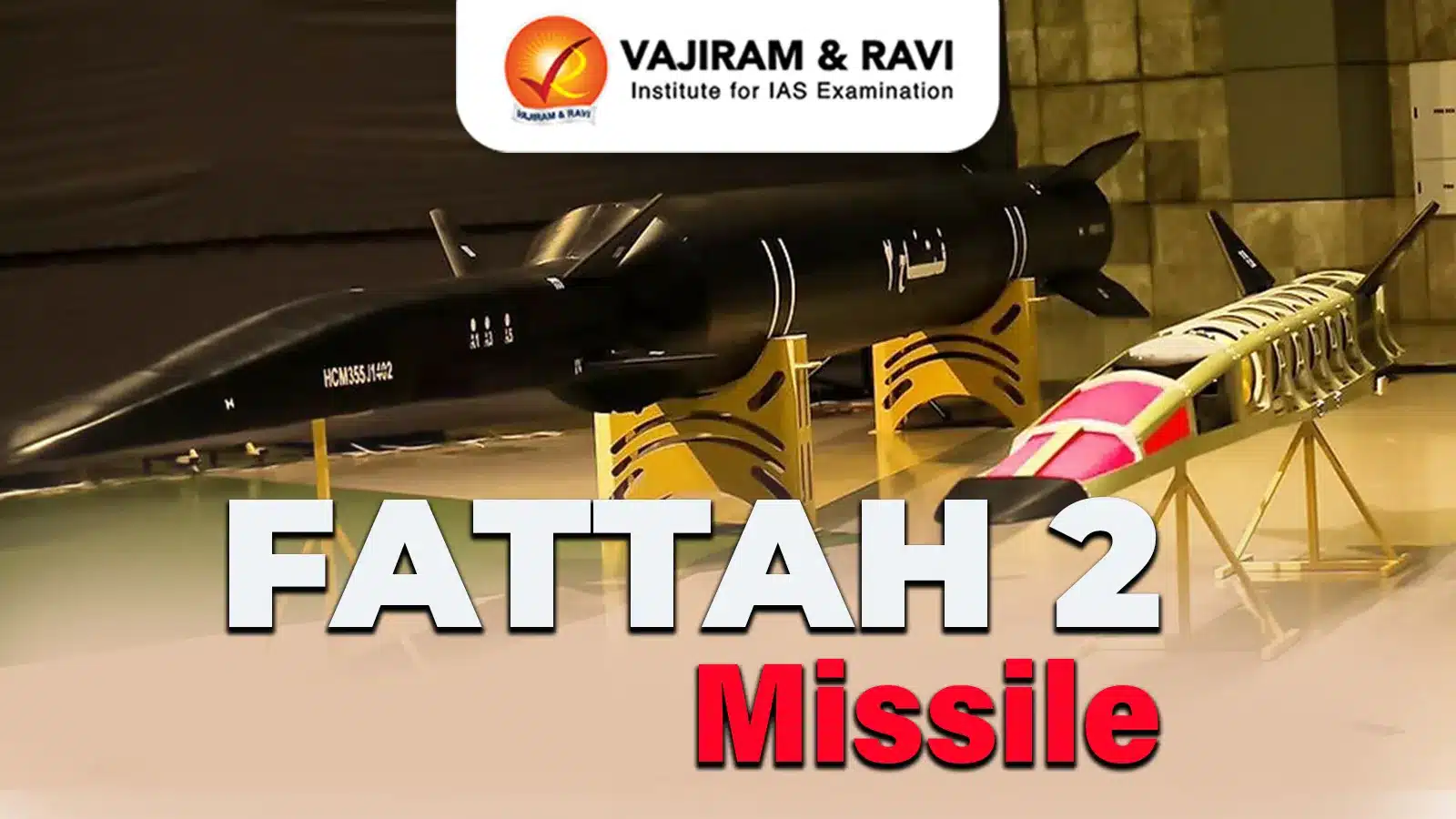
  • Fattah, which means conqueror in Farsi, is a hypersonic ballistic missile.
  • It was developed by Iran. It is a new version of its first domestically made hypersonic ballistic missile named ‘Fattah’.

Fattah 2 Missile Features

  • It is equipped with a hypersonic glide vehicle (HGV) warhead that can manoeuvre and glide at hypersonic speed.
  • It uses a liquid-fuel rocket propellant. The liquid fuel engine has the ability to adjust the thrust force.
  • The precision-guided two-stage missile can hit targets within a range of 1500 kilometres with a velocity of Mach 15 (fifteen times the speed of sound, i.e 18522 km/hr).
  • Measuring 12 meters in length, it can carry 200 kilograms of explosives.
  • It is capable of significant trajectory changes during flight to evade defence systems.
  • While the missile can accelerate outside the Earth's atmosphere, its aerodynamic control surfaces allow for steering within the atmosphere.

Source: IT

Fattah 2 FAQs

Q1: What are Ballistic Missiles?

Ans: Ballistic missiles are powered initially by a rocket or series of rockets in stages, but then follow an unpowered trajectory that arches upwards before descending to reach its intended target. Ballistic missiles can carry either nuclear or conventional warheads.

PM-WANI Scheme

What is Prime Minister Wi-Fi Access Network Interface (PM-WANI) Scheme?

PM-WANI Scheme Latest News

The Telecom Regulatory Authority of India (TRAI) recently prescribed a cap on tariffs charged to Public Data Offices (PDOs) under the PM-WANI scheme, in order to keep public Wi-Fi affordable.

About PM-WANI Scheme

  • The Prime Minister Wi-Fi Access Network Interface (PM-WANI) scheme was launched by the Department of Telecommunication in December 2020.
  • The scheme aims to enhance the proliferation of public WiFi hotspots to create robust digital communications infrastructure in the country, especially in rural areas.
  • Through better access to public hotspots, the government aims to increase employment for small and micro-entrepreneurs and provide low-cost internet to the underserved urban poor and rural households.
  • The scheme encourages local shops and establishments to provide Wi-Fi for last-mile internet delivery, which does not require a licence or charge a registration fee.

PM-WANI Ecosystem Components

  • Public Data Office (PDO): 
    • It will establish, maintain, and operate only WANI-compliant Wi-Fi access points and deliver broadband services to subscribers. No license is required from DoT.
    • The local shops and small establishments as PDOs may earn extra income from selling internet without any requirement of license, registration, and/or any fees to DoT.
  • Public Data Office Aggregator (PDOA): It will be an aggregator of PDOs and perform the functions relating to authorization and accounting.
  • App Provider: It will develop an App to register users and discover WANI-compliant Wi-Fi hotspots in the nearby area and display the same within the App for accessing the internet services.
  • Central Registry: 
    • It will maintain the details of App Providers, PDOAs, and PDOs. 
    • It is currently maintained by the Centre for Development of Telematics (C-DoT).

How can you Access the PM-WANI internet?

  • A user who wants to access broadband through public wifi will need to download the relevant app, get authenticated, and thereafter access broadband at any public wifi hotspot. 
  • When the user reaches a public wifi hotspot, the app on the mobile phone will show various available networks.
  • The user can then choose the wifi network of choice, pay an amount—either online or through voucher—and use the network till the balance is exhausted.

Source: TH

PM-WANI Scheme FAQs

Q1: What is the PM Wani scheme?

Ans: The Prime Minister Wi-Fi Access Network Interface (PM-WANI) scheme aims to enhance the proliferation of public WiFi hotspots to create robust digital communications infrastructure in the country, especially in rural areas.

Q2: Which ministry launched PM Wani?

Ans: Department of Telecommunications (DoT), under Ministry of Communications & Information Technology

Q3: When was the PM-WANI scheme launched?

Ans: December 2020

Q4: In the PM-WANI ecosystem, what does PDO stand for?

Ans: Public Data Office

Q5: Who currently maintains the Central Registry under the PM-WANI scheme?

Ans: Centre for Development of Telematics (C-DoT)

Daily Editorial Analysis 18 June 2025

Daily Editorial Analysis

Reimagining India's Global Integration - Trade, Finance, and the Road Ahead

Context:
  • The article analyses India's evolving relationship with the global economy, arguing that periods of greater global integration have coincided with higher economic growth.
  • It emphasizes the need for balanced trade and financial integration, and presents sectoral insights to guide future reform strategies, especially in the context of emerging global supply chain opportunities.

India's Global Integration Journey - A Timeline:

  • The golden decade (2000–2010):
    • Marked by lower import tariffs and deeper trade integration.
    • India’s share in global exports and GDP growth saw significant improvement.
    • Indicative of a high correlation between India’s and global growth trends.
  • Protectionist shift (2010–2020):
    • India raised import duties, leading to reduced export share and slower growth.
    • Trade decoupling weakened India’s role in global value chains.
  • Post-pandemic trends:
    • Shift towards financial integration (e.g., equities), but trade integration remains weak.
    • Integration is presently one-sided, favouring capital markets over goods/services trade.

Global Integration and Economic Volatility:

  • Argument: Greater global integration increases exposure to external shocks.
  • Counter-argument: However, evidence shows positive long-term gains of integration outweigh short-term volatility.

Sector-wise Integration Analysis:

  • Consumption:
    • Highest correlation/ integration (95%) with world growth.
    • Driven by discretionary spending linked to financial market integration.
    • Reflects income disparity - top-tier earners (with financial assets) vs. low-income groups focused on essentials.
  • Investment:
    • Moderate correlation (70%) with global growth.
    • Corporate capex: Highly integrated due to influence of FDI and global sentiment.
    • Household investment: Less integrated; focused on real estate and small business assets.
  • Exports:
    • Low correlation (35%) with global growth. Decline in integration during tariff hikes.
    • Mid-tech exports (labour-intensive) underperforming, while high-tech exports show promise.

The Trade–Finance Dichotomy - Emergence of Two Distinct Sectors:

  • Financially integrated: Large firms, high-income earners, professional services.
  • Weak trade integration: Mid-tech industries like textiles, furniture, toys — low-income groups. 

Policy Recommendations and Global Opportunity:

  • Reviving mid-tech exports:
    • Critical to enhance mass consumption, employment, GDP growth, etc.
    • Sectors like electronics, textiles, footwear, and furniture hold high potential.
  • Global supply chain shifts:
    • Potential second Trump presidency may accelerate supply chain realignment.
    • India has a chance to replicate Vietnam’s export surge, capitalizing on low labour costs and existing manufacturing capacity.
  • Reforms as enablers:
    • External reforms: Lowering import tariffs, accelerating free trade agreements (FTAs).
    • Domestic reforms: Regulatory deregulation at Centre and State levels.
    • Need for deep structural reforms to convert potential into performance.

Conclusion:

  • India stands at a pivotal moment where deepening global integration, especially in labour-intensive exports, can be a powerful lever for inclusive growth.
  • Timely policy action — both external (trade openness) and internal (regulatory reform) — will be crucial to leverage emerging global shifts and position India as a leading participant in future global value chains.

Reimagining India's Global Integration FAQs

Q1. How has India's global integration evolved from 2000 to the post-pandemic period?

Ans. India saw deeper global integration and higher GDP growth during 2000–2010, shifted towards protectionism with slower growth in 2010–2020, and is currently experiencing stronger financial integration post-pandemic but weak trade integration.

Q2. What explains the higher correlation between India’s consumption and global growth compared to exports?

Ans. The higher correlation is due to strong financial integration impacting discretionary consumption by high-income earners, whereas exports remain weakly integrated due to limited trade connectivity.

Q3. Why is India’s export growth weakly aligned with global growth, and which export segments are most affected?

Ans. India’s export growth is weakly aligned due to protectionist policies and sluggish mid-tech, labour-intensive exports like textiles and furniture, despite high-tech exports showing some resilience.

Q4. What role does financial integration play in shaping income and investment patterns in India?

Ans. Financial integration has disproportionately benefited high-income groups and large firms by boosting income and discretionary spending, while lower-income groups and small firms remain focused on essential consumption with minimal investment capacity.

Q5. How can India capitalize on global supply chain realignments to enhance its trade integration?

Ans. India can leverage its low labour costs and manufacturing base by lowering import tariffs, accelerating trade deals, and supporting labour-intensive sectors to integrate with global value chains, especially if global tariffs rise under a second Trump presidency.

Source: IE


A Chance to Rebuild the Trust, Restore Faith in Air Travel

Context

  • The crash of Air India flight AI171 on June 12, 2025, in Ahmedabad has sent shockwaves across the aviation community and the general public.
  • While investigators await definitive data from flight recorders, speculative media coverage and widespread misinformation have begun shaping public perception, leading to heightened fear and mistrust.
  • Amid these developments, it is important to analyse the circumstances surrounding the crash, explore plausible technical causes based on available data, draw parallels to a historical incident, highlighting media responses, and transparency and patience as investigations unfold.

The Rise of Misinformation in the Wake of Tragedy

  • In the immediate aftermath of the AI171 crash, mainstream and social media platforms were flooded with conjecture.
  • Self-proclaimed experts on YouTube and fear-mongering television segments amplified public anxiety.
  • Incidents involving other Boeing 787 Dreamliner aircraft were also sensationally reported, despite lacking any direct connection to AI171’s crash.
  • These reactions, aimed more at capturing viewer attention than delivering facts, risk distorting public understanding of air safety.
  • Amid this climate of speculation, it is crucial to await findings from official sources.
  • The recovery of the Digital Flight Data Recorder (DFDR) and the Cockpit Voice Recorder (CVR) provides the foundation for an authoritative analysis.
  • Furthermore, the involvement of respected international bodies such as the United States’ National Transportation Safety Board (NTSB) and the United Kingdom’s Air Accidents Investigation Branch (AAIBassures a level of impartiality and technical rigor.

Plausible Technical Causes Based on Available Data

  • Technical Clues
    • One of the most compelling eyewitness accounts comes from the sole survivor, who reported a loud thud shortly after take-off, accompanied by flickering lights.
    • Supplementary evidence from amateur footage and CCTV recordings shows that the aircraft used the full length of the runway before lifting off.
    • These elements suggest an abnormality in take-off performance, potentially linked to engine malfunction or external interference.
    • Several technical details support this hypothesis. Ahmedabad’s Runway 23 is 3,505 meters long, sufficient under standard temperature conditions.
  • Early Indicators from the Crash
    • The temperature on the day of the crash was 37°C, reducing effective runway length significantly due to decreased air density and engine performance, a factor explicitly addressed in ICAO’s Doc. 9157.
    • This reduction to an effective 2,764 meters may have compromised take-off performance, especially if the aircraft was overloaded, as suspected.
    • The landing gear was reportedly not retracted post lift-off, increasing aerodynamic drag.
    • Furthermore, visual cues from the video suggest a swing to the right during rotation, a potential sign of left engine failure.
    • dust cloud visible behind the aircraft, followed by the cessation of exhaust emission from the left engine, supports the theory of debris or bird ingestion causing sequential engine failure.
    • The presence of birds in the vicinity and possible ingestion beyond the runway, where no remains could be recovered, are consistent with this line of reasoning.
  • The Weight Factor and Procedural Concerns
    • Another important angle is the aircraft’s potential overloading.
    • While official data is yet to confirm this, reports suggest passengers were carrying excess cabin baggage, which, combined with duty-free purchases, may have added over two tonnes of unaccounted weight.
    • On a hot day with limited runway and degraded engine performance, this excess could delay acceleration, elongate the take-off roll, and reduce the margin for error in the event of engine failure.
    • Moreover, questions remain regarding cockpit response. Why was slow acceleration not detected in time to abort take-off?
    • Why was the landing gear not retracted after liftoff, increasing drag and compromising climb rate?
    • The answers lie in the forthcoming DFDR and CVR analyses, which will illuminate whether cockpit workload, technical malfunctions, or decision-making breakdowns contributed to the crash.

Historical Parallels: Learning from Past Incidents

  • The 1986 crash of Indian Airlines flight IC571 bears similarities worth noting.
  • That incident involved a bird strike and the subsequent rejection of take-off after rotation, a manoeuvre typically discouraged but ultimately life-saving in that instance.
  • While the pilots faced criticism, the action preserved all lives on board, highlighting the complex, high-stakes decisions pilots must make under extreme pressure.
  • AI171’s captain faced an equally unforgiving scenario. Nearing the runway’s end at lift-off and possibly dealing with partial thrust loss, he had to make a critical decision with limited options.
  • Unlike IC571, the situation did not allow room for an effective recovery, underscoring the limitations even experienced pilots face when multiple variables, heat, weight, engine issues, and time, converge.

Media Responsibility and Public Trust

  • The role of the media in shaping narratives around air disasters is critical. In the case of AI171, many outlets abandoned journalistic caution in favour of sensationalism.
  • Not only does this erode public trust, but it also undermines confidence in one of the safest modes of transport.
  • Air travel, including on the Boeing 787 Dreamliner, has a stellar safety record.
  • The aircraft has served reliably for over a decade, and while Boeing has been under scrutiny for past failures, notably with the 737 MAX, the Dreamliner’s performance has remained commendable.
  • The aviation community, regulators, and manufacturers now face a dual responsibility: to transparently investigate and report on the AI171 tragedy and to actively counteract misinformation that can destabilise public confidence.

The Way Forward: Navigating Tragedy with Patience and Precision

  • As speculation swirls, the need for accurate, data-driven analysis becomes paramount.
  • While the full picture will only emerge after detailed examination of flight data, early indicators, engine failure, possible overloading, heat-induced performance degradation, and delayed gear retraction, suggest a chain of failures rather than a single catastrophic event.
  • In the meantime, stakeholders must focus on rebuilding trust.

Conclusion

  • The crash of Air India flight AI171 is a sobering reminder of the complex interplay between human decisions, mechanical systems, and environmental variables in aviation.
  • The Boeing 787 remains a highly safe aircraft, and air travel continues to be far safer than most other forms of transportation.
  • This tragedy, while devastating, should prompt reflection, not panic, and ultimately lead to a stronger, safer aviation ecosystem.

Source: The Hindu


India Needs to Design an Inclusive Pension System

Context

  • Pensions are a cornerstone of financial security and human dignity in old age and for retirees, reduced earning capacity, rising healthcare costs, and inflation create serious financial vulnerabilities, making pensions not just a benefit but a necessity.
  • Despite being one of the world’s fastest-growing economies, India’s pension assets account for only 17% of GDP, far below the 70–80% coverage typical in advanced economies.
  • This gap is particularly acute in the informal sector, which represents the majority of the workforce.
  • As India aspires to become a developed economy by 2047, building a sustainable, inclusive pension system must be a policy imperative.

India’s Pension Landscape: Fragmented and Inadequate

  • According to the Economic Survey 2025–26, only 12% of India’s workforce is enrolled in formal pension schemes.
  • The current system disproportionately favours public sector and organized private sector workers through multiple overlapping schemes.
  • In contrast, informal sector workers, who make up approximately 85% of the labour force and contribute over half of the GDP, are largely excluded.
  • Their only access to retirement benefits comes through voluntary programs like the National Pension System (NPS) and the Atal Pension Yojana (APY), which together cover just 5.3% of the population.
  • This fragmented architecture makes the system inefficient, opaque, and difficult to scale.
  • Moreover, it fails to reflect the evolving realities of the labour market, particularly the rise of the gig economy and non-traditional employment arrangements.
  • Without a comprehensive reform, India faces the risk of a retirement poverty crisis, especially as the old-age dependency ratio is projected to reach 30% by 2050.

Challenges to Expansion: Scalability, Sensitisation, and Sustainability

  • Scalability
    • India’s existing pension schemes are fragmented and lack interoperability.
    • The proliferation of narrowly targeted schemes has made it difficult to scale the system
    • For example, while aggregators in the gig economy are mandated to contribute toward social security for their workers, this has added another parallel scheme instead of integrating into a unified structure.
    • In contrast, countries like Japan and New Zealand employ universal, flat-rate pension models that encompass a broad base of workers regardless of employment status.
  • Sensitisation and Accessibility
    • Pension literacy remains low, especially among informal sector workers and rural populations.
    • The voluntary nature of most informal-sector schemes means that without targeted awareness campaigns and behavioural nudges, participation remains low.
    • International models provide valuable lessons:
      • Australia embeds retirement planning into its school curriculum.
      • The Netherlands ensures transparency through annual disclosures of pension entitlements.
      • The UK operates an opt-out pension scheme, encouraging automatic enrolment.
      • Nigeria has leveraged digital platforms to increase reach and simplify enrolment.
  • Sustainability
    • Maintaining the financial health of pension funds is vital for long-term viability.
    • The Mercer CFA Institute Global Pension Index 2024 gave India’s pension system an overall rating of just 44%, with a particularly low adequacy score.
    • Even countries like China, despite their more expansive systems, are grappling with pension sustainability due to over-reliance on public funding.
    • In contrast, nations such as the United States, Denmark, and Australia integrate private sector pension funds into their overall retirement ecosystem, using diversified investment strategies including debt instruments for stable returns.

The Path Forward: A Three-Tiered Pension Framework

  • Tier I: Universal Basic Pension: A flat-rate, mandatory pension for all citizens, regardless of employment type, funded through modest contributions and government support.
  • Tier II: Occupational or Employer-Based Schemes: These would be either mandatory or have auto-enrolment features for employees in both the formal and informal sectors, with a shared contribution model.
  • Tier III: Voluntary Pension Savings:
    • Individuals could opt into flexible, tax-incentivised schemes offering market-linked returns, to supplement their basic retirement income.
    • Complementary measures should include:
      • Nationwide financial literacy campaigns integrated into school and college curricula.
      • Transparent, digital pension portals with user-friendly interfaces for enrolment and tracking.
      • Annual pension disclosures for all participants.
      • Regulatory reforms to ensure prudent pension fund investments and long-term liquidity.

Conclusion

  • India stands at a critical juncture and the demographic shift toward an aging population demands a swift overhaul of the country’s pension ecosystem.
  • reimagined, inclusive pension framework, especially one that integrates the informal sector, is essential to ensuring economic security in old age and achieving the vision of a developed India by 2047.
  • A system based on universal access, financial sustainability, and public trust will not only protect retirees but also fortify the nation's socio-economic foundation for generations to come.

Source: The Hindu

Daily Editorial Analysis 18 June 2025 FAQs

Q1: What is editorial analysis?

Ans: Editorial analysis is the critical examination and interpretation of newspaper editorials to extract key insights, arguments, and perspectives relevant to UPSC preparation.

Q2: What is an editorial analyst?

Ans: An editorial analyst is someone who studies and breaks down editorials to highlight their relevance, structure, and usefulness for competitive exams like the UPSC.

Q3: What is an editorial for UPSC?

Ans: For UPSC, an editorial refers to opinion-based articles in reputed newspapers that provide analysis on current affairs, governance, policy, and socio-economic issues.

Q4: What are the sources of UPSC Editorial Analysis?

Ans: Key sources include editorials from The Hindu and Indian Express.

Q5: Can Editorial Analysis help in Mains Answer Writing?

Ans: Yes, editorial analysis enhances content quality, analytical depth, and structure in Mains answer writing.

Lac Insect

Lac Insect

Lac Insect Latest News

In a new study, researchers at the Indian Institute of Science (IISc) have unravelled the mystery behind how the lac insect produces laccaic acid that is used to make lac pigment.

About Lac Insect

  • It is hemimetabolous i.e. it undergoes gradual metamorphosis.
  • The main stages of lac insect life cycle are egg, nymph instars, pupa and adult.
  • The lac insects show an ovoviviparous reproduction. The life cycle is completed in about six months.
  • Lac insects live in cavities or cells made in the resin or lac secreted by them on their host plant.
  • The lac insect grows on certain trees (like the flame of the forest), drinks its sugary sap, and secretes a sticky resin called shellac.
  • It also makes a bright red compound called laccaic acid, which is used to make the pigment.
  • In India, mainly there are two distinct strains of Lac insect: kusumi and rangeeni.
  • Lac insects have six genera from which only five can secrete lac, but commercial lac can be secreted by only one, i.e. Laccifer.
  • The commonest and most widely occurring species of lac insect in India is Laccifer lacca
  • Distribution: The lac insects are distributed in South-East Asian countries like India, Thailand, Malaya, Lao Myanmar, and Yuan province of China.
  • Among these countries India and Thailand are the main lacs producing areas in the world.
  • In India over 90% of lac produced comes from the states of Bihar, Jharkhand, West Bengal, Madhya Pradesh, Chhattisgarh, Eastern Maharashtra and northern Orissa.
  • Uses of Lac pigment: The lac pigment is a prized commodity used in food colouring, textiles, dyes, handicrafts, and folk art.

Highlights of the Research

  • Researchers have found that the colourful pigment extracted from the lac insect may actually be produced by a symbiotic yeast-like organism living inside the insect.
  • One of the key ingredients required for laccaic acid synthesis is an amino acid called tyrosine, which the insect cannot make on its own or source from the tree sap.
  • Such missing ingredients are usually supplied by symbiotic bacteria or fungi that live inside insect bodies and secrete these molecules in exchange for housing.
  • The fungus is actually inside the insect’s oocyte (egg cell).
  • The fungus floats around in the insect’s haemolymph — the equivalent of animal blood — and as soon as the oocyte matures, it latches on to it and enters the oocyte, and gets transmitted to the offspring that emerges from the oocyte.

Source: TH

Lac Insect FAQs

Q1: Which state is the largest producer of lac in India?

Ans: Jharkhand

Q2: Which is the major host plant of lac insect in India?

Ans: Butea monosperma (Palash), Zizyphus spp (Ber), Schleichera oleosa (Kusum) and Acacia catechu (Khair).

Q3: What are the applications of lac?

Ans: Wood finish, Skin cosmetic, Lacquerware and dye for wool and silk.

Cyber Suraksha

Cyber Suraksha

Cyber Suraksha Latest News

Recently, the Defence Cyber Agency ‘Cyber Suraksha’, a comprehensive cybersecurity exercise organised under the aegis of the Integrated Defence Staff headquarters.

About Cyber Suraksha

  • It is a multi-phased proactive step towards bolstering cyber resilience at national level.
  • It encompasses the conduct of targeted training sessions, evaluation and an engaging capsule for leadership.
  • It is designed to simulate real-world cyber threats, reinforce secure practices, and test the analytical and defensive cyber skills of participants in a high-paced, gamified environment.
  • Combining structured learning with dynamic hands-on challenge environments will empower participants to act decisively in the face of cyber threats.
  • It was organized by the Defence Cyber Agency and it plans to conduct such exercises on a regular basis to maintain a state of readiness and cultivate a security-first culture across all levels.

What is the Defence Cyber Agency? 

  • It is a tri-service command of the Indian Armed Forces and tasked with handling cyber security threats.
  • It was formally created in 2019, and its establishment marked a significant milestone in the country's efforts to strengthen its cybersecurity posture. 
  • It was fully operational with respective Cyber Emergency Response Teams (CERT) set up by each military branch.
  • The DCyA draws personnel from all three branches of the Armed Forces.
  • The head of the DCyA is an officer of two-star rank, and reports to the Chief of Defence Staff (CDS) through the Integrated Defence Staff (IDS).
  • Headquarter: New Delhi

Source: PIB

Cyber Suraksha FAQs

Q1: Who is the father of cyber security?

Ans: Bob Thomas is a computer scientist who is widely regarded as the father of cybersecurity.

Q2: What is cyber crime or cyber Suraksha?

Ans: Cyber crimes are actions made to compromise the confidentiality, integrity, or availability of digital systems.

Global Nuclear Arsenal

Global Nuclear Arsenal

Global Nuclear Arsenal Latest News

The Stockholm International Peace Research Institute (SIPRI) recently revealed in its new yearbook 2025 that nine countries worldwide possess as many as 12,241 nuclear weapons as of January 1, 2025.

About Global Nuclear Arsenal

  • At the start of 2025, nine states together possessed approximately 12,241 nuclear weapons.
  • Which countries have nuclear warheads? As per the report, the nine nuclear-armed states are the US, Russia, the United Kingdom (UK), France, China, India, Pakistan, the Democratic People’s Republic of Korea (North Korea), and Israel.
  • How many nuclear warheads do these countries have?
    • Russia: 5,459 nuclear weapons 
    • US: 5,177 nuclear weapons
    • China: 600 nuclear weapons
    • France: 290 nuclear weapons
    • UK: 225 nuclear weapons
    • India: 180 nuclear weapons
    • Pakistan: 170 nuclear weapons
    • Israel: 90 nuclear weapons
    • North Korea: 50 nuclear weapons
  • The report said that these countries "continued intensive nuclear modernisation programmes in 2024, upgrading existing weapons and adding newer versions".
  • The report further revealed that of the total global inventory of an estimated 12,241 warheads in January 2025, about 9,614 were in military stockpiles for potential use.
  • An estimated 3,912 of those warheads were deployed with missiles and aircraft, and the rest were in central storage.
  • Around 2,100 of the deployed warheads were kept in a state of high operational alert on ballistic missiles.
  • China’s nuclear arsenal is growing faster than any other country’s, by about 100 new warheads a year since 2023.
  • It also mentioned that India is believed to have once again slightly expanded its nuclear arsenal in 2024 and continued to develop new types of nuclear delivery systems, including potentially canisterised missiles capable of carrying multiple warheads.
  • Russia and the USA together possess around 90 percent of all nuclear weapons.
  • The U.S. has 1,770 deployed and 1,930 stored warheads, while its inventory stands at 5,177 in 2025 compared with 5,328 in 2024.
  • Russia has 1,718 deployed and 2,591 stored warheads, and its inventory stands at 5,459, as against 5,580 in 2024.
  • Overall, the number of nuclear warheads in the world continues to decline, due to the USA and Russia dismantling retired warheads.

Source: TH

Global Nuclear Arsenal FAQs

Q1: How many nuclear weapons did the world possess at the start of 2025, according to the report?

Ans: 12,241

Q2: Which two countries together possess approximately 90% of the world's nuclear weapons?

Ans: US and Russia

Q3: Which country has the largest nuclear arsenal?

Ans: Russia

Q4: How many nuclear-armed states are there as of 2025?

Ans: 9 (US, Russia, UK, France, China, India, Pakistan, North Korea, Israel)

Mount Lewotobi Laki-Laki

Mount Lewotobi

Mount Lewotobi Laki-laki Latest News

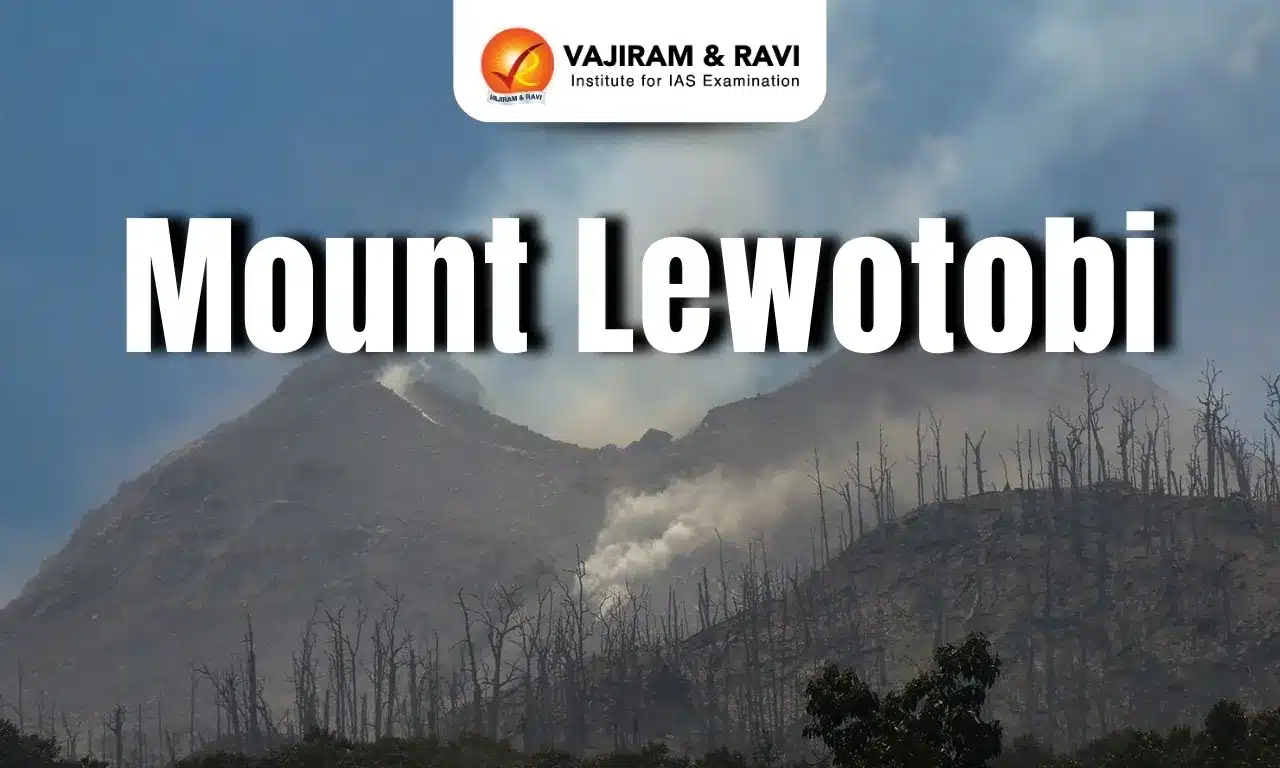
Recently, a volcanic eruption in Mount Lewotobi Laki-laki in Indonesia spewed ash cloud to a whopping 11 kilometers.

About Mount Lewotobi Laki-laki

  • Location: It is located in Indonesia’s East Nusa Tenggara province on Flores Island.
  • It is situated along the famous ‘Ring of Fire’ in the Pacific region.
  • It is one of the most frequently active volcanoes in the region. 
  • It has two peaks arranged on a NW-SE line separated by 2 km and a 1232 m high saddle. This gave the twin volcano its name, Lewotobi, “husband and wife”.
  • The two peaks correspond to the Lewotobi Lakilaki (man) and Lewotobi Perempuan (woman) stratovolcanoes. 
  • Lewotobi Lakilaki (1584 m) has a summit crater of 400 m diameter open to the north. Lewotobi Perampuan (1703 m)’s crater is 700 m wide.
  • Lewotobi Lakilaki has been frequently active during the 19th and 20th centuries, while the taller and broader Lewotobi Perempuan has erupted only twice in historical time.
  • Small lava domes have grown during the 20th century in the summit craters of both volcanoes.

Source: HT

Mount Lewotobi Laki-Laki FAQs

Q1: Where is Mount Lewotobi laki-laki?

Ans: East Nusa Tenggara province

Q2: Is Lewotobi active?

Ans: Yes, Mount Lewotobi Laki-Laki is currently active and has been experiencing ongoing eruptions.

What are Hydraulics?

Hydraulic system

Hydraulics Latest News

Worldwide, hydraulics constitute a $45-50 billion market and is growing steadily.

About Hydraulics

  • A hydraulics system is based on the simple principle of Pascal’s law, named for the 17th century French scientist Blaise Pascal.
  • The law states that when pressure is applied to an incompressible fluid, it is transmitted equally in all directions throughout the fluid. (Pressure here is simply the amount of force per unit area).

Working of Hydraulics System

  • In a hydraulic system, pressure is created by applying force to a fluid. And because it is subsequently transmitted equally in all directions, a small force applied over a small area can create a much larger force over a larger area.
  • A small force applied at one end can be used to generate a much larger force at the other end just by having a larger area of contact.
  • There’s no need to change the pressure. This is perhaps the simplest use of hydraulics. There are many more actions that a hydraulic system can perform than just lifting.
  • Parts of a hydraulic system: Pumps, Pipes, Valves, Linear actuators or rotary actuators, Tank (with filters) and Sensors or switches

Applications of Hydraulics

  • They can be used for both mobile equipment — cranes, excavators, etc. which move on wheels or tracks — and static applications such as a hydraulic press, moulding machines, windmills,
  • They are equipped with sensors to track movement, temperature, pressure, flow, oil contamination.

Advantages of Hydraulics

  • Hydraulics have many advantages over mechanical methods of transmitting energy.
  • The principal ones are smooth movements, high power to weight ratio, better heat dissipation, smooth controls, and higher precision.

Source: TH

Hydraulics FAQs

Q1: What principle explains Hydraulics?

Ans: Pascal's Law

Q2: What is a hydraulic tool?

Ans: Hydraulic tools operate using the force created by pressurized fluids.

Quantum Communication

Quantum Communication

Quantum Communication Latest News

Recently, the Ministry of Defence said in a statement that IIT-Delhi scientists together with the Defence Research and Development Organisation (DRDO) demonstrated quantum communication over a distance of more than 1 km in free space.

About Quantum Communication

  • It is a way to send information using the tiniest particles in the universe, like light particles (called photons), in a super secure way.
  • It is an umbrella term for any scheme that uses the concepts of quantum physics, but especially entanglement, to make a given communication channel leak-proof.      
  • It can be used to create communication channels that are protected against computational attacks since any attempt to tap the quantum channel will itself be revealed. Thus they have great value in defence settings.
  • If any third party intercepts one of the photons, the other photon will immediately be disturbed as well and the channel will be revealed as insecure.
  • An important method in quantum communication is quantum key distribution (QKD).
  • Quantum entanglement is a strange phenomenon where two tiny particles, like photons (particles of light), become linked in such a way that whatever happens to one instantly affects the other — even if they are far apart.

Applications of Quantum Communication

  • Military and government: It is used for transmitting highly sensitive information, providing secure communication channels that are immune to eavesdropping.
  • Banking: Protects financial transactions from cyber-attacks by using quantum key distribution (QKD) to secure online banking and international transactions.
  • Power grids: Secures communication within the power industry, safeguarding against cyber-attacks that could lead to outages or damage to the electrical grid.
  • Consumer privacy: Enhances the security of personal data transmitted over the internet, such as in cloud services or when shopping online.
  • Scientific collaboration: Allows secure sharing of research data between institutions, especially when dealing with proprietary or sensitive information.
  • Navigation: Quantum communication could be used to enhance the security of signals in GPS systems, providing tamper-proof navigation data.

Source: TH

Quantum Communication FAQs

Q1: Who invented quantum?

Ans: Niels Bohr and Max Planck

Q2: Who invented quantum theory in India?

Ans: Satyendra Nath Bose

India Faces Rising Heat Risk: 57% Districts at High or Very High Risk

Extreme Heat Risk in India

Extreme Heat Risk in India Latest News

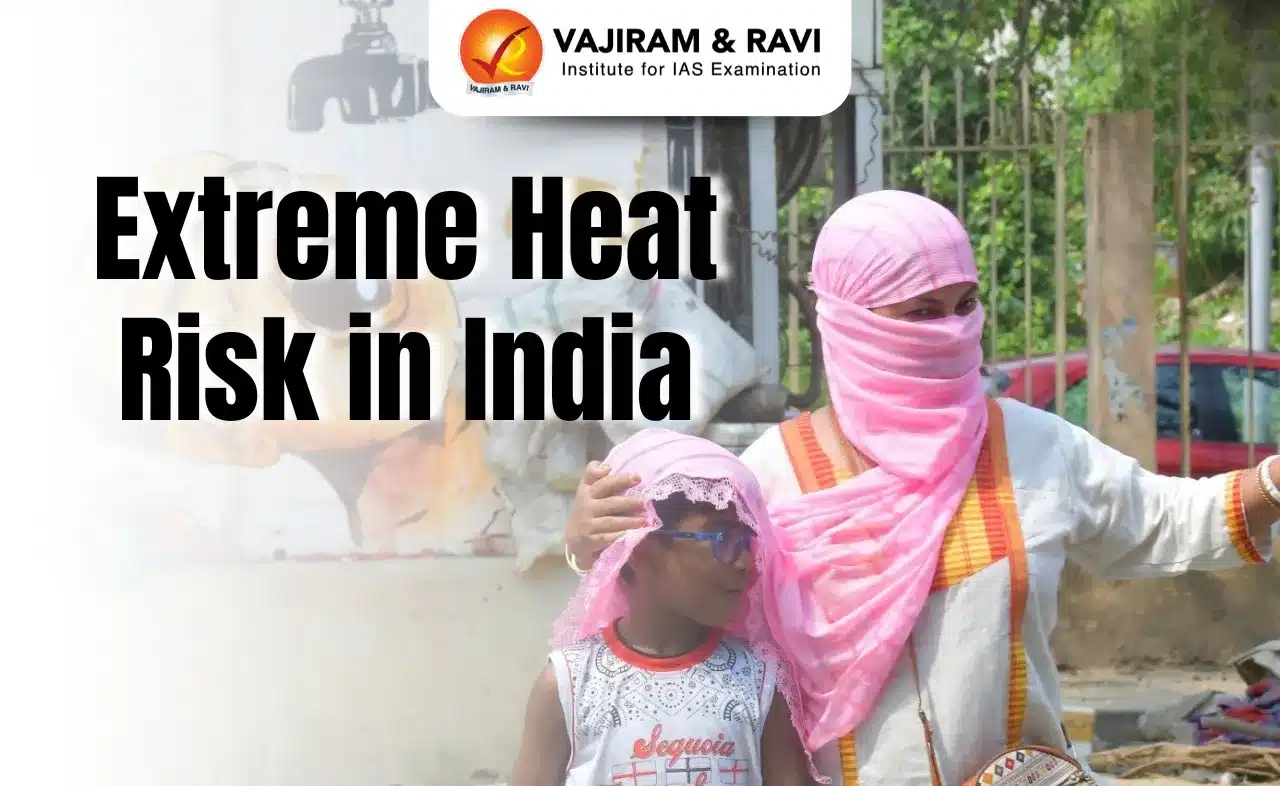
  • A recent study by the Council on Energy, Environment and Water (CEEW), titled ‘How Extreme Heat is Impacting India’, reveals that 57% of Indian districts, home to 76% of the population, face high or very high risk from extreme heat. 
  • States facing the highest risk include Delhi, Maharashtra, Goa, Kerala, Gujarat, Rajasthan, Tamil Nadu, Andhra Pradesh, Madhya Pradesh, and Uttar Pradesh. 
  • The Council on Energy, Environment and Water (CEEW), based in New Delhi, is one of the world’s leading and best-managed independent climate think tanks.

Understanding Heat Risk: Not the Same as Heatwaves or Heat Stress

  • Heatwaves
    • While they do not have a universal definition, heatwaves are essentially prolonged periods of abnormally high temperatures in a specific region.
  • Heat Stress
    • Occurs when the body temperature exceeds 37°C.
    • Body struggles to release excess heat, causing discomfort, cramps, and exhaustion.
    • If body temperature exceeds 40°C, it may lead to heat stroke.
  • Heat Risk
    • According to the CEEW study, heat risk refers to the probability of heat-related illness or death due to extreme temperatures.
    • It is determined by three key factors:
      • Intensity of heat and compounding effects (e.g., humidity),
      • Degree of exposure, and
      • Vulnerability of affected communities (e.g., age, health conditions).

Key Factors Driving Heat Risk in India

  • Rise in Very Warm Nights
    • Between 2012 and 2022, over 70% of Indian districts experienced five or more additional very warm nights each summer.
    • Warm nights prevent the body from cooling down after hot days, increasing the risk of heat strokes and worsening non-communicable diseases like diabetes and hypertension.
  • Increase in Relative Humidity in North India
    • Relative humidity in the Indo-Gangetic Plain rose from 30–40% (1982–2011) to 40–50% (2012–2022).
    • High humidity hampers cooling through sweat, intensifying heat stress, especially when body temperature exceeds 37°C.
  • Urbanisation and Population Density
    • Cities like Mumbai and Delhi face higher exposure due to dense populations.
    • Rapid urbanisation in tier II and III cities has led to increased night-time heat due to heat-absorbing concrete infrastructure.
  • Socio-Economic and Health Vulnerabilities
    • Districts in Andhra Pradesh, Maharashtra, Haryana, Punjab, Chhattisgarh, Bihar, and Uttar Pradesh are particularly vulnerable.
    • Factors include a high share of elderly populations and prevalence of chronic health conditions (e.g., diabetes, hypertension).

Key Findings of The Study

  • 2024: Warmest Year on Record
    • 2024 marked the hottest year globally, including in India.
    • Global average temperature was 1.5°C above pre-industrial levels (1850–1900).
    • India’s temperature was 1.2°C higher than the 1901–1910 average.
  • India’s Climate Impact: Already Evident
    • India experienced its longest recorded heatwave since 2010.
    • Over 44,000 cases of heatstroke were reported in 2024 alone.
  • Inadequate Heat Action Plans (HAPs)
    • India’s HAPs (early warning and preparedness plans) are often:
    • Lacking long-term strategies, or
    • Poorly implemented, even when they exist.
    • According to the Sustainable Futures Collaborative (SFC), this weakens India’s response to growing heat threats.
  • Future Risks
    • Without stronger planning and execution, heat-related deaths may rise.
    • The country faces increasing threats from more frequent, intense, and prolonged heatwaves.

Source: IE |  WEF

Extreme Heat Risk in India FAQs

Q1: What percentage of Indian districts face extreme heat risk?

Ans: 57% of Indian districts face high or very high heat risk, affecting around 76% of India’s population.

Q2: What is heat risk as per CEEW?

Ans: Heat risk is the likelihood of heat-related illness or death based on heat intensity, exposure, and community vulnerabilities.

Q3: Which factors drive heat risk in India?

Ans: Very warm nights, rising humidity, urbanisation, high population density, and vulnerable populations drive heat risk in India.

Q4: Which regions are most affected by heat risk?

Ans: Delhi, Maharashtra, Kerala, Rajasthan, Uttar Pradesh, and other populous states face the highest levels of extreme heat risk.

Q5: Why are current Heat Action Plans inadequate?

Ans: Most Heat Action Plans lack long-term strategies or effective implementation, risking more heat-related illnesses and deaths.

Centre Launches Tribal Outreach Drive to Promote PM JANMAN and Dharti Aaba Welfare Schemes

PM JANMAN Dharti Aaba Tribal Schemes

Tribal Outreach Latest News

  • The Ministry of Tribal Affairs has rolled out a large-scale outreach campaign for the implementation of its welfare schemes in over 500 districts of the country, aiming to cover 1 lakh tribal dominated villages and habitations.

Pradhan Mantri Janjati Adivasi Nyaya Maha Abhiyan (PM JANMAN)

  • Launched in 2023, the Pradhan Mantri Janjati Adivasi Nyaya Maha Abhiyan is a focused initiative aimed at improving the socio-economic conditions of Particularly Vulnerable Tribal Groups (PVTGs) in India. 
  • These groups represent the most marginalised sections within tribal communities and often face barriers to accessing mainstream welfare benefits due to geographic isolation, lack of documentation, and limited institutional outreach.
  • Key Components of PM JANMAN include:
    • Delivery of basic entitlements like Aadhaar cards and health insurance under Ayushman Bharat.
    • Access to banking facilities such as Jan Dhan accounts and pension enrolment.
    • Legal empowerment through granting land and forest rights under the Forest Rights Act (FRA).
    • Supportive infrastructure and service delivery mechanisms tailored for PVTGs.
  • The scheme represents a paradigm shift in tribal policy, from passive provisioning to proactive inclusion, by addressing critical documentation, health, and financial gaps through direct, last-mile service delivery.

Dharti Aaba Janjatiya Gram Utkarsh Abhiyan

  • Launched in 2024 and named after the legendary tribal freedom fighter Birsa Munda (revered as Dharti Aaba or “Father of the Earth”), the Dharti Aaba Janjatiya Gram Utkarsh Abhiyan is a comprehensive umbrella scheme. 
  • It is designed to integrate the efforts of 17 different Union Ministries for the upliftment of tribal communities through convergence-driven development.
  • With a total allocation of Rs. 79,156 crore over five years, including Rs. 56,333 crore as the central share and Rs. 22,823 crore from states, the scheme focuses on multi-dimensional development through:
    • Construction of tribal hostels and rural homes under PM Awas Yojana.
    • Rural electrification and water access improvements.
    • Livelihood enhancement through livestock and fisheries support.
  • Each participating ministry is assigned a budget and a set of deliverables under the scheme. 
  • By leveraging convergence, Dharti Aaba Abhiyan seeks to break silos in welfare delivery and ensure holistic development of tribal habitations.

News Summary

  • On June 15, 2025, the Ministry of Tribal Affairs officially launched a large-scale fortnight-long outreach campaign across 500 districts of India. 
  • The initiative targets over 1 lakh tribal-dominated villages and habitations, focusing on benefit saturation camps to deliver key services at the doorstep of tribal citizens.
  • The primary goal is to ensure widespread awareness and uptake of two flagship schemes: PM JANMAN and Dharti Aaba Janjatiya Gram Utkarsh Abhiyan
  • These schemes are central to the Union government’s efforts under the year-long Janjatiya Gaurav Varsh celebrations, which began on November 15, 2024, the birth anniversary of Birsa Munda.
  • The outreach focuses on:
    • Enrolment and delivery of Aadhaar and Ayushman Bharat cards.
    • Opening of Jan Dhan and pension accounts.
    • Processing land and forest rights claims under the FRA.
  • According to Ministry sources, the campaign is designed to push last-mile awareness, especially among remote tribal populations who often remain excluded from formal welfare mechanisms. 
  • The campaign also seeks to create institutional familiarity with the recently launched Dharti Aaba scheme, whose budgetary provisions came into effect in the 2025 Union Budget.
  • The outreach aligns with the government’s broader strategy of saturation-based delivery models, where welfare entitlements are delivered to all eligible individuals within a defined geography, thus minimising exclusions. 
  • The model has been successfully adopted in previous schemes like PM Garib Kalyan Anna Yojana, and is now being replicated in tribal welfare initiatives.
  • By embedding this effort within a symbolic and cultural framework (through Janjatiya Gaurav Varsh), the government also aims to honour tribal legacy and deepen community trust in public institutions.

Source: IE

PM JANMAN and Dharti Aaba Outreach Campaign FAQs

Q1: What is the primary aim of the PM JANMAN scheme?

Ans: PM JANMAN aims to deliver entitlements to particularly vulnerable tribal groups through last-mile outreach.

Q2: What does the Dharti Aaba Abhiyan focus on?

Ans: It focuses on convergence-led tribal development by integrating welfare schemes of 17 ministries.

Q3: How many tribal villages are being covered in the outreach campaign?

Ans: The campaign targets over 1 lakh tribal-dominated villages across 500 districts.

Q4: What are some key services being delivered in the benefit saturation camps?

Ans: Aadhaar enrolment, Ayushman Bharat cards, Jan Dhan accounts, pension accounts, and FRA titles are key deliverables.

Q5: What is the significance of Janjatiya Gaurav Varsh?

Ans: It commemorates tribal hero Birsa Munda’s birth anniversary and celebrates tribal contributions to India’s freedom struggle.

Why US Investigators Are Probing an Air India Crash on Indian Soil

Air India Crash Investigation

Air India Crash Investigation Latest News

  • When Air India flight 171 crashed in Ahmedabad, killing all 241 onboard, emergency services and media responded swiftly. 
  • Later, international agencies including the United States’ National Transportation Safety Board (NTSB), Federal Aviation Administration (FAA), and the United Kingdom’s Civil Aviation Authority (CAA) joined the investigation. 
  • This raises an important question: Why are foreign agencies, particularly from the US and the U.K., involved in investigating the crash of an Indian airline on Indian soil?

Why Foreign Agencies Investigate Air Crashes on Indian Soil

  • The Role of the Chicago Convention
    • The involvement of international investigators in air crashes is guided by the Convention on International Civil Aviation, also known as the Chicago Convention, signed in 1944. 
    • It was created to establish a unified global aviation framework to ensure safety and cooperation across nations.
  • Global Commitment to Aviation Safety
  • Annex 13: The Investigation Protocol
    • A key component of the Convention, Annex 13, sets the international rules for investigating aircraft accidents. 
    • It ensures that investigations focus not on blame or legal responsibility, but on uncovering root causes to enhance future safety.
  • Shared Responsibility
    • Under Chapter 5 of Annex 13, countries involved in building the aircraft or its engines (like the US for Boeing aircraft) have a right and responsibility to participate in the investigation, even if the crash occurs outside their borders.

Who Can Participate in an Aircraft Accident Investigation

  • Primary Responsibility: State of Occurrence
    • Under Chapter 5 of ICAO Annex 13, the country where the accident occurs—called the State of Occurrence—leads the investigation. 
    • In the case of the AI 171 crash, this is India, and the probe is being conducted by the Aircraft Accident Investigation Bureau (AAIB) under India’s Ministry of Civil Aviation.
  • Other Entitled States
    • Several other countries have a formal right to participate in the investigation based on their connection to the aircraft:
      • State of Registry: India (as the aircraft is registered with an Indian tail number starting with VT).
      • State of the Operator: India (since Air India operated the flight).
      • State of Design: United States (Boeing designed the aircraft).
      • State of Manufacture: United States (Boeing and General Electric manufactured the plane and engines).
    • Thus, US agencies like the NTSB and FAA are entitled to join the investigation. Boeing and GE may also send experts as part of the accredited team.
  • Involvement of the UK
    • Although not automatically entitled under Annex 13, the United Kingdom is participating because 53 British nationals were on board and perished in the crash. 
    • Such involvement is allowed as per ICAO provisions when nationals of a state are significantly affected.
  • Scope of Participation
    • All accredited participants are allowed to:
      • Visit the crash site
      • Examine wreckage and evidence
      • Make technical submissions
      • Receive and comment on the final report

A Practical Necessity, Not Overreach

  • Global Collaboration for Aviation Safety
    • The involvement of foreign agencies in crash investigations is not interference—it is a practical and essential step to ensure a thorough, technically accurate inquiry. 
    • In today’s globalised aviation industry, where aircraft are designed, built, and operated across multiple countries, safety is a shared international responsibility.
  • Learning from Global Accidents
    • A crash in one part of the world can reveal design flaws or operational issues relevant elsewhere. 
    • For instance, a lesson from a crash in India may prevent future accidents in Indonesia or the US, making cross-border participation vital.
  • Established Precedent
    • India has previously followed this protocol. 
    • In 2010, when Air India Express Flight 812 crashed in Mangalore, the US NTSB assisted in the investigation at the request of Indian authorities—illustrating that such cooperation is both routine and valuable.

Source: IE | BBC

Air India Crash Investigation FAQs

Q1: Why is the US involved in an Indian air crash probe?

Ans: Because the aircraft’s design and manufacture are American, entitling US agencies to join under ICAO protocols.

Q2: What is the Chicago Convention’s role in crash investigations?

Ans: It sets international aviation safety rules, including shared responsibilities for air crash investigations through Annex 13.

Q3: Who leads the Air India crash investigation?

Ans: India’s Aircraft Accident Investigation Bureau (AAIB) leads the probe as the crash occurred on Indian soil.

Q4: What other countries can participate in the investigation?

Ans: States of Design, Manufacture, Registry, and Operator—including the US and UK—can formally participate in crash investigations.

Q5: Has India allowed foreign crash investigations before?

Ans: Yes, the US NTSB assisted in India’s 2010 Mangalore crash probe, setting a precedent for global collaboration.

Enquire Now