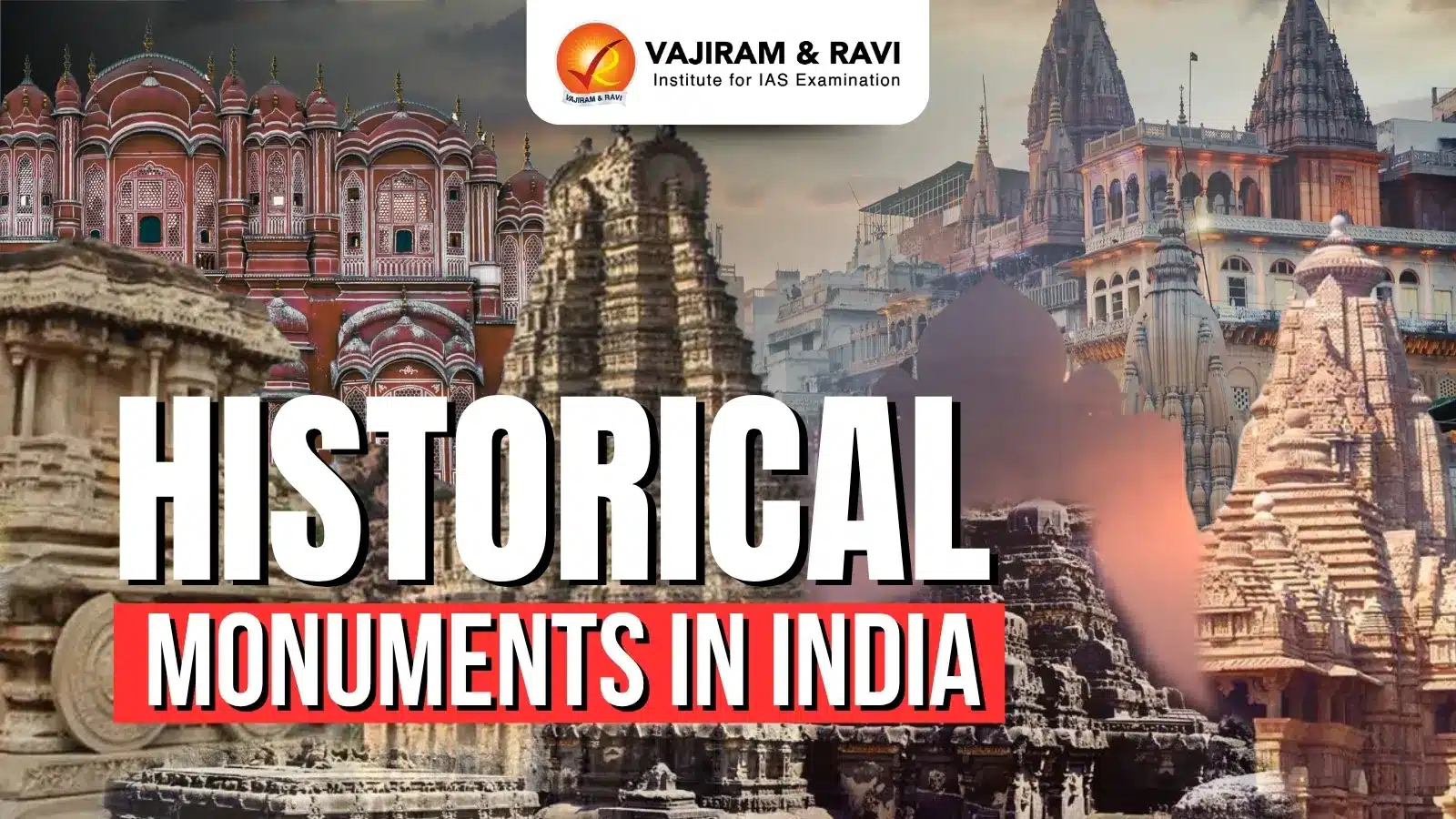
Historical Monuments in India reflect the country’s rich history, diverse cultures, religions, and architectural heritage. These monuments attract millions of tourists every year and stand as symbols of India’s glorious past. Many of them are protected by the Archaeological Survey of India (ASI), while several are recognised as UNESCO World Heritage Sites. This article explores the Top 10 Historical Monuments in India 2026, highlighting their historical significance and cultural importance.
Historical Monuments of India 2026 Region-wise
Historical Monuments of India 2026 Region-wise showcase India’s rich history, diverse cultures and architectural heritage. The major monuments across different regions are discussed below, highlighting their historical and cultural significance.
1. Northern India
- Taj Mahal (Agra, Uttar Pradesh): A 17th-century white-marble mausoleum built by Mughal Emperor Shah Jahan in memory of his wife, Mumtaz Mahal. It is a UNESCO World Heritage Site.
- Red Fort (Delhi): A historic red sandstone fort built by Shah Jahan in the 17th century. It served as the main residence of Mughal emperors and is associated with India’s Independence Day celebrations.
- Qutub Minar (Delhi): A UNESCO World Heritage Site and the tallest brick minaret in the world. Its construction was started by Qutb-ud-din Aibak in the late 12th century.
- Hawa Mahal (Jaipur, Rajasthan): Also known as the Palace of Winds, it was built in 1799 by Maharaja Sawai Pratap Singh. Its distinctive façade features 953 small windows.
- Humayun’s Tomb (Delhi): Built in the 16th century, this UNESCO World Heritage Site is an important example of Mughal garden-tomb architecture and influenced later Mughal monuments.
- Agra Fort (Agra, Uttar Pradesh): A UNESCO World Heritage Site that served as a major Mughal imperial residence. The fort is known for its massive red sandstone walls and palaces.
2. Western India
- Ajanta Caves (Maharashtra): A group of rock-cut Buddhist caves famous for their ancient paintings, sculptures and monasteries, dating from around the 2nd century BCE to the 6th century CE.
- Ellora Caves (Maharashtra): These rock-cut caves represent Buddhist, Hindu and Jain religious traditions. The Kailasa Temple is one of their most remarkable architectural features.
- Gateway of India (Mumbai, Maharashtra): An iconic monument completed in 1924 to commemorate the visit of King George V and Queen Mary to India in 1911. It reflects Indo-Saracenic architectural influences.
- Rani ki Vav (Patan, Gujarat): A UNESCO World Heritage Site built in the 11th century. This intricately designed stepwell is renowned for its sculptures and multi-level underground structure.
- Chhatrapati Shivaji Maharaj Terminus (Mumbai, Maharashtra): A UNESCO World Heritage Site that combines Victorian Gothic Revival architecture with Indian architectural influences. It remains an important railway station.
- Dholavira (Gujarat): An important archaeological site of the Harappan Civilisation, recognised as a UNESCO World Heritage Site. It provides insights into ancient urban planning, water management and trade.
3. Southern India
- Group of Monuments at Hampi (Karnataka): The remains of the capital of the Vijayanagara Empire, flourishing mainly between the 14th and 16th centuries. The site features temples, royal structures and market streets.
- Gol Gumbaz (Vijayapura, Karnataka): The mausoleum of Sultan Mohammed Adil Shah, completed in the 17th century. It is famous for its massive dome and Whispering Gallery, where sounds can travel across the chamber.
- Brihadeeswarar Temple (Thanjavur, Tamil Nadu): Built by Chola ruler Rajaraja I in the 11th century, this temple dedicated to Lord Shiva is a masterpiece of Dravidian architecture and part of the UNESCO-listed Great Living Chola Temples.
- Group of Monuments at Mahabalipuram (Tamil Nadu): These monuments include rock-cut caves, monolithic temples and the Shore Temple. They reflect the artistic achievements of the Pallava dynasty.
- Charminar (Hyderabad, Telangana): Constructed in 1591 by Muhammad Quli Qutb Shah, this iconic monument is known for its four grand minarets and Indo-Islamic architectural style.
- Mysore Palace (Mysuru, Karnataka): A famous royal palace known for its Indo-Saracenic architecture, ornate interiors and illuminated façade during the Mysuru Dasara festival.
4. Central and Eastern India
- Sanchi Stupa (Madhya Pradesh): One of India’s most important Buddhist monuments, originally commissioned by Emperor Ashoka in the 3rd century BCE. It is recognised as a UNESCO World Heritage Site.
- Khajuraho Group of Monuments (Madhya Pradesh): A UNESCO World Heritage Site famous for its medieval Hindu and Jain temples, Nagara-style architecture and intricately carved sculptures.
- Konark Sun Temple (Odisha): Built in the 13th century by King Narasimhadeva I of the Eastern Ganga dynasty, this UNESCO World Heritage Site is designed as a monumental stone chariot dedicated to the Sun God, Surya.
- Victoria Memorial (Kolkata, West Bengal): A grand marble monument built in memory of Queen Victoria. Its architecture combines British and Mughal influences, and it now houses a museum.
- Bodh Gaya’s Mahabodhi Temple (Bihar): One of the most sacred Buddhist pilgrimage sites, associated with the place where Gautama Buddha attained enlightenment. The temple complex is a UNESCO World Heritage Site.
- Nalanda Mahavihara (Bihar): The archaeological remains of an ancient Buddhist monastic and educational centre that attracted students and scholars from different parts of Asia. It is recognised as a UNESCO World Heritage Site.
Famous Historical Places Monuments of India Chart with Names
Famous Historical Monuments in India are globally recognized for their heritage value. These include museums, temples, forts, and rock-cut caves that span centuries of Indian history. Each of these monuments has been recognized for its historical relevance.
| Famous Historical Places Monuments of India Chart with Names | ||||
|
Images |
Monument |
Location |
Built Year |
Description |
 |
Taj Mahal |
Agra, Uttar Pradesh |
1648 |
A global symbol of love built by Mughal Emperor Shah Jahan for Mumtaz Mahal. Crafted in white marble and counted among the Seven Wonders of the World. |
|
Delhi |
1193 |
World’s tallest brick minaret at 73 meters, showcasing Indo-Islamic design with detailed carvings and inscriptions. |
|
|
Maharashtra |
2nd Century BCE – 6th Century CE |
Rock-cut caves featuring intricate Buddhist paintings and sculptures; designated as a UNESCO World Heritage Site. |
|
|
Maharashtra |
6th – 10th Century CE |
Houses temples and monasteries of Hinduism, Buddhism, and Jainism. The Kailasa Temple is especially famous for its architectural excellence. |
|
|
Konark, Odisha |
1250 CE |
Designed like a colossal chariot dedicated to the Sun God, adorned with exquisitely carved wheels and panels. |
|
|
Madhya Pradesh |
950 – 1050 CE |
Known for their detailed sculptures and symbolic carvings. Built by the Chandela dynasty, listed as a UNESCO World Heritage Site. |
|
|
Karnataka |
14th – 16th Century CE |
Former capital of the Vijayanagara Empire, featuring ruins, palaces, and temples that reflect Dravidian architecture. |
|
|
Great Living Chola Temples |
Tamil Nadu |
11th – 12th Century CE |
Examples of Chola dynasty brilliance, including Brihadeeswarar Temple, with towering gopurams and detailed stone carvings. |
|
Humayun’s Tomb |
Delhi |
1570 |
A garden-tomb that set the precedent for later Mughal architecture, including the Taj Mahal. Features Persian-style layouts. |
|
Uttar Pradesh |
Late 16th Century |
Once the Mughal capital under Akbar. Constructed in red sandstone, blending Islamic and Hindu architectural styles. |
|


UNESCO Recognized Historical Monuments of India 2026
As of 2026, India has 44 UNESCO World Heritage Sites, including 36 Cultural, 7 Natural and 1 Mixed properties. The following are Famous UNESCO recognized Historical Monuments of India:
- Agra Fort (1983): A massive 16th century Mughal red sandstone fortress near the Taj Mahal, featuring imperial palaces, audience halls, beautiful mosques and the historic Mughal royal city.
- Ajanta Caves (1983): Ancient Buddhist cave monuments dating from the 2nd century BCE, renowned for exceptional paintings and sculptures that became masterpieces of Buddhist religious art.
- Archaeological Site of Nalanda Mahavihara, Bihar (2016): Ancient monastic university with stupas, shrines, viharas and artworks, representing nearly 800 years of continuous knowledge, education and Buddhist learning.
- Chhatrapati Shivaji Terminus (2004): Mumbai’s iconic railway terminal blends Victorian Gothic Revival architecture with traditional Indian craftsmanship, symbolizing the city’s historic commercial importance.
- Churches and Convents of Goa (1986): Historic Portuguese era churches and convents, including the Church of Bom Jesus, showcasing Manueline, Mannerist and Baroque architectural influences across Asia.
- Group of Monuments at Hampi (1986): Ruins of the Vijayanagara Empire‘s last capital, known for impressive Dravidian temples, palaces and architectural grandeur before its destruction in 1565.
- Group of Monuments at Mahabalipuram (1984): Pallava era rock cut temples, cave sanctuaries, monolithic rathas, open air reliefs and Shore Temple showcasing remarkable stone craftsmanship along the Coromandel Coast.
- Group of Monuments at Pattadakal (1987): Chalukya temple complex displaying a harmonious blend of northern and southern Indian architectural traditions, including the famous Virupaksha Temple.
- Hill Forts of Rajasthan (2013): Six majestic Rajput forts featuring palaces, temples, urban settlements and advanced water harvesting systems, reflecting Rajput military and cultural achievements.
- Kakatiya Rudreshwara (Ramappa) Temple, Telangana (2021): Kakatiya period Shiva temple featuring carved pillars, floating bricks, intricate sculptures and architecture harmoniously integrated with its natural surroundings.
- Rani ki Vav, Patan, Gujarat (2014): Magnificent 11th century stepwell featuring seven levels, elaborate sculptures and Maru-Gurjara architecture, symbolizing the sacred importance of water conservation.
- Sacred Ensembles of the Hoysalas (2023): Three Hoysala temple complexes distinguished by detailed stone carvings, sculptural excellence and unique architectural identity from the 12th and 13th centuries.
- Santiniketan (2023): Educational and cultural centre founded by Rabindranath Tagore, promoting ancient Indian traditions, artistic learning and the ideal of universal human unity.
- The Jantar Mantar, Jaipur (2010): Historic astronomical observatory featuring monumental masonry instruments designed for precise naked eye observations and remarkable scientific innovation.
- Victorian Gothic and Art Deco Ensembles of Mumbai (2018): Historic urban precinct showcasing Victorian Neo Gothic public buildings and Indo Deco architecture reflecting Mumbai’s modernization during the 19th and 20th centuries.
Major Historical Monuments in India by Region
India is home to numerous historical monuments that reflect its rich architectural heritage, religious diversity and cultural traditions. These monuments are spread across different regions and represent the contributions of ancient kingdoms, medieval dynasties and colonial powers.

 Last updated on Oct, 2026
→ UPSC 2027 Notification will be released on 13 January 2027 at upsconline.nic.in.
→ Check Nobel Prize 2026 Winners List here.
→ Download PIB PRiSM Monthly Magazine 2026 here.
→ Check UPSC Monthly Current Affairs Magazine The Recitals here.
→ Check out the latest UPSC Syllabus here.
→ Download UPSC Model Answers for Mains 2026
→ UPSC Mains Question Paper 2026 is out now for Essay & GS Paper 1, 2, 3 & 4.
→ UPSC Calendar 2027 has been released.
→ Enroll in Vajiram & Ravi’s UPSC Mains Test Series 2027 for structured answer writing practice, expert evaluation, and exam-oriented feedback.
→ Join Vajiram & Ravi’s UPSC Mentorship Program 2027 for personalized guidance, strategy planning, and one-to-one support from experienced mentors.
→ Go through the UPSC Mains Previous Year Papers to enhance your preparation.
→ UPSC has released UPSC Toppers List 2025 with the Civil Services final result on its official website.
→ Also check Best UPSC Coaching in India
Historical Monuments in India FAQs
Q1. How many UNESCO World Heritage Sites are in India 2026?+
Q2. Which monument is known as the "Crown of Palaces"?+
Q3. What is the Oldest Monument of India 2026?+
Q4. Which Indian monument is a blend of Hindu and Islamic architecture?+
Q5. How many Cultural Sites in UNESCO World Heritage Sites as of 2026?+
Tags: architecture art and architecture historical monuments in india historical monuments of india