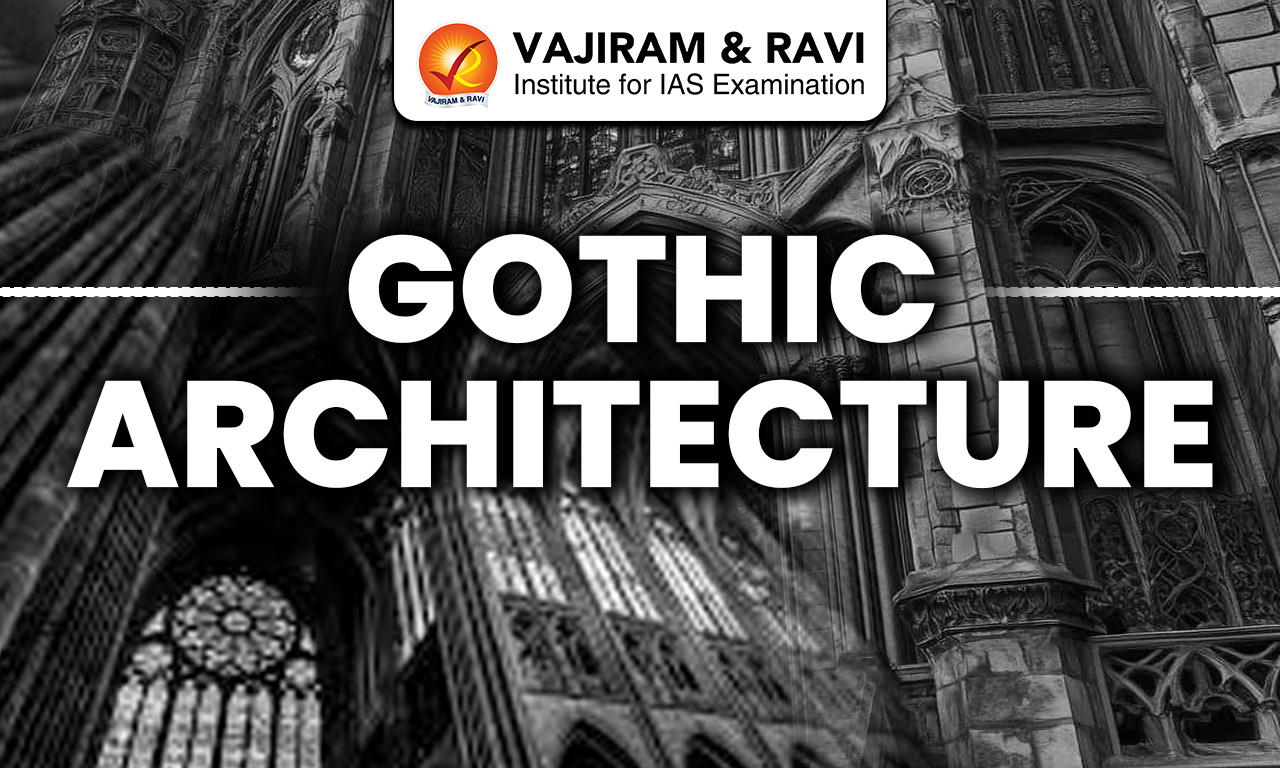
Gothic Architecture is a style of building that originates and developed in Europe during the medieval period. It is known for its tall structures, pointed arches, large windows, and beautiful decorations. This style was mainly used in churches and cathedrals, making them look grand and full of light. Gothic buildings often give a feeling of height, space, and beauty. Overall, Gothic architecture reflects creativity and advanced building techniques of its time.
Gothic Architecture Origin and Evolution
- Origin and Beginning (12th Century)
- The origin of Gothic architecture can be traced to the Île-de-France and Picardy regions of northern France in the early 12th century, where it developed from the earlier Romanesque style.
- It is often associated with Abbot Suger, who redesigned the Basilica of Saint-Denis around 1135-1144. His aim was to create brighter and more open spaces, which led to the use of features like pointed arches, ribbed vaults, and flying buttresses, allowing buildings to become taller and filled with light.
- Early Gothic Period (c. 1140-1200)
- This stage saw the initial development of Gothic features like pointed arches and ribbed vaults.
- Buildings became slightly taller and more spacious compared to earlier styles.
- Early examples include parts of Notre-Dame Cathedral.
- High Gothic Period (c. 1200-1250)
- Gothic architecture reached its peak during this phase, especially in France.
- Structures became taller, more balanced, and highly refined.
- Large stained glass windows and detailed designs became common.
- Famous examples include Chartres Cathedral and Reims Cathedral.
- Rayonnant Style (13th Century)
- A sub-style of High Gothic, mainly developed in France.
- Focused more on decoration and large windows rather than height.
- Buildings became brighter with more intricate glass designs.
- Late Gothic Period (15th Century)
- This phase is known for highly decorative and elaborate designs.
- Structures included complex patterns, carvings, and flamboyant details.
- Gothic architecture spread widely across Europe during this time.
- Regional Variations Across Europe
- France: Focused on height, symmetry, and structural balance.
- England: Emphasized length and developed styles like Early English, Decorated, and Perpendicular.
- Italy: Used brick and marble, with less emphasis on height and more on surface decoration.
Also Read: Modern Architecture
Gothic Architecture Characteristics
Gothic architecture, which developed between the mid-12th and 16th centuries, is known for its strong focus on height, vertical design, and the use of light to create grand and spiritual spaces. Its main features include pointed arches, ribbed vaults, and flying buttresses. These elements made it possible to build taller structures with thinner walls and large stained-glass windows that filled the interiors with light. The key characteristics are discussed below in detail.
- Tall and Vertical Structures: Buildings are very tall and designed to draw the eye upward, creating a sense of height and spirituality.
- Pointed Arches: Strong arches that distribute weight efficiently, allowing taller and more stable structures.
- Ribbed Vaults: Ceilings made of intersecting arches that reduce weight and support the roof effectively.
- Flying Buttresses: External supports that carry the building’s weight, enabling thinner walls and greater height.
- Large Windows: Big openings in walls that make interiors brighter and more open.
- Stained Glass Windows: Colourful glass panels that let in light and create beautiful visual effects.
- Thin and Light Walls: Walls are thinner due to improved support systems, allowing more space for windows.
- Decorative Carvings: Rich sculptures and designs that add beauty and often depict religious themes.
- Tracery Work: Decorative stone patterns in windows that enhance the building’s artistic look.
- Spacious Interiors: Wide and open halls supported by tall columns and arches.
- Emphasis on Light: Natural light is an important element, symbolizing purity and divinity.
- Complex Structural Design: Advanced use of arches and supports makes buildings strong and visually impressive.
- Gothic Architecture examples:
- Notre-Dame Cathedral: One of the most famous Gothic cathedrals, known for its grand structure, towers, and beautiful stained glass windows.
- Chartres Cathedral: A classic example of High Gothic style, famous for its impressive height and well-preserved stained glass.
- Cologne Cathedral: One of the largest Gothic churches in Europe, known for its twin towers and detailed design.
- Westminster Abbey: A historic Gothic church in London, used for royal ceremonies like coronations.
- Canterbury Cathedral: An important religious centre in England and a fine example of Gothic architecture.
- Milan Cathedral: A large and highly decorative Gothic cathedral made of white marble, known for its intricate details.
- Salisbury Cathedral: Famous for its tall spire, which is the highest in England.
- St. Vitus Cathedral: A major Gothic landmark known for its beautiful interiors and stained glass.
- Burgos Cathedral: A UNESCO World Heritage Site known for its detailed Gothic design.
- Reims Cathedral: Famous for being the traditional site of French kings’ coronations and its grand Gothic style.


Gothic Architecture Significance
- Advanced Engineering Techniques: Gothic architecture introduced new construction methods like pointed arches, ribbed vaults, and flying buttresses. These innovations made buildings stronger, more stable, and allowed greater height than earlier styles.
- Greater Height and Grandeur: It made possible the construction of very tall and large structures, creating a sense of magnificence and awe. Buildings like Notre-Dame Cathedral reflect this grandeur.
- Better Use of Natural Light: Large windows and stained glass allowed more sunlight to enter, making interiors bright and visually appealing. Light was also given spiritual importance.
- Religious and Cultural Importance: Gothic buildings were mainly churches and cathedrals, playing a central role in religious life and reflecting the beliefs and culture of medieval society.
- Artistic and Architectural Influence: It encouraged the growth of art forms like sculpture and glasswork, and later inspired new styles of architecture in different parts of the world.

 Last updated on Oct, 2026
→ UPSC 2027 Notification will be released on 13 January 2027 at upsconline.nic.in.
→ Check Nobel Prize 2026 Winners List here.
→ Download PIB PRiSM Monthly Magazine 2026 here.
→ Check UPSC Monthly Current Affairs Magazine The Recitals here.
→ Check out the latest UPSC Syllabus here.
→ Download UPSC Model Answers for Mains 2026
→ UPSC Mains Question Paper 2026 is out now for Essay & GS Paper 1, 2, 3 & 4.
→ UPSC Calendar 2027 has been released.
→ Enroll in Vajiram & Ravi’s UPSC Mains Test Series 2027 for structured answer writing practice, expert evaluation, and exam-oriented feedback.
→ Join Vajiram & Ravi’s UPSC Mentorship Program 2027 for personalized guidance, strategy planning, and one-to-one support from experienced mentors.
→ Go through the UPSC Mains Previous Year Papers to enhance your preparation.
→ UPSC has released UPSC Toppers List 2025 with the Civil Services final result on its official website.
→ Also check Best UPSC Coaching in India
Gothic Architecture FAQs
Q1. What is Gothic architecture?+
Q2. When did Gothic architecture develop?+
Q3. What are the main features of Gothic architecture?+
Q4. Why are Gothic buildings so tall?+
Q5. What is the role of stained glass windows?+
Tags: art and culture art and culture notes gothic architecture