US Lockheed Martin’s F-35 vs Russia’s Su-57, Key Features

US Lockheed Martin's F-35 vs Russia's Su-57

As India aims to modernize its air combat capabilities, the choice between two fifth-generation fighter jets, the US Lockheed Martin's F-35 vs Russia's Su-57 has become a strategic decision with global implications. With both aircraft making headlines at Aero India 2025, India's next move could reshape its military weapon inventory for decades.

Why India Needs a Fifth-Gen Fighter

India's weapon inventory currently includes around 600 fighter jets, but none belong to the fifth-generation category. With increasing regional threats from China’s rapidly growing stealth fleet and Pakistan’s reported interest in acquiring similar technologies, India faces pressure to have a fifth-generation fighter. While domestic efforts like the Advanced Medium Combat Aircraft (AMCA) are underway, operational readiness is not expected before 2036. This opens the door for immediate imports, where the F-35 and Su-57 are top options.

F-35 Lightning II

The US Lockheed Martin's F-35, is widely regarded as the world’s most advanced multirole fighter. It is available in three variants:

  • F-35A for the Air Force
  • F-35B with short take-off and vertical landing (STOVL) capabilities for the Marine Corps
  • F-35C designed for aircraft carriers in the Navy

Key Features:

  • Top Speed: Mach 1.6
  • Combat Range: ~1,500 km
  • Payload: 8,160 kg
  • Fuel Capacity: 18,498 lbs
  • Operational Altitude: Over 50,000 feet
  • Sensors: Electro-Optical Targeting System (EOTS), Distributed Aperture System (DAS)
  • Helmet-Mounted Display System (HMDS): Provides real-time targeting data and situational awareness

With more than 1,000 operational units worldwide and development support from nine partner nations, the F-35 is a battle-tested and interoperable platform in NATO operations.

Sukhoi Su-57

The Su-57, developed by Russia’s Sukhoi Design Bureau, is a twin-engine multirole stealth fighter designed for both air superiority and ground strike roles. Russia has pitched its export version, Su-57E, as a cost-effective alternative for partners like India.

Key Features:

  • Top Speed: Mach 2
  • Combat Range: ~1,900 km
  • Payload: 7,400 kg
  • Max Operating Altitude: ~54,100 feet
  • Engine: Saturn AL-41F1
  • Stealth Enhancements: Serrated exhaust nozzle and internal weapon bays
  • AI Integration: Onboard "electronic second pilot" system
  • Radar Spread: Distributed radar array across the airframe

Although only around 40 Su-57s have been produced as of 2025, Russia claims the aircraft matches or exceeds the F-35 in certain performance metrics, especially agility and range.

US Lockheed Martin's F-35 vs Russia's Su-57

The Lockheed Martin F-35 and the Sukhoi Su-57 represent two of the most advanced fifth-generation fighter aircraft developed by the United States and Russia, respectively. Designed for air superiority, stealth, and multi-role capabilities, both jets showcase cutting-edge technologies in modern aerial warfare. This comparison offers a detailed analysis of their design philosophies, capabilities, and strategic roles in shaping the future of air combat.

US Lockheed Martin's F-35 vs Russia's Su-57
Feature F‑35B (STOVL) Sukhoi Su‑57

Origin & Manufacturer

US – Lockheed Martin (with Pratt & Whitney engine)

Russia – Sukhoi (United Aircraft Corporation)

Stealth Generation

5th-generation, with advanced RCS reduction (~0.005–0.3 m²)

5th-generation, RCS ~0.1–0.5 m²

Engine Configuration

Single-engine (Pratt & Whitney F135)

Twin-engine (AL-41F1) with 3D thrust vectoring

Max Speed

~Mach 1.6 (supersonic dash, no supercruise)

Up to Mach 2; can supercruise at Mach 1.3

Combat Range

Ferry range ~1,670 km (no external tanks); combat radius shorter

Combat range ~1,900 km; ferry ~3,500 km

Maneuverability

Fly-by-wire, high-alpha capability; no thrust-vectoring

Super-maneuverable with 3D TVC, high-alpha & Cobra maneuvers

Weapon Bays / Payload

Internal bays + up to 6 external hardpoints

Two internal bays + side bays; also 6 external hardpoints

Avionics & Sensors

Advanced sensor fusion, AESA radar, EW, targeting pods

AESA X-band radar + L-band sensors, IRST, DIRCM, sensor fusion suite

Operational Service

F‑35B IOC since July 31, 2015; over 100 built

Introduced in 2020; about 32 built as of late 2023

Unit Cost

~$109 million (per F‑35B)

~$35–40 million

Operational Cost

F‑35 program estimated lifetime cost > $1.5 trillion (total fleet)

Less well documented; lower unit cost implies lower O&M overall

Export Version

Foreign Military Sales (F‑35B available to US allies)

Su‑57E export version marketed

Strategic Considerations for India

India’s defense ties with both Russia and the US make the decision complex. Russia has been a longstanding defense partner, known for easier technology transfer and fewer restrictions. The US, while offering advanced systems, often includes stringent end-use monitoring clauses.

  • Technology Transfer: Russia is more open to sharing tech; the US is more restrictive.
  • Sanctions Risk: Buying from Russia risks CAATSA-related US sanctions; buying from the US risks geopolitical dependencies.
  • Parts and Servicing: Russian jets can be supported locally with fewer dependencies.
  • Geopolitical Alignment: A deal with the US could strengthen Indo-Pacific ties, especially in countering China.

Global Landscape

  • F-35: Operated by over 14 nations, including the US, UK, Italy, Australia, and Japan.
  • Su-57: Operational only in Russia, with no confirmed international buyers yet.

China, meanwhile, is rapidly closing the gap with over 200 J-20 stealth fighters and a growing fleet of J-35s, posing a real threat to India's air dominance.

US Lockheed Martin's F-35 vs Russia's Su-57 FAQs

Q1: Which is faster: F-35 or Su-57?

Ans: The Su-57 is faster, with a top speed of Mach 2 compared to the F-35’s Mach 1.6.

Q2: Which fighter jet is cheaper?

Ans: The Su-57 is significantly cheaper, costing around $35–$40 million, while the F-35 costs between $80-$115 million.

Q3: Which fighter has better stealth?

Ans: The F-35 has superior stealth due to advanced radar-absorbing materials and a stealth-optimized design.

Q4: Is India buying the F-35 or Su-57?

Ans: India has not finalized any deal yet and is still evaluating both options.

Q5: How many F-35s are in service globally?

Ans: Over 1,000 F-35s are currently in operation across 14+ countries.
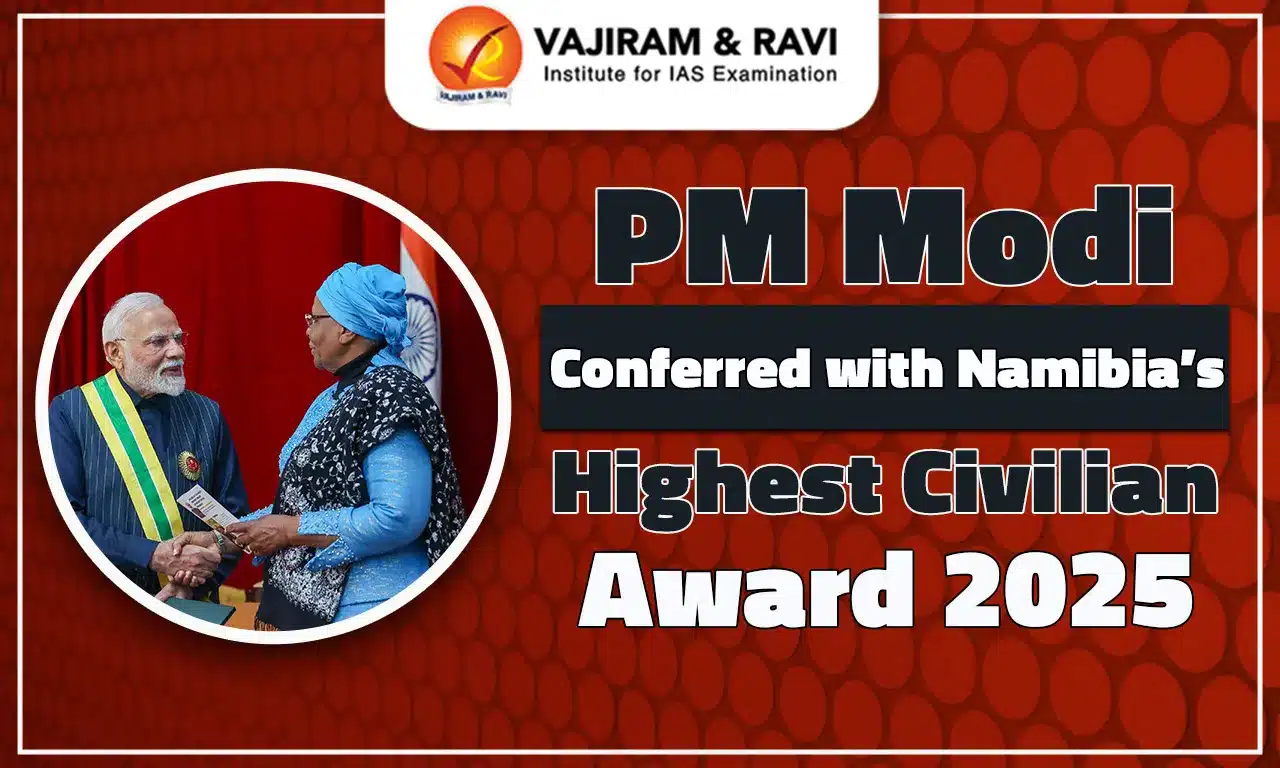
PM Modi Conferred with Namibia’s Highest Civilian Award 2025

PM Modi Conferred with Namibia’s Highest Civilian Award 2025

On 9 July 2025, during his official visit to Namibia, Prime Minister Narendra Modi was awarded The Order of the Most Ancient Welwitschia Mirabilis, the country’s highest civilian honour, by President Netumbo Nandi‑Ndaitwah. This recognition marked his 27th global honour, underscoring India’s growing diplomatic and strategic ties with African nations. The award acknowledged PM Modi’s contribution to democracy, sustainable development, and South-South cooperation. He dedicated the award to the 1.4 billion people of India, emphasizing the strength of the India-Namibia partnership built on mutual respect, development cooperation, and cultural ties.

PM Modi Conferred with Namibia’s Highest Civilian Award 2025

PM Modi Conferred with Namibia’s Highest Civilian Award 2025 which is named after the Welwitschia mirabilis, a rare and long-living desert plant that symbolizes resilience and endurance. It is one of the most prestigious recognitions in the country and is reserved for global leaders who have made significant contributions to Namibia or to international cooperation. 

Prime Minister Narendra Modi is the first Indian leader to receive this award, signifying his role as a transformative global figure. The conferment of this honour also highlights how India is increasingly seen as a dependable partner across Africa in areas such as infrastructure, education, and climate sustainability.

Facts About PM Modi and Namibia Civilian Honour
Element Details

Award Name

The Order of the Most Ancient Welwitschia Mirabilis

Awarded To

Prime Minister Narendra Modi

Awarded By

President of Namibia, Nangolo Mbumba

Date of Honour

July 9, 2025

Occasion

PM Modi’s official state visit to Namibia

Other African Awards Received

Highest civilian honours from Egypt, Kenya, and Tanzania

Also Read: List of Awards and Honours Received by Narendra Modi

PM Modi Visit to Namibia 2025

PM Modi’s 2025 visit to Namibia marked the first by an Indian Prime Minister in nearly three decades. It was a key part of his multi-nation African tour aimed at enhancing India’s partnership across the continent. During the visit, he held bilateral talks with Namibian President Netumbo Nandi-Ndaitwah and addressed a joint session of the Namibian Parliament. 

The two leaders signed multiple MoUs in sectors like digital public infrastructure, fintech (including UPI rollout), renewable energy, healthcare, disaster management, and education. The visit reflected India’s commitment to Africa through capacity building, skill development, and technology partnerships while promoting mutual growth and regional peace.

The Order of the Most Ancient Welwitschia Mirabilis

This award is Namibia’s highest civilian honour, named after a plant endemic to the Namib Desert that thrives in extreme conditions for over a thousand years, symbolizing endurance, uniqueness, and strength. The award is typically given to heads of state and distinguished international personalities who have shown commitment to Namibia’s development or to international peace and cooperation. 

PM Modi received the Grand Commander grade of this honour, joining a select list of global statespersons. The award recognizes Modi’s contributions to India-Namibia relations, his support for Africa’s development, and collaborative projects such as Project Cheetah, where Namibia provided cheetahs to India for conservation efforts.

India-Namibia Relations

  1. Diplomatic Ties: Established in 1990, soon after Namibian independence; India was a vocal supporter of Namibia at the UN .
  2. Project Cheetah: Namibia gifted cheetahs to India for the historic reintroduction project at Kuno National Park-described by Modi as “a powerful story of cooperation, conservation, and compassion”.
  3. Economic & Tech Ties: Agreements signed for UPI rollout, critical minerals, healthcare, education, and digital infrastructure.
  4. Strategic Cooperation: Includes initiatives under Coalition for Disaster Resilient Infrastructure (CDRI) and the Global Biofuels Alliance.
  5. This visit signals a mutual push for deeper economic integration-bilateral trade is approaching USD 800 million, with ambitions to further diversify cooperation.

PM Modi Conferred with Namibia’s Highest Civilian Award 2025 FAQs

Q1: What is the name of the award conferred to PM Modi by Namibia?

Ans: The award is called The Order of the Most Ancient Welwitschia Mirabilis, Namibia’s Highest Civilian Award 2025.

Q2: Why was PM Modi given this award?

Ans: PM Modi received the honour in recognition of his contributions to South-South cooperation, sustainable development, democracy, and India’s developmental assistance to Namibia.

Q3: When did PM Modi receive this award?

Ans: He was awarded on 9 July 2025 during his official state visit to Namibia.

Q4: Is PM Modi the first Indian to receive this award?

Ans: Yes, he is the first Indian Prime Minister to receive Namibia’s highest civilian honour.

UPSC Daily Quiz 11 July 2025

UPSC Daily Quiz

The Daily UPSC Quiz by Vajiram & Ravi is a thoughtfully curated initiative designed to support UPSC aspirants in strengthening their current affairs knowledge and core conceptual understanding. Aligned with the UPSC Syllabus 2025, this daily quiz serves as a revision resource, helping candidates assess their preparation, revise key topics, and stay updated with relevant issues. Whether you are preparing for Prelims or sharpening your revision for Mains, consistent practice with these Daily UPSC Quiz can significantly enhance accuracy, speed, and confidence in solving exam-level questions.

[WpProQuiz 18]  

UPSC Daily Quiz FAQs

Q1: What is the Daily UPSC Quiz?

Ans: The Daily UPSC Quiz is a set of practice questions based on current affairs, static subjects, and PYQs that help aspirants enhance retention and test conceptual clarity regularly.

Q2: How is the Daily Quiz useful for UPSC preparation?

Ans: Daily quizzes support learning, help in revision, improve time management, and boost accuracy for both UPSC Prelims and Mains through consistent practice.

Q3: Are the quiz questions based on the UPSC syllabus?

Ans: Yes, all questions are aligned with the UPSC Syllabus 2025, covering key areas like Polity, Economy, Environment, History, Geography, and Current Affairs.

Q4: Are solutions and explanations provided with the quiz?

Ans: Yes, each quiz includes detailed explanations and source references to enhance conceptual understanding and enable self-assessment.

Q5: Is the Daily UPSC Quiz suitable for both Prelims and Mains?

Ans: Primarily focused on Prelims (MCQ format), but it also indirectly helps in Mains by strengthening subject knowledge and factual clarity.

Solar System, Types, Planets, Satellites, Interesting Facts

Solar System

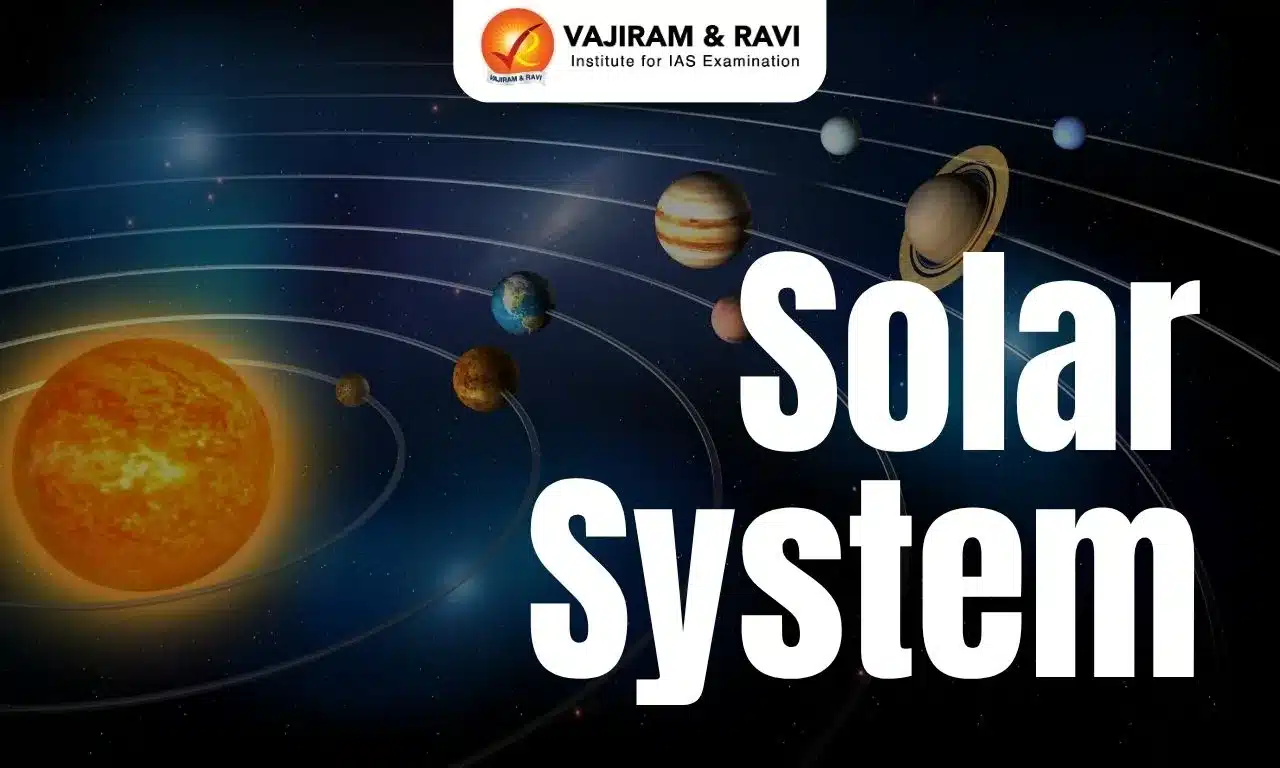
The universe consists of numerous planetary systems, each with planets rotating/revolving around a central star. Our planetary system is called the Solar System because the Sun is named "Sol," derived from the Latin word “sols.” As a result, anything related to the Sun is referred to as "solar." The Solar System comprises our star, the Sun, along with all celestial bodies bound to it by gravity. The Solar System includes eight planets, multiple asteroids, comets, meteoroids, dwarf planets like Pluto, and various moons. Located in one of the outer spiral arms of the Milky Way galaxy, the Solar System is a fascinating and dynamic system that continues to be a subject of extensive scientific exploration.

The Solar System

The Solar System consists of the Sun, eight planets (Mercury, Venus, Earth, Mars, Jupiter, Saturn, Uranus, and Neptune), their satellites, asteroids, comets, meteoroids, and interplanetary dust. Pluto, once a part of the Solar System, is now classified as a dwarf planet.

The Sun makes up 99.85% of the Solar System’s mass and is primarily composed of hydrogen and helium. The Photosphere is the Sun’s visible surface, surrounded by the Chromosphere and the Corona (visible during eclipses). The Sun's surface is dynamic, with bright plages and dark sunspots that frequently form and disappear.

Sun

The Sun is a 4.5 billion-year-old star which is the center of the Solar System, located 93 million miles from Earth. It is composed mainly of hydrogen and helium, making life on Earth possible. Being the largest object in the solar system, it could fit 1.3 million Earths inside it. The Sun's gravitational pull keeps all celestial bodies in orbit, while its eruptions and charged particles influence the solar system. The core is the hottest part, reaching 15 million degrees Celsius. Space agencies like NASA study the Sun using spacecraft like Solar Orbiter, Parker Solar Probe, and STEREO.

Planets In Order

The Solar System contains more planets than stars. The solar system has eight planets after Pluto's exclusion. Mercury, Venus, Earth, and Mars are rocky inner planets, while Jupiter and Saturn are gas giants. Uranus and Neptune are ice giants. Beyond Neptune, dwarf planets like Pluto exist.

Mercury

Mercury is the closest planet to the Sun, and is also the smallest in the solar system. Its close proximity makes it hard to see due to the Sun’s glare. It completes one revolution in 88 days and has no satellites or atmosphere. One day on Mercury equals 90 Earth days, and its mass is 1/18 of Earth's mass. Mariner-10 was the only artificial satellite to survey its surface.

Venus

Venus is the closest planet to Earth, and is often called its twin planet due to their similar sizes. It is the brightest planet in the sky and is known as the "morning star" and "evening star" because it is visible just before sunrise and after sunset. Venus completes one revolution in 225 days and rotates in 243 days, making it the only planet with a rotation period longer than its revolution. It has no moons and, like Uranus, rotates from east to west, opposite to Earth's rotation. Venus is also the hottest planet in the solar system.

Earth

Earth is the only known planet that supports life due to its optimal distance from the Sun, moderate temperature, presence of water, life-supporting atmosphere, and ozone layer. About 71% of Earth’s surface is covered in water, giving it a blue-green appearance from space. The Moon is Earth's only satellite.

Earth’s 23.5° axial tilt causes seasonal changes. It is the 5th largest planet in the solar system. Its equatorial radius is 6,378 km, polar radius is 6,356 km, and its perimeter is approximately 40,000 km. The exoplanet Kepler-452b is considered Earth's closest cousin.

Mars

Mars, the first planet discovered outside Earth’s orbit, is known as the “Red Planet” due to its reddish appearance, caused by iron oxide (rust). It takes 687 days to complete one revolution around the Sun.

Mars has two small natural satellites, Phobos and Deimos, with Deimos being the smallest satellite in the universe. The highest point on Mars is Olympus Mons, the tallest volcano in the solar system.

India's ISRO launched Mangalyaan (Mars Orbiter Mission) on November 5, 2013, and it successfully entered Mars' orbit on September 24, 2014. India became the first nation to reach Mars on its first attempt.

Jupiter

Jupiter is the largest planet in the solar system, 1300 Earths could fit inside it. It rotates rapidly on its axis and is surrounded by faint rings. Jupiter takes 11.9 years to complete one revolution around the Sun and has 92 known satellites. Ganymede, the largest of them, is also the biggest satellite in the solar system. The planet's atmospheric pressure is 10 million times higher than Earth's. Jupiter's Great Red Spot is a continuous high-pressure storm, creating asymmetric storms on the planet.

Saturn

Saturn is considered the most beautiful planet in the Solar System and is the second-largest after Jupiter. It takes 29.5 years to complete one revolution around the Sun and has a yellowish appearance. Saturn is famous for its four stunning rings, which are not visible to the naked eye. It has 147 natural satellites, with Titan being the largest, nearly the size of Mercury. Saturn is the least dense planet in the solar system, with a density lower than water, meaning it would float if placed in a large enough water body.

Uranus

Uranus was discovered in 1791 by William Herschel. It is the third-largest planet in the solar system and is named after the Greek god of the sky.

Uranus takes 84 years to complete one revolution around the Sun and, like Venus, it rotates from East to West. Its bluish-green color is due to the presence of methane in its atmosphere. Through a telescope, it appears greenish. Uranus has five rings named Alpha, Beta, Gamma, Delta, and Epsilon and 27 known satellites.

Neptune

Neptune is named after the Roman God of the Sea and was discovered by German astronomer Johann Galle. It takes 165 years to complete one revolution around the Sun, making it the planet with the longest year in the solar system. Neptune is the 8th and farthest planet from the Sun and the 4th largest planet in the solar system. It has 14 known natural satellites, with Triton being the largest.

Moons

Moons are also known as natural satellites, are celestial bodies that orbit planets and asteroids. Our Solar System hosts over 200 moons, each varying in size, shape, and composition. While Mercury and Venus lack moons, other planets, including Earth, have one or more. Some moons, like Jupiter’s Ganymede and Saturn’s Titan, are larger than Mercury, while others are tiny, irregularly shaped bodies. 

Moons of Each Planets

Planets

Moons

Mercury

0

Venus

0

Earth

1

Mars

2

Jupiter

79 (53 confirmed, 26 provisional)

Saturn

82 (53 confirmed, 29 provisional)

Uranus

27

Neptune

14

Asteroids, Comets, and Meteors

These leftover celestial bodies, including asteroids, comets, and meteors, are remains of the early solar system. While planets formed through accretion, billions of smaller fragments never merged into large planetary bodies. 

Asteroids, primarily found in the asteroid belt between Mars and Jupiter, are rocky objects that vary in size. Comets, composed of ice, dust, and rock, originate from the Kuiper Belt and Oort Cloud, developing bright tails when approaching the Sun. 

As of now, there are 1,113,527 known asteroids and 3,743 identified comets in our solar system, continuously providing insights into its formation and evolution.

Solar System Types

The Solar System refers to the Sun and its orbiting celestial bodies, including planets, moons, asteroids, and comets. However, the universe contains multiple other star systems, each with unique characteristics:

  1. Single Star Systems: A single star with orbiting celestial bodies (e.g., our solar system).
  2. Binary Star Systems: Two stars orbiting a common center, classified as: 
    1. Visual Binaries (visibly separate stars),
    2. Spectroscopic Binaries (detected through spectra), and
    3. Eclipsing Binaries (stars that eclipse each other).
  3. Multiple Star Systems: Three or more stars orbiting together.
  4. Stellar Clusters: Groups of stars formed from the same molecular cloud (open for young stars, globular for older stars).
  5. Planetary Systems: Stars with one or more orbiting planets (exoplanetary systems exist beyond our solar system).
  6. Pulsar Systems: Neutron stars emitting radiation, sometimes in binaries.
  7. White Dwarf Systems: A white dwarf with a companion star, possibly causing periodic outbursts.
  8. Black Hole Systems: A black hole with orbiting stars or objects.
  9. Young Stellar Objects (YSOs): Newly forming stars with surrounding gas and dust, potentially forming planetary systems.

Solar System Interesting Facts

Solar System Interesting Facts
Feature Name

Biggest Planet

Jupiter

Biggest Satellite

Ganymede (Jupiter's moon)

Blue Planet

Earth

Green Planet

Uranus

Brightest Planet

Venus

Brightest Star outside the Solar System

Sirius

Closest Star to the Solar System

Proxima Centauri

Coldest Planet

Neptune

Evening Star

Venus

Farthest Planet from the Sun

Neptune

Planet with Maximum Satellites

Saturn

Fastest Revolution in the Solar System

Mercury

Hottest Planet

Venus

Densest Planet

Earth

Fastest Rotation in the Solar System

Jupiter

Morning Star

Venus

Nearest Planet to Earth

Venus

Nearest Planet to the Sun

Mercury

Red Planet

Mars

Slowest Revolution in the Solar System

Neptune

Slowest Rotation in the Solar System

Venus

Smallest Planet

Mercury

Smallest Satellite

Deimos (Mars' moon)

Earth's Twin

Venus

Only Moon with an Atmosphere Similar to Earth

Titan (Saturn’s moon)

Solar System FAQs

Q1: What are 9 planets in order?

Ans: Mercury, Venus, Earth, Mars, Jupiter, Saturn, Uranus, and Neptune.

Q2: Are there 8 or 9 planets in the solar system?

Ans: The solar system has eight planets.

Q3: Why is Pluto no longer a planet?

Ans: Pluto is now classified as a dwarf planet because, while it is large enough to have become spherical, it is not big enough to exert its orbital dominance and clear the neighborhood surrounding its orbit.

Q4: Which is the hottest planet?

Ans: Venus is the hottest planet.

Q5: Which planet is the biggest?

Ans: Jupiter is the largest planet in the solar system.

Sustainable Alternative Towards Affordable Transportation (SATAT Scheme)

Sustainable Alternative Towards Affordable Transportation

The Sustainable Alternative Towards Affordable Transportation (SATAT Scheme) is an initiative launched by the Government of India in October 2018 introduced to promote the use of Compressed Biogas (CBG) as a clean and alternative fuel for transportation. The SATAT Scheme was funded under Solid and Liquid Waste Management (SLWM) which is an integral component of Swachh Bharat Mission-Gramin (SBM-G). The initiative was introduced to help municipal solid waste management.

SATAT Scheme Benefits

  1. SATAT Scheme majorly focuses on converting agricultural waste, cattle dung, and municipal solid waste into Compressed Biogas which is a renewable source of energy. 
  2. This scheme showcases India’s commitment towards reducing greenhouse gas (GHG) emissions, offering a sustainable and responsible energy alternative.
  3. India heavily depends on natural gas and crude oil imports to fulfill the energy needs. CBG has the potential to reduce this dependency significantly.
  4. CBG acts as a buffer against global fluctuations in crude oil and gas prices, enhancing energy security as it is a domestically produced fuel.
  5. With India generating a large volume of biomass, CBG has the potential to replace Compressed Natural Gas (CNG) in various sectors, including automotive, industrial, and commercial applications.

Impact of SATAT Scheme

  1. Reduces Greenhouse Gas emissions, supports sustainable waste disposal, and curbs air pollution.
  2. Generates income generation ways for farmers, promotes rural development, and reduces import expenses.
  3. Strengthens India’s shift towards renewable and clean energy sources.

SATAT Scheme FAQs

Q1: What is the Satat scheme?

Ans: The SATAT Scheme is an initiative launched by the Government of India introduced to promote the use of Compressed Biogas (CBG) as a clean and alternative fuel for transportation.

Q2: What is full form Satat?

Ans: Sustainable Alternative Towards An Affordable Transportation Scheme

Q3: Who launched the SATAT initiative?

Ans: The Ministry of Petroleum and Natural Gas.

Q4: What is the cost of CBG per kg?

Ans: Rs. 46/kg + applicable taxes for period from 1.10. 2018 to 31.3. 2024.

Q5: Which ministry is responsible for the Satat initiative?

Ans: Petroleum Minister launches SATAT initiative to promote Compressed Bio-Gas as an alternative, green transport fuel.

Medium Altitude Long Endurance Drone

Medium Altitude Long Endurance Drone

Medium Altitude Long Endurance Drone Latest News

India has accelerated the procurement of 87 Medium Altitude Long Endurance (MALE) drones from local manufacturers.

About Medium Altitude Long Endurance Drone

  • MALE drones are unmanned Ariel vehicles that have the capability to fly over 30 hours at a maximum altitude of at least 35,000 feet. 
  • These drones are equipped with advanced surveillance and combat capabilities: including real-time intelligence, surveillance, and reconnaissance (ISR) in all kinds of terrain.
  • These will enhance surveillance along its sea and land borders.
  • Purpose of Medium Altitude Long Endurance Drones: Primarily used for surveillance, reconnaissance, and strike missions.
  • Strategic Importance: These drones will enhance the surveillance capabilities of all three services, especially the Indian Air Force to monitor the Eastern and Western Border
  • The procurement of 87 drones is aimed at bolstering real-time monitoring and operational readiness across critical areas.
  • The 87-drone MALE project serves two parallel aims: fill the medium-altitude tier between smaller tactical UAVs and the high-altitude Guardians, and indigenise a capability so far dominated by Israeli imports.

Source: TH

Medium Altitude Long Endurance Drone FAQs

Q1: Which Israeli drone does India use?

Ans: Harop drones

Q2: What are the 4 types of drones?

Ans: Drones are primarily classified into four types: single-rotor, multi-rotor, fixed-wing, and hybrid VTOL drones.

Polycyclic Aromatic Hydrocarbon

Polycyclic Aromatic Hydrocarbon

Polycyclic Aromatic Hydrocarbon Latest News

Recently, researchers from Australia, Sweden, and the UK studied the indenyl cation, C9H7+  and revealed how Polycyclic aromatic hydrocarbons molecules survival in Taurus Molecular Cloud 1 (TMC1).

About Polycyclic Aromatic Hydrocarbon

  • Polycyclic aromatic hydrocarbons (PAHs) are flat, ring-shaped molecules of carbon and hydrogen.
  • Astronomers think they make up a fifth of all carbon in interstellar space.
  • There is a hypothesis that meteors brought PAHs from space to young earth and created the first building blocks of life, attaching important value to their ability to survive in space.
  • They have a relatively low solubility in water but are highly lipophilic and are soluble in most organic solvents.
  • These hydrocarbons, on earth, are formed through incomplete combustion or pyrolysis of organic materials, such as fossil fuels and biomass
  • When PAHs collide with other particles or absorb high-energy radiation, they can have more internal energy than their weakest chemical bond can handle.

Key Facts about Taurus Molecular Cloud 1

  • It is a molecular cloud located in the constellation Taurus about 430 lightyears away from Earth.
  • It is a collection of gas, dust, and plasma.
  • It is known for its cold and dense conditions, which are favorable for the formation of complex molecules.
  • The cloud is primarily composed of molecular hydrogen (H2), with other molecules such as carbon monoxide (CO), ammonia (NH3), and various organic compounds also present. 
  • In Taurus Molecular Cloud 1 (TMC1), small closed-shell PAHs — molecules whose electrons are in pairs — appear in greater quantities even though they are constantly exposed to starlight that should have destroyed them.
  • The team found that the PAHs have a mechanism to cool rapidly, letting them accumulate in TMC1 over time.

Source: TH

Polycyclic Aromatic Hydrocarbon FAQs

Q1: What is an example of a PAHs?

Ans: PAHs comprise a group of over 100 different chemicals that are produced during the incomplete burning of fuels, garbage or other organic substances such as tobacco, plant material or meats.

Q2: What is the most toxic polycyclic aromatic hydrocarbon?

Ans: Benzo[a]pyrene (BaP)

SC on Bihar Electoral Roll Revision

Electoral Roll Revision in India

Electoral Roll Revision Latest News

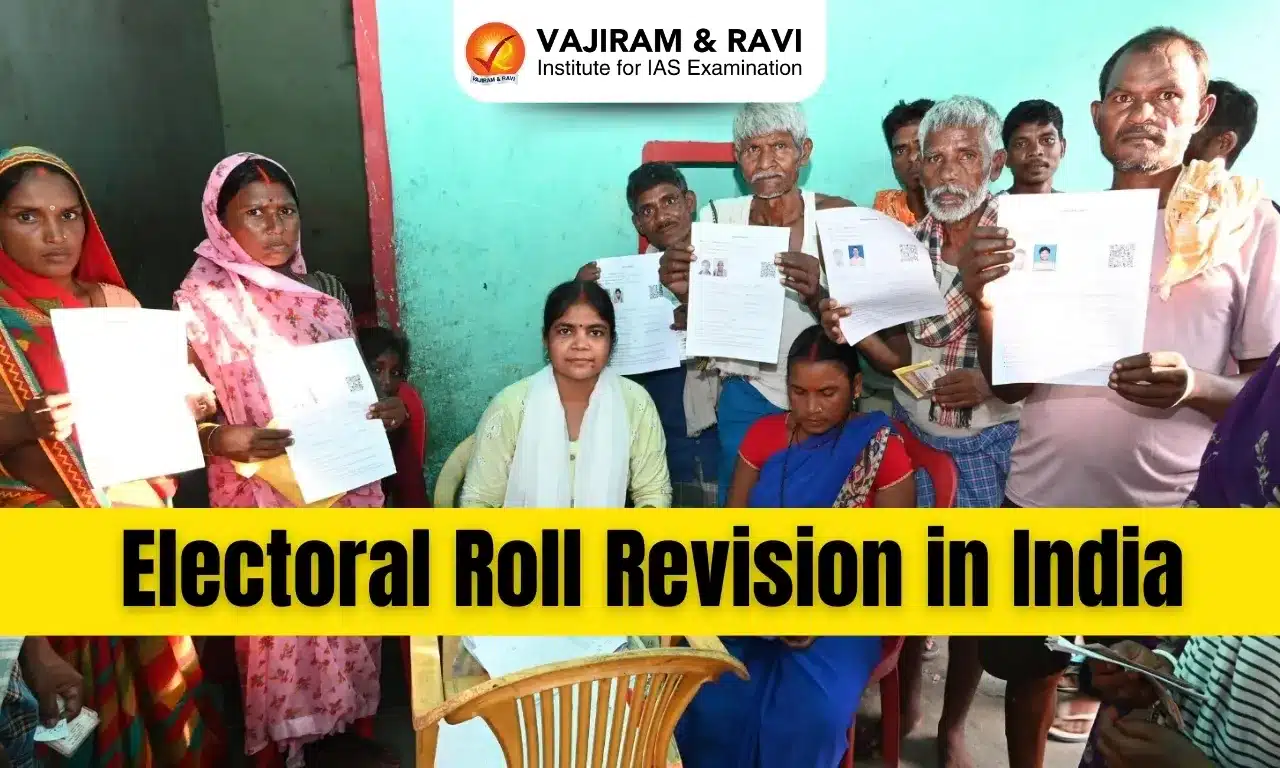
  • The Supreme Court of India declined to stay the Election Commission of India’s (ECI) Special Intensive Revision (SIR) of electoral rolls in Bihar, which is scheduled ahead of the upcoming Assembly elections. 
  • Amid concerns raised by petitioners over the timing and process of the electoral roll revision, the Court urged the ECI to consider Aadhaar, voter ID, and ration cards for verification purposes and scheduled a detailed hearing for July 28.

Background - Electoral Roll Revision in Bihar

  • Special Intensive Revision (SIR): SIR involves a de novo/ afresh preparation of electoral rolls through house-to-house verification by electoral registration officers.
  • Applicability in Bihar:
    • Those listed on the 2003 electoral rolls need only submit an extract from that roll.
    • Those enrolled after 2003 must submit one or more of 11 prescribed documents and a pre-filled enumeration form to establish birthplace and date, indirectly serving as a citizenship determination process.

Supreme Court Proceedings and Key Observations

  • Major concerns raised:
    • Timing of revision:
      • Petitioners argued that the electoral roll revision is timed too close to the November 2025 Bihar Assembly elections.
      • Demanded delinking of the revision exercise from the election process.
    • Document exclusion:
      • Objection to exclusion of Aadhaar from the accepted list of identity/citizenship documents.
      • Concerns of citizenship screening under the guise of voter verification.
    • Risk of voter disenfranchisement:
      • Petitioners warned that lack of accepted documentation could exclude genuine voters (particularly marginalized groups like EBCs, Dalits, minorities, and women).
      • A Bihar government survey reportedly revealed most voters did not possess the required certificates sought by ECI.
  • Supreme Court’s stand and directions:
    • No interim stay: Court allowed ECI to proceed with SIR but reserved right to intervene if violations are proven.
    • Document suggestion: SC urged ECI to consider Aadhaar, voter ID, and ration cards—though left the final decision to the Commission.
    • Rationale for transparency: ECI was directed to provide reasons if it chooses to exclude these documents.
  • Three key legal questions identified by SC:
    • Powers of the Election Commission under the Constitution.
    • Procedure and methodology of SIR being adopted.
    • Timing of the revision vis-à-vis the upcoming election.

Accessibility of Suggested Documents in Bihar

  • Aadhaar card:
    • Aadhaar is available to over 88% of Bihar’s population (approx. 11.48 crore people).
    • Saturation level (eligible people with Aadhaar) stands at 94% across the state.
    • Some districts like Kishanganj and Katihar show saturation above 120%, indicating coverage exceeding projections.
    • Adult coverage (18+ years): 70.29% of total Aadhaar holders.
  • Voter ID (EPIC card):
    • Issued compulsorily to all enrolled electors.
    • Bihar has 7.89 crore registered voters, almost all of whom hold a Voter ID.
    • Used presently only for identification, not for eligibility verification.
  • Ration cards:
    • Cover about two-thirds of Bihar’s population.
    • 1.79 crore ration cards cover around 8.71 crore beneficiaries (as of July 10, 2025).
    • Easily accessible to low-income and marginalized groups, including EBCs and minorities.

Election Commission’s Position and Defence

  • Key submissions by ECI:
    • The list of 11 documents is not exhaustive, and room for additions exists.
    • Aadhaar is not conclusive for citizenship, hence not mandatory.
    • Extensive public outreach ongoing via:
    • Mobile notifications to over 7.89 crore electors.
    • House-to-house verification and real-time monitoring via ECINET.
  • Rebuttal to citizenship allegations:
    • ECI claimed that it has no intent to remove voters arbitrarily.
    • Exclusion will happen only if required by law and supported by evidence.

Conclusion

  • The Supreme Court has upheld the ECI’s constitutional autonomy in revising electoral rolls but emphasized accountability and transparency
  • The July 28 hearing is expected to address the legal validity, procedural fairness, and timing concerns of the SIR process ahead of Bihar’s crucial elections.
  • It will also try to balance documentary rigor with universal suffrage, underlining the importance of institutional accountability and voter inclusion in India’s electoral democracy.

Source: IE | IE

Electoral Roll Revision

Q1: Examine the constitutional mandate and autonomy of the Election Commission of India (ECI) in the context of the Special Intensive Revision (SIR) of electoral rolls in Bihar.

Ans: The ECI, as a constitutional body under Article 324, enjoys autonomy in conducting elections and revising electoral rolls, but its actions remain subject to judicial scrutiny to ensure fairness, legality, and protection of voter rights.

Q2: Discuss the implications of excluding widely held documents like Aadhaar, Voter ID, and ration cards from the eligibility criteria for electoral roll inclusion.

Ans: Excluding commonly held documents risks disenfranchising millions, particularly marginalized communities, and raises concerns over accessibility, inclusiveness, and the democratic integrity of the electoral process.

Q3: Analyze how the timing and procedure of the SIR exercise in Bihar may affect the credibility and inclusiveness of the upcoming Assembly elections.

Ans: The SIR’s proximity to the Bihar Assembly elections, coupled with limited timelines and burdensome documentation, may compromise procedural fairness and voter inclusivity, thereby affecting electoral credibility.

Q4: Do you agree with the view that the current SIR process resembles a citizenship verification exercise?

Ans: The requirement for post-2003 voters to submit specific documents proving birth and residence, while excluding Aadhaar or Voter ID, has led to perceptions that the process mirrors a de facto citizenship screening.

Q5: Critically evaluate the Supreme Court's approach in balancing the ECI’s constitutional independence with the need to ensure voter inclusion and transparency.

Ans: The SC allowed the ECI to continue the SIR while suggesting inclusion of accessible documents and demanding reasoned justification for their exclusion, thereby preserving institutional autonomy and democratic accountability.

Enforcement Case Information Report (ECIR)

Enforcement Case Information Report (ECIR)

Enforcement Case Information Report Latest News

The Enforcement Directorate (ED) recently registered an Enforcement Case Information Report (ECIR) against 29 individuals, including actors, television hosts, social media influencers, and YouTubers, for allegedly promoting illegal betting applications.

About Enforcement Case Information Report 

  • The ECIR is a formal entry of the complaint lodged by the Enforcement Directorate (ED).
  • Whenever the ED receives information about the commission of an offence of money laundering, it is converted into a formal report known as the ECIR. 
  • It serves as a starting point for ED’s proceedings, including the attachment of assets and arrests.
  • There is no mention of the ECIR in the Prevention of Money Laundering Act, 2002 (PMLA Act), or Rules. 
  • Since the PMLA does not necessitate the registration of ECIR, it is considered a non-statutory document. 
  • However, as per the practice of ED, the ECIR is lodged before taking any action under the PMLA Act. 
  • The ECIR under the PMLA Act is similar to the First Information Report (FIR) lodged by the Police for cognizable offences.
  • However, the Supreme Court held that an ECIR cannot be equated with an FIR, which is mandatorily required to be recorded and supplied to the accused.
  • As per the ED, ECIR is a document meant for identification of a particular case and for departmental convenience and is purely an internal document.
  • ED is not legally bound to provide a copy of the ECIR to the accused.
  • Since ECIR lacks statutory status, there is no requirement to quash them.

Key Facts about Enforcement Directorate

  • The Directorate of Enforcement or Enforcement Directorate (ED) is a domestic law enforcement agency and economic intelligence agency.
  • It was established in the year 1956 with its Headquarters at New Delhi. 
  • It is responsible for enforcing economic laws and fighting economic crimes in India.
  • It is responsible for inspecting and taking legal action involving economic crimes, money laundering, corruption, and breaches of foreign exchange laws.
  • Nodal Ministry: Department of Revenue, Ministry of Finance
  • Objectives of the ED: The prime objective of the Enforcement Directorate is the enforcement of three key Acts of the Government of India, namely:
    • Foreign Exchange Management Act, 1999 (FEMA),
    • Prevention of Money Laundering Act, 2002 (PMLA), and
    • Fugitive Economic Offenders Act, 2018 (FEOA).

Source: TH

Enforcement Case Information Report FAQs

Q1: Which agency files an Enforcement Case Information Report (ECIR)?

Ans: Enforcement Directorate (ED)

Q2: Is Enforcement Case Information Report (ECIR) mentioned in the Prevention of Money Laundering Act, 2002 (PMLA Act)?

Ans: There is no mention of the ECIR in the PMLA Act.

Q3: What is the nature of an Enforcement Case Information Report (ECIR)?

Ans: Non-statutory internal document.

Q4: What is the purpose of filing an Enforcement Case Information Report (ECIR) by the ED?

Ans: To initiate proceedings under money laundering laws.

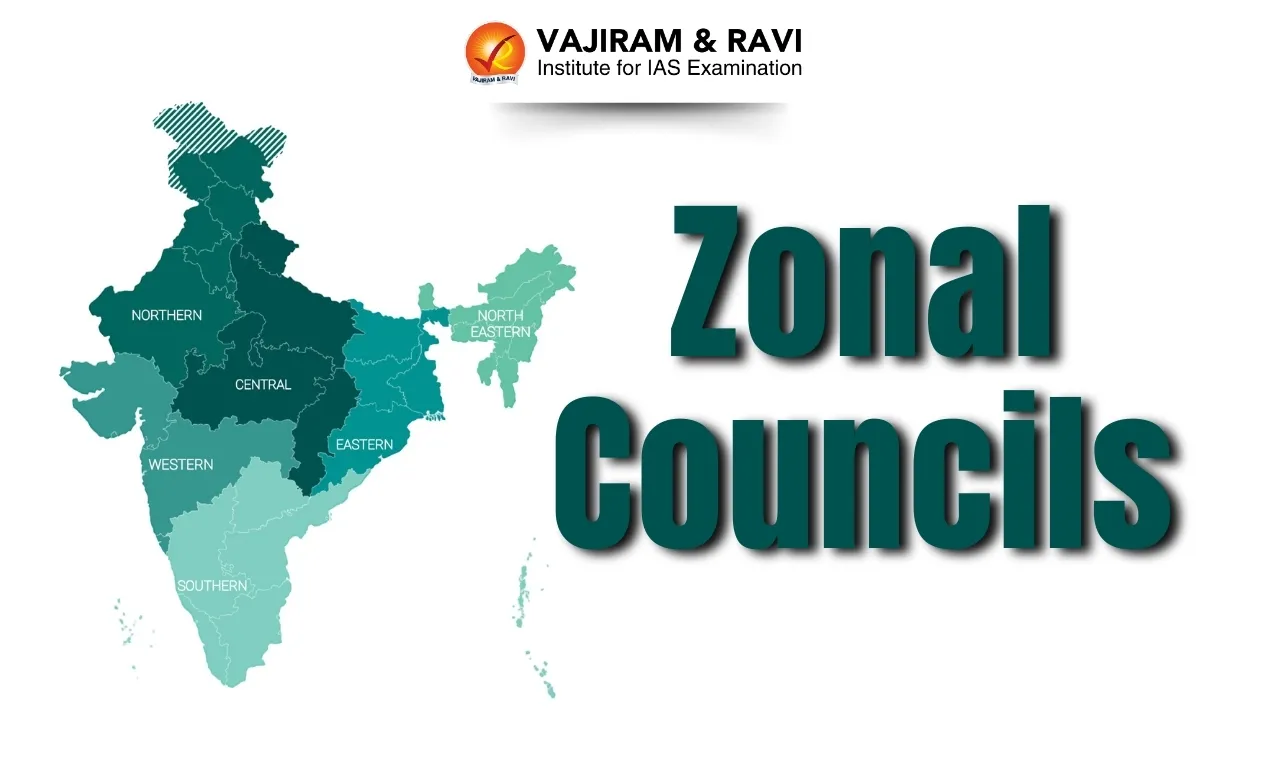
Zonal Councils

Zonal Councils

Zonal Councils Latest News

The Union Home Minister recently said zonal councils have transformed from being mere discussion forums into “engines of cooperation”, noting that 83% of issues taken up in their meetings have been resolved.

About Zonal Councils

  • The idea of the creation of Zonal Councils was mooted by the first Prime Minister of India, Pandit Jawahar Lal Nehru, in 1956.
  • The Zonal Councils are the statutory bodies.
  • Five zonal councils were set up in 1957 under Sections 15-22 of the States Reorganisation Act, 1956. 
  • Objective: To provide a common meeting ground to the states and UTs in each zone for resolution of interstate and regional issues, fostering balanced socio-economic regional development and building harmonious Centre- State relations.
  • The present composition of each of these five Zonal Councils is as follows:
    • Northern Zonal Council: Haryana, Himachal Pradesh, Jammu & Kashmir, Ladakh, Punjab, Rajasthan, Delhi, and Chandigarh.
    • Central Zonal Council: Chhattisgarh, Uttarakhand, Uttar Pradesh, and Madhya Pradesh.
    • Eastern Zonal Council: Bihar, Jharkhand, Odisha, and West Bengal.
    • Western Zonal Council: Goa, Gujarat, Maharashtra, and Daman & Diu and Dadra & Nagar Haveli.
    • Southern Zonal Council: Andhra Pradesh, Telangana, Karnataka, Kerala, Tamil Nadu, and Puducherry.
  • North Eastern Council:
    • The North Eastern States, i.e. Assam, Arunachal Pradesh, Manipur, Tripura, Mizoram, Meghalaya, and Nagaland, are not included in the Zonal Councils, and their special problems are looked after by the North Eastern Council, set up under the North Eastern Council Act, 1972.
    • The State of Sikkim has also been included in the North Eastern Council vide the North Eastern Council (Amendment) Act, 2002, notified on 23rd December 2002.
  • Each Zonal Council is an advisory body and may discuss any matter in which some or all of the States represented in that council, or the Union and one or more of the States represented in that Council, have a common interest and advise the Central Government and the Government of each State concerned as to the action to be taken on any such matter.

Zonal Councils Organisational Structure

  • Chairman: The Union Home Minister is the Chairman of each of these Councils.
  • Vice Chairman: The Chief Ministers of the States included in each zone act as vice-chairman of the zonal council for that zone by rotation, each holding office for a period of one year at a time.
  • Members: Chief Minister and two other ministers as nominated by the Governor from each of the States and two members from Union Territories included in the zone.
  • Each Zonal Council has set up a Standing Committee consisting of Chief Secretaries of the member States of the respective Zonal Councils. 
  • The Standing Committees meet from time to time to resolve the issues or to do necessary groundwork for further meetings of the Zonal Councils. 
  • Senior officers from the NITI Aayog (erstwhile Planning Commission), Central Ministries, and State Governments are associated with the meetings depending upon necessity.

Source: IE

Zonal Councils FAQs

Q1: Is the zonal council a statutory body?

Ans: Yes, the Zonal Council is a statutory body.

Q2: How many Zonal Councils are there in India?

Ans: There are six Zonal Councils in India.

Q3: Who acts as the Chairman of Zonal Councils?

Ans: The Union Home Minister is the Chairman of each of these Councils.

Q4: Who acts as the Vice Chairman of a Zonal Council?

Ans: Chief Minister of a state in the zone, by rotation.

Agricultural Monitoring and Event Detection (AMED) API

Agricultural Monitoring and Event Detection

Agricultural Monitoring and Event Detection (AMED) API Latest News

Google recently launched the Agricultural Monitoring and Event Detection (AMED) API that provides information on crops and field activity across India.

About Agricultural Monitoring and Event Detection (AMED) API

  • AMED is an artificial intelligence (AI)-based open-source application programming interface (API) launched by Google.
  • It provides field-level crop data, specifically helping in monitoring crops and detecting agricultural events at individual fields across India. 
  • The AMED API details the type of crop on a given field, crop season,  and the field’s size and also provides historical information about the agricultural activity on it for the last three years. 
  • These insights can help significantly improve agricultural management on farms and also address the specific needs of each crop – including the right soil and water conditions, growth patterns, and climatic needs – as well as predict crops’ harvest volume. 
  • Google will be sharing the AMED API for agriculture startups to find more innovative solutions to improve the agriculture ecosystem. 
  • AMED API data is also refreshed nearly every two weeks, enabling the ecosystem partners leveraging AMED API access to continuously updated information that accounts for field-level changes.
  • AMED API builds on the Agricultural Landscape Understanding (ALU) Research API that the company launched last year.
    • It uses satellite imagery and AI to map field boundaries and land use across India.

Source: TH

Agricultural Monitoring and Event Detection (AMED) API FAQs

Q1: Who launched the Agricultural Monitoring and Event Detection (AMED) API?

Ans: Google

Q2: What is the primary purpose of the Agricultural Monitoring and Event Detection (AMED) API?

Ans: It provides field-level crop data, specifically helping in monitoring crops and detecting agricultural events at individual fields across India.

Q3: What kind of information can Agricultural Monitoring and Event Detection (AMED) API provide about agricultural fields?

Ans: Type of crop, season, field size, and harvesting timelines.

Earth Intelligence

Earth Intelligence

Earth Intelligence Latest News

Recently, Gartner forecasted that Earth Intelligence will offer a $20 billion new revenue growth opportunity for Technology and service providers through 2030.

About Earth Intelligence

  • It indicates the application of AI to Earth observation data to deliver solutions specific to industries and business functions.
  • It is the practice of combining data from satellite imagery and remote sensors with social, economic, and policy information to generate actionable insights about our planet.
  • It encompasses gathering and providing Earth observation data, fit-for-purpose transforming it, and then using it to produce actionable insights with domain-specific AI models, tools and applications.
  • It is the next step in this process, transforming raw data into actionable insights by integrating Earth and social science, advanced analytics, artificial intelligence, and co-produced knowledge from local and Indigenous communities.
  • It can identify fallen trees blocking railroad tracks after a storm, monitor the temperature of every metal refinery to assess global production, count vehicles to analyse traffic patterns and consumer trends, and track sea cargo to evaluate shipping activity.
  • It would significantly impact every industry as it rapidly moves from government to the private sector.
  • Significance: Earth Intelligence represents a shift from simply providing data to ensuring that data is accessible, understandable and useful to decision-makers across all levels, from governments and businesses, from NGOs to local communities. 

Source: TH

Earth Intelligence FAQs

Q1: What are Earth observation data?

Ans: Earth Observation ( EO ) is the process of gathering information about the Earth's surface, waters and atmosphere via ground-based, airborne and/or satellite remote sensing platforms

Q2: What is artificial intelligence?

Ans: Artificial intelligence (AI) is a set of technologies that enable computers to perform a variety of advanced functions, including the ability to see, understand and translate spoken and written language, analyze data, make recommendations, and more

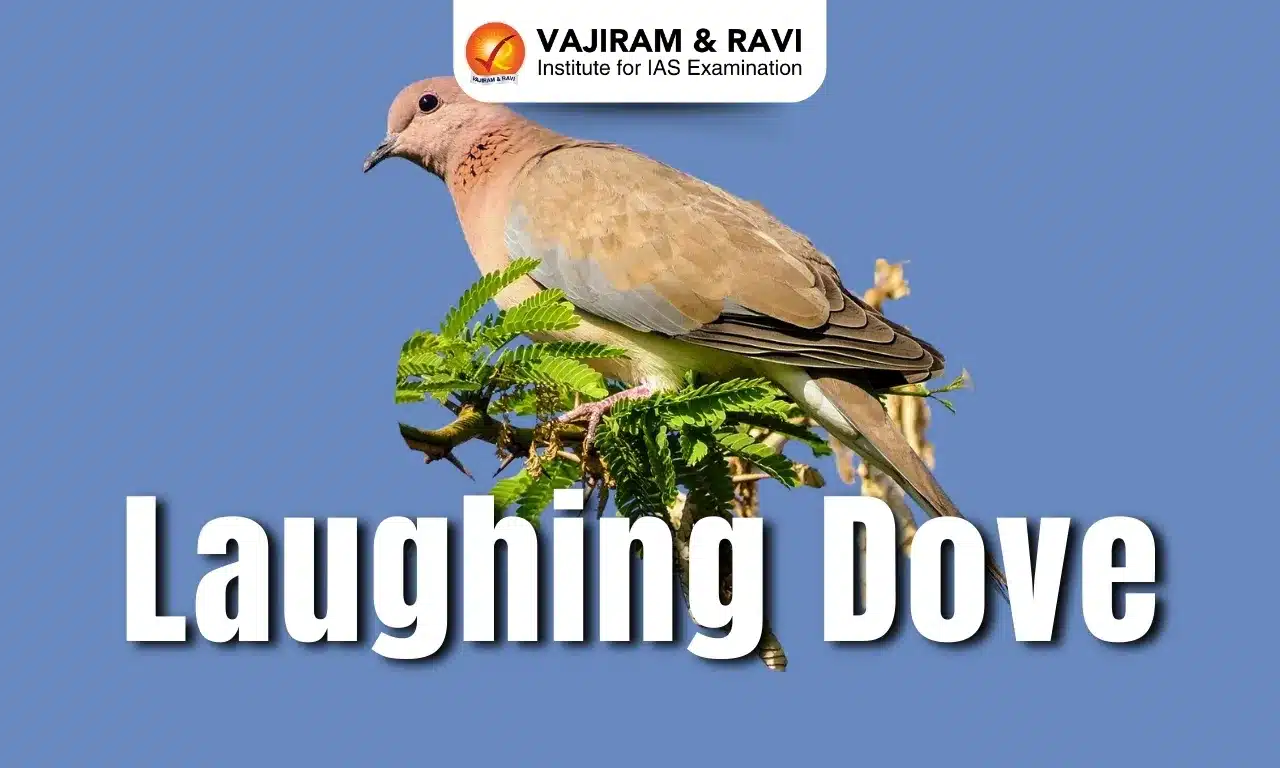
Laughing Dove

Laughing Dove

Laughing Dove Latest News

An uncommon, partially white small pigeon called a laughing dove was recently spotted in the Nagamalai hillock forest near Nambiyur in Erode.

About Laughing Dove

  • It is a small pigeon that is a resident breeder in Africa, the Middle East, and the Indian Subcontinent.
  • Scientific Name: Spilopelia senegalensis
  • Other names include laughing turtle dove, palm dove, and Senegal dove, while in India the name of little brown dove is often used. 
  • Distribution
    • The species is found in much of sub-Saharan Africa, Saudi Arabia, Iran, Afghanistan, Pakistan, and India. 
    • It is also found in Israel, Lebanon, Syria, the UAE, and Turkey (these populations may be derived from human introductions).
    • It was also introduced in Western Australia.
  • Habitat: It is found in dry scrub and semi-desert habitats where pairs can often be seen feeding on the ground. 

Laughing Dove Features

  • It is a long-tailed, slim pigeon, typically 25 cm in length. 
  • Its back wings and tail are reddish-brown with blue-grey in the wings. 
  • In flight, the underwings are rich chestnut.
  • The head and underparts are pinkish, shading to whitish on the lower abdomen. 
  • There is black spotting on the throat. The legs are red. 
  • Juveniles are more rufous than adults, and have reduced throat spotting.
  • They are fairly terrestrial, foraging on the ground in grasslands and cultivation. 
  • They are not particularly gregarious, and are usually alone, or in pairs.

Laughing Dove Conservation Status

It is classified as 'Least Concern' under the IUCN Red List.

Source: NIE

Laughing Dove FAQs

Q1: What is the scientific name of the Laughing Dove?

Ans: Spilopelia senegalensis

Q2: What is the habitat of Laughing Dove?

Ans: Dry scrub and semi-desert areas

Q3: What is the IUCN status of the Laughing Dove?

Ans: Least Concern

World Population Day 2025

World Population Day 2025

World Population Day Latest News

This year's World Population Day will take place on Friday, July 11, 2025, with the theme "Empowering young people to create the families they want in a fair and hopeful world".

About World Population Day (WPD)

  • Observed annually on July 11, World Population Day is a United Nations initiative aimed at raising awareness about the challenges and opportunities of global population growth. 
  • With the world population now surpassing 8.2 billion, the day highlights the importance of sustainable development, equitable access to resources, reproductive rights, and gender equality.
  • World Population Day 2025 Theme:Empowering young people to create the families they want in a fair and hopeful world’.

World Population Day History

  • WPD was established by the then-Governing Council of the United Nations Development Programme (UNDP) in 1989, following the global interest generated by "Five Billion Day" on 11 July 1987, when the world's population reached 5 billion. 
  • Dr KC Zachariah, a senior demographer at the World Bank, suggested that this day be commemorated.
  • In December 1990, the UN General Assembly decided to keep celebrating WPD annually to promote understanding of population issues and how they connect to the environment and development.
  • The first WPD was celebrated on July 11, 1990, in over 90 countries.

Key Facts on World's Population

  • The world's population has increased by over three times since the middle of the 20th century. 
  • According to the UN, there were 8.2 billion people on the planet as of July 2025. 
  • The population is predicted to peak at 10.4 billion in the middle of the 2080s, having reached 9.7 billion in 2050.
  • India leads globally with 1.46 billion people, followed by China's 1.41 billion.
  • India’s total fertility rate has fallen below the replacement level.
  • India’s population is expected to grow to approximately 1.7 billion before beginning to decline around 40 years from now, as stated in the UN Population Fund’s (UNFPA) 2025 State of World Population Report.

Source: IE

World Population Day FAQs

Q1: When is World Population Day observed annually?

Ans: July 11

Q2: What global milestone inspired the observance of World Population Day?

Ans: It was established by the UNDP in 1989, following the global interest generated by "Five Billion Day" on 11 July 1987, when the world's population reached 5 billion.

Q3: What is the theme of World Population Day 2025?

Ans: Empowering young people to create the families they want in a fair and hopeful world

TALASH Initiative

TALASH Initiative

TALASH Initiative Latest News

Recently, the National Education Society for Tribal Students (NESTS), an autonomous organization under the Ministry of Tribal Affairs launched the TALASH initiative.

About TALASH Initiative

  • The Tribal Aptitude, Life Skills and Self-Esteem Hub (TALASH) is a national- program to support the all-round development of students in Eklavya Model Residential Schools (EMRSs).
  • It was launched by National Education Society for Tribal Students in partnership with UNICEF India.
  • It aims to improve both the education and personal growth of tribal students across India.
  • The name TALASH, reflects a focused search for self-awareness, life skills, and career clarity among tribal youth.
  • The first initiative of its kind in India is aimed specifically at tribal students.
  • It is expected to benefit over 1,38,336 students enrolled in EMRSs across 28 States and 8 Union Territories, making it a truly national movement for inclusive education.

Features of TALASH Initiative

  • It is an innovative digital platform designed to equip EMRS students with essential tools for self-discovery and career planning.
  • It promotes self-awareness, helps students make informed career choices, and builds essential life skills.

The Initiative Offers

  • Psychometric Assessments: Inspired by NCERT’s ‘Tamanna’ initiative, TALASH offers a common aptitude test to help understand each student’s strengths and interests. Based on the test results, students receive Career Cards that suggest the best career options suited to their skills and abilities.
  • Career Counselling : The platform guides students toward informed career decisions, helping them align their aspirations with their aptitudes.
  • Life Skills & Self-Esteem Modules: It has special sections that help students learn important life skills like solving problems, communication skills, and handling emotions.
  • E-Learning for Teachers: A specialized portal equips educators with resources and training to effectively mentor and support students in their academic and personal journeys.

Source: PIB

TALASH Initiative FAQs

Q1: What is National Education Society for Tribal Students (NESTS)?

Ans: It is an autonomous organization under the Ministry of Tribal Affairs, dedicated to providing quality education to tribal students through Eklavya Model Residential Schools (EMRSs) across India.

Q2: What is Eklavya model residential school scheme?

Ans: Eklavya Model Residential Schools (EMRS) are set up in States/UTs with grants under Article 275(1) of the Constitution of India. EMRSs provide free education to ST children from class VI to XII in residential set up. The scheme is being implemented by the Ministry of Tribal Affairs, Government of India.

Daily Editorial Analysis 11 July 2025

Daily Editorial Analysis

Population Decline and an Ill-Informed Chorus

Context:

  • Public discourse on population has evolved from fears of uncontrolled growth and resource strain to concerns over rapidly declining fertility rates.
  • The article highlights how public discussions on population have evolved—from concerns about unchecked growth and environmental impact to current anxieties over declining fertility rates, reflecting changing demographic priorities.

Contrasting Views on Population Trends

  • While voices like Elon Musk warn of imminent population decline and "civilisation dwindling to nothing," global data suggests otherwise.
  • According to the UN World Population Prospects (WPP) 2024, the world population is projected to rise from 8.2 billion in 2024 to a peak of 10.3 billion by the 2080s, before gradually declining.

Misinterpretations and Analytical Gaps

  • Much of the alarm over falling fertility rates is analytically flawed. Two key points are often overlooked:
    • Projections Are Not Predictions
      • Population projections depend on assumptions about future birth and death rates. The further into the future, the greater the uncertainty.
    • Population Momentum
      • Even with below-replacement fertility rates (TFR < 2.1), populations can continue growing for decades.
      • This is due to a large share of the population still being in reproductive age. Shrinking does not happen instantly or in a straight line.

The Real Fertility Crisis: Barriers to Desired Family Size

  • According to the UNFPA’s 2025 report, many individuals worldwide face obstacles in having the number of children they desire.
  • Among 14,000 people surveyed across 14 countries:
    • 1 in 5 felt unable to have their preferred number of children.
    • 23% experienced delays in having children, and 40% ultimately gave up on their desire for more children.
  • Key Barriers Identified
    • Across both high- and low-fertility countries, common factors limiting family size include:
      • Infertility: 13% (India)
      • Financial limitations: 38% (India), 58% (South Korea)
      • Housing limitations: 22% (India), 31% (South Korea)
      • Lack of quality childcare: 18%
      • Unemployment: 21%
  • Case Study: South Korea's Fertility Efforts
    • Despite spending over $200 billion in 20 years to boost fertility, South Korea saw a slight 7.3% rise in births in early 2025, linked to increased marriages and a more positive view of family life.
    • Yet, financial and housing constraints remain dominant concerns.

Rethinking Fertility Policies: Focus on Choice and Support, Not Control

  • The fear of falling birth rates has often unfairly targeted women, curbing reproductive rights and pushing them into traditional childbearing roles.
  • However, most people still want around two children on average but face barriers in achieving that.
  • Problems with Target-Driven Pronatalism
    • Measures like baby bonuses and one-time benefits:
      • Reinforce outdated gender roles.
      • Overlook men’s role in parenting.
      • Often fail to create lasting fertility changes.

Conclusion: Societal and Workforce Changes

  • Instead of coercing women into motherhood, countries should:
    • Promote gender-equal workforce participation.
    • Remove penalties for working mothers.
    • Stop linking population policies to religion or nationalism. Instead, focus on creating a society where families get real help and support.

Yamuna River Rejuvenation

Context:

  • The newly elected government in Delhi, aligned with the Centre, is prioritising the cleaning of the Yamuna River.
  • This initiative aligns with and supplements the Namami Gange Programme (NGP), potentially offering a replicable model for river rejuvenation by promoting Centre-state synergy and improved urban governance.

Namami Gange Programme (NGP) - A Paradigm Shift in River Rejuvenation:

  • From regulatory to executive framework:
    • The NGP, launched in 2014, marks a shift from regulatory pollution control (under the Ministry of Environment) to an executive mission-based rejuvenation strategy under the Ministry of Jal Shakti.
    • This executive approach reflects a change from pollution abatement to improving ecological health of rivers.
  • Adoption of river basin approach:
    • The programme is based on a river basin planning model, with inputs from IITs.
    • Such integrated approaches were seen earlier in successful European models like the International Commission for the Protection of the Rhine (ICPR), established in 1950 to restore the River Rhine.

Institutional and Legal Innovations under NGP:

  • Structural reforms and coordination mechanism:
    • The 2016 River Ganga Authorities Order created a multi-layered governance system:
      • National Ganga Council (NGC) headed by the Prime Minister
      • Empowered Task Force under Union Minister of Jal Shakti
      • Executive Council under NMCG Director General
    • Recognised the role of subnational governments through state and district-level Ganga Committees.
  • Challenges in subnational participation:
    • Despite structural provisions, states’ legal, financial, and institutional responses have been underwhelming.
    • Lack of ownership from basin states poses risks to the long-term sustainability of the programme.

Delhi’s Yamuna Project - A Microcosm for Larger River Reforms:

  • Urban governance and pollution control:
    • Nearly 80% of Yamuna’s pollution load originates from Delhi, primarily due to uncaptured and untreated sewage.
    • This highlights the critical role of urban governance in river restoration.
  • Potential as a scalable model:
    • Yamuna’s interstate river status necessitates interstate cooperation, making Delhi’s approach a test case for federal collaboration.
    • It can help identify motivations and drivers for effective subnational mobilisation under NGP.

Learning from Global Best Practices:

  • Europe’s slow but effective institutional evolution (ICPR), post events like the Sandoz disaster, led to the Water Framework Directive.
  • India’s NGP can follow a similar route by mobilising internal subnational responses through institutional partnerships.

Conclusion:

  • Delhi’s Yamuna cleaning initiative offers a critical opportunity for reciprocal learning under the NGP, helping to address the current gaps in state participation, urban sewage management, and interstate cooperation.
  • If leveraged correctly, this can lead to a robust, multi-tiered policy and institutional ecosystem for river rejuvenation in India, with broader implications for environmental federalism, urban development, and sustainable water governance.

Daily Editorial Analysis 11 July 2025 FAQs

Q1: What is editorial analysis?

Ans: Editorial analysis is the critical examination and interpretation of newspaper editorials to extract key insights, arguments, and perspectives relevant to UPSC preparation.

Q2: What is an editorial analyst?

Ans: An editorial analyst is someone who studies and breaks down editorials to highlight their relevance, structure, and usefulness for competitive exams like the UPSC.

Q3: What is an editorial for UPSC?

Ans: For UPSC, an editorial refers to opinion-based articles in reputed newspapers that provide analysis on current affairs, governance, policy, and socio-economic issues.

Q4: What are the sources of UPSC Editorial Analysis?

Ans: Key sources include editorials from The Hindu and Indian Express.

Q5: Can Editorial Analysis help in Mains Answer Writing?

Ans: Yes, editorial analysis enhances content quality, analytical depth, and structure in Mains answer writing.

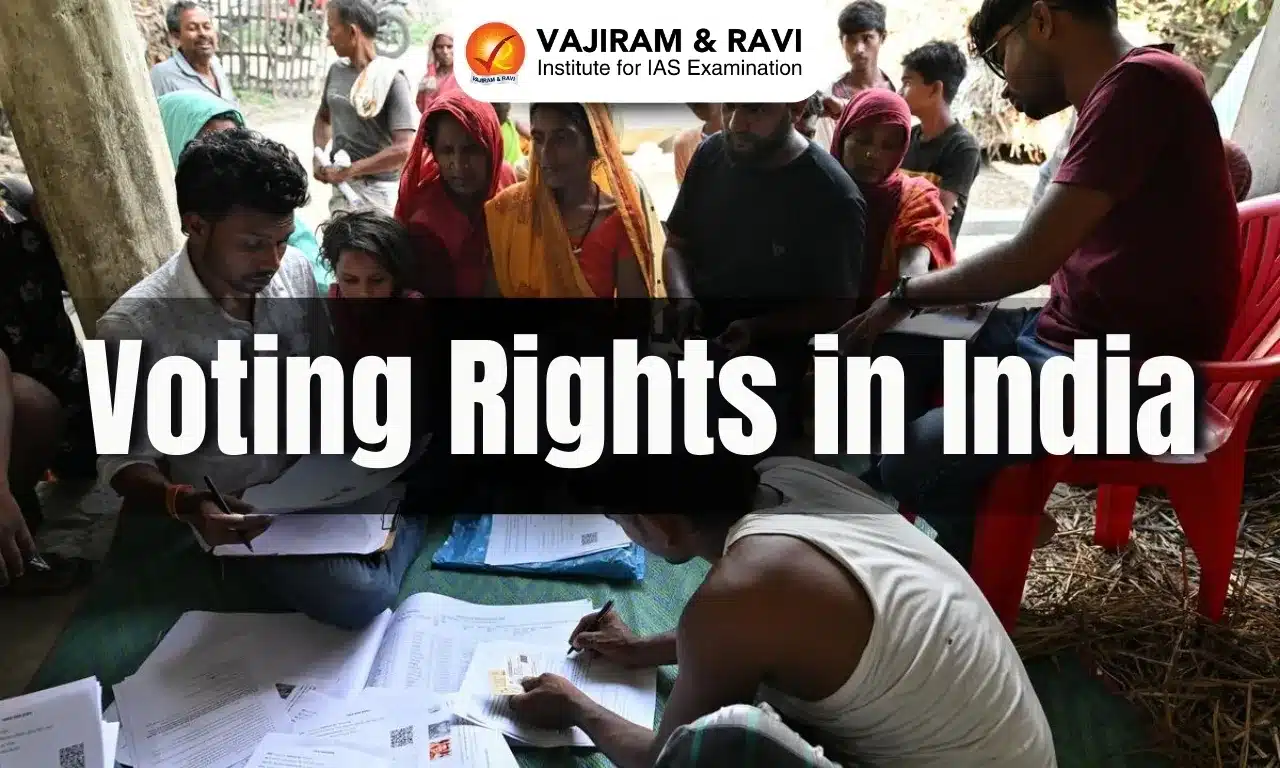
Protecting and Preserving Voting Rights in India: Legal Status, Electoral Rolls & Universal Suffrage

Voting Rights in India

Voting Rights in India Latest News

  • Recently, the Supreme Court asked the Election Commission to accept Aadhaar, voter ID, and ration cards for updating Bihar’s voter list. The court said the right to vote is core to India’s democracy.
  • Unlike some Western countries, India gave voting rights to all adults from the start. 
    • In the UK, voting was once limited to rich men. Women there got voting rights only in 1928. 
    • In the U.S., Black citizens and women legally gained voting rights early, but many still faced unfair barriers for years.
  • The article highlights the Supreme Court's emphasis on protecting the right to vote, linking it to India's commitment to universal adult suffrage.

How India Made Universal Adult Suffrage a Reality

  • India chose immediate universal adult suffrage from the beginning, ensuring voting rights for all citizens, unlike many countries that granted it slowly.
  • Constitutional Guarantee
    • Article 326 granted voting rights to all adults, regardless of gender, caste, religion, education, or property. 
    • The voting age was later reduced from 21 to 18 through the 61st Amendment in 1989.
  • Legal Framework
    • Two laws support this right:
      • The Representation of the People Act, 1950 — for preparing electoral rolls.
      • The Representation of the People Act, 1951 — for regulating elections and addressing offences.
  • Administrative Innovations
    • To include 173 million largely illiterate voters, election symbols were introduced by Chief Election Commissioner Sukumar Sen, making voting easier for all.
    • The Election Commission ensures that every citizen, no matter how remote, can exercise their right to vote — a core pillar of India’s democracy.

Legal Status of Voting Rights in India

  • In India, the ‘right to vote’ is not a fundamental or constitutional right but a statutory right under Section 62 of the Representation of the People Act, 1951.
  • In Kuldip Nayar v. Union of India (2006), the Supreme Court ruled that voting is a statutory right, not a fundamental or constitutional one.
  • A 2016 judgment in Rajbala v. State of Haryana termed it a constitutional right, but the larger bench ruling in Kuldip Nayar prevails.
  • In Anoop Baranwal v. Union of India (2023), the Court maintained the established view. 
  • Justice Ajay Rastogi’s dissent linked voting to fundamental rights under Articles 19(1)(a) and 21, but his opinion was a minority view.
  • Even as a statutory right, courts and thinkers consider voting essential for democracy’s health and survival, reflecting its status as a “democratic imperative.”

Importance of Electoral Roll Accuracy in Safeguarding Democracy

  • Accurate electoral rolls are essential for free and fair elections in India, ensuring the principle of “one person, one vote.” 
  • Under the Representation of the People Act, 1950, the Election Commission is empowered to regularly update and correct these rolls.
  • Errors such as mass omissions, duplicate entries, or ineligible inclusions can lead to impersonation, voter disenfranchisement, and distortion of election outcomes.
  • Allowing multiple ID documents like Aadhaar, voter ID, and ration cards strengthens every citizen’s right to be included and represented.
  • According to Lakshmi Charan Sen v. A.K.M. Hassan Uzzaman (1985), political parties have a responsibility to ensure voter rolls are accurate, especially in a country with widespread illiteracy.
    • Given India’s party-based Parliamentary system, such vigilance will help to preserve ‘electoral integrity’.

Ordinary Resident in India’s Voter List

  • The Election Commission (EC) prepares electoral rolls under Article 324 of the Constitution and Section 19 of the Representation of the People Act (RPA), 1950.
  • Definition of Ordinary Resident
    • Any Indian citizen aged 18 or above who usually lives in a constituency can register as a voter.
    • Ordinary residence means regular and genuine presence — not a short or temporary stay.
    • For example, a student in a hostel may not qualify if their permanent home is elsewhere.
  • Why It Matters
    • This rule prevents fake registrations and keeps voters connected to their constituencies.
    • In Manmohan Singh’s case (1991), the court clarified that ordinary residence means habitual presence, not just a formal address.
  • Special Voter Categories
    • Postal ballots are allowed for service voters like soldiers, government staff abroad, and election officials.
    • Overseas Indians can register under Section 20A of the RPA but must vote in person.

Citizenship Verification Debate in Bihar

  • A key issue in Bihar's SIR process is citizenship verification. 
  • In Lal Babu Hussein v. ERO (1995), the Supreme Court struck down Election Commission orders that allowed officials to remove alleged foreigners from voter rolls without proper procedure.
  • The Court held:
    • Proof of citizenship cannot be unfairly demanded from voters.
    • Past voter lists must be respected.
    • EROs must conduct full inquiries, follow fair procedures, and act under the Citizenship Act and Constitution.
  • As reaffirmed in Md. Rahim Ali Case (2024), no one can be excluded from voter rolls based on mere suspicion or unverified allegations.

Source: TH | AJ

Voting Rights in India FAQs

Q1: What is the legal status of voting rights in India?

Ans: Voting is a statutory right under the Representation of the People Act, not a fundamental right as per the Supreme Court.

Q2: How does India ensure universal adult suffrage?

Ans: Through Article 326, RPA laws, and innovations like election symbols ensuring inclusivity even for illiterate voters.

Q3: Why is electoral roll accuracy important?

Ans: It safeguards free elections by preventing impersonation, disenfranchisement, and duplication while upholding democratic integrity.

Q4: Who qualifies as an ordinary resident for voting?

Ans: A person habitually living in a constituency, not just temporarily staying, as clarified in multiple court judgments.

Q5: What did the Supreme Court rule on citizenship verification?

Ans: Citizenship verification must follow due process, respecting past voter rolls, without vague suspicions or arbitrary deletions.

Electoral Roll Revision in India: Special Intensive Revision, History, and Legal Safeguards Explained

Electoral Roll Revision in India

Electoral Roll Revision in India Latest News

  • The Supreme Court allowed Bihar’s Special Intensive Revision (SIR) of electoral rolls to continue but advised accepting Aadhaar, voter ID, and ration cards as valid documents.
  • Political opposition has grown over the ECI’s rule requiring even existing voters (enrolled after 2003) to provide birth-related documents to prove citizenship, raising fears of large-scale voter disenfranchisement.
  • In earlier electoral roll revisions across India, similar concerns had arisen. Over time, legal safeguards evolved:
    • Courts ruled that voters cannot be excluded without full inquiry and due process.
    • Past voter lists must be respected as valid proof.
  • Citizenship verification cannot rely on vague suspicions or unverified claims.

Types of Electoral Roll Revisions in India

  • An intensive revision involves preparing fresh electoral rolls through house-to-house visits, recording eligible voters as of a set date. 
  • This is done when existing rolls are outdated or inaccurate, usually before major elections or after constituency changes. 
  • In contrast, a summary revision is a regular annual update where draft rolls are published, and citizens can request additions, deletions, or corrections without home visits. 
  • A special revision occurs in exceptional situations like missed areas, major errors, or legal or political needs. 
  • It may follow either summary or intensive methods, depending on what is required to maintain accurate and inclusive voter lists.

Bihar’s Exercise: A Special Intensive Revision

  • The ongoing Special Intensive Revision (SIR) in Bihar combines elements of both intensive and summary revisions under the ECI’s powers in Section 21(3) of the 1950 law. 
  • It involves door-to-door verification along with using existing voter lists.
  • What makes it different is a new requirement: electors must provide documentary proof of birth or place of birth during enumeration — a step not seen in earlier revisions. 
  • The term “special” highlights this flexible, hybrid method tailored to specific needs.

Why the Special Intensive Revision Began Now, Starting with Bihar

  • The Special Intensive Revision (SIR) is a nationwide exercise announced by the Election Commission of India (ECI)— the first such drive in over 20 years. 
  • It began with Bihar, where Assembly elections are due before November.
  • The ECI cited major changes in voter lists caused by urbanisation, migration, and voters shifting addresses without deleting previous entries, leading to duplication. 
  • Repeated political complaints, including allegations of electoral roll manipulation, have also prompted this verification drive to clean up and standardise rolls across the country.

History and Purpose of Intensive Electoral Roll Revisions in India

    • Since Independence, the Election Commission of India (ECI) has conducted intensive revisions of electoral rolls multiple times — in 1952–56, 1957, 1961, 1965, 1966, 1983–84, 1987–89, 1992, 1993, 1995, 2002, 2003, and 2004.
    • Early Focus - The first revisions aimed to correct serious flaws in the rolls used for the 1951–52 Lok Sabha election, caused by public inexperience, administrative gaps, and the absence of a formal electoral law. 
      • A notable issue was the mass exclusion of women, many of whom did not share their names with officials.
  • Phased Approach - To improve accuracy, the ECI adopted a phased revision strategy — covering sections of each state yearly before major elections.
  • Changing Priorities Over Time - By the 1980s, focus shifted toward preventing ineligible entries, especially foreign nationals. 
    • Border states often reported such concerns, prompting the ECI to issue guidelines stressing that no name could be removed without due process, placing the burden of proof on the objector.
  • Role of EPIC - In 1993 and 1995, intensive revisions helped introduce Elector’s Photo Identity Cards (EPIC), although that wasn’t their main purpose.
  • Shift to Summary Revisions - As voter lists improved and costs grew, the ECI made summary revisions the norm. 
  • But when serious concerns arose due to demographic changes, political complaints, or administrative needs, the ECI returned to intensive methods tailored to that moment’s challenges.

Source: IE

Electoral Roll Revision in India FAQs

Q1: What is an intensive revision of electoral rolls?

Ans: A fresh house-to-house survey to record eligible voters, usually done before major elections or after constituency changes.

Q2: Why is Bihar undergoing a special intensive revision?

Ans: Due to upcoming Assembly elections and to address duplication, migration, and political complaints about voter list manipulation.

Q3: How is special intensive revision different?

Ans: It combines house visits with existing roll checks and introduces new document requirements during voter data collection.

Q4: How has India historically revised electoral rolls?

Ans: Through phased intensive revisions since the 1950s, focusing on correcting flaws, migration issues, and ineligible voter entries.

Q5: What safeguards exist against wrongful voter exclusion?

Ans: Courts mandate due process, respect for past rolls, and require credible evidence before removing any name from lists.

Enquire Now