Top 10 Longest Bridges in the World, Location, Length, Main Span

Top 10 Longest Bridges in the World

Bridges are among the most remarkable feats of human engineering, connecting cities, countries, and continents. While many are known for architectural design, others are recognized due to their length, often spanning rivers, oceans, valleys, or swamps. However, defining the “longest” bridge isn’t always straightforward. Some are measured by total length (including approach spans), others by the main span, or elevation above terrain.

This article lists the Top 10 Longest Bridges in the World by total length, followed by the Top 10 Longest Bridges in the World by type, such as suspension, cable-stayed, arch, cantilever, and continuous truss bridges.

Types of Longest Bridges in the World

Before exploring the Longest Bridges in the World, it's important to understand the different types of bridge structures:

Types of Longest Bridges in the World
Bridge Names Key Features / Description

Viaducts

Long bridges with a series of spans; ideal for high-speed rail and highways

Suspension Bridges

Deck hangs below cables suspended between towers; allows for very long spans

Cable-Stayed Bridges

Cables run directly from one or more towers to the deck; modern and efficient design

Arch Bridges

Curved arch structure bears loads through compression; visually strong and durable

Cantilever Bridges

Horizontal beams extend into space, supported at only one end; allows construction without falsework

Continuous Truss Bridges

Connected truss framework spans long distances without hinges; ensures uniform load distribution

Longest Bridge in the World - Danyang-Kunshan Grand Bridge

Spanning approximately 165 kilometers (102.4 miles), the Danyang-Kunshan Grand Bridge in China is the Longest Bridge in the World. It’s a viaduct, constructed primarily for high-speed rail, stretching across the Yangtze River Delta.

The Danyan Kunshan Grand Bridge supports the Beijing-Shanghai High-Speed Railway and crosses rice paddies, lakes, and river systems. Built to withstand earthquakes and extreme weather, the project employed over 10,000 workers and took four years to complete. It opened in 2011 and showcases China's dedication to infrastructure-led growth.

Top 10 Longest Bridges in the World (By Total Length)

Below is a list of the Top 10 Longest Bridges in the World (By Total Length), most of which are viaducts used for high-speed rail:

Top 10 Longest Bridges in the World (By Total Length)
Rank Bridge Name Architect/Designer Year Completed Length (km) Type Location

1

Danyang-Kunshan Grand Bridge

China Road and Bridge Corporation (CRBC)

2010

164.8

Viaduct (Rail)

Between Shanghai and Nanjing, Jiangsu, China

2

Changhua-Kaohsiung Viaduct

THSRC with Toshiba, Kawasaki, Mitsubishi

2007

157.3

Viaduct (Rail)

Taiwan

3

Kita-Yaita Viaduct

-

-

114

Viaduct (Rail)

Japan

4

Tianjin Grand Bridge

China Railway Group Limited

2011

113.7

Viaduct (Rail)

Langfang to Qingxian, China

5

Cangde Grand Bridge

China Railways Group Limited (CREC)

2010

105.81

Viaduct (Rail)

Beijing–Shanghai HSR, China

6

Weinan Weihe Grand Bridge

China Railway Group Limited (CREC)

2008

79.732

Viaduct (Rail)

China

7

Bang Na Expressway

Louis Berger

2000

54

Viaduct (Road)

Thailand

8

Beijing Grand Bridge

China Railway Group Limited (CREC)

2010

48.2

Viaduct (Rail)

Beijing–Shanghai HSR, China

9

Metro Manila Skyway

C.P. Yang Construction and Development Corp.

2002–2015 (Phased)

32

Viaduct (Road)

Metro Manila, Philippines

10

Lake Pontchartrain Causeway

Hoffman & Henon; Walter J. Keller, Inc.

1956 (N), 1969 (S)

38.4 / 38.7

Causeway (Road)

Louisiana, USA

Wuhan Metro Bridge

CREC and CSCEC

2004

37.788

Wuhan, China

Note: Most of the bridges above are part of Asian high-speed rail networks and reflect modern infrastructure trends favoring viaduct designs for efficiency and resilience.

Top 10 Longest Suspension Bridges in the World

Suspension Bridges are iconic for their engineering elegance and large spans. These bridges are designed to span long distances with minimal support piers.

Top 10 Longest Suspension Bridges in the World
Rank Bridge Country Main Span (m) Main Span (miles)

1

1915 Çanakkale Bridge

Turkey

2,023

1.26

2

Akashi Kaikyo Bridge

Japan

1,991

1.24

3

Yangsigang Yangtze Bridge

China

1,700

1.06

4

Nansha Bridge (East Span)

China

1,688

1.05

5

Xihoumen Bridge

China

1,650

1.03

6

Great Belt Bridge

Denmark

1,624

1.01

7

Osman Gazi Bridge

Turkey

1,550

0.96

8

Yi Sun-sin Bridge

South Korea

1,545

0.96

9

Runyang Bridge

China

1,490

0.93

10

Second Dongtinghu Bridge

China

1,480

0.92

Top 10 Longest Cable-Stayed Bridges in the World

Cable-stayed Bridges are known for their visually striking design with towers supporting the bridge deck via cables arranged in a fan or harp pattern.

Top 10 Longest Cable-Stayed Bridges in the World
Rank Bridge Country Main Span (m) Main Span (miles)

1

Russky Bridge

Russia

1,104

0.69

2

Hutong Yangtze Bridge

China

1,092

0.68

3

Sutong Bridge

China

1,088

0.68

4

Stonecutters Bridge

Hong Kong

1,018

0.63

5

Qingshan Yangtze Bridge

China

938

0.58

6

Edong Yangtze Bridge

China

926

0.58

7

Jiayu Yangtze Bridge

China

920

0.57

8

Tatara Bridge

Japan

890

0.55

9

Pont de Normandie

France

856

0.53

10

Chizhou Yangtze Bridge

China

828

0.51

Top 10 Longest Arch Bridges in the World

Arch bridges use a curved structure that distributes weight outward along the arch and into supports at either end.

Top 10 Longest Arch Bridges in the World
Rank Bridge Country Main Span (m) Main Span (miles)

1

Pingnan Third Bridge

China

575

0.36

2

Chaotianmen Bridge

China

552

0.34

3

Lupu Bridge

China

550

0.34

4

Bosideng Bridge

China

530

0.33

5

New River Gorge Bridge

USA

518

0.32

6

Bayonne Bridge

USA

510

0.32

7

Zigui Yangtze Bridge

China

508

0.32

8

Hejiang Yangtze Bridge

China

507

0.31

9

Sydney Harbour Bridge

Australia

503

0.31

10

Wushan Bridge

China

460

0.29

Top 10 Longest Cantilever Bridges in the World

Cantilever Bridges are constructed using structures that project horizontally and are supported only on one end.

Top 10 Longest Cantilever Bridges in the World
Rank Bridge Country Main Span (m) Main Span (miles)

1

Pont de Québec

Canada

549

0.34

2

Forth Bridge

UK (Scotland)

521

0.32

3

Minato Bridge

Japan

510

0.32

4

Commodore Barry Bridge

USA

501

0.31

5

Crescent City Connection

USA

480

0.30

6

Sanguantang Bridge

China

465

0.29

7

Howrah Bridge

India

457

0.28

8

Veterans Memorial Bridge

USA

445

0.28

9

Tokyo Gate Bridge

Japan

440

0.27

10

San Francisco–Oakland Bay Bridge (East Span)

USA

427

0.27

Top 10 Longest Continuous Truss Bridges in the World

Continuous Truss Bridges employ a series of connected triangular trusses that offer strength and flexibility over longer spans.

Top 10 Longest Continuous Truss Bridges in the World
Rank Bridge Country Main Span (m) Main Span (miles)

1

Ikitsuki Bridge

Japan

400

0.25

2

Astoria-Megler Bridge

USA

376

0.23

3

Francis Scott Key Bridge

USA

366

0.22

4

Hart Bridge

USA

331

0.21

5

Oshima Bridge

Japan

325

0.20

6

Tenmon Bridge

Japan

300

0.19

7

Kuronoseto Bridge

Japan

300

0.19

8

Taylor-Southgate Bridge

USA

259

0.16

9

Julien Dubuque Bridge

USA

258

0.16

10

Braga Bridge

USA

256

0.16

Longest Bridges in the World FAQs

Q1: Which is the longest bridge in the world?

Ans: The Danyang–Kunshan Grand Bridge in China, with a total length of 165 km.

Q2: What type of bridge is most commonly the longest?

Ans: Viaducts, used primarily in high-speed rail networks, dominate the list of longest bridges.

Q3: Which is the longest suspension bridge in the world?

Ans: The 1915 Çanakkale Bridge in Turkey, with a main span of 2,023 meters.

Q4: What is the longest bridge in the United States?

Ans: The Lake Pontchartrain Causeway in Louisiana, spanning 38.4 km.

Q5: Is the Golden Gate Bridge among the longest bridges?

Ans: While iconic, the Golden Gate Bridge ranks much lower in terms of length, though it remains a symbol of engineering excellence.

Top 10 Countries With the Most Olympic Medals Till 2025

Top 10 Countries With the Most Olympic Medals

The Olympic Games, held every four years, represent international athletic excellence, promoting global unity and national pride. Over the decades, this grand arena has seen the world’s best athletes compete with passion. Divided into the Summer and Winter Games, the Olympics includes a wide range of sporting disciplines. The quest for Olympic medals goes beyond athletic skill, it reflects a nation’s commitment to sports development, infrastructure, and an enduring spirit of perseverance and ambition.

Olympic Medals Significance

The Olympic Games, held every four years, are the highest stage for athletic competition. Divided into Summer and Winter Games, they feature a wide array of disciplines from swimming and athletics to gymnastics, fencing, and snowboarding. Winning a medal not only elevates an athlete’s career but also contributes to a nation's international standing.

Medals are often seen as indicators of a country’s:

  • Sports education and infrastructure
  • Investment in youth and grassroots development
  • Cultural emphasis on physical fitness and discipline

Top 10 Countries With the Most Olympic Medals (Till 2025)

According to the World Population Review, here are the top medal-winning nations in Olympic history, combining both Summer and Winter Games, including their Youth Olympic medals.

Top 10 Countries With the Most Olympic Medals (Till 2025)
Rank Country Gold Silver Bronze Youth Olympic Medals Total Medals (approx.)

1

United States

3,105

1,229

1,000

96

5,334+

2

Germany

1,211

384

419

113

2,027+

3

France

1,040

312

336

89

1,777+

4

United Kingdom

1,035

325

351

47

1,758+

5

China

900

384

281

187

1,752+

6

Italy

885

299

278

96

1,654+

7

Russia

779

290

243

228

1,540+

8

Sweden

740

233

245

43

1,261+

9

Japan

690

229

220

115

1,254+

10

Australia

636

185

204

73

1,098+

Top 10 Countries with the Most Olympic Medals Highlights

The Olympic Games serve as the highest platform for international athletic excellence, bringing together the most accomplished athletes from across the globe. Over the years, several countries have not only maintained consistent participation but have also established themselves as dominant forces in the medal standings. The table below presents the Top 10 Countries with the Most Olympic Medals Highlights, along with the sports they excel in and notable highlights of their Olympic journeys.

Top 10 Countries with the Most Olympic Medals Highlights
Rank Country Key Sports Olympic Highlights

1

United States

Swimming, Athletics, Basketball, Gymnastics

Over 5,300 medals; home of Michael Phelps (28 medals); dominance in both Summer and Winter Games; strong sports infrastructure and youth programs.

2

Germany

Gymnastics, Rowing, Cycling, Winter Sports

Medals from unified and divided Germany (GDR, FRG); consistent in biathlon, skiing, and luge; historic Olympic strength.

3

France

Fencing, Cycling, Judo

Founding Olympic nation; improved performance post-2024 Paris Games; government-backed sports development driving recent success.

4

United Kingdom

Rowing, Athletics, Cycling, Equestrian

Strong legacy; peaked at London 2012; National Lottery-funded elite athlete support; competes as Team GB.

5

China

Table Tennis, Diving, Badminton, Gymnastics

Olympic powerhouse since 1984; led gold tally in 2008 Beijing; Youth Olympic strength points to future dominance.

6

Italy

Fencing, Cycling, Shooting, Water Polo

Historic performer; excels in equestrian and aquatic sports; supported by military-linked sports academies.

7

Russia

Wrestling, Gymnastics, Weightlifting, Figure Skating

Includes USSR legacy; recent participation impacted by doping bans; still a top Youth Olympic performer and medal contributor.

8

Sweden

Wrestling, Shooting, Athletics, Equestrian

Consistent across decades; strong showing in both Summer and Winter Olympics despite smaller size.

9

Japan

Judo, Karate, Wrestling, Gymnastics

Hosting Tokyo 2020 boosted ranks; major youth investment; frequent Youth Olympic podium finishes; strong tradition in martial arts.

10

Australia

Swimming, Rowing, Cycling, Hockey

Regular top-10 finisher; AIS (Australian Institute of Sport) drives excellence; exceptional Summer Olympic success.

Top Olympic Medalists

The Olympic Games have witnessed legendary athletes who not only competed at the highest level but consistently delivered medal-winning performances across multiple editions. The table below highlights the Top Olympic Medalists of all time, their achievements, the sports they dominated, and their remarkable contributions to the Olympic movement.

Athlete

Country

Total Medals

Gold

Silver

Bronze

Sport

Olympic Years

Notable Highlights

Michael Phelps

USA

28

23

3

2

Swimming

2000–2016

Greatest swimmer in history; competed in five Olympics; unmatched Olympic dominance.

Larisa Latynina

USSR

18

9

4

5

Gymnastics

1956, 1960, 1964

Held record for most Olympic medals for decades; symbol of Soviet gymnastics power.

Top 10 Countries With the Most Olympic Medals FAQs

Q1: Which country has won the most Olympic medals of all time?

Ans: The United States, with over 5,300 Olympic medals, tops the all-time chart.

Q2: Who is the most decorated Olympian in history?

Ans: Michael Phelps (USA) with 28 medals — 23 of them gold.

Q3: Which country has the most Youth Olympic medals?

Ans: Russia and China have high Youth Olympic medal counts, showing strong future prospects.

Q4: How often are the Olympic Games held?

Ans: Every four years for both Summer and Winter Olympics, alternating every two years.

Q5: Which is the top medal-winning Asian country?

Ans: China leads Asia with over 1,700 Olympic medals.

Operation Baam, Launch Date, Timeline, Key Incidents

Operation Baam

In July 2025, Pakistan’s Balochistan province witnessed one of the most significant escalations in its long-running separatist conflict. A banned insurgent group, the Balochistan Liberation Front (BLF), launched a series of well-coordinated attacks under the name of Operation Baam, a term that means “dawn” in Balochi. This operation marked a new and intensified phase in the region's insurgency, involving multi-target, synchronized assaults across several districts. Operation Baam has not only challenged Pakistan’s internal security equipment but has also reignited international debate around the Balochistan conflict.

What is Operation Baam?

Operation Baam, launched on July 9-10, 2025, is a large-scale, coordinated militant campaign initiated by the Balochistan Liberation Front (BLF). The group claimed responsibility for a string of attacks across southern and southwestern districts of Balochistan. The targets included:

  • Military installations
  • Police check-posts
  • Telecommunication towers
  • Government administrative buildings

According to the Balochistan Liberation Front, the primary aim of the operation was to demonstrate its capacity for synchronized, large-area strikes. The group asserted that this operation marks a new strategic chapter in its resistance movement, underlining the increasing sophistication of Baloch insurgency tactics.

Districts Affected by Operation Baam

Operation Baam stretched across a wide geographical area. The primary districts targeted were:

  • Kech
  • Panjgur
  • Surab
  • Kharan

These districts are located in the southern and southwestern part of Balochistan, a region often labeled as the heartland of the separatist movement. The attacks reportedly caused widespread disruption of telecommunication networks, hampered emergency responses, and created a climate of fear among residents.

Operation Baam Timeline

Operation Baam is a recent high-level counter-terrorism operation launched by Indian security forces in response to escalating threats in the Jammu and Kashmir region. Initiated in 2025, this mission aimed to dismantle terrorist infrastructure, neutralize infiltrators, and ensure national security. The Operation Baam Timeline the strategic actions taken across various dates, showcasing intelligence coordination, swift military response, and critical engagements.

Operation Baam Timeline
Sl. No. Incident Location Details Casualties / Damage

1

Turbat Grenade Attack

Absar area, Turbat

Grenade thrown at civilian Muhammad Younis’s residence

5 injured (3 women, 2 children)

2

Sibi Police Checkpost Attack

Sibi district

Grenade attack on police checkpoint

No casualties reported

3

Series of Coordinated Attacks

Panjgur, Kech & others

At least 17 attacks in 2 days; destruction of telecom towers affecting both military and civilian communication

Infrastructure damaged; high planning sophistication

Balochistan Liberation Front Statement

In a press release, Major Gwahram Baloch, spokesperson of the BLF, declared:

“The resistance has entered a new phase. Operation Baam is designed to demonstrate that Baloch fighters are capable of launching large-scale, synchronised operations across vast geography.”

He further emphasized that the operation was aimed at inflicting both human and infrastructure damage, and reasserting the Baloch demand for self-determination and freedom from Pakistani state control.

Operation Baam Government Response

As of July 11, 2025, the Pakistani federal government has not officially acknowledged the scale of the attacks. However, reports from the ground indicate a heightened state of alert, with:

  • Increased military patrols
  • Roadblocks across key entry and exit points
  • Surveillance drones deployed over conflict zones

Despite the lack of a formal statement, it is evident that the government is treating the attacks as a serious internal security threat.

Why Is Balochistan a Conflict Zone?

Balochistan is Pakistan’s largest province by area, rich in natural resources like natural gas, copper, and gold. However, the region continues to suffer from chronic underdevelopment, high poverty, and a sense of political and cultural marginalization. Major Grievances in Balochistan:

  • Lack of political representation
  • Unequal economic development
  • Enforced disappearances and extrajudicial killings
  • Restricted access to education and healthcare
  • Control of local resources by the federal government

Baloch nationalist groups, including the BLF, have historically demanded greater autonomy, and in some cases, complete independence from Pakistan.

Regional and International Implications

  • Threat to the China-Pakistan Economic Corridor (CPEC)

Many of the affected districts lie along the China-Pakistan Economic Corridor, a $60+ billion project vital to China's Belt and Road Initiative (BRI). The CPEC passes through volatile Baloch territories, including the port city of Gwadar. The success of Operation Baam could trigger:

    • Chinese pressure on Pakistan to support security
    • Increased investment risk and possible project delays
    • Reduced investor confidence in the region’s long-term stability
  • Global Human Rights Concerns

India has consistently highlighted human rights violations in Balochistan at international forums. Although India officially denies supporting any separatist movement, Pakistan frequently accuses it of unrest in Balochistan. Operation Baam is likely to worsen bilateral ties, as Pakistan may use this event to intensify diplomatic pressure on New Delhi.

  • Global Human Rights Concerns

Organizations like Amnesty International and Human Rights Watch have often raised alarms about enforced disappearances, torture, and military excesses in Balochistan. Operation Baam is likely to draw renewed international scrutiny, potentially leading to:

    • Calls for independent investigations into the situation in Balochistan
    • Greater UN attention to the region
    • International debates over the rights of self-determination

Operation Baam FAQs

Q1: What is Operation Baam?

Ans: Operation Baam is a coordinated series of insurgent attacks launched by the Balochistan Liberation Front in July 2025 across southern and southwestern Balochistan.

Q2: Who launched Operation Baam?

Ans: The Balochistan Liberation Front (BLF), a banned separatist group in Pakistan.

Q3: What does ‘Baam’ mean?

Ans: ‘Baam’ means ‘dawn’ in the Balochi language, symbolizing a new phase in the insurgency.

Q4: Which districts were targeted?

Ans: Key districts include Kech, Panjgur, Surab, and Kharan.

Q5: Why is Balochistan important?

Ans: Balochistan is resource-rich and strategically vital for projects like CPEC, yet it remains economically underdeveloped and politically marginalized.

UPSC Daily Quiz 12 July 2025

UPSC Daily Quiz

The Daily UPSC Quiz by Vajiram & Ravi is a thoughtfully curated initiative designed to support UPSC aspirants in strengthening their current affairs knowledge and core conceptual understanding. Aligned with the UPSC Syllabus 2025, this daily quiz serves as a revision resource, helping candidates assess their preparation, revise key topics, and stay updated with relevant issues. Whether you are preparing for Prelims or sharpening your revision for Mains, consistent practice with these Daily UPSC Quiz can significantly enhance accuracy, speed, and confidence in solving exam-level questions.

[WpProQuiz 19]

UPSC Daily Quiz FAQs

Q1: What is the Daily UPSC Quiz?

Ans: The Daily UPSC Quiz is a set of practice questions based on current affairs, static subjects, and PYQs that help aspirants enhance retention and test conceptual clarity regularly.

Q2: How is the Daily Quiz useful for UPSC preparation?

Ans: Daily quizzes support learning, help in revision, improve time management, and boost accuracy for both UPSC Prelims and Mains through consistent practice.

Q3: Are the quiz questions based on the UPSC syllabus?

Ans: Yes, all questions are aligned with the UPSC Syllabus 2025, covering key areas like Polity, Economy, Environment, History, Geography, and Current Affairs.

Q4: Are solutions and explanations provided with the quiz?

Ans: Yes, each quiz includes detailed explanations and source references to enhance conceptual understanding and enable self-assessment.

Q5: Is the Daily UPSC Quiz suitable for both Prelims and Mains?

Ans: Primarily focused on Prelims (MCQ format), but it also indirectly helps in Mains by strengthening subject knowledge and factual clarity.

Daily Editorial Analysis 12 July 2025

Daily Editorial Analysis

India and the Global AI Race - A Call for Strategic, Democratic Governance

Context:

  • As the United States and China spearhead a new age of Artificial Intelligence (AI) competition and the European Union asserts regulatory leadership, India has announced its ambition to become a major player in global AI governance.
  • However, without a robust, politically anchored national AI strategy, India's efforts risk fragmentation and global irrelevance, particularly as global governance norms around AI solidify.

India’s Global AI Ambition vs Domestic Strategic Deficit:

  • India’s strategic position: India seeks to represent the Global South in AI forums by leveraging -
    • Democratic legitimacy
    • Digital capabilities
    • Leadership in the Global Partnership on AI (GPAI)
  • The governance gap: IndiaAI Mission (with a budget outlay of Rs. 10,000 crore) is operational but -
    • It lacks a cabinet-endorsed national strategy.
    • It is housed as a division of a Section 8 company in the Ministry of Electronics and Information Technology (MeitY), and is led by a bureaucrat.
    • Operates with limited political mandate or coordination authority.
  • Comparison with global peers: US, China, UK, and EU have formal AI strategies with roadmaps, timelines, and institutional backing.

Structural Challenges in India’s AI Ecosystem:

  • Research and talent deficit:
    • Weak R&D base and limited AI-specialised PhDs.
    • Indian universities underperform in global AI rankings.
    • Poor academia-industry collaboration.
    • Brain drain of top-tier talent to global AI hubs.
  • Private sector limitations:
    • The IT sector focused on services, not innovation.
    • Low investment in foundational AI research.
    • Absence of AI-first national champions.
    • Venture capital flows focused on consumer tech, not deep-tech innovation.

Democratic and Institutional Shortcomings in AI Governance:

  • Parliamentary exclusion:
    • No bipartisan consensus on AI.
    • Less than 1% of parliamentary questions on AI.
    • Absence of institutional oversight mechanisms.
    • Lack of parliamentary involvement undermines policy legitimacy, governance continuity, and public trust.
  • Technocratic policy discourse: The mostly technocratic policy talks have given little attention to crucial questions like strategic autonomy, the use of public data, energy demands, and national security consequences.

Consequences for India's Global AI Credibility:

  • Disconnect between global aspirations and domestic governance, as India's international ambition is undercut by fragmented domestic policies.
  • Democracies worldwide watch for alignment between India’s internal governance and external leadership claims.

Way Forward - A Democratic and Strategic AI Framework:

  • Cabinet-endorsed national AI strategy: Actionable roadmap and vision aligned with economic, security, and industrial policies and presented to Parliament for legitimacy.
  • Empowered coordinating authority: With a whole-of-government mandate and institutional mechanisms for democratic accountability.
  • Parliamentary oversight:
    • Establishment of dedicated standing committees on AI.
    • Bipartisan deliberation to ensure long-term policy stability.
  • Public engagement: Transparent debate on ethical, social, and strategic implications.

Conclusion - AI as a National Strategic Imperative:

  • AI is not just a technology — it is a general-purpose transformation impacting national security, economic development, social equity and governance.
  • India’s young population, digital infrastructure, and democratic framework offer unique advantages.
  • But without strategic coherence and democratic anchoring, India risks losing its window to shape global AI norms.

India and the Global AI Race - A Call for Strategic, Democratic Governance FAQs

Q1. Examine the structural and strategic challenges hindering India's ambition to become a global leader in AI.

Ans. India faces structural deficits like a shallow R&D base, weak academia-industry collaboration, talent drain, and absence of AI-first national champions, compounded by the lack of a Cabinet-endorsed national strategy.

Q2. Discuss the significance of democratic legitimacy and parliamentary oversight in shaping India’s AI governance framework.

Ans. Democratic legitimacy through parliamentary engagement is crucial to ensuring policy stability, bipartisan support, and public trust in AI governance, which is currently missing in India's technocratic approach.

Q3. Critically analyse the limitations of the IndiaAI Mission in addressing India’s long-term AI governance needs.

Ans. Despite its significant budget, the IndiaAI Mission lacks political authority, Cabinet approval, and whole-of-government coordination, making it insufficient to lead comprehensive and strategic AI transformation.

Q4. Evaluate the role of India in representing the Global South in the evolving landscape of global AI governance.

Ans. India is well-positioned to represent the Global South due to its digital capabilities and democratic credentials, but its credibility depends on aligning domestic governance with its international AI leadership ambitions.

Q5. Why is a Cabinet-endorsed National AI Strategy critical for India, and what should it ideally encompass?

Ans. A Cabinet-backed strategy is essential to provide long-term policy coherence, whole-of-government coordination, democratic accountability, and must align AI policy with R&D, industrial, and national security goals.

Source: IE


View India’s Gender Gap Report Ranking as a Warning

Context

  • India stands at a crossroads in its development journey, a global economic power, a digital innovator, and the world’s youngest nation by population, yet, beneath these commendable achievements lies a troubling paradox.
  • The World Economic Forum’s Global Gender Gap Report (2025) places India at 131 out of 148 countries, revealing an unsettling truth: gender inequality remains a deep-seated and structural impediment to the nation’s progress.
  • Therefore, it is important to analyse the multidimensional nature of India’s gender gap, particularly in economic participation and health.

Reasons Behind India’s Gender Gap

  • Structural Failures
    • India’s poor ranking is most alarming in the domains of economic participation and health and survival, two pillars that are foundational to gender equity.
    • While improvements have been noted in educational attainment, they have not translated into broader wellbeing or workforce participation for women.
    • The nation’s sex ratio at birth remains severely skewed, underscoring a persistent and dangerous cultural preference for sons.
    • Further, a decline in healthy life expectancy for women indicates chronic neglect in reproductive and preventive healthcare.
  • Skewed Health Outcomes
    • A particularly sobering statistic is that 57% of Indian women aged 15–49 are anaemic, significantly limiting their capacity to learn, earn, and safely bear children.
    • Despite the scale and solvability of such problems, policy responses remain insufficient.
    • The lack of investment in primary healthcare and reproductive services, especially for rural and economically vulnerable women, reflects a structural failure to prioritise women’s health as a national development goal.
    • As the text emphasizes, without good health, economic inclusion becomes impossible.
  • Economic Exclusion and Invisible Labour
    • India ranks 143rd on the Economic Participation and Opportunity subindex, highlighting the extent of gendered economic exclusion.
    • Women earn less than a third of what men earn, and their participation in the formal workforce is disproportionately low.
    • These gaps are not only socially unjust but also economically self-defeating.
    • A McKinsey Global Institute report (2015) estimated that closing gender gaps could add $770 billion to India’s GDP by 2025, a goal that now seems missed.
    • Beyond workforce numbers, Indian women remain grossly under-represented in leadership and decision-making spaces.
    • From corporate boardrooms to parliamentary committees, their voices are systematically marginalised.
    • Most notably, women bear the burden of unpaid domestic and care work, performing nearly seven times more than men, according to the Time Use Survey.
    • Yet, this critical labour remains invisible in national accounting and grossly underfunded in public policy.

The Demographic Turning Point

  • India’s demographic profile is evolving rapidly. While it currently enjoys the benefits of a young workforce, the share of elderly citizens is set to double by 2050, with a significant portion comprising older women, especially widows who face higher dependency.
  • At the same time, fertility rates are now below the replacement level, signalling an eventual decline in the working-age population.
  • This demographic transition intensifies the urgency of gender inclusion.
  • As the dependency ratio rises, the burden on a shrinking workforce will increase, potentially undermining India’s fiscal and economic stability.
  • The only sustainable response is to ensure that women, who make up half of the population, are healthy, empowered, and economically active.
  • Gender equality is no longer just a matter of human rights. It is a demographic imperative and an economic necessity

From Slogans to Systems: The Need for Real Investment

  • India does not lack policy frameworks or political ambition.
  • What it lacks is real investment and systemic reform. Addressing gender inequality requires a multi-sectoral approach:
    • Public health systems must prioritise women’s preventive and reproductive needs.
    • Care infrastructure must be expanded and integrated into social protection policies.
    • Gender budgeting and time-use data must inform policy design.
  • Most importantly, women must be seen not as passive beneficiaries, but as active builders of the economy.
  • The Global Gender Gap Report (2025), then, is more than a ranking, it is a warning.
  • If India fails to address its gender disparities now, it risks undermining the very gains it has so admirably achieved in other arenas.

Conclusion

  • India’s aspirations of becoming a global superpower will remain incomplete if half its population is left behind.
  • Gender inequality in health, labour, and care work is not just a social issue, it is a drag on the nation’s potential.
  • To reverse this, the country must commit to transformative action that places women at the heart of its economic and demographic planning. The time for slogans has passed; the time for systemic investment and real reform is now.

View India’s Gender Gap Report Ranking as a Warning FAQs

Q1. What is India's rank in the Global Gender Gap Report 2025?
Ans. India ranks 131 out of 148 countries in the Global Gender Gap Report 2025, indicating significant gender inequality.

Q2. What percentage of Indian women aged 15–49 are anaemic?

Ans. According to the National Family Health Survey (NFHS-5), 57% of Indian women aged 15 to 49 are anaemic.

Q3. Why is unpaid care work a concern in India?
Ans. Unpaid care work is a concern because Indian women perform nearly seven times more of it than men, which limits their time, agency, and ability to participate in the formal economy.

Q4. How can care infrastructure help women in India?
Ans. Investing in care infrastructure such as childcare and eldercare services can reduce the burden of unpaid work on women and help them enter or re-enter the workforce.

Q5. Why is gender equality crucial for India’s future?
Ans. Gender equality is crucial for India’s future because it is essential for sustaining economic growth, addressing demographic shifts, and ensuring national development.

Source: The Hindu

Daily Editorial Analysis 12 July 2025 FAQs

Q1: What is editorial analysis?

Ans: Editorial analysis is the critical examination and interpretation of newspaper editorials to extract key insights, arguments, and perspectives relevant to UPSC preparation.

Q2: What is an editorial analyst?

Ans: An editorial analyst is someone who studies and breaks down editorials to highlight their relevance, structure, and usefulness for competitive exams like the UPSC.

Q3: What is an editorial for UPSC?

Ans: For UPSC, an editorial refers to opinion-based articles in reputed newspapers that provide analysis on current affairs, governance, policy, and socio-economic issues.

Q4: What are the sources of UPSC Editorial Analysis?

Ans: Key sources include editorials from The Hindu and Indian Express.

Q5: Can Editorial Analysis help in Mains Answer Writing?

Ans: Yes, editorial analysis enhances content quality, analytical depth, and structure in Mains answer writing.

Longest Highway in India, Top 10 List, Distance, Route

Longest Highway in India

Highways in India form the backbone of the country's road network, connecting various regions and facilitating trade and transportation. The Longest Highway in India is NH 44, spanning 3,745 km from Srinagar (Jammu & Kashmir) to Kanyakumari (Tamil Nadu). Other major highways include NH 6 (1,873 km), NH 53 (1,781 km), NH 16 (1,711 km), NH 66 (1,622 km), and NH 19 (1,435 km). These highways play an important role in economic growth, infrastructure development, and seamless transportation across the country, enhancing connectivity between states and regions.

Longest Highway In India

National Highway 44 (NH 44) is the Longest Highway In India, connecting Srinagar (Jammu & Kashmir) to Kanyakumari (Tamil Nadu). Previously known as National Highway 7, NH 44 is an important part of the North-South Corridor of the National Highways Development Project (NHDP). This highway was formed by merging seven major national highways from the old numbering system, including NH 1A, NH 1, NH 2, NH 3, NH 75, NH 26, and NH 7. NH 44 plays an important role in connecting the northernmost and southernmost parts of India, facilitating trade, travel, and economic growth across multiple states.

Route of Longest Highway of India

NH 44 serves as a crucial transportation corridor, linking Srinagar in Jammu & Kashmir to Kanyakumari in Tamil Nadu. Spanning the entire length of India, it provides a direct north-south route, enhancing connectivity across multiple states. The highway travels through Punjab, Haryana, Maharashtra, Telangana, Andhra Pradesh, and Karnataka, making it the best route for trade, travel, and economic activities. Its extensive reach ensures smooth movement of goods and people, significantly contributing to national integration and infrastructure development.

List of Longest Highway in India

India has an extensive network of national highways that connect various cities and states, facilitating smooth transportation and trade. These highways play a major role in India's infrastructure, ensuring efficient movement of goods and people. The National Highways Authority of India (NHAI) is responsible for their construction and maintenance, contributing significantly to economic growth and regional connectivity.

List of Longest Highway in India
S. No National Highway Distance (in km) Route

1

NH 44 (old NH 7)

3,745

Srinagar to Kanyakumari

2

NH 27

3,507

Porbandar in Gujarat to Silchar in Assam

3

NH 48 (old NH 8)

2,807

Delhi to Chennai

4

NH 52

2,317

Sangrur, Punjab to Ankola, Karnataka

5

NH 30 (Old NH 221)

2,040

Sitarganj in Uttarakhand to Ibrahimpatnam in Andhra Pradesh.

6

NH 6

1,873

Jorabat in Meghalaya and terminates at Selling in Mizoram

7

NH 53

1,781

Hajira in Gujarat and Pradip port in Odisha.

8

NH 16 (Old NH 5)

1,711

East coast of West Bengal to Chennai in Tamil Nadu.

9

NH 66 (Old NH 17)

1,622

Panvel and terminates at Kanyakumari

10

NH 19 (Old NH 20)

1,435

Delhi to Kolkata

11

NH 34

1,426

Gangotri Dham in Uttarakhand to Lakhnadon in Madhya Pradesh

Longest Highway in India Interesting Facts

India has an extensive road network, making it the second-largest in the world. With over 200 national highways covering 1,31,899 km, these roads play a crucial role in transportation. The development of national highways has significantly reduced traffic congestion by 40%. While NH 44 is the longest highway, the shortest ones include NH 118 and NH 548. NH 30 is considered one of the safest highways due to its simple connectivity. Highways are numbered systematically—two-digit numbers represent main highways, while three-digit numbers indicate branches of major routes.

Longest Highway In India FAQs

Q1: Which is longest, NH 7 or NH 44?

Ans: National Highway 44 (NH 44), formerly known as National Highway 7, is the longest national highway in India.

Q2: Why is NH 44 famous?

Ans: NH44 covers a total of 11 Indian states, making it famous according to the country's vastness and diversity.

Q3: What is the length of NH 27?

Ans: The overall length of the national highway 27 is 3507 kilometres.

Q4: What is the new name of NH 44?

Ans: NH44, also known as the Old NH 7, is the longest national highway in India.

Q5: What is NH 7 also known as?

Ans: The longest National highway in India is NH-7 which is now called NH 44.

Blood Money

What is Blood Money?

Blood Money Latest News

A nurse from Kerala, Nimisha Priya, sentenced to death in Yemen for the 2017 murder of Talal Abdo Mahdi, may be saved by 'Diyah' (blood money) under Islamic sharia law.

About Blood Money

  • Under the Islamic Sharia law, blood money, or 'diya', means that the accused provides financial compensation to the family of the victim in serious crimes such as murder. 
  • It is followed in countries that incorporate these laws in their legislation. 
  • The custom is practised predominantly in cases involving unintentional murder and culpable homicide. 
  • It is also invoked in murder cases wherein the victim’s kin choose not to retaliate through ‘qisas’ (a way of retribution under the Sharia).
  • The end-goal, as the law says, is not to put a price tag on human life but to alleviate the plight and suffering of the affected family and their potential loss of income.
  • However, it is to be noted that even if the concerned parties reconcile through ‘blood money’, the community and the state will retain the right to impose a deterrent punishment, including penalties.
  • In its contemporary applications, ‘blood money’ is upheld in several Islamic countries with factors such as gender, religion, and nationality of the victim coming into play.
    • In Saudi Arabia, for instance, the traffic regulations specifically mandate payment of ‘blood money’ to heirs of the victims who die in road accidents. In addition, the perpetrator shall be liable to a prison term. 
  • The system of blood money leaves the fate of the offender in the hands of the victim's family. 
  • The Sharia law does not state a fixed amount for 'diya'. However, it can be negotiated by the victim's family.

What’s India’s Stand on ‘Diya’?

  • Provisions for the grant or receiving of ‘blood money’ do not find a place in India’s formal legal system.
  • However, the system does provide a way for the accused to negotiate with the prosecution through ‘plea bargaining’.
  • Though the concept cannot be directly equated with ‘blood money’, the scheme lays out a procedure whereby the defendant agrees to plead guilty for a particular offence perpetrated by the accused in return for a concession from the prosecutor.
  • Introduced through the Criminal Law (Amendment) Act, 2005, plea bargaining comes with an array of limitations, unlike ‘blood money’, which has a broader purview.
  • For instance, plea bargaining can be taken up only for offences that are penalised with imprisonment of less than seven years.
  • It cannot be invoked if the accused has been previously convicted for a similar offence.
  • Besides, the provision is not available for crimes against women or children aged below 14; heinous crimes such as murder or rape; and offences involving socio-economic conditions, including civil rights.
  • Moreover, the accused has to voluntarily come forward to plead guilty, and must not be coerced.
  • However, on the lines of ‘blood money’, plea bargaining may also allow for the victim to receive compensation.

Source: N18

Blood Money FAQs

Q1: Under Islamic Sharia law, what does the term 'blood money' or 'diya' refer to?

Ans: Financial compensation paid to the victim’s family in serious crimes.

Q2: What is 'qisas' in the context of Islamic Sharia law?

Ans: A right of retributive justice exercised by the victim's family.

Q3: According to Sharia law, who primarily determines the amount of 'diya'?

Ans: The victim’s family.

Astra Missile

Astra Missile

Astra Missile Latest News

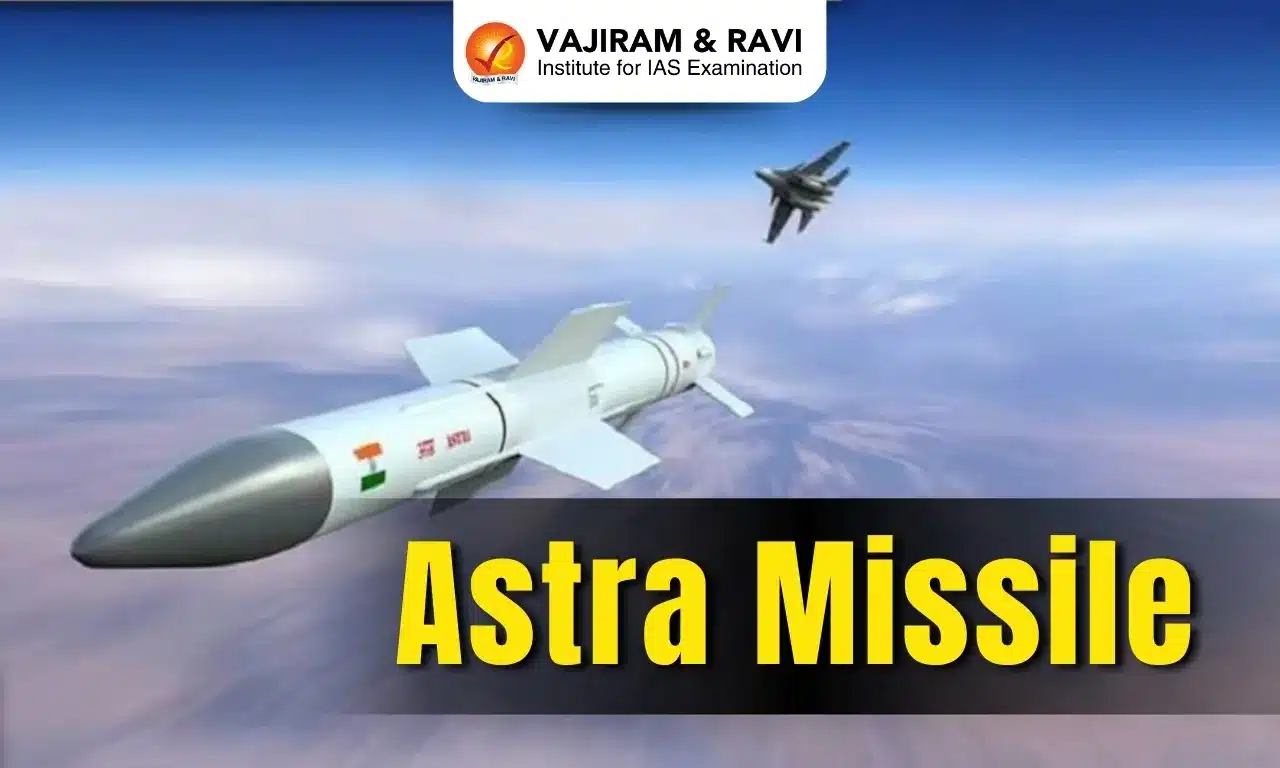
Recently, the Defence Research & Development Organisation (DRDO) & Indian Air Force (IAF) successfully conducted the flight-test of Astra missile.

About Astra Missile

It is an indigenous Beyond Visual Range Air-to-Air missile (BVRAAM).

Features of Astra Missile

  • It is equipped with indigenous Radio Frequency (RF) Seeker from Su-30 Mk-I.
  • It has a range exceeding 100 kms and is equipped with state-of-the art guidance and navigation system.
  • In addition to various laboratories of DRDO, more than 50 public and private industries including Hindustan Aeronautics Limited have contributed towards successful realisation of the weapon system. 
  • Targets achieved
    • During the tests, two launches were carried out against high-speed unmanned aerial targets at different ranges, target aspects and launch platform conditions.
    • In both the cases, the missiles destroyed the targets with pin-point accuracy.
    • During the tests, all subsystems performed as per expectations including the RF seeker which has been indigenously designed & developed by DRDO.
    • The flawless performance of the Astra weapon system was validated through flight data captured by Range Tracking instruments deployed by Integrated Test Range, Chandipur. These successful flight tests have re-established the accuracy and reliable performance of Astra weapon system with indigenous seeker.

Source: PIB

Astra Missile FAQs

Q1: What is the organizational structure of DRDO?

Ans: DRDO is headed by the Secretary, Department of Defence R and D, who is also the Director General. It has 7 technology clusters manned by Chief Controllers and a network of 50 specialized laboratories across India.

Q2: What is Radio frequency (RF)?

Ans: It is the oscillation rate of an alternating electric current or voltage or of a magnetic, electric or electromagnetic field or mechanical system in the frequency range from around 20 kHz to around 300 GHz.

Maratha Military Landscapes of India

Maratha Military Landscapes of India

Maratha Military Landscapes of India Latest News

Recently, ‘Maratha Military Landscapes of India’ got inscribed on the UNESCO World Heritage List, becoming India’s 44th property to receive this recognition.

About Maratha Military Landscapes of India

  • Spanning from the 17th to 19th centuries CE, this extraordinary network of twelve forts demonstrates the strategic military vision and architectural ingenuity of the Maratha Empire.
  • These 12 forts are spread across the states of Maharashtra and Tamil Nadu, which include Salher, Shivneri, Lohgad, Khanderi, Raigad, Rajgad, Pratapgad, Suvarnadurg, Panhala, Vijaydurg, and Sindhudurg in Maharashtra, along with Gingee Fort in Tamil Nadu.
  • Among these forts Shivneri fort, Lohgad, Raigad, Suvarnadurg, Panhala fort, Vijaydurg, Sindhudurg and Gingee fort are protected under the Archaeological Survey of India  and Salher fort, Rajgad, Khanderi fort and Pratapgarh are protected by the Directorate of Archaeology and Museums, Government of Maharashtra.
    • These are located across a range of diverse terrains—from coastal outposts to hilltop strongholds.
    • Salher, Shivneri, Lohgad, Raigad, Rajgad, and Gingee are situated in hilly terrains and are therefore known as hill forts.
    • Pratapgad, nestled within dense woods, is classified as a hill-forest fort.
    • Panhala, located on a plateaued hill, is a hill-plateau fort.
    • Vijaydurg, positioned along the shoreline, is a notable coastal fort, while Khanderi, Suvarnadurg, and Sindhudurg, surrounded by the sea, are recognized as island forts.

 Source: PIB

Maratha Military Landscapes of India FAQs

Q1: What is the main purpose of the UNESCO?

Ans: UNESCO (United Nations Educational, Scientific and Cultural Organization), as a specialised agency of the United Nations, has the task of contributing to the preservation of peace and security by promoting international cooperation in education, science, culture and communication.

Q2: Which forts of Maratha Military Landscapes of India are added to UNESCO World Heritage List?

Ans: Salher, Shivneri, Lohagad, Khanderi, Raigaad, Rajgad, Pratapgad, Suvarnadurg, Panhala, Vijaydurg and Sindhudurg in Maharashtra and Gingee Fort in Tamil Nadu.

Sanchar Mitra Scheme

Sanchar Mitra Scheme

Sanchar Mitra Scheme Latest News

Recently, the department of Telecommunications (DoT), Government of India rolled out Sanchar Mitra Scheme nationwide to empower youth as digital ambassadors.

About Sanchar Mitra Scheme

  • It is focused on student volunteers—designated as Sanchar Mitras—will be empowered to raise awareness among the public about key telecom issues.
  • Under this scheme Sanchar Mitras will raise awareness about issues, such as digital safety, cyber fraud prevention, and EMF radiation concerns, while also promoting responsible mobile usage and digital literacy.
  • The expanded Sanchar Mitra Scheme not only aims to enhance public awareness but also provides participating students with exposure to cutting-edge telecom technologies including 5G, 6G, Artificial Intelligence, and Cyber Security.
  • Through structured training, project participation, and engagement with real-world telecom initiatives, the scheme seeks to build a digitally aware, skilled, and research-oriented youth workforce.
  • Participating institutions will be identified in consultation with local DoT field units, and students from relevant academic backgrounds—telecom, electronics, computer science, cyber security—will be nominated as Sanchar Mitras.
  • Sanchar Mitras will receive necessary training from experts from field and from the National Communications Academy–Technology (NCA-T) and DoT’s Media Wing.
  • Sanchar Mitras will carry out grassroots-level awareness drives, engage with communities and NGOs, and act as catalysts for informed digital behavior in their surroundings.
  • To encourage excellence, participants will be assessed periodically based on innovation, consistency, and outreach impact.
  • Outstanding performers may be offered exclusive opportunities including internships, involvement in national telecom projects, participation in high-level forums such as India Mobile Congress, and engagements with ITU standards and policy work.

Source: PIB

Sanchar Mitra Scheme FAQs

Q1: What is Artificial Intelligence?

Ans: Artificial intelligence (AI) is a set of technologies that enable computers to perform a variety of advanced functions, including the ability to see, understand and translate spoken and written language, analyze data, make recommendations, and more.

Q2: What are Electric and magnetic fields (EMFs)?

Ans: These are invisible areas of energy, often referred to as Radiation, that are associated with the use of electrical power and various forms of natural and man-made lighting.

e-Truck Incentive Scheme

e-Truck Incentive Scheme

e-Truck Incentive Scheme Latest News

Recently, the union minister for Heavy Industries & Steel, Government of India, has launched a groundbreaking scheme to provide financial incentives for electric trucks (e-trucks) under the PM E-DRIVE initiative.

About e-Truck Incentive Scheme

  • It aims to reduce operational costs for transporters, encourage clean energy adoption in the heavy vehicle segment, and enhance air quality in urban and industrial regions bringing India closer to a sustainable, low-carbon future.
  • It helps to accelerate India’s transition to clean, efficient, and sustainable freight mobility.
  • It is the first time the Government of India is extending direct support for electric trucks.

Features of the scheme

  • Under the scheme, demand incentives will be extended to N2 and N3 category electric trucks, as defined under the Central Motor Vehicle Rules (CMVR).
  • The N2 category includes trucks with a Gross Vehicle Weight (GVW) above 3.5 tonnes and up to 12 tonnes.
  • The N3 category covers trucks with GVW exceeding 12 tonnes and up to 55 tonnes.
  • In the case of articulated vehicles, incentives will apply only to the puller tractor of the N3 category.
  • To ensure reliability and performance, the scheme mandates comprehensive manufacturer-backed warranties.
  • The battery must be covered under a warranty for five years or 5 lakh kilometres, whichever is earlier.
  • The vehicle and motor must have a warranty of five years or 2.5 lakh kilometres, whichever is earlier.
  • To promote affordability, the incentive amount will depend on the GVW of the electric truck, with the maximum incentive set at ₹9.6 lakh per vehicle.
  • These incentives will be offered as an upfront reduction in the purchase price and reimbursed to OEMs via the PM E-DRIVE portal on a first-come, first-served basis.

Source: PIB

e-Truck Incentive Scheme FAQs

Q1: What is the PM EDrive scheme?

Ans: This initiative is to accelerate the adoption of electric vehicles (EVs) across various categories, build robust EV charging infrastructure, and develop a strong domestic EV manufacturing ecosystem.

Q2: What is meant by sustainable mobility?

Ans: Sustainable mobility is the set of measures aimed at making the movement and transportation of people and goods efficient and rational from an economic, social, and environmental point of view.

Machine Vision Based Inspection System

Machine Vision Based Inspection System

Machine Vision Based Inspection System Latest News

Recently, Indian Railways has signed a Memorandum of Understanding (MoU) with the Dedicated Freight Corridor Corporation of India Limited (DFCCIL) for the installation of Machine Vision Based Inspection System (MVIS). 

About Machine Vision Based Inspection System

  • It is a modern, cutting-edge technology that uses artificial intelligence to inspect trains in real time.
  • The system would revolutionise the way trains are maintained and monitored, offering a smarter, safer, and efficient future for Indian train travel.

Working of Machine Vision Based Inspection System

  • It is deployed on a wayside that captures high-resolution images of the under-gear of moving trains and automatically detects any hanging, loose, or missing components.
  • On detecting anomalies, the system generates real-time alerts to facilitate prompt response and preventive action.
  • It combines high-resolution cameras with intelligent software to scan every passing train for signs of wear and tear.
  • From detecting hairline cracks and loose fittings to identifying other mechanical abnormalities, the system conducts inspections within seconds, which earlier took hours or even days to complete.
  • By catching faults early, the technology prevents potential breakdowns, enhances safety, and helps avoid train delays.
  • It will help in monitoring the health of rolling stock.
  • Advantage: The primary advantage of MVIS is its ability to carry out consistent monitoring without disrupting regular train services.
  • This initiative also aligns with IR’s broader objective of introducing modern, intelligent systems to the railway ecosystem. 
  • Significance: The technology is expected to significantly enhance the safety of train operations, reduce manual inspection efforts and help avoid potential accidents/service disruptions.

Source: PIB

Machine Vision Based Inspection System FAQs

Q1: What is machine vision inspection?

Ans: Machine Vision Inspection is a technology based on image processing that is used to automate inspection processes in production lines in various manufacturing industries.

Q2: What are the different types of machine vision cameras?

Ans: The types of machine vision cameras are line scan, area scan, and 3D scan cameras.

Mount Rainier

Mount Rainier

Mount Rainier Latest News

An earthquake swarm began at Mount Rainier recently, with the region hit by more than 300 small quakes, the most significant seismicity at the volcano since 2009, the US Geological Survey (USGS) reported.

About Mount Rainier

  • It is the highest mountain (4,392 metres) in the state of Washington, United States.
  • Covering 260 sq.km, Rainier is surrounded by the largest single-mountain glacier system in the United States outside Alaska. 
  • The mountain is geologically young, formed by successive lava flows from eruptions that began about one million years ago. 
  • It is an active stratovolcano. The volcano last erupted about 150 years ago. 
  • It is considered among the most dangerous volcanoes in the world due to its proximity to the densely populated urban area of Seattle. 
  • Rainier is one of just 16 volcanoes in the world to be on the “Decade Volcanoes” list, a classification created by the International Association of Volcanology and Chemistry of the Earth’s Interior (IAVCEI) to highlight volcanoes worthy of close monitoring because of the catastrophic effects of their potential eruption.
  • Some two dozen named glaciers and a number of smaller patches of permanent ice and snow radiate from the broad summit, including Nisqually Glacier, whose retreat and advance over the last 150 years has helped scientists determine patterns in Earth’s climate.
  • The mountain has three major peaks: Liberty Cap, Point Success, and Columbia Crest (the latter is the summit, located on the rim of the caldera).
  • Rainier is noted for dense stands of coniferous trees on its lower slopes, scenic subalpine and alpine meadows—with a profusion of wildflowers during the warmer months—waterfalls and lakes, and an abundance of wildlife.

Source: NDTV

Mount Rainier FAQs

Q1: Where is Mount Rainier located?

Ans: It is located in the state of Washington, United States.

Q2: What is the elevation of Mount Rainier?

Ans: 4,392 metres

Q3: Mount Rainier is classified as which type of volcano?

Ans: Stratovolcano

National Health Claim Exchange (NHCX)

National Health Claims Exchange

National Health Claims Exchange Latest News

The government is preparing to bring the National Health Claims Exchange, currently managed by the health ministry, under the joint supervision of the finance ministry and the Insurance Regulatory and Development Authority of India (IRDAI).

About National Health Claims Exchange

  • NHCX is developed under the Ayushman Bharat Digital Mission (ABDM) by the National Health Authority (NHA) in consultation with the Insurance Regulatory and Development Authority of India (IRDAI).
  • NHCX aims to streamline and standardize health insurance claim processing, enhancing efficiency in the insurance industry and improving the patient experience. 
  • NHCX serves as a gateway for exchanging health claim information among insurers, third-party auditors, healthcare providers, beneficiaries, and other relevant entities and ensures interoperability, machine-readability, auditability, and verifiability, making the information exchange accurate and trustworthy.

Features of NHCX

  • Checking Coverage Eligibility: Providers can verify if a treatment is covered by insurance to avoid unexpected costs.
  • Pre-Auth Request Submission: Hospitals can request approval from insurers before starting treatment.
  • Predetermination Request Submission: Providers can ask for an estimate of benefits for a treatment before it begins.
  • Claim Submission: Hospitals submit claims in a standard format for easier processing by insurers.
  • Payment Status: Hospitals can check the payment status of submitted claims, ensuring everyone stays informed.
  • Communication Request: Providers can send questions or requests for more information through NHCX.
  • Reprocess Request: If a claim has issues, providers can request a review for a solution.

Source: TOI

National Health Claims Exchange FAQs

Q1: The National Health Claims Exchange (NHCX) has been developed under which national initiative?

Ans: Ayushman Bharat Digital Mission (ABDM)

Q2: What is the primary objective of the National Health Claims Exchange (NHCX)?

Ans: To streamline and standardize health insurance claim processing.

Q3: How does National Health Claims Exchange (NHCX) help reduce delays in the claims settlement process?

Ans: By allowing real-time tracking and standardized digital submissions.

Enforcement Crackdown in ‘U.S. Donkey Route’ Case

Donkey Route

Donkey Route Latest News

  • The Enforcement Directorate (ED) and the National Investigation Agency (NIA) of India have intensified their investigations into human trafficking networks exploiting the "Donkey Route".
  • The donkey route is an illegal immigration pathway used predominantly by Indian migrants to reach the United States. 
  • The ongoing probe reveals an intricate web of traffickers, agents, fake visa consultancies, and international conduits, with grave implications for national security, human rights, and foreign relations.

Recent ED and NIA Crackdown

  • ED raids in Punjab and Haryana: Probing money laundering linked to illegal immigration rackets.
  • NIA arrests key operatives:
    • Arrest of traffickers linked to Gagandeep Singh, a kingpin arrested earlier.
    • Gagandeep allegedly trafficked over 100 Indians to the U.S. via Latin America, charging ₹45 lakh per person.

The Donkey/Dunki Route Explained

  • Meaning: It refers to long, illegal, and often dangerous migration routes involving multiple country border crossings. It was popularised by the 2023 Shahrukh Khan film Dunki.
  • Journey path and hazards:
    • Typical route: Starts from India → UAE → Latin American countries (Ecuador, Guyana, Bolivia, where Indian citizens can get visa on arrival or tourist visas easily) → Colombia → Panama (via Darién Gap) → Costa Rica → Nicaragua → Mexico → US.
    • Hazards: Dense forests (Darién Gap), risk of assault, extortion, and animal attacks. Dark, dangerous pathways/ tunnels under the US-Mexico border (e.g., Ciudad Juarez to El Paso).
    • Cartels: The criminal gangs operating in the vicinity of the Mexico-US border have in recent times shifted their primary business from drug trafficking to human trafficking, charging up to $6,000 per person.

Economic Dimensions of Human Trafficking

  • Cost to migrants: Agents charge ₹30-60 lakh, depending on the route. In a 2023 case, passengers paid ₹40 lakh–₹1.25 crore for Nicaragua-bound flights via Europe.
  • Agent networks: Local-level agents in India connected to international kingpins, facilitating fraudulent practices like fake visas, forged documents, and forced illegal crossings.

India’s Position in Global Illegal Migration

  • Trends:
    • In 2023, 96,917 Indians were caught/expelled at the US border (up from 30,662 in 2021).
    • According to Pew Research (2022), over 700,000 undocumented Indians in the US — third highest after Mexicans and Hondurans.
  • Deportation data (2009–2025):
    • Total deported since 2009: 15,756
    • Highest: 2,042 in 2019.
    • Latest (2025): 104 deported so far this year (as per EAM S. Jaishankar).

Variations of Illegal Migration Routes

  • Student visa route via Canada:
    • Agents arrange admissions in dummy Canadian colleges. Students then cross into the US illegally.
    • Cost: ₹50–60 lakh per person.
    • ED probe: An international syndicate of human traffickers that includes at least 260 colleges in Canada issued student visas to "illegal migrants" to take the Canadian route to the US.
  • Case study: Three members of a Gujarati family froze to death at the US-Canada border. This prompted an ED probe into fraudulent agents and money laundering.

Implications for India

  • National security: Involvement of transnational criminal networks poses risks of terror infiltration and financial crimes.
  • Diplomatic concerns: India’s image as a top source of undocumented migrants can strain bilateral relations, especially with the US and Canada.
  • Human rights violations: Migrants face extreme conditions — death, sexual assault, extortion — violating basic human dignity.
  • Policy responses needed:
    • Strengthening emigration laws.
    • Regulating private travel and visa consultancies.
    • Enhancing bilateral cooperation on anti-trafficking.

Conclusion

  • The “Donkey Route” is not just a route — it is a symptom of deep socio-economic desperation and systemic regulatory failures
  • While enforcement agencies like the ED and NIA have intensified crackdowns, a comprehensive policy approach addressing demand, enforcement, international cooperation, and public awareness is essential to tackle this complex issue.

Source: TH | ET

Donkey Route FAQs

Q1: What is the “Donkey Route” used by Indian migrants?

Ans: It involves illegal migration through a chain of countries including the UAE, Latin America, Mexico and finally into the U.S.

Q2: What is the role of ED and NIA in tackling the human trafficking network?

Ans: They have launched coordinated operations, and probing financial crimes like money laundering linked to illegal migration rackets using the Donkey Route.

Q3: What are the implications of rising illegal migration from India to the US?

Ans: India's emergence as a top source of illegal migrants to the U.S. strains diplomatic relations, undermines international trust, and challenges its image as a responsible global actor.

Q4: What factors push Indian citizens to undertake dangerous illegal migration routes?

Ans: Unemployment, rural distress, aspiration for a better life abroad, and lack of awareness about legal channels are the key drivers pushing towards dangerous illegal migration routes.

Q5: What are the challenges in regulating visa consultancy networks of illegal immigration from India?

Ans: Weak oversight, unlicensed agents, transnational linkages, and limited legal deterrence make it difficult to regulate fraudulent consultancies.

Maharashtra’s Urban Maoism Bill 2024: Provisions, Concerns, and Impact Explained

Urban Maoism Bill Maharashtra

Urban Maoism Bill Maharashtra Latest News

  • The Maharashtra Assembly has passed the Special Public Security Bill, 2024, targeting “urban Maoism” and left-wing extremism. 
  • It criminalises activities like disturbing public order and encouraging law disobedience. The Bill allows property forfeiture even before conviction, raising concerns over vague definitions and potential police misuse. 
  • It now awaits clearance from the Legislative Council and the Governor’s assent.

Urban Maoism

  • Urban Maoism refers to the CPI (Maoist) strategy of expanding its influence in cities by mobilising students, intellectuals, professionals, and religious minorities
  • Their methods include creating NGOs, using protests, media campaigns, and infiltrating political and civil society organisations to weaken the state from within.
  • These supporters may not be armed insurgents but are accused of aiding the movement through intellectual, financial, or logistical help, including media campaigns, legal defence, or resource mobilisation.

The Strategy Document: STIR

  • The 2004 document titled Strategies and Tactics of Indian Revolution (STIR) guides CPI (Maoist) activities. It specifically directs cadres to:
    • Build urban bases to support armed struggle in rural areas.
    • Mobilise intellectuals, students, professionals, and minorities by spreading a sense of victimhood.
    • Form secret alliances with political parties, civil society groups, and other anti-state organisations.
    • Infiltrate mass organisations while maintaining secrecy.

Real-World Examples and Allegations

  • Official communications reveal alleged links between Maoists and groups like Popular Front of India (PFI).
  • Elgar Parishad Case (2018): Several activists and intellectuals were arrested in connection with alleged Maoist links following violence during the Bhima Koregaon event in Maharashtra.

Threats and Challenges

  • Expansion Beyond Forest Areas: While traditional Maoist activity is concentrated in rural belts like Chhattisgarh and Jharkhand, urban support networks help sustain it.
  • Disruption of Law and Order: Authorities claim Urban Maoists use protests, NGOs, and legal platforms to undermine state policy or law enforcement.
  • Difficult to Identify: Unlike armed insurgents, urban supporters operate under legal covers like academia, activism, or journalism, making legal action complex.

A New Kind of Warfare

  • Urban Naxalism is described as Naxalism minus AK-47
  • Instead of guns, it uses propaganda, protests, and alliances to destabilise the Indian state. 
  • It represents a form of Fifth Generation Warfare (5GW), where the battlefield includes media, politics, and public perception.

Maharashtra’s Special Public Security Bill: Background

  • First introduced in July 2024, Maharashtra’s Special Public Security Bill lapsed due to elections and was reintroduced in December after joint committee clearance. 
  • Aimed at countering “naxalism,” it empowers the government to declare organisations “unlawful” and penalise individuals linked to them. 
  • Modelled after the UAPA, it covers a broader range of “unlawful activities,” targeting urban Maoist networks and alleged support structures within cities.

Maharashtra’s Special Public Security Bill: Key Provisions and Penalties

  • The Bill defines unlawful activity as acts disrupting public order, violence, disobedience to law, or aiding extremist organisations. 
  • It prescribes 2–7 years' jail and fines for membership, fundraising, or managing such organisations. Offences are cognizable and non-bailable
    • Cognizable offences are serious crimes where police can arrest without a warrant.
    • Non-bailable offences require a court's discretion for bail, and are usually reserved for more serious crimes. 
  • The government can forfeit properties linked to unlawful organisations even before trial, with a 15-day notice. 
  • Affected parties can challenge forfeiture in the High Court within 30 days. 
  • An Advisory Board of three High Court-qualified persons must confirm the unlawful status of organisations.

Maharashtra’s Special Public Security Bill: Key Concerns

  • Unlike UAPA and PMLA, Maharashtra’s Bill uses vague terms like “practising disobedience” or “disrupting communication,” sparking fears it could criminalise legitimate protests. 
  • While UAPA and PMLA limit property attachment to terror or crime proceeds, Maharashtra’s Bill allows pre-trial property forfeiture without such safeguards. 
  • Critics argue it dilutes constitutional protections like presumption of innocence, risking misuse against dissenters.

Source IE; DDN

Urban Maoism Bill Maharashtra FAQs

Q1: What is Maharashtra’s Urban Maoism Bill 2024?

Ans: A law aimed at countering left-wing extremism and urban Maoist networks through criminal penalties and property forfeiture provisions.

Q2: What activities are criminalised under the Bill?

Ans: Disturbing public order, violence, disobedience, aiding extremist groups, and fundraising for unlawful organisations are penalised.

Q3: Why are there concerns about the Bill?

Ans: Vague definitions and pre-trial property forfeiture provisions may threaten civil liberties and criminalise legitimate protests.

Q4: How is this Bill different from UAPA?

Ans: It allows broader powers, including pre-conviction property seizure, with looser definitions compared to UAPA’s more specific guidelines.

Q5: What is Urban Maoism?

Ans: A strategy by CPI (Maoist) to expand influence in urban areas via intellectual, financial, and organisational support networks.

Kailash-Mansarovar Yatra Resumes 2025: Routes, History & Key Details

Kailash-Mansarovar Yatra

Kailash-Mansarovar Yatra Latest News

  • After a five-year pause due to Covid-19 and India-China tensions, the Kailash-Mansarovar yatra resumed in 2025. 
  • This year, 750 pilgrims were selected by the Ministry of External Affairs. 
    • Five batches of 50 pilgrims each are travelling via Uttarakhand’s Lipulekh Pass, while 10 batches of 50 each are using Sikkim’s Nathu La Pass.

Mount Kailash and the Sacred Lakes: Spiritual and Geographical Significance

  • Rising 6,638 metres in Tibet’s Ngari Prefecture near India and Nepal, Mount Kailash holds deep religious importance for Hindus, Buddhists, Jains, and Tibetan Bon followers. 
  • Hindus believe it is Lord Shiva’s abode; Jains see it as the site of their first leader’s enlightenment; Buddhists call it the universe’s centre, and Bon traditions consider it the home of the sky goddess Sipaimen. 
  • South of the mountain lie two lakes — freshwater Manasarovar and saltwater Rakshastal — both central to these spiritual traditions. 
  • Mount Kailash also serves as the source of four major rivers: the Brahmaputra, Indus, Sutlej, and Karnali, making it both a spiritual and geographical landmark.

How Kailash-Mansarovar Became a Popular Pilgrimage

  • Though revered for centuries, Kailash-Mansarovar wasn’t a mainstream pilgrimage site for ordinary Indians until the early 20th century. 
  • Tibetologists note that early Hindu and Buddhist texts described Kailash as a divine place accessible only to advanced spiritual practitioners. 
  • This changed after 1904, when Tibet opened up to British subjects. 
  • Charles Sherring, then Almora’s district collector, visited Kailash in 1905, recommended improving the pilgrimage route, and promoted it. 
  • His efforts helped popularise the Lipulekh pass route and brought attention to the site among the broader Hindu community, encouraging pilgrim traffic for both spiritual and economic reasons. 
  • By 1930, around 730 Indian pilgrims made the journey annually, until China’s annexation of Tibet in 1950 led to its closure. 
  • The pilgrimage resumed in 1981, making way for the first batch of Indian pilgrims to Kailash via Lipulekh since its closure.

Kailash-Mansarovar Yatra: Then and Now

  • The Kailash-Mansarovar pilgrimage involves two main treks: 
    • a 90 km circumambulation of Lake Mansarovar, taking 3–5 days, and 
    • a tougher 52 km circumambulation of Mount Kailash, completed in around three days. 
  • In the late 1990s, pilgrims would begin at Tseti camp, walk around Mansarovar via places like Huore and Seralung Monastery, then trek around Kailash starting from Tarchen, passing landmarks such as Dirapuk and Dolma La.
  • With new motorable roads, trekking on the Indian side has reduced from 27 km in 2019 to just 1 km in 2025.
  • The Nathu La route, opened in 2015, offers an even easier journey — pilgrims cover the entire 1,500 km stretch from Nathu La to Mansarovar by car or bus.
  • This reflects how the pilgrimage has become more accessible over time.

Source IE

Kailash-Mansarovar Yatra FAQs

Q1: What is the Kailash-Mansarovar Yatra?

Ans: A pilgrimage to Mount Kailash and Mansarovar Lake, holding spiritual significance for Hindus, Buddhists, Jains, and Bon followers.

Q2: Why was Kailash-Mansarovar Yatra paused?

Ans: It was paused due to Covid-19 restrictions and India-China border tensions, resuming officially in 2025.

Q3: What are the main routes for the Yatra?

Ans: Through Uttarakhand’s Lipulekh Pass and Sikkim’s Nathu La Pass, as designated by the Ministry of External Affairs.

Q4: How has the Yatra changed in 2025?

Ans: New motorable roads have reduced trekking distances, making the journey easier for pilgrims, especially along the Lipulekh route.

Q5: Why is Mount Kailash spiritually significant?

Ans: It is regarded as Lord Shiva’s abode and the origin point of four major rivers including the Brahmaputra and Indus.

Enquire Now