UPSC Daily Quiz 26 July 2025

UPSC Daily Quiz

The Daily UPSC Quiz by Vajiram & Ravi is a thoughtfully curated initiative designed to support UPSC aspirants in strengthening their current affairs knowledge and core conceptual understanding. Aligned with the UPSC Syllabus 2025, this daily quiz serves as a revision resource, helping candidates assess their preparation, revise key topics, and stay updated with relevant issues. Whether you are preparing for Prelims or sharpening your revision for Mains, consistent practice with these Daily UPSC Quiz can significantly enhance accuracy, speed, and confidence in solving exam-level questions.

[WpProQuiz 29]

UPSC Daily Quiz FAQs

Q1: What is the Daily UPSC Quiz?

Ans: The Daily UPSC Quiz is a set of practice questions based on current affairs, static subjects, and PYQs that help aspirants enhance retention and test conceptual clarity regularly.

Q2: How is the Daily Quiz useful for UPSC preparation?

Ans: Daily quizzes support learning, help in revision, improve time management, and boost accuracy for both UPSC Prelims and Mains through consistent practice.

Q3: Are the quiz questions based on the UPSC syllabus?

Ans: Yes, all questions are aligned with the UPSC Syllabus 2025, covering key areas like Polity, Economy, Environment, History, Geography, and Current Affairs.

Q4: Are solutions and explanations provided with the quiz?

Ans: Yes, each quiz includes detailed explanations and source references to enhance conceptual understanding and enable self-assessment.

Q5: Is the Daily UPSC Quiz suitable for both Prelims and Mains?

Ans: Primarily focused on Prelims (MCQ format), but it also indirectly helps in Mains by strengthening subject knowledge and factual clarity.

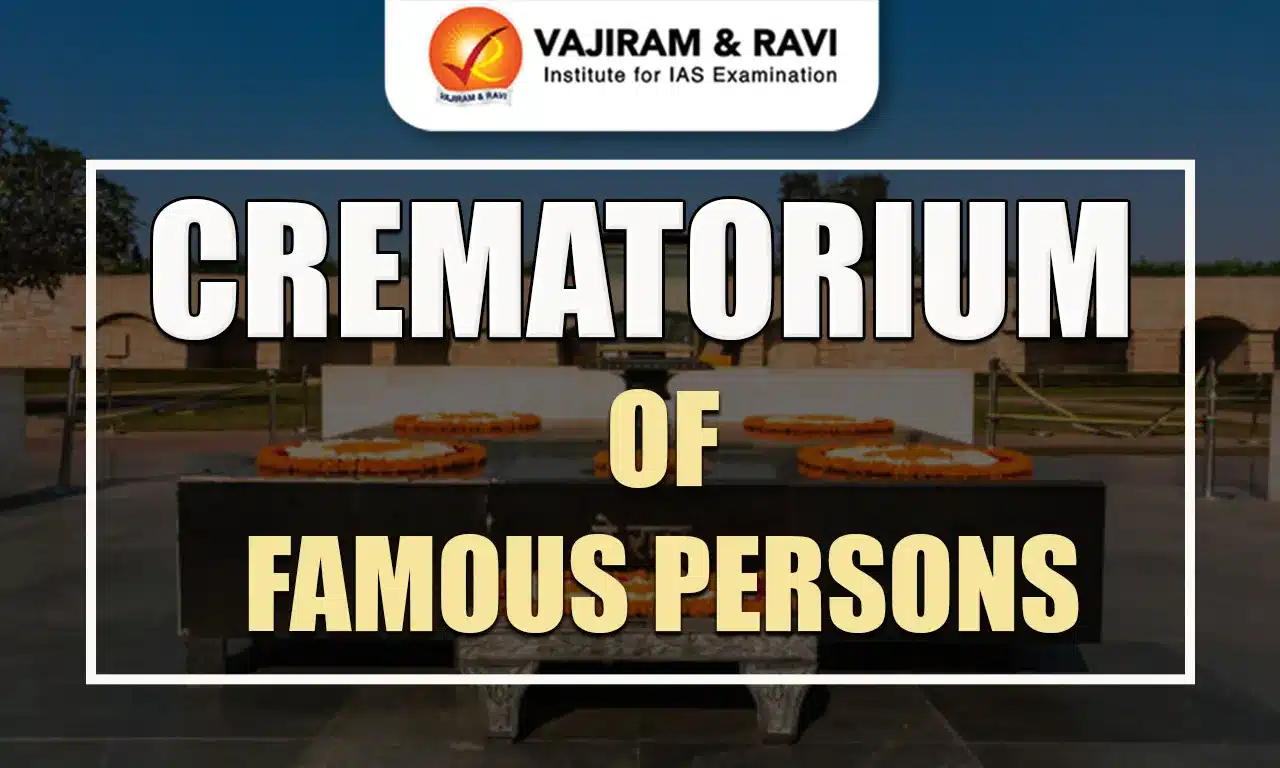
Crematorium of Famous Persons, Significance, Persons Outside India

Crematorium of Famous Persons

When someone well-known passes away, their final resting place often becomes more than just a crematorium, it turns into a space where people come to remember, reflect, and pay tribute. These Crematorium of Famous Persons aren't just about rituals, they hold emotional and historical significance, especially for fans and admirers. 

Crematorium of Famous Persons Significance

  • Crematoriums of renowned figures often become national landmarks or symbols of pride. For example, Gandhi Smriti in New Delhi, where Mahatma Gandhi was cremated, serves as a memorial reflecting his values and contributions.
  • These sites provide a closer connection to the life and times of important personalities. Elvis Presley’s cremation site at Graceland, for instance, offers insight into his legacy and remains a major attraction for his admirers.
  • For fans and family members, crematoriums serve as spaces to pay tribute and remember the deceased. They often turn into places of pilgrimage, helping keep the memory and influence of the individual alive.

List of Crematorium of Famous Persons

India has a rich legacy of individuals who have left an indelible mark across various domains, be it politics, literature, science, social reform, or the arts. Their contributions continue to inspire generations, and even after their passing, they are remembered through dedicated crematoriums and memorials. These sites serve not only as final resting places but also as symbols of national pride and remembrance. They offer the public a space to reflect on the values and vision these personalities stood for.

Below is a List of Crematorium of Famous Persons who devoted their lives to serving the nation through their work and ideals:

List of Crematorium of Famous Persons

SNo.

Name of the famous personality

Crematorium/Memorial

1

Mahatma Gandhi

Raj Ghat (Royal Steps)

2

Lal Bahadur Shastri

Vijay Ghat, Delhi (Victory Platform)

3

Chaudhary Charan Singh (PM)

Kisan Ghat, Delhi (Farmer’s Platform)

4

Rajiv Gandhi

Veer Bhumi, Delhi (Land of Brave)

5

Jawaharlal Nehru

Shanti Van, Delhi (Garden of Peace)

6

Indira Gandhi

Shakti Sthal, Delhi (Place of Power)

7

Sanjay Gandhi

Shanti Van, Delhi

8

Morarji Desai

Abhay Ghat, Ahmedabad

9

Dr Shankar Dayal Sharma

Karma Bhumi (Land of Duty)

10

Dr Rajendra Prasad

Mahaprayan Ghat, Patna

11

Gulzarilal Nanda

Narayan Ghat, Ahmedabad

12

KR Narayanan

Uday Bhoomi, Delhi

13

PV Narasimha Rao

PV Ghat (Buddha Poornima Park)

14

BR Ambedkar

Chaitya Bhoomi, Dadar

15

Krishna Kant (Vice-President)

Nigambhoot Ghat

16

Giani Zail Singh (President)

Ekta Sthal, Delhi (Place of Unity)

17

Jagjivan Ram (Deputy PM)

Samta Stal (Place of Equality)

18

Devi Lal (Deputy PM)

Sangharsh Stal (Place of Struggle)

19

Chandra Shekhar (PM)

Jannayak Stal (Place of People’s Leader)

20

IK Gujral (PM)

Smriti Sthal (Place of Remembrance)

List of Crematorium of Famous Persons Outside India

Across the world, many influential individuals have left behind powerful legacies through their work, values, and leadership. These personalities, whether in politics, science, music, literature, or activism have inspired generations and earned global admiration. Below is a List of Crematorium of Famous Persons Outside India whose contributions continue to shape the world and influence lives across borders:

List of Crematorium of Famous Persons Outside India

SNo.

Name of the famous personality (outside india)

Crematorium/Memorial

1

Mother Teresa

Columbary at La Loma Park

2

Albert Einstein

University Medical Center in Princeton

3

Jim Morrison (Singer and songwriter, lead vocalist of Doors)

Père Lachaise Cemetery, Paris

4

Sigmund Freud, father of psychoanalysis

Golders Green Crematorium, London (His ashes were transferred in a Grecian-style urn which he had received as a gift from Marie Bonaparte and is stored in the same crematorium's columbarium)

5

Rudyard Kipling (Renowned Indian writer in English, wrote The Jungle Book)

South Transept of Westminster Abbey

6

Mark Gruenwald (Marvel comic book writer)

His ashes was turned into a comic book by mixing them into the ink used for printing one of Marvel’s titles

7

George Harrison (lead guitarist for the Beatles)

His ashes were scattered over the Ganges, India

8

John F Kennedy Jr (US President)

Mayflower Cemetery crematorium

9

Christopher Reeve (American actor who played Superman)

Pound Ridge, New York

10

Princess Margaret, younger sister of Queen Elizabeth II (Queen of England)

Alongside her beloved father George VI

Crematorium of Famous Persons FAQs

Q1: Where was Mahatma Gandhi cremated?

Ans: Mahatma Gandhi was cremated at Raj Ghat, located on the banks of the Yamuna River in New Delhi.

Q2: What is Shanti Van known for?

Ans: Shanti Van in Delhi is the cremation site of India’s first Prime Minister, Jawaharlal Nehru.

Q3: Where is Indira Gandhi's memorial located?

Ans: Indira Gandhi was cremated at Shakti Sthal, situated near Raj Ghat in New Delhi.

Q4: Where was Dr. B.R. Ambedkar cremated?

Ans: Dr. Ambedkar was cremated at Chaitya Bhoomi, located in Dadar, Mumbai.

Q5: What is the cremation site of Rajiv Gandhi?

Ans: Rajiv Gandhi was cremated at Veer Bhumi, adjacent to Shakti Sthal in Delhi.

Countries and Capitals, Continent Wise List, Check Now

Countries and Capitals

List of Countries and Capitals helps in understanding the world geography, global affairs, and international relations. There are 195 recognized countries across continents, Asia, Africa, Europe, North and South America, and Oceania each with its own capital city that typically serves as the center of political authority, commerce, and cultural identity. In this article, you'll find a List of Countries and Capitals, including a special focus on India's neighboring countries and their capitals.

Countries and Capitals of Asia

Asia is the largest continent with a wide range of cultures, religions, languages, and political systems. It includes global powers like China and India, alongside smaller nations with unique identities. Asia plays a crucial role in world affairs. Knowing the countries and their capitals is essential for understanding international relations, trade, and cultural exchanges.

Countries and Capitals of Asia

S. No.

Country

Capital

1

Afghanistan

Kabul 

2

Armenia

Yerevan 

3

Azerbaijan 

Baku 

4

Bahrain

Manama 

5

Bangladesh

Dhaka 

6

Bhutan

Thimphu 

7

Brunei

Bandar Seri Begawan 

8

Cambodia

Phnom Penh 

9

China

Beijing 

10

Cyprus 

Nicosia 

11

East Timor 

Dili 

12

Georgia 

Tbilisi 

13

India

New Delhi 

14

Indonesia 

Jakarta 

15

Iran 

Tehran 

16

Iraq 

Baghdad 

17

Israel 

Jerusalem 

18

Japan 

Tokyo 

19

Jordan 

Amman 

20

Kazakhstan 

Nur-Sultan 

21

Kuwait 

Kuwait City 

22

Kyrgyzstan 

Bishkek

23

Laos

Vientiane 

24

Lebanon 

Beirut 

25

Malaysia 

Kuala Lumpur 

26

Maldives 

Male 

27

Mongolia 

Ulaanbaatar 

28

Myanmar 

Naypyidaw 

29

Nepal 

Kathmandu 

30

North Korea 

Pyongyang 

31

Oman 

Muscat 

32

Pakistan 

Islamabad 

33

Philippines 

Manila 

34

Qatar 

Doha 

35

Saudi Arabia 

Riyadh

36

Singapore 

Singapore 

37

South Korea 

Seoul 

38

Sri Lanka 

Sri Jayawardenepura Kotte

39

State of Palestine 

Jerusalem 

40

Syria 

Damascus 

41

Tajikistan 

Dushanbe 

42

Thailand 

Bangkok 

43

Turkey 

Ankara 

44

Turkmenistan 

Ashgabat 

45

United Arab Emirates 

Abu Dhabi 

46

Uzbekistan 

Tashkent 

47

Vietnam

Hanoi

48

Yemen

Sanaa

Countries and Capitals of Africa

Africa, the second-largest continent, is made up of 54 countries each with its own distinct culture, language, and history. It’s a region rich in natural resources, vibrant traditions, and growing economies. Find a list of Countries and Capitals of Africa.

Countries and Capitals of Africa

S. No.

Country

Capital

1

Algeria 

Algiers 

2

Egypt

Cairo 

3

Libya

Tripoli 

4

Morocco

Rabat 

5

Sudan

Khartoum 

6

Tunisia

Tunis 

7

Burundi

Gitega 

8

Comoros

Moroni 

9

Djibouti

Djibouti 

10

Eritrea

Asmara

11

Ethiopia

Addis Ababa 

12

Kenya

Nairobi 

13

Madagascar

Antananarivo 

14

Malawi

Lilongwe 

15

Mauritius

Port Louis 

16

Mozambique

Maputo 

17

Rwanda

Kigali 

18

Somalia Mogadishu

Mogadishu

19

South Sudan Juba

Juba

20

Tanzania Dodoma

Dodoma

21

Seychelles

Victoria 

22

Uganda

Kampala 

24

Zambia

Lusaka 

25

Zimbabwe 

Harare 

26

Angola

Luanda 

27

Cameroon

Yaounde 

28

Central African Republic

Bangui

29

Chad

N’Djamena 

30

Botswana 

Gaborone 

31

Burkina Faso

Ouagadougou 

32

Cabo Verde

Praia 

33

Congo, The Democratic Republic

Kinshasa

34

Congo Republic

Brazzaville 

35

Cote d’Ivoire

Yamoussoukro 

36

Equatorial Guinea

Malabo 

37

Eswatini (Swaziland)

Mbabane 

38

Gabon

Libreville 

39

Gambia

Banjul 

40

Ghana

Accra 

41

Guinea 

Conakry

42

Guinea-Bissau

Bissau

43

Lesotho

Maseru 

44

Liberia

Monrovia 

45

Mali

Bamako 

46

Mauritania 

Nouakchott 

47

Namibia

Windhoek 

48

Niger

Niamey 

49

Nigeria

Abuja 

50

Sao Tome and Principe

Sao Tome 

51

Senegal

Dakar 

52

Sierra Leone

Free Town 

53

South Africa

Pretoria 

54

Togo

Lome

Countries and Capitals of Australia/Oceania

Australia/Oceania is a unique region that includes the continent of Australia along with thousands of islands scattered across the Pacific Ocean. From the dry stretches of the Australian Outback to the dense rainforests of Papua New Guinea, this part of the world is rich in natural diversity and cultural depth. 

Countries and Capitals of Australia/Oceania

S. No.

Country

Capital

1

Australia 

Canberra

2

Fiji

Suva

3

Kiribati 

South Tarawa

4

Marshall Islands 

Majuro

5

Micronesia

Palikir

6

Nauru 

No official capital

7

New Zealand

Wellington 

8

Palau

Ngerulmud

9

Papua New Guinea

Port Moresby 

10

Samoa 

Apia

11

Solomon Islands

Honiara

12

Tonga 

Nukuʻalofa

13

Tuvalu

Funafuti Atoll 

14

Vanuatu

Port-Vila

Countries and Capitals of Europe

Europe is a continent in history, home to ancient civilizations like Greece and Rome and a driving force behind global developments in politics, science, and culture. It includes some of the world’s most powerful and influential nations, alongside smaller countries with equally rich heritage and identity. From monarchies to modern democracies, Europe has a complex and fascinating political landscape.

Countries and Capitals of Europe

S. No.

Country

Capital

1

Albania

Tirana 

2

Andorra

Andorra La Vella 

3

Austria

Vienna 

4

Belarus

Minsk 

5

Belgium

Brussels 

6

Bosnia and Herzegovina

Sarajevo

7

Bulgaria

Sofia 

8

Croatia

Zagreb 

9

Czech Republic

Prague 

10

Denmark

Copenhagen 

11

Estonia

Tallinn 

12

Finland

Helsinki 

13

France

Paris

14

Germany

Berlin 

15

Greece

Athens 

16

Vatican

Vatican City 

17

Hungary

Budapest 

18

Iceland

Reykjavik 

19

Ireland

Dublin 

20

Italy 

Rome 

21

Latvia

Riga 

22

Liechtenstein

Vaduz 

23

Lithuania

Vilnius 

24

Luxembourg

Luxembourg 

25

Macedonia

Skopje 

26

Malta

Valletta 

27

Moldova

Chisinau 

28

Monaco

Monaco 

29

Montenegro

Podgorica 

30

Netherlands

Amsterdam 

31

Norway

Oslo 

32

Poland

Warsaw 

33

Portugal

Lisbon 

34

Romania

Bucharest 

35

Russia

Moscow

36

San Marino

San Marino 

37

Serbia

Belgrade 

38

Slovakia

Bratislava

39

Slovenia

Ljubljana 

40

Spain

Madrid 

41

Sweden

Stockholm 

42

Switzerland

Bern 

43

Ukraine 

Kyiv 

44

United Kingdom

London

Countries and Capitals of North America

North America is a geographically and culturally diverse continent, having the vast Arctic regions of Canada, the economic and political influence of the United States, the historical richness of Mexico, and the distinct identities of the Caribbean nations.

Countries and Capitals of North America

S. No.

Country

Capital

1

Antigua and Barbuda

St. John's

2

Bahamas

Nassau

3

Barbados

Bridgetown

4

Belize

Belmopan

5

Canada

Ottawa

6

Costa Rica

San Jose

7

Cuba

Havana

8

Dominica

Roseau

9

Dominican Republic

Santo Domingo

10

El Salvador

San Salvador

11

Grenada

St. George's

12

Guatemala

Guatemala City

13

Haiti

Port-au-Prince

14

Honduras

Tegucigalpa

15

Jamaica

Kingston

16

Mexico

Mexico City

17

Nicaragua

Managua

18

Panama

Panama City

19

Saint Kitts and Nevis

Basseterre

20

Saint Lucia

Castries

21

Saint Vincent and the Grenadines

Kingstown

22

Trinidad and Tobago

Port of Spain

23

United States of America

Washington, D.C.

Countries and Capitals of South America

South America is the fourth largest continent by area and ranks fifth in terms of population. It is made up of 12 independent countries, each with distinct cultural traditions, historical backgrounds, and official languages. From the Andes mountains to the Amazon rainforest, the continent is known for its geographical diversity and natural resources. 

Countries and Capitals of South America

S. No.

Country

Currency

1

Argentina

Argentine peso

2

Bolivia

Bolivian boliviano 

3

Brazil 

Brazilian real

4

Chile

Chilean peso

5

Colombia

Colombian peso

6

Ecuador

United States dollar 

7

Falkland Islands (UK)

Falkland Islands pound

8

French Guiana (France)

European euro

9

Guyana

Guyanese dollar

10

Paraguay 

Paraguayan guarani

11

Peru

Peruvian sol

12

South Georgia Island (UK)

Pound sterling

13

Suriname 

Surinamese dollar

14

Uruguay

Uruguayan peso

15

Venezuela 

Venezuelan bolivar

List of Countries with Multiple Capitals

While most countries operate with a single capital that houses the central government and key administrative functions, a few nations have adopted a multi-capital structure. This arrangement often arises from historical circumstances, the need to balance political power, or efforts to improve administrative efficiency across regions. These countries may divide their executive, legislative, and judicial branches among different cities, or maintain separate political and economic capitals. In this section, we present a List of Countries with Multiple Capitals.

List of Countries with Multiple Capitals

S. No.

Country

Capitals

1

South Africa

Pretoria, Cape Town, and Bloemfontein

2

Sri Lanka

Sri Jayawardenepura Kotte and Colombo

3

Benin

Porto-Novo and Cotonou

4

Bolivia

Sucre and La Paz

5

Chile

Santiago and Valparaiso

6

Côte d’Ivoire

Yamoussoukro and Abidjan

7

Georgia

Tbilisi and Kutaisi

8

Malaysia

Kuala Lumpur and Putrajaya

9

Montenegro

Podgorica and Cetinje

10

Netherlands

Amsterdam and The Hague

11

Swaziland

Mbabane and Lobamba

12

Yemen

Sana and Aden

13

Tanzania

Dodoma and Dar es Salaam

Neighboring Countries of India and Their Capitals

India, the seventh-largest country in the world by area, shares its land borders with a number of neighboring nations, each with distinct cultural identities, historical backgrounds, and languages. These countries play a significant role in shaping the regional geopolitics of South Asia.

Neighboring Countries of India and Their Capitals

S. No.

Country

Capital

1

Bhutan

Thimphu

2

Nepal

Kathmandu

3

Sri Lanka

Srijaywardhanepuram

4

Pakistan

Islamabad

5

China

Beijing

6

Myanmar

Naypidaw

7

Bangladesh

Dhaka

8

Afghanistan

Kabul

9

Maldives

Male

List of Countries and Capitals FAQs

Q1: What is a capital city?

Ans: A capital city is the administrative, political, or cultural center of a country where its government is usually located.

Q2: Which country has the most capital cities?

Ans: South Africa has three capitals: Pretoria (executive), Cape Town (legislative), and Bloemfontein (judicial).

Q3: What is the capital of India?

Ans: New Delhi is the capital of India and the seat of all three branches of the Indian government.

Q4: Which is the smallest capital city in the world?

Ans: Ngerulmud, the capital of Palau, is among the smallest by population.

Q5: Which is the highest capital city in the world?

Ans: La Paz, Bolivia, is the highest capital city at around 3,640 meters above sea level.

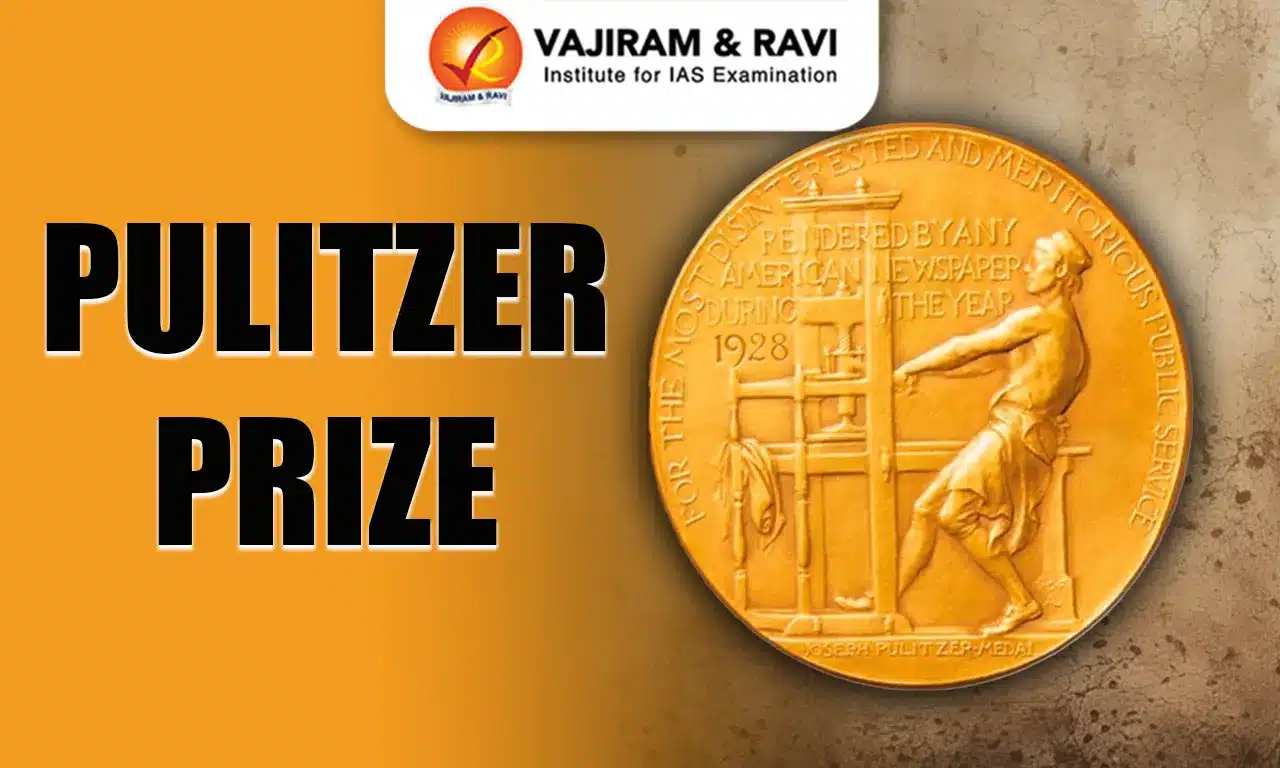
Pulitzer Prize, History, Receivers, Criticism, Category

Pulitzer Prize

The Pulitzer Prize is one of the most prestigious honors in journalism, literature, and the arts. First awarded in 1917, it was established through the will of newspaper publisher Joseph Pulitzer and is administered by Columbia University. Over the years, it has come to symbolize excellence and achievement in public storytelling, commentary, and creative work across the globe.

Pulitzer Prize

The Pulitzer Prize, administered by Columbia University, honors excellence in journalism, literature, and music composition in the United States. Established in 1917 through the will of newspaper publisher Joseph Pulitzer, it is widely regarded as one of the Most Prestigious Awards in the World. Often called the "gold standard" of American journalism, the prize reflects a legacy of impactful storytelling and public service.

Pulitzer Prize History

  • Origin and Purpose: 
  • The Pulitzer Prize was established in 1917 through the will of Hungarian-American newspaper magnate Joseph Pulitzer.
  • Pulitzer was known for his journalistic integrity and aimed to promote excellence in journalism, literature, and music.
  • Category Expansion Timeline:
  • 1917: First Pulitzer Prizes awarded.
  • 1922: Drama and Poetry categories introduced.
  • 1924: Special Journalism category added.
  • 1931: Public Service prize established.
  • 1943: International Reporting category introduced.
  • Notable Winners: Some of the most renowned recipients include Ernest Hemingway, William Faulkner, Toni Morrison, and Bob Dylan.
  • Legacy: 
  • The Pulitzer Prize remains a globally respected award.
  • It is viewed as a benchmark of excellence in journalism, literature, and music, reflecting the power of these fields to inform and inspire.

Pulitzer Prize Receivers

  • Categories: 
  • The Pulitzer Prize includes 22 categories across journalism, literature, drama, and music.
  • It covers everything from investigative reporting and commentary to poetry, fiction, and historical writing.
  • Jury Selection
    • Each category has a jury of three respected experts who serve for a year.
    • They review all submissions and shortlist finalists for each category.
  • Board Voting
      • The Pulitzer Prize Board makes the final call.
      • A winner must get at least 75% of board members' votes to be awarded the prize.
  • No Compensation
    • Neither the jurors nor board members are paid.
    • This unpaid service helps uphold the fairness and credibility of the award.

Pulitzer Prize Category

The Pulitzer Prize is awarded in various categories. As of 2023, there are twenty-three categories in which prizes are awarded annually.

  • Journalism Categories
    • Reporting
    • Feature Writing
    • Editorial Writing
    • Commentary
    • Criticism
    • Public Service
  • Letters Categories
    • Fiction
    • Drama
    • History
    • Biography
    • Poetry
    • General Nonfiction
    • Music
  • Special Citations and Awards

List of Pulitzer Prize Winners in 2021

Journalism

  • Public Service: The New York Times
  • Criticism: Wesley Morris of The New York Times
  • Editorial Writing: Robert Greene of the Los Angeles Times
  • International Reporting: Megha Rajagopalan, Alison Killing, and Christo Buschek of BuzzFeed News
  • Breaking News Reporting: Staff of the Star Tribune, Minneapolis, Minn.
  • Investigative Reporting: Matt Rocheleau, Vernal Coleman, Laura Crimaldi, Evan Allen, and Brendan McCarthy of The Boston Globe
  • Explanatory Reporting: Andrew Chung, Lawrence Hurley, Andrea Januta, Jaimi Dowdell, and Jackie Botts of Reuters
  • Local Reporting: Kathleen McGrory and Neil Bedi of the Tampa Bay Times
  • National Reporting: Staffs of The Marshall Project; AL.com, Birmingham; IndyStar, Indianapolis; and the Invisible Institute, Chicago
  • Feature Writing: Mitchell S. Jackson, freelance contributor, Runner’s World
  • Commentary: Michael Paul Williams of the Richmond (Va.) Times-Dispatch
  • Breaking News Photography: Photography Staff of Associated Press
  • Feature Photography: Emilio Morenatti of Associated Press
  • Audio Reporting: Lisa Hagen, Chris Haxel, Graham Smith, and Robert Little of National Public Radio

Books, Drama and Music

  • Fiction: "The Night Watchman" by Louise Erdrich
  • Drama: "The Hot Wing King" by Katori Hall
  • History: "Franchise: The Golden Arches in Black America" by Marcia Chatelain (Liveright/Norton)
  • Biography or Autobiography: "The Dead Are Arising: The Life of Malcolm X" by Les Payne and Tamara Payne
  • Poetry: "Postcolonial Love Poem" by Natalie Diaz
  • General Non-fiction: "Wilmington’s Lie: The Murderous Coup of 1898 and the Rise of White Supremacy" by David Zucchino
  • Music: "Stride" by Tania León (Peermusic Classical)

Special Citation

  • Darnella Frazier: The teenager who recorded the killing of George

Pulitzer Prize Criticism

  • The Pulitzer Prize has often been seen as favoring large, well-established publications, which may limit recognition for independent or underrepresented voices in journalism.
  • Winners are chosen by a panel of jurors, and critics argue that personal preferences and biases can influence decisions, potentially excluding worthy but unconventional entries.
  • The prize categories have been criticized for not evolving with the field. Emerging forms of journalism, such as multimedia or data-driven reporting, often go unrecognized.
  • Until 2008, work published solely on digital platforms was not eligible. This exclusion drew criticism for overlooking the growing relevance of online journalism.
  • The decision-making process is not fully disclosed to the public, leading to concerns about fairness, openness, and accountability in how winners are selected.

Pulitzer Prize FAQs

Q1: What is the Pulitzer Prize?

Ans: The Pulitzer Prize is a prestigious American award recognizing excellence in journalism, literature, drama, and musical composition.

Q2: Who established the Pulitzer Prize?

Ans: Joseph Pulitzer, a Hungarian-American newspaper publisher, established the prize through provisions in his 1904 will.

Q3: When was the first Pulitzer Prize awarded?

Ans: The first Pulitzer Prizes were awarded in 1917 by Columbia University.

Q4: How many categories are there in the Pulitzer Prize?

Ans: There are 23 categories, including public service, investigative reporting, fiction, poetry, and music.

Q5: Which Indian-origin journalist has won the Pulitzer Prize?

Ans: Several have won, including Siddhartha Mukherjee (General Nonfiction, 2011) and Geeta Anand (Explanatory Reporting, 2003).

Chamaegastrodia reiekensis

Chamaegastrodia reiekensis

Chamaegastrodia reiekensis Latest News

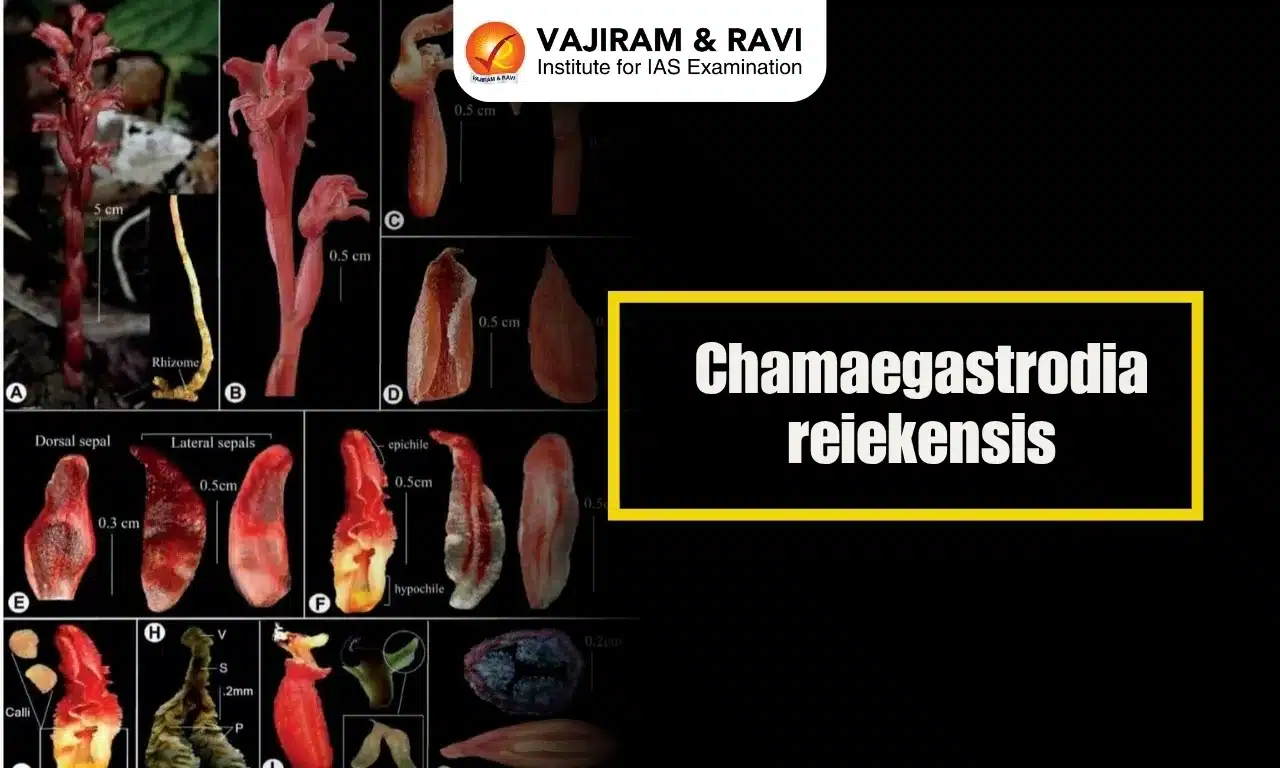
Scientists from Mizoram University and Manipur University recently discovered a new and extremely rare orchid species — Chamaegastrodia reiekensis — in the forests of Northeast India.

About Chamaegastrodia reiekensis

  • It is a new species of orchid.
  • It is named after its type locality, Reiek, a scenic mountain destination in Mizoram known for its rich biodiversity.
  • Belonging to the elusive genus Chamaegastrodia, this orchid is holomycotrophicentirely lacking chlorophyll and leaves—and derives its nutrients exclusively from underground fungi. 
  • Incapable of photosynthesis, it relies wholly on symbiotic fungal associations for survival.
  • With this addition, the global count of Chamaegastrodia species rises to eight. 
  • These mysterious orchids are sparsely distributed across parts of the Eastern Himalayas, South-Central China, Japan, Korea, Myanmar, Nepal, and Thailand. 
  • Notably, all Indian representatives of this genus have been recorded exclusively in Northeast India.
  • C. reiekensis was found in moist, humus-rich soil near bamboo clumps at an elevation of 1,500 metres. 
  • Reiek forest — where the orchid was located — features a multi-layered canopy with tall emergent trees and dense understorey vegetation, offering niches for numerous unique plant species. 
  • With temperatures ranging between 20–28°C and annual rainfall between 200–250 cm, the forest supports tropical vegetation year-round.
  • Flowering occurs from August to September, and fruiting from September to October.
  • It has been provisionally listed as Critically Endangered (CR) under IUCN criteria. 
  • Its small size and camouflaged coloration make it extremely difficult to detect on the forest floor.
  • The plant emerges only briefly during its flowering and fruiting periods — posing a major challenge for researchers.

Source: EM

Chamaegastrodia reiekensis FAQs

Q1: Chamaegastrodia reiekensis, recently discovered, belongs to which plant family?

Ans: Orchid family (Orchidaceae)

Q2: What is the type locality after which Chamaegastrodia reiekensis is named?

Ans: It is named after its type locality, Reiek, a scenic mountain destination in Mizoram known for its rich biodiversity.

Q3: Where in India have all species of the genus Chamaegastrodia been recorded?

Ans: Northeast India

Environmental Flow (e-flow)

Environmental Flow

Environmental Flow (e-flow) Latest News

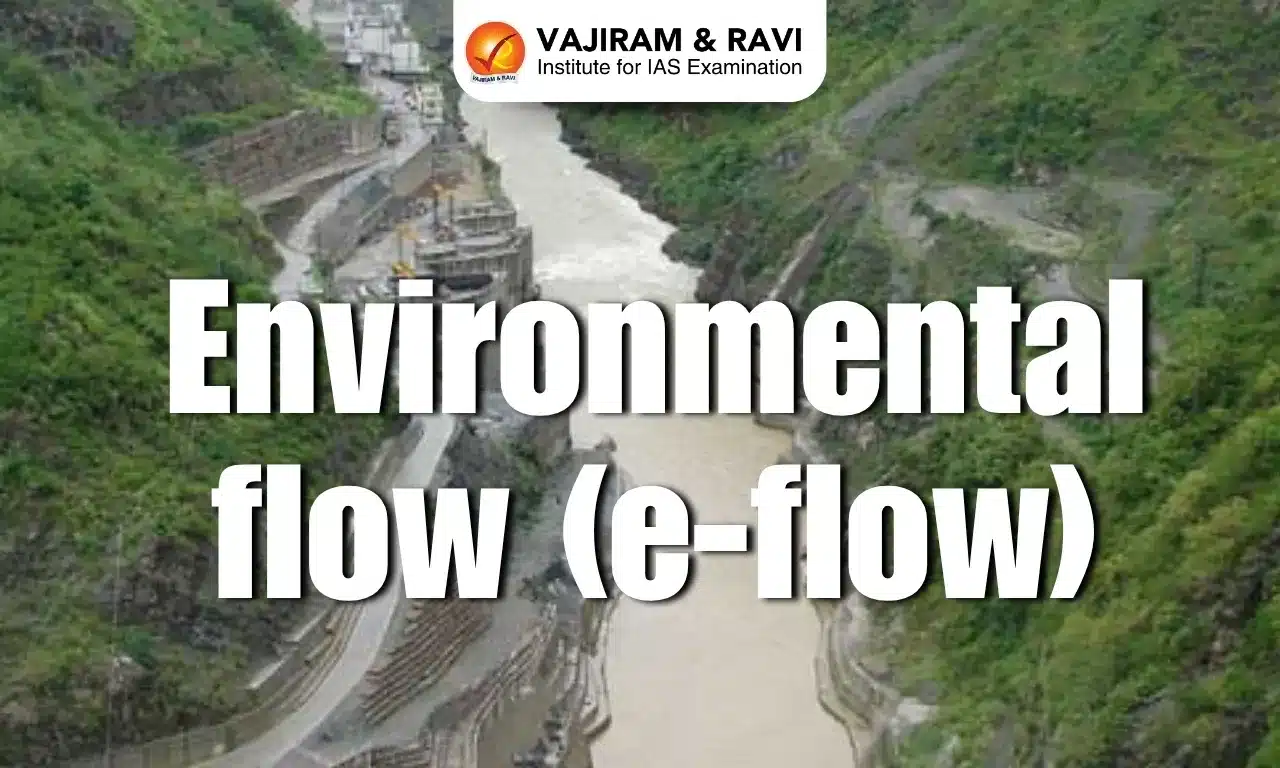
Recently, the Union Jal Shakti Minister led a comprehensive meeting focused on the environmental flow (e-flow) of the Ganga River and its tributaries. 

About Environmental Flow

  • Environmental flow refers to the quantity, timing, and quality of water flow required to sustain freshwater ecosystems and the livelihoods that depend on them.

Problems in Indian Rivers e-Flow

  • In recent decades, extensive interventions in river flow—such as the construction of dams and barrages, pollution, and encroachments—have severely impacted the ecological balance of rivers.
  • To address these issues, the concept of "Environmental Flow" has been introduced, emphasizing the need to maintain a minimum water flow to ensure the health of river ecosystems.

Significance of Environmental flow

  • It is critical for maintaining the ecological integrity of rivers and their estuaries.
  • E-flow also ensures significant benefits for human welfare, especially in areas where water use is highly competitive and regulated.
  • E-Flow studies  consider the habitat and flow requirements of key fish species to ensure the survival of aquatic life and balanced river flow.
  • This contributes to long-term ecological and economic benefits for society.

Source: PIB

Environmental Flow (e-flow) FAQs

Q1: What is the environmental flow concept?

Ans: Environmental flows are the quantity and timing of water flows required to maintain the components, functions, processes and resilience of aquatic ecosystems and the goods and services they provide to people.

Q2: Which ministry launched e-flows?

Ans: The Union Jal Shakti Ministry

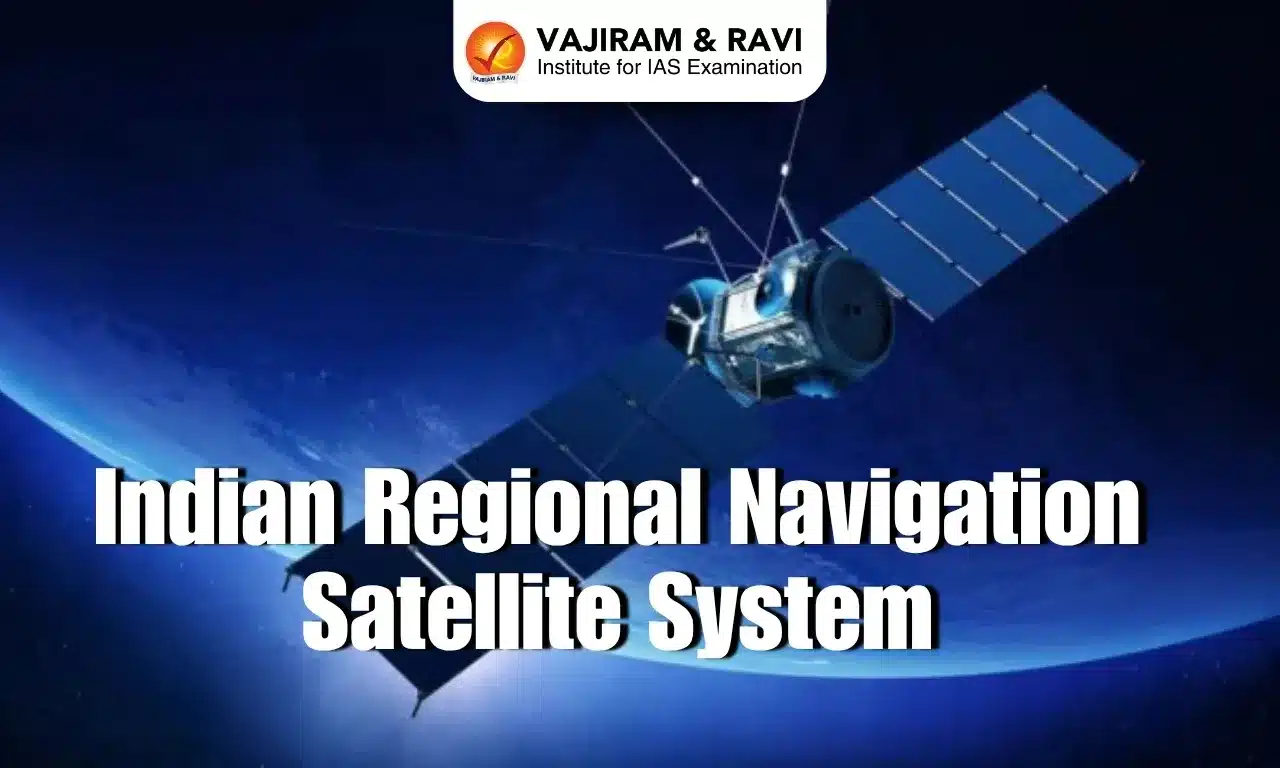
Indian Regional Navigation Satellite System

Indian Regional Navigation Satellite System

Indian Regional Navigation Satellite System Latest News

ISRO will launch three navigation satellites for its Indian Regional Navigation Satellite System (IRNSS) by 2026.

About Indian Regional Navigation Satellite System

  • It is India’s independent regional navigation satellite system also known as NavIC (Navigation with Indian Constellation).
  • It is developed in India by the Indian Space Research Organisation (ISRO).
  • IRNSS envisages the establishment of a regional navigational satellite system using a combination of geosynchronous orbit(GEO) and geostationary orbit (GSO) spacecraft and state-of-the-art ground systems.
  • Area covered: IRNSS-NavIC is designed to provide accurate position information service to users in India and the region extending up to 1500 km from its boundary.
  • IRNSS-NavIC network: NavIC is designed with a constellation of seven satellites and a network of ground stations operating around the clock.
    • Three satellites are placed in GSO.
    • Four satellites are placed in inclined GEO.
  • IRNSS provides two types of services, namely:
    • Standard Positioning Service (SPS) – that is provided to all users.
    • Restricted Service (RS) – an encrypted service provided only to authorised users.
  • The signals of the other global navigation satellite systems (GNSS), including GPS, GLONASS, Galileo, and BeiDou provide interoperability with those of the NavIC SPS signals.

Source: IE

Indian Regional Navigation Satellite System FAQs

Q1: Which satellite is used for navigation in India?

Ans: NavIC

Q2: Is NavIC available for public use?

Ans: NavIC will provide two levels of service, the "standard positioning service", which will be open for civilian use.

Comet

Comet

Comet Latest News

NASA’s Hubble Space Telescope has captured the first detailed images of interstellar comet 3I/ATLAS as it passes through our solar system, offering scientists a rare glimpse at a visitor from another star system.

About Comet

  • Comets are large objects made of dust and ice that orbit the Sun. 
  • Best known for their long, streaming tails, these ancient objects are leftovers from the formation of the solar system 4.6 billion years ago.
  • Comets are mostly found way out in the solar system. 
  • Some exist in a wide disk beyond the orbit of Neptune called the Kuiper Belt. 
    • We call these short-period comets. They take less than 200 years to orbit the Sun.
  • Other comets live in the Oort Cloud, the sphere-shaped, outer edge of the solar system that is about 50 times farther away from the Sun than the Kuiper Belt. 
    • These are called long-period comets because they take much longer to orbit the Sun. 
  • The comet with the longest known orbit takes more than 250,000 years to make just one trip around the Sun.
  • A comet is made up of four visible parts: the nucleus, the coma, the ion tail, and the dust tail. 
    • The nucleus is a solid body typically a few kilometres in diameter and made up of a mixture of volatile ices (predominantly water ice) and silicate and organic dust particles. 
    • The coma is the freely escaping atmosphere around the nucleus that forms when the comet comes close to the Sun and the volatile ices sublimate, carrying with them dust particles that are intimately mixed with the frozen ices in the nucleus. 
    • The dust tail forms from those dust particles and is blown back by solar radiation pressure to form a long curving tail that is typically white or yellow in colour. 
    • The ion tail forms from the volatile gases in the coma when they are ionized by ultraviolet photons from the Sun and blown away by the solar wind.
    • Ion tails point almost exactly away from the Sun and glow bluish in colour because of the presence of CO+ ions.

Source: IT

Comet FAQs

Q1: What are comets primarily made of?

Ans: Dust and ice

Q2: Where are most comets found in the solar system?

Ans: In the Kuiper Belt and Oort Cloud

Q3: What is the bluish color of a comet's ion tail caused by?

Ans: Presence of CO⁺ ions

Q4: How old are comets estimated to be?

Ans: 4.6 billion years

Unmanned Aerial Vehicle Launched Precision Guided Missile-V3

Unmanned Aerial Vehicle Launched Precision Guided Missile-V3

Unmanned Aerial Vehicle Launched Precision Guided Missile-V3 Latest News

Defence Research & Development Organisation (DRDO) has successfully carried out flight-trials of Unmanned Aerial Vehicle Launched Precision Guided Missile (ULPGM)-V3 at the National Open Area Range (NOAR) test range in Kurnool, Andhra Pradesh.

About Unmanned Aerial Vehicle Launched Precision Guided Missile-V3

  • It is a precision-guided air-to-surface missile launched from drones and designed to strike targets with high accuracy while reducing risk to personnel. 
  • Developed by:The missile is jointly developed by DRDO in collaboration with Bharat Dynamics Limited (BDL), Adani, and multiple MSMEs and start-ups under the Make in India initiative

Features of Unmanned Aerial Vehicle Launched Precision Guided Missile-V3

  • The ULPGM-V3 is equipped with a high definition dual-channel seeker that can strike a wide variety of targets.
  • It can be fired in plain and high-altitude areas. It has day-and-night capability and two-way data link to support post-launch target/aim-point update.
  • The missile is equipped with three modular warhead options: Anti-armour to destroy modern age armoured vehicles equipped with Rolled Homogeneous Armour (RHA) with Explosive Reactive Armour (ERA); Penetration-cum-Blast warhead with Anti Bunker application and Pre-fragmentation warhead with a high lethality zone.
  • There are three known ULPGM variants: ULPGM V1 (baseline), ULPGM V2 (production variant, also known as ULPGM), and ULPGM V3 (extended-range variant, also referred to as ULM-ER).
  • The ULPGM-V3 can be carried and operated by individual soldiers in remote and mountainous regions.
  • The drone-launched missile also comes with a tandem warhead to defeat tanks equipped with explosive reactive armor (ERA).
  • Range: It can achieve a maximum range of 4 km during the day and 2.5 km at night.
  • Weight: 12.5 kg which enables integration with lightweight drones.

Source: PIB

Unmanned Aerial Vehicle Launched Precision Guided Missile-V3 FAQs

Q1: What is unmanned aerial vehicle?

Ans: An unmanned aerial vehicle (UAV) is defined as a "powered, aerial vehicle that does not carry a human operator, uses aerodynamic forces to provide vehicle lift, can fly autonomously or be piloted remotely, can be expendable or recoverable, and can carry a lethal or nonlethal payload".

Q2: When was DRDO formed?

Ans: DRDO was formed in 1958 by the merger of the then-existing Technical Development Establishment (TDEs) of the Indian Army and the Directorate of Technical Development and Production (DTDP) with the Defence Science Organisation (DSO).

Bambusatulda

Bambusa tulda

Bambusa Tulda Latest News

A team of researchers from the Indian Institute of Technology Guwahati (IIT-G) have fused bambooBambusatulda with biodegradable polymers to develop a composite material as a suitable replacement for conventional plastics.

About Bambusa Tulda

  • It is commonly known as Bengal Bamboo or Indian Timber Bamboo.
  • Local names: JatiBahn (Assam), mritinga (Tripura), spineless Indian bamboo.

Features of Bambusa Tulda

  • It is a fast growing medium-sized tropical clumping bamboo.
  • It has short pachymorph rhizomes which mean that it grows in densely tufted clumps.
  • It is considered to be one of the most valuable multipurpose bamboo species, which usually grows up to a height of 20 m with culm diameters between 5-10 cm.
  • It requires loamy and alluvial soils, fertile and well drained for its growth.
  • Propagation: It can be propagated by seed, rhizome cuttings, culm cuttings and by tissue culture.
  • It is native to the Indian subcontinent, Indochina, Tibet, and Yunnan. It is grown across India’s northeast, has potential applications in furniture, electronics, and packaging industries too, the researchers said.

Uses of Bambusa Tulda

  • In India it is used extensively by the paper pulp industry, but due to its nearly solid culms it is also an excellent and strong timber that can be used in construction and scaffolding.
  • The shoots of Bambusatulda are edible, but taste slightly bitter and are therefore often pickled. Fermented shoots are rich in phytosterols and can be used for the production of sterol drugs to lower cholesterol levels.
  • In agroforestry, Bambusatulda is often planted as a wind-break around farms and fields. 

Source: TH

Bambusa Tulda FAQs

Q1: Which bamboo is best in India?

Ans: Bambusa tulda

Q2: What is Bambusa bamboo used for?

Ans: Culms are used for house construction, scaffolding, rafters, thatching and roofing, handicrafts and art objects

Scheme for Promotion of Culture of Science

Scheme for Promotion of Culture of Science

Scheme for Promotion of Culture of Science Latest News

The Union Minister for Culture and Tourism informed Rajya Sabha about the Scheme for Promotion of Culture of Science.

About Scheme for Promotion of Culture of Science

  • It is a flagship initiative of the Ministry of Culture, Government of India.
  • It is aimed at fostering scientific temper and awareness across the country for the public in general and students in particular.
  • The scheme supports the establishment of Science Cities, Science Centres, Innovation Hubs, and Digital Planetariums in various regions.
  • Nodal Agency: The National Council of Science Museums (NCSM), an autonomous body under the Ministry of Culture, serves as the nodal agency for implementation of the scheme.
  • Under this Scheme Science Centres/Digital Planetariums (Category-III) are set up in areas with a population of less than 5 lakhs.
  • As of July 2025, a total of 27 Science Centres have been established across the country under the Scheme for Promotion of Culture of Science (SPoCS) of the Ministry of Culture.
  • Significance: These institutions have significantly contributed to enhancing scientific awareness and informal science education through hands-on exhibits, innovation hubs, digital planetariums, and outreach programmes.

Source: PIB

Scheme for Promotion of Culture of Science FAQs

Q1: Is NCSM Government or private?

Ans: National Council of Science Museums (NCSM) is an autonomous society under the Ministry of Culture, Government of India.

Q2: What is the main purpose of a planetarium?

Ans: To popularise education and entertainment in astronomy and related fields, especially space science

Cultural Institution in India, Archaeological Survey, National Archives

Cultural Institution in India

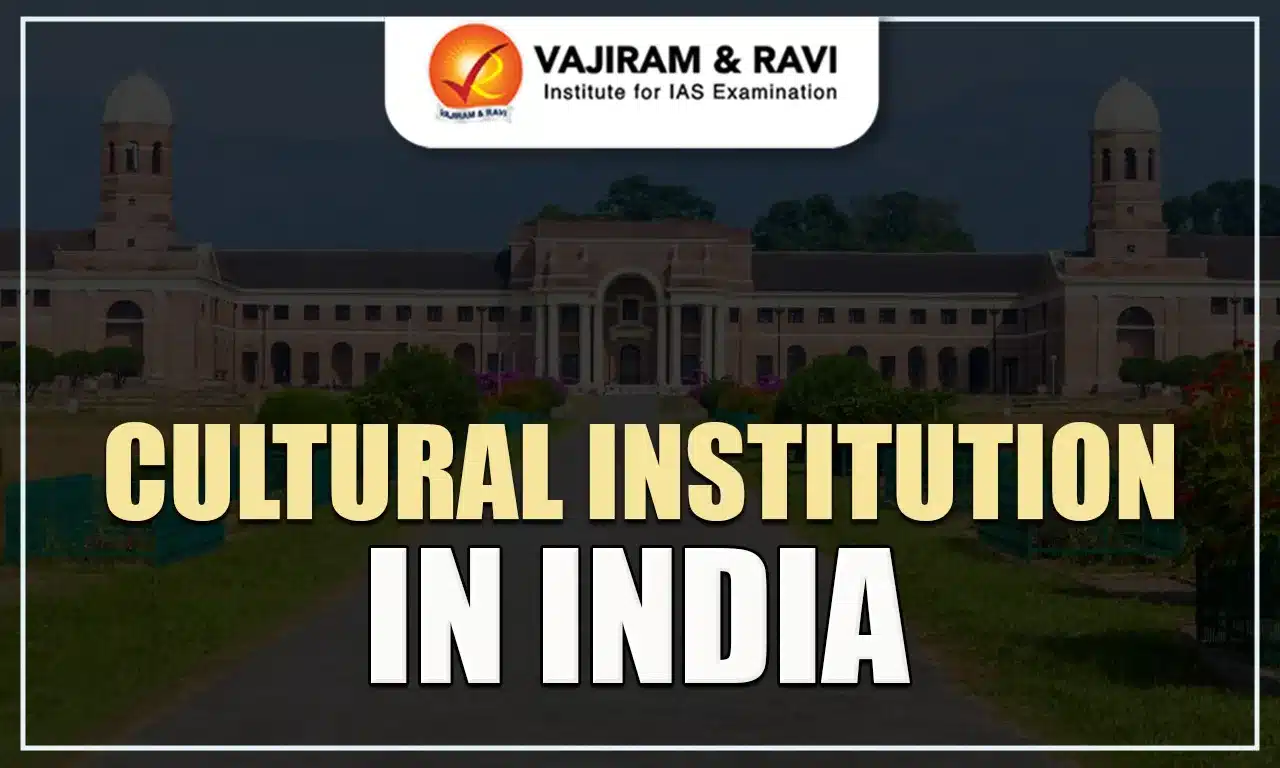
Cultural Institution in India is an organization dedicated to preserving, promoting, or showcasing the traditions, heritage, and values of a particular culture or community. In India, several institutions, both government-run and independent, play an important role in protecting and promoting the country’s rich cultural legacy. These include bodies like the Archaeological Survey of India (ASI), which safeguards historical monuments, and the Indira Gandhi National Centre for the Arts (IGNCA), which focuses on research and conservation of arts and culture. 

Cultural Institution in India

Cultural Institutions in India are dedicated organizations that focus on the preservation, interpretation, and dissemination of knowledge related to culture, history, science, and the environment. Their mission is to educate and inform the public about these aspects, helping to connect people with their heritage and the world around them. These institutions can include museums, libraries, historical societies, botanical gardens, and community cultural centers. They serve as important hubs for learning, creativity, and cultural exchange, fostering a deeper understanding of the world’s rich history and diverse cultures.

Archaeological Survey of India

  • The Archaeological Survey of India (ASI) functions under the Ministry of Culture and serves as the premier body for archaeological research and conservation in India. 
  • Its main goal is to protect the country’s tangible heritage, monuments, ruins, and ancient sites. 
  • The ASI operates under the framework of two key legislations: the Ancient Monuments and Archaeological Sites and Remains Act of 1958 and the Antiquities and Art Treasures Act of 1972. 
  • These laws guide its work in excavation, preservation, and regulation of antiquities across India.

Lalit Kala Academy

  • Established in 1954 as India’s national academy for visual arts.
  • Functions as an autonomous body, fully funded by the Ministry of Culture, Government of India.
  • Serves as the apex cultural institution for promoting and preserving modern and contemporary Indian art.
  • Has contributed significantly to the recognition of Indian art on the global stage.
  • Maintains a permanent collection showcasing the diversity and development of Indian visual arts.
  • Organizes exhibitions, art camps, workshops, and awards to support artists and art education.

Sangeet Natak Academy

  • India’s national academy of music, dance, and drama, the Sangeet Natak Akademi has been instrumental in shaping modern India's cultural identity.
  • Recognizing the ephemeral nature of performing arts, a democratic model was adopted to help the public learn, practice, and preserve these traditions.
  • In 1945, the Asiatic Society of Bengal proposed a National Cultural Trust with three academies: for dance, drama and music, letters, and art and architecture.
  • This proposal eventually led to the establishment of three national academies post-Independence.
  • The Sangeet Natak Akademi was the first to be founded, through a Ministry of Education resolution.
  • In 1961, it was reconstituted as a society and registered under the Societies Registration Act, 1860 (amended 1957).

Sahitya Academy

  • It promotes literature in 24 recognized Indian languages.
  • Organizes literary programs, awards, fellowships, and publishes books throughout the year.
  • Has published over 7000 books in 24 Indian languages over six decades.
  • Covers a wide range of genres including fiction, poetry, drama, criticism, and literature from various periods, classical to contemporary.
  • Publishes three major journals:
  • Indian Literature (bi-monthly, English)
  • Samkaleena Bhartiya Sahitya (bi-monthly, Hindi)
  • Sanskrit Pratibha (quarterly, Sanskrit)
  • Actively promotes children’s literature as well.
  • Headquartered in New Delhi, with regional offices in Kolkata, Mumbai, Bengaluru, and Chennai.
  • Sahitya Akademi Awards are considered among the most prestigious literary honors in India.

National Mission for Manuscripts

  • Launched in February 2003 by the Ministry of Culture, Government of India.
  • Aimed at preserving India’s manuscript heritage, considered one of the most valuable aspects of our cultural legacy.
  • Focuses on locating, creating catalogues, conserving, and digitizing manuscripts across the country.
  • Seeks to enhance access, spread public awareness, and encourage educational and scholarly use of manuscripts.
  • Initially designed as a five-year project, but its work continues due to its scale and significance.

Indian National Trust for Art and Cultural Heritage (INTACH)

  • Indian National Trust for Art and Cultural Heritage (INTACH) was established in 1984 as an autonomous NGO that has an objective of Preservation of Indian Art and Cultural heritage.
  • Focuses on both tangible (monuments, buildings, artifacts) and intangible (traditions, skills, practices) heritage.
  • Headquartered in New Delhi with chapters across the country.
  • Its guiding motto is: “Dedicated to Conservation”.

Indira Gandhi National Centre for the Arts (IGNCA)

  • IGNCA was founded in 1985 as an independent organisation that has the objective of art study, restoration, display and distribution.
  • They also had the objective of promoting critical and creative writing, not only focusing on the visual arts.
  • Specializes in the study, preservation, display, and dissemination of visual, oral, and performing arts.
  • Also supports critical and creative writing, extending beyond visual arts.
  • Aims to become a national reference hub for India’s rich oral and visual traditions.

Centre for Cultural Resources and Training (CCRT)

  • Established in 1979 by the Ministry of Culture, Government of India.
  • Founded at the initiative of Dr. Kapila Vatsyayan and Smt. Kamala Devi Chattopadhyay.
  • Aims to bridge education with culture by integrating India’s cultural heritage into the educational system.
  • Functions as an autonomous institution, but operates under government direction for capacity-building.
  • Headquartered in New Delhi, with three regional centres in:
    • Udaipur (West)
    • Hyderabad (South)
    • Guwahati (Northeast)
  • Works to promote the preservation and transmission of Indian art and culture across regions.

National Archives of India (NAI)

  • Established under the Ministry of Culture’s Memorandum, Government of India.
  • Originally founded during the British colonial period to maintain administrative records.
  • Serves as the repository of the non-current records of the Government of India.
  • Core objectives include:
    • Preserving India’s documentary heritage for future generations.
    • Improving public access to archival collections.
    • Systematic organization and maintenance of historical records.
  • Promotes collaboration with archivists and archival institutions, both nationally and internationally.

Indian Council for Cultural Relations (ICCR)

  • Established in 1950 by Maulana Abul Kalam Azad, India’s first Education Minister.
  • Functions under the Ministry of Culture, Government of India.
  • Aims to promote India’s cultural diplomacy and foster mutual understanding with other countries.
  • Core functions:
    • Designing and executing cultural exchange programs with nations worldwide.
    • Organizing international visual and performing arts events.
    • Supporting academic and cultural scholarships for foreign students.
    • Managing India's cultural centres abroad and hosting foreign cultural delegations.

Indian Council of Historical Research (ICHR)

  • Established in 1972 under the Societies Registration Act, 1860.
  • It operates as an autonomous body under the Ministry of Education, and is funded primarily by the University Grants Commission (UGC).
  • Set up to promote objective historical research and preserve India’s cultural heritage through academic study.
  • Acts as a platform for historians to collaborate, exchange ideas, and contribute to national and international historical scholarship.
  • Provides research fellowships, funds historical publications, and organizes seminars and conferences across the country.

Nehru Memorial Museum and Library

  • Originally designed by Sir Edwin Lutyens in 1929-30 as part of the imperial capital project.
  • Served as the residence of the last British Commander-in-Chief and was known as Teen Murti House.
  • After Independence, it became the official residence of Pandit Jawaharlal Nehru, India’s first Prime Minister, who lived there for 16 years.
  • Following Nehru’s death in 1964, the Government of India converted the Teen Murti House into a museum and library dedicated to his memory.
  • Today, the Nehru Memorial Museum and Library functions as a centre for research in modern Indian history, politics, and society.

Cultural Institution in India FAQs

Q1: What is the role of Sangeet Natak Akademi?

Ans: It promotes performing arts like music, dance, and drama and honors artists with prestigious awards for cultural excellence.

Q2: Where is the Sahitya Akademi located?

Ans: The Sahitya Akademi is headquartered in New Delhi and promotes Indian literature in various regional languages through awards and publications.

Q3: What does the Lalit Kala Akademi do?

Ans: It supports visual arts including painting, sculpture, and graphics, and organizes exhibitions and artist camps across India.

Q4: Which institution manages national museums?

Ans: The National Council of Science Museums and the Ministry of Culture manage and develop national museums across India.

Q5: Where is the National School of Drama located?

Ans: Located in New Delhi, the National School of Drama trains students in acting, stagecraft, and theater direction.

National Financial Reporting Authority (NFRA)

National Financial Reporting Authority

National Financial Reporting Authority Latest News

Nitin Gupta, the former Chairman of CBDT, has been recently appointed as the Chairperson of the National Financial Reporting Authority (NFRA).

About National Financial Reporting Authority

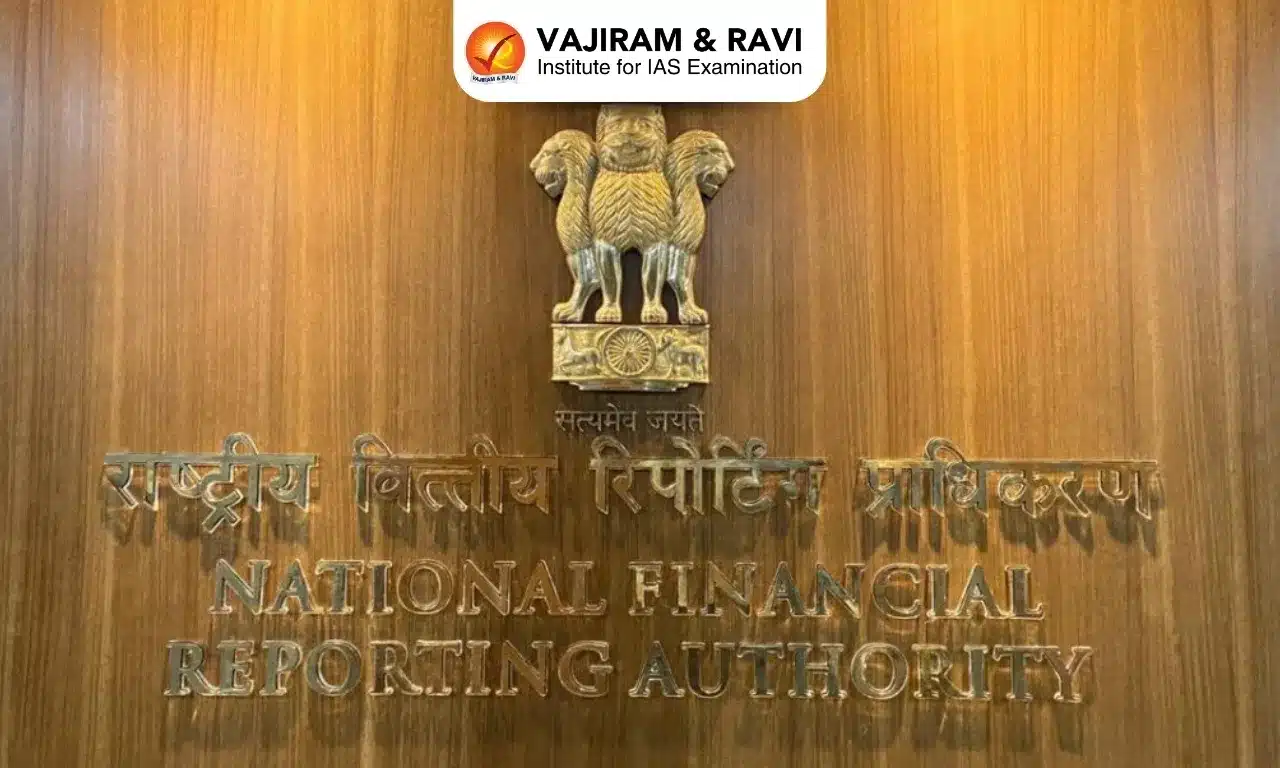
  • It is an independent regulatory body established by the Government of India under Section 132(1) of the Companies Act, 2013. 
  • Its primary role is to oversee and enforce compliance with accounting and auditing standards to improve the credibility, quality, and transparency of financial reporting in India.
  • It aims to protect the interests of investors, stakeholders, and the public by ensuring high standards in the financial reporting ecosystem.
  • Head Office: New Delhi

National Financial Reporting Authority Functions

  • Recommend accounting and auditing policies and standards to be adopted by companies for approval by the Central Government;
  • Monitor and enforce compliance with accounting standards and auditing standards;
  • Oversee the quality of service of the professions associated with ensuring compliance with such standards and suggest measures for improvement in the quality of service;
  • Perform such other functions and duties as may be necessary or incidental to the aforesaid functions and duties.

National Financial Reporting Authority Composition

  • The Companies Act requires the NFRA to have a chairperson who will be appointed by the Central Government and a maximum of 15 members.
  • The appointment of such chairperson and members is subject to the following qualifications:
  • They should have an expertise in accountancy, auditing, finance, or law.
  • They are required to make a declaration to the Central Government that there is no conflict of interest or lack of independence in their appointment.
  • All the members, including the chairperson, who are in full-time employment, should not be associated with any audit firm (including related consultancy firms) during their term of office and 2 years after their term.

National Financial Reporting Authority Powers

  • NFRA has the power to investigate, either suo moto or on a reference made to it by the Central Government, into the matters of professional or other misconduct committed by any member or firm of chartered accountants registered under the Chartered Accountants Act, 1949.
  • It has the same powers as are vested in a civil court under the Code of Civil Procedure, 1908, while trying a suit.
  • Where professional or other misconduct is proved, it shall have the power to impose punishment.
  • Any person who is not satisfied with the order of the NFRA can then make an appeal to the Appellate Authority.

National Financial Reporting Authority Jurisdiction

  • The jurisdiction of the NFRA for the investigation of Chartered Accountants and their firms would extend to listed companies and large unlisted public companies, the thresholds for which shall be prescribed in the Rules.
  • The Central Government can also refer such other entities for investigation where public interest would be involved.

Source: ET

National Financial Reporting Authority FAQs

Q1: What is the primary role of National Financial Reporting Authority (NFRA)?

Ans: Overseeing compliance with accounting and auditing standards.

Q2: What powers does National Financial Reporting Authority (NFRA) have while investigating misconduct?

Ans: Same as a civil court under the Code of Civil Procedure, 1908.

Q3: Where is the head office of NFRA located?

Ans: New Delhi

Daily Editorial Analysis 26 July 2025

Daily Editorial Analysis

Kargil, Pahalgam and A Revamp of the Security Strategy

Context

  • As India marks the 26th anniversary of the Kargil War, one of the subcontinent’s most defining military engagements, the memories remain vivid, both for their strategic significance and their lasting impact on national consciousness.
  • Fought in the icy heights of Kashmir between May and July 1999, Kargil was the first conflict in India to be ‘live televised’, drawing millions into the immediacy of war’s uncertainty and sacrifice.
  • Yet, as recent events in Pahalgam in 2025 demonstrate, the lessons of Kargil continue to shape India's response to terrorism and cross-border aggression, signalling a decisive shift in doctrine and preparedness.

Kargil: A Watershed Moment

  • In the wake of India’s declaration as a nuclear power in May 1998, and Pakistan’s rapid reciprocation, South Asia became home to two nuclear-armed adversaries.
  • India, at the time, was geopolitically isolated, threatened by economic sanctions and struggling with a weak, coalition government.
  • Strategic vulnerabilities were compounded by strained economic conditions and neglected military modernisation, as resources and focus were divided by persistent insurgencies in Kashmir and the North-East.
  • Despite attempts at diplomatic rapprochement, including Prime Minister Atal Bihari Vajpayee’s historic bus trip to Lahore in February 1999, Pakistan’s incursion in Kargil shattered any illusions of peace.
  • The war demonstrated that limited, conventional conflicts could occur under the nuclear shadow, provided escalation was tightly controlled.
  • The conflict exposed severe intelligence lapses, inadequate preparedness for high-altitude operations, outdated equipment, and a lack of coordinated command structures within India’s security apparatus.

Structural and Strategic Reforms Post-Kargil

  • Sweeping Reforms in Security and Intelligence

    • Kargil spurred the Indian government to undertake The Kargil Review Committee’s recommendations.
    • It led to the establishment of the Defence Intelligence Agency (DIA) in 2002 and the National Technical Research Organisation (NTRO) in 2004.
    • These structural upgrades were complemented by efforts to improve synergy among intelligence agencies, revamping the National Security Council Secretariat and the Joint Intelligence Committee.
    • The role of a National Security Adviser (NSA) became institutionalised, centralising strategic decision-making.
  • Realisation of Necessity of Military Modernisation and Self-Reliance

    • Realising the absence of reliable allies, India initiated ambitious plans to update its arsenal, enhance joint command structures, and develop doctrines tailored to regional realities.
    • Most notable was the Cold Start Doctrine, designed for rapid mobilisation and targeted conventional strikes.
    • The focus on home-grown military platforms, evident in projects like indigenous artillery, BrahMos missiles, Rafale jets, Apache and Chinook helicopters, and S-400 air defence systems, marked a turning point towards strategic autonomy.

The Evolving Fight Against Terrorism and Pahalgam Aftermath

  • The Evolving Fight Against Terrorism

    • While Kargil catalysed reforms in conventional warfare, India’s counter-terrorism posture evolved more gradually.
    • For years, Pakistan-based terrorism inflicted grievous wounds on India with limited repercussions for the perpetrators.
    • The hijacking of IC-814 in December 1999, the Parliament attack in 2001, and the 26/11 Mumbai terror attack in 2008 illustrated India’s restraint, as punitive measures remained largely absent.
    • It was only after the 2016 Uri attack that surgical strikes became a tool of calibrated retaliation, followed by the Balakot airstrike in 2019, a bold demonstration of cross-border resolve.
  • Pahalgam and Operation Sindoor: Setting a New Threshold

    • India’s response, code-named Operation Sindoor, was unprecedented in scope and impact.
    • Over four days, the Indian military struck nine terror bases and eleven military airbases deep within Pakistan, reportedly crippling a key nuclear storage facility.
    • Pakistan, confronted with the scale and precision of India’s retaliation, requested an immediate ceasefire.
    • This operation established new deterrence: India demonstrated a willingness to impose devastating costs on the perpetrators and their patrons, making clear that the era of strategic restraint was over.

Lessons and the Road Ahead

  • From the heights of Kargil to the valleys of Pahalgam, India’s security doctrine has undergone a profound transformation.
  • The country has built robust intelligence and military capabilities, strengthened inter-agency coordination, and embraced indigenous technological development.
  • Crucially, the political and military leadership have signalled an unambiguous shift from passive deterrence to proactive defence, where terror attacks will be met with overwhelming and direct retaliation.
  • Yet, the fundamental lesson from these decades of conflict is that vigilance and adaptability are indispensable.
  • While India’s capabilities have grown, the need for continual modernisation, jointness among armed forces, and unyielding political resolve remains paramount.
  • India cannot afford another surprise on the scale of Kargil or Pahalgam; the imperative is to stay ahead of emerging threats in an ever-volatile region.

Conclusion

  • The legacy of Kargil and the aftermath of Pahalgam encapsulate India’s journey from hesitant responder to confident, self-reliant regional power.
  • As the nation commemorates the sacrifices of its soldiers, it must also reaffirm its commitment to vigilance, unity, and relentless pursuit of peace and security.
  • The message is clear: never again will India countenance another Kargil or Pahalgam.

Kargil, Pahalgam and A Revamp of the Security Strategy FAQs

Q1. What was significant about the Kargil War in terms of media coverage?
Ans. The Kargil War was the first ‘live televised’ conflict in India, bringing the war into the living rooms of millions.

Q2. What major intelligence failure was revealed by the Kargil War?
Ans. The war revealed a lack of real-time intelligence and aerial surveillance, leading to delayed decision-making.

Q3. What was Operation Sindoor?
Ans. Operation Sindoor was India’s military retaliation in 2025, striking terror bases and airbases across Pakistan in response to the Pahalgam terror attack.

Q4. What was one key structural change in India’s security set-up after Kargil?
Ans. The establishment of the Defence Intelligence Agency (DIA) in 2002 was a key change for better intelligence coordination.

Q5. How did India’s military strategy evolve post-Kargil?
Ans. India developed the “Cold Start Doctrine” for rapid, limited incursions and focused on modernizing equipment and joint force coordination.

Source: The Hindu


The Scientist Who Made ‘Mangroves’ a Buzzword

Context

  • Mangroves, once primarily valued by local communities for their vital role in providing fishery resources and supporting livelihoods, have steadily ascended to the forefront of global environmental discourse.
  • Today, their significance spans disaster risk reduction, climate adaptation, carbon sequestration, fisheries enhancement, and the safeguarding of biodiverse shoreline habitats.
  • This transformation in perception is the result of a series of scientific recognitions, policy interventions, and the tireless advocacy of pioneers such as M.S. Swaminathan.

Shifting Perspectives: From Margins to Mainstream

  • Historically, communities living alongside mangroves understood their importance intimately, relying on these ecosystems for sustenance and income.
  • However, broader recognition came only in the late 1980s.
  • Landmark initiatives, including the United Nations Development Programme and UNESCO’s 1988 regional mangrove research project, set the stage for an explosion in research and policy focus.
  • Crucially, at the 1989 Climate Change and Human Responses conference, M.S. Swaminathan articulated the potential of mangroves to mitigate the adverse effects of climate change on coastal societies.
  • He highlighted the threats of rising sea levels and cyclones, advocating for immediate, sustainable mangrove management rooted in ecology, economics, and equity.
  • His pioneering vision included genetic research aimed at transferring mangrove salinity tolerance traits to crops such as rice.

Key Contributions of Dr Swaminathan

  • Institutional Leadership

    • Founding the International Society for Mangrove Ecosystems (ISME)in 1990, with Swaminathan as Founding President, provided a vital institutional anchor for global mangrove conservation.
    • He co-authored the Charter for Mangroves, integrated into the World Charter for Nature at the 1992 United Nations Conference, which continues to underpin global mangrove conservation standards.
    • The ISME’s initiatives, such as economic and environmental evaluations, international workshops, restoration manuals, and the influential World Mangrove Atlas, redefined mangroves from marshy wastelands to irreplaceable multi-use ecosystems.
    • The creation of the GLObal Mangrove database and Information System (GLOMIS), and the establishment of genetic resource centres across Asia and Oceania, have institutionalised mangrove research, conservation, and restoration.
  • A Transformative Impact on Indian Policy and Practice

    • India’s mangrove management journey began as early as 1783, but throughout the colonial and early post-independence era, the emphasis was on clear-felling for agriculture and settlement.
    • Restoration attempts by government agencies often failed, and local communities were unfairly blamed for degradation.
    • Under Swaminathan’s guidance, participatory research in the 1990s, particularly with the Tamil Nadu Forest Department, revealed that destructive management practices, not community resource use, were to blame for mangrove losses.
    • This led to the development and pilot-testing of the hydro-ecological “fishbone canal” method for restoration in several Indian states.
    • Over time, this approach blossomed into the Joint Mangrove Management programme, which was officially recommended for adoption nationwide in 2000.

Mangroves as Coastal Shields

  • The demonstrated ability of mangroves to reduce devastation during major natural disasters, such as the 1999 Odisha super cyclone and the 2004 Indian Ocean tsunami, solidified their value in disaster mitigation.
  • These events catalysed large-scale restoration efforts by both central and state governments, affirming mangroves as essential coastal infrastructure.

Measuring Progress: India’s Growing Mangrove Cover

  • According to the India State of Forest Report (ISFR) 2023, the nation’s mangrove cover is now 4,991.68km², 0.15% of its land area, up by 16.68km² since 2019.
  • This tangible growth reflects the success of sustained, science-based policies and multi-stakeholder collaboration.

Conclusion

  • World Mangrove Day serves as a timely occasion to assess progress.
  • The evolution of mangrove conservation from local stewardship to an urgent global mandate underscores the value of visionary leadership, robust science, and participatory management.
  • Thanks to champions like M.S. Swaminathan and the dedicated efforts of researchers, policymakers, and local communities, mangroves are now recognized not only as natural resources, but as vital assets in the quest for environmental security and climate resilience.

The Scientist Who Made ‘Mangroves’ a Buzzword FAQs

Q1. Who played a key role in bringing global attention to mangrove conservation?
Ans. M.S. Swaminathan played a pivotal role in promoting global mangrove conservation.

Q2. What major method was developed in India to restore degraded mangroves?
Ans. The hydro-ecological “fishbone canal” method was developed to restore degraded mangroves in India.

Q3. How did mangroves help during natural disasters like the 1999 Odisha cyclone and the 2004 tsunami?
Ans. Mangroves reduced the loss of life and property during these natural disasters.

Q4. According to the ISFR 2023, what is the total mangrove cover in India?
Ans. India’s mangrove cover is 4,991.68 km² as per ISFR 2023.

Q5. What organisation did M.S. Swaminathan help found to support mangrove research and conservation?
Ans. He helped found the International Society for Mangrove Ecosystems (ISME).

Source: The Hindu

Daily Editorial Analysis 26 July 2025 FAQs

Q1: What is editorial analysis?

Ans: Editorial analysis is the critical examination and interpretation of newspaper editorials to extract key insights, arguments, and perspectives relevant to UPSC preparation.

Q2: What is an editorial analyst?

Ans: An editorial analyst is someone who studies and breaks down editorials to highlight their relevance, structure, and usefulness for competitive exams like the UPSC.

Q3: What is an editorial for UPSC?

Ans: For UPSC, an editorial refers to opinion-based articles in reputed newspapers that provide analysis on current affairs, governance, policy, and socio-economic issues.

Q4: What are the sources of UPSC Editorial Analysis?

Ans: Key sources include editorials from The Hindu and Indian Express.

Q5: Can Editorial Analysis help in Mains Answer Writing?

Ans: Yes, editorial analysis enhances content quality, analytical depth, and structure in Mains answer writing.

Piratula acuminata

Piratula acuminata

Piratula acuminata Latest News

Zoological Survey of India (ZSI) researchers recently announced the discovery of a new spider species on Sagar Island in the Sundarbans, named Piratula acuminata.

About Piratula acuminata

  • It is a new species of spider.
  • It was discovered on Sagar Island in the Sundarbans.
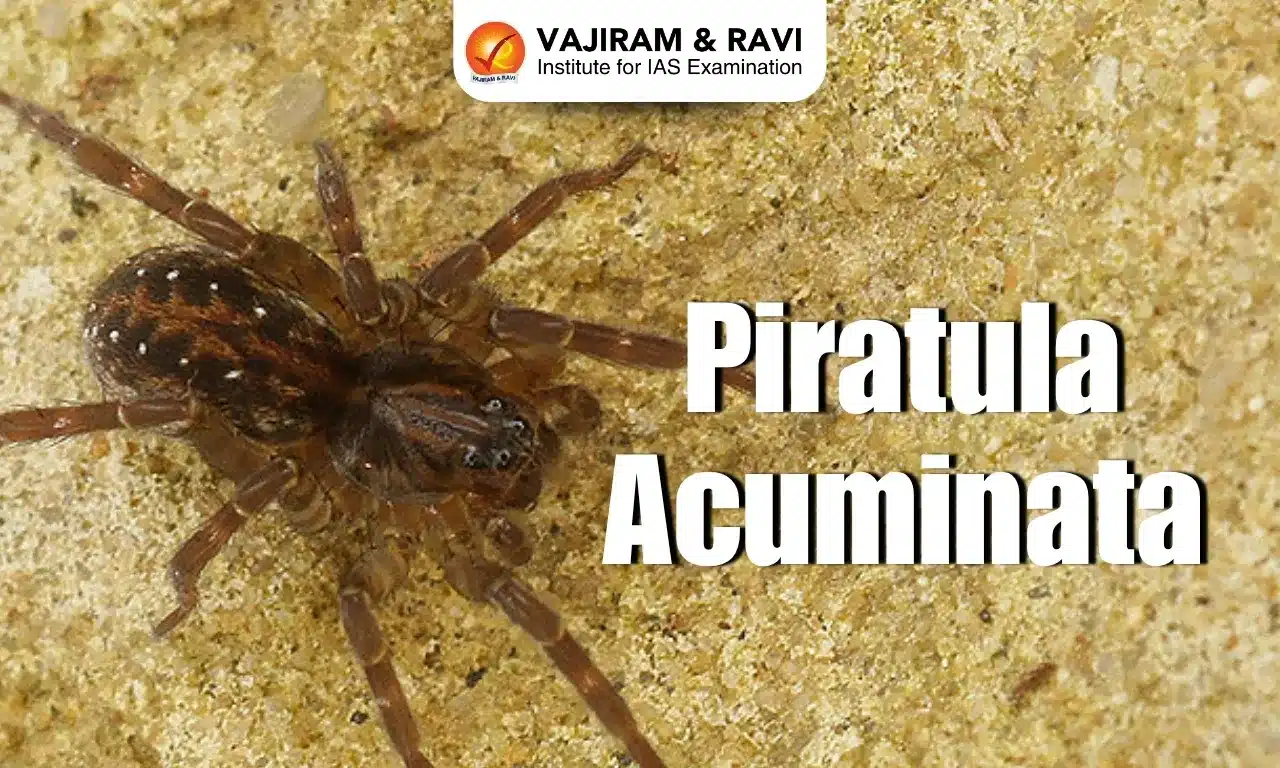
  • The newly identified species, Piratula acuminata, belongs to the family Lycosidae, commonly known as wolf spiders.
    • Unlike web-building spiders, these agile predators are ground-dwelling and rely on ambush tactics to capture prey.
  • It marks the first recorded instance of the genus Piratula in India, a group of wolf spiders predominantly found across Asia, with limited distribution in Europe and North America.
  • Piratula acuminata is a medium-sized spider, approximately 8–10 millimetres long, with a pale creamy-white body featuring brown and chalk-white spots on its abdomen and a pair of light brown stripes towards the rear.

Source: PTI

Piratula acuminata FAQs

Q1: Where was the new spider species Piratula acuminata discovered?

Ans: Sagar Island in the Sundarbans

Q2: Piratula acuminata belongs to which family of spiders?

Ans: It belongs to the family Lycosidae, commonly known as wolf spiders.

Q3: What is unique about Piratula acuminata’s hunting behavior?

Ans: It is a ground-dwelling predator relying on ambush tactics..

Macquarie Island

Macquarie Island

Macquarie Island Latest News

An earthquake of magnitude 6.0 on the Richter Scale jolted the West of Macquarie Island recently.

About Macquarie Island

  • It is located around 1,500 km southeast of Tasmania, Australia, in the Pacific Ocean.
  • It is located about halfway between Australia and Antarctica.
  • The island is about 34 kilometers (21 miles) long and 5 kilometers (3 miles) wide.
  • No people live there permanently today.
  • The island is the exposed crest of the undersea Macquarie Ridge, raised to its present position where the Indo-Australian tectonic plate meets the Pacific plate. 
  • It is a site of major geoconservation significance, being the only place on earth where rocks from the earth’s mantle (6 km below the ocean floor) are being actively exposed above sea level. 
  • Macquarie Ridge is one of only 3 such ridges that impede the Antarctic Circumpolar Circulation.
  • This results in distinct differences between the west and east sides of the ridge, which are used in different ways by different species.
  • Although the island is treeless, there are a variety of native vegetation types, including grasses and many species of moss
  • There are a few small glacial lakes.
  • Fauna: It is home to 4 species of penguins and 4 species of albatross, the island recorded 57 seabird species. 
  • Regionally part of Oceania and politically a part of Tasmania, Australia, since 1900, it became a Tasmanian State Reserve in 1978 and was inscribed as a UNESCO World Heritage Site in 1997.

Source: ZEEB

Macquarie Island FAQs

Q1: Macquarie Island is located in which ocean?

Ans: Pacific Ocean

Q2: Which two tectonic plates meet near Macquarie Island?

Ans: Indo-Australian Plate and Pacific Plate

Q3: Why is Macquarie Island geologically significant?

Ans: It is the only place where mantle rocks are actively exposed above sea level.

Mental Health Guidelines – Supreme Court’s Response to Rising Student Suicides

Mental Health Guidelines

Mental Health Guidelines Latest News

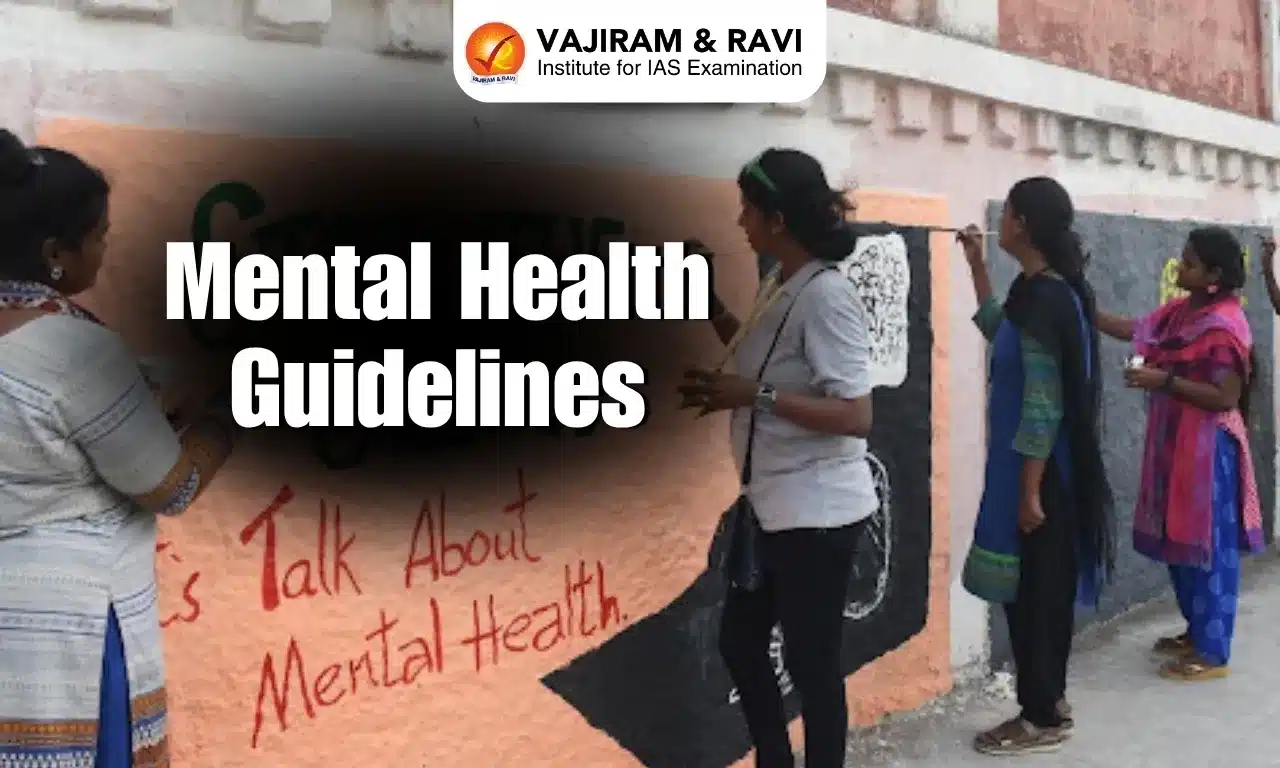
  • The Supreme Court has issued guidelines to educational institutions across the country.

Introduction

  • Rising cases of student suicides in India have prompted urgent judicial intervention. 
  • On July 26, 2025, the Supreme Court issued sweeping guidelines to educational institutions across the country, terming the growing mental health crisis a “systemic failure”
  • The judgment, issued by a two-judge bench, comes amidst increasing reports of suicides among students, particularly in high-pressure environments such as coaching centres and premier academic institutions.
  • The Court directed a uniform, enforceable mental health policy applicable to all schools, colleges, universities, hostels, and coaching centres, irrespective of their affiliation or ownership.

Increasing Suicides on Campuses

  • According to the National Crime Records Bureau (NCRB), 13,044 student suicides were recorded in 2022, comprising 7.6% of all suicides in the country. 
  • The number has increased sharply from 5,425 in 2001, underscoring a disturbing trend. At least 2,248 deaths in 2022 were directly attributed to exam failure.
  • The Supreme Court observed that students are being driven into a “rat race” where the joy of learning has been eclipsed by anxiety, performance metrics, and parental pressure. 
    • This competitive grind often isolates students, especially those in residential coaching environments far from their homes.
  • The Court stated, “Education is meant to liberate, not burden the learner… its true success lies not in grades or rankings, but in the holistic growth of a human being capable of living with dignity, confidence, and purpose.”
  • The bench also described the institutional silence around mental health as a key factor exacerbating student vulnerability, warning that suicide cases cannot be viewed as isolated tragedies but rather as a collective social failure.

Key Supreme Court Directives

  • In an unprecedented step, the Court issued 15 binding guidelines to be followed until a central regulatory framework is enacted. 
  • These apply to all educational institutions, public and private schools, colleges, universities, residential academies, hostels, and coaching centres.
  • Mandatory Counsellors and Support Systems
    • All institutions with 100 or more students must appoint at least one qualified counsellor, psychologist, or social worker trained in child and adolescent mental health.
    • Smaller institutions must establish referral linkages with external mental health professionals.
    • Staff must be trained twice a year by certified mental health experts.
  • Infrastructure and Physical Safety Measures
    • Residential institutions must install tamper-proof ceiling fans and restrict access to rooftops and high-risk areas to deter impulsive acts of self-harm.
  • Ending Discriminatory Academic Practices
    • Institutions were asked to end batch segregation based on academic performance, avoid public shaming, and refrain from setting unrealistic academic targets.
    • Such practices were deemed detrimental to the mental health of vulnerable students.
  • Institutional Accountability and Protection
    • Institutions must create robust, confidential redressal mechanisms for complaints involving harassment, bullying, caste- or gender-based discrimination, and sexual assault.
    • Retaliation against whistle-blowers or complainants will attract institutional liability.
    • Failure to act promptly will be treated as administrative culpability with legal consequences.
  • Policy Framework and National Coordination
    • All institutions must adopt and publish an annual mental health policy, taking reference from government initiatives such as:
      • Ummeed guidelines (Understand, Motivate, Manage, Empathise, Empower, Develop)
      • Manodarpan, launched by the Ministry of Education during the COVID-19 pandemic
      • National Suicide Prevention Strategy (India’s first nationwide strategy, released in 2022)
  • The Court also called for the formation of a National Task Force to institutionalise student mental health initiatives and suicide prevention mechanisms across the higher education landscape.
    •  

Background of the Verdict

  • The judgment was delivered in a case involving the suicide of a 17-year-old NEET aspirant in Visakhapatnam, whose parents sought a CBI investigation after alleged lapses in the state police inquiry. 
  • While addressing the individual case, the Court widened its scope to frame a national response to student suicides, recognising the broader institutional apathy and lack of psychological safeguards across educational spaces.

Significance and Future Implications

  • This landmark ruling by the Supreme Court marks a shift in recognising mental health as integral to the right to life and education
  • By mandating psychological support systems, regulatory oversight, and institutional accountability, the Court has provided a blueprint for a safer, more empathetic education system.
  • However, the success of these measures will depend on:
    • Timely notification and enforcement by states and Union Territories
    • Adequate budgetary allocations for hiring professionals
    • Sensitisation of staff and students toward emotional well-being
  • It also underscores the need for collective societal change, moving from a culture of academic pressure to one that prioritises the well-being, dignity, and individuality of each student.

Source : IE | TOI

Student Suicides in India FAQs

Q1: How many student suicides were reported in India in 2022?

Ans: A total of 13,044 student suicides were recorded in 2022, according to NCRB data.

Q2: What guidelines has the Supreme Court issued for educational institutions?

Ans: The Court issued 15 binding directives, including mandatory mental health counsellors, safety infrastructure, and redressal systems.

Q3: Which government initiatives were cited for mental health policy formulation?

Ans: The Court referenced the Ummeed guidelines, Manodarpan initiative, and the National Suicide Prevention Strategy.

Q4: Are coaching centres included in the Supreme Court’s guidelines?

Ans: Yes, all coaching institutes, hostels, and educational centres are covered under the new guidelines.

Q5: What role will the National Task Force play?

Ans: It will coordinate nationwide efforts on student mental health and institutional suicide prevention across higher education.

PM Modi’s Maldives Visit Marks Diplomatic Reset and Strategic Gains

PM Modi Maldives Visit

PM Modi Maldives Visit Latest News

  • Prime Minister Narendra Modi is on an official visit the Maldives, at the invitation of President Dr. Mohamed Muizzu. 
  • This marks his third visit to the Maldives and the first by any Head of State or Government during President Muizzu’s tenure.

Key Highlights of PM Modi’s Visit to Maldives

  • 60th Independence Day of Maldives
    • PM Modi congratulated Maldives on its 60th Independence Day
    • He is participating in the 60th Independence Day celebrations of the Maldives, as the Guest of Honour.
  • Stamp to mark 60 years of India-Maldives friendship released
    • PM Modi and President Mohamed Muizzu issued a stamp to mark 60 years of India-Maldives relations.
      • India was one of the first countries to establish diplomatic relations with Maldives following its independence in 1965.
    • The stamps feature India’s Uru boat and Maldives’ Vadhu Dhoni, symbolizing shared maritime heritage and centuries-old Indian Ocean trade.
      • Uru boat - A large wooden dhow handcrafted in the historic boatyards of Beypore, Kerala.
      • The traditional Maldivian fishing boat - Vadhu Dhoni - is used for reef and coastal fishing.
  • India gifts BHISHM health cube sets to Maldives
    • As part of India’s Neighbourhood First policy and Vision MAHASAGAR, India gifted handed over two units of Aarogya Maitri Health Cube [BHISHM] sets to the Government of Maldives. 
    • BHISM is a state-of-the-art portable Cube containing medical essentials, designed for rapid deployment in emergencies and disaster zones.
      • With state-of-the-art medical equipment as part of the cube, it can provide medical aid to 200 casualties with in-built support to sustain a crew of six medical personnel for up to 72 hours.
  • Inauguration of the Building of Ministry of Defence in Male
    • PM Modi and Maldivian President Mohamed Muizzu inaugurate the building of the Ministry of Defence in Malé.
    • This building has been constructed with India’s financial assistance.
  • Other Inaugurations / Handing-over
    • Handing-over of 3,300 social housing units in Hulhumale under India's Buyers' Credit facilities
    • Inauguration of Roads and Drainage system project in Addu city
    • Inauguration of 6 High Impact Community Development Projects in Maldives
    • Handing-over of 72 vehicles and other equipment
  • Agreement/MoU Signed
    • Extension of Line of Credit (LoC) of INR 4,850 crores to Maldives
      • LoC has been extended to support the island as it faces an enduring twin deficit problem.
      • This is the first time that such credit is being extended to the Maldives in Indian Rupee.
    • Reduction of annual debt repayment obligations of Maldives on GoI-funded LoCs
      • This agreement gives major relief to Maldives by reducing its yearly debt payments to India
      • Earlier, Maldives had to pay $51 million every year for an $800 million loan. Now, after a 40% cut, it will only have to pay $29 million annually.
    • Launch of India-Maldives Free Trade Agreement (IMFTA) negotiations
  • Climate Cooperation and Green Commitments
    • Joint tree-planting under India’s "Ek Pedh Maa Ke Naam” and Maldives’s “Pledge of 5 Million Tree Plantation” campaigns.

Analysis - From ‘India Out’ to Independence Day Invitation

  • Maldives' shift from the anti-India ‘India Out’ campaign to extending a ceremonial invitation to Prime Minister Narendra Modi for its Independence Day celebrations in 2025 marks a significant diplomatic turnaround. 
  • Initially, President Mohamed Muizzu’s tenure, beginning in September 2023, reflected a pro-China tilt. 
  • His party's campaign had strongly criticised India's military presence in the Maldives, and his early diplomatic visits to Turkey and China, bypassing India, sent a clear message of divergence.

Pragmatic Diplomacy Paid off

  • Despite derogatory remarks from some Maldivian ministers and demands for troop withdrawal, India maintained composure, choosing engagement over escalation
  • Modi met Muizzu at COP28 in UAE, and India replaced its 76 military personnel with HAL technicians in May 2024, addressing Male's concerns without severing strategic ties.
  • This pragmatic diplomacy coincided with Maldives facing internal economic stress, limited Chinese support, and the ruling PNC gaining a supermajority in Parliament. 
  • Seeking stability and economic aid, Foreign Minister Moosa Zameer visited India in May 2024, followed by President Muizzu’s five-day visit in October. 
    • The visit concluded with the adoption of a joint vision on economic and maritime security partnership.
  • India’s assistance played a crucial role in this reset—raising aid by ₹120 crore, rolling over Treasury Bills worth $150 million, extending currency swaps of $750 million, and offering the highest-ever quotas for essential goods exports. 
  • Trade surged to $548 million in 2023, backed by visa-free access for Indian business travellers and LoC projects.

Conclusion

  • President Muizzu’s public statement affirming that “Maldives will not do anything that would harm India’s security interests” marked a clear departure from the earlier rhetoric. 
  • The Maldives’ gesture to invite PM Modi as Guest of Honour on its 60th Independence Day underlines the maturing of bilateral ties, driven by realism, mutual interest, and regional necessity.
  • In sum, India’s patient diplomacy and sustained economic engagement turned a strained relationship into one of renewed trust and cooperation, exemplifying a successful recalibration in the Indian Ocean neighbourhood.

Source: IT | IE | MEA | LM

PM Modi Maldives Visit FAQs

Q1: What was the occasion of Modi’s visit to Maldives?

Ans: PM Modi was the Guest of Honour for Maldives’ 60th Independence Day, marking his third visit to the country.

Q2: What key projects were inaugurated during the visit?

Ans: Housing units, Defence Ministry building, road systems, and 6 community projects were inaugurated under Indian assistance.

Q3: What strategic agreements were signed?

Ans: India extended ₹4,850 crore LoC, reduced Maldives’ debt repayments, and launched Free Trade Agreement (FTA) negotiations.

Q4: How did Maldives reset its ties with India?

Ans: Despite early pro-China tilt, Maldives sought India’s support amid economic distress and political maturity post-2024 elections.

Q5: How did India respond to ‘India Out’ rhetoric?

Ans: India acted pragmatically—replacing troops with civilians, maintaining engagement, and increasing aid to restore trust and partnership.

India-UK FTA Ignores Carbon Tax Relief, Raising Export Concerns

India-UK FTA Carbon Tax

India-UK FTA Carbon Tax Latest News

  • India’s push to secure relief for its small and medium enterprises from the UK’s Carbon Border Adjustment Mechanism (CBAM) has failed to find space in the final text of the India-UK Free Trade Agreement (FTA) released recently. 
  • Despite India’s efforts, no resolution or concession on the contentious carbon tax issue was included in the deal — raising concerns about potential cost burdens and trade disadvantages for Indian exporters in the future.

UK’s Expanding Carbon Tax Regime

  • The UK’s Carbon Border Adjustment Mechanism (CBAM), set to begin in January 2027, will initially apply to high-emission sectors such as aluminium, cement, fertiliser, hydrogen, and iron & steel
    • CBAM will levy carbon taxes on imported carbon-intensive goods.
  • However, the UK government has stated that the scope of CBAM could expand beyond 2027 based on evolving data, carbon leakage risks, and technological developments.
  • This poses a growing challenge for India, as future exports across a wider range of sectors may face carbon-based tariffs. 
  • Despite a 12.6% rise in India’s exports to the UK in 2024–25—reaching $14.5 billion—and total bilateral goods trade rising to $21.34 billion, the expanding CBAM regime could threaten India’s competitiveness in the UK market.

India-UK FTA Ignores Carbon Tax Relief: Concerns for Indian Exporters

  • India’s attempt to secure exemptions for its small and medium enterprises under the UK’s upcoming Carbon Border Adjustment Mechanism (CBAM) has failed, as the final text of the India-UK Free Trade Agreement (FTA) does not address the issue. 
  • This omission is significant, as it undermines the broader benefits of the FTA, which promises zero-duty access for 99% of Indian exports. 
  • Indian exporters of carbon-intensive goods, valued at around $775 million annually, now face the risk of additional duties based on the UK’s carbon emission calculations.
  • The situation is further complicated by similar measures planned by the EU, which also refuses to treat CBAM as a trade issue. 
  • The absence of legal safeguards in the FTA could weaken India’s negotiating position in future trade deals and affect its industrial competitiveness in Western markets.

India May Challenge UK’s Carbon Tax at WTO

  • With no concession secured on the UK’s CBAM in the recent FTA, India may consider challenging the measure at the WTO, citing violations of Special and Differential Treatment (SDT) norms meant to protect developing nations.
    • SDT norms in trade agreements allow developed countries to give preferential treatment to developing nations. 
    • These provisions recognize the developmental challenges faced by poorer countries and aim to help them better integrate into and benefit from the global trading system.
  • However, trade law experts caution that delays due to the WTO’s dysfunctional Dispute Settlement Body (DSB) could render such a challenge ineffective by the time CBAM is fully enforced. 
  • Moreover, given the EU and UK’s strong influence at the WTO, experts say a ruling against CBAM is unlikely. 
  • At best, India may push for regulatory adjustments rather than full withdrawal of the carbon tax.

Source: IE | ET

India-UK FTA Carbon Tax FAQs

Q1: What is CBAM and when will it start?

Ans: UK’s Carbon Border Adjustment Mechanism begins in 2027, imposing carbon tariffs on imports like aluminium, steel, and cement.

Q2: Did India secure any relief in FTA on CBAM?

Ans: No, India’s efforts to include CBAM exemptions in the FTA failed, worrying exporters of carbon-intensive goods.

Q3: How could CBAM affect Indian exports?

Ans: UK can impose duties on Indian goods worth $775 million, even on intermediate or precursor products based on emissions.

Q4: Can India challenge CBAM at WTO?

Ans: Yes, India may challenge it under Special and Differential Treatment provisions for developing nations, but results are uncertain.

Q5: Why is a WTO challenge risky?

Ans: WTO delays and EU–UK influence make a ruling unlikely before CBAM is implemented; only regulatory tweaks may happen.

Enquire Now