Emergency Provisions in Indian Constitution, List, Types, Advantages

Emergency Provisions in Indian Constitution

The Emergency Provisions in the Indian Constitution give powers to deal with exceptional situations like war, financial instability, or a breakdown of the Indian Constitution. Emergency Provisions allow the President of India to act beyond normal constitutional limits during exceptional situations. These powers are defined under Articles 352 (National Emergency), 356 (President’s Rule), and 360 (Financial Emergency).

Emergency Provisions in Indian Constitution

The Indian Constitution authorizes the President to declare three types of emergencies, National Emergency under Article 352, State Emergency (also known as President’s Rule) under Article 356, and Financial Emergency under Article 360. These Emergency Provisions in Indian Constitution are borrowed from the Weimar Constitution of Germany and are designed to safeguard the sovereignty, stability, and constitutional machinery of the country during extraordinary situations. 

List of Emergency Provisions in Indian Constitution

Articles 352 to 360, contained in Part XVIII of the Indian Constitution, deal with Emergency Provisions. These articles lay down the legal framework for declaring and managing different types of emergencies in India. Each article covers a specific aspect, from the proclamation of National Emergency to the imposition of President’s Rule in states and the declaration of Financial Emergency. A detailed overview of these provisions is provided in the table below.

List of Emergency Provisions in Indian Constitution
Articles Subject-Matter 

Article 352

Proclamation of Emergency

Article 353

Effect of Proclamation of Emergency

Article 354

Application of provisions relating to the distribution of revenues while a Proclamation of Emergency is in operation

Article 355

Duty of the Union to protect States against external aggression and internal disturbance

Article 356

Provisions in case of failure of constitutional machinery in States

Article 357

Exercise of legislative powers under proclamation issued under Article 356

Article 358

Suspension of provisions of Article 19 during Emergencies

Article 359

Suspension of the enforcement of the rights conferred by Part III during Emergencies

Article 360

Provisions as to Financial Emergency

Emergency Provisions in Indian Constitution Types

The Indian Constitution provides for three types of emergencies, each introduced to handle different types of crises.

Emergency Provisions in Indian Constitution Types

Basis of Classification

National Emergency

Constitutional Emergency

Financial Emergency

Grounds of Declaration

War, external aggression.

Armed rebellion

Failure of constitutional machinery.

Also known as President’s Rule

Financial instability

Parliamentary Approval

Approval by both the houses by special majority within 1 month of issue of proclamation.

Approval by both the houses by special majority within 2 months of issue of proclamation.

Approval by both the houses by special majority within 2 months of issue of proclamation.

Revocation of Proclamation

By the President.

By resolution of Lok Sabha.

By the President.

By the President.

Implementation

It has been invoked three times in India during 1962, 1971 and 1975.

President’s Rule has been invoked more than 115 times in India.

Not Yet Invoked

Judicial review

Allowed

Allowed

Allowed

Article

Article 352

Article 356

Article 360

National Emergency (Article 352)

A National Emergency is declared by the President of India when the security of the country or any part of it is threatened by war, external aggression, or armed rebellion. Initially, the term “internal disturbance” was used, but it was replaced with “armed rebellion” by the 44th Constitutional Amendment Act, 1978. 

The National Emergency significantly brought changes in the federal structure. The Centre gains greater control over the states, the Parliament can legislate on any subject from the State List, and Fundamental Rights under Article 19 automatically get suspended. The emergency must be approved by both Houses of Parliament within one month and can continue for six months at a time with repeated approvals.

President’s Rule (Article 356)

President’s Rule, or State Emergency, is imposed when a state government fails to function according to constitutional provisions. This could be due to political instability, loss of majority, or failure of law and order. Based on the report of the Governor or otherwise, the President can assume control of the state’s administration. 

During this period, the state legislature is either dissolved or suspended, and the Parliament assumes legislative powers over the state. While commonly referred to as a “State Emergency,” the Constitution doesn’t use the term "emergency" for this provision. President’s Rule must be approved by both Houses of Parliament within two months and can continue for six months at a time, up to a maximum of three years with proper justifications and approvals.

Financial Emergency (Article 360)

A Financial Emergency can be declared when the financial stability or credit of India or any part of its territory is under threat. Though this has never been invoked in India's history, the provision gives powers to the Centre once in effect. 

The President can direct states to follow specific economic policies, reduce salaries of government employees (including judges), and reserve all financial and money bills for his approval. Unlike the other emergencies, a Financial Emergency remains in force until it is revoked by the President and does not require repeated parliamentary approval.

Emergency Provisions in Indian Constitution Analysis

Emergency Provisions in Indian Constitution are legal mechanisms that give power to the government to act decisively during the national crisis. These provisions are introduced to protect the sovereignty, unity and stability of the nation during severe situations when normal governance may prove inadequate. 

Emergency Provisions in Indian Constitution Advantages

  • Emergency Provisions in Indian Constitution enable the central government to act quickly during times of war, rebellion, or financial breakdown.
  • By centralizing power temporarily, these provisions help maintain political stability and national integrity, especially when state machinery fails.
  • In situations like internal rebellion or state-level political instability, emergency provisions help restore governance and law enforcement mechanisms, ensuring the safety of citizens.
  • During wartime or external threats, these powers allow the government to safeguard the country’s sovereignty without being hindered by procedural delays.
  • Financial Emergency (though never used) offers a legal mechanism to manage fiscal crises by directing both Union and State governments to prioritize essential expenditures.

Emergency Provisions in Indian Constitution Criticism 

  • Emergency Provisions in Indian Constitution shifted the balance heavily in favor of the Union, reducing states to administrative units with little autonomy.
  • History has shown that emergency powers can be misused for political gain. The 1975 Emergency under Indira Gandhi is a prime example, where democratic institutions were curtailed for personal and political reasons.
  • National Emergency suspends Article 19 rights, and other rights can also be restricted. This compromises civil liberties and freedom of expression, often affecting dissenters and opposition voices.
  • With Parliament and state assemblies under control, the checks and balances between organs of the state are weakened. The executive can dominate without sufficient scrutiny or accountability.
  • Excessive concentration of authority in the hands of the Union executive dilutes the role of state governments and may lead to arbitrary governance.

Emergency Provisions in Indian Constitution FAQs

Q1: What are Emergency Provisions in India?

Ans: Special constitutional measures taken by the President during national crises to protect sovereignty, security, and governance.

Q2: How many types of emergencies are there?

Ans: Three: National Emergency, State Emergency (President’s Rule), and Financial Emergency.

Q3: Which articles deal with emergencies?

Ans: Articles 352 to 360 of the Indian Constitution.

Q4: What is a National Emergency?

Ans: Declared under Article 352 when there's war, external aggression, or armed rebellion.

Q5: What is President’s Rule?

Ans: Declared under Article 356 when a state's constitutional machinery fails.

UPSC Daily Quiz 29 July 2025

UPSC Daily Quiz

The Daily UPSC Quiz by Vajiram & Ravi is a thoughtfully curated initiative designed to support UPSC aspirants in strengthening their current affairs knowledge and core conceptual understanding. Aligned with the UPSC Syllabus 2025, this daily quiz serves as a revision resource, helping candidates assess their preparation, revise key topics, and stay updated with relevant issues. Whether you are preparing for Prelims or sharpening your revision for Mains, consistent practice with these Daily UPSC Quiz can significantly enhance accuracy, speed, and confidence in solving exam-level questions.

[WpProQuiz 31]

UPSC Daily Quiz FAQs

Q1: What is the Daily UPSC Quiz?

Ans: The Daily UPSC Quiz is a set of practice questions based on current affairs, static subjects, and PYQs that help aspirants enhance retention and test conceptual clarity regularly.

Q2: How is the Daily Quiz useful for UPSC preparation?

Ans: Daily quizzes support learning, help in revision, improve time management, and boost accuracy for both UPSC Prelims and Mains through consistent practice.

Q3: Are the quiz questions based on the UPSC syllabus?

Ans: Yes, all questions are aligned with the UPSC Syllabus 2025, covering key areas like Polity, Economy, Environment, History, Geography, and Current Affairs.

Q4: Are solutions and explanations provided with the quiz?

Ans: Yes, each quiz includes detailed explanations and source references to enhance conceptual understanding and enable self-assessment.

Q5: Is the Daily UPSC Quiz suitable for both Prelims and Mains?

Ans: Primarily focused on Prelims (MCQ format), but it also indirectly helps in Mains by strengthening subject knowledge and factual clarity.

Operation Mahadev, Objectives, Key Highlights, Full Details

Operation Mahadev

Operation Mahadev was launched after the technical surveillance check related to the terrorist attacks on 28th July 2025, Monday where the Indian Army’s Chinar Corps, with CRPF and J&K Police killed three Pakistani Terrorists in Lidwas area near Harwan, on the outskirts of Srinagar, Jammu and Kashmir.

At around 11am, a joint team of 24 Rashtriya Rifles and 2 Para Units detected terrorist activity in Mulnar, Harwan which resulted in firefight and encounter of 3 heavily armed terrorists. One of the terrorists was identified as Jibran, a Lashkar-e-Taiba (LeT) who played a major role in the Sonamarg Tunnel Attack, October 2023.

Also Read: Operation Sindoor

What is Operation Mahadev?

Operation Mahadev is a joint counter-terror operation launched by Indian security forces, including the Indian Army’s Chinar Corps, the Central Reserve Police Force (CRPF), and the Jammu and Kashmir Police. The operation was initiated based on credible forces that the militants involved in the Pahalgam Terror Attack had moved into the dense forest of Dachigam National Park and the nearby Dara area approximately 20 kilometres from Srinagar. The name "Mahadev" draws from both the region's rugged mountainous terrain and the religious significance associated with the Mahadev peak in Kashmir.

Operation Mahadev Overview

The table mentioned below includes the Operation Mahadev Overview:

Operation Mahadev Overview
Location Lidwas area near Dara and Harwan in Jammu and Kashmir

Operation Launched

27-28 July 2025

Forces Involved

Indian Army (24 RR & 4 PARA), CRPF, J&K Police

Outcome

3 Pakistani LeT terrorists neutralised

Support

Drone surveillance and multi-layered intelligence

Status

Operation continues with search and combing operations underway

Operation Mahadev

  • Over the past month, intelligence agencies seized suspicious communications originating from Dachigam forest. These inputs pointed to the movement of foreign terrorists believed to be connected to the April 22 Pahalgam Attack 2025.
  • Reports from local communities and villagers in the Dara and Harwan regions indicated sightings of unfamiliar individuals. This prompted on-ground verification by security forces.
  • A coordinated force comprising personnel from the 24 Rashtriya Rifles, 4 PARA (Special Forces), Central Reserve Police Force (CRPF), and the Special Operations Group (SOG) of the Jammu and Kashmir Police was positioned to Lidwas and its adjoining forested zones.
  • Around 11 AM on July 28, security forces established contact with three terrorists concealed in a heavily camouflaged hideout within the forest. A swift and intense exchange of fire ensued, leading to the neutralisation of all three terrorists.
  • As per SSP Srinagar, GV Sundeep Chakravarty, the deceased were identified as Pakistani nationals linked to the Lashkar-e-Taiba (LeT) group. While their precise involvement in the Pahalgam Attack is being investigated, security forces recovered arms, ammunition, and digital devices from the encounter site.

Dara Region Significance

The Dara-Harwan-Dachigam has thick forests, rocky slopes, and barely any local community around. It’s the kind of terrain that gives terrorists cover and time. The location is close to Srinagar and tourist spots like Pahalgam and Gulmarg which is a major reason that the Army is patrolling here with more boots on the ground, better tech surveillance, and tighter coordination with local nomads to keep tabs on movement.

Operation Mahadev Official Statement

  • Chinar Corps (via X): “OP MAHADEV – Contact established in General Area Lidwas. Three terrorists neutralised. Operation continues.”
  • SSP Srinagar: “All three terrorists were Pakistani and belonged to LeT. Their direct link to the Pahalgam attack is under investigation.”

Operation Mahadev Objectives

  • To eliminate the terrorists who are covering the territory of India.
  • Coordination between Indian Army, CRPF, and J&K Police has visibly improved in recent weeks.
  • Stronger on-ground intelligence, aided by active local community involvement, helped pinpoint movements.
  • Sustained surveillance and rapid response proved crucial in intercepting and eliminating the threat of future attacks.

Operation Mahadev FAQs

Q1: What is Operation Mahadev?

Ans: Operation Mahadev is a joint counter-terror operation launched by Indian security forces, including the Indian Army’s Chinar Corps, the Central Reserve Police Force (CRPF), and the Jammu and Kashmir Police.

Q2: Which agencies led Operation Mahadev?

Ans: Indian Army’s Chinar Corps, with CRPF and J&K Police led Operation Mahadev

Q3: What was the goal of Operation Mahadev?

Ans: The goal of Operation Mahadev was to eliminate three terrorists linked to Lashkar-e-Taiba's Lush Timer group, who were responsible for the Pahalgam attack

Q4: Where was Operation Mahadev conducted?

Ans: Lidwas area near Harwan, on the outskirts of Srinagar, Jammu and Kashmir, Operation Mahadev was conducted.

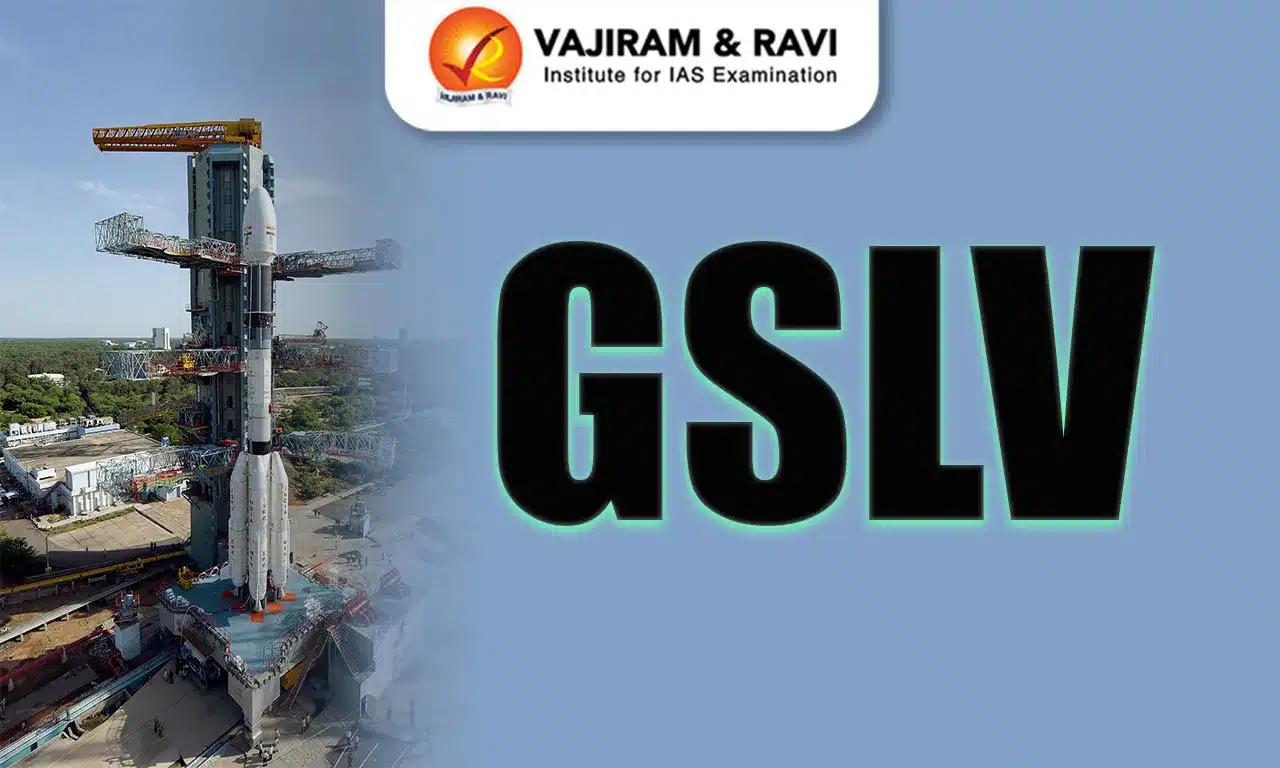
Geosynchronous Satellite Launch Vehicle (GSLV)

GSLV

Geosynchronous Satellite Launch Vehicle Latest News

Ahead of the launch of the NASA-ISRO NISAR satellite, the ISRO recently announced that the satellite had been mounted on a geosynchronous satellite launch vehicle (GSLV), and all systems of the rocket had been checked.

About Geosynchronous Satellite Launch Vehicle

  • It is a space launch vehicle designed, developed, and operated by the Indian Space Research Organization (ISRO) to launch satellites and other space objects into Geosynchronous Transfer Orbits (GTOs)
  • GSLV has the capability to put a heavier payload in orbit than the Polar Satellite Launch Vehicle (PSLV).
  • GSLV is 49.13 m tall and the tallest among all other vehicles of ISRO. 
  • It is a three-stage vehicle with a lift-off mass of 420 tonnes.
    • The first stage comprises S139 solid booster with 138-tonne propellant and four liquid strap-on motors, with 40-tonne propellant. 
    • The second stage is a liquid engine carrying 40-tonne of liquid propellant. 
    • The third stage is the indigenously built Cryogenic Upper Stage (CUS) carrying 15-tonne of cryogenic propellants.
  • The GSLV improves on the performance of the PSLV (Polar Satellite Launch Vehicle) by the addition of liquid strap-on boosters and a cryogenic upper stage. 
  • The solid first and liquid second stages are carried over from the PSLV, while the cryogenic upper stage is being supplied by Russia until India has developed an indigenous version. 

Variants of Geosynchronous Satellite Launch Vehicle

  • GSLV Mk I:
    • The first-generation GSLV with a payload capacity of carrying 2-2.5 ton satellites to GTO.
    • It used the Russian-supplied cryogenic upper stage, as it had early difficulty with mastering indigenous cryogenic technology.
    • It conducted around 5 flights from 2001-2010, including suborbital tests, with the last launch in 2010.
  • GSLV Mk II:
    • It is an enhanced variant with an indigenously developed cryogenic upper-stage engine and stage. 
    • It is capable of carrying payloads to GTO around the 2.5-ton class.
    • The first successful launch occurred in 2014
  • GSLV Mk III: The GSLV Mk III, also known as LVM-3, is the most advanced and powerful variant in the GSLV series, currently in service with a payload capacity of up to 4 tons to GTO.

Performance of Geosynchronous Satellite Launch Vehicle

  • The GSLV has launched various satellites, including communication satellites like INSAT and GSAT, as well as spacecraft from the NavIC and IDRSS series, into GTO.
  • Notable missions include the launch of the South Asia Satellite in 2017, a satellite for military applications in 2018, and the Chandrayaan-2 moon mission in 2019.

Source: TH

Geosynchronous Satellite Launch Vehicle FAQs

Q1: What is the primary purpose of the Geosynchronous Satellite Launch Vehicle (GSLV)?

Ans: To launch satellites into Geosynchronous Transfer Orbit (GTO).

Q2: Which organization has developed and operates the GSLV?

Ans: ISRO

Q3: What is unique about the third stage of GSLV?

Ans: It is a cryogenic upper stage.

Q4: The GSLV Mk III, also known as LVM-3, can carry how much payload to Geosynchronous Transfer Orbit (GTO)?

Ans: 4.0 tons

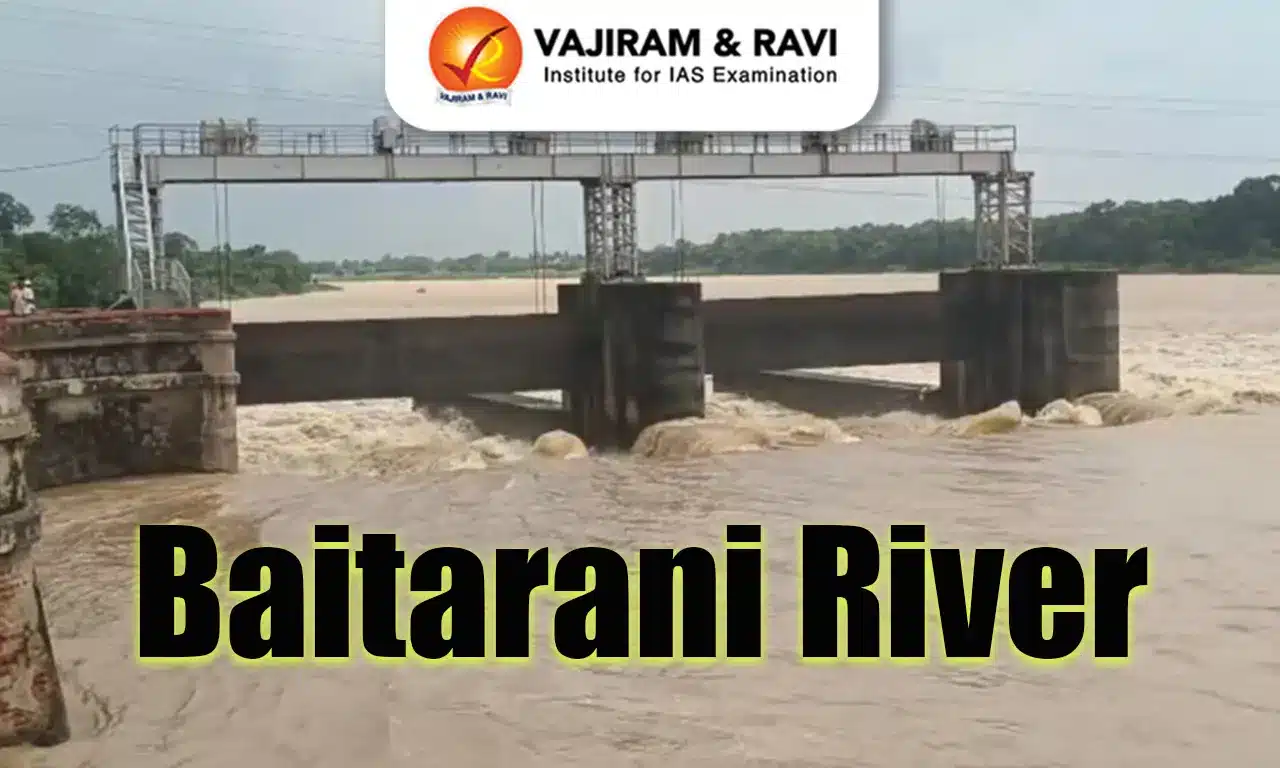
Baitarani River

Baitarani River

Baitarani River Latest News

The Baitarani river briefly surged past the danger mark, triggering floods that have inundated several low-lying villages across Bhadrak district, Odisha, recently.

About Baitarani River

  • It is an important east-flowing river in eastern India, primarily flowing through Odisha and partially through Jharkhand.
  • Baitarani,  along with rivers like Mahanadi and Brahmani, forms a fertile delta.
  • Course
    • Baitarani originates from the Gonasika Hills in Keonjhar district, Odisha, at an elevation of 900 meters above sea level.
    • At its source, it first flows underground through a small stream called Guptaganga before emerging again, making the site sacred.
    • The uppermost part of the river flows in a northerly direction. 
    • Then it changes its path and flows eastward. 
    • The beginning portion of Baitarani acts as the boundary between Odisha and Jharkhand.
    • It travels approximately 360 km before draining into the Bay of Bengal.
  • Total Basin Area: Approximately 12,790 sq. km.
  • The River basin is geographically bounded by several important river basins and water bodies:
    • South and West: Brahmani River basin
    • North: Subarnarekha River basin
    • East: Burhabalang River and the Bay of Bengal
  • Major Tributaries:
    • The river has 65 tributaries. Out of all the tributaries, 35 join from the left side and 30 join from the right side. 
    • Major tributaries include Salandi, Gahira, Kusei, Deo, Kanjhari, Musal, Arredi, Siri, Kukurkata, Budhi, Ambajhara, and Remal.
  • The Baitarani basin possesses rich mineral and agricultural resources and thus offers an ideal ground for establishment of various industries.

Source: NIE

Baitarani River FAQs

Q1: The Baitarani River primarily flows through which Indian state?

Ans: Odisha

Q2: Where does the Baitarani River originate?

Ans: Baitarani originates from the Gonasika Hills in Keonjhar district, Odisha.

Q3: What is the total length of the Baitarani River?

Ans: 360 km

Q4: Into which water body does the Baitarani River ultimately drain?

Ans: Bay of Bengal

Gavri Festival

Gavri Festival

Gavri Festival Latest News

Every year, the Bhil community of Mewar embarks on a 40‑day ritual called Gavri.

About Gavri Festival

  • It is a 40-day festival of dance-drama which is performed by the Bhil community of Rajasthan.
  • It is a fusion of act and dance, dedicated to the fight between goddess and demon.
  • This most popular southern Rajasthani ritual reflects the divine perception of the Bheel tribe.
  • It has been known to be in existence since the 3rd or 4th century, it was prevalent in the times of SiddhRaj Jai Singh, a ruler in Gujarat.
  • A vigorous fight between Goddess Amba and Demon Bhiamwal shows the conquest of good over the bad.
  • The original story of ‘Gavri’ is the story of Lord Shiva and the demon Bhasmasur. 
  • The artists perform plays in those villages where their married sisters and daughters reside. The purpose behind this custom is to ensure the wellness of their loved ones after marriage and instil in them a sense of pride and security.
  • This dance drama skillfully combines mime and dialogue, known by the names Gavri or Rai Nach.
  • Moreover, energetic background music and colorful costumes makes the place full of verve.
  • Throughout the performance, various scenes are enacted, referred to as Khel.
  • Kutkadiya, a character skillfully narrates the story before each scene, allowing the audience to immerse themselves fully in the play’s narrative.
  • All the characters are played by men and not women.

Source: IE

Gavri Festival FAQs

Q1: In which state is the Gavri festival celebrated?

Ans: Rajasthan

Q2: What is the famous folk theatre of Rajasthan?

Ans: Hela Khayal Dangal is a distinct form of folk theatre of Rajasthan.

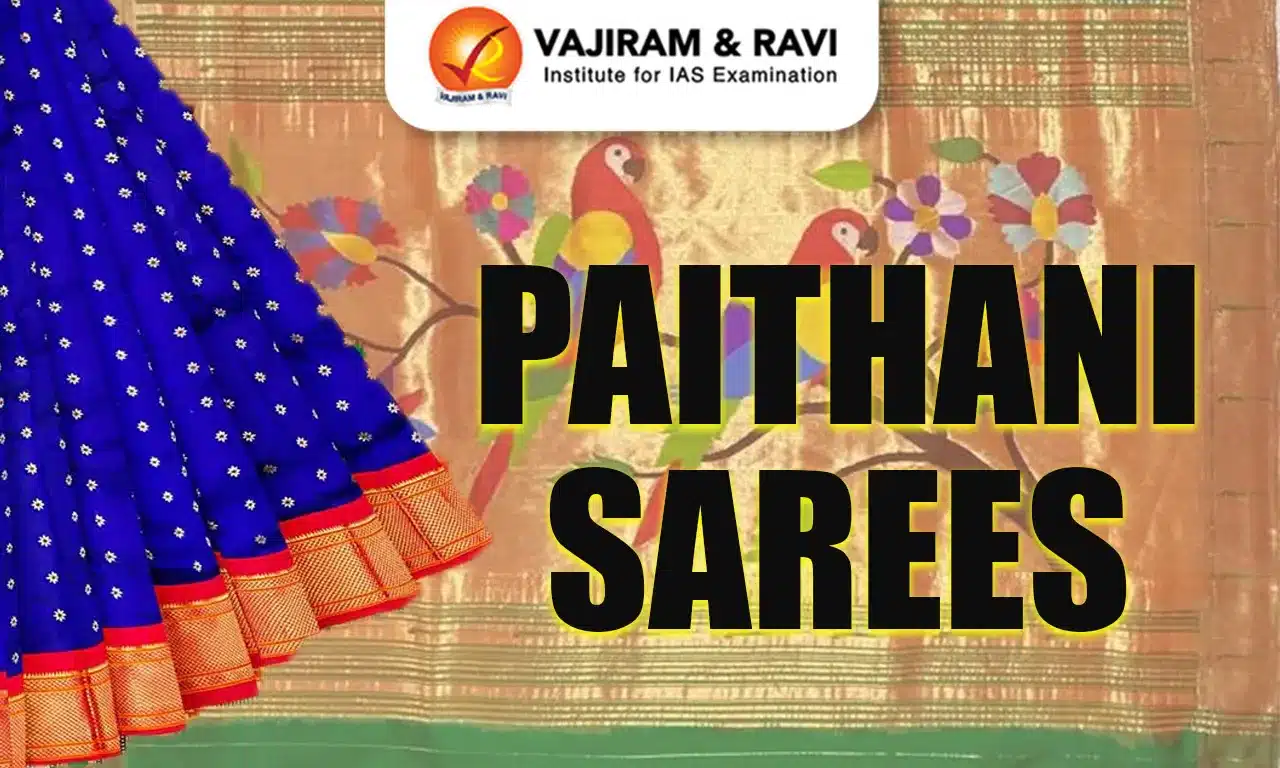
Paithani Sarees

Paithani Sarees

Paithani Sarees Latest News

Recently, the Prime Minister of India in the monthly radio programme praised the traditional craftsmanship of Paithani sarees.

About Paithani Sarees

  • It is known as the ‘mahavastra of the state of Maharashtra’.
  • It is known for its rich, vibrant colors woven in pure silk and gold zari.
  • The birthplace of Paithani, is the medieval town of Paithan, located on the banks of the River Godavari.

Features Paithani Sarees

  • The traditional Paithani saree is manufactured by hand in pure silk and dyed in traditional colours.
  • Its kath (border) and padar (pallu or end-piece), have distinctive motifs that make the textile stand out.
  • The traditional motifs used in Paithanis include parrots, lotuses and peacocks. The six- or nine-yard sari has been favored by Maharashtrian brides for centuries.
  • It was awarded with the Geographical Indication (GI) tag in 2010.
  • Paithanis are easily recognizable and considered among the most exquisite and expensive sarees in India.
  • These sarees are made using the finest silk available in the country and are regarded as a symbol of Maharashtrian heritage and skilled craftsmanship.

Source: News On Air

Paithani Sarees FAQs

Q1: What is special in a Paithani saree?

Ans: Paithani saris are handwoven masterpieces known for their luxurious silk, intricate zari work, and heritage value.

Q2: Which state is famous for Paithani sarees?

Ans: Maharashtra state

Legionnaire’s Disease

Legionnaire’s Disease

Legionnaires' Disease Latest News

Residents of Central Harlem in New York City have been advised to exercise caution after cases of Legionnaires' disease have been identified recently, prompting health authorities to launch an urgent investigation.

About Legionnaires' Disease

  • It is a severe form of a lung infection called pneumonia
  • It is caused by a bacterium known as legionella.

Legionnaires' Disease Transmission

  • Legionella is found naturally in freshwater, such as lakes and rivers. It can also be found in soil. 
  • Most people who catch Legionnaires' disease breathe in the bacteria from water or soil. 
  • You usually can't get infected by drinking water that contains the bacteria unless you aspirate it (accidentally breathe the water into your lungs).
  • It is not contagious, meaning it is not spread from person to person.
  • Older adults, people with weakened immune systems, and people who smoke have a higher risk of getting Legionnaires' disease.

Legionnaires' Disease Symptoms

  • The main symptoms are fever, chills, headache, malaise, and muscle pain (myalgia).
  • Untreated Legionnaires' disease can kill.

Legionnaires' Disease Treatment

  • Treating right away with antibiotics most often cures Legionnaires' disease.
  • But some people still have problems after treatment.

Source: NDTV

Legionnaires' Disease FAQs

Q1: What type of illness is Legionnaires’ disease?

Ans: It is a severe form of a lung infection called pneumonia.

Q2: What is the causative agent of Legionnaires’ disease?

Ans: It is caused by a bacterium known as legionella.

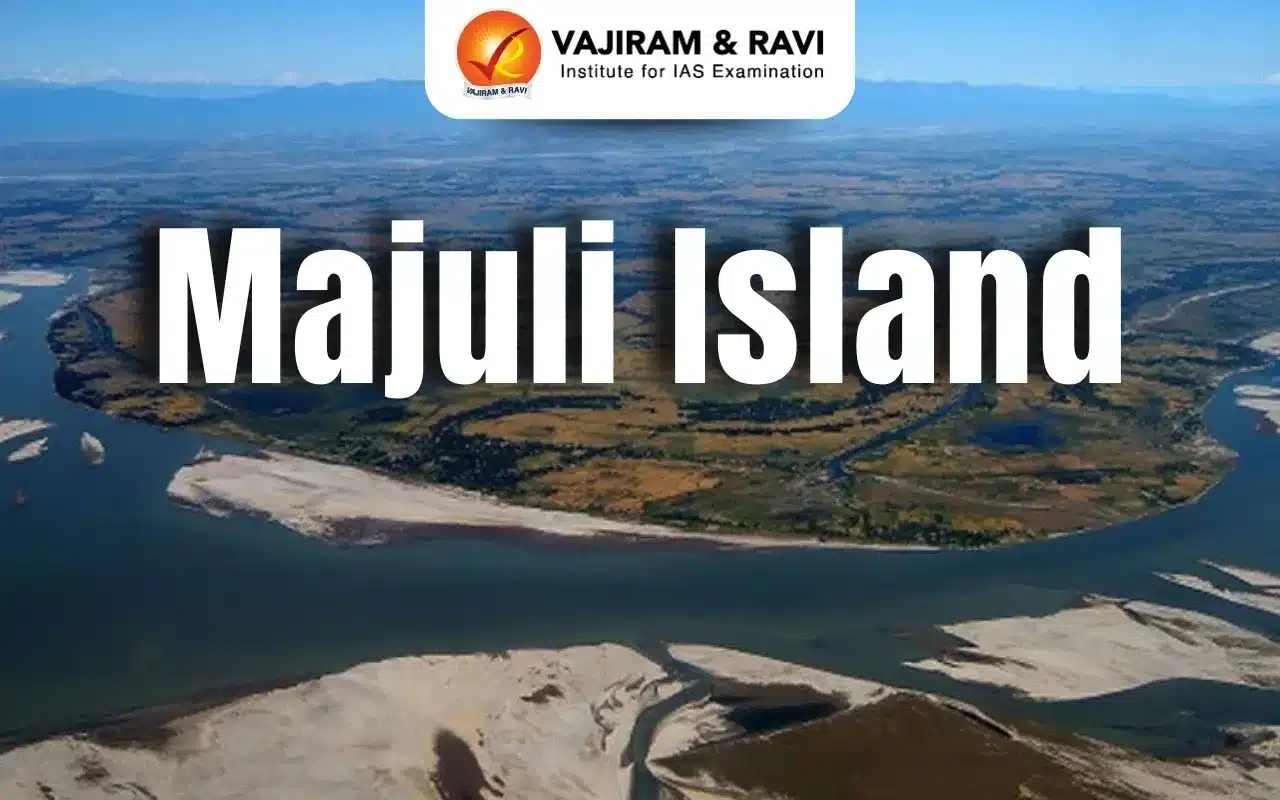
Majuli Island

Majuli Island

Majuli Island Latest News

In a village of Majuli Island local residents have discovered a remarkable way to combat riverbank erosion by planting Kanchan trees along the Brahmaputra River.

About Majuli Island

  • It is the world’s largest river island located in Assam.
  • The island is formed by the Brahmaputra River in the south and the Kherkutia Xuti, a  branch of the Brahmaputra, joined by the Subansiri River in the north.
  • The island’s landscape is characterised by lush greenery, water bodies, and paddy fields.
  • Rice cultivation is the primary livelihood for the residents of Majuli, with several unique varieties of rice, such as Komal Saul and Bao Dhan, grown in the region.
  • Most of the islanders belong to three tribes-Mishing, Deori, and Sonowal Kachari, with the non-tribal Assamese comprising the rest.
  • The island has also been the hub of Assamese neo-Vaishnavite culture, initiated around the 16th century by the great Assamese saint-reformer Srimanta Sankerdeva and his disciple Madhavdeva. 
  • They initiated the tradition of Satras (monastic institutions), and these Satras have preserved Sattriya dance, literature, bhaona (theatre), dance forms, mask making, and boat-making. 
  • Apart from Satras or Vaishnavite monasteries, Majuli is famous for mask-making and has a tradition of pottery making.

Source: ET

Majuli Island FAQs

Q1: Which river is Majuli island on?

Ans: River Bramhaputra

Q2: Is Majuli a Unesco site?

Ans: River island of Majuli is part of the Tentative list of India in order to qualify for inclusion in the World Heritage List.

Government Notifies Environment Protection Rules to Address Chemically Contaminated Sites

Environment Protection Rules

Environment Protection Rules Latest News

  • The Environment Ministry has notified the Environment Protection (Management of Contaminated Sites) Rules, 2025.

Introduction

  • India has taken a major step toward formalising its response to chemically contaminated sites. 
  • On July 25, 2025, the Ministry of Environment, Forest and Climate Change notified the Environment Protection (Management of Contaminated Sites) Rules, 2025 under the Environment Protection Act.
  • For the first time, India has codified the procedures to identify, assess, and remediate sites where historical dumping of hazardous chemicals has polluted soil, groundwater, or surface water, posing long-term risks to public health and ecosystems.

Understanding Contaminated Sites

  • According to the Central Pollution Control Board (CPCB), contaminated sites are locations where hazardous and other wastes have been historically dumped, often prior to the enforcement of proper regulatory mechanisms. Such sites typically include:
    • Defunct industrial landfills
    • Waste storage and chemical spill sites
    • Abandoned chemical handling facilities
  • India has identified 103 such sites, but remedial operations have been initiated in only seven. Many polluters have ceased operations or lack the resources for clean-up, leaving local communities and environments exposed to toxic hazards.

Key Features of the Environment Protection Rules

  • The Environment Protection (Management of Contaminated Sites) Rules, 2025 provide a legally binding, time-bound framework for the entire remediation process:
  • Step 1: Identification and Reporting
    • District administrations must prepare half-yearly reports listing “suspected contaminated sites.”
    • These reports are sent to the State Pollution Control Board or a designated reference organisation.
  • Step 2: Preliminary Assessment
    • The Board or organisation must carry out a preliminary assessment within 90 days to ascertain the likelihood of contamination.
  • Step 3: Detailed Site Survey
    • If contamination is likely, a detailed survey must be completed within the next 90 days, checking for any of the 189 hazardous chemicals listed under the Hazardous and Other Wastes (Management and Transboundary Movement) Rules, 2016.
    • Sites found to be contaminated will be publicly notified and access restricted.
  • Step 4: Remediation Planning
    • A reference organisation comprising scientific experts will propose a remediation plan.
    • The State Board must also identify the person(s) responsible for the contamination within 90 days.
  • Step 5: Cost Recovery and Liability
    • Those responsible must bear the cost of remediation.
    • If the polluter is unavailable or unable to pay, the Centre and State will split the cost under a prescribed arrangement.
    • Criminal liability, if proven to involve loss of life or severe damage, will be addressed under the Bharatiya Nyaya Sanhita (2023).

Scope and Exemptions

  • While comprehensive, the rules exclude certain categories already covered by other legislation:
    • Radioactive waste (under the Atomic Energy Act)
    • Mining-related contamination (governed separately)
    • Marine oil pollution
    • Municipal solid waste dump sites
  • This ensures that regulatory overlap is avoided, and specialised agencies continue to govern complex waste streams.

Significance of the Rules

  • The notification marks a paradigm shift from fragmented enforcement to structured environmental remediation
  • Previously, there was no legally codified framework for addressing contaminated sites, leading to regulatory inaction and long delays in clean-up. By defining:
    • Responsibilities of district officials and pollution boards
    • Timelines for assessment and response
    • Polluter-pays mechanism for cost recovery

Challenges in Implementation

  • While the rules provide a legal foundation, successful implementation will hinge on:
    • Scientific capacity for hazardous chemical assessment
    • Institutional coordination between the State Boards, CPCB, and district administrations
    • Funding support, especially where no liable party is available
    • Public awareness and community participation in reporting pollution
  • Capacity-building at the district and state levels will be critical to make the framework actionable.

Source : TH

Environment Protection Rules FAQs

Q1: What are chemically contaminated sites?

Ans: These are areas polluted by historical dumping of hazardous waste, leading to soil and water contamination.

Q2: What new legal rules govern contaminated sites in India?

Ans: The Environment Protection (Management of Contaminated Sites) Rules, 2025 provide the legal framework.

Q3: Who is responsible for remediation under the new rules?

Ans: The polluter is responsible; if not traceable or solvent, the Centre and State share the cost.

Q4: How are contaminated sites identified and assessed?

Ans: District authorities list suspected sites, which are then surveyed and confirmed by State Boards and expert bodies.

Q5: Are there penalties for polluters under these rules?

Ans: Yes, polluters must pay for clean-up, and criminal liability may arise under the Bharatiya Nyaya Sanhita if harm is proven.

Living Wage Reform Could Boost Women’s Workforce Participation in India

Living Wage

Living Wage Latest News

  • A new report by Quess Corp and the Udaiti Foundation reveals that over half of blue- and grey-collar women workers in India are dissatisfied with their low wages, with 80% saving less than ₹2,000 per month. 
  • These inadequate earnings are a key reason why many women leave formal employment, especially when weighed against the high opportunity costs of working. 
  • The report highlights a significant gap between the minimum wage and the actual “living wage” needed to cover essential expenses like health and education. 
  • Recognising this, the Labour Ministry is now considering the inclusion of these costs in wage standards to make formal work more viable for women.

Living Wages

  • A living wage is the minimum income necessary for a worker to meet their basic needs such as food, housing, clothing, healthcare, education, and some level of financial security. 
  • Unlike minimum wages, which are set by law and often do not account for actual living costs, living wages are calculated based on the cost of living in a specific region.
  • Living wages ensure that workers and their families can live with dignity without falling into poverty.

Low Pay and High Costs Forcing Women Out of Workforce

  • A recent survey by Quess Corp reveals that blue- and grey-collar women workers earn only 70% of what their male counterparts make. 
    • Blue- and grey-collar women workers are women employed in roles traditionally considered manual labor or technical/skilled trades, respectively. 
    • Blue-collar work often involves physical labor, while grey-collar jobs require specialized skills and may involve a combination of physical and intellectual tasks. 
  • Coupled with high opportunity costs such as unpaid caregiving, long commutes, and migration expenses, many women struggle to remain in formal employment
  • The study highlights that women in peri-urban manufacturing zones often face lower minimum wages despite higher living costs. 
  • Notably, one in five women earn less than ₹20,000 per month, the typical minimum wage in Tier 1 cities. 
  • The data also shows that women earning above ₹20,000 are 21% less likely to exit the workforce soon, indicating that better pay significantly improves retention.

Government Explores Expanding Minimum Wage Definition to Support Women

  • The government is considering broadening the definition of minimum wage to include expenses on health and education—currently excluded from wage calculations
  • Presently, the minimum wage is based only on nutrition, housing, and clothing. 
  • From a women’s perspective, including childcare and healthcare costs would help reduce the opportunity cost of working. 
  • Experts acknowledged the challenge of implementing this in a diverse country like India, where conditions vary by state, and stressed the importance of initiating a social dialogue with both employers and employees. 
  • While the move is still in early stages, she welcomed the fact that discussions have begun.

Beyond Wages: Structural Barriers Hindering Women’s Workforce Participation

  • While implementing living wage standards would benefit all workers, the impact on women could be especially transformative due to their higher opportunity costs
  • India’s female labour force participation rate (LFPR) remains low at 32%, compared to 77.1% for men, as per the June PLFS data. 
  • Economists argue that raising women’s LFPR above 50% is essential for India to reach developed nation status. 
  • However, women face multiple challenges beyond wages, including unsafe or unaffordable housing, poor work culture, limited mobility, and regulatory restrictions
  • Experts noted that 54 existing laws restrict women's employment, such as those banning night shifts. 
  • While these are being gradually repealed, they highlighted that responsibility for women’s safety—especially during night shifts—then falls on employers, a burden more easily borne by large firms than small businesses. 
  • Addressing these layered barriers is critical to enabling more women to join and remain in the workforce.

Manufacturing Hubs Boost Women’s Employment Opportunities

  • States with strong industrial and manufacturing bases, such as Tamil Nadu, Karnataka, and Maharashtra, are leading in female workforce participation. 
  • Modern electronics and auto manufacturing units in these states are increasingly employing women due to their skills in finger dexterity and hand-eye coordination—qualities that are tested and found more often in women. 
  • As a result, sectors like electronics and automotive manufacturing are actively seeking female workers. 

Source: IE | IB

Living Wage FAQs

Q1: What is a living wage?

Ans: It’s the income required to meet basic needs like housing, food, health, and education with dignity.

Q2: Why are women exiting the workforce?

Ans: Low pay, caregiving burdens, and migration costs make formal work unsustainable for many women.

Q3: How is the government responding?

Ans: It’s exploring expanding minimum wage to include health and education costs to support women’s employment.

Q4: What are the opportunity costs for women?

Ans: Costs include childcare, unpaid work, commuting, and limited housing, which deter sustained employment.

Q5: Which states lead in employing women?

Ans: Tamil Nadu, Karnataka, and Maharashtra lead due to robust manufacturing sectors favoring women’s skills.

Five Years of NEP 2020: Achievements, Challenges & Ongoing Reforms in Indian Education

NEP 2020

NEP 2020 Latest News

  • Five years after its launch, the National Education Policy (NEP) 2020 has led to notable changes in classrooms, especially in early schooling. 
  • However, much of its ambitious vision for overhauling school and higher education remains unfulfilled. 
  • Delays caused by Centre-state disagreements and institutional bottlenecks have slowed implementation across the country.

Five Years of NEP 2020: Key Gains and Early Implementation

  • The NEP 2020 aimed to transform India’s education system. While complete implementation is ongoing, key reforms have begun to take root.

Shift in School Structure and Curriculum

  • The traditional 10+2 structure has been replaced by a 5+3+3+4 system: foundational (pre-primary to class 2); preparatory (classes 3–5); middle (6–8), and secondary (9–12). 
  • The 2023 National Curriculum Framework laid out outcomes for each stage. 
  • NCERT released new textbooks (classes 1–8), merging subjects like history and geography into single volumes. Books for classes 9–12 are awaited.

Early Childhood Education Gets a Boost

  • NEP aims for universal pre-primary education by 2030. NCERT’s Jaadui Pitara kits and a national ECCE curriculum are now in use. 
  • Delhi, Karnataka, and Kerala are enforcing a minimum age of six for class 1, improving readiness but reducing enrolments. 
  • However, better Anganwadi training and infrastructure are still needed.

Foundational Learning Under NIPUN Bharat

  • Launched in 2021, NIPUN Bharat targets literacy and numeracy by class 3. 
  • A recent survey shows 64% average language proficiency and 60% in math—progress, but still below universal goals.

Credit-Based Flexibility Introduced

  • To allow flexibility in higher education, the NEP introduced the Academic Bank of Credits (ABC) and the National Credit Framework (NCrF). 
  • Learners can exit after one, two, or four years with a certificate, diploma, or degree. CBSE is piloting this credit model in schools as well.

CUET for Uniform College Admissions

  • The CUET, launched in 2022, standardizes college admissions nationwide, reducing the need for multiple entrance exams, in line with NEP's goals. 

Expanding Global Footprint of Indian Campuses

  • Institutes like IIT Madras (Zanzibar), IIT Delhi (Abu Dhabi), and IIM Ahmedabad (Dubai) have set up global campuses. 
  • Meanwhile, international universities, including the University of Southampton, are entering India, with 12 more awaiting approval.

NEP 2020: Key Reforms Still in Progress

  • While several aspects of the National Education Policy (NEP) 2020 have seen implementation, others are still evolving. 
  • These reforms aim to reduce academic pressure, promote flexibility, and encourage inclusive, student-centric learning environments.

Reimagining Board Exams

  • To lower the pressure of high-stakes assessments, the NEP proposes flexible board exams. 
  • Starting 2026, CBSE will allow class 10 students to appear for board exams twice a year. 
  • Karnataka has already piloted this idea. Other education boards are cautiously observing these changes before implementing them. 
  • Additionally, the NEP encourages offering all subjects at two levels (standard and higher), but this has only been implemented for mathematics in class 10 by CBSE since 2019-20.

Progress Cards with a Holistic Approach

  • NCERT’s PARAKH unit developed new-style report cards including peer and self-assessments. However, most boards have not adopted this approach yet.

Slow Rollout of Four-Year Undergraduate Degrees

  • The NEP promotes four-year undergraduate programs with flexible exit options after each year. 
  • While central universities and the state of Kerala have begun implementation, progress is slow in other regions due to faculty shortages and inadequate infrastructure in many colleges.

Emphasis on Mother Tongue as Medium of Instruction

  • NEP recommends teaching students in their mother tongue at least until class 5 to enhance comprehension and cognitive growth. 
  • CBSE has directed affiliated schools to implement this from pre-primary to class 2, with flexibility for classes 3–5. 
  • Meanwhile, NCERT is developing textbooks in more Indian languages to support this multilingual shift.

NEP 2020: Key Sticking Points and Roadblocks

  • Despite several successes, critical components of the NEP 2020 remain stalled due to political resistance, institutional inertia, and lack of consensus. 
  • These bottlenecks reflect deep structural and federal challenges in India’s education landscape.

Resistance to the Three-Language Formula

  • NEP's proposal for students to learn three languages, at least two of which must be Indian, has been met with strong opposition. 
  • Tamil Nadu, which follows a Tamil-English model, views the move as a covert attempt to impose Hindi and has rejected the proposal outright.

Delays in Teacher Education Reforms

  • The overhaul of teacher training is yet to materialize. The National Curriculum Framework for Teacher Education, expected in 2021, has not been released. 
  • Although a four-year Integrated Teacher Education Programme (ITEP) has been proposed, existing teacher education colleges offering B.El.Ed. have resisted the changes, stalling reform.

Delay in Higher Education Regulatory Reform

  • The NEP envisages replacing the University Grants Commission (UGC) with the Higher Education Commission of India (HECI), a single regulator for funding, accreditation, standards, and regulation. 
  • Despite being formalized in the policy, the Education Ministry is still working on drafting the HECI bill, leaving the proposed transformation in limbo.

No Breakfast Scheme in Schools

  • NEP recommends providing breakfast in addition to midday meals for students in pre-primary and elementary classes. 
  • However, the Finance Ministry rejected this proposal in 2021, citing budgetary constraints, stalling its rollout despite the potential nutritional benefits.

Centre–State Frictions Over NEP Implementation

  • States like Kerala, Tamil Nadu, and West Bengal have declined to adopt NEP-linked PM-SHRI schools. 
  • The Centre withheld Samagra Shiksha funds in response. Tamil Nadu challenged the move in the Supreme Court.

Karnataka's Changing Position

  • Karnataka initially adopted the four-year undergraduate degree model proposed under NEP but later scrapped it. 
  • The current government is working on a state-specific education policy as per its 2023 election promise.

Source: IE | IE

NEP 2020 FAQs

Q1: What structural change did NEP 2020 bring to school education?

Ans: It replaced the 10+2 structure with a new 5+3+3+4 curriculum framework.

Q2: What is NIPUN Bharat?

Ans: A program launched in 2021 to ensure all children achieve basic literacy and numeracy by Class 3.

Q3: What is CUET's role in NEP 2020?

Ans: CUET standardizes undergraduate college admissions, replacing multiple entrance exams with a single test.

Q4: What’s delaying full NEP implementation?

Ans: Centre-state disagreements, lack of funds, and delayed teacher education reforms are slowing implementation.

Q5: Why is the HECI not yet functional?

Ans: The Education Ministry is still drafting the HECI bill to replace UGC for regulating higher education.

Daily Editorial Analysis 29 July 2025

Daily Editorial Analysis

The Medical Boundaries for AYUSH Practitioners

Context

  • There has been a recent online debate between a hepatologist and an Indian chess Grand Master regarding whether practitioners of traditional medicine can call themselves doctors.
  • It has reignited a longstanding and multifaceted discourse on the status, legal boundaries, and societal role of practitioners of India’s traditional medical systems, particularly Ayurveda and Unani.
  • The controversy goes well beyond titles, touching the very core of public health, legislative policy, and cultural identity in modern India.

Historical Framing: Committees and Government Policy

  • The genesis of this debate can be traced back nearly 80 years.
  • The Bhore Committee in 1946 advocated firmly for modern, evidence-based medicine, citing global trends where countries were moving away from traditional medical practices in favour of scientific medicine.
  • Nevertheless, this stance met significant resistance among traditional medicine practitioners, who framed the issue in terms of cultural identity, arguing for the preservation of systems such as Ayurveda on the grounds of their ancient Indian roots.
  • In response to public outcry, the government established the Committee on Indigenous Systems of Medicine, whose 1948 report wrapped the legitimacy of traditional medicine in a narrative of Hindu nationalism.
  • While India’s first Prime Minister Jawaharlal Nehru refrained from granting official recognition to these systems, the political tide shifted under Indira Gandhi in 1970.
  • It to the creation of the Indian Medicine Central Council Act, which formally recognised and regulated practitioners of Ayurveda, Siddha, and Unani.
  • This legislative framework was updated in 2020 by the National Commission for Indian System of Medicine Act.

Divergent Philosophies and the Challenge of Integrative Medicine

  • A crucial point of contention is the fundamental incompatibility between the underlying philosophies of traditional and modern medicine.
  • The curriculum for Ayurvedic practitioners merges ancient concepts like doshas, prakriti, and metaphysical ideas about the soul with select subjects from modern biomedicine, such as anatomy and cell physiology.
  • These frameworks are inherently irreconcilable: Ayurveda attributes illness to imbalances of doshas, while modern medicine explains diseases such as infections through germ theory and pathophysiology.
  • This makes the concept of integrative medicine, a blending of the two approaches, highly problematic at a conceptual and scientific level.

Legal Scope and the Right to Prescribe

  • Rule 2(ee) of the Drugs and Cosmetics Rules, 1945

    • It allows State governments to declare certain practitioners eligible to prescribe modern medicine, even if they are not MBBS graduates.
    • Many states have used this provision to empower traditional medicine practitioners, resulting in friction with the allopathic community and periodic judicial challenge.
  • Mukhtiar Chand vs The State of Punjab

    • The Supreme Court, in the case of  Mukhtiar Chand vs The State of Punjab & Ors(1998), clarified that the right to prescribe a system’s drugs is inseparable from the claim to practice that system, effectively barring Ayurvedic practitioners from dispensing allopathic medicines.
    • Despite this, state governments have continued issuing orders under Rule 2(ee), occasionally in defiance of judicial rulings, leading to repeated litigation, spearheaded by bodies like the Indian Medical Association.
    • At the same time, patients themselves often sue for being misled about the practitioners’ qualifications, especially where the prescription or treatment involved modern medications.

Procedural Boundaries and Recent Developments

  • The boundaries extend beyond writing prescriptions to procedural rights.
  • Notably, a 2020 government notificationpermitted post-graduate Ayurvedic doctors to perform 58 types of surgeries, including operations like gallbladder or appendix removal.
  • This policy is currently under judicial scrutiny. If upheld, it opens unresolved questions, can Ayurvedic practitioners then also use modern anaesthesia and antibiotics for such surgeries?
  • The tension is heightened by the fact that, to cut costs, many hospitals reportedly staff Ayurvedic graduates in positions traditionally held by MBBS doctors.

Conclusion

  • At its core, this controversy is not simply about professional titles, but about the standard of care delivered to the public and the integrity of India’s health system.
  • The blurred boundaries, inconsistent legal interpretations, and political appropriations risk undermining evidence-based medicine and patient trust, diverting taxpayer resources into avenues with questionable benefits for public health.
  • As debates ranging from social media to the Supreme Court play out, the most important consideration remains the safety, well-being, and informed consent of Indian citizens, issues that transcend the headlines and demand ongoing scrutiny.

The Medical Boundaries for AYUSH Practitioners FAQs

Q1. What sparked the recent debate about traditional medicine practitioners in India?
Ans. The debate was sparked by an online controversy between a hepatologist and an Indian chess Grand Master over whether practitioners of traditional medicine can call themselves doctors.

Q2. What is a key philosophical difference between Ayurveda and modern medicine?
Ans. Ayurveda attributes disease to imbalances of doshas, while modern medicine explains disease through scientific concepts like germ theory.

Q3. What did the Supreme Court decide in the Dr. Mukhtiar Chand case?
Ans. The Supreme Court ruled that Ayurvedic practitioners do not have the right to prescribe modern (allopathic) medicines.

Q4. How has politics influenced the status of traditional medicine in India?
Ans. Political parties have promoted traditional medicine as a matter of cultural pride, supporting it regardless of its scientific basis.

Q5. What is a public health concern raised by the current status of traditional medicine practitioners?
Ans. The main concern is that allowing traditional medicine practitioners to perform modern medical procedures or prescribe modern drugs could compromise patient safety and public health.

Source: The Hindu


Why Antitrust Regulations Are Pertinent

Context

  • In 1890, Senator John Sherman famously declared, ‘If we will not endure a king as a political power, we should not endure a king over the production, transportation, and sale of any of the necessaries of life.’
  • With these words, the Sherman Antitrust Act was born, laying the foundation for modern competition law in the United States and inspiring similar legislative frameworks across the globe, including in India.
  • Although the nature of what constitutes a necessity of life has evolved, Sherman's warning against monopolistic dominance remains chillingly relevant in the 21st-century digital economy.
  • India, with its booming tech landscape and ambitious economic goals, now finds itself grappling with monopolistic practices by global digital giants, especially in how they shape access, discovery, and monetization for domestic start-ups.

The Digital Economy and India’s Ambitions

  • India's digital economy contributed 74% to the nation's GDP in 2022–23, marking it as a central pillar of national development.
  • The explosion of start-ups, from 2,000 in 2014 to over 31,000 in 2023, signals a thriving entrepreneurial spirit.
  • The government envisions these start-ups as engines of growth for its ambitious $35 trillion ‘Viksit Bharat’ vision by 2047.
  • However, while technological infrastructure enables innovation, the pathways of digital commerce and discovery are often dominated by foreign tech giants, resulting in distorted market dynamics that can stifle homegrown potential.

Gatekeeping and Market Power in the Digital Age

  • One of the most glaring manifestations of this gatekeeping is Google’s overwhelming dominance in the digital distribution ecosystem.
  • With Android capturing around 95% of India’s mobile OS market, Google essentially controls how Indian consumers discover and interact with digital products.
  • Indian start-ups are therefore compelled to operate within Google’s ecosystem, paying high commissions on in-app transactions and competing under discriminatory terms that tilt the market in favour of select players.
  • A recent complaint to the Competition Commission of India (CCI) by a major Indian gaming start-up underscores this imbalance.
  • The complaint centres on Google's Real Money Gaming (RMG) Pilot Program, which selectively allowed only two gaming formats, Daily Fantasy Sports (DFS) and rummy, on its Play Store, effectively excluding other legitimate gaming formats.
  • This discriminatory policy granted unfair advantages to a handful of operators, with one DFS company reportedly acquiring 55 million users in just one year through the program.
  • Meanwhile, advertising policy changes cut off vital promotional avenues for other gaming businesses, despite their prior reliance on Google’s ad network for over two-thirds of app downloads.

Antitrust and the Broader Economic Impact

  • Such market distortions have far-reaching economic implications.
  • When dominant players favour select partners, it reduces competition, which in turn limits innovation, consumer choice, and product quality.
  • Over-reliance on a few digital gatekeepers weakens the resilience of the digital ecosystem and jeopardizes long-term economic goals.
  • This is particularly dangerous for a developing economy like India, which depends heavily on inclusive growth driven by new ideas and start-ups.
  • The United States offers a cautionary tale: the unchecked rise of monopolies has led to a significant decline in Initial Public Offerings and increased entry barriers for new businesses.
  • If similar monopolistic trends continue unchecked in India, the cost will be borne not just by start-ups, but also by consumers and the economy at large.

The Way Forward: Towards a Fairer Digital Market

  • It is clear that global tech giants like Google play a foundational role in the digital ecosystem.
  • However, their responsibilities must match their power.
  • The Indian government and institutions like the CCI must work to ensure that the digital economy is a level playing field, where innovation is not stifled by exclusionary practices or market manipulation.
  • The case filed by the Indian gaming company is more than a corporate dispute, it is emblematic of a broader push for fair competition and market access.
  • It echoes Sherman’s call to resist economic kingship and promotes a digital future where distribution and monetization are democratized, not monopolised.

Conclusion

  • Senator Sherman’s 19th-century concerns find startling resonance in 21st-century India.
  • As the country charges ahead in its digital revolution, it must remain vigilant against monopolistic forces that can derail its aspirations.
  • With the right regulatory interventions, India can ensure that its start-up ecosystem remains dynamic, competitive, and fair, delivering on the promise of Viksit Bharat and carrying forward Sherman’s legacy into the digital age.

Why Antitrust Regulations Are Pertinent FAQs

Q1. What did Senator Sherman warn against in 1890?
Ans. Senator Sherman warned against allowing monopolies to control essential aspects of the economy, comparing such economic power to the rule of a king.

Q2. Why is Google’s dominance in India’s digital space a concern?
Ans. Google’s dominance is a concern because it limits fair access for Indian start-ups, allowing it to set discriminatory terms that hinder competition and innovation.

Q3. What issue did the Indian gaming company raise against Google?
Ans. The Indian gaming company accused Google of unfairly excluding certain gaming formats from its Play Store and restricting advertising opportunities, which hurt their business.

Q4. How can monopolies harm India’s digital economy?
Ans. Monopolies can harm India’s digital economy by reducing competition, stifling innovation, and limiting choices for consumers and entrepreneurs.

Q5. What role should regulators like the CCI play?
Ans. Regulators like the CCI should ensure a level playing field by preventing monopolistic practices and promoting fair competition in the digital marketplace.

Source: The Hindu


The Yarlung Tsangpo Project - Strategic, Ecological, and Geopolitical Implications for India

Context:

  • Recently, Chinese Premier Li Qiang launched construction of a massive hydropower project on the Yarlung Tsangpo River in Tibet, close to the Indian border.
  • The Yarlung Tsangpo project's scale, lack of transparency, ecological threats, and strategic ramifications have raised serious concerns for India, especially as no prior consultation was conducted with lower riparian states like India and Bangladesh.

Project Overview and Strategic Location:

  • Project cost and scale:

    • Estimated at 1.2 trillion yuan (US$167.8 billion), it involves five cascade hydropower plants in Medog County, approximately 30 km from India's Arunachal Pradesh border.
    • Expected annual generation will be 300 billion kWh, more than thrice the designed capacity (88.2 billion kWh) of the Three Gorges Dam in China, currently the largest in the world.
  • Engineering features:

    • It would involve drilling 4-6 tunnels of 20 km each, diverting up to 50% of the river’s flow.
    • It is located in a high seismic zone (Zone V) – Eastern Himalayan Syntaxis.

Environmental and Hydrological Concerns:

  • Disruption of Brahmaputra flow:

    • The project would alter natural hydrology and seasonal flow, especially in the lean season.
    • It will impact aquatic biodiversity, fisheries, sediment load, and ecosystem services.
    • The construction of five massive hydropower plants in cascade is likely to involve reservoir-like structures, even though it is claimed to be a run-of-the-river project.
  • Flood risk: Sudden or unannounced water release during heavy rainfall or earthquakes could lead to catastrophic downstream flooding.
  • Seismic vulnerability:
    • Project area prone to earthquakes due to Himalayan Frontal Thrust and Medog Fault.
    • Past Chinese engineering failures (e.g., Neelum-Jhelum in PoK) raise safety concerns.

Diplomatic and Legal Dimensions:

  • Lack of riparian cooperation:

    • China has consistently withheld data and transparency.
    • Past behavior on the Mekong River affected Laos, Cambodia, Vietnam, setting a worrying precedent.
    • No operationalization of three MoUs signed with India in 2013.
  • International water laws:

    • Neither India nor China are signatories to the UN Convention (1997) on international watercourses.
    • However, principles like “equitable utilization” and “no significant harm” are part of customary international law.
  • Geopolitical double standards:

    • China likely would not tolerate similar behavior from upstream states.
    • India’s quiet diplomacy is seen as ineffective; stronger public and diplomatic messaging is needed.

Strategic and Policy Recommendations for India:

  • Diplomatic pushback:

    • Demand full project disclosure, seismic safety reports, and environmental impact assessments.
    • Seek project suspension until legitimate Indian concerns are addressed.
  • Domestic response:

    • Build flood moderation infrastructure in Arunachal and Assam.
    • Use remote sensing and geospatial tools for independent hydrological assessments.
    • Reduce dependence on China for hydrological data.
  • Internationalizing the issue:

    • Promote NGO engagement and international discourse.
    • Elevate the issue in bilateral talks and in multilateral platforms to signal assertiveness.

Conclusion:

  • The Yarlung Tsangpo project is not just an ecological and hydrological threat but a strategic challenge.
  • India must shift from passive diplomacy to proactive engagement, emphasizing transboundary water governance, sovereign rights, and ecological security.
  • The time has come for India to build pressure through diplomatic, technical, and international legal instruments while enhancing domestic preparedness.

The Yarlung Tsangpo Project FAQs

Q1. What are the environmental impacts of China’s Yarlung project on India?

Ans. It may disrupt Brahmaputra’s flow, harm ecosystems, and reduce lean-season water availability.

Q2. How does China behave as an upper riparian state?

Ans. China often acts unilaterally, withholding data and neglecting downstream concerns of neighbors like India.

Q3. Is India’s current diplomatic response effective?

Ans. No, India’s quiet diplomacy has failed to ensure transparency or safeguard its riparian interests.

Q4. What can India do to counter China’s actions?

Ans. India can invoke international law, demand project transparency, build domestic safeguards, and raise global awareness.

Q5. Why is the Yarlung project geopolitically sensitive?

Ans. It increases seismic and ecological risks while intensifying strategic tensions in the Himalayan region.

Source: IE

Daily Editorial Analysis 28 July 2025 FAQs

Q1: What is editorial analysis?

Ans: Editorial analysis is the critical examination and interpretation of newspaper editorials to extract key insights, arguments, and perspectives relevant to UPSC preparation.

Q2: What is an editorial analyst?

Ans: An editorial analyst is someone who studies and breaks down editorials to highlight their relevance, structure, and usefulness for competitive exams like the UPSC.

Q3: What is an editorial for UPSC?

Ans: For UPSC, an editorial refers to opinion-based articles in reputed newspapers that provide analysis on current affairs, governance, policy, and socio-economic issues.

Q4: What are the sources of UPSC Editorial Analysis?

Ans: Key sources include editorials from The Hindu and Indian Express.

Q5: Can Editorial Analysis help in Mains Answer Writing?

Ans: Yes, editorial analysis enhances content quality, analytical depth, and structure in Mains answer writing.
e-Shram Portal

e-Shram Portal

e-SHRAM Portal Latest News

The Ministry of Labour & Employment stated in a latest update that as of 22nd July 2025, over 30.95 crore unorganised workers have already registered on the eShram portal.

About e-SHRAM Portal

  • It was launched by the Ministry of Labour and Employment on 26th August 2021 to support and empower the unorganized workforce.
  • It is designed to create a comprehensive National Database of Unorganised Workers (NDUW).
  • It is the first-ever national database of unorganised workers including migrant workers, construction workers, gig and platform workers, etc.
  • The Ministry of Electronics and Information Technology’s (MEITY’s) Bhashini project has been leveraged to upgrade the eShram portal with 22 languages. The previous version was available only in English, Hindi, Kannada, and Marathi.

e-SHRAM Portal Objectives

  • Establish a centralized database of unorganized workers for effective policy implementation.
  • Enhance access to social security schemes and benefits for workers in sectors such as agriculture, construction, domestic work, and street vending.
  • Facilitate job matching and skill development opportunities.
  • Strengthen labor market resilience by integrating unorganized workers into the formal economy.
  • Promote financial inclusion through direct benefit transfers and digital payments.

Eligibility for Registering on e-SHRAM Portal

  • Be aged between 16 and 59 years.
  • Be employed in the unorganized sector, including self-employed individuals, daily wage laborers, and gig workers.
  • Possess an Aadhaar card, a valid mobile number linked to Aadhaar, and a bank account.
  • Not be a member of the Employees' Provident Fund Organization (EPFO) or Employees' State Insurance Corporation (ESIC).

e-SHRAM Portal Features

  • Universal Account Number (UAN): Registered workers receive a UAN linked to their Aadhaar, enabling seamless access to benefits.
  • Single Registration Process: The portal streamlines the registration process, requiring minimal documentation such as Aadhaar and bank account details. The ease of self-registration is also available to the beneficiaries.
  • Multilingual Support: Workers from diverse regions can access the portal in multiple Indian languages, ensuring inclusivity.
  • Grievance Redressal Mechanism: A dedicated helpline and support system address workers’ queries and grievances promptly.
  • Integration with Employment and Skill Opportunities: Registered workers can connect with employment opportunities, skilling, apprenticeship, pension schemes, digital skilling, and state-specific schemes through the portal.
  • Family Details for Migrant Workers: Family details for migrant workers are captured, aiding in the provision of child education and women-centric schemes for those who have migrated with their families.
  • Data Sharing with BOCW Welfare Boards: The data of construction workers registering on e-Shram is shared with the concerned Building and Other Construction Workers’ (BOCW) Welfare Boards, ensuring their registration with the respective boards and access to schemes meant for them.
  • Data Sharing Portal (DSP): A Data Sharing Portal has been launched to allow the secure sharing of e-Shram beneficiary data with State and Union Territory governments. facilitating the targeted implementation of social security and welfare schemes for registered unorganised workers.

Source: BS

e-SHRAM Portal FAQs

Q1: What is the purpose of e-SHRAM portal?

Ans: To create a national database of unorganised workers.

Q2: Which Ministry launched the e-SHRAM Portal?

Ans: Ministry of Labour and Employment.

Q3: When was the e-SHRAM Portal launched?

Ans: 26th August 2021

Q4: What key identification do registered workers on the e-SHRAM Portal receive?

Ans: Universal Account Number (UAN)

Enquire Now