
Veto Power of President, Meaning, Types, Objectives

Veto Power of President

As per Article 111 of the Indian Constitution, the President of India holds three types of Veto Power while approving bills. For any bill to become law, it must first be passed by both Houses of Parliament and then receive the President’s assent. If the President chooses to withhold approval, the bill cannot be enacted. The Veto Power of President serves as a constitutional safeguard to ensure that legislation is carefully examined and does not conflict with the principles and spirit of the Constitution.

Veto Power of President

In legislative terms, Veto Power of the President refers to the authority of an executive head, such as the President or a Governor, to withhold approval of a bill passed by the legislature. This power enables the executive to unilaterally reject or return legislation for reconsideration. It functions as a safeguard against one-sided legislative actions and ensures that proposed laws undergo a thorough review. By doing so, the Veto Power upholds the principle of checks and balances between the legislature and the executive.

Veto Power of President Types

The Veto Power of President is generally divided into four types:

  • Absolute Veto - This refers to the complete rejection of a bill. The Executive withholds assent, and the bill fails to become law.
  • Qualified Veto - In this case, the Executive’s veto can be overturned if the legislature re-passes the bill with a higher majority than usual.
  • Suspensive Veto - Here, the Executive returns the bill for reconsideration. If the legislature passes it again with an ordinary majority, the veto is set aside.
  • Pocket Veto - This occurs when the Executive chooses not to take any action on the bill. By neither approving nor rejecting it, the bill remains pending indefinitely.

Veto Power of President Meaning

The President of India, as the Head of State, holds a crucial position in the legislative framework of India. To ensure the effective exercise of this role, the Constitution of India confers upon the Veto Power of President.

The Veto Power of the President of India refers to the constitutional authority to withhold assent to, or reject, legislation enacted by Parliament or State Legislatures. This power serves as an important instrument for maintaining checks and balances within the law-making process.

Veto Power of President Constitutional Provisions

The Constitution of India lays down clear provisions regarding the Veto Power of President of India:

  • Article 111 - Grants the President veto power over bills passed by Parliament.
  • Article 201 - Grants the President veto power over bills passed by State Legislatures that are reserved for the President’s consideration.

Veto Power of President Objectives

The Veto Power of President serves several important purposes within the constitutional framework:

  • To prevent hasty or ill-conceived legislation passed by Parliament.
  • To check legislation that may be unconstitutional in nature.
  • To safeguard the Rule of Law by ensuring that all laws conform to the Constitution.
  • To provide a corrective mechanism against possible legislative errors during the law-making process.
  • To encourage more thorough deliberation and revision of bills within Parliament before they become law.

Veto Power of President of India

The Constitution empowers the President of India with three distinct types of veto power:

  • Absolute Veto - The President withholds assent to a bill, thereby rejecting it outright.
  • Suspensive Veto - The President returns a bill (except a money bill) for reconsideration by Parliament. If passed again, the President is bound to give assent.
  • Pocket Veto - The President takes no action on the bill, keeping it pending indefinitely without either approving or rejecting it.

Absolute Veto of President

The Absolute Veto is the power of the President of India to withhold assent to a bill passed by Parliament. Once exercised, the bill lapses and does not become law. The President generally uses the Absolute Veto in two circumstances:

  • When the bill is a Private Member’s Bill, introduced by a Member of Parliament who is not a minister.
  • When it is a Government Bill, but the Cabinet that introduced and passed it resigns before it receives assent, and the succeeding Cabinet advises the President to withhold approval.

Suspensive Veto of President

The Suspensive Veto is the power of the President to return a bill to Parliament for reconsideration. If the bill is passed again whether with amendments or in its original form and presented to the President, he is bound to give his assent. This means the Presidential veto is overridden by a simple majority, unlike in the USA where a higher majority is needed.

However, this veto does not apply to Money Bills. In their case, the President must either give assent or withhold it but cannot return the bill. Usually, assent is given since a Money Bill can be introduced only with the President’s prior approval.

Pocket Veto of President

The Pocket Veto is the power of the President to keep a bill pending indefinitely without approving, rejecting, or returning it. Unlike the United States, where the President must act within 10 days, the Indian Constitution does not specify any time limit for the President to decide on a bill. This absence of a deadline effectively allows the Indian President to withhold a decision indefinitely. Hence, it is often said that the "pocket" of the Indian President is larger than that of the American President.

Veto Power of President over State Legislation

If a bill passed by a State Legislature is reserved by the Governor for the consideration of the President, it can become an Act only upon receiving the President’s assent. In this regard, the Veto Power of President in relation to State legislation as well.

According to Article 201 of the Indian Constitution, when a bill is reserved by the Governor for the President’s consideration, the President has three alternatives before him:

  • To give his assent to the bill
  • To withhold his assent to the bill - This reflects the President’s power of absolute veto over State legislation.
  • To direct the Governor to return the bill (if it is not a Money Bill) for reconsideration by the State Legislature - This reflects the President’s power of suspensive veto.

In the third case, if the State Legislature passes the bill again, with or without amendments, and resubmits it to the President, he is not bound to provide assent. Hence, the State Legislature cannot overrule the President’s veto power.

The Constitution does not prescribe any time limit within which the President must take a decision on such bills. Consequently, the President may also exercise a pocket veto with respect to State legislation.

Veto Power of President FAQs

Q1: What is the veto power of the President of India?

Ans: It is the authority of the President to withhold or refuse assent to bills passed by Parliament.

Q2: How many types of veto powers exist in India?

Ans: Three, Absolute Veto, Suspensive Veto, and Pocket Veto.

Q3: What is Absolute Veto?

Ans: The President rejects a bill completely; it does not become law.

Q4: What is Suspensive Veto?

Ans: The President returns a bill for reconsideration; if Parliament passes it again, he must give assent.

Q5: What is Pocket Veto?

Ans: The President takes no action on a bill indefinitely; the bill remains pending.

Ozone Layer Depletion, Definition, Causes, Effects, Importance

Ozone Layer Depletion

Ozone Layer Depletion has become one of the prevailing environmental challenges which refers as the thinning of this protective shield has raised serious concerns about rising ultraviolet (UV) radiation and its impact on human health, ecosystems, and climate. Understanding the causes and consequences of Ozone Depletion is crucial for addressing its long-term risks. This article discusses it in detail, covering its major causes, harmful effects, and the measures adopted both in India and at the global level through agreements such as the Vienna Convention, the Montreal Protocol, and the Kigali Agreement.

Ozone Layer

The Ozone Layer is a protective shield of naturally occurring gas located about 10-50 km above the Earth’s surface. Its primary function is to absorb harmful ultraviolet (UV) radiation, preventing it from reaching the ground.

Nearly 90% of the atmosphere’s ozone lies in the stratosphere, while the remaining 10% is found in the troposphere. The stratospheric ozone is what we commonly refer to as the “ozone layer.”

The concentration of ozone is not constant; it varies by location and over different time scales, ranging from daily to seasonal. These fluctuations are influenced by stratospheric winds, chemical processes of ozone production and destruction, and natural atmospheric circulation. Due to seasonal wind patterns in the stratosphere, total ozone levels are generally lowest near the equator and highest toward the poles.

Ozone Layer Depletion

Ozone Layer Depletion refers to the gradual thinning of the ozone layer present in the Earth’s stratosphere. Ozone, being a thermodynamically unstable gas, readily decomposes into molecular oxygen. Under normal conditions, an equilibrium is maintained between the production and decomposition of ozone molecules. Depletion occurs when this balance is disturbed, leading to a higher rate of ozone destruction than its formation.

Ozone Layer Depletion Mechanism

  • The Ozone Layer is destroyed when it reacts with nitrogen, hydrogen, chlorine, or bromine molecules. Some of these Ozone Layer Depletion substances occur naturally, while others are of anthropogenic origin. 
  • Although natural phenomena may cause temporary ozone loss, the release of chlorine and bromine from synthetic compounds is widely recognized as the principal cause of the long-term depletion of stratospheric ozone across the globe. 
  • These gases tend to accumulate in the lower atmosphere, as they are chemically inert and resistant to dissolution in rain or snow. Over time, they are transported to the stratosphere, where they break down into more reactive forms and trigger a series of reactions that accelerate Ozone Layer Depletion.

Ozone Layer Depletion Causes

Ozone Layer Depletion occurs due to both natural and human-made factors:

  • Natural Causes: Some naturally occurring substances contribute to ozone depletion. These include hydrogen oxides (HOx), methane (CH4), hydrogen gas (H2), nitrogen oxides (NOx), chlorine monoxide (ClO), stratospheric aerosols, and gases released during volcanic eruptions.
  • Man-made Causes: Industrial activities and consumer products release halogen-based gases (such as CFCs, halons, and carbon tetrachloride) into the atmosphere. These synthetic compounds break down in the stratosphere, releasing chlorine and bromine that accelerate ozone destruction.

Ozone Depleting Substances

Ozone Depleting Substances (ODSs) are chemical compounds that break down ozone molecules in the stratosphere, leading to thinning of the ozone layer. These substances are either naturally occurring or synthetically produced, but human-made compounds, especially those containing chlorine and bromine, are the primary contributors to ozone depletion. Below is a table listing some of the most common ODSs, their sources, and uses:

Ozone Depleting Substances
ODS Chemical Composition Primary Sources/Uses

Chlorofluorocarbons (CFCs)

Compounds of chlorine, fluorine, and carbon

Refrigerants, aerosol propellants, foam-blowing agents

Halons

Compounds containing bromine, fluorine, and carbon

Fire extinguishers, especially for aircraft and computer systems

Carbon Tetrachloride (CCl₄)

Carbon and chlorine compound

Solvent, cleaning agent, feedstock for CFC production

Methyl Chloroform (CH₃CCl₃)

Carbon, hydrogen, and chlorine compound

Industrial cleaning, degreasing solvents

Hydrochlorofluorocarbons (HCFCs)

Compounds of hydrogen, chlorine, fluorine, and carbon

Transitional substitutes for CFCs in refrigeration and air-conditioning

Methyl Bromide (CH₃Br)

Compound of carbon, hydrogen, and bromine

Soil fumigant, pesticide, and pest control in agriculture

Ozone Layer Depletion Effects

While a small dose of UV-B radiation is beneficial for vitamin D synthesis and also serves as a natural germicide, excessive exposure caused by Ozone Layer Depletion has serious consequences for life on Earth. The weakening of the ozone shield allows harmful ultraviolet rays to penetrate the atmosphere, leading to multiple adverse effects:

Ozone Layer Depletion Effects
Domain Effects of Ozone Layer Depletion

Humans

Increased risk of skin cancer, eye cataracts, weakened immune system, and premature aging due to higher UV exposure.

Plants

Reduced crop yield, damage to plant tissues, stunted growth, and disruption of photosynthesis.

Aquatic Life

Phytoplankton decline, affecting the base of the marine food chain; UV damage to fish eggs and larvae.

Animals

Skin diseases, eye damage, weakened immunity, and disrupted ecosystems due to loss of food sources.

Environment

Disruption of ecological balance, reduced biodiversity, and degradation of natural habitats.

Measures to Reduce Ozone Layer Depletion

To safeguard the Ozone Layer and minimize its depletion, several international agreements, technological shifts, and lifestyle changes have been adopted. These measures focus on phasing out harmful chemicals, encouraging sustainable practices, and promoting global cooperation to restore and protect the ozone shield.

Measures to Reduce Ozone Layer Depletion
Agreement / Protocol Year Key Features Impact / Significance

Vienna Convention for the Protection of the Ozone Layer

1985 (effective 1988)

First global framework to protect the ozone layer. Did not set binding targets but allowed adoption of future protocols.

Created international consensus and laid the groundwork for the Montreal Protocol.

Montreal Protocol on Substances that Deplete the Ozone Layer

1987 (effective 1989)

Legally binding treaty to phase out ozone-depleting substances (ODSs). Includes schedules for reduction/elimination.

Considered one of the most successful environmental treaties. Universally ratified.

London Amendment

1990

Strengthened phase-out schedule and added financial mechanisms for developing countries.

Accelerated control of CFCs and halons.

Copenhagen Amendment

1992

Expanded list of controlled substances, stricter phase-out timelines.

Brought forward deadlines for ODS elimination.

Montreal Amendment

1997

Introduced new controls on trade and licensing of ODSs.

Improved compliance and monitoring.

Beijing Amendment

1999

Added bromochloromethane to controlled substances, tightened controls.

Closed loopholes in earlier agreements.

Kigali Amendment

2016 (effective 2019)

Phases down Hydrofluorocarbons (HFCs), which are ozone-safe but potent greenhouse gases. Targets >80% reduction in HFCs by 2047.

Extends the protocol’s role to climate change mitigation, making it a key global warming treaty.

India’s Efforts to Control Ozone Layer Depletion

India has actively participated in global initiatives to protect the ozone layer and has taken several measures to control harmful substances. Some of the key efforts include:

  • International Commitments: India signed the Vienna Convention in 1991 and the Montreal Protocol in 1992, marking its commitment to the global fight against ozone depletion.
  • Phase-Out of ODSs: The country has successfully phased out the production and consumption of chlorofluorocarbons (CFCs), carbon tetrachloride, and halons.
  • Kigali Amendment: In 2021, India ratified the Kigali Amendment to the Montreal Protocol. As per the agreement, India will begin phasing down hydrofluorocarbons (HFCs) by 2028 and aims to cut emissions by 15% of the 2024-26 baseline levels by 2047.
  • Industrial Shifts: Earlier, some large steel manufacturers relied on carbon tetrachloride, a harmful chemical. Today, many have shifted to using tetrachloroethane, which is considered less damaging to the ozone layer.
  • Institutional Support: A dedicated Ozone Cell under the Ministry of Environment, Forest and Climate Change coordinates national efforts in collaboration with the United Nations Development Programme (UNDP).

Ozone Layer Importance

  • The Ozone Layer plays a key role in maintaining the Earth’s temperature balance by influencing atmospheric circulation patterns.
  • It helps in preserving biodiversity by protecting both terrestrial and marine ecosystems from UV-induced disruptions.
  • The ozone layer reduces UV-related degradation of materials such as plastics and paints, thereby prolonging their lifespan.
  • It supports agricultural productivity by shielding crops from harmful UV radiation, which ensures better yields and food security.
  • The ozone layer safeguards human health by preventing overexposure to UV rays that can cause skin cancer, cataracts, and other health issues.
  • In this way, the Ozone Layer plays a crucial role in sustaining life and the environment on Earth

Ozone Layer Depletion FAQs

Q1: What is ozone layer depletion?

Ans: Ozone layer depletion is the thinning of the stratospheric ozone layer due to harmful chemicals like CFCs, halons, and other ozone-depleting substances.

Q2: Why is the ozone layer important?

Ans: It protects Earth from harmful ultraviolet (UV) radiation, preventing skin cancer, cataracts, and ecosystem damage.

Q3: What causes ozone layer depletion?

Ans: Chlorofluorocarbons (CFCs), halons, carbon tetrachloride, and methyl chloroform break down ozone molecules in the stratosphere.

Q4: What is the ozone hole?

Ans: It refers to a severe seasonal thinning of the ozone layer, especially over Antarctica, observed since the 1980s.

Q5: What are the effects of ozone depletion?

Ans: Increased UV radiation, skin diseases, eye disorders, reduced crop yields, harm to marine life, and global climate imbalance.
Rainwater Harvesting, Definition, Types, Diagram, Objectives

Rainwater Harvesting

Rainwater Harvesting is a water management practice that includes collecting and storing rainwater using different methods and systems. Rainwater harvesting is practiced to reduce water scarcity, manage stormwater runoff, and provide sustainable water resources for use. In this article, we are going to cover the principles and practices of rainwater harvesting, its importance, objectives and methods and techniques used in rural and urban areas. 

Rainwater Harvesting System

Rainwater harvesting is the process of collecting and storing rainwater that runs off from natural or artificial catchment areas such as rooftops, compounds, rock surfaces, hill slopes, or prepared land surfaces.

It typically involves capturing rainwater from rooftops or surface runoff, channeling it into tanks, cisterns, or recharge pits, and using it for drinking, irrigation, domestic use, or groundwater recharge. This system reduces dependency on traditional water supply sources, helps prevent flooding, and minimizes soil erosion.

Rainwater Harvesting Objectives 

The method of Rainwater Harvesting has the following objectives: 

  • Minimizes the surface water runoff and soil erosion. 
  • Increases the availability of water for domestic, industrial and agricultural purposes. 
  • Improves aquifer levels through artificial recharge techniques. 
  • Helps in managing stormwater by controlling flooding, soil erosion and drainage problems. 
  • Helps in providing irrigation support in drought-prone regions. 
  • Decreases dependency on reducing pressure on traditional as well as municipal water supply systems. 
  • Encourages an eco-friendly, self-reliant water management method. 

Rainwater Harvesting Types 

There are multiple types of rainwater harvesting methods. These include: 

  • Rooftop Rainwater Harvesting- Rainwater is collected from rooftops and either stored in tanks or directed to recharge groundwater. 
  • Surface Runoff Harvesting- Rainwater is captured from roads, gardens and open fields and stored in reservoirs, ponds or proper storage structures. 
  • Check Dams- Checks dams are like small barriers constructed across streams to slow water flow and recharge groundwater. 
  • Recharge Pits- Shallow excavations are filled with porous material to allow percolation into aquifers. 
  • Percolation Tanks- Depression tanks that store runoff and recharge groundwater naturally.  

Rainwater Harvesting Methods

Rainwater Harvesting is practised using the following methods- 

  • Recharge Pits & Trenches- Pits and Trenches are filled with gravel/sand in order to allow the infiltration into aquifers. 
  • Percolation Tanks- Huge depressions are created for gradual seepage of stored water. 
  • Check Dams- Slow stream flow to allow and help in groundwater recharge.
  • Borewell & Dugwell Recharge- Agricultural techniques help in reducing runoff, prevent erosion and retain soil moisture.  

Rainwater Harvesting Techniques

Rainwater Harvesting is practised in both rural and urban areas using multiple techniques. These techniques and practises include: 

  • Rainwater Harvesting in urban areas is practised using the following methods- 
    • Recharge Pit allows rainwater infiltration to aquifers. 
    • Recharge Trenches- The Long trenches are filled with porous material to harvest surface runoff. 
    • The Tubewell Recharge system uses rainwater to recharge deeper aquifers through tubewells. 
  • Techniques used in Rural Areas- 
    • Gully Plugs – Built across gullies to store rainwater temporarily.
    • Contour Bunds – Embankments along contours to retain runoff and conserve soil moisture.
    • Dugwell Recharge – Using old wells for rainwater recharge.
    • Percolation Tanks – Created on permeable land for large-scale recharge.
    • Check Dams/Cement Plugs – Store stream water and allow controlled overflow.
    • Recharge Shafts – Recharge unconfined aquifers beneath poorly permeable layers. 

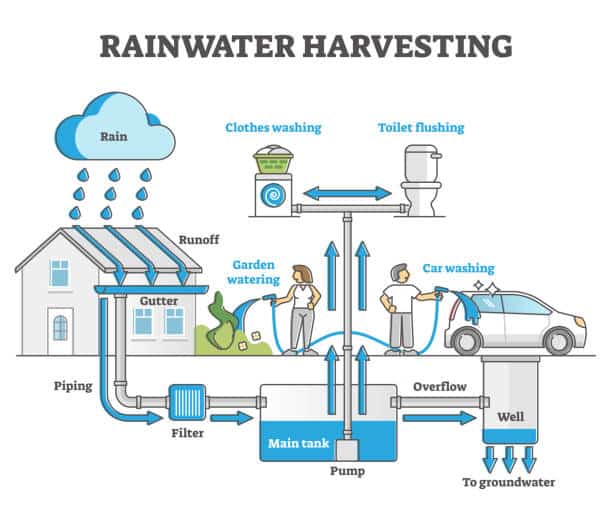
Rainwater Harvesting Diagram

The following diagram represents the process of Rainwater Harvesting:

Rainwater Harvesting Diagram

Rainwater Harvesting Significance

Rainwater Harvesting methods implementations are important due to the following reasons: 

  • Reduce Runoff Loss – Controls excess runoff during monsoons.
  • Meet Rising Demand – Helps cope with urbanization and industrial water needs.
  • Agriculture & Food Security – Provides irrigation in rain-fed areas.
  • Empowering Women – Reduces burden of fetching water in water-scarce areas.
  • Reduce Soil Erosion & Flooding – Controls stormwater flow in cities.
  • Increase Groundwater Levels – Provides long-term water sustainability in implementing water harvesting. 

Rainwater Harvesting Project 

The Rainwater Harvesting Project was launched in order to collect and store rainwater for daily work uses like irrigation and balancing groundwater levels. 

  • The project includes setting up systems to collect rainwater from rooftops and other surfaces, channeling them into gutters and developing storage for them in tanks and underground reservoirs. 
  • This project helps in managing problems like water scarcity, reducing the burdens of traditional water sources and promoting environmental conservation. 
  • Provides a reliable water supply especially in areas affected by droughts and water shortages. 

Rainwater Harvesting Traditional Methods in India

Traditional systems of rainwater harvesting highlight India’s sustainable water wisdom and continue to inspire modern water conservation practices: 

  • Zing (Ladakh) – Collecting glacial meltwater.
  • Kul (Himachal/Jammu) – Mountain water channels.
  • Naula (Uttarakhand) – Small step ponds.
  • Apatani (Arunachal Pradesh) – Terraced water channels.
  • Zabo/Ruza (Nagaland) – Runoff impounding.
  • Bamboo Drip Irrigation (Meghalaya) – Bamboo pipes for water flow.
  • Johads (Rajasthan) – Earthen check dams.
  • Tankas & Kunds (Rajasthan) – Underground storage tanks.
  • Eri (Tamil Nadu) – Flood-control and groundwater recharge tanks.
  • Surangams (Kerala, Karnataka) – Tunnel-based water systems.
  • Bhandara Phad (Maharashtra) – Community-managed check dams.
  • Pat System (Madhya Pradesh) – Diversion channels from streams.

Rainwater Harvesting FAQs

Q1: What is rainwater harvesting?

Ans: Rainwater harvesting is the process of collecting, storing, and using rainwater for domestic, agricultural, and industrial purposes.

Q2: What are the 7 types of rainwater harvesting?

Ans: The 7 types are: rooftop harvesting, surface runoff harvesting, recharge pits, recharge trenches, percolation tanks, check dams, and rain barrels.

Q3: What is the importance of rainwater harvesting?

Ans: It conserves water, reduces groundwater depletion, prevents flooding, and ensures sustainable water availability.

Q4: What is the Eri Rainwater Harvesting method?

Ans: The Eri method, traditional to Tamil Nadu, uses small interconnected tanks (eris) to store rainwater, recharge groundwater, and prevent floods.

Q5: What is the significance of Rainwater Harvesting?

Ans: It promotes water security, reduces dependence on external water sources, and supports ecological balance.

Women Empowerment, Types, Difficulty, Women Empowerment Schemes

Women Empowerment

Women Empowerment refers to the process of eliminating the social, economic, and political disparities between men and women. The term itself gained prominence in the 19th century, with empowerment signifying the act of enabling or granting power. For centuries, women have been perceived as the weaker gender across the world. Even after India attained independence, women continued to be deprived of equal socio-economic status. To address this, both the Government of India and various non-governmental organisations have undertaken initiatives to promote the holistic development of women in society.

The United Nations declared the period from 1975 to 1985 as the Decade for Women, recognising the global need for gender equality. The year 2001 was designated as the ‘International Year for Women’s Empowerment’, a resolution that was also adopted by India.

Women Empowerment

Women Empowerment refers to ensuring equal opportunities for women to increase their participation in various spheres of social life. Its objective is to enable women to exercise freedom in making decisions concerning their education, health, lifestyle and career. The major aim of women’s empowerment is to ensure that women attain rights, status and power on par with men to promote equality and inclusivity within society.

Women Empowerment Types

Women Empowerment is a multidimensional concept with social, educational, economic, and political aspects. Each of these plays a crucial role in ensuring that women attain equal rights, opportunities, and status in society.

Social Empowerment

Social Empowerment is the foundation of Women Empowerment. Historically, women in India faced deep-rooted social inequalities due to patriarchal norms, the caste system, and oppressive practices such as sati, polygamy, and restrictions on their freedom. Social empowerment aims to give women the right to make independent decisions regarding health, marriage, family, childbirth, and overall lifestyle. The ability to exercise such choices is key to ensuring dignity and equality in society.

Educational Empowerment

Education is the cornerstone of empowerment, shaping both personal and professional lives. For centuries, women were denied access to education and confined to household roles. Bridging this gap requires universal access to quality education for girls. States with higher female literacy, such as Kerala, show the transformative effect of women’s education. Educated women not only improve their own lives but also uplift their families and communities. Initiatives like Beti Bachao Beti Padhao reflect the government’s commitment to this cause.

Economic Empowerment

Financial independence is essential for women to assert their rights and make independent decisions. Economic empowerment involves equal access to employment, markets, and entrepreneurial opportunities. Women have shown exceptional managerial and entrepreneurial potential, yet societal biases still restrict their participation. By strengthening women’s role in the workforce, India can accelerate development. The focus on women’s economic empowerment under India’s G20 agenda underscores its national importance.

Political Empowerment

Political participation is vital for bringing lasting social change. Greater representation of women in politics ensures that their concerns and perspectives are adequately addressed in policymaking. Measures like one-third reservation for women in Panchayati Raj Institutions and municipal bodies have been significant. However, the passage of the long-pending Women’s Reservation Bill in Parliament remains crucial to guarantee women a stronger voice in governance and national decision-making.

Women Empowerment Difficulties

Women Empowerment in India is a gradual and difficult process, disturbed by deep-rooted social, cultural, and economic barriers. Some of the major Women Empowerment Difficulties are:

Demographic Imbalance

The National Family Health Survey-5 recorded a fall in the Total Fertility Rate (TFR) from 2.2 in 2015-16 to 2.0 in 2019-20, reflecting progress. However, the sex ratio at birth (SRB) remains at 937 females per 1,000 males in 2021, with an overall ratio of 108.1 boys for every 100 girls. This sex ratio highlights gender bias, often driven by female infanticide and the cultural preference for male children. States like Uttarakhand, Haryana, and Delhi continue to record highly imbalanced ratios, underlining the patriarchal mindset that undermines women’s status in society.

Health Problems

Women’s health is one of the most neglected areas in India. Nearly 70% of adolescent girls suffer from anemia, while menstrual health and hygiene remain inadequately addressed. The maternal mortality rate stood at 113 (2016-18), and around 70% of women are affected by reproductive tract infections, leading to infertility or pregnancy complications. These figures show the urgent need for improved healthcare access and awareness to safeguard women’s well-being.

Neglect of Female Education

Female education continues to lag behind. UNESCO data shows that in 2022, the female literacy rate in India was 70.3%, significantly lower than the global average of 79% and well below the male literacy rate of 84.7%. States like Bihar and Rajasthan remain among the worst performers. Lack of education leaves women unaware of their rights, making them more vulnerable to exploitation, while educated women are better equipped to resist injustice and contribute to society.

Violence Against Women

Violence Against Women and girls remains one of the most pervasive human rights violations. It severely impacts women’s physical, emotional, and social well-being, creating barriers to achieving gender equality. Data from the National Crime Records Bureau (NCRB) shows a 15.3% increase in crimes against women in 2021. Domestic violence, sexual harassment, trafficking, and honor killings continue to undermine women’s freedom and dignity.

Types of Violence against Women

Violence against women takes many forms, cutting across social, cultural, and economic boundaries. Some of the most prevalent Types of Violence against Women are:

  • Domestic Violence: One of the most widespread forms, domestic violence includes verbal, non-verbal, physical, sexual, emotional, and psychological abuse inflicted by an intimate partner.
  • Female Infanticide/Femicide: This refers to the deliberate killing of a girl child, either before birth (through sex-selective abortion) or after birth, simply because she is female.
  • Honor Killing: Honor killings involve the murder of a woman by her own family members, often justified as preserving the family’s so-called honor.
  • Online Violence/Cybercrime: Digital spaces are increasingly unsafe for women. This category includes cyberstalking, online harassment, circulation of morphed or intimate images, and other forms of technology-enabled abuse.
  • Sexual Violence: This category has multiple forms:
    • Sexual Harassment: Unwanted physical contact, sexual comments, demands for favors, or stalking.
    • Rape: A non-consensual act of sexual penetration.
  • Human Trafficking: Millions of women and girls are victims of trafficking, often pushed into forced labor or sexual exploitation. (Read more: Immoral Trafficking Prevention Act)
  • Child Marriage: The marriage of a girl below 18 years is recognized as child marriage. It violates the Universal Declaration of Human Rights and exposes girls to lifelong risks of exploitation and abuse.

List of Major Women Empowerment Schemes in India

As per the Ministry of Women and Child Development the below mentioned are the List of Major Women Empowerment Schemes in India which was introduced by the central government in India:

List of Major Women Empowerment Schemes in India
Name of Scheme and Ministry Year Highlights

Beti Bachao Beti Padhao


(Ministry of Women and Child Development with the Ministry of Health and Family Welfare and The Ministry of Education)

2015

Objectives:

  • Prevention of gender-biased sex-selective abortions.
  • To ensure the protection and survival of the girl child.
  • Ensuring the participation and education of the girl child.

One Stop Center


(Ministry of Women and Child Development)

2016

Objectives:


  • Providing integral support and assistance to women affected by violence in public and private spaces.
  • Facilitate immediate, non-emergency, and emergency access to a variety of services including medical, legal, psychological, and counseling support under one roof to fight against all forms of injustice against women.

Target Group-

  • All women including girls below 18 years of age are affected by violence without any discrimination.

Women Helpline Scheme


(Ministry of Women and Child Development)

2016

Objectives:


  • 24 hours toll-free telecom service to women affected by violence seeking support and information.
  • Facilitating crisis and non-crisis intervention.
  • Providing information about appropriate support services, government programs, and schemes available to women affected by violence.

Target Group-

  • Any woman or girl facing violence within public or private life or seeking information about women-related schemes and programs of the government.

UJJAWALA Scheme


(Ministry of Women and Child Development)

2016

About:


It is a comprehensive scheme for the prevention of trafficking and rescue and Rehabilitation and reintegration of victims of trafficking for commercial sexual exploitation.

Objectives:

  • To prevent the trafficking of women and children for commercial sexual exploitation.
  • Two facilitate the rescue of victims and place them under safe custody.
  • To provide immediate and long-term Rehab services to victims.
  • Facilitating reintegration of victims into their families and Society.
  • Facilitating repatriation of cross-border victims to their native country.

Sakhi Niwas


(Ministry of Women and Child Development)

1972

About- It is a scheme for Working Women’s Hostel


Objectives-

  • To promote the availability of safe and conveniently located accommodation for working women.
  • To construct new hostel buildings and to promote the expansion of existing hostels.
  • To ensure the availability of accommodations to all the working women without any distinction and discrimination.

Beneficiaries-

  • Working women
  • Women under training for job (can stay for a maximum of 1 year)
  • Girls (upto 18 years of age) and boys (upto 5 years of age) accompanying working mother

SWADHAR Greh


(Ministry of Women and Child Development)

2015

It is a scheme for women in difficult circumstances.


Vision- supportive institutional Framework for women victims of difficult circumstances so that they could lead a life with conviction and dignity.

Objectives:

  • To cater to the primary needs of women in distress who are without any social and economic support.
  • Enabling them to regain their emotional strength.
  • Providing Legal Aid and guidance.
  • Economic and emotional rehabilitation of victims.
  • Enabling them to start their life afresh.
  • Provide a support system that understands and meets various needs and requirements of women and distress.

NARI SHAKTI PURASKAR


(Ministry of Women and Child Development)

2016

  • Conferred every year on March 8 International Women’s Day.
  • Given to eminent and outstanding Institutions or organizations or individuals who have rendered distinguished service to the cause of women.
  • The award carries a certificate and a cash amount.
  • All earlier women’s awards given by the Ministry of women and child development ceased to exist after the installation of the Nari Shakti Puraskar.
  • Every year 20 Nari Shakti Puraskar are given.

Mission Shakti


(Ministry of Women and Child Development)

2016

It is an integrated women empowerment program that is an umbrella scheme for the safety, security and empowerment of women.


Vision and Mission

Mission Shakti aims at strengthening the interventions for the safety, security, and empowerment of women. It also seeks to realize the government’s commitment to ‘Women-led’ development.

Sub-schemes:

  • Sambal
  • One Stop Center (OSC)
  • Women Helpline (WHL)
  • Beti Bachao Beti Padhao (BBBP)
  • Nari Adalat
  • Samarthya
  • Ujjawala
  • Swadhar Greh
  • Pradhan Mantri Matru Vandana Yojana
  • National Creche Scheme

Objectives:

  • To provide comprehensive and immediate care support and assistance to women in need.
  • Established equality mechanism for rescue protection and rehabilitation of women in need..
  • Improving accessibility to various government services available to women.
  • Capacity building and training of functionaries.
  • To create awareness among the masses for inducing positive behavioral change towards women and girls.
  • To prevent gender-biased sex-selective elimination.

Nirbhaya Fund

2013

Features


  • Direct impact on safety and security concerns of women.
  • Innovative use of Technology.
  • No duplication of existing government schemes.
  • Optimum utilization of existing infrastructure.
  • Defined monitoring mechanism.
  • Strict privacy and confidentiality of the Identity of women.

Women Empowerment FAQs

Q1: What is Women Empowerment?

Ans: Women Empowerment means enabling women to participate equally in decision-making, education, employment, and social life with dignity and rights.

Q2: Why is women empowerment important?

Ans: It reduces gender inequality, boosts economic growth, improves family health, and strengthens democratic participation.

Q3: What are the key areas of women empowerment?

Ans: Education, health, political participation, economic independence, legal rights, and social equality.

Q4: What challenges hinder women empowerment in India?

Ans: Patriarchy, gender-based violence, wage gap, limited access to education, and underrepresentation in politics and leadership roles.

Q5: What government schemes promote women empowerment?

Ans: Beti Bachao Beti Padhao, Ujjwala Yojana, Sukanya Samriddhi Yojana, Mahila E-Haat, and One Stop Centre Scheme.

Water Pollution, Types, Causes, Effects, Measures to Tackle

Water Pollution

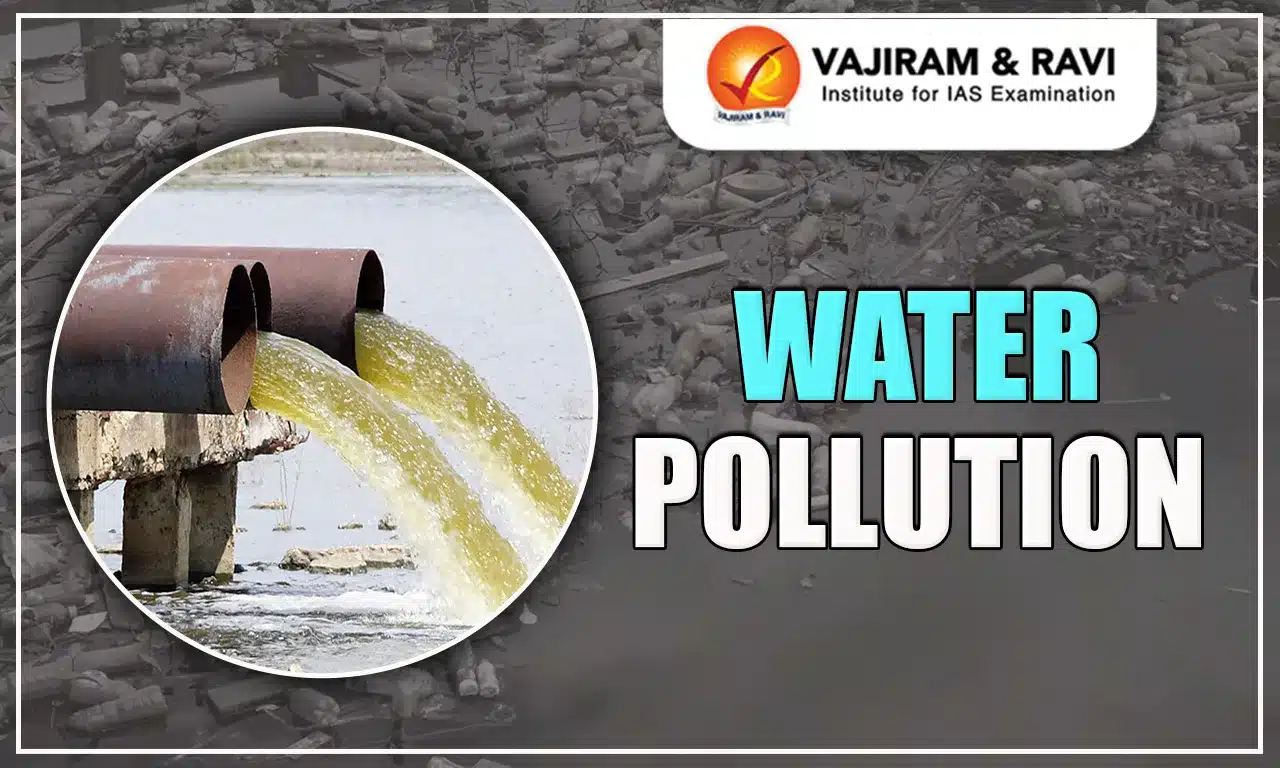
The contamination of water bodies including lakes, rivers, streams or any other water bodies by the discharge of toxic substances directly or even indirectly with the removal of harmful components is referred as Water Pollution. It disrupts the marine ecosystem and pollutes the groundwater which also affects daily activities. The substances that contaminate the water bodies are referred as Water Pollutants which can be effluent discharges, solid wastes or others. Water Pollution is a type of Environmental Pollution.

Water Pollution Sources

Water Pollution can be classified into Point Sources and Non-Point Sources which are briefly discussed below:

Point Sources

  • The type of pollution that originates from a single, identifiable source which is easier to monitor and regulate since the origin is specific and traceable.
  • For example: Discharge pipe from a factory, effluents from sewage treatment plants, leaking underground storage tanks and outfalls from roadways.

Non-Point Sources

  • This source is also referred to as diffuse pollution as it occurs over a wide area and cannot be traced back to a single discharge point. It is usually associated with land-use practices rather than specific discharge points.
  • Non-Point Sources are more difficult to monitor and control compared to point sources.
  • For example: Runoff from agricultural fields, mining sites, urban areas and construction zones.

Major Non-Point Sources

  • Agriculture: Fertilizers, pesticides, animal manure, and eroded soil enter streams during rainfall, polluting water and accelerating erosion.
  • Forestry Land Use: Logging and forest clearance increase soil erosion and sediment runoff.
  • Urban Land Use: Stormwater drains carry pollutants from cities into rivers, lakes, and bays.
  • Mining: Abandoned or active mines can release toxic drainage into water bodies.
  • Highways and Bridges: Runoff from roads, highways, and bridges adds oil, heavy metals, and debris to surface waters.

Water Pollution Types

According to various measures, Water Pollution can be classified into different categories as described below:

Based on Origin

  • Industrial Pollutants: Carbonates, nitrites, nitrates of heavy metals like mercury, lead, zinc, arsenic, etc.
  • Agricultural Pollutants: Fertilizers, pesticides, insecticides, herbicides, synthetic compounds, weeds, plant remains.
  • Urban Pollutants: Chemicals from vehicular exhaust, lime, household sewage, garden fertilizers, etc.
  • Natural Pollutants: Volcanic dust, sediments from weathering/erosion, landslide debris, decayed organic matter.

Based on Physical and Chemical Characteristics

  • Physical Pollutants: Alter taste, turbidity, color, sediment load, dissolved or suspended solids.
  • Chemical Pollutants: Compounds like carbonates, chlorides, sulphates, sulphides, nitrates of heavy metals (mercury, lead, cadmium), plus pesticides, herbicides, insecticides.
  • Biological Pollutants: Microorganisms such as bacteria, viruses, protozoa, and parasitic worms that contaminate water.

Based on Nature of Degradation

  • Degradable Pollutants (Organic Pollutants): Can be broken down by microorganisms or decomposers.
    • Examples: Sewage, garbage, plants, animals.
  • Non-Degradable Pollutants (Inorganic Pollutants): Persist in the environment, resistant to biological breakdown.
    • Examples: Plastics, solid toxic substances, heavy chemical pollutants.

Water Pollution Causes

  • The Water Pollution Causes various harmful substances which enter rivers, lakes or any other water bodies through human activities resulting in decreased quality.
  • Industries release untreated waste, farms add pesticide- and fertilizer-laden runoff, and cities discharge sewage straight into water bodies. 
  • Oil spills, plastic dumping, and non-biodegradable waste worsen the problem. Mining, deforestation, and careless disposal of hazardous chemicals also contaminate water sources. 
  • Water Pollution now only damages aquatic ecosystems and kills wildlife but also causes health risks for people.
  • While natural events like volcanic eruptions or soil erosion can pollute water, human actions remain the main cause.

Water Pollution Effects

The Water Pollution Effects on Environment are discussed below:

Health Effects

  • Contaminated water is a major cause of waterborne disease including cholera, typhoid, hepatitis A and dysentery.
  • Long term exposure to toxic chemicals in polluted water can result in severe health conditions which includes cancer, neurological disorders and reproductive problems.

Environmental Effects

  • Polluted water disrupts aquatic ecosystems by affecting reproductive cycles, causing large-scale fish deaths, and altering natural habitats.
  • Excessive nutrients from agricultural runoff trigger eutrophication, leading to algal blooms that reduce oxygen levels.
  • This creates “dead zones” where aquatic organisms cannot survive, ultimately reducing biodiversity.

Economic Effects

  • Water pollution leads to significant economic burdens, such as rising healthcare costs, loss of tourism income, and lower agricultural yields.
  • Declining fish populations also reduce catches, causing financial losses in the fishing sector.
  • Cleaning and restoring polluted water bodies require heavy financial investments.

Other Effects

  • Water pollution often renders freshwater sources unsafe for drinking, irrigation, or industrial purposes.
  • This worsens the challenge of water scarcity in many regions.

Treatment of Polluted Water

  • Primary Treatment
      • This stage involves physical processes such as the removal of large debris, sedimentation in tanks, and other basic filtration methods to eliminate suspended solids from polluted water.
  • Secondary Treatment
      • This stage relies on biological processes carried out by microorganisms. In this step, microbes decompose and oxidize the organic matter present in the wastewater, thereby reducing its biochemical oxygen demand (BOD).
  • Tertiary Treatment
    • This stage employs physicochemical methods to further purify the water by removing residual turbidity, nutrients, organic matter, heavy metals, and pathogens. Common techniques include chemical oxidation using strong oxidizing agents such as chlorine gas, perchlorate salts, ozone (O₃), or exposure to ultraviolet (UV) radiation.

Measures to Tackle Water Pollution

  • Strengthening Environmental Regulations: Effective implementation of laws such as the Water (Prevention and Control of Pollution) Act, 1974 and the Environment Protection Act, 1986. Empowering institutions like the CPCB and SPCBs to ensure compliance and penalize violators.
  • Monitoring and Compliance: Regular monitoring of water quality and strict adherence to discharge standards. Use of advanced technologies and data analytics for real-time monitoring and early detection of pollutants.
  • Wastewater Treatment: Investment in modern sewage and industrial effluent treatment plants. Adoption of decentralized wastewater treatment systems in urban and rural areas.
  • Biotechnological Solutions: Use of engineered microorganisms to degrade harmful pollutants. Examples: Oil Zapper, Oilivorous-S for cleaning oil spills.
  • Sustainable Agriculture Practices: Promotion of organic farming, crop rotation, and integrated pest management. Reduction in chemical fertiliser and pesticide use to minimise runoff.
  • Industrial Pollution Control: Enforcing zero-liquid discharge (ZLD) norms in polluting industries. Mandatory effluent treatment and reuse of treated water.
  • Solid Waste Management: Scientific disposal of municipal solid waste. Encouraging recycling and segregation at source to prevent leaching of pollutants into water bodies.

Public Awareness and Education: Community-level campaigns on water conservation and pollution hazards. Inclusion of water management in school syllabus to build long-term awareness.

Water Pollution FAQs

Q1: What is water pollution?

Ans: Water pollution is the contamination of water bodies by harmful substances, making them unsafe for drinking, agriculture, and aquatic life.

Q2: What are the main causes of water pollution?

Ans: Industrial waste, sewage discharge, agricultural runoff (pesticides/fertilizers), oil spills, and plastic dumping are the major causes.

Q3: What are the types of water pollution?

Ans: It includes surface water pollution, groundwater pollution, chemical contamination, biological pollution, and thermal pollution.

Q4: What are point sources of water pollution?

Ans: Point sources are identifiable origins like factory discharge pipes or sewage outlets directly polluting water bodies.

Q5: What are non-point sources of water pollution?

Ans: Non-point sources are diffuse, like agricultural runoff, urban stormwater, or soil erosion.

Primary Amoebic Meningoencephalitis

Primary Amoebic Meningoencephalitis

Primary Amoebic Meningoencephalitis  Latest News

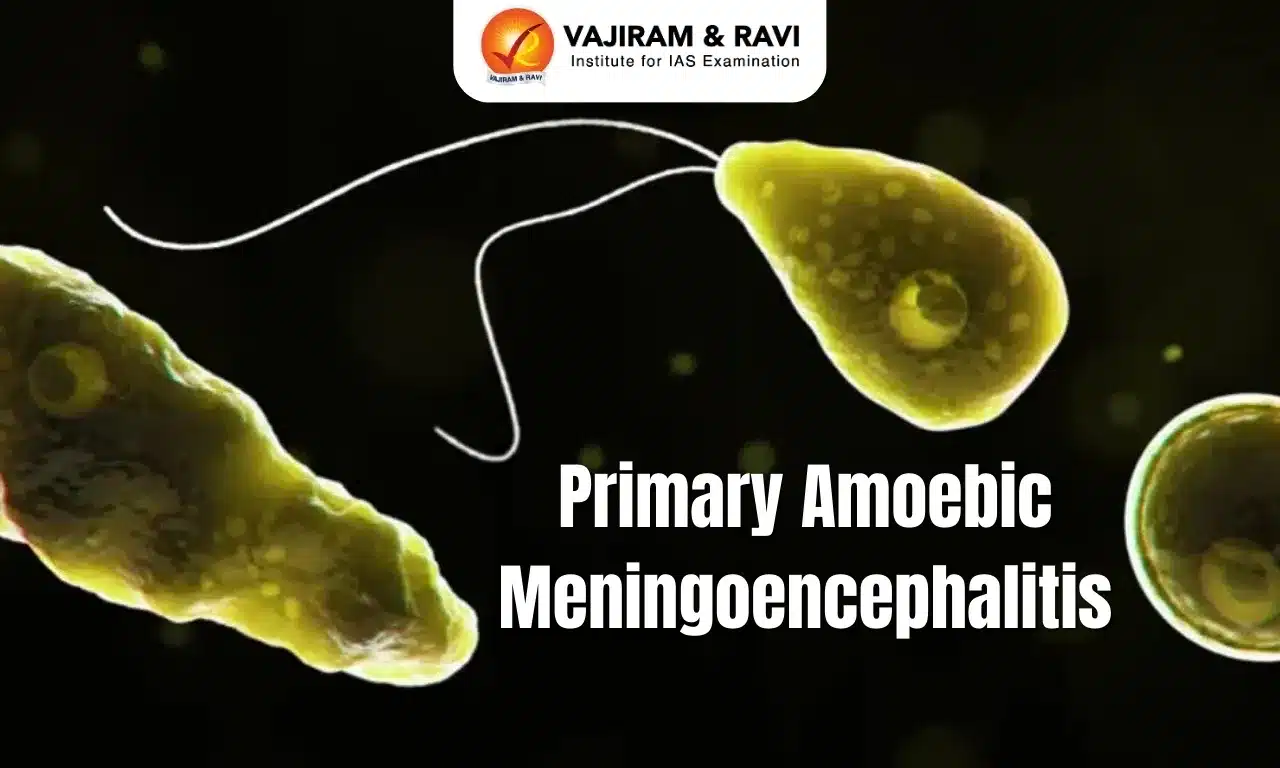
Recently, Kerala’s health department has sounded an alert in Kozhikode district after three back to back cases of the rare primary amoebic meningoencephalitis (PAM) were reported in the region.

About Primary Amoebic Meningoencephalitis

  • It is an infection of the brain and the membranes covering the brain.
  • Cause: It is caused by Naegleria fowleri, known as the “brain eating amoeba”.
  • Naegleria fowleri is a free-living amoeba found in warm, fresh water and soil, and infects people when it enters the body through the nose.
  • This is a very rare, but serious disease with a mortality rate of more than 95%.
  • It affects mainly young, active people.
  • It is classified into two main types: Primary Amebic Meningoencephalitis (PAM) and Granulomatous Amebic Encephalitis (GAE). 
    • PAM is caused by Naegleria fowleri, while GAE is typically associated with Acanthamoeba species and Balamuthia mandrillaris.
    • PAM tends to progress rapidly and is often fatal within a few days, whereas GAE develops more slowly but is equally deadly if not treated promptly. 
  • Transmission: The amoeba that causes the infection occurs in shallow surface waters and incorrectly maintained swimming pools, hot tubs, and spas, particularly in warm climates. 
  • Infection occurs when infected water enters the nose. This can happen when diving, jumping, or swimming in freshwater. 
  • The amoeba then invades the brain and meninges through the nose. 
  • Symptoms: sore throat, headache and pain in the forehead, hallucinations, nausea and vomiting, high fever etc.
  • Treatment: Swift diagnosis and treatment with specific antibiotics may be useful, but recovery is rare.

Source: IE

Primary Amoebic Meningoencephalitis FAQs

Q1: Is brain eating amoeba curable?

Ans: There is currently no official cure for PAM; presently, the best cure is prevention.

Q2: What is amoeba?

Ans: It is a generic term used to refer to a group of single-celled organisms belonging to the biological kingdom Protista.

Almond Cultivation

Almond Cultivation

Almond Cultivation Latest News

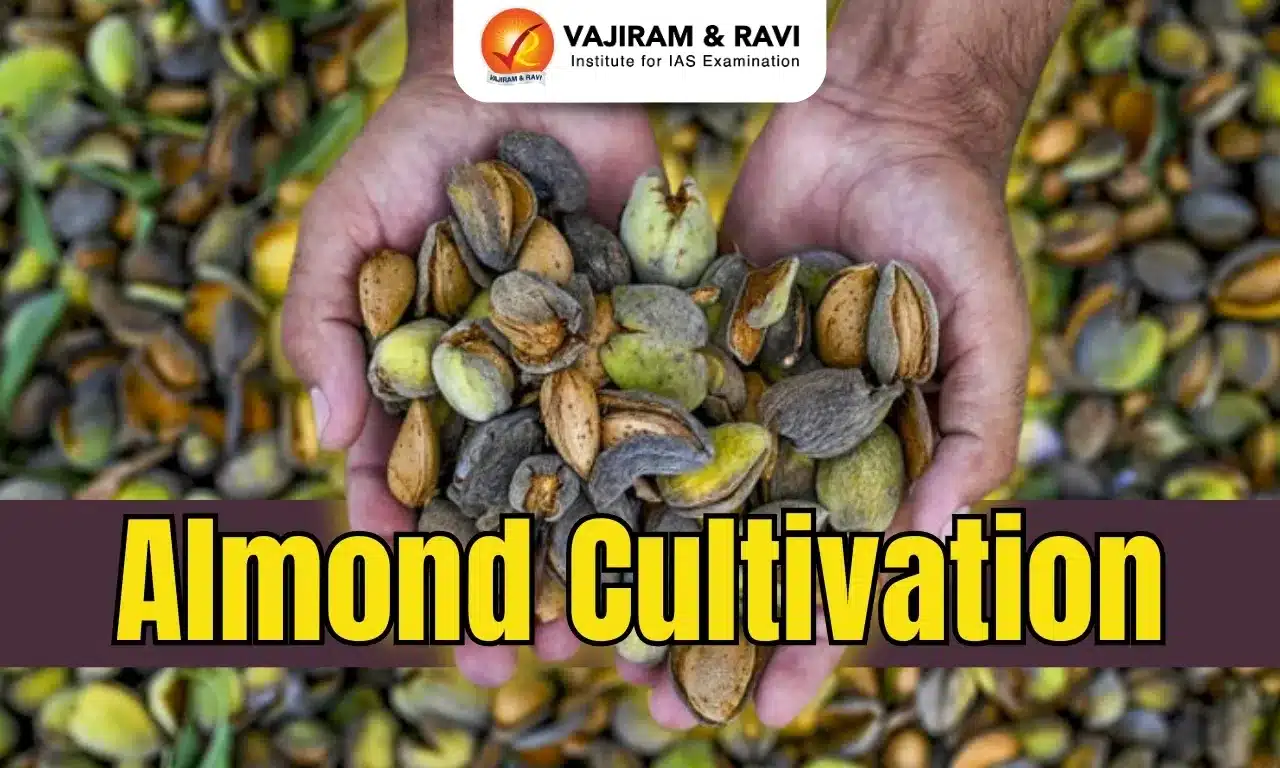
The almond harvest in Kashmir marks an important seasonal and cultural event, and this year’s bumper crop has brought smiles to farmers’ faces.

About Almond Cultivation

  • Almonds are one of the major and oldest tree nut crops in the world.
  • There are two types of almonds available: Sweet almond and bitter almond.
  • Required Climatic Conditions for Almond
    • Climate: Colder regions' climate is suitable for almond farming.
    • Temperature: Temperature ranging between 7°C to 24°C is considered appropriate.
    • Soil: Deep, loamy, well drained soils are ideal for almond growing.
    • Rainfall: Average rainfall needed is 75 to 110 cm. 
    • Almond plants can grow easily at an altitude of 750 to 3200 meters above sea level.
  • Major Almond farming Countries: USA, Australia, Spain, Turkey
  • Major Almond farming states : In India Almond cultivation is mainly done in the hilly parts of colder regions, mainly in Jammu& Kashmir, Himachal Pradesh, Uttarakhand, Kerala and some hilly regions of Andhra Pradesh. 
  • Uses: Almonds are used for various purposes like in sweets, milk, nuts used in the food and used in producing oils.
  • Challenges: Erratic weather patterns, limited access to modern farming techniques, competition from lower-cost imports, shrinking farmlands, and a lack of policy support from authorities. 

Source: TH

Almond Cultivation FAQs

Q1: Where are the majority of almonds grown?

Ans: California

Q2: Where does India get almonds from?

Ans: The United States supplies a significant portion of India's almonds.

Mt Elbrus

Mt Elbrus

Mt Elbrus Latest News

Recently, a mountaineer of Arunachal Pradesh, climbed Mt Elbrus, the highest peak in Europe.

About Mt Elbrus

  • Location: Mount El’brus is located in southwest Russia and is part of the Caucasus Mountains.
  • Formation: It is believed that the Caucasus Mountains were formed due to the northward collision of the Arabian Plate with the Eurasian Plate. Geological studies have revealed that Mount Elbrus was formed over 2.5 million years ago and the volcano had been most active during the Holocene Epoch. 
  • It is the highest point in Russia as well as the highest point in all of Europe.
  • It has an elevation of 18,510 feet (5,642 meters). It makes up part of the Prielbrusye National Park.
  • It is one of the Seven Summits of the world, which are the tallest mountains on each of the seven continents.
  • Mount Elbrus is an inactive volcano that consists of two principal summits, both of which are dormant volcanic domes.
  • Climate: The climate of El’brus is generally cold. Even during summer, nighttime temperatures are around -8°C (18°F).
  • Major Glaciers: Bolshoi Azaou and Irik Glacier
  • Major Rivers: Many Russian rivers like the Baksan, Malka, and Kuban rivers originate from Bolshoi Azaou and Irik Glacier glaciers.

 Source: ET

Mt Elbrus FAQs

Q1: In which country is Mount Elbrus located?

Ans: Russia

Q2: Between which two seas is Mount Elbrus located?

Ans: Elbrus is situated in the northwest of the Caucasus, 100 kilometres from the Black Sea and 370 kilometres from the Caspian Sea,

Halman Apricot

Halman Apricot

Halman Apricot Latest News

For the first time, a consignment of 1.5 metric tonnes of Halman apricots has been sent to Saudi Arabia, Kuwait and Qatar.

About Halman Apricot

  • It is an apricot (Prunus armeniaca L.) variety found in Ladakh.
  • It is one of the best and finest apricots in the world.
  • It was introduced to the region over a century ago from China or Central Asia.
  • It has a wide range of distribution in different parts of Ladakh with particularly abundant in the Sham (western) part of Ladakh including Dha-Hanu, Garkhon, Skurbuchan, Domkhar, Wanla, Khaltse, and Timosgang villages.
  • Renowned for its rich flavor and versatility, it is deeply embedded in Ladakhi cuisine, traditional medicine, and festive rituals, making it an indispensable part of Ladakh's agricultural heritage.
  • Halman serves as a good source of nutritive compounds. 
  • Nutritionally, it is a powerhouse of essential vitamins such as Vitamin C and Vitamin E and minerals like potassium, magnesium, and iron.
  • It also serves as a good source of dietary fiber and antioxidants.

Source: HBL

Halman Apricot FAQs

Q1: The Halman Apricot is primarily found in which region of India?

Ans: Ladakh

Q2: Halman Apricot is rich in which all vitamins?

Ans: It is a powerhouse of essential vitamins such as Vitamin C and Vitamin E.

Q3: Halman Apricot is rich in which all minerals?

Ans: Potassium, magnesium, and iron

Ravi River

Ravi River

Ravi River Latest News

Continuous heavy rainfall in the hilly regions has led to a significant rise in water levels in the Ravi River recently.

About Ravi River

  • It is a river in northwestern India and northeastern Pakistan.
  • It is one of the five tributaries of the Indus River that give Punjab (meaning “Five Rivers”) its name.
  • Course:
    • It originates from the northern face of Rohtang Pass in Himachal Pradesh and flows through the junction formed by the BaraBang-Dhauladhar range of the Himalayas as two channels, namely Budhil and Tantgari.
    • After joining, it flows through Himachal Pradesh, mainly the Chamba district, where it receives many tributaries.
    • From there, it flows southwards through India, crossing through Punjab before crossing into Pakistan, where it finally merges with the Chenab River, a major tributary of the Indus River.
  • It is 720 km long.
  • The length of Ravi River in India is 320 km and has a catchment area of 14,442 sq.km
  • The hydrology of the Ravi is controlled by spring snowmelt and the South Asian monsoon that brings heavy rains from June to September. 
  • It has several tributaries, including the Siul, Baira, and Ujh rivers.
  • The Ravi River has several dams, primarily for hydropower generation and irrigation. 
  • The major ones include the Ranjit Sagar Dam (also known as Thein Dam) and the Chamera Dam complex (Chamera I, II, and III).
  • The Indus Water Treaty of 1960 between India and Pakistan allocated the Ravi River, along with the Beas and Sutlej rivers, to India.

Source: TOI

Ravi River FAQs

Q1: Where does the River Ravi originate from?

Ans: It originates from the northern face of Rohtang Pass in Himachal Pradesh.

Q2: The Ravi River is a tributary of which major river system?

Ans: Indus River

Q3: Which rivers does the Ravi ultimately merge with?

Ans: Chenab River

Q4: What is the total length of the Ravi River?

Ans: 720 km

Bering Strait

Bering Strait

Bering Strait Latest News

According to a recent study, mariners in the Bering Strait are following 2018 shipping guidelines, which suggest a quiet form of U.S.-Russia cooperation despite strained political relations.

About Bering Strait

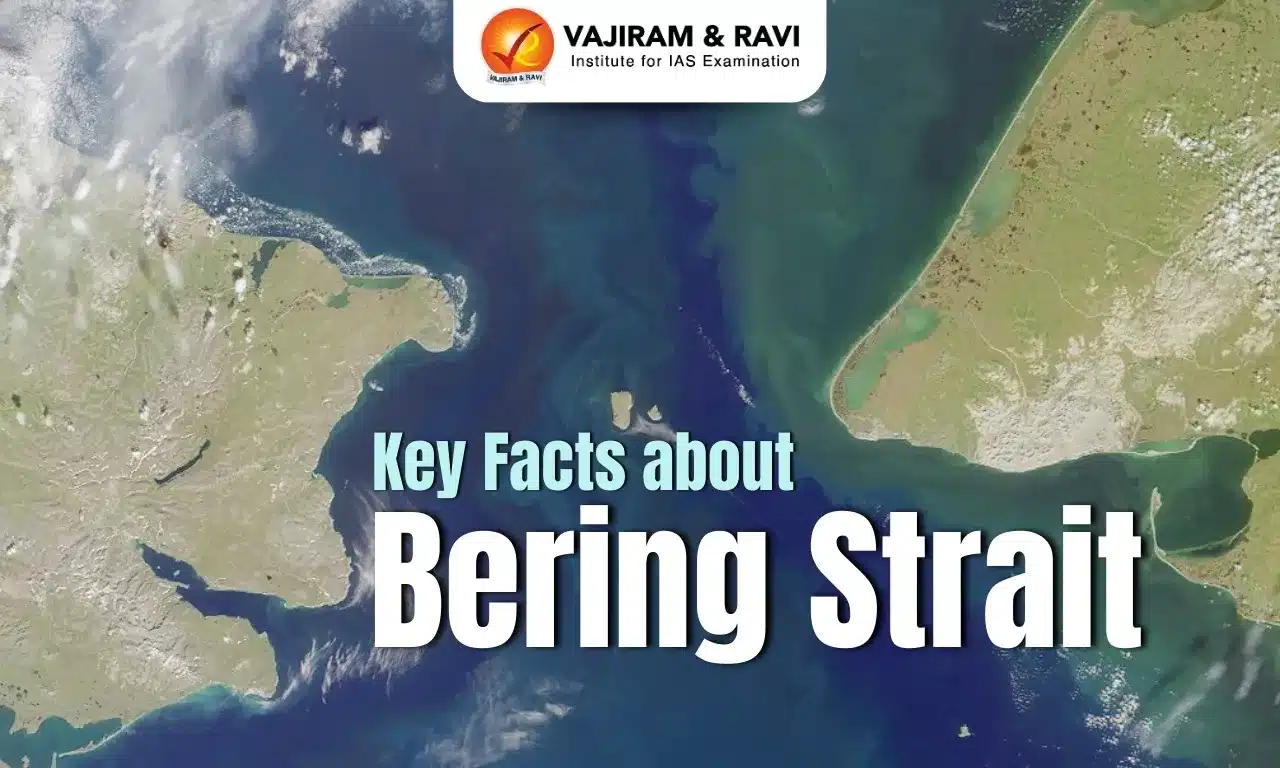
  • It is the northernmost part of the Pacific Ocean, separating the continents of Asia and North America, particularly Russia and the United States. 
  • This important waterway is just south of the Arctic Circle.
  • It connects the Bering Sea to the Chukchi Sea of the Arctic Ocean. 
  • At the strait’s narrowest point, Asia (Russia) and North America (the US) are just 85 km apart. 
  • The narrowest point is between Cape Prince of Wales in Alaska and Cape Dezhnev in Russia. 
  • The international boundary between the two countries passes through the Bering Sea and Strait.
  • It is relatively shallow, with an average depth of 50 m.
  • The Strait has numerous islands, including the Diomede Islands and St. Lawrence Islands. 
    • St. Lawrence Island is the US's sixth-largest Island.
    • The two Diomede Islands are located in the middle of the strait. 
    • The Big Diomede Island belongs to Russia, while the Little Diomede Island is on the US side.
    • The International Date Line runs between the two islands, leaving the American and Russian sides on different calendar days.

Source :MI

Bering Strait FAQs

Q1: The Bering Strait separates which two continents?

Ans: Asia and North America

Q2: The Bering Strait connects which two seas?

Ans: It connects the Bering Sea to the Chukchi Sea of the Arctic Ocean.

Q3: What is the approximate distance between Asia (Russia) and North America (USA) at the narrowest point of the Bering Strait?

Ans: 85 km

Q4: Which two capes mark the narrowest point of the Bering Strait?

Ans: Cape Prince of Wales in Alaska and Cape Dezhnev in Russia.

Jellyfish

Jellyfish

Jellyfish Latest News

Recently, one of the largest nuclear power plants in France was forced to temporarily shut down due to a slimy and spineless adversary: jellyfish.

About Jellyfish

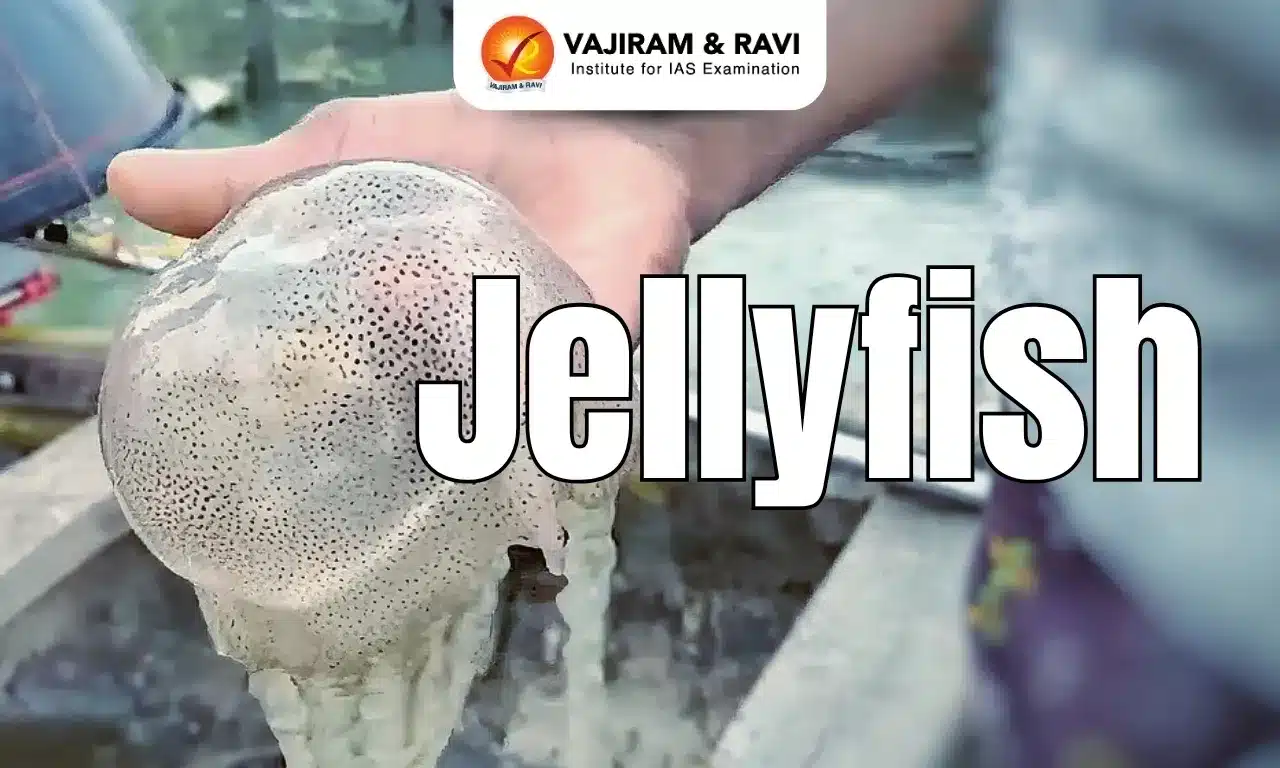
  • It is a resilient gelatinous zooplankton of the phylum Cnidaria.
  • It is a highly adaptable marine organism with simple anatomy, stinging tentacles and efficient jet propulsion.

Characteristics of Jellyfish

  • It is a simple invertebrate, members of the phylum Cnidaria, which includes creatures such as sea anemones, sea whips, and corals.
  • The body parts of a jellyfish radiate from a central axis. This “radial symmetry” allows jellyfish to detect and respond to food or danger from any direction.
  • They are pretty simple, lack brains, blood, or even hearts.
  • Anatomy: They are composed of three layers: an outer layer, called the epidermis; a middle layer made of a thick, elastic, jelly-like substance called mesoglea; and an inner layer, called the gastrodermis.
  • Jellyfish have the ability to sting with their tentacles.
  • Ecological Impact: These blooms disrupt marine ecosystems by reducing biodiversity, outcompeting native species and collapsing fish and invertebrate populations.

Reasons for Jellyfish’s Bloom

  • Global warming has led to higher ocean temperatures, which, in turn, has resulted in the surge of plankton — the primary food source of jellyfish. With an abundance of food available, jellyfish have been able to increase their population substantially.
  • Overfishing:  Recently various kinds of species, such as tuna and sea turtles, that prey on jellyfish have been removed from the ecosystem. These species also feed on plankton, and with their reduced population, jellyfish have more plankton to consume and thrive unchecked.
  • Plastic Pollution: Unlike other marine creatures, jellyfish can tolerate low oxygen levels in water, which is a consequence of pollution. This has also contributed to the increase in their population in recent years.

Source: IE

Jellyfish FAQs

Q1: Do jellyfish have eyes?

Ans: Jellyfish eyes range from primitive to more complex.

Q2: Is jellyfish harmful for humans?

Ans: Many types of jellyfish are fairly harmless to humans.

Q3: What is the biological name of jellyfish?

Ans: Scyphozoa

SWAYAM Portal

SWAYAM Portal

SWAYAM Portal Latest News

The Ministry of Education is offering free Artificial Intelligence (AI) courses on the Swayam Portal to help students stay updated with the rising demand for AI skills.

About SWAYAM Portal

  • SWAYAM (Study Webs of Active–Learning for Young Aspiring Minds) is India’s own MOOCs (Massive Open Online Course) platform of the Ministry of Education (MoE) initiative and was launched during 2017.
  • It seeks to bridge the digital divide for students who have hitherto remained untouched by the digital revolution and have not been able to join the mainstream of the knowledge economy.
  • It is an indigenously developed IT platform that facilitates hosting of all the courses taught in classrooms from Class 9 till post-graduation to be accessed by anyone, anywhere, at any time.
  • All the courses are interactive, prepared by the best teachers in the country, and are available, free of cost, to the residents in India.

What is offered in SWAYAM?

  • Courses that are taught in classrooms from 9th class till post-graduation.
  • The courses hosted on SWAYAM are in 4 quadrants:
    • video lecture
    • specially prepared reading material that can be downloaded/printed
    • self-assessment tests through tests and quizzes and
    • an online discussion forum for clearing the doubts.
  • Categories of courses include - Engineering, Science, Humanities, Management, Language, Mathematics, Arts and Recreation, Commerce, General, Library, Education.
  • Courses delivered through SWAYAM are available free of cost to the learners.
  • Students wanting certifications need to register and shall be offered a certificate on successful completion of the course, with a little fee.
  • At the end of each course, there will be an assessment of the student through a proctored examination, and the marks/grades secured in this exam could be transferred to the academic record of the students. 
  • UGC and AICTE have already issued the UGC (Credit Framework for online learning courses through SWAYAM) Regulation 2016 advising the Universities to identify courses where credits can be transferred on to the academic record of the students for courses done on SWAYAM.

National Coordinators of SWAYAM

  • AICTE (All India Council for Technical Education) for self-paced and international courses.
  • NPTEL (National Programme on Technology Enhanced Learning) for Engineering
  • UGC (University Grants Commission) for non technical post-graduation education
  • CEC (Consortium for Educational Communication) for under-graduate education
  • NCERT (National Council of Educational Research and Training) for school education
  • NIOS (National Institute of Open Schooling) for school education
  • IGNOU (Indira Gandhi National Open University) for out-of-school students
  • IIMB (Indian Institute of Management, Bangalore) for management studies
  • NITTTR (National Institute of Technical Teachers Training and Research) for Teacher Training programme
  • INI (Institutes of National Importance) for Non-Technical Courses

SWAYAM Plus Platform

  • It offers courses developed collaboratively with the industry.
  • This platform aims to enhance employability of both college students and lifelong learners.
  • It will offer programmes in sectors like Manufacturing, Energy, Computer Science and Engineering/IT/ITES, Management Studies, Healthcare, Hospitality and Tourism besides Indian Knowledge Systems.
  • It features innovative elements such as multilingual content (available in 12 major Indian languages of the country), AI-enabled guidance, credit recognition, and pathways to employment.
  • The Indian Institute of Technology Madras (IIT Madras) will be operating this Platform.

Source: NDTV

SWAYAM Portal FAQs

Q1: Which Ministry is responsible for the SWAYAM portal?

Ans: Ministry of Education

Q2: What type of platform is SWAYAM?

Ans: A Massive Open Online Course (MOOC) platform.

Q3: The SWAYAM platform provides courses from which level of study?

Ans: From Class 9 till Post-graduation.

Q4: What is the main aim of the SWAYAM portal?

Ans: To bridge the digital divide and provide quality education to all.

Explained – Impact of Ethanol Blending in India

Impact of Ethanol Blending in India

Ethanol Blending Latest News

  • India has achieved 20% Ethanol blending in petrol five years ahead of schedule, raising debates on its economic, environmental, and EV transition impacts.

Introduction

  • India has achieved its ambitious target of blending 20% ethanol with petrol (E20) five years ahead of schedule, marking a major milestone in its clean energy transition. 
  • Ethanol blending, part of the National Policy on Biofuels, has grown from just 1.5% in 2014 to 20% in 2025, driven by strong government incentives. 
  • While hailed as a step toward energy security, reduced oil imports, and farmer welfare, it has also sparked debates over its impact on vehicle performance, groundwater sustainability, and India’s long-term transition to electric mobility.

Ethanol Blending and Vehicle Owners

  • From April 2023, vehicles in India have carried E20 compatibility stickers. However, acceptance among consumers has been limited.
    • A LocalCircles survey covering 36,000 respondents found that two in three petrol vehicle owners opposed the E20 mandate, citing reduced mileage and higher maintenance costs.
    • Automakers such as Hero MotoCorp have acknowledged the need for new materials (rubbers, elastomers, plastics) to make engines E20-compatible.
    • The Union government admits to a “marginal drop” in fuel efficiency but argues that improved engine tuning will offset losses.
  • Despite these assurances, NITI Aayog has recommended tax incentives on E10 and E20 fuels to compensate consumers for efficiency loss.

Economic and Fiscal Impacts

  • One of the key justifications for ethanol blending has been its role in reducing India’s oil import bill:
  • Since 2014-15, ethanol substitution has saved Rs. 1.40 lakh crore in foreign exchange.
  • However, benefits to consumers have been limited. While oil PSUs (IOC, BPCL) saw a 255% rise in dividend payouts since 2022-23 due to falling crude prices, petrol prices fell only by 2%, raising questions on whether gains are being equitably shared.

Impact on Agriculture and Environment

  • Ethanol blending has opened a steady revenue stream for farmers, especially sugarcane growers:
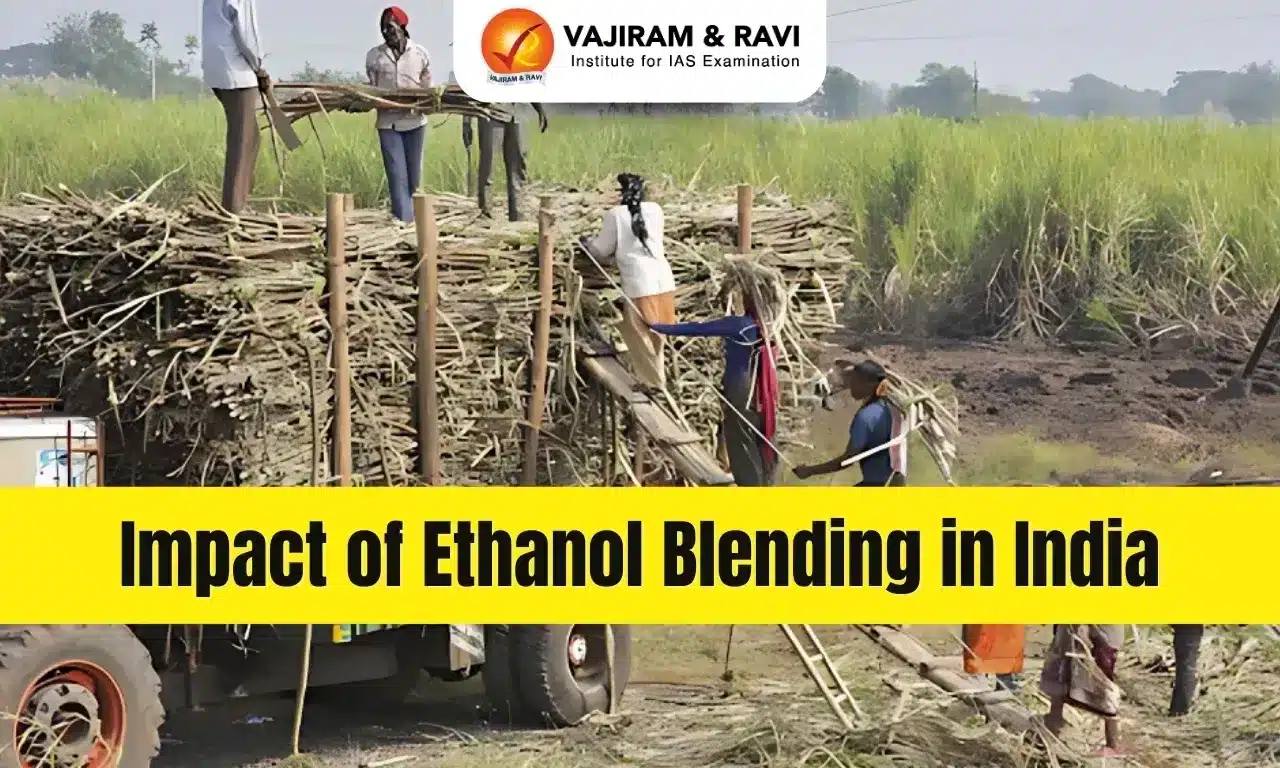
    • Ethanol production grew from 40 crore litres in FY14 to nearly 670 crore litres in FY24, with about 9% of sugar output diverted to fuel.
    • The Centre says it has paid Rs. 1.20 lakh crore to farmers since FY15.
  • However, concerns persist about the environmental cost:
    • Sugarcane cultivation requires 60-70 tonnes of water per tonne of crop, leading to excessive groundwater extraction, especially in drought-prone Maharashtra.
    • Nearly 30% of India’s land is already degraded, and water-intensive cropping patterns worsen desertification risks.
  • The government is now diversifying ethanol sources:
    • Food Corporation of India allocated 5.2 million tonnes of rice for ethanol in 2024-25.
    • 34% of corn output was diverted, forcing a surge in corn imports (9.7 lakh tonnes in 2024-25).
    • Despite diversification, sugarcane acreage remains stable at ~57 lakh hectares, driven by assured Fair and Remunerative Pricing (FRP).

Global Trade and U.S. Concerns

  • India’s booming ethanol sector has attracted international scrutiny.
  • The U.S. has pushed India to relax ethanol import restrictions, calling current policies a “trade barrier.”
  • The Indian Sugar Mills Association warns that import liberalisation could undermine domestic capacity building and hurt farmers.

Ethanol Blending and the EV Transition

  • While ethanol blending has reduced carbon dioxide emissions by 700 lakh tonnes, experts argue that a faster shift to electric vehicles (EVs) would deliver greater climate gains.
    • India lags global peers, with EVs making up only 7.6% of vehicle sales in 2024. To meet its 2030 target of 30% EV sales, growth must accelerate by over 22% in the next five years.
    • EV adoption is constrained by rare earth element (REE) shortages, as India relies heavily on Chinese supplies for components like magnets and batteries.
    • Carmakers such as Maruti Suzuki have cut production targets for EVs due to supply chain disruptions.
  • The government is engaged in diplomatic talks with Beijing to ensure REE supply stability, highlighting the intersection between energy security and geopolitics.

Future Outlook

  • While the Petroleum Ministry has indicated plans to pursue blending beyond 20%, the Union government clarified in March 2025 that no formal decision has been taken. Policymakers face a delicate balance between:
    • Supporting farmers and energy independence through ethanol.
    • Addressing the environmental costs of water-intensive sugarcane.
    • Accelerating the shift to EVs for deeper decarbonisation.
  • India’s ethanol success is undeniable, but the challenge lies in ensuring that its gains are not offset by ecological and consumer costs.

Source : TH

Ethanol Blending FAQs

Q1: What is India’s current ethanol blending level in petrol?

Ans: India has achieved 20% ethanol blending in petrol (E20) five years ahead of schedule.

Q2: How has ethanol blending benefited the Indian economy?

Ans: It has saved over ₹1.40 lakh crore in oil import costs since 2014-15 and boosted farmer incomes.

Q3: What environmental concerns are linked to ethanol blending?

Ans: Heavy reliance on water-intensive sugarcane strains groundwater reserves and accelerates land degradation.

Q4: How are Indian consumers reacting to E20 petrol?

Ans: Most vehicle owners oppose it due to reduced mileage and higher maintenance costs.

Q5: Will ethanol blending affect India’s EV transition?

Ans: Ethanol blending aids decarbonisation, but rapid EV adoption offers greater long-term emission reductions.

Dibru Saikhowa National Park

Dibru Saikhowa National Park

Dibru-Saikhowa National Park Latest News

A new study has identified at least two native plants Bombax ceiba and Lagerstroemia speciosa that have joined invasive species to alter the riverine ecosystem of eastern Assam’s Dibru-Saikhowa National Park.

About Dibru-Saikhowa National Park

  • Location: It is a national park located in Dibrugarh and Tinsukia districts, Assam, India.
  • It was designated a Biosphere Reserve by UNESCO in 1997.
  • Rivers: The park is bounded by the Brahmaputra and Lohit Rivers in the north and Dibru River in the south.
  • Vegetation: It mainly consists of moist mixed semi-evergreen forests, moist mixed deciduous forests, canebrakes and grasslands.
  • It is the largest salix swamp forest in north-eastern India, with a tropical monsoon climate with a hot and wet summer and cool and usually dry winter. 
  • Flora: It consists of Dillenia indica, Bischofia javanica, Bombax ceiba, Lagerstroemia parviflora, etc.
  • Fauna: Tiger, Elephant, Leopard, Jungle Cat, Bears, Small Indian Civet, Squirrels, Gangetic Dolphin, Slow Loris, Assamese Macague
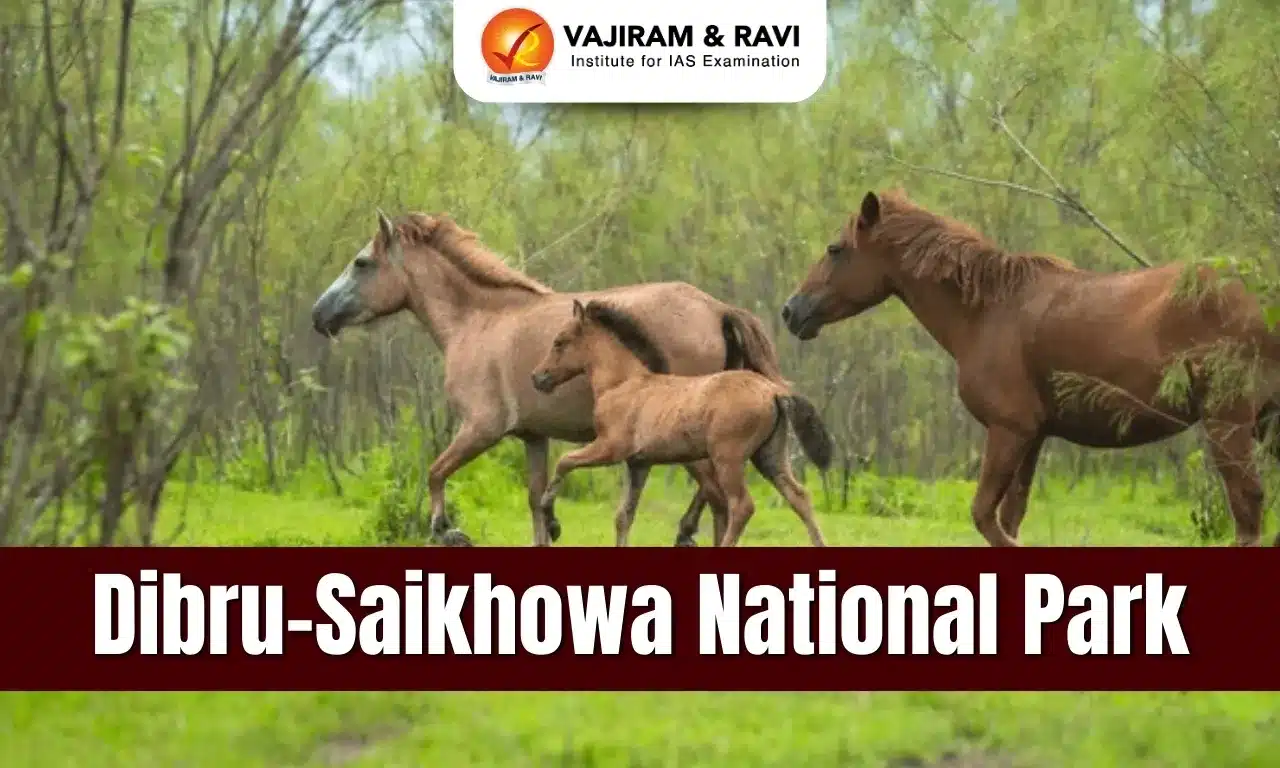
  • It is the only habitat of feral horses in India.
  • It is an identified Important Bird Area (IBA) having more than 382 species of Birds, some of which are Greater Adjutant Stork, Lesser Adjutant Stork, Greater Crested Grebe.

Source: TH

Dibru-Saikhowa National Park FAQs

Q1: Which bird is famous in Dibru-Saikhowa National Park?

Ans: White-winged wood duck

Q2: When was Dibru-Saikhowa National Park declared?

Ans: 1997

India’s First Sustainable Aviation Fuel Plant to Begin Production in 2025

Sustainable Aviation Fuel India

Sustainable Aviation Fuel India Latest News

  • Indian Oil Corporation (IOC), India’s largest refiner and fuel retailer, is set to begin commercial production of Sustainable Aviation Fuel (SAF) at its Panipat refinery by December 2025. The facility recently received international certification to manufacture biofuel from used cooking oil (UCO).
  • By year-end, IOC will achieve a production capacity of 35,000 tonnes of SAF annually, with raw material sourced from large hotel chains, restaurants, and food companies, which typically discard cooking oil after one-time use.
  • This development marks a significant step in India’s green aviation push, contributing to cleaner energy transition and reducing dependence on conventional jet fuel.

About Sustainable Aviation Fuel (SAF)

  • SAF is a bio-based alternative to conventional jet fuel, produced from renewable feedstocks such as used cooking oil, agricultural residues, forestry waste, and non-edible crops.
  • SAF is a “drop-in fuel,” meaning it can be blended with existing jet fuel and used in current aircraft engines without modification.
  • International aviation bodies certify blending limits (usually up to 50%) to ensure safety and performance.

Benefits of Sustainable Aviation Fuel (SAF)

  • Engine and infrastructure compatibility - SAF blended with conventional Jet A can be used in existing aircraft and infrastructure.
  • Fewer emissions - Compared with conventional jet fuel, 100% SAF has the potential to reduce greenhouse gas emissions by up to 94% depending on feedstock and technology pathway.
  • More flexibility - SAF is a replacement for conventional jet fuel, allowing for multiple products from various feedstocks and production technologies.
  • Energy Security – It reduces dependence on imported crude oil.
  • Economic Opportunities – It Creates new markets for farmers (through non-edible crops and residues) and waste collectors (used cooking oil, biomass).
  • Exports: With Europe already enforcing SAF blending mandates, European airlines are seen as the first major buyers of IOC’s SAF when they land in India. IOC also plans to tap into global export markets as demand rises.

IOC’s First Commercial SAF Plant

  • Indian Oil Corporation (IOC), the country’s largest refiner, will begin commercial production of Sustainable Aviation Fuel (SAF) at its Panipat refinery by December 2025
  • The plant is certified under ISCC CORSIA standards.
    • IOC is the first Indian company to receive ISCC CORSIA certification, a requirement under the Carbon Offsetting and Reduction Scheme for International Aviation (CORSIA). 
    • From 2027, airlines worldwide must offset emissions beyond 2020 levels, and using SAF blends will be a key compliance pathway.
  • It will produce 35,000 tonnes of SAF annually using used cooking oil (UCO).
    • UCO refers to edible oils and fats that have been used for frying, cooking, or food preparation in both commercial and household settings. 
    • It is essentially leftover oil from cooking processes. 
    • While UCO can be a sustainable feedstock for biodiesel and other products, its improper disposal can lead to environmental and health issues.

Meeting India’s SAF Targets

  • The initial production capacity will be sufficient to meet India’s 1% SAF blending target for international flights by 2027.
  • The National Biofuel Coordination Committee (NBCC) has set indicative targets of 1% blending in 2027 and 2% in 2028.
  • SAF blending for domestic flights is expected to follow, but only after international targets are in place.

Challenges Ahead

  • Collection bottlenecks: While UCO collection from big hotel chains is easy, creating systems to collect oil from small eateries and households remains difficult.
  • High cost: SAF is currently about three times more expensive than conventional jet fuel, raising concerns for airlines about higher operating costs.
  • Feedstock Availability: Large-scale production requires a steady supply of sustainable feedstocks (used cooking oil, residues, waste).
  • Policy roadmap: Although the government had earlier considered early SAF mandates, cost concerns have pushed implementation to 2027 onwards.

Future Pathways

  • While IOC has started with the used cooking oil route, it is also working on alcohol-to-jet (ATJ) technology, which uses ethanol as feedstock. 
  • Other Indian companies are exploring similar SAF technologies, but all pathways require international certification before commercial rollout.

Source: IE | BS | AFDC

Sustainable Aviation Fuel India FAQs

Q1: What is SAF?

Ans: Sustainable Aviation Fuel (SAF) is eco-friendly jet fuel made from renewable feedstocks like used cooking oil.

Q2: Who is producing SAF in India?

Ans: Indian Oil Corporation (IOC) will produce SAF commercially at its Panipat refinery by December 2025.

Q3: What is IOC’s SAF production capacity?

Ans: IOC’s Panipat refinery will produce 35,000 tonnes of sustainable aviation fuel annually from used cooking oil.

Q4: Why is SAF important for aviation?

Ans: SAF reduces aviation carbon emissions and supports global decarbonisation targets under CORSIA guidelines.

Q5: What challenges exist in SAF adoption?

Ans: The main challenges are high production costs and difficulty collecting used cooking oil from small users.

India’s S&P Credit Rating Upgrade Explained: Drivers and Future Outlook

India S&P Credit Rating

India S&P Credit Rating Latest News

  • Recently, S&P Global Ratings upgraded India’s sovereign rating to BBB from BBB-, the country’s first upgrade in nearly two decades. 
  • The move is significant not only because of the long gap but also due to its far-reaching implications for India’s economic standing, investor confidence, and global credibility.

About S&P Global

  • S&P Global, also known as Standard & Poor’s Global, is a prominent international credit rating agency. 
  • It assesses the creditworthiness of governments, corporations, and financial instruments, offering investors independent evaluations of financial risk.

Why Credit Ratings Matter

  • Credit ratings assess a country’s creditworthiness — its ability and willingness to repay borrowed money. 
  • Just as timely loan repayments improve an individual’s credit score, sound financial management enhances a nation’s rating. 
  • Since most governments, including India, borrow annually to cover fiscal deficits (₹15.69 lakh crore in 2025-26), a higher rating lowers borrowing costs by signaling reliability to lenders.
  • For India, S&P’s recent upgrade means reduced interest rates on debt and easier access to global capital markets
  • The upgrade can unlock new global funding pools and reduce borrowing costs not only for the government but also for Indian corporates, especially those raising money abroad.

India’s Persistent Push for a Ratings Upgrade

  • For years, the Indian government has actively lobbied global rating agencies — S&P, Moody’s, and Fitch — for higher credit ratings, arguing that their assessments understate India’s economic strength. 
  • New Delhi has often criticised the methodologies as biased against emerging economies.
  • It even highlighted the issue in the 2020-21 Economic Survey with a dedicated chapter titled “Does India’s Sovereign Credit Rating Reflect its Fundamentals? No!”

Steady Gains in India’s Economic Fundamentals

  • India’s recent rating upgrade by S&P is rooted in two key improvements — fiscal discipline and economic growth
  • After years of missing fiscal deficit targets under the Fiscal Responsibility and Budget Management Act (2003), the government has shown aggressive consolidation since the pandemic. 
  • The deficit has been cut from 9.2% of GDP in 2020-21 to a projected 4.4% in 2025-26, with plans to bring debt-to-GDP down from 57.1% to 49–51% by 2030-31.
  • On growth, despite slowing to 6.5% in 2024-25, India remains among the world’s fastest-growing large economies, with robust nominal GDP supporting a declining debt ratio. 
  • S&P has also praised India’s inflation management, as the headline inflation rate fell to 1.55% in July 2025, the lowest since 2017
  • Low, stable inflation boosts investor confidence by protecting returns, supporting currency stability, and reducing social risks. 
  • Together, these factors highlight India’s fiscal resilience, growth strength, and credibility in economic management, justifying the long-awaited upgrade.

Understanding India’s Position on the Rating Scale

  • India’s credit rating with S&P has improved within the same category, moving from BBB- (the lowest in investment grade) to BBB, which is more stable but still the entry-level of investment-grade ratings.
  • Credit ratings are broadly divided into two classes: investment grade (safer for investors) and speculative grade (riskier, with repayment less predictable). 
  • Within investment grade, BBB is the lowest rung. According to S&P, a BBB rating reflects an “adequate capacity to meet financial commitments, but more vulnerable to adverse economic conditions.”
  • The next levels are BBB+, followed by the A, AA, and AAA categories, with AAA denoting the strongest capacity to meet financial obligations. 
  • Thus, while India’s upgrade signals improved financial credibility, it still has ground to cover before reaching stronger rating tiers.

India’s Place Among Global Peers

  • India shares its BBB rating with countries such as Greece, Mexico, and Indonesia.
  • At the very top, with the AAA rating, are advanced economies including Australia, Canada, Denmark, and Germany.
  • However, the wealthiest countries do not always retain the highest ratings. 
  • For example, the United States was downgraded to AA+ by S&P in 2011, breaking its AAA streak due to rising debt concerns. 

What Lies Ahead for India’s Credit Rating

  • The upgrade brings immediate benefits, notably lower borrowing costs for the government, reflected in falling bond yields and a stronger rupee. 
  • However, the next step toward a higher rating will not be easy.
  • S&P has indicated that a further upgrade depends on reducing the combined fiscal deficit of the Centre and states below 6% of GDP on a structural basis
  • This is challenging, as S&P projects the deficit to narrow only to 6.6% by 2028-29, down from 7.8% in 2024-25. 

Source: IE | PIB | MC

India S&P Credit Rating FAQs

Q1: What rating did India get from S&P?

Ans: India’s sovereign rating was upgraded from BBB- to BBB by S&P Global Ratings.

Q2: Why do credit ratings matter?

Ans: Higher ratings reduce borrowing costs, improve investor confidence, and open global funding opportunities.

Q3: What drove India’s upgrade?

Ans: Improved fiscal deficit control, strong GDP growth, and stable inflation management drove the upgrade.

Q4: Where does India stand globally?

Ans: India shares BBB rating with Greece, Mexico, and Indonesia, below AAA-rated countries like Germany and Australia.

Q5: What’s needed for the next upgrade?

Ans: India must reduce combined Centre-State fiscal deficit below 6% of GDP, a challenging target.

Ambergris

What is Ambergris?

Ambergris Latest News

The Ahmedabad Rural Special Operations Group (SOG) recently seized 2.97 kg of ambergris, commonly known as sperm whale vomit, worth nearly ₹2.97 crore in the international market and arrested two people.

About Ambergris

  • Ambergris, also known as ‘whale vomit’ is a solid, waxy substance produced in the digestive system of sperm whales (Physeter macrocephalus).
  • It is extremely valuable and has been called the ‘treasure of the sea’ and ‘floating gold’.
  • It is highly valued in the perfume industry as a fragrance enhancer. 
  • It is also used in traditional medicines and sometimes even as a spice in eastern cultures.
  • There is a ban on the possession and trade of ambergris in countries like the USA, Australia, and India.
  • In India, the sale and trade of ambergris are strictly prohibited under the Wildlife Protection Act, 1972.

Ambergris Formation

  • It is formed in the intestine of the whale to cover the indigestible objects from the animals on which it feeds (mostly the beaks of squid)
  • Once released, it initially floats on the ocean's surface and is black and sticky. 
  • Exposure to sun, air, and salt water oxidizes it, and eventually it becomes grey and waxy, often still embedded with small squid beaks. and losing its unpleasant odour.
  • Ambergris is found in lumps of various shapes and sizes, ranging from 15 grams up to 420 kilograms.

Source: TH

Ambergris FAQs

Q1: Ambergris, often called ‘floating gold’, is produced in the digestive system of which animal?

Ans: Sperm whale

Q2: What is the primary purpose of ambergris formation inside the sperm whale?

Ans: To cover indigestible objects like squid beaks.

Q3: What is the initial appearance of ambergris when released into the ocean?

Ans: Grey and waxy

Q4: In which industry is ambergris primarily used?

Ans: It is highly valued in the perfume industry as a fragrance enhancer.

Daily Editorial Analysis 18 August 2025

Daily Editorial Analysis

A Conservation Manual, Drafted by the Ordinary Citizen

Context

  • In his Independence Day addresses, Prime Minister Narendra Modi has frequently called on citizens to honour the legacy of those who fought against colonial rule.
  • His reminders, though timely, often remain symbolic, naming a handful of freedom fighters or quoting their words, rather than offering substantive ways of engaging with India’s past.
  • This superficiality mirrors the Archaeological Survey of India’s (ASI) own approach to heritage: conserving monuments by isolating, repairing, and occasionally beautifying them.
  • While these efforts are not without value, they fall short of addressing the enormity and complexity of India’s historical landscape.

Colonial Legacies and Present Shortcomings

  • The roots of India’s conservation practices lie in colonial ambitions.
  • British officers catalogued monuments and codified preservation laws, motivated less by cultural reverence and more by administrative control.
  • John Marshall’s Conservation Manual (1923), with its emphasis on structural repair and landscaped surroundings, continues to shape ASI practices nearly a century later.
  • Yet, surveys, audits, and court rulings reveal that many protected monuments are crumbling, with conservation policies inconsistently followed.
  • The government’s invitation for corporations to adopt monuments illustrates a shift toward privatisation but risks reducing heritage into commodified symbols rather than shared cultural legacies.


Learning from Gandhi and the Arts of Translation

  • A more meaningful roadmap begins with revisiting alternative visions, such as Gandhi’s Sarvodaya, his rendering of John Ruskin’s essays.
  • Gandhi emphasised dignity in all forms of labour, collective welfare, and admiration for craft.
  • If applied to conservation, these values would expand preservation beyond mere structural integrity to improving the lives of surrounding communities and enriching visitor engagement.
  • Monuments would no longer be cordoned relics but spaces where resilience, ingenuity, and human interconnectedness are celebrated.
  • The practice of translation further offers powerful metaphors. Modern translators recognise that meanings shift across time and language, and that fidelity to the past requires acknowledging distance rather than erasing it.
  • Conservation too must embrace transparency: interventions should be visible, ensuring visitors distinguish between the ancient and the restored.
  • Just as translators periodically revisit texts for relevance, conservationists should review preservation materials for appropriateness, preventing harm to historical fabrics.

Lessons from Science and Ecology and the Role of Citizens

  • Lessons from Science and Ecology

    • Conservation, the text argues, can draw insights from diverse fields.
    • Wildlife biologists highlight the importance of ecosystems rather than isolated species, a perspective that encourages viewing monuments within broader landscapes of water bodies, forests, and settlements.
    • This could even mean dismantling boundary walls that cut monuments off from their environments.
    • Similarly, mycologists demonstrate how fungi, agents of decay and renewal, sustain life cycles.
    • By analogy, neglected monuments such as old wells, cisterns, and city walls can be reimagined as resources that secure water, provide habitats, and foster community spaces.
    • Economics too reframes conservation. Economists show that value lies in function, not appearance.
    • A haveli’s natural ventilation may be more significant than a newly painted façade.
    • Concepts such as scarcity and creative destruction can guide conservation strategies, from justifying larger budgets to transforming submerged temples into laboratories for underwater archaeology.
    • In each case, the point is clear: heritage should be dynamic, adaptive, and generative.
  • The Role of Citizens

    • Ultimately, heritage is not the ASI’s responsibility alone. In a country as diverse as India, the meaning of conservation is contested and contextual.
    • Citizens must cultivate literacy in the language of stones, reading biases of builders, listening to silenced voices, and confronting prejudices.
    • Monuments are not just relics but mirrors of society.
    • By engaging critically and empathetically, citizens can help transform India into a monument without walls, where the preservation of culture is inseparable from the shaping of a shared future.

Conclusion

  • The challenges before India is to move beyond colonial-era conservation practices toward a richer, more inclusive vision.
  • Monuments should not be polished remnants of the past but living sites that connect communities, ecosystems, and histories.
  • Drawing on Gandhi’s philosophy, translators’ sensitivities, ecological thinking, and economic insights, the ASI and citizens alike can co-author a new conservation manual, one that values memory, dialogue, and the multiplicity of perspectives.
  • In doing so, India can conserve not just its stones, but the diverse voices and lives they embody.

A Conservation Manual, Drafted by the Ordinary Citizen FAQs

Q1. What are the shortcomings of the ASI’s current approach to conservation?
Ans. The primary focus of ASI is on repairing and isolating monuments, which treats heritage as static relics rather than living cultural spaces.

Q2. How does Gandhi’s Sarvodaya inspire a new vision for monument conservation?
Ans. Gandhi’s Sarvodaya suggests that conservation should not only preserve structures but also improve the lives of surrounding communities and honour the dignity of labour.

Q3. Why are translators’ practices used as a metaphor for conservation?
Ans. Translators show that meanings change over time and that acknowledging distance from the past is essential; similarly, conservation should make restoration work visible and regularly reassess preservation methods.

Q4. What lessons can science and ecology offer to heritage conservation?
Science and ecology teach that monuments should be understood within broader systems, such as landscapes, water bodies, and communities, rather than as isolated structures.

Q5. What role do citizens have in shaping conservation?
Ans. Citizens must learn to read monuments critically, engage with their histories, and use them as mirrors to confront social biases, thereby helping to preserve heritage as a shared living legacy.

Source: The Hindu


India at 79th Independence Day - Journey, Achievements, and the Road Ahead

Context:

  • India celebrated its 79th Independence Day with pride as a resilient, confident, and rising nation.
  • Despite historical challenges such as US sanctions post-Pokhran (1998) and the Seventh Fleet episode (1971 war with Pakistan), India has emerged stronger.
  • Today, it is recognized as one of the fastest-growing economies and a major global player.

India’s Economic Growth:

  • GDP growth: From $30 billion (1947) to a projected $4.19 trillion (2025) (IMF estimates).
  • Global standing:
    • In nominal GDP – 4th largest by 2025.
    • In PPP terms – Already 3rd largest ($17.65 trillion).
  • Growth under the present government (FY15–FY25):
    • Real GDP growth average - 6.5% annually.
    • Agriculture GDP growth average - 4% annually.

Socio-Economic Transformation:

  • Poverty: Measured at the $3/day (2021 PPP) threshold, it has reduced from 80% (1947) to 5.3% in 2025 (World Bank estimates).
  • Literacy: Increased from 18.3% (1951) to 77% (2023).
  • Life expectancy: From 32 years (1947) to 72 years (2023).
  • Women’s empowerment: Significant strides in education, socio-economic-political participation, and leadership.

Agriculture and Food Security:

  • Foodgrain production: Foodgrain production has multiplied sevenfold, from 50 MMT (1947) to 353.9 MMT (2024-25).
  • Exports: World’s largest rice exporter (20.2 MMT in FY25). Horticulture, milk, egg production have multiplied many times.
  • Self-sufficiency: India is a net exporter of agriculture, unlike the US and China.
  • Challenges: Though India has achieved food security, there are still many challenges, for example, nutritional security, especially of children under the age of five, remains pressing.

Technology, Science and Space Achievements:

  • Space exploration: From Chandrayaan’s historic landing near the Moon’s South Pole to the trailblazing Mars mission (Mangalyaan), India has staked its place at the frontiers of space exploration.
  • Digital revolution: The meteoric rise of the Unified Payments Interface (UPI), processing over 10 billion transactions each month and inspiring fintech innovations worldwide, reflects a digital revolution.
  • Global leadership: Indian-origin CEOs (such as Sundar Pichai, Satya Nadella, Indra Nooyi) lead global corporations (Google, Microsoft, PepsiCo).
  • Slogans of progress:
    • “Jai Jawan, Jai Kisan” (Shastri).
    • “Jai Vigyan” (Vajpayee).
    • “Jai Anusandhan” (Modi).

Challenges Ahead:

  • Subsidies:
    • Shield vulnerable populations, but plagued by large inefficiencies:
      • Together, these account for nearly Rs 3.71 lakh crore in the 2025–26 Union Budget — Rs 2.03 lakh crore for food and Rs 1.67 lakh crore for fertilisers.
      • Studies suggest that at least 20 to 25% of these subsidies fail to reach intended beneficiaries.
    • Need for reforms: Rationalise subsidies, focus on agri-R&D, innovation, and value chains.
  • Environmental concerns: Protect soil, water, and air quality to sustain growth.
  • Nutritional security: Address child malnutrition through women’s education, maternal health, sanitation.

India in the Global Context:

  • Comparisons:
    • China’s per capita income in 2025 is $13,690 (PPP $28,980), while India is at $2,880 (PPP $12,130).
    • However, for India, democracy remains its compass/ strength, setting it apart from its neighbours.
  • Global relevance: India has lessons for many countries in Asia and Africa, and in many high-tech sectors, it competes with the best.

Vision for Viksit Bharat @ 2047:

  • Core pillars:
    • Accelerating inclusive growth.
    • Cutting bureaucratic hurdles.
    • Strengthening scientific culture.
    • Sustainable development with environmental safeguards.
  • Aim: To establish India as a developed nation (Viksit Bharat) by its centenary of independence (2047).

Conclusion:

  • By 2047, India’s centenary of independence will mark not only the achievement of Viksit Bharat, but also its emergence as a global leader in technology, agriculture, and inclusive governance.
  • With democracy as its guiding compass and sustainability at its core, India is poised to script a model of development that inspires the world.

India at 79th Independence Day FAQs

Q1. What factors have contributed to India’s economic transformation since independence?

Ans. Economic reforms, demographic dividend, digital revolution, agricultural self-sufficiency, and global integration have collectively driven India’s transformation to a projected $4.19 trillion by 2025.

Q2. What are India’s achievements in agriculture since 1947?

Ans. India has become a net agricultural exporter with foodgrain production rising sevenfold and record rice exports.

Q3. How have science, technology, and space exploration shaped India’s global image in the 21st century?

Ans. Missions like Chandrayaan and Mangalyaan, UPI-led digital transformation, and leadership of Indian-origin CEOs in global corporations have positioned India as a global innovator.

Q4. What is the role of subsidies in India’s agri-food sector?

Ans. While food and fertiliser subsidies protect vulnerable populations, inefficiencies and leakages (20–25%) demand rationalisation and a shift toward agri-R&D for long-term sustainability.

Q5. What is India’s progress in social indicators since 1947?

Ans. Poverty has reduced from 80% to 5.3%, literacy has risen from 18.3% to 77%, and life expectancy has more than doubled.

Source: IE


India Redefines Engagement with Africa in Namibia

Context:

  • Prime Minister Narendra Modi’s address to Namibia’s National Assembly in July showcased a culturally rooted approach to diplomacy.
  • By quoting a Namibian poet, invoking the symbolism of the Welwitschia mirabilis plant and the Springbok, and speaking in Oshiwambo, he struck a chord with the audience, earning laughter and applause.
  • This grounded, culturally sensitive engagement reflects a sharp departure from Western approaches, which remain tied to conditional aid, migration control, and episodic withdrawals, such as recent USAID cutbacks.
  • India’s style emphasizes partnership, respect, and shared symbolism over transactional assistance, presenting a new model of international cooperation.
  • This article highlights India’s evolving engagement with Africa through the lens of Prime Minister Narendra Modi’s Namibia visit.

India’s Three-Step Engagement with Namibia

  • India is pursuing a measured, adaptive approach in its engagement with Namibia, based on a deliberate three-step logic: shared history, present cooperation, and future-oriented collaboration.
  • Anchoring in Shared History

    • India emphasizes anti-colonial solidarity and long-standing ties, recalling its support for Namibia’s liberation struggle and UN peacekeeping contributions.
    • These historical references reinforce India’s image as a consistent, long-term partner, unlike the episodic involvement of many other powers.
  • Strengthening Present Cooperation

    • India highlights ongoing trade, modest at $800 million, but backed by a much larger $12 billion Africa-wide development partnership.
    • More importantly, India invests in capacity-building initiatives such as the India-Namibia Centre of Excellence in IT and the ‘India Wing’ at the University of Namibia, reflecting a focus on education, technology, and youth-oriented development.
  • Building a Future Road Map

    • Looking ahead, India is pivoting towards knowledge-based cooperation.
    • Namibia’s adoption of India’s Unified Payments Interface (UPI) marks a breakthrough in digital diplomacy.
    • This serves as a model for exporting not just digital tools, but also governance frameworks and institutional know-how tested in India.
  • In essence, India’s approach to Namibia reflects a thoughtful, durable model of partnership, rooted in historical solidarity, strengthened by pragmatic cooperation, and projected toward a shared digital and developmental future.

Advantage Namibia: India’s Strategic Engagement

  • Namibia offers India a reliable partner due to its political stability, rich mineral wealth, and growing technological base.
  • Shared histories and a vision for equitable governance provide a strong foundation.
  • President Netumbo Nandi-Ndaitwah’s call for fairer global financial systems aligns closely with India’s push for inclusive, just global governance.

Outcomes of PM Modi’s Visit

  • Prime Minister Modi’s visit to Namibia, the first in nearly three decades, was symbolically important but produced modest outcomes.
  • Agreements included two MoUs on entrepreneurship and health, and Namibia’s accession to the Global Biofuels Alliance and the Coalition for Disaster Resilient Infrastructure.
  • These steps are valuable, but fall short of the full potential of the partnership.

Missed Opportunity on Critical Minerals

  • Namibia, a leading uranium producer, is crucial for India’s goal of resilient low-carbon supply chains.
  • However, the visit did not yield a strategic framework for cooperation in resource access, workforce development, or investment in value addition.
  • While acknowledged, discussions failed to deliver concrete agreements in this high-value area.

India’s Distinctive Approach

  • Despite gaps, India’s engagement stands out for how it builds trust—through inclusive dialogue, recognition of historical solidarity, and respect for African priorities.
  • Unlike transactional Western approaches, India positions itself as a long-term partner in shaping the Global South’s collective agency and aspirations.

Moving Beyond Symbolism: India’s Next Steps in Africa

  • The upcoming India-Africa Forum Summit offers a timely platform to institutionalise recent diplomatic gestures into formal cooperation frameworks.
  • It is an opportunity for India to demonstrate that its engagement with Africa is not episodic but built on enduring political resolve.
  • For India to build credibility, symbolism alone will not suffice.
  • It must address structural and operational shortcomings at home, ensuring that its strategic ambitions in Africa are backed by sustained financial investment, coherent policies, and robust institutional support.
  • India’s credibility as a trusted Global South partner will ultimately depend not only on the promises it makes but also on consistent, collaborative follow-through.
  • Long-term partnerships require more than goodwill; they demand reliable execution and mutual trust.

Conclusion

  • India’s partnership with Namibia reflects a promising model of trust-based diplomacy, but its true credibility will depend on consistent follow-through, strategic investment, and sustained institutional commitment.

India Redefines Engagement with Africa in Namibia FAQs

Q1. How did Prime Minister Modi’s Namibia address differ from Western diplomatic approaches?

Ans. PM Modi used cultural references, Oshiwambo phrases, and Namibian symbols, reflecting respect and partnership, unlike the West’s conditional, transactional, and episodic engagement.

Q2. What three-step logic underpins India’s engagement with Namibia?

Ans. India’s approach rests on shared anti-colonial history, pragmatic present-day cooperation in trade and education, and a forward-looking focus on digital and knowledge-based collaboration.

Q3. Why is Namibia strategically significant for India?

Ans. Namibia offers political stability, mineral wealth, technological potential, and a shared vision for fair global governance, aligning with India’s inclusive Global South agenda.

Q4. What were the key outcomes of Modi’s Namibia visit?

Ans. The visit produced two MoUs on entrepreneurship and health, and Namibia’s entry into the Global Biofuels Alliance and Disaster Resilient Infrastructure Coalition.

Q5. Why must India move beyond symbolic diplomacy in Africa?

Ans. India’s credibility depends on addressing domestic shortcomings, ensuring sustained investment, and demonstrating consistent follow-through in institutionalising long-term African partnerships.

Source: TH

Daily Editorial Analysis 18 August 2025 FAQs

Q1: What is editorial analysis?

Ans: Editorial analysis is the critical examination and interpretation of newspaper editorials to extract key insights, arguments, and perspectives relevant to UPSC preparation.

Q2: What is an editorial analyst?

Ans: An editorial analyst is someone who studies and breaks down editorials to highlight their relevance, structure, and usefulness for competitive exams like the UPSC.

Q3: What is an editorial for UPSC?

Ans: For UPSC, an editorial refers to opinion-based articles in reputed newspapers that provide analysis on current affairs, governance, policy, and socio-economic issues.

Q4: What are the sources of UPSC Editorial Analysis?

Ans: Key sources include editorials from The Hindu and Indian Express.

Q5: Can Editorial Analysis help in Mains Answer Writing?

Ans: Yes, editorial analysis enhances content quality, analytical depth, and structure in Mains answer writing.

Enquire Now