UPSC Daily Quiz 27 August 2025

UPSC Daily Quiz

The Daily UPSC Quiz by Vajiram & Ravi is a thoughtfully curated initiative designed to support UPSC aspirants in strengthening their current affairs knowledge and core conceptual understanding. Aligned with the UPSC Syllabus 2025, this daily quiz serves as a revision resource, helping candidates assess their preparation, revise key topics, and stay updated with relevant issues. Whether you are preparing for Prelims or sharpening your revision for Mains, consistent practice with these Daily UPSC Quiz can significantly enhance accuracy, speed, and confidence in solving exam-level questions

[WpProQuiz 54]  

UPSC Daily Quiz FAQs

Q1: What is the Daily UPSC Quiz?

Ans: The Daily UPSC Quiz is a set of practice questions based on current affairs, static subjects, and PYQs that help aspirants enhance retention and test conceptual clarity regularly.

Q2: How is the Daily Quiz useful for UPSC preparation?

Ans: Daily quizzes support learning, help in revision, improve time management, and boost accuracy for both UPSC Prelims and Mains through consistent practice.

Q3: Are the quiz questions based on the UPSC syllabus?

Ans: Yes, all questions are aligned with the UPSC Syllabus 2025, covering key areas like Polity, Economy, Environment, History, Geography, and Current Affairs.

Q4: Are solutions and explanations provided with the quiz?

Ans: Yes, each quiz includes detailed explanations and source references to enhance conceptual understanding and enable self-assessment.

Q5: Is the Daily UPSC Quiz suitable for both Prelims and Mains?

Ans: Primarily focused on Prelims (MCQ format), but it also indirectly helps in Mains by strengthening subject knowledge and factual clarity.

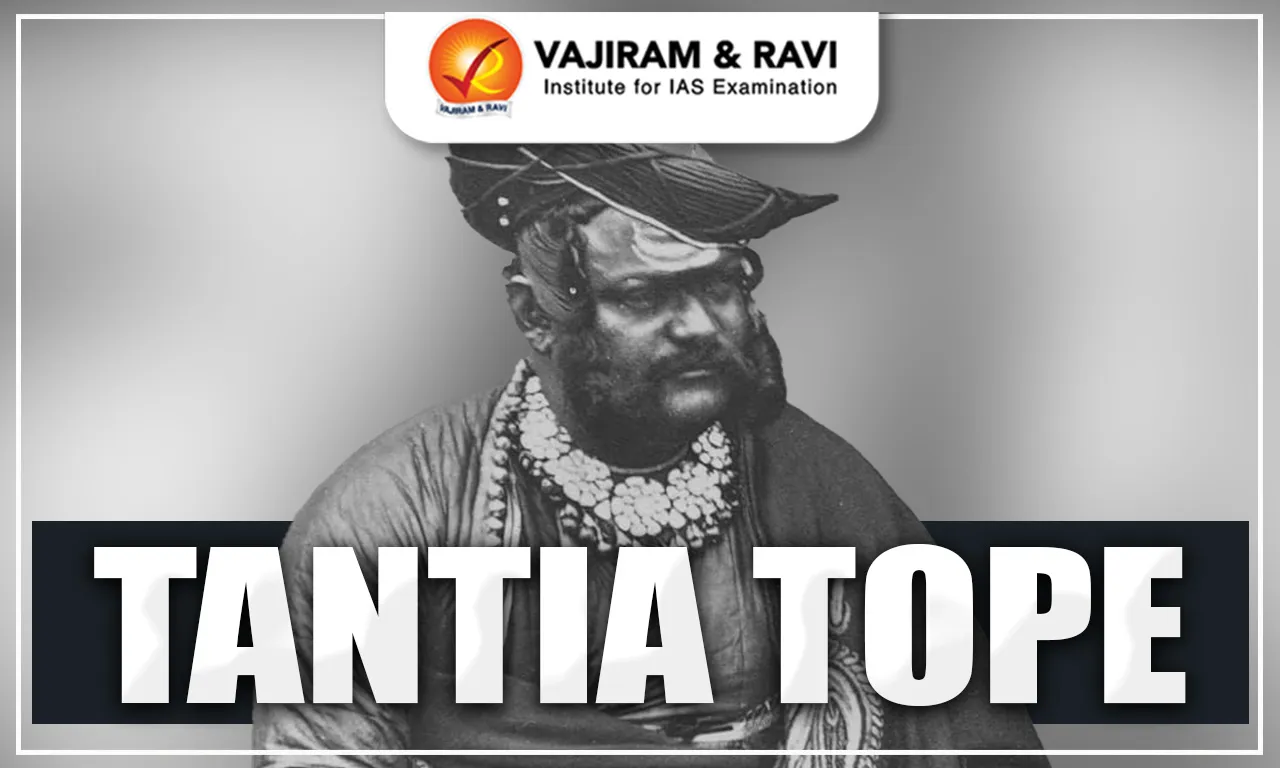
Tantia Tope, Early Life, Contribution in Freedom, Role in Revolt of 1857

Tantia Tope

Tatya Tope emerged as a prominent leader during the Indian Rebellion of 1857, remembered for his exceptional courage and military expertise. Widely regarded as one of the foremost architects of the uprising, he is credited with spearheading what came to be known as the First War of Independence against British colonial authority. His strategic brilliance and leadership provided both direction and strength to the resistance movement. Tatya Tope’s spirit and sacrifice continue to symbolize the determined struggle for India’s freedom during a critical chapter of colonial oppression.

Tantia Tope

Tantia Tope, also known as Tatya Tope, was born as Ramchandra Pandurang Rao. He emerged as one of the prominent leaders of the Revolt of 1857 and took a determined stand against the English East India Company. A close companion of Nana Saheb and a favored associate of Peshwa Baji Rao, he shared deep ties with the Maratha leadership. Belonging to a Maratha Brahmin family, Tatya Tope initially served Baji Rao, the former Peshwa of the Maratha confederacy, and later extended his loyalty to Nana Saheb, the adopted son of the Peshwa.

Tatya Tope Important Facts

  • Born in Nashik, Maharashtra in 1814, to Pandurang Rao Tope and Rukhmabai.
  • Played a major role as an Indian leader of the 1857 Rebellion.
  • Defeated the East India Company’s Indian troops in Kanpur in May 1857.
  • Known for his guerrilla warfare tactics, which created fear among the British.
  • Forced General Windham to withdraw from Gwalior.
  • Fought alongside Rani Lakshmi Bai of Jhansi in capturing Gwalior.
  • Performed Rani Lakshmi Bai’s last rites after her death in battle.
  • Participated in around 150 engagements with the British.
  • Credited with causing the deaths of 10,000 British soldiers.

Tantia Tope Early Life

Tantia Tope displayed a strong inclination towards martial pursuits from an early age. He acquired proficiency in handling the rifle, sword, and horse-riding. It is believed that he briefly served with the East India Company’s artillery regiment in the Bengal Army. However, he was not retained, owing to his independent temperament and exceptional skills as a strategist.

Tantia Tope Contribution In India’s Freedom Struggle

  • From a young age, Tantia Tope displayed a strong interest in martial skills, which set the foundation for his future role as a military leader.
  • He mastered the use of rifles and swords, along with exceptional horsemanship, skills that later made him a formidable figure in the revolt of 1857.
  • Historical accounts suggest that he briefly worked with the East India Company’s artillery regiment in the Bengal Army, gaining exposure to military strategies and weaponry.
  • Despite his skill and knowledge, his independent and uncompromising nature led to his rejection for a permanent position, highlighting his strong will and self-reliance.

Tantia Tope Role in the Revolt of 1857

  • Tantia Tope was a close associate and loyal follower of Nana Sahib, one of the principal leaders of the 1857 uprising. When the revolt gathered momentum, he played a decisive role in organizing resistance against the British.
  • He initially led forces in Kanpur, where he defeated the East India Company’s troops, establishing Nana Sahib’s authority. When the British regained control of the city, Tantia Tope regrouped with the Gwalior contingent and compelled General Windham to retreat temporarily.
  • After Kanpur fell to the British, he shifted base to Kalpi, where he joined hands with Rani Lakshmibai of Jhansi. Together, they launched campaigns in Bundelkhand and posed serious challenges to British forces.
  • At Kalpi and later Gwalior, Tantia Tope and his allies confronted General Hugh Rose. In one of these battles, Rani Lakshmibai was martyred, marking a turning point in the resistance.
  • Following these defeats, Tantia Tope embarked on an extraordinary campaign of guerrilla warfare. He carried out rapid, unpredictable strikes across Malwa, Central India, Bundelkhand, Rajputana, and Khandesh, using the Vindhya and Aravali ranges as cover. His tactics frustrated and baffled some of the most seasoned British commanders.
  • Though eventually captured and executed, Tantia Tope’s resilience, mobility, and skill in irregular warfare established his reputation as one of the most resourceful and daring leaders of the Revolt of 1857.

Tantia Tope Death

  • The British forces chased Tantia Tope for nearly 2,800 miles, covering forests, hills, plains, and even across flooded rivers, yet he constantly evaded capture.
  • His deep knowledge of terrain and mastery in guerrilla tactics made him a difficult target, frustrating the British for months.
  • This long pursuit showed his determination to keep the rebellion alive even after major defeats elsewhere.
  • Eventually, he was betrayed by a local ally, which led to his arrest.
  • On April 18, 1859, the British executed him at Shivpuri, Madhya Pradesh, marking the end of one of the most remarkable rebel commanders of 1857.

Tantia Tope FAQs

Q1: Who was Tantia Tope?

Ans: Tantia Tope was a prominent leader of the 1857 Revolt against British rule in India.

Q2: When was Tantia Tope born?

Ans: He was born in 1814 in Yeola, present-day Maharashtra.

Q3: What was Tantia Tope’s role in the 1857 Revolt?

Ans: He led several battles, supported Rani Lakshmibai, and organized guerrilla warfare against the British.

Q4: Which battle made Tantia Tope famous?

Ans: He became well-known after leading forces in the Battle of Kanpur during 1857.

Q5: Was Tantia Tope connected to Rani Lakshmibai?

Ans: Yes, he fought alongside Rani Lakshmibai during the revolt and supported her campaigns.

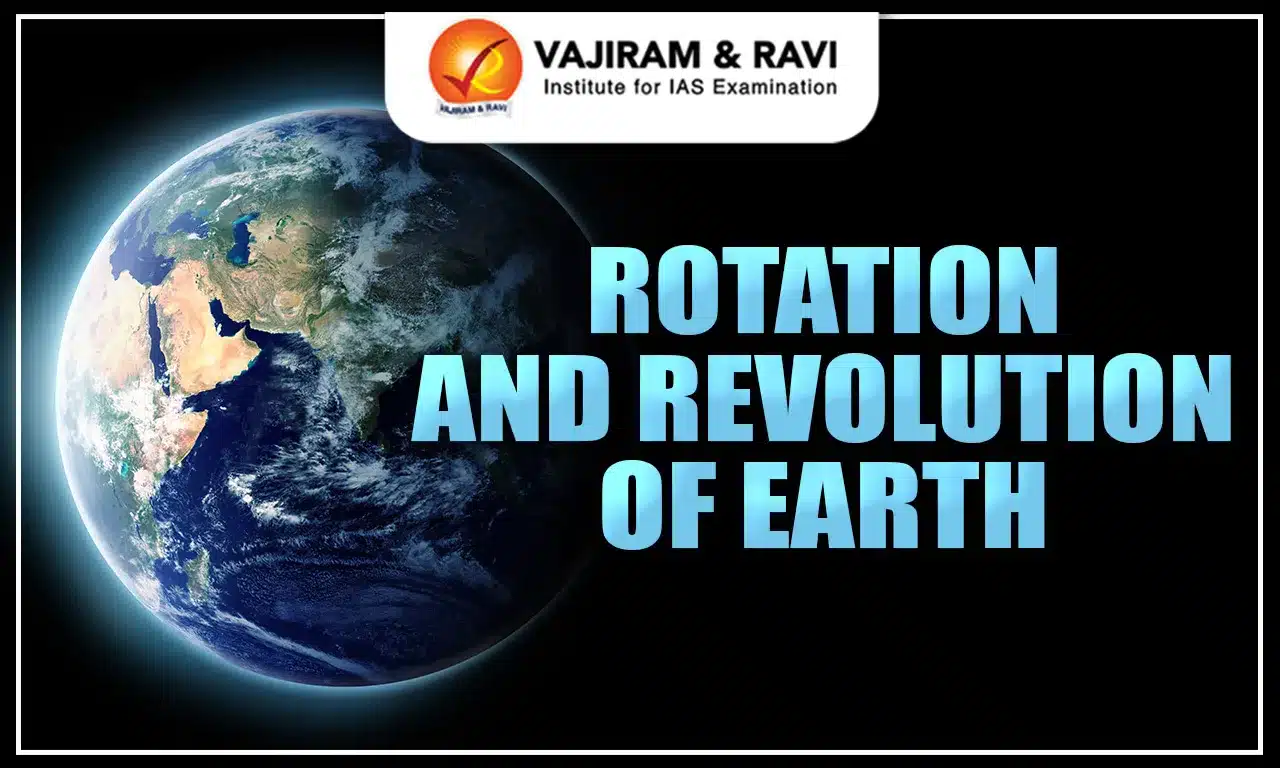
Rotation and Revolution of Earth, Differences, Effects, Significance

Rotation and Revolution of Earth

Rotation and revolution of Earth are two different movements. Rotation of Earth that refers to the spinning of our planet around its axis. The process gets completed in 24 hours from day to night. Revolution means Earth’s trip around the Sun which takes 365 days and is responsible for the changes in the seasons. In this article, we are going to cover the rotation and revolution of Earth. 

Rotation and Revolution of Earth 

  • Rotation and Revolution of Earth are two astronomical phenomena. 
  • Rotation of Earth means when the Earth rotates on its own axis. The axis is an imaginary line going from the North to the South Pole. The Earth completes one full rotation in approximately 24 hours, which establishes the day-night cycle. It is due to this rotation that we see the sun rise from the east and set in the west. 
  • Revolution refers to the Earth’s orbital motion around the Sun along an elliptical path. A complete revolution takes 365.25 days, which constitutes a solar year. The additional 0.25 days are adjusted by introducing a leap year every four years. 

Rotation of Earth Effects

The Rotation of Earth has the following impact: 

  • Day and Night :  The side facing the Sun experiences daylight, while the opposite side experiences night.
  • Coriolis Effect : Due to rotation, winds and ocean currents are deflected: to the right in the Northern Hemisphere and to the left in the Southern Hemisphere, shaping global weather systems.
  • Timekeeping: The division of the day into 24 hours and the creation of time zones are derived from the Earth’s rotation.
  • Equatorial Bulge:  Rotation causes centrifugal force, slightly flattening the Earth at the poles and creating an oblate spheroid shape.
  • Weather Influence:  Rotation directs atmospheric circulation and precipitation patterns, playing a role in climate regulation. 

Revolution of Earth Effects

The revolution of Earth has the following impact: 

  • Seasons:  Due to the 23.5° tilt of Earth’s axis, different hemispheres receive varying sunlight during revolution, leading to spring, summer, autumn, and winter.
  • Length of the Year:  Revolution defines the calendar year and seasonal cycles.
  • Solar Energy Distribution:  The angle at which sunlight strikes the Earth varies with revolution, affecting ecosystems, agriculture, and climatic zones.
  • Eclipses:  Revolution, combined with the Earth-Moon system, results in solar and lunar eclipses depending on relative alignments.
  • Tides:  While primarily influenced by the Moon, the Sun’s position relative to the Earth (during revolution) intensifies tides, creating spring and neap tides.

Rotation and Revolution of The Earth Significance

The process of rotation and revolution of Earth has the following significance: 

  • The rotation of Earth causes day and night rhythm governing the human biological clocks and natural activity patterns. 
  • The rotation of earth defines the daily time and revolution of earth establishes the yearly calendar. 
  • The rotation and revolution of Earth influences atmospheric circulation, rainfall distribution and wind systems. 
  • Seasonal cycles caused by the revolution of Earth regulates crop patterns, biodiversity and ecological balance. 
  • The rotation and revolution of Earth maintains the equilibrium of temperature, energy flow and environmental conditions necessary for sustaining life. 

Rotation and Revolution of Earth Differences

Following is the difference in between rotation and revolution of Earth: 

Aspect Rotation Revolution

Definition

Spinning of Earth on its axis

Movement of Earth around the Sun

Time Taken

~24 hours (1 day)

~365¼ days (1 year)

Axis/Path

Axis: Imaginary line joining North & South Poles

Path: Elliptical orbit around the Sun

Speed

~1670 km/hr at equator

~30 km/sec in orbit

Major Outcome

Causes day and night

Causes seasons

Impact on Time

Defines day length and time zones

Defines year length and calendar

Effect on Earth

Creates equatorial bulge, Coriolis force, wind/ocean current deflection

Causes variation in solar energy distribution

Weather/Climate Role

Influences wind systems, rainfall patterns, ocean currents

Influences seasonal changes, agriculture cycles, ecosystems

Other Effects

Circadian rhythms, jet streams, Earth’s shape

Eclipses (solar/lunar), tidal variations

Rotation and Revolution of Earth FAQs

Q1: What is the rotation and revolution of the Earth?

Ans: Rotation is the spinning of Earth on its axis in 24 hours, while revolution is its orbit around the Sun in 365¼ days.

Q2: What are 5 differences between rotation and revolution?

Ans: Rotation takes 24 hours, causes day and night, defines time zones, creates the Coriolis effect, and shapes Earth’s bulge; Revolution takes 365 1⁄4 days, causes seasons, defines the length of a year, affects solar energy distribution, and leads to eclipses and tides.

Q3: What is the impact of rotation of Earth?

Ans: Rotation causes day-night cycles, Coriolis effect, time zones, Earth’s equatorial bulge, and influences weather patterns.

Q4: What are the impacts of the revolution of the Earth?

Ans: Revolution creates seasons, defines the year, redistributes solar energy, causes eclipses, and influences tides.

Q5: What is the Coriolis force?

Ans: Coriolis force is the apparent deflection of moving air and water due to Earth’s rotation rightward in the Northern Hemisphere and leftward in the Southern Hemisphere.

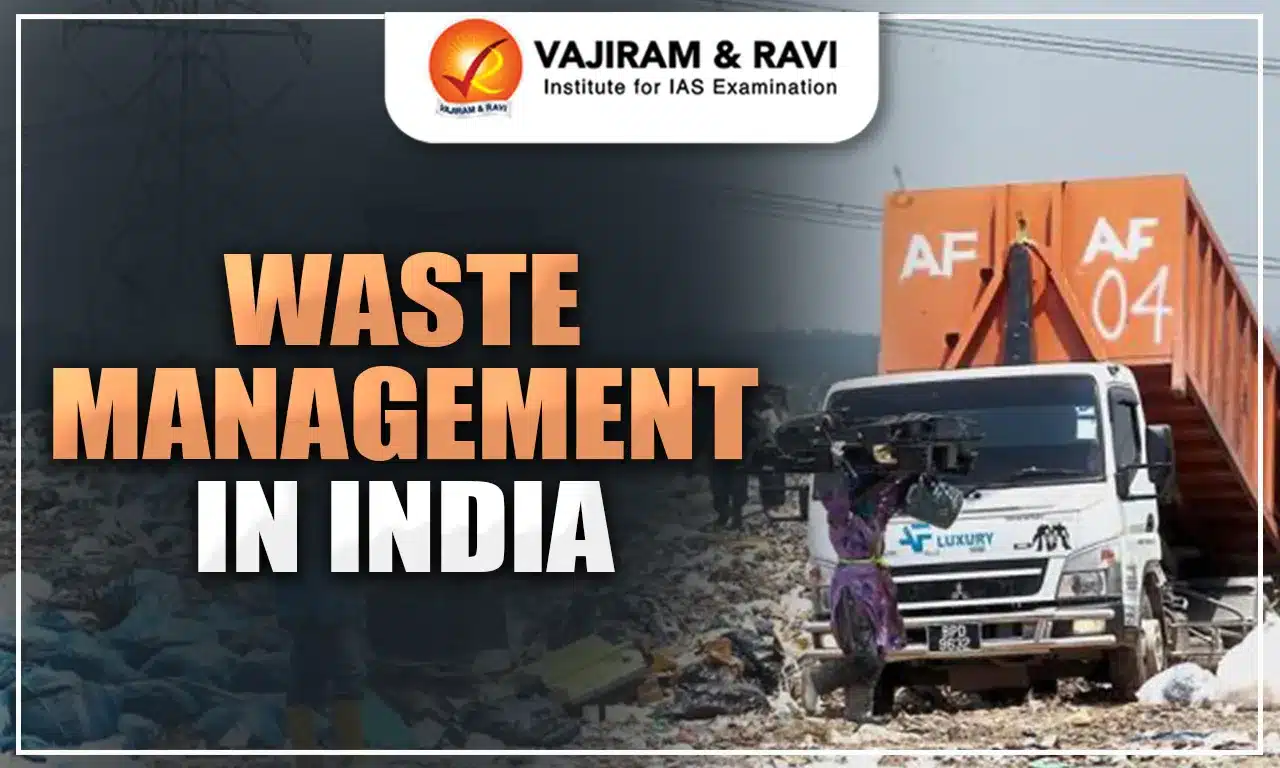
Waste Management in India, Facts, Challenges, Managing Solutions

Waste Management in India

Waste Management in India is managed by the Union Ministry of Environment, Forests and Climate Change (MoEFCC). The policies and regulations that manage waste management are grounded in the principles of sustainable development, the precautionary approach and the polluter pays for the principle. These principles lay down a responsibility on urban local bodies, industries and citizens to manage waste responsibly, minimize environmental harm and bear the costs of remediation where damage happens. In this article, we are going to cover waste management in India, its challenges and solutions. 

Waste Management in India 

Waste Management in India is a result of rapid economic development, urbanisation and changing consumption patterns. This production has led to a quantum of waste being generated in India. In order to regulate this, India has introduced multiple rules and regulations under the Environment Protection Act, 1986. This law lays down frameworks for the management of multiple solid waste, plastic waste, e-waste, biomedical waste and hazardous waste.  

  • India generates nearly 62 million tonnes of waste annually, of which only 43 million tonnes are collected, and a mere 12 million tonnes are scientifically treated, while the rest is dumped in open landfills.
  • Per capita waste generation in urban areas is projected to reach 0.7 kg/day by 2025, a four to six-fold increase from 1999 levels.
  • The country’s municipal solid waste (MSW) generation is expected to escalate to 165 million tonnes by 2030, primarily due to lifestyle changes and economic growth.
  • Waste composition includes solid waste, plastic waste, and e-waste, with e-waste emerging as a major challenge due to increasing dependence on electronics.

Waste Management in India Challenges 

Waste Management in India has caused the following challenges to human and animal life in India: 

  1. Rapid Urbanization: With over 377 million people in urban India, municipal bodies are struggling to cope with the rising waste volumes.
  2. Inadequate Collection: Only about 70% of waste is collected, and less than 30% is  segregated or processed scientifically.
  3. Informal Sector Dependence: The informal sector extracts considerable recyclable value from waste, but its integration with formal systems remains weak.
  4. E-waste Explosion: India is the third-largest generator of e-waste globally, yet large-scale formal recycling infrastructure is lacking.
  5. Infrastructure Gaps: India has only 21 million garbage collectors, compared to China’s 700 million, showcasing severe manpower and logistical shortages.
  6. Recycling Inefficiencies: Valuable materials like plastics, aluminum, and glass often end up in landfills due to poor segregation. 

Waste Management in India Managing Solutions 

India has been taking up the following steps to control waste management: 

  1. Scientific Planning and Studies: Conducts waste characterisation surveys, cost assessments and identifies optimal sites for waste disposal and treatment. 
  2. Strengthening Waste Collection Systems: Deploys mechanised collection methods, ensures door to door collection and aligns collection schedules with waste generation patterns. 
  3. Integration of Informal and Formal Sectors: Provide pickers with the responsibilities to link them with municipal systems and incentivize segregation at the source. 
  4. Decentralized Waste Management: Encourages community led initiatives for composting and small-scale waste treatment at the ward and household levels. 
  5. Organic Waste Treatment: Promote composting, bio-methanation, and anaerobic digestion to reduce landfill pressure and generate renewable energy.
  6. Technology Integration: Use RFID-enabled bins, GPS tracking of collection vehicles, and AI-based monitoring to streamline waste management.
  7. Waste-to-Energy Initiatives: Invest in converting non-recyclable waste into fuel or energy while ensuring emissions compliance.
  8. Upgrading Dumpsites: Transform existing dumps into sanitary landfills with leachate management and methane capture systems.
  9. Common Waste Treatment Facilities: Promote public-private partnerships (PPP) to establish shared treatment plants for biomedical, hazardous, and industrial waste.
  10. Strict Enforcement of Laws: Implement waste management rules rigorously, apply the polluter pays principle, and penalize non-compliance.
  11. Public Awareness and Participation: Launch campaigns through schools, self-help groups, and NGOs to encourage segregation at source, recycling, and composting.

Waste Management in India FAQs

Q1: How is waste management in India?

Ans: Waste management in India faces major challenges of collection, segregation, recycling, and disposal, with rapid urbanization worsening the problem.

Q2: What are the 4 types of waste management?

Ans: The four main types are landfills, recycling, composting, and waste-to-energy incineration.

Q3: Which are the top 5 waste management companies in India?

Ans: Top companies include Ramky Enviro Engineers, EcoWise Waste Management, Synergy Waste Management, Attero Recycling, and Saahas Zero Waste.

Q4: How to control waste management in India?

Ans: By ensuring segregation at source, strengthening recycling infrastructure, integrating informal waste pickers, promoting waste-to-energy, and strict enforcement of rules.

Q5: What are the effects of waste management in India?

Ans: Effective waste management reduces pollution, protects public health, conserves resources, generates energy, and supports sustainable development.

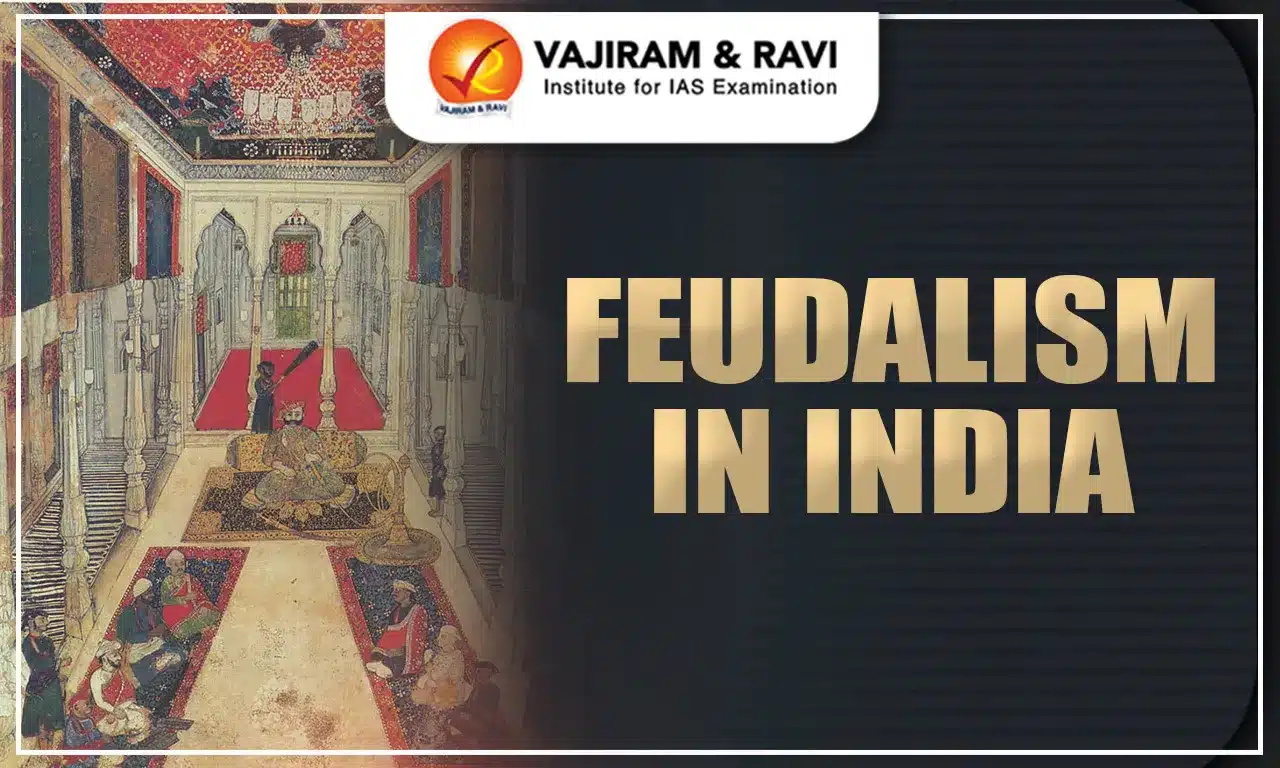
Feudalism in India, Meaning, Origin, Features, Impact, Decline

Feudalism in India

Feudalism in India means decentralized socio-economic and political system in which power and authority are distributed among local rulers, landlords and religious institutions, on the basis of land ownership. This system shaped the agrarian economy of India, its social hierarchy and governance structures from the medieval period. The European model of feudalism was a legal and military arrangement between kings, nobles and vassals while the Indian model was unique in response to land grants, agrarian needs and the decline of urban centres. In this article, we are going to cover Feudalism in India, its origin, meaning, role and causes in its decline. 

What is Feudalism?

Feudalism was a hierarchical system in Europe( 9th-15th century A.D.) under which the king granted land to nobles in return of portions to vassals in exchange for military and administrative services. 

However, in India the system was different. Kings and rulers were unable to directly control vast territories or reward supporters  with monetary payments and hence donated land to brahmins, officials and military commanders. These land grants not only transferred revenue rights but often included administrative and judicial powers, hence creating a decentralised order of governance.  Thus, while Indian feudalism shared the principle of land-based authority with its European counterpart, it developed its own unique structure, deeply tied to religion, caste, and agrarian relations.

Feudalism in India Origin

Feudalism in India originated because of: 

  • Decline of Urban Centres: After the end of the Gupta Empire, trade and urban economic activity declined and villages became largely self-sufficient. 
  • Land Grants to Brahmins: From 1st Century A.D. rulers donated land to brahmins, scholars, and temples while providing them with ownership and revenue rights. 
  • Religious Sanction: Texts like the Dharmashastras, Puranas, and Mahabharata (Anusasana Parva) glorified land grants, sanctifying the practice.
  • Erosion of Community Rights: Over the period, peasants lost customary rights over land and became dependent on landlords and intermediaries.
  • Rise of a Middle Class of Landlords: Local feudatories (Samantas and Mahasamantas) emerged as an intermediary ruling class, reducing the king’s authority.

Indian Feudalism Features

Feudalism in India was practiced in the following ways: 

  1. Political Decentralisation
    • Land grants created semi-autonomous rulers like Samantas, who collected revenue and maintained order in their regions.
  2. Emergence of New Classes
    • A new class of landholding intermediaries and Brahmin feudatories came into existence, and altered the social fabric of medieval India.
  3. Changes in Agrarian Structure
    • Peasants were tied to the land and lost their mobility and freedom.
    • Localised customs, languages, and rituals developed in isolated agrarian units.
  4. Nature of Land Grants
    • Initially limited to revenue rights, grants later included administrative, judicial, and police functions.
    • By the Gupta period, kings often relinquished almost all rights, including taxation and punishment of offenders.

Feudalism in India Historical Background 

The system of feudalism in India can be traced back to historical times: 

  • Gupta and Post-Gupta Period (4th–8th centuries): 
    •  Foundation of feudalism laid through widespread land grants; kings increasingly dependent on local feudatories.
  • Rajput Period (8th–12th centuries): 
    • Rajput rulers consolidated feudal practices. Warrior elites held estates, and political power became decentralised.
  • Delhi Sultanate (13th–15th centuries): 
    • The Iqta system resembled feudal practices, with land grants made to military commanders for revenue collection and administrative duties.
  • Mughal Period (16th–18th centuries): 
    • The Mansabdari and Jagirdari systems displayed feudal characteristics. Mansabdars collected revenue and maintained troops in return for jagirs.
  • South India (Vijayanagara Empire, 14th–17th centuries): 
    • The Nayaka system reflected feudal arrangements, with Nayakas governing regions in return for military service and tribute.

Feudalism in India Social and Economic Impact 

Feudalism in India caused the following social and economic impact: 

  • Social Stratification
    • Reinforced caste-based hierarchy, with Brahmins and Kshatriyas as landholding elites.
    • Reduced peasantry to a dependent and exploited class.
  • Agrarian Economy
    • Predominantly rural and agrarian, with peasants paying heavy taxes in produce.
    • Decline of trade and urban centres limited economic diversification.
  • Local Autonomy and Political Fragmentation
    • Strengthened local powers but weakened centralised authority.
    • Led to frequent conflicts among feudatories.

Feudalism in India Decline 

Feudalism in India declined due to the following reasons: 

  1. Rise of Centralised Empires
    • Under the Mughals, especially Akbar, centralised administration curbed feudal autonomy.
  2. British Colonial Policies
    • The Permanent Settlement (1793) created zamindars as revenue collectors, altering feudal relations.
    • Systems like Ryotwari and Mahalwari redefined agrarian administration.
  3. Peasant Uprisings
    • Exploitation by zamindars and landlords led to numerous peasant revolts, eroding feudal authority

Feudalism in India FAQs

Q1: What is the feudal system in India?

Ans: The feudal system in India was a decentralised socio-economic and political order where land ownership determined power, and kings granted land to landlords, officials, and religious elites in return for service.

Q2: Who was the first to begin feudalism in India?

Ans: The practice of feudalism in India began with the Satavahanas and later expanded during the Gupta period through widespread land grants.

Q3: What are the 4 types of feudalism?

Ans: The four types of feudalism are land-based feudalism, military feudalism, administrative feudalism, and religious feudalism.

Q4: What is feudalism in simple words?

Ans: Feudalism is a system where land is exchanged for service and loyalty, with peasants working for landlords who, in turn, served the king.

Q5: What are the three main characteristics of feudalism?

Ans: The three main characteristics are land-based hierarchy, decentralised political power, and mutual obligations between lords and vassals/peasants.

Mahatma Gandhi, Biography, Early Life, Education, Legacy

Mahatma Gandhi

Mahatma Gandhi was born on 2nd October 1869 in Porbandar, Gujarat. When born he was named Mohandas Karamchand Gandhi. Also known as the Father of the Nation, his life was based on the ideals of truth, nonviolence and self-reliance. Mahatma Gandhi’s leadership not only shaped India’s freedom struggle but also inspired global movements for justice, equality and peace. His principles continue to guide humanity in addressing conflict and oppression through moral courage rather than violence. In this article, we are going to cover all about Mahatma Gandhi, his life, education, philosophy and his teachings. 

Mahatma Gandhi Early Life and Education

Mahatma Gandhi was born in a Hindu family and grew up with deeply rooted values of morality, discipline and compassion. His background of growing up in a simple, truthful and empathetic family. He pursued his early education in Porbandar and later in Rajkot and left for London at the age of 18 to study law at University College London and the Inner Temple. During his stay in England, he adopted vegetarianism, studied world religions and refined his moral outlook, laying the groundwork for his future philosophy.  

Mahatma Gandhi’s Experiences in South Africa

Mahatma Gandhi came back to India in 1891 and struggled to establish a legal practice. He moved to South Africa on a legal assignment and encountered the harsh realities of racial discrimination. Gandhiji faced humiliation when he was thrown out of the train at Pietermaritzburg for refusing to leave the “whites only” compartment despite having a valid ticket. These experiences of alienation awakened in him a spirit of resistance. In South Africa, Mahatma Gandhi practiced Satyagraha, a method of non violent resistance against injustice. For over two decades, he held campaigns for the rights of Indian immigrants against discriminatory laws, laid the foundation for his leadership style based on civil disobedience and moral strength. 

Mahatma Gandhi’s Return to India

Mahatma Gandhi returned to India in 1915 and was welcomed by Gopal Krishna Gokhale, his political mentor. As soon as he entered India, Gandhi started working on grassroot levels and transformed India’s national struggle into a mass movement of the people. Some of these movements included: 

  • Champaran Satyagraha (1917)
      • Mahatma Gandhi’s first Satyagrapha movement took place in India where he fought for the rights of indigo farmers in Bihar who were being exploited by European planters. The success of this movement gave Gandhiji the status of a national leader. 
  • Non- Cooperation Movement (1920-22)
      • Gandhi motivated Indians to boycott British goods, schools, courts and titles. This marked the first nationwide participation of masses in the freedom struggle. 
  • Salt March/ Dandi March
      • A 240 mile march from Sabarmati Ashram to Dandi took place with the goal of breaking the salt law imposed by the British. This symbolised mass defiance of colonial authority and caught global attention. 
  • Quit India Movement
    • The Quit India Movement was launched during the time of World War II and demanded the immediate withdrawal of the British from India. While the whole movement was met with brutal repression, it galvanized with the slogan- “Do or Die”. 

Mahatma Gandhi Philosophy and Teachings

Gandhi’s ideology was rooted in ancient Indian values and universal human ethics. His major principles include:

  1. Ahimsa (Nonviolence): Belief in non-harming as the most powerful weapon.
  2. Satyagraha: Resistance based on truth, courage, and moral force rather than violence.
  3. Sarvodaya: Welfare of all, especially the weakest sections of society.
  4. Swadeshi and Self-Reliance: Promoted indigenous industries like khadi to empower rural India and reduce dependency on foreign goods.
  5. Communal Harmony: Advocated religious tolerance and social unity, fighting against caste-based discrimination.

Mahatma Gandhi’s Legacy and Global Influence 

Mahatma Gandhi’s fight for India’s independence came to fruition with India getting finally independent on 15 August, 1947. His teachings and influence is still remembered all over the world as an eternal force. 

  • In India: Gandhi remains the Father of the Nation. His birthday, October 2, is celebrated as Gandhi Jayanti and also observed globally as the International Day of Nonviolence. His emphasis on decentralization, village economy, and self-reliance continue to influence policies.
  • Globally: Leaders such as Martin Luther King Jr., Nelson Mandela, and Dalai Lama drew inspiration from Gandhi’s nonviolent struggles. His methods have shaped civil rights and liberation movements across continents.

Mahatma Gandhi’s Literary Contributions

Gandhi was a prolific writer. His works include:

  • “Hind Swaraj” (1909): A critique of modern civilization and vision of self-rule.
  • Autobiography – “The Story of My Experiments with Truth.”
  • Edited journals such as Young India, Harijan, Indian Opinion, and Navajivan.These writings remain key sources of his philosophy and political thought.

Mahatma Gandhi’s Recognition and Awards

Mahatma Gandhi was nominated five times for the Nobel Peace Prize but never received one. However his contributions were globally recognised and he was also declared the “Man of the Year” (1930) by the Times Magazine. In 2011, he was listed among the Top 25 Political Icons of all time. 

Mahatma Gandhi’s Life Timeline

Here is a timeline of Mahatma Gandhi life journey and his major accomplishments: 

Year Event Significance

1869

Birth of Mohandas Karamchand Gandhi on 2 October at Porbandar, Gujarat

Beginning of the life of India’s “Father of the Nation.”

1883

Married Kasturba Gandhi at age 13

Early marriage, common in that era.

1888

Left for London to study law at Inner Temple

Exposure to Western education and values.

1891

Returned to India after completing law studies

Began legal practice in Rajkot and Bombay.

1893

Went to South Africa for legal work

Faced racial discrimination; foundation of Satyagraha laid.

1894

Founded the Natal Indian Congress in South Africa

Organized Indians against racial discrimination.

1906

First Satyagraha launched in South Africa

Experimented with nonviolent resistance.

1915

Returned to India

Joined Indian freedom struggle; established Sabarmati Ashram.

1917

Champaran Satyagraha

First successful Satyagraha in India, for indigo farmers.

1919

Jallianwala Bagh massacre

Intensified Gandhi’s opposition to British rule.

1920

Launched the Non-Cooperation Movement

First mass movement under Gandhi’s leadership.

1930

Dandi March (Salt March)

Symbolic protest against salt tax; part of Civil Disobedience Movement.

1931

Attended Second Round Table Conference in London

Represented Indian National Congress.

1942

Launched Quit India Movement

Mass movement demanding immediate British withdrawal.

1947

India achieved Independence on 15 August

Culmination of Gandhi’s lifelong struggle.

1948

Assassinated on 30 January by Nathuram Godse in New Delhi

End of an era; Gandhi remembered as apostle of peace and nonviolence.

Mahatma Gandhi FAQs

Q1: Who is Mahatma Gandhi in history?

Ans: Mahatma Gandhi was the leader of India’s freedom struggle against British rule, known for his philosophy of nonviolence and truth.

Q2: What was the name of the book written by Mahatma Gandhi?

Ans: His famous book is The Story of My Experiments with Truth, an autobiography.

Q3: How did Mahatma Gandhi change the world?

Ans: Gandhi inspired global movements for civil rights and freedom through nonviolence and peaceful resistance.

Q4: What was the civil disobedience movement?

Ans: The Civil Disobedience Movement (1930) was Gandhi’s campaign of mass nonviolent resistance against unjust British laws, notably marked by the Salt March.

Q5: Which round table conference did Gandhiji attend?

Ans: Mahatma Gandhi attended the Second Round Table Conference in 1931 as the sole representative of the Indian National Congress.

New World Screwworm

New World Screwworm

New World Screwworm Latest News

Recently, the Department of Health and Human Services reported the first human case of the flesh-eating parasite, the New World screwworm, in the United States. 

About New World Screwworm

  • Screwworms are a type of blue-grey blowfly, typically found in South America and the Caribbean.
  • The parasites are named after the screwlike way they burrow into the tissue.
  • Screwworms — specifically females — are attracted to and lay eggs on and in open wounds or another entry point like a nasal cavity in warm-blooded animals and, rarely, humans.
  • One female can lay up to 300 eggs at a time and may lay up to 3,000 eggs during her 10- to 30-day lifespan.
  • These eggs hatch into larvae (known as maggots), which burrow into the wound using their sharp mouth hooks to feed on the living flesh, leading to infestation.
  • After feeding, the larvae fall into the ground, burrow into the soil and emerge as adult screwworm flies.

What are the Symptoms of Infestation?

  • Its infestations can be extremely painful, especially in humans, with a high mortality rate if left untreated.
  • Symptoms of infestation include: wounds or sores that do not heal; bleeding from open sores; feeling larvae movement within a skin wound or sore; and a foul-smelling odour from the site of the infestation.

Source: IE

New World Screwworm FAQs

Q1: What is the New World screwworm disease?

Ans: It is a species of parasitic fly typically found in South America and the Caribbean.

Q2: Does screwworm infect humans?

Ans: They can infest many types of animals, including livestock, pets, wildlife and, in rare instances, humans.

Kani Tribe

Kani Tribe

Kani Tribe Latest News

Recently, Kuttimathan Kani belongs to the Kani tribal community who revealed Arogyapacha has died.

About Kani Tribe

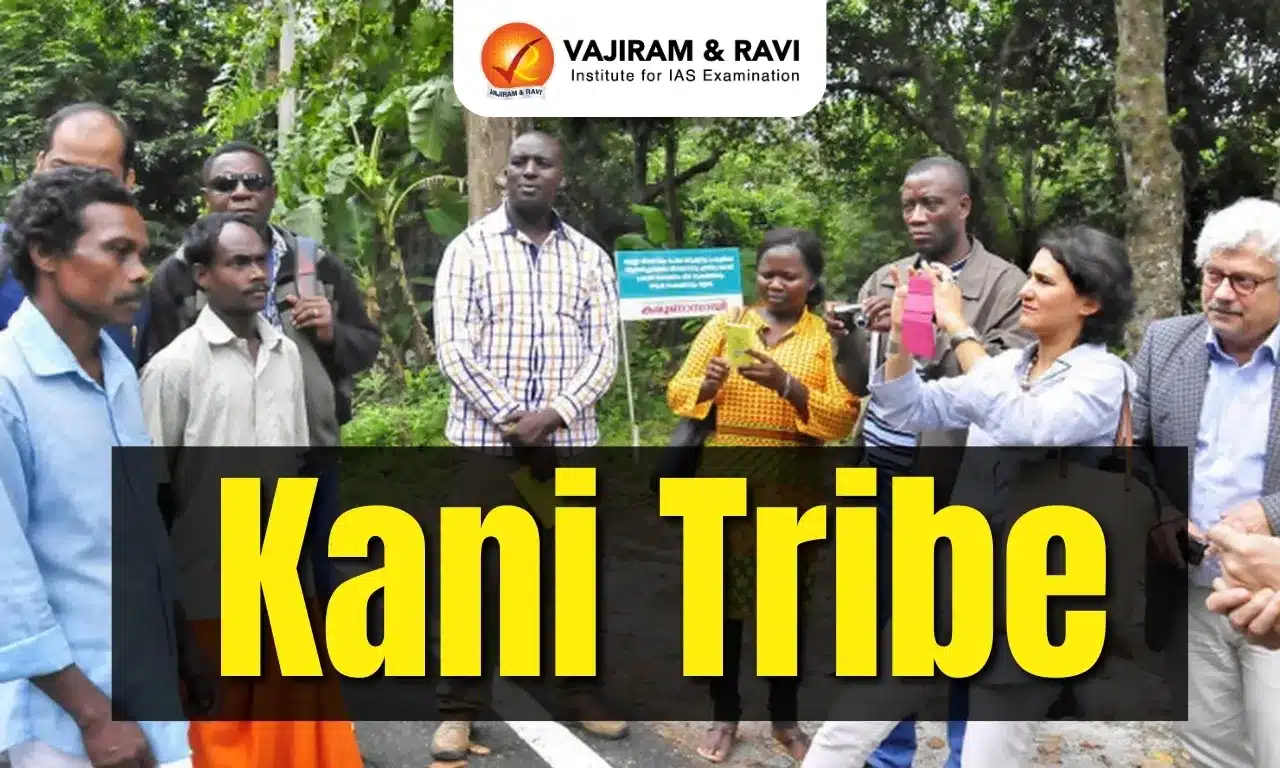
  • The Kani tribals or Kanikarars are a traditionally nomadic community, who now lead a settled life in the forests of the Agasthyamalai hills of the Western Ghats in the Thiruvananthapuram district of Kerala.
  • Every Kanikkarar settlement has a community council for maintaining social control.
  • It consists of the Mootukani (chief), the Vilikani (convenor) and the Pilathi (physician and priest). All these offices are hereditary.
  • The traditional structure of the community was that of a highly coordinated unit under the control of a tribal chief, called the Moottukani.
  • Traditionally the Moottukani combined the roles of the law giver, protector and dispenser of justice, physician and priest.
  • Pilathi are believed to have magical powers and perform various rituals and chant mantras with the help of an instrument named ‘Kokara.”
  • Today, the Kanis live in several tribal hamlets, each consisting of 10 to 20 families dispersed in and around the forest areas of Thiruvananthapuram district.
  • Occupation: The Kani tribe’s traditional occupations include the production of handicrafts, seasonal collection of minor forest products such as honey and beeswax, and cultivation of edible plants such as tapioca, banana, millets and cash crops.
  • Language: They speak Tamil and Malayalam as their language.
  • They have vast knowledge about medicinal plants.
  • According to Kani tribal customs, only the Plathies have the right to transfer and disseminate their traditional medical knowledge.

 Source: DTE

Kani Tribe FAQs

Q1: Which Indian state is home to the Kani tribe?

Ans: Kerala

Q2: Who are the kanikkar tribes in Kerala?

Ans: Kanis or Kanikkars are a prominent group among the tribals in Kerela mostly found in western parts of Trivandrum and Kollam districts.

National Designated Authority (NDA) to Enable Carbon Emissions Trading Regime

National Designated Authority (NDA) to Enable Carbon Emissions Trading Regime

National Designated Authority (NDA) to Enable Carbon Emissions Trading Regime Latest News

The Ministry of Environment, Forest and Climate Change recently announced a National Designated Authority (NDA), a mandatory requirement under the provisions of the 2015 Paris Agreement, to enable a carbon emissions trading regime.

About National Designated Authority (NDA) to Enable Carbon Emissions Trading Regime

  • Within the Paris Agreement, a section called Article 6 defines the contours under which such an emissions trading regime or a market can take shape. 
  • A long-standing bone of contention among countries, Article 6 was finally passed at the 29th edition of the climate Conference of the Parties (COP29) in Baku, Azerbaijan, in November 2024.
  • The creation of an NDA is a mandatory requirement under Article 6.
  • NDA will be a 21-member committee headed by the Secretary of the Environment Ministry. 
  • Representatives include officials from the Ministries of External Affairs, Steel, and Renewable Energy, and NITI Aayog.
  • The NDA’s responsibilities include 
    • recommending to the Union government a list of activities that can be considered for the trading of emission reduction units from projects under Article 6;
    • modifying them from time to time in line with national sustainable goals, country-specific criteria, and other national priorities; 
    • receive projects or activities for evaluation, approval, and authorisation; 
    • authorise the use of emission reduction units from projects for use towards achievement of Nationally Determined Contributions (NDC).
  • The NDC refers to commitments by countries to reduce emissions by diverting their energy consumption towards renewable energy sources and taking action to reduce carbon concentrations in the atmosphere.
  • India’s NDC commits to reducing its GDP’s emission intensity by 45% by 2030 from 2005 levels, achieving 50% electric power capacity from non-fossil fuel sources by 2030, and creating an additional carbon sink equivalent to 2.5-3 billion tonnes of carbon dioxide by 2030 through afforestation.

Source: TH

Carbon Emissions Trading Regime FAQs

Q1: The creation of a National Designated Authority (NDA) for carbon emissions trading is a requirement under which article of the Paris Agreement?

Ans: Article 6

Q2: Who will head the 21-member National Designated Authority (NDA) to Enable Carbon Emissions Trading Regime in India?

Ans: Secretary, Ministry of Environment

Q3: By 2030, India aims to achieve what percentage of its electric power capacity from non-fossil fuel sources?

Ans: 50%

Super Garuda Shield 2025

Super Garuda Shield 2025

Super Garuda Shield 2025 Latest News

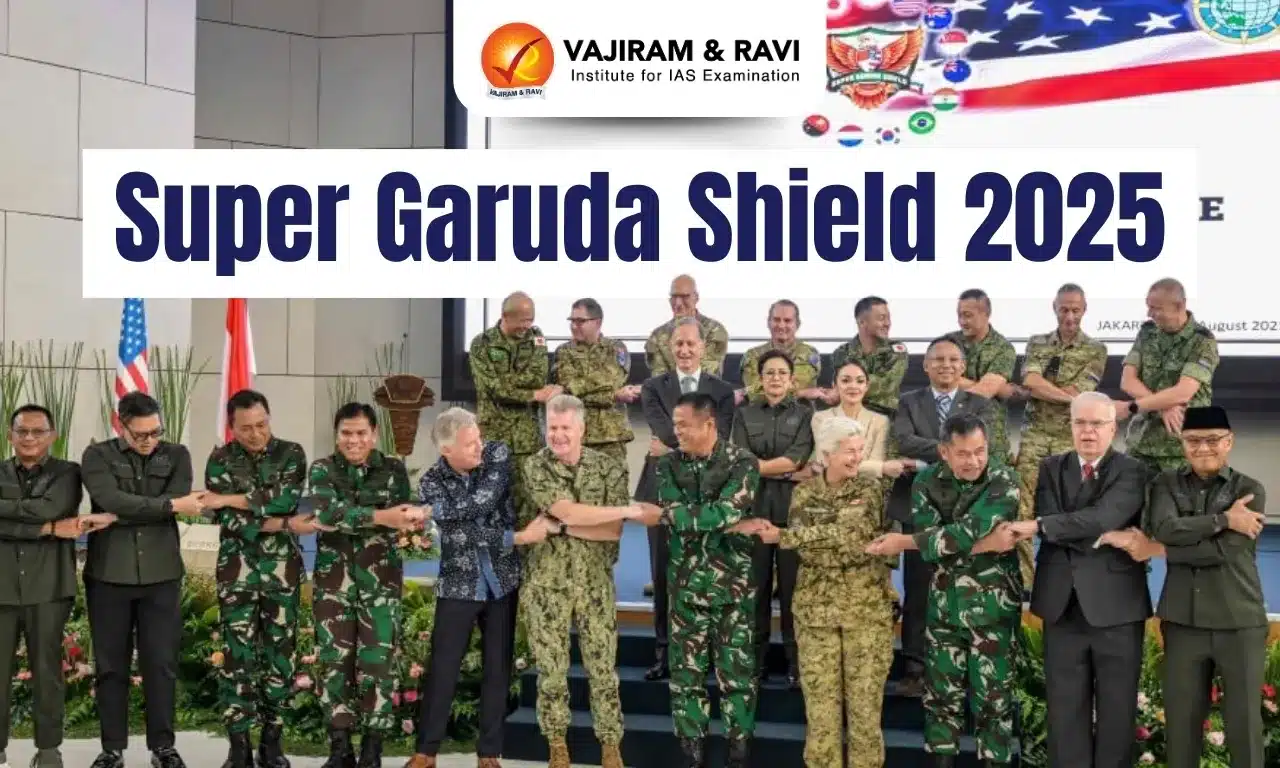
Indonesia and the United States recently launched the annual joint military exercise, Super Garuda Shield 2025.

About Super Garuda Shield

  • It is a large-scale, multinational joint military exercise designed to enhance interoperability, build mutual trust, and strengthen collective readiness among the participating armed forces of partner nations. 
  • Originally established in 2006 as a bilateral information and training exchange between the United States and Indonesia under the name Garuda Shield, the exercise expanded in 2022 to include additional partner nations, reflecting the growing importance of defense cooperation in the Indo-Pacific region.
  • The “Super” was added to the title of the exercise in 2022.
  • The exercise has been held annually in Jakarta, Indonesia.
  • With more than 4,100 Indonesian and 1,300 American troops taking part, the 2025 edition of Super Garuda Shield will be the largest ever.
  • This year’s participating nations include Australia, Brazil, Canada, France, Germany, Indonesia, Japan, the Netherlands, New Zealand, the Republic of Singapore, South Korea, the United Kingdom, and the United States. 
  • Observing nations include Cambodia, India, and Papua New Guinea.
  • It will feature maritime and field training events to include engineering construction activities, staff training exercises, airborne operations, jungle training, air assault operations, an amphibious exercise, a large field training exercise and combined arms live fire exercises, and a High Mobility Artillery Rocket System (HIMARS) live fire exercise.

Source: TD

Super Garuda Shield FAQs

Q1: Super Garuda Shield exercise is led by which countries?

Ans: It is led by the Indonesian National Armed Forces and the United States Indo-Pacific Command

Q2: Where is the Super Garuda Shield exercise held annually?

Ans: Jakarta, Indonesia

Q3: What is the primary objective of the Super Garuda Shield exercise?

Ans: To enhance interoperability, build mutual trust, and strengthen collective readiness among the participating armed forces of partner nations.

Inverted Duty Structure under GST

Inverted Duty Structure under GST

Inverted Duty Structure under GST Latest News

Tax experts have broadly welcomed the Centre’s proposal for a two-tier GST rate structure while cautioning that critical issues such as inverted duty structure need to be addressed for the reform to be fully effective.

About Inverted Duty Structure under GST

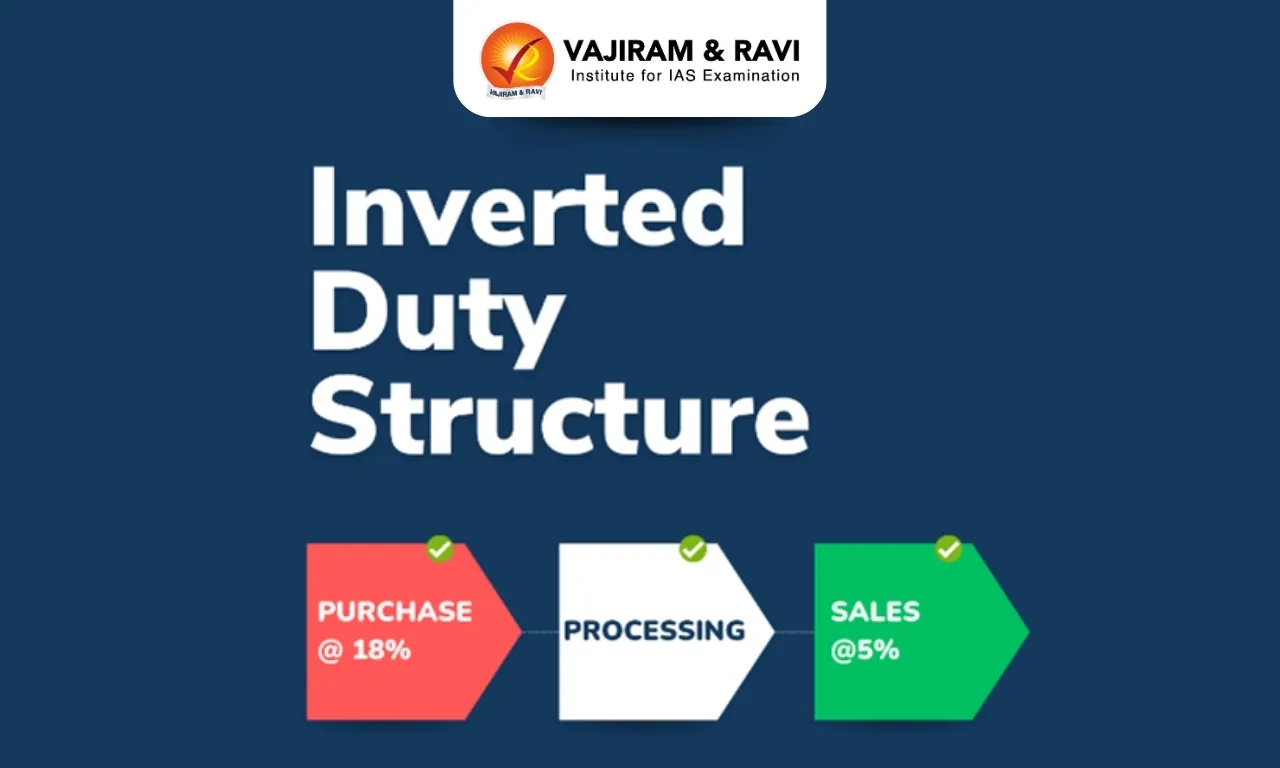
  • An inverted duty structure in GST occurs when the tax rate on inputs exceeds the tax rate on output. 
  • For example, in the textile industry, the input tax rate ranges from 12 to 18%, while most finished products are taxed at 5%. 
  • This implies that sellers have fewer options for offsetting the cost of input taxes.
  • This situation might result in an accumulation of input tax credit (ITC), which can’t be used for the output tax liability. 
  • The accumulation of ITC due to unutilized ITC will have to be carried over to the next financial year until it can be utilized by the registered taxpayer for payment of output tax liability. 
  • This can result in higher tax costs for businesses and/or an increase in the hidden tax cost for consumers. 
  • To solve this issue, the GST law allows for a refund or reversal of ITC. 
  • The refund is determined using a method including the turnover of the inverted rated supply, the net ITC, and the overall turnover.
  • Exceptions where the refund of the unutilised input tax credit cannot be claimed, are as follows:
    • Output supplies are nil-rated or fully exempt supplies except for supplies of goods or services or both as may be notified by the Government on the recommendations of the GST Council.
    • If the goods exported out of India are subject to export duty.
    • If the supplier claims a refund of output tax paid under the IGST Act.
    • If the supplier avails duty drawback or refund of IGST on such supplies.

Source: HBL

Inverted Duty Structure under GST FAQs

Q1: What does an inverted duty structure under GST mean?

Ans: When the tax rate on inputs exceeds the tax rate on outputs.

Q2: What is the main issue caused by an inverted duty structure?

Ans: Accumulation of input tax credit (ITC), which can’t be used for the output tax liability.

Q3: Under GST law, how is the issue of accumulated input tax credit (ITC) due to inverted duty structure addressed?

Ans: By allowing refund or reversal of ITC.

Rare Earth Magnets

Rare Earth Magnets

Rare Earth Magnet Latest News

Automakers too are cutting down on certain non-essential equipment in their vehicles to reduce the usage of rare earth magnets. 

About Rare Earth Magnet

  • Rare earth magnets are a type of permanent magnet made from alloys of rare earth elements. 
  • Properties: They are known for their exceptional magnetic strength, high energy density, and superior performance compared to other types of magnets.
  • These magnets are widely used in various industries due to their ability to generate strong magnetic fields in compact sizes.
  • Their global supply chain is currently dominated by China, which accounts for about 90% of processing capacity.

Rare Earth Magnets Types

  • Neodymium (Nd-Fe-B) and Samarium Cobalt (SmCo) are the two most common types of rare earth magnet materials. Both types are extremely strong.
  • Neo magnets are composed primarily of neodymium, boron and iron, and samarium cobalt is composed of samarium and cobalt.
  • Both materials come in different grades, or strengths, and have different magnetic and physical properties.
  • These magnets tend to be brittle and are vulnerable to corrosion. Manufacturers typically nickel-plate the material to protect it from oxidation.

Rare Earth Magnets Uses

  • These are used in medical applications such as magnetic resonance imaging (MRI) machines, as well as X-Rays and positron emission tomography (PET) imaging. 
  • They are also utilized in aviation, national defense, electronic devices, smartphones, consumer goods, jewelry, hard drives, and electric vehicles (EVs), to name several applications.

Source: PIB

Rare Earth Magnet FAQs

Q1: What are rare earth magnets?

Ans: Rare earth magnets are a type of permanent magnet made from alloys of rare earth elements.

Q2: What are the three primary elements that make up Neodymium magnets?

Ans: Neodymium, boron, iron

Vibrant Villages Programme (VVP)

Vibrant Village Programme

Vibrant Villages Programme Latest News

Union Home Minister and Minister of Cooperation recently inaugurated a two-day workshop on the Vibrant Villages Programme (VVP) in New Delhi, organised by the Border Management Division of the Ministry of Home Affairs.

About Vibrant Villages Programme

  • It is a Centrally Sponsored Scheme implemented over the financial years 2022-23 to 2025-26.
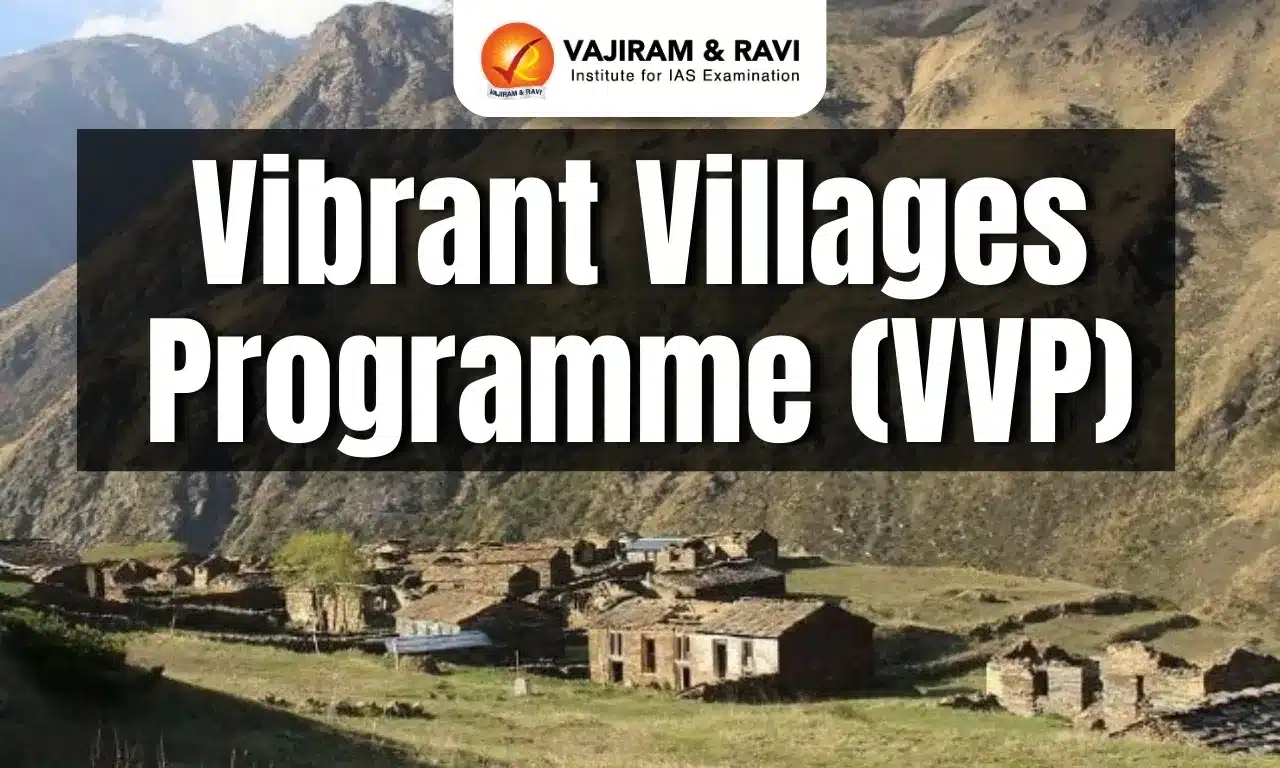
  • Objective: Comprehensive development of the 2,967 villages in 46 blocks in 19 districts abutting the northern border in the States of Arunachal Pradesh, Himachal Pradesh, Sikkim, Uttarakhand, and UT of Ladakh.
  • This will help in encouraging people to stay in their native locations in border areas and reversing the outmigration from these villages, adding to improved security of the border. 
  • The programme will provide funds for the development of essential infrastructure and the creation of livelihood opportunities.
  • The programme envisages focused areas of intervention in the select villages for the creation of opportunities for livelihood generation through promotion of tourism and cultural heritage, skill development and entrepreneurship, and development of cooperative societies, including agriculture/horticulture, cultivation of medicinal plants/herbs, etc.
  • Interventions also include providing road connectivity to unconnected villages, housing and village infrastructures, energy including renewable energy, television and telecom connectivity.
  • Vibrant Village Action Plans will be created by the district administration with the help of Gram Panchayats, and 100% saturation of Central and state schemes will be ensured.
  • There will be no overlap with the Border Area Development Programme.

Vibrant Villages Programme-II (VVP-II)

  • It is a Central Sector Scheme (100% Centre funding) approved by the Union Cabinet during April 2025, furthering its commitment for the vision of Viksit Bharat@2047 for ‘Safe, Secured & Vibrant land borders’.  
  • It has a total outlay of ₹6,839 crore. 
  • The Programme would help in the comprehensive development of the villages located in the blocks abutting international land borders (ILBs), other than the Northern border already covered under VVP-I.
  • With a total outlay of Rs.6,839 crore, the programme shall be implemented in select strategic villages in the States/UTs of Arunachal Pradesh, Assam, Bihar, Gujarat, J&K (UT), Ladakh (UT), Manipur, Meghalaya, Mizoram, Nagaland, Punjab, Rajasthan, Sikkim, Tripura, Uttarakhand, Uttar Pradesh, and West Bengal till the FY 2028-29.
  • Both VVP-I and VVP-II are transformative initiatives designed to make border villages self-reliant and vibrant.

Source: DDN

Vibrant Villages Programme FAQs

Q1: The Vibrant Villages Programme is implemented during which financial years?

Ans: 2022–23 to 2025–26

Q2: Vibrant Villages Programme covers villages along which border?

Ans: Northern border in the States of Arunachal Pradesh, Himachal Pradesh, Sikkim, Uttarakhand, and UT of Ladakh.

Q3: What is the objective of Vibrant Villages Programme?

Ans: To make border villages self-reliant and vibrant.

National Awards to Teachers

National Awards to Teachers

National Awards to Teachers Latest News

Recently, the Department of Higher Education, Ministry of Education selected 16 teachers in Higher Educational Institutions (HEIs) and Polytechnic for National Awards to Teachers (NAT) 2024.

About National Awards to Teachers

  • It was first instituted in the year 1958 to felicitate remarkable teachers and head masters in their quest to improve the quality of school education and enrich their students’ learning experiences.
  • This Award program is designed to honour and celebrate the unique contribution of some of the finest teachers in the country.
  • These awards are given away by the President of India (or) the Vice President of India on 5th September (Teacher's Day) every year to give public recognition to meritorious teachers working in primary, middle and secondary schools.
  • The NAT is being executed under the overall supervision of the Ministry of Education (MOE).

Eligibility Criteria for National Awards to Teachers

  • School teachers and Heads of Schools working in recognized primary / middle / high / higher secondary schools under the following categories:
  • Schools run by State Govt./UTs Administration, schools run by local bodies, schools aided by State Govt. and UT Administration and Private schools affiliated to State/UTs Board.
  • Central Govt. Schools i.e. Kendriya Vidyalayas (KVs), Jawahar Navodaya Vidyalayas (JNVs), Sainik Schools run by Ministry of Defence (MoD), Schools run by Atomic Energy Education Society (AEES) and Eklavya Model Residential Schools (EMRS) run by Ministry of Tribal Affairs.
  • Normally retired teachers are not eligible for the award but those teachers who have served a part of the calendar year (at least for four months i.e. upto 30th April in the year to which National Awards relate) may be considered if they fulfill all other conditions.
  • Educational Administrators, Inspectors of Education, and the staff of training Institutes are not eligible for these awards.
  • Teacher / Headmaster should not have indulged in tuitions.
  • Only regular Teachers and Heads of Schools with a minimum ten years of services are eligible.
  • Contractual Teachers and Shiksha Mitras are not eligible.

Source: PIB

National Awards to Teachers FAQs

Q1: What is the prize money for the National Award for teachers?

Ans: INR 50,000/-

Q2: Which is the highest award for teachers?

Ans: The Global Teacher Prize, an international award, celebrates outstanding teachers from around the world, including India.

Daily Editorial Analysis 27 August 2025

Daily Editorial Analysis

The ECI’s Ring Fence is the Constitution and the Law

Context

  • Elections form the cornerstone of any democracy; Their credibility depends not only on the fairness of voting but also on the integrity of the electoral rolls that determine who has the right to vote.
  • In recent weeks, two high-profile press conferences have brought India’s electoral process under the scanner.
  • Together, these events have triggered a national debate on whether India’s democratic foundations are being eroded by systemic flaws in electoral management and by the Election Commission of India’s (ECI) questionable responses.

Opposition’s Allegations: A Threat to Electoral Credibility

  • On August 7, 2025, Rahul Gandhi’s revelations concerning the Mahadevapura Assembly segment in Bangalore highlighted what appear to be blatant manipulations in voter registration.
  • Instances of multiple voters listed under the same address, fictitious entries with placeholders such as “xyz” as a father’s name, and even zero house numbers point to gross irregularities.
  • Opposition claimed these findings were the result of six months of meticulous scrutiny of official ECI documents.
  • If these charges are accurate, the implications are grave. The legitimacy of India’s electoral process, and by extension its democratic system, is at stake.
  • Free and fair elections are a constitutional guarantee, forming part of the “basic structure” of the Constitution.


The ECI’s Response: From Neutral Arbiter to Political Actor

  • The second press conference, held on August 17, 2025, was expected to provide clarity and reassurance from the Election Commission.
  • Instead, the CEC’s ultimatum, demanding either a sworn affidavit from Gandhi or a public apology, deepened public unease.
  • Rather than addressing the substance of the allegations, the ECI appeared to position itself as a political adversary.
  • This is problematic for two reasons. First, the ECI is a high constitutional body whose independence and neutrality are essential to democracy.
  • By entering into an adversarial posture with the opposition, it risks losing credibility as a fair umpire.
  • Second, Article 324 of the Constitution vests the ECI with extensive powers to ensure the integrity of elections.
  • But these powers must be exercised responsibly, not weaponized against political criticism.
  • As the Supreme Court has repeatedly emphasised, Article 324 empowers but also obligates the Commission to safeguard democracy.
  • Issuing ultimatums to political leaders is outside its constitutional remit.

The Legal and Procedural Context

  • The Representation of the People Act, 1950, provides multiple safeguards for preparing and revising electoral rolls.
  • These include annual revisions, public inspections, and mechanisms to address disputes.
  • Yet, Gandhi’s allegations reveal how these procedures may be circumvented or manipulated in practice.
  • The challenge lies in reconciling two principles: one, the finality of elections, and the need to rectify systemic errors.
  • While the law assumes that electoral rolls acquire finality before elections, large-scale irregularities cannot simply be brushed aside.
  • A rigid reliance on technicalities such as demanding affidavits is counterproductive when the integrity of democracy itself is in question.
  • The ECI’s responsibility is not merely procedural compliance but substantive fairness.

The Bihar ‘Special Intensive Revision’ Controversy

  • The ongoing electoral revision exercise in Bihar further illustrates the fragility of the ECI’s credibility.
  • The Commission has undertaken what it calls a ‘Special Intensive Revision’ (SIR), despite the fact that neither the Act nor the Rules recognise such a category.
  • By setting July 1 as the qualifying date, contrary to the statutory mandate of January 1, the ECI has acted beyond the law.
  • Reports of chaotic enumeration, coupled with the deletion of 65 lakh voters, have sparked political turmoil in the State.
  • Intensive revision, by definition, requires house-to-house verification, a task practically impossible to complete within a month.
  • Unsurprisingly, the Supreme Court intervened, ordering publication of deleted names and reasons, a move widely welcomed as restoring transparency.

The Broader Constitutional Concerns

  • The controversy brings to mind Justice S. Murtaza Fazal Ali’s prescient warning in A.C. Jose vs. Sivan Pillai (1984).
  • He cautioned that unchecked powers in the hands of a politically compromised Election Commission could cause ‘political havoc’ and a constitutional crisis.
  • The ECI, though constitutionally empowered, is not above the law and its mandate is to act as a neutral arbiter ensuring free and fair elections.
  • Any deviation, whether through politicised responses to criticism, legal overreach, or procedural shortcuts, risks destabilizing India’s democratic system.

Conclusion

  • The twin press conferences reveal more than a partisan clash; they expose a systemic vulnerability at the heart of Indian democracy.
  • Opposition’s disclosures highlight the ease with which electoral rolls may be manipulated, while the ECI’s defensive and overreaching response raises troubling questions about its neutrality and accountability.
  • The Bihar SIR further illustrates the perils of procedural improvisation at the cost of legality and fairness.
  • Ultimately, the integrity of Indian democracy depends on the Election Commission upholding its constitutional obligations with transparency, neutrality, and fidelity to the law.

The ECI’s Ring Fence is the Constitution and the Law FAQs

Q1. What did opposition reveal in his press conference on August 7, 2025?
Ans. Opposition revealed large-scale irregularities in the voter list of the Mahadevapura Assembly segment, including multiple voters with the same address and fake details like “xyz” as a father’s name.

Q2. Why was the Election Commission’s response considered unusual?
Ans. The Election Commission issued an ultimatum demanding that Rahul Gandhi submit an affidavit or apologise, instead of addressing the core issues, which made it appear partisan.

Q3. What legal framework governs the preparation of electoral rolls in India?
Ans. The Representation of the People Act, 1950, along with the Registration of Electors Rules, 1960, governs the preparation and revision of electoral rolls in India.

Q4. What controversy arose from the Special Intensive Revision (SIR) in Bihar?
Ans. The SIR in Bihar used July 1 as the qualifying date instead of the legally mandated January 1, leading to chaos and the deletion of 65 lakh voters, which the Supreme Court intervened to address.

Q5. What warning did Justice S. Murtaza Fazal Ali give in the A.C. Jose case?
Ans. He warned that unlimited and arbitrary powers in the hands of a biased Election Commission could create political havoc and threaten India’s democracy.

Source: The Hindu


The Gender Angle to India’s Economic Vulnerabilities

Context

  • India’s rapid economic ascent, now valued at $4.19 trillion, has cemented its place as a rising global powerhouse and positioned to soon become the world’s third-largest economy, India’s growth narrative is compelling.
  • Yet, this trajectory faces fresh challenges, particularly considering the United States’ proposed 50% tariffs on Indian exports.
  • Targeting $40 billion in trade, these tariffs could potentially shave off nearly 1% from India’s GDP, striking hardest at labour-intensive sectors such as textiles, gems, leather, and footwear.
  • Notably, these industries disproportionately employ women, making the tariff shock both an economic and gendered crisis.

The Gendered Vulnerability of India’s Economy

  • Unlike China, which has weathered U.S. tariffs through its sheer manufacturing scale and diversified export base, India remains comparatively exposed.
  • With the S. accounting for 18% of Indian exports, the imposition of steep tariffs could saddle Indian exporters with a 30–35% cost disadvantage against competitors such as Vietnam.
  • This vulnerability is magnified by India’s underutilisation of half its population. Women’s economic participation is not only a matter of equality but also a strategic necessity.
  • Sectors at risk from the tariff shock employ nearly 50 million people, with millions of women standing to lose their livelihoods.
  • India’s female labour force participation rate (FLFPR) remains stuck between 37% and 41.7%, significantly lower than the global average and China’s 60%.
  • The International Monetary Fund estimates that closing this gender gap could boost India’s GDP by 27% over the long term.
  • Yet, cultural barriers, policy inertia, and systemic obstacles continue to stifle women’s employment.
  • The looming tariff crisis exposes this neglect as a liability for India’s growth ambitions.

The Demographic Dividend Dilemma

  • India’s demographic dividend, its bulging working-age population, offers a fleeting window of opportunity expected to close by 2045.
  • Countries such as China, Japan, and the U.S. capitalised on similar moments to fuel decades of prosperity, but India risks squandering its chance.
  • Low female participation threatens to convert this demographic boon into a demographic burden.
  • In rural areas, women’s labour has inched upward, but largely in unpaid and low-productivity family roles.
  • In urban centres, participation has stagnated, constrained by safety concerns, unreliable public transport, poor sanitation, and the weight of unpaid care responsibilities.
  • Without decisive action, India risks the fate of Southern European economies such as Italy and Greece, where persistently low female labour participation has dragged down growth.

The Way Forward

  • Global Lessons

    • Global experiences offer a roadmap for reform.
    • During World War II, the U.S. integrated women into the labour force with policies guaranteeing equal pay and childcare support.
    • China’s post-1978 reforms raised female participation to 60% through investments in care and education.
    • Japan, by boosting its FLFPR from 63% to 70%, lifted GDP per capita by 4%.
    • The Netherlands pioneered flexible part-time work with full benefits, a model especially relevant for India, where many women prefer such arrangements.
  • Structural Reforms

    • India lags behind on all three fronts: legal protections, care infrastructure, and skill development.
    • Instead of resorting to short-term populism or blanket welfare, the country must embrace structural reforms that view women not as passive beneficiaries but as active economic agents.
    • Some promising models already exist. Karnataka’s Shakti scheme, which provides free bus travel for women, has boosted female ridership by 40% since 2023, improving mobility and independence.
    • Gig platforms such as Urban Company employ over 15,000 women, offering them income, insurance, maternity benefits, and skill development.
    • Rajasthan’s Indira Gandhi Urban Employment Guarantee Scheme has created millions of jobs, with women comprising 65% of its workforce, many entering the labour market for the first time.
    • These initiatives show that when mobility, safety, and flexible work opportunities are prioritised, women can meaningfully contribute to economic growth.

Conclusion

  • The impending tariff shock from the U.S. should not be seen merely as a trade dispute but as a wake-up call for India.
  • External vulnerabilities intersect with internal shortcomings, particularly the chronic underemployment of women.
  • Empowering women is not a gesture of social justice alone; it is the linchpin of India’s future growth.
  • India now stands at a crossroads; By investing in its women, the nation can secure resilience and inclusive prosperity, on the other hand, by neglecting them, it risks stagnation and fragility.

The Gender Angle to India’s Economic Vulnerabilities FAQs

 Q1. What is the immediate economic threat India faces in the global market?
Ans. India faces the threat of a proposed 50% tariff on its exports by the United States, which could cut nearly 1% from its GDP.

Q2. Why are women particularly vulnerable to the tariff shock?
Ans. Women are vulnerable because the affected sectors—textiles, gems, leather, and footwear—employ millions of female workers.

Q3. How does India’s female labour force participation rate compare globally?
Ans. India’s female labour force participation rate of 37–41.7% is far below the global average and China’s 60%.

Q4. What lesson can India learn from other countries?
Ans. India can learn that investing in childcare, flexible work, and skill development, as seen in countries like the U.S., China, Japan, and the Netherlands, boosts women’s participation and strengthens economic growth.

Q5. Why is empowering women crucial for India’s future growth?
Ans. Empowering women is crucial because it sustains the demographic dividend, increases export competitiveness, and ensures inclusive economic development.

Source: The Hindu


Pradhan Mantri Jan Dhan Yojana (PMJDY) - A Global Model for Financial Inclusion

Context:

  • Financial Inclusion is vital for empowering individuals, fostering growth, reducing poverty, and promoting social equality.
  • The Indian government-backed financial inclusion drive, launched through the Pradhan Mantri Jan Dhan Yojana (PMJDY) on 28 August 2014, aimed at universal access to banking services, especially for the marginalised sections.

Genesis and Objectives of PMJDY:

  • Genesis of PMJDY: When PMJDY was launched, approximately 7.5 crore households did not have bank accounts.
  • Objectives of PMJDY: It aimed to provide universal access to banking services and ensure that every household, particularly the marginalised, could participate in the formal financial system.
  • Focus of PMJDY: It focuses on Direct Benefit Transfer (DBT), elimination of informal credit, and promotion of savings and insurance culture.

Achievements of PMJDY:

  • Bank account penetration:
    • Pre-PMJDY: Only 59% of Indian households and 35% of adults had bank accounts.
    • Post-PMJDY (2024):
      • Nearly 100% households and over 90% adults have bank accounts.
      • World Bank’s Findex report: Account ownership in India in 2024 increased to 89% with respect to individuals aged 15 years and more.
      • NSS survey 2022-23: It states that 94.65% of adults in the country own a bank account.
    • Account growth:
      • Over 56.2 crore accounts have been opened, a nearly four-fold increase from March 2015.
        • This includes 37.5 crore accounts in rural/semi-urban areas and 18.7 crore in urban areas.
      • Women account holders: Women hold 56% of these accounts, showcasing PMJDY’s strong focus on gender inclusion.
      • Total deposits: The total balance in PMJDY accounts stands at Rs 2.68 lakh crore, a 17-fold increase since 2015.
    • Banking network expansion:
      • Over 16.2 lakh bank mitras (business correspondents) deliver banking services in remote areas.
      • 9% villages now have a banking outlet (branch, business correspondent or India Post Payments Bank) within 5 km.

Role of PMJDY in Welfare and Crisis Management:

  • PMJDY accounts have streamlined DBT and ensured that subsidies and relief payments reach beneficiaries without intermediaries.
  • During demonetisation and the Covid crisis, PMJDY accounts facilitated rapid financial support.

Financial Products and Digital Integration:

  • The scheme has promoted digital transactions through RuPay cards. For example, over 38.7 crore RuPay cards have been issued under the scheme.
  • PMJDY accounts are being used not only for receiving DBT but also facilitated -
    • For
    • Provided access to micro-insurance and investment products. For example, extending life and accident cover (Jan Suraksha) of Rs 2 lakh through the PMJJBY and the PMSBY.
    • Much-needed financial security (to people working in the unorganised segment) by enrolling in Jan Suraksha schemes.
  • The scheme has also boosted UPI and digital transactions growth.

Future Prospects:

  • Artificial intelligence and natural language processing can help in voice-based transaction authorisations, doing away with the need for smartphones or internet connectivity.
  • Facilitated innovations in e-commerce with fast and reliable delivery systems in Tier 4 and Tier 5 centres.
  • The government has launched a financial inclusion saturation drive, and banks are organising camps to -
    • Update KYC details,
    • Open new accounts,
    • Promote micro-insurance and pension schemes, and
    • Reduce inactive accounts under PMJDY.

Conclusion:

  • PMJDY is the world’s largest financial inclusion programme, which acts as a testament to inclusive governance, and recognised as a global model for universal financial inclusion.
  • As PMJDY enters its 12th year, the focus must shift from mere account creation to enhancing account activity, financial literacy, and access to diversified financial products like insurance, credit, and pensions.
  • Leveraging digital innovations and deeper outreach in rural and unorganised sectors can transform PMJDY into a catalyst for inclusive and sustainable economic growth.

Pradhan Mantri Jan Dhan Yojana (PMJDY) FAQs

Q1. What is the significance of Pradhan Mantri Jan Dhan Yojana (PMJDY) in advancing financial inclusion in India?

Ans. PMJDY has enabled universal banking access, reduced informal credit dependence, and facilitated DBT, making it the world’s largest financial inclusion programme.

Q2. How has PMJDY impacted women’s empowerment and gender inclusion in India’s financial system?

Ans. With 56% of accounts held by women, PMJDY has enhanced gender inclusion by providing direct access to financial resources and government schemes.

Q3. In what ways has PMJDY contributed to crisis management during demonetisation and the Covid-19 pandemic?

Ans. PMJDY ensured quick and transparent transfer of subsidies and relief payments, acting as a vital support mechanism during crises.

Q4. How has PMJDY promoted digital financial inclusion in India?

Ans. By issuing 38.7 crore RuPay cards and supporting UPI growth, PMJDY has boosted digital transactions and financial literacy, especially in rural areas.

Q5. What are the emerging challenges and future prospects of PMJDY in sustaining financial inclusion?

Ans. The challenges include inactive accounts and underutilisation, while future prospects lie in AI-based voice transactions, expanded micro-insurance, and outreach to Tier-4/5 centres.

Source: IE

Daily Editorial Analysis 27 August 2025 FAQs

Q1: What is editorial analysis?

Ans: Editorial analysis is the critical examination and interpretation of newspaper editorials to extract key insights, arguments, and perspectives relevant to UPSC preparation.

Q2: What is an editorial analyst?

Ans: An editorial analyst is someone who studies and breaks down editorials to highlight their relevance, structure, and usefulness for competitive exams like the UPSC.

Q3: What is an editorial for UPSC?

Ans: For UPSC, an editorial refers to opinion-based articles in reputed newspapers that provide analysis on current affairs, governance, policy, and socio-economic issues.

Q4: What are the sources of UPSC Editorial Analysis?

Ans: Key sources include editorials from The Hindu and Indian Express.

Q5: Can Editorial Analysis help in Mains Answer Writing?

Ans: Yes, editorial analysis enhances content quality, analytical depth, and structure in Mains answer writing.

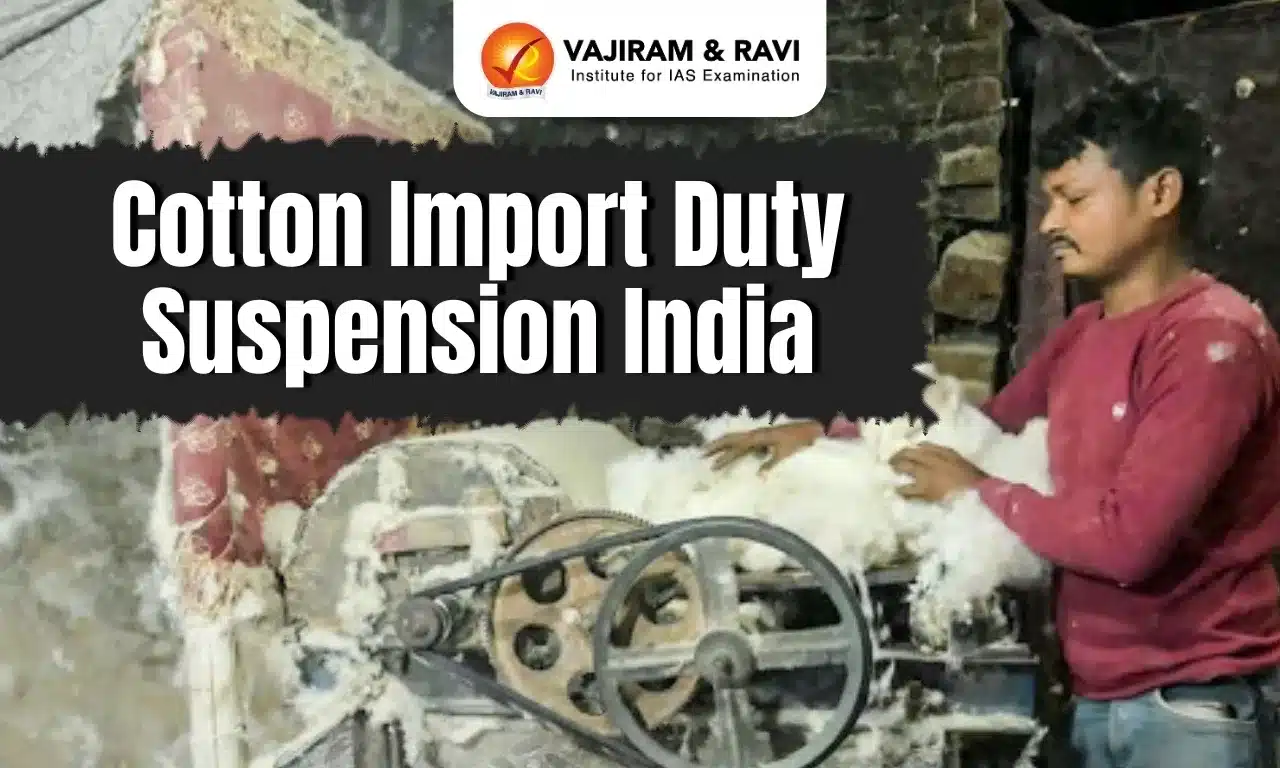
India Suspends Cotton Import Duty Amid Production Decline

Cotton Import Duty Suspension India

Cotton Import Duty Suspension India Latest News

  • Cotton, the key raw material for India’s textile industry and grown by nearly six million farmers, has seen a decline in domestic production. 
  • To address this, the Centre has withdrawn the 11% import duty—first imposed in February 2021—until September 30, when the current cotton season ends. 
  • The move follows a steep rise in cotton imports last year, despite the duty being in place.

Introduction and Withdrawal of Cotton Import Duty

  • The import duty was announced in the 2021 Budget, when the country was producing 350 lakh bales of cotton annually against the requirement of 335 lakh bales. 
    • While the country was exporting cotton, there were imports too and the duty was aimed at protecting the interest of cotton growers.
  • However, as the textile industry later faced a raw material shortage, the government exempted all varieties of cotton from the duty between April–September 2022, later extending it to October 2022. 
    • According to the Global Trade Research Initiative, cotton imports surged 107.4%, rising from $579.2 million in FY2023-2024 to $1.20 billion in FY2024-2025.

Implications of Cotton Import Duty Withdrawal

  • With this, the government has scrapped both the 5% basic customs duty and the 5% agriculture cess on cotton, enabling mills to source raw material at lower costs
  • This move is expected to cool domestic cotton prices, benefitting everything from T-shirts to handloom sarees, and provide relief to SMEs in the textile sector.
  • The decision comes as Indian apparel exporters face steep global competition, burdened by nearly 60% tariffs in the US (compared to Bangladesh and Vietnam at 20%). 
  • Rising cotton prices at home had further strained the industry, making the exemption a step taken in the “public interest”.

Implications

  • The withdrawal of cotton import duty will mainly benefit garment exporters, as around two lakh bales in transit will now enter duty-free.
  • This will give them a level-playing field internationally where high raw material costs earlier hampered competitiveness. 
    • Several global brands also expect Indian suppliers to use this imported cotton.
  • However, farmers have voiced concerns, arguing that the move discourages cotton cultivation. 
  • Without adequate government support, they feel the decision undermines their interests, even as exporters and manufacturers stand to gain.

Current Status of Cotton Production and Imports in India

  • India’s domestic cotton production has fallen to 294 lakh bales in 2024-25, the lowest in 15 years, against a requirement of 318 lakh bales (including non-mill use). 
  • Output this season is projected to be 20 lakh bales lower than last year. 
  • To bridge the gap, imports may touch 40 lakh bales, mainly from Australia ($258.2 million), the U.S. ($234.1 million), Brazil ($180.8 million), and Egypt ($116.3 million).
  • Meanwhile, the Cotton Corporation of India (CCI) procured around 100 lakh bales at MSP, spending ₹37,500 crore, and has already sold 73 lakh bales in the market. 
  • For the 2025-26 season starting October 1, the government has announced an 8% hike in MSP, with fresh supplies expected from northern States in October and central and western States after Deepavali.

Long-Term Solutions for Cotton Sector

  • The textile industry seeks policy stability in cotton procurement. 
  • It suggests the government suspend import duty during the non-peak season (April–September), after farmers sell most of their produce, ensuring mills access affordable raw material without affecting growers.
  • Additionally, the industry has asked for a 5% interest subvention on working capital to help mills, especially MSMEs, purchase cotton during the peak season. 
  • With sufficient funds, mills could cover their cotton needs, reducing dependence on costly MSP operations by the government.

Source: TH | PIB | ToI

Cotton Import Duty Suspension India FAQs

Q1: Why did India suspend cotton import duty?

Ans: To address declining domestic production and rising textile industry costs, India withdrew the 11% import duty, enabling cheaper cotton sourcing for mills.

Q2: How much cotton is India producing in 2024-25?

Ans: Cotton output fell to 294 lakh bales, the lowest in 15 years, against the requirement of 318 lakh bales, forcing higher imports.

Q3: Which countries are the main cotton suppliers to India?

Ans: Major imports come from Australia, the U.S., Brazil, and Egypt, with imports estimated at 40 lakh bales this cotton season.

Q4: How does the duty suspension benefit exporters?

Ans: Exporters get cheaper raw material, creating a level playing field globally. It helps Indian garment makers compete despite high U.S. tariffs.

Q5: What long-term solutions does the industry seek?

Ans: The textile industry wants annual duty suspension during the non-peak season and 5% interest subvention on working capital for cotton procurement.

ISRO’s Air Drop Test Boosts Gaganyaan Mission Roadmap

ISRO’s Air Drop Test

ISRO’s Air Drop Test Latest News

  • ISRO successfully conducted its first Integrated Air Drop Test (IADT-1), marking a key step for the Gaganyaan human spaceflight mission. 
  • A five-tonne dummy crew capsule was released from a helicopter to evaluate its parachute-based deceleration system for safe splashdown. 
  • The test validated critical safety mechanisms needed to ensure astronaut survival during re-entry and landing.
  • While the first uncrewed mission is expected by late 2025, India’s first crewed spaceflight is planned for 2027.

Integrated Air Drop Test

  • An Integrated Air Drop Test (IADT) simulates the final phase of a spacecraft’s return to Earth by dropping it from an aircraft or helicopter. 
  • This allows engineers to evaluate critical systems such as parachute deployment in abort scenarios, performance during partial parachute failure, and crew module safety during splashdown. 
  • However, it cannot fully replicate actual re-entry conditions, since helicopters cannot reach sufficient altitudes. 
  • To address this, ISRO conducts sub-orbital or orbital tests—such as the Test Vehicle Abort Mission (TV-D1) in October 2023—to validate the crew escape system and performance under real re-entry conditions.

Purpose of IADT-1

  • IADT-1 was conducted to evaluate the parachute-based deceleration system crucial for safely bringing back the Gaganyaan crew module after re-entry. 
  • In this test, an uncrewed capsule was dropped from a helicopter at about 3 km altitude, with parachutes expected to deploy in a precise sequence. 
  • The process simulated the final stages of a real mission, where the capsule is slowed first by atmospheric drag and heat shields, then by drogue parachutes, and finally by three large main parachutes. 
  • The goal was to ensure the capsule reduced its speed to about 8 m/s before splashdown.

IADT-1 in the Gaganyaan Roadmap

  • In the broader roadmap, IADT-1 lies between TV-D1 (2023 abort test) and the G1 uncrewed mission (late 2025), forming part of a sequence of thousands of tests ISRO must complete before human flight.

Execution of the Air Drop Test

  • The air drop test simulated a launch pad abort scenario where astronauts would need emergency ejection. 
  • A 4.8-tonne dummy crew module was dropped from 3 km altitude using a Chinook helicopter. 
  • Once released, the onboard avionics autonomously triggered deceleration and deployed 10 parachutes, which slowed the module to a safe splashdown speed of about 8 m/s. 
  • For comparison, parachutes in real re-entry missions typically deploy at around 150 m/s. 
  • The test also confirmed the crew module’s orientation and recovery process during splashdown.

Current Status of the Gaganyaan Mission

  • The Gaganyaan mission aims to send Indian astronauts to low-earth orbit by 2027
  • To achieve this, ISRO is conducting a series of rigorous tests to validate safety and mission systems.

Test Vehicle Missions

  • After the success of Test Vehicle Abort Mission-1 (TV-D1), ISRO is preparing TV-D2, scheduled for the third quarter of 2025.
  • This will simulate a more complex abort scenario and validate the crew escape system.

Uncrewed Demonstration Missions

  • The first uncrewed mission, Gaganyaan-1 (G-1), is planned for the fourth quarter of 2025.
  • It will test technology preparedness, using an unpressurised crew module without the Environment Control and Life Support System (ECLSS).
  • Two additional uncrewed missions, G-2 and G-3, are also scheduled for launch next year to further validate systems.

Hardware and Systems Preparedness

  • Crew module and service module structures have been manufactured.
  • Propulsion systems for the crew module, service module, and crew escape system have been tested.
  • The LVM3 rocket has been fully human-rated, incorporating redundancies for crew safety.
  • A Life Support System model has also been built.

Infrastructure and Facilities

  • Key facilities are complete: Orbital Module Preparation Facility, Gaganyaan Control Centre, crew training facility, and launch pad modifications.
  • A recovery plan for the crew module after splashdown has also been finalised.

India’s Long-Term Human Spaceflight Goals

  • The Gaganyaan mission is only the first step in India’s broader human spaceflight roadmap. 
  • The government has set ambitious targets, including establishing the Bharatiya Antariksh Station (BAS) by 2035 and achieving an Indian crewed lunar landing by 2040
  • These milestones will require repeated missions, long-duration stays in orbit, and advanced deep-space technologies.
  • Progress may face delays — for instance, IADT-1 was pushed from April 2024 to August 2025 — but each milestone strengthens India’s capabilities. 
  • The upcoming TV-D2 mission will test the Crew Escape System in a complex abort scenario, while ISRO’s SpaDeX mission has already demonstrated in-orbit docking, a key technology for BAS, Chandrayaan-4, and future lunar missions.

Source: TH | IE

ISRO’s Air Drop Test FAQs

Q1: What is ISRO’s IADT-1?

Ans: ISRO’s IADT-1 tested the parachute-based deceleration system for the Gaganyaan crew module, simulating the final phase of re-entry and safe splashdown.

Q2: Why is the Air Drop Test important for Gaganyaan?

Ans: The test validates safety systems like parachute deployment, ensuring astronaut survival during abort scenarios or re-entry landings before the first crewed mission.

Q3: When will Gaganyaan’s first crewed mission take place?

Ans: ISRO aims to launch India’s first human spaceflight mission by 2027, after completing a series of uncrewed missions and rigorous safety system tests.

Q4: What role did the dummy crew module play in IADT-1?

Ans: A 4.8-tonne uncrewed module was dropped from 3 km by helicopter to test parachutes, orientation, and recovery systems, ensuring safe splashdown capability.

Q5: What are India’s long-term space goals after Gaganyaan?

Ans: India plans to establish Bharatiya Antariksh Station by 2035 and achieve a crewed lunar landing by 2040, building on Gaganyaan’s technologies and milestones.

Trump’s 50% Tariffs on Indian Exports: Impact on the Economy

US Tariffs on Indian Exports

Tariffs on Indian Exports Latest News

  • The US has imposed 50% tariffs on Indian exports effective August 27, 2025, hitting key sectors like textiles, gems, jewellery, and shrimps, raising concerns over a trade and investment slowdown.

Introduction

  • On August 27, 2025, the United States, under President Donald Trump, implemented steep 50% tariffs on Indian merchandise exports, significantly escalating trade tensions. 
  • These tariffs, applied across a wide range of labour-intensive and low-margin products, mark one of the sharpest trade restrictions India has faced in recent years. 
  • The move is expected to severely disrupt India’s export performance, particularly in sectors like textiles, gems and jewellery, shrimp, carpets, and furniture.
  • The rationale behind the additional tariffs lies in the US’s objections to India’s purchases of Russian oil and defence equipment, which the Trump administration cited as the basis for penalising India. 
  • However, the implications of this decision stretch far beyond geopolitical concerns, threatening millions of jobs, export revenues, and investment momentum under India’s ambitious Production Linked Incentive (PLI) schemes.

Details of the US Tariffs

  • The new tariff regime effectively doubles existing duties, taking tariffs to over 60% in some categories
  • Nearly 66% of Indian exports to the US, valued at around $59 billion in FY25, are now subject to the 50% tariff. 
  • According to the Global Trade Research Initiative (GTRI), exports could plummet by as much as 40-45% in FY26, reducing shipments to the US from $87 billion in FY25 to $49.6 billion.
    • Duty-free Exports (30%): Pharmaceuticals ($12.7 billion), electronics ($10.6 billion), and petroleum products remain exempt.
    • Moderate Tariffs (4%): Auto parts will face 25% tariffs.
    • Heavy Tariffs (66%): Apparel, textiles, gems and jewellery, shrimps, handicrafts, carpets, and furniture will face the brunt.

Sectoral Impact on India

  • The US is India’s largest export market, accounting for nearly 20% of total merchandise exports and about 2% of GDP
  • Labour-intensive sectors with high US dependence are at maximum risk:
    • Textiles & Apparel: Units in Tirupur, Noida, and Surat have already reported halts in production. With the US accounting for nearly 60% of home textiles exports and 50% of carpet exports, the fallout could be devastating.
    • Gems & Jewellery: Exports worth over $10 billion to the US (30% of the industry’s total) face erosion, raising fears of widespread job losses.
    • Shrimps: The US contributes nearly 48% of revenue for Indian shrimp exporters, making the marine sector highly vulnerable.
    • Handicrafts & Furniture: Both industries, dependent on American demand, risk sharp revenue contractions.
  • According to industry estimates, export volumes from these affected sectors could plunge by up to 70%, leading to widespread unemployment, particularly for low-skilled workers.

Implications for India’s PLI Push and Capex Momentum

  • The timing of the US tariffs is particularly sensitive, as India is banking on the PLI scheme to boost manufacturing and exports in high-value sectors. 
  • However, the tariffs could derail capital-intensive industries by deepening the private capex slowdown:
    • Weak PLI Uptake in Key Sectors: Applications for advanced chemistry cells, solar PV modules, and drones have lagged due to high investment needs.
    • Investor Caution: Tariff-related uncertainty has made firms wary of long-term commitments in export-dependent sectors.
    • Crisil Analysis: Nearly 50% of planned industrial capex is exposed to global trade risks, including US tariffs and EU climate policies.
  • While lower capex-intensive sectors like food processing and pharmaceuticals under PLI have seen strong uptake, sectors like electronics, solar, and batteries face setbacks that could delay India’s manufacturing growth trajectory.

Macroeconomic and Geopolitical Dimensions

  • The US tariffs could cut India’s GDP growth down from 6.5% to 5.6%, according to trade experts. 
  • With competitors like Vietnam, Bangladesh, and Cambodia benefiting from lower tariffs, India risks losing its competitive edge in critical export markets.
  • Geopolitically, the tariffs underline the fragile nature of India-US trade ties, where strategic convergence on security is increasingly clashing with protectionist economics. 
  • Moreover, with Trump threatening 200% tariffs on pharmaceuticals unless companies localise production in the US, further disruptions cannot be ruled out.

Way Forward

  • Despite the grim outlook, India retains some advantages:
    • Domestic Economy: With exports forming only 20% of GDP, India is less vulnerable compared to Vietnam (90%).
    • Diversification Opportunities: Strengthening trade with the EU, ASEAN, Africa, and the Middle East can partially offset US losses.
    • Policy Measures: Exporters are demanding duty drawback schemes, loan moratoriums, and fast-tracking of Free Trade Agreements (FTAs), especially with the EU, to cushion shocks.
  • Experts argue that India must also accelerate ease-of-doing-business reforms, tax rationalisation, and logistics infrastructure improvements to remain competitive globally.

Source : TH | IE

Tariffs on Indian Exports FAQs

Q1: Which Indian sectors are most affected by the new US tariffs?

Ans: Textiles, gems and jewellery, shrimps, carpets, handicrafts, and furniture face the steepest impact.

Q2: What percentage of Indian exports to the US remain duty-free?

Ans: Around 30% of exports, including pharmaceuticals, electronics, and petroleum products, are duty-free.

Q3: How will the tariffs affect India’s PLI scheme?

Ans: They could slow investment in capital-intensive PLI sectors like solar PV modules and advanced chemistry cells.

Q4: What is the estimated decline in India’s exports to the US due to the tariffs?

Ans: Exports could fall by 40-45% in FY26, dropping from $87 billion to $49.6 billion.

Q5: How can India mitigate the impact of the tariffs?

Ans: By diversifying export markets, expediting FTAs, providing industry support, and accelerating domestic reforms.

River Tawi

River Tawi

River Tawi Latest News

Recently, India forewarned Pakistan as a “humanitarian gesture” about a potential flood in the Tawi river.

About River Tawi

  • It is a major left-bank tributary of the Chenab River and an important river in the Jammu region. 
  • It is considered sacred and holy. The Tawi River is also called "Surya Putri" in ancient texts.
  • Origin: It rises from Kalpas Kund of Seo Dhar in the Bhaderwah in the Doda district of Jammu and Kashmir, then descends to Sudh Mahadev.
  • It traverses steep hills and plains before entering Pakistan's Punjab province and merging with the Chenab River. 
  • The catchment area of the river up to the Indian border (Jammu) is 2168 sq.km. and falls in the districts of Jammu, Udhampur, and a small part of Doda.
  • Tributaries of Tawi River: On the way, many tributaries such as Bhuteshwari (Birma), Duddhar, Jajjhar, etc., join this river.
  • The Tawi River traverses through and divides the city of Jammu into two segments
  • The water of this river is the main source of water for the entire city.

Source: IE


Tawi River FAQs

Q1: The Tawi River is a major tributary of which river?

Ans: Chenab River

Q2: The Tawi River originates from which location?

Ans: The Tawi rises from Kalpas Kund of Seo Dhar in the Bhaderwah in the Doda district of Jammu and Kashmir.

Q3: What is the approximate length of the Tawi River?

Ans: 141 km

Q4: After flowing through Jammu and Kashmir, the Tawi River enters which province of Pakistan?

Ans: Punjab

Q5: The Tawi River divides which major city into two parts?

Ans: Jammu

Sutlej River

Sutlej River

Sutlej River Latest News

With the Sutlej swelling due to incessant rain in its catchment areas and heavy releases from dams, evacuation in several low-lying villages of Fazilka and Ferozepur districts began late Tuesday afternoon.

About Sutlej River

  • It is an important tributary of the Indus River.
  • It is the longest of the five big rivers that flow through the Punjab region in northern India and Pakistan.
  • It is also known as “Satadree”.
  • It is located north of the Vindhya Range, south of the Hindu Kush segment of the Himalayas, and in Pakistan. 
  • Course:
    • Origin: It rises on the north slope of the Himalayas in Lake Rakshastal in southwestern Tibet at an elevation above 15,000 feet (4,600 metres).
    • It is one of only three Trans-Himalayan rivers originating in the high Tibetan Plateau that cuts across the mighty Himalayan ranges. The other two are the Indus and the Brahmaputra.
    • The Sutlej enters India by flowing west and south-westwards through the Shipki La Pass in Himachal Pradesh at an altitude of 6,608 metres. 
    • The river then flows through Punjab near Nangal before meeting the Beas River. The merger of these two rivers goes on to form 105 Km of the India-Pakistan border. 
    • The river continues to flow for another 350 Km before joining the Chenab River.
    • The combination of the Sutlej and Chenab Rivers forms the Panjnad, which finally flows into the Indus River.
  • Length: It has a total length of 1550 km, out of which 529 km is in Pakistan.
  • The hydrology of the Sutlej is controlled by spring and summer snowmelt in the Himalayas and by the South Asian monsoon. 
  • Tributaries: Spiti River, Baspa River, Soan River, and the Nogli Khad are the major tributaries of the Sutlej River.
  • The waters of the Sutlej are allocated to India under the Indus Waters Treaty between India and Pakistan, and are mostly diverted to irrigation canals in India.
  • There are many hydroelectric and irrigation projects across the river, such as the Bhakra-Nangal Dam, Kol Dam, Nathpa Jhakri Project, and Baspa Hydel Scheme.

Source: IE

Sutlej River FAQs

Q1: The Sutlej River is a major tributary of which river system?

Ans: Indus River

Q2: The Sutlej originates from which lake in Tibet?

Ans: Rakshastal

Q3: The Sutlej enters India through which pass?

Ans: Shipki La Pass

Q4: What is the total length of the Sutlej River?

Ans: It has a total length of 1550 km.

Enquire Now