Acid Rain, Causes, Mechanism, Sources, Impacts, Controlling Measures

Acid Rain

Acid Rain is an important environmental issue faced all over the world.  It not only damages the ecosystem and biodiversity but also impacts human health, cultural heritage and infrastructure. In this article, we are going to cover acid rain, its causes, process, types and impacts. 

Acid Rain

  • Acid Rain is the formation of precipitation in the form of rain, fog, mist or snow that becomes acidic because of the presence of pollutants in the atmosphere. 
  • The pollutants responsible for acid rain are sulphur dioxide and nitrogen oxides that combine with water vapour to form sulphuric acid and nitric acid. 
  • These acids then return to the Earth’s surface through rain, snow, or fog, damaging soil, water, vegetation, and man-made structures.
  • While normal rain is slightly acidic (pH around 5.6) due to dissolved carbon dioxide, acid rain has a pH much lower than this, often between 4.0–5.0.

Acid Rain Mechanism 

The cycle of acid rain works in the following manner: 

  1. Emission of Pollutants: Fossil fuel burning in industries, vehicles, and power plants releases SO₂ and NOₓ into the atmosphere.
  2. Chemical Reactions: These gases undergo oxidation and dissolve in water droplets, forming sulphuric and nitric acids.
  3. Deposition: The acids fall back to Earth in the form of rain, snow, fog, or dust, leading to acid deposition.

Acid Rain Sources 

The sources of acid rain are: 

Compound Natural Sources Anthropogenic (Human) Sources

Sulphur Dioxide

Volcanoes, oceans, decomposition of organic matter

Fossil fuel burning, coal-based power plants, industrial emissions

Nitrogen Oxides

Volcanoes, lightning, forest fires, organic decomposition

Vehicle emissions, thermal power plants, biomass burning

Formic Acid

Forest fires

Biomass burning

Carbon Dioxide

Respiration, decomposition

Fossil fuels, industrial processes

Carbon Monoxide

Plant emissions (isoprene)

Biomass burning, industries

Acid Rain Chemistry 

Acid rain causes the following reactions: 

  • Sulphur Cycle:
    • SO₂ + H₂O → H₂SO₃ (Sulphurous Acid)
    • H₂SO₃ + O₂ → H₂SO₄ (Sulphuric Acid)

  • Nitrogen Cycle:
    • 2NO₂ + H₂O → HNO₂ (Nitrous Acid) + HNO₃ (Nitric Acid)

These acids mix with rainwater and fall as acid rain.

Acid Rain Causes

Acid Rain is caused by the following factors: 

  • Burning fossil fuels in power plants, industries, and vehicles.
  • Volcanic eruptions and wildfires releasing natural SO₂ and NOₓ.
  • Industrial emissions from refineries, cement plants, and chemical factories.
  • Biomass burning and agricultural practices.

Types of Acid Deposition 

Acid Rain causes the depositions of following types: 

  1. Wet Deposition
    • Occurs when acidic pollutants combine with rain, snow, mist, or fog.
    • Common in humid regions with high precipitation.
    • Example: Acid rains in Scandinavia caused by industrial emissions in Britain.
  2. Dry Deposition
    • Occurs when acidic gases and particles settle on surfaces without precipitation.
    • Later washed off by rain, causing delayed environmental damage.
    • Common in arid or semi-arid regions with less rainfall.

Acid Rain Impacts

Following are the impacts of acid rain: 

  1. On Soil
  • Leaching of essential nutrients like calcium, magnesium, and potassium, making soil infertile.
  • Reduced microbial activity and decomposition rates.
  • Acidic soils affect crop productivity and forest health.
  1. On Vegetation
  • Reduced photosynthesis and growth rates.
  • Symptoms: Leaf discolouration, premature ageing, stunted growth, and tree death.
  • Weakens plants, making them more vulnerable to disease and pests.
  1. On Microorganisms
  • Disrupts soil microbial balance and reduces bacteria and protozoa, favours fungi.
  • Alters decomposition rates and nutrient cycling.
  • Increases susceptibility to plant and soil-borne fungal diseases.
  1. On Aquatic Life
  • Acidic waters lower pH below tolerance levels for fish and amphibians.
  • Kills eggs, sperm, and larvae of aquatic organisms.
  • Reduces plankton populations, collapsing aquatic food chains.
  • Example: Fishless lakes in Canada and Scandinavia due to acidification.
  1. On Terrestrial Life
  • Indirect effect via food chain disruption.
  • Herbivores suffer due to damaged vegetation, cascading impacts on predators.
  1. On Humans
  • Not directly harmful to touch, but indirectly impacts health.
  • SO₂ and NOₓ cause respiratory diseases like asthma, bronchitis, and lung cancer.
  • Eye, skin, and throat irritation.
  • Contributes to ground-level ozone formation, worsening air pollution.
  1. On Buildings & Monuments
  • Acid rain reacts with limestone and marble, causing structural damage.
  • Famous example: Taj Mahal (Agra) turning yellow due to acid rain and pollution.
  • Damages heritage structures, statues, and buildings worldwide.

Acid Rain Controlling Measures

Acid rain can be controlled by the following measures: 

  1. Cleaner Fuels: Use low-sulphur coal, natural gas, or renewable energy and promote solar, wind, and hydropower.
  2. Scrubbers: Installs flue-gas desulfurization units in power plants and can remove 90–95% of sulphur dioxide emissions.
  3. Catalytic Converters: Fit into vehicles to reduce NOₓ and SO₂ emissions.
  4. Neutralization: Add lime to acidic lakes and soils to restore pH balance.
  5. Policy Measures: Stricter emission standards for industries and vehicles and promotes energy efficiency and public awareness campaigns.
  6. International Cooperation: Since acid rain crosses borders, global treaties like the 1979 Geneva Convention on Long-Range Transboundary Air Pollution are crucial.

Acid Rain FAQs

Q1: What is acid rain?

Ans: Acid rain is precipitation with a pH below 5.6 caused by sulfur dioxide (SO₂) and nitrogen oxides (NOₓ) mixing with atmospheric moisture.

Q2: What is the concept of acid rain?

Ans: It refers to rain, snow, or fog made acidic due to air pollutants reacting with water vapour to form acids like H₂SO₄ and HNO₃.

Q3: What are three causes of acid rain?

Ans: Burning fossil fuels, industrial emissions, and vehicle exhaust releasing SO₂ and NOₓ.

Q4: What is the impact of acid rain?

Ans: It damages soil fertility, harms vegetation, kills aquatic life, erodes monuments, and poses health risks.

Q5: What are the pollutants of acid rain?

Ans: The main pollutants are sulfur dioxide (SO₂), nitrogen oxides (NOₓ), carbon dioxide (CO₂), and other acidic gases.

Weathering, Types, Significance, Benefits, Process Challenges

Weathering

Weathering is the breakdown of rocks, minerals and other materials at or near the Earth’s surface due to natural forces. Unlike erosion, that is the removal and transportation of materials, weathering occurs in the same place. It is caused due to climate that is temperature, rainfall and humidity, topography, biological activity and time. This process is important to the Earth system because it contributes to the formation of soil, carbon balance. Weathering helps in the fertilisation of soil, agriculture practices and landscapes maintenance. 

Weathering 

Weathering is the process of transforming rocks into soil and sediments. It is the disintegration and decomposition of rocks through mechanical, chemical and biological agents. The process helps in maintaining: 

  • Geological role: helps shape Earth's surface and creating distinctive landforms. 
  • Ecological role: releasing minerals for soil fertility and sustaining ecosystems. 

Thus, weathering is the link between the solid rocks of the lithosphere and the life-supporting soil of the biosphere.

Weathering Types 

The process of weathering can be sub-divided into three types: 

1. Physical (Mechanical) Weathering

This type of weathering involves the fragmentation of rocks into smaller particles without altering their chemical composition. It is dominant in arid and cold climates, where temperature fluctuations and freeze-thaw cycles are common.

Processes include:

  • Frost Wedging : Water enters cracks, freezes, expands, and breaks rocks apart.
  • Thermal Expansion: Heating and cooling cause rock layers to expand and contract, leading to cracking.
  • Abrasion: Rocks are worn down by wind-blown sand, moving glaciers, or flowing rivers.
  • Exfoliation: Large sheets peel off due to pressure release from overlying rocks.

2. Chemical Weathering

Chemical weathering alters the mineral composition of rocks through reactions with water, oxygen, carbon dioxide, and acids. It is most effective in warm and humid climates.

Processes include:

  • Oxidation: Reaction of oxygen with minerals like iron, producing rust.
  • Hydrolysis: Reaction of water with minerals, forming new compounds (e.g., feldspar becomes clay).
  • Carbonation: Carbon dioxide dissolved in water forms weak carbonic acid that dissolves rocks like limestone.
  • Dissolution: Minerals dissolve completely in water (e.g., salts, gypsum).

3. Biological Weathering

This type of weathering is caused by the activities of plants, animals, and microorganisms. Living organisms break down rocks either mechanically or chemically.

Examples include:

  • Plant roots penetrating cracks and widening them.
  • Lichens and microbes release organic acids that dissolve minerals.
  • Burrowing animals (earthworms, rodents) exposing rocks to air and moisture.

Weathering Significance

The process of weathering has the following significance: 

  1. Soil Formation: Weathering is the primary source of soil particles. It releases minerals like potassium, magnesium, and calcium, enriching soil fertility.
  2. Landform Development: Weathering weakens rock structures, paving the way for erosion and the creation of valleys, cliffs, caves, and plateaus. Unique features such as spires, arches, and mushroom rocks arise from differential weathering.
  3. Nutrient Cycling: Weathering ensures continuous supply of minerals to ecosystems. Nutrients released enter rivers, lakes, and soils, sustaining life cycles.
  4. Erosion and Sedimentation: Weathering provides loose material that erosion transports to form deltas, floodplains, sand dunes, and beaches.
  5. Climate Regulation: Through chemical weathering of silicates, CO₂ is consumed and stored in rocks, reducing greenhouse gas levels and stabilizing Earth’s climate.

Factors Affecting Weathering 

There are many factors affecting weathering. These include: 

  1. Climate: Extreme temperature causes physical weathering and high rainfall and humidity cause chemical weathering. Biological weathering is caused due to tropical climate. 
  2. Rock Type and Composition: Hard rocks like granite don't get affected by weathering whereas soft rocks like limestone weather quickly. Rocks that have many joints and fractures disintegrate faster. 
  3. Surface Area: Cracked rocks or smaller fragments of rocks have more surface area exposed that causes faster weathering of rocks. 
  4. Topography: Steep slopes help in physical weathering and erosion and flat regions promote water accumulation and chemical weathering. 
  5. Time: Rocks exposed for a longer time causing a higher degree of rock breakdown. 
  6. Biological Activity: Roots, burrowing animals, and microbes enhance rock disintegration.
  7. Water Availability: Extremely important for frost action, hydrolysis, carbonation, and dissolution.

Weathering Benefits

The process of weathering has the following benefits: 

  • Helps create fertile soils essential for agriculture and vegetation.
  • The process of weathering helps supply vital minerals for ecosystems.
  • Shapes diverse landscapes with ecological and aesthetic value.
  • Provides sediments like clay, sand, and gravel for construction and industries.
  • Weathered soils act as filters for groundwater.
  • Helps regulate atmospheric CO₂ through chemical processes.

Weathering Process Challenges 

Weathering Process also possesses the following challenges: 

  • Weakens rocks, leading to landslides and building deterioration.
  • Accelerates soil erosion and desertification when vegetation is removed.
  • Contributes to infrastructure damage in regions of intense weathering.

Weathering FAQs

Q1: What do you mean by weathering?

Ans: Weathering is the natural process of breaking down rocks and minerals on Earth’s surface into smaller particles by physical, chemical, or biological means.

Q2: What are the three types of weathering?

Ans: The three types of weathering are Physical (Mechanical), Chemical, and Biological weathering.

Q3: What are the 4 causes of weathering?

Ans: The main causes of weathering are climate (temperature and rainfall), water, biological activity, and time.

Q4: What are the challenges caused due to weathering?

Ans: Weathering causes soil erosion, landslides, loss of fertile soil, and damage to infrastructure and monuments.

Q5: Which rocks get affected most by weathering?

Ans: Soft rocks like limestone, shale, and sandstone are most affected due to their solubility and weak structure.

Rock Systems of India, Formation, Features, Locations, Significance

Rock Systems of India

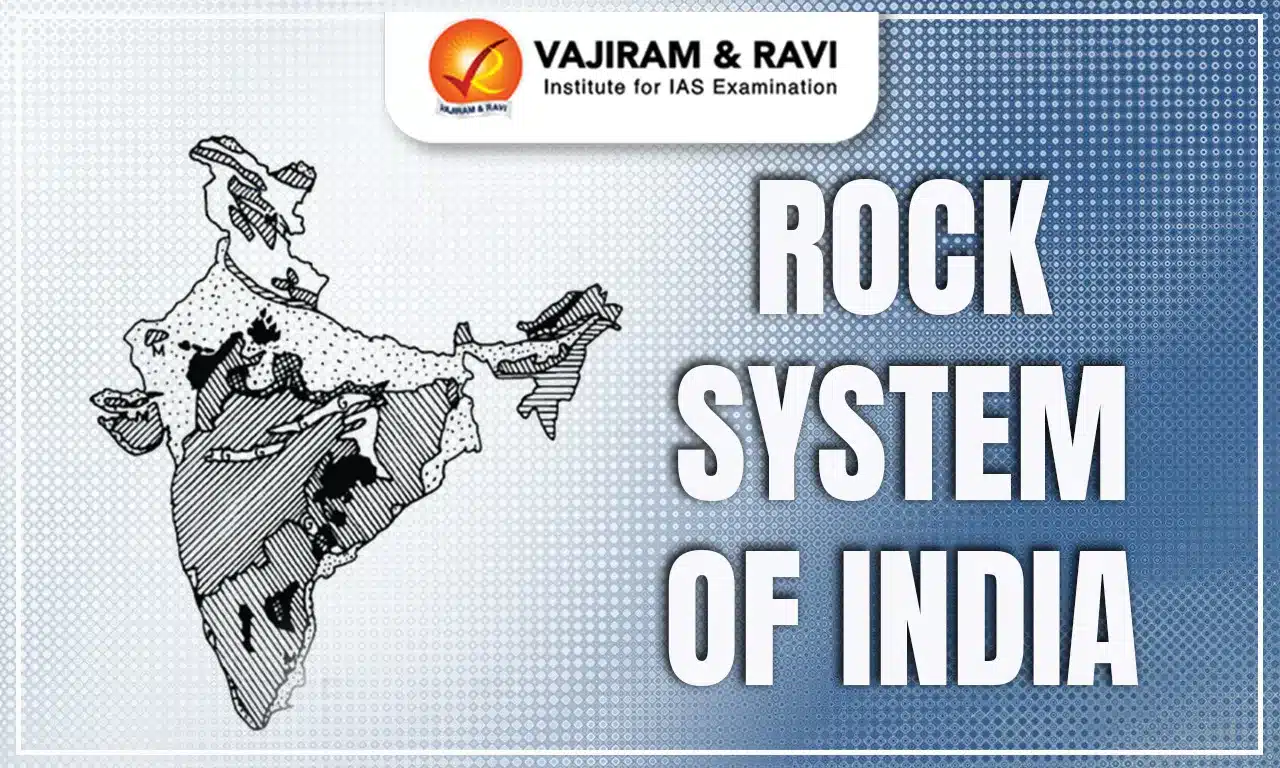
The Rock System of India showcases the geological history of India. From the Archaean rock system to the modern Quaternary, the diverse rock system helps in understanding the rock system. In this article, we are going to cover the rock system in India, its formation, significance and location in the Indian landscape. 

Rock System in India

The rock system in India is very diverse and consists of a series of rocks that belong to different ages and periods. The rock system in India is divided into four categories: 

  • Archaean Rock System
  • The Purana Rock System
  • Dravidian Rock System 
  • The Aryan Rock System

1. Archaean Rock System in India 

The Archaean Rock System in India represents the oldest rock system in Indian geological history. These rocks are some of the oldest in the world and date back to four billion years. These rocks are formed when molten magma gets solidified into the earth’s crust. 

Archaean rock system in India features: 

  • Azoic (devoid of fossils)
  • Crystalline due to volcanic origin
  • Foliated, appearing in thin sheets
  • Extremely contorted, faulted, and often occurring as plutonic intrusions

Archaean Rock System in India Subdivisions 

Archaean Rock System in India can be sub-divided into two: Gneisses & Schists and Dharwar System

(a) The Archaean System – Gneisses & Schists

  • Rocks: Gneisses (banded structure, granite to gabbro composition) and Schists (crystalline).
  • Locations: Himalayas, Central & Southern Peninsula, Odisha, Jharkhand (Chotanagpur Plateau), Madhya Pradesh, Bundelkhand.
  • Significance: Rich in mica, talc, hornblende, and chlorite.

(b) The Dharwar System

  • Formation Period: Between 3100 to 1000 million years ago, formed in three cycles.
  • Features: Ancient metamorphosed sedimentary rocks derived from Archaean gneisses and schists.
  • Rocks: Hornblende, Quartzites, Phyllites, Slates, Crystalline Limestones, Dolomites.
  • Locations: Dharwar-Bellary-Mysore belt (Karnataka), Jharkhand, Chhattisgarh, Odisha, parts of Himalayas.
  • Significance: Economically vital with rich deposits of iron ore, manganese, copper, lead, and gold.

2. Purana Rock System in India (Proterozoic Rocks) 

The Purana Rock System was formed between 1400-600 million years ago and was sedimentary- metamorphic in nature. These rocks are largely unfossiliferous in nature and are important for their economic value. 

Purana Rock System in India Subdivisions 

The Purana Rock System in India can be sub-divided into two: cuddapah and the vindhyan system 

(a) Cuddapah System

  • Location: Cuddapah & Kurnool (Andhra Pradesh), parts of Chhattisgarh and Aravalli range.
  • Rocks: Clay, slates, sandstones, limestones.
  • Minerals: Iron, manganese, copper, cobalt, nickel.

(b) Vindhyan System

  • Location: Stretch from Sasaram (Bihar) to Chittorgarh (Rajasthan), covering ~1,00,000 sq. km.
  • Rocks: Ancient sedimentary deposits, ~4000 m thick.
  • Features: Devoid of fossils; important diamond-bearing regions (Panna & Golconda).
  • Minerals: Limestone, ornamental stones, glass-making sand.

3. Dravidian Rock System in India (Palaeozoic Era) 

The Dravidian rock system in India spans 600-300 million years ago, representing the palaeozoic age. These rocks are fossiliferous in nature and marks the beginning of coal formation. Contain shale, talc, dolomite, marble, and limited but valuable coal resources.

Dravidian Rock System in India Features 

  • Presence of fossil remains.
  • Initial coal deposits (Carboniferous period).
  • Rock types include shales, sandstones, quartzites, clays, salts, and slates.

Locations of Dravidian Rock System in India

  • Predominantly in Extra-Peninsular regions: Kashmir (Anantnag, Lider Valley), Himachal Pradesh (Spiti, Kangra, Shimla), Uttarakhand (Garhwal, Kumaon), Pir Panjal.

Dravidian Rock System in India Subdivisions 

Dravidian Rock System in India can be subdivided into the following types: 

  • Cambrian Rocks: NW Himalayas.
  • Ordovician Rocks: Quartzites, sandstones.
  • Silurian Rocks: Lahaul & Spiti (limestones, shales).
  • Devonian Rocks: Lacking fossil fuels.
  • Carboniferous Rocks: Coal-bearing, limestone, quartzite, and shales.

4. Aryan Rock System in India

The Aryan Rock System in India 

The Aryan rock system in India ranges from the upper carboniferous to the recent period and has many sub-divisions. 

(a) Gondwana System

  • Formation: 250 million years ago (Permian).
  • Location: Damodar Valley (Jharkhand), Mahanadi Valley (Odisha, Chhattisgarh), parts of Madhya Pradesh.
  • Features: Continental origin, laid down in synclinal troughs.
  • Significance: Contains 98% of India’s coal reserves, along with iron ore, copper, and uranium.

(b) Jurassic System

  • Formation: 201–145 million years ago.
  • Location: Rajasthan, Kachchh, Ladakh, Spiti, Nepal, Bhutan.
  • Rocks: Coral limestone, sandstones, conglomerates.
  • Significance: Yields coal, petroleum, and gold.

(c) Deccan Traps

  • Formation: End of Cretaceous to early Eocene (volcanic eruptions).
  • Extent: ~5 lakh sq. km across Maharashtra, Madhya Pradesh, Karnataka, Gujarat.
  • Rocks: Basalt; weathering produces regur (black cotton soil).
  • Significance: Fertile soil for cotton cultivation.

(d) Tertiary System

  • Formation: 60–7 million years ago.
  • Features: Period of Himalayan orogeny; known as the "Age of Mammals".
  • Rocks: Karewas of Kashmir, Bhangar & Khadar of Great Plains, coastal rocks of Konkan, Malabar, Nilgiris.
  • Significance: Petroleum and coal deposits.

(e) Shivalik System

  • Location: Shiwalik Hills (between Ganga & Yamuna).
  • Rocks: Sandstones, conglomerates, clays, silts.
  • Significance: Contains lignite, oil, bauxite, and clays.

(f) Quaternary System (Pleistocene & Recent)

  • Formation: Last 1 million years.
  • Features: Fossiliferous clays, sands, gravels, and extensive alluvium deposits in Indo-Gangetic Plains.
  • Classification:
    • Bhangar: Older alluvium.
    • Khadar: Younger alluvium, fertile and suitable for agriculture.

Rock Systems of India FAQs

Q1: What is the rock system of India?

Ans: The rock system of India refers to the classification of rocks based on their age, origin, and characteristics, ranging from the ancient Archaean to the recent Quaternary deposits.

Q2: What are rock systems?

Ans: Rock systems are geological groupings of rocks formed during specific time periods, showing distinct features, composition, and modes of formation.

Q3: Which is the oldest rock system of India?

Ans: The Archaean Rock System is the oldest in India, dating back about 4 billion years.

Q4: How many types can the Deccan Trap get subdivided?

Ans: The Deccan Trap is subdivided into three types – Upper Trap, Middle Trap, and Lower Trap.

Q5: The Aryan Rock System can be subdivided into how many types?

Ans: The Aryan Rock System is subdivided into six types – Gondwana System, Jurassic System, Deccan Trap, Tertiary System, Shivalik System, and Quaternary System.

UPSC Daily Quiz 29 August 2025

UPSC Daily Quiz

The Daily UPSC Quiz by Vajiram & Ravi is a thoughtfully curated initiative designed to support UPSC aspirants in strengthening their current affairs knowledge and core conceptual understanding. Aligned with the UPSC Syllabus 2025, this daily quiz serves as a revision resource, helping candidates assess their preparation, revise key topics, and stay updated with relevant issues. Whether you are preparing for Prelims or sharpening your revision for Mains, consistent practice with these Daily UPSC Quiz can significantly enhance accuracy, speed, and confidence in solving exam-level questions

[WpProQuiz 56]

UPSC Daily Quiz FAQs

Q1: What is the Daily UPSC Quiz?

Ans: The Daily UPSC Quiz is a set of practice questions based on current affairs, static subjects, and PYQs that help aspirants enhance retention and test conceptual clarity regularly.

Q2: How is the Daily Quiz useful for UPSC preparation?

Ans: Daily quizzes support learning, help in revision, improve time management, and boost accuracy for both UPSC Prelims and Mains through consistent practice.

Q3: Are the quiz questions based on the UPSC syllabus?

Ans: Yes, all questions are aligned with the UPSC Syllabus 2025, covering key areas like Polity, Economy, Environment, History, Geography, and Current Affairs.

Q4: Are solutions and explanations provided with the quiz?

Ans: Yes, each quiz includes detailed explanations and source references to enhance conceptual understanding and enable self-assessment.

Q5: Is the Daily UPSC Quiz suitable for both Prelims and Mains?

Ans: Primarily focused on Prelims (MCQ format), but it also indirectly helps in Mains by strengthening subject knowledge and factual clarity.

Salina Aurantiamaculata and Salina Pseudomontana

Salina Aurantiamaculata and Salina Pseudomontana

Salina Aurantiamaculata and Salina Pseudomontana Latest News

Recently, scientists at the Zoological Survey of India (ZSI) announced the discovery of two new Collembola, or springtails species -- Salina aurantiamaculata and Salina pseudomontana.

About Salina Aurantiamaculata and Salina Pseudomontana

  • Salina aurantiamaculata is named for its striking bright orange markings – an unusual pigment pattern among its peers.
  • Its counterpart, Salina pseudomontana, looks very similar to the already known Salina montana.
  • Both species belong to the cosmopolitan “celebensis” group of Collembola. 
  • Collembola improves soil structure, aid nutrient cycling, and serves as indicators of ecosystem health. Their role, though often overlooked, is fundamental for the ecosystem.”
  • The last time a Salina species was recorded in India was in 1979. After more than four decades, these two new additions bring the country’s tally to 17 species.

What are Collembola Springtails?

  • These are among the oldest land-dwelling hexapods on Earth, dating back hundreds of millions of years.
  • Habitat: They are found in leaf litter, decaying wood, and soil, they thrive quietly in habitats most of us overlook.
  • Significance: Their abundance and sensitivity make them invaluable in monitoring pollution, climate change, and agricultural sustainability.

Source: IE

Salina Aurantiamaculata and Salina Pseudomontana FAQs

Q1: What is an indicator species?

Ans: These are species which can provide information on ecological changes and give early warning signals regarding ecosystem processes in site-specific conditions due to their sensitive reactions to them.

Q2: What is the function of Zoological Survey of India?

Ans: It provides information and vital data for the in-situ conservation of various species in different ecosystems, both within and outside the protected areas.

Unified District Information System for Education Plus

Unified District Information System for Education Plus

Unified District Information System for Education Plus Latest News

The Ministry of Education released a report on Unified District Information System for Education Plus (UDISE+) 2024-25 on school education of India which says that, since the beginning of UDISE +, the total number of teachers has crossed the 1 crore mark in 2024–25.

About Unified District Information System for Education Plus

  • It is an educational management information system under the Department of School Education & Literacy, Ministry of Education under the Government of India.
  • UDISE+ functions as a central platform that enables respective schools to efficiently record and submit data related to its profile (infrastructure & facilities), individual students and teachers’ details.
  • This is done in real-time mode by all recognised schools that provide formal, and special education in any of the school categories (that is, from pre-primary to higher secondary levels) throughout the country each academic year.
  • The recorded data is validated by the MIS and other designated officials at the block, district and state levels; and monitored at four levels, including the national.

Features of the UDISE+

  • Each onboarded school is provided a unique 11-digit UDISE code & login credentials to complete data entry and its modification in real-time.
  • School User Directory module enables onboarding of schools, and management of designated users who can submit data on the UDISE+. This module enables block, district, state and national level user overall management of the UDISE+.
  • The data on school profile, students and teachers is reported in three distinct but integrated modules:
  • School profile & facilities: Infrastructure details and services and facilities available in schools are recorded in this module.
  • Student module: General and academic profile of each student, including extracurricular activities, are recorded and maintained in this module using the Permanent Education Number
  • Teacher Profile: General, academic and appointment details of all teaching and non-teaching staff are recorded and maintained individually in this module.

Source: PIB

Unified District Information System for Education Plus FAQs

Q1: Who released the UDISE Plus report?

Ans: Ministry of Education (MoE)

Q2: What is the purpose of UDISE plus?

Ans: This system is used for data storage, updation, manipulation, analysis and sharing.

Prairies

Prairies

Prairies Latest News

Recent efforts—including a newly launched database—aim to ensure that the prairies are restored much more comprehensively.

About Prairies

  • Prairies are flat, temperate grasslands found in North America.
  • Most North American prairies are in locations with a low amount of annual
  • rainfall.
  • Prairie vegetation is maintained by grazing, fire, drought, and low temperatures. 
  • Although grasses dominate, lichens, mosses, forbs, and low- to mid-size shrubs also comprise prairie vegetation. 
  • Taller shrubs and trees, mostly willows and poplars, including aspen and cottonwoods, are found in depressions and valleys where there is sufficient moisture and nutrients.
  • Prairie, like other temperate grasslands, is among the most productive and diverse of earth’s terrestrial ecosystems.
  • Grasses, the predominant cover in prairie vegetation, have the following adaptations:
  • Deep or extensive roots.
  • Growing points at or near the soil surface that are tucked in the crown of the plant.
  • Narrow leaves.
  • Small flowers in dense heads that are pollinated by wind.
  • Tough stems and leaves hardened with silica phytoliths (plant stones).
  • Strategies to optimize photosynthesis without losing moisture.
  • Wildlife species living in prairies have adapted to a semi-arid, windy, open environment. 
  • Species found here include elk, deer, coyote, bobcat, Badgers, jackrabbits, ground squirrels, pocket gophers, etc
  • Similar temperate grasslands in South America are called Pampas, while in Africa they are described as velds  and in Asia are known as steppes.

Source: PHY

Prairies FAQs

Q1: Prairies are mainly found in which region?

Ans: North America

Q2: Which of the following is the dominant vegetation in prairies?

Ans: Grasses

Q3: What are temperate grasslands in South America called?

Ans: Steppes

Gangotri Glacier

Gangotri Glacier

Gangotri Glacier Latest News

A study by IIT Indore and international collaborators reveals that the Gangotri Glacier has lost 10% of its snowmelt flow over four decades due to climate change.

About Gangotri Glacier

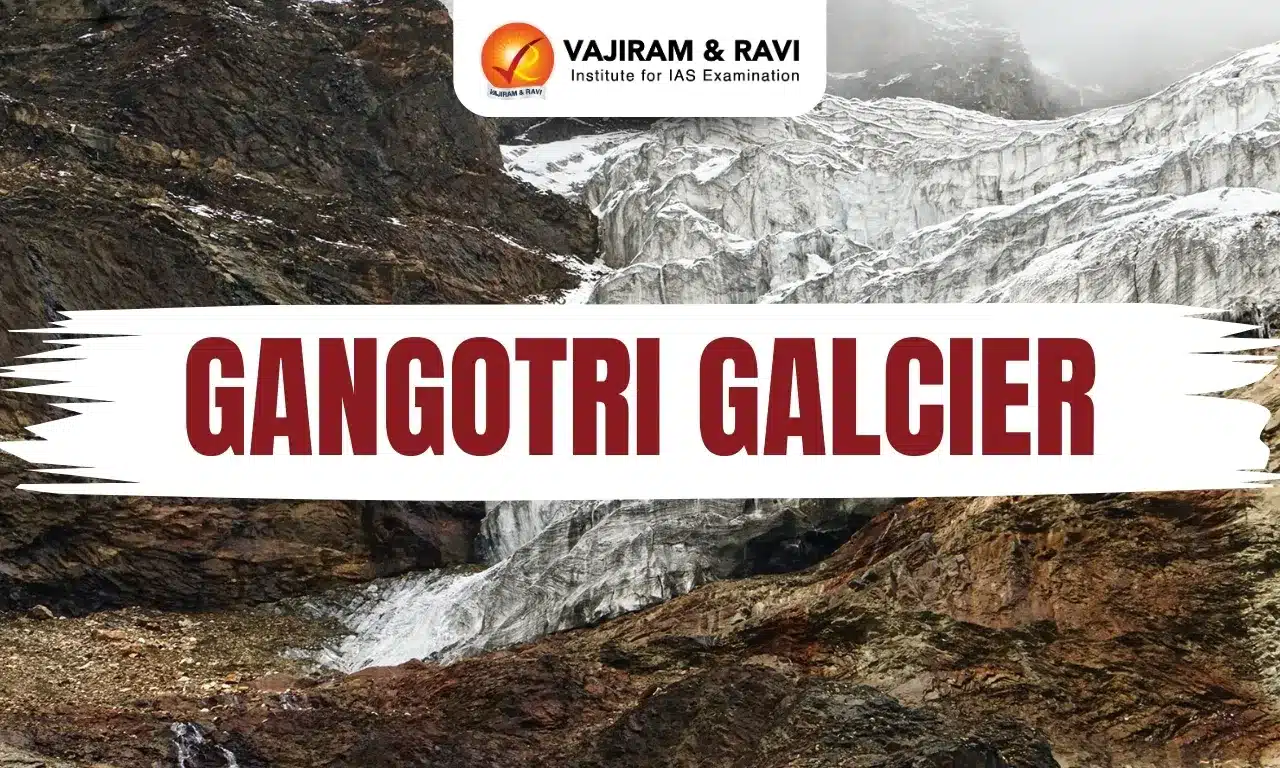
  • It is one of the largest glaciers in the Himalayas and is the primary source of the Ganges, the largest river in India. 
  • It is situated in the Uttarkashi district of Uttarakhand in the Garhwal Himalayas. 
  • It originates at the northern slope of the Chaukhamba range of peaks.
  • It is fed by snow and ice from several peaks, including Shivling, Thalay Sagar, Meru, and Bhagirathi III. 
  • It lies at an altitude of around 4,000 meters bordering Tibet.
  • The glacier is around 30 km in length and 4 km in width.
  • Popularly known as Gaumukh, the terminus of the glacier resembles a cow’s mouth
  • From its snout at Gaumukh, the Bhagirathi River emerges, which later joins the Alaknanda River to form the Ganges at Devprayag.
  • The Gangotri Glacier holds immense religious significance in Hinduism and is visited by thousands of pilgrims every year, who trek up to Gaumukh, the source of the Ganges.

Source: DTE

Gangotri Glacier FAQs

Q1: The Gangotri Glacier is the primary source of which river?

Ans: Ganges

Q2: The Gangotri Glacier originates from which mountain range?

Ans: Chaukhamba Range

Q3: What is the approximate length of the Gangotri Glacier?

Ans: 30 km

Nimbrix Missile

Nimbrix Missile

Nimbrix Missile Latest News

Swedish defense company Saab recently announced the development of a new missile named Nimbrix.

About Nimbrix Missile

  • It is a counter-unmanned aircraft system (C-UAS) missile.
  • The missile is being developed to counter the growing battlefield threat posed by small unmanned aerial vehicles (UAVs).
  • It was developed by the Swedish defense company Saab. It is its first dedicated C-UAS missile.
  • Saab designed the missile to minimize costs, including through the use of additive manufacturing and low-cost commercial and military off-the-shelf parts.

Nimbrix Missile Features

  • It is a “fire-and-forget” guided missile.
  • The missile will offer a range of up to 5 km and use an active seeker to track targets.
  • It uses an air-burst warhead designed to detonate in the vicinity of small drones or other UAS, bringing down multiple at a time.
  • Nimbrix is intended for ground-based use, operating either independently or as part of wider air defence systems.
  • With adaptable mounting options, it can be fitted to vehicles or fixed positions to meet different customer requirements.

Source: INVEST

Nimbrix Missile FAQs

Q1: The Nimbrix Missile has been developed by which country’s defense company?

Ans: Sweden

Q2: The Nimbrix Missile is primarily designed for which purpose?

Ans: Counter-unmanned aircraft systems (C-UAS)

Q3: What is the maximum range of the Nimbrix Missile?

Ans: 5 km

Q4: The Nimbrix Missile uses which type of warhead?

Ans: Air-burst warhead

National Annual Report and Index on Women’s Safety (NARI) 2025

National Annual Report and Index on Women’s Safety (NARI) 2025

National Annual Report and Index on Women’s Safety (NARI) 2025 Latest News

The National Annual Report & Index on Women’s Safety (NARI) 2025, released recently, has shed new light through its latest report on how safe Indian cities really are for women.

About National Annual Report and Index on Women’s Safety (NARI) 2025

  • Released by the National Commission for Women, NARI 2025 offers the telling reality of the urban safety landscape. 
  • The report, a collaborative effort by the Group of Intellectuals and Academicians (GIA), Pvalue Analytics, The NorthCap University, and Jindal Global Law School, is based on a survey of 12,770 women across 31 cities in all states.

Highlights of the National Annual Report and Index on Women’s Safety (NARI) 2025

  • It placed the national safety score at 65%, categorising cities as “much above”, “above”, “below” or “much below” this benchmark.
  • Kohima, Visakhapatnam, Bhubaneswar, Aizawl, Gangtok, Itanagar, and Mumbai have emerged as the safest cities in the country for women, while Patna, Jaipur, Faridabad, Delhi, Kolkata, Srinagar, and Ranchi were ranked the lowest.
  • Kohima and other top-ranked cities were associated with stronger gender equity, civic participation, policing, and women-friendly infrastructure.
  • At the other end of the spectrum, cities like Patna and Jaipur fared poorly due to weak institutional responsiveness, patriarchal norms, and gaps in urban infrastructure.
  • Overall, six in ten women surveyed felt “safe” in their city, but 40% still considered themselves “not so safe” or “unsafe”. 
  • Prevalence of harassment remains high, with 7% women reporting at least one incident of harassment in public spaces in 2024. 
  • The highest risk group is women under 24 years of age (14% reported harassment). 
  • Verbal harassment was most common (58%), with physical, psychological, economic, and sexual harassment reported less frequently. 
  • Neighborhoods (38%) and transport (29%) were the main hotspots for harassment. 
  • In terms of response, 28% of women confronted harassers, 25% left the scene, 21% sought safety in crowds, and 20% reported to authorities.
  • The study revealed sharp drops in perceptions of safety at night, particularly in public transport and recreational spaces. 
  • While 86% of women felt safe in educational institutions during daylight hours, safety perceptions fall sharply at night or off-campus.
  • The report shows low levels of faith in the redressal mechanism. 
    • Only one in three victims of harassment filed a formal complaint.
    • Only one in four women expressed confidence that authorities would take effective action on their safety complaints.
    • A concerning 53% were unaware whether their workplaces had a Prevention of Sexual Harassment (POSH) policy in place.
    • Even when incidents are reported, only 22% are formally registered, and action is taken in a mere 16% of those cases.

Source: NIE

National Annual Report and Index on Women’s Safety (NARI) 2025 FAQs

Q1: Which cities topped the National Annual Report and Index on Women’s Safety (NARI) 2025 as the safest for women?

Ans: Kohima, Visakhapatnam, Bhubaneswar, Aizawl, Gangtok, Itanagar, and Mumbai

Q2: Which cities ranked lowest in women’s safety according to National Annual Report and Index on Women’s Safety (NARI) 2025?

Ans: Patna, Jaipur, Faridabad, Delhi, Kolkata, Srinagar, and Ranchi

Q3: Which type of harassment was most commonly reported by women in National Annual Report and Index on Women’s Safety (NARI) 2025?

Ans: Verbal harassment

Daily Editorial Analysis 29 August 2025

Daily Editorial Analysis

India’s Demographic Dividend as a Time Bomb

Context

  • Rabindranath Tagore once wrote, “Don’t limit a child to your own learning, for she was born in another time.”
  • These words, spoken over a century ago, hold striking relevance for India today. At a time when technology is transforming the very fabric of work and society, the nation’s education system remains tethered to outdated structures.
  • The consequence is a growing misalignment between what young Indians are taught and what the future economy demands.

The Future of Work, the Education Lag and The Demographic Dividend Paradox

  • The Future of Work, the Education Lag

    • The world of work is being reshaped by emerging technologies, with Artificial Intelligence (AI) at the forefront.
    • Research suggests that nearly 70% of jobs worldwide will be impacted by AI, with up to a third of tasks in many occupations automated entirely.
    • While this disruption is displacing traditional roles, it is also creating new opportunities in AI development, data analysis, cybersecurity, and other knowledge-intensive sectors.
    • Yet, India’s curriculum cycles remain locked in three-year updates that barely scratch the surface of this transformation.
    • Students continue to be prepared for roles that are either disappearing or radically evolving.
  • The Demographic Dividend Paradox

    • With over 800 million people under the age of 35, India possesses the largest youth population in the world.
    • In theory, this is a powerful growth engine; in practice, it has become a double-edged sword.
    • Despite producing millions of graduates each year, employability remains alarmingly low.
    • Nearly half of engineering graduates struggle to secure jobs, underscoring the widening chasm between degrees and real-world skills.
    • The numbers are stark: according to higher education leaders, 61% of curricula are not aligned with industry needs.
    • The Graduate Skills Index 2025 reveals that only 43% of Indian graduates are considered job-ready.
    • This paradox, of abundant graduates but scarce employable talent, threatens to turn the demographic dividend into a demographic time bomb.

The Crisis Begins in High School

  • A 2022 survey found that 93% of students between grades 8 and 12 were aware of only seven career options, mostly traditional professions such as doctor, engineer, or lawyer.
  • In reality, today’s economy offers over 20,000 possible career paths. Shockingly, just 7% of students reported receiving any formal career guidance.
  • This lack of awareness funnels students into degrees misaligned with both their aptitudes and market demands.
  • The India Skills Report 2024 found that more than 65% of high school graduates pursue degrees incompatible with their interests or abilities.
  • By the time they graduate, they are neither equipped with job-ready skills nor prepared for the careers of tomorrow.

Policy Attempts and Their Shortcomings

  • Recognising the crisis, the Indian government has launched numerous initiatives, from the Skill India Mission to Pradhan Mantri Kaushal Vikas Yojana and SANKALP.
  • Yet, despite heavy funding, most of these programs have fallen short of their ambitious targets.
  • Fragmentation and lack of coordination among initiatives have diluted their impact.
  • What India urgently requires is not more acronyms, but a cohesive, unified national strategy that aligns education with industry needs.
  • Collaboration between government, educational institutions, and the private sector will be key to building a robust skill-development ecosystem.

The Decisive Decade

  • India’s aspirations to be a global digital powerhouse hinge on its ability to equip youth with future-ready skills.
  • The next decade will be decisive. Failure to act risks creating a generation of literate yet unemployable citizens, a crisis that could destabilize the nation’s social fabric.
  • Historical precedents, such as the youth-led unrest during the Mandal Commission protests, remind us that disillusioned youth movements can spiral into volatility.
  • Yet, this is not an inevitable trajectory. The AI revolution, though disruptive, presents immense opportunities.
  • The World Economic Forum estimates that while automation may displace 92 million jobs in India by 2030, it will also create 170 million new ones.
  • The challenge, therefore, is not one of scarcity but of transition: preparing youth to seize emerging roles while cushioning the losses from automation.

Conclusion

  • India’s education crisis is not merely an academic or employment issue; it is a national imperative that touches upon economic growth, social stability, and the future of democracy itself.
  • To heed Tagore’s wisdom, India must stop limiting children to outdated learning; Instead, it must prepare them for the realities of their own time, a time defined by AI, global competition, and rapidly evolving career landscapes.
  • The choice is stark: convert the demographic dividend into a transformative asset, or allow it to decay into a liability.
  • The clock is ticking, and the next decade will determine which path India takes.

India’s Demographic Dividend as a Time Bomb FAQs

Q1. Why is India’s education system considered outdated today?
Ans. India’s education system is outdated because it prepares students for jobs that are either disappearing or rapidly evolving, without aligning curricula with the needs of the modern economy.

Q2. What is the demographic dividend paradox in India?
Ans. The demographic dividend paradox is that while India has the world’s largest youth population, many graduates remain unemployable due to a mismatch between education and industry needs.

Q3. At what stage does India’s skills gap begin, and why?
Ans. India’s skills gap begins in high school because most students are aware of only a handful of traditional careers and receive little to no formal career guidance.

Q4. Why have government skill-development initiatives largely failed?
Ans. Government initiatives have largely failed because they are fragmented, poorly coordinated, and unable to deliver cohesive, large-scale impact.

Q5. What decisive action must India take in the coming decade?
Ans. India must align education with industry demands, integrate future-ready skills like AI into curricula, and create a unified national strategy to prepare youth for tomorrow’s careers.

Source: The Hindu


Building Health for 1.4 billion Indians

Context

  • India’s health-care system faces a dual imperative: to expand access for millions of underserved citizens while ensuring affordability in the face of rising costs.
  • Meeting this challenge demands not piecemeal solutions, but a systemic and interconnected approach, strengthening insurance, embedding prevention in primary care, leveraging digital tools, ensuring regulatory clarity, and attracting sustained investment.
  • If executed with coherence, India has the opportunity to build a health-care model that is inclusive, financially viable, and globally aspirational.

Insurance as the Foundation of Affordability

  • Risk pooling through insurance is the most effective way to make costly medical care accessible.
  • Even modest premiums can unlock significant financial protection, shielding households from catastrophic health shocks.
  • Yet, insurance penetration in India remains limited, only 15–18% of Indians are covered, with a premium-to-GDP ratio of 3.7% compared to the global average of 7%.
  • Despite this gap, the sector presents immense opportunity, with gross written premiums already reaching $15 billion in 2024 and projected to grow at over 20% annually until 2030.
  • However, affordability cannot rest solely on insurance coverage.
  • The true impact will emerge when payers, providers, and patients partner to expand coverage, integrate preventive care, and reposition insurance as a tool for everyday health security rather than merely a crisis response.

Efficiency, Scale and The Role of Government Schemes

  • Efficiency and Scale: India’s Distinct Strength

    • One of India’s unique advantages lies in its capacity to deliver quality care at scale.
    • Where medical imaging in Western countries may serve a handful of patients daily, Indian hospitals routinely maximise utilisation without diluting quality.
    • This efficiency reflects decades of innovation in workflow design, doctor-patient ratios, and infrastructure management.
    • The next frontier is extending this efficiency to underserved regions. Tier-2 and tier-3 cities, which remain at the margins of India’s health-care system, represent the true test of inclusive growth.
    • If India can replicate its urban efficiency in these geographies, it could close the access gap and set a global benchmark for how scale, innovation, and equity can converge.
  • The Role of Government Schemes

    • Schemes like Ayushman Bharat (PM-JAY) have already redefined access by covering nearly 500 million people with benefits of up to ₹5 lakh per family for advanced care.
    • The program has enabled millions of cashless treatments, with measurable outcomes such as a 90% increase in timely cancer treatments.
    • Yet the success of such schemes hinges on greater participation by private hospitals, anchored in fair reimbursements and transparent processes.
    • This would ensure both the financial viability of providers and genuine value for patients.

The Way Forward

  • Prevention as the Most Effective Cost-Saver

    • Despite progress, studies reveal that even insured families often face catastrophic out-of-pocket expenses for chronic conditions like diabetes and hypertension.
    • The solution lies in two complementary strategies: redesigning insurance to include outpatient and diagnostic care, and launching a nationwide preventive health push.
    • Prevention, however, requires public participation. Every rupee spent on healthier lifestyles saves multiples in future treatment costs.
    • Schools, employers, communities, and citizens must collectively embrace a preventive mindset, controlling risks, raising awareness, and fostering long-term health security.
    • Without this shift, India risks being overwhelmed by the growing burden of non-communicable diseases.
  • Digital Transformation and Technological Innovation

    • India was an early adopter of telemedicine and continues to advance digital health solutions.
    • Artificial Intelligence tools that detect early signs of illness, triage diagnostic reports, and enable remote consultations are already in use.
    • These innovations optimise medical resources and extend care to remote regions.
    • Moreover, digital health is democratising access. A cardiologist in a metropolitan city can now guide treatment for a rural patient hundreds of kilometers away.
    • Supported by the Ayushman Bharat Digital Mission, universal health records and continuity of care are increasingly within reach.

Regulation and Trust: The Missing Link

  • Innovation alone is insufficient without trust. Rising health-care costs, such as insurers considering premium hikes due to pollution-driven illnesses, highlight the urgent need for regulatory safeguards.
  • Robust oversight by the Insurance Regulatory and Development Authority of India (IRDAI) is essential for fair pricing, transparent claims settlement, and grievance redressal.
  • Without confidence in the system, households will remain reluctant to prioritise insurance.
  • In 2023, India’s health sector attracted $5.5 billion in private equity and venture capital, but this capital must be channelled into tier-2 and tier-3 cities to build primary networks and train specialists. Only then can growth translate into inclusion.

Conclusion

  • India’s health-care system is at an inflection point; Insurance must evolve to cover everyday care, providers must extend efficiency beyond urban centres, prevention must curb long-term costs, and technology must democratize access.
  • Regulation and investment must ensure trust and inclusion, while public-private partnerships can scale solutions sustainably.
  • The vision is clear: health care must shift from being a privilege to becoming a universal right.
  • If India can align policy, innovation, and participation, it will not only secure a healthier future for its citizens but also emerge as a global model for resilient and inclusive health care.

Building Health for 1.4 billion Indians FAQs

 Q1. Why is insurance considered the foundation of affordability in India’s health-care system?
Ans. Insurance pools risks and allows even modest premiums to unlock high financial coverage, protecting households from catastrophic medical expenses.

Q2. What is India’s unique strength in delivering health care?
Ans. India has mastered delivering quality care at extraordinary scale by maximizing resource use, optimizing workflows, and maintaining efficiency without reducing quality.

Q3. How has the Ayushman Bharat (PM-JAY) scheme improved access to health care?
Ans. Ayushman Bharat has provided nearly 500 million people with cashless treatment and increased timely access to advanced care, including a 90% rise in cancer treatments.

Q4. Why is prevention seen as the most powerful cost-saver?
Ans. Prevention reduces long-term treatment costs by addressing lifestyle risks and chronic diseases early, saving multiple times the amount spent on healthier habits.

Q5. What role does regulation play in strengthening India’s health-care system?
Ans. Regulation ensures fair pricing, transparent claims settlement, and trust in insurance, which are essential to expand coverage and increase public participation.

Source: The Hindu


Promotion and Regulation of Online Gaming Act, 2025 – Constitutional, Legal and Policy Debates

Context:

  • The Indian Parliament recently passed the Promotion and Regulation of Online Gaming Act, 2025, after minimal debate.
  • The Act bans online real-money games like rummy and poker while claiming to promote innovation and protect against socio-economic, public health, and privacy concerns.
  • The law raises constitutional, legal, and policy questions about the Union Government’s competence and proportionality of restrictions on individual liberty.

Key Features of the Act:

  • About the law: It ostensibly aims to promote online gaming and protect individuals with respect to social, economic and privacy-related concerns.
  • Objective: To secure a safe, innovation-friendly digital environment while addressing the public health, public morality and financial sovereignty risks of online gaming.
  • Provisions: To completely ban all online games involving real money, such as rummy and poker. Thus, the law retains “promotion” rhetoric but adopts a prohibitive approach.

Union vs State Powers:

  • Constitutional allocation: Following subjects primarily lies in the State domain as per Schedule VII List II (State List) of the Indian constitution -
    • Sports, entertainments, amusements
    • Betting and gambling
    • Public health, trade and commerce
  • Issue:
    • By regulating online gaming, the union government assumes legislative competence by citing public interest.
    • This raises federalism concerns since the subject lies in the State domain.

Government’s Rationale:

  • Addiction and mental health: Due to the temptation of these "predatory gaming platforms," Indian youth are rapidly spiralling into financial instability and mental health crises (WHO).
  • Cybersecurity and financial risks:
    • Unlike offline games, software coding in online games can manipulate odds against players.
    • Online games are vulnerable to fraud, money laundering, identity concealment.
  • Moral and social grounds: Online money gaming are seen as predatory platforms exploiting youth.

Critical Issues and Debates:

  • Liberty and proportionality:

    • Ban restricts adult autonomy in a free country.
    • Constitutional law demands that restrictions be rational, necessary, suitable, proportionate.
    • Current ban risks being seen as excessive and paternalistic.
  • Rational nexus question:

    • Does banning online real-money games actually prevent mental/financial crises?
    • Risk of underground, unregulated markets that are accessible through VPNs and dark web.
  • Policy alternatives:

    • Instead of outright ban, possible regulatory measures are -
      • Licensing of gaming companies.
      • Strict fiscal controls and limits on the stakes players choose to play for.
      • Age restrictions and player verification.
      • Taxation and monitoring for accountability.
  • Socio-economic considerations:

    • Need for mental health support systems.
    • Employment creation as an alternative to risky online earnings.

Unanswered Questions:

  • Why differentiate between online and offline real-money games?
  • Is prohibition more effective than strict regulation?
  • Does Union intervention violate the federal spirit of the Constitution?
  • How will enforcement tackle cross-border digital platforms?

Conclusion:

  • The future of online gaming regulation in India must move beyond prohibition towards a balanced framework of accountability, innovation, and player protection, ensuring that risks are addressed without undermining federalism or individual liberty.
  • A nuanced regulatory approach with licensing, safeguards, and mental health interventions can transform the sector into a source of responsible entertainment, economic growth, and digital innovation.

Promotion and Regulation of Online Gaming Act 2025 FAQs

Q1. Why does the Promotion and Regulation of Online Gaming Act, 2025 raise concerns about federalism in India?

Ans. The Act intrudes into subjects like sports, betting, gambling, and public health, which fall under the State List.

Q2. How does the Act differentiate between online and offline real-money games?

Ans. The Act allows offline versions, raising questions of rationality and proportionality.

Q3. What constitutional principles are at stake in the debate over banning online real-money games?

Ans. The principles of proportionality, liberty, and rational nexus under Article 19(1)(g) and Article 21 are central to evaluating the ban’s validity.

Q4. What alternative policy measures could the government adopt instead of imposing a blanket ban on online real-money games?

Ans. Licensing gaming companies, stake limits, fiscal controls, age restrictions, and mental health support mechanisms.

Q5. How does the Gaming Act, 2025 reflect the tension between state paternalism and individual liberty?

Ans. By banning adults from playing online real-money games, the Act illustrates a paternalistic approach, restricting personal choice in the name of social protection.

Source: IE

Daily Editorial Analysis 29 August 2025 FAQs

Q1: What is editorial analysis?

Ans: Editorial analysis is the critical examination and interpretation of newspaper editorials to extract key insights, arguments, and perspectives relevant to UPSC preparation.

Q2: What is an editorial analyst?

Ans: An editorial analyst is someone who studies and breaks down editorials to highlight their relevance, structure, and usefulness for competitive exams like the UPSC.

Q3: What is an editorial for UPSC?

Ans: For UPSC, an editorial refers to opinion-based articles in reputed newspapers that provide analysis on current affairs, governance, policy, and socio-economic issues.

Q4: What are the sources of UPSC Editorial Analysis?

Ans: Key sources include editorials from The Hindu and Indian Express.

Q5: Can Editorial Analysis help in Mains Answer Writing?

Ans: Yes, editorial analysis enhances content quality, analytical depth, and structure in Mains answer writing.


International Atomic Energy Agency (IAEA)

International Atomic Energy Agency

International Atomic Energy Agency Latest News

The head of the UN's nuclear watchdog International Atomic Energy Agency has said a team of its inspectors are "back in Iran,"

About International Atomic Energy Agency

  • It is the world’s leading intergovernmental organisation for scientific and technical cooperation in the nuclear field.
  • The IAEA Statute was approved on 23 October 1956 and came into force on 29 July 1957.
  • The IAEA is an autonomous organization within the United Nations system.
  • It reports to both the United Nations General Assembly and the UN Security Council.
  • Its primary goal is to ensure that nuclear energy is not diverted for weapons purposes.
  • Member Countries: The agency currently has 180 member states, reflecting its wide international mandate and credibility.
  • Headquarters: Vienna, Austria.

Institutional Structure of the IAEA

  • General Conference: The General Conference, composed of all member states, meets annually to approve budgets and set general policy directions.
  • Board of Governors: The Board of Governors, comprising 35 members, meets about five times a year to: Approve safeguards agreements, Carry out statutory functions, and Appoint the Director General.
  • Secretariat: The Secretariat, led by the Director General, handles the IAEA’s daily operations.

Functions of the IAEA

  • The IAEA works to ensure that nuclear technology is used solely for peaceful purposes.
  • It applies comprehensive nuclear safeguards, including: Monitoring,On-site inspections,Information analysis, and Other techniques to verify peaceful use.

Source: NIE

International Atomic Energy Agency FAQs

Q1: Where is the International Atomic Energy Agency situated?

Ans: Vienna, Austria

Q2: How many countries are members of the IAEA?

Ans: 180 member states

India–Japan Relations: Strategic, Economic & Cultural Partnership

India–Japan Relations

India–Japan Relations Latest News

  • PM Modi is traveling to Japan on August 29-30, 2025, for the 15th India-Japan Annual Summit, his first with PM Shigeru Ishiba. 
  • This marks PM Modi’s eighth Japan visit. He last attended the Annual Summit in 2018, though he visited Japan for multilateral events like the G20 Osaka (2019) and G7 Hiroshima (2023).
  • From Japan, the Prime Minister will travel to China for the Heads of State Council meeting of the Shanghai Cooperation Organisation (SCO) in Tianjin.

India–Japan Ties: Old Partnership, Shared Vision

  • India and Japan share one of India’s oldest Annual Summit-level mechanisms, alongside Russia. 
  • Their ties were elevated progressively — Global Partnership (2000), Strategic and Global Partnership (2006), and Special Strategic and Global Partnership (2014)
  • Summits between former PM Shinzo Abe and PM Narendra Modi provided a strong strategic edge to the relationship.

Alignment in the Indo-Pacific

  • India’s Act East Policy and Indo-Pacific Oceans Initiative (IPOI) align with Japan’s Free and Open Indo-Pacific (FOIP) vision. 
  • Japan leads the connectivity pillar of IPOI and remains India’s largest Overseas Development Assistance (ODA) donor.

Multilateral Cooperation

  • Beyond bilateral ties, both countries collaborate in Quad, International Solar Alliance (ISA), Coalition for Disaster Resilient Infrastructure (CDRI), and the Supply Chain Resilience Initiative (SCRI).

Different Aspects of India–Japan Cooperation

  • As two leading Asian democracies and among the world’s top five economies, their cooperation is underpinned by civilisational ties and converging global perspectives.

Defence and Security

  • India and Japan have strengthened defence ties through key agreements such as: 
    • the Joint Declaration on Security Cooperation (2008), 
    • MoU on Defence Cooperation and Exchanges (2014), 
    • Information Protection Agreement (2015), and 
    • the Reciprocal Provision of Supplies and Services Agreement (2020). 
  • They also co-developed the UNICORN naval mast (2024). 
  • Regular joint exercises include Malabar, Milan, JIMEX, Dharma Guardian, and Coast Guard cooperation, with 2024-25 witnessing the participation of service chiefs from both countries. 
  • Dialogue mechanisms such as Defence Ministers’ meetings and Joint Service Staff Talks have consolidated trust. 
  • Both sides are considering an upgrade to the 2008 framework in light of the evolving security environment.

Trade and Investment

  • Bilateral trade reached $22.8 billion in 2023-24 and $21 billion in Apr–Jan 2024-25. 
  • India mainly exports chemicals, vehicles, aluminium, seafood, while imports from Japan include machinery, steel, copper, and reactors. 
  • Japan is India’s 5th-largest FDI source with cumulative investment of $43.2 billion up to Dec 2024. 
  • Around 1,400 Japanese companies with 5,000 establishments operate in India, while over 100 Indian firms are present in Japan. 
  • Emerging areas of focus include semiconductors, AI, clean energy, startups, and supply chain resilience. 
  • Leaders are expected to launch a new economic security initiative, revise the investment target from 5 trillion yen to 7–10 trillion yen, and expand digital and energy partnerships.

Development and Infrastructure Cooperation

  • Japan has been India’s largest ODA donor since 1958, disbursing JPY 580 billion ($4.5 billion) in 2023-24. 
  • The flagship Mumbai–Ahmedabad High Speed Rail project exemplifies Japan’s technology transfer and skill-building support. 
  • Both countries are considering a wider mobility partnership in railways, roads, and bridges.

Multilateral and Regional Cooperation

  • India and Japan coordinate closely through the Quad with the US and Australia to ensure a free, open, and inclusive Indo-Pacific. 
  • They are also working on diversifying supply chains under the Supply Chain Resilience Initiative (SCRI)
  • Discussions will also cover the future of Quad in the context of US policy shifts under the Trump administration.

People-to-People, Culture and Education

  • The 2023-24 Year of Tourism Exchange, themed “Connecting Himalayas with Mount Fuji”, highlighted cultural bonds. 
  • Education ties are strong, with 665 academic partnerships and initiatives such as Edu-Connect, Universities Forum, and Skill Connect (2023) linking Indian talent with Japanese employers. 
  • Japanese language learning in India and Indian studies in Japan are expanding. 
  • The Indian diaspora in Japan numbers around 54,000, mainly IT professionals and engineers. 
  • Both sides are exploring cooperation on addressing Japan’s ageing population and skilling Indian youth, along with state-to-prefecture level partnerships.

Conclusion

  • India’s diplomacy in Asia is entering a decisive phase. 
  • While relations with the US face trade strains and ties with China and Pakistan remain tense, partnership with Japan and other Indo-Pacific nations offers a pathway to greater strategic autonomy.

Source: IE | IE

India–Japan Relations FAQs

Q1: What are India–Japan relations based on?

Ans: India–Japan relations are built on civilisational ties, mutual respect, shared democratic values, and converging strategic outlooks in regional and global contexts.

Q2: When was the India–Japan Annual Summit mechanism established?

Ans: India and Japan have one of India’s oldest Annual Summit-level mechanisms, established in 2000, and upgraded to a Special Strategic and Global Partnership in 2014.

Q3: How do India’s Act East Policy and Japan’s FOIP align?

Ans: India’s Act East Policy and Indo-Pacific Oceans Initiative align with Japan’s Free and Open Indo-Pacific vision, promoting regional stability and maritime cooperation.

Q4: What are the major areas of India–Japan cooperation?

Ans: The two nations cooperate in defence, trade, investment, infrastructure, clean energy, digital technology, skill development, cultural exchanges, and supply chain resilience.

Q5: Why is Japan important for India’s development?

Ans: Japan is India’s largest ODA donor since 1958, supports high-speed rail projects, and ranks as the fifth-largest source of FDI with strong business presence in India.

India’s Samudrayaan Mission: Human Deep-Sea Exploration by 2027

Samudrayaan Mission

Samudrayaan Mission Latest News

  • Two Indian aquanauts, Cdr (Retd) Jatinder Pal Singh and R Ramesh, undertook training dives aboard the French vessel Nautile, reaching depths of 5,002 and 4,025 metres in the Atlantic Ocean earlier this month. 
  • These preparatory missions are crucial for India’s ambitious Samudrayaan project, which aims to send three humans 6,000 metres deep into the ocean by 2027. 
  • The experience, much like how Axiom-4 supports Gaganyaan, will provide vital insights for advancing India’s deep-sea exploration capabilities.

Samudrayaan Mission: India’s Deep Ocean Exploration Plan

  • The Samudrayaan Mission, part of India’s Deep Ocean Mission approved in 2021 with an outlay of ₹4,077 crore over five years, aims to explore and sustainably utilise deep ocean resources. 
  • Its objectives include developing technologies for deep-sea mining, underwater vehicles, robotics, and a crewed submersible to carry three humans up to 6,000 metres below sea level. 
  • Other components involve creating: 
    • An ocean climate change advisory service, 
    • exploring and conserving deep-sea biodiversity, 
    • conducting surveys for mineral deposits, and 
    • innovating technologies for deriving energy and freshwater from the ocean. 
  • Additionally, the mission will establish an advanced marine station to boost research-to-industry applications in ocean biology and engineering, thereby supporting India’s blue economy.
  • The National Institute of Ocean Technology (NIOT) is the coordinating agency leading the development of the human-carrying submersible.

Matsya-6000: India’s Crewed Deep-Sea Submersible

  • Matsya-6000 is the specialised vehicle being developed under India’s Samudrayaan Mission to carry three aquanauts to a depth of 6,000 metres in the ocean. 
  • Shaped like a large fish, it houses a 2.1-metre diameter personal sphere designed to safely accommodate the crew. 
  • The submersible will support human life for 12-hour missions, with backup systems ensuring survival for up to 96 hours in emergencies
  • For the initial human trials at 500 metres depth, a steel sphere will be used, though this material cannot withstand the extreme pressures at 6,000 metres (around 600 times atmospheric pressure at sea level). 
  • For the full-scale mission planned for 2027, the personal sphere will be constructed from a titanium alloy with 80 mm thickness, offering the required strength and durability for deep-sea exploration.

Challenges of India’s Crewed Deep-Sea Mission under Samudrayaan

  • India’s Samudrayaan Mission, which aims to send three aquanauts to a depth of 6,000 metres, faces multiple scientific, engineering, and human challenges.

Developing a Pressure-Resistant Vessel

  • The foremost challenge is building a submersible strong enough to withstand extreme ocean pressure — nearly 600 times atmospheric pressure at 6,000 metres. 
  • A titanium alloy personal sphere (2.1 m diameter, 80 mm thick) is being developed by ISRO. 
  • The challenge lies in sourcing titanium (a rare and strategically controlled material) and achieving precise electron beam welding, as even a 0.2 mm deviation in thickness could cause catastrophic collapse.

Maintaining a Livable Environment

  • Inside the confined personal sphere, aquanauts will require a controlled atmosphere with 20% oxygen levels and regulated carbon dioxide scrubbing. 
  • Emergency backup systems include packed re-breather oxygen units that recycle exhaled air, similar to diving systems.

Ensuring Aquanaut Health and Safety

  • Aquanauts must be in peak physical condition to endure long hours under extreme pressure and respond effectively to emergencies. 
  • With no access to washrooms, food and water intake is minimised before and during the mission. 
    • For instance, during a nine-hour test dive to 5,002 metres, Cdr (Retd) Jatinder Pal Singh consumed only a few dry fruits.

Overcoming Communication Barriers

  • Radio waves cannot penetrate deep waters, making conventional communication impossible. 
  • Instead, India has developed its own acoustic telephone, which transmits sound waves to receivers near the surface. 
  • Early harbour tests failed due to factors like temperature and salinity, but the system later worked successfully in open sea trials.

India’s Push for Deep Sea Exploration under the Blue Economy Vision

  • India, with its 7,517 km-long coastline, is investing in deep-sea missions as part of its Blue Economy strategy to drive future growth and sustainable resource use. 
  • The deep ocean remains largely unexplored but holds vast reserves of minerals, fuels, and biodiversity, which can boost economic and scientific development.
  • Exploring under-explored domains like the deep sea and outer space will play a crucial role in achieving the government’s vision of “Viksit Bharat”. 
  • With the Samudrayaan Mission, India aims to send humans to 6,000 metres below sea level by 2027, placing it among the few nations — including the United States, Russia, China, Japan, and France — with advanced deep-sea exploration capability.

Source: IE | PIB

Samudrayaan Mission FAQs

Q1: What is the Samudrayaan Mission?

Ans: Part of India’s ₹4,077 crore Deep Ocean Mission (2021–2026), Samudrayaan aims to send three aquanauts 6,000 metres deep to explore ocean resources.

Q2: What is the Matsya-6000 submersible?

Ans: Matsya-6000, shaped like a large fish, will carry three aquanauts to 6,000 metres, sustaining them for 12 hours with 96-hour emergency backup systems.

Q3: What challenges does the mission face?

Ans: Key challenges include building a pressure-resistant titanium sphere, maintaining oxygen levels, ensuring crew safety, and developing acoustic communication for deep-sea conditions.

Q4: Why is India investing in deep-sea exploration?

Ans: With a 7,517 km coastline, India sees deep ocean resources, biodiversity, and energy potential as vital for its Blue Economy and Viksit Bharat vision.

Q5: How are Indian aquanauts preparing for the mission?

Ans: In August 2025, two aquanauts trained aboard France’s Nautile submersible, diving 5,002 m and 4,025 m to gain experience for future missions.

UMEED Portal

UMEED Portal

UMEED Portal Latest News

Recently, the Ministry of Minority Affairs launched an additional module on the UMEED Portal which enables widows, divorced women, and orphans to apply for maintenance support from Waqf-alal-aulad properties.  

About UMEED Portal

  • The ‘Unified Waqf Management, Empowerment, Efficiency, and Development (UMEED) Portal is a centralised digital platform to register Waqf properties across the country.
  • It aims to promote better management and enhance transparency.
  • The portal is being launched against the backdrop of the Waqf (Amendment) Bill, 2025.
  • Registrations will be facilitated by respective State Waqf Boards.
  • Legal Support: Rule 8(2) of the Unified Waqf Management, Empowerment, Efficiency and Development Rules, 2025, framed under Section 3(r)(iv) of the Unified Waqf Management, Empowerment, Efficiency and Development Act, 1995.
  • Nodal Ministry: Ministry of Minority Affairs

Key Features of UMEED Portal

  • Under the new plan, all Waqf properties must be registered on the portal within six months of its launch.
  • Each registration must include full details such as measurements (length and width) and geotagged locations.
  • Properties that are registered under women’s names will not be eligible to be classified as Waqf properties.
  • However, women, children, and people from economically weaker sections will continue to be key beneficiaries of Waqf assets.
  • Properties not registered within the stipulated timeframe due to technical or other significant reasons may be granted an extension of one to two months.
  • However, properties that remain unregistered beyond the permitted period will be considered disputed and referred to the Waqf Tribunal for resolution.
  • Key features of the module include Aadhaar-based authentication of beneficiary details, online application and approval process managed by respective State/UT Waqf Boards and Direct Benefit Transfer (DBT) of maintenance support to beneficiaries’ bank accounts.

Source: PIB

UMEED Portal FAQs

Q1: What is an umeed portal?

Ans: It is a centralized digital platform for real-time uploading, verification, and monitoring of Waqf properties.

Q2: What is a Waqf Property?

Ans: It is a property donated by Muslims for a specific religious, charitable, or private purpose. Ownership of the property is considered to belong to God, while its benefits are directed to the specified purposes.

School Enrolment Declines Amid Falling Birth Rates & Demographic Shifts

School Enrolment

School Enrolment Latest News

  •  India’s school enrolment fell by 25 lakh in 2024-25, with UDISE+ data linking the decline to falling birth rates and rising preference for private schools.

Introduction

  • India’s school enrolment figures have witnessed a concerning decline for the third consecutive year. 
  • According to the latest Unified District Information System for Education Plus (UDISE+) data released by the Ministry of Education, total enrolment of students aged 3 to 11 dropped by nearly 25 lakh in 2024-25 compared to the previous year
  • Overall, total enrolment across Classes 1-12 fell by 11 lakh students, marking the lowest level since 2018-19. 
  • While falling birth rates are a primary reason, migration patterns, demographic transitions, and the expansion of private schools are shaping India’s changing education landscape.

Trends in School Enrolment

  • The UDISE+ 2023-24 report recorded 12.09 crore students in foundational and preparatory stages. 
  • This number declined to 11.84 crore in 2024-25, registering a dip of 24.93 lakh students. 
  • Similarly, total enrolment across schools (Classes 1-12) dropped from 24.80 crore in 2023-24 to 24.69 crore in 2024-25. This continuing decline marks a structural shift in India’s school-age population.
  • While government schools have seen steady reductions in enrollment, private schools have registered growth. 
    • Government school enrolment declined from 13.62 crore in 2022-23 to 12.16 crore in 2024-25, while private schools saw a rise from 8.42 crore to 9.59 crore over the same period. 
  • This reflects parents’ increasing preference for private institutions despite higher costs.

Causes Behind the Decline

  • Falling Birth Rates
    • A major driver of this enrollment dip is India’s declining fertility rate. The National Family Health Survey 2021 reported India’s Total Fertility Rate (TFR) at 1.91, below the replacement level of 2.1. 
    • Except for states like Uttar Pradesh, Bihar, and Meghalaya, most have fertility rates below replacement levels. 
    • With fewer children being born, the natural pipeline of primary school-age students has shrunk.
  • Data Accuracy and Methodology Changes
    • The enrollment decline since 2022-23 also coincides with a new methodology adopted by UDISE+, which now records individual student data rather than aggregated school-level numbers. 
    • This change weeded out duplicate entries, contributing to a more accurate, though lower, enrollment figure.
  • Migration and Private Sector Expansion
    • Migration to urban centres and the increasing prevalence of standalone private pre-primary institutions have influenced enrolment statistics. 
    • Many children are now being enrolled in private nurseries and preschools outside the government data system, further explaining the decline in official numbers.

Positive Indicators Amid Decline

  • Gross Enrolment Ratio (GER): GER at the middle school level improved from 89.5% in 2023-24 to 90.3% in 2024-25, and at the secondary level from 66.5% to 68.5%. This suggests that a higher proportion of eligible children are staying within the school system.
  • Reduced Dropout Rates: Dropout rates have consistently fallen. In preparatory stages, dropouts reduced from 3.7% in 2023-24 to 2.3% in 2024-25. Similarly, in secondary schools, dropout rates dropped from 10.9% to 8.2%.
  • Improved Gender Balance: While enrolment among boys slightly decreased, enrolment among girls remained stable and even saw marginal improvement.
  • Teacher-Student Ratios: Teacher availability has improved significantly. At the foundational level, the teacher-student ratio improved from 1:15 in 2014-15 to 1:10 in 2024-25, indicating better learning conditions.

Long-Term Implications

  • The consistent decline in enrolment reflects broader demographic transitions in India. 
  • As the country edges towards an ageing society, education policies will need to adapt to shrinking cohorts of young learners. 
  • This could allow for more investment per student, higher-quality learning environments, and a focus on improving learning outcomes rather than expanding enrolment.
  • At the same time, the rising preference for private schools underscores the need for policy reforms in government schooling. 
  • Strengthening infrastructure, ensuring accountability, and raising teaching standards will be crucial to retaining enrolment in public schools. 
  • Additionally, once Census 2026 data becomes available, the true extent of demographic changes and their implications for India’s education system will be clearer.

Source: TH

School Enrolment FAQ

Q1: How much has school enrollment declined in 2024-25?

Ans: School enrolment dropped by 25 lakh in the 3–11 age group and by 11 lakh overall across Classes 1-12.

Q2: What is the main reason behind India’s declining enrollment?

Ans: The primary reason is falling birth rates, with most states recording fertility rates below replacement levels.

Q3: How has government vs private school enrollment changed?

Ans: Government school enrolment has fallen, while private school enrolment rose to 39% of total students in 2024-25.

Q4: Has the Gross Enrolment Ratio (GER) improved despite declining numbers?

Ans: Yes, GER has improved at both middle and secondary school levels, showing better retention.

Q5: What positive outcomes were noted in the latest data?

Ans: Dropout rates reduced, teacher-student ratios improved, and girl student enrolment remained steady.

Burmese Pythons

Burmese Pythons

Burmese Python Latest News

Authorities in Florida have turned to robot rabbits for help to control the population of Burmese pythons.          

About Burmese Python

  • It is one of the largest snake species in the world. It can grow up to 20 feet and weigh more than 250 pounds, with females being larger than males. 
  • It is a non-venomous, solitary and mainly nocturnal forest dweller snake.
  • It is also an excellent swimmer and is able to stay submerged for up to half an hour. Burmese pythons spend the majority of their time hidden in the underbrush and will usually move only when hunting or when threatened.
  • Until 2009, it was considered a subspecies of Python molurus, but is now recognized as a distinct species.
  • Habitat of Burmese Pythons: They live in grasslands, marshes, swamps, wet rocky areas, caves, woodlands, rainforests, mangrove forests, river valleys, and jungles with open clearings.
  • Conservation Status of Burmese Pythons: IUCN: Vulnerable

Distribution of Burmese Pythons

  • It is native to the tropical rainforests and subtropical jungles of eastern and northeastern India, Myanmar, southern China, Southeast Asia, and to some extent of the Indonesian archipelago. Its distribution also encompasses eastern Nepal, Bhutan, and Bangladesh.
  • It is an invasive species in Florida as a result of the pet trade.

Source: IE

Burmese Python FAQs

Q1: How poisonous is a BuBurmese pythons are a non-venomous constrictor, meaning they wrap their body around prey to suffocate it before swallowing the meal whole.rmese python?

Ans: Burmese pythons are a non-venomous constrictor, meaning they wrap their body around prey to suffocate it before swallowing the meal whole.

Q2: What is the Burmese python also known as?

Ans: Common Name Burmese python, Asiatic rock python, tiger python

Mount Fuji

Mount Fuji

Mount Fuji Latest News

The Japanese government recently released a video created by artificial intelligence (AI) to illustrate what would happen if Mount Fuji were to erupt.

About Mount Fuji

  • Mount Fuji, also called Fuji-san, is Japan’s tallest mountain, with a height of 3,776 meters.
  • It is situated close to the Pacific coast in the Yamanashi and Shizuoka prefectures in the heart of the large island of Honshu.
  • Tokyo, Japan’s capital, lies 60 miles (100 kilometers) to the east.
  • It is an active stratovolcano, which last erupted from 1707 to 1708.
  • It is part of the Fuji Volcanic Zone.
  • The mountain is considered the world’s 7th highest mountain peak of an island and Asia’s 2nd highest volcano that is situated on an island.
  • Mount Fuji is one of Japan’s “Three Holy Mountains” along with Mount Tate and Mount Haku. 
  • The mountain is the major feature of Fuji-Hakone-Izu National Park (1936), and it is at the centre of a UNESCO World Heritage site designated in 2013.
  • The age of Fuji is disputed, but it seems to have formed during the past 2.6 million years on a base dating from up to 65 million years ago; the first eruptions and the first peaks probably occurred sometime after 700,000 years ago.
  • The earliest precursors to Mount Fuji were Komitake (which forms the mountain’s north slope) and Ashitaka-yama (which sits southeast of the mountain).

Source: NDTV

Mount Fuji FAQs

Q1: Mount Fuji is located in which country?

Ans: Japan

Q2: Mount Fuji is classified as which type of volcano?

Ans: Stratovolcano

Q3: Mount Fuji is the major feature of which national park?

Ans: Fuji-Hakone-Izu National Park

Q4: What is the height of Mount Fuji, the tallest mountain in Japan?

Ans: 3,776 meters

Enquire Now