
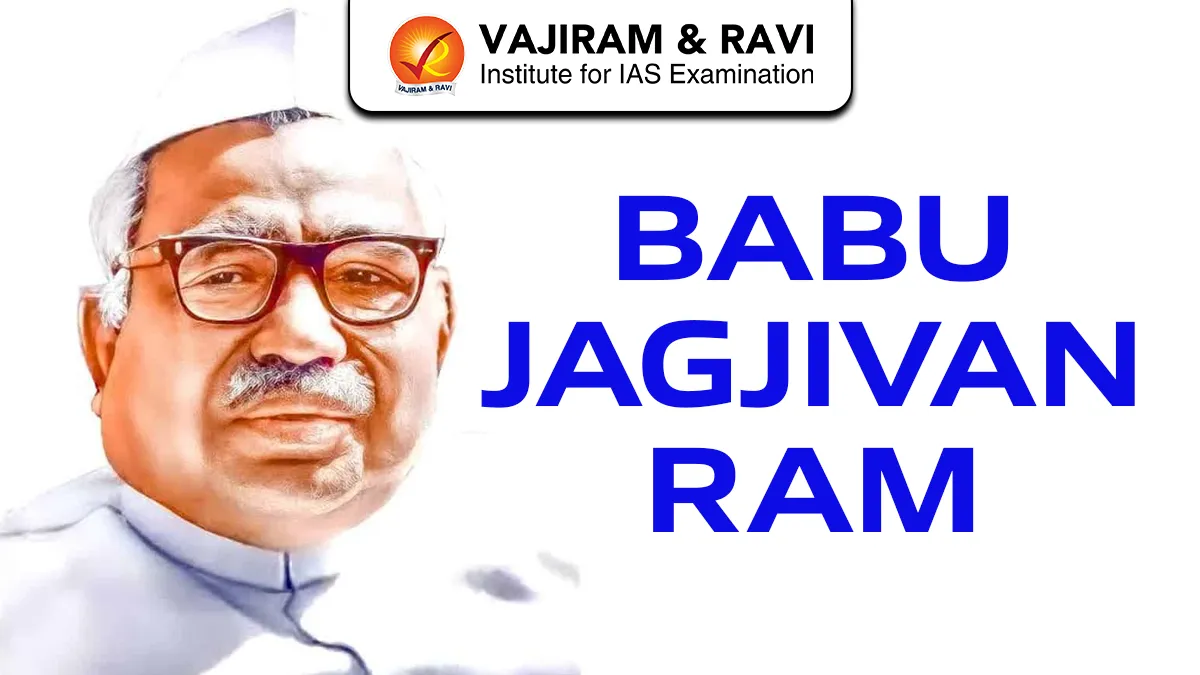
Babu Jagjivan Ram, popularly known as Babuji, was a distinguished freedom fighter, a crusader for social justice and a towering national leader from Bihar. He rose above systemic discrimination to become a pillar of the Indian Republic. As a veteran statesman, he dedicated his life to the emancipation of the "Depressed Classes" and the empowerment of laborers. His career is a testament to resilience, as he transitioned from a grassroots social worker to one of India’s most successful Parliamentarians and administrators in history.
Babu Jagjivan Ram Biography
Babu Jagjivan Ram was born on April 5 1908 in Chandwa, Bihar. Despite facing "untouchability" during his schooling in Arrah, he excelled academically. Inspired by Pandit Madan Mohan Malviya, he attended Banaras Hindu University and later graduated with a B.Sc. from the University of Calcutta in 1931. Throughout his youth, he organized laborers and Dalit Sammetans to protest against social boycotts. In 1934, he founded the All India Depressed Classes League. He was a polyglot, proficient in English, Hindi, Sanskrit and Bengali. He maintained a lifelong commitment to the philosophy of equality and human dignity.
Babu Jagjivan Ram Political Career
Babu Jagjivan Ram’s political journey spanned over five decades, marked by a world record uninterrupted tenure in the legislature from 1936 to 1986.
- Pre-Independence Leadership: He participated in the Civil Disobedience and Quit India movements, facing imprisonment twice. In 1935, he appeared before the Hammond Commission to demand voting rights for lower classes.
- Interim Government: In 1946, he became the youngest minister in Nehru’s provisional cabinet, serving as the Labour Minister and the only Dalit representative in the high profile council.
- Labour Minister (1946-52): He laid the foundation for India’s social security systems by enacting the Minimum Wages Act, ESI Act and the Provident Fund Act.
- Defence Minister (1970-74): He provided decisive leadership during the Indo-Pak War of 1971, which led to the liberation of Bangladesh and the surrender of 93,000 Pakistani soldiers.
- Agriculture Minister: During two tenures, he tackled severe food crises and successfully spearheaded the Green Revolution, ensuring India became self sufficient in food grain production.
- Deputy Prime Minister: In 1977, he resigned from Congress to form Congress for Democracy, eventually serving as Deputy PM in the Janata Party government under Morarji Desai.
Babu Jagjivan Ram Role in Constitution
As a member of the Constituent Assembly from Bihar, Babu Jagjivan Ram ensured that the voices of the marginalized were integrated into the supreme law. He performed a significant role in the foundation of the Constitution of India as highlighted below:
- Committee Memberships: He served on the Advisory Committee on Fundamental Rights and the Sub-Committee on Minorities, advocating for the protection of weaker sections.
- Affirmative Action: He was instrumental in enshrining Social Justice within the Constitution, successfully arguing for caste based reservations in government services and elected bodies.
- Securing Rights: Beyond the plenary debates, his influence ensured that the Constitution prohibited "untouchability" and provided a framework for the socio-economic upliftment of Scheduled Castes.
Babu Jagjivan Ram Reforms
Babu Jagjivan Ram’s administrative genius resulted in landmark reforms that modernized India’s economy and strengthened its social fabric across multiple sectors.
- Industrial Reforms: As Labour Minister, he introduced the Industrial Disputes Act and created a robust welfare framework for both organized and unorganized sector workers.
- Agricultural Modernization: He established Krishi Vigyan Kendras and promoted the use of high yielding variety seeds and chemical fertilizers to boost agricultural productivity.
- Railways and Transport: During his tenure, he nationalized air transport and introduced policies for reservations in promotions for SC/ST employees within the Indian Railways.
- Communication Expansion: As Communications Minister, he oversaw the rapid expansion of the postal and telegraph network across the rural hinterlands of independent India.
Babu Jagjivan Ram Awards and Honours
The nation honors Babu Jagjivan Ram’s legacy through various memorials and celebrations that emphasize the values of equality and national service.
- Samta Sthal: His cremation site in New Delhi is recognized as a national memorial, serving as a reminder of his struggle for "Samta" (Equality).
- Samta Diwas: His birth anniversary on April 5th is celebrated annually across India as Equality Day to honor his work for the depressed classes.
- Honorary Doctorate: In 1973, Andhra University conferred an honorary doctorate upon him in recognition of his exceptional service to Indian democracy and society.
- Babu Jagjivan Ram National Foundation: Established by the Ministry of Social Justice, this foundation propagates his ideologies of social reform and inclusive development among the youth.
Babu Jagjivan Ram FAQs
Q1: Why is Babu Jagjivan Ram known as "Babuji"?
Ans: "Babuji" was a title of endearment and respect given to Jagjivan Ram by the people for his contribution in the upliftment of lower classes.
Q2: What is the "world record" associated with Babu Jagjivan Ram’s career?
Ans: He holds the record for being the longest serving cabinet minister in India, spanning 30 years.
Q3: What was Babu Jagjivan Ram’s role in the 1971 Indo-Pak War?
Ans: As the Union Defence Minister during the 1971 war, he provided exceptional leadership to the Indian Armed Forces with the highest degree of coordination between the government and the military.
Q4: How did Babu Jagjivan Ram contribute to the Green Revolution?
Ans: While serving as the Union Minister for Food and Agriculture, he focused on modernizing farming techniques, providing better seeds and improving irrigation.
Q5: What is "Samta Sthal" associated with Babu Jagjivan Ram?
Ans: Samta Sthal is the memorial dedicated to him at his cremation site in New Delhi.
